Electric utilities across North America are facing a growing crisis as wildfire seasons become longer, more destructive and increasingly unpredictable. In response, industry leaders are shifting their strategy from reacting to fires to preventing them.
A new webinar, From Data to Decision: Powering the Future of Wildfire Prevention for Utility Networks, will explore how this transformation is taking shape on April 28.
The upcoming session, hosted by IFSJ sister publication FSJA, will bring together experts and utility professionals to examine how data is being harnessed to reduce wildfire risk and protect critical infrastructure.
At the heart of this shift is a move beyond simple data collection toward actionable intelligence, insights that can guide decisions across operations, risk management and long-term infrastructure planning.
Modern situational awareness platforms and predictive analytics are playing a central role. Utilities are now integrating a wide range of data sources, including localised climate patterns, real-time weather observations, vegetation health and encroachment monitoring, asset condition reports, historical outage trends and wildfire progression models.
These inputs are enabling a more comprehensive understanding of risk across utility networks.
Emerging technologies are also expanding the toolkit available to utilities. Artificial intelligence-powered smoke detection systems, for example, are helping identify potential ignitions earlier than ever before, giving operators valuable time to respond before incidents escalate.
The webinar will highlight how advances in vegetation intelligence, machine learning applied to localised climate extremes, and infrastructure risk scoring are allowing utilities to prioritise mitigation efforts more effectively.
By focusing resources where they are needed most, companies can strengthen resilience while improving public safety outcomes.
Wildfire experts to speak
Among the featured speakers is Chris Waters, a retired Operational Division Chief from CAL FIRE with 25 years of experience in wildfire management. Waters, now Principal of Fireshed Forestry Solutions, brings deep expertise in fire behavior modeling, predictive analytics, and risk assessment, informed by his work on major incidents including the 2021 Dixie Fire.
Joining him is Chuck Parker, Vice President of Sales – Americas at Indji Systems, Inc., and Director of Business Development for the utility industry. With more than two decades of experience, Parker has contributed extensively to industry knowledge through expert papers and conference presentations focused on lightning science, natural hazards, and data-driven solutions for utilities.
As wildfire risk continues to redefine operational priorities, the webinar aims to provide attendees with practical insights into how leading utilities are leveraging data to move from awareness to action. The session underscores a broader industry trend: prevention, powered by intelligence, is becoming the new frontline in wildfire management.
After a comprehensive review of recent regional developments, we consider the decision to move the event to October to be the most responsible and appropriate course of action.
Please note this is a postponement, not a cancellation. If you have a confirmed ticket this remains valid and no action is required from you at this stage.
We would also like to reaffirm our continued commitment to supporting the international fire and safety industry. The UAE remains a regional hub for fire and safety innovation, professional development and strategic investment, and we remain fully dedicated to contributing to the advancement of the sector through the Leaders in Fire and Safety Conference and our wider industry activities.
Our team will provide updated event details and next steps in the coming weeks.
We appreciate your understanding and look forward to welcoming you in October for a highly valuable and timely gathering of regional fire and safety leaders.
The world is making significant investments to rise to the challenge of managing and responding to deadly wildfires. Not only has the US federal government expanded budgets to prevent and defend against wildfires, but it is also evaluating the organisation of its federal wildfire agencies.
Likewise, state and local governments and utility companies are increasing their investments in wildfire prevention, mitigation and suppression.
IDGA’s Wildfire Technology Summit, taking place on April 21-22, 2026, at the Kona Kai Hotel in San Diego, CA, convenes senior decision-makers from across the wildfire ecosystem to tackle real-world challenges, accelerate modernisation efforts and shape the next phase of wildfire resilience, prevention, and suppression.
IDGA’s Wildfire Technology Summit agenda
Here’s a sneak peek at what you’ll find in the agenda:
✔️ Timely and high-priority sessions, such as the role of the brand-new U.S. Wildland Fire Service, advancing wildfire capabilities, AI and its role in wildfire intelligence, management strategies, and more!
✔️ Recently confirmed speakers, including Dirk Giles and Jessica Haas from the U.S. Forest Service, Sean Triplett and Mike Falkowski from Earth Fire Alliance and Brian D’Agostino from San Diego Gas and Electric, alongside many new additions
✔️ Networking opportunities with more than 300 senior wildfire experts, all focused on exploring solutions for the prediction, prevention, detection, suppression, and mitigation of destructive wildland fires
International Fire and Safety Journal (IFSJ) is delighted to announce the appointment of Khalid Almandil to its prestigious IFSJ Leaders Advisory Panel for the 2026 IFSJ Leaders in Fire & Safety Conference.
Almandil brings over 20 years of leadership experience in fire life safety and emergency response across multiple industries, including construction, oil & gas and real estate. He currently serves as the Operational General Manager of Red Sea Fire & Rescue Teams Company and as Fire Commissioner at Red Sea Global.
In his leadership roles, Almandil has demonstrated expertise in strategic planning, team leadership and driving operational success to achieve corporate objectives. He is a certified Project Management Professional (PMP) and a Consultant-grade member of the Saudi Council of Engineers.
He also holds a master’s degree in engineering and has completed extensive leadership training at prestigious institutions, including the Royal Military Academy (UK), Wharton Business School (US) and the Justice Institute of British Columbia (Canada). His appointment strengthens IFSJ’s mission to unite senior leaders and innovators shaping the future of fire safety and emergency response worldwide.
About the IFSJ Leaders in Fire & Safety Conference
Taking place on May 7 at the Grosvenor House Hotel in Dubai, the IFSJ Leaders in Fire and Safety Conference is a landmark global event bringing together senior professionals, policymakers and innovators from across the fire safety sector.
The event will feature high-level keynote presentations, expert panel discussions, interactive workshops and unparalleled networking opportunities, all designed to foster collaboration, share best practice and advance fire safety standards internationally.
Participants will have the opportunity to engage with leading voices in engineering, regulation, emergency services, and safety management, exploring emerging challenges and solutions in fire prevention, preparedness and response.
FFE Ltd, a specialist manufacturer of fire detection solutions, has announced that Fireray One beam smoke detector and Fireray Hub Reflective have achieved FM Approval, supporting specification and use across the USA, Middle East & Africa (MEA), Australia and New Zealand.
Large-volume environments can present challenging detection conditions, where smoke may dilute, stratify or drift with airflows. FM Approval provides added confidence for stakeholders specifying fire detection solutions for applications where reliability, compliance and continuity of operation matter.
Fireray One is designed for beam smoke detection in large open areas, providing long-distance coverage suited to high-ceiling environments. Fireray Hub Reflective complements Fireray One by combining the same beam detection capability with a low-level controller, enabling a more system-based approach to installation and oversight, and supporting up to three detector heads from a single control point, helping simplify commissioning, verification and ongoing maintenance.
FM Approval an ‘important milestone’ for FFE
“FM Approval is an important milestone for Fireray One and Fireray Hub Reflective,” said Luke Brittany, Product Manager, Fireray Product Range, FFE Ltd. “It gives specifiers and project teams added confidence when selecting an approved beam detection solution for large, open areas, supporting reliable performance and clearer system oversight.”
Pentre Awel is the first development of its scope and size in Wales and one of the highest-valued schemes Carmarthenshire County Council has undertaken. This £84 million project covers 83 acres and has created an estimated 1,800 jobs.
The scheme provides medical research and health care, encouraging individuals to lead active lifestyles. Pentre Awel also includes integrated care and physical rehabilitation facilities and hopes to boost the local economy by £467 million over the next 15 years.
As the chosen passive fire protection system manufacturer, Quelfire worked alongside the main contractor, Bouygues Construction Ltd and all the relevant parties to deliver this project.
The main objective was to incorporate an early engagement approach to design and build Pentre Awel around the tested details available, creating safe and compliant buildings.
Challenges of the project
As this was one of Bouygues UK’s first early engagement projects utilising a new approach and systems, the initial cooperation of relevant parties proved to be the main challenge.
This later led to the coordination of service spacings being problematic due to the large number of services used on the project, steel beams and restricted space available.
Solutions to the issue
Bouygues UK’s initiative to implement a new system called Morta ensured Bouygues completed work in line with the Building Safety Act and built the Golden Thread of Information to hand over to the building owner on completion of the project. It also guaranteed they met Building Regulation 38 requirements.
The Morta system ensured that all service penetrations were covered. If critical information was not provided, the schedule would go back to the responsible person to collate and send over.
The idea of a clear ‘Builder’s Work in Connection’ (BWIC) opening schedule is to make sure all parties work together, take responsibility, and understand what is required.
To provide the most relevant firestopping tested solutions from Quelfire’s extensive library, Quelfire required a detailed schedule with specific information about the project’s service penetration applications.
This included information about the wall or floor construction, the required fire rating, and the dimensions of structural openings.
Additionally, they needed to know if the application involved a head-of-wall scenario, whether any movement was required, and details about the services – such as their type, material, size, and any insulation requirements, including thickness.
However, receiving the information and getting everyone on the same page proved to be quite challenging as, for many, this was a brand-new approach to building construction. Luckily, Pentre Awel discussions began in 2022, leading to the first early engagement meeting in January 2023.
After this, Quelfire had regular project meetings and workshops to discuss the firestopping package, BWIC openings and any non-standard details. This ensured all parties were on the same page and could provide the correct information, minimising confusion.
Senior BIM Coordinator, Bouygues, Tom Marsh’s statement
Tom Marsh, Senior BIM Coordinator at Bouygues, stated: “Quelfire have been very proactive in supporting our Golden Thread initiative via our Information Management platforms.
They have also provided a lot of technical insight which we have used to improve on Pentre Awel processes, as well as other projects moving forward.”
Design Manager, Bouygues, Matthew John’s statement
Matthew John, Design Manager at Bouygues, said: “Quelfire’s Technical Manager, Alec, has supported the Pentre Awel design team throughout the detailed design stage, giving pragmatic guidance on tested passive fire stopping solutions.
“This support has been invaluable in assisting Bouygues in delivering our Golden Thread builders work approval process.”
Quelfire provide technical solutions to Wales health and research hub: Summary
Pentre Awel is the first development of its size in Wales and it hopes to boost the local economy by £467 million over the next 15 years. Quelfire worked alongside Bouygues Construction Ltd to complete the project.
Bouygues Design Manager said that the support and advice from Quelfire has been invaluable.
Fires can spread quickly, especially in remote and hard-to-reach areas.
Over time, firefighting has adapted to meet these challenges, using a mix of tools, teams, and technology.
Aircraft have become a familiar sight during major fire seasons, often seen moving across the sky as part of a wider response effort.
These flying resources work alongside crews on the ground and play a key role in modern wildfire management. U
Understanding the different fire fighting aircraft involved helps explain how large fires are tackled from multiple angles.
Key Takeaways
Aircraft (planes and helicopters) drop water or retardant to slow wildfires and scout from above.
Air Attack planes (air tactical aircraft) coordinate aerial operations and choose drop targets.
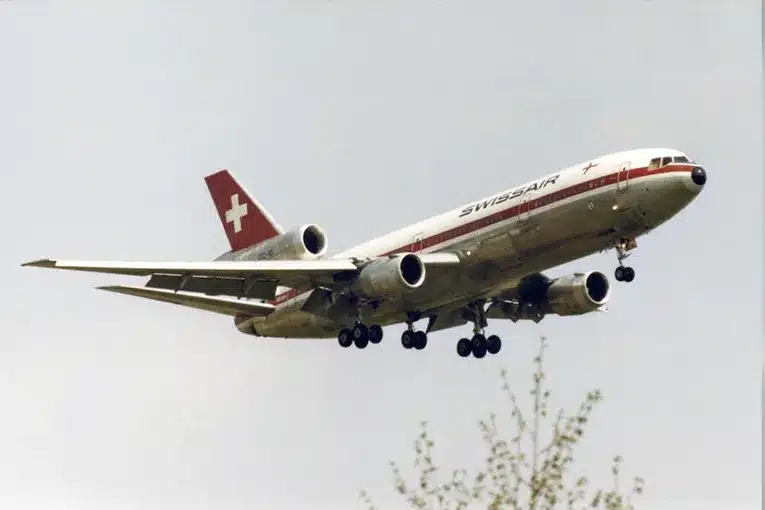
Fixed-wing airtankers carry retardant by size: Type I (3,000 – 5,000 gal), Type II (1,800 – 3,000), Type III (800 – 1,799). Very Large Air Tankers (VLATs) like DC-10s carry >8,000 gal.
Helicopters also have types I to III. Heavy Type I helos (~700 gal buckets) carry large loads, while Type II (~300 gal) and Type III (~100–180 gal) are smaller and quicker.
Military and converted aircraft provide extra capacity (~3,000 gal) and speed. A MAFFS C-130 can dump 3,000 gal in under 5 second.
What is Aircraft Fire Fighting?
Aerial firefighting (or aircraft firefighting) is the use of aircraft vehicles to suppress wildfires.
It involves fixed-wing airtankers (airplanes) that carry water or fire retardant and drop it on or ahead of a fire.
Helicopters are also used, either dropping water with a bucket or the transport of crews.
Aircraft may carry buckets, tanks, or sling loads of water.
Air attack aircraft (small fixed-wing spotter planes) provide overhead reconnaissance and direct the tanker drops.
For example, wide-body jets like the DC-10 are outfitted with 12,000-gallon retardant tanks for big fires, while helicopters like the UH-60 Black Hawk (Firehawk) insert firefighters or drop several hundred gallons at precise spots.
These flying machines extend firefighting reach into rugged areas, deliver large drops quickly, and act as flying lookout posts to support ground teams.
Why is Aircraft Fire Fighting Used?
Aircraft vastly improve wildland fire response speed and effectiveness.
Ground crews can take hours to reach a remote ridge, but planes can fly over terrain.
By dropping water or retardant early, aircraft help contain fires when they are small.
A swift initial attack from the air can keep a fire to mere acres (California’s goal is to keep 95% of fires under 10 acres).
Aircraft are used because they can access fires rapidly, cover wide areas with retardant or water, and support ground crews with real-time intelligence, saving time and lives compared to relying on ground crews alone.
10 Types of Aircraft Fire Fighting
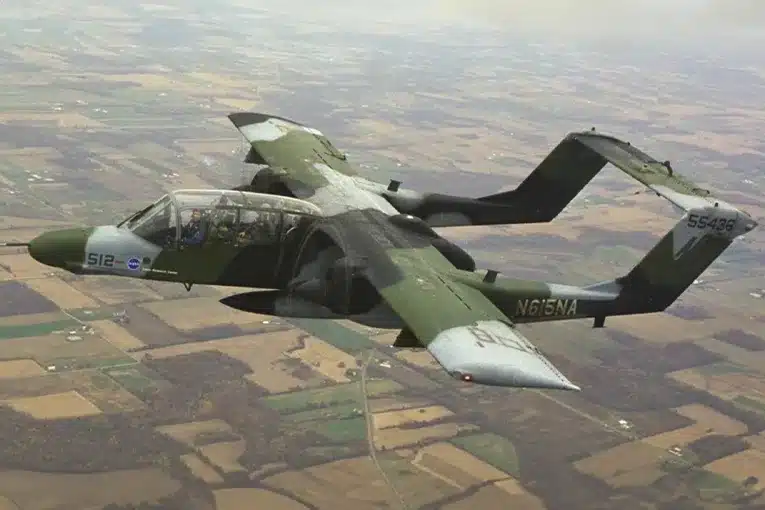
The 10 types of fire fighting aircraft are Air Tactical Aircraft, Fixed Wing Aerial Tankers (type I to III, VLAT and military) and helicopters (type I to III and military).
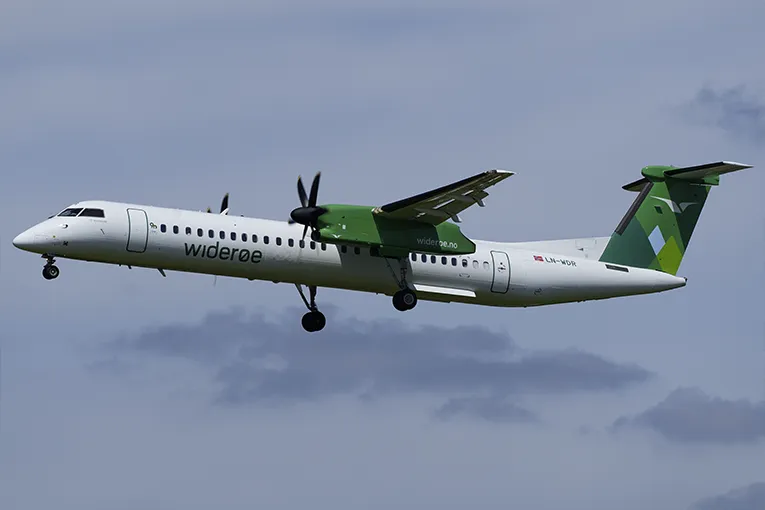
Type II airtankers are medium-sized tankers carrying about 1,800 – 3,000 gallons.
They include turboprop airliners and converted executive jets.
For example, the Bombardier Dash 8 Q400 (a Canadair airliner) drops around 2,600 gal, and older warbirds like the Douglas DC-6 or C-130 derivatives are in this class.
Type II tankers balance capacity with flexibility.
They are faster and more fuel-efficient than single-engine tankers yet can still operate from many airports.
Multiple Type II drops can cover a large area while using smaller airfields.
Aviation contractors combine Type II tankers for broad coverage.
For instance, three Q400s might deliver a combined load equivalent to one Type I tanker, but with quicker turnaround from multiple bases.
Examples are the Air Tractor AT-802 (about 800 gal) and light amphibious planes like the Canadair CL-215 (~1,300 gal).
Type III tankers are nimble and can use very short or unimproved runways close to fires.
They are ideal for initial attack on new wildfires.
They arrive quickly, make short drops, and return for more.
Their advantage is agility and responsiveness.
Because they operate from small airports, they can reach remote incidents faster, and their shorter water lines can get into steep or confined terrain.
Airtankers like the S-2 Tracker have stout landing gear and torpedo bays made for retardant tanks, allowing them to basing at small fields with short runways.
Type III tankers sacrifice drop volume for speed and access to work effectively in the early stages of a fire.
Very Large Air Tankers (VLATs) represent the largest class of fixed-wing firefighting aircraft and are deployed when massive fire coverage is needed quickly.
This can carry upwards of 9,400 gallons of fire retardant in one load, released in just a few seconds to lay down long, continuous lines ahead of advancing flames.
A single VLAT drop can cover a fireline hundreds of feet wide and miles long, making it much more efficient at slowing fire spread than smaller tankers.
Other legacy VLAT projects, such as the Boeing 747 Supertanker, were designed to carry nearly 20,000 gallons, demonstrating just how much retardant can be delivered from the air.
Newer programmes are now developing Boeing 767-based VLATs with even greater capacity and modern systems.
The main advantages of VLATs are their high payloads and long-reach retardant delivery, which are particularly valuable on very large or fast-moving wildfires where quick, broad coverage is crucial.
Military Aerial Tankers
C-130 Hercules equipped with MAFFS / Source: Wikipedia
Military transport aircraft are also used in firefighting when available.
For example, two MAFFS C-130s were sent to help Colorado fires in 2025.
A MAFFS unit can discharge 3,000 gal of retardant in under five second.
In addition, very large military or former military jets have been converted to airtankers.
These military-type planes cover enormous areas.
The key advantage is volume and reach.
Such planes can fight high-intensity fires or provide surge capacity when multiple air drops are needed.
They do require specially equipped bases to refill, but in return they extend the firefighting fleet’s capability by an order of magnitude compared to smaller tankers.
Helicopters
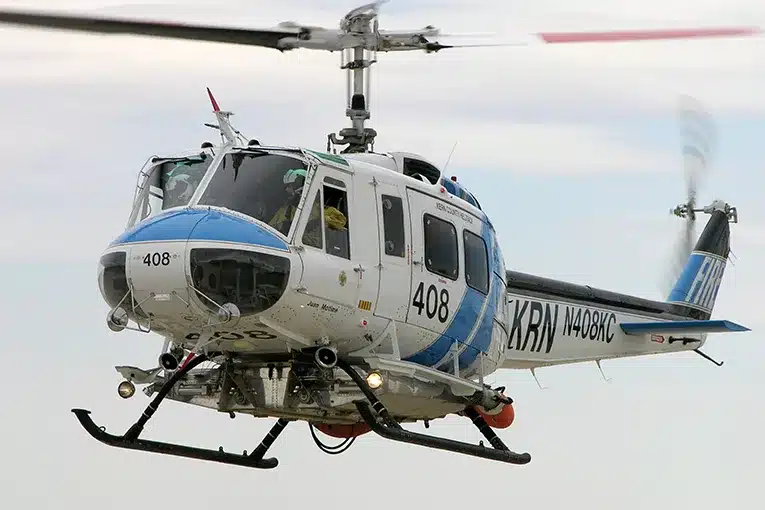
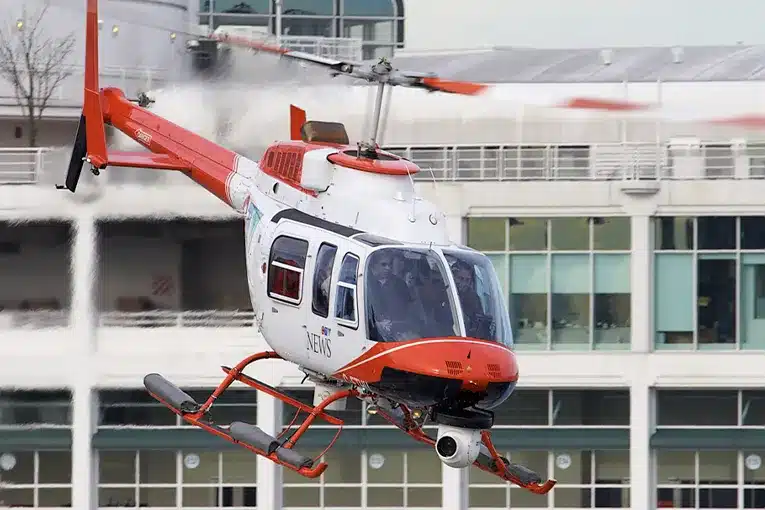
Helicopters are highly versatile firefighting aircraft.
They can rapidly drop water or retardant on fires, ferry firefighters and equipment, perform aerial ignition, or conduct search and fire rescue.
They operate closer to the fireline than fixed-wing tankers.
Helicopters are also classified by type based on size and capacity.
Heavy helitankers are Type I, medium helis Type II, and light ones Type III.
These categories guide their deployment, as we describe below.
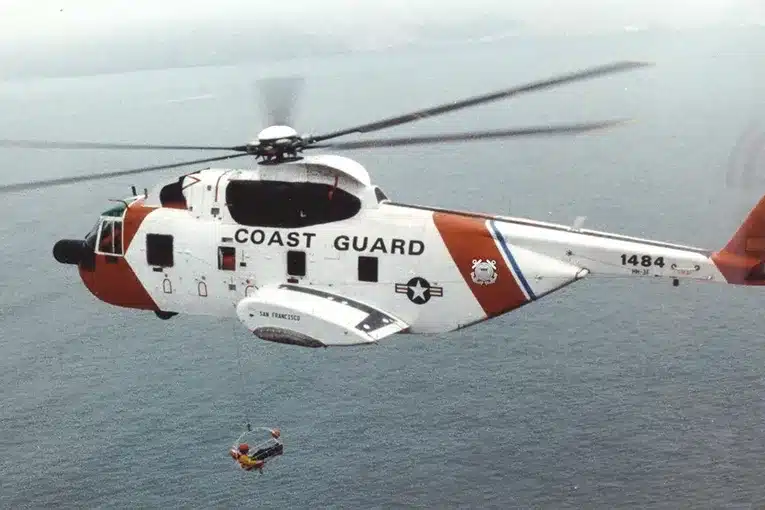
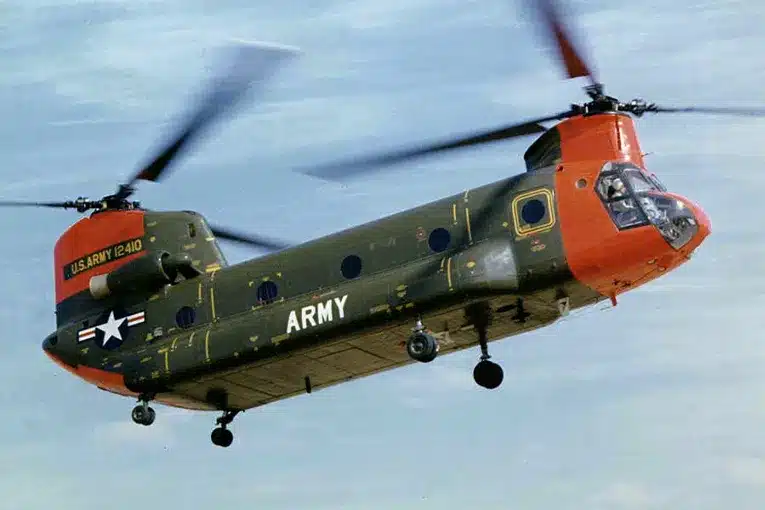
Military helicopters, especially heavy transports, have been adapted as ‘helitankers’ with enormous capacity.
The Boeing CH-47 Chinook (used by Southern California’s Quick Reaction Force) is the largest firefighting helicopter in the world.
Chinooks carry an internal 3,000-gallon tank and can hover-fill from a source in 90 seconds.
Another is the Sikorsky CH-53 Sea Stallion/CH-53K, with roughly 2,200 gal capacity, and the CH-54 ‘Helitanker’ Pelican (also ~2,200 gal).
These military helos are also fast; for example, the Chinook cruises at 160 kt.
Their advantage is clear.
They deliver far more water than civilian helicopters.
A single Chinook drop equals multiple drops by Type I helos.
Additionally, many are night-capable and can transport many troops or load heavier gear.
Military helitankers combine high volume, speed, and durability, making them formidable tools for large-scale firefighting operations
Final Thoughts
Aerial fire fighting brings together a diverse fleet of aircraft, each with a specialized role.
Air attack planes guide the operation, fixed-wing tankers blanket fires with retardant, and helicopters provide agile support.
Each type has advantages – from the enormous drops of DC-10s to the nimble bucket work of small helicopters.
Used together, these aircraft help contain wildfires that would otherwise spread.
Modern firefighting continuously evolves (new tankers, night-ops, and even drones), but the core remains.
Different flying machines are tools in the sky fighting fires.
By rapidly reaching remote fires, delivering huge volumes of water, and coordinating efforts, these aircraft types save land and lives, proving that the sky is an invaluable front line in wildfire suppression.
International Fire and Safety Journal (IFSJ) is delighted to announce the appointment of Steve Apter QFSM MSc to its prestigious IFSJ Leaders Advisory Panel for the 2026 IFSJ Leaders in Fire & Safety Conference.
Apter, who takes the role of Chair of the Advisory Panel, is a former UK Chief Fire Officer and Deputy Commissioner of the London Fire Brigade. In his role as Deputy Commissioner, Steve oversaw the Fire Service Counter Terrorism capabilities, including the response to CBRN (Chemical, Biological, Radiological, and Nuclear) incidents.
He also advised COBRa, government Ministers, and Gold Commanders during some of the UK’s most high-profile emergencies, including the Grenfell Tower fire, the Westminster Bridge attack, and the Salisbury poisoning incident.
In addition to his counter-terrorism responsibilities, Apter coordinated the London Fire Brigade’s response to the COVID-19 pandemic. Following his retirement from the Fire Service in 2021, he established a consultancy providing specialist advice to both public and private sector organisations in crisis leadership, strategic planning, and executive coaching.
Apter was also contracted by the NHS to Chair the Strategic Co-ordinating Group during the emergence of the Omicron COVID variant, ensuring coordinated national response efforts.
He brings extensive operational experience, crisis management expertise, and strategic insight to the IFSJ Leaders Advisory Panel. His appointment strengthens IFSJ’s mission to unite senior leaders and innovators shaping the future of fire safety and emergency response worldwide.
About the IFSJ Leaders in Fire & Safety Conference
Taking place on May 7 at the Grosvenor House Hotel in Dubai, IFSJ Leaders in Fire and Safety Conference is a landmark global event bringing together senior professionals, policymakers, and innovators from across the fire safety sector.
The event will feature high-level keynote presentations, expert panel discussions, interactive workshops and unparalleled networking opportunities, all designed to foster collaboration, share best practice and advance fire safety standards internationally.
Participants will have the opportunity to engage with leading voices in engineering, regulation, emergency services and safety management, exploring emerging challenges and solutions in fire prevention, preparedness and response.
Olympia Electronics will participate once again in the international exhibition Light + Building 2026, taking place in Frankfurt, reaffirming its consistent and long-standing presence at one of the world’s leading trade fairs for lighting, electrical installations and building safety systems. Its participation in this globally recognised event reflects the company’s strategic commitment to innovation, extroversion and continuous development within the international marketplace.
Light + Building constitutes a global reference point for the latest advancements in smart lighting, energy efficiency, building automation and integrated safety technologies. Every edition gathers leading manufacturers, consultants, designers, contractors and decision makers from across the world, shaping the future of sustainable and intelligent buildings.
Within this dynamic environment, Olympia Electronics will present its comprehensive portfolio of integrated emergency lighting and fire detection systems, engineered to meet the complex demands of contemporary infrastructure and fully compliant with current European standards and regulatory frameworks.
Olympia Electronics at Light + Building 2026
The solutions on display will highlight the company’s technological depth and manufacturing expertise. From advanced addressable fire detection systems to high-performance emergency lighting solutions — including central battery systems, self-testing luminaires and wireless monitoring technologies — Olympia Electronics focuses on reliability, seamless integration and certified performance. Each product is developed with strict adherence to EN standards, ensuring operational continuity and maximum safety in critical conditions.
The company’s repeated participation in Light + Building underscores its strongly outward-looking orientation and strategic focus on international expansion. Today, Olympia Electronics exports to more than 72 countries worldwide, maintaining a robust international footprint supported by an expanding global partner network. Through long-term collaborations with distributors, technical firms and project stakeholders, the company continues to strengthen its presence in Europe, the Middle East, Africa and beyond.
At the same time, Olympia Electronics ranks among the top 10 manufacturers of electrical safety systems in Europe — a distinction that reflects not only its production capacity but also its sustained investment in research and development, certified quality assurance processes and modern industrial infrastructure. With more than four decades of experience, the company combines technical know-how with continuous innovation, ensuring that its systems respond effectively to evolving architectural and regulatory requirements.
A core pillar of Olympia Electronics’ philosophy is its human-centered design approach. Safety systems are not viewed solely as technical installations, but as integral components of the built environment. Functionality, aesthetics and ease of installation are carefully balanced to support designers, electrical installers, consultants and building operators. The result is a portfolio of solutions that integrate harmoniously into modern architectural concepts while delivering uncompromising levels of protection.
Participation in Light + Building forms part of the company’s broader international growth and export development strategy. By actively engaging with global industry stakeholders, Olympia Electronics not only follows technological developments but contributes to shaping them. Through dialogue, collaboration and the exchange of expertise, the company reinforces its role as a reliable European manufacturer with a strong global vision.
Visitors are invited to discover the latest innovations of Olympia Electronics at Light + Building in Frankfurt and explore how integrated, certified and intelligently designed safety systems can enhance the resilience and performance of modern buildings.
Fire extinguishers should be inspected every month, professionally serviced once a year, and undergo deeper internal maintenance at six-year and twelve-year intervals, depending on the model.
These inspections ensure that extinguishers are ready to use and fully compliant with international fire safety standards.
Without routine checks, even a brand new extinguisher can fail when needed most.
Understanding how often these inspections must happen, why they matter, and what takes place during a fire extinguisher inspection is essential for anyone responsible for fire safety, including homeowners, employers, facility managers, and building supervisors.
Fire extinguishers are simple devices in appearance, but they have strict performance and safety expectations for effective fire suppression.
This article explains those expectations clearly and thoroughly so readers can feel confident that their equipment is reliable.
Key Takeaways
Fire extinguishers must be checked monthly, serviced annually, and maintained internally at six and twelve year intervals.
NFPA 10 is the governing standard for inspection, maintenance, and testing requirements.
Regular inspections ensure safety, legal compliance, and extinguisher reliability.
All major extinguisher types require periodic inspection, although their servicing needs vary.
Accurate documentation is required for compliance, insurance, and audit purposes.
Why Fire Extinguishers Need Inspecting
A fire extinguisher is only effective if it works the moment it’s needed.
Over time, these devices can deteriorate in ways that are not immediately obvious to the casual observer.
Pressure can slowly drop inside the cylinder, hoses can become brittle, and internal components can corrode.
Even something as simple as a missing safety pin or a partially obstructed nozzle can prevent an extinguisher from operating during a fire emergency.
Environmental factors play a major role in extinguisher degradation.
Heat, cold, humidity, mechanical impact, and chemical exposure can all affect the condition of a cylinder.
Extinguishers in busy workplaces, such as warehouses or kitchens, may be bumped, moved, or even used without being reported.
Without scheduled inspections, damage often goes unnoticed.
Another important reason for routine inspection is human behavior.
An extinguisher might appear untouched for years, yet a previous user may have partially discharged it, leaving just enough pressure to make the gauge appear normal while still rendering the extinguisher ineffective.
Regular checks catch these issues long before a fire reveals them.
In short, inspections ensure that extinguishers remain safe, functional, and capable of performing exactly as designed.
Why Fire Extinguisher Inspections are Important
The most immediate reason inspections matter is the protection of human life.
A properly functioning extinguisher can stop a small incident from turning into a devastating fire.
Early action often prevents injuries, property damage, business interruption, and even fatalities.
Building codes, insurance policies, workplace safety regulations, and fire authorities all rely on NFPA 10 to determine compliance.
Failing to meet these requirements can result in financial penalties, legal liability, and increased insurance costs.
Beyond safety and compliance, regular inspections save money over time.
Extinguishers that are monitored and maintained tend to last longer, reducing the need for costly replacements.
A well managed inspection program creates predictable maintenance schedules rather than emergency repairs.
How Frequently Should Fire Extinguishers Be Inspected?
The inspection schedule for fire extinguishers is structured into several levels.
Each level serves a different purpose and is timed according to how extinguishers age and how their components degrade.
Monthly Visual Inspection
The monthly inspection is a simple but essential check performed by a responsible person within the building.
It verifies that the extinguisher is present, clearly visible, unobstructed, and in good physical condition.
The individual performing the check ensures the pressure gauge is still in the operable range, that the safety pin is intact, and that there are no signs of leakage or corrosion.
This inspection is deliberately straightforward so it can be completed regularly without the need for technical expertise.
Its purpose is early detection of visible problems.
Annual Maintenance and Inspection
Once a year, extinguishers must be examined by a certified fire protection technician.
This process is far more detailed than the monthly inspection.
The extinguisher is checked internally and externally for mechanical damage, chemical deterioration, clogged nozzles, weakened hoses, and incorrect pressure levels.
The technician verifies that the extinguisher is appropriate for the hazards present in the environment, that it meets current standards, and that all labeling remains clear and legible.
An annual inspection ensures the extinguisher meets operational and regulatory expectations.
Six Year Maintenance and Inspection
Certain extinguishers, particularly stored-pressure dry chemical models, require internal maintenance every six years.
During this procedure, the extinguisher is fully discharged, opened, and inspected from the inside.
Any degraded components are replaced, the interior is cleaned, and fresh extinguishing agent is added.
After reassembly, the extinguisher is pressure tested and tagged as having undergone six-year maintenance.
This level of servicing addresses aging components that cannot be evaluated through external inspection alone.
Twelve Year Maintenance and Inspection
Many types of extinguishers require hydrostatic testing at twelve years.
Hydrostatic testing ensures the cylinder can safely withstand the pressures required during operation.
The extinguisher is emptied and filled with water under controlled pressure while a technician monitors for deformation, leaks, or structural weakness.
If it passes the test, it can be safely returned to service; if it fails, it must be removed permanently.
Hydrostatic testing is essential for preventing catastrophic cylinder failure.
Reactive Maintenance and Inspection
Any extinguisher that has been used, dropped, damaged, exposed to corrosive conditions, or found to be leaking must be serviced immediately, regardless of the scheduled interval.
This unscheduled maintenance ensures extinguishers remain reliable after incidents or unexpected deterioration.
What Happens During a Fire Extinguisher Inspection
A professional fire extinguisher inspection involves several methodical steps designed to evaluate the condition and performance of the extinguisher.
Visual Inspection
The technician examines the entire extinguisher body, including the handle, hose, nozzle, carrying bracket, pressure gauge, and labeling.
The goal is to identify signs of physical damage, vandalism, rust, or tampering.
Placement, accessibility, and suitability for the environment are also assessed.
Hydrostatic Testing
Hydrostatic testing ensures that the cylinder walls are strong enough to contain the internal pressure during discharge.
It involves filling the cylinder with water under pressure and observing any structural changes.
This test protects users from rare but dangerous cylinder ruptures.
NFPA 10 Compliance
NFPA 10 defines where extinguishers must be mounted, how high they can be positioned, how often they require inspection, and which extinguisher types are permitted for specific hazards.
During an inspection, technicians verify that each extinguisher matches the hazard classification of the area, meets mounting and visibility requirements, and carries all required labeling and tags.
Inspection Report
Once all checks and tests are complete, the technician prepares an inspection report that becomes part of the fire safety record.
This document outlines findings, maintenance performed, test results, and recommendations.
In many jurisdictions, these reports must be kept on file for audits, insurance verification, and code compliance.
What Records Are Taken During Fire Extinguisher Inspections
Fire extinguisher records must be kept accurately and include the technician’s name, the inspection date, detailed notes about the extinguisher’s condition, any corrective actions taken, and the date when the next inspection is due.
These records help track the history of each extinguisher, verify compliance during legal or insurance reviews, and identify patterns that may indicate environmental damage or misuse.
Proper record-keeping protects the building owner legally and helps ensure consistent fire safety management.
Types of Fire Extinguishers Requiring Inspection
Every type of extinguisher must be inspected, yet most have different maintenance requirements:
Water Fire Extinguishers (Class A)
Water extinguishers rely on simple, reliable mechanics but still require pressure checks, inspections for internal corrosion, and periodic hydrostatic testing.
Foam Fire Extinguishers (Class A and B)
Foam extinguishers contain agents that can degrade over time.
They require both internal and external checks to ensure their chemical mixture remains effective.
Powder Fire Extinguishers (Class ABC)
Powder extinguishers are versatile and widely used but require internal maintenance every six years to prevent compacted powder, moisture intrusion, or internal corrosion.
CO2 Fire Extinguishers (Class B and C)
CO2 extinguishers operate at high pressure, so their cylinders must undergo rigorous hydrostatic testing.
Weight checks are essential because CO2 extinguishers have no pressure gauge.
Wet Chemical Fire Extinguishers
These are typically used in commercial kitchens for cooking oil fires.
Because their agents must remain chemically stable, annual inspections and prompt servicing after use are mandatory.
Final Thoughts
Fire extinguishers are among the most important safety tools in any building, yet they are often overlooked until needed.
Regular inspections ensure these devices function correctly, comply with safety standards, and remain ready to save lives.
By understanding how often inspections should occur, what happens during them, and why they matter, building owners and occupants can create safer environments and meet their legal and ethical responsibilities.






.jpg)

.jpg)

.jpg)
.jpg)
.jpg)
