Fire Door Inspections – Step-by-Step Checklist

Fire doors are a vital part of a building’s fire safety system, acting as strong barriers that slow the spread of flames and smoke. 

Properly maintained fire doors give occupants time to escape and prevent damage to other areas, and are a vital fire suppression tool. 

Regular fire door inspections are essential to make sure these doors will work as intended in an emergency. 

This article explains what a fire door inspection involves, why inspections matter, the legal obligations around them, and who should carry them out. 

It also provides a step-by-step checklist to help you perform thorough fire door inspections.

What is a Fire Door Inspection

an image showing a fire door

A fire door inspection is a detailed check to confirm that a fire door assembly will perform correctly if a fire occurs. 

A qualified inspector examines the door leaf, frame, hardware and all related components to ensure they meet safety standards. 

For example, the inspector checks the door’s certification label and fire rating, examines the door and frame for damage, and tests that hinges, locks and closers function properly. 

Smoke seals and intumescent strips are also inspected to ensure they will expand and seal gaps in heat. 

Basically, a fire door inspection systematically tests every part of the door against a pass/fail protocol to make sure the door can contain fire for its rated duration.

Step-by-Step Fire Door Inspections Checklist

an image showing a fire door inspection

A thorough fire door inspection follows a clear checklist. 

Inspectors typically perform the following checks one by one:

Certification Label & Rating

Confirm the fire door’s certification label is present, legible, and matches its required fire-rating. 

Without a valid label, you cannot prove the door is properly rated.

Door and Frame Condition

Inspect the door leaf and frame for damage or warping. 

Look for holes, cracks, dented edges, heavy corrosion or other defects that could weaken the door’s integrity. 

Any significant damage should be noted.

Gaps and Clearances

Measure the gap around the closed door. 

The clearances at the top, sides and bottom should meet regulatory limits. 

Excessive gaps allow smoke or fire to bypass the door.

Glazing

Check any vision panels or windows in the door. 

Ensure the glass is unbroken, fire-rated and correctly fitted to the door. 

Improper glazing can compromise the door’s fire performance.

Door Hardware

Examine all door hardware.

This includes hinges, lock sets, handles, latches and panic bars. 

Ensure each item is fire-rated, securely fixed, and functions smoothly. 

For example, hinges must be fitted with fire-rated pins and allow the door to swing freely.

Door Closer and Closing Action

Test the door closer by opening the door fully and releasing it from different angles. 

It should close the door fully and latch securely on its own. 

If the closer is weak or jammed, the door will not shut, defeating its purpose.

Seals and Intumescent Strips

Look around the edges of the door for smoke seals and intumescent strips. 

These should be intact and undamaged. 

Intumescent strips expand in heat to seal the gap between door and frame. 

Any missing or torn seals reduce effectiveness.

Coordinator

On pairs of fire doors, check that the inactive leaf closes before the active leaf. 

This sequence is critical for double doors to seal properly in a fire.

Signage

Verify that any required fire door signs (such as ‘Fire Door – Keep Shut’) are fitted and legible. 

Proper signage is part of compliance.

Modifications and Obstructions

Look for unauthorised alterations (extra holes, cuts, oversized glazing) that might void the fire-rating. 

Also check that nothing blocks the door from closing.

Document Findings

Record the condition of each door. 

Note any faults or failures. Many regulations require keeping written records of inspections. 

A clear inspection report helps ensure all issues are tracked and fixed.

Why are Fire Door Inspections Important

Fire doors are only effective if they are maintained in good condition. 

Routine inspections help catch problems early. 

UK fire safety law (the Regulatory Reform Order 2005) makes it a legal duty to keep fire doors working properly. 

Beyond compliance, inspections are a vital safety measure. 

Fully functioning fire doors significantly slow the spread of fire and smoke, protecting escape routes and giving people extra time to evacuate safely. 

Over time, normal wear and tear, or damage from everyday use, can degrade a door’s performance. 

Hinges might loosen, seals might tear, and closers can weaken if not checked. 

Regular checks find these issues before an emergency happens. 

Inspections also provide documented proof of maintenance, which is important for audits or insurance.

How Long Do Fire Door Inspections Take?

an image showing how long fire door inspections take

The time needed depends on the building and the number of doors. 

For a single door, a thorough check often takes on the order of around 15 minutes. 

This includes opening and closing the door, measuring gaps, and logging results. 

For a building with many fire doors, the inspection will take correspondingly longer.

The total duration varies with how many doors are checked. 

Inspecting a small number of doors might only take an hour or two, whereas a large multi-storey building with dozens of doors could require a half-day or more. 

Factors like restricted access, complicated layouts or any required intrusive checks can also extend the time. 

In any case, it’s wise to schedule inspections well in advance so the inspector can work carefully and document everything properly.

What Happens if You Fail a Fire Door Inspection?

Failing an inspection means defects were found that could stop the door from working in a fire. 

The inspector’s report will list these issues and rate each door as pass or fail. 

If a fire door fails, the report usually includes clear recommendations on what remedial work is needed to bring it up to standard. 

Common fixes include repairing or replacing damaged seals, fixing hardware, rehanging the door to align properly, or even installing a new certified door if the old one is beyond repair. 

You should promptly create an action plan to address the failures. 

A failure should trigger repairs within an acceptable timeframe. 

This means arranging maintenance or hiring a specialist to fix issues quickly. 

Until the door is fixed, it should not be considered compliant or relied on for fire safety.

Are Fire Door Inspections a Legal Requirement

an image showing the legal requirements of fire door inspections

Yes.

Fire door inspections are explicitly required by law as part of maintaining fire safety. 

In the UK, the Regulatory Reform (Fire Safety) Order 2005 (covering England and Wales) states that fire safety measures, including doors, must be kept in efficient working order. 

In other words, fire doors must be regularly inspected and maintained. Similar laws apply in Scotland and Northern Ireland (for example, the Fire (Scotland) Act 2005 and related regulations). 

Fire safety legislation for all UK regions highlights these responsibilities, and penalties for non-compliance can include unlimited fines or even imprisonment.

British Standards like BS 8214 and BS 9999 give detailed guidance on how often to inspect doors, but following those is a matter of compliance with the overall legal duty. 

For residential apartment blocks, recent regulations (Fire Safety Act 2021 and the 2022 Fire Safety Regulations in England) have clarified that flat entrance doors must be treated as part of the building’s fire safety provisions. 

The bottom line is that if your building falls under fire safety law, you must inspect fire doors on a planned basis. 

Skipping inspections not only endangers people but also violates the law.

Who Can do Fire Door Inspections

Legally, the building’s ‘responsible person’ (often the owner, landlord or employer) is ultimately accountable for fire door safety. 

However, the actual inspections can be carried out by others. 

Basic visual checks can be done by trained in-house staff or facility managers. 

These routine checks help catch obvious damage like broken hardware or blocked doors. 

For full formal inspections, UK guidance says they must be performed by a competent person.

This is someone with specific knowledge and training about fire doors. 

This person may be a facilities manager who has attended a fire door inspection course, or maintenance staff with. 

In high-risk or larger buildings, it is common to hire accredited fire door inspectors from third-party companies. 

These professionals often hold industry certificates (for example from the Door & Hardware Federation or other bodies) and have deep expertise. 

The key point is that anyone performing the inspection must be properly trained and know how to interpret fire door standards. 

You do not have to be a fire brigade officer, but you do need either competent staff or qualified contractors. 

Key Takeaways

Regular fire door inspections are essential for safety and compliance. 

By following a systematic checklist and having qualified people perform the checks, building owners can catch problems before a fire ever occurs. 

Inspections confirm that doors and frames, hardware and seals are all in good working order.

This is so the doors will hold back fire and smoke as designed. 

UK fire safety law makes these inspections mandatory, not optional. 

A well-maintained fire door can save lives and property. 

Using the steps outlined above, anyone responsible for fire safety can ensure their doors remain reliable barriers in an emergency.

Is Hydrogen Flammable?

Hydrogen is one of the most talked-about elements in modern science and energy discussions. 

It plays a vital role in the universe, in industries on Earth, and increasingly in clean energy solutions. 

From rocket fuel to potential uses in powering vehicles and homes, hydrogen is a substance with enormous potential. 

Yet, with all its advantages, there are also concerns, such as ‘is hydrogen flammable’, and around how it behaves in different conditions. 

Understanding hydrogen’s properties is key to using it safely and effectively. 

What is Hydrogen?

image of hydrogen atom
Source: Wikipedia

Hydrogen is the simplest and lightest chemical element, with each atom containing just one proton. 

It is by far the most abundant element in the universe and is found on Earth mostly in compounds. 

Under normal conditions, pure hydrogen exists as a gas composed of two-atom molecules (H₂). 

It is a colourless, odourless, and non-toxic gas, which means humans cannot detect it by smell or sight. 

In industry, hydrogen has been produced and used safely for decades in large quantities, and it has long been used as a rocket fuel. 

Today, hydrogen is also being explored as a clean energy carrier for vehicles and power generation, since burning hydrogen does not produce carbon emissions.

Is Hydrogen Flammable?

is hydrogen flammable image

Yes. 

Hydrogen is a highly flammable substance. 

Hydrogen will combust if it is mixed with oxygen and exposed to an ignition source. 

Hydrogen ignites more readily and over a wider range of conditions than many other fuels. 

Hydrogen can catch fire when as little as about 4% of the air is hydrogen. 

This flammability range (4–75% in air) is much broader than that of most hydrocarbons. 

Moreover, it takes very little energy to set hydrogen gas on fire. 

Even a tiny spark of static electricity is enough to ignite a hydrogen–air mixture. 

This means hydrogen gas can be ignited very easily by a small spark or hot surface. 

Once ignited, it burns quickly and releases a large amount of heat, which makes it a powerful fuel but also means any ignition must be prevented through careful handling.

Why is Hydrogen so Flammable?

Hydrogen’s high flammability comes from both its chemistry and its ignition properties. 

Chemically, hydrogen fuel reacts very easily with oxygen, releasing a lot of energy in the form of heat when it forms water. 

The combustion of hydrogen is a strongly exothermic reaction

Once a hydrogen fire starts, it can sustain itself and spread rapidly because of this energy release.

Low Ignition Energy and Broad Flammability Range

Physically, hydrogen is easier to ignite than most fuels. 

Only a very small amount of energy is needed to ignite hydrogen gas – on the order of 0.02 millijoules for an optimal hydrogen–air mix. 

Such a low ignition threshold means even a tiny static spark or minor heat source can set off hydrogen. 

Moreover, hydrogen can burn across a very broad range of concentrations. 

Heat Intensity and the Need for Oxygen

Hydrogen flames burn extremely hot (roughly 2,000°C in air), which contributes to the rapid release of energy once ignited. 

All these factors explain why hydrogen ignites so readily and burns so vigorously. 

However, it is important to note that hydrogen on its own will not burn unless an oxidiser (like oxygen in air) is present. 

For example, hydrogen stored in a tank cannot ignite by itself.

It needs to leak out and mix with air before combustion can occur.

Why is Hydrogen Used if it is Flammable

image of rocket taking off with hydrogen fuel

If hydrogen can be risky, why do people still use it? 

The answer is that virtually all fuels are flammable.

We use flammable substances all the time, such as petrol, diesel, or natural gas, because they provide useful energy. 

Hydrogen is no different in that regard. 

It is not inherently more dangerous than other common fuels, and in some respects it behaves more safely in open environments. 

With proper precautions, hydrogen can be handled as safely as petrol or other fuels. 

Industry has, in fact, used hydrogen for many decades in large volumes (for instance, in refining and in rocket propulsion) with a strong safety record.

Advantages of Using Hydrogen as a Fuel

We choose to use hydrogen because it offers significant benefits as a fuel and industrial chemical. 

One major advantage is its energy content: hydrogen contains more energy per unit weight than any other common fuel, about three times the energy of petrol by weight. 

This high energy density (by weight) makes hydrogen very powerful.

It’s one reason hydrogen is used as rocket fuel. 

Another advantage is that burning hydrogen produces no carbon dioxide or soot. 

The only by-product of hydrogen combustion is water, so using hydrogen as a fuel can eliminate tailpipe emissions of greenhouse gases and pollutants. 

This clean aspect of hydrogen is very attractive for fighting air pollution and climate change. 

How to Stay Safe When Using Hydrogen

image of safe hydrogen storage

Working safely with hydrogen requires strict adherence to guidelines. Important safety practices include:

Prevent Leaks

Use proper system design, quality components, and regular maintenance to avoid hydrogen leaks. 

Preventing hydrogen from unintentionally escaping is the first and most important step in hydrogen safety.

Provide Ventilation

Any area where hydrogen is stored or used should be well-ventilated. 

Good ventilation will disperse any leaked hydrogen and dilute it below the flammable concentration.

Eliminate Ignition Sources

Keep open flames, sparks, or hot objects away from hydrogen. 

This includes banning smoking and using only spark-proof tools or electronics in hydrogen areas. 

Even static electricity should be controlled by grounding equipment, since hydrogen can be ignited by a tiny spark.

Use Proper Storage

Store hydrogen in approved containers or cylinders equipped with pressure-relief devices. 

These safety valves will release gas if pressure builds up too high, preventing tank ruptures. 

Cylinders should be kept in cool, well-ventilated places.

Install Leak Detectors

Because hydrogen gas has no smell and burns with an almost invisible flame, electronic hydrogen detectors and alarm systems are essential. 

Sensors can alert users to a leak long before it reaches dangerous levels, and specialised flame detectors can help detect hydrogen fires.

Training and Procedures

Anyone handling hydrogen should have training in its properties and emergency procedures. 

Follow all applicable hydrogen safety standards and codes. 

Have clear protocols for how to respond to a suspected hydrogen leak or fire. 

Proper education and planning can make hydrogen as safe to work with as any other fuel.

Hydrogen Flammability Compared to Other Gases

When comparing hydrogen to other fuels like methane (natural gas), propane, or petrol vapour, we find that hydrogen is easier to ignite and burn over a wider range of conditions. 

Hydrogen can burn in air at concentrations from about 4% up to 75%. 

By contrast, methane ignites only between roughly 5% and 15% in air, and petrol (gasoline) vapour between about 1.4% and 7.6%. 

This means hydrogen can catch fire in mixtures that are too lean or too rich for other fuels to burn. 

Hydrogen also requires a much smaller spark to ignite. 

The minimum ignition energy for a hydrogen–air mixture is around 0.02 mJ, whereas methane or petrol vapour need on the order of 0.2–0.3 mJ to ignite. 

A tiny static spark that would ignite hydrogen might not be enough to ignite the other fuels.

Gas Dispersion and Accumulation Differences

Another key difference is how these gases behave when released. 

Hydrogen is far lighter than air (about 14 times lighter), so it rises and disperses quickly. 

If hydrogen leaks outdoors, it will rapidly float up and dilute, making it less likely to accumulate and cause a fire or explosion. 

Methane is also lighter than air (though not as much as hydrogen).

Propane and petrol fumes are heavier than air, so they tend to sink and collect near the ground, which can create a lingering flammable cloud. 

This means a propane leak in a poorly ventilated area can be more dangerous in terms of explosion risk, since the gas can pool in one place, while a hydrogen leak would probably disperse upward.

Flame Characteristics and Heat Radiation

Hydrogen fires have some different characteristics. 

A hydrogen flame is pale blue and almost invisible in daylight, and it radiates less heat than a hydrocarbon fire. 

This lower radiant heat means a hydrogen flame is less likely to ignite nearby materials from a distance. 

By contrast, burning natural gas or petrol produces more visible, yellow-orange flames and a lot of radiant heat (and smoke in the case of petrol). 

The downside is that a hydrogen flame can be hard to see, so detectors are important, but the upside is it doesn’t throw off as much heat to its surroundings.

Key Takeaways

You should now have an answer to the question of ‘is hydrogen flammable?’

Hydrogen is undeniably flammable.

It ignites easily and burns in a wide range of mixtures. 

This means we must treat hydrogen with respect and care to prevent accidents. 

However, hydrogen’s flammability is a hazard that can be managed with the right precautions, just as we manage other flammable fuels safely every day. 

Decades of industrial experience have demonstrated that hydrogen can be produced, stored, and used without incident when proper safety measures are in place.

Hydrogen’s benefits as a clean, high-energy fuel make it an important part of future energy solutions, so understanding its risks is crucial. 

Fortunately, scientists and engineers have developed detailed codes and standards to handle hydrogen safely, and they continue to improve technologies for leak detection, ventilation, and system design. 

While hydrogen is highly flammable, it is not ‘too dangerous’ to use – it simply requires knowledge and caution. 

By respecting hydrogen’s properties, we can safely harness its power as a valuable fuel for a cleaner energy future.

Intersec 2026: Latest news and key updates from Dubai

Welcome to the Intersec 2026 live blog from International Fire and Safety Journal (IFSJ), a running blog of the stories in the lead up to and throughout the duration of the event, which takes place from 12–14 January 2026 at the Dubai World Trade Centre in Dubai, United Arab Emirates.

If you have a story you wish to be published please contact Lewis Tyler (lewisg.tyler@intfireandsafetyjournal.com) Iain Hoey (iain.hoey@intfireandsafetyjournal.com) or Isabelle Crow (Isabelle.Crow@centurianmedia.com).

January 14 2026

KiddeFenwal expands NATURA line with Micro fire protection for small assets

KiddeFenwal NATURA Micro

KiddeFenwal has launched NATURA Micro, a compact inert gas fire suppression system offered through its Kidde Fire Systems brand.

The system was introduced at Intersec in Dubai.

NATURA Micro forms part of the company’s inert gas systems portfolio and is intended to protect enclosed, small-sized assets. Read more about the new product here.

Intersec Awards 2026 winners announced in Dubai

Intersec Awards 2026 winners announced in Dubai

The winners of the Intersec Awards 2026 were announced during a gala dinner at the Conrad Dubai in Dubai, UAE.

The awards are now in their fifth edition, covering 17 categories across fire and safety, security and industry leadership, selected by an independent panel of 23 international judges.

Read the full list of winners here.

Intersec Dubai 2026 hosts Sharjah and NFPA MoU signing

NFPA and SCDA
L-R_Jim Pauley, NFPA President & CEO and His Excellency Brigadier Yousif Obaid Al Shamsi, Director General of Sharjah Civil Defence Authority

Sharjah Civil Defence Authority (SCDA) and the National Fire Protection Association (NFPA) have signed a Memorandum of Understanding to form a strategic alliance aimed at improving fire and life safety in the Emirate of Sharjah.

The the MoU was signed during an official ceremony held at Intersec Dubai 2026.

The agreement was signed by His Excellency Brigadier Yousif Obaid Al Shamsi, Director General of Sharjah Civil Defence Authority, and Jim Pauley, president and CEO at the NFPA.

The alliance is intended to prioritise education and training programmes for fire and life safety professionals across the Emirate. Read more about the MoU here.

Janury 13 2026

NFPA LiNK 3.0 announced at Intersec Dubai 2026

Jim Pauley NFPA Day

NFPA LiNK 3.0 was announced at Intersec Dubai 2026 in Dubai, United Arab Emirates, on 13 January 2026.

The update was confirmed by the National Fire Protection Association (NFPA) following its participation in the event, where it hosted an NFPA Day programme for government and industry representatives.

The announcement was made by NFPA President and CEO Jim Pauley as part of the programme, which focused on fire, life and electrical safety issues in the region. Read more.

Intersec Global brand launched at Intersec 2026

Intersec Global has been launched as a unified international brand bringing together Messe Frankfurt Middle East’s security, safety and resilience events under a single platform, with the brand headquartered in Dubai.

Messe Frankfurt Middle East announced the new brand on 13 January during a press conference at Intersec 2026 in Dubai, UAE.

The press conference featured Eng. Arif AlJanahi, Security Consultant, SIRA, Lt. Col. Taher Hassan Al Taheri, The General Command of Dubai Civil Defence, and Eng. Khalid Al-Khatib, Chairman, NAFFCO.

Find out more about what the unified branding means for Intersec by clicking here.

Motorola Solutions outlines Visual Alerts expansion at Intersec Dubai

Visual Alerts

Motorola Solutions has announced new on-premise AI detection capabilities for its Avigilon video security platform at Intersec Dubai, which runs from 12 to 14 January.

The update introduces Visual Alerts, a feature that allows security and operational teams to define and detect site-specific visual events across large camera networks.

These detections can include scenarios such as unauthorised vehicles near shut-off valves or blocked fire exits, with alerts generated when defined conditions are observed.

Click here to read more about the Avigilion Visual Alerts feature.

Intersec discussion examines AI in safety-critical operations

Intersec discussion examines AI

Senior government and industry leaders at Intersec discussed how artificial intelligence is moving into everyday frontline operations in safety-critical environments.

The session, titled “AI & Safety 4.0: Rethinking Human Risk,” focused on how AI is being used in safety practices, ethical decision-making and risk management culture.

Panellists said AI tools should enhance human responsibility and leadership in safety-critical settings. Read more about the panel here.

January 12 2026

Dafo Fomtec launches Enviro Neo fluorine-free foam at Dubai VIP event

Dafo Fomtec AB hosted a VIP launch event in Dubai to introduce Enviro Neo, a fluorine-free synthetic firefighting foam developed for high-hazard applications.

The foam is formulated without partially hydrated polymers and is designed to perform in both fresh water and sea water

The launch presentation was delivered by John Olav Ottesen, CEO of Dafo Fomtec, who also introduced three new foam products. Read more about Enviro NEO here.

Intersec 2026: Inside Messe Frankfurt’s largest Intersec yet

Dishan Isaac, Show Director at Messe Frankfurt Middle East, said the scale of the 2026 edition reflects Intersec’s role as a convening point for industry and government.

“Intersec continues to set the benchmark for advancing global dialogue and partnerships in security, safety and fire protection,” he said.

“The growth of the 2026 edition reinforces the event’s role as a platform where industry leaders, innovators and government stakeholders come together to shape the future of emergency response and infrastructure protection.”

Read IFSJ’s full rundown of Intersec 2026 from our latest issue.

Intersec 2026 opens with 50,000 visitors expected

Sheikh Mansoor opens Intersec 2026

His Highness Sheikh Mansoor bin Mohammed bin Rashid Al Maktoum, Chairman of the Dubai Ports and Borders Security Council, opened the event and toured the exhibition.

Sheikh Mansoor said: “Intersec has become one of the world’s leading platforms dedicated to security and safety, and the scale of international participation reflects the growing confidence in Dubai’s ability to host major global events that help shape the future of key sectors through an environment that supports innovation and knowledge exchange.

“The rapid evolution of security, safety and emergency response technologies requires constant integration between innovation, institutional readiness and practical application. Dubai is committed to reinforcing this approach by organising exhibitions that bring together global expertise, helping to strengthen community security and enhance the efficiency of safety systems in line with the highest international standards.”

Read more about the opening day of Intersec 2026.

Intersec 2026 opens in Dubai 

Intersec 2026 expanded edition to address record global demand

Intersec Dubai 2026 opened at Dubai World Trade Centre, Dubai, UAE on Monday 12/01/2026.

The 27th edition runs until Wednesday 14/01/2026 and includes an expanded Fire & Rescue exhibition alongside a specialist conference programme.

Organisers said the event brings together manufacturers, regulators, engineers and frontline responders from around the world.

Intersec reported more than 1,400 exhibitors from over 60 countries are participating, with tens of thousands of trade visitors expected across the three days.

The programme combines exhibition activity with conference sessions aimed at fire safety practice, compliance and emergency response planning

Click here for the full rundown on the event.

January 6 2026

NFPA to headline Fire & Rescue Conference programme on day 2

The National Fire Protection Association (NFPA) has announced the line up for its participation at Intersec.

As part of its participation, NFPA will host NFPA Day on Day 2 of the Fire & Rescue Conference.

The dedicated programme will bring together senior government officials, private-sector leaders and industry experts for a full day of panel discussions and expert-led sessions.

The agenda focuses on artificial intelligence, mega-project safety and the energy transition, with sessions framed around fire and life safety practice across the Middle East.

Click here for the full story.

December 22

Signaline to exhibit Linear Heat Detection

Intersec 2026 expanded edition to address record global demand

Signaline, the UK-based linear heat detection specialist, has confirmed its attendance for the show and said that it will provide a platform to demonstrate its latest advancements and product developments.

On its stand in Hall 7, Booth E22, the company will present a range of Linear Heat Detection with UL approval and EN54 part 22 and EN54 part 28 approvals, approved to the UAE Civil Defence standards.

More information can be found here.

December 17

Intersec 2026 returns with expanded Fire & Rescue programme

Intersec has announced the return of its Fire & Rescue sector. Fire & Rescue is one of five core sectors at Intersec 2026 and will combine a dedicated exhibition with a multi-day conference programme.

The platform is designed to bring together manufacturers, regulators, engineers, civil defence authorities and frontline responders.

Click here for more information.

December 10

Fischer Panda UK and Redtronic to bring joint emergency vehicle display

Fischer Panda UK
Photo: Fischer Panda UK

Fischer Panda UK | Power Solutions has confirmed it will exhibit alongside Redtronic, with a combined stand focused on emergency vehicle technology.

The companies will present a selection of onboard power and climate solutions suited to emergency, specialist and commercial vehicles.

The company will display the Clayton Power LPS II system, which combines inverter, battery and charger functions in a single compact unit.

It will also show EFOY fuel cells, described as providing reliable, low-emission power for both mobile and stationary applications.

Find out more information here.

November 28

Ci Global to show its full intelligent building-safety ecosystem

Ci Global will show a live demonstrations of what it describes as the world’s most complete, prevention-first fire and building safety system: Ci Safe.

Ci Safe is an intelligent, embedded building-safety system designed to protect people, property, and infrastructure at scale.

Using smart sockets, sensors, and a central command-and-control layer, it continuously monitors electrical, thermal and environmental conditions in real time.

Click here for the full story.

November 6 2025

Kentec to showcase new BESS fire protection solutions at Intersec 2026

Derrick Hall, Director of Sales & Marketing at Kentec
Kentec to demonstrate life safety systems at Intersec 2026

Kentec Electronics has said it will present its latest life safety technologies at Intersec 2026. The company said the exhibition will feature a range of its recent developments aimed at supporting compliance with new regulations and addressing safety challenges in emerging sectors.

Among the products on display will be K-Detect-iON, a calibration-free flammable gas detector that identifies hydrogen at the earliest off-gassing stage to prevent ignition and enable automatic safety responses in battery energy storage systems (BESS).

Click here for the full story.

London Fire Brigade faces £18m in cuts, FBU warns

The Fire Brigades Union (FBU) has claimed that the London Fire Brigade (LFB) is facing £6 million in budget cuts, with a further £12 million in what it described as “unidentified savings.”

In a statement released on its website, the union criticised the LFB for borrowing heavily for a new headquarters redevelopment while threatening these cuts to the already overstretched frontline.  

It said that the LFB 2026-2027 budget submission also removes key operational budgets such as for uniform and communications upgrades.  

David Shek, Fire Brigades Union Executive Council Member for London said that “senior leaders of the London Fire Brigade are sitting on reserves and borrowing millions for property projects while fire engines sit idle, without enough firefighters to crew them.” 

The FBU has alleged that between 1 January and 8 November 2025, the full fleet of fire engines was only available for 33 shifts as a result of cuts to crewing, amounting to 1 in 20 shifts.

It said the last time that every LFB fire engine was available was 30 September.  

Advanced launches “powerful” smoke control system

UK-based fire detection specialist Advanced has launched SmokeGo, a new smoke control system designed to provide compliant smoke management through Control & Indicating Equipment (CIE).

The launch comes amid increased scrutiny of smoke control performance and compliance across the UK construction and fire safety sectors, particularly in complex and high-risk buildings.

Approved to EN 54 Parts 2 and 4, SmokeGo is designed to comply with ISO 21927-9 and BS 7346-8 standards.

The system, available for the UK market, integrates with Advanced’s MxPro 5 fire panels, enabling both automatic and manual control of fans and dampers.

SmokeGo supports up to 15 fan and damper switch cards per P-Bus and can be scaled further using PENN or additional panels, making it suitable for projects of varying sizes.

Each switch card can control up to six individual fans and dampers, allowing flexible smoke compartment management and manual override options.

The control system has been designed to support faster configuration and commissioning. Configuration is handled via Advanced’s software, which pre-allocates inputs and outputs for fan and damper control and automatically applies required feedback delays, simplifying system setup.

Additional features include cascade mode to manage smoke spread across compartments, automatic stairwell pressurisation, post-alarm purge functions, and interlocks to ensure dampers are open before fans are activated, helping to prevent duct over-pressurisation.

Automatic testing can also be scheduled to support regulatory compliance while reducing maintenance visits.

SmokeGo is intended for use in applications including high-rise residential buildings, commercial developments, healthcare facilities and mixed-use projects.

Smoke control system with custom options

SmokeGo is also available as a custom panel option through Advanced’s AdSpecials service, offering tailored enclosures, interfaces and finishes for site-specific requirements.

Automatic testing can also be scheduled to support regulatory compliance while reducing maintenance visits.

Click here for more information on SmokeGo.

Magirus eyes further acquisitions, aims to double revenue

Germany-headquartered fire engine manufacturer Magirus has said that it is evaluating further acquisitions, with the aim of enhancing quality and delivery speed.

The company, which said it entered 2026 “stronger than ever” thanks to a strong order backlog, revealed that it could target specialised vehicle manufacturers, workshops or distribution partners.

That would follow its purchase of Achleitner Fahrzeugbau, an Austrian firm specialising in special-purpose vehicles, in October 2025.

Fatmir Veselaj, Chief Executive Officer (CEO) of Magirus, said: “The expansion of our product portfolio through the acquisition of Achleitner, the stabilisation of our processes and the introduction of a platform‑based organisation focused on project execution ensure Magirus’ operational excellence in the long term.

“In this way, Magirus will continue to make a significant contribution to the advancement and future of firefighting and emergency‑response technology.”

Magirus revenue targets for 2030

In 2025, Magirus said it managed to cut delivery times, increase operational efficiency, and realign its sales team.

Meanwhile, the company also unveiled a plan to double revenue by 2030. According to Chief Financial Officer (CFO) Mathias Scholz, the success of 2025 has positioned the company “financially and structurally to achieve sustainable growth in a challenging market environment.”

He said: “The past months have demonstrated how crucial clear governance, well‑defined interfaces and consistent project management are for successful transformation and carve‑out processes.

“With the measures implemented, the company aims to further strengthen its competitiveness and secure its long‑term position in the global market.”

Swiss bar fire investigation finds no safety inspections for five years

An investigation into the Swiss bar fire has found that no safety inspections were carried out at the venue for five years prior to the deadly incident, which broke out on NewYear’s day and killed more than 40 people.

Nicolas Féraud, the mayor of the Swiss municipality of Crans-Montana, confirmed that Le Constellation bar had not undergone any safety inspections between 2020 and 2025.

Authorities said the blaze may have been caused by sparkler candles attached to champagne bottles coming into contact with the venue’s sound-proof ceiling, raising concerns about fire safety compliance.

Speaking at a press conference, Féraud said the last full inspection of the bar took place in 2019, following an earlier review in 2018 after the merger of neighbouring municipalities Chermignon, Montana, Randogne and Mollens into the newly formed Crans-Montana authority.

The 2018 inspection resulted in the installation of a panic handle on the main entrance door, while inspectors reported no issues with the acoustic lining.

A follow-up inspection on May 13, 2019, confirmed the correction of the door handle and again raised no concerns regarding sound-proofing materials.

Both inspection reports set the venue’s maximum capacity at 100 people in the basement and 100 on the ground floor.

Courts to determine responsibility for Swiss bar fire

The inspection carried out in mid-2019 was the last before the fatal incident last week. Féraud said the failure to carry out inspections in the following years was unexplainable.

Speaking during a press conference, he said the Municipal Council had only become aware of the gap between inspections when “consulting the documents submitted to the Public Prosecutor this weekend.”

“We bitterly regret this,” Féraud said, adding that “the courts will determine the influence such a failure had in the chain of causality that led to the tragedy.”

What is a K Class Fire Extinguisher Used For?

Fire extinguishers are critical tools for stopping small fires before they spread, but it’s vital to use the correct type for each kind of fire. 

Using the wrong extinguisher can even make a fire worse.

Spraying water on a kitchen grease fire will only spread the flames. 

One particularly dangerous class of fire occurs in kitchens when cooking oils or fats overheat. 

These high-temperature grease fires. 

These are classified as Class K fires in the US, equivalent to Class F in the UK. 

They ignite suddenly and burn intensely. 

They require a special kind of extinguisher formulated specifically to handle burning oil and fat safely. 

This is where the Class K fire extinguisher comes into play: it is designed to tackle blazing cooking oils and keep a kitchen fire from turning into a disaster.

What is a K Class Fire Extinguisher Used For?

what is k class fire extinguisher

A Class K fire extinguisher is used for fires involving cooking oils, fats, and grease.

These are the types of fires that erupt in kitchens due to overheated oil. 

This extinguisher is specifically designed to combat blazing oil in deep fryers, frying pans, griddles, and other commercial cooking equipment. 

According to fire safety standards, a Class K extinguisher is the only effective means to safely put out fires fueled by vegetable oils, animal fats, or grease in cooking appliances.

What Makes a Class K Fire Extinguisher Unique

What makes the Class K extinguisher unique is its extinguishing agent. 

Unlike a water or dry powder extinguisher, a Class K unit contains a special wet chemical solution.

This is often potassium acetate or similar compounds. 

These chemical solutions are extremely effective on hot grease fires. 

When you discharge a Class K extinguisher onto burning oil, the wet chemical comes out as a fine mist and reacts with the fat. 

This reaction forms a thick, soapy foam blanket over the oil.

This process is called saponification

The foam smothers the flames by sealing off the oil from oxygen and also cools the oil below its ignition temperature, preventing the fire from reigniting.

Basically, the Class K extinguisher both starves the fire of oxygen and removes the heat, which are two essential elements needed for the fire to continue burning.

Why Can’t I Use a Different Fire Extinguisher on a K Class Fire?

why cant use other type fire extinguisher

You cannot substitute other types of fire extinguishers for a Class K fire because grease fires behave very differently from ordinary combustibles or flammable liquid fires

Fires involving cooking oil or fat require Class K extinguishers because no other extinguisher type can reliably or safely extinguish them. 

Using the wrong type can be ineffective or downright dangerous. 

Here’s why Class K fires need their own extinguisher and why other extinguishers won’t work:

Water Will Make a Grease Fire Worse

Never throw water on a burning pan of oil. 

Water is denser than oil, so it sinks below the burning grease and instantly turns into steam. 

As it evaporates, it expands to about 1,600 times its volume, erupting upward and carrying burning oil droplets with it. 

This causes the fire to explode and spread. 

Instead of cooling the fire, a splash of water can fling the flames to new areas (and possibly onto anyone nearby). 

Water and oil don’t mix, and using water will spread a Class K fire.

Standard Foam or Powder Extinguishers Aren’t Effective

Class B foam or dry powder extinguishers, which work for petrol or chemical fires, are not formulated for the extreme high-temperature conditions of cooking oil fires. 

Deep fryer oil can reach temperatures far above the ignition point of other flammable liquids.

A regular dry chemical extinguisher might knock down the flames briefly, but it does not cool the oil sufficiently. 

The oil can remain hot enough to reignite on its own a moment later.

This is essentially a ticking time bomb of fire. 

Also, dry chemical agents (like monoammonium phosphate powders) can form a crust on top of the oil that looks like it’s out, while underneath the oil is still burning or hot. 

When that crust is disturbed or if heat builds up again, the fire can flash back. 

Because they lack the cooling and smothering foam effect, normal Class B/C extinguishers often fail to prevent re-ignition of grease fires.

Co₂ (Carbon Dioxide) Extinguishers Aren’t Suitable

A CO₂ extinguisher fights fire by flooding the area with carbon dioxide to displace oxygen and cool the flames. 

However, with a Class K fire, CO₂ will only cool the surface of the oil while the deeper oil remains extremely hot. 

Once the CO₂ gas dissipates, the oxygen returns and the still-hot oil can reignite itself. 

Moreover, the high-pressure discharge from a CO₂ extinguisher can splatter the burning oil around, potentially spreading the fire to new areas. 

Thus, CO₂ might temporarily appear to put out a grease fire, but the fire is very likely to come roaring back.

How to Use a K Class Fire Extinguisher

how to use k class fire extinguisher

If a cooking oil fire breaks out and it’s safe for you to attempt extinguishing it, you should follow proper steps to use the Class K fire extinguisher. 

Using this extinguisher is similar to using any portable extinguisher, but there are a few additional considerations for grease fires. 

Always remember the acronym PASS:

  • Pull
  • Aim
  • Squeeze
  • Sweep

This acronym outlines the basic steps for knowing how to use a fire extinguisher:

  • Pull the safety pin out of the extinguisher’s handle. This pin prevents accidental discharge; pulling it will unlock the handle.
  • Aim the nozzle or hose at the base of the fire, not at the flames. In a grease fire, that means aim where the oil is burning (the surface of the oil). You want to hit the burning oil directly with the extinguishing agent.
  • Squeeze the handle slowly and evenly. This will start the flow of the wet chemical agent. Class K extinguishers are typically designed to discharge in a controlled, gentle spray to avoid splashing the oil.
  • Sweep the nozzle from side to side across the base of the fire while continuing to aim at the oil. Cover the entire area that’s on fire with the mist, and keep spraying until the flames are completely out.

Keeping Safe

While performing these steps, maintain a safe distance. 

It’s recommended to start about 8 to 10 feet (roughly 3 metres) back from the fire and move forward carefully as the flames subside. 

Holding the extinguisher upright, direct the spray low and evenly over the burning oil. 

The wet chemical will create a foamy layer as it contacts the hot grease. 

Make sure to coat the whole surface of the burning oil with this foam. 

This ensures that the fire is fully smothered and cooled. 

Class K extinguishers are engineered to discharge at a lower pressure than other types precisely to avoid splattering the burning oil. 

However, a steady hand control is important to keep the spray directed where it’s needed.

As you fight the fire with the extinguisher, avoid getting too close to splattering grease and never attempt to carry a burning pan outside.

Let the extinguisher do the work of dousing the flames. 

Keep discharging the agent until you’re absolutely sure the fire is out. 

After Extinguishing the Fire

After the flames appear to be extinguished, watch the area closely for a minute or two in case of re-ignition. 

The wet chemical foam should prevent the oil from reigniting, but it’s wise to be vigilant. 

Once everything is under control, ventilate the area if possible. 

Remember to call the fire brigade or emergency services if the fire was significant or if there’s any doubt it might flare up again. 

Also, any used extinguisher will need to be recharged or replaced promptly.

Suppression Systems

If the kitchen has an automatic hood fire suppression system, activate that first or ensure it has activated before using the portable extinguisher. 

The hood system will release its own suppressing agent and often shut off the heat source to the cooking equipment. 

This reduces the intensity of the fire and prevents new fuel from feeding it, making it safer and more effective when you follow up with the handheld Class K extinguisher.

Where are K Class Fire Extinguishers Usually Found?

where k class fire extinguisher found

Class K fire extinguishers are typically found anywhere there is a significant risk of cooking oil or grease fires. 

This means they are most often located in commercial and institutional kitchens. 

These are some of the common places you’ll see Class K extinguishers installed and ready for use:

Restaurant and Café Kitchens

Restaurants, diners, cafeterias, and coffee shops with kitchens all contain cooking appliances that use oil or grease. 

Class K extinguishers are normally required in these kitchens, often positioned near deep fryers or grill areas.

Hotel and Catering Kitchens

Hotel restaurants, banquet hall kitchens, and catering companies prepare food on a large scale and usually have multiple high-temperature cooking stations. 

These sites will have Class K units handy in the cooking areas to address any fryer or skillet fires.

Food Trucks and Mobile Kitchens

Food trucks, street food stalls, and mobile catering vans often operate with compact deep fryers or woks in a tight space. 

A Class K extinguisher is crucial in these environments due to the elevated risk of grease fires in a confined area.

Institutional and Cafeteria Kitchens

Large kitchens in schools, universities, healthcare buildings, nursing homes, prisons, and other institutions commonly cook for many people using industrial-sized equipment. 

These facilities will have Class K extinguishers in the galley or kitchen area to meet fire codes and protect occupants.

Bakeries and Other Food Prep Facilities

Bakeries, pastry shops, or any food production facility that involves frying or high temperature oils will also keep a Class K extinguisher nearby. 

Any facility with commercial cooking equipment is likely to have one.

Key Takeaways

Class K fire extinguishers play a crucial role in kitchen safety. 

They are uniquely formulated to tackle the high-temperature oil and grease fires that frequently occur in cooking environments.

These are fires that other extinguishers simply cannot deal with safely. 

Statistics show that a large share of fires in restaurants and cafes start in the kitchen, where hot cooking equipment can ignite oils and fats. 

Having a Class K extinguisher on the premises (and knowing how to use it) is therefore an essential safeguard for anyone who operates commercial cooking equipment.

A Class K fire extinguisher is a kitchen’s best defense against one of its most perilous fire hazards, and ensures that a fire doesn’t turn into a tragedy.

How to Prevent E-Bike Fires

E-bikes (electric bikes) have become a popular, eco-friendly way to travel.

But with their popularity comes an unexpected hazard, most notably lithium-ion battery fires.

E-bike fires are often the result of faulty or damaged lithium-ion batteries, incorrect chargers, or exposure to heat, all of which can trigger a dangerous chain reaction leading to a fire caused thermal runaway.

Understanding why these fires happen and how to prevent them is the key to staying safe.

What is an E-Bike?

Woman on Electric Bike
Image credit: Unsplash

An e-bike is a bicycle equipped with an electric motor powered by a rechargeable lithium-ion battery.

The motor assists the rider’s pedaling, making it easier to climb hills or travel longer distances.

E-bikes come in several types, from lightweight commuter models to powerful cargo bikes.

All types of e-bikes depend on one crucial component – the battery.

Lithium-ion batteries store large amounts of energy in a compact form, making them ideal for e-bikes.

However, this same energy density means that if the battery is damaged, poorly made, or improperly charged, it can overheat and even combust.

That’s where the serious risk of fire comes in.

Can E-Bikes Catch Fire?

Yes, e-bikes can catch fire, and almost always the culprit is the lithium-ion battery.

When the battery’s internal components are damaged or defective, they can short-circuit.

This causes the battery to heat up uncontrollably, a process known as thermal runaway.

Once this starts, it can ignite nearby cells, creating a fast-spreading and extremely hot fire.

Common triggers include:

  • Using an incorrect or low-quality charger.
  • Charging for long periods or overnight.
  • Physical damage to the battery.
  • Exposure to extreme heat or moisture.
  • Poor-quality or counterfeit battery packs.

While most e-bikes are safe when properly used, even one faulty component can lead to disaster.

How Often Do E-Bike Fires Happen?

Burning E-Bike

E-bike fires are still relatively rare compared to other household fires, but they’re increasing as e-bike ownership grows.

In cities like New York, London, and Sydney, fire departments have reported hundreds of e-bike and e-scooter battery fires in recent years, of which many were caused by unregulated or aftermarket batteries.

Interestingly, most incidents occur in homes or garages whilst the batteries are charging.

Because lithium-ion fires burn at extremely high temperatures and can reignite even after being extinguished, they pose a serious risk to both people and property.

Are E-Bike Fires Dangerous?

Yes, e-bike fires can be potential y very dangerous.

E-bike fires burn hotter and faster than typical household fires, releasing toxic fumes and dense smoke.

Since the reaction is chemical rather than just thermal, traditional extinguishing methods such as water are often ineffective, and can even make the situation worse.

For example, lithium-ion fires can:

  • Reach temperatures above 1,000°F (540°C).
  • Spread rapidly to furniture and other flammable materials.
  • Reignite after appearing to be out.
  • Produce toxic gases like hydrogen fluoride.

That’s why prevention and early detection are critical when it comes to e-bike fire safety.

Can I Prevent an E-Bike Catching Fire?

Yes, but prevention firstly starts with awareness.

Most e-bike fires can be avoided by following safe charging, storage, and maintenance practices.

Choosing certified products, using the correct charging equipment, and handling batteries with care can dramatically reduce your risk.

Let’s break down the essential steps.

How to Prevent E-Bike Fires

Charging E-Bike
Image credit: Bicycling

Buy from Reputable Sellers

Always purchase your e-bike and replacement batteries from trusted brands or authorized dealers.

Look for batteries certified by UL (Underwriters Laboratories) or similar safety standards.

Cheap, unverified batteries often lack internal safeguards like temperature control and overcharge protection.

Use Correct Charging Equipment

Only use the charger that came with your e-bike or one recommended by the manufacturer.

Mixing chargers, cables, or adapters (even if they seemingly fit) can result in incorrect voltage or current, damaging the battery and increasing fire risk.

Never charge your e-bike unattended or overnight.

If something goes wrong while you’re asleep, you may not notice until it’s too late.

Keep Away from Direct Heat Sources

Store and charge your e-bike in a cool, dry, well-ventilated area.

Avoid placing it near heaters, radiators, stoves, or direct sunlight.

Lithium-ion batteries perform best at room temperature.

Extreme heat accelerates chemical reactions inside the cells, raising the risk of thermal runaway.

Keep Away from Flammable Materials

Avoid charging or storing your e-bike near curtains, paper, furniture, or fuel containers.

If a fire starts, these materials can cause it to spread rapidly.

Ideally, charge the bike on a non-flammable surface, such as concrete or tile, rather than wood or carpet.

Avoid Aftermarket Batteries

Aftermarket or modified batteries are a leading cause of e-bike fires.

These may not meet the same safety standards as the originally supplied battery and could have poor internal construction or incompatible components.

Always use original or certified replacements.

What Should I Do If My E-Bike Catches Fire?

If you suspect your e-bike or battery is overheating, such as emitting smoke, hissing, or swelling, you must move to a safe distance immediately and call emergency services.

Do not try to handle or move the bike.

If it’s safe to do so, evacuate the area and close doors behind you to contain the fire.

Do not pour water directly on a lithium-ion fire.

Instead, use a Class D or lithium-ion-rated fire extinguisher if one is available.

Afterward, do not attempt to reuse or repair the damaged battery.

Have it disposed of properly using an authorized recycling program.

Key Takeaways

E-bike fires are serious but largely preventable.

The key is understanding that lithium-ion batteries require careful handling:

  • Always buy certified e-bikes and chargers.
  • Charge in a safe, well-ventilated area.
  • Keep batteries away from heat and flammable objects.
  • Never use damaged or non-original batteries.
  • Stay alert for warning signs like swelling or overheating.

By taking these precautions, you can enjoy all the benefits of electric cycling without putting your safety at risk.

Conclusion

E-bike fires occur mostly due to faulty lithium-ion batteries, poor charging habits, or damaged components.

Prevention comes down to buying quality products, following manufacturer guidelines, and staying vigilant during charging and storage.

Safe habits save lives, so your e-bike should be a tool for freedom – not a fire hazard.

How Many People Died in 9/11 Attacks?

The September 11, 2001 attacks killed 2,977 innocent people, including civilians, airline passengers, and first responders.

It remains the deadliest terrorist attack in world history and the single largest loss of life from a foreign assault on American soil.

What Occurred on 9/11?

911 Flight Paths
Image credit: Britannica

On the morning of September 11, 2001, four commercial airplanes were hijacked by 19 terrorists belonging to the extremist group al-Qaeda.

Their coordinated plan was to use the planes as weapons against key symbols of the United States.

Within less than two hours, two of the aircraft struck New York City’s World Trade Center towers, one hit the Pentagon in Virginia, and the fourth crashed into a field in Shanksville, Pennsylvania after passengers fought back.

The scale, coordination, and devastation of the attacks shocked the world and permanently reshaped global security, aviation, and counterterrorism efforts.

WTC 1 North Tower

WTC1 After Impact
Image credit: ABC News (Australia)

At 8:46 a.m, American Airlines Flight 11 crashed into the North Tower of the World Trade Center between the 93rd and 99th floors.

The impact instantly killed hundreds of people and trapped many others on the upper floors. 

The intense fire weakened the building’s steel structure until it collapsed at 10:28 a.m., 102 minutes after being struck.

Thousands of office workers, building staff, and first responders were killed or injured.

The collapse sent a massive cloud of dust and debris across Lower Manhattan.

WTC 2 South Tower

WTC2 During Impact
Image credit: Reddit

At 9:03 a.m, United Airlines Flight 175 struck the South Tower between the 77th and 85th floors. 

The impact and resulting fire caused catastrophic damage.

Despite being hit second, the South Tower collapsed first at 9:59 a.m, just 56 minutes after impact.

Both towers’ destruction created enormous debris fields and released toxic dust that would later contribute to long-term illnesses among survivors and emergency workers.

The Pentagon

The Pentagon After Impact
Image credit: History

At 9:37 a.m, American Airlines Flight 77 crashed into the western side of the Pentagon, the U.S. Department of Defense headquarters, located in Arlington, Virginia.

The impact caused a partial collapse of the building and a massive fire.

A total of 184 people were killed, including 59 passengers and crew on the plane and 125 military and civilian personnel inside the Pentagon.

WTC 7

WTC 7 Before Collapse

The World Trade Center 7 building, located north of the Twin Towers, was not hit by an aircraft but was heavily damaged by falling debris when the towers collapsed.

Fires burned for hours throughout the structure, and at 5:20 p.m, WTC 7 also collapsed.

Although no one inside died because the building had been evacuated, its fall marked the third high-rise collapse in New York that day; an unprecedented event in modern history.

Shanksville, Pennsylvania

Shanksville Crash Site
Image credit: Britannica

United Airlines Flight 93 was the fourth hijacked aircraft.

After learning about the other attacks through phone calls, passengers and crew members fought to regain control of the plane.

Their heroic struggle caused the aircraft to crash into a field near Shanksville, Pennsylvania, at 10:03 a.m, preventing it from reaching its intended target in Washington, D.C.

All 40 passengers and crew members aboard were killed, but their actions saved countless lives on the ground.

How Many Buildings Collapsed on 9/11?

911 Ground Zero
Image credit: Wikipedia

A total of seven buildings within the World Trade Center complex were destroyed or severely damaged beyond repair.

The most notable were WTC 1 (North Tower), WTC 2 (South Tower), and WTC 7, all of which collapsed completely.

Surrounding structures, including WTC 3 (the Marriott Hotel), WTC 4, WTC 5, and WTC 6, sustained heavy damage from falling debris and fires.

How Many People Died on 9/11?

In total, 2,977 victims were killed as a direct result of the 9/11 attacks.

This number excludes the 19 hijackers, who also died that day.

Civilian Deaths

911 Victim Photographs
Image credit: The Times of Israel

The majority of victims were civilians from more than 90 countries.

At the World Trade Center site in New York City, 2,753 people were killed, including passengers from both planes, office workers in the towers, and individuals on the ground.

At the Pentagon, 125 military and civilian personnel died, along with 59 passengers and crew from Flight 77.

In Shanksville, Pennsylvania, all 40 passengers and crew members on Flight 93 lost their lives.

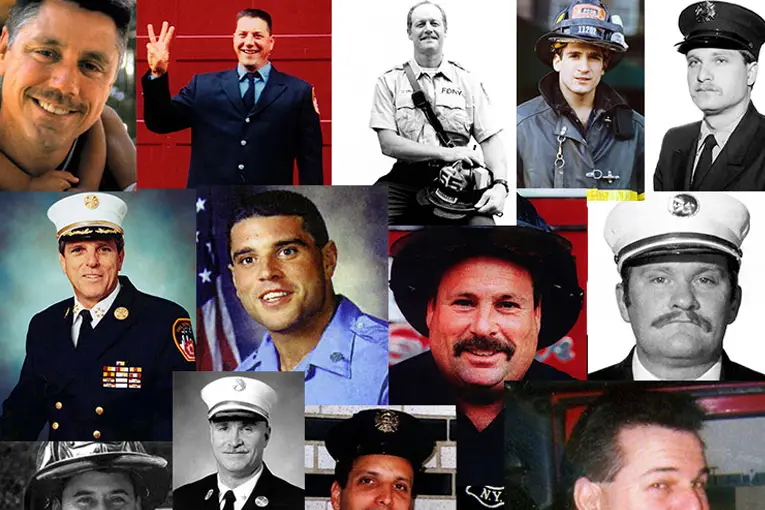
Among the dead were 343 firefighters, 60 police officers, 8 paramedics, and thousands of office workers, airline staff, and visitors.

First Responders

Firefighters Who Died on 911
Image credit: Fire Engineering

The bravery of first responders on 9/11 remains one of the most profound aspects of the tragedy.

Many firefighters and police officers entered the Twin Towers to rescue trapped occupants, knowing the risks.

When the towers collapsed, 344 firefighters died of the 442 first responders killed.

343 were from the New York City Fire Department (FDNY), 23 from the New York City Police Department (NYPD), 37 from the Port Authority Police Department (PAPD), and several emergency medical technicians and paramedics.

It remains the largest single-day loss of emergency personnel in U.S. history.

How Many People Survived the 9/11 Attacks?

Despite the enormous loss of life, thousands of people were rescued or managed to escape the World Trade Center before the towers collapsed.

Estimates suggest more than 14,000 people were safely evacuated from the Twin Towers and surrounding buildings.

Many survivors owe their lives to quick-thinking colleagues, emergency personnel, and ordinary bystanders who helped guide others to safety.

At the Pentagon, approximately 18,000 people were inside at the time of the attack.

Due to its vast size and rapid evacuation procedures, most were able to escape before parts of the building gave way.

Deaths Caused by Illness Since 9/11

Image source: Asbestos.com

In the years that followed, thousands more people have died from illnesses linked to exposure to toxic dust and debris from the World Trade Center site.

The collapse released a massive cloud of asbestos, heavy metals, and microscopic glass particles that blanketed Lower Manhattan.

According to the World Trade Center Health Program and the September 11th Victim Compensation Fund, more than 5,000 additional deaths have since been attributed to respiratory diseases, cancers, and other conditions related to 9/11 exposure.

Tens of thousands of survivors and responders continue to live with long-term health effects, making the tragedy’s human toll far greater than the original numbers suggest.

Who Carried Out the 9/11 Attacks?

Osama bin Laden and Khalid Sheikh Mohammed

The attacks were orchestrated by al-Qaeda, a militant Islamist terrorist organization founded by Osama bin Laden.

The 19 hijackers were divided among the four flights and received training in aviation and coordination to carry out the suicide missions.

Following the attacks, the United States and its allies launched the Global War on Terror, including the invasion of Afghanistan to dismantle al-Qaeda and remove the Taliban regime that harbored its leaders.

Osama bin Laden remained a fugitive until May 2, 2011, when he was killed by U.S. Navy SEALs in Pakistan during Operation Neptune Spear.

Key Takeaways

The 9/11 attacks were an act of terrorism that claimed 2,977 lives on the day itself and have since led to thousands more deaths due to illness and long-term exposure.

Four coordinated plane hijackings caused massive destruction in New York City, Virginia, and Pennsylvania, changing the course of global history.

Behind every statistic were people including families, friends, and colleagues; whose loss continues to shape the collective memory of nations worldwide.

Remembering the human impact of 9/11 ensures that the courage, sacrifice, and unity shown in the face of tragedy are never forgotten.