The significance of the Home Ignition Zone in reducing wildfire risks
A detailed analysis from the National Fire Protection Association (NFPA) emphasises the pivotal role a five-foot zone around one’s home plays in enhancing safety from wildfires.
The association, noted for its efforts in raising awareness about reducing homes’ wildfire risks, recently revisited the concept of the home ignition zone and its immediate area.
Origins of the Home Ignition Zone and its primary components
The Home Ignition Zone (HIZ) is an idea pioneered by retired USFS researcher Dr. Jack Cohen.
The theory focuses on the premise that the condition of a home, including the materials it’s built from and its maintenance state, as well as the vegetation within a hundred feet, greatly affects its potential to catch fire during a wildfire.
The combined research by Dr. Cohen and the Insurance Institute for Business & Home Safety (IBHS) underpins that the immediate zone or non-combustible zone – the home and its surroundings up to five feet – is the most significant risk factor and should therefore be the starting point in mitigating risks.
The importance of a five-foot buffer in wildfire safety
Embers and small surface flames are the primary causes of home ignition during wildfires.
To prevent these, a five-foot buffer is created around the home to ensure embers or surface fires cannot reach it. This involves:
Clearing debris such as leaves, needles, and branches from roofs and gutters.
Ensuring the immediate five feet around the base of homes and attached structures, like decks, is devoid of any debris and well-maintained.
Substituting wooden mulch products with non-combustible alternatives like crushed stone or gravel.
Constructing walkways using non-combustible materials like concrete or pavers.
Pruning trees and shrubs next to the home to prevent them from overhanging the roof, gutters, or chimneys.
For additional tips and resources on preparing homes for wildfires, visit the NFPA’s dedicated page.
A small investment in time spent on such preventive measures can significantly improve a home’s chances of withstanding a wildfire, and provide greater peace of mind.
IFSJ Comment
The exploration of the Home Ignition Zone concept and its correlation with wildfire safety highlights a key preventive measure homeowners can adopt.
By focusing on the immediate surroundings of their homes, residents can drastically reduce wildfire risk, reinforcing community safety and resilience against such disasters.
About NFPA
The National Fire Protection Association (NFPA) is a global, non-profit organisation devoted to eliminating death, injury, property, and economic loss due to fire, electrical and related hazards.
NFPA provides a wealth of resources to better educate residents about reducing the risk of wildfires to their homes.
Their commitment to research, training, and providing necessary resources reflects their mission to enhance public safety.
From championing innovation to fostering customer relationships, Pierce Manufacturing’s President, Bob Schulz, discusses his vision for the company
Congratulations on your recent appointment as President of Pierce Manufacturing. How does it feel to be in this new role, and what excites you most about it?
It’s honouring and humbling to be appointed as the President. Pierce Manufacturing is an incredible company, and we have an amazing purpose – serving the fire services and the work that they do to serve communities, to save property and lives.
What I’m most excited about is the team we have here – the team we get to work with on a daily basis, our dealer network, and our customer base.
To me, the most exciting part is the interactions with all the people.
Can you share a little bit about your journey from joining Pierce to your present role as President?
I met my wife, who was born and raised in Wisconsin, when I was 12 years old. I joke that it’s a good thing that she fell in love with 12-year-old me so 20-something-year-old me had a chance with her.
We started dating in our early 20s and I decided to relocate to Wisconsin. I had a job with a different company, which I was content with, and I travelled quite a bit internationally.
It was enjoyable and I was travelling with someone that didn’t enjoy it. They were on the phone with a recruiter, and they said, ‘I’m not interested in that job, but this guy might be, and he threw me the phone and it was a job for Pierce Manufacturing. I ended up at Pierce out of blind luck.
I’ve been with the company going on nearly 20 years. It’s a fantastic company and I’ve moved a little bit, but it’s all been within the fire service side of the business.
I really cut my teeth in our airport products business – aircraft rescue firefighting vehicles, in which we have a strong international presence.
I had leaders there that provided a lot of opportunities for me and got me involved in a lot of different things – anything from customer service items to new product development, to production, scheduling, and manufacturing, procurement negotiations, all sorts of tasks. I got a wide variety of experience at our airport business.
Four years ago, I was asked to come over to our Pierce business and lead our aerial product line.
I had the opportunity to help with the development and introduction of Pierce’s 100’ Heavy-Duty Aerial Tower with mid-mount configuration. The opportunities and the experiences of that role helped prepare me for my current role as President.
My background is in finance. I tend to avoid saying that out loud because I think there’s a lot of preconceived notions about individuals in finance, and one of those is that data drives all of our decisions.
I do believe strongly that data is very important; however, it’s not meaningful if you don’t have people’s perspective.
Perspective can either validate or invalidate data or vice versa. If the data and the perspective are aligned, you’re going down the right path of finding the right problem to solve or the right solution.
To get that perspective, though, you need to have strong relationships. The core of that is building trust across team members, and that’s what I try to do.
I’m very forthright and very honest, and I believe that doing the right thing is paramount. I’m going to connect with people on a personal level whenever I can to start understanding those perspectives.
How will you maintain Pierce’s customer commitment and customised solutions culture under your leadership?
This will be a shorter answer: it’s listening. Listening to customers’ problems, the battles they’re fighting, the challenges that they endure, and then trying to find the right solutions that address those challenges.
Pierce was built on this philosophy as a core way in which we do business. We listen to suggestions, but it’s even more important to understand the problems people are facing and then see how we can help contribute through a variety of product offerings, through innovative solutions, and trial and error to a certain degree.
What are some strategies you’ve found effective in maintaining partnerships with dealers and ensuring customer satisfaction?
I have a fundamental belief that for every challenge there’s likely solutions that can be mutually beneficial to all parties involved. That’s customers, that’s our dealer network, and it’s Pierce.
Some of the strategies include proper investment. Proper investment isn’t just buildings, it’s also in training. It’s in education. It’s in parts as well as service – having the right parts inventory on the shelf and having the right systems in place.
It’s all about proper investment in the right areas because we are total lifecycle providers. It’s not just a whole goods business. You have to be a total solution provider and generally, when you are, you’re finding things that will benefit all parties involved.
What are your thoughts on the current state of the firefighting vehicle market?
The North American market has seen tremendous industry growth where orders have significantly outpaced shipments – and that’s in a time of significantly elevated inflation.
I don’t know how many times in the last three years I’ve heard people say ‘I’ve never, ever experienced something like this’. Some of the things we’re doing to address these challenges include making significant investment in facilities including tens of millions of dollars within our Wisconsin facility, as well as various other campuses.
That facilities investment comes along with better operational flow to help increase throughput, as well as training centres to develop our team members. I want to emphasise that throughput does not come at the sacrifice of quality.
It starts with investment in facilities, also an investment in automation. This isn’t about displacing people; this is about supplementing the resources that we have.
When you’re at near full employment, you must look at other ways to improve efficiencies. We’ve invested in robotic painting and automated fabrication equipment, all the while growing and developing those teams.
We’ve also addressed the challenges faced in recent years by remaining focused on people. It’s where we started this conversation.
Our Pierce team can invest in all the facilities and all the equipment we want, but if we’re not investing in our people, it’s for nought. We need to continue these efforts.
These are the types of strategies that will help address that tremendous growth in the North American fire apparatus market and help us improve lead times along the way.
Can you share some of your future plans for the company? What are the main objectives and milestones you want to achieve?
I believe in evolution not revolution. To a certain degree, we emulate our industry, and we need to make sure that we’re evolving at the proper pace, and that’s internal.
We have a lot of positive momentum with our growth and our market share. But we need to remain true to our core, and our core is quality products.
We will continue to maintain that focus, even as we continue to produce more to meet the market demands.
Also at our core is the strong relationships we have with the fire service, our customers, our dealers, and our suppliers.
We’ll continue to maintain these strong relationships, and ultimately, our commitment to total lifecycle support.
How was Pierce’s experience at FDIC 2023?
FDIC was a great event. It was a great event to display our latest technology, talk through customer needs, and build industry partnerships along the way.
We’re always learning new things when we’re at the show that we contemplate, build upon, validate what we’re doing, and continue to go about our business.
What’s next in terms of innovation and craftsmanship at Pierce?
I tend to look at history to understand where we’ve been, and where we’re from. What have we learned from past historical events that have propelled our business and team to where we are today, and how do we apply this to the future?
When you consider our mission to serve dedicated firefighters and first responders, quality must be our top priority to ensure they have the necessary resources to best serve their communities, and in their critical role of protecting lives and property.
We have a robust quality system, but any system or process can fail along the way if you don’t have the right people.
Team member development is an essential focus as we work with each individual, support them, and invest in their understanding of our quality systems and processes within our facilities.
Our dedication to listening, understanding our customers’ needs, and maintaining a genuine passion for helping solve unique problems through relationship development, quality, and lifecycle support is our continued approach as we look toward the future.
This exclusive article was originally published in the August 2023 issue of International Fire & Safety Journal. To read your FREE digital copy, click here.
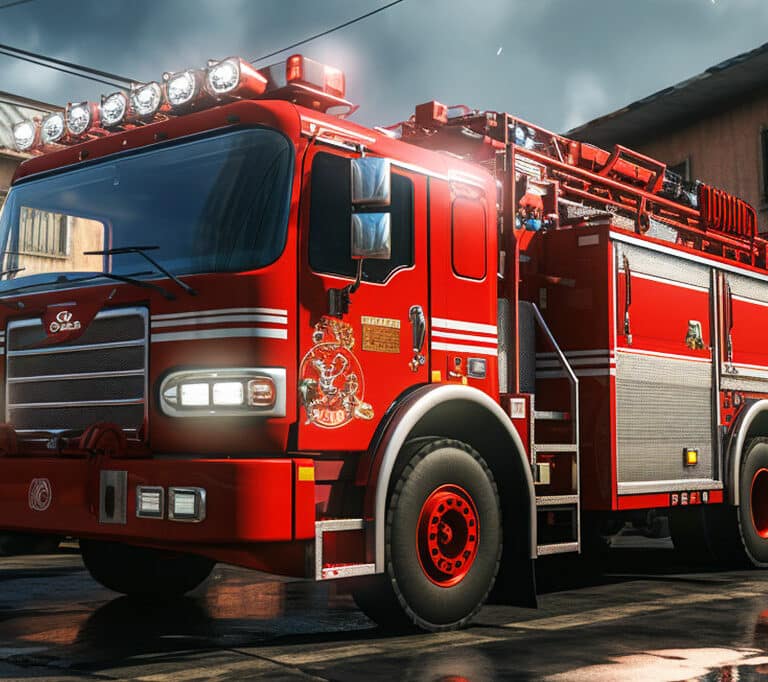
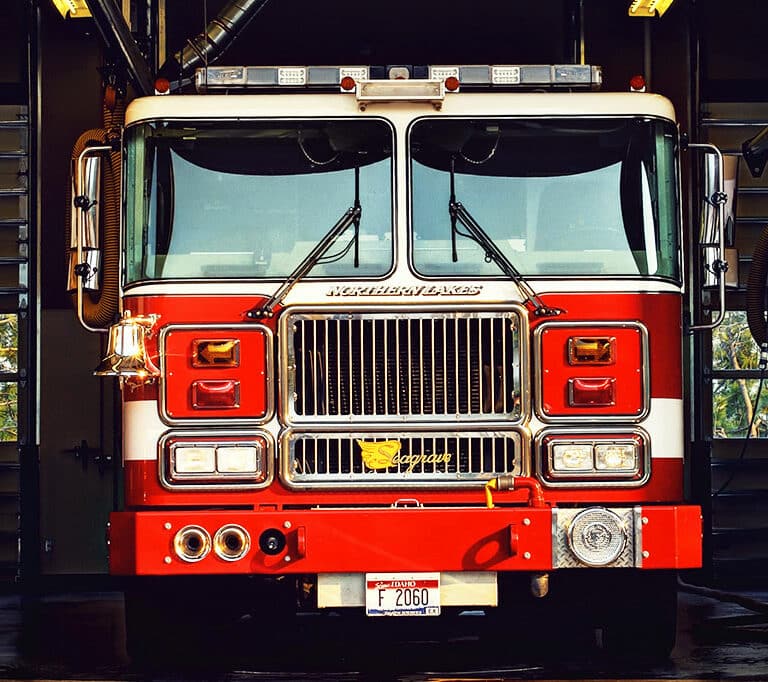
How much does a fire truck weigh is one of the most common questions asked by school kids whenever the fire service comes to visit.
Fire trucks, with their red flashing lights and blaring sirens, are a symbol of emergency response and safety in communities around the world.
These impressive vehicles are equipped with specialised tools and equipment to combat fires and save lives.
But have you ever wondered as an adult, not just how much does a fire truck weigh, but what equipment does it carry or even what types of fire truck are there?
In this article, we will answer these common questions and provide insights into the fascinating world of fire trucks.
How Much Does a Fire Truck Weigh?
The weight of a fire truck is a critical factor in its design and functionality.
The range in weight is primarily due to the size and capacity of the vehicle.
To answer the question of how much does a fire truck weigh, the simplest answer is that a standard fire engine, which is commonly used for responding to fires and emergencies, typically falls within the 20,000 to 40,000-pound range.
These trucks are equipped with essential firefighting equipment which add to their overall weight.
On the other hand, larger aerial ladder trucks, often used for rescuing people from tall buildings and providing elevated water streams, can be significantly heavier.
These trucks feature an extendable ladder, which requires additional structural support and hydraulic systems, contributing to their weight of up to 70,000 pounds.
A fire truck can weigh up to 70,000 pounds
The total weight of a fire truck includes various components.
The chassis, which serves as the foundation of the vehicle, contributes a significant portion to the overall weight.
The body of the fire truck, made of steel or aluminium, houses the equipment and water tanks.
Additionally, the equipment carried on the truck, such as ladders, firefighting tools, and medical supplies, further adds to the weight.
All these factors are carefully considered during the design and construction of fire trucks to ensure they are efficient, durable, and capable of responding effectively to emergencies.
How Much Does a Fire Truck Weigh When Full of Water?
Probably the second most asked question in relation to how much does a fire truck weigh, is how much does it weigh when full of water.
When a fire truck is filled with water, its weight can increase significantly due to the large water tank it carries.
On average, a fire engine can hold between 500 to 1,500 gallons (1,893 to 5,678 litres) of water.
Since each gallon of water weighs around 8.3 pounds (3.8 kilograms), a full tank can add an extra 4,150 to 12,450 pounds (1,882 to 5,647 kilograms) to the vehicle’s weight.
This added weight is a crucial consideration for firefighters and drivers, as it affects the truck’s handling and performance during emergency responses.
Properly managing the water supply is essential to ensure the fire truck can manoeuvre effectively and safely while combating fires and providing vital support to emergency situations.
How Long is a Fire Truck?
The length of a fire truck varies based on its type and model.
Standard fire engines typically measure around 25 to 35 feet (7.6 to 10.7 metres) in length.
However, aerial ladder trucks, equipped with extendable ladders, can reach impressive lengths of 75 to 100 feet (22.9 to 30.5 metres).
These longer fire trucks are often employed in high-rise firefighting and rescue operations, where their extended reach is essential for accessing upper floors and providing a safe evacuation route.
The varying lengths of fire trucks allow firefighting teams to choose the most suitable vehicle for specific emergency scenarios, ensuring an effective response to fires and other critical incidents.
How Wide is a Fire Truck?
The typical width of a fire truck ranges from 8 to 10 feet (2.4 to 3 metres).
This dimension is carefully designed to ensure that the vehicle can manoeuvre through narrow streets and tight spaces in urban areas without encountering difficulties or causing damage to buildings and obstacles.
A fire truck can be up to 3 meters wide
The compact width enables fire crews to quickly reach emergency scenes and provide timely assistance, even in congested environments.
What Types of Fire Trucks Are There?
Fire trucks come in various types, each designed for specific firefighting tasks, depending on the cause and type of fire. The most common ones include:
Fire Engines
Standard fire trucks equipped with water tanks, hoses, and firefighting equipment. They respond to most fire emergencies and carry a crew of firefighters. Recently, electric fire trucks have also been rolled out.
Aerial Ladder Trucks
Also known as ladder trucks or hook-and-ladder trucks, these vehicles feature extendable ladders and platforms for rescue operations in tall buildings.
Rescue Trucks
Rescue trucks are equipped with specialised equipment for rescuing people from hazardous situations, such as vehicle accidents or collapsed buildings.
Wildland Fire Engines
Designed for fighting wildfires in rural and forested areas, these trucks have off-road capabilities and carry water to extinguish smaller fires.
Airport Crash Trucks
Specialised fire trucks used at airports to respond to aircraft emergencies, such as fires or crashes.
Foam Trucks
Equipped with foam-generating systems to fight fires involving flammable liquids.
Each type of fire safety vehicle is carefully designed to address specific fire scenarios, ensuring that firefighters have the right tools and resources to combat various emergencies effectively.
The diversity of fire truck types enables firefighting teams to be prepared for a wide range of incidents, from standard structural fires to specialised hazardous material incidents.
These versatile vehicles play a crucial role in ensuring the safety of communities and protecting lives and property during emergencies.
What Equipment is on a Fire Truck?
Fire trucks are equipped with a wide range of tools and equipment to handle various emergency situations.
Some common equipment found on a fire truck includes hoses, nozzles, axes, saws, ladders, breathing apparatus such as oxygen masks, medical supplies, and thermal imaging cameras.
The exact equipment may vary depending on the specific type and purpose of the fire truck.
For example, ladder trucks will have extendable ladders and platforms for tall building rescues, while hazmat trucks will carry specialised gear for handling hazardous materials incidents.
The availability of this diverse firefighting equipment ensures that firefighters have the necessary tools to effectively and safely respond to different emergencies they may encounter.
How Long is a Fire Truck Hose?
The length of a fire truck hose varies based on the truck’s size and intended use.
Standard fire hoses used for firefighting operations are typically 50 feet (15 metres) long.
Aerial ladder trucks may carry longer hoses, up to 100 feet (30 metres), to reach higher floors in tall buildings.
The length of the hose is crucial in ensuring firefighters can effectively deliver water to the source of the fire, regardless of the building’s height or accessibility.
How Much Water Does a Fire Truck Hose Deliver?
The amount of water a fire truck hose can produce is determined by its diameter and water pressure.
Most fire hoses have a diameter of 1.5 to 2.5 inches (3.8 to 6.4 centimetres) and can deliver water at pressures ranging from 50 to 150 pounds per square inch (psi).
At an average flow rate of 100 psi, a fire hose can deliver around 50 to 125 gallons (189 to 473 litres) of water per minute.
This water flow is critical for effectively extinguishing fires and controlling their spread, especially in larger and more intense fire incidents.
Firefighters must skillfully operate the hoses to direct the water precisely and efficiently, making the most of their water supply to combat the flames and protect lives and property.
Firefighters need a special licence to drive a fire truck
The exact licence requirements vary depending on the fire truck’s weight, size, and type. For instance, a firefighter operating a standard fire engine may need a different endorsement than one operating an aerial ladder truck.
To obtain the necessary CDL and endorsements, firefighters must undergo specialised training to operate these vehicles safely and effectively.
This training includes learning how to handle the larger dimensions of fire trucks, understanding the unique challenges of emergency driving, and practising manoeuvres such as backing up, turning, and navigating tight spaces.
Firefighters also receive instruction on vehicle maintenance and safety protocols to ensure the proper functioning of the fire truck during emergencies.
Conclusion
Hopefully this article provided a clear and concise answer to how much does a fire truck weigh, and some of the most common questions to do with fire trucks.
Fire trucks are essential vehicles in emergency response and play a crucial role in safeguarding communities.
Their size, weight, and equipment are carefully designed to handle various firefighting and rescue tasks effectively.
The training and expertise of firefighters who operate these machines are vital in ensuring their efficient use during emergencies.
From carrying large amounts of water to navigating through tight spaces, fire trucks are equipped to tackle a wide range of challenges.
Understanding the capabilities of these vehicles helps us appreciate the dedication and skill of firefighters who work tirelessly to protect lives and property in times of crisis.
The hazards related to the quickly developing e-mobility industry were the focus of a forum hosted by the Consumer Product Safety Commission (CPSC), as reported by the National Fire Protection Association (NFPA).
The forum discussed the rising concerns over lithium-ion battery safety, particularly fires in e-bikes and other micro-mobility devices.
Rapid increase in lithium-ion battery-related injuries
In New York City alone, there were 13 injuries in 2019 caused by fires linked to e-mobility devices powered by lithium-ion batteries. By 2022, the number had risen to 147, with a further increase anticipated as 87 injuries have already been recorded this year.
Fire Department of New York (FDNY) Commissioner Laura Kavanagh commenced the forum by stating: “Lithium-ion batteries are now a top cause of fatal fires in New York,” with 13 fatalities already reported this year.
The need for a comprehensive approach to lithium-ion battery safety
The NFPA Vice President of Outreach and Advocacy, Lorraine Carli, was among key contributors to the CPSC forum, which also included representatives from manufacturer associations, consumer groups, and voluntary standards organisations.
Addressing the commission, Carli recognised the increasing challenges of fire and electrical hazards in our fast-paced, tech-reliant communities and advocated for a comprehensive strategy to tackle this emerging fire threat.
Carli said: “The Fire & Life Safety Ecosystem provides a framework to address this multi-dimensional challenge,” focusing on four critical areas: the regulatory environment, the use and enforcement of current codes and standards, trained and equipped first responders, and a well-informed public.
There was a wide agreement among the panellists on the need for stronger regulations for e-mobility device safety.
This includes mandatory safety standards, enforcing existing rules, and closing gaps that permit the import of untested, potentially hazardous batteries and devices into the U.S.
The explosive nature of lithium-ion battery fires
The panelists highlighted the explosive traits of lithium-ion battery fires. FDNY Fire Marshal Daniel Flynn likened these fires to those initiated by incendiary devices, stating: “These fires are large from the start.”
Carli stressed that preparing first responders for lithium-ion battery fires is crucial for their safety and should be prioritised.
She pointed to the symposium titled “Lithium-Ion Batteries: Challenges for the Fire Service,” co-sponsored by NFPA, FDNY Foundation, and U.L., as a substantial resource providing guidance for the fire service.
The panellists also emphasised the role of the public in enhancing safety.
While it can be hard for individuals to determine the safety of lithium-ion batteries in e-mobility devices, consumer education on the potential hazards and proper usage and maintenance of these devices can prevent potentially catastrophic fires.
In conclusion, CPSC Commissioner Mary Boyle stated: “Hearing from the stakeholders is an incredibly important part of the regulatory process… there is broad consensus that we need to act and act quickly.”
IFSJ Comment
This development underlines the urgency for a comprehensive understanding of lithium-ion battery safety, particularly in e-mobility devices.
As our dependence on technology grows, so do the risks, and it is crucial to keep abreast of these developments and preventative strategies.
About CPSC
The Consumer Product Safety Commission (CPSC) is a US government agency that protects the public from risks of injury or death from consumer products.
They achieve this through developing voluntary standards, conducting research into product-related illness and injury, and educating consumers about product safety.
Their commitment to addressing safety concerns surrounding lithium-ion batteries in e-mobility devices is instrumental in shaping regulations and encouraging safe practices.
New research by the National Institute of Standards and Technology (NIST) utilises AI to predict potentially fatal cardiac events in firefighters
Firefighters, revered for their courage and tenacity, often face grave hazards in their line of duty.
Yet, surprisingly, it’s not fire or smoke inhalation that is the leading cause of on-duty fatalities.
Instead, sudden cardiac death accounts for about 40% of on-duty fatalities, according to recent research.
To tackle this, a team of researchers at the National Institute of Standards and Technology (NIST) and partners have used machine learning, a form of AI, to predict abnormal cardiac rhythms in firefighters.
According to a recent publication, the team hopes their research can lead to the development of a wearable heart monitor for firefighters, providing early warnings for heart troubles.
Developing a life-saving tool for firefighters
Data from the National Fire Protection Association (NFPA) indicates that sudden cardiac death claimed the lives of 36 firefighters on-duty in 2022.
Such incidents occur when an irregular heart rhythm halts the heart’s blood-pumping ability, often due to a heart attack.
It’s a tragic fact that sudden cardiac events kill on-duty firefighters at twice the rate of police officers and four times the rate of other emergency responders.
Chris Brown, a NIST researcher, stated: “Year after year, sudden cardiac events are by far the number one killer of firefighters.”
Beyond the fatalities, these cardiac events can also cause career-ending injuries and long-term disabilities.
The potential of AI in firefighter safety
Firefighters operate in exceptionally strenuous conditions.
Whether carrying heavy objects, climbing stairs, or enduring extreme temperatures with little opportunity to cool down, the physical demand is immense.
Yet, despite discomfort, firefighters often soldier on without realising their potential risk for sudden cardiac death.
To address this problem, NIST researchers collaborated with the University of Rochester School of Nursing.
A decade ago, Rochester researcher Mary Carey and her team collected 24-hour electrocardiogram (ECG) data from 112 firefighters. This unique data set became the basis for their AI model, known as the Heart Health Monitoring (H2M) model.
“The firefighter data we collected is so unique,” Rochester co-author Dillon Dzikowicz stated. “Having robust data is essential to move our work forward and protect firefighters.”
The team used the Rochester dataset and machine learning to train the H2M model. It learned ECG patterns from both normal and abnormal heartbeats, allowing it to predict irregular heart rhythms.
Next steps in firefighter health monitoring
Once trained and validated, H2M analysed new firefighter ECG data, identifying around 6,000 abnormal ECG samples correctly with a 97% accuracy rate.
When trained using non-firefighter data, the H2M model had a 40% error rate, highlighting the importance of the specific dataset.
“Using the right dataset to train the AI model was critical,” said NIST researcher Wai Cheong Tam.
Looking ahead, the researchers believe their model could be incorporated into wearable heart monitors for on-duty firefighters.
Such a tool could provide real-time warnings of cardiac irregularities.
“This technology can save lives,” said Tam.
He envisages the technology being applied more broadly in future, potentially benefiting other first responders and the general public, given the right training data.
IFSJ Comment
International Fire & Safety Journal is eager to follow the development of the H2M model, and its potential deployment in the field.
The capability to predict fatal cardiac events in real-time could drastically improve the safety of our firefighters and other first responders.
By tackling the leading cause of on-duty fatalities, this technology could revolutionise safety procedures within the firefighting community and beyond.
About NIST
The National Institute of Standards and Technology (NIST), an agency of the US Department of Commerce, is at the forefront of advancements in measurement science, standards, and technology.
With a mission to promote innovation and industrial competitiveness, NIST’s groundbreaking research continues to push the boundaries of scientific exploration.
The institute’s research on the prediction of fatal cardiac events in firefighters underscores their commitment to leveraging technology for societal benefits.
Battery fires in electric mobility devices under the spotlight
The increased reliance on lithium-ion batteries in devices such as e-bikes and e-scooters, is resulting in a growing safety concern.
Despite their many benefits, including improved mobility, efficiency, and environmental impact, these energy-dense batteries also present a significant safety risk, according to Jim Pauley, president and CEO of the National Fire Protection Association (NFPA).
Pauley’s comments, originally published in an opinion piece for CNN, shed light on the escalating problem of lithium-ion battery fires.
The increasing threat of battery fires
According to Pauley, these batteries can cause exceptional damage if they catch fire. Fires initiated by lithium-ion batteries, particularly in e-bikes and e-scooters, are fed by a process known as ‘thermal runaway’.
These fires release toxic fumes and often require large amounts of water to extinguish.
What’s more, such battery fires can reignite days or weeks later, due to energy trapped within the damaged battery cells.
The New York Fire Department reported over 100 lithium-ion battery fires this year alone, causing 13 fatalities.
The gravity of the situation was recently highlighted by a devastating fire in an e-bike repair shop in Manhattan, leading to four deaths.
Tackling battery fires and ensuring safety
Addressing these safety challenges, Pauley suggests, requires a comprehensive approach: “Solving complex fire and life safety problems demands a comprehensive approach that includes regulatory action for using and enforcing codes and standards, well-trained and resourced first responders, and public education on the threat and actions that can be taken to avoid harm.”
According to him, regulations should limit the number of devices in various occupancies, establish guidelines for safe device disposal, and require batteries to bear the mark of an accredited testing laboratory.
He points out that New York City now requires e-mobility devices’ battery packs to be certified by an accredited testing laboratory.
Pauley also stressed the importance of training fire departments and first responders to safely handle lithium-ion battery fires: “The National Fire Protection Association (NFPA) actively supports national campaigns like the annual Safety Stand Down initiative, which focused on lithium-ion batteries last month as a way to increase firefighter health and safety.”
He also emphasised the need for consumer awareness about potential hazards and the importance of using devices, batteries, and charging equipment that have been tested and labelled by a nationally recognised lab.
The role of lithium-ion batteries in our future
Lithium-ion batteries undeniably bring many advantages to society. However, their associated risks need to be managed. Pauley believes that by working together within the fire and life safety ecosystem framework, we can enjoy the benefits of these batteries without compromising safety.
IFSJ Comment
Pauley’s article highlights a significant, growing risk associated with our shift towards environmentally friendly, electric-powered mobility options.
It underscores the importance of robust safety measures and regulations, effective emergency response training, and public education to mitigate the risks associated with lithium-ion battery fires.
Todd Short and Adam Levine recognised for their tireless commitment to fire safety
The American Fire Sprinkler Association has announced the recipients of its 2023 Fire Sprinkler Advocate of the Year and Young Professional of the Year awards.
Redmond Fire Department Fire Marshal, Todd Short, has been bestowed the Fire Sprinkler Advocate of the Year award.
This recognition comes for his lifelong dedication to fire safety and his efforts in educating the public on the benefits of fire sprinklers.
As assistant fire marshal for the Redmond, Washington, Fire Department, Short played a crucial role in the adoption of the city’s residential fire sprinkler ordinance.
This ordinance mandates the installation of fire sprinklers in all newly built single- and multi-family homes.
He also contributed significantly to the creation of the Best Practices Forum. This forum facilitates industry collaboration on fire sprinkler best practices, from permit application to final inspection.
Industry professionals and fire sprinkler advocates unite
Short’s commitment extends beyond his local jurisdiction. He’s an active participant in the Washington State Association of Fire Marshals, International Residential Code Technical Advisory Group, and currently leads the Washington State Fire Marshal Coalition.
The American Fire Sprinkler Association developed the Fire Sprinkler Advocate of the Year award to commend individuals not directly in the fire sprinkler industry but have made significant contributions towards advancing the sector.
Adam Levine named AFSA’s Young Professional of the Year
Meanwhile, Adam Levine, P.E., president of Capitol Fire Sprinkler, Woodside, New York, has earned the accolade of Young Professional of the Year for 2023.
Levine is celebrated for his technical prowess, professionalism, and leadership skills, both in his business and at the national level.
After graduating with a degree in fire protection engineering from the University of Maryland, Levine joined Capitol Sprinkler full-time in 2009. Later, he secured his MBA in entrepreneurship in 2011 from Baruch College.
Levine is also a respected member of the NFPA 14 Technical Committee and volunteers his time to maintain the standards set by NFPA.
Fire sprinkler industry celebrates upcoming talent
Kevin Hall, senior manager of engineering and technical services for AFSA, commended Levine: “Adam volunteers a significant amount of time to the industry and has facilitated AFSA’s involvement with the New York Fire Sprinkler Contractor’s Association.”
Both Short and Levine will receive their respective awards during the general session at the AFSA42 Convention, Exhibition & Apprentice Competition, scheduled for September 6-9 at Signia by Hilton Orlando Bonnet Creek.
For more information about the event and to register, visit the AFSA42 website.
About the American Fire Sprinkler Association
The American Fire Sprinkler Association is an organisation that aims to promote the adoption and proper use of fire sprinklers. Through advocacy, education and awareness, the association works to ensure that fire sprinkler systems are more widely understood and utilised to save lives and property.
IFSJ Comment
Awards such as these are crucial in recognising the contributions of those working tirelessly to advance fire safety.
The honourees, Todd Short and Adam Levine, demonstrate the vast impact individuals can make towards fire safety, from local ordinance change to national-level influence.
We congratulate both recipients on their well-deserved accolades.
Their accomplishments remind us of the significant role fire sprinklers play in protecting lives and property.
Newly enhanced OGI cameras ensure swift and reliable detection of invisible gas emissions
In an effort to streamline the inspection process of numerous fittings and connections in oil and gas facilities, an increasing number of these facilities are now turning towards Optical Gas Imaging (OGI) cameras from Teledyne FLIR, according to the company.
The ground-breaking G-series OGI cameras grant operatives the ability to quickly locate and reliably detect invisible gas emissions.
A notable feature of these latest models is their ability to provide enhanced and rapid documentation of gas leaks. This helps in averting the loss of product and revenue, potential fines and safety hazards.
Spectral response technology makes invisible gases visible, aids precise quantification
The G-series OGI cameras by Teledyne FLIR use an advanced technology which utilises an infrared camera matching spectral responses to specific gases.
This technology is ideal for offshore platforms, LNG shipping terminals, oil refineries, natural gas wellheads and processing plants.
The FLIR G-series cooled-core OGI cameras render invisible gases visible, while also allowing precise quantification.
The Gx320, G620 and Gx620 cameras are particularly efficient in detecting methane and hydrocarbon emissions from oil and gas production, transportation and processing facilities.
In total, the technology allows operatives to detect nearly 400 different gases.
This can result in surveying large areas up to nine times faster than traditional methods, thereby enabling early leak detection and emissions reduction.
New touchscreen features and connectivity options revolutionise gas emission detection and reporting
In line with their commitment to continuous improvement, Teledyne FLIR has recently enhanced the G-series range with several new features.
The addition of an LCD touchscreen allows users to make annotations directly on the camera, like drawing arrows or circles, or leaving comments. Additionally, the company has integrated Wi-Fi and Bluetooth capabilities into the cameras.
Operatives can now automatically upload and store saved images and videos to the FLIR Ignite cloud software directly from the field. This technology can also connect to a third-party app, enabling operatives to share captured content with colleagues around the world.
This significant advancement in the oil and gas industry not only improves efficiency in locating and mitigating fugitive emissions but also aids in their documentation and reporting.
By empowering everyday users in the oil and gas industry to focus more on prioritising leak repairs, the G-series OGI cameras from Teledyne FLIR also provide a clearer understanding of the emission severity, making the value of this technology clearly evident.
For more detailed information, watch the below video:
IFSJ Comment
This advancement in fugitive gas emission detection represents a major step forward in terms of safety and efficiency in the oil and gas sector.
It signals a technological shift that can potentially revolutionise gas leak detection, minimising hazards and paving the way for a safer future in the industry.
The JHB Group, Inc. has announced its newest venture in the public safety arena.
They are preparing to launch a unique overland response series, introducing an innovative trailer named “The Badger”.
The Badger: a revolution in overland response
The Badger is the first product to be featured in the Overland Response Series.
It aims to enhance the capabilities of emergency services agencies such as police, fire, and disaster management units.
This versatile command trailer is built to confront challenges directly and provide a compact, sturdy solution for a variety of mission profiles.
These profiles range from incident command and wildland response to disaster management, quick reaction forces, drone operations, and more.
The intention behind this overland response vehicle is to offer enhanced power systems, communication and network abilities, scene lighting, rehab functionality, and augmented versatility.
Industry support for the innovative overland response trailer
In developing the Badger, JHB Group has received support from several industry leaders. These include Michelin Tires, Tecniq, Peplink, sPOD, Overland Vehicle Systems, Hypha, and GoPower.
“The response from the industry has been overwhelming,” JHB Group CEO Chris Gantz acknowledged: “The support from these industry leaders has really helped shape the Badger into one of the most versatile and rugged emergency response vehicles ever built.”
Gantz also highlighted the innovative elements of the Badger: “The Badger has components and design elements that have never been tried before, and the collaboration is amazing.”
The name “The Badger” was chosen to reflect the qualities of the animal it’s named after – small, yet fiercely brave.
Launch details for the Badger overland response trailer
The official launch of the Badger Overland Response Trailer is set for 4:05 p.m. on August 16, 2023.
Lessons from the North Sea Tragedy: Understanding fire risks in the era of electric vehicle transportation and essential strategies for prevention and suppression
A recent disaster involving a major fire onboard a cargo ship, the Fremantle Highway, off the coast of the Netherlands has underscored the risks and challenges associated with shipping.
The ship, loaded with around 3,000 cars, including 25 electric vehicles (EVs), was en route from the German port of Bremen to Port Said in Egypt when a fire broke out.
The incident led to one fatality and several injuries, highlighting the necessity of enhanced fire safety measures in maritime transportation.
The Perils of EV Transportation at Sea
Electric Vehicles (EVs), powered by lithium-ion batteries, have emerged as an innovative solution to curb greenhouse gas emissions.
However, while their adoption in terrestrial transportation has been substantial, their carriage in maritime transport introduces a set of unique fire safety challenges.
One of the most significant risks associated with EVs on ships is the propensity of lithium-ion batteries to ignite under certain conditions, a phenomenon known as ‘thermal runaway‘.
This typically occurs when a battery overheats, causing a reaction that further increases the temperature and can lead to the battery catching fire.
The likelihood of thermal runaway increases if batteries are damaged, defective, or improperly handled or stored.
What makes these fires particularly dangerous is that they are notoriously difficult to extinguish.
When a lithium-ion battery ignites, it can produce its own oxygen, meaning a fire can continue even in the absence of ambient oxygen.
This makes traditional fire suppression methods, like smothering, less effective.
Further complicating matters is the issue of ‘stranded energy’.
After an initial fire involving a lithium-ion battery is extinguished, the battery can reignite.
This can occur hours, or even days, after the original fire, which presents a unique hazard not typically encountered with traditional vehicle fires.
To add to the risk, a fire originating from a lithium-ion battery produces toxic gases such as hydrogen fluoride and phosphorus pentafluoride, posing both a health risk to those in the immediate vicinity and a potential environmental hazard.
Moreover, the high energy density of lithium-ion batteries can lead to fires that are far hotter than typical combustible material fires.
The intensity of such fires can make them difficult to control and suppress, while also increasing the risk of the fire spreading.
Finally, the sheer volume of EVs transported on some vessels can exacerbate these risks.
With larger numbers of EVs in close proximity, a fire that starts in one vehicle can quickly spread to others, leading to a much larger and more dangerous situation.
This makes early detection, isolation, and suppression of fires critical in scenarios involving the transportation of EVs at sea.
Best Practices for Fire Suppression and Prevention Onboard
Fire safety in shipping, particularly concerning EVs, requires proactive measures for prevention, early detection, and effective suppression.
Leading Survival Technology solutions provider Survitec emphasises the importance of early fire detection systems, specially designed to monitor lithium-ion battery conditions.
Indicators like heat, smoke, popping sounds, and toxic gas emissions from batteries can serve as early warnings.
Current safety innovations focus on monitoring car decks for these early-stage fire conditions.
Survitec is investing in developing new solutions capable of pre-ignition monitoring, highlighting the importance of the type and location of sensors for effective detection.
New solutions are also emerging in the field of fire suppression.
An integrated graphical monitoring system, currently under development, aims to provide real-time status of all the fire-protected zones onboard.
It aims to link all the detection systems and sensors onboard for remote or local activation of a compartment’s fire suppression system.
Fire Suppression Techniques and Challenges
While tackling a fire onboard, understanding the unique nature of EV battery fires is crucial.
Such fires generate explosive and toxic gases, increasing the fire’s intensity and size, and can potentially reignite until the battery is completely burnt down.
This presents a real challenge for traditional gas-based fire systems.
Water-based solutions provide the best cooling effect.
However, they also introduce the risk of impacting ship stability due to the volume of water needed.
Therefore, an effective drainage system is a must.
Research suggests that a water mist system is the most effective for this type of fire, and numerous research and development initiatives are looking into the best water spraying method for EV fires.
The Path Ahead: Prevention and Early Detection
“Prevention is certainly better than the cure,” says Rafal Kolodziejski from Survitec.
Early monitoring and detection are increasingly important safety factors for ship operators and crew.
With an EV cargo, the earlier the crew can detect pre-fire conditions, the better. For instance, ship operators are being urged to increase the space between each vehicle or reduce the number of units transported.
As the maritime industry continues to grapple with these challenges, the recent North Sea incident serves as a tragic reminder of the importance of fire prevention and early detection in shipping, especially in the era of EV transportation.
Striking the balance between the efficient transportation of goods and the safety of crew and cargo will be pivotal in the shipping industry’s future.