Violence against first responders rising in Canada
With the rising incidence of violence against first responders in Canada, the International Association of Fire Fighters (IAFF) is welcoming newly proposed legislation.
Bill C-345, introduced in the House of Commons on June 19 by B.C. NDP MP Peter Julian, aims to create new Criminal Code penalties and more severe sentences for those who assault on-duty firefighters and paramedics.
IAFF and local leaders discuss the need for greater protection
A press conference was held on July 5 with leaders from the British Columbia Professional Fire Fighters Association (BCPFFA) and members of IAFF locals 323 Burnaby and 256 New Westminster.
During the conference, they discussed why greater protections are needed.
Peter Julian stated: “It has been disturbing to me to see an increase in the number of assaults and the violence against fire fighters and paramedics.”
He cited recent examples of such violence.
IAFF supports the proposed amendments to the Criminal Code
The bill aims to expand existing protections for peace officers by defining first responders to include firefighters and paramedics.
It proposes a new offence for assaults against first responders in the course of their duties.
In addition, the proposed legislation suggests an increased maximum penalty of 10 years imprisonment for assault against a first responder.
Aggravated assault against a first responder could lead to a maximum penalty of 20 years imprisonment.
If an assault against a firefighter or paramedic results in death, the bill proposes an automatic first-degree murder charge with a life imprisonment penalty and no possibility of parole for 25 years.
BCPFFA President Todd Schierling expressed his support, saying: “It’s time to include first responders in the same level of protection as peace officers. Such provisions serve to help make emergency responders safer when protecting Canadians.”
Shane Poole, New Westminster Local 256 President, agreed, noting: “We know our job is inherently dangerous, but when we respond to calls for help, we shouldn’t have to be faced with the potential for violence or assaults.”
The IAFF has also declared support for Bill C-321, a separate private member’s bill introduced by B.C. Conservative MP Todd Doherty in March, which would require consideration of an assault victim’s status as an on-duty first responder during sentencing.
IFSJ Comment
The rising number of assaults on first responders is a concerning trend that needs to be addressed.
The new legislation in Canada reflects an essential step towards offering additional protection to firefighters and paramedics, who risk their lives daily to protect others.
The collaboration between various local associations and IAFF in supporting this bill highlights the unified stance in safeguarding those who serve on the front lines.
Legislation to retrofit public housing buildings with sprinkler systems
U.S. Senators Tina Smith and Amy Klobuchar have reintroduced legislation to help install sprinkler systems in older public housing buildings, aiming to increase safety and save lives.
A detailed outline of the proposed legislation can be found here.
Companion legislation has been introduced in the House by US Representatives Bonnie Watson Coleman and John Rutherford, with support from Representative Ilhan Omar.
The Public Housing Fire Safety Act is a response to the tragic Cedar High Apartments fire in Minneapolis, Minnesota, in 2019.
The upper floors of the building where the fire erupted did not have sprinkler systems installed.
Key quotes from the officials on public housing fire safety
Senator Klobuchar stated: “In the wake of the tragic 2019 Cedar High Apartments Fire, I joined Senator Smith in introducing legislation to ensure that buildings have properly installed fire and sprinkler systems.
“Every second counts during a house fire, and with up-to-date systems, more lives can be saved.
“We need to continue these efforts by passing the Public Housing Fire Safety Act to bring us one step closer towards ensuring that buildings are safe for all residents.”
Senator Smith remarked: “The fire at Cedar High Apartments was a tragic loss for the Cedar-Riverside community.
“In the aftermath of the tragedy, I began connecting with people closely affected by the fire and looking into ways to prevent it from happening again.
“This bill gets to the root of what we need to do: incentivise public housing authorities to install sprinkler systems and give them the support they need to do it.”
Bill Webb, Executive Director of the Congressional Fire Services Institute, noted the importance of investment in retrofitting with fire sprinkler systems for public housing safety.
Trinidad Uribe, President of the USA Sprinkler Fitters Association, called the Public Housing Fire Safety Act a “crucial and necessary solution to improving the safety of public housing facilities and protecting the lives of tenants across the country.”
Details of the Public Housing Fire Safety Act and historical context
The Federal Fire Safety Act of 1992 mandated the installation of sprinklers in all newly constructed government-owned high-rise buildings.
However, thousands of public housing apartment buildings around the country were built before that date, leaving them without mandatory sprinkler systems.
Nearly all of the high-rise public housing buildings in Minneapolis were constructed prior to these regulations.
The Public Housing Fire Safety Act would create an annual $25 million competitive grant programme to provide funds to public housing authorities wishing to retrofit older high-rise apartment buildings with sprinkler systems.
Senators Smith and Klobuchar have previously secured $2 million in funding for the Minneapolis Public Housing Authority to install fire sprinklers in outdated public housing, reflecting a long-standing commitment to safety in public housing.
IFSJ Comment
The reintroduction of legislation aimed at improving fire safety measures in public housing reflects a timely response to the ongoing challenge of keeping residents safe.
By focusing on retrofitting older buildings with sprinkler systems, the Public Housing Fire Safety Act has the potential to significantly reduce the risk of tragic incidents like the Cedar High Apartments fire in 2019.
We will continue to monitor the development of this legislation and its potential impact on public housing across the country.
CTIF President Milan Dubravac shares the association’s objectives
CTIF, The International Association of Fire & Rescue Services, has stood as a beacon of unity since 1900, bridging nations and political divides in the common cause of life preservation.
We are a global entity that exemplifies a unique culture where the traditional hierarchies of rank and title bow to the universal merits of knowledge, expertise, and the unwavering passion for firefighting.
With roots in Paris, CTIF has weathered world wars, the Cold War, and a multitude of political storms.
Our resilience is reflective of our commitment to protecting and saving lives, irrespective of political nuances or geographical boundaries.
Today, CTIF is a global association, representing five million firefighters from 39 countries, essentially making us the world’s largest firefighting organisation.
Our ethos champions equality and non-discrimination, embodying the belief that every member, be it a career firefighter or a volunteer, is equally significant.
This culture of shared respect echoes across our diverse initiatives, from our International Firefighting Competitions to the development of youth fire brigades.
At the heart of CTIF’s mission is the safety of citizens, achieved through skilled firefighters.
We are an international forum for knowledge exchange and collaboration, tirelessly working to understand and continually enhance the working conditions for firefighters.
We distil our insights into freely available reports, manuals, and best practices, with an increasing emphasis on digital and multimedia content.
In essence, CTIF is an organisation that believes in the universal language of service, expertise, and dedication.
Our commitment to shared learning and global unity continues to fuel our drive, ensuring a safer world through skilled firefighters, today and beyond.
National fire service organisations call for restoration of funding
National fire service organisations, including the National Volunteer Fire Council (NVFC), International Association of Fire Chiefs (IAFC), International Association of Fire Fighters (IAFF), Congressional Fire Services Institute (CFSI), National Fallen Firefighters Foundation, and National Fire Protection Association (NFPA) have come together to oppose proposed cuts to vital fire service grant programs.
These programs, known as the Assistance to Firefighters Grant (AFG) and Staffing for Adequate Fire and Emergency Response (SAFER), are crucial for local fire departments to acquire necessary equipment, training, and staffing.
A joint statement has been released expressing their concern, which can be found here.
A lifeline for fire departments facing increasing costs and challenges
On July 27, the US Senate Appropriations Committee voted to cut these essential programs.
The Fiscal Year (FY) 2024 Department of Homeland Security Appropriations bill proposes to reduce the funding for each program from $360 million in FY 2023 to $338 million in FY 2024.
This reduction of $22 million stands in contrast to the House version of the bill, which maintains funding at $360 million each for FY 2024.
The AFG and SAFER grant programs have provided much-needed support to fire and EMS departments nationwide.
They face rising costs, staffing shortages, and expanding responsibilities, including handling extreme heat, wildland fires, and the aftermath of the COVID-19 pandemic.
These grants have been praised over the years as effective ways to assist local departments in meeting the needs of their communities.
Local fire departments annually submit applications totaling approximately $2 billion for the AFG program and between $1 and $2 billion for the SAFER grant program.
The joint letter stated: “Our organisations call upon Congress to restore funding to these programs. Local fire and EMS departments face an increasing number of risks from which they must protect the public.”
The letter further urged Congress to restore funding and asked the fire and emergency service community to contact their Senators and Representatives to protect these vital programs.
Critical moment for U.S. fire service funding
While the House version of the FY 2024 DHS Appropriations bill (H.R. 4367) maintains the existing funding levels, the proposed cuts by the Senate could hinder the capacity of fire and EMS departments to respond effectively to emergencies.
The unified voice of national fire service organisations is a significant call to action to preserve these essential funding channels, marking a crucial moment for fire and EMS departments across the nation.
IFSJ Comment
The decision by the US Senate Appropriations Committee to propose cuts to the AFG and SAFER grant programs could have far-reaching implications for the ability of local fire and EMS departments to function effectively.
With growing challenges and risks, these grants are more crucial than ever.
We encourage our readers to stay engaged and informed on this vital issue.
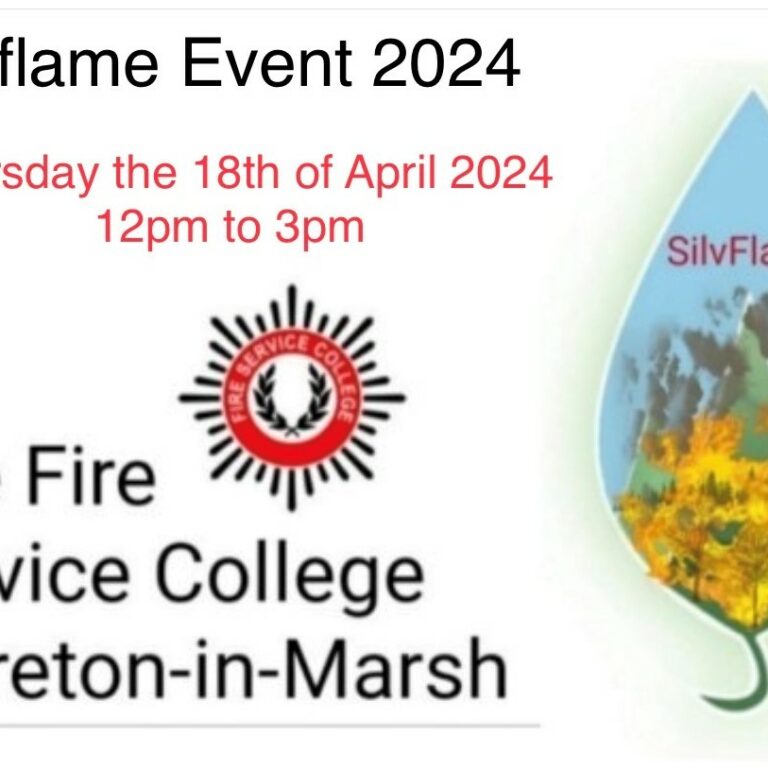
Silvflame Ltd, a trailblazer in wildfire protection technology, has announced an upcoming live fire demonstration event to take place at The Fire Service College in Moreton in Marsh, Gloucestershire.
Scheduled for Thursday, 18th April 2024, from 12 pm to 3 pm, the event is set to highlight the company’s latest advancements in wildfire containment and protection.
Wildfire protection products on display
Under the guidance of Silvflame’s Director, Jon Silvester, and in partnership with wildfire specialist Andy Elliott, attendees will have an opportunity to witness first-hand a series of cutting-edge products designed to protect against the devastating effects of wildfires.
The products to be displayed include:
Wildfire containment system
Critical infrastructure protection systems
Agricultural land protection
Populated area protection
Evacuation system
There will be also be a training VR simulator that people can use on where they can deploy the fire protection system themselves.
These solutions are developed with the aim of containing wildfires within a smaller area, allowing for quicker extinguishing and protecting lives, homes, land, and vital infrastructures.
Event networking
Following the demonstration, attendees are invited to an informal talk by Silvester, where he will discuss the products in detail and share insights about their potential impact on wildfire protection. The event will also provide a glimpse into future products such as Wildfire Suppression Systems and Vehicle Protection products.
Silvester expressed his excitement about working with industry specialists and highlighted the potential of Silvflame’s products to “save forests, homes, vital infrastructures, land, livestock, money, vehicles, and most importantly, lives.”
The event is free to attend, and on-site accommodation is available. Those interested in attending can register through the Silvflame Ltd website.
IFSJ Comment
Silvflame Ltd’s commitment to developing innovative solutions for wildfire containment and prevention reflects a growing concern about the increasing frequency and intensity of wildfires globally.
Their work promises to be a significant step forward in protecting communities and natural resources from the destructive power of wildfires.
The National Association of Fire Equipment Distributors marks 60 years of improving the fire protection industry
2023 marks the 60th anniversary of The National Association of Fire Equipment Distributors (NAFED), which was established in 1963 with the mission of continuously improving the economic environment, business performance, and technical competence in the fire protection industry.
NAFED members are found working in commercial, industrial, and institutional settings making buildings safe and giving individuals the tools, they need to fight early-stage fires.
Today, NAFED continues to operate with that guiding mission and the principal objective of gathering and disseminating information and ideas that will improve the world’s fire protection and increase the fire protection industry’s competence.
Our leadership, staff, and members work to develop factual information relating to the dependability and effectiveness of portable fire equipment, pre-engineered systems, and engineered systems so that authorities having jurisdiction, regulatory agencies and organisations responsible for the formulation and enforcement of the world’s fire codes are aware of it.
Because our members acknowledge the responsibility inherent in the sale and maintenance of fire protection equipment and service, and because we pledge to perform work and serve customers with the highest degree of honesty, skill, and integrity that such responsibility infers, NAFED members raise the bar.
NAFED members are dedicated to raising the standards of the fire equipment industry through cooperative efforts with other distributors and manufacturers in the areas of education, legislation, and professional service for the benefit of the general public in all aspects of fire prevention and protection.
Philip Gerace has joined E-One, a subsidiary of REV Group, Inc., as the director of sales. He will report directly to Larry Daniels, senior director of sales for REV Fire Group.
Gerace’s extensive background in the fire service industry
Gerace brings with him more than 30 years of sales leadership within the fire service.
He has most recently served as Vice President of Marketing for Task Force Tips, a long-time E-One supplier.
Prior to that, he worked for over 24 years with KME Fire Apparatus, where he held leadership roles including director of sales and marketing.
Additionally, Gerace served as a firefighter for 11 years with the Tamaqua, PA Fire Department.
In his role as E-One’s director of sales, Gerace will focus on growing the E-One market share, supporting dealer and customer partners, and leading efforts to streamline processes to improve efficiency.
“I am excited to have Phil join the E-One team!” said Larry Daniels.
He continued: “His sales and leadership experience make him a great fit for our leadership team and will be valuable as he begins working with our field sales team and dealer partners.
“His proven track record in leadership roles will have an immediate impact and the transition into the director of sales role for E-One will be seamless.
“I look forward to supporting Phil in the transition and continuing to see E-One grow our market share.”
“Phil brings a wealth of experience to E-One,” said Chris McClung, vice president of sales for REV Fire Group.
He added, “We are excited to have a sales veteran like him to help round out our leadership team.”
Gerace earned a bachelor’s degree in marketing from The Pennsylvania State University.
Throughout his career, he has held board positions, including president, with both FAMA (Fire Apparatus Manufacturers Association) and FEMSA (Fire and Emergency Manufacturers and Services Association).
E-One’s vision for growth
E-One said it is is looking forward to Gerace’s contributions in the sales department, with a strong belief that his experience will be instrumental in further developing their market position.
IFSJ Comment
The appointment of Philip Gerace at E-One highlights the company’s commitment to strengthening its leadership team with seasoned professionals.
Gerace’s vast experience within the fire service industry and his proven track record in sales and marketing will undoubtedly contribute to E-One’s ongoing growth and success in the market.
About E-One
E-One is a leading manufacturer of fire apparatus and is part of the REV Group, Inc.
With a focus on innovation and quality, E-One provides a wide range of firefighting vehicles and equipment.
E-One’s dedication to excellence and customer support has made it a trusted name in the emergency response industry, ensuring safety and efficiency for fire departments around the world.
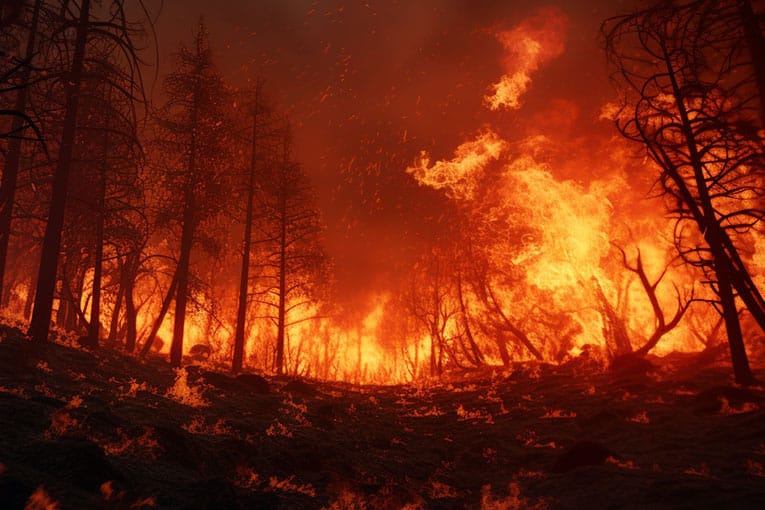
What causes wildfires is a commonly asked question, with wildfires during the summer months being shown almost every day in the news.
Fire only needs three components to thrive: fuel, oxygen, and heat. This is commonly referred to as the fire triangle.
During hot summer days when drought conditions are at their peak, even the tiniest spark can set off a wildfire.
In certain instances, fires occur naturally, sparked by the intense heat of the sun or from lightning strikes.
Unfortunately, similarly to the main causes of fires in general, the majority of wildfires stem from human negligence.
Wildfires can be incredibly destructive
Events such as arson, poorly managed campfires, careless littering of lit cigarettes, improper burning of debris, and playing with matches or fireworks are often held responsible for igniting these devastating blazes.
This article aims to explore what causes wildfires, ranging from natural occurrences to human activities.
By delving into these causes, we can enhance our knowledge and promote responsible behaviour to mitigate the future risks of devastating consequences of wildfires.
What is a Wildfire?
Wildfires are powerful and destructive forces of nature that can cause extensive damage to forests, natural habitats, and communities.
Understanding the common causes of wildfires is crucial for prevention and effective fire management.
By identifying the main causes of wildland fires, we can take proactive measures to reduce the risk of wildfires and protect our natural environment.
What Causes Wildfires?
Wildfires start due to a number of reasons, with 11 of the most common causes being:
Lightning
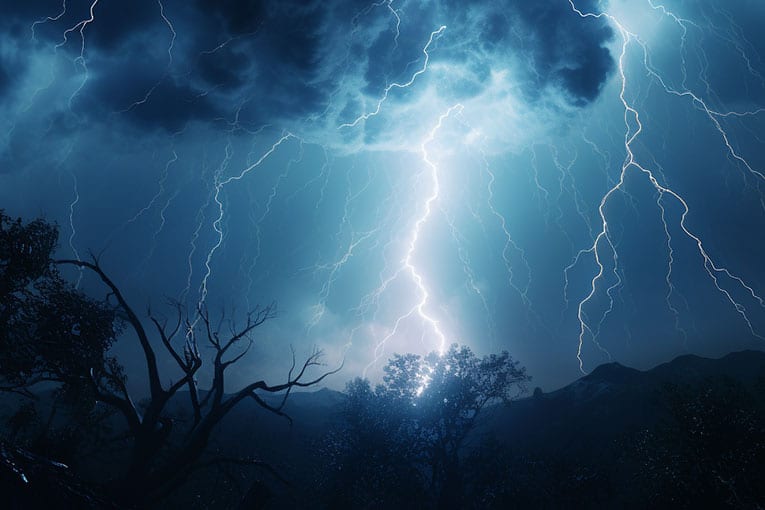
Lightning is a natural cause of wildfires.
Lightning strikes can ignite dry vegetation, particularly during periods of drought. The heat from a lightning strike can spark flames that spread through the surrounding landscape.
Lightning is one of the main natural causes of wildfires
This can lead to large-scale wildfires, especially in areas with dry and combustible vegetation.
Climate conditions and the frequency of thunderstorms can contribute to wildfires.
Campfires
Improperly managed campfires are a significant cause of wildfires.
Unattended or poorly extinguished campfires can spread to surrounding vegetation and ignite a fire.
Campers should always follow fire safety guidelines, including keeping fires small, using designated fire rings or pits, and ensuring that the fire is completely extinguished before leaving the site.
It is crucial to douse the fire with water, stir the ashes, and repeat the process until the fire is cold to the touch.
Burning Vegetation
Whether intentional or not, burning of vegetation like agricultural burning or land clearing, can lead to wildfires.
When uncontrolled, the spread of fires during vegetation burning can quickly escalate, especially in dry and windy conditions.
Proper permits, monitoring weather conditions, and employing trained workers are essential for safe and controlled burning practices.
It is important to follow local regulations and guidelines to prevent wildfires when conducting any form of vegetation burning.
Fallen Power Lines
Fallen power lines can be a significant cause of wildfires, particularly during windy conditions.
Strong winds can cause power lines to break or come into contact with trees or dry vegetation, resulting in sparks and fires.
Regular maintenance and inspection of power lines, timely tree trimming around power lines, and prompt repair of damaged infrastructure are essential for reducing the risk of wildfires caused by fallen power lines.
Smokers should always use designated ashtrays or fire-safe containers to dispose of cigarette butts.
It is crucial to fully extinguish cigarettes before discarding them and avoid smoking in fire-prone areas, particularly during dry and windy conditions.
Equipment Malfunctions
Equipment malfunctions, such as power tools, chainsaws, or machinery, can lead to wildfires if they generate sparks or excessive heat.
Proper maintenance, regular inspection, and safe equipment operation are essential to prevent equipment-related wildfires.
It is crucial to follow manufacturer guidelines, conduct routine maintenance checks, and promptly address any issues with equipment.
Vehicle Crashes
Vehicle crashes can cause wildfires when sparks or friction from the collision ignite.
The heat generated from the impact, particularly with metal components, can also lead to fire ignition.
Safe driving practices, proper vehicle maintenance, and avoiding off-road driving in fire-prone areas can help minimise the risk of wildfires caused by vehicle crashes.
Arson
Intentional acts of arson, where fires are intentionally set, are a significant cause of wildfires, and can lead to dangerous scenarios, and even loss of life.
Arson can occur due to various motives, including vandalism, revenge, and even pyromania.
It is a criminal offence and poses a serious threat to lives, property, and natural resources.
Public awareness, community vigilance, and reporting suspicious activities can aid in preventing arson-related wildfires.
Controlled Burning
Controlled burning, also known as prescribed burning, is a planned fire management technique used to reduce vegetation fuel loads and promote ecosystem health.
However, if not carefully executed, prescribed burns can escape control and result in wildfires.
Proper planning, comprehensive risk assessments, and skilled personnel are essential for conducting prescribed burns safely.
Adhering to specific weather conditions, monitoring fire behaviour, and having appropriate resources in place helps minimise the risk of prescribed burns turning into uncontrolled wildfires.
Fireworks
Improper use of fireworks, especially in areas with dry vegetation, can lead to wildfires.
Fireworks produce sparks and embers that can ignite nearby combustible materials, including dry grass or trees.
Even though fireworks can be pretty to look at, they can be a cause of wildfires
Adhering to local laws and upkeep high fire safety standards regarding fireworks, using fireworks in designated areas, and ensuring proper disposal of fireworks debris is crucial to prevent wildfires.
Volcanoes
Volcanic eruptions can cause wildfires, particularly when hot lava or volcanic ash comes into contact with dry vegetation.
Active volcano regions should have comprehensive emergency response plans in place to mitigate the impacts of volcanic-induced wildfires.
How does weather affect wildfires?
Increased temperatures alone do not guarantee a rise in wildfires.
As previously stated, fires need a combination of 3 factors to survive; availability of fuel, fire-friendly conditions (such as dry weather), and the presence of an ignition source, whether human-caused or triggered by lightning strikes.
One small spark can cause wildfires when conditions are dry and arid
The amount and dryness of vegetation are crucial factors since live, moist vegetation is less susceptible to burning compared to dry, dead vegetation, which easily catches fire and aids in the fire’s spread.
This is why areas affected by hot, dry weather and drought are much more likely to have wildfires than areas that are often rainy and cold.
Weather conditions play a critical role in fire behaviour.
Strong winds, like those experienced in the 2022 Colorado wildfires, can accelerate the spread of fires, resulting in unprecedented devastation for the affected communities.
Wildfires become more severe during prolonged periods of hot and dry weather due to higher temperatures leading to increased evaporation, which dries out the vegetation and provides ample fuel for the fires to thrive.
Where do most wildfires occur?
Wildfires happen all over the world. Places like the United States, Canada, Australia, the Western Cape of South Africa, and Southern Europe, especially forested areas, grasslands, and shrublands, are particularly susceptible to these blazes, particularly during extended periods of drought and high temperatures.
The vegetation in this area, comprising pine needles, dry shrubs, and grasses, possesses higher flammability compared to moister trees like maple and beech found in other parts of the country.
The Western US’s mild and arid climate further contributes to the fire risk. California, in particular, experiences long, hot, and dry summers, which lead to the dehydration of vegetation, leaving it highly susceptible to wildfires.
Conclusion
Wildfires can have devastating consequences for ecosystems and communities.
Understanding the common causes of wildfires is necessary to be able to better prevent them.
Whether ignited by natural occurrences or as a result of human negligence, wildfires can be mitigated through responsible behaviour, adherence to fire safety guidelines, and community awareness.
Implementing fire prevention strategies, practising safe habits, and promoting fire education can help minimise the occurrence and severity of wildfires.
By working together, we can reduce the impact of wildfires and protect our environment for future generations.
Jim Pauley, President & CEO of the National Fire Protection Association, reflects on the NFPA Conference & Expo 2023
The National Fire Protection Association (NFPA) Conference & Expo took place in June, but the energy of the more than 8,000 attendees for those few days in Las Vegas continues to fuel our determination to be more digital, more global, and more connected to our many stakeholders throughout the fire, electrical, and life safety communities.
I had the privilege to deliver my keynote speech before an audience that travelled from more than 60 countries to join us.
My remarks during the general session highlighted a crucial reality: the world is rapidly digitising and electrifying, with technology transforming every aspect of our lives.
In this evolving world, dedication to safety is more critical than ever because of our growing reliance on technologies that bring unprecedented benefits yet new risks.
As the world becomes increasingly digital, we must adapt our approach to safety, learning to navigate the new terrain and mitigate potential threats while keeping sight of the persistent challenges we face in fire, life, and electrical safety.
In recent years, digital transformation has become a buzzword, a nebulous concept ranging from implementing a new software tool to overhauling a company’s business model.
Yet, its core purpose is to create value for the user, improve efficiency, and achieve better outcomes.
There are many examples spanning various sectors – everything from hospitality to healthcare.
Some predict spending on digital transformation technologies will reach $2.3 trillion this year.
Furthermore, 90% of executives believe digital transformation will fundamentally change their industry’s competitive landscape, with 72% considering it a priority.
Such statistics underscore the weight of the digital era and the urgency for businesses and organisations to evolve or risk obsolescence.
This digital revolution, however, is more than just a phenomenon confined to tech-focused sectors.
It has penetrated even traditional industries, including fire, electrical, and life safety, which was plain for anyone visiting the exhibition floor during the Conference & Expo.
Digital transformation is not just about the adoption of new technologies.
It’s a comprehensive overhaul of our operational practices, ways of communication, and delivering value to our communities, which means more lives are saved and more property is protected.
As with any wave of innovation, new and unexpected safety challenges can arise, often driven by the same technological advancements we celebrate.
For instance, lithium-ion batteries power many of our everyday devices, from phones, laptops, toys, power tools, and electric cars.
But this ubiquitous and helpful innovation has also been implicated in numerous fire incidents, accentuating the delicate balance between advancement and safety.
We facilitate the development of new codes and standards, such as NFPA 855, for the installation of stationary energy storage systems.
Our codes and standards are regularly updated to keep pace with technological changes and emergency risks.
We offer new training programs for professionals working with new technologies, responding to their associated challenges, and distributing science-based public education materials.
We’re also conducting research through the Fire Protection Research Foundation, the research affiliate of NFPA, to stay ahead of emerging threats and explore new opportunities in fire, electrical, and life safety.
Yet, as we grapple with these newer risks, we must focus on the ongoing fight against more traditional threats, such as home fires and wildfires.
Here in the US, home fires remain a devastating reality, accounting for 75% of fire deaths.
Although significant progress has been made since the 1980s in reducing fire-related fatalities, a concerning uptick in reported deaths over the last decade necessitates renewed effort and strategic solutions.
Similarly, our Outthink Wildfire initiative strives to counter the growing threat of wildfires, particularly in high-risk regions such as California, Oregon, Washington, and Colorado.
This program offers valuable guidance on implementing and enforcing codes and standards to curb the wildfire problem.
The challenge of wildfire is testing communities worldwide, and these policy approaches can also provide strategies for others.
The world we operate in today vastly differs from a few years ago.
Digital technologies, while creating a more interconnected global community, also present new ways to tackle old problems.
NFPA is embracing digital technology to reach more people in more places with life and property-saving information.
In line with this vision, we developed NFPA LiNK, a digital platform offering instant access to all our codes and standards as well as multimedia explanatory content.
In a rapidly changing world, it supports professionals in different roles by enabling them to work more efficiently and safely, irrespective of geographical location.
It is helping companies, educational institutions, and government agencies achieve their own digital transformation.
We also continue to evolve our training and certification programs, with over 300 online courses covering a variety of fire protection, building life safety, electrical, and industrial hazard topics.
We can reach learners worldwide through computer-based testing and online remote proctoring, ensuring certifications are more accessible than ever before.
A new and revamped nfpa.org is on the horizon, with an integrated translation platform to serve our growing international audience.
This website will offer a more intuitive user experience and enhanced search capabilities to provide a seamless path to information.
NFPA, a pioneer in fire, life, and electrical safety for 127 years, remains uniquely positioned to address both current and emerging challenges.
We carry forward our commitment, knowledge, and passion, aided by the invaluable insights from our volunteer technical committee members, staff, board, and the community of professionals from around the world in solving some of the toughest problems we face in fire, electrical, and life safety.
After numerous meetings at the Conference & Expo, where I had the opportunity to connect with partners from around the world, I came away more hopeful and energised to meet those opportunities and challenges — no matter how daunting they may seem today.
It’s a big world. We can, and we will protect it together.
About the Author
Jim Pauley is the President and Chief Executive Officer of the National Fire Protection Association (NFPA).
NFPA is a global, non-profit organisation devoted to eliminating death, injury, property and economic loss due to fire, electrical and related hazards.
Pauley also serves as Chairman of the Board of the NFPA Research Foundation.
This exclusive article was originally published in the August 2023 issue of International Fire & Safety Journal. To read your FREE digital copy, click here.
Pye-Barker Fire & Safety, a leading US fire safety firm, solidifies its market presence in South Carolina
Acquisition set to enhance Pye-Barker’s service capabilities in the region
Pye-Barker Fire & Safety, a leading US provider of fire protection, life safety and security services, has confirmed its acquisition of the Excel Fire Sprinkler Company, Inc., based in Roebuck, South Carolina.
This acquisition further strengthens Pye-Barker’s position in South Carolina.
The deal is seen as a strategic move to bolster its service capabilities within the state.
Excel Fire Sprinkler Co., known for its comprehensive services in the design, installation, and maintenance of fire sprinkler systems, is now part of the Pye-Barker family.
The President and Owner of Excel Fire Sprinkler Company, Tim Stewart, commented on the acquisition: “Partnering with Pye-Barker makes sense for us as a company that believes in teamwork, ongoing training, quality craftmanship and leveraging technological advancements.”
He added: “We’re honoured to be joining the Pye-Barker family.”
Pye-Barker’s strategic expansion in South Carolina
Bart Proctor, CEO of Pye-Barker, welcomed Excel Fire Sprinkler Company into the fold: “As the largest private single-source company in the industry, Pye-Barker is proud to partner with Excel Fire Sprinkler Company.”
He continued: “Excel Fire Sprinkler Company’s aligned values and commitment to doing the right thing for customers and team members make them a great fit for our growing family.”
Excel Fire Sprinkler Company’s team of skilled technicians will continue to serve customers in South Carolina.
IFSJ Comment
Pye-Barker Fire & Safety’s latest acquisition not only indicates their growth strategy, but also represents an enhanced capacity to serve customers in South Carolina.
The joining of these two well-established brands underlines the dynamic nature of the fire safety industry, and reaffirms the importance of ongoing innovation and expansion in providing essential safety services nationwide.