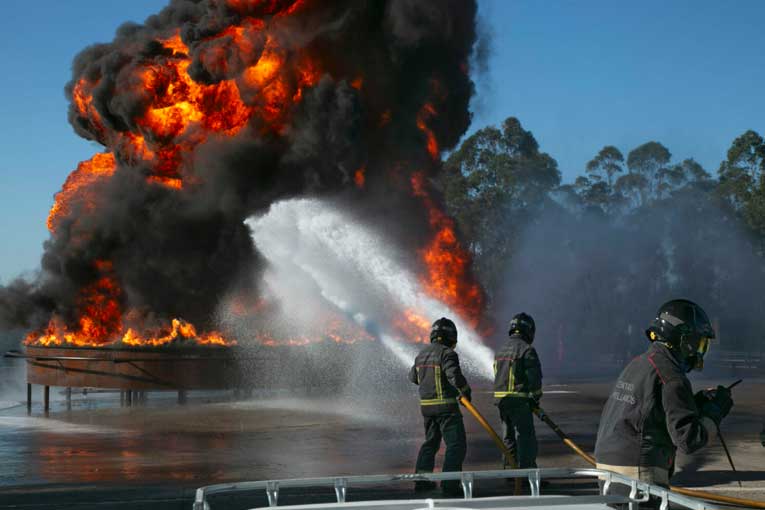
Since 2012, Globe by MSA, DuPont Personal Protection, and the National Volunteer Fire Council (NVFC) have partnered to provide turnout gear to fire departments in need. Applications for the 2023 giveaway are now open.
In 2023, MSA Safety will donate a total of 52 sets of turnout gear and 52 helmets (four per department) to 13 all-volunteer or mostly-volunteer fire departments in the U.S. and Canada.
To be eligible to apply, departments must meet be over 50% volunteer, serve a population of 25,000 or less, be located in the United States or Canada and be legally organized under state/province law [Indian/tribal entities not organized under state/province law are eligible].
Individuals applying on behalf of the department or department chief must be a member of the NVFC. MSA will provide complimentary NVFC memberships to the first 500 applicants.
Departments must also demonstrate a need for the gear. Only one application will be accepted per department and any subsequent applications received for that department will be disqualified. Recipients must use the donated items for the benefit of their department and not for any other purpose and cannot be resold.
Finally, recipients agree that their department name, details from application essay, and photo may be used in media by MSA, DuPont, and the NVFC for the purposes of promoting the donation program.
The scheme said that previous winners from the past two years are not eligible to apply.
View the official rules here and apply for the giveaway here.
Simon Rich, Sales Director for Europe at Blackline Safety Europe talks portable gas detection
Can you tell me about your background in the safety sector?
I have been working in industrial safety and gas detection sales for over 25 years and joined as one of the founding team members of Blackline Safety Europe following roles with Honeywell, Drager and ICI Chemicals. I oversee the entire sales function for Europe, from business development to customer support and channel management. Essentially, my role is to ensure Blackline Safety continues its international growth trajectory while maintaining the agility and care needed to support our customers and people at a local level.
Can you tell me about Blackline Safety: who you are and your place in the Fire and Safety market?
Blackline Safety is a global connected safety technology leader. We are headquartered in Calgary, with offices in Colchester, Lille, Houston and Dubai, we design and manufacture an award-winning range of gas detectors, area monitors and lone worker devices. Our ultimate goal is to ensure every worker returns home safely, every day, and connectivity is at the heart of this. Unique to Blackline, every product we produce has integrated direct-to-cloud connectivity. Couple that with our safety software, data analytics, reporting and optional 24/7 monitoring, and you have a scalable solution that can adapt quickly for any application in any organisation.
When an incident occurs we know that the speed of the response is critical. Because all Blackline Safety devices work straight out of the box and automatically stream data in real-time using integrated cellular connectivity, response teams are able to focus on the task at hand rather than dealing with a long and complex equipment deployment. There is no need for additional IT infrastructure or MESH networks – simply drop-and-go.
Emergency responses in the fire and safety industry are unpredictable and Blackline’s ATEX-certified technology is designed to be durable. All our devices are built for extremes and to function even in the toughest conditions, GPS-enabled location technology means you get real-time visibility of the conditions faced by each responder.
What is the BS 8484:2022 – why was it developed and what does it do?
Employers are legally obliged to manage any health and safety risks before their employees can work alone. Using a lone worker monitor enables you to ensure your workers’ safety.
BS 8484:2022 defines the industry-leading code of practice for lone worker equipment and monitoring services in the UK. The standard provides lone worker product and service providers with a code of practice that allows the despatch of a police Level 1 response, offering the highest level of emergency response and bypassing the central 999 system to make the process as efficient as possible.
Blackline Safety Europe is among the first businesses in the UK to be accredited to the new upgraded BS8484:2022 standard. Blackline’s G7c personal wearable is the world’s first connected gas detector and lone worker safety monitor certified to the newly upgraded BS 8484:2022, which is the standard that underpins the UK’s lone worker safety leadership.
How does it improve upon what came before it?
BS 8484:2022 is the British industry standard for providers of lone working safety services. Although it is not a legal requirement, BS8484 accreditation acts as a mark of quality for our product and proves to our consumers that Blackline Safety Europe has met the UK government’s strict standards.
BS8484:2016 was upgraded to BS8484:2022 to reflect changing technologies, and to improve safety. Included in the changes introduced in BS8484:2022 were: an acknowledgement that those working in pairs or small groups may be seen as “at risk” and so may benefit from the use of a lone worker system. There was also an acknowledgement that those working from home should be seen as “lone workers” and could benefit from using a lone working system.
In addition, there was new wording that accepts that calls with lone workers may be made via data, rather than the “traditional” call network. Finally, a new ruling states that to be BS8484 compliant, staff involved in delivering lone working services are to be screened in accordance with BS7858 (the UK standard for vetting of people employed in the security sector).
What special features does it have?
The standard provides lone worker product and service providers with a code of practice that allows the despatch of a police Level 1 response, offering the highest level of emergency response and bypassing the central 999 system to make the process as efficient as possible.
Where does G7c fit into Blackline Safety’s product portfolio?
Blackline’s G7c is an all-in-one cloud-connected monitoring solution integrating 4G connectivity and industry-first capabilities, from efficient and reliable lone worker monitoring to industry-leading multi-gas detection. We ensure no call for help goes unanswered by connecting workers directly with live monitoring personnel, from wherever they are working.
Is there anything else Blackline Safety has been working on recently?
We recently partnered with Vlahi Systems to extend our offering by providing cloud-hosted, sensor driven gas plume modelling. Vlahi are integrating the real-time, location-enabled data from Blackline’s G7 EXO portable area gas monitors into their web- and smartphone-based CERES plume modelling software — an ideal solution for managing chemical release and gas cloud scenarios that can harm personnel and surrounding communities, or trigger fires or explosions.
Using G7 EXO gas readings, CERES is able to automate and deliver the most accurate, up-to-date mapping of a gas plume, based on real-world conditions, to assist emergency personnel in their response.
This article was originally published in the January edition of IFSJ. To read your FREE digital copy, click here.
Reda Nouzhani, Area Sales Manager at Weber Hydraulik for the brand WEBER RESCUE SYSTEMS talks about the smart rescue equipment and digital applications on show at Intersec 2023
Weber Hydraulik, a family-owned group, is a serious player in the field of firefighting extraction and rescue operations and has become a leading manufacturer in the field. With colleagues having worked for the brand for over 30 years and firefighter partners working on solutions behind the scenes, the company is consistently driving innovation in the market.
At Intersec 2023, WEBER RESCUE SYSTEMS is set to present its smart rescue equipment and digital applications to the Middle East market following the launch of several new products at the return of INTERSCHUTZ in 2022. Among these innovations on show are the SMART-FORCE line up and RESCUE DIGITAL SYSTEMS.
SMART-FORCE
With the introduction of the WEBER’s new SMART-FORCE device series, smart functions have been integrated into rescues for the first time. The SMART-FORCE devices enable communication via WLAN/UMTS (Universal Mobile Telecommunications Service) connection and offer numerous additional functions for device control and management within their own app, including a pressure display, a training and theft mode, and the ability to analyse the current device status.
Reda Nouzhani, Area Sales Manager at Weber Hydraulik for the brand WEBER RESCUE SYSTEMS, says that the SMART-FORCE series has enabled the company to be innovative: “We are fully equipped, we are fully smart”. At the core of SMART-FORCE is duty: being able to effectively cut, spread and do whatever is needed during the extrication process. These tools are among the fastest and most powerful battery-operated solutions on the market.
SMART-FORCE features include: large power reserves for future vehicle technologies and materials; a patented, compact and maintenance-free motor; new generation of cutters including F7 rescue cutter for extreme conditions with high-strength materials; SMART FEATURE Device theft protection which includes device deactivation in case of theft; digital and SMART functions for tool operations and control including training mode, a live service dashboard and self-diagnosis; LED lights for improved visibility; and a central control panel that is easily reachable with thumb and index finger. The tools use Milwaukee M18 High-Output batteries are capable of being used under water up to a depth of three metres – whether its fresh, salty or dirty.
The battery used by the SMART-FORCE series offers boundless flexibility as the same battery can be used across 17 rescue tools and more than 200 Milwaukee other tools. “At the end of the day, money is going to factor in when choosing firefighting tools. Having a range of equipment that uses one battery saves both time and money,” says Nouzhani.
“It is our duty to provide firefighters with the most efficient equipment so they can do their job quickly and effectively in high pressure situations. This means being able to select extrication tools and equipment faster. Firefighters should not have to spend time determining what battery is needed for a piece of equipment – this is why we have adopted a one-size-fits-all compatibility model for the SMART-FORCE series.”
Tool electrification
Nouzhani says that WEBER recognises its duty to consider governmental advice surrounding sustainability and the environment. One part of this has been the move towards electrification being able to provide a single battery that can be used across the entire range. The transition from fuel and oil powered tools to battery powered tools is something that WEBER is focusing on in the Middle East as many customers are looking to make the switch.
WEBER’s tools are certified to ISO 14001, which sets out the criteria for an environmental management system and can be certified to: “We are showing to our customer that we are respecting the environment across the manufacturing, production and sales process. It is important that we are providing efficient tools that are environmentally conscious.”
Smart reporting
Nouhzani tells that there was an increasing number of requests for remote control systems and as a result WEBER recognised this and have incorporated numerous smart features that elevate them beyond being simple rescue tools. He says that we should also think about people working in the back office, which is why SMART-FORCE offers the capability to remotely monitor equipment.
In terms of connectivity features, the SMART-FORCE range has features including anti-theft mode and being able to locate a tool remotely. Batteries all come with a connectivity sim card, giving the option to connect remotely to the equipment via UMTS or wireless. Nouzhani explains: “The teams in the control centre are able to monitor tools from their location, and so if there is a specific incident which requires a specific tool they are able to locate the equipment, have it sent where it is needed and communicate how long it will take to arrive.”
RESCUE DIGITAL SYSTEMS
Digitalisation has long been a core topic for WEBER RESCUE SYSTEMS. To drive development in this area, a separate subsidiary was founded – RESCUE DIGITAL SYSTEMS GmbH. The company has developed individual and easy-to-use apps and software applications in the areas of: Alerting, Administration, Training, Accident Prevention, Rescue and more.
One solution is the RETTERAlarm – the individual alerting system for emergency organisations. RETTERAlarm makes it possible to alert emergency forces individually, in groups or also subsequently and specifically. It features fast alerting even without a control centre via push, SMS, call or e-mail directly to the smartphone. It also has eser and vehicle management, calendar functions and alarm monitor create a complete overview, DSGVO-compliant encryption and redundant server systems in Germany ensure 100% data security, and optimised deployment planning and readiness queries with direct feedback from the comrades via the app.
Another digital solution is the Crash Recovery System. This system continuously updated mobile database with all vehicle information for accident rescue and includes all production vehicles with airbags or alternative drive systems (cars, vans, trucks and buses). It features: simple updating system, uniform, easily interpretable vehicle graphics; Information on all components relevant to the rescue (airbags, gas generators, belt-tensioners, automatic roll-bars, reinforcements);
There is also RETTERSeismo, the seismographic measurement tool on the app. The tool supports teams in training and in the deployment of relief organisations as well as in the recording of movements and vibrations during the lifting of loads, building collapse as well as during the rescue of persons or in the context of traffic accidents with cars and trucks.
Intersec 2023
Nouzhani says that Intersec will be a great opportunity to access partners from around the world to present the SMART-FORCE series to the Asian, African and European markets. He notes that, as a trendsetter in the market, it is important to note that WEBER RESCUE has firefighters working behind the scenes on all their new solutions.
“All the experience we have in the field we apply and implement for our tools,” he tells. “Whenever we speak about our partners around the world we are referring to the feedback from our firefighting colleagues.” He says that in the firefighting world, there has previously not been equipment that is ‘digital enough’ on the field. This, he says, is what WEBER is changing: “This is my target during Intersec: to present these tools and services in terms of training and added value software and IT solutions.
“For the next year we will keep moving and keep working on our Digital solutions and SMART-FORCE. For our partners around the world: this is the starting point for a digital world. We started this two years ago and now its getting serious with our Smart Force. This is just the beginning.”
This article was originally published in the January edition of IFSJ. To read your FREE digital copy, click here.
US Fire Pump has announced the official launch of the new division of its company, US Fire Apparatus.
On a post on its LinkedIn page, US Fire Pump said that the move is response to the demands of industrial and municipal fire departments across the country, and that US Fire Apparatus was formed to build and deliver heavy-duty fire apparatus, quickly.
Why was US Fire Apparatus Formed?
Custom Pumper
The pump manufacturer said that through existing relationships and feedback from fire professionals, US Fire Pump President and CEO Chris Ferrara had listened and arranged the key elements that will help departments quickly obtain new fire trucks while receiving the customer service they deserve.
The leading statement on the US Fire Apparatus website reads:
Refined Focus on What Fire Departments Need Today. So what does this mean?
US Fire Apparatus was established in direct response to the needs expressed by fire departments across the United States of America.
Its mission is to design and supply robust fire apparatus with expedited delivery.
Drawing on existing connections and input from fire service experts, Chris has attentively considered and organized the essential components that will facilitate fire departments in promptly acquiring new fire trucks while ensuring they receive the high-quality customer service they rightfully deserve.
Key Benefits of US Fire Apparatus
Commercial Pumper
At US Fire Apparatus, their team comprises seasoned industry professionals, from sales and engineering staff to production and quality teams.
They bring a wealth of experience necessary to design, manufacture, and deliver robust fire apparatus.
Their refined fire apparatus manufacturing process harnesses a consistent material supply flow, along with unmatched building processes and expertise within the industry.
This approach significantly reduces delivery times, setting new benchmarks beyond current industry standards.
As important as building fire trucks, US Fire Apparatus prioritizes the cultivation of enduring relationships by actively listening to their customers and consistently delivering excellence in customer service.
Every fire truck undergoes a meticulous engineering, manufacturing, and testing process to meet CEO Chris Ferrara’s rigorous heavy-duty standards, guaranteeing the delivery of the utmost quality and performance necessary for the fire service.
Who is CEO Chris Ferrara?
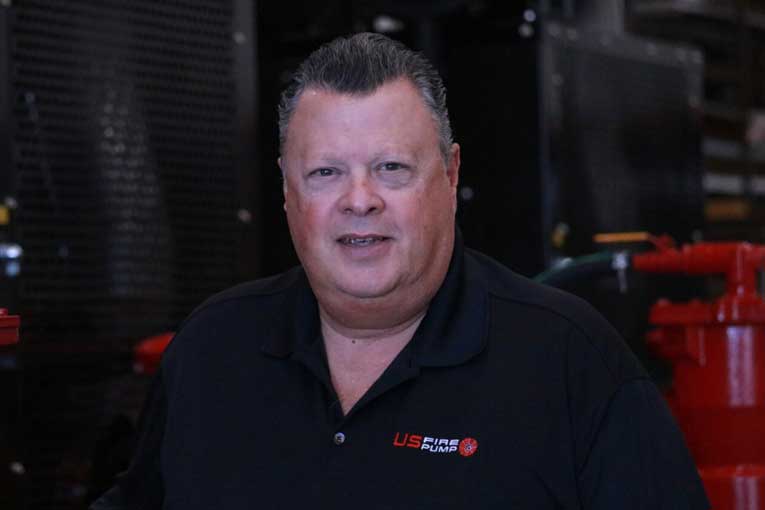
Chris Ferrara, CEO of US Fire Apparatus. Image credit: USFA
Drawing upon a rich background of experience and insight gained from serving as both a firefighter and a fire apparatus manufacturer, Chris has achieved remarkable success in guiding manufacturing enterprises to produce top-quality fire apparatus and fire equipment.
This journey has also led to the establishment of robust relationships with fire departments worldwide.
Key highlights of Chris’s distinguished career in the fire industry include:
Over 40 years of service as a municipal and industrial firefighter.
Over 40 years of experience in the field of fire apparatus manufacturing.
Founding a prominent fire apparatus manufacturing company.
The successful construction and delivery of more than 6,000 new fire trucks to fire departments globally.
The founding of a leading manufacturer specializing in industrial firefighting equipment.
Serving as the President and CEO of the world’s largest emergency response organization.
To find out more about US Fire Apparatus, visit their new website where there detailed information about the newly-formed company is available.
What is your role at Performance Advantage Company?
As President of the company, I directly oversee all phases of the PAC operation which includes sales and marketing, financial management, engineering, human resources, and all phases of shop operations. In other words, the buck stops with me. While we have a great staff of professionals here PAC, it is my responsibility to keep steering the ship in the right direction, and I do this by making sure or customers are getting the value and service they deserve.
Why are tool mounts important for firefighters?
When we look at the development of tool mounts, we look to have every product evaluated on the following criteria: organization, accessibility, protection against loss or damage, and value. These four principal areas directly affect a firefighter’s ability to properly fulfil their responsibility when called to action. Minutes count when it comes to life or death and PAC is committed to producing the best alternative in properly and effectively mounting tools and equipment so firefighters can react effectively at moment’s notice.
Have you noticed any interesting trends in the tool mounting market?
Tool and equipment manufacturers are constantly improving their products either through modification or by introducing new concepts. To properly meet the mounting needs with these changes, PAC has to adopt that same approach. Everything from simple hand tools like sledgehammers and entry tools to constantly changing designs in heavy rescue equipment keeps us looking at our design improvements or the development of new products.
How would you evaluate the past year for your company?
From the standpoint of sales and overall demand for our products, the past year has been excellent. Availability of materials and the ever-rising cost of those materials is the biggest challenge we face on a week to week, month to month basis. Logistics are also a concern when it comes to addressing the needs of our customers in a timely and cost-effective manner. Shipping related costs have continued rise as well. Every expense is elevated today, and as a result, we are constantly looking at every opportunity to create cost savings that can be passed on to our customers. Through all this we still stand on our core values as a company when it comes to backing up what we manufacture with a limited lifetime warranty, offering the absolute best in customer service, and offering additional services to our customers.
What plans does PAC have for the future?
One of our biggest efforts is going to be broadening our exposure in the fire and emergency services industry on a global basis. We have great distributors internationally, but we need to develop additional sources of distribution in areas around the world where PAC is not as well known. In addition, we are adding people and resources within the company to not only maintain, but to continuously improve our ability to answer the needs of our customers. There are things we are doing internally that will enhance our service to our customers that will not necessarily require additional cost to those customers. Increasing the value of PAC as the solution to the needs of our customers is a majority.
People tasked with extinguishing flammable liquid fires have known the limitations of water as a fire suppressant for years.
The pursuit for a better solution led Russian chemist Aleksandr Loran to develop and introduce in 1902 the first firefighting foam for flammable liquid/oil fires, after witnessing thedestruction they caused in his hometown.
The foam is used to create a foam blanket, which has lower density than water and floats on top of the fuel surface separating the flammable liquid from oxygen.
Through the years, technological innovations have improved on the effectiveness of firefighting foam.
While the advancements to foam technology helped firefighters to save thousands of lives over the years, they sometimes also brought unwelcome properties that had an impact on the environment.
Emergence of Aqueous Film Forming Foam
Aqueous Film Forming Foam (AFFF) containing PFAS (per- or polyfluoroalkyl substance) were introduced in the mid-1960s, first commercialised in the early 1970s, and have served as the industry workhorse ever since.
PFAS is a term used to describe a broad category of fluorochemicals (polymers and non-polymers) of different carbon chain lengths, physical and toxicological properties, and environmental impacts.
It includes long-chain PFAS such as PFOS and PFOA that are considered persistent, bio-accumulative, and toxic (PBT).
It also includes short-chain PFAS, such as C6 fluorotelomer fluorosurfactants used in current-day AFFF agents.
Short-chain (C6) fluorosurfactants do not contain or breakdown in the environment to PFOS or PFOA, and they’re currently considered lower in toxicity with significantly reduced bio-accumulative potential compared to long-chain PFAS.
Foams made with only short-chain fluorosurfactants likely contain trace quantities of PFOA and PFOA precursors as an unavoidable byproduct of the manufacturing process.
Advanced analytical methods and more sensitive instrumentation developed in the 1990s led to the detection of small amounts of PFAS chemicals, specifically PFOS and PFOA, in blood and the environment.
In response to getting this data, some manufacturers, like 3M, began phasing out PFOS and PFOA production in 2002.
In the early 2000s, government environmental agencies around the world intensified their scrutiny of PFAS chemicals, and over the past twenty years, many governments have passed legislation that restricts or bans the use of PFAS-based foams.
Because of these changes, many end users are transitioning or planning their transition to the next generation of fire protection.
Making that transition, however, is a big decision for any company.
End users need to confirm compatibility between the next generation foam and existing hardware in the foam system.
A couple of key considerations include maintaining business continuity and minimizing the capital investment required to make the transition.
The final solution is almost always influenced by the Authority Having Jurisdiction (AHJ) approving the foam system – i.e., Fire Marshall, Municipal Fire Department, or Insurance company.
These organisations also must factor in third party approvals from Underwriter Laboratories (UL), Factory Mutual, EN 1568 standard and or other vertical market foam standards, including U.S. MIL-SPEC, International Civil Aviation Organisation (ICAO), International Maritime Organisation, or the U.S. Coast Guard.
Foam systems are often in place for decades, and end users must make sure that their solution is sustainable for years to come.
What to Consider When Moving to a New Foam System
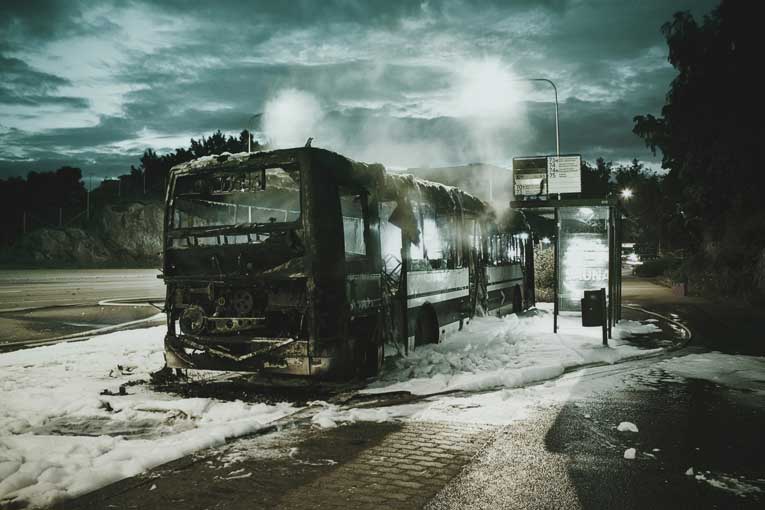
Burning Bus Extinguished by Fluorine Free Foam. Image credit: Unsplash
Class B foams are used to address the two primary types of fuel hazards – hydrocarbon and polar solvent.
Hydrocarbon fuels typically have a lower density than water and are not water miscible – i.e., gasoline, diesel, and aviation fuels.
Polar solvents include fuels such as ethanol, methanol, and isopropyl alcohol, which are miscible with water.
AFFF foams are used to create a foam blanket that readily spreads across the surface of the fuel separating the fuel source from the oxygen in the air and drainage of the foam blanket provides continual cooling to the surface of the fuel.
Alcohol resistant AFFF (AR-AFFF) firefighting foams have an additional feature that includes polymer(s) that are insoluble in the fuel.
These polymers precipitate out on the fuel surface and provide protection for the foam blanket from the polar solvent fuels that are hydrophilic (attracted to water).
This foam blanket separates the fuel from the oxygen in the air, suppressing the fire.
Perimeter Solutions’ new SOLBERG® VERSAGARD™ AS-100, is a fluorine-free alcohol type concentrate (ATC™) proportioned at 3% for both hydrocarbon and polar solvent fuel fires.
This is a tremendous advantage for municipal and/or industrial firefighters because they don’t have to worry about whether the foam they are using is the right foam for the job.
With all the focus on the use and regulations around PFAS based foams, there is little attention being paid to the inclusion of certain kinds of siloxanes in new fluorine-free solutions.
Some of these siloxanes are very persistent in the environment, and they are facing the same environmental pressures as fluorinated chemistries.
In fact, regulatory bodies including the Stockholm Convention for Persistent Organic Pollutants and California’s Prop 65 have already flagged certain siloxanes for their environmental persistence.
Case Studies – Making the Move to Fluorine Free
Perimeter Solutions is working with many customers to help them transition their fire safety systems. Each project is unique based on the customer, their industry and how old the system is that they are replacing.
One of the more recent projects we completed was with the Lehigh Valley Airport Authority.
They were interested in updating the fluorinated foam system used in one of their 40,000 square foot hangars.
That means that it requires an aircraft access door height of more than 28’, it can house an aircraft with a tail height over 28’, and that it needs to have a single fire area in excess of 40,000 square feet.
We helped the Airport Authority to convert its deluge fire sprinkler system, which was designed for 0.16 gallons per minute per square foot.
We were able to retrofit that existing system to use SOLBERG RE-HEALING™ foam 3%, fluorine-free 3%. This version of RE-HEALING foam has the exact same design application rate as the AFFF foam that they were previously using.
By selecting a foam with the same design application rate, the customer didn’t need to change out its discharge devices, or the piping infrastructure, dramatically reducing the amount they needed to invest to upgrade.
It was simply a matter of bringing in new foam storage, a change in the proportioner, and a change in the foam.
Another project recently completed involved the installation of a foam system at an 800,000 square-foot flammable liquid storage facility.
This was a racked storage facility that included a significant amount of flammable and combustible liquids on the property – both hydrocarbon and polar solvents.
The facility needed to transition to a versatile foam that would allow them to extinguish fires regardless of the fuel source.
Based on its versatility, the customer decided to use VERSAGARD AS-100 and has had great success with the new foam.
Fluorine Free Foam Technology- A Look Ahead
Fire Fighters Using Fluorine Free Foam.
Both of these transitions demonstrate that fluorine-free foams can now meet the needs of end-users who are looking for alternatives to legacy AFFF and AR-AFFF foams.
It will still be some time before AFFF and AR-AFF foams are completely replaced by fluorine-free alternatives, but we will see more of it in the next few years as regulations and requirements are updated.
In fact, the United States Federal Aviation Administration (FAA) recently issued a certification alert that removed a mandate to use fluorinated foams.
The FAA didn’t alter the existing performance specifications within the certification, so fluorine-free solutions must meet those specifications, but this shows that US agencies are creating inroads for fluorine-free technology.
The U.S. MIL-SPEC is also expected to transition to fluorine-free foam, and the U.S. military has stated that it will no longer purchase and/or use fluorinated foams starting in 2024, except for shipboard for the navy.
For those of you that have been around since the early days of AFFF and AR-AFFF, you may recall that they were proportioned up to 9% foam concentrate.
Through continued innovation, those percentages dropped to 3% and in some cases all the way down to 1%, meeting or exceeding the same level of effectiveness.
It is likely that fluorine-free foams will see the same type of development and will ultimately catch up to the legacy foams with the same proportioning percentage and application rates.
About the Author
Craig McDonnell is the General Manager at Fire Suppressions Americas, Perimeter Solutions profiles the history of fluorine-free Foam