Market Analysis: Firefighting Equipment

From gear to communication, IFSJ delves into the diverse market of firefighting equipment and the latest innovations

The market for firefighting equipment is diverse and encompasses various segments including firefighting tools, protective gear, breathing apparatus, handheld detection equipment, communication equipment, and rescue equipment.

Each of these segments plays a critical role in ensuring the safety and effectiveness of fire services across the globe.

Firefighting tools and rescue equipment

This segment encompasses essential items such as hoses, nozzles, cutters, axes, hydraulic rescue tools, ladders, and stretchers.

The demand in this market is propelled by the continuous need for more efficient, durable, and easy-to-handle tools and equipment.

Technological advancements have led to the development of tools and devices that are not only more effective in firefighting and rescue operations but also safer and easier to use under challenging conditions.

Additionally, the global increase in fire incidents, both in urban and wildland settings, has necessitated a steady demand for innovative firefighting tools and rescue equipment, with growth driven by factors like urbanisation and the increasing complexity of rescue operations.

Protective gear

Firefighter protective gear, including helmets, fire suits, gloves, boots, and other protective clothing, is indispensable for ensuring the safety of firefighters in their high-risk profession.

The global firefighter personal protective equipment (PPE) market, valued at US $1.81 billion in 2022, is projected to reach US $2.53 billion by 2029, with a 4.9% CAGR between 2023 and 2029.

This growth is driven by strict safety regulations, the escalating severity of wildfires, and the demand for specialised gear designed for challenging firefighting environments.

In parallel, breathing apparatus, especially self-contained breathing apparatus (SCBA), is vital when dealing with smoke or toxic gases.

The breathing apparatus market, worth US $2.15 billion in 2022, is expected to expand to US $3.02 billion by 2029, with a 5.1% CAGR.

This expansion is attributed to technological advancements, stringent safety standards, and the increasing complexity of fire-related challenges.

Detection and communication

Handheld detection equipment, encompassing gas detectors, thermal imaging cameras, and smoke detectors, plays a pivotal role in fire safety.

The global smoke detector market, valued at approximately US $1.9 billion in 2018, is projected to reach around US $3.4 billion by 2026, driven by technological advancements, elevated safety standards, and the increasing integration of smart technologies into safety equipment.

Reliable communication equipment is essential for the effectiveness of firefighting operations.

This market segment includes radios, intercom systems, and other communication devices, facilitating robust, clear, and secure communication channels during firefighting missions.

Ongoing technological progress contributes to the development of more sophisticated and dependable communication tools, ensuring seamless coordination and safety during critical operations.

Regional breakdown

In 2022, the global fire safety equipment market was valued at USD 49.82 billion, anticipated to grow at a CAGR of 6.4% from 2023 to 2030.

This growth is largely driven by advancements in wireless sensor networks, increased adoption of wireless fire-sensing devices, and growing awareness about combating fire hazards​​.

North America is dominating the market with a share exceeding 37.0% in 2022, North America’s growth is fuelled by stringent fire safety regulations and norms, rapid commercial and industrial construction development, and quick adoption of advanced technologies​​.

Asia Pacific is expected to register the highest CAGR of 9.2% over the forecast period, the Asia Pacific region’s growth is driven by rapid urbanisation and industrialisation in countries like India, China, and Japan​​.

The Middle East market is significantly influenced by its predominant oil and gas, and mining sectors.

High risks of fire accidents in these industries necessitate advanced fire detection and prevention equipment.

Strict adherence to building safety codes, coupled with rising automation due to smart homes and building projects, are key factors contributing to the growth of the fire safety equipment market in this region​​.

Developments and Outlook

Helmets: Modern firefighter helmets incorporate heat-resistant visors with integrated thermal imaging and heads-up displays, enhancing safety and situational awareness in smoke-filled environments​​.

Thermal imaging cameras: Recent innovations have led to smaller, portable, and more affordable thermal cameras that can be attached to helmets or integrated into handheld devices​​.

Firefighting suits: Advanced fabrics in PPE offer superior protection against heat and flames while remaining lightweight.

Integrated cooling systems help regulate body temperature during intense operations​​.

Robots: Increasingly deployed in hazardous situations, these robots are equipped with cameras and sensors for remote operation, minimising human exposure to danger​​.

Water Mist Technology: Emerging as an efficient and environmentally friendly alternative to traditional water hoses, this technology uses less water and is effective in confined spaces​​.

Drones: Equipped with thermal imaging, drones provide aerial perspectives to locate hotspots and guide firefighting efforts, especially in large-scale wildfires​​.

Exoskeletons: These wearable devices enhance a firefighter’s strength and endurance, reducing fatigue and injury risks during prolonged operations​​.

Communication Systems: Advanced radio systems with noise-cancelling features ensure clear communication even in chaotic environments​​.

The overall market for firefighting equipment is marked by a combination of factors such as technological advancements, stringent safety regulations, increased urbanisation, and the growing awareness of fire safety.

This is leading to a steady growth in demand across all segments, with a particular focus on innovation, efficiency, and safety.

As the challenges in firefighting evolve, so does the equipment, ensuring that firefighters are equipped with the best tools to tackle fires effectively and safely.
This article was originally published in the January 2024 issue of International Fire & Safety Journal. To read your FREE digital copy, click here.

Revolutionising rescue with WEBER RESCUE

Reda Nouzhani, Area Sales Manager discusses WEBER RESCUE‘s plans for digital growth and sustainable development in the rescue sector

Could you start by telling us about your role at WEBER RESCUE and your experience in the fire and safety industry?

My role extends beyond conventional sales.

It’s unique because it demands not just selling, but also building trustworthy and efficient relationships.

I’m primarily involved with business partners in the Middle East, where expectations are high.

Our partners and customers require me to be consistently accessible and prefer face-to-face interactions.

This allows me to fully grasp their needs in terms of service, product, and training preferences.

My background involves working with the Civil Defence across various regions, including Europe, Africa, and Asia.

A key observation from this experience is the versatility and intelligence common among Civil Defence personnel.

As a manager, it’s crucial to meet them on an equal footing, with authenticity and reliability being vital components of these interactions.

What makes my role truly fulfilling is the partnership aspect.

It’s not just about transactions; it’s about providing ongoing support, be it technical information, services, or training.

This daily engagement with partners transforms my job into a passion, where positive feedback and the sense of collaboration are constant reminders of the importance and impact of my work.

How does WEBER RESCUE tailor its services and products to meet specific regional needs, like those in the Middle East?

The Middle East market is highly demanding in various aspects – services, products, production, aftersales, and new technology.

It’s not just about the products at WEBER RESCUE; we focus on delivering a comprehensive package that encompasses everything from production to services and training.

One of our key strengths is that many of our colleagues, including those in the back office, have direct experience as firefighters or rescue personnel, and are actively involved in local fire brigades.

This deep connection to the field is a significant advantage, particularly when it comes to communication with our partners and Civil Defense, fostering a firefighter-to-firefighter dialogue.

A crucial part of my role involves establishing and maintaining a communication bridge between our team and the firefighters.

My experience allows me to understand and navigate cultural expectations and barriers, which is essential in meeting the region’s specific requirements.

For example, we’ve had discussions with Civil Defenses about integrating digital solutions into our equipment, addressing their expectations in terms of operational functionality and e-learning services.

These developments align perfectly with their roadmap, demonstrating our commitment to not just meeting but anticipating and exceeding the unique needs of the Middle Eastern market.

How are digital solutions transforming rescue operations in the Middle East?

Digital solutions have had an amazing effect on rescue operations, especially after COVID.

These solutions have become essential and vital.

We at WEBER have been proactive in this area, working on digital transformation for several years, not merely reacting to customer requests.

For instance, we’ve developed solutions that allow for remote monitoring of equipment, providing information on its status, location, and maintenance needs.

This is incredibly helpful for back-office operations, especially in terms of budgeting and maintenance planning, which are critical aspects for Civil Defense.

Our approach includes offering comprehensive solutions that encompass operational and training aspects.

We’re actively partnering with local Civil Defense in the Middle East, and this collaboration is already showing positive results.

During recent visits to our facilities, our partners had the opportunity to observe our entire production process, from raw material to finished product.

They also got an insight into the after-sales services and training programs we offer.

These experiences have been highly successful, demonstrating our commitment to not just product quality but also to providing extensive support and training.

Looking ahead, we plan to continue enhancing our digital offerings and local engagement through seminars and other educational initiatives in the coming years.

Can you talk about WEBER RESCUE’s training programs and educational initiatives?

We are acutely aware of current trends and challenges, such as sustainability, e-mobility, and recycling.

Our training programs and seminars are designed to address these evolving topics.

For example, we provide specialised training on e-mobility, focusing on electric vehicles.

Last year, we hosted a seminar in the UAE that attracted nearly 100 participants, which was a remarkable success.

This event highlighted the potential and need for continued seminars in these areas.

Our training offerings are diverse, including both commercial and non-commercial sessions.

We organise major events like ‘Rescue Days,’ which are among the biggest in the rescue field globally.

These events have drawn over 750 participants from 25 different nations, including the Middle East and Australia.

The aim is to create a platform for firefighters and rescue personnel to exchange knowledge and ideas, fostering a global community of shared expertise.

The skills and approaches of personnel in the Middle East are particularly noteworthy.

Part of my role is to introduce them to different mindsets and techniques, especially in emerging areas like e-mobility.

Our trainings cover both conventional and unconventional methods, offering a comprehensive learning experience.

Furthermore, we have established partnerships with schools in Austria and Germany to enhance our commercial training programs.

These initiatives are integral to our commitment to providing cutting-edge, relevant training to rescue professionals worldwide.

Can you talk about WEBER’s e-learning?

We are actively engaged in providing digital solutions for e-learning.

Our current platform is a modular one, designed to offer a variety of learning modules.

One of these is the WEBER RESCUE Academy, where users can access both our training sessions and upload their own.

This platform is particularly beneficial in regions where access to our headquarters or physical training locations is challenging.

It enables us to offer training remotely, which has become increasingly important, especially with the constraints imposed by lockdowns.

Civil Defenses have shown a keen interest in such e-learning solutions, and we are well-positioned to meet these needs.

We also incorporate augmented reality in our e-learning platform, which is cloud-based.

This aligns with the expectations and existing infrastructures of our clients, focusing on interoperability and seamless implementation.

We’re having serious discussions about expanding these offerings as they represent the future of training and learning.

Another aspect of our service involves upgrading equipment.

We provide various products and portfolios that allow for the upgrading of tools to their newest versions.

This is facilitated smoothly through our network of professional service partners.

In addition to Civil Defense, we also cater to private rescue companies and entities in the oil and gas sector, who demand efficient and reliable products and services.

These can be provided both locally and remotely from our headquarters.

In terms of services, we offer remote diagnostic and support assistance, utilising our cosmopolitan team from different regions.

This global reach and diverse expertise make WEBER RESCUE unique.

We share our experiences and innovations with Civil Defense and other clients in terms of product development and digital solutions, ensuring we remain at the forefront of the rescue and safety industry.

Finally, what is WEBER RESCUE’s focus for Intersec 2024 and its plans for the year ahead?

In the next couple of years, our focus at WEBER RESCUE will be on two key areas: sustainability and digitalisation.

We are developing products that enable customers to monitor and check equipment remotely.

This capability allows control centres or headquarters to generate reports on equipment status without the need for on-site visits, enhancing efficiency and resource management.

A significant aspect of our approach to sustainability is reflected in our equipment, particularly the Smart Force and battery-operated tools.

These are upgraded with Milwaukee batteries, a notable feature for sustainability.

The advantage here is the ease of local procurement of batteries, eliminating the need for direct contact with WEBER for battery replacement.

This makes our products not only user-friendly but also aligns with our non-restrictive policy on system and service access.

Our collaboration with Milwaukee, a major global player, ensures that our customers aren’t burdened with concerns about battery sourcing or dealing with intermediaries.

One of our innovative features allows users to operate different Milwaukee tools with a single battery, streamlining operations significantly.

As we look to the future, our focus will intensify on sustainability and digitalisation.

This includes advancements in operational technology and e-learning platforms.

These areas will be our primary focus in the coming years, signifying the direction WEBER RESCUE is heading towards.

Our motto at WEBER RESCUE is ‘Let’s create the future,’ and this truly encapsulates our vision.

Our approach to equipment development and customisation is deeply collaborative.

We engage in ongoing dialogues and share insights with Civil Defense and trainers globally.

The feedback we receive is integral to the continuous improvement of our equipment and services.

This isn’t a sporadic process but a regular practice, ingrained in our operations, ensuring we stay ahead and relevant.

A key advantage at WEBER is our flat organisational structure.

This allows for direct and efficient communication with our Research and Development teams.

As a result, we can swiftly incorporate new features and meet the specific requirements of Civil Defenses and rescue personnel.

Our proactive stance extends to responding to requests and innovative ideas.

We don’t just react; we actively implement new concepts and strategies.

This agility and responsiveness are among our core strengths and what sets us apart.

In essence, at WEBER, we are not just creating products; we are shaping the future together with our partners and clients.

This article was originally published in the January 2024 issue of International Fire & Safety Journal. To read your FREE digital copy, click here.

The power of the data

Matt Quigley, MSA Safety Senior Product Platform Manager for Connected Firefighter, highlights where the use of data can have an impact in the fire service.

Data is quickly becoming a valuable asset to improve fire brigade operations.

When looking at emerging technologies, data can play an important role in understanding how firefighters operate on scene and how their safety equipment performs.

The current landscape when it comes to data use in the fire service is something we see as a quickly emerging opportunity.

We see it as a way to enhance the products firefighters are using and to collect information about the environment they’re being exposed to.

Ultimately, it’s the data from these products that can help inform MSA on how to build products that are best suited for those environments.

But to start, we must look at where the fire service is right now.

The fire service is essentially being called upon to do more with the same or less resources.

This can vary in severity across the globe, but overall, that’s the general trend.

It’s our intent to use data and technology to essentially make fire departments more capable and efficient in three primary areas.

  • The first is the people: It’s helping to make firefighters safer with new technological tools.
  • The second is products: We’re developing a lot of functionality that leverages technology and data to inform maintenance procedures to make the product last longer and to be less burdensome to maintain.
  • The third is processes: We’re collecting information on firefighter behavior to inform departments of additional training opportunities and to make them safer by bringing awareness to their behaviors.

When focusing on these three areas, there is a need to accomplish the goals of collecting this data to ultimately return it to fire services and enhance their operations.

One of the primary challenges is integrating sensing and connectivity technology while not adding weight or ergonomic burden to the firefighter.

As a manufacturer, we research the optimal technology integration opportunities across the full suite of firefighter PPE including fire helmets, fire protective clothing, breathing apparatus, as well as technological tools such as thermal imaging cameras.

It is also important to build robustness in the connectivity networks that transmit data from the firefighter to the cloud.

Firefighters respond to emergencies in a variety of buildings, environments, and locations and typically one technology is not sufficient to maintain stable connection in every scenario.

 At MSA, we deploy multiple and redundant connectivity networks to ensure consistent connection if one pathway were to become severed.

Analytics

It is critical to build intuitively deployed technology and data analytics tools for it to be adopted at scale across the global fire service.

It is a necessity for sensing and connectivity technology to be instantly and automatically deployed as a firefighter’s effort and attention are focused on responding to the emergency once arriving on scene.

Additionally, the software an incident commander will use to manage fireground operations needs to be built with a focus on intuitive user interface design.

We have a large and growing user experience team that strives to make the use of product as second-nature as possible.

Apple’s design of the iPad is a great example of this approach.

There’s a tremendous amount of connectivity and technological capability, but it’s very easy to use.

Those are the guiding principles we will have to follow for adoption to take place at scale.

When we think about firefighters deploying on scene, there’s a key job that needs to be done and worrying about technology and connectivity shouldn’t be a part of that.

We envision data being used to enhance the fire service in the future, and we’re particularly excited about how historical data can become increasingly valuable over time.

Initially when you’re putting a product into service, the available data is very limited.

Over months and years, the data set continues to grow, and we are able to develop a deeper understanding of trends and insights into how customers are actually using each product.

Understanding historical trends allows us to approach our goal of offering predictive maintenance.

Our goal is to ensure our customer’s products are always ready for use.

For example, we expect to be able to predict when parts are wearing and offer a replacement before it fails, extending the useful life of the equipment.

For us, the aspect of increasing value over time as customers continue to use their equipment is extremely important and exciting.

Physiological monitoring

One area that excites us greatly regarding data capabilities is physiological monitoring, which we are eager to explore in the future.

It’s very much core to our mission for protecting the firefighter and a space where emerging technologies are proving to be very promising.

That can be especially critical in places like the Middle East, where you have first responders working in incredibly hot environments.

We are at the very early stages – it’s a topic that we’re talking with fire departments and civil defence units to gauge interest.

We’re still doing research, and we believe you’ll continue to see more movement like this across the industry as it relates to the impact of heat stress on workers and firefighters.

Having a solution that can immediately alert of a biometric issue, especially if there’s an extreme environment like you have in Dubai, can be beneficial.

An important thing to recognise is that no two people are the same biologically.

The solutions that are of interest to MSA focus on building a baseline for the individual firefighter that can be used as a reference throughout their career.

This allows us to have tailored solutions as opposed to generic thresholds that may not be applicable for everyone in the brigade.

Intersec Dubai will take place between the 16th and 18th of January at the Dubai World Trade Centre, Dubai. MSA Safety’s Stand Number is Stand 7-D12.

This article was originally published in the January 2024 issue of International Fire & Safety Journal. To read your FREE digital copy, click here.

How to Put Out a Grease Fire

Cooking can be an enjoyable and rewarding experience, but it also comes with its fair share of risks. 

One of the most common and potentially dangerous kitchen mishaps is a grease fire. 

Knowing how to put out a grease fire is not just valuable knowledge; it could be life-saving. 

In this article, we will explore the causes of grease fires, the best ways of how to put out a grease fire, and crucial prevention tips to keep your kitchen safe.

What Causes Grease Fires

Grease fires are incredibly dangerous
Grease fires are incredibly dangerous and hard to put out

Grease fires, as every cautious cook knows, are the stuff of kitchen nightmares. 

It’s essential to comprehend their origins to prevent potential disasters and kitchen fires.

Overheating

At the heart of a grease fire lies the peril of overheating. 

When oil or grease in a pan is heated beyond its smoke point — the temperature at which it begins to emit smoke and break down — it becomes a volatile hazard. 

As the heat intensifies, the oil’s molecules break apart, and if not attended to, they ignite, turning a simmering pot into a raging inferno. 

This scenario is particularly common when deep frying, where oils are heated to high temperatures for cooking various delicacies.

Water

Another common catalyst for grease fires is the introduction of water. 

Imagine a sizzling pan filled with hot oil; a splash of water is akin to tossing a lit matchstick into a powder keg. 

When water meets hot grease, it doesn’t simply douse the fire; instead, it fuels it exponentially. 

The water sinks to the bottom of the pan, where it evaporates instantly due to the extreme heat. 

This rapid conversion of water to steam propels flaming grease droplets into the air, spreading the fire like a frenzied dance of danger.

Other Liquids

While water is the most notorious culprit, other liquids can also lead to disaster. 

Sauces, marinades, or even frozen foods with ice crystals can cause spattering when they come into contact with hot oil. 

These seemingly harmless elements, when introduced recklessly, can instigate a grease fire, transforming a calm cooking environment into a chaotic emergency.

Dirty Appliances

Dirty stoves, ovens, and exhaust hoods can also be unwitting accomplices. 

Grease buildup in and around these appliances serves as additional fuel. 

Over time, this accumulated grease can ignite from a simple spark or even the heat of nearby cooking. 

Thus, regular cleaning and maintenance are not just aesthetic concerns but crucial safety measures to prevent the unexpected eruption of a grease fire.

How to Put Out a Grease Fire

If a grease fire ignites, it’s crucial to act swiftly and correctly as grease fires are one of the most dangerous types of fire.

Never use water to extinguish a grease fire; water and oil don’t mix and can lead to explosive results. 

Instead, follow these steps:

Turn Off the Heat

The moment a grease fire erupts, your first action should be swift and decisive: turn off the heat source immediately. 

By removing the fire’s fuel supply, you halt its potential escalation. 

This simple act can prevent a small flare-up from spiralling into a major conflagration.

Covering the Pot

A metal lid or a baking sheet is your ally in combating a grease fire. 

Place it over the pot with precision, ensuring it entirely covers the flames. 

This makeshift shield serves a crucial purpose: it denies the fire access to oxygen, an element essential for combustion. 

While using a lid, avoid using a glass one; the intense heat can cause it to shatter, creating an additional hazard.

Baking Soda

For small, manageable fires, a common kitchen ingredient can prove to be a lifesaver: baking soda

Carefully and evenly sprinkle baking soda over the fire. 

Baking soda, also known as sodium bicarbonate, disrupts the chemical reaction of the fire, acting as a smothering agent. 

Keeping a box of baking soda within arm’s reach of your stove ensures that you have an immediate and effective countermeasure for minor grease fires.

Using a Fire Extinguisher

When a grease fire defies initial attempts at control, a specialised tool becomes essential: the Class F fire extinguisher. 

Specifically designed for kitchen fires, this extinguisher contains a special extinguishing agent that swiftly suppresses grease fires. 

Hold the nozzle, aim it at the base of the fire, and sweep it from side to side. 

Proper usage can rapidly diminish the flames, preventing further spread.

Prioritise Safety

Large grease fires should be left to professionals to put out

If, despite your efforts, the grease fire persists and grows, it’s imperative to prioritise safety above all else. 

Immediately evacuate the premises and call the fire department. 

Firefighters are trained professionals equipped to handle even the most severe kitchen fires. 

Do not attempt to be a hero in such situations; your safety and the safety of those around you is paramount.

Why are Grease Fires so Dangerous

Grease fires are not just ordinary flames; they are a volatile combination of intense heat, rapid escalation, and unsuspecting triggers. 

Understanding why these fires are so perilous is crucial for everyone, as it can be the key to preventing and managing them effectively.

Rapid Escalation

The alarming characteristic of grease fires lies in their speed of escalation. 

Unlike some other fires that begin with a slow burn, a grease fire can transform from a minor sizzle to a raging inferno within seconds. 

The flammable nature of grease, coupled with the high temperatures used in cooking, creates a volatile mix. 

A mere distraction can lead to a small spill catching fire, and within moments, the entire kitchen can be ablaze. 

This swift escalation demands immediate, well-informed action to prevent the situation from spiralling out of control.

Unpredictable Expansion

What makes grease fires especially hazardous is their tendency to spread rapidly and unpredictably. 

Once ignited, the flames can swiftly engulf nearby items, including kitchen towels, curtains, or even cabinets. 

This rapid spread not only intensifies the danger but also makes it challenging to contain the fire within its initial source. 

In moments of chaos, the fire can leap from the stove to nearby surfaces, turning a localised incident into a kitchen-wide catastrophe.

Severe Burns and Property Damage

The high temperatures generated by grease fires pose significant risks to human safety. 

Anyone attempting to intervene without proper knowledge or equipment is at risk of severe burns. 

In worst-case scenarios, these burns can be life-threatening. 

Moreover, the intense heat can cause extensive damage to property. 

Cabinets, appliances, and kitchen structures can succumb to the flames, leading to costly repairs and emotional distress. 

It’s not just about extinguishing the fire; it’s about mitigating the aftermath, which can be devastating both physically and emotionally.

The Water Trap

A critical aspect that renders grease fires exceptionally dangerous is the widespread misconception regarding their extinguishing methods. 

The instinctive reaction for many is to reach for water. 

However, this instinct is profoundly misguided. When water meets hot grease, it reacts explosively, splattering burning grease and spreading the fire rather than dousing it. 

This misconception, if not corrected, can turn a controllable situation into a catastrophic event, magnifying the danger manifold.

What Type of Fire is a Grease Fire

Class F fire extinguishers are needed for grease fires

A grease fire falls under the category of a Class F fire. 

Class F fires involve cooking oils and fats, making them unique in their behaviour and extinguishing methods. 

Class F fires are one of the most dangerous classes of fire.

Regular fire extinguishers might not be effective against grease fires; it’s essential to have a specialised Class F fire extinguisher in your kitchen if you frequently cook with oils.

How to Prevent Grease Fires

Preventing a grease fire is far simpler than dealing with one. 

Here are some essential tips to keep your kitchen safe:

Stay in the Kitchen

Never leave the stove unattended while cooking. 

If you must leave, turn off the heat.

The smallest distraction can transform a simmering pot into a raging inferno.

Be Prepared

Preparedness is key. 

Every kitchen should be armed with a fire extinguisher and a trusty box of baking soda. 

Familiarise yourself with their usage. 

These tools are your first line of defence, swiftly neutralising a grease fire’s threat before it escalates. 

Knowing how to handle them can mean the difference between a minor mishap and a catastrophe averted.

Keep the Area Clean

A clean kitchen is a safe kitchen. 

Regularly scrub your stovetop, oven, and exhaust hood to banish grease buildup, the combustible culprit behind many a kitchen blaze. 

Grease, when left unchecked, can turn a simple cooking session into a disaster. 

Your diligent cleaning rituals act as a shield, guarding against unexpected conflagrations.

Use a Thermometer 

Temperature control is an art in cooking, especially when it comes to oils. 

Invest in a kitchen thermometer to monitor your oils’ temperatures closely. 

Oils have smoke points, beyond which they become highly flammable. 

By keeping your oils below these thresholds, you ensure you can stay safe.

Dry Before Cooking

Before introducing items to hot oil, ensure they are dry. 

Water droplets, when introduced to sizzling oil, create explosive splatters. 

These splatters not only pose burn risks but can also ignite surrounding surfaces. 

A simple pat-down of the items you’re frying ensures that your oil remains calm, reducing the risk of sudden, dangerous flare-ups.

Don’t Overcrowd the Pan

Avoid overcrowding the pan when frying. 

Overcrowded pans lead to spills, creating a hazardous situation where hot oil can spill onto open flames or heating elements. 

A controlled, appropriately filled pan ensures that your cooking stays safe, without the drama of a sudden fire.

Conclusion

Being aware of the causes, dangers, and prevention methods of grease fires is essential for anyone who spends time in the kitchen. 

By following these safety guidelines and acting promptly and correctly if a grease fire occurs, you significantly reduce the risk of a minor kitchen incident turning into a disaster. 

Remember, caution and preparedness are your best allies when it comes to keeping your kitchen and home safe.

Adapting to challenges with MSA Safety

Dave Howells, Vice President of International Sales and Customer Marketing shares MSA Safety’s vision for firefighting equipment in the Middle East

In an ever-evolving landscape of firefighting technology, understanding the specific needs and challenges of different regions becomes crucial.

The Middle East, with its unique environmental and industrial contexts, requires specialised approaches to firefighting equipment.

In this exclusive interview, we sit down with MSA Safety’s Dave Howells, to delve into how their innovations and products are helping to shape the future of firefighting in this critical region.

From connected technologies to comprehensive gear solutions, we explore MSA Safety’s strategies for addressing the distinct demands of the Middle Eastern market, and their vision for 2024 and beyond.

Please can you introduce yourself, your background and your role at MSA Safety?

I’ve been with MSA Safety for 43 years and am currently the Vice President of International Sales and Customer Marketing.

Through the years, I’ve held a number of roles, having started in sales, worked with our international channels, and then moved into this current role.

I’ve grown with the company as it has grown, especially seeing MSA’s growth in the international market.

What are some of the specific challenges that the Middle East presents?

Broadly speaking, our mission of helping to keep people safe at work presents its own challenge every day.

Whether it’s a firefighter, a construction worker, or someone working on an oil rig, it’s our mission to help keep them safe no matter where in the world they’re located.

But, each industry and each region of the world presents its own challenges and we, as a global safety company, have to develop solutions to address those challenges.

When it comes the Middle East, all the things we do elsewhere, we’re doing it here.

But the challenge, is actually in the region’s growth.

As the region grows, that requires hiring significantly more firefighters and first responders to support the additional infrastructure that’s being built.

So, we have to address that growth by adapting how we present our safety solutions.

We’ve had a specific personal protective equipment selling organisation for decades in the Middle East, but we’ve had to make changes in how we approach the market.

We have three core products in the region, with fire helmets, fire protective clothing and self-contained breathing apparatus (SCBA).

Now, we have split associates with those dedicated to selling fire products and those dedicated to selling PPE.

We’ve increased our number of associates in the region to provide better service.

How does MSA’s ‘head-to-toe’ solution in equipment benefit firefighters?

With such an extensive portfolio of safety solutions, MSA is uniquely placed to provide the Middle East with a full suite of protection.

We supply the fire service with the market-leading Gallet helmet, the M1 SCBA and MSA Bristol fire protective clothing.

Add to that our connected suite of products, it puts us in position to deliver unique safety solutions tailored for the user.

We’re willing to engage, meet and discuss our solutions, hear how we can improve our current offerings and adapt and tailor those to meet the demands that we’re hearing about from fire services from across the region.

MSA uses a human-centered design process, starting with the individual and building outwards.

With the broad MSA portfolio of products, we now have the luxury of going to an end user directly to deliver a solution that works for them.

What advancements or developments you’re focusing on for the Middle East market?

There are two areas we’re focusing on.

One is the head-to-toe protection for the firefighter, and the other is how data can play a role in helping to keep firefighters safe.

First, with head-to-toe protection, we’ve seen this with the development of the MSA Bristol X4 fire protective clothing, and how that works together with our Gallet helmets and M1 SCBA.

It’s demonstrating how our solutions provide enhanced comfort, ergonomics and compatibility with MSA’s suite of state-of-the art firefighter equipment.

By building up our network of associates working in the Middle East and dedicating members to specific product groups, we’re able to provide the highest level of customer service to deliver the solutions our customers want.

Second, we are looking at enhancing the health and safety of the firefighter through the use of data.

 One area we’re exploring for the future is physiological monitoring.

That can be especially critical in places like the Middle East, where you have first responders working in incredibly hot environments.

We are at the very early stages with this.

It’s a topic that we’re talking with fire departments and civil defense units to gauge interest.

How does equipment remain reliable and effective in extreme weather and industrial conditions?

Ultimately, no matter where in the world our firefighting products are used, they have to meet a specific standard – whether EN or NFPA – when it comes to being in certain environments.

We recognise the challenges in the Middle East, we know the standards each country uses, and beyond that, it’s working individually to meet customer needs.

That makes Voice of Customer a really important part of our process.

We have a long history and a well-established brand in the Middle East, so it gives us an opportunity to meet with end users and understand their needs.

We’ve done a lot of Voice of Customer with Saudi Aramco Special Fire Brigade, with Saudi Civil Defense, with Abu Dhabi National Oil Company, and with Dubai Civil Defense.

One specific thing we learned was the difference in how a product is cleaned and maintained and that caused us to consider different make ups and compounds.

So, we know durability is really important, and regionally it’s going to be different.

Whether it’s fire protective clothing or SCBA, some areas wash more, some wash less.

Those are the kind of things that drive variants between the products.

They’re generally customer driven, and we’re happy to help work towards a solution for their unique needs.

How does MSA Safety balance its global product strategy with the specific requirements of the Middle Eastern market?

When we look at the direction of the fire service, we’re seeing more and more interest in connectivity.

This can be connecting together personal protective equipment to monitor use, or connecting data with helping to keep firefighters safe, or in some cases, both.

This is where we see the fire service market moving, and we have to offer solutions for customers to achieve that.

Throughout the world, we offer a robust selection of connected firefighter solutions already.

As the industry moves toward connectivity, it’s important for us to listen to and hear what firefighters and their agencies are saying they want in future products.

It’s important to show how connectivity and the value data can have relative to products and the people who are wearing them.

Essentially, moving from compliance to something that is more feature-rich and technology driven.

This is not necessarily unique to the Middle East, but it is an example of an opportunity where better technology could enhance the experience for the end user.

But when applying that strategy to the Middle East, it will really come down Voice of Customer and learning about their specific needs to help firefighters do their jobs in that region.

We’re looking to offer more connected solutions in the Middle East to complement the head-to-toe products we offer now.

We understand the market, we know it’s growing, and we’ve made changes to our organisation to address them.

We have the resources here and we’re dedicated to meeting the demands of the market.

Can you share any case studies where MSA Safety’s equipment has been particularly effective?

When meeting with firefighting agencies in the Middle East, we’re focused on showing customers how we’ve been effective in developing customer-specific solutions in other parts of the world.

A great example of this is the London Fire Brigade.

They’re converting to the MSA M1 SCBA, and we know the M1 is a major player in the Middle East.

When you look at the product and the connectivity features it has, we need to demonstrate how fire authorities here could have similar success.

The key is working with a customer and really understanding what they’re looking to accomplish.

In the case for London, there were a couple of important components related to data and maintenance.

With data, it was about how to transmit it, capture it, analyse it, and automate the post-incident reporting.

To do this, we had to learn quite a bit about the agency and the intricacies of how their breathing apparatus are used.

London was looking for a product that could automate incident analysis and automate reports on who was wearing what breathing apparatus when and where, and we were able to deliver that solution.

With maintenance, London has a large fleet of breathing apparatus.

They needed a system that could help them more effectively manage their fleet.

This included showing how much an SCBA is being used, what types of environments it’s being used in, and how that information can inform maintenance to rotate the fleet to preserve longevity in their investment.

Again, we worked to deliver a solution to achieve that goal.

When you look at Middle East growth, being able to demonstrate to agencies that we have developed solutions for customers elsewhere and did so by really listening and understanding their pain points, that’s incredibly valuable.

It’s these sorts of relationships and opportunities we’re positioning ourselves for in the region.

Looking towards 2024, what trends do you foresee in firefighting equipment?

We see a lot of possibilities in the connected firefighter space and how to use data to help better understand firefighting trends.

This is going to center around connectivity and the value we’re able to provide to the end user by collecting data and showing how it can be most useful for their specific needs.

With this in mind, it’s moving more from just a compliance mindset of meeting a standard to having a more proactive and robust safety and accountability program.

At this point, we see data as a quickly emerging opportunity.

Data is a way to enhance the products firefighters are using and to collect information about the environment they’re being exposed to.

Ultimately, it’s the data from these products that can help inform MSA on how to build solutions that are best suited for certain environments.

This includes environments in the Middle East.

There are ways we can capitalise on the growth and infrastructure development to enhance how we design products.

The needs from the Middle East market can help inform us on new technologies that we can then apply to other regions of the world.

As an innovative safety solution company, we look to scale our products and see how a solution for one customer can become a solution for many.

And that’s where we find great opportunity in the Middle East.

Finally, what are MSA Safety’s plans for Intersec 2024 event?

We’re really looking forward to showcasing the head-to-toe solutions and having conversations with customers about their needs.

The MSA Bristol X4 fire protective clothing line will be a major part of this event, but we’ll have our full complement of structural, technical rescue and wildland firefighter protective clothing, too.

Also, our connected solutions will be featured, and attendees will have the opportunity to see firsthand how they work and how they can make an impact in helping to keep firefighters safe.

And, we’re looking forward to taking feedback on how data can play a bigger role in the Middle East region.

Intersec Dubai will take place between the 16th and 18th of January at the Dubai World Trade Centre, Dubai. MSA Safety’s Stand Number is Stand 7-D12.

This article was originally published in the January 2024 issue of International Fire & Safety Journal. To read your FREE digital copy, click here.

What are the 6 Classes of Fire?

Contrary to certain assumptions, not every fire is the same.

Indeed, there are different types of fire, each with varying hazards.

As a result, it’s prudent to be aware of the different classes of fires to avoid using the wrong type of fire extinguisher if an incident were to occur.

There are six classes of fire, as we explore further hereunder.

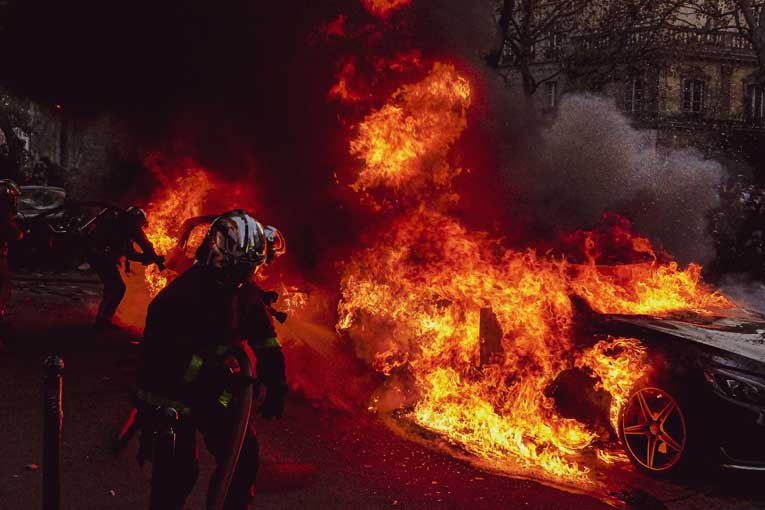
Class A: Combustible Materials

Class A Fire
Class A Fire combustible material. Image credit: Pixabay

Class A fires are those which involve solid combustibles.

It could be anything from furniture to fixtures and fittings, paper, cardboard, or even the structure of a building.

If any type of solid material is burning, it’s said to be a Class A fire.

It’s one of the most common types of fires, as well as one which is relatively hard to extinguish.

How to Extinguish Class A Fires

In order to put out a Class A fire, you should ideally use water and foam extinguishers.

Water is the most common type of fire extinguisher as it can handle most fires that involve solids.

However it’s critical to bear in mind that since water is a conductor, it should not be used near any electrical equipment.

One may also use power and wet chemical fire extinguishers for a Class A fire, however the former are more suited.

Class B: Flammable Liquids

Class B Fire
Class B Fire combustible material. Image credit: Unsplash

Class B fires are those which involve liquid combustibles.

Unfortunately there’s all kinds of liquids as well as chemicals used in buildings, warehouses and workplaces, and a high number of them are flammable or explosive.

Some examples include paints, adhesives, inks, fuels and solvents.

As a result, many Class B fires tend to occur in workplaces and they can be extremely dangerous. 

It’s imperative to be aware of the types of flammable liquids that are present or used, and ideally carry out a COSHH assessment.

Such assessments are legally required when there are hazardous substances.

Safe storage of such substances is critical, and they should be placed as far away as possible from any sources of ignition.

They should also be stored in suitable containers and be clearly labeled. 

How to Extinguish Class B Fires

Class B fires should be put out by means of foam or powder extinguishers.

These are the best types of extinguishers in the case of such fires, but CO2 extinguishers can also be used even though they have limited suitability.

Class C: Flammable Gasses

Class C Fire
Class C Fire combustible material. Image credit: Unsplash

Natural gas and LPG are examples of flammable gasses.

Fires involving such gasses are classified as Class C fires.

It’s crucial to keep gasses in sealed containers in a storage area which is safe.

How to Extinguish Class C Fires

In the case of a Class C fire, it’s first of paramount importance to shut off the gas supply. 

Then, one should use a dry powder fire extinguisher to put out the fire.

Class D: Metals

Class D Fire
Class D Fire combustible material. Image credit: Pexels

Some types of metal, like sodium for example, are combustible.

Metals help fires to spread as they are good conductors.

And since metals will soften up and start melting when exposed to high temperatures, metal joists and columns could lead to a building to collapse when there’s a fire.

How to Extinguish Class D Fires

First of all, it’s important to point out that water can act as an accelerant on fires involving metals.

Hence it’s crucial to avoid using a common water extinguisher if you’re dealing with a Class D fire.

It’s recommended to use dry powder extinguishers in such cases.

In the case of a small fire, one can also use sand or dry earth to smother it.

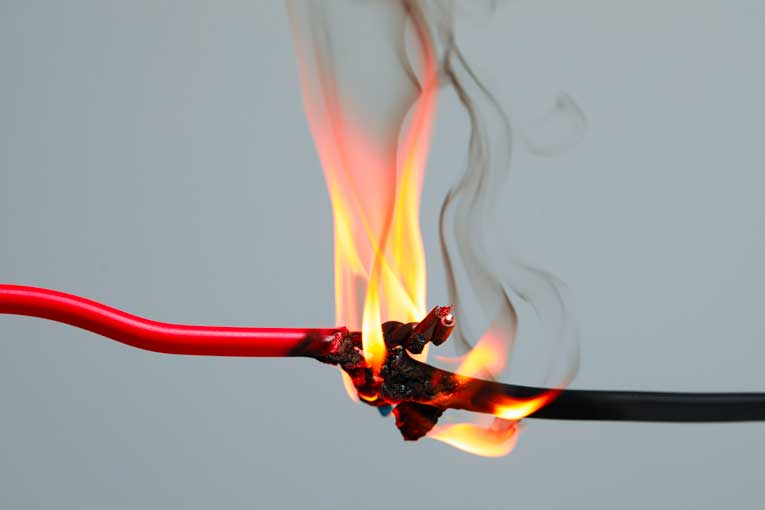
Class E: Electrical

Class E Fire
Class E Fires are started by electrical faults. Image source: Shutterstock

Electrical fires are not assigned a full class since they can fall into different classifications. 

Hence Class E is not strictly a class as electricity is essentially a source of ignition.

How to Extinguish Class E Fires

In the case of electrical fires, it’s crucial not to use any water.

The best type of fire extinguisher to use on such a fire is the CO2 extinguisher.

One may also use dry powder extinguishers which may still be effective in the case of low voltage.

If possible, always turn off the power supply when tackling such a fire.

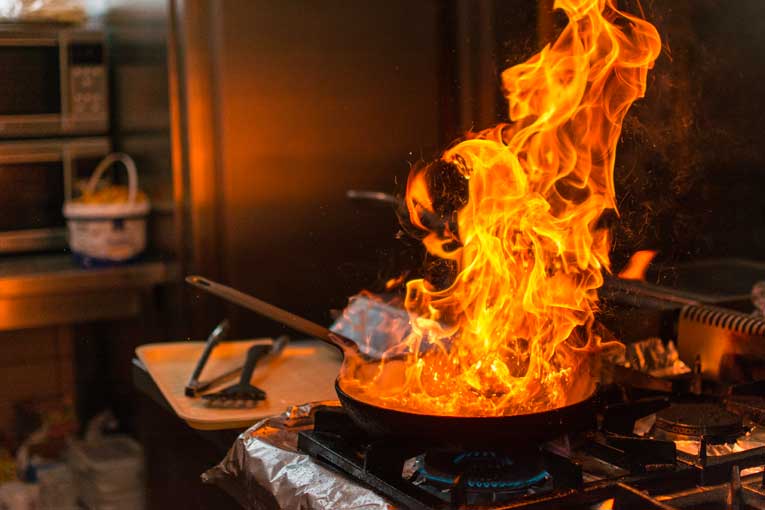
Class F: Cooking Oil & Fats

Class F Fire
Class F Fire combustible material. Image source: Shutterstock

When cooking oil, deep fat frying and spills of flammable oils are close to heat sources a Class F fire can arise.

This is a fire which is common in commercial kitchens, but it can also occur in residential homes

It’s important to avoid leaving any frying equipment unattended while it’s being used.

Class F fires are quite hard to extinguish due to the heat from the oil.

Also, should the wrong type of extinguisher be used, it can lead to the fire spreading easily.

How to Extinguish Class F Fires

Class F fires should be put out using wet chemical  extinguishers.

This is the only type of extinguisher that is approved for use on cooking oils and fats. 

A fire blanket can be effective if the fire is small.

Different Types of Fire Extinguishers

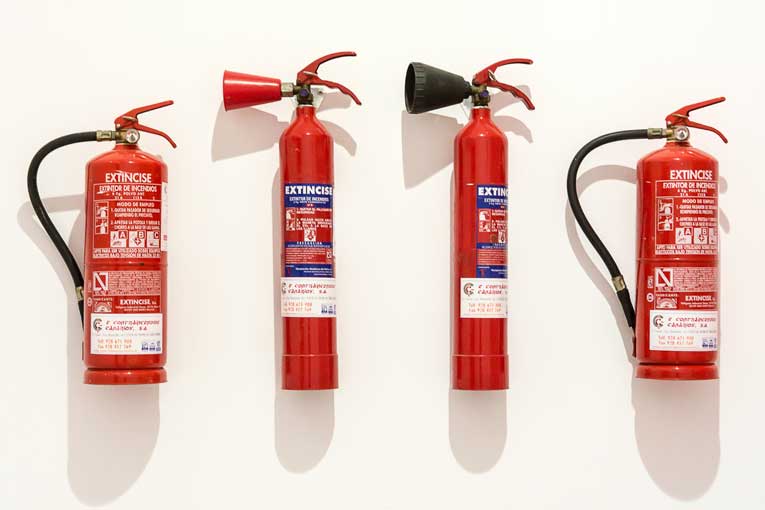
Wall Mounted Fire Extinguishers
Wall Mounted Fire Extinguishers. Image credit: Pexels

By now you should have a better understanding of the different classes of fires that require certain fire extinguishers to be extinguished.

The following is a complete list of the various fire extinguishers that exist.

Water (Class A)

A water based fire extinguisher is used when there are Class A fires involving combustible materials.

Most premises are required to have this type of fire extinguisher and hence you will typically find it in offices, hospitals and schools.

Foam (Class A & B)

In the case of a Class A or B fire, a foam fire extinguisher is recommended.

This type of extinguisher will perform a cooling function, thereby smothering the burning materials.

The foam will then help to prevent the fire from reigniting.

This type of extinguisher should never be used when there is an electrical source or a kitchen fire. 

Powder (Class A, B, C & E)

Dry powder fire extinguishers are very versatile and suitable for different classes of fires, including those involving combustible materials, flammable liquids and gasses.

In fact they are sometimes referred to as ABC extinguishers. 

A powder extinguisher will smother the fire by producing a thick barrier which will stop the fuel from being exposed to oxygen.

Such an extinguisher should not be used in confined spaces since the powder can be inhaled. 

It also leaves a residue which is quite difficult to clean up.

These types of extinguishers are often found in commercial workspaces, especially those where welding is involved, and boiler rooms.

CO2 (Class B & E)

A CO2 extinguisher contains carbon dioxide.

It suffocates the fire as it transfers the oxygen which would otherwise be used for burning. 

This type of extinguisher is suitable for Class B and E fires, that is those involving flammable liquids or electrical fires.

L2 (Class D)

L2 Dry powder fire extinguishers are ideal for Class D fires, that is those involving metals.

Wet Chemical (Class A & F)

Wet chemical fire extinguishers are to be used in the case of Class F fires where cooking oils and fats are present.

They can also be used for Class A fires.

They are thus a must have in commercial kitchens and canteens.

This fire extinguisher will create a layer of foam on the oil or fat that is burning, and so no more oxygen can reach the fire, thereby extinguishing it.

MultiCHEM (Class A, B & F)

MultiCHEM fire extinguishers are ABF-rated.

They are ideal for fires involving flammable liquids, even in cases when there are large quantities of fuel, or a large surface area.

It’s also suitable for deep fat fryer fires

Water Mist (Class A & F)

Water mist extinguishers are suitable for Class A and F fires, and so they are commonly found in various settings.

They work by producing a mist, which cools down the fire and also cuts off the oxygen supply.

Conclusion 

A basic understanding of different classes of fires and the most suitable fire suppression to be used is important for fire safety.

We hope that now you have a clearer understanding of the various classes of fires and which fire extinguisher/s to invest in to be well prepared in case a fire broke out.

Half a million downloads for the Euro NCAP Euro Rescue app

The Euro NCAP Euro Rescue app for smartphones has witnessed an impressive 500,000 downloads in Europe since its inception in June 2020.

A significant tool for first responders

Since the app’s launch, over 1500 Rescue Sheets, designed to the ISO 17840 standard, have been made available to first responders across Europe.

CTIF played a pivotal role in the creation of these Rescue Sheets, enhancing the safety of road rescue and extrication tasks.

By September 2023, the app achieved the milestone of half a million downloads, catering not just to first responders but also to secondary and tertiary responders.

Remarkably, the app saw a surge from 200,000 downloads in November 2022 to 500,000 just ten months later.

Euro NCAP’s global reach

Interestingly, Euro NCAP’s preliminary statistics indicate that the app’s popularity isn’t limited to Europe.

The United States ranks fourth in the list of countries with the most users, following the UK, Germany, and France, which lead in downloads on both iOS and Android platforms.

It’s evident that Euro Rescue is gaining traction globally, with users spanning different continents.

The Euro NCAP Euro Rescue app, compatible with both Android and Apple devices, offers complimentary access to rescue sheets for a range of vehicles available in Europe, encompassing electric, hybrid, and other alternative propulsion technologies.

IFSJ Comment

The surge in downloads of the Euro NCAP Euro Rescue app underscores its growing relevance in the safety sector.

CTIF’s collaboration in producing ISO-standardised Rescue Sheets evidences a commitment to ensuring safer rescue operations on roads.

The global reach of the app, extending beyond Europe to countries like the United States, speaks volumes about its universal applicability and the trust first responders place in it.

Such tools, combining technology and safety, play a pivotal role in aiding rescue missions, ensuring quick and informed responses in critical situations.

Charting a new course in rescue shoring

Mattijn de Graaf, R&D Director at Holmatro, talks the future of shoring with Holmatro’s OmniShore

In the intricate dance of rescue operations, every second counts. Every move is magnified, with lives hanging in the balance.

The tools and methods employed in these operations can be the difference between a life saved and a tragedy remembered.

In this high-stakes arena, the name Holmatro stands out, synonymous with innovation, reliability, and cutting-edge technology.

Their latest offering, OmniShore, encapsulates these values, promising to redefine the way first responders approach rescue shoring.

Shoring, for the uninitiated, is a temporary solution to stabilise structures, vehicles, or trenches to prevent collapse or further movement.

It is the safety net that rescue operations rely on before embarking on the actual rescue.

Ensuring the site’s stability can mean the difference between a safe rescue operation and a perilous one.

Holmatro’s rich legacy of prioritising safety and efficiency for rescue personnel is palpable in their Pentheon Series of rescue tools.

And now, with the OmniShore, they have reimagined shoring from the ground up.

Designed in line with the highest standards of quality, the system is a testament to Holmatro’s commitment to supporting rescue professionals in their life-saving endeavors.

IFSJ caught up with Mattijn de Graaf, R&D Director of the Holmatro Group, provides a closer look into the development, features, and the future of shoring.

Can you briefly explain what shoring is and its importance in rescue operations?

The broad definition of shoring is the temporary support of elements, to prevent them from further movement or collapse.

These elements can be structures such as buildings, but they can also be vehicles or trenches, to name a few.

Aside from that, there’s technical rope rescue, which involves the transport of people or the moving of elements.

Shoring is instrumental for rescue operations, because a rescue operation can only be done when the situation is stable and safe.

It’s one of the first steps, and of the utmost importance for the rest of the operation.

What inspired the creation of the OmniShore, and how does it differ from other shoring systems available?

Our aim is to help rescuers getting their jobs done faster, safer and easier. So this has been our top focus while developing OmniShore.

The way this system differentiates itself is that you can do structural shoring, vehicle shoring, vehicle lifting, trench shoring and build high directionals with one single system, that consists of only six different struts.

On top of that, there are some patented elements that set OmniShore apart: the Trident Coupler ensures that each connection that you can make is safe, and the OmniLock system helps rescuers take control of a rescue shoring operation with less manpower, while keeping them out of the danger zone.

With OmniShore’s broad capabilities from vehicle shoring to trench shoring, can you explain its versatility for first responders?

The versatility of the system comes from the versatility of its parts. For instance, every strut can also be used as an extension pipe.

And a pneumatic strut plus the patented Pull Restrictor functions as a brace, so no separate braces are needed.

And the battery for the OmniLock system is the same as the one used for our Pentheon Tools.

All of this makes first responders able to do more with less, while arriving at the rescue scene completely armed.

How does the system’s compactness benefit rescue teams, especially in terms of transport and storage?

Rescuers can’t predict what scenarios they will face, and both truck space and storage space are limited.

So having a system that can do more with less parts saves them weight and space in both truck and storage, while maximising the functionality.

The OmniShore struts have an impressive range. Why is this important in rescue scenarios?

This was important, because a certain length is needed to build applications like large rakers and flying rakers.

On the one hand, being able to reach this length is important, on the other hand, I’d like to highlight that we also have the smallest mechanical strut on the market.

This strut can be positioned easily in confined spaces, which is just as important as being able to offer these lengthy extensions.

OmniLock allows for remote operation, ensuring safety. Can you explain the rationale behind this feature?

During certain rescue operations, such as lifting a truck with the basket method, you need back-up struts to follow the load you are lifting.

Without a system such as OmniLock, you’d need people to manually operate those back-up struts.

Our vision, however, is that no one should be near a moving load at any time.

Every OmniLock strut automatically follows a load in upward and downward motion, while remaining mechanically locked at all times.

This means when the load suddenly shifts, OmniLock will hold its position, so that the strut doesn’t collapse.

At the same time, OmniLock minimises the time for rescuers in the so-called danger zone.

How does the Wireless Controller enhance the OmniLock system’s functionality?

With the Wireless Controller, you can operate and monitor multiple OmniLock struts at the same time, from a safe distance.

This way you can wirelessly retract and extend struts, and see their inclination. So this means you will need less people to operate these struts, and you can do it in a safer way.

Where do you envision the future of shoring, and how will Holmatro continue to innovate?

This system was designed to make Rescue Shoring faster, safer and easier.

These are things that will remain vital in the future, so our innovations will surely be focused on those principles.

And of course, we will see how people react when OmniShore is being used in the field, and respond to that.

IFSJ view

Holmatro’s OmniShore epitomises the zenith of this evolution.

By devising a tool that streamlines, simplifies, and secures, de Graaf and his dedicated team have crafted a solution that addresses the pressing demands of contemporary rescue scenarios.

The old paradigm of juggling multiple components for diverse shoring needs has been rendered obsolete with OmniShore’s ingenious architecture.

By encapsulating an array of shoring functionalities within a set of merely six struts, it provides rescuers with enhanced flexibility.

OmniShore’s compact structure solves the perennial issue of limited space, catering to both transport and on-site storage needs.

Blending mechanics with advanced technology, OmniShore champions safety through innovation.

The OmniLock system, a standout feature, transforms traditional operational methods by allowing struts to be controlled remotely.

This is no just technological showmanship; it’s a transformative approach to safety.

In essence, OmniShore transcends the boundary of being just another tool—it embodies Holmatro’s unwavering commitment to the safety and efficacy of first responders.

It’s a testament to the spirit of innovation, with every component, every feature reflecting a deep understanding of the challenges faced in the field.

This article was originally published in the October 2023 issue of International Fire & Safety Journal. To read your FREE digital copy, click here.

Versatility, adjustability, durability

Exploring Ziamatic’s new Heavy Rescue Tool Mounts and their impact on firefighting

When it comes to mounting heavy rescue tools, Ziamatic is a top player in the game.

The Yardley, Pennsylvania based company offers over a dozen heavy rescue tool mounting solutions for firefighters – from the Single Extrication Tool Holder (QM-ETS-1) to the more recently available Heavy Rescue Tool Mounts.

“Although we have many options when it comes to heavy rescue tool mounting, our newest designs are focused on versatility, adjustability, and durability,” says Keith Creely, VP of Ziamatic.

“Because of this, we now have a product line that can be used with almost all heavy rescue tools being used in the fire industry.”

According to Creely, Ziamatic’s rescue tool mounting options needed to be versatile so that all popular tool brands could be retained in their mounts efficiently.

Adjustability was important too because as he says: “The easier it is to install and adjust a Ziamatic product, the better chance Ziamatic has of them using the same product in the future.”

Creely continues: “We design durability into our products because we understand the importance of having product that does not break and we understand the frustration the comes along with parts that break frequently.”

Durability

For Ziamatic, durability is the name of the game with the newest mounts being made of tough HDPE material.

“We chose this because of its strength and durability,” says Creely.

“HDPE is also gentle on equipment. Being plastic, one will not see corrosion nor will they have any dissimilar metal issues.”

Ziamatic’s new Heavy Rescue Tool Mounts are a great example.

The brackets of the tool use mounts made of HDPE material and are designed to store most extrication tools available to fire departments today.

The mounts are most effective when combined with one of the brackets from Ziamatic’s SURE-GRIP product line.

The Heavy Rescue Tool Mounts have been rigorously tested by receiving free falling weight drops of 60 pounds, over 100 times in a row to assure they will withstand the day-to-day use of firefighting.

The tool mounts are designed to fit most brands of hydraulic and battery-operated tools.

They can be flush-mounted or spaced from the mounting surface to provide clearance from the mounting surface.

They are tested with a maximum 5″ spacing using 3/8″ fasteners (not included).

The tool mounts are easy to use. A user simply places the jaws into the mount and secures the handle as desired.

Ziamatic suggests using mounts from its SURE-GRIP product line such as the Adjustable SURE-GRIP (model SG-VM-A-1625) and SURE-GRIP mounts (models SG-VM-A, SG-VM-XL or SG-VM-XLS).

The following models of Heavy Rescue Tool Mounts are available: QM-ET-TTS (the tool mount for combination tools and spreader – bracket only); QM-ET-TTC (the tool mount for a cutter – bracket only); SG-VM-XL-TTS (the SURE-GRIP spreader kit); SG-VM-XL-TTC (the SURE-GRIP cutter kit); SG-VM-A-TTS – (the Adjustable SURE-GRIP tool spreader kit with UMVS-1625-11 strap); SG-VM-A-TTC (the Adjustable SURE-GRIP tool cutter kit with UMVS-1625-11 strap).

Easy to use design

Ziamatic also offers another mounting option with its popular Multiple Extrication Tool Holder.

Firefighters can secure up to four extrication tools in minimal space with this easy-to-use “Lazy Susan” rotating platform.

Adjustable mounting brackets accommodate most brands of cutter, spreader, and combination tool – including both hydraulic and battery-powered models.

Users can simply press down on the easily accessible yellow paddle to disengage the lock and rotate the turntable to access the tool they need.

The turntable safely locks into place after each 90-degree rotation for a quick and safe tool retrieval.

In order to replace one of the four standard tool brackets with a ram bracket, customers should order Model QM-MEH-1-R.

In order to replace two of the four standard tool brackets with ram brackets, customers should order Model QM-MEH-2-R.

According to Creely, the selling points of the Multiple Extrication Tool Holder are clear.

“Our multiple extrication tool turn table is made up of powder coated steel and aluminium parts,” says Creely.

“This space saving system has a 23” diameter at its widest point, locks in each position so one can safely remove and store tools, and sets just a little over 3” off of the mounting surface.

“This system is adjustable in almost every way.

“We are proud to say that there has not been one complaint or return and we can contribute that to the great engineering and design right from the beginning.”

Ziamatic offers other rescue tool mounting solutions. For upright storage, customers can also consider the following: the Multiversal Extrication Tool Holder (QM-ET-MV), the Extrication Tool Holder for Battery-Powered Cutter (QM-ET-MVE), Extrication Tool Holder for Cutters (QM-ET-C), Extrication Tool Holders for Spreaders (QM-ET-J), Single Extrication Tool Holder (QM-ETS-1), and Double Extrication Tool Holder (QM-ETD-1).

The Vertical Extrication Tool Holder (QM-ET-V) allows users to hang rescue tools on virtually any flat, vertical surface such as the doors/walls of a compartment or trailer.

Rescue tools can be stored horizontally with Ziamatic’s Horizontal Extrication Tool Holder (QM-ET-H).

It is comprised of four components that can be arranged in various ways. Ziamatic also offers a Horizontal Extrication Tool Holder with Strap (QM-ET-H2).

According to Creely, the feedback Ziamatic has received has been overwhelmingly positive.

“The feedback we have received and continue to hear is that our heavy rescue tool mounting product line is durable, user friendly, and versatile,” he says.

“Our market research leads us in the direction of our customer’s preference.

“From there we take the information and build on to their suggestion designing a user friendly, efficient, answer to their need.”

Safe and secure

With all of these choices available, it is important to consider a simple piece of advice from Creely.

“Rescue tools are heavy and bulky, so making sure that there is strong, ridged, structure to mount to, is imperative,” he says.

“Our mounts can be the strongest option out there, but if it’s mounted to an inferior surface our brackets strength and durability will not matter.”

According to Creely, customers should be on the lookout for new developments from Ziamatic in the future.

“Equipment frequently used side by side with Heavy Rescue Tools are struts and stabilisers.

“We will be looking to add to our product line low profile, space saving mounts, and systems for equipment like this in the near future.

“Keep an eye on our social media and monthly emails for updates.”

For over 50 years, Ziamatic Corp. has provided first responders with the tools and equipment they need to make their jobs safer, easier, and more efficient every day.

This exclusive article was originally published in the September 2023 issue of International Fire & Safety Journal. To read your FREE digital copy, click here.

Improving fire protection competence

The National Association of Fire Equipment Distributors marks 60 years of improving the fire protection industry

2023 marks the 60th anniversary of The National Association of Fire Equipment Distributors (NAFED), which was established in 1963 with the mission of continuously improving the economic environment, business performance, and technical competence in the fire protection industry.

NAFED members are found working in commercial, industrial, and institutional settings making buildings safe and giving individuals the tools, they need to fight early-stage fires.

Today, NAFED continues to operate with that guiding mission and the principal objective of gathering and disseminating information and ideas that will improve the world’s fire protection and increase the fire protection industry’s competence.

Our leadership, staff, and members work to develop factual information relating to the dependability and effectiveness of portable fire equipment, pre-engineered systems, and engineered systems so that authorities having jurisdiction, regulatory agencies and organisations responsible for the formulation and enforcement of the world’s fire codes are aware of it.

Because our members acknowledge the responsibility inherent in the sale and maintenance of fire protection equipment and service, and because we pledge to perform work and serve customers with the highest degree of honesty, skill, and integrity that such responsibility infers, NAFED members raise the bar.

NAFED members are dedicated to raising the standards of the fire equipment industry through cooperative efforts with other distributors and manufacturers in the areas of education, legislation, and professional service for the benefit of the general public in all aspects of fire prevention and protection.

This is reflected in NAFED’s code of ethics, to which all members subscribe.