North Lake Tahoe Fire Protection District awarded $1.7 million for wildfire defence

 US Senator Cortez Masto announced that the Federal Emergency Management Agency (FEMA) has awarded the North Lake Tahoe Fire Protection District $1,771,818.18 in Assistance to Firefighters Grant Program funding to support its operations and combat wildfire risk.

This funding will enable the department to obtain critically needed equipment, protective gear, emergency vehicles, training, and other necessary resources.

Senator Masto said: “I’ve always worked to protect the Lake Tahoe Basin and this grant funding will give the North Lake Tahoe Fire Protection District the resources it needs to reduce the risk of wildfires and keep our lake communities safe.”

Senator Masto has routinely worked to invest in wildfire prevention and support for those affected by fires. In the Bipartisan Infrastructure Law, she helped secure over $3.4 billion for wildfire prevention, suppression, and restoration activities, and a provision she authored to provide $10 million for wildfire detection equipment, like Lake Tahoe’s successful ALERTWildfire camera network.

Last year, she introduced the Western Wildfire Support Act, which would allow communities across Nevada and the Western U.S. to invest in training, equipment, and funding to combat wild and rangeland fires.

Senator Masto has also hosted regular conversations to help coordinate wildfire response, including a first-of-its kind wildfire summit in 2019 to allow firefighters, ranchers, conservationists, scientists, power companies, and representatives of government agencies to find new ways to coordinate and collaborate.

ILUS to expands wildland firefighting growth strategy

ILUS International Inc, a Mergers and Acquisitions company focused on acquiring and growing public safety and technology-based companies across the globe, has announced plans for its wildland firefighting growth strategy.

With signed Letters of Intent to acquire two wildfire equipment manufacturers, and in line with upcoming subsidiary up list plans, the company is gearing up extensive manufacturing facilities for wildland firefighting equipment and specialist vehicles in Serbia.

ILUS’ emergency response subsidiary, Emergency Response Technologies (ERT), is rolling out acquisition and manufacturing plans which will soon make it the leading global wildland firefighting technology manufacturer and solution provider.

As part of several acquisitions which are underway for the subsidiary, the company is in the process of completing the acquisition of two companies which specialise in the manufacture of wildland firefighting equipment. Both companies are already prominent wildfire equipment manufacturers and together, they hold the most extensive global distribution network.

To further accelerate the growth of the acquisitions, ILUS has agreed plans to open new state-of-the-art wildland firefighting equipment manufacturing facilities in Serbia. The Serbian facility will primarily manufacture wildland firefighting tools, pumps, and specialist vehicles.

The Serbian manufacturing plant will incorporate large manufacturing facilities for E-Raptor commercial EV manufacturing, Replay Solutions urban mining, FireBug firefighting vehicle and equipment manufacturing, Wildfire equipment manufacturing, and specialist drone manufacturing. Each division receives its own substantial government incentives.

The additional wildland firefighting equipment manufacturing facilities will be complemented by two further specialist engineering and manufacturing acquisitions in New Jersey, USA and in the North of England, United Kingdom. Both of these acquisitions are also in their final stages, forming part of the achievement of ERT’s next significant milestone.

ILUS Managing Director, John-Paul Backwell said: “It’s absolutely imperative that we accelerate our expansion into the wildfire arena. With governments spending billions every year to combat wildfires, it’s certainly time for us to ramp up our dedicated wildfire equipment manufacturing capability to adequately supply what will soon be the world’s largest wildfire equipment distribution network.

“Our patented water saving technology will be complemented by patented wildland firefighting tools and equipment which is already proving instrumental in combatting wildfires. Given the plans we are rolling out, I am confident that ILUS will be the industry leader in wildland firefighting by the end of 2023. I am looking forward to signing off on the final plans for all the divisions in Serbia next week.”

Wildland firefighting: Wear the right gear for the right call 

From wildland fires to medical emergencies to rescue missions, Todd Herring, VP Product Innovation and Strategy at Fire-Dex discusses alternative PPE for firefighters

It is important to consider that structural firefighting PPE is designed specifically to protect individuals from the thermal hazards of interior structural firefighting. Donning structural gear on non-structural fire emergencies can cause unnecessary stress on the body and may expose firefighters to contaminants still clinging to their bunker gear.

With many departments now experiencing a high volume of wildland and non-fire calls, wearing lightweight, alternative PPE can help protect crew members from physical overexertion and exposure to carcinogens. At the same time, the life of valuable turnout gear is extended when structural equipment is used only when necessary. That is why today more fire departments are choosing lighter, more breathable and comfortable PPE for wildland fire and non-fire calls where structural gear is not required. 

The latest National Fire Protection Association (NFPA) data shows that in the US, fire calls dropped by 53% between 1980 (nearly 3 million calls) and 2020 (1.3 million calls), while Emergency medical service calls spiked by 371% (from five million to over 23 million calls). In 2020 alone, fire departments received over seven million calls involving hazardous materials or conditions. This trend points to changing community needs and an evolving role for fire services in protecting people from all types of hazards. In turn, firefighters need the right gear to help ensure a safe and appropriate response.

What to wear

There are many examples where structural firefighting PPE may not be needed, where single-layer alternative PPE garments can offer improved mobility, breathability and comfort while protecting the wearer from thermal, physical and unique hazards.

Alternative PPE is often the preferred choice for responding to emergencies including: brush or wildfires, search and rescue, motor vehicle accidents, extrication, confined spaces, high or low angle rescue, fire investigation, flooding, water leaks, overhaul (with proper respiratory protection), calls for civilian assist (lifting, moving, lockout, etc.) electrical emergencies and goodwill calls.

In wildland firefighting the added weight of turnout gear can become a hindrance when engaging in wildland firefighting. A lighter-weight, NFPA 1977 certified protective garment can meet the demands of this dangerous job. 

For EMS calls, choosing to forgo turnout gear when entering a patient’s home can protect civilians against the spread of contaminants while also reducing heat stress and improving mobility (and response times) for crew members.

In search and rescue situations where emergency responders must traverse large expanses of difficult terrain or jump into action at a moment’s notice, gear that moves more freely with the body’s natural movement makes it easier to perform your best when it is needed most.

NFPA-approved gear

Alternative PPE can weigh up to 80% less than structural firefighting gear while offering three to four times the breathability based on Total Heat Loss (THL) testing. Like structural gear, alternative PPE must meet NFPA standards for thermal, flame, radiant heat and flash fire protection; however, the requirements to protect personnel are lower by comparison enabling manufacturers to use lighter more breathable fabrics in the construction of alternative garments.

Alternative PPE garments can also be specialised for responding to different wildland and non-fire scenarios, allowing departments to dial in on the features that best suit their needs. Selection differs by manufacturer but can include options such as: Wildland gear certified to NFPA 1977 (wildland firefighting) for serious protection during outdoor fire emergencies, with options for secure tool/GPS placement that is critical in unpredictable environments. Fire-Dex uses 100% INDURA cotton in many of its wildland outer shells to give lightweight, economical protection and are guaranteed flame resistant for the life of the garment.

EMS gear certified to NFPA 1999 (emergency medical operations) is waterproof and bloodborne pathogen-resistant to protect from line-of-duty hazards. TECGEN51 fabric is a patented flame-resistant outer shell material available only from Fire-Dex that is built from a combination of high-density TECGEN fibres and para-aramids to offer superior thermal protective performance (TPP), radiant protective performance (RPP) and THL performance.

TECGEN51 fatigues can reduce physical stress by requiring less cardiovascular effort than structural firefighting gear and has the highest total breathability of any NFPA 1977 or 1951 certified materials available. This garment offers optimal strength, thermal protection, breathability and versatility for a variety of wildland and non-fire-related calls.

Urban Search & Rescue (USAR) apparel certified to NFPA 1951 (technical rescue) and NFPA 1999 is designed for the rugged challenges of technical rescue and emergency medicine. Fire-Dex builds USAR moisture barrier solutions from CROSSTECH S/R fabric that is light and comfortable and protects against blood, body fluids and common chemicals. Dual-certified NFPA 1951 and NFPA 1977 gear that offers protection for a range of responses.

More colour options

Alternative PPE also comes in many colours to suit different needs. Traditionally orange, wildfire gear created problems when aircraft pilots would mistake workers for smoldering hot spots, actually dousing crews with flame retardant in some cases. Today, bright yellow is the go-to choice for wildfire gear having been shown to stand out better against most backgrounds, particularly in heavily forested areas.

In other cases such as a widespread search-and-rescue mission confusion can be avoided when emergency responders and tactical crews wear differently coloured PPE that clearly identifies their on-site role and responsibility.

What to wear underneath

For most non-fire-related calls, approved station wear is still the appropriate choice. When fighting wildfires, however, Fire-Dex recommends wearing a short-sleeved T-shirt, underwear and socks—all 100% cotton or a 100% flame-resistant blend—as synthetic materials (e.g., nylon, rayon and polyester often used in tight-fitting athletic apparel) can melt to the skin when exposed to extreme heat – think shrink-wrapping wherein the wearer’s every movement becomes restricted and can result in burns.

Path to purchase

Continuing advancements in fabric and materials technology allow manufacturers like Fire-Dex to develop innovative nonstructural PPE garments that meet the specific needs of emergency responders. From pants and jackets to coveralls for unpredictable environments, there is ongoing investment in lighter, more breathable and comfortable garments suited for the toughest wildland and non-fire calls.

To start, fire departments should explore purchase programs that bundle structural and nonstructural garments into one cost-effective package. Some manufacturers extend generous discounts to customers purchasing PPE for their entire department, so the savings can be quite significant when ordering new gear.

Departments may also find support from manufacturers who streamline the PPE buying process through ready-to-use procurement contracts. This can save time and administrative costs while ensuring the department’s meaningful participation. Departments can typically choose from multiple contract providers that work closely with the manufacturer to help ensure a smooth process. The US Fire Administration provides multiple options that can help secure funds for first responders to receive the equipment needed to protect and serve their communities.

A better alternative

As communities continue to evolve, many fire departments are experiencing a high volume of non-structural fire calls. To meet this demand, manufacturers have begun offering alternative PPE garments to mitigate the risks of developing heat stress and the spread of carcinogens.

Wearing this lighter gear as an alternative to turnouts on calls that do not require the same amount of thermal protection like motor vehicle accidents, emergency medical calls, and confined space rescue, can help the firefighter maintain their body’s core temperature and prevent them from becoming unnecessarily overheated. Alternative PPE also provides versatile protection during wildland and medical emergencies while making emergency personnel easily identifiable to the public.

Few professions are as unpredictable as firefighting―the right alternative garment can protect firefighters while helping them perform their best on every type of call.

This article was originally published in the September edition of IFSJ. To read your FREE digital copy, click here.
Reducing the respiratory risks of forest firefighting

David Robinat Rosés, Communication Manager at Vallfirest looks at how wildland firefighters can protect against smoke

Forest firefighters are subjected to tremendous respiratory protection risks because they are exposed to countless harmful particles such as: heavy metals; to which a welder could be exposed, environments where there are hormones and proteins. There can be all kinds of viruses and bacteria like those to which a forensic scientist can be exposed because there may be decomposing organic matter.

There can also be any kind of spores and fungus such as a lumberjack might find; hydrocarbons and lubricants like a mechanic, there may be bacteriological and chemical nuclear traces equal to those found by a military man, obviously all the hydrocarbons and all the particles that a miner can find and decompositions of slow combustions and incomplete combustions as a smelter can find.

Earlier this year the World Health Organization (WHO) reclassified firefighters’ occupational exposure as carcinogenic. So today it is time to answer the question: How to protect yourself from the hazard of smoke?

Do you know what kind of pollutants are present in the smoke from forest fires? What is the minimum respiratory protection that wildland firefighters should wear? What filters are most convenient in initial attack, auction, prescribed burning and interface fire?

The respiratory risks of the forest firefighter are many and include: oxygen deficiency causing hypoxia or anoxia, carbon monoxide which is carcinogen, nanoparticles which are potentially carcinogenic and mutagenic, smoke and mist of particles above 0.4 microns which are harmful, formaldehyde which iscarcinogenic, organic gases and vapors which can betoxic and lethal, and gases and vapors from other families.

On many occasions we find ourselves faced with the paradoxical situation that forest firefighters must go to protect natural spaces without paying attention to their self-protection. The derivatives that we find of not using respiratory protection against these pollutants are immediate respiratory accidents that can cause occupational diseases in the medium or long term, including asthma and cancer.

The problem is that just as one can have an accident at work with one hand and lose it or lose a foot or even lose the sight of one eye, it is not as invalid as a respiratory insufficiency contracted in the medium long term (15-20 years) since this causes a lack of quality of life at the end of our working life which should not be compromised. Respiratory protection has EPP3 quality since there is a risk to life as a person cannot live without lungs. Therefore, when choosing which to equip forest firefighters with, the helmet, respiratory protection and a certain type of clothing should all be category three.

The pollutants

Particles are the main contaminant present in forest fires. Its size is an indicator of its potential to cause health problems. Most of the particles in wildfire smoke are less than 0.6 micrometres in diameter.

Carbon Monoxide is produced by the combustion of wood or other organic materials. The lack of oxygen to burn generates this colourless, odourless, inaudible and highly toxic gas.

Formaldehyde and acrolein are the two most dangerous aldehydes found in wildfire smoke. They are produced in the incomplete combustion of inorganic materials such as plastics and polymers.

Nitrogen and sulphur oxide are two toxic gases that are produced during the combustion of hydrocarbons which can trigger breathing difficulties and asthma.

Benzene and other volatile organic compounds (VOC’s). The highest exposure levels have been found in diesel fuel combustion, including drip torch fuel.

The solutions

One option are disposable but reusable masks with P3 level and low respiratory resistance (99,975 particle filtration, with nanoparticle filtration and with control of organic gases and vapours, acid gases). These have been tested against viruses and bacteria and against splashes of blood fluids.

Within this category, Vallfirest offer the the VFT mask, which offers total protection of the face against radiation and incandescent particles, avoiding burns and reducing possible inhalation of contaminants thanks to its interchangeable active carbon filter with exhalation valve.

Another option are reusable half masks with interchangeable filters and ABEK1P3 activated carbon filters compatible with the test for formaldehyde included and organic, inorganic, acid and amine vapours and gases. The half mask features a P3 filter for particles, viruses, bacteria, bacteria, enzymes, hormones, fungi and proteins.

For this, there is Vallfirest’s Xtreme Mask which offers complete protection of the face and respiratory tract, preventing the inhalation of polluting particles, gases and vapours. It is a multipurpose device that allows firefighters to continue working safely in extreme situations.

Survival device mask with Chemical Oxygen for limited use entrapment in LACES manoeuvre. The Xtreme K from Vallfirest is the only emergency respirator created specifically for forest fires. It is a closed-circuit, single-use, limited-use Chemical Oxygen-generating respirator for the protection of the respiratory tract in the event of an emergency or entrapment. It is a survival device with an autonomy of not less than 20 minutes.

It can be used in any number of situaitons including:  during situational entrapment in a forest fire, in the presence of Carbon Monoxide, in the presence of gases and vapors, organic, inorganic, acids, amines, formaldehyde, mercury vapor and others, as well as against fumes, mists, harmful and toxic particles, viruses, bacteria, enzymes, hormones, proteins, nanomaterials and others. It can also be used as a protective measure against Possible hypoxia, anoxia, or respiratory tract burns.

At Vallfirest we know the importance of respiratory protection because we are aware of how harmful occupational exposure of forest firefighters can be which the recent classification of firefighting as being carcinogenic by the WHO goes to show. This is the reason why we have spent years improving our products in relation to respiratory protection and we will continue to do so in order to be able to continue offering the best solutions.

Mosquito Fire becomes California’s largest blaze of the year

The Mosquito Fire has become the largest wildfire to burn in California this year after growing over 67,000 acres as of Thursday night and remaining at only 20% containment.

The Mosquito blaze has now surpassed the McKinney fire as the largest wildfire in California this year. The McKinney fire has burned over 60,000 acres in Siskiyou County and is currently 99% contained.

The fire has been fuelled by dry vegitation in the area that was cooling off following record breaking heat the previous week.

The fire, which ignited ten days ago, now covers over 67,000 acres in El Dorado and Placer counties, according to the California Department of Forestry and Fire Protection (Cal Fire).

Over 11,000 residents of surrounding California communities were evacuated due to the fire which has destroyed 64 structures and damaged 10 in Placer and El Dorado counties, according to Cal Fire’s most recent damage assessment report. Over 9,000 structures were under threat.

The fire had calmed down over the weekend but strong winds cleared up smoke and created fresh oxygen for active fire behaviour on Tuesday night, Cal Fire said and containment dropped from 25% Tuesday to 20% on Wednesday.

“We’re ready for an absolute blowup out here,” said Jonathan Pangburn, a fire behavior analyst with Cal Fire, during the US Forest Service’s Wednesday briefing. “It doesn’t need a lot of wind.”

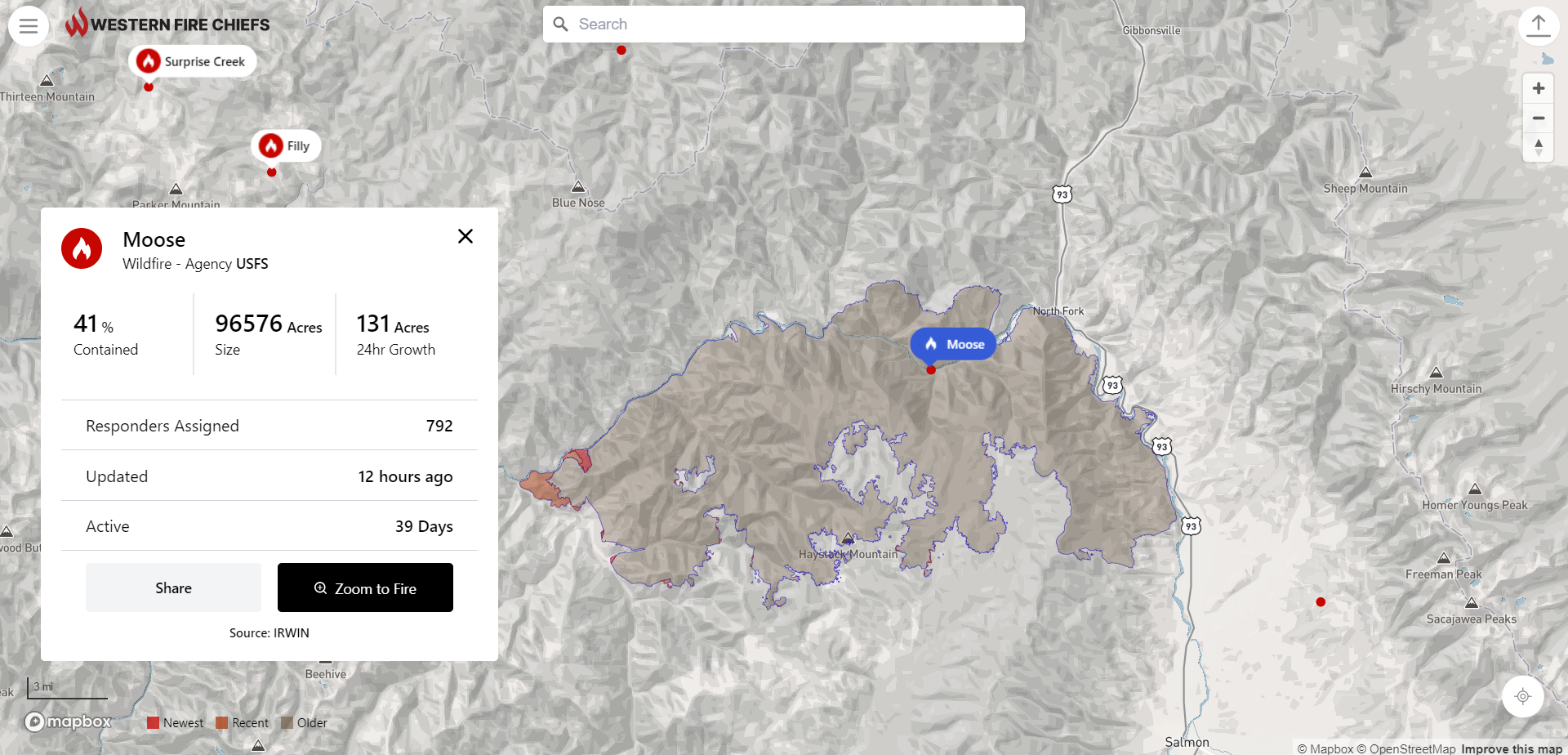
Exclusive: The WFCA is putting wildfire on the map

Take an inside look at the Western Fire Chiefs Association’s new Fire Map which provides near real-time information about active wildfires

Whilst they are no new phenomenon, with the number of wildfires increasing across the world the danger is closer to home for many. The mounting wildfire crisis in the US presents a very real and significant danger to people, homes, and communities – particularly those in wildfire urban interface settings.

Fires are most likely to take hold when moisture levels and humidity are low and temperatures are high. These conditions can be exacerbated by climate change and when environmental conditions reach a certain threshold in terms of available fuel and dryness, the risk of intense and dangerous fires can increase quickly. In response to the rising temperatures and increased risk of fire the Western Fire Chiefs Association (WFCA) introduces its Fire Map to provide near real-time information about active wildfires.

The WFCA Fire Map pulls data from the US Forest Service via National Interagency Fire Centre IRWIN feed and 911 Dispatch data via PulsePoint to track the location of the wildfire as they start and while they are burning. The WFCA Fire Map is the first map of its kind to pull this data from 911 Dispatch in relevant areas.

“The current climate situation is incredibly scary,” says Chief Mark Niemeyer, Vice President of the WFCA and Fire Chief of the Boise Fire Department. “The WFCA is providing public access to definitive information around the paths of wildfires so that communities can quickly take action.”

He continues: “The WFCA is committed to provide an even deeper level of intelligence around wildfires as they happen.” As the WFCA looks to the future, it is creating a development path in the next year which will include 3D and predictive mapping models, air quality and weather data, as well as text message notifications.

The Fire Map

The WFCA Fire Map was launched to provide near real-time information about active wildfires in a mobile[1]friendly platform. Brent VanKeulen, Deputy Director of the Western Fire Chiefs Association says the WFCA is providing the map to everyone free of cost, as a resource to save lives, land and property. He explains: “By providing public access to definitive information around the paths of wildfires, we are hopeful that communities can take quicker action to stay safe.”

 The WFCA Fire Map pulls together data supplied by the US Forest Service via National Interagency Fire Center IRWIN feed and combines it with 911 Dispatch data via PulsePoint. Together, this information is used to track the location of the wildfire both as it starts and whilst it is burning.

 The fire map was developed by Gartrell Group for the WFCA. Users can search for a fire by name, zoom to a location or zoom to their location and explore the area nearby. Where larger fires are mapped these will display the perimeter as changes are reported. Along with the map visualisation, the app provides details including fire size in acres, 24-hour growth, percent containment, number of personnel assigned, how long the fire has been active, and when the information was last updated.

The app features a share button and clicking this allows users to easily share information about a fire. There is also an embed option to link to a live map of the McKinney Fire. Users can click the fire symbol on the map to view information about the fire, and to share to social media. Other features such as weather and wind information are in the pipeline.

Looking ahead, the fire map in its current state is just the beginning. VanKeulen adds: “Wildfires will be a part of our lives for the foreseeable future. We will always have areas where people live in the forest. We need to focus on building adaptive communities so that we can be safe in the presence of fires. The WFCA and many other organizations are working towards solutions that help us adapt. The fire map is one of several initiatives.

PulsePoint

PulsePoint is a 501(c)(3) public non-profit foundation building applications created to help public safety agencies inform and engage their citizens. The development of the PulsePoint app began in June 2009 as a partnership between the San Ramon Valley Fire Protection District (SRVFPD), where its founder Richard Price was the chief, and the College of Informatics at Northern Kentucky University (NKU).

The application was released in the Apple App Store in April 2010. At a meeting almost a year later the Board of Directors of the San Ramon Valley Fire Protection District established a committee to address the affairs related to the application, including the transfer of responsibility for the software to an independent and external non-profit foundation. This resulted in the formation of the PulsePoint Foundation to oversee the future direction of the application.

In September 2013 the PulsePoint Foundation entered into a strategic partnership with Physio-Control, Inc. to expand the availability of PulsePoint to public safety agencies and on January 1, 2017, these responsibilities transitioned back to the foundation. Physio-Control became an invaluable partner that helped establish a presence in the market and helped prove the value of using mobile technology to activate early bystander response in sudden cardiac emergencies.

As the WFCA looks to the future, it is creating a development path in the next year which will include 3D and predictive mapping models, air quality and weather data, as well as text message notifications. “The addition of text notifications will be a game changer.” Richard Price, Founder PulsePoint.

“We are excited to offer the opportunity for PulsePoint[1]connected agencies to seamlessly display fire incidents within the WFCA Fire Map.”

This article was originally published in the September edition of IFSJ. To read your FREE digital copy, click here.

Perimeter Solutions protects low-income housing complex against wildfire

Perimeter Solutions has announced that it is working with the Confederated Tribes of the Colville Reservation to protect a low income housing complex from wildfire.

Perimeter Solutions is treating the land with PHOS-CHEK FORTIFY long-term fire retardant, a ground-based, highly durable fire retardant that is applied on flammable vegetation and cellulosic material one time early in the fire season before a wildfire approaches to provide ongoing protection that remains effective until a significant rain event occurs.

The Colville Reservation covers almost 1.4 million acres. Nearly two-thirds of that are categorised as Forest. Another third is classified as Open Rangeland and Forest Rangeland. The Tribe depends on the geographical diversity of the area to provide a broad range of cultural, social, and economic benefits to the tribal membership.

Cody Desautel, Executive Director for the Colville Tribes, said: “With a recognition of our wildfire history on the Colville Reservation and a focus on innovative options to confront the threat of wildland fire, applying PHOS-CHEK FORTIFY will help this housing development prepare for the 2022 wildfire season.

“This trial application of durable, long-term fire retardant will help provide protection to our residents and give our limited fire suppression resources an increased probability of saving homes and keeping our communities and firefighters safe.”

The USDA Forest Service has used PHOS-CHEK long-term fire retardant for nearly 60 years to suppress and prevent the spread of active wildfires. PHOS-CHEK FORTIFY builds on the proven retardant effectiveness of PHOS-CHEK and is designed to not only provide enhanced durability to weathering, but stronger adherence to vegetation.

The retardant changes the molecular structure of vegetation and other fuel sources where it is applied, so that they are no longer combustible. Unlike retardant dropped from aircraft, which is colored to help pilots track where the retardant is dropped during active wildfires, PHOS-CHEK FORTIFY is uncolored and precision applied from the ground.

Jeff Emery, President of Global Fire Safety at Perimeter Solutions, commented: “Our mission at Perimeter Solutions is to help save lives and protect property. As wildfire season continues to grow in length and intensity, it is becoming increasingly important to take a proactive approach to protecting communities from wildfire, and we are proud to support the Colville Tribe with their efforts by providing PHOS-CHEK FORTIFY.”

Tribes and communities can apply for Community Wildfire Defense Grants (CWDG) to cover costs associated with reducing their risk of wildfire through October 7, 2022.

The Grants are funded through the Bipartisan Infrastructure Law and are intended to help those communities within the wildland-urban interface to restore and maintain landscapes, create fire adapted communities, and improve wildfire response. Perimeter Solutions is offering to assist Tribes and communities in drafting and submitting their applications.

Exclusive: Suppressing the spread of wildfire

IFSJ sat down with Perimeter Solutions’ new President of Global Fire Safety, Jeff Emery, to discuss wildland fire suppression

Earlier this year Perimeter Solutions announced Jeff Emery as its President of Global Fire Safety, a newly created role which put him in charge of Fire Suppressant and Wildfire businesses at Perimeter Solutions. IFSJ sat down with Jeff to learn about his new role and talk about one of the biggest global issues in fire: wildland firefighting.

What drew you to the role of President of Global Fire Safety?

I have a long history in both aviation and the fire services, so when I looked at what Perimeter does and the focus on aerial and ground-based fire safety – it was a natural fit. We’re working in many cases with those airborne applications of retardants to help slow and stop the progress of wildfires and protect the firefighters on the ground.

The portfolio of Perimeter is terrific, but I really appreciated the service component. I think that’s a piece of Perimeter’s offering that oftentimes doesn’t get as noticed, but we have a large staff of dedicated employees that are working throughout wildfire season any time of the day any day of the week responding to the airbases with mixing and loading of our retardant onto the aircraft to keep them in operation and help our customers be as effective as they can be when fighting wildfire.

Tell me about the role Perimeter Solutions plays in Wildland firefighting?

Perimeter Solutions has nearly 60 years of history in wildland firefighting. We have a number of different solutions and each of them has a unique application, including aerial fire retardants, ground applied fire retardants, Class A foam and mobile foam and mixing equipment. They all play a part of the portfolio and the broader solutions that we provide for our customers on the wildfire protection side.

What are aerial fire retardants and their main applications?

The retardant products that we provide today are mostly ammonium phosphate-based. We have added components to that over the years and a lot of the innovation is to do with accurate deployment and product weight and viscosity.

Accuracy is important because the aircraft is going to want to hit the target whether it’s at 200 feet or 400 feet – you want as straight of a line and as accurate of a drop as possible. The idea is to get a solid and consistent perimeter around the fire with no line breaks that would allow a fire to escape through and you need to make sure it avoids and protects the firefighters on the ground.

When would ground applied fire retardants be used?

In certain cases when a fire is taking hold you will often have times where there are high winds and smoke and it is unsafe to fly the aircraft. In those cases, one of the best tools that are available to those on the ground are ground-based retardants. It’s essentially the same composition of product and works the same as the aerial retardants that would be dropped.

We have a service team that’s available to deploy to any situation. The McKinney Fire is the latest example where we’ve had teams on the ground since the beginning. You look over the first few days of that fire and there were some wet conditions and significant smoke and then some blowing occurred that made it impossible to fly in. Our teams on the ground played a part in that fight in those early days to slow the spread of the fire.

Another ground-based application would be the prevention and protection side of our business. For example, there are roadside applications where you have a history of vehicles overheating going through an uphill section of a highway causing ignitions at the side of the road. These areas we can treat through our ground[1]based technology to keep that area protected throughout the fire season. This same approach can be taken around railroads, utilities infrastructure, or even personal homes, to prevent ignitions or protect those areas from existing fires.

What are the differences between retardants and Class A foams?

The idea of Class A foam is that it is water dependent. It is mixed with foam and effectively makes that water more effective at penetrating, holding, and prohibiting evaporation to allow water to seep in, doing its job more effectively for a longer period of time. Foam is strictly a suppressant. It’s used to put on the fire to help seep into the fuel to help the water do its job better.

Retardants are mixed with water predominantly to help the distribution and application of the product, but even after that the water has evaporated out the product is still doing its job to be able to provide that retardant capability. Typically, about half of the retardant is put into the fire line to suppress it and half outside to keep the fire from spreading

You’re quite involved in the firefighting process beyond foam production, what else do you offer firefighters?

To support our Class A & B foam products, we do produce bladder tanks, equipment to produce, dilute and distribute that foam, making sure its diluted to the right ratios and applied in a way that’s going to be most effective to get that water to do its job.

In the US we supply about 45 full services bases where we supply perimeter employees, equipment and product for those aircrafts and their missions every day. We also supply equipment to a lot of customer staffed bases, which we maintain over time to keep those in good working order to make sure that they are getting the servicing and maintenance they need to remain effective.

Can you tell me about any recent developments in your wildland firefighting solutions?

Europe has seen an unprecedented wildfire season this year and you have a lot of countries that historically did not have the aircraft assets or the history of using retardants in their operations. We are investing in countries across the region in helping to fight that fight. France has been at the forefront with more progressive applications and coordination of wildfire mitigation over the years.

We’ve seen that model now replicated across the region with many countries now conducting trials and putting their aircraft to use with retardants. We also see a lot of work happening in some of these emerging areas like Greece, Portugal, and Croatia. We’re working hand in hand with governments in those countries to enhance their capabilities.

The second piece we’re focusing on is our prevention and protection business which is why we acquired a company called LaderaTech. Prevention is an under-tapped portion of the portfolio and can truly help communities in preventing a small ignition from becoming a large mega fire.

Finally, can you tell me about Perimeter Solutions’ recent contact with San Diego County Board of Supervisors for Roadside Vegetation Management?

 We worked with them on some trials last year on an area stretch from Wildcat Canyon just outside the city of San Diego. The stretch of road is a strong uphill drive that’s seen a history of vehicles overheating, or brake pads coming off and igniting roadside vegetation. When you look at options to prevent that, one method is clearing the vegetation and giving a defensible space and spraying it down with herbicide to keep that regrowth in check. Our application is more efficient and sustainable, where a truck travels up the road and sprays our product to provide lasting protection.

We’ve worked on the area for a couple of years and after the trial year saw multiple ignitions, which were all put out within a matter of square feet. This year we’re extending that mileage, working hand in hand with San Diego country and their Cal Fire units and water tenders to be able to apply our retardant across a broader swath of that highway to protect those communities.

This article was originally published in the September edition of IFSJ. To read your FREE digital copy, click here.

New bush fire danger rating systems launches in Australia

A new and nationally consistent bush fire danger rating system will start across Australia from 14 September, providing clearer and more accurate information to communities at risk of bush fire.

The Australian Fire Danger Rating System brings together the latest science and knowledge of fire behaviour and is supported by extensive community research, marking the most significant change to the fire danger rating system in more than 50 years.

Under the previous system, fire danger ratings were based on only bush and grass. The new system uses eight different types of vegetation, which have been mapped across the entire country.

The display of daily ratings has been simplified. From tomorrow, four levels of fire danger rating will be used, with simple actions for the community to take at each level.

  • Moderate (Green) – Plan and prepare
  • High (Yellow) – Be ready to act
  • Extreme (Orange) – Take action now to protect life ad property
  • Catastrophic (Red) – For your survival, leave bush fire risk areas

Fire danger ratings are used to communicate the consequences of a fire, if one was to start. On days when there is minimal risk, ‘No rating’ will be used.

The AFDRS development has been led by the NSW Government through the NSW Rural Fire Service, with the support of AFAC (Australasian Fire and Emergency Services Authorities Council) and the Bureau of Meteorology. The project has been jointly funded by States/Territories and the Commonwealth government.

RFS Commissioner Rob Rogers said the new system will provide clearer advice to the community: “Across Australia, we have seen the devastating impact that fires can have on communities, and the new fire danger rating system will give people living, working and travelling in bush fire prone areas clearer and more accurate information about the risk they face.

“The new ratings will be displayed in communities across the country from tomorrow, such as on websites, smartphone apps, social media and on roadside signs”.

AFAC Chief Executive Officer Rob Webb said the delivery of the AFDRS is the result of extensive collaboration, development and testing: “The new system is a nationally significant project, using the expertise in fire and emergency services across the country.

“For the community, this collaboration means no matter where you live or move across Australia, you’ll see and hear the same descriptions around fire risk, and know what to do.”

Director General Emergency Management Australia Joe Buffone said the Australian Government is committed to helping communities to be better prepared for future bushfire emergencies through initiatives like the new AFDRS.

Buffone said: “As a nation we know how susceptible we are to bushfires, and it’s crucial that our communities, and career and volunteer first responders, are supported by the latest information and tools needed to protect lives and property.

“Bushfires affect everybody, wherever they may reside, climate change has increased the frequency and intensity of disaster, we need to ensure our communities are informed and ready to take decisive action when a bushfire threat approaches.”

Bureau of Meteorology Hazard Preparedness and Response National Manager, Nina Bowbridge said the AFDRS uses the latest science to give fire managers and the community more reliable rating forecasts. Bowridge said: “The Australian Fire Danger Rating System calculates fire danger at a finer geographic scale than ever before, providing more specific and relevant information.

“By using more vegetation types, fire danger ratings better represent the diverse landscapes across Australia and the risk faced by communities.”

The rollout of the AFDRS is supported by an education campaign, including an advertising campaign developed by the NSW RFS and funded by the Australian Government.

The campaign features firefighters who were involved in protecting communities during the 2019-20 fire season and carries the simple message of “Know the changes, they could save your life”.

Exclusive: The Rural Firefighting Challenge

Joel Wright, President and Co-Owner at FOL-DA-TANK, speaks exclusively with IFSJ about the company’s portable water tanks and the challenge to supply water for firefighting in rural areas.

Manufacturer of portable water tanks and tank accessories for firefighters and environmental first responders, FOL-DA-TANK, was founded in 1954. Its founder Giles Eldred worked in the business loan department of a small bank in Rock Island, Illinois, in the early 1950s, when he met a customer who was applying for a loan to start a company that repaired fire trucks.

In the conversations that Eldred had with this customer regarding the firefighting industry, the issue of providing water was a common topic. In some rural areas where fire hydrants were not available, firefighters were staging water in temporary water reservoirs fashioned out of extension ladders tied together in a square with a canvas tarp draped over them.

The problem faced by these emergency responders stuck in Eldred’s mind, and he began to wonder if there was a more efficient way to create a temporary water storage container. One day, when he was folding his daughter’s playpen, he got the idea for a folding tank that could easily be stored on a ladder rack in a fire truck. He started the company under the name FOL-DA-TANK.

After 68 years in business, the company makes several styles of portable water tanks and specialty water moving strainers and fittings needed to move large volumes of water at rural structural and remote wildland fire scenes. IFSJ caught up with Joel Wright, FOL-DA-TANK’s President and Co-Owner to discuss the rural firefighting challenge that is water supply.

Prior to acquiring FOL-DA-TANK in 2020, Wright was the CEO of MoboTrex, Inc. which manufactures and distributes equipment for traffic signal intersections throughout North America. “My engineering background and early career experiences as a project manager and process engineer formed my foundation for the leadership and business skills I have built throughout my career,” Wright tells.

Wildland firefighting

Mobile water supply systems assist rural, structural and remote wildland firefighters by containing water at the fire scene. Rural structure fires are often miles from the nearest hydrant and tankers cannot carry enough water to extinguish a large fire. Instead, portable drop tanks need to supplement the water supply which can be refilled by shuttle tankers. A growing issue is that remote wildland fires are fast moving and far away from municipal water sources.

“A recent use case involves protecting high voltage transmission lines in a remote and mountainous area of Utah with nearby wildfires,” tells Wright. “The power company purchased several 1360-litre helicopter tanks which will be flown full of water directly to a staging area near each tower. Crews will use the water to create a fire line around the tower thus protecting it from damage. As the fire moves, the tanks can be re-filled and staged at towers where the fire may potentially burn.”

As rural fire departments are staffed by volunteers who have regular fulltime jobs, he points out that finding time to train volunteers on the best practices for complicated fire trucks and the related mobile water supply equipment is a huge challenge for the industry: “Manufacturers are always on the lookout for ways to add value by making the equipment easier and safer to use. “One thing FOL-DA-TANK has invested in recently is creating ‘how-to’ videos for the products we manufacture,” he says.

Rural concerns

Rural settings often have narrow roads and other limiting space constraints which is why FOL-DATANK offers a single lane tank kit for use in these locations. “The standard single lane tank is rectangular in shape compared to the original square folding frame tanks,” describes Wright. “A 9500-liter tank is typically 4m by 4m square whereas our diamond shaped second generation single lane tank is 6.7m long by 2.4m wide.

“The 1.6m width savings clears valuable roadway allowing emergency vehicles to pass in and out of the fire scene. Single lane tank users couple the tank with an aluminium 90 degree elbow attached to the suction inlet on the fire truck and to a hard suction hose which runs to the single lane tank.

“The hard suction hose is connected to a low-level drafting system permanently mounted to the tank. The flange mount plate is designed to stabilise the inner/outer flange set. The plate mounts to the tank frame and the flange set goes through the tank wall. Inside the tank and fastened to the inner flange is a low flow strainer which can maintain maximum pumping capacity down to 40mm-50mm water depth.”

Increasing fire activity

Global demand for mobile water supply systems is on the rise because of an increase in wildfires and the desire to protect land and property. The length of the annual fire weather season has increased on average globally as has the frequency of days with extreme fire. While hotter, dryer weather can facilitate increased fire activity, human fire management policy of past decades is also a root cause.

Wright says that land use, fire mitigation and prevention policies have increased the fuel available for wildfires causing them to burn hotter and over larger areas. “As we learned at Interschutz, truck builders outside of North America are just beginning to offer auxiliary water tanks on new truck builds,” he says. “Firefighters in Europe who visited our stand were eager to understand how this system could deliver more water to rural structure fire scenes. We expect international growth as the word spreads.”

Driving innovation

When FOL-DA-TANK was purchased from the founding family in late 2020, Wright says the new owners and management team brought some fresh perspective. “As we were meeting customers, conversations naturally led to stories about how our products were used and what worked well and what didn’t. We made a series of improvements to our original folding frame tank design including: the Rapid Release mechanism; Hi-Vis drain sleeves, the Jumbo Drain; and the flange mount plate.”

The Rapid Release mechanism is a slim profile device built into the tank frame. It firmly holds the drain sleeve in place and releases easily with one swift motion. “It was important to firefighters that this mechanism could be operated with gloves on,” he explains. “Hi-Vis drain sleeves are made from the same heavy duty PVC vinyl as the tank liner, but with a contrasting color. The problem solved is much better visibility at night.”

FOL-DA-TANK’s jumbo drains are bigger versions of its standard drain sleeves and drain leftover water from the tank six times faster than the standard size sleeve. “This can be vital in grass fires when a wind shift demands a fast relocation of equipment,” says Wright. “The flange mount plate is a permanent through wall flange set on a folding frame tank. The device connects two tanks or a low flow strainer which eliminates running a hard suction hose over the tank frame.”

Looking ahead

Since the ownership transition and changes in management took place in November 2020, Wright says that FOL-DA-TANK has focused on three areas in our core firefighting market: providing reliable supply; winning at the point of sale; and driving demand for innovation.

“One of our favourite success stories is reducing lead time from 45 days to less than 10 days and then sustaining it for 10 consecutive months so far,” he tells. “Another is the introduction of our Rapid Release mechanism for the drain sleeves on frame tanks. The device has been very well received by experienced firefighters who have used our products for decades.”

On future plans, he reveals this includes growth through acquisition into the first responder market: “We have an excellent operating team and manufacturing infrastructure with capacity to do more. Our ideal target is to purchase a company that manufactures lose equipment sold through our existing distributor network.”

Finally, Wright talks about the importance of durability and functionality, something he says the company’s founder understood well when he first designed the folding frame tanks. “A nearby customer recently replaced their department’s two 30-year-old tanks which were still functioning but in need of patches and other repairs,” he tells.

“While the local government was thankful the tanks had outlasted the original fire trucks on which they were originally supplied, the fire chief was even more appreciative of the design enhancements made over the 30 years.

“He liked the new Rapid Release mechanism for the drain sleeves, hinge guards at the pinch points on the frame, lift handles in the liner to move residual water to the drains, and our hi-vis drain sleeves made from contrasting colours of vinyl. FOL-DATANK has a solid design concept and culture of innovation. We welcome the voice of the customer and are thrilled when our team makes improvements to an already outstanding product.”

This article was originally published in the September edition of IFSJ. To read your FREE digital copy, click here.