Bordeaux wildfires force thousands to evacuate as firefighters battle to contain flames
Firefighters are continuing efforts to contain wildfires across the Gironde region in south-west France as extreme weather conditions fuel one of the country’s most serious wildfire emergencies in recent years.
Driven by a combination of extreme heat, prolonged drought and strong winds, the fires have spread rapidly through areas of dry vegetation and pine forest, forcing mass evacuations and placing communities across the region on alert.
Here’s what we know so far about the Bordeaux wildfires.
Where are the Bordeaux wildfires?
The largest fires are burning in the Gironde department, west of Bordeaux, where extensive areas of pine forest have provided significant fuel for the flames.
Authorities have reported that the main fire front has moved to within around 15 kilometres of the Bordeaux metropolitan area. Several nearby communities have been evacuated.
How many people have been evacuated?
More than 250,000 have been evacuated across the Gironde region as the fires have intensified.
How large is the fire?
Authorities estimate that approximately 42,000 hectares of land have been affected by the fires.
The combination of dry vegetation, resin-rich pine forests and strong winds is said to have allowed the flames to spread quickly.
Firefighting response
More than 2,500 firefighters have been deployed, supported by water-bombing aircraft, helicopters and military resources.
France has also received assistance from European partners as crews work to slow the spread of the fires, defend homes and critical infrastructure and prevent further expansion towards populated areas.
The scale of the response highlights the growing challenge posed by wildland-urban interface (WUI) fires, where fast-moving vegetation fires increasingly threaten communities, businesses and essential infrastructure.
What is causing the fires?
Authorities have linked the severity of the fires to a combination of prolonged drought, exceptionally high temperatures and strong winds, creating conditions where fires can ignite and spread rapidly.
While investigations into the causes of individual fires are ongoing, officials have warned that weather conditions remain the biggest challenge for firefighting operations.
Forecasters expect temperatures to remain high this week, with parts of south-west France approaching 40°C. Any increase in wind speed could further accelerate the spread of active fire fronts.
Travel disruption
The wildfires have caused widespread disruption across the Gironde region.
Several roads have been closed, with travellers advised to check the latest transport updates before setting out. Bordeaux Airport remains operational, although precautionary measures have been introduced in surrounding areas.
Government response
French President Emmanuel Macron has chaired crisis meetings as the government coordinates the national response to the wildfire emergency.
Emergency services remain on heightened alert, with additional resources deployed to protect communities and critical infrastructure as conditions continue to change.
A growing challenge for fire and rescue services
The Bordeaux wildfires are part of a wider wildfire crisis affecting several countries across southern Europe.
For fire and rescue services, the incident highlights the increasing operational challenges created by prolonged heatwaves, drought and more extreme fire behaviour. It also reinforces the need for robust wildfire preparedness, effective inter-agency coordination, aerial firefighting capability and stronger protection for communities located at the wildland-urban interface.
With hot and dry conditions expected to continue, firefighters face a challenging task in containing the fires and preventing further destruction in the days ahead.
The National Fire Chiefs Council is urging the public to take extra care as prolonged hot, dry weather raises wildfire risks across the UK
The National Fire Chiefs Council (NFCC) has issued UK wildfire risk warnings as the country enters its third heatwave since late May, with fire chiefs urging the public to take extra care outdoors to help prevent fast-spreading fires.
Temperatures are forecast to exceed 30°C across many parts of the UK this week, with some areas expected to reach around 34°C. Although the current heatwave is not expected to match the extreme temperatures seen in late June, it is forecast to last longer, increasing the likelihood of vegetation drying out and creating conditions that allow fires to ignite and spread more rapidly.
According to National Resilience data, fire and rescue services in England and Wales attended 342 wildfires between 1 January and 6 July 2026, compared with 639 during the same period last year.
While the total number of incidents remains below last year’s level, the NFCC warned that sustained warm, dry conditions are steadily increasing the threat. Grass, crops, heathland and woodland are becoming progressively drier as warm days and nights prevent vegetation from recovering moisture, raising the potential for larger and more challenging wildfire incidents in the coming weeks.
Fire and rescue services have already responded to several wildfires across southern and eastern England in recent weeks, where extended periods of dry weather have left landscapes particularly vulnerable.
The NFCC said many wildfires are caused by everyday human activity, with discarded cigarettes, disposable barbecues and litter among the most common ignition sources. The organisation is urging people to dispose of smoking materials responsibly, avoid using disposable barbecues in the countryside and take litter home to reduce the risk of accidental fires.
The current conditions are also increasing the fire risk during agricultural activities, with dried crops and the start of the harvest season creating additional hazards. Farmers and contractors are being encouraged to exercise extra caution when operating machinery and to follow seasonal fire safety guidance.
Alongside the wildfire warning, the NFCC is reminding people of the dangers posed by inland water during hot weather. As schools begin breaking up for the summer holidays, fire chiefs are urging families to avoid swimming in unsupervised rivers, lakes, reservoirs, canals and quarries, warning that cold water shock, hidden currents and submerged hazards can prove fatal despite high air temperatures.
Dave Swallow, National Fire Chiefs Council Wildfire Deputy Lead and Lead Tactical Advisor, said: “Hot, dry weather can significantly increase wildfire risk, but most wildfires start because something provides the spark. Whether it is a disposable barbecue left behind, a discarded cigarette or even a glass bottle left in the sunshine, we all have a role to play in preventing them.
“Summer should be a time for people to enjoy the outdoors, but it’s important not to underestimate the risks. Every year we see devastating wildfires and tragic drownings in inland water.
“As more schools break up for the summer holiday, we’re asking people to enjoy the warmer weather safely, look out for one another and take simple steps to help prevent avoidable tragedies.”
The NFCC is advising the public to avoid using disposable barbecues in open countryside, parks and moorland, dispose of cigarettes and matches responsibly, follow local fire risk guidance and report any fires immediately by calling 999. The organisation is also encouraging people to choose supervised swimming locations, avoid entering open water after consuming alcohol and remember the “Phone, Float, Throw” and “Float to Live” water safety advice if an emergency occurs.
With a growing need for education and awareness surrounding wildfires, the National Fallen Firefighters Foundation (NFFF) has released a Safety INSight video designed to educate both the fire service and the public on these fires.
“Wildfires are becoming more frequent and more destructive, which makes this a critical time for education.” Said Victor Stagnaro, CEO of the NFFF. “We’re proud to bring more attention to the issue by highlighting the advancements being made in wildfire safety while also giving people practical information on how they can better protect their homes and communities.”
The video is said to explain what areas are considered Wild-Urban Interface fires and provides historical context around some of the deadliest and most destructive events in U.S. history.
Also in the video, Insurance Institute for Business & Home Safety (IBHS) representatives discuss the organisation’s research and testing facilities that recreate real-world scenarios. This work is claimed to help identify vulnerabilities in homes and communities while developing practical solutions that can reduce wildfire risk.
Fire chiefs have issued a wildfire safety warning ahead of expected warmer, drier conditions
Fire chiefs are urging the public to take extra care during the upcoming bank holiday, with forecasts indicating warm and dry weather that can increase the risk of wildfires and accidents around open water.
The National Fire Chiefs Council (NFCC) has renewed its appeal for vigilance as wildfire activity continues to rise. NFCC National Resilience data shows more than 270 wildfires have already been recorded in England and Wales. By November, fire and rescue services had responded to just over 1,000 wildfires in 2025, exceeding the 994 incidents recorded in 2022, previously the worst year on record.
Officials said many wildfires are preventable and are often caused by everyday behaviours such as disposable barbecues or carelessly discarded smoking materials.
Fire data from the Ministry of Housing, Communities and Local Government Ministry of Housing, Communities and Local Government (MHCLG) shows fire and rescue services in England responded to around 40,000 more incidents in the year ending December 2025 compared with the previous year, driven largely by a 29% rise in fires linked to outdoor incidents.
The NFCC is also warning of increased drowning risks during warmer weather, as more people spend time in and around water. Data from the Water Incident Database Water Incident Database, published by the National Water Safety Forum National Water Safety Forum, recorded 193 accidental drowning fatalities in the UK in 2024, with May seeing the highest monthly total at 28 deaths.
NFCC Chair Phil Garrigan said, “With the risk of wildfires increasing as we go into the warmer months, we’re asking everyone to take a few simple precautions to help keep themselves, their communities and the environment safe this summer.
“Wildfires can start quickly and spread fast, but small actions make a big difference. Avoid using disposable barbecues in parks or open countryside, take care not to drop cigarettes or leave glass behind, and follow local fire safety advice. If you see signs of fire, call 999 immediately.
“Fire and rescue services are already dealing with a high number of incidents, and by working together we can help reduce the risk and ease that pressure. Taking care outdoors helps protect homes, wildlife and open spaces for everyone.
“We’re also encouraging people to stay safe around water. Cold water can be a shock, even on warm days. If you see someone in trouble, call 999, encourage them to float, and throw something that floats to help.”
Officials also highlighted prevention advice, including avoiding disposable barbecues in open countryside, not discarding cigarettes or glass, and following local restrictions. The public is also urged to report fire risks immediately and contact police or Crimestoppers if arson is suspected.
Water safety guidance includes the “Phone, Float, Throw” approach promoted by the Crimestoppers Crimestoppers supported safety messaging and the National Water Safety Forum. It advises calling 999, encouraging floating, and throwing flotation aids to anyone in difficulty.
The NFCC also reinforced “Float to Live” guidance, encouraging people who find themselves in trouble in water to tilt their head back, relax, control breathing, and float until help arrives.
OroraTech has launched and deployment of the Hellenic Fire System, the world’s first national wildfire satellite system in Greece. The system is a four-satellite constellation dedicated to wildfire monitoring and represents the first national satellite network designed exclusively for wildfire detection and tracking. The satellites were launched aboard a SpaceX mission from Vandenberg Space Force Base in California.
The system was developed in collaboration with the Greek Ministry of Digital Governance and Artificial Intelligence, the Hellenic Space Center, and the European Space Agency (ESA). It provides continuous, real-time wildfire intelligence covering 100% of Greek territory, enabling rapid detection and tracking of wildfire activity nationwide.
“Today marks a major step forward in strengthening Greece’s national resilience against wildfires,” said Dimitris Papastergiou, Minister of Digital Governance & Artificial Intelligence. “By integrating space-based capabilities into our emergency response systems, we are equipping our fire services with the tools they need to respond faster, act more effectively, and protect lives, property, and the environment.”
“The deployment of this system demonstrates how European collaboration can deliver tangible impact for citizens,” said Simonetta Cheli, Director of Earth Observation Programmes at the European Space Agency. “By combining advanced space technologies with operational services on the ground, we are enabling faster, more informed responses to natural disasters and strengthening Europe’s leadership in Earth observation.”
“This is a defining moment not just for Greece, but also for how the world approaches wildfire management,” said Martin Langer, CEO of OroraTech. “For the first time, an entire country is protected by a dedicated satellite constellation built to detect and track wildfires in real time. This is the blueprint for how nations can use space technology to safeguard their people, ecosystems, and economies.”
Wildfire satellite system equipped with thermal infrared sensors
The Hellenic Fire System includes four satellites equipped with thermal infrared sensors, a ground station in Greece, and OroraTech’s Wildfire Solution platform integrated into national emergency response systems. Data is delivered through the Ministry of Digital Governance, enabling near real-time wildfire detection with latency measured in minutes and hotspot identification as small as 4 by 4 meters.
In 2025, Europe experienced its most severe wildfire activity in over 20 years, with significant impact in Greece and across the Mediterranean region due to rising temperatures and prolonged drought conditions. The new system is designed to address gaps in traditional monitoring by providing continuous coverage and rapid detection during peak fire conditions.
The project is being implemented under an ESA Contract within the framework of the Greek National Satellite Space Project. The Project: Small-Satellites (Measure ID 16855) is implemented by the Hellenic Ministry of Digital Governance and Artificial Intelligence with the European Space Agency (ESA) Assistance in the Management and Implementation. It is part of the National Recovery and Resilience Plan ‘Greece 2.0’, funded by the Recovery and Resilience Facility (RRF), a core programme of the European Union-NextGenerationEU.
Electric utilities across North America are facing a growing crisis as wildfire seasons become longer, more destructive and increasingly unpredictable. In response, industry leaders are shifting their strategy from reacting to fires to preventing them.
A new webinar, From Data to Decision: Powering the Future of Wildfire Prevention for Utility Networks, will explore how this transformation is taking shape on April 28.
The upcoming session, hosted by IFSJ sister publication FSJA, will bring together experts and utility professionals to examine how data is being harnessed to reduce wildfire risk and protect critical infrastructure.
At the heart of this shift is a move beyond simple data collection toward actionable intelligence, insights that can guide decisions across operations, risk management and long-term infrastructure planning.
Modern situational awareness platforms and predictive analytics are playing a central role. Utilities are now integrating a wide range of data sources, including localised climate patterns, real-time weather observations, vegetation health and encroachment monitoring, asset condition reports, historical outage trends and wildfire progression models.
These inputs are enabling a more comprehensive understanding of risk across utility networks.
Emerging technologies are also expanding the toolkit available to utilities. Artificial intelligence-powered smoke detection systems, for example, are helping identify potential ignitions earlier than ever before, giving operators valuable time to respond before incidents escalate.
The webinar will highlight how advances in vegetation intelligence, machine learning applied to localised climate extremes, and infrastructure risk scoring are allowing utilities to prioritise mitigation efforts more effectively.
By focusing resources where they are needed most, companies can strengthen resilience while improving public safety outcomes.
Wildfire experts to speak
Among the featured speakers is Chris Waters, a retired Operational Division Chief from CAL FIRE with 25 years of experience in wildfire management. Waters, now Principal of Fireshed Forestry Solutions, brings deep expertise in fire behavior modeling, predictive analytics, and risk assessment, informed by his work on major incidents including the 2021 Dixie Fire.
Joining him is Chuck Parker, Vice President of Sales – Americas at Indji Systems, Inc., and Director of Business Development for the utility industry. With more than two decades of experience, Parker has contributed extensively to industry knowledge through expert papers and conference presentations focused on lightning science, natural hazards, and data-driven solutions for utilities.
As wildfire risk continues to redefine operational priorities, the webinar aims to provide attendees with practical insights into how leading utilities are leveraging data to move from awareness to action. The session underscores a broader industry trend: prevention, powered by intelligence, is becoming the new frontline in wildfire management.
The world is making significant investments to rise to the challenge of managing and responding to deadly wildfires. Not only has the US federal government expanded budgets to prevent and defend against wildfires, but it is also evaluating the organisation of its federal wildfire agencies.
Likewise, state and local governments and utility companies are increasing their investments in wildfire prevention, mitigation and suppression.
IDGA’s Wildfire Technology Summit, taking place on April 21-22, 2026, at the Kona Kai Hotel in San Diego, CA, convenes senior decision-makers from across the wildfire ecosystem to tackle real-world challenges, accelerate modernisation efforts and shape the next phase of wildfire resilience, prevention, and suppression.
IDGA’s Wildfire Technology Summit agenda
Here’s a sneak peek at what you’ll find in the agenda:
✔️ Timely and high-priority sessions, such as the role of the brand-new U.S. Wildland Fire Service, advancing wildfire capabilities, AI and its role in wildfire intelligence, management strategies, and more!
✔️ Recently confirmed speakers, including Dirk Giles and Jessica Haas from the U.S. Forest Service, Sean Triplett and Mike Falkowski from Earth Fire Alliance and Brian D’Agostino from San Diego Gas and Electric, alongside many new additions
✔️ Networking opportunities with more than 300 senior wildfire experts, all focused on exploring solutions for the prediction, prevention, detection, suppression, and mitigation of destructive wildland fires
Fires can spread quickly, especially in remote and hard-to-reach areas.
Over time, firefighting has adapted to meet these challenges, using a mix of tools, teams, and technology.
Aircraft have become a familiar sight during major fire seasons, often seen moving across the sky as part of a wider response effort.
These flying resources work alongside crews on the ground and play a key role in modern wildfire management. U
Understanding the different fire fighting aircraft involved helps explain how large fires are tackled from multiple angles.
Key Takeaways
Aircraft (planes and helicopters) drop water or retardant to slow wildfires and scout from above.
Air Attack planes (air tactical aircraft) coordinate aerial operations and choose drop targets.
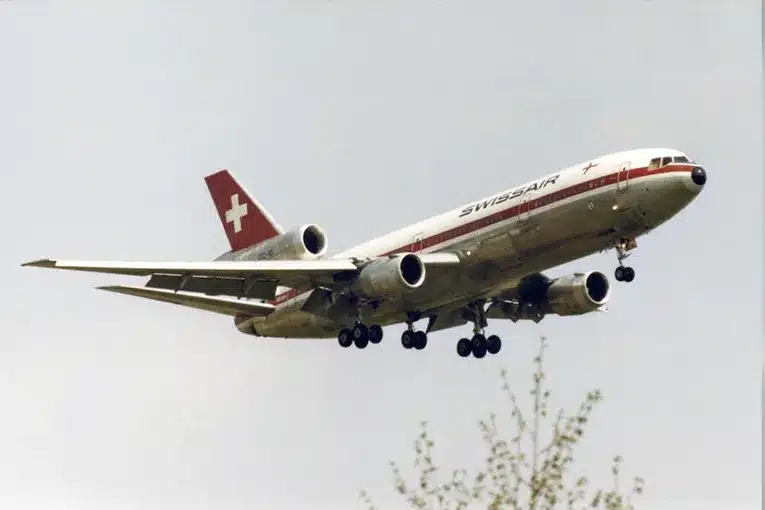
Fixed-wing airtankers carry retardant by size: Type I (3,000 – 5,000 gal), Type II (1,800 – 3,000), Type III (800 – 1,799). Very Large Air Tankers (VLATs) like DC-10s carry >8,000 gal.
Helicopters also have types I to III. Heavy Type I helos (~700 gal buckets) carry large loads, while Type II (~300 gal) and Type III (~100–180 gal) are smaller and quicker.
Military and converted aircraft provide extra capacity (~3,000 gal) and speed. A MAFFS C-130 can dump 3,000 gal in under 5 second.
What is Aircraft Fire Fighting?
Aerial firefighting (or aircraft firefighting) is the use of aircraft vehicles to suppress wildfires.
It involves fixed-wing airtankers (airplanes) that carry water or fire retardant and drop it on or ahead of a fire.
Helicopters are also used, either dropping water with a bucket or the transport of crews.
Aircraft may carry buckets, tanks, or sling loads of water.
Air attack aircraft (small fixed-wing spotter planes) provide overhead reconnaissance and direct the tanker drops.
For example, wide-body jets like the DC-10 are outfitted with 12,000-gallon retardant tanks for big fires, while helicopters like the UH-60 Black Hawk (Firehawk) insert firefighters or drop several hundred gallons at precise spots.
These flying machines extend firefighting reach into rugged areas, deliver large drops quickly, and act as flying lookout posts to support ground teams.
Why is Aircraft Fire Fighting Used?
Aircraft vastly improve wildland fire response speed and effectiveness.
Ground crews can take hours to reach a remote ridge, but planes can fly over terrain.
By dropping water or retardant early, aircraft help contain fires when they are small.
A swift initial attack from the air can keep a fire to mere acres (California’s goal is to keep 95% of fires under 10 acres).
Aircraft are used because they can access fires rapidly, cover wide areas with retardant or water, and support ground crews with real-time intelligence, saving time and lives compared to relying on ground crews alone.
10 Types of Aircraft Fire Fighting
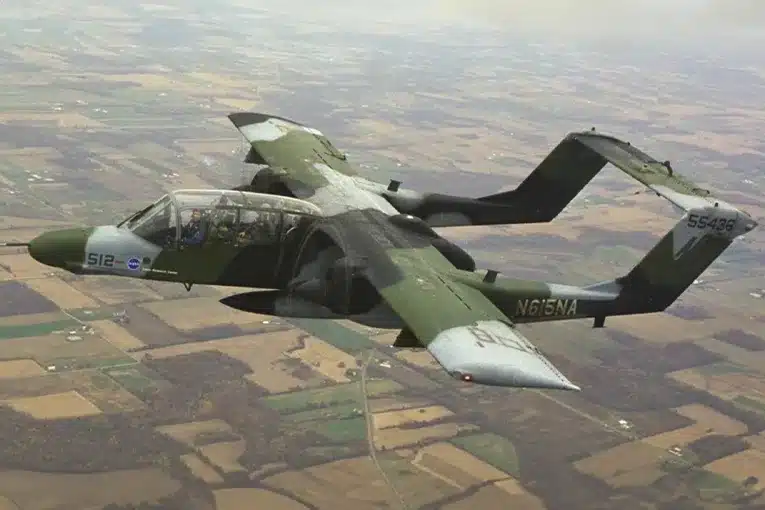
The 10 types of fire fighting aircraft are Air Tactical Aircraft, Fixed Wing Aerial Tankers (type I to III, VLAT and military) and helicopters (type I to III and military).
Type II airtankers are medium-sized tankers carrying about 1,800 – 3,000 gallons.
They include turboprop airliners and converted executive jets.
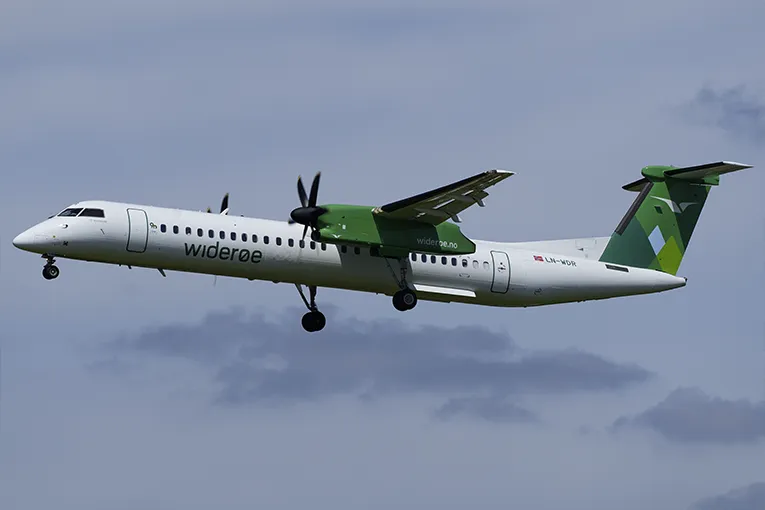
For example, the Bombardier Dash 8 Q400 (a Canadair airliner) drops around 2,600 gal, and older warbirds like the Douglas DC-6 or C-130 derivatives are in this class.
Type II tankers balance capacity with flexibility.
They are faster and more fuel-efficient than single-engine tankers yet can still operate from many airports.
Multiple Type II drops can cover a large area while using smaller airfields.
Aviation contractors combine Type II tankers for broad coverage.
For instance, three Q400s might deliver a combined load equivalent to one Type I tanker, but with quicker turnaround from multiple bases.
Examples are the Air Tractor AT-802 (about 800 gal) and light amphibious planes like the Canadair CL-215 (~1,300 gal).
Type III tankers are nimble and can use very short or unimproved runways close to fires.
They are ideal for initial attack on new wildfires.
They arrive quickly, make short drops, and return for more.
Their advantage is agility and responsiveness.
Because they operate from small airports, they can reach remote incidents faster, and their shorter water lines can get into steep or confined terrain.
Airtankers like the S-2 Tracker have stout landing gear and torpedo bays made for retardant tanks, allowing them to basing at small fields with short runways.
Type III tankers sacrifice drop volume for speed and access to work effectively in the early stages of a fire.
Very Large Air Tankers (VLATs) represent the largest class of fixed-wing firefighting aircraft and are deployed when massive fire coverage is needed quickly.
This can carry upwards of 9,400 gallons of fire retardant in one load, released in just a few seconds to lay down long, continuous lines ahead of advancing flames.
A single VLAT drop can cover a fireline hundreds of feet wide and miles long, making it much more efficient at slowing fire spread than smaller tankers.
Other legacy VLAT projects, such as the Boeing 747 Supertanker, were designed to carry nearly 20,000 gallons, demonstrating just how much retardant can be delivered from the air.
Newer programmes are now developing Boeing 767-based VLATs with even greater capacity and modern systems.
The main advantages of VLATs are their high payloads and long-reach retardant delivery, which are particularly valuable on very large or fast-moving wildfires where quick, broad coverage is crucial.
Military Aerial Tankers
C-130 Hercules equipped with MAFFS / Source: Wikipedia
Military transport aircraft are also used in firefighting when available.
For example, two MAFFS C-130s were sent to help Colorado fires in 2025.
A MAFFS unit can discharge 3,000 gal of retardant in under five second.
In addition, very large military or former military jets have been converted to airtankers.
These military-type planes cover enormous areas.
The key advantage is volume and reach.
Such planes can fight high-intensity fires or provide surge capacity when multiple air drops are needed.
They do require specially equipped bases to refill, but in return they extend the firefighting fleet’s capability by an order of magnitude compared to smaller tankers.
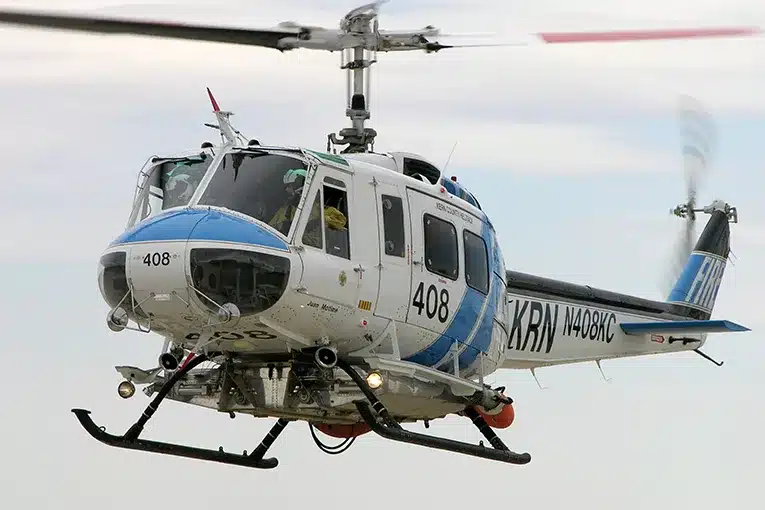
Helicopters
Helicopters are highly versatile firefighting aircraft.
They can rapidly drop water or retardant on fires, ferry firefighters and equipment, perform aerial ignition, or conduct search and fire rescue.
They operate closer to the fireline than fixed-wing tankers.
Helicopters are also classified by type based on size and capacity.
Heavy helitankers are Type I, medium helis Type II, and light ones Type III.
These categories guide their deployment, as we describe below.
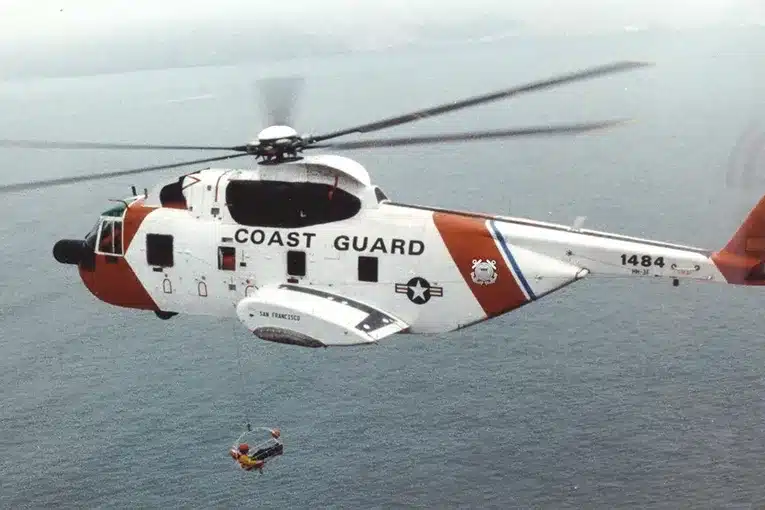
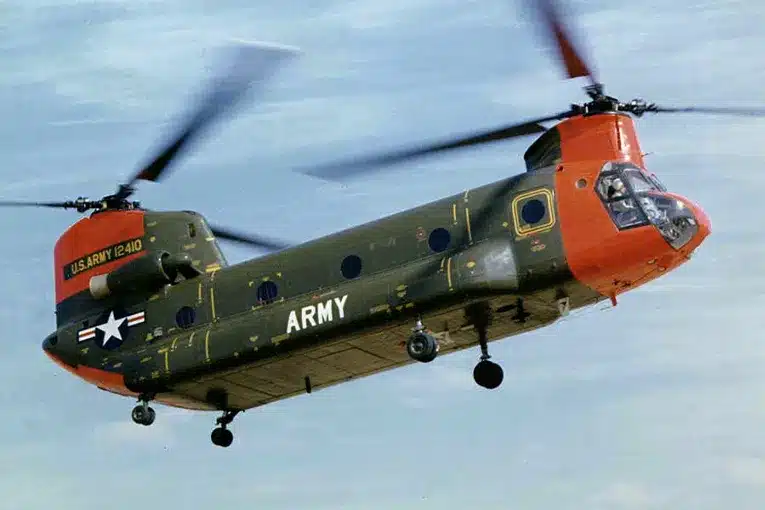
Military helicopters, especially heavy transports, have been adapted as ‘helitankers’ with enormous capacity.
The Boeing CH-47 Chinook (used by Southern California’s Quick Reaction Force) is the largest firefighting helicopter in the world.
Chinooks carry an internal 3,000-gallon tank and can hover-fill from a source in 90 seconds.
Another is the Sikorsky CH-53 Sea Stallion/CH-53K, with roughly 2,200 gal capacity, and the CH-54 ‘Helitanker’ Pelican (also ~2,200 gal).
These military helos are also fast; for example, the Chinook cruises at 160 kt.
Their advantage is clear.
They deliver far more water than civilian helicopters.
A single Chinook drop equals multiple drops by Type I helos.
Additionally, many are night-capable and can transport many troops or load heavier gear.
Military helitankers combine high volume, speed, and durability, making them formidable tools for large-scale firefighting operations
Final Thoughts
Aerial fire fighting brings together a diverse fleet of aircraft, each with a specialized role.
Air attack planes guide the operation, fixed-wing tankers blanket fires with retardant, and helicopters provide agile support.
Each type has advantages – from the enormous drops of DC-10s to the nimble bucket work of small helicopters.
Used together, these aircraft help contain wildfires that would otherwise spread.
Modern firefighting continuously evolves (new tankers, night-ops, and even drones), but the core remains.
Different flying machines are tools in the sky fighting fires.
By rapidly reaching remote fires, delivering huge volumes of water, and coordinating efforts, these aircraft types save land and lives, proving that the sky is an invaluable front line in wildfire suppression.
OroraTech, a Munich-based space company that operates satellite-based wildfire detection systems using thermal infrared sensors, has launched its GENA-OT nanosatellite as a shared scientific platform in low Earth orbit.
The 16U CubeSat mission is the first flight of the company’s GEneric flexible NAnosatellite (GENA) platform and carries multiple research payloads for partners including the Universität der Bundeswehr Munich.
The mission lifted off on 1 December 2025 on SpaceX’s Transporter-15 rideshare flight from Vandenberg Space Force Base under a European Space Agency (ESA) General Support Technology Programme project.
According to OroraTech, GENA-OT was developed within ESA’s General Support Technology Programme with funding from the German Space Agency at DLR.
The company stated that the platform is designed as a standardised modular bus so scientific customers can reach orbit without building complete satellites.
OroraTech positions the GENA family as the basis for future missions that can host both wildfire-focused thermal payloads and other experimental instruments in sun-synchronous orbit.
Shared GENA-OT platform for scientific payloads
OroraTech reported that GENA-OT carries several payloads from academic and research institutions.
One of the headline payloads is the relaunch of the ICARUS satellite-based animal tracking system from the Max Planck Institute, which has been on hold since 2022.
Other payloads include technology demonstrators from the Universität der Bundeswehr Munich SeRANIS Mission and contributions from the Munich Center for Space Communications.
The platform allows these programmes to conduct scientific experimentation and technology validation in orbit using a common spacecraft rather than separate missions.
OroraTech explained that GENA-OT uses standard experimental modules and interfaces to shorten lead times to orbit for new payloads.
The company added that the shared bus is intended to lower cost per experiment for universities, startups and research institutions that need in-orbit testing.
By using the same nanosatellite expertise that underpins its dedicated wildfire detection satellites, OroraTech aims to support both environmental monitoring and wider scientific use cases on related hardware.
European partners back responsive space infrastructure
Professor Andreas Knopp, Universität der Bundeswehr Munich, said: “GENA-OT demonstrates the future of satellite development, one that combines speed, modularity, and innovation.
“Within an unprecedented timeframe, we implemented several innovative payloads built by the university and other startups.
“This project showcases how academia and commercial partners can rapidly meet the needs of the New Space economy.”
Dr Martin Langer, Chief Executive Officer and Chief Technology Officer at OroraTech, said the mission illustrates how commercial satellite buses can support public objectives, including space-based wildfire services.
Dr Martin Langer, Chief Executive Officer and Chief Technology Officer at OroraTech, said: “This mission shows how commercial platforms can power public benefit.
“GENA-OT is the result of a public-private partnership that delivered spaceflight-ready hardware in record time.
“We believe in turning data into action, and this satellite proves that infrastructure can be fast, flexible, and ready for tomorrow’s missions.”
Dr Shahin Kazeminejad, Head of the General Support Technology Programme at DLR Space Agency, highlighted the role of European funding in the project.
Dr Shahin Kazeminejad, Head of the General Support Technology Programme at DLR Space Agency, said: “This mission reflects the German Space Agency’s and ESA’s commitment to supporting scalable platforms for in-orbit demonstration and validation.
“GENA-OT is the first purely German mission to be funded under the GSTP Element 3 ‘FLY’, and is a great example of how smart public investment and industrial innovation can work together to advance European space capabilities and enable new business opportunities for companies.”
OroraTech stated that standard commercial platforms such as GENA-OT can help governments and institutions shorten mission schedules and reduce the cost of access to orbit.
The company views the mission as aligned with national and European plans for sovereign responsive space infrastructure that can carry wildfire monitoring sensors as well as broader research payloads.
Relevance of OroraTech’s GENA-OT mission for wildfire and safety planning
OroraTech already operates thermal infrared payloads and dedicated satellites that provide near-real-time wildfire detection, burnt area mapping and fire spread intelligence to public and private customers.
The GENA-OT mission shows how a standardised nanosatellite bus can host both research instruments and sensors relevant to wildfire intelligence, using similar hardware and processing approaches.
Emergency and disaster response managers who rely on satellite-derived fire alerts can treat GENA-OT as an example of how new sensors might be brought into orbit more quickly using shared platforms.
Government departments and standards bodies involved in commissioning or regulating space-based wildfire services can see how ESA and the German Space Agency are using the General Support Technology Programme to derisk new payloads before larger operational constellations are deployed.
Fire and rescue chiefs, civil protection agencies, forestry operators and infrastructure asset owners who already use OroraTech wildfire products may encounter future services that depend on technology first exercised on missions like GENA-OT, including improved thermal imagers, on-orbit AI processing and expanded global coverage.
Locally, smoke causes serious health problems: it aggravates asthma, heart disease and other conditions, and can trigger hospital admissions.
Economy
Wildfires also have a large economic cost.
The effort of firefighting can run into the hundreds of millions.
Rebuilding after a fire, repairing homes, clearing burnt trees, restoring utilities, costs even more.
Worldwide, the annual economic losses due to wildfires are in the tens of billions of pounds.
Flooding and Landslides
Finally, wildfires can increase risk of flooding and landslides after they are out.
The heat often soaks into soil and makes it hard for rain to seep in.
Then heavy rains can wash ash, mud and debris downhill very quickly, causing flash floods or landslides.
In this way, wildfires can trigger new hazards even after the flames are gone.
Can Weather Affect Wildfires?
Weather and climate have a huge impact on wildfires.
Droughts & Heatwaves
In general, hot, dry and windy conditions make wildfires more likely and more severe.
Droughts and heat waves dry out trees, grass and soil, turning once-green vegetation into brown tinder.
Heatwaves in Europe or North America have repeatedly led to record-breaking fires.
Scientists have linked this to climate change: by making heatwaves hotter and droughts longer, climate change is lengthening the fire season.
On the other hand, cold or rainy weather helps to prevent fires; a period of heavy rain will soak vegetation and greatly reduce fire risk.
Wind
Wind deserves special mention.
Strong winds can carry burning embers miles ahead of the main fire, starting spot-fires that are very hard to contain.
Winds also fan flames, supplying them with oxygen and pushing the fire front forward rapidly.
Even gentle breezes on a very dry day can make a fire spread much faster.
By contrast, still, humid air is much less favourable to fire growth.
Recent weather patterns have already increased wildfire risk.
How to Help Prevent Wildfires
Preventing wildfires is something everyone can help with.
Most wildfires could be avoided if people behaved responsibly when using fire outdoors.
The key is to avoid providing sparks or flames when conditions are dry.
For example:
Be Careful With Open Flames
Never leave a campfire, bonfire or barbecue unattended.
Keep them small, use a proper fire ring or container if available, and always have a bucket of water or a hose nearby.
When you’re done, douse the fire completely with water and stir the ashes until no smoke or heat remains.
This ensures hidden embers don’t flare up later.
Dispose of Smoking Materials Safely
Do not drop cigarette butts, matches or lighters onto the ground.
A lit cigarette can smoulder unseen and ignite dry grass.
Always put out cigarettes fully in a stubber or an ashtray, and never throw them out of car windows.
Avoid Fire in High Risk Areas
In hot, dry weather do not light any kind of flame in parks, forests or open countryside.
That includes barbecues, as they can easily start grass fires.
Equally, say no to fireworks or sky lanterns on dry days.
These may seem harmless, but any spark they produce in a dry field can ignite a wildfire.
Position Equipment Safely
If you barbecue, place the grill on a flat non-flammable surface (not on grass or decking).
Keep it well away from hedges, fences or trees, and have water handy.
Never use petrol or other flammable accelerants.
When you finish cooking, make sure the fire is fully out and cool before disposing of ashes.
Follow Local Guidance
Many areas issue fire danger warnings or total fire bans during very dry spells.
Check local advice and follow any restrictions.
If a ban is in place, do not light even a small fire.
Also clear leaf litter and long grass from around homes and outbuildings to create a safety zone – this ‘defensible space’ can stop fires from reaching buildings.
In forest areas, leaving dead wood on the ground or allowing undergrowth to build up can turn small sparks into major fires, so controlled clearing can help.
Report Fires Quickly
If you see a fire starting, do not assume someone else will call for help.
Call the emergency services immediately with the location.
Give clear information about where the fire is, what it looks like, and if it is spreading.
Early reporting allows firefighters to respond fast before the fire grows out of control.
Conclusion
You should now have more of an understanding of how wildfires start.
Wildfires are complex natural disasters with many causes, but with awareness and care we can reduce their impact.
We have seen that wildfires can start from nature or human actions.
Weather and climate play a key role with hot, dry, windy conditions making fires far more likely.
However, each of us can help prevent them.
By following simple precautions – never leaving fires unattended, disposing of cigarettes safely, heeding fire bans and clearing dry vegetation.
Understanding wildfires helps us live more safely with them.
Although wildfires will never disappear entirely, training people to act responsibly and learning about wildfire causes and fire weather can greatly reduce the risk.
After all, it only takes one spark to start a wildfire, but many small actions to prevent one.






.jpg)

.jpg)

.jpg)
.jpg)
.jpg)
