Advanced RF Technologies, Inc. (ADRF), the largest pure-play in-building Distributed Antenna System (DAS) provider for public safety and commercial radio frequencies, today announced a new long range annunciator, ANN-L, for its public safety repeaters at this year’s International Wireless Communications Expo (IWCE). The ANN-L is ADRF’s first annunciator capable of extending the range of visual and audible alarms up to 1,000-feet from the public safety repeater to allow for more flexibility in network design.
“The addition of the ANN-L gives system integrators and building owners more options of where they can place the annunciator in relation to our public safety systems, which makes the installation simple and saves them the trouble of going to a third-party for extended range,” said Dennis Burns, ADRF’s Director of Public Safety. “Our mission for over 20 years is not only to provide the best public safety in-building solutions, but also to make implementing them as easy as possible for our customers and partners.”
In addition to its new product, ADRF will also be demonstrating interoperability between its ERCES and Edwards’ Life and Safety System at booth #671. Together, the systems are easy to install and deploy, can be programmed to enhance versatility and flexibility, and create a centralized life and safety system meeting all NFPA requirements for buildings.
Earlier this year, Edwards, a division of Carrier Global Corporation (NYSE: CARR) and ADRF entered a strategic agreement to provide Edwards customers with mission-critical, emergency radio communication enhancement systems from ADRF’s in-building public safety communication solutions.
For more information on ADRFs suite of in-building public safety solutions visit www.adrftech.com.
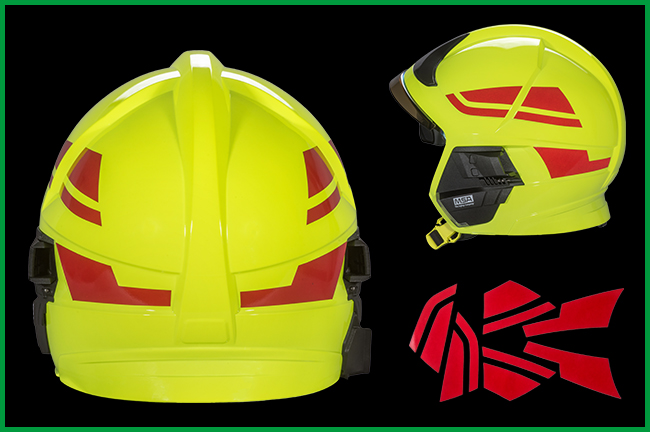
Helping to keep firefighters safe has been a core part of MSA Safety’s mission for more than 100 years and various generations of F1 helmets have been serving firefighters since 1985. In response to the new challenges of today’s fire ground, the company has been continuously upgrading its products and this year, has introduced a remastered version of the GALLET F1XF. This iconic helmet, developed for firefighters with firefighters, brings a number of substantial enhancements to add value to the safety and comfort of the firefighters on on duty.
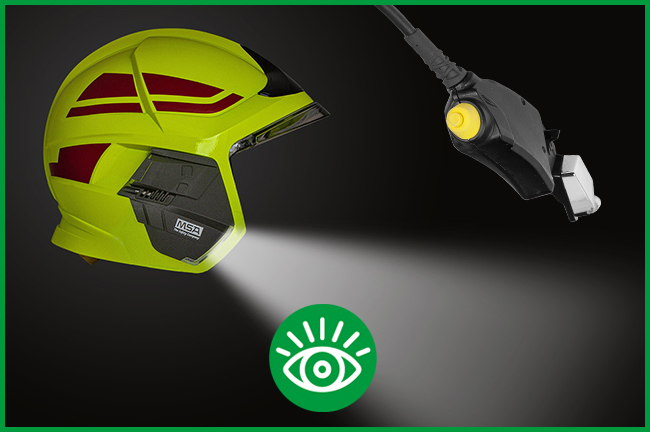
NEW L1XF Lighting Module
The enhanced lighting module on the GALLET F1XF helmet provides two levels of lighting: standard and boostgiving four times more light than the classic model. The light switch has been upgraded for a better feel, and to make the light easier to activate while wearing gloves.
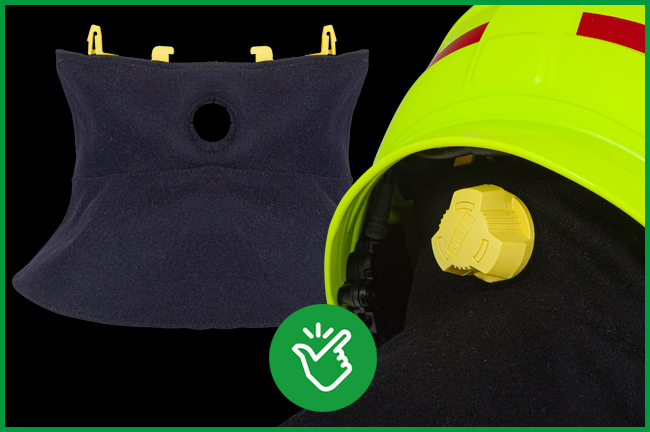
New Ratchet Wheel Knob
The redesigned ratchet 3-pin wheel knob passes easily through the neck curtain for a comfortable adjustment, with the helmet and a pair of gloves on. It also provides an improved visual of the neck curtain clips ensuring easy and fast installation and removal.
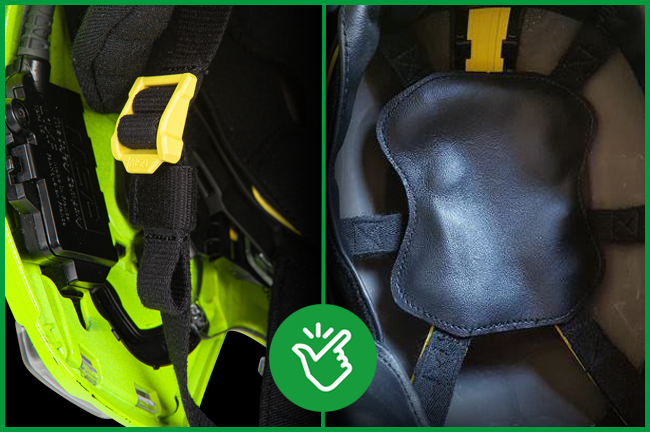
Improved Soft Goods
Textile front and rear interior features, the chin strap, and an optional – textile or leather – crown pad are easy to remove for improved comfort and cleaning. The redesigned chin strap provides a better grip and easier adjustment when wearing the helmet and gloves.
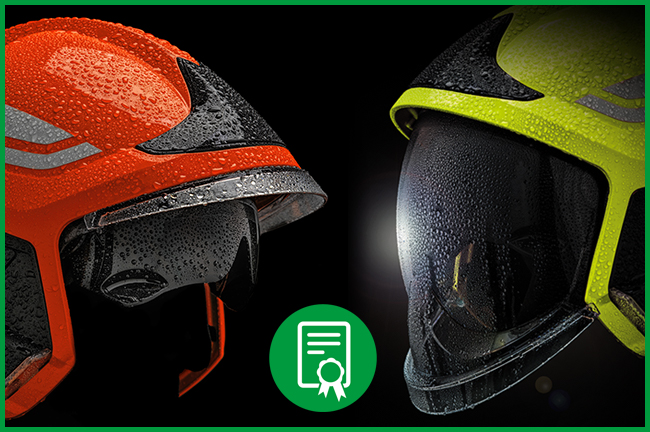
Eye and Face Protection
Face shields and the ocular visor have been upgraded to EN14458:2018 standard of high-performance visors on protective helmets. The improved metalised face shield enhances light transmission and makes it even more comfortable in low luminosity conditions.
Retroreflective Stickers
With a choice between a variety of colours, styles, and shapes of MSA’s retroreflective stickers made especially for the GALLET F1XF, each helmet can be easily customised for any application, enhancing a firefighters’ visibility whether they are in low light or a technical rescue operation.
The GALLET F1XF Helmet Evolves Along with the Firefighter’s role
The role of a fire team is no longer concealed to firefighting. Unlike any other fire helmet on the market, the configurable design of the GALLET F1XF Recharged allows for safety and comfort and is the perfect choice for a variety of applications, including technical rescue operations, road traffic accidents, and vehicle rescue and extrication.
In the latest product spotlight, International Fire and Safety Journal reviews the Dualie®2AA flashlight by lighting experts Streamlight
For on-scene responders, the importance of good quality lighting that delivers in the right areas cannot be understated. The equipment used needs to provide quick, reliable solutions that still maintains optimum performance whilst on scene. In terms of lighting solutions, quality lighting can often be the difference between a successful or unsuccessful mission.
In this article, we will review the Dualie®2AA, manufactured by lighting experts Streamlight. For this product, we firstly wanted to set out what would be important to the end user. Features such as operability, flexibility, reliability, run time and beam distance are just some specifications that are key for responders. Firstly, lets take a look at operability.
Dualie®operability
Firefighting crews are often faced with environments that require them to think, work and react fast in fire grounds that bring added danger to their role. For this reason, having equipment that is easy to use and handle is imperative for a successful mission. On this end, the Dualie®2AA seems to deliver an excellent solution for users. The flashlight has been built with one-handed operation in mind, and the end user has clearly been thought of from design to manufacture.
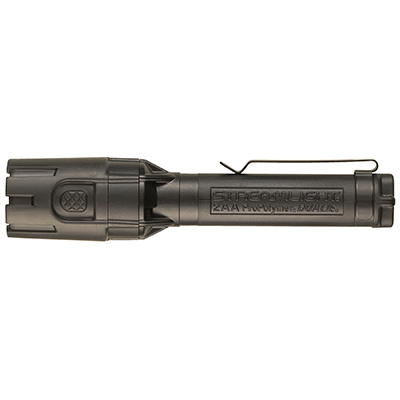
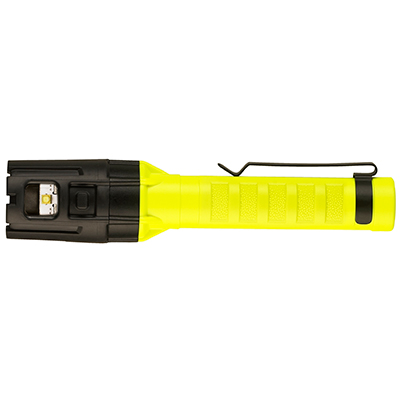
Dual head switches on either side of the body make the Dualie a versatile option for users. The beam selection and operation of the Dualie® 2AA also make it a versatile solution. Both beams are able to be used at the same time, further improving scene lighting and improving the field of vision whilst in operation. This feature is something Streamlight have designed to help operators avoid slips, trips and falls, and with the dual lighting, it is easy to see how user safety is improved whilst using the flashlight.
An integrated magnet at the tail end of the of the flashlight also means that hands-free operation is an option when maneuverability is key. For operability, the Dualie’s design and features means it gives users flexibility and the confidence that they are aware of their surroundings and its dangers, whilst also being able to carry out their task.
Dualie 2AA durability
A flashlight is one of the most common pieces of equipment used by responders, therefore it must be able to operate in dangerous environments and remain durable during operations. One thing that immediately sticks out when testing the flashlight is how lightweight, yet durable that it appeared. Weighing in at 3.90 ounces, it would be easy to sacrifice durability for a lighter product, but this is not the case with the Dualie® 2AA.
The 2AA comes with impact and chemical resistant Engineered Polymer resin v-ring sealed and vented, an unbreakable polycarbonate facecap and side lens with scratch resistant coating. The general feel of the Dualie® 2AA is sturdy yet light and small enough to carry on missions that need versatility. Overall, the compact design means that the flashlight is easy to operate and hold, whilst also still providing reliable lighting that can last through harsh environments.
Dualie 2AA performance
The previously mentioned dual lighting of the Dualie, which widens vision, uses both spot and flood light LED. With high lumens of 175, it should have come as no surprise that the flashlight shines bright. Even at its lowest lumen of 115, the flashlight delivers on its key objective of providing light when it matters most. For measure, the average iPhone flashlight has high lumens of 50. The beam distance is also something that stands out. Shining ahead at 111 meters, the Dualie® 2AA allows the user to see in to the distance, further improving visibility and safety on-scene by delivering extended lighting.
Final thoughts
Going back to some of the key specifications that users look for such as operability, flexibility, reliability, run time and beam distance, the Dualie delivers on all fronts. Its compact design makes it an essential tool for responders that are tasked with dealing with dangerous, hazardous environments. With an Operating temperature of between -20°F to 130°F, its flexibility reflects the true nature of the changing role of firefighters. The water resistant design means that floods and other incidents can be attended.
The run time of 24 hours means that for incidents in the darkest environments, the flashlight remains a vital tool throughout the mission. The design, which makes one handed operation easy, doesn’t sacrifice on quality despite its light weight feel.
Upon opening the Dualie® 2AA, many things stood out, but its versatility in its performance is perhaps its greatest asset. The Dualie® is one of the many lighting solutions provided by Streamlight, and with the company continuing to engage with end users to develop lighting solutions, user friendly solutions like the Dualie® 2AA are just the latest in a long list of products off the Streamlight line that have developed. For more information on the Dualie® 2AA and more lighting products produced by Streamlight, visit: https://www.streamlight.com/en
Avon Protection have announced the launch of the Tactical Mask Communications (TMC) System, a communications solution for customers to interface between their headsets to the Avon series Air Purifying Respirator.
TMC is designed for users of Avon Respiratory Protection Equipment who require a simple yet scalable Tactical Communications solution when “masked up”.
Designed to provide the user with clear and effective communications with wearing an Avon APR, the system is compatible with most radios and tactical headsets. The TMC is simple to configure, install and use, with a range of connectors, press to talk units and headsets to meet any requirement and support operational readiness.
As world leaders in the field of Respiratory Protection for First Responders and Military personnel, Avon Protection continue to grow our product range to reflect the real world needs of our users with a system designed to help them further develop operational capability while wearing our equipment in the harshest of environments.
Commenting on the development of the TMC system, Colin Horne, Product Manager, said: “Simple, reliable and clear communications are key to success in any military and law enforcement operation, but historically, we’ve seen a lot of confusion and over-complication around Tactical Communications systems for APR users. We are extremely excited to be bringing a fresh approach by launching a range of robust products which are simple to understand, easy to adopt but all focused on ensuring operators can maintain communications whether they are wearing a respirator or not.”
Commenting on the launch of the TMC system, Thomas Korb, Director of Global Product Management, at Avon Protection, said:
“The new product launch of the Avon Tactical Mask Communications (TMC) system further reinforces our commitment to listen to the requirements of our customers by delivering a configurable communication offering that provides maximum reliability while meeting the ever-changing mission profiles of our user groups.”
With the fireground changing, emergency lighting is more important than ever for firefighter safety
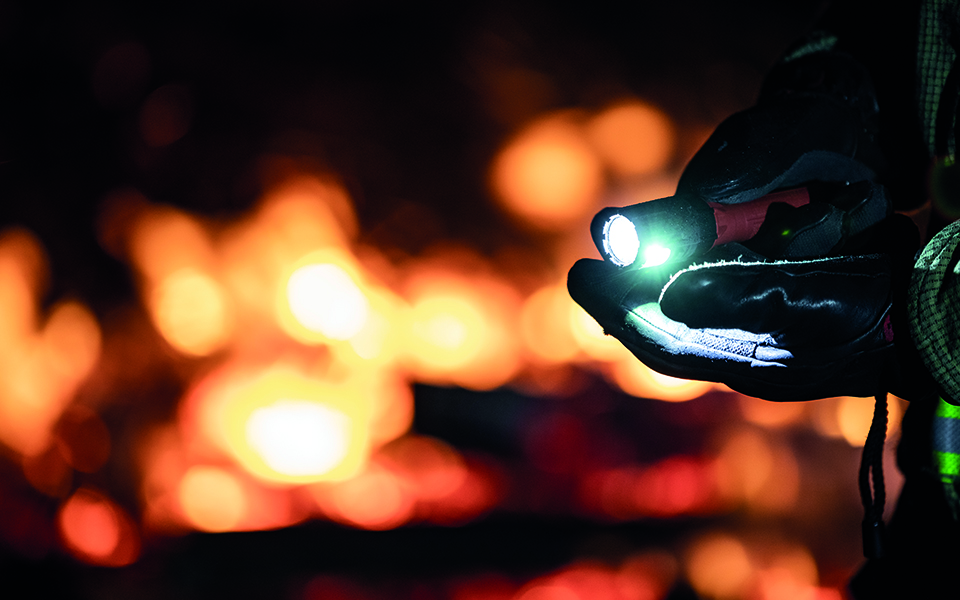
Whether you’re facing a dark long tunnel, responding to a road traffic collision, or extinguishing a fire, the lighting solutions you choose can play an important role in your comfort and in the success of your rescue operation.
Choose the Right Lighting Solution
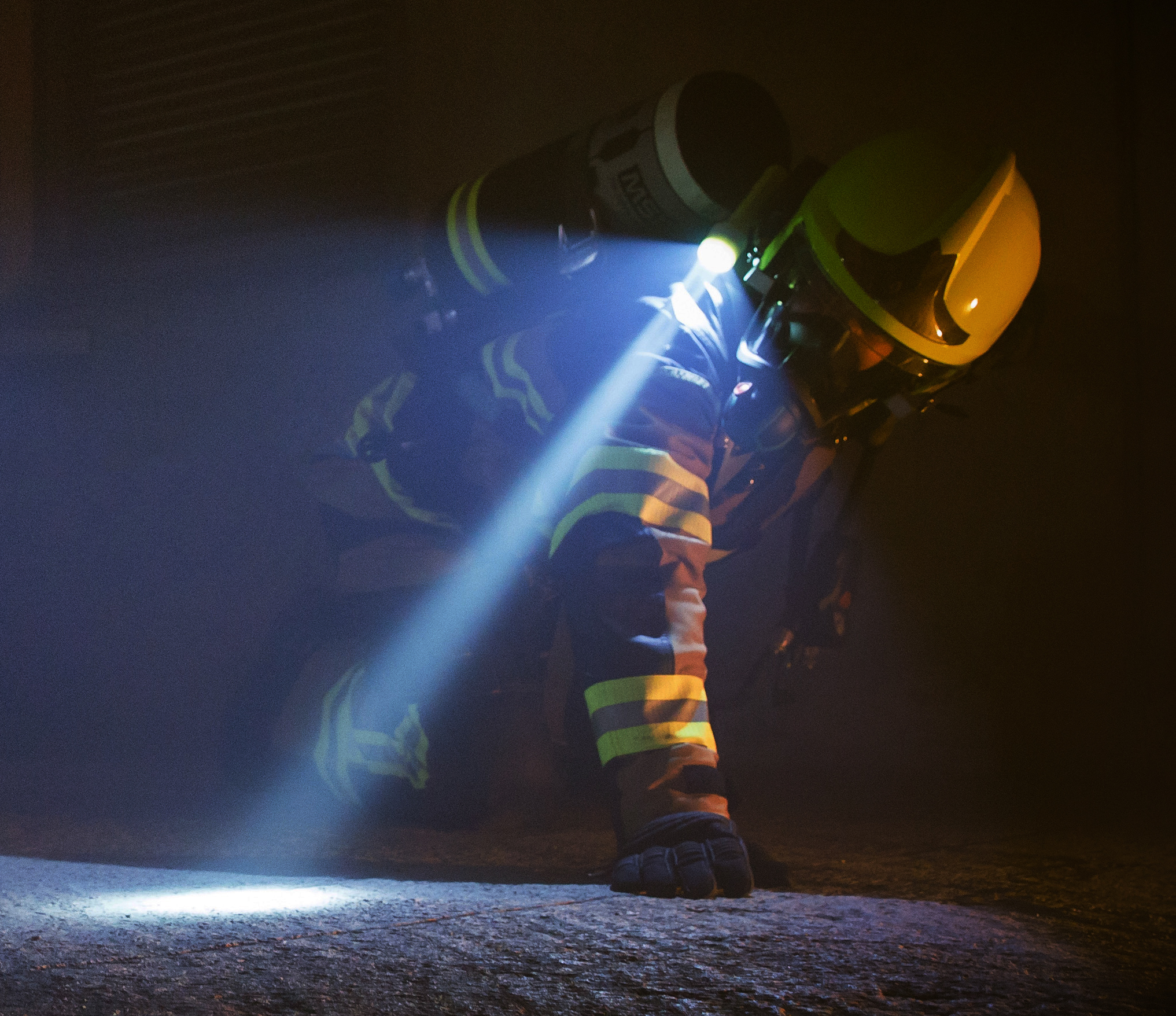
Being able to work hands-free during a rescue operation is extremely important, as carrying a flashlight in hand all the time can be a dangerous inconvenience. To enable modern firefighters to perform their work efficiently, helmet-mounted and helmet-integrated lamps have become the solution of choice.
With the variety of lighting solutions available on the market, choosing the right option for you can be determined by the types of interventions your light will be serving. In the event of entering a fire scene where complete situational analysis is necessary, a powerful long-range light with a high level of smoke penetration might be required as it provides a strong and focused beam, also known as a spot beam, typically illuminating at a distance of up to 20 metres.
However, the task at hand is to read a map, pilot a drone, talk to others or simply see your hands and feet in a dangerous environment, a brighter and more diffuse proximity beam providing illumination of a local area up to 1.5 metres may be a better option.
It’s important to consider the value of the proximity beam as a complementary solution to the traditional spot beam. Even so, the need for integrated proximity beams in fire helmets has largely gone unfulfilled for a long time. To maximise its features, a firefighter’s light should be targeted in the right direction whilst also providing greater visibility of his or her surroundings. It is important that firefighters are not blinded by their own headlights. Switching from one beam to the other, or using both simultaneously, can be key to improving efficiency and safety. The need for these different beam settings during incidents has become essential, largely due to the increasingly varied and dangerous missions undertaken by today’s fire and rescue services.
“Whilst the choice will depend on unique situational factors, it is important that varying lighting options be made available,” says Aurélie Favre, Fire Helmet Market Specialist, Europe at MSA Safety. “Thanks to advancements in lighting technology, which combines a proximity light and a spot beam in a single integrated headlamp, MSA’s new lighting module can illuminate the firefighters’ environment without excessive head movement, minimising the risk of blinding others around them.”
How Technology Improves Without Minimising Ergonomics and Safety
The lighting system is one of the most important aspects of the fire helmet design. Therefore manufacturers need to consider how the helmet will be used, and in which scenarios, in order to build the best light integrations.
Several key differences between helmets emerge from these considerations, such as the weight and where the lighting module components are located. A convenient solution in a jet-style helmet can be placing LED lights on either side of the helmet. Evenly spread lights on the left and right side andhe positioned in the lower rim minimises the impact on the helmet’s balance. While improving visibility as the light is less likely to obscure the vision of other members of the team or civilians.
“But there are cases where torch lights need to be used in hand. MSA torch lights can also be detached and used as hand-held units,” says Favre. “These light attachments are fundamentally safe, with flame and heat resistant materials and no metal parts, for safe operation around electrical risks. The powerful LED light is adjustable in various positions, aligns to the target, and strikes the balance between being light and compact to help avoid snagging hazards whilst still being easy to maneuver when wearing gloves.”
An additional important element of the lighting application is the long life of the battery, easily replaceable or rechargeable after the rescue operation is completed. The choice between rechargeable and disposable batteries should be based on several different factors, such as the frequency and duration of typical interventions. As Favre reports “The rechargeable battery life of MSA’s lighting modules exceeds 200 cycles, which helps save costs in the long run, even though it is the more expensive option at first.”
“As the fireground dynamics change, up-to-date lighting solutions can help you meet these challenges,” concludes Favre.
The recent OS Malevich 2.12 update from Ajax Systems has brought some highly anticipated features. The new firmware improved the fire alarm system, added a more flexible configuration of notifications about entry/exit delays, and most importantly – delivered Chime, the feature that many installers and security industry professionals have been awaiting most.
What is Chime?
The Chime feature allows using an Ajax siren with an opening sensor as an analogue of a shopkeeper bell. It notifies store employees that a client has entered the door or — in a private house — that someone has entered through the back door.
The sound of the siren alert is short and different from the alarm, and its volume is adjustable in the app. There are 4 alert signals to choose from, which allows hearing which door has been opened. After enabling the Chime feature, the blue bell icon appears in the Ajax app, indicating the state of the function. It’s possible to temporarily disable it with a tap.
Other new features delivered with OS Malevich 2.12 included:
Improved Ajax Cloud notifications Notifications on the loss of connection with the Ajax Cloud server become more informative. Now, in the service settings of a hub, users can select specific communication channels about which to report in case of a lost or disabled connection. The delay for such a notification can be set up for up to 30 minutes. This functionality not only improves control over the communication of the security system for users but also can generate an alarm confirmation for a security company monitoring station.
Revised Night Mode notifications This year, the company received several requests from Ajax users on Facebook and the Trustpilot review platform regarding siren alerts in Night Mode. Users did not like the siren waking up their children when Night Mode was activated.
Now, in the siren settings, alerts on the Night mode activation and delays are separated: individually for the entry and the exit. Users can also set the volume of these alerts. No more annoying beeps at night.
Fire alerts in a multi-apartment building At the request of Norwegian partner Elotec, with whom the company implemented a project last year to protect the UNESCO World Heritage Site in Bergen, Ajax team continues to improve the interconnected alarm of FireProtect detectors. The function saves lives by notifying all people in the building through the buzzers built into the fire detectors when at least one of them has detected fire. It allows people to be evacuated even before the fire rapidly spreads across a building.
Thanks to the update, in case of false alarm a user will now be able to only mute the detectors of the same group — the user apartment, without affecting the detectors in other apartments. The user evaluates the falsity of a fire alarm only in his apartment, and if there is a danger to other residents, then the interconnected alarm will notify them of it. If a false alarm triggers an interconnected alarm in all apartments, only the system administrator can mute it.
How to get the update
All Ajax hubs will receive OS Malevich 2.12 within September 2021. The update is installed automatically when the security system is disarmed, and the hub is connected to an external power supply.
County Durham and Darlington Fire and Rescue Service (CDDFRS) has implemented Dräger’s Cleaning Solution as part of its new state-of-the art decontamination facility, designed to ensure optimal cleaning and disinfection of firefighter equipment.
The initiative will not only help protect firefighters from harmful carcinogens and germs, but the innovative nature of the new decontamination and cleaning regime will also help improve the useful working life of the equipment the firefighters use.
Dräger’s Cleaning Solution package includes Harstra’s Wash 9DR and Wash 6DR mechanical cleaning machines plus additional self-contained breathing apparatus (SCBA) and associated equipment to enhance operational logistics.
The compact Wash 9DR stainless steel cleaning machine is an automatic solution for cleaning breathing masks that has low water and energy consumption. The Wash 6DR is a solution for cleaning higher volumes of complete breathing apparatus, including full face masks, compressed air breathing apparatus, helmets, and back plates (without the cylinder). In-built dosing pumps ensure consistency of cleaning, and the high-pressure 4-sided bayonet nozzles maintain water pressure during the cleaning process, preventing moisture from getting into equipment. Two compartments prevent cross-contamination and during washing the doors are electrically locked.
Modular in design and simple to use, the mechanical cleaning machines can be configured to suit specific workshop areas and capacity requirements, with washing and rinsing cycle options available in as low as 5, 10 and 22 minutes and featuring in-built water softening.
CDDFRS’s new decontamination facility is part of a remodelling of the fire service’s existing training facility, and now provides additional showering and changing areas for firefighters as well as distinct areas for washing, drying, and servicing equipment. New protocols have been introduced to minimise cross contamination of equipment and firefighters’ exposure to combustion products from leaving an incident to shift end.
The decision to commission the facility is a part CDDFRS’s commitment to its core values of pioneering innovation, prioritising firefighter wellbeing and safety, and driving improvements in managing contaminants. CDDFRS is part of a working group that brings together firefighters, fire chiefs, estates, governance, the FBU and public organisations to agree best practice.
Dan Wootton, Fire Officer for CDDFRS, says while mechanical washing of equipment is new to the UK fire services, in recent years the benefits have come to the fore: “Dutch fire services have invested in mechanical washing over recent years, leading to clear benefits in terms of disinfection and cleaning consistency, and an awareness of this is what drove us to move away from manual cleaning.”
CDDFRS opted for Dräger because it was able to provide the right approved equipment for the service’s needs (including capacity and wash cycle lengths) and critically was able to provide on-the-ground logistical support in installation and ongoing servicing and maintenance. Logistical support encompasses ensuring there is enough equipment ready for use at any one time, and – with firefighters being required to spend less time manually cleaning – advising on operational processes that maximise working capacity.
Liz Millward, Marketing Manager Emergency and Rescue Services at Draeger Safety UK, says in recent years there has seen a welcomed cultural shift with greater awareness of firefighter long-term health:
“We now know that carcinogens on dirty kit have a long-term impact on firefighters’ health, which has been compounded by the pandemic. As part of our Health for the Firefighter campaign we surveyed firefighters and found there to be considerable concern around their long-term health with regard to both carcinogens and Covid-19,” she explains.
“It is fantastic and testament to CDDFRS’s culture that it is trailblazing proven advancements to cleaning and disinfection – for the sole purpose of furthering firefighter health and wellbeing.”
CDDFRS implemented a staged introduction, by initially only utilising the new facility following training exercises. This gave crews the opportunity to feedback and hone the process with heavily exposed equipment to ensure a streamlined introduction to wider use.
“Other fire services are keen to see how it works and how well firefighters have adapted,” adds Dan. “We have various video and online communication tools that we have used to ensure firefighters have been on board with changes at every step of the way.
“Overall, through our new facility we’ve been able to improve firefighter working conditions and support their health and wellbeing – and we’re proud that this has been the driving force behind investment,” he concludes.
High-Resolution Radiometric Gimbaled Thermal Drone Payload for the DJI V2 Matrice 200 Series and Matrice 300 Offers Pixel-by-Pixel Temperature Measurement with up to 20 Times Digital Zoom
Teledyne FLIR made available today the FLIR Vue® TZ20-R, a high resolution, thermal zoom gimbal, purpose-built for the DJI® V2 Matrice 200 Series and Matrice 300 airframes and includes radiometry to measure the temperature of every pixel in the scene. Featuring two 640×512 resolution FLIR Boson® thermal camera modules, with one providing a narrow-field-of-view (18 degrees) and the other a wide-field-of-view (95 degrees), the Vue TZ20-R provides even greater situational awareness, accuracy, and context by offering more pixels on target with the corresponding temperature data.
Search and Inspect More Area in Less Time
IP44 rated to provide operability in poor weather conditions and weighing just 640 grams (1.4 lbs.), the dual thermal camera system offers unmatched thermal zoom performance at five times, 10 times, and 20 times digital zoom for a variety of public safety and industrial missions. The dual Boson camera modules also provide four times more radiometric pixels on target at every zoom level versus all competitors, empowering pilots to scan and survey large areas quickly, all while preserving flight time and maintaining a safe standoff distance.
Utility, roofing, solar farm, and other industrial inspectors can achieve unmatched clarity from a safe distance. Emergency response pilots in search and rescue, law enforcement, firefighting, and public safety, can also more easily search for and observe in silence while using the thermal zoom to reduce false positives and make critical decisions faster.
Operators can use in-app features, such as isotherms to automatically detect temperatures of interest, ideal for industrial inspection and public safety where quickly spotting anomalies is mission critical.
Plug-and-Play Setup and Operation
The TZ20-R offers simplified operation and payload connection via the Skyport V2.0 gimbal on the DJI Matrice 300 or V2 Matrice 200 series. Thermal video and still-image data can be recorded on dual microSD cards along with the ability to stream thermal video mid-flight. Post mission, operators can export the data to FLIR Thermal Studio and third-party data processing software for in-depth analysis and review.
The FLIR Vue TZ20-R is available for pre-order with delivery in October through authorized distributors. Learn more at https://www.flir.com/vue-tz20-R.
The GALLET F2XR helmet comes with integrated accessories for head protection in technical rescue, wildland firefighting, water rescue, and more
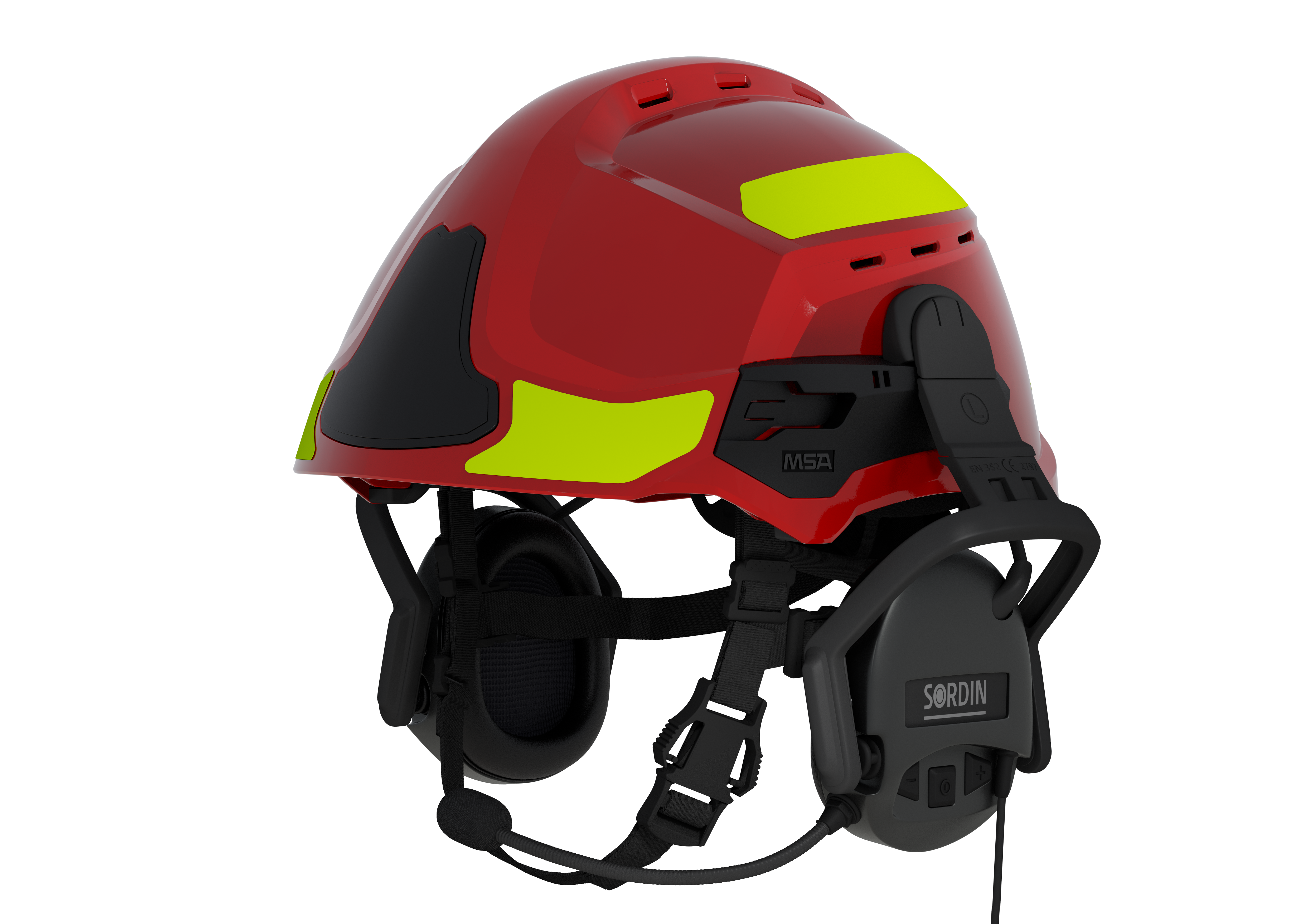
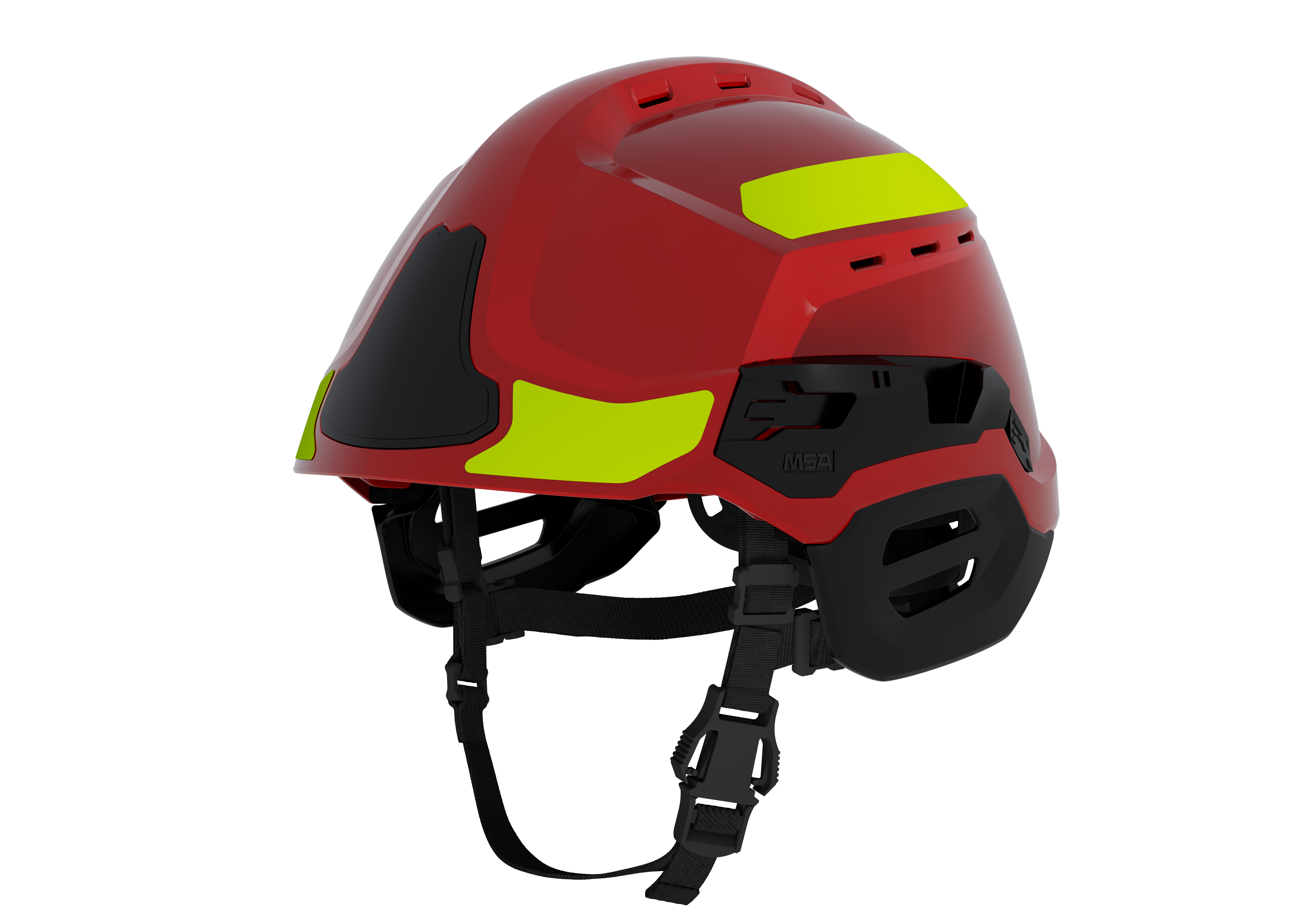
The GALLET F2XR has been designed to help fire and rescue services to face new challenges linked to climate change. From wildland firefighting to technical rescue including responding to road traffic collisions and rescue at height, the GALLET F2XR can also adapt to unexplored applications such as water rescue. It is the first helmet platform with a comfortable, modular range of use due to interchangeable components that allow for individual integration to use all the necessary accessories required in the most demanding operations.
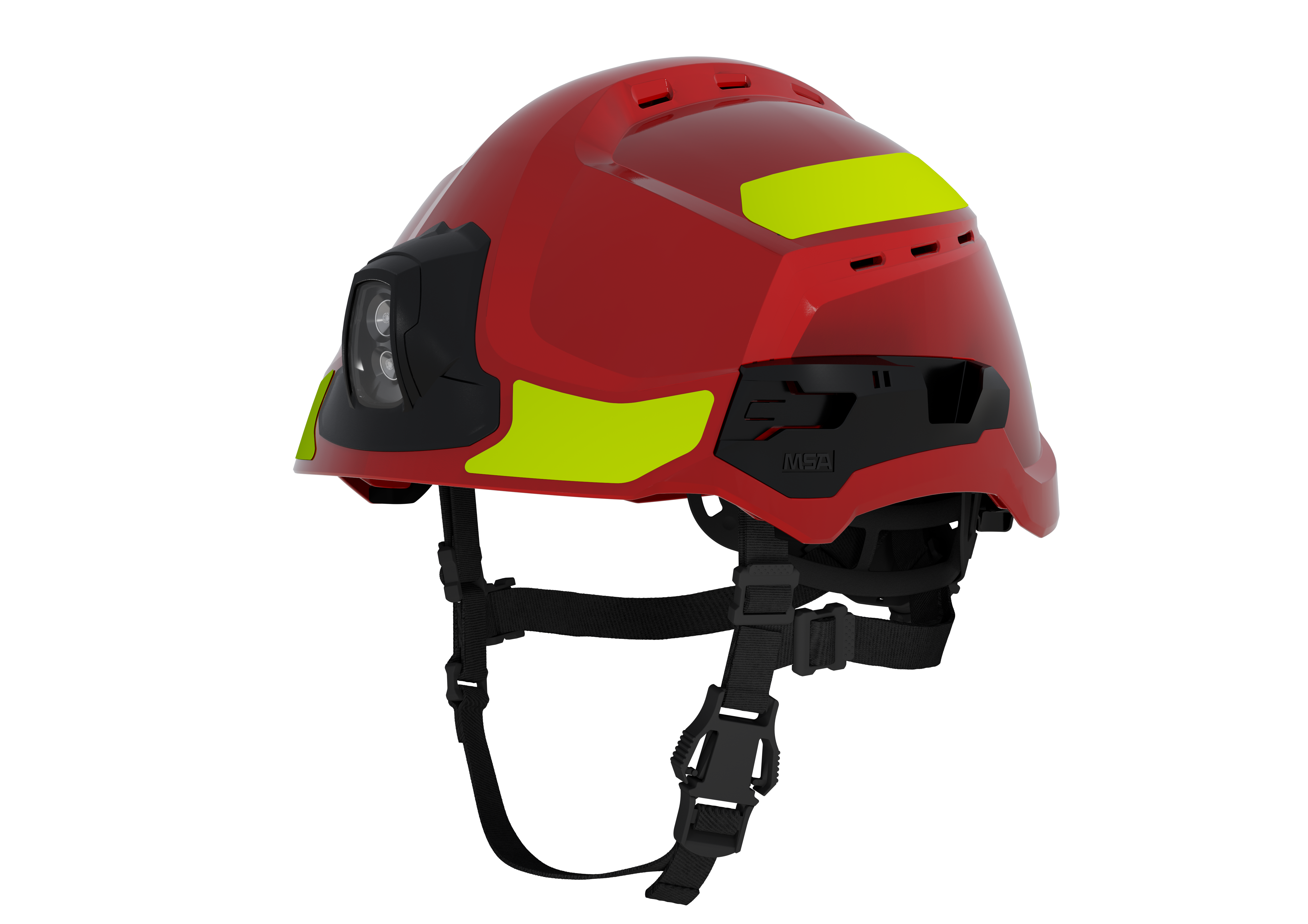
Integrated Dual-beam Headlamp
For night-time operations, it can be configured with a dual-beam front lighting system to provide both proximity lighting for extrication operations, and longer-range lighting for search and rescue. This system includes a battery pack (alkaline or rechargeable) and a tail light for better identification of the crew or tracking personnel visible in smoke-filled conditions. It is also equipped with an alert function, flashing both front and rear lights when situations become critical.
Improved Responder Goggles
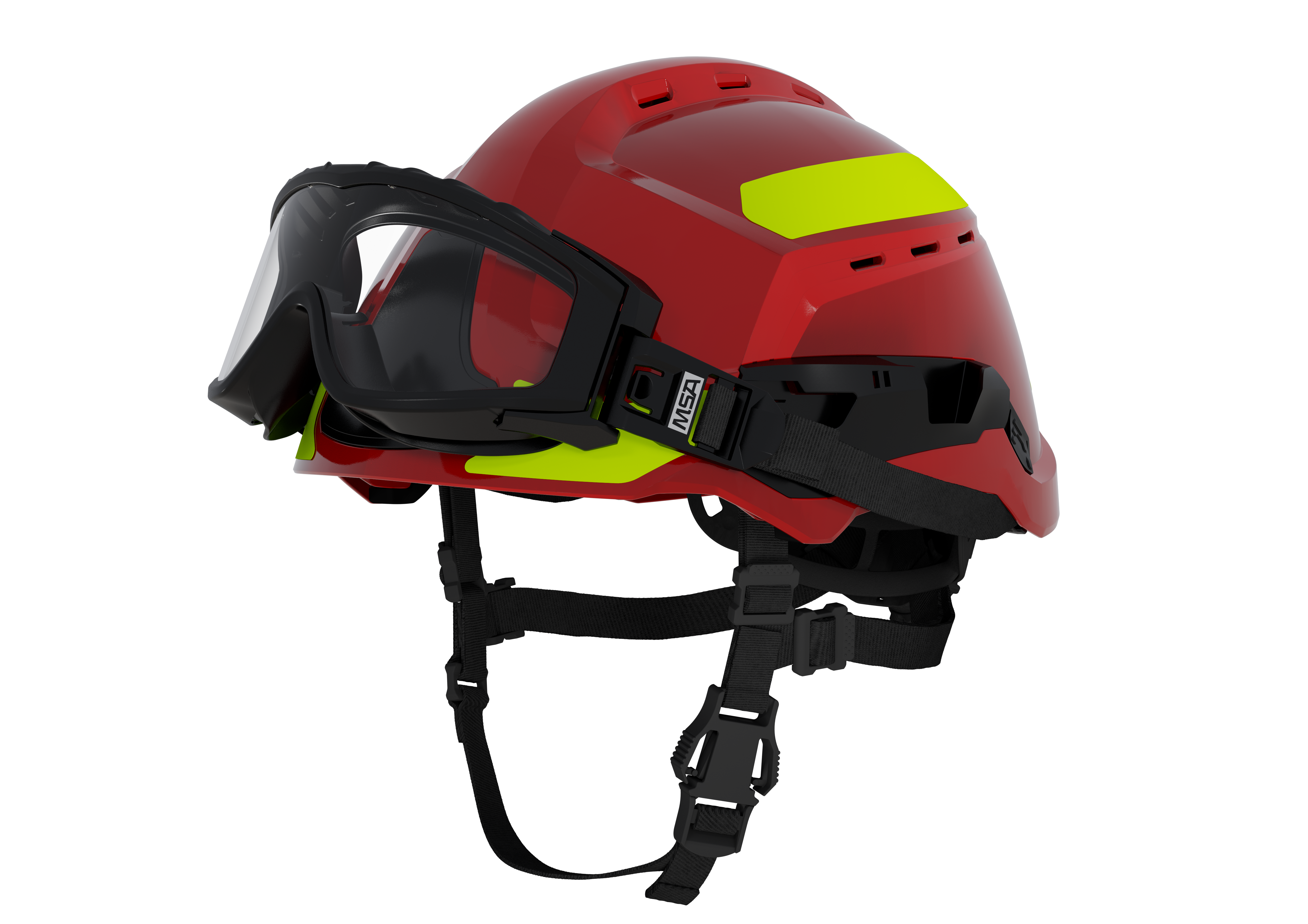
Goggles as an essential element of the GALLET F2XR helmet were improved. Now they can be easily attached with just two clicks and stay secure with a magnetic adjustment system. The adjustable buckle system allows for improved user versatility and fits to multiple head sizes. The user-friendly release buckle enables easy switch between stand-by and in-service mode.
Innovative Accessories for Eye and Face Protection
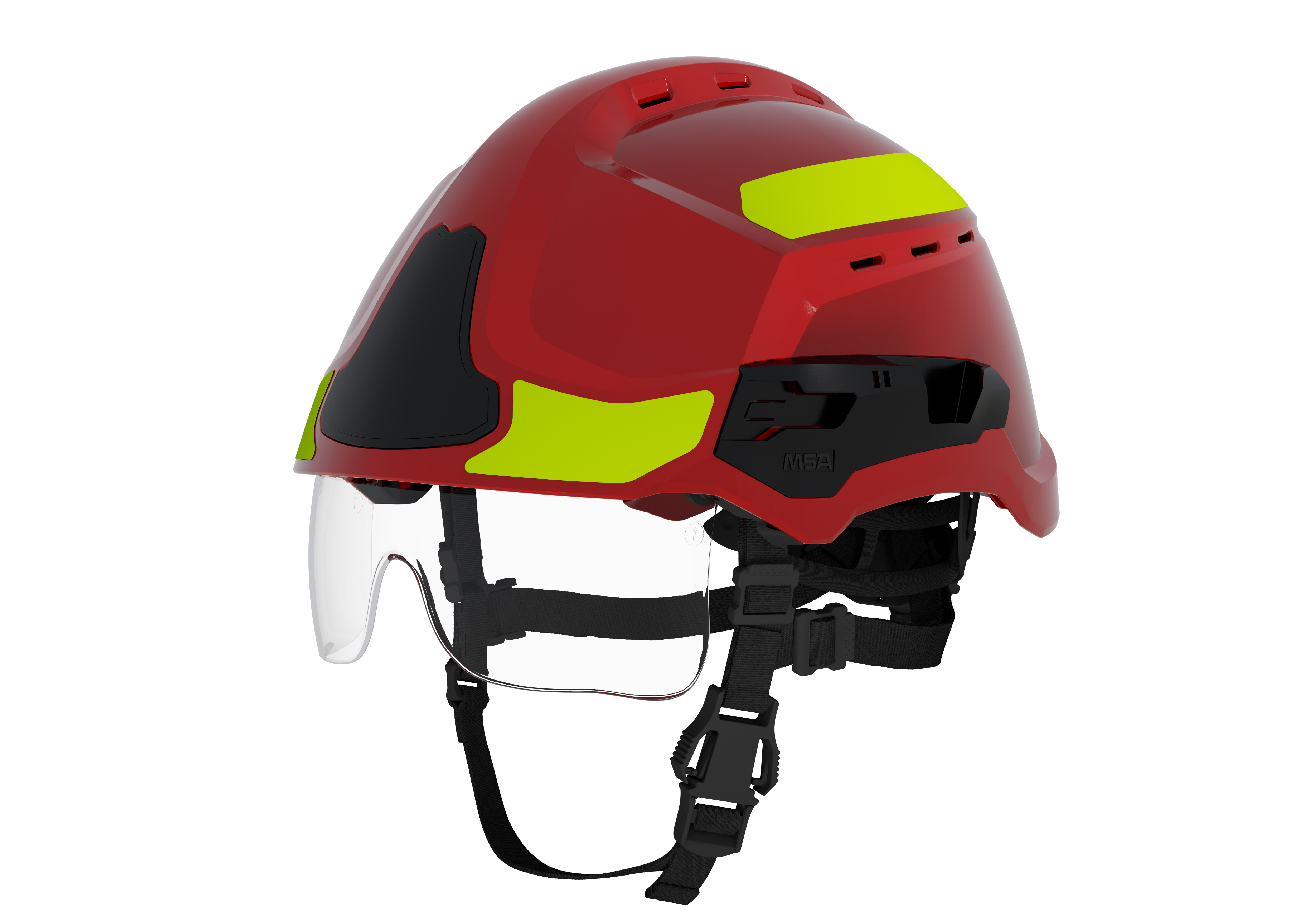
The ocular visor on the GALLET F2XR is one of the major innovations and has been fully integrated into the helmet for ease of use. The face fit of the visor is adjustable in height and depth to fit any and all face shapes. It also offers eyeglass wearers the possibility of doing their job without any visual discomfort and while remaining perfectly protected. The unique “push & pull” system makes the visor easy to install and remove anywhere, at any time, without the need for tools.
Innovative eye and face protection enables to protect a wearer against injury from electric risks. In addition to the integrated ocular visor, the GALLET F2XR offers extended and robust polycarbonate face shield and a mesh visor shield that are easy to install and remove. The integration, ergonomics and simplicity of the accessories were a top priority for the MSA team during the development stages.
These face shields have been tested and certified to the EN14458:2018 standard ensuring protection from projection of solid particules or accidental contact with a live electrical conductor (typically 230V or 440 VAC) for the clear version. Additionally the clear visor has been tested according to the GS-ES-29 standard against electrical arc flash to offer maximum protection on new energy vehicles extrication missions.
Integrated Hearing Protection with Communication System Mounted Optionally
Easy to attach, fully integrated electronic ear muffs enhance protection from hazardous noise without blocking out the important background sounds or important messages from the incident command for instance. The hearing protection module comes with an optional adjustable boom microphone, providing reliable team communications on any intervention scene.
Ear Protection for Water Rescue Service
The GALLET F2XR can be fitted with left and right ear protection panels, suitable for both swift water and flood rescue which makes it EN1385:2012 compliant as well as British standard PAS028 compliant for use on small fast crafts. The intuitive attachment points allow for connecting and removal to easily adapt to the mission whenever needed. This also means the GALLET F2XR is a truly multifunctional and versatile helmet, which eliminates the need of having different kinds of helmets for each mission. As a result, the GALLET F2XR paves the way for fire and rescue services to find alternatives to adapt in such unpredictable and fast growing climate change.
Best in Class Accessory Integration
It is important to add that the adjustment of accessories has been made easy for both right- and left-handed people, even with gloves on.
Find the helmet that really suits your needs and style
One of MSA’s best skills is the on-demand helmet pad printing customisation. With over 10,000 front plates customised each year, the GALLET F2XR can be easily customised with pad-printed front plates and a new style of retroreflective stickers to improve both daytime and nightime visibility.
Click here to learn more about the GALLET F2XR Helmet Platform.
New FBU-produced training aiming to fight the cancer threat to firefighters from fires has been released. The training (DECON) intends to help reduce the effect of toxic substances released in fires, with actions such as showers soon after fires advised.
It’s thought that firefighters’ exposure to these toxic substances could be playing a part in firefighters’ increased risk of getting cancer and other diseases. Firefighters surveyed as part of University of Central Lancashire (UCLan) research were four times more likely to have been diagnosed with cancer than the general population.
DECON encourages firefighters to take actions before, during, and after every fire incident to help reduce exposure to these toxic substances, which are termed ‘contaminants’. These actions include things such as better cleaning practices around fire kit and firefighters themselves.
The training is aimed at all firefighters, and is available to access here.
Riccardo la Torre, National Officer at the Fire Brigades Union, has been leading the development of the training at the union. He said “Most firefighters will know a colleague who is battling, or has battled, with cancer. It affects us all in the fire service and can be devastating. This training aims to help make this less frequent. We’re looking forward to seeing it in action and hopefully helping save lives”.
Sid McNally, a firefighter who contracted cancer, concurred, saying that whilst “there’s lots of cancer risks you can have as a member of the public”, he “didn’t have any of those” and says “I just believe I was working in an environment that wasn’t doing me any good”.
He went on to say “you do get drawn into that work environment and you think that that’s all that matters but you have got a life outside of the fire and rescue service”, adding “but to make the most of that you need to be alive”.
FBU general secretary Matt Wrack also added his voice, saying that “There are indications that the danger that contaminants pose could be very significant indeed, and it is likely that contaminants have already taken so much from the firefighting community. But with this training we can begin to fight back and improve safety for firefighters. All Fire and Rescue Services and every Chief Fire Officer should support this initiative and encourage employees to register”.
The training has been developed in tandem with University of Central Lancashire (UCLan), as part of a wider project. That wider project aims to better understand the links between contaminants and firefighter disease. It also includes a cancer and disease registry, which organisers want all serving and retired firefighters to sign up to, to help track and research these links.
Professor Anna Stec, professor in fire chemistry and toxicity at UCLan, who is leading on the research, said that “UK firefighters are frequently exposed to high levels of toxic chemicals during and after a fire. Our best practice report combined with this training, as well as our cancer and disease registry and national health screening, will allow us to increase awareness amongst firefighters of the impact of toxic fire effluents on their health”.
The union is looking to work with all UK fire and rescue services to deliver the training to all serving firefighters.