Hochiki Europe launches FIREscape Nepto Black Edition emergency lighting

FIREscape Nepto Black Edition emergency lighting has been introduced by Hochiki Europe to provide a discreet emergency lighting solution for theatres, cinemas, nightclubs and other design-conscious venues

Hochiki Europe has expanded its emergency lighting portfolio with the launch of the FIREscape Nepto Black Edition emergency lighting range, offering a discreet solution for entertainment venues where maintaining the visual atmosphere is a priority.

The new FIREscape Nepto Black Edition emergency lighting has been developed for theatres, cinemas, nightclubs and similar venues where traditional white emergency lighting can stand out in darkened spaces. Its black finish is designed to blend into contemporary interiors while delivering the same performance as the standard FIREscape Nepto range.

The addressable system is built around a control panel connected to self-contained LED luminaires and exit signs using screened, extra-low voltage cabling. Each luminaire features an intelligent back-up battery capable of providing the required three hours of emergency operation in the event of a power failure.

According to Hochiki Europe, the low-voltage design and continuous self-testing and monitoring capabilities help simplify installation and maintenance while reducing associated costs compared with central battery or mains-powered emergency lighting systems.

The luminaire batteries have an expected lifespan of 10 years, helping to minimise replacement and maintenance requirements over the lifetime of the installation. The luminaires are certified to BS EN 60598-2-22 and BS EN 62034 Type PERC, while exit signs comply with BS EN ISO 7010. The complete system also meets the requirements of BS 5266.

The FIREscape Nepto range is designed to be scalable, with each control panel supporting up to two lighting lines and 127 devices per line. Up to 12 panels can also be networked together and controlled from a single keypad, making the system suitable for both single-site installations and larger estates.

The system includes adjustable lighting levels, day and night operating modes and the ability to configure luminaires as maintained or non-maintained, allowing users to tailor operation outside emergency situations.

While aimed at entertainment venues, Hochiki Europe said the Black Edition is also suitable for other environments where aesthetics are important, including premium retail spaces, gyms and modern office developments.

The FIREscape Nepto Black Edition is available now from Hochiki Europe.

Streamlight introduces the Dualie Rechargeable ATEX

Streamlight has announced the launch of the Dualie Rechargeable ATEX.

The company said that the new release is an intrinsically safe firefighting light approved for use in ATEX-certified Zone zero hazardous locations.

It combines high-performance illumination, dual beams and rugged durability in a lightweight design.

“An ideal lighting solution”

Michael F Dineen, President of Streamlight commented: “Firefighters, industrial and other professionals rely on their flashlights to perform under frequently trying conditions.

“The Dualie Rechargeable ATEX provides that assurance when working at scenes where potentially dangerous substances may be present.

“It’s an ideal lighting solution for industrial, fire, oil and gas and confined space applications,” he concluded.

Features

The company said that the new light features a forward-facing spot beam and a side-facing flood light that can be used independently or simultaneously to improve task visibility, situational awareness and user safety.

An integrated belt clip with dual built-in magnets for grabbing onto steel surfaces also permits hands-free operation, added Streamlight.

The new product features opposing switches for easy, one-handed operation even with gloved hands.

Streamlight explained that it is built with a durable, non-conductive, corrosion-proof polymer body, it features a textured grip for secure handling and is powered by a 3300mAh lithium ion rechargeable battery.

An adjustable multi-adapter is also available to securely attach the light to select fire and industrial helmets.

The light features three modes:

  • Spot – delivering 230 lumens, 15,000 candela over 245 metres and a 10-hour run time
  • Flood – producing 110 lumens, 70 candela, a 17-metre beam distance and 20 hours of run time
  • Combined Flood & Spot – When used together, the two intersecting beams offer 325 lumens and seven hours of run time

Measurements

Measuring 19.05 cm in length, the light weighs 201 grams.

The company highlighted that the unbreakable polycarbonate face cap and side lens with scratch-resistant coating measures 4.72 cm.

It is IP67 rated, dust-tight and water-proof to 1 metre for 30 minutes.

The light also is impact-resistant tested to 2 metres.

How fireground lighting solutions are supporting safer fire and rescue operations

Ahead of INTERSCHUTZ 2026, Streamlight® introduces new fireground lighting solutions and safety-rated products designed to improve visibility, coordination and operational safety across modern fire and rescue environments

Across fire and rescue operations, effective lighting supports visibility, safety and control in some of the most demanding working environments. It is a critical part of operational safety, situational awareness and effective decision-making.

From hazardous atmospheres and smoke-filled interiors to large incident scenes, responders require lighting tools that are matched to the task, the risk and the environment.

Streamlight® will be showcasing its latest fire industry product launches and wider professional lighting offerings at INTERSCHUTZ 2026, taking place from 1 to 6 June 2026 in Hannover, Germany.

Visitors will be able to see the Streamlight® products on Stand H37, Hall 27, including a broad selection of safety-rated and general fireground lighting solutions.

New fireground lighting solutions from Streamlight®

Streamlight® recently expanded its professional fire and emergency response offerings with two new products announced at FDIC International. The Portable Scene Light III and LiteBox® 1Million® add further capability to the company’s portfolio, supporting both wide-area scene illumination and long-range search applications.

The Portable Scene Light III builds on the capabilities of the Portable Scene Light and Portable Scene Light II, which came before it. It is a rugged, waterproof, high-lumen portable lighting solution designed for demanding emergency scenes, job sites and first responder applications.

Featuring twelve powerful LEDs with wide-pattern reflectors, it delivers a uniform beam for maximum coverage, helping crews illuminate large working areas quickly and effectively.

With three adjustable brightness levels, the Portable Scene Light III can be adapted to suit the operational requirements. On High, it delivers 10,000 lumens, 121,000 candela and a 696 metre beam distance, with a run time of two hours.

Medium provides 5,000 lumens, 61,100 candela and a 494 metre beam distance, running for four hours, while Low offers 2,500 lumens, 38,000 candela and a 390 metre beam distance, with an eight hour run time.

Designed for flexibility in the field, the Portable Scene Light III supports multiple power options, including a swappable Streamlight® SL-P6™ Lithium-Ion battery pack, dedicated charger, AC power supply or DC power source. Its light head offers 360° rotation and 180° pivoting, giving crews a full range of motion to direct illumination exactly where it is needed.

The included wireless remote controls all functions from up to 75 feet away and can be paired with multiple lights for simultaneous use. The modular design allows the light head to be used with or without the heavy-duty tripod, supporting both elevated scene lighting and more flexible close-range deployment.

With rugged construction, IPX7 waterproof rating with the battery installed, reversible spiked tripod feet and an integrated carry handle, the Portable Scene Light III is built for all-weather use across demanding emergency environments.

For long-range search and scene lighting, the LiteBox® 1Million® provides a powerful new option within the Streamlight® line-up. It is a rugged, heavy-duty, rechargeable and fully portable high-intensity search light/scene light engineered for demanding professional use.

Delivering 1.25 million candlepower, it emits a focused beam capable of illuminating objects up to 1.39 miles away, while also providing peripheral light for broader visibility.

The LiteBox® 1Million® offers High and Low modes. On High, it delivers 3,300 lumens, 1,250,000 candela and a 2,236 metre beam distance, with a run time of 4.5 hours. On Low, it provides 525 lumens, 200,000 candela and an 894 metre beam distance, with a run time of 22.5 hours.

Its articulating light head pivots 135° and rotates 270°, allowing users to position the beam for long[1]range identification, scanning and scene support.

For fire and rescue teams, the LiteBox® 1Million® is particularly valuable in outdoor searches, perimeter assessment, waterway operations, large incident grounds and other situations where long-distance visibility is essential.

Its rechargeable lithium-ion power system, integrated battery status indicator, heavy-duty shoulder strap and IPX4 water-resistant design make it a practical tool for demanding professional use.

Together, these products are impressive new additions to an already strong selection of fire lighting solutions offered by Streamlight®.

Why safety-rated fireground lighting matters

Alongside these new additions, Streamlight® offers a comprehensive selection of fire lighting tools designed for hazardous environments. In areas where flammable gases, vapours or dust may be present, safety-rated lighting is essential. Streamlight® ATEX and HAZ-LO® products are designed for defined hazardous location use, helping fire and rescue professionals select equipment suited to the risks they face.

For turnout gear and right-angle lighting, the Survivor® X ATEX and Survivor® Pivot ATEX are core firefighter lights designed to clip directly to gear, providing hands[1]free illumination in smoke-filled or confined environments.

The Survivor® X ATEX is Zone 0 and Zone 20 rated, while the Survivor® Pivot ATEX provides a versatile right-angle light with a pivoting head, allowing users to direct light where needed during operations. Both are available as Alkaline or Rechargeable systems.

For hazardous location scene lighting and lantern use, the Vulcan® 180 HAZ-LO® ATEX and Vulcan® LED ATEX provide portable, rechargeable lighting options. The Vulcan® 180 HAZ-LO® ATEX features an articulating head that allows the beam to be aimed where required, while the flat base allows the light to stand on its own for scene lighting.

The Vulcan® LED ATEX offers a lightweight lantern option with a tight beam suited to firefighting applications.

Compact handheld and inspection lighting also plays an important role in hazardous environments. The Dualie® 3AA ATEX provides both forward-facing and downward-facing beams, with Spot, Flood, and Spot and Flood modes for inspection and area lighting.

The 2AA ProPolymer® HAZ-LO® ATEX flashlight adds a lightweight, waterproof, intrinsically safe option for inspections, equipment checks and general navigation in hazardous locations.

For hands-free use, the Enduro® Pro HAZ-LO® ATEX headlamp supports firefighters during technical work, rescue operations and equipment handling. With spot/flood combo, spot and flood modes, it allows users to maintain visibility while keeping both hands free.

Fireground lighting tools for search, rescue and incident response

Not every fireground task takes place in a hazardous atmosphere, and Streamlight® also offers a broad selection of non-safety rated lighting tools for general firefighting, rescue and outdoor operations.

The Portable Scene Light and Portable Scene Light II, predecessors to the new Portable Scene Light III, support rapid deployment at incident scenes, helping crews illuminate wide working areas, staging zones, road traffic collisions and outdoor operations. Portable scene lighting is essential for reducing trip hazards, improving coordination and establishing safe work areas during extended incidents.

For long-range search and assessment, the Waypoint® 400 offers powerful directional lighting. Its portability and long run time make it well suited to searching, scanning and identifying hazards at distance, particularly during night operations or low-light outdoor incidents.

Helmet-mounted and hands-free lighting also remains important during close-range tasks. The Vantage® provides compact, helmet-mounted illumination for firefighting and  industrial use, delivering a focused beam designed to cut through smoke and haze while supporting visibility and awareness in demanding, low-light environments.

Together, these products demonstrate how fireground lighting is not about relying on one device, but about building a layered

approach. Scene lights provide wide-area visibility, lanterns and right-angle lights support movement and task work, headlamps and helmet lights keep hands free, and handheld spotlights provide reach for search and assessment.

Visit Streamlight® at INTERSCHUTZ 2026

INTERSCHUTZ will provide an opportunity for professionals to see the latest technologies, equipment and solutions shaping the future of emergency response.

Streamlight® will be exhibiting at Stand H37, Hall 27, where visitors will be able to explore the company’s latest product launches, including the Portable Scene Light III and LiteBox® 1Million®, alongside its wider fire lighting offering. The stand will provide visitors the opportunity to see how Streamlight® products support real-world fire and rescue operations. Visitors can also expect added activity on the stand, including a social media competition to win a Streamlight® product. For fire and rescue professionals attending, the show provides the ideal opportunity to meet the team, see the latest products and explore lighting solutions designed for the demands of modern emergency

New multi-fuel emergency lighting system introduced by Streamlight

Streamlight introduces Sidewinder Compact III for emergency lighting use

Streamlight has launched the Sidewinder Compact III, a multi-fuel flashlight designed for diverse emergency and field applications.

The company said the model provides multiple LED colour options, a 185-degree tilting head, and compatibility with helmets and gear mounts.

It explained that the light is built to deliver high performance in a compact, rugged housing suitable for operational and maintenance environments.

Michael F. Dineen, President of Streamlight, said: “We engineered this light with versatility at its core.

“It offers a powerful combination of compact design, high performance, and rugged reliability.

“Whether it’s mounted on a helmet, clipped to a vest, or used handheld, the Sidewinder Compact III is ready to perform.”

Multiple LED options for specialised tasks

According to the company, the Sidewinder Compact III is available in user-configurable versions that allow users to select two of three colour LEDs – red, green or blue – in addition to standard white and infrared (IR) outputs.

The military version includes white, red, blue and IR LEDs, while the aviation version contains white, green, red and IR LEDs.

Each LED operates at several brightness levels and includes a strobe mode for visibility or signalling.

The light can be powered by either one AA alkaline or one 3-volt CR123A lithium battery, supporting flexible energy use across different field conditions.

Compact design with extended runtime and durability

Streamlight stated that the white LED provides up to 275 lumens and 3,200 candela on High with a beam distance of 113 metres.

Run time exceeds 70 hours on Low when using an AA battery and over 100 hours with a CR123A battery.

The colour and IR LEDs also offer long run times designed for night vision protection and targeted visibility.

The flashlight includes a compound On-Off mode selector switch that separates On-Off, dimming, strobe and LED-selection functions.

A rotary selector knob features a tactile IR indicator and a pull-to-turn locking mechanism to prevent accidental mode changes.

The Sidewinder Compact III uses an unbreakable polycarbonate lens with a scratch-resistant coating for improved durability.

Mounting compatibility and environmental protection

The company said the light includes a durable belt and gear clip with integrated helmet mounting features, fitting existing Sidewinder mount adapters.

A cord attachment hole supports loads up to 11 kilograms.

Constructed from high-impact nylon, the Sidewinder Compact III is impact tested to three metres and waterproof to one metre for 30 minutes under IPX7 standards.

It measures 7.9 centimetres in length and weighs 85 grams with a AA battery or 77 grams when using a CR123A lithium battery.

Relevance for fire and safety professionals

The Sidewinder Compact III’s adaptable LED configuration and multi-fuel compatibility may be relevant for incident response teams, emergency service technicians and maintenance personnel who require reliable lighting in demanding environments.

Its 185-degree tilting head, helmet mount compatibility and extended runtime could support fire and rescue crews during low-visibility operations or post-incident inspections.

For aviation, military and tactical applications, its colour and IR LED options offer task-specific illumination and night vision protection.

Procurement officers and equipment specifiers in emergency services may find its modular design and rugged construction suitable for integrating into standard issue gear or specialised kits.

List of Firefighting Equipment

Firefighting equipment is what helps firefighters to extinguish flames, ensuring the safety of lives and property, and the varied list of firefighting equipment shows how diverse firefighting really is. 

From traditional tools like fire extinguishers to cutting-edge technology such as thermal imaging cameras, each item plays a crucial role in a firefighter’s arsenal. 

In this article, we’ll explore the diverse list of firefighting equipment, shedding light on their functions and importance in the face of fire emergencies.

What is Firefighting Equipment?

Firefighting equipment encompasses a diverse range of tools, devices, and protective gear specifically designed to combat and manage fires effectively. 

These crucial elements are essential for firefighters in their mission to extinguish flames, rescue individuals, and mitigate the impact of fire emergencies. 

Each piece of equipment serves a unique purpose in the complex and challenging task of firefighting.

Firefighting equipment is not only about extinguishing flames but also about ensuring the safety of those on the front lines. 

Protective gear, such as fire suits and gloves, shields firefighters from extreme heat, allowing them to navigate hazardous environments. 

The continuous advancements in firefighting equipment underscore a commitment to improving the efficiency, safety, and overall effectiveness of firefighting operations.

Firefighting equipment is the lifeline for those who risk their lives to protect communities and properties from the devastating impact of fires.

List of Firefighting Equipment

Firefighting equipment constitutes a comprehensive arsenal designed to combat fires of varying intensities and types. 

Each tool plays a crucial role in ensuring the safety of firefighters and the effectiveness of fire suppression efforts.

Fire Extinguishers

fire extinguisher firefighting equipment

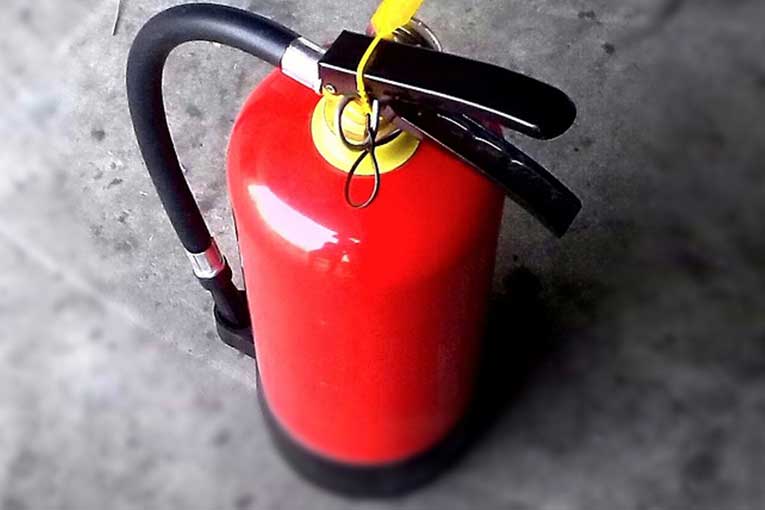
Portable and versatile, fire extinguishers are essential for promptly suppressing and extinguishing small fires. 

There are many different types of fire extinguisher, each containing specific firefighting agents such as water, foam, dry powder, or CO2. 

The diversity in extinguisher types ensures flexibility in addressing different classes of fires—whether involving ordinary combustibles, flammable liquids, electrical equipment, or gases. 

This adaptability allows firefighters and individuals to employ the most suitable extinguishing agent, enhancing the effectiveness of fire suppression efforts across a wide range of fire scenarios.

Fire Extinguisher Ball

fire extinguisher ball firefighting equipment
Source: Amazon

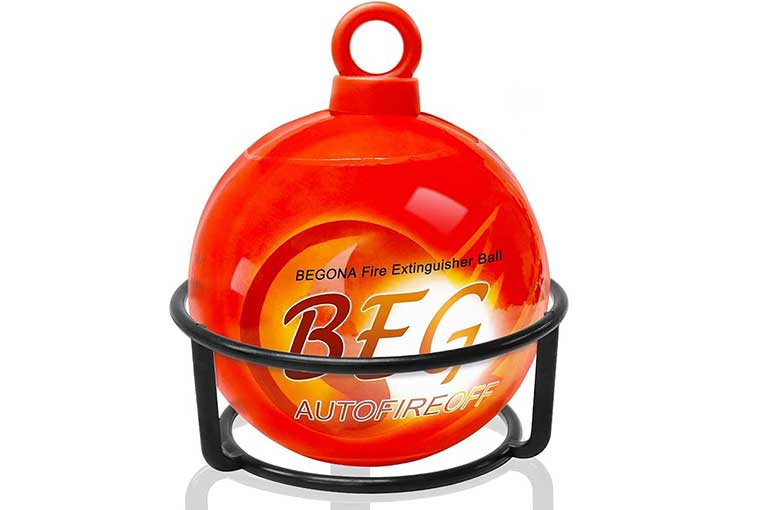
An innovative self-activating fire suppression system, the Fire Extinguisher Ball offers a unique approach to firefighting. 

When exposed to flames, the ball bursts autonomously, releasing a fine powder that swiftly and effectively extinguishes the fire. 

This ingenious device is particularly advantageous in confined spaces or areas with limited accessibility, where traditional firefighting methods might face challenges. 

The Fire Extinguisher Ball’s ability to initiate fire suppression independently makes it a valuable addition to fire safety measures, ensuring a rapid response even in scenarios where immediate human intervention may be difficult.

Fire Hoses

fire hose firefighting equipment

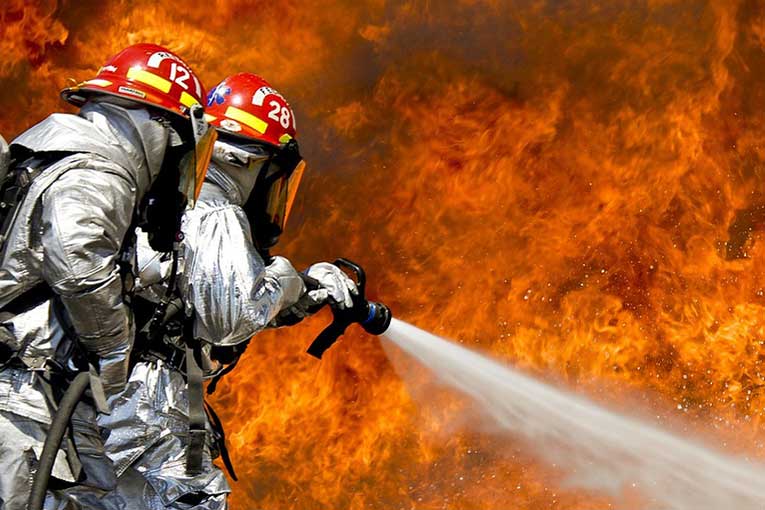
As one of the most prevalent tools in large-scale firefighting, fire hoses are indispensable for firefighters combating significant flames. 

These flexible and robust hoses serve as critical conduits, allowing the directed flow of water onto the fire. 

Their length and adaptability empower firefighters to reach remote or challenging locations, providing a versatile means of effectively delivering water to suppress fires. 

The strategic use of fire hoses enhances the agility and reach of firefighting efforts, enabling responders to address fires in diverse environments and mitigate potential challenges posed by the fire’s scale and intensity.

Hose Jets

fire hose firefighting equipment

Hose Jets represent heightened firefighting capabilities, requiring the collaboration of two firefighters to handle their extra power. 

These specialised tools offer an elevated force and flow, allowing firefighters to exert increased control over the extinguishing process. 

With the ability to adjust the jet stream, firefighters enhance precision in directing water onto the flames, addressing specific firefighting requirements. 

The collaborative use of Hose Jets reflects a strategic approach, amplifying the effectiveness of firefighting efforts in scenarios where a more robust and targeted water delivery is essential to combat fires of greater scale or intensity.

Fire Buckets

fire buckets firefighting equipment

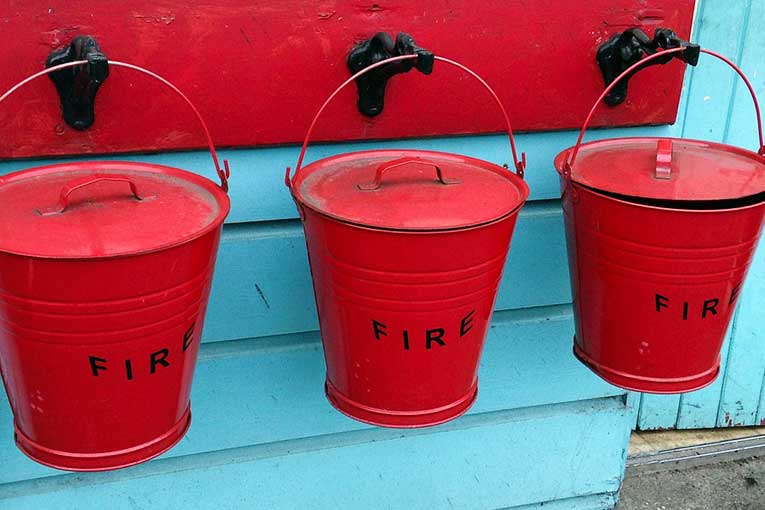
Simple in design yet highly effective, fire buckets are containers filled with either water or sand. 

Positioned strategically, these buckets serve as immediate response tools, offering a swift and accessible means to douse small fires or control sparks. 

Their simplicity makes them an essential first line of defence, providing an uncomplicated yet crucial tool in the initial stages of firefighting. 

Whether used by trained personnel or as part of fire safety measures in public spaces, fire buckets play a fundamental role in empowering individuals to take immediate action and contribute to fire containment efforts.

Flamezorb

flamezorb firefighting equipment
Source: Amazon

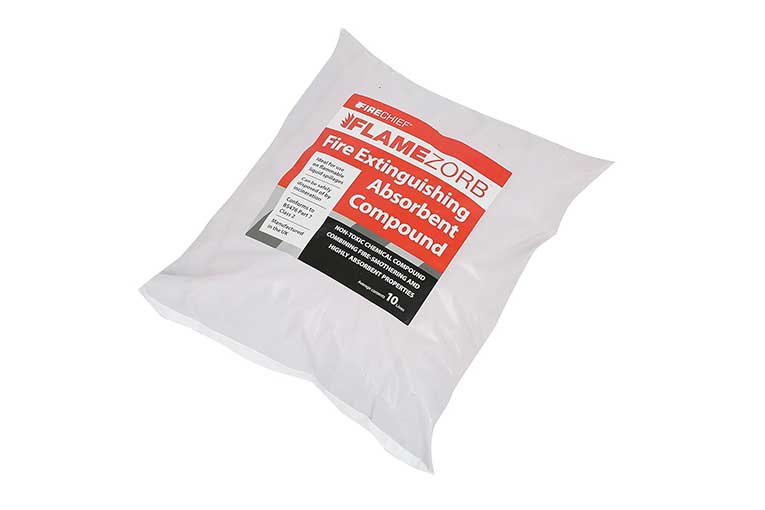
Flamezorb, a granular substance, serves as a rapid-response tool in firefighting by efficiently absorbing flammable liquids. 

When applied to spills, it swiftly neutralises and absorbs the substances, preventing the spread of fire. 

This versatile and effective tool finds particular utility in scenarios involving hazardous materials or potential chemical fires, where the quick containment of flammable liquids is essential to mitigate the risk of fire escalation. 

Flamezorb’s ability to address such specific challenges makes it a valuable asset in the firefighting arsenal, contributing to the overall effectiveness of fire suppression efforts in diverse and complex situations.

Fire Blankets

fire blanket firefighting equipment
Source: Amazon

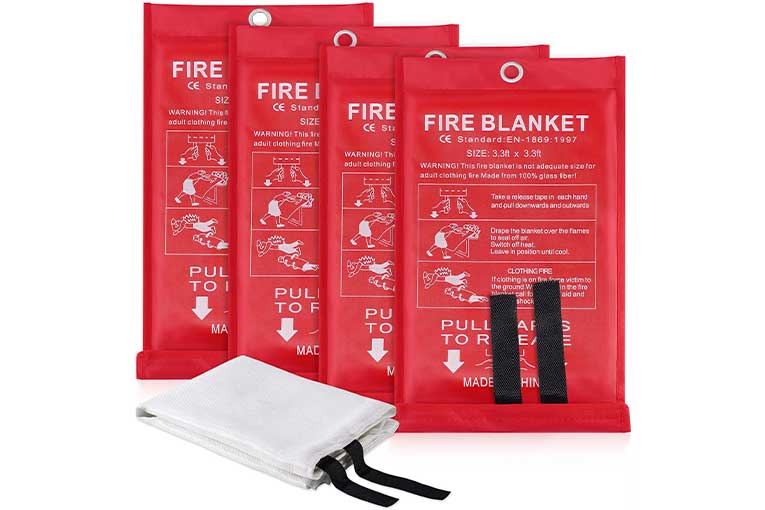
Constructed from fire-resistant materials, fire blankets emerge as versatile tools in firefighting and emergency response. 

Beyond their primary function of smothering small fires, these blankets provide a multifaceted solution. 

In emergency situations, they offer protection by wrapping around individuals, creating a temporary shield against flames and heat. 

The adaptability of fire blankets extends their utility beyond traditional firefighting scenarios, making them valuable assets in various emergency situations where rapid response and versatile tools are paramount to ensuring the safety of individuals and effectively addressing evolving challenges.

Fire Suit

fire suit firefighting equipment

Specially designed for the demanding challenges of firefighting, a fire suit is more than  a mere uniform – it’s a shield against extreme heat and flames. 

Crafted from fire-resistant materials, these suits envelop firefighters in a protective barrier during the most intense operations. 

With layers designed to withstand the harsh conditions of a fire, these suits are crucial in ensuring the safety and well-being of firefighters. 

The specialised construction of fire suits exemplifies the commitment to providing a robust defence against the hazards encountered in the line of duty, reinforcing the resilience of those who bravely confront the flames.

Firefighter Gloves

firefighting gloves firefighting equipment
Source: Amazon

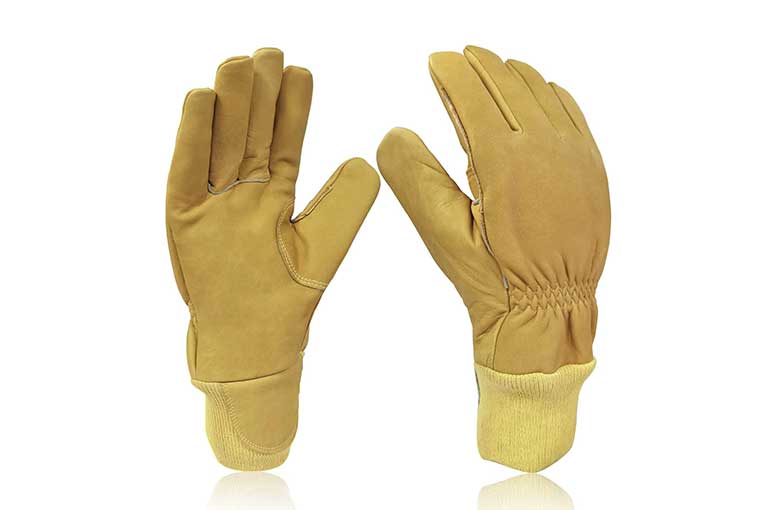
These gloves are essential for firefighters, offering crucial hand protection in the dynamic and intense environments encountered during firefighting operations. 

Crafted from materials resistant to high temperatures, they enable firefighters to handle hot surfaces and materials with confidence. 

The specialised design of firefighter gloves prioritises both dexterity and protection, allowing firefighters to navigate challenging situations while safeguarding their hands from the formidable heat generated in the course of combating fires. 

Gas Tight Suit

gas tight suit firefighting equipment
Source: Wikipedia

Comprising a multi-layered construction, these suits act as an impermeable barrier, creating a formidable shield between the firefighter and potentially harmful substances. 

Their purpose extends beyond conventional firefighting gear, addressing the specific challenges posed by chemical fires and the release of dangerous gases. 

By providing an encapsulating defence, gas-tight suits empower firefighters to navigate complex and perilous environments, ensuring their safety while enabling effective response and mitigation in the face of chemical hazards.

Drones

drones firefighting equipment

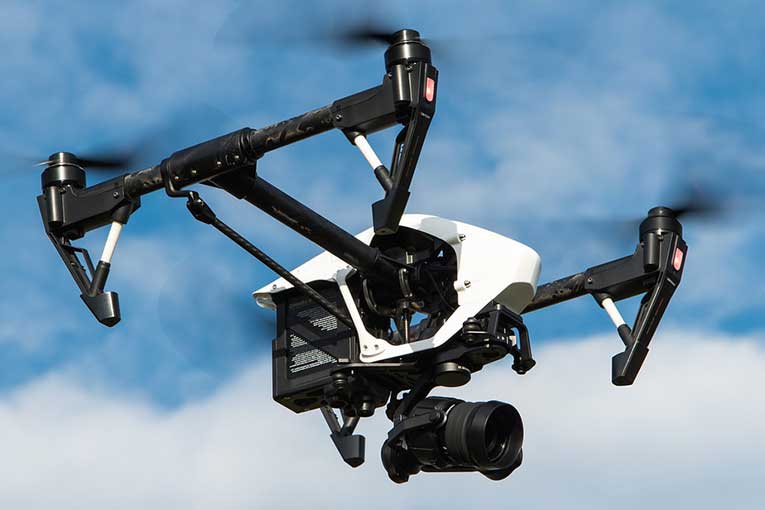
These unmanned aerial vehicles, equipped with advanced cameras, offer invaluable aerial views that significantly enhance fire assessment capabilities. 

Providing real-time situational awareness, drones become the eyes in the sky for firefighting teams. 

Their ability to swiftly survey large areas and capture critical information aids in strategizing and responding effectively to incidents. 

Drones not only contribute to the safety and efficiency of firefighting operations but also offer a technological edge, elevating the precision and speed with which responders can assess, plan, and execute strategies in the dynamic context of firefighting scenarios.

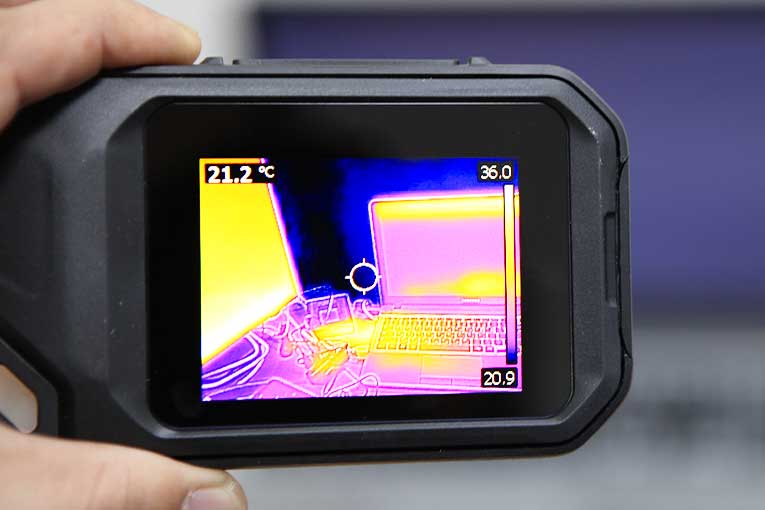
Thermal Imaging Camera

thermal camera firefighting equipment

Thermal imaging cameras aid in locating individuals trapped in smoke-filled environments and identifying hotspots that may not be visible to the naked eye. 

The invaluable data provided by thermal imaging cameras enhances the efficiency and safety of firefighting operations. 

By offering real-time insights into the intensity and distribution of heat, these devices empower firefighters with the ability to make informed decisions, optimise resource allocation, and execute targeted strategies for suppressing fires and conducting search and rescue operations.

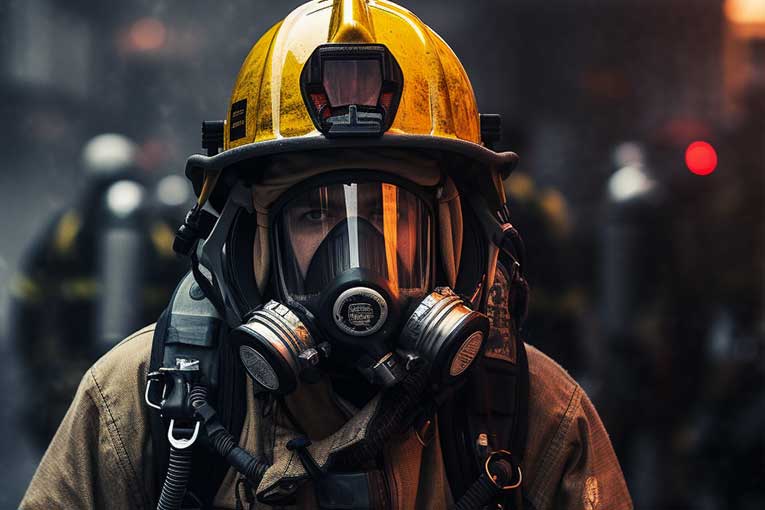
Breathing Apparatus

breathing apparatus firefighting equipment

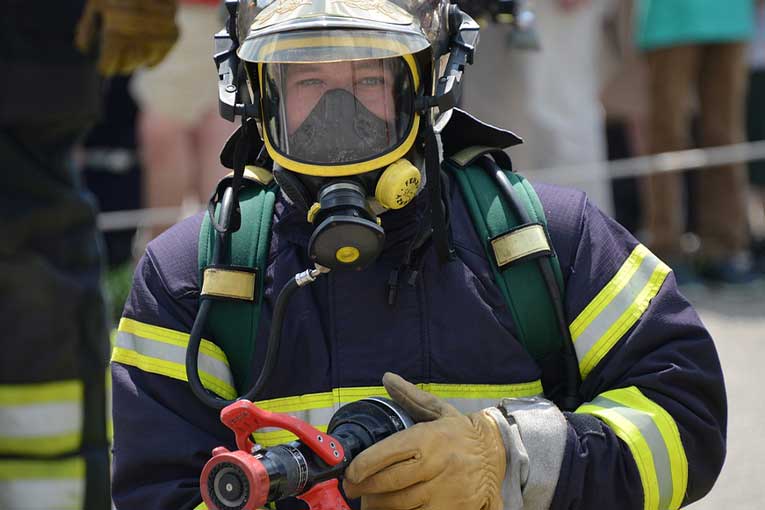
In smoke filled environments, these devices play a crucial role in ensuring the safety of firefighters by providing a continuous supply of clean air. 

The reliability and functionality of these apparatuses exemplify their vital role in preserving the well-being of firefighters and ensuring their ability to execute effective firefighting and rescue operations in environments where clean air is a precious commodity.

Positive Pressure Ventilation Fan

positive pressure ventilation fans firefighting equipment
Source: Wikipedia

Positive pressure ventilation fans are devices designed to create airflow that effectively removes smoke and toxins from enclosed spaces. 

By generating a controlled and directed flow of air, these fans contribute significantly to improving visibility for firefighters within confined areas. 

Beyond enhancing visibility, the removal of smoke and toxins creates a safer working environment, allowing firefighters to operate more efficiently and with reduced exposure to hazardous substances. 

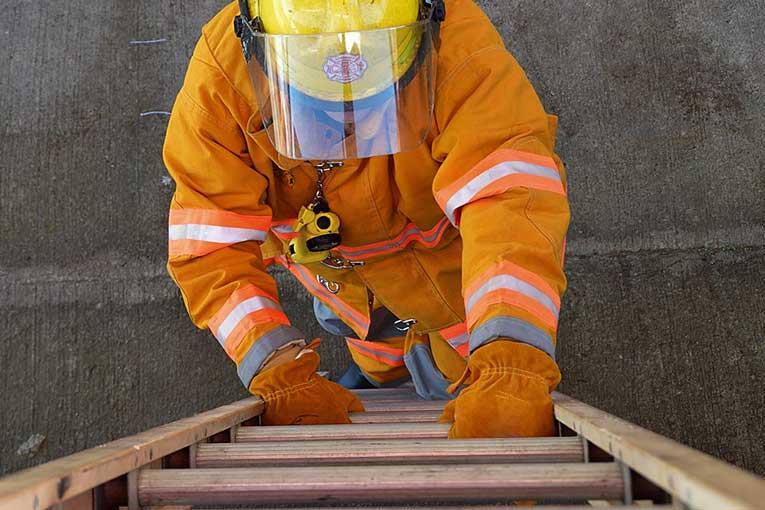
Ladders

ladders firefighting equipment

These versatile devices play a pivotal role in firefighting operations by enabling firefighters to access elevated areas, conduct rescues, and navigate challenging environments. 

Whether extending to reach upper floors of buildings or providing a stable platform for rescue operations, ladders enhance the agility and effectiveness of firefighting teams. 

Their portability and adaptability make them fundamental in addressing the diverse challenges posed by fires in varying structures and scenarios, contributing to the overall success and safety of firefighting operations.

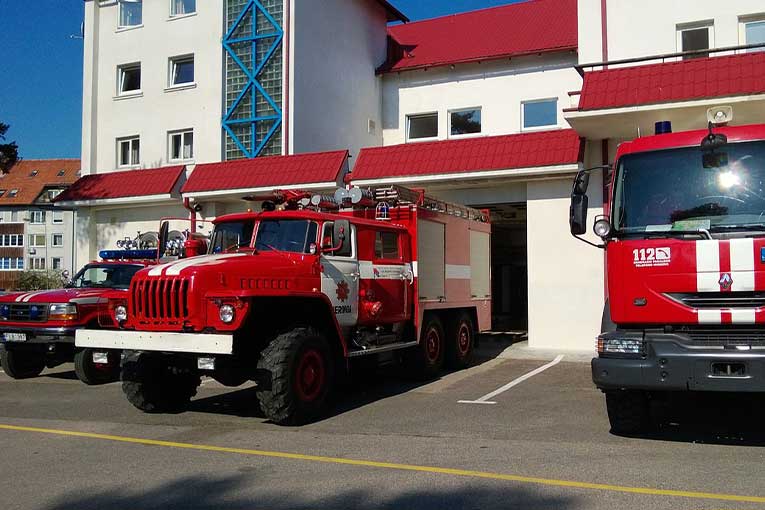
Fire Fighting Vehicle

vehicles firefighting equipment

These vehicles carry essential firefighting tools, water tanks, and hoses, ensuring a swift and effective response to fire emergencies. 

Beyond their mobility, the specialised equipment on these vehicles equips firefighters with the resources needed to combat fires of varying scales. 

Whether navigating through urban environments or remote locations, these vehicles enhance the reach and capabilities of firefighting teams, playing a vital role in the timely containment and suppression of fires to protect lives and property.

How is Firefighting Equipment Used?

The strategic use of equipment is paramount, requiring a careful assessment of each fire’s unique characteristics. 

Firefighters, equipped with a diverse array of tools, employ a systematic approach to address different scales and types of fires.

Fire extinguishers, compact and versatile, find their application in swiftly suppressing small fires. 

Firefighters select the appropriate extinguisher based on the fire’s nature and discharge the firefighting agent with precision, aiming at the fire’s base. 

For larger incidents, fire hoses connected to water sources become instrumental. 

The hoses allow firefighters to direct water effectively, reaching inaccessible areas, while sprinklers automatically release water upon detecting excessive heat, contributing to fire containment.

Protective gear, including fire suits and gloves, plays a pivotal role in ensuring firefighters’ safety as they confront flames. 

These specialised garments shield against extreme heat, providing a critical barrier between the firefighter and the hazardous environment.

Cutting-edge technology, such as drones equipped with cameras and thermal imaging devices, offers invaluable insights. 

Drones provide aerial views, enhancing situational awareness for better decision-making, while thermal imaging cameras aid in locating individuals and identifying hotspots within a fire.

The use of firefighting equipment is not only reliant on the tools themselves but also on the skill, training, and coordination of firefighting teams. 

Firefighters undergo rigorous training to understand the capabilities and limitations of each tool, ensuring a synchronised and effective response to diverse fire scenarios. 

The strategic and well-coordinated utilisation of firefighting equipment remains a cornerstone in the battle against the unpredictable and destructive force of fires.

What Other Equipment Helps with Firefighting?

Some firefighting equipment is not directly used to directly put out fires, but it used to improve the safety and efficiency of firefighters.

Fire Sprinklers

fire sprinklers firefighting equipment
Source: Wikipedia

Installed in buildings, fire sprinklers are automatic devices that release water when detecting excessive heat. 

They play a crucial role in suppressing fire outbreaks and limiting damage in enclosed spaces. 

Strategically positioned, their rapid response significantly contributes to controlling fires, preventing their escalation, and protecting lives and property within structures.

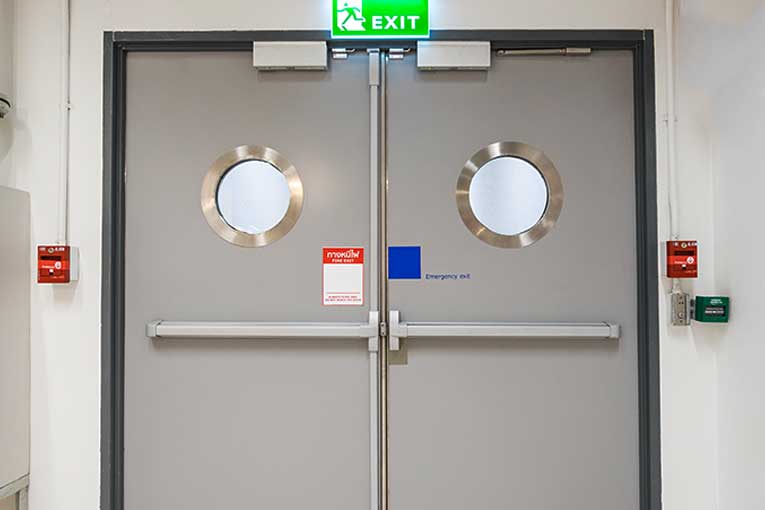
Fire Doors

Specialised fire doors are meticulously designed to resist fire and smoke, acting as effective barriers to limit their spread within a building. 

These doors are critical components of passive fire protection systems, providing crucial time for evacuation and minimising the potential for fire extension.

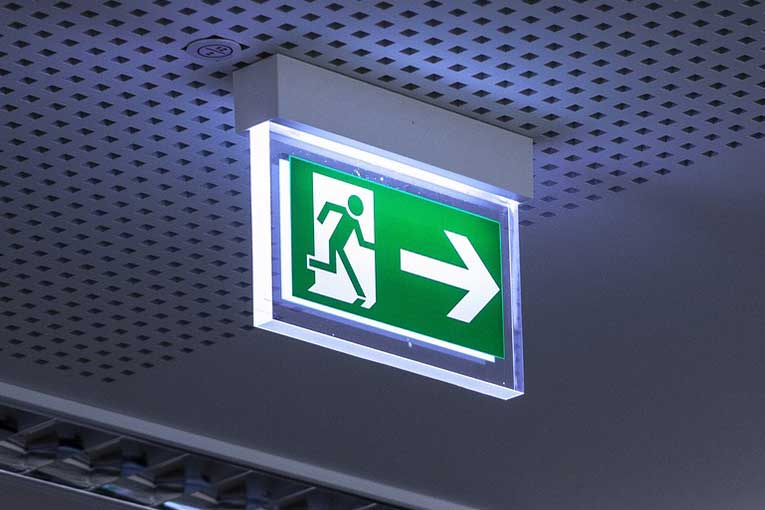
Emergency Signs

emergency signs firefighting supporting equipment

Clearly marked emergency lighting and signs are indispensable in ensuring swift and safe evacuation. 

These signs delineate evacuation routes and indicate the locations of firefighting equipment, guiding occupants to safety during fire emergencies.

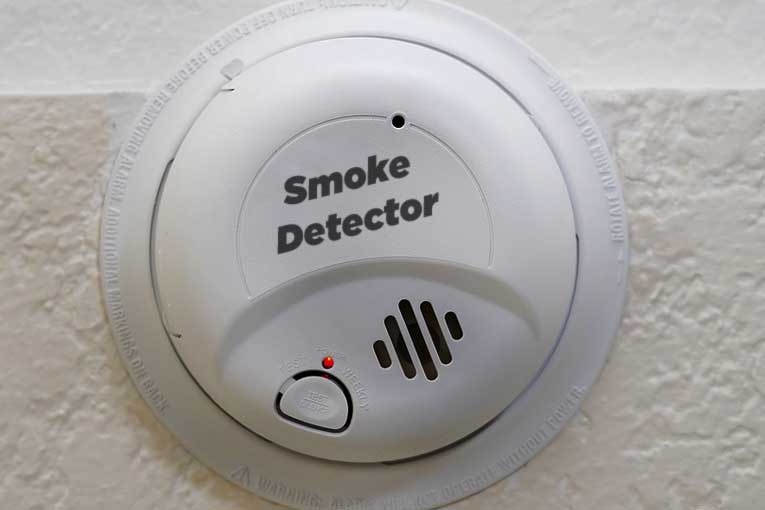
Smoke Alarms

There is 4 different smoke detector types

Essential components of early warning systems, smoke detectors are devices that promptly detect smoke, alerting occupants to potential fire hazards. 

Their rapid detection capability is pivotal in providing early warnings, allowing for timely response and evacuation.

The different types of smoke alarms ensure people can react quickly  to different types of fires.

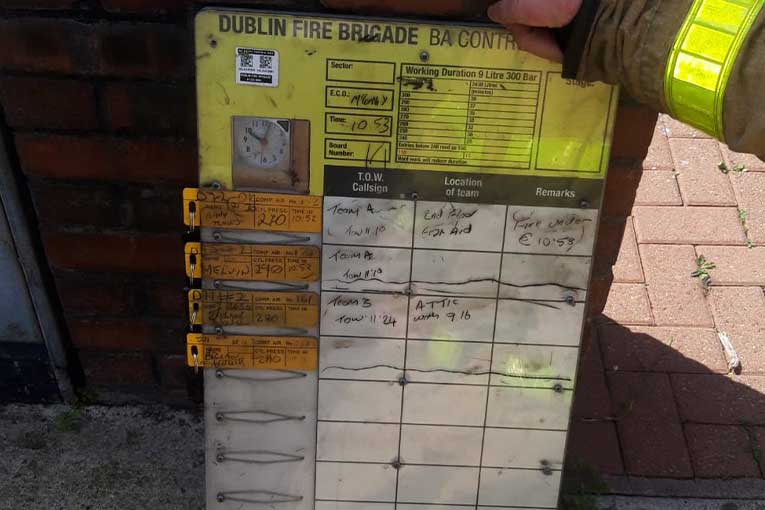
BA Entry Board

The Breathing Apparatus (BA) Entry Board serves as a control hub during breathing apparatus operations. 

It manages the entry and exit procedures of firefighters equipped with breathing apparatus, ensuring systematic and safe operations in environments with compromised air quality.

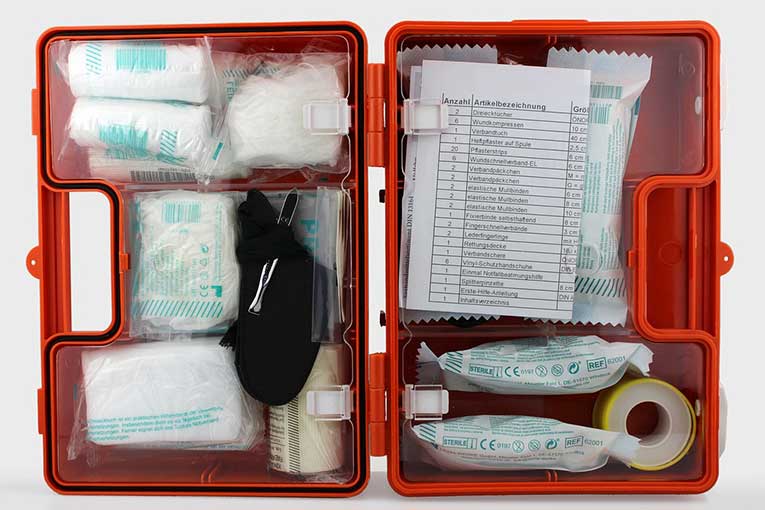
First Aid Kit

first aid kit firefighting supporting equipment

Containing medical supplies, first aid kits address injuries sustained during firefighting or rescue operations. 

They provide essential support until more extensive medical assistance is available.

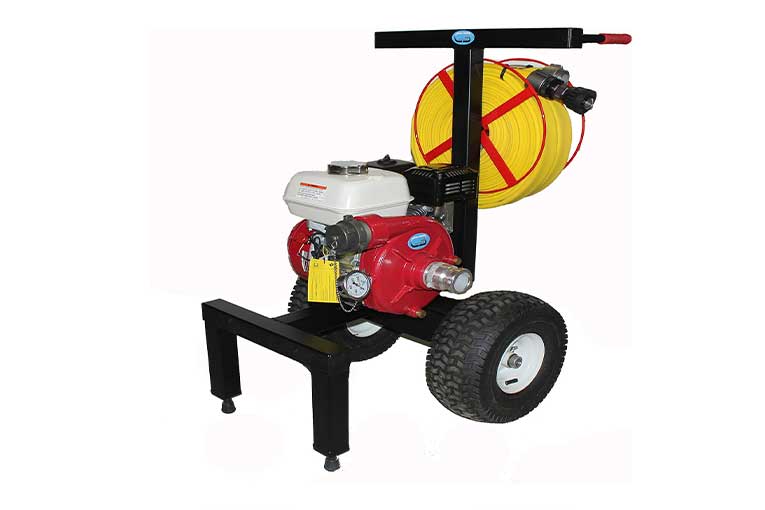
Light Portable Pump

light portable pump firefighting equipment
Source: Amazon

Compact and portable, light pumps are indispensable for transporting water to areas inaccessible to larger firefighting vehicles. 

These pumps enhance operational flexibility, providing firefighting teams with the ability to establish water supply points in diverse environments.

Cutters

cutters firefighting equipment
Source: Wikipedia

Cutting through materials obstructing access or rescuing individuals, cutters are versatile tools used by firefighters. 

They play a crucial role in extrication operations, enabling swift and precise interventions in situations where immediate access is essential.

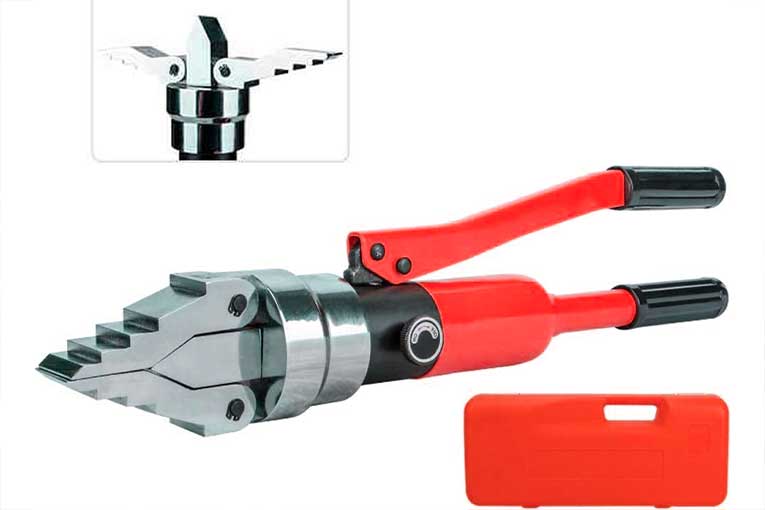
Spreaders

spreaders firefighting equipment
Source: Amazon

Hydraulic spreaders are powerful devices used to pry open objects or create openings in rescue situations. 

These tools are instrumental in providing access to trapped individuals, facilitating efficient rescue operations.

Rams

rams firefighting equipment
Source: Wikipedia

Hydraulic rams are tools designed to force open doors or create pathways during rescue operations. 

Their robust construction and power make them essential for situations where conventional access methods are insufficient.

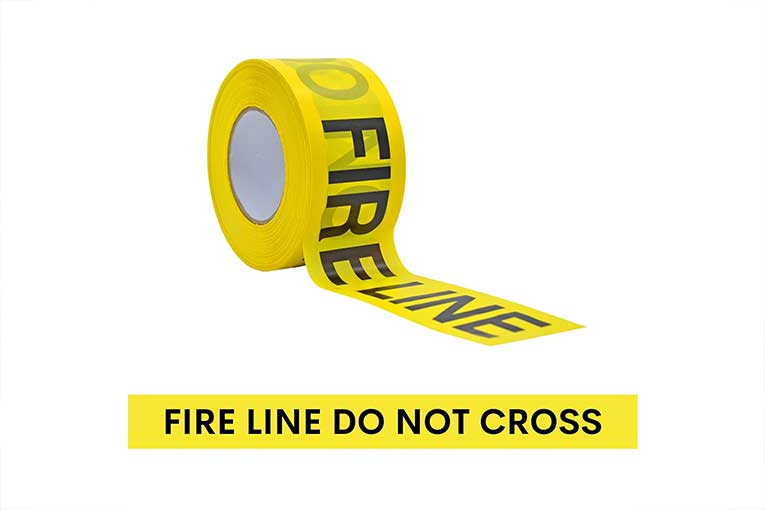
Do Not Cross Tape

do not cross tape firefighting equipment
Source: Amazon

Visible tape with the clear directive “Do Not Cross” is utilised to cordon off unsafe areas and control access to the fire scene. 

This tape ensures the safety of both emergency responders and the public by preventing unauthorised entry into potentially hazardous zones.

Traffic Cones

traffic cones firefighting equipment
Source: Amazon

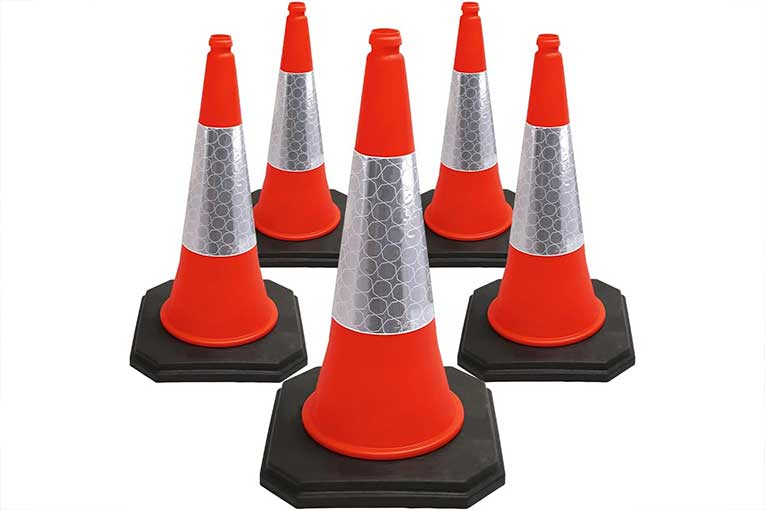
Deployed to manage traffic and create clear pathways for emergency vehicles, traffic cones are essential in ensuring unimpeded access for firefighting teams. 

These cones play a crucial role in maintaining order and facilitating the rapid movement of emergency vehicles to and from the incident scene.

What Does the Future Hold for Firefighting Equipment?

The future of firefighting equipment holds exciting possibilities, driven by advancements in technology, materials, and design. 

One prominent trend is the integration of smart technologies, such as artificial intelligence and the Internet of Things, into firefighting gear. 

This includes wearable sensors and augmented reality visors that provide real-time data to firefighters, enhancing situational awareness and decision-making. 

Innovations in materials science are shaping the development of more lightweight yet durable protective gear, addressing comfort and mobility concerns for firefighters. 

Nanotechnology may lead to advanced flame-resistant fabrics, ensuring greater protection against extreme temperatures. 

Additionally, the use of robotics in firefighting, ranging from autonomous vehicles to robotic firefighting assistants, is on the horizon.

As climate change intensifies, firefighting equipment is likely to evolve to cope with more frequent and severe wildfires. 

This may involve the development of specialised tools for wildfires and improved strategies for early detection and prevention. 

The collaborative efforts of researchers, engineers, and firefighters promise a future where technology plays a pivotal role in enhancing the safety, efficiency, and effectiveness of firefighting operations, ultimately better equipping first responders to address evolving challenges.

Conclusion

The array of equipment at a firefighter’s disposal is vast and diverse. 

From traditional tools that have stood the test of time to cutting-edge technology ensuring efficiency and safety, each item plays a crucial role in combating fires and protecting lives. 

The continuous evolution of firefighting equipment reflects a commitment to enhancing the capabilities of those who bravely confront the unpredictable nature of fires. 

As technology advances, so does our ability to respond effectively to fire emergencies, ensuring a safer and more resilient future for communities worldwide.
Streamlight introduces rechargeable Vulcan Clutch lantern

Streamlight has launched the Vulcan Clutch, a rechargeable lantern with a swivel neck and a 340-degree rotating head, providing up to 1,700 lumens of light. This multi-function lantern comes with a versatile clamping handle, allowing first responders to attach it to various surfaces and offer light in multiple directions.

Featuring a swivel neck and rotating head with hinges at the top, the Vulcan Clutch provides multi-directional lighting. It also offers a 20-degree downcast beam for footpath lighting and a flash mode that marks entrances and exits. The lantern has a rubberised, cushion-grip clamping handle that allows it to be attached to various surfaces, including ladders, doors, windows, motor vehicles, and other structures.

The Vulcan Clutch features three high-power white LEDs and three deep-dish parabolic reflectors, providing a tight spot beam with peripheral illumination. In addition, two ultra-bright blue LEDs illuminate the lantern’s taillights. The lantern delivers 1,700 lumens and 67,500 candelas over 520 metres on high, while on low, it offers 380 lumens and 15,000 candelas over a 245-metre beam distance. The run time on high is 6.5 hours, 18 hours on low, and 25 hours in signalling flash mode.

The Vulcan Clutch is powered by a rechargeable 7.4V 5.2Ahr lithium-ion battery that fully charges in 5 hours. It includes a quick install charge rack with a similar footprint as other lanterns in the Litebox®, Vulcan® and Vulcan® 180 series.

The lantern is designed with a high-impact, super tough nylon housing, and a rotating head constructed from high-grade aluminium encased in super tough nylon. It features an unbreakable polycarbonate lens with a scratch-resistant coating and a sealed gasket. It measures 23.85cm long, 11.68cm wide and 16.26cm high, and weighs only 1288g with the included battery.

The Vulcan Clutch is IPX7-rated for waterproof operation up to one metre for 30 minutes and has passed impact-resistant testing to two metres.

Michael F. Dineen, Streamlight’s Chief Revenue Officer, said: “With its high-power LEDs, the Vulcan Clutch provides firefighters and first responders with the bright light they require in emergencies, plus it converts from a handheld lantern to a multi-function light that clamps virtually anywhere to accommodate situations where both hands are needed.

“This two-in-one light with its clamp-on functionality is designed to assist firefighters in a variety of emergency situations, but it also serves as a work light in industrial environments and a portable scene light for roadside assistance. It clamps onto guardrails, buckets, the back of trucks and even serves as a roadside warning beacon with its flash mode functionality.”

Summary

  • Vulcan Clutch is a rechargeable lantern that delivers 1,700 lumens
  • Lantern features a swivel neck and a 340-degree rotating head
  • Vulcan Clutch has a clamping handle for attaching the lantern to any surface

True colour recognition LED flashlight launched by Streamlight

Streamlight Inc., a provider of high-performance lighting tools, introduced the Dualie 3AA Color-Rite, an intrinsically safe dual beam LED flashlight that provides true colour recognition, in September.

The high-performance LED flashlight provides the option of bright, white light or high CRI light with Streamlight’s Color-Rite Technology for true colour recognition in industrial, automotive and other applications.

The dual beam light includes a high-power white LED for bright area illumination and a High Colour Rendering Index (90 CRI) LED with Streamlight’s proprietary Color-Rite Technology to better see the colour spectrum.

It offers three output modes: a spot beam for distance illumination, a soft, wide flood beam to illuminate work areas and to aid in true colour recognition, and a combined spot and flood beam.

The compact, hand-held light, which is powered by AA batteries, is safety-rated for use in Division 1 environments faced by many professionals. it is also ATEX and IECEx-certified for use in Zone 0 locations and InMetro approved.

Streamlight Chief Revenue Officer Michael F. Dineen, said: “The Dualie 3AA Color-Rite provides the option of bright white light for illuminating large areas, or a high CRI beam that is ideal for auto detailing and painting, differentiating coloured wires, spotting finish imperfections or other tasks that require exacting attention to detail. With the Dualie 3AA Color-Rite, users have two lights in one.”

The light’s spot beam provides 225 lumens and 8,000 candela over a 179-metre beam distance, while the flood beam delivers 175 lumens, 380 candela, and a 39-metre beam distance. The combined spot and flood beams offer 320 lumens, 7,000 candela and a 167-metre beam distance.

The device includes separate dual head switches for easy user activation of either function. The two beams can be activated simultaneously by depressing both switches.

Run times for the Dualie 3AA Color-Rite are 8 hours in spot mode, 8.5 hours in flood mode and 5 hours when the beams are combined.

The lightweight Dualie 3AA Color-Rite is constructed from an engineered polymer resin that is impact- and chemical-resistant and features an unbreakable polycarbonate lens with a scratch-resistant coating.

It offers slip-resistant grip texture that is both comfortable and easy to use with gloves. Its rugged, integrated, snag-free clip conforms to the body of the light and grabs easily onto shirts, pockets and other gear for hands-free use.

The Dualie 3AA Color-Rite weighs 187.11 grams and measures 17.78 cm in length. The light is IP67-rated for dust-tight and waterproof operation to 1 metre for 30 minutes. It is available in high visibility yellow, while the ATEX/IECEx and InMetro models are available in international safety orange.

UAE adds UL Solutions’ Carugate site to list of recognised testing laboratories

United Arab Emirates (UAE) Ministry of Interior General Directorate of Civil Defense has updated its list of accepted laboratories to include the UL Solutions laboratory in Carugate, Italy.

UL International Italia S.r.l. is now recognised as a testing laboratory that can conduct emergency lighting testing and issue test reports to UAE requirements in accordance with the International Accreditation Service (IAS).

The UL Solutions Carugate laboratory is recognised for testing the following products and standards: Emergency lighting luminaires per EN 60598-2-22; Automatic test lighting systems per EN 62034; and Central battery lighting systems per EN 50171.

To earn the Emirates Quality Mark (EQM), a third party such as UL Solutions must issue an IEC CB certificate for electrical safety within the last three years. Hazardous substances must also have test reports from a third-party laboratory accredited to ISO/IEC 17025.

ERSI USA finds dangers of emergency warning lights on drivers

A new research study from US body, the Emergency Responder Safety Institute (ERSI), investigated the impact of lighting colour, intensity, modulation, and flash rate on driver behaviour while approaching and passing a traffic incident scene at night.

The report is titled “Effects of Emergency Vehicle Lighting Characteristics on Driver Perception and Behavior: Study Report.” The impact of retroreflective chevron markings in combination with emergency lighting configurations, as well as the measurement of “moth-to-flame” effects of emergency lighting on drivers was also investigated.

The research was conducted by Dr. John D. Bullogh (formerly with Rensselaer Polytechnic Institute and currently with the Light and Health Research Center in the Icahn School of Medicine at Mount Sinai) and Dr. Scott Parr of Embry-Riddle Aeronautical University in partnership with ERSI.

Under different emergency lighting setups volunteer civilians drove a closed course traffic incident scene at night consisting of a simulated fire apparatus in center-block position with a cone taper.

Two SAE-compliant, commercially available blue, white, yellow, and red lights were mounted vertically on two tripods spaced apart at a distance approximating the left and right edge of the rear of a fire truck.

A silhouette cutout of a firefighter wearing a high visibility safety vest was positioned adjacent to the lights. For some of the tests, researchers placed a panel of retroreflective red/yellow chevrons constructed with ASTM Type V sheeting materials directly behind each flashing light tripod.

The researchers tested 14 combinations of lamp colour, lamp intensity, pattern, flash rate, and presence of reflective markings next to the lights. Researchers measured vehicle distance to the lights and the distance at which drivers could distinguish the silhouette of a firefighter. They also administered a survey after the driver completed the course. Twenty drivers completed the testing.

Intensity
Study participants consistently judged higher intensity lights as more glaring but only marginally more visible than lights of lower intensity. Lower intensity lights remained highly visible. Using lower intensities at night will reduce discomfort glare without reducing the lights’ visibility. This finding indicates that stationary vehicles in nighttime blocking mode should be sufficiently visible with lower intensity lights.

Color
Drivers’ rated visibility of lights appeared to be related to the perceived saturation of their color. Blue and red lights have the greatest perceived saturation and were judged to be brighter than white and yellow lights of the same intensity. Blue and white lights were rated as most glaring. Yellow and red lights were least glaring. This data suggests that red lights for stationary blocking operations may offer the best combination of better visibility with less glare.

“Moth to Flame”
None of the variables tested caused drivers to move their vehicles either toward or away from the lights. Therefore, the data in this test did not support or disprove the “moth to flame” effect.

High Visibility Markings
This study raises the possibility that combining high intensity lights with high visibility markings may make it more difficult for drivers to see responders on foot at night, even when the responders wear high visibility vests. Further research is planned to determine if lower grade retroreflective markings will help improve the conspicuity of emergency personnel operating near emergency vehicles and traffic.

This study was produced under a contract between the U.S. Fire Administration and the Cumberland Valley Volunteer Firemen’s Association’s Emergency Responder Safety Institute, which subcontracted with the Lighting Research Center at Rensselaer Polytechnic Institute and Embry-Riddle Aeronautical University to perform the research.