Aero-X installs fire protection systems installed for Schilthorn cable car redevelopment

Fire protection specialist Aero-X has installed systems across the redeveloped Stechelberg–Mürren–Birg-Schilthorn cable car line in Switzerland, a route known both for its engineering complexity and its connection to the James Bond film On Her Majesty’s Secret Service.

Swiss company Aero-X was commissioned to provide fire protection for the recently redeveloped line, including systems for the dual-track Funifor cable car infrastructure and electrical control cabinets at all four stations.

The company selected Kentec Sigma XT extinguishant control panels for the project, with 14 panels installed across the station cabinets and connected to the site management system for supervision from the control room.

The Schilthorn route is internationally recognised as the location of Piz Gloria, Blofeld’s mountaintop lair in the 1969 James Bond film On Her Majesty’s Secret Service. The cable car line has undergone a major redevelopment as part of the Schilthornbahn 20XX project.

Originally built in the 1960s, the multi-stage aerial cableway system in the Bernese Oberland region had reached the end of its technical lifespan and required a comprehensive modernisation programme.

The redevelopment has increased passenger capacity from 400 to 800 people per hour and reduced the travel time from Stechelberg, on the valley floor, to the Schilthorn summit by around 10 minutes. The first section, from Stechelberg to Mürren, now operates as a direct line with a gradient of 159.4%, making it the steepest aerial cable car in the world.

Paul van Trigt, CEO of Aero-X, said: “It is so steep the cable car has to exit through the roof of the station.”

Aero-X was asked to protect the cable car system and electrical control cabinets at each station. The gondolas, which feature solar panels and battery storage, are protected using Aero-X extinguishant units.

The station cabinet protection includes integrated detection and suppression systems. The cabinets are “doubled up” at each station to support continuity of service in the event of a failure, according to van Trigt.

“The reason we used Kentec panels is that we needed to fulfil certain standards, in particular EN12094, EN15276-1 and EN15276-2,” he said. “I love the XT panel because it is plug and play. Connected properly, it simply works: there is no complicated programming to be done.”

Most of the cabinets are fitted with smoke sensors, while others use heat sensors. Van Trigt explained that some cabinets contain relatively high voltage, which can create electromagnetic fields that affect smoke detection.

Each cabinet includes fire-resistant cable connections, a sounder beacon and both automatic and manual aerosol extinguishant release capabilities.

Two or three extinguishant units are installed in each cabinet and connected to the Sigma XT panel via Aero-X’s sequential activator.

“This allows us to supervise the whole line and make sure all units are triggered in the event of a fire,” van Trigt said. “Two units are triggered, then we wait two seconds, then the next two are triggered, etc.”

The sequential activator is designed to ensure multiple extinguishant units can activate when required, rather than being limited by the current supplied by the panel. Van Trigt said the approach provides a higher level of fire security in line with regulatory requirements.

Van Trigt said the main challenge was logistical rather than technical. “Taking the materials up the mountain to each respective station and installing them during the construction phase was difficult, because there was really nothing to use. We had to find other ways!”

The upgraded cable car line is now carrying passengers on the route to Schilthorn, with fire protection systems from Aero-X and Kentec supporting safety across the redeveloped mountain transport infrastructure.

S Jones Conversions launches new tiered battery storage solution range

Battery storage range expands with Green Battery Store

S Jones Conversions has developed an entry-level battery storage solution called the Green Battery Store as part of its battery storage range.

The company said the unit is intended for lower-risk applications to house batteries categorised as ‘green’ or low risk by the Dangerous Substances and Explosive Atmospheres Regulations (DSEAR) assessment.

It is described as providing environmental protection and basic electrical safety for storing smaller quantities of batteries in lower-risk scenarios.

The Green Battery Store is available in sizes from 8’6″ to 40ft.

The unit’s listed features include aluminium louvre vents, fire-resistant board linings, an HVAC system and an anti-vandal multi-locking personnel door.

It is described as suited to use where risk assessments identify minimal fire and explosion hazard or where facilities have existing safety infrastructure.

How the tiered range is described

The Green Battery Store is described as the latest addition to a tiered range with units categorised by the level of safety features required.

Alongside Green, the tiers are described as Bronze for moderate-risk applications, Silver for higher-risk applications and Gold for the most demanding scenarios including destructive battery testing.

The company said selecting the most appropriate solution depends on the DSEAR assessment and considerations including property insurer requirements, local fire authority guidance, battery chemistry and volume, proximity to other infrastructure and risk tolerance of third parties.

Andrew Nicholls, Head of Conversions at S Jones Containers commented: “Over the last few years we’ve established our reputation as a ‘go to’ partner for containerised battery storage and testing units.

“Our new tiered approach to the range is an important development – making it even easier for our customers to choose the solution that best meets their specific project needs including budget requirements.

“The new Green Battery Store provides an affordable solution that still puts safety first for peace of mind.”

Features described for Bronze, Silver and Gold tiers

S Jones Containers’ Bronze Battery Store is described as combining fire-retardant passive protection with active environmental controls as well as explosion venting and thermal management.

It is described as intended to contain and mitigate hazards during normal operation and minor thermal events.

Silver is described as building on Bronze with 60-minute fire-rated compartmentalisation, automated fire detection and integrated sprinkler capability.

Gold is described as featuring independent gas detection, temperature monitoring and automated mechanical ventilation response as well as fire and explosion risk reduction features.

It is also described as including hermetically sealed access doors and gas detection systems.

The Gold tier is described as designed for high-risk applications including ultra-high-density storage and lithium-ion battery cell destructive testing, with a design intended to reduce exposure to toxic gases that may be released during the testing process.

Seven new PANTHER 6×6 units mark Rosenbauer production number 3,000

Rosenbauer order for Athens airport PANTHER replacement

Rosenbauer is set to deliver its 3,000th PANTHER 6×6 to Athens International Airport as part of a seven-vehicle order.

Rosenbauer announced it had won an international tender to supply Greece’s largest airport with seven fourth-generation PANTHER 6×6 vehicles.

The seven new vehicles will replace seven PANTHER units from the existing airport fleet from the 1998 model year.

Vehicle configuration and onboard systems

The order includes three PANTHER 6×6 vehicles with a high reach extendable turret (HRET) and four vehicles with a classic roof turret.

The HRET units have an extendable telescopic arm that reaches a height of around 16 metres.

The arm is fitted with a piercing tool intended for penetration into aircraft fuselages.

The turret can dispense water, foam or extinguishing powder.

The roof-turret vehicles have electrically remote-controlled turrets with flow rates of up to 9,000 litres per minute.

The roof turrets have throw ranges of well over 80 metres.

The company said the award decision also considered pump and admixture systems, turret control, driver assistance and safety systems, crew cabin ergonomics, off-road mobility and robustness.

The specification also includes integrated thermal imaging and illumination solutions.

Athens airport operating context and production milestone

Athens International Airport opened in March 2001 and has two runways.

The airport currently handles an average of around 770 flights per day, with higher levels in the summer months.

Rosenbauer stated the delivery of the 3,000th PANTHER also marks a production milestone for its airport firefighting vehicle line.

The company traced the line from large tank firefighting vehicles in the 1950s, through the SIMBA series in the 1980s, to the debut of the first PANTHER in 1991.

It reported that more than 2,000 PANTHERs were delivered between 1991 and 2020, with over 1,000 more added between 2020 and 2026.

The company listed Geneva, Atlanta and Athens as examples of airports where the PANTHER is in operation.

The 3,000th PANTHER 6×6 is part of the seven-vehicle delivery planned for Athens International Airport.

How to Prevent E-Bike Fires

E-bikes (electric bikes) have become a popular, eco-friendly way to travel.

But with their popularity comes an unexpected hazard, most notably lithium-ion battery fires.

E-bike fires are often the result of faulty or damaged lithium-ion batteries, incorrect chargers, or exposure to heat, all of which can trigger a dangerous chain reaction leading to a fire caused thermal runaway.

Understanding why these fires happen and how to prevent them is the key to staying safe.

What is an E-Bike?

Woman on Electric Bike
Image credit: Unsplash

An e-bike is a bicycle equipped with an electric motor powered by a rechargeable lithium-ion battery.

The motor assists the rider’s pedaling, making it easier to climb hills or travel longer distances.

E-bikes come in several types, from lightweight commuter models to powerful cargo bikes.

All types of e-bikes depend on one crucial component – the battery.

Lithium-ion batteries store large amounts of energy in a compact form, making them ideal for e-bikes.

However, this same energy density means that if the battery is damaged, poorly made, or improperly charged, it can overheat and even combust.

That’s where the serious risk of fire comes in.

Can E-Bikes Catch Fire?

Yes, e-bikes can catch fire, and almost always the culprit is the lithium-ion battery.

When the battery’s internal components are damaged or defective, they can short-circuit.

This causes the battery to heat up uncontrollably, a process known as thermal runaway.

Once this starts, it can ignite nearby cells, creating a fast-spreading and extremely hot fire.

Common triggers include:

  • Using an incorrect or low-quality charger.
  • Charging for long periods or overnight.
  • Physical damage to the battery.
  • Exposure to extreme heat or moisture.
  • Poor-quality or counterfeit battery packs.

While most e-bikes are safe when properly used, even one faulty component can lead to disaster.

How Often Do E-Bike Fires Happen?

Burning E-Bike

E-bike fires are still relatively rare compared to other household fires, but they’re increasing as e-bike ownership grows.

In cities like New York, London, and Sydney, fire departments have reported hundreds of e-bike and e-scooter battery fires in recent years, of which many were caused by unregulated or aftermarket batteries.

Interestingly, most incidents occur in homes or garages whilst the batteries are charging.

Because lithium-ion fires burn at extremely high temperatures and can reignite even after being extinguished, they pose a serious risk to both people and property.

Are E-Bike Fires Dangerous?

Yes, e-bike fires can be potential y very dangerous.

E-bike fires burn hotter and faster than typical household fires, releasing toxic fumes and dense smoke.

Since the reaction is chemical rather than just thermal, traditional extinguishing methods such as water are often ineffective, and can even make the situation worse.

For example, lithium-ion fires can:

  • Reach temperatures above 1,000°F (540°C).
  • Spread rapidly to furniture and other flammable materials.
  • Reignite after appearing to be out.
  • Produce toxic gases like hydrogen fluoride.

That’s why prevention and early detection are critical when it comes to e-bike fire safety.

Can I Prevent an E-Bike Catching Fire?

Yes, but prevention firstly starts with awareness.

Most e-bike fires can be avoided by following safe charging, storage, and maintenance practices.

Choosing certified products, using the correct charging equipment, and handling batteries with care can dramatically reduce your risk.

Let’s break down the essential steps.

How to Prevent E-Bike Fires

Charging E-Bike
Image credit: Bicycling

Buy from Reputable Sellers

Always purchase your e-bike and replacement batteries from trusted brands or authorized dealers.

Look for batteries certified by UL (Underwriters Laboratories) or similar safety standards.

Cheap, unverified batteries often lack internal safeguards like temperature control and overcharge protection.

Use Correct Charging Equipment

Only use the charger that came with your e-bike or one recommended by the manufacturer.

Mixing chargers, cables, or adapters (even if they seemingly fit) can result in incorrect voltage or current, damaging the battery and increasing fire risk.

Never charge your e-bike unattended or overnight.

If something goes wrong while you’re asleep, you may not notice until it’s too late.

Keep Away from Direct Heat Sources

Store and charge your e-bike in a cool, dry, well-ventilated area.

Avoid placing it near heaters, radiators, stoves, or direct sunlight.

Lithium-ion batteries perform best at room temperature.

Extreme heat accelerates chemical reactions inside the cells, raising the risk of thermal runaway.

Keep Away from Flammable Materials

Avoid charging or storing your e-bike near curtains, paper, furniture, or fuel containers.

If a fire starts, these materials can cause it to spread rapidly.

Ideally, charge the bike on a non-flammable surface, such as concrete or tile, rather than wood or carpet.

Avoid Aftermarket Batteries

Aftermarket or modified batteries are a leading cause of e-bike fires.

These may not meet the same safety standards as the originally supplied battery and could have poor internal construction or incompatible components.

Always use original or certified replacements.

What Should I Do If My E-Bike Catches Fire?

If you suspect your e-bike or battery is overheating, such as emitting smoke, hissing, or swelling, you must move to a safe distance immediately and call emergency services.

Do not try to handle or move the bike.

If it’s safe to do so, evacuate the area and close doors behind you to contain the fire.

Do not pour water directly on a lithium-ion fire.

Instead, use a Class D or lithium-ion-rated fire extinguisher if one is available.

Afterward, do not attempt to reuse or repair the damaged battery.

Have it disposed of properly using an authorized recycling program.

Key Takeaways

E-bike fires are serious but largely preventable.

The key is understanding that lithium-ion batteries require careful handling:

  • Always buy certified e-bikes and chargers.
  • Charge in a safe, well-ventilated area.
  • Keep batteries away from heat and flammable objects.
  • Never use damaged or non-original batteries.
  • Stay alert for warning signs like swelling or overheating.

By taking these precautions, you can enjoy all the benefits of electric cycling without putting your safety at risk.

Conclusion

E-bike fires occur mostly due to faulty lithium-ion batteries, poor charging habits, or damaged components.

Prevention comes down to buying quality products, following manufacturer guidelines, and staying vigilant during charging and storage.

Safe habits save lives, so your e-bike should be a tool for freedom – not a fire hazard.

10 Most Common Flammable Solids

Flammable solids are materials that ignite easily and burn quickly when they come into contact with heat, sparks, or open flames. 

These materials pose a significant fire hazard because once they catch fire, the flames can spread rapidly and be difficult to control. 

From everyday items like matches and firelighters to more industrial materials like metal powders and phosphorus, these solids are present in many aspects of life. 

That’s why it is essential to understand how they behave, how to store them safely, and what to do in an emergency.

This article explores the definition of a flammable solid, introduces ten of the most common examples, and offers practical safety tips to help reduce fire risks at home and in the workplace.

What is a Flammable Solid?

A flammable solid is a material that can easily catch fire and burn rapidly when exposed to heat, sparks, friction, or an open flame. 

These substances are classified as Class 4 hazardous materials under international transport and safety guidelines because of their high risk of ignition and fire spread.

Flammable solids can be found in many forms, powders, granules, sheets, or even everyday products like matches and firelighters. 

Some are naturally combustible, while others become dangerous when exposed to air, moisture, or certain chemicals. 

They are often used in industrial processes, laboratories, manufacturing, and even in household products, making them more common than many people realise.

The main danger with flammable solids lies in how quickly they can ignite and how fiercely they can burn. 

For example, powdered metals like aluminium or magnesium can burn extremely fast and even explode when airborne. 

Others, like phosphorus or alkali metals, can self-ignite when exposed to air or water.

Flammable solids are grouped into three categories for safety purposes:

  • Division 4.1: Flammable solids (e.g. matches, sulphur)
  • Division 4.2: Substances liable to spontaneous combustion (e.g. phosphorus)
  • Division 4.3: Substances that emit flammable gas when in contact with water (e.g. sodium)

Because of their fire risk, these materials must be stored, handled, and transported with extreme care. 

Understanding what flammable solids are, and how they behave, is key to preventing dangerous fires and accidents.

10 Most Common Flammable Solids

Flammable solids are materials that catch fire easily and burn rapidly. 

They are found in homes, workplaces, and industries, and can become extremely dangerous if handled carelessly. 

Below are ten of the most common flammable solids, including how they behave and why they require careful attention.

Alkali Metals

sodium alkali metal
Source: Wikipedia

Alkali metals include elements such as lithium, sodium, potassium, and rubidium. 

These metals are highly reactive and are known to ignite spontaneously in air or explode on contact with water.

When exposed to moisture, alkali metals produce hydrogen gas and heat, which can cause immediate ignition. 

For example, a small piece of sodium dropped into water will fizz, spark, and potentially explode. 

These reactions are not just spectacular, they are highly dangerous.

Alkali metals are used in batteries, research labs, and chemical manufacturing. 

Because of their reactivity, they are stored under oil or in sealed containers to prevent exposure to air or water.

Celluloid

celluloid film
Source: Wikipedia

Celluloid is one of the earliest types of plastic, made by combining nitrocellulose with camphor. 

It was once used widely in film reels, combs, toys, and even dentures. 

However, celluloid is highly flammable and can ignite from just a small amount of heat or friction.

When it burns, it produces a fast, intense flame that is difficult to control. 

Early cinema fires were often caused by celluloid film catching fire under the heat of a projector bulb.

Today, celluloid has been largely replaced by safer materials, but it still appears in some vintage items. 

It should always be kept away from heat and stored in well-ventilated areas.

Coal

coal

Coal is a black or brownish-black rock made of carbon-rich material. 

It has been used as a fuel source for centuries, particularly in power stations, homes, and industrial processes.

Although solid coal is relatively stable, coal dust is extremely flammable. 

Fine coal particles suspended in air can create explosive mixtures, especially in enclosed spaces like mines or silos.

Fires involving coal are hard to extinguish once started. 

They can smoulder deep within coal piles for days or weeks. 

Good ventilation and dust control are essential in environments where coal is stored or used.

Firelighters

firelighter
Source: Wikipedia

Firelighters are small blocks or cubes made from flammable substances such as paraffin wax, kerosene, or compressed wood and oil. 

They are designed to catch fire easily and help light barbecues, wood burners, or campfires.

While firelighters are very useful, they must be handled with care. 

Storing them near open flames or in high temperatures can lead to accidental fires. 

Some types release flammable vapours that can ignite suddenly.

Always store firelighters in a cool, dry place and use them as instructed. 

Keep them out of reach of children and never use them to revive a dying fire, they can flash back dangerously.

Matches

burning match
Source: Wikipedia

Matches are perhaps the most familiar flammable solid. 

They consist of a small wooden or cardboard stick tipped with chemicals that ignite when struck.

The match head typically contains potassium chlorate, sulphur, and other substances. 

When struck against the matchbox surface, friction produces enough heat to ignite the chemicals and start a flame.

Because they are so easy to light, matches are considered hazardous goods. 

They should be kept in their original packaging, stored away from heat, and handled responsibly. 

Used matches should be fully extinguished and disposed of safely.

Metal Powders

metal powder

Fine metal powders such as aluminium, magnesium, titanium, and zirconium are highly flammable, especially when dispersed in air.

These powders are used in fireworks, pyrotechnics, welding, and metal finishing. 

When airborne, they can form explosive mixtures that ignite with a single spark. 

Magnesium powder, for example, burns at extremely high temperatures and can cause severe burns or fires.

To reduce the risk of explosions, metal powders must be stored in tightly sealed containers in non-sparking environments. 

Dust should be cleaned using specialised vacuum systems, and equipment should be grounded to prevent static electricity.

Phosphorus

black phosphorus
Source: Wikipedia

Phosphorus exists in several forms, but white phosphorus is the most flammable. 

It ignites spontaneously in air and burns with a bright, white flame. 

Because of this, white phosphorus is stored underwater or in sealed containers to prevent exposure to oxygen.

Phosphorus is used in military applications, chemical manufacturing, and fertilisers. 

It’s also found in small amounts in some matches and fireworks.

Even brief contact with white phosphorus can cause serious burns. 

It also releases toxic fumes when it burns, making it dangerous to inhale. 

Red phosphorus is more stable but can still ignite under friction or heat.

Seed Cake

seed cake
Source: Wikipedia

Seed cake is the solid by-product left after oil is extracted from oil-rich seeds, such as linseed, sunflower, or cottonseed. 

Although it may look harmless, seed cake can catch fire spontaneously during storage.

Residual oils within the cake can oxidise over time, generating heat. 

If the heat isn’t allowed to escape, due to poor ventilation or compact storage, it can build up until the seed cake catches fire on its own.

Seed cake is often used as animal feed or fertiliser. 

It must be stored in cool, dry conditions and checked regularly for signs of heating or smoke. 

Fires in seed cake storage can spread quickly once started.

Sodium Batteries

sodium batteries
Source: Wikipedia

Sodium batteries are known for high energy storage but also come with fire risks. 

They contain sodium metal, which reacts violently with water and moisture.

If the battery casing is damaged or the battery overheats, the sodium can ignite, causing intense fires. 

In worst cases, the battery may explode or leak hot, flammable materials.

Sodium batteries are used in large-scale energy storage and some newer electric vehicle concepts. 

Because of their high energy and fire potential, they require robust safety systems, temperature controls, and fire-resistant housing.

Sulphur

sulphur
Source: Wikipedia

Sulphur is a yellow, non-metallic element found in nature and used in many industrial processes, including the production of sulphuric acid, fertilisers, and matches.

When heated, sulphur melts into a reddish liquid and eventually ignites, burning with a blue flame and producing sulphur dioxide gas. 

This gas is toxic and irritating to the eyes, nose, and throat.

Sulphur fires can be difficult to put out and produce large amounts of smoke. 

In powder form, it poses an even greater fire risk, as it can ignite easily and burn rapidly.

To handle sulphur safely, store it in well-ventilated areas away from heat or open flames, and avoid creating dust clouds when moving or processing the material.

How to Protect Yourself from Common Flammable Solids

Flammable solids can pose serious fire hazards if not handled with care. 

Whether you’re working with these materials in an industrial setting or storing them at home, following simple safety steps can reduce the risk of accidents.

Store Properly

Keep flammable solids in cool, dry, and well-ventilated areas. 

Avoid places with direct sunlight, heat sources, or open flames. 

Always store materials in containers specifically designed for hazardous goods, and ensure lids are sealed tightly to prevent spills and contamination.

Use the Right Equipment

When handling flammable solids, wear appropriate personal protective equipment (PPE)

This includes gloves, eye protection, flame-resistant clothing, and sometimes respirators if there is dust or fumes. 

Using the right tools, such as non-sparking scoops or containers, can also help prevent accidental ignition.

Separate Incompatible Materials

Some flammable solids react dangerously with other substances, including water or certain chemicals. 

Keep incompatible materials stored separately and clearly label all containers. 

Consult safety data sheets (SDS) for guidance on proper segregation.

Prevent Dust Buildup

Fine powders like metal dust or coal can ignite easily when dispersed in air. 

Regularly clean work areas to prevent dust accumulation, and avoid sweeping, which can stir up particles – use a vacuum with a HEPA filter instead.

Train and Educate

Make sure everyone handling these materials receives proper training

Staff should know how to store, handle, and dispose of flammable solids safely. 

Emergency procedures should be clearly displayed, and fire extinguishers or other firefighting tools should be easily accessible.

Conclusion

You should now have more of an understanding of common flammable solids. 

Flammable solids present serious fire risks, especially when they are mishandled, stored incorrectly, or exposed to heat, sparks, or open flames. 

Each flammable solid has unique properties, ignition points, and hazards. 

Some, like celluloid or metal powders, can ignite with friction or static discharge. 

Others, such as seed cake or coal, may combust spontaneously under the right conditions. 

Being aware of these differences helps individuals and businesses store and handle these substances more responsibly.

By respecting the dangers and taking the right precautions, we can use these materials safely and avoid potentially life-threatening incidents.

IAFC calls for responder feedback on hazmat rail incidents in the United States

IAFC begins data collection from responders to improve hazmat rail incident response

The International Association of Fire Chiefs (IAFC) has launched a nationwide request for input from emergency responders who have dealt with hazardous materials (hazmat) rail incidents.
According to the IAFC, the insights will contribute to its ongoing Significant Rail Incident Study, which is being developed with national partners to improve hazmat preparedness and training programmes.

The organisation confirmed that the study’s initial framework has been developed by a national control group, which identified five key focus areas. It now seeks operational feedback from those with firsthand response experience.

Participants are invited to complete an initial form, with select responders to be contacted by IAFC for further follow-up as part of a detailed assessment.

The IAFC stated that input collected may inform future protocols and improve nationwide response systems for major hazmat rail incidents.
U.S. study follows earlier IAFC rail safety research

The IAFC said the responder feedback component builds on its prior research publication Considerations For Ensuring The Effectiveness of U.S. Railroad Hazardous Materials Training, Preparedness, And Community Outreach Programs.

That earlier work focused on improving rail hazmat training and outreach efforts across the country.

The new phase aims to document operational practices and lessons learned directly from significant rail incident response events.

The IAFC noted that the current study is designed to connect high-level priorities with practical, on-the-ground responder experience.

It added that this process will help refine policy recommendations through a more applied evidence base.

Partners include rail industry and federal bodies

The IAFC reported that the study is being undertaken in collaboration with the Association of American Railroads, the Shortline Safety Institute, and additional industry and federal agencies.

These partners are working with hazmat response stakeholders to ensure findings reflect operational needs and challenges.

The IAFC said that cooperation across these sectors is essential to capture a full range of technical, procedural, and policy considerations.

It added that the involvement of responders is a critical part of validating and contextualising the study’s findings.

The association said the study aligns with broader national safety goals and will contribute to ongoing risk reduction strategies in rail operations.

Call for U.S. responder participation remains open

The IAFC has invited all U.S.-based personnel who have responded to hazmat rail incidents to take part in the study.

Participation involves completing a short form, with follow-up contact from the IAFC if criteria are met.

The association said that all data collected will be used to shape future hazmat rail preparedness and response policies.

It added that responder feedback is particularly valuable in assessing what procedures work in practice, and where gaps may exist.

The IAFC encouraged eligible responders to engage with the study, stating that their perspectives can contribute directly to national safety improvements.

Study targets applied learning from incident response

According to the IAFC, the project aims to capture “Smart Practices and Lessons Learned” from real-world incidents.
The organisation stated that grounding the study in actual responder experience will support a more accurate understanding of current capabilities and shortfalls.

It also said that this phase of the research focuses on operational relevance, rather than theoretical planning or policy assessment.

The IAFC explained that volunteer participants will be contributing to a shared national learning process.

It emphasised that participation from diverse response contexts is encouraged, including urban, rural, and specialist units.

IAFC calls for responder feedback on hazmat rail incidents in the United States: Summary

The International Association of Fire Chiefs (IAFC) has launched a national data collection initiative.

The goal is to gather feedback from U.S. emergency responders who have dealt with hazmat rail incidents.
The study follows a prior IAFC publication on hazmat rail safety and outreach.

A national control group has outlined five key study priorities.

The IAFC is now seeking practical feedback to validate and extend that framework.

Responder input will help identify operational lessons and effective practices.

Participants must complete an online form to register interest.

Selected responders will be contacted for follow-up interviews.

The study is being conducted with the Association of American Railroads and the Shortline Safety Institute.

It also involves federal agencies and hazmat response networks.

All data collected will be used to support future rail incident protocols.

The IAFC stated that participation will inform national preparedness improvements.

The feedback gathered will focus on applied operational experiences.

Responders from all geographic and service contexts are encouraged to apply.

The IAFC confirmed the opportunity remains open for eligible responders.

Essential Personal Protective Equipment List

Personal Protective Equipment (PPE) plays a crucial role in keeping people safe in various work environments. 

Whether you’re working in construction, healthcare, or manufacturing, the right equipment helps reduce the risk of injury or exposure to hazards. 

This article will walk you through everything you need to know about PPE, including what it is, who needs it, and an essential personal protective equipment list.

What is Personal Protective Equipment?

what is personal protective equipment

Personal Protective Equipment refers to specialised gear and clothing designed to protect individuals from workplace hazards. 

PPE is used to minimise exposure to risks that can cause injury or illness. 

This equipment includes items such as helmets, gloves, goggles, masks, earplugs, and protective clothing, depending on the specific hazards present in a given environment.

PPE is commonly used in industries like construction, manufacturing, healthcare, and laboratories, where workers may be exposed to physical, chemical, or biological dangers. 

The type of PPE required varies based on the job, such as hard hats for construction workers or gloves and masks for healthcare professionals.

The main goal of PPE is to provide a barrier between the individual and potential hazards, ensuring a safer working environment. 

It’s a critical element of workplace safety and is often legally required in high-risk industries.

Who Needs Personal Protective Equipment?

who needs- personal protective equipment

Personal Protective Equipment is essential for anyone working in environments with potential hazards. 

Various industries require different types of PPE to ensure worker safety. 

Here are some key groups that need PPE:

Construction Workers

Construction sites are full of risks, such as falling objects, loud noises, and hazardous materials. 

Workers in this field need hard hats, safety glasses, gloves, and steel-toed boots to protect against injuries.

Healthcare Professionals

Doctors, nurses, and other healthcare workers are exposed to biological hazards, chemicals, and infectious diseases. 

They require gloves, masks, gowns, and face shields to safeguard themselves and their patients.

Manufacturing Workers

In manufacturing environments, workers often operate heavy machinery and handle hazardous substances. 

They need PPE like safety goggles, gloves, and hearing protection to minimise risks associated with machinery and chemicals.

Laboratory Personnel

Chemists and laboratory technicians frequently work with potentially dangerous chemicals and biological materials. 

PPE such as lab coats, safety goggles, and respirators is necessary to protect against spills and inhalation of harmful substances.

Agricultural Workers

Farmworkers face unique hazards, including exposure to pesticides, machinery, and the elements. 

They need gloves, masks, and protective clothing to reduce the risk of exposure to chemicals and injuries.

Emergency Responders

Firefighters, paramedics, and police officers encounter various hazards, including toxic environments and physical dangers. 

They rely on specialised PPE to protect themselves while performing their duties.

Essential Personal Protective Equipment List

This is the essential Personal Protective Equipment List used in various industries. 

Below are the main categories of personal protective equipment:

Head Protection

head personal protective equipment

Head protection is crucial for workers in environments where there is a risk of head injuries from falling objects or bumps.

Hard Hats

Hard hats are designed to protect the head from impacts and penetration. 

They are made of durable materials like high-density polyethylene (HDPE) and come with adjustable straps for a secure fit. 

Hard hats also often have a built-in sweatband for comfort. 

Bump Caps

Bump caps provide limited protection against minor bumps and scrapes. 

They are softer than hard hats and are often used in low-risk environments, such as warehouses or indoor facilities.

Eye Protection

eye personal protective equipment

Eye protection is necessary in jobs where workers are exposed to flying debris, chemicals, or harmful light.

Safety Goggles

Safety goggles protect the eyes from various hazards, including dust, splashes, and chemical fumes. 

They provide a snug fit around the eyes and often have anti-fog and scratch-resistant coatings.

Face Shields

Face shields offer full-face protection and are commonly used in welding, grinding, and chemical handling. 

They are usually worn over safety goggles for additional eye protection.

Ear Protection

ear personal protective equipment

Exposure to loud noises can lead to hearing loss. Ear protection helps minimise this risk.

Earplugs

Earplugs are small devices inserted into the ear canal to block out sound. 

They are effective in reducing noise levels and are often disposable for hygiene.

Earmuffs

Earmuffs cover the entire ear and provide higher noise reduction than earplugs. 

They are ideal for environments with extreme noise levels, such as factories and construction sites.

Respiratory Protective Equipment (RPE)

respiratory personal protective equipment

Respiratory protective equipment is vital in environments where workers may inhale harmful substances, including dust, gases, and vapours.

Dust Masks

Dust masks provide basic protection against dust and non-toxic particles. 

They are lightweight and easy to use, making them suitable for short-term tasks.

Respirators

Respirators offer more robust protection and can filter out specific airborne contaminants. 

They come in two main types: half-mask and full-face. 

Half-mask respirators cover the nose and mouth, while full-face respirators protect the eyes as well. 

Respirators must be fitted correctly to ensure they provide adequate protection.

Hand Protection

hand personal protective equipment

Hand protection is essential in environments where workers may encounter cuts, abrasions, or exposure to chemicals.

Work Gloves

These gloves are designed to protect against cuts, abrasions, and punctures. 

They come in various materials, such as leather, cotton, and synthetic options. 

Different gloves are available for different tasks, so it’s essential to choose the right type for the job.

Chemical-Resistant Gloves

These gloves protect against hazardous substances, including chemicals and solvents. 

They are made from materials like nitrile, neoprene, or latex, depending on the specific chemical hazards present.

Body Protection

body personal protective equipment

Body protection involves clothing designed to shield workers from physical and chemical hazards.

Coveralls

Coveralls provide full-body protection from dirt, abrasions, and chemicals. 

They are often used in manufacturing, automotive, and agricultural settings. 

Some coveralls are flame-resistant or chemical-resistant for added safety.

Aprons

Aprons protect the front of the body from spills and splashes. 

They are commonly used in kitchens, laboratories, and industries dealing with chemicals or hazardous materials.

Foot Protection

foot personal protective equipment

Foot protection is crucial in environments where workers are at risk of foot injuries from heavy objects or slippery surfaces.

Steel-Toed Boots

Steel-toed boots protect the toes from falling objects and punctures. 

They also provide support and insulation for the feet. It’s important to ensure that these boots fit correctly for maximum comfort and protection.

Slip-Resistant Shoes

These shoes have specialised soles that provide grip on slippery surfaces, reducing the risk of slips and falls. 

They are essential for workers in kitchens, restaurants, and outdoor settings.

Is Personal Protective Equipment A Legal Requirement?

is personal protective equipment legal requirement

Yes, in most countries, providing and using PPE is a legal requirement for businesses. 

Employers must assess the risks in the workplace and provide appropriate PPE to their employees. 

For example, the Occupational Safety and Health Administration (OSHA) in the United States mandates that employers ensure workers use PPE when necessary. 

Failure to comply with these regulations can result in fines and legal consequences.

PPE regulations differ between industries, so it’s essential to follow the specific guidelines relevant to your field. 

In most cases, both employers and employees share responsibility for ensuring PPE is used correctly.

How Often Should Personal Protective Equipment be Replaced?

how often personal protective equipment replaced

The frequency of replacing Personal Protective Equipment PPE depends on several factors, including the type of equipment, its usage, and the work environment.

Manufacturer Guidelines

Always refer to the manufacturer’s recommendations for replacement intervals. 

Many PPE items come with guidelines that specify how often they should be replaced.

Wear and Tear

Inspect PPE regularly for signs of wear and damage. 

Equipment that shows signs of deterioration, such as cracks, tears, or faded materials, should be replaced immediately, even if it hasn’t reached the recommended time frame.

Frequency of Use

PPE that is used frequently or in harsh conditions will wear out faster. 

For example, gloves and respirators may need replacement after a specific number of uses, while hard hats may last several years with proper care.

Regulatory Standards

Some industries have strict regulations regarding PPE replacement. 

Be aware of any legal requirements specific to your workplace.

Changes in Workplace Conditions

If the work environment changes, such as increased exposure to hazardous materials, consider replacing PPE to ensure adequate protection.

Does Personal Protective Equipment Require Training?

personal protective equipment require training

Yes, Personal Protective Equipment (PPE) requires training to ensure that employees understand how to use it correctly and safely. 

Proper training is crucial for maximising the effectiveness of PPE and minimising workplace injuries. 

Here are key aspects of PPE training:

Understanding PPE Types

Employees need to know the different types of PPE relevant to their job. 

This includes hard hats, gloves, goggles, and respirators. 

Training helps workers identify which PPE is necessary for specific tasks.

Correct Usage

Training should cover how to wear and adjust PPE properly. 

This includes ensuring a snug fit and understanding how to operate any equipment, such as respirators, correctly.

Maintenance and Inspection

Employees must be trained on how to inspect PPE for signs of wear or damage. 

Knowing when to replace or repair equipment is essential for ongoing safety.

Legal Requirements

Many regulatory bodies require employers to provide PPE training. 

Understanding these regulations helps ensure compliance and promotes a culture of safety in the workplace.

Emergency Procedures

Training should also cover what to do in case of an emergency, including how to remove PPE safely after exposure to hazardous materials.

Conclusion

That was our essential personal protective equipment list.

Personal Protective Equipment is vital for maintaining safety in various industries. 

From head protection to proper footwear, each piece of PPE serves a specific purpose in preventing injury and harm. 

Employers must provide appropriate PPE and ensure workers are trained in its use, care, and maintenance.

Regular inspections and timely replacements ensure that PPE continues to offer adequate protection. 

While PPE is a legal requirement in many workplaces, its importance goes beyond compliance. 

It safeguards lives and helps create a safer work environment for everyone. 

By investing in the right PPE and ensuring it’s used correctly, businesses can minimise risks and keep their workers safe.

Zelim Unveils World’s First Unmanned Man Overboard Rescue Vessel at SMM Trade Fair

Zelim, the Edinburgh based sea survival innovator, has officially launched the world’s first unmanned/manned remotely controlled person-in-water rescue vessel.

GUARDIAN, an 8.4m long, 2.5 wide aluminium hulled Next Generation Fast Rescue Craft (FRC), was unveiled to the international maritime industry for the first time at the SMM Trade Fair, in Hamburg, Germany.

Specifically designed for rapid deployment from a ship to recover both conscious and unconscious man-overboard casualties, the GUARDIAN FRC can operate in maritime conditions that conventional manned recovery solutions would find challenging or too dangerous to deploy.

Taking four years’ research and development, with input from the UK’s Maritime & Coastguard Agency and the US Coastguard GUARDIAN incorporates Zelim’s type approved SWIFT rapid rescue conveyor and ZOE, Zelim’s intelligent detection software for optimising search.

During a MOB event, GUARDIAN is instantaneously lowered into the water by way of a ship’s existing LARS davit installed at deck level.  Once in the water, an Alamarin AJ285 waterjet powered by a single Bukh VGT 400HP motor speeds the rescue vessel along at a rate of 30-plus knots towards the casualty. GUARDIAN’S range is 15nmiles with a six-hour endurance.

As it nears the person(s) in the water, the FRC lowers the integrated SWIFT and slowly heads towards the casualty who is then recovered from the water by the rescue conveyor, which is specifically designed to grip and recover immersed casualties, whilst minimising the risk to casualties from the loss of hydrostatic pressure. SWIFT can pull two survivors to safety simultaneously, minimising the risk for rescuers.

Given that about 40% of all man-overboard incidents results in fatality, with more than 1000 people falling overboard annually, the efficiency and simplicity of Zelim’s GUARDIAN in rescue missions cannot be understated. 

“Sea survival is hugely dependent on the time it takes to retrieve individuals from the water, but inclement weather can prohibit the launch of manned rescue craft and lives are needlessly lost,” said Zelim founder and innovator Sam Mayall.

“Ship crews have little time to carry out an effective rescue before maritime conditions prevent the casualty from assisting in their own rescue. When rescue vessels approach, many survivors simply don’t have the strength to pull themselves to safety. This is even more difficult when they are unconscious or unresponsive. GUARDIAN has been designed to ensure more people can be rescued in the harshest of weather conditions.”

With capacity for 11 survivors (nine if GUARDIAN deployed with a two-person crew), the lightweight FRC also benefits from AI-based person-in-water detection and alerting system.

Peter Lloyd, Zelim’s Director of Search and Rescue, said: “Speed is the key to rescuing individuals from the water before they perish. But first you must find your casualty. Sea search is notoriously difficult with human performance subject to distraction and loss of attention, especially during a prolonged search. In Zelim’s aim to develop an unmanned rescue vessel, sea search had to be automated.”

The result of Zelim’s product development was ZOE, a new software tool capable of providing instant detection and alerting of persons and objects that enter a field of view. ZOE is also capable of differentiating between a human in the water and other objects that might be present such as buoys, flotsam and jetsam.

Providing real time location information and integrated with the GUARDIAN’S navigational system, the technology allows rescuers to see what the human eye cannot with visual cues overlayed on a simple display.

While Zelim is marketing SWIFT and ZOE as standalone maritime safety and security tools, their integration with GUARDIAN demonstrates how easily the technology can mitigate the risks for both rescuer and casualty to improve the chances of MOB recovery.

The decision to launch any rescue asset is always a balance between the risk to the rescuers and the probability of success. An unmanned, or lean manned GUARDIAN, may permit a launch in conditions beyond those normally accepted,” said Lloyd.

The FRC can operate with or without a crew, remotely, and has enhanced rescue situational awareness capability. It has the same footprint as conventional craft, and can be easily stowed and deployed using existing davits.

In addition to MOB missions, GUARDIAN can perform a variety unmanned maritime safety and security roles, including search and rescue, security patrols, standby and recovery. Zelim believes GUARDIAN should be installed on ocean-going vessels, including cruise ships, and offshore vessels and platforms, as a matter of course.

How Long Do Fire Extinguishers Last?

Fire extinguishers are crucial tools for swiftly combating small fires, but do they last forever? 

Understanding their lifespan and exactly how long do fire extinguishers last is vital for ensuring their effectiveness in emergencies. 

In this article, we’ll explore how long different types of fire extinguishers last, when to replace them, and the importance of regular servicing.

How Long Do Fire Extinguishers Last?

how long do fire extinguishers last image

Fire extinguishers are crucial for rapid response in emergencies, but their effectiveness diminishes over time. 

Understanding how long fire extinguishers last is essential for maintaining a safe environment.

Disposable

Disposable fire extinguishers typically have a lifespan of around 10 to 12 years. 

Once they reach this limit or display signs of wear, they should be replaced to ensure optimal performance. 

These extinguishers are designed for single use, emphasising the importance of timely replacements.

Rechargeable

Rechargeable fire extinguishers, designed for multiple uses, have a service life of approximately 6 years. 

After this period, a thorough professional inspection and maintenance are necessary to ensure their continued reliability. 

If any issues are identified during servicing or if the extinguisher reaches the end of its recommended life, it should be replaced promptly.

How Often Should Fire Extinguishers be Serviced?

how often fire extinguishers serviced

Routine maintenance is key to ensuring the reliability of fire extinguishers. 

Different types require distinct servicing intervals to guarantee optimal functionality when facing a fire emergency.

Water, Powder, or Foam

Fire extinguishers containing water, powder, or foam should undergo professional servicing every 5 years. 

This process involves a thorough inspection, testing, and refilling, if necessary. 

Regular servicing helps identify any issues and ensures the extinguisher is fully operational.

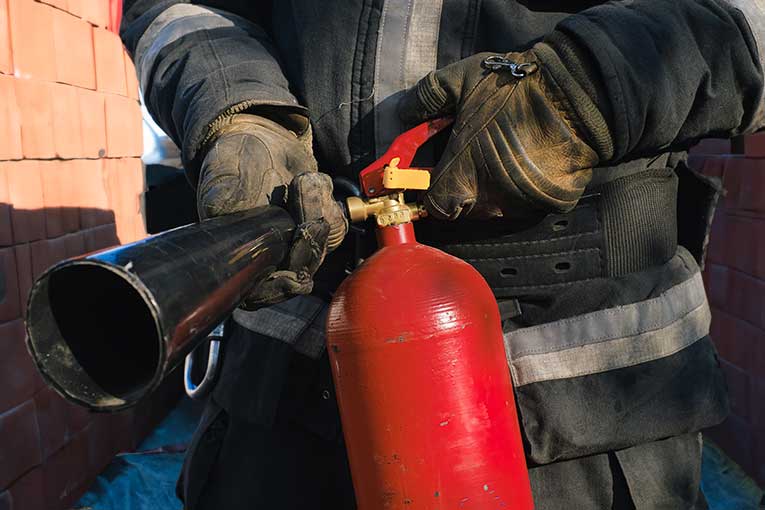
CO2

CO2 fire extinguishers, commonly used for electrical fires, have a longer service interval of 10 years. 

These extinguishers should undergo a comprehensive professional service to inspect and maintain their components. 

This ensures that the extinguisher remains effective in suppressing electrical fires.

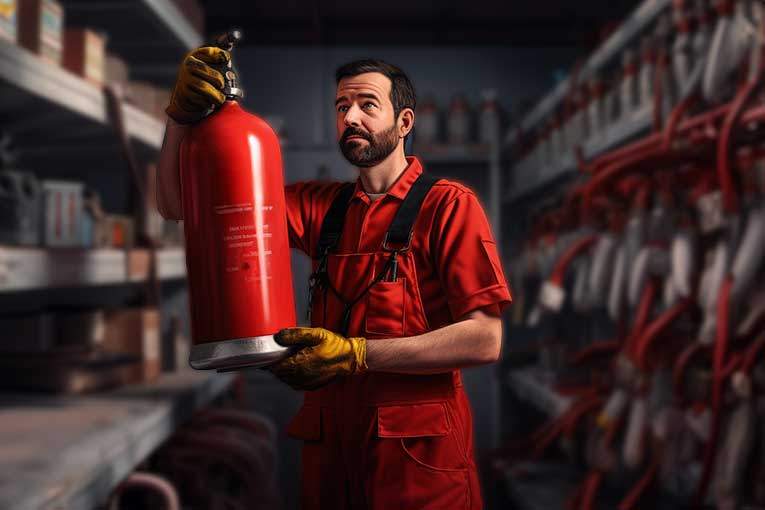
Where to Find the Fire Extinguisher Manufacture Date?

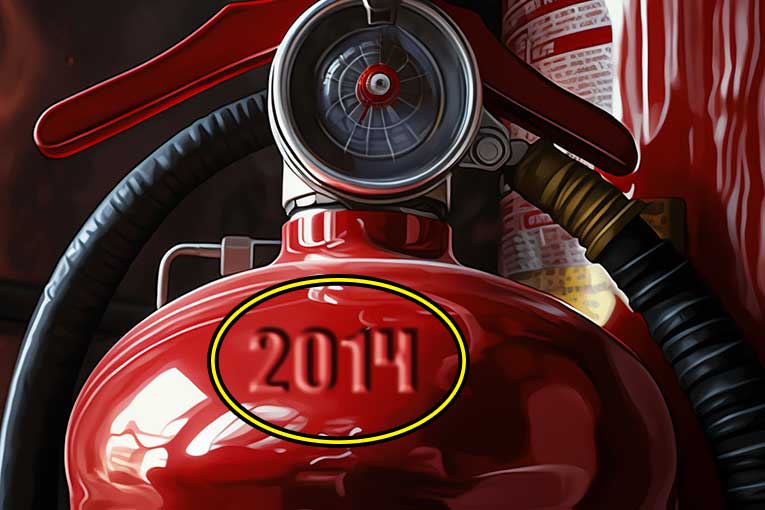
fire extinguishers manufacture date

Knowing the manufacture date of a fire extinguisher is crucial for determining its lifespan and understanding how long your fire extinguisher will last. 

The location of this information varies based on the type of extinguisher.

Steel Fire Extinguishers

Stamped into the Cylinder

The manufacture date may be physically stamped onto the cylinder of the steel fire extinguisher. 

This stamp provides a clear and permanent indication of when the extinguisher was produced.

On the Label

Alternatively, the manufacture date might be included on the label affixed to the extinguisher. 

This label provides essential information about the extinguisher’s specifications and usage guidelines.

P50 Service-Free Extinguishers

Older Models 

For older P50 fire extinguisher models, the manufacture date is typically printed on the base of the unit.

Newer Models 

Newer P50 models use a coloured pin that correlates to a table printed on the label. 

The pin colour corresponds to the month and year of manufacture, providing a quick reference.

When Should you Replace a Fire Extinguisher Early?

replace fire extinguishers early

While fire extinguishers have defined lifespans, certain circumstances may warrant early replacement to ensure optimal performance in emergencies. 

Here are key indicators that suggest an extinguisher should be replaced ahead of schedule:

Cracked Nozzle or Hose

Issue

Physical damage like cracks compromises the structural integrity of the nozzle or hose.

Effect

The crack can lead to leaks or difficulties in delivering the extinguishing agent during a fire, rendering the extinguisher less effective.

Blocked Nozzle or Hose

Issue

Obstructions in the nozzle or hose can hinder the discharge of the extinguishing agent.

Effect

A blocked nozzle or hose reduces the extinguisher’s ability to control a fire, diminishing its overall performance.

Broken Handle

Issue

A broken handle makes it challenging to operate the extinguisher efficiently.

Effect

In an emergency, a broken handle may impede the user from effectively using the extinguisher, delaying response time.

Missing Locking Pin

Issue

The locking pin is crucial for preventing accidental discharges and maintaining the extinguisher’s readiness.

Effect

Without the locking pin, there’s a risk of unintentional discharges, and the extinguisher may not be securely stored or easily accessible.

Missing Inspection Sticker

Issue

An extinguisher without an updated inspection sticker may not have undergone required maintenance.

Effect

Missing inspection documentation indicates a lack of regular checks, raising concerns about the extinguisher’s reliability and adherence to safety standards.

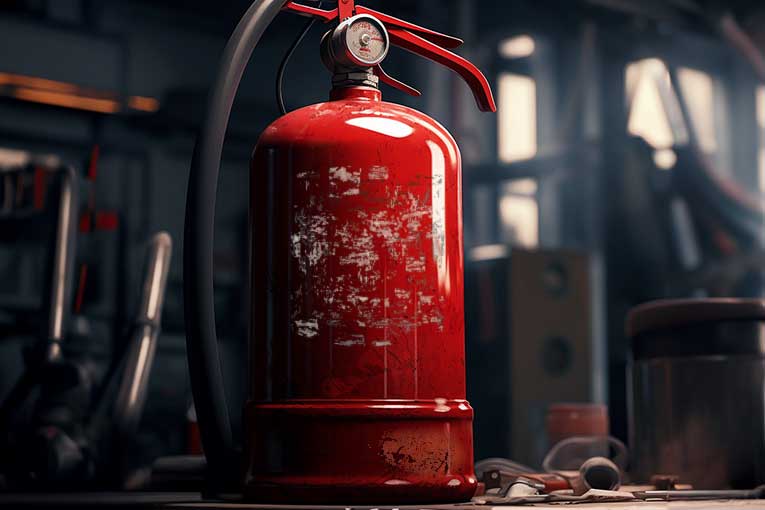
Corrosion

Issue

Corrosion on the cylinder or other parts compromises the structural integrity of the extinguisher.

Effect

Corrosion weakens the extinguisher, making it more susceptible to damage and reducing its ability to withstand the pressure needed for proper discharge.

Suspected of Leaking

Issue 

Evidence of leaking substances suggests a loss of pressure and potential malfunction.

Effect

A leaking extinguisher may fail to discharge its contents effectively during a fire, necessitating immediate replacement to ensure reliability in an emergency.

How Often Should Fire Extinguishers be Inspected?

how often fire extinguishers inspected

Routine inspections are crucial to maintaining the reliability of fire extinguishers, ensuring they function correctly when needed. 

The inspection frequency can be categorised into two intervals:

Monthly Checks

Regular, brief checks by designated personnel.

This is to verify that the extinguisher is in its designated place, the pressure gauge shows adequate pressure, and there is no visible damage or tampering.

Monthly checks help identify immediate issues and ensure that the extinguisher is accessible and operational.

Yearly Inspections by a Fire Extinguisher Engineer

In-depth inspections conducted by a certified fire extinguisher engineer, for example those found in the Institution of Fire Engineers.

This will be a comprehensive examination of the extinguisher’s internal and external components, including pressure tests, to ensure it meets safety standards.

Yearly inspections are critical for identifying potential internal issues, such as corrosion or leaks, which might not be evident during routine checks.

What are the Risks of Using an Older Fire Extinguisher?

older fire extinguishers risks

Using an older fire extinguisher poses various risks, potentially compromising its effectiveness when faced with a fire emergency. 

Here are the key risks associated with relying on an aged fire extinguisher:

Decreased Pressure

Over time, fire extinguishers may experience a gradual loss of pressure, reducing their ability to discharge the extinguishing agent effectively. 

This decline can result from factors like gas leakage or gradual deterioration of internal components.

Corrosion

The internal components of a fire extinguisher, especially the cylinder, are susceptible to corrosion over an extended period. 

Corrosion weakens the structural integrity, making the extinguisher more prone to failure or rupture during use.

Deterioration of Seals and Valves

Seals and valves play a crucial role in maintaining the pressure and integrity of the extinguishing agent. 

As a fire extinguisher ages, these seals and valves can deteriorate, leading to potential leaks and a loss of pressure.

Reduced Extinguishing Agent Efficiency

The extinguishing agent within the fire extinguisher can degrade over time, diminishing its effectiveness. 

This reduction in efficiency may result from factors like exposure to temperature variations or chemical changes within the agent.

Outdated Technology

Older fire extinguishers may use outdated technology compared to more modern counterparts. 

Advances in fire safety technology have led to the development of extinguishers with enhanced features and improved extinguishing agents, providing better protection against various fire types.

Non-compliance with Standards

Fire safety standards and regulations evolve over time, introducing new requirements for equipment.

Older fire extinguishers may not comply with the latest standards, potentially leading to regulatory non-compliance and inadequate fire protection.

How to Dispose of a Fire Extinguisher?

dispose of fire extinguishers

Disposing of a fire extinguisher requires careful consideration to ensure the safe handling of potentially hazardous materials. 

Here’s a guide on how to appropriately dispose of a fire extinguisher:

Check the Extinguisher Type

Identify the type of fire extinguisher, as different extinguishing agents have specific disposal methods. 

Common types include water, powder, foam and CO2.

Contact Local Authorities

Check with your local fire department or waste disposal facility regarding their specific regulations for fire extinguisher disposal. 

Some municipalities organise special collection events or have designated drop-off locations.

Recycling Centres

Certain recycling centres may accept fire extinguishers, as many of the components are fully recyclable. 

Remember to follow local guidelines.

Professional Disposal Services

In some cases, professional hazardous waste disposal services may be necessary for extinguishers containing certain chemicals, such as older foam fire extinguishers. 

Contact local environmental agencies for advice on proper disposal methods.

Conclusion

Knowing how long fire extinguishers last and understanding when to replace them is vital for maintaining a safe environment. 

Regular inspections, proper servicing, and early replacement when necessary ensure that these essential firefighting tools remain effective when needed most. 

Prioritising the longevity and functionality of fire extinguishers is a proactive step towards enhancing overall safety and preparedness in various settings.

Electric Car Fires – Facts & Fiction

Electric cars have become a hot topic, quite literally, in recent years. 

With the rise of these eco-friendly vehicles, myths and misconceptions about their safety have also surfaced. 

One of the most prevalent concerns revolves around electric car fires. 

In this article, we’ll debunk the myths and shed light on the actual facts about electric car fires.

The Myths of Electric Car Fires

Electric Car Fires are Impossible to Put Out

One widespread myth is that electric car fires cannot be extinguished easily. 

This fear stems from the complex nature of electric vehicles, particularly their intricate battery systems. 

However, it’s crucial to understand that modern firefighting techniques have evolved significantly to cope with these challenges.

Firefighters today undergo rigorous training, equipping them with specific protocols and advanced tools designed explicitly for electric vehicle fires. 

These tools include specialised cooling methods that help dissipate the heat generated during a battery fire

Cooling sprays and water-based solutions are utilised to control the temperature and prevent reignition. 

Advancements in fire-resistant materials used in electric vehicles contribute significantly to containing and preventing the spread of fires. 

These materials are engineered to withstand high temperatures and flames, giving firefighters valuable time to respond and manage the situation. 

Contrary to the myth, electric car fires are not insurmountable challenges for trained professionals. 

Through continuous training and the utilisation of cutting-edge equipment, firefighters can effectively tackle electric vehicle fires and ensure the safety of all involved parties.

Electric Car Fires are More Common than Petrol or Diesel Cars

Contrary to popular belief, electric car fires are not more common than those in traditional petrol or diesel vehicles. 

The reality is quite the opposite. 

Electric car fires are not inherently more common; in fact, statistics show that their occurrence rate is lower than that of conventional cars.

Various safety measures are in place in electric vehicles to prevent fires. 

Advanced battery management systems continuously monitor the battery’s temperature, ensuring it operates within safe limits. 

Moreover, electric cars undergo rigorous testing and adhere to stringent safety standards before they hit the market. 

These standards encompass the entire vehicle, including the battery and electrical systems.

Additionally, automakers invest heavily in research and development to enhance the safety of electric vehicles. 

This includes designing batteries with robust thermal management systems, making them more resilient to extreme conditions. 

In the event of a collision, electric vehicles have built-in safety features, like automatic power cutoffs, to minimise the risk of fire.

While any vehicle, regardless of its power source, can catch fire under extreme circumstances, it’s crucial to understand that electric cars are engineered with advanced safety features, making them as secure, if not more so, than traditional vehicles. 

Public safety remains a top priority for electric vehicle manufacturers, and continuous advancements in technology contribute significantly to reducing the already low incidence of electric car fires.

Rain can Cause Electric Car Fires

Another misconception is that rainwater can trigger electric car fires. 

However, this belief is entirely unfounded.

Electric cars undergo stringent safety testing and are equipped with multiple layers of protection to prevent such incidents.
Firstly, electric vehicles feature sealed battery compartments and electrical systems. 

These critical components are shielded from external elements, including rainwater. 

Manufacturers employ advanced engineering techniques to ensure that the vehicle’s electrical elements remain insulated and protected, even in adverse weather conditions.

Moreover, electric car batteries are equipped with management systems that monitor various parameters, including temperature and moisture levels. 

These systems are designed to detect and mitigate any issues related to external factors, such as rainwater. 

Additionally, electric cars are constructed following rigorous safety standards and regulations. 

These standards encompass every aspect of the vehicle, ensuring that it can withstand various environmental conditions without compromising safety. 

Manufacturers conduct extensive testing, including exposure to water and moisture, to validate the vehicle’s resilience under real-world scenarios.

The Facts of Electric Car Fires

Thermal Runaway can cause Electric Car Fires

Thermal runaway can cause fire and explosions

One of the real concerns is thermal runaway.

Lithium-ion batteries, like those found in electric cars, operate by shuttling lithium ions between two electrodes, separated by an electrolyte. 

During charging and discharging, these ions move back and forth, creating an electric current. 

If something disrupts this delicate balance, like damage to the battery or excessive heat, it can initiate thermal runaway.

It can set off a chain reaction of increasing temperatures and accelerating chemical reactions. 

In extreme cases, this can lead to a fire, and is one of the dangers of electric vehicles.

While this might sound alarming, it’s crucial to understand that thermal runaway is a rare occurrence, especially in well-designed electric vehicles.

EV Manufacturers are Working on Preventing Electric Car Fires

Car manufacturers are investing heavily in research and development to enhance electric vehicle safety. 

Electric vehicle manufacturers have made significant strides in bolstering the safety of their vehicles. 

These advancements are not only aimed at enhancing overall safety but also specifically mitigating the risks associated with electric car fires.

Firstly, it’s essential to note that electric vehicles are held to the same rigorous safety standards as traditional Internal Combustion Engine (ICE) cars. 

These standards ensure that EVs provide high levels of protection in the event of a collision, making them as safe as their conventional counterparts.
Manufacturers, in collaboration with independent safety organisations like Euro NCAP, conduct extensive crash tests on EVs. 

These tests simulate various real-life collision scenarios to evaluate the vehicle’s safety features. 

Consumers rely on safety ratings derived from these tests when choosing a new vehicle. 

Remarkably, no EV subjected to these tests has ever set alight due to a crash.

EV manufacturers are investing substantially in preventive technologies. 

These technologies are designed to significantly reduce the risk of electric car fires. 

One notable example is Tesla’s Model Y, the UK’s most popular EV, which achieved the highest safety score awarded by Euro NCAP. 

This achievement underscores the commitment of car manufacturers to ensuring not only the performance and efficiency of their vehicles but also their safety.

Moreover, car manufacturers are implementing advanced thermal management systems. 

These systems help regulate the battery’s temperature, ensuring it remains within safe operating limits. 

Whether through liquid cooling, where a coolant circulates around the battery cells, or air cooling, where fans direct cool air over the battery, these methods effectively dissipate heat, reducing the risk of overheating and, consequently, electric car fires.

Fire Services are Working on Solutions to Electric Car Fires

Fire services globally are proactively addressing the challenges posed by electric car fires.

Fire services have updated their guidelines, emphasising the importance of promptly identifying the type of alternative fuel vehicle (AFV) involved. 

This distinction is vital, as AFVs, especially electric cars, operate silently and can move unexpectedly if not immobilised. 

Firefighters are trained to stop these vehicles safely, often by disconnecting the 12-volt battery or removing the main vehicle fuse. 

Specialised techniques are employed to isolate high-voltage systems, crucial for preventing potential hazards post-collision.

Conclusion

Separating fact from fiction is essential when it comes to understanding electric car fires. 

While there are genuine concerns, the automotive industry, along with firefighting professionals, is actively working to address these challenges. 

As technology continues to advance, electric vehicles are becoming increasingly safe, paving the way for a sustainable and secure future in transportation.