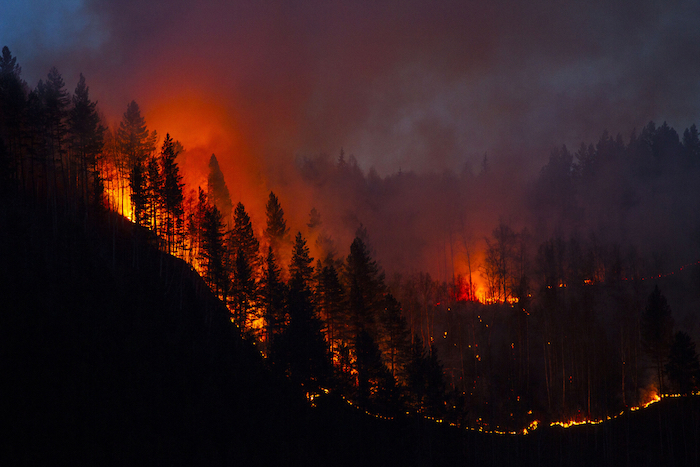
All attempts to douse a fire in an oil field by Oil India Limited (OIL) in the Tinsukia district of Assam have so far failed, over five months after it started. It is now understood to be the longest oil fire in Indian history.
A criminal investigation is now underway to determine the cause of the blowout. as well as the handling of the incident in the weeks after the explosion.
Protests against OIL are still held in the region but rarely evoke political outrage. Social media, though, has been abuzz with photographs and videos of the raging fire at the Baghjan oil well. The fire has caused massive loss to environment and wildlife besides causing huge losses to property in the nearby habitation, causing many more people to be displaced from their homes.
Oil field was operating illegally
A committee set up by the National Green Tribunal (NGT) has reported that the Baghjan oil well and 26 others were being operated illegally in Assam. The NGT is headed by former Supreme Court judge Justice AK Goel.
The body had set up a committee under former judge BP Katakey to look into Baghjan fire incident. The Katakey committee has found that these oil wells did not have mandatory environmental clearance.
The final report of the NGT committee is likely next month.
THE UK’S largest housing associations are expected to spend around £1.2bn on fire safety works in the next five years, after a survey of 14 associations was undertaken.
Inside Housing reported on its survey of the UK’s largest housing associations, which own a combined 762,000 homes, with the survey finding that the companies are projecting fire safety costs between 2020 and 2025 of around £1.19bn.
The news outlet said that the results of its survey ‘show the massive impact’ that the Grenfell Tower fire, and its subsequent inquiry’s first phase report recommendations, are having on housing association finances.
This impact is also being caused by ‘subsequent guidance and legislation’ arising from Grenfell, which are ‘leading to tough decisions on future investment’ for the housing associations.
The works bracketed under fire safety include cladding remediation, ‘intrusive’ surveys and funding interim measures including waking watches, and London based associations ‘with large proportions of high-rise stock’ are ‘expecting to spend the most in the coming years’.
Of the 30 surveyed, only 17 responded, with 14 of these providing ‘an estimate of future spend’. Eight of these London based associations surveyed said they anticipate spending around £958m by 2025, and own over 456,000 homes between them, though ‘dramatically increased spend’ was also expected by landlords outside the capital, with seven other respondents – owning 306,000 homes between them – predicting a spend of £237.9m.
These expected cost increases have come despite housing associations ‘having already spent’ hundreds of millions of pounds on fire safety since Grenfell, with all 17 respondents calculated to have spent – as a group – £463m. Of those surveyed, the London based companies were ‘the major spenders’ with £385.5m, or £724 ‘for every home they own’; while non London associations spent £77.6m, or ‘the equivalent’ of £285 per home.
In 2019/20, £212.5m or 46% of this spending occurred, and some of the associations who responded said they were ‘unable to provide’ figures due to the ‘shifting landscape’ around building safety legislation, while legislative changes such as the Building Safety Bill ‘could further heap costs’, specifically the proposal of building safety managers and building safety cases for all high rise residential blocks.
Inside Housing added that the increased costs will mean associations ‘will have to make tough decisions about where that spend will come from’, with both housebuilding and ‘the zero-carbon agenda’ the ‘likely casualties’. Campbell Tickell partner Sue Harvey said that the government ‘needs to understand that repairs, fire safety, zero carbon and development come out of one pot of money’, and ‘if one went up the others would go down’.
The association’s executive director of business and performance partnerships, Jamie Ratcliff, said in turn that ‘absorbing these very significant building safety costs means we will build fewer affordable homes without the government’s help’.
The funding will help broaden the reach and scale of Remembering When™: A fire and fall prevention program for older adults through the development of updated digital training and resources, which are used by public health and safety officials for implementation in their communities.
“Remembering When has been a highly effective tool for helping educate older adults about ways to lower their risk of fires and falls and in connecting them with resources in their community,” said Andrea Vastis, senior director of NFPA’s Public Education Division. “Receiving this funding will help strengthen the program and broaden its reach, ultimately furthering its positive impact on the aging population’s health and safety.”
Developed in conjunction with the Centers for Disease Control and Prevention (CDC), the Remembering When program is based on 16 core fire and fall prevention messages that support behavior change, with related public education materials for distribution.
Since its launch in 1999, Remembering When has evolved and is currently implemented in the U.S. and Canada by community teams of fire service, elder care, and public health professionals to help reduce the incidence of fire and fall injuries and deaths among residents ages 65 and older.
While this age group comprises 16 percent of the total U.S. population, it experiences a disproportionate percentage of injuries and deaths from fires and falls; nearly one in three seniors (17 million people) suffers a fall each year.
“Fire and EMS now see more fall victims than fire victims, often being called to the same homes repeatedly for falls. This reliance on the fire service presents a unique opportunity for fire and elder care services to work together to provide needed assistance and services to older adults,” said Vastis.
“But in order to more fully and effectively meet those growing needs, the reach, scope, and scale of the Remembering When program must be broadened and strengthened.”
According to Vastis, the newly announced grant funding will allow NFPA over a two-year period to create new educational assets and a process to monitor local program activity and collect key data, and to develop online learning modules that deliver training to greater numbers of fire and elder/public health professionals.
The funding will also work to expand Remembering When messaging to include information around proper use of medication. Year one of the project will focus on development of these resources; year two will focus on pilot testing them.
In order to meet the project’s objectives, NFPA will work with numerous partners for subject matter and technical expertise, as well as program guidance. Partners include the multi-disciplinary Remembering When Advisory Group, the NFPA Educational Messaging Advisory Group, the National Disability Rights Network, the University of Iowa’s School of Public Health, the Fire Protection Research Foundation, and other fire and life safety stakeholders.
For this release and other announcements about NFPA initiatives, research and resources, please visit the NFPA press room.
Today, the Joint Research Centre of the Commission presented the 20th edition of its Annual Report on Forest Fires in Europe, the Middle East and North Africa, covering 2019.
In what was the worst-ever year for forest fires around the world in recent history, over 400,000 hectares (ha) of Europe’s natural land was burnt and a record high number of nature protection areas were affected by wildfires.
According to the findings of the report, climate change continued to affect the length and intensity of fire danger in Europe.
By March, before the ‘fire season’ in most countries, the EU’s total burnt area was already above the annual average of the last 12 years.
However, thanks to better preparedness and more efficient response, the 2019 season was one of the best ever in terms of preventing accidents and loss of life.
Key findings of the report
National reporting from countries showed that Spain, Portugal and Poland recorded the highest number of fires in EU countries in 2019;
Wildfires heavily affected Europe’s ‘Natura 2000‘ protected areas: With 159,585 ha burnt in 2019, nearly half of the total burnt area in the EU occurred within these key biodiversity zones;
The 2019 season was, however, one of the best in terms of preventing accidents and loss of life: Only three casualties occurred due to wildfires in the countries included in the 2019 report.
The EU Civil Protection Mechanism was activated five times for forest fires and upgraded with rescEU in 2019, establishing a new European reserve which includes firefighting planes and helicopters.
The Biodiversity strategy proposed in May as part of the European Green Deal foresees actions to improve the health of European forests and strengthen our resilience to forest fires, and includes the target of planting at least 3 billion trees by 2030.
Commissioner for Innovation, Research, Culture, Education and Youth, responsible for the Joint Research Centre, Mariya Gabriel, said: “For over twenty years the Joint Research Centre has worked with countries across Europe to provide the most up-to-date trends on forest fires, helping prevention efforts and lessening their devastating impacts when fires do occur.
Increasing risk of forest fire
“Changing weather associated with climate change is increasing the risk of forest fires around the world. Knowledge and scientific evidence are central to taking the most effective measures to prevent these fires, safeguard our forests, preserve biodiversity and protect lives.”
Commissioner for the Environment, Oceans and Fisheries, Virginijus Sinkevičius, said: “Europeans have seen horrifying pictures of forest fires on the West coast of the US, Siberia, Australia and the Amazon region.
“But the fires have also hit hard the forests in Europe. Part of the answer to ensure this does not happen at such a harmful scale lies in protecting and managing our forests in a way to reduce their vulnerability to fires, allowing nature to also protect itself.”
Commissioner for Crisis Management, Janez Lenarčič, said: “Data and insights on forest fire risks and outbreaks are essential. They help us in prevention and preparedness, but also in responding more quickly and effectively when disastrous wildfires strike. With rescEU and our reinforced EU Civil Protection Mechanism we stand ready to assist, across Europe and beyond.”
Fore more information on the report and some of its key findings, you can visit the European Commission website here: https://ec.europa.eu/commission/presscorner/detail/en/ip_20_1995
A survey of 111 organisations across the UK carried out by Inside Housing has found that fire safety is the biggest concern facing social landlords in the next 12 months.
Since the Fire Safety Bill was revised the sector has undergone several changes, but landlords now fear that more needs to be done, and the cost of that could leave them with a financial burden.
Of the 111 who took part in the survey, 82% said that fire safety remedial work is one of their top three priorities in the coming year, and just over half said it is the biggest issue in the coming year.
Of course, this will have a significant effect financially on social landlords, with 86% expecting it to cause some impact on them in the next 12 months.
“Government needs to support social landlords”
There is also some criticism for the Government, with 63% of those surveyed saying that not enough financial support is being given to them, especially in an economy struggling because of Covid-19.
As part of the survey, Inside Housing also interviewed Tony O’Neill, director of asset management at Sanctuary Group, who said: “Fire safety costs are going to have a significant impact, particularly with the guidance that’s coming out.
“Bearing in mind that we wouldn’t have allowed for this two to three years ago in terms of reinvestment or strategy going forward. In fact, I personally think it’s going to put quite a lot of housing associations under.”
With the ongoing Grenfell inquiry nearing a conclusion, it is expected that even more changes will be brought on to housing landlords, and it could cause further problems for both tenant and landlord.
Sutphen Corporation, the largest family-owned fire apparatus manufacturer in the the United States, has announced that its new Sutphen Industrial Solutions pumper shattered the industry’s record with a third-party rating of 6,000 gallons per minute from draft.
While officially rated at 6,000 gallons per minute from draft, the industrial pumper is capable of flowing over 6,500 gallons per minute from draft with unmatched abilities to pump from a pressurized source.
“As we continue to innovate and build our industrial portfolio, this record-setting apparatus solidifies Sutphen as a leader in the industrial fire industry,” said Zach Rudy, Sutphen’s director of sales and marketing. “Between our renown pumpers and world-class aerials, we provide our customers with the best options in the industrial fire market.”
Sutphen Corporation ‘a respected leader’
Built on a Sutphen extreme-duty, Monarch chassis, the #304 stainless steel industrial body was manufactured for the extreme conditions found on an industrial fire ground. Complete with a Double Thunder, Hale’s 6,000 gallon per minute mid-ship pump, and a direct-inject foam system, the unit highlights Sutphen’s abilities to integrate innovation into every aspect of its trucks.
“We are proud to have participated in bringing this powerful, high-quality, heavy-duty industrial pumper to the market,” said Jim Kirvida, leader Sutphen Industrial Solutions. “Collaboration between our two like-minded engineering and manufacturing teams resulted in a record-breaking rating of 6000+ GPM, proving Sutphen a respected leader in the industrial fire market.”
Sutphen and its network of dealers are currently demonstrating the unit across the country while it awaits a buyer. The demonstration unit is available for an accelerated delivery.
About Sutphen: Sutphen Corporation is an Ohio-based, privately held, family-owned business that has manufactured the highest-quality, heavy-duty, custom-built emergency response vehicles since 1890. The company’s headquarters are located in Dublin, Ohio, a northwest suburb of Columbus.
Firefighters dedicate years to better understanding fire behavior. No matter the level of training, experience, or skill, firefighters still face circumstances beyond their control that can dramatically alter a fire’s behavior.
With modern fires progressing faster than ever, unexpected changes on the interior can lead to dangerous moments of disorientation. Equipping each firefighter with a thermal imaging camera (TIC) could be the difference between getting into serious trouble and making it out alive.
Today’s structural fires are changing due to the use of synthetic materials in buildings, furniture, and appliances. Beyond quickly reaching flashover, the UL Firefighter Safety Research Institute confirmed in 2007 that fires involving synthetic materials produce more hazardous smoke than their natural counterparts.
The thick, black smoke from today’s structures not only exposes victims and firefighters to more asphyxiants, irritants, and airborne carcinogens but greatly reduces visibility.
Synthetic materials and open floor plans cause modern fires to flashover much more quickly.
Visibility is key when evacuation becomes necessary. Captain William R. Mora of the San Antonio Fire Department conducted a firefighter disorientation study, evaluating 17 incidents that led to 23 fatalities of firefighters between 1979 and 2001.
In each reported incident, firefighters conducting an aggressive interior attack experienced zero-visibility smoke conditions for over 15 minutes. As conditions worsened, members of the company got separated from the handline or encountered tangles, becoming disoriented.
If company integrity is compromised, firefighters become open to potentially fatal events that are beyond their control. Depleted air supply, falling debris, and sudden flashover or backdraft are all very real threats to a disoriented firefighter. Having a TIC on hand can make a life-saving difference when getting out becomes the only priority.
Thermal cameras see through smoke to quickly locate victims and other firefighters
The fire service uses thermal imaging for a growing number of applications varying in complexity. From quickly finding a downed victim during search and rescue to making informed tactical decisions, the introduction of TICs helped firefighters become more efficient and save even more lives.
For all the refined uses of thermal, its most simple benefit remains the most important—TICs see through smoke. Powering on a TIC can instantly create a window through heavy smoke conditions, allowing firefighters on the interior to see landmarks, lines, and crew members.
With the press of a button, the handline can be seen running across the floor and a visible SCBA tank restores company integrity. What may have been a perilous situation suddenly becomes manageable.
A TIC for every firefighter is now a reality.
Historically, equipping each firefighter with a TIC would have been unrealistic. The technology was expensive, and departments would have been fortunate to have a single imager, much less a full set.
Beyond cost, early TICs were bulky and impractical to always carry on the interior. Fortunately, innovations in thermal imaging led to the availability of cost-effective TICs. Compact imagers, such as the FLIR K2, are designed to make thermal imaging readily available to anyone in the fire service.
While it’s still important to have high-performance TICs available for tactical decision-making, the K2’s ruggedness and imaging capability make it possible to outfit each member of the crew with reliable thermal.
Fire departments do everything in their power to provide each company with tools and turnout gear that make the job safer and more efficient. For example, the development of modern SCBA and personal protective equipment (PPE) has allowed firefighters to save countless lives on the interior— as has the introduction of thermal imaging.
Firefighters aren’t expected to share their gloves or boots, and they don’t take turns with a single SCBA mask. This gear is necessary and life-saving, but it can’t guarantee protection when evacuation is the only option. Today’s fires cause disorientation, and the ability to see in zero-visibility conditions is no longer a selective option. It’s time to get a TIC in every firefighter’s hands.
Euralarm, the European association of the fire safety and security industry, has commented on the upcoming delegated act for internet-connected and wearable radio equipment as part of the Radio Equipment Directive.
The comments and proposals are given in view of the activation of the delegated act pursuant to article 3(3) of the RED (d, e and f) and cover the scope of the delegated act, the definition of ‘internet-connected devices’ and the implementation period.
While Euralarm supports the need for increased cybersecurity, the fire and security industry will preferably support a horizontal cybersecurity regulation.
Nevertheless, if embedded in the RED, Euralarm wants to ensure that the technical aspects addressing cybersecurity are relevant for wireless fire safety and security equipment and can work for manufacturers and service providers.
The idea is to include the cybersecurity requirements through a delegated act on Internet-connected and wearable radio equipment. Such an act is a legally binding act that enables the Commission to supplement or amend non‑essential parts of EU legislative acts, for example, to define detailed measures.
Since the essential requirements of the delegated act have been triggered by cases involving toys and other consumer devices, Euralarm believes that the scope of the DA should be limited to the “consumer internet-connected devices”.
Article 3(3) (d) of the RED states that “Radio equipment does not harm the network or its functioning nor misuse network resources, thereby causing an unacceptable degradation of service”.
The term network is not defined in the RED. Applying Art 3(3)(d) to internet-connected devices would create a deviating understanding of network: instead of radio communication network, it is enlarged to the “internet”.
According to Euralarm it is therefore sufficient to enforce Art 3(3)(e) and (f) to ensure that personal data and privacy of the user and subscriber are protected and that the equipment is protected from fraud. This will also reduce the risk of inconsistent and overlapping requirements.
As far as the definition of ‘internet-connected devices’ is concerned, Euralarm believes that a clear definition is crucial for the correct application of this delegated act and that therefore the concept of “directly or indirectly” shall be avoided.
Since ‘internet’ is not used nor defined in RED, Euralarm also proposes to re-formulate this definition to cover radio equipment connected by using any internet protocol. This specifically covers those devices that could potentially present cybersecurity risks.
The definition of a consumer internet-connected device that Euralarm proposes is “any radio equipment, falling within the scope of Directive 2014/53/EU, which is capable to be connected to internet by using any internet protocol and intended to be put into service by a consumer or any other end-user.”
As far as the date of application is concerned, Euralarm proposes a transition period of five years before the requirements of the delegated act become mandatory. This allows enough time for a harmonised standard to become available and cited and for manufacturers to finalise their product design and demonstrate the compliance.
The Riverside Co. has acquired Starfire Systems Inc. and Starfire Extinguisher Inc. in Milwaukee for undisclosed terms.
Starfire provides repeating inspection, repair and maintenance services for existing fire and life safety systems as well as installation services for new construction and retrofits.
The acquisition is an add-on to Riverside’s CertaSite platform, a fire and life safety platform that is committed to building safety and code compliance, the private equity firm said in a statement.
Riverside co looking for further add-ons
CertaSite goes beyond compliance by focusing on partnerships and professionalism while providing customers a simplified and dependable solution to manage the fire protection and life safety systems in commercial buildings, according to Riverside.
“We look forward to scaling this critical platform, building upon the company’s already strong relationships within the Milwaukee market,” said Loren Schlachet, Riverside’s managing partner, in a statement.
To date, CertaSite has acquired 10 fire protection and life safety companies, including ABC Fire Extinguisher Co. in Youngstown, Ohio, and County Fire Protection in Kent, Ohio.
“With this partnership, we look forward to expanding CertaSite’s breadth of capabilities,” said John McKernan, a Riverside principal, in a statement.
“We continue to look for additional add-ons for full-service fire protection companies, specializing in the inspection, monitoring, repair and maintenance and design of fire and life safety equipment including extinguishers, sprinklers, alarm systems, suppression systems and other fire and life safety systems,” McKernan said.
A firework safety campaign has been launched today (20 October 2020) by the Office for Product Safety and Standards (OPSS), working in partnership with the Chartered Trading Standards Institute, The Royal Society for the Prevention of Accidents, the Child Accident Prevention Trust, and the Royal Society for the Prevention of Cruelty to Animals.
Groups, businesses and individuals are encouraged to support the consumer awareness messages, on how to stay safe when using fireworks, by retweeting and posting them on social media, using the hashtag #fireworksafe, or using the shared campaign materials.
Staying safe with fireworks
OPSS has produced safety tips on using fireworks responsibly and considerately and protecting people and animals from harm. Please check and comply with the latest COVID-19 restrictions in your local area. For more information, visit gov.uk/coronavirus.
These are:
Buy fireworks from licensed in store and online retailers
Do not buy fireworks from unknown retailers on social media sites. Remember that the public can only buy Category F2 and F3 fireworks. Check you have enough space to safely use a firework before you buy it. Fireworks can only be purchased by people aged 18 and over.
It is important fireworks are stored safely
When storing fireworks, keep them in their original packaging, dry and away from sources of heat and ignition, and lock them away from children and animals.
Let off fireworks on traditional celebration dates only and adhere to the fireworks curfew
People are more likely to plan to protect pets and vulnerable people if fireworks are let off on traditional dates. The firework curfew is midnight on Fireworks Night, 1am on Diwali, New Year’s Eve and Chinese New Year, and 11pm the rest of the year.
Be considerate to others when letting off fireworks
Let neighbours know in advance when you are planning to let off fireworks, so they can take steps to protect vulnerable people and animals. If you live close to horses, make sure you site your fireworks well away from them and aim them in the opposite direction. Do not let off fireworks if they will disturb nearby farm animals, wildlife habitats, or roosting bats and birds.
Keep animals safe
Dogs and cats should be kept inside and have a hiding place. Give small animals who live outside lots of extra bedding and nesting material to burrow in.
Follow the instructions on fireworks for safe usage
Read instructions carefully and if you do not understand them, do not use the firework. Read all the safety warnings on the firework box so you know important information like how far away people should stand from the firework. Once any debris has cooled down, tidy it up and soak it in water. Then put in a rubbish bag and in the bin.