Increase of forged EWS1 certificates

‘AT LEAST’ 15 further forged EWS1 certificates were linked to Specialist Facade Inspections (SFI), which itself was looked into in more detail by news outlets and industry experts.

Earlier this month, it was discovered that the external wall fire review form for Marseilles House at Century Wharf in Cardiff was fake by flat owner Gareth Griffiths, who had been ‘suspicious’ as ‘when I looked at it, the writing didn’t look great for a professional RICS [Royal Institute of Chartered Surveyors] surveyor’.

When investigated, the surveyor – who did not wish to be named – confirmed she ‘had not carried out the survey or signed the form’, and when rung by Mr Griffiths ‘was horrified that the survey took place with her signature’. SFI was contracted to conduct the survey, but said it ‘only produces a report’ signed off by a third party chartered surveyor for £200, and ‘had also been the victim of fraud’.

Founder Paul Tedstone said SFI found the forged signature on ‘five or six’ other certificates, but ‘could not provide contact details for the third-party surveyor or the name of the company’. He added that the form is a ‘bloody piece of paper’, and that ‘in order to tick that box you need a [qualified person]. None of those accreditations I hold, nor did the business hold’.
Forged EWS1 documents were not checked by RICS

He went on: ‘It was nonsense: you need someone else just to confirm what we already know. Just for the last piece of paper, as I didn’t have the letters after my name to sign it off. There has been weeks and weeks of intrusive surveys. We have done nothing wrong, apart from being a bit naïve. We’re victims too.’

SFI withdrew every certificate containing the false signature, reviewed each case and reissued each certificate, but Wales Online and LBC have reported on its conduct and the fact that ‘at least 15 more’ forged certificates have been linked to it – the new certificates however also have signatures ‘from someone apparently not currently registered to sign the forms’.

The forms, according to RICS, must be completed by a ‘fully qualified member of a relevant professional body’ such as a chartered surveyor or fire engineer, and the new signatures are from a new inspector SFI claims has ‘huge experience’ and is a member of the Chartered Institute of Building (CIOB).

Wales Online reported however that according to the CIOB, this person is ‘neither a current member nor qualified to sign the forms’, therefore ‘invalidating’ the new certificates. David Kennedy, chief executive of property development investment company Columbia Group, told the news outlet SFI had issued his company with forged forms for 15 buildings in London, affecting 1,000 residents.

He ‘started to hear about problems when there was a person trying to get their property remortgaged’, and was asked ‘for help getting an EWS1 form at the beginning of this year’. After getting the replacement certificates, he tried to ‘verify’ the qualifications of the new inspector, and wrote to the CIOB, who said this person ‘is not a chartered member, nor ever has been’.

Mr Kennedy said that ‘what these operators are doing is they’re undermining certain parts of the building profession. There needs to be better guidance on the level of qualification that is acceptable. There should be greater transparency. You have to put some leg work in to get some information’. In response, Mr Tedstone said the person was registered with the CIOB, but the COVID-19 pandemic has ‘caused an administrative error’.

He went on: ‘He is registered with the CIOB. I don’t know anybody better. He’s a very good guy. He rang me and said he’s waiting for a confirmation letter from the CIOB. Huge experience, no question. All I know is he told me it’s not an issue. I had his certificate, and from personal experience I know he’s more than well versed in rain screen cladding.’

SFI, Mr Kennedy pointed out, also has a ‘potential’ conflict of interest because it offers to survey buildings before carrying out any necessary fire safety remediation, which Mr Tedstone denied, stating: ‘We’re a local Welsh company trying to do a good job at half the price. We won the project because we were the most competitive, and by a fair margin.

‘There’s no conflict of interest because we’re totally up front. We want to be part of the solution. Our strategy is to go in, we can do the intrusive survey, we could write the specifications, tender the works, and give us the option of being one of the people to tender the works, because we would have an advantage of knowing the job. Our business model is potentially full circle.’

He said SFI was now ‘taking on three fellows from RICS’, and ‘anybody who has any worry with any certificate that we’ve supplied, I’ll happily pass straight to them, and they can further endorse it. It should be fine. I’m really sorry for any of the hassle or stress that has been brought on any resident. It’s certainly not fraudulent or a financial scam, far from it. It’s naivety on my part, that I really, really want to put right. We are passionate about the problem. We are very passionate about doing the right thing’.

LBC gave further details on its own investigation, noting SFI was set up at the end of last year by Mr Tedstone’s son Joshua, and has inspected over 200 buildings, as well as ‘appear[ing] to be charging anything from £1,200 to £110,000’ for works. LBC spoke to the female surveyor whose signature was forged, who ‘insists she had never heard of SFI before seeing these forms’, with the signatures used – in two versions, with ‘markedly different handwriting’ – not hers.

She also said she has ‘no real expertise’ in fire safety, and ‘wouldn’t know a piece of cladding if it hit me in the face’. Having reported the issue to the police, she is ‘concerned that two months on, no one has come to take a statement’. SFI claims it ‘never knew, or heard of’ this surveyor ‘and we continued to pay for her services until we found out that she, at a point in time, stopped without our knowledge’, but claimed at the start of certificates that ‘the inspection was conducted by and the report prepared under the direction of’ her.

LBC also noted the new signatory is a ‘non charted “applicant member”’ of the CIOB, meaning he has ‘paid to join up, but hasn’t been reviewed for a chartered status’. Another signatory is a chartered member of the Institution of Occupational Safety and Health, which is not an authorised body – and also claims to be an associate member of the Institute of Fire Engineers.

A London resident living in an SFI surveyed building said that this latter individual signed their second certificate, stating that ‘it takes me what 20 minutes to look him up on the internet and the letters after his name, and see that none of the letters qualify him to do this. It’s bleedingly obvious. Form number two – also fake’.

Residents in a Surrey building hired a solicitor who wrote to SFI about his credentials, stating that these do ‘not qualify him to provide’ an EWS1 ‘regardless of him not having inspected the property. In short, it is clear that the purported inspections never took place, the EWS1 certificates provided are either fraudulent or not signed by a suitably qualified person (or both) and the “report” provided is a work of fiction’.

SFI responded to this by saying it was a ‘casualty of a third party breakdown in communication’ and repaid all £14,040 costs for the job back ‘as a gesture of good will’. LBC provided some SFI surveys and certificates to independent chartered fire engineer and IFE fellow Jason Hill, who ‘presented a number of concerns’ from missing information to materials assessments, as well as how ‘two buildings appear to have been assessed comprehensively on the same day some 40 miles apart’.

He stated: ‘It takes time to assess a building, especially where there are several wall systems employed, this can take between a number of weeks and several months depending on the complexity of the property being investigated and the data made available from architect design to as built information and from the fire strategy to the fire risk assessment for the building.’

Asked whether he was ‘confident that they came to the right conclusions’, he said: ‘I’d say check again. The most important aspect of conducting an investigation using scientific principles in the methodology or any other method is to avoid forming an opinion at an early stage. Doing so is likely to create a bias which may prejudice the outcome, known as expectation bias.

‘The work produced is to carefully review all available evidence and data provided by the stakeholders to determine whether the building(s) investigated are a true representation of the build quality throughout the development’. The news outlet also found evidence of two buildings ‘failed’ by SFI but later passed after a new survey by a ‘second, different, suitably qualified surveyor’.

RISC was passed the findings, and said it was ‘currently reviewing concerns raised and any outcome of our investigation will be published on our website’. Further concerns on the conflict of interest included that Paul Tedstone owns cladding company Uniclad Ltd, with a resident of a block in Manchester who discovered the forged signature initially discovered in Cardiff on their form stating he had told her the building had failed, but ‘he could do the work to fix it’.

She said Mr Tedstone ‘said that he could do the survey but that he could also do any remedial work that was required, that raised some alarms in our heads because we thought is there not a conflict of interest here?’. In response, SFI rejected ‘any suggestion’ that it uses ‘inexperienced’ operatives to undertake ‘any aspect of its role’, and ‘all third parties that signed the EWS1 forms were suitably qualified to the best of SFIL’s knowledge and belief at all material times’.

It also claimed it does not produce or sign forms, but provides ‘diagnostic information to suitably qualified third parties that do prepare and sign [the] forms. We are not aware of any buildings that failed which subsequently received a pass’. Finally, it stated that it ‘has not forged’ the surveyor’s signature ‘and there can be no evidence that SFIL did so’.

NIOSH and NFPA announce partnership

NIOSH and NFPA have signed an updated MOU to collaborate on activities related to emergency responder protective clothing and equipment (PPE), and the development of standards concerning first responder safety, deployment, operations, and the protection of emergency personnel.

“The NFPA is a critical partner in NIOSH’s efforts to protect emergency responders from hazards encountered in the line of duty,” said NIOSH Director John Howard, MD.

“Renewing the MOU affords us the opportunity for sustained collaboration over the next decade to improve responders’ safety and health.”

NIOSH is currently involved in the NFPA standards development process for emergency responder PPE so that first responders are protected from physical, chemical, biological, radiological, nuclear, thermal, inhalation and dermal hazards.

NIOSH and NFPA partnership will last 10 years

The new 10-year MOU continues NIOSH participation with NFPA Technical Committees that work on responder organization operations, deployment, training and safety.

“After 9/11, the testing, evaluation, and certification of emergency responder PPE became a national priority. In the days since, each of the organizations involved in this MOU have worked to ensure that responders are protected from occupational exposure and other adverse health and safety challenges that often come with their jobs,” said Jim Pauley, NFPA president and CEO.

“This updated MOU provides benchmarks for our organizations to further cooperate and coordinate on activities, advocacy, and adoption of key documents and programs that are designed to keep responders safe and competent in their roles.”

Highlights of the MOU include participating organizations:

  • working together on technical information and standards concerning performance, testing, validation, use, care and maintenance of responder PPE, as well as safety issues concerning deployment and operations
  • sharing relevant information concerning testing data, research studies, program findings, and standards development to enhance each organization’s efforts and overall responder effectiveness
  • providing insights related to firefighter exposure and acute and chronic injuries, illnesses, and diseases such as cancers, respiratory disease, heart disease and musculoskeletal injuries
  • exchanging recommendations and lessons learned from firefighter fatality investigations to advance the development, adoption, and revision of standards
  • developing death and injury prevention guidance and ways to promote best practices to responder organizations, and, when appropriate, incorporate the information into NIOSH regulations and compliance
  • working to ensure that NIOSH regulations and NFPA consensus standards are adopted by the Department of Homeland Security (DHS) and the InterAgency Board for Equipment Standardization and Interoperability (IAB)
  • incorporating NFPA technical expertise and guidance for long term technology deployment related to emergency responders and their organizations
  • supporting the NIOSH-National Firefighter Registry efforts to expand sources of data for individual firefighter exposure
  • participating in peer reviews for projects and resources related to the above topics

Approximately 1.1 million firefighters in the United States are charged with protecting people and property; on average there are 67 on duty deaths per yearpdf iconexternal icon. This MOU was established so that emergency response organizations and personnel have thorough research, testing, standards, operational strategies, and programming to ensure that personnel can safely and competently perform the all-hazards role that they play in society.

NIOSH is the federal institute that conducts research and makes recommendations for preventing work-related injuries, illnesses and deaths. For more information about NIOSH visit www.cdc.gov/niosh.

Improving fire safety in building refurbishments

Tony Obadipe, Regional Sales Manager at Hochiki Europe, outlines the key issues that surround fire safety in building refurbishment projects.

Several fires within refurbishment projects have made headline news in recent years, most notoriously, the Notre-Dame Cathedral disaster. It seems though these incidents are occurring all too often, and so those present on site during the construction phase, from duty holders through to installers, need to understand the factors that can increase the threat of fire and how to mitigate potential risks.  

Refurbishment work is not only common but also a necessity in some cases. Properties that have fallen into disrepair need to be made safe again, or additional developments and infrastructure are needed to house and sustain our population.

That being said, these projects can come with a high risk of fire if the correct safety measures aren’t adhered to, especially given the potential for large amounts of people to be on site at any one time – all of whom can have various levels of fire safety training.  

UK legislation laws  

In the UK, there are various fire safety laws that vary slightly depending on location, but they all allegedly say the same thing. The full list includes: Regulatory Reform (Fire Safety) Order 2005 – applicable in England and Wales; Fire (Scotland) Act 2005; Fire Safety (Scotland) Regulations 2006; The Fire and Rescue Services (Northern Ireland) Order 2006; and The Fire Safety Regulations (Northern Ireland) 2010. 

Fire safety legislation applies to all non-domestic properties such as businesses, shops, schools, hospitals, church buildings, festival halls, and leisure centres, for example.

It can also apply to housing associations, landlords, student halls of residence, and care homes. This is not an exhaustive list, but it gives an idea of the scale of the need for everyone to understand, apply, and comply with fire safety regulations. 

Each piece of legislation refers to either a ‘duty holder’, ‘appropriate person’ or a ‘responsible person’ but they essentially mean the same thing. This is the person who will be held liable if there are any failings in the fire safety of the building, and the person who ultimately makes the decisions about the requirements for the building. This could be the employer of a business, or a landlord, or the appropriate body responsible for managing a house of multiple occupation (HMO). 

To protect those present and the site itself, it is essential that duty holders constantly update their knowledge to be aware of the various challenges to life safety when dealing with refurbishment projects. 

The refurbishment risk  

To understand this complex topic, we first must understand why fires occur so frequently in refurbishment projects and why they are such high-risk environments. Primarily, this is largely due to the amount of ‘hot work’ that is carried out in properties undergoing refurbishment.

Welding, soldering and flame cutting are all part and parcel of construction, especially in renovations, and all require the use of open flames, the application of heat or friction or processes that generate sparks.  

Although these procedures are necessary, they can greatly increase the risk of fire if the correct safety measures are not taken. In addition, highly flammable materials, such as insulation, are regularly stored on site and can be exposed throughout the development stages while the build is taking place. This increased potential for ignition only increases the risk of fire.   

Access restrictions also pose a threat, as working in confined, difficult or high traffic spaces means that accidents are more likely to occur, especially given that refurbishment projects are busy sites. This risk is increased for jobs under time constraints as workers may resort to carrying out tasks in a rushed manner.  

Therefore, it is vital that workers are both careful around each other as well as around potentially hazardous equipment and make effort to check that it is stored safety when the site is unoccupied. Ultimately, without the appropriate fire safety solutions, high-risk sites are left exposed and the chances of a serious incident increases.   

Minimising the risk 

So, how can we minimise this risk? To start, a more flexible schedule of work with capacity to change dates and push things back to accommodate for unexpected delays can play an important role in reducing the risks as a result of rushed work.

Considering appropriate pricing is also crucial, as businesses that price at lower rates often attempt to compensate this loss by increasing the workload and tightening deadlines for their employees, and so increasing the chances that mistakes will be made or accidents will happen. By considering these simply made changes, duty holders can be assured that the site is operating as safely as possible, and so reducing the opportunity for a fire incident.  

Fire safety solutions  

It goes without saying that investing in the correct life safety solutions is also critical for protecting refurbishment sites against fire hazards. Due to their temporary and ever-changing nature, as well as the lack of regulations, construction sites will commonly have minimal protection in place.

As such, manual devices like rotary bells are often used as the only defence; whereby a member of the team will use the rotary bell to warn others on site of a potential fire. However, this means that once the team members have left the site, there is no system in place to correctly signal if there is a fire.  

For this reason, installing flame detectors is a much more effective way to ensure that projects are well defended. The Hochiki DRD-E conventional flame detector is ideal for use on refurbishments as it is designed to detect flames in internal spaces.

When installed on-site, the device works similar to a point detector but detects flickering flames rather than smoke with a detection range of up to and including 25m. 

For larger refurbishment projects, when versatility comes to the forefront of specifier’s requirements, wireless point detectors like the Hochiki FIREwave detection system offers excellent protection.

The system can be placed temporarily in areas undergoing construction and then once building work is completed and permanent protection is put in place, the wireless system can be easily relocated to defend other areas of need.  

FIREwave is the most flexible and versatile fire detection solution available and is simple to install and maintain, making it suitable for even the most demanding of sites. Employing the latest radio technology, it is vital that signal tests are done prior to use to ascertain whether signal expanders are needed.

However, once the radio survey is completed and optimal locations for the radio devices have been established, FIREwave provides a simple and economic hybrid wireless fire detection system that is user friendly and perfect for protecting refurbishment projects. 

Ultimately, fires that occur during refurbishment work arise mostly due to the storage and use of high-risk tools and materials, combined with a lack of on-site protection, but installing effective and automatic fire safety solutions, such as flame or wireless point detectors, is an effective way to reduce such risks.  

However, life safety devices cannot do all the work as it is also crucial to manage projects effectively by avoiding rushed work and educating workers of the dangers and correct practices that should be followed. If appropriate measures are taken, the safety of the buildings and workers can be maximised. 

BAFE respond to Regulatory Reform Order

The organisation stated, in its response to the consultation on the Regulatory Reform (Fire Safety) Order 20054 [FSO], that there should be ‘greater government guidance’ on competency for ‘essential life safety work’.

In June 2019, the Home Office launched a call for evidence relating to the FSO alongside a government consultation ‘seeking views’ on the FSO, which ‘underpins fire safety in non-domestic premises’, with both employers and business owners being asked for their perspectives. The call for evidence had come as part of the changes being made since Dame Judith Hackitt’s review of building regulations and fire safety was published in May 2018.

An analysis of responses was to be published and ‘inform the government’s next steps’, and the call for evidence ‘complement[ed]’ the Building a Safer Future consultation, which ‘outlines how the government proposes to take forward meaningful legislative reform in the building safety regulatory system’.

Regulatory Reform Order could be amended in areas

In March this year, as part of its announcement on the Regulatory Reform Order, the government published a summary of the responses received in the call for evidence, whereby it ‘invited views on the application of the FSO and sought to identify any changes that might be needed and how they could be best achieved’.

Some respondents identified areas where the FSO ‘could be amended to provide greater clarity’, though most agreed its ‘scope and objectives […] remain appropriate for all regulated premises’. Additionally, most also agreed that the FSO should ‘retain its focus on protecting lives over property’, and that it ‘should continue to provide a framework for a risk-based and proportionate approach to regulating fire safety’.

The government concluded by noting that a consultation ‘will be held later in the year on proposals and next steps’, which was launched in July ‘seeking views on proposals to strengthen’ the FSO and the regulatory framework ‘for how building control bodies consult with fire and rescue authorities’, as well as on how to ‘implement Grenfell Tower Inquiry recommendations’.

Latest1-4

This was open until 12 October 2020, with the government ‘determined to continue to learn the lessons from the Grenfell Tower fire’ as well as ‘reform building and fire safety to ensure that such a tragedy can never happen again’. The consultation’s proposals include strengthening the FSO to ‘improve compliance’, and implementing the inquiry’s first phase recommendations requiring a law change and ‘new requirements’ on building owners and manager of multi occupant residential buildings.

Finally, the consultation proposes that the government ‘strengthen the regulatory framework for how building control bodies consult with fire and rescue authorities and the handover of fire safety information’. That same month, BAFE welcomed the consultation, but called it ‘long overdue’, and it has now provided the response it submitted to the consultation.

BAFE stated that it had demanded ‘greater government guidance on who is considered competent to provide essential life safety work’, with chief executive Stephen Adams beginning by disagreeing that the Article 50 guidance ‘is a sufficient basis for providing guidance’ to responsible persons ‘to support their compliance with their duties’ under the FSO, and BAFE ‘strongly agreed’ that a ‘strengthened legal basis for guidance’ under the FSO is needed, such as a code of practice.

BAFE believes an approved code of practice ‘should be applicable for multiple areas and people’ including responsible person, enforcement and sanctions, fire risk assessments (FRAs), provision of information and competence of providers. Mr Adams added that these areas should be covered by such a code to ensure ‘that all providers of fire protection services and related built environment services are competent to provide them’, both as organisations and individuals.

In turn, he believed that this competence should be third party certificated, either by UKAS for organisations or Ofqual ‘or equivalents’ for individuals, and moving onto responsible persons, he agreed that they should be required to ‘record who they are, the extent of their responsibility under the FSO’, and that their contact information ‘facilitate’ their identification.

Responsible persons ‘need a clearer detail of their responsibilities and guidance as to how they can best be discharged’, and ‘guidance on what is required and what can constitute a defence in law if a building failure occurs’. On the quality of FRAs, BAFE have been ‘ambassadors for the requirement for strong regulation’ of FRA providers ‘for a long time’, and so ‘naturally’ Mr Adams ‘strongly agreed’ that the FSO ‘include a competency requirement’ for assessors and other fire professionals.

He also agreed that the ‘specific representative from the [FRA] provider should be clearly documented within the completed [FRA]’, and BAFE believes FRAs should require ‘evidence of competency’ of the assessor, including experience and qualifications, as well as third party certification of the organisation to ‘demonstrate that they have adequate management systems’, quality assurance, insurance and compliance processes.

FRAs should also require ‘any consultation or guidance received from external bodies, manufacturers etc as part of the assessment process’, and BAFE later ‘strongly agreed’’ that a ‘duty should be placed on all’ responsible persons to ‘record their completed’ FRAs, as ‘whilst onerous, this is a vital life safety action for all commercial/non-domestic buildings which the fire and rescue service should always have access to (as the prosecuting body for the FSO)’.

The organisation also advised that FRAs ‘are commonly misunderstood as being an action that establishes a safe building’, when they are ‘a report of the adequacy of a building’s fire safety at the exact time when it was carried out’. This ‘simple statement is not meant to undermine its significant importance however’, it added, but ‘it does not immediately make a building safe from fire risk’, and actions may be required by building owners or managers to ‘mitigate any identified risk’.

Mr Adams strongly agreed that ‘all’ responsible persons ‘should be required to record their fire safety arrangements’ to acknowledge ‘suitable recommendations’ from FRAs have been ‘followed to mitigate any risk highlighted’. He also added that ‘there are insufficient powers’ for assessors to ensure responsible persons and building occupiers ‘comply with requirements’, and assessors ‘do not consistently have the skills and knowledge to carry out the range of inspections required’.

BAFE ‘strongly’ feels that ‘government intervention is required’ here, ‘stipulating competency requirements instead of putting complete onus’ on the responsible person to ‘nominate competent persons’. This would then open this process ‘back into cost cutting’, and the ‘inevitable outcome of this money saving exercise can cause unnecessary risk to life and property protection’.

On enforcement and sanctions, Mr Adams disagreed that fines of £1,000 or £2,500 (levels three and four) would ‘provide a suitable deterrent’, but agreed that an unlimited level five fine ‘would be’, and that ‘if there are suitable guidelines and instructions about what needs to be carried out, which currently do not exist, then fines must be commensurate with the failure to act accordingly’.

BAFE said that this ‘coincides fully’ with its request for ‘greater supporting guidance’ on the responsible person’s role, which ‘can be used to clarify if legislation has been adhered to’, such as with HSE guidance and health and safety legislation. On competency and UKAS accredited third party certification, Mr Adams ‘champion[ed] the need for levels of competence’, as the FSO refers to requiring ‘suitable maintenance’.

Guidance issued by the Home Office ‘indicates that there is a benefit’ to using third party certificated products ‘for this’, and Mr Adams said that ‘unless all fire safety equipment, including emergency lighting and evacuation equipment, is properly and regularly maintained and updated, especially where there are refurbishments, then any legislation about new construction is worthless’.

Concluding, Mr Adams said implementing third party certificated competence ‘will be hugely beneficial to all fire protection and related construction work’, as ‘the proposals, when implemented, will provide a framework that will protect lives and property’. BAFE said that it and the competency sector ‘demand greater government issued guidance on who is considered competent to provide essential life safety work’ at the same level of HSE guidance.

This can ‘then be used to lawfully judge who was at fault for any safety breaches’ under the FSO, and ‘included in any statutory defence’ – with many buildings not having a ‘dedicated’ fire safety officer, such responsibilities ‘are just a part of another’ member of staff or owner’s duties, so ‘clearer guidance must be issued for quick reference to ensure they remain compliant’.

It ended by noting that ‘stipulating what is required to determine competency can assist in sourcing quality providers to help them meet their fire safety responsibilities with due diligence. Compliance will improve with mandated competency levels that must be adhered to and specified, thus appropriately regulating the industry with no additional cost to [the] government’.

NFCC joins national fight against ‘Zombie Batteries’

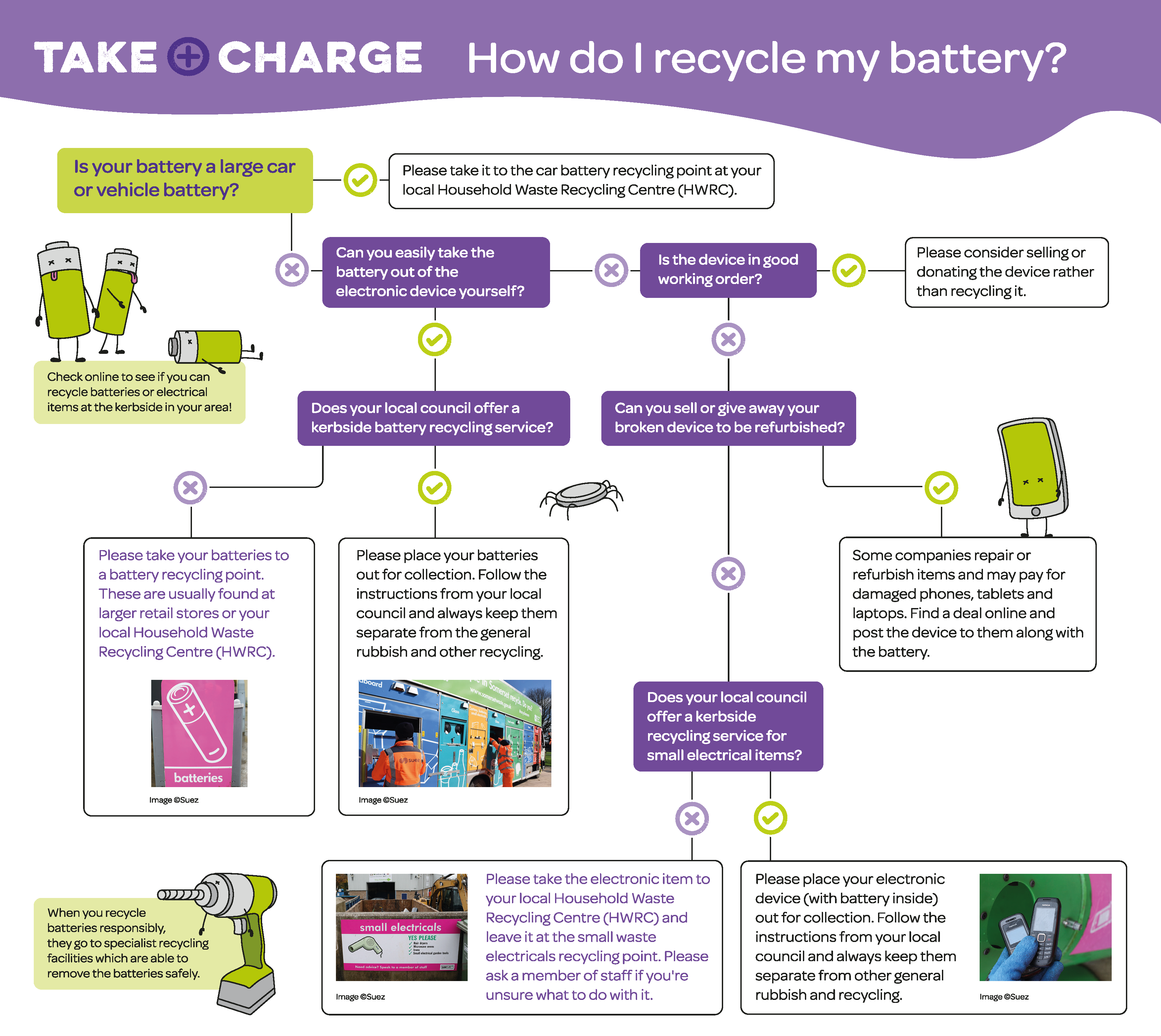
Consumers across the UK are today being urged to “join the fight against Zombie batteries” in a bid to tackle the growing number of fires caused by carelessly discarded dead batteries.

The National Fire Chiefs Council (NFCC) supports the new national Take Charge campaign, which urges consumers to only recycle dead batteries using specialist battery recycling services, and to never throw batteries away alongside general rubbish or other recycling.

Dead batteries thrown away with other waste and recycling, which the campaign refers to as “zombie batteries”, are likely to be crushed or punctured once the waste is collected and processed. Some battery types in particular, like lithium-ion (Li-ion) and nickel-metal Hydride (NiMH), can ignite or even explode when they’re damaged. Once this happens, the batteries can quickly set fire to other materials present in the waste, like paper, leading to serious incidents that put lives at risk.

Although safe to use normally, powerful lithium-ion batteries are typically the most dangerous if they are not recycled properly. These batteries are often found in products like laptops, tablets, mobile phones, radio-controlled toys, Bluetooth devices, shavers, electric toothbrushes, power tools, scooters and even e-cigarettes.

The recycling and waste management trade body, the Environmental Services Association (ESA), which launched the campaign, conducts an annual survey of its members to record the proportion of fires occurring at recycling and waste facilities that are known or thought to have been started by lithium-ion batteries in particular.

Recent data collected by the ESA shows that, between April 2019 and March 2020, lithium-ion batteries alone were thought to be responsible for more than 250 fires at its members’ facilities during the year – or well over a third (38%) of all fires.

Members of the ESA hope that by encouraging the public to recycle batteries responsibly, it will reduce the number of “zombie batteries” present in general waste and recycling, thereby reducing the number of fires in future.

Executive Director of the Environmental Services Association (ESA), Jacob Hayler said: “Unfortunately, the majority of batteries thrown away in the UK at the moment are not recycled properly. Fires caused by carelessly discarded batteries endanger lives; cause millions of pounds of damage and disrupt waste services. We urge consumers to please recycle batteries responsibly by using widely available local battery recycling services.”

Mark Andrews, NFCC Waste Fires Lead and Assistant Chief Fire Officer of East Sussex Fire and Rescue Service, said: “Batteries in household waste and recycling can lead to large scale and protracted fires. These incidents are often very challenging for fire services to deal with and can cause significant disruption to communities. “Many people may not realise the importance of the correct disposal of batteries so this simple advice can make a real difference in preventing waste fires”

Consumers can find out more about the dangers of Zombie Batteries, by visiting the campaign website at www.takecharge.org.uk

942 21814 Battery campaign toolkit HIGH
Credit: National Fire Chiefs

New partnership promises to ‘make consumers safer’

London Fire Brigade has joined forces with a national regulator to reduce the risk to the public from dangerous products which can cause fires, and make consumers safer.

The Brigade and the Office for Product Safety and Standards (OPSS) has strengthened its existing work together by signing a Memorandum of Understanding (MoU) to formalise the process of sharing information. 

The Brigade’s Assistant Commissioner for Fire Safety Paul Jennings and OPSS Chief Executive Graham Russell signed the MoU on Friday (October 9).

The OPSS was formed in 2018 and was welcomed by the Brigade following its years of campaign work for changes to make consumers safer. The Brigade has worked closely with the regulator for consumer products since its inception, including on pushing for a public database of potentially deadly faulty white goods and on its safety review of Whirlpool tumble dryers.

The MoU will allow the Brigade access to a specific area of the database, which Trading Standards and the Health and Safety Executive use, to enable the sharing of intelligence about product safety risk between key stakeholders. 

It has also put in place a formal process for the Brigade’s current practice of notifying the OPSS of fires which could be an indication of a product safety issue – such as fires involving white goods  – and allows the two organisations to work together on what changes are needed as a result.

The Brigade is also looking to work with the OPSS to explore other issues relating to product safety.

Assistant Commissioner Jennings said: “We work very hard to keep people safe and this MoU is a hugely positive step forward in our Total Recalls campaign, which has been calling on the Government to do more to make white goods safer.

Consumers need more awareness

“The OPSS’s remit for product safety also includes smaller electrical goods such as hair straighteners, toasters and chargers, which will support both our prevention work providing home fire safety advice to residents but also our Fire Investigation work in investigating the causes of fires and recording trends or faulty products. 

“Through better information and intelligence sharing as well as improved analysis of threat and risk, we can work more effectively together to improve standards and raise awareness amongst consumers about product safety. 

“There is still lots of work to be done on product safety but this closer relationship with the OPSS will help us work together to reduce the risk to the public from dangerous products which can cause fires, particularly white goods.”

Mr Russell said: “The Office for Product Safety and Standards and London Fire Brigade share a common objective in protecting public safety so it makes sense for us to work in partnership in achieving that goal.  

“This Memorandum of Understanding underlines the partnership working that has already started and makes a firm commitment to continue and increase that support to enable focused enforcement and improve product safety.

“Together we can drive improvements in product safety and save lives.”

FPA and ABI ‘broadly welcome’ FSO proposals

THE FIRE Protection Association (FPA) and the Association of British Insurers (ABI) ‘broadly welcome the proposals’ – in their response to the consultation on the Regulatory Reform (Fire Safety) Order 2005 [FSO] – but believe there are ‘areas’ where the government ‘should go further’.

In June 2019, the Home Office launched a call for evidence relating to the FSO alongside a government consultation ‘seeking views’ on the FSO, which ‘underpins fire safety in non-domestic premises’, with both employers and business owners being asked for their perspectives. The call for evidence had come as part of the changes being made since Dame Judith Hackitt’s review of building regulations and fire safety was published in May 2018.

An analysis of responses was to be published and ‘inform the government’s next steps’, and the call for evidence ‘complement[ed]’ the Building a Safer Future consultation, which ‘outlines how the government proposes to take forward meaningful legislative reform in the building safety regulatory system’.

FPA believe Government should go further

In March this year, as part of its announcement on the Fire Safety Bill, the government published a summary of the responses received in the call for evidence, whereby it ‘invited views on the application of the FSO and sought to identify any changes that might be needed and how they could be best achieved’.

Some respondents identified areas where the FSO ‘could be amended to provide greater clarity’, though most agreed its ‘scope and objectives […] remain appropriate for all regulated premises’. Additionally, most also agreed that the FSO should ‘retain its focus on protecting lives over property’, and that it ‘should continue to provide a framework for a risk-based and proportionate approach to regulating fire safety’.

The government concluded by noting that a consultation ‘will be held later in the year on proposals and next steps’, which was launched in July ‘seeking views on proposals to strengthen’ the FSO and the regulatory framework ‘for how building control bodies consult with fire and rescue authorities’, as well as on how to ‘implement Grenfell Tower Inquiry recommendations’.

This was open until 12 October 2020, with the government ‘determined to continue to learn the lessons from the Grenfell Tower fire’ as well as ‘reform building and fire safety to ensure that such a tragedy can never happen again’. The consultation’s proposals include strengthening the FSO to ‘improve compliance’ and implementing the inquiry’s first phase recommendations requiring a law change and ‘new requirements’ on building owners and manager of multi occupant residential buildings.

Grenfell Tower commemorations

Finally, the consultation proposes that the government ‘strengthen the regulatory framework for how building control bodies consult with fire and rescue authorities and the handover of fire safety information’.

Both organisations noted that while they ‘broadly welcome’ the proposals put forward by the government, ‘which should help to improve fire safety’, there are ‘areas where we believe the government should go further in order to effectively address fire safety issues in the current buildings regulations regime’.

The FPA and ABI noted that it is their belief that ‘the definition of high-risk buildings should go further and include a wider range of buildings’, specifically those 11m or taller and those with vulnerable occupants, such as care homes and schools. The two also ‘strongly believe’ that ‘considerations of risk should not be driven solely by a specific trigger height’, but should ‘reflect the risk and vulnerability of the building and those within it’.

Concerning proposals made about building maintenance, both organisations said that ‘we would like to see the use of independent third-party certification as an indicator of competence and quality for the companies and individuals involved in the maintenance of fire protection equipment and systems’.

On false fire alarms, the FPA and ABI said that evidence ‘demonstrates that the installation of high integrity fire alarms would be a more effective measure to reduce the level of false alarms, as opposed to charging responsible persons or duty holders’. Such alarms mean most fire and rescue services (FRSs) ‘do not require other verifiable information of a fire to respond’, and their use ‘could significantly reduce’ the number of false alarms attended.

This in turn would enable FRSs to ‘focus their resources to actual fires and reduce the damage that occurs’. Finally, the two organisations disagreed that installing sprinklers in buildings ‘should continue to be guided by fire risk assessment’, and ‘are calling for mandatory sprinkler installation in newly built, high risk buildings such as warehouses, care homes and schools, no matter what the height of the building’.

Kings Secure Technologies acquire ventilation experts Silver Group

Kings Secure Technologies (KST) today announced that it has signed a definitive agreement to acquire Luton-based supplier of fire safety systems, smoke ventilation and security technology solutions, Silver (UK) Ltd T/A Silver Group.

Bob Forsyth, Chief Executive Officer of Kings Secure Technologies stated: “KST has been a leader in the Fire & Security sector for over 50 years – our proposed acquisition of Silver Group will further expand this position.

“This combination has tremendous benefits for both companies, our customers, and the industry. Our exciting plans for the future will give us the capacity to compete in the innovative world of Fire & Security solutions at pace and scale.”

Silver Group will remain headquartered in Luton, Bedfordshire with Mario Vaianella as Business Lead. Commenting on the acquisition Mario said: “We look forward to building even better services in the future for our customers, with the backing of Kings’ resources and reach.

“Moving forward, we expect to combine our core strengths with Kings’ deep industry expertise in verticals like financial services, utilities, public sector and datacentres. I would like to take this opportunity to thank Sergio De Michele for the fantastic business that he has built over the last 15 years and to wish him every success for the future.”

KST was advised on the acquisition by Squire Patton Boggs’ Leeds Office, led by Senior Associate Louise Parker and Partner Paul Mann.

AMA Research forecast 9% decrease in Passive Fire Market

AMA Research has released a report this morning that has forecasted a dip in the Passive Fire Market this year.

During 2020, the Passive Fire market is expected to suffer a major downturn due to Covid-19 and the accompanying adverse effects upon construction activity, economic outlook and business confidence. For these reasons, the market is forecast to dip by 9% over the course of the year.

Prior to 2020, the market experienced a period of consistent growth, increasing in value terms by 11% between 2015 and 2019. Much of this can be attributed to a positive performance in various sectors of the non-residential construction industry, such as commercial offices, infrastructure and leisure/entertainment.

The market is expected to remain heavily dependent upon trends in construction output, especially for non-residential applications. The present Government’s intention to invest in infrastructure projects via its Getting Building Fund should provide some market impetus in the short term.

In the residential sector, new regulations are being introduced aimed at rectifying problems identified in ‘The Hackitt Report’ which followed the Grenfell Tower disaster. The Fire Safety Bill of March 2020 covers fire safety in residential dwellings and has created new areas of responsibility and accountability. More stringent regulations are also expected to affect the wider industry, as the pressure continues to grow upon manufacturers and specifiers alike to provide safer and more fire-resistant environments.

Some positives for Passive Fire Market

Michelle Turner, Market Research Analyst at AMA Research, comments “positive performance in key end use sectors pre-2020 helped bring a spurt of growth to the Passive Fire Market. These same end use sectors are now experiencing detrimental effects as a result of COVID-19 and investment has tightened. Supported by the very need of the products found within this market, and driven by further calls for tighter legislation and stricter accountabilities as a result of the Hackitt Review, the Passive Fire Market looks set to remain relatively strong as fire safety remains paramount, helping to keep the boat steady in such adverse conditions.”

Overall, the longer-term scenario for the passive fire protection market remains mixed. Much of this will depend on how well the UK emerges from the various political and economic challenges posed by Covid-19, as well as what form Brexit will eventually take. Growth is projected to return to the market after the downturn experienced in 2020. Between 2021 and 2025, market value is forecast to rise by more than 11%.

For more information, visit the AMA Research website: https://www.amaresearch.co.uk/report/passive-fire-2020/

Fraport Aviation Academy teams up with STHAMER

Fraport Aviation Academy has announced a new partnership with STHAMER, one of the leading researchers, developers and producers of foam fire extinguishing compounds, as it prepares for stricter European legislative requirements, develops safer aviation foam training, and tries to decrease the overall impact of fire intervention on the environment and health of firefighters.

Growing environmental awareness and the related requirements are becoming increasingly challenging for the field of firefighting, but they also promote the development of environmentally sound technologies and products.

This particularly affects firefighting with foam agents; there is a push to replace the currently most-used foam agent worldwide, AFFF (Aqueous Film Forming Foam), with Fluorine-Free Foam, which has been developed to avoid issues with recent European regulations on fluorine-containing chemicals. 

AFFF is known for its high performance, which is based on fluoro-organic compounds such as fluorosurfactants and fluoropolymers. As these chemicals make foam bubbles fuel repellent, AFFF has proven to be very efficient at extinguishing chemical and petrochemical fires.

However, apart from its lack of biodegradability, it poses hazards to health and the environment, and so its use is going to become more and more limited by both legal restrictions and the fear of liability issues following AFFF-use.

Fluorine-Free Foam agents have been known for a long time, and under the pressure on AFFF have improved significantly and are now able to yield a fire performance similar to AFFF if properly applied. 

Fraport Aviation Academy and STHAMER have wealth of experience

Fraport Aviation Academy provides training for airport firefighters based on several European, non-European and national standards and regulations, which all require safe and realistic training with all the available extinguishing agents. 

“Although our training field is well-equipped for training with AFFF, we have decided to use Fluorine-Free Foam as the safer alternative. It not only preserves the environment and the health of the training participants, but prepares them for the future,” said Thomas Uihlein, Director of Aviation Academy.

The new generation of foams require the development of new extinguishing/application methods and tactics to maximise their extinguishing capabilities, which can only be carried out through testing. The partners will work together to develop these tactics, increase awareness of raising environmental demands, and create better understanding of the new generation of Fluorine-Free Foams.

 
Fraport Aviation Academy and STHAMER both have a long tradition and huge experience in their respective fields. Outstanding theoretical knowledge and practical experience set the foundation for the development of new products, procedures and guidelines. The partners are committed to increasing firefighters’ knowledge of Fluorine-Free Foam and helping them understand how to best apply this new foam type in order to maximize results.

The companies already began to pursue this goal last week, when they prepared the first lecture and presentation for representatives of the Slovene firefighting community. At the same time, they have also begun to develop new training courses for aviation firefighters in order to fill the identified knowledge gap and equip firefighters with better skills for the future.