Fire doorset testing: Why integrated fire resistance and smoke leakage testing matters

Peter Barker of Element Materials Technology explains how integrated fire doorset testing helps manufacturers demonstrate fire resistance, smoke leakage performance and prepare for future EN classification requirements

Fire-resisting doorsets play an important role in compartmentation, helping to limit the spread of fire and smoke throughout a building. Fire resistance has traditionally been perceived as the primary performance characteristic for fire doors, but smoke control is coming into sharper focus when assessing how a doorset performs as a complete assembly.

The planned withdrawal of BS 476 classifications from Approved Document B in September 2029 and adoption of EN-based classification is prompting manufacturers to review how fire and smoke performance is evidenced and classified.

For many manufacturers, that means taking a more joined-up approach to testing, combining fire resistance and smoke leakage programmes to build a clearer picture of overall doorset performance.

Why fire doorset testing is changing

Smoke leakage testing has traditionally focused on sealing systems fitted to the head and jambs of a doorset.

While that approach remains aligned with the current regulatory guidance for smoke control doors, there is now greater attention on understanding the performance of the complete assembly, including how smoke may pass through gaps at the threshold.

More recent guidance, such as BS 8214:2026 has encouraged wider consideration of threshold sealing and the contribution that the bottom gap can make to smoke leakage.

This reflects a broader move towards assessing the complete doorset rather than individual components and ensuring performance clearly links to realworld applications.

Smoke leakage testing and complete doorset performance

Many organisations still approach smoke leakage testing and fire resistance testing through separate programmes. There can be good reasons for working in this way. Product development rarely follows a straight line and designs can evolve.

However, the risk of working in this way is that important design details may be missed that need to be evaluated for both fire and smoke performance characteristics.

The result is that when smoke leakage testing has been carried out on one design and fire resistance testing on another, additional work may be required to establish how those results apply to the final doorset being offered to the market.

The process can become even more complicated when multiple product variations, sizes or hardware options are involved. Manufacturers may find themselves managing several test reports, assessments and supporting documents to demonstrate that a doorset can deliver both fire resistance and smoke control performance.

Benefits of integrated fire doorset testing

Planning smoke leakage and fire resistance testing together in a coordinated programme reduces duplication, testing schedules and project management activities. It can also help manufacturers build a more coherent technical package while reducing the risk of gaps emerging later in the process.

This becomes particularly valuable when results are intended to support extended field of application reports and classifications using the EN 13501-2 framework for doorsets. Integrated programmes can also provide greater confidence when supporting future product developments, particularly where manufacturers plan to introduce additional sizes, hardware arrangements or design variations.

Integrated testing at Warringtonfire Birchwood

Demand for more joined-up testing programmes is one of the reasons Element has expanded its smoke leakage testing capability at the Warringtonfire Birchwood facility. The facility forms part of Element’s £24 million investment in fire testing infrastructure and was opened in January 2025 to support growing demand for construction product testing.

The site includes an indicative furnace for small-scale rapid testing, as well as two horizontal furnaces, two vertical furnaces and 18 preparation bays including confidentiality shields, providing capacity to support a broad range of testing requirements.

Dedicated witnessing facilities and meeting spaces also allow manufacturers to work closely with technical specialists throughout a programme. It also includes a solution that enables both fire resistance and smoke leakage testing from a single test buildup, providing manufacturers with performance data more efficiently.

The addition of smoke leakage testing allows manufacturers to access both fire and smoke testing for doorsets through a single facility and technical team. Alongside testing, Warringtonfire also provides support with technical assessments, extended field of application reports and classification services, helping manufacturers build a clearer route from testing through to the final evidence package.

Preparing for future fire doorset classification

Establishing the fire resistance performance of doorsets remains fundamental, however organisations are increasingly being asked to demonstrate how complete doorset assemblies perform across a range of characteristics, including smoke control.

Testing is also being considered alongside other conformity assessment activities, including sampling, factory production control and audit testing which are designed to provide added assurance of product performance and form the basis of accredited third-party certification schemes, such as Q-Mark and Certifire.

The Warringtonfire-Birchwood facility provides Fire doorset testing

Manufacturers are being asked not only to demonstrate how products perform, but also how that performance is evidenced and maintained throughout the supply chain. Early engagement with testing specialists is also important.

By discussing intended applications, certification objectives and future product development plans before a programme begins, manufacturers can identify potential limitations and opportunities much earlier in the process.

In many cases, this helps avoid additional cost, project delays and unplanned testing further down the line. By considering fire resistance and smoke leakage together from the outset, organisations can simplify assessment and classification activities while building stronger foundations for future product development.

Supporting manufacturers from fire doorset testing to classification

The Warringtonfire Birchwood facility provides fire resistance testing, smoke leakage testing, technical assessment, extended field of application and classification support from a single location.

Whether the objective is supporting a new product launch, extending an existing product range or preparing for future classification requirements, Warringtonfire’s technical specialists can help develop testing programmes aligned with commercial and compliance objectives.

To find out more about Warringtonfire’s fire resistance and smoke leakage testing services at Birchwood, visit warringtonfire.com to discuss your requirements.

Is the safety of fire suppression systems considered in BESS hazards?

In today’s era of large-scale energy storage deployment, fire safety is no longer simply a matter of “whether a fire can be extinguished.” When a lithium-ion battery goes into thermal runaway, it releases large quantities of flammable gases, including hydrogen, carbon monoxide and methane.

When these gases mix with air and accumulate within confined spaces such as BESS containers, they can reach explosive limits. Once that happens, any ignition source can trigger a violent explosion.

However, one risk that has long been overlooked is that the fire suppression product itself can become the ignition source for an explosion.

Conventional fire suppression systems can become ignition sources

Conventional fire suppression systems—such as gas systems, CO₂ extinguishers and FK-5112 systems—typically contain high-pressure vessels, solenoid actuators and electrical tubing.

In the event of flammable gas accumulation inside an energy storage enclosure, if these devices activate or malfunction, their internal electrical contacts, motor operation and high-pressure discharge can generate electrical arcs, high temperatures or mechanical sparks—potentially igniting the surrounding flammable gas atmosphere.

In other words, a fire suppression system without explosion-proof design can be more dangerous in an energy storage explosion scenario than the fire itself.

Are aerosol fire suppression systems suitable for hazardous BESS environments?

Aerosol fire suppression systems have become one of the commonly used fire protection solutions in BESS due to their non-pressurised design, simple installation and maintenance and environmental benefits. So, the question is: how do aerosol units perform in potentially explosive atmospheres?

If we look at the design standards for aerosol systems, not all aerosol products are automatically suitable for use in hazardous explosive areas:

EN 15276-2:2019—Fixed firefighting systems—Condensed aerosol extinguishing systems—Part 2: Design, installation and maintenance—Clause 4.3 explicitly states: Where aerosol generators are used in potentially explosive atmosphere, the compatibility of the generator to the atmosphere for the determined lifetime should be assessed according to ATEX directive 2014/34/EU[5].

ISO 15779:2011—Condensed aerosol fire extinguishing systems—Requirements and test methods for components and system design, installation and maintenance —General requirements—Clause 4.6 similarly states: Under certain conditions, the potential for explosive atmospheres may exist. Areas where such potential may exist are classified as hazardous. Condensed aerosols may be used in hazardous areas subject to the manufacturer obtaining the specific listings and approvals for such areas from the appropriate authorities.

Only when an aerosol unit has obtained the necessary approval for use in explosive atmospheres can it be installed in BESS. This is likely a design requirement that has been overlooked within the industry.

Explosion-proof fire suppression design is becoming critical for energy storage safety

Energy storage safety is a complete, multi-layered defense: it requires preventing thermal runaway, controlling flammable gas accumulation and—most critically—ensuring that the fire suppression equipment that activates under accident conditions is itself safe and reliable.

With their non-pressurised design, arc-free operation and modular construction, aerosol fire suppression systems—after obtaining explosion-proof certification—are a fire protection solution worth prioritising in energy storage applications.

Energy storage safety is no longer just about “whether the fire can be put out.” Under the most severe accident conditions, whether the fire suppression product itself remains safe and operational is what designers should consider most. An effective system design is one that strictly follows the fire suppression system’s design standards.

Advanced fire protection systems for battery storage, offshore wind and critical infrastructure

HAFEX CEO Ufuk Can Günaydın discusses how advanced fire protection systems are evolving to support battery energy storage, offshore wind, marine operations and critical infrastructure in increasingly complex risk environments

As industries accelerate investment in renewable energy, electrification, critical infrastructure and offshore operations, fire protection requirements are becoming increasingly complex.

From Battery Energy Storage Systems (BESS) and offshore wind turbines to marine vessels, high-risk environments require suppression systems designed specifically for operational demands that conventional solutions may not fully address.

In this context, HAFEX, a fire protection engineering company specialising in suppression technologies for technically demanding sectors, develops and manufactures fire protection systems with a focus on reliability, certification and performance in mission-critical environments.

Led by Fire Engineer and CEO Ufuk Can Günaydın, the company has expanded internationally by developing sector[1]specific solutions tailored to challenging operating conditions, including offshore environments, battery storage installations, telecommunications infrastructure and military assets.

“The key factor has been our ability to combine engineering expertise with sector-specific fire protection solutions,” Günaydın tells IFSJ. “These industries require more than standard fire suppression; they demand reliability, certification, adaptability and a deep understanding of operational risks.”

Fire protection strategies for battery energy storage systems

As renewable energy deployment accelerates globally, HAFEX has identified BESS as a major strategic growth area.

“BESS applications are one of the most important focus areas for us,” says Günaydın. “Lithium-ion battery fires behave very differently from conventional fires, especially because of thermal runaway and the risk of re-ignition.”

To address these challenges, HAFEX has developed aerosol and clean-agent suppression technologies designed for rapid activation, early-stage suppression and protection within enclosed battery environments.

The company also places emphasis on system integration, detection and risk-based design, aiming to reduce fire spread and support safer long-term operation of infrastructure.

Fire protection challenges across offshore wind and marine infrastructure

Marine and offshore environments represent another major focus area for HAFEX, particularly as offshore wind development continues to expand globally.

“Offshore and marine environments are challenging because fire protection systems must operate under harsh conditions such as vibration, humidity, saltwater exposure, limited access and extreme weather,” Günaydın explains.

For its part, HAFEX has developed systems incorporating real-time fire detection, continuous temperature monitoring and daily reporting of environmental changes to support early risk identification.

The company protects wind turbine risk zones separately, including nacelles, transformers and electrical cabinets, allowing more targeted suppression and risk management.

This approach has already been tested in operational environments. According to HAFEX, seven discharge cases have been recorded within installations for Enel Green Power Mexico across more than 300 Siemens Gamesa wind turbines, with three confirmed fire incidents successfully extinguished.

Following these deployments, the company has expanded further into the Asia-Pacific region, where it has reported protecting more than 400 offshore wind turbines across multiple global turbine brands.

Fire suppression solutions for critical electronic infrastructure

Meanwhile, in environments containing sensitive electronic infrastructure, fire suppression requirements differ significantly from conventional industrial settings. The priority is not only extinguishing fire quickly but doing so without damaging critical assets or disrupting operations.

“For sensitive electronics, the goal is not only to extinguish the fire but also to protect the equipment and avoid damaging the electronics,” says Günaydın.

Accordingly, HAFEX manufactures a certified strontium-based aerosol suppression system designed to avoid the conductivity issues that potassium-based extinguishing agents faces, particularly strontium-based aerosols has no hydrophilic characteristics.

The company proves that it’s clean and electrically non-conductive suppression technologies are suitable for data centres, server rooms, electrical cabinets and telecommunication systems.

HAFEX also reports protecting more than 4,000 4G and 5G base stations globally. “Our approach focuses on fast detection, targeted suppression and minimal residue—nearly none—which allows critical systems to remain protected without causing secondary damage,” Günaydın explains.

Fire protection requirements for defence and military applications

HAFEX also supplies fire suppression systems for naval and air force applications, where reliability and compliance requirements are significantly more demanding than in many commercial projects.

“Defence applications require a much higher level of reliability, durability and technical compliance,” says Günaydın. “Systems must perform under vibration, shock, restricted space, temperature variation and demanding operational conditions.”

Because defence platforms often involve mission-critical assets, fire protection systems must be engineered to function consistently under extreme operational stress.

In that respect, its defence-focused aerosol generators incorporate three detection and activation mechanisms within a single unit, alongside self-activation capability at 300°C.

Preparing for future fire risks

Looking ahead, HAFEX sees one of the biggest challenges as managing fire risks associated with rapidly evolving technologies. “The biggest challenge will be protecting new technologies before risks become widespread,” Günaydın explains.

Electrification, automation, renewable energy infrastructure, data centres and high-density battery systems are all creating new fire scenarios that legacy suppression technologies may not fully address.

At the same time, they are creating new opportunities for manufacturers capable of delivering specialised and application-specific solutions. “We believe the future will require smarter, more compact, environmentally responsible and application-specific suppression systems,” says Günaydın.

Li-ion BESS fire safety standards: how off-gas detection is reshaping battery safety regulations

As lithium-ion Battery Energy Storage System (BESS) deployments accelerate worldwide, Honeywell explains how evolving Li-ion BESS fire safety standards and off-gas detection technologies are transforming thermal runaway prevention and regulatory compliance

The global stationary lithium-ion (Li-ion) Battery Energy Storage System (BESS) market is entering a period of rapid expansion. Driven by net-zero commitments, grid modernisation and surging energy demand linked to AI infrastructure and data centres, the sector is expected to grow at more than 18.5%  annually through 2034, according to Global Market Insights.

But as deployment accelerates, so too does scrutiny of one of the sector’s biggest risks: thermal runaway.

Until recently, the stationary BESS industry operated in a relatively underdeveloped regulatory environment, despite the growing use of large-scale lithium-ion battery systems in utilities, data centres, telecoms and commercial infrastructure.

That began to change in 2020 with the introduction of new off-gas detection technologies capable of identifying electrolyte solvent vapours released before thermal runaway begins.

These systems represented a significant shift in fire safety strategy. Rather than relying solely on conventional fire suppression, ventilation or flammable gas detection, the industry began focusing on earlier intervention.

This technological development has since influenced a wave of new fire safety standards, product certifications and building codes aimed specifically at Li-ion BESS risks.

For fire safety engineers, OEMs, system integrators and BESS operators, understanding this evolving regulatory landscape is now critical to ensuring compliance and future-proofing installations.

Why Li-ion BESS thermal runaway demands a new fire safety approach

Thermal runaway remains the defining fire hazard in lithium-ion battery systems. Before thermal runaway, lithium-ion cells  typically vent trace amounts of electrolyte vapours and volatile organic compounds (VOCs). Detecting these early warning signs can provide a critical intervention window (in some cases up to 30 minutes) to isolate affected batteries, stop charging and activate ventilation.

This shift from reaction to prevention is now being embedded into standards worldwide.

How NFPA and UL standards are reshaping Li-ion BESS fire safety

The US-based National Fire Protection  Association (NFPA), whose standards are widely referenced globally, has been central to this regulatory evolution.

NFPA 855 has become the cornerstone standard for stationary energy storage installations. The updated edition introduced stronger requirements. Notably, Annex G of NFPA 855 explicitly recognises the limitations of Lower Explosion Limit (LEL) sensors and battery voltage monitoring as thermal runaway safeguards.

Instead, the guidance highlights off-gas monitoring as one of the most effective methods for early detection, stating that cell-level detection close to or inside battery modules provides the most reliable pre-thermal-runaway warning.

The standard also notes that early detection can enable electrical isolation of affected cells, potentially stopping overheating before escalation.

NFPA 75 addresses lithium-ion battery fire risks in data centres

The rapid growth of AI and hyperscale data centres has increased reliance on lithium-ion Uninterruptible Power Supplies (UPSs), bringing new fire risks into critical digital infrastructure.

Reflecting this, the 2024 edition of NFPA 75, covering fire protection of information technology equipment, introduced off-gas detection requirements for Li-ion UPS systems for the first time.

The standard specifies that approved systems must monitor for electrolyte vapour released prior to thermal runaway and be installed according to manufacturer instructions.

Importantly, NFPA 75 also clarifies that conventional flammable gas sensors are not suitable substitutes. At early off-gas stages, released vapours occur only in trace concentrations – often at ppm or ppb levels – far below thresholds designed for explosion prevention.This means specialised off-gas detection is necessary.

NFPA 76 strengthens Li-ion battery fire safety for telecom facilities

Similar revisions were made to NFPA 76, which governs telecommunications facilities.

The 2024 update requires approved systems to monitor electrolyte vapour release in battery installations above 20kWh where batteries are grouped within close proximity.

Upon detection, systems must automatically stop charging affected batteries and disconnect them from load.

Again, the standard reinforces that traditional flammable gas sensors are insufficient for thermal  runaway detection.

NFPA 400 ventilation requirements for Li-ion BESS fire safety

The NFPA 400 Hazardous Materials Code (2025) adds another important dimension, requiring exhaust ventilation systems to account for the density of potential vapours released from hazardous materials.

Off-gas detection systems can support compliance by automatically

triggering ventilation when electrolyte vapours are detected.

Li-ion BESS product certification evolves with fire safety standards

Alongside installation standards, product certification requirements are becoming more rigorous. The recently revised UL 2075 Gas and Vapor Detectors and Sensors standard introduces updated requirements covering detector design, construction and performance.

For off-gas detection manufacturers, this creates a clearer pathway for third-party validation of systems designed to detect lithium-ion electrolyte vapours, hydrogen and carbon monoxide.

How insurers are driving higher Li-ion BESS fire safety standards

Insurance providers have also emerged as influential drivers of BESS safety best practice.FM Global’s Property Loss Prevention Data Sheets 5-33, widely referenced by industrial operators and insurers, provide guidance for the design, operation and protection of stationary Li-ion BESSs.

The 2023 revision introduced new recommendations for thermal runaway prevention. Section 2.5.3.3 calls for early intervention systems capable of automatically and electrically isolating affected batteries when cell temperatures exceed thresholds and VOCs indicate pre-thermal[1]runaway venting.

The guidance requires FM approved VOC detectors which the new FM Approvals Standard 6540 fulfils with the establishment of dedicated testing and verification criteria for off-gas detectors certification.

This reflects growing insurer demand for independently verified detection performance in high-risk energy installations.

Why early off-gas detection is becoming central to BESS fire safety

Europe has also been active in formalising guidance around lithium-ion battery fire risks.The UK’s Fire Industry Association (FIA) was among the earliest organisations to formally endorse off-gas detection.

Its 2020 guidance on Li-ion battery fires concluded that systems capable of detecting low-concentration off-gases can provide early warning of impending thermal runaway and trigger shutdown systems to electrically isolate battery racks before escalation.

It also emphasises strategic sensor positioning to account for cooling airflow and the use of reference sensors to reduce false alarms.Meanwhile, the UK Fire Protection Association’s Need to Know Guide RE1 recommends early detection of off-gases or electrolyte vapours for critical and significant BESS installations, linked directly to shutdown and disconnection systems.

Together, these documents signal a broader European shift toward integrating early gas detection into battery fire protection strategies.

How local fire codes are strengthening Li-ion BESS safety requirements

Beyond standards bodies, regional building and fire codes are increasingly codifying these requirements. Among the earliest examples was the 2022 Connecticut State Fire Safety Code, which introduced provisions requiring systems capable of detecting electrolyte vapours at the start of battery venting, automatically shutting down affected BESS racks, transmitting fire alarm signals and activating mechanical ventilation.

Austin City Council’s 2024 Technical Building Codes, effective from July 2025, include similar requirements. For lithium-ion BESS installations above 20kWh, systems must include off-gas detection that both operates independently from the Battery

Management System (BMS) and identifies the affected rack. These provisions suggest local codes may act as regulatory accelerators, particularly in jurisdictions with fast-growing battery deployment.

New research supports off-gas detection for Li-ion BESS safety

Academic and industry research is also reinforcing the importance of early detection. A DNV study found that off-gas detection combined with automated shutdown protocols can prevent thermal runaway progression.

“Importantly, NFPA 75 also clarifies that conventional flammable gas sensors are not suitable substitutes.”

Separately, a 2024 study showed that commercial VOC sensors consistently triggered during cell venting events, even in large battery packs.

Research supported by UL Research Institutes and ESRI is also exploring improved off-gas monitoring in BESS applications, suggesting standards may become more prescriptive.

So, the stationary lithium-ion BESS sector is no longer operating in a regulatory vacuum Across North America and Europe, fire safety standards, insurer requirements and local building codes are converging around a common conclusion: early detection of electrolyte vapours is essential for mitigating thermal runaway risk.

For developers, operators and manufacturers, this means compliance is no longer simply about installing suppression systems or meeting baseline fire codes. It increasingly requires a proactive safety architecture built around prevention, early warning and automated intervention.

Supporting Li-ion BESS compliance through early off-gas detection

Honeywell’s Li-ion Tamer has emerged as one of the best-known systems designed specifically to address the early detection requirements now referenced across multiple standards and guidance documents.

Unlike conventional flammable gas detection, Li-ion Tamer is engineered to identify trace levels of electrolyte vapours released during the earliest stages of battery cell failure, before thermal runaway occurs.

This enables operators to respond earlier through shutdown, electrical isolation and ventilation strategies, helping reduce the risk of escalation. The system has been referenced throughout the industry’s regulatory evolution because it addresses a critical gap in traditional battery fire protection approaches: detecting battery distress before smoke, heat or explosive gas concentrations are present.

As BESS deployments expand into utilities, data centres, telecoms and commercial buildings, early intervention is becoming central to fire safety design. Solutions such as Li-ion Tamer can help operators and system integrators align installations with increasingly specific requirements around off-gas detection, rack-level monitoring and automated response protocols.

With regulatory scrutiny increasing, technologies that support earlier warning and actionable intervention are likely to play a growing role in helping the industry build safer, more resilient energy storage infrastructure

How AVD Fire is setting the global safety standard in lithium-ion battery fire suppression

As lithium-ion battery adoption accelerates, AVD Fire explains how certified lithium-ion battery fire suppression technologies are redefining fire safety, containment and thermal runaway mitigation

From electric vehicles and airport ground operations to logistics hubs and energy storage systems, lithium-ion batteries now underpin critical infrastructure. Yet with this growth comes a well-documented and escalating challenge: thermal runaway events that are difficult to suppress, highly volatile and prone to re-ignition.

For fire safety professionals, insurers and regulators, the question is no longer if lithium-ion battery incidents will occur – but how effectively they can be controlled, contained and mitigated.

This is where Aqueous Vermiculite Dispersion (AVD) has emerged as a globally recognised, field-proven solution – redefining expectations for lithium-ion fire suppression.

AVD is not simply an incremental improvement on conventional extinguishing agents – it represents a fundamental shift in how lithium-ion fires are managed.Unlike traditional methods that focus solely on cooling or oxygen displacement, AVD introduces a dual-action mechanism:

  • Rapid cooling to reduce thermal escalation
  • Formation of a vermiculite barrier layer, preventing oxygen reintroduction and suppressing re-ignition

This unique approach directly addresses the core challenge of lithium-ion fires: sustained chemical reactions within the battery cells.The result is controlled suppression, reduced fire spread and significantly improved post-incident stability – a critical factor for emergency responders and site operators alike.

Certified lithium-ion fire suppression performance and proven credibility

As global scrutiny intensifies around lithium-ion fire risks, independent testing and certification are no longer optional – they are essential.AVD Fire’s product portfolio has been developed and validated to meet the highest international standards, assuring both regulatory bodies and commercial stakeholders.

AVD extinguishers are supported by a comprehensive framework of certifications and third-party validations, including:

  • UL witness testing conducted at AVD Fire’s UK test facility
  • Emirates Safety Laboratory testing, demonstrating performance under controlled conditions
  • NTA 8133 certification for lithium-ion fire extinguishing capability
  • British Kitemark accreditation, reinforcing product quality and manufacturing standards

These credentials are not merely technical milestones – they represent market trust, regulatory confidence and operational reliability.

DIN-certified EV fire blankets for lithium-ion battery fire containment

While fire extinguishers are critical for early-stage intervention, large-scale lithium-ion incidents – particularly involving electric vehicles – require a different strategy: containment.

AVD Fire’s EV Fire Blankets are engineered to meet the rigorous DIN SPEC 91489:2024-11 Standard for EV fire containment. Key performance attributes include:

  • Resistance to sustained temperatures exceeding 1000°C
  • Structural integrity in oxidising environments
  • Capability to contain flames, heat and hazardous off-gassing
  • Protection against debris and projectile risks during thermal runaway

For high-risk environments such as airports, tunnels, ports and logistics centres, these blankets provide a critical first-response containment solution, limiting damage and enabling safer incident management.

Fire Suppression Kits (FSKs) for lithium-ion battery incident response

Recognising that lithium-ion incidents often require multi-layered response strategies, AVD Fire has developed Fire Suppression Kits (FSKs) to complement its core product range.

These kits are designed to support assisted mitigation, equipping personnel with:

  • Specialist tools for safe handling and isolation
  • Personal protective equipment (PPE)
  • Integrated AVD extinguishing solutions

In environments such as distribution centres, manufacturing facilities and transport hubs, FSKs provide a structured and repeatable response framework, reducing reliance on improvised or inconsistent procedures.

Global lithium-ion fire safety distribution with local expertise

AVD Fire’s international growth has been driven not only by product innovation, but also through the development of a trusted global distribution network.Today, AVD Fire solutions are supported by established distribution and service partners across:

  • Europe
  • Middle East
  • North America
  • Asia-Pacific
  • Caribbean

This network ensures customers benefit from local technical expertise, regulatory understanding, product availability and rapid response capability within their respective regions.

As lithium-ion battery adoption continues to accelerate globally, AVD Fire remains committed to supporting its existing distribution partners, while selectively expanding representation in strategic regions where opportunities and market coverage gaps exist.

The company is currently open to discussions with qualified partners in selected territories worldwide, including parts of:

  • Latin America
  • Africa
  • Southeast Asia
  • Selected regions within North America
  • EMEA

For distributors and fire safety specialists, this represents an opportunity to align with a globally recognised lithium-ion battery fire suppression specialist in a rapidly growing market.

Full-scale lithium-ion battery fire testing and validation

While certifications and laboratory testing provide essential validation, real-world performance remains the ultimate benchmark.

To further demonstrate the effectiveness of its solutions, AVD Fire recently conducted two full-scale live fire tests in North America, involving electric vehicles undergoing thermal runaway.

In these controlled tests:

  • Two Tesla vehicles were intentionally ignited to simulate thermal runaway conditions
  • AVD Fire deployed both its DIN-certified EV blanket and Premium fire blanket
  • The fires were successfully contained and ultimately extinguished

The outcomes demonstrated:

  • Effective containment of flames and heat
  • Significant reduction in fire spread risk
  • Controlled suppression without escalation
  • Enhanced safety for operators and surrounding infrastructure

These tests provide compelling evidence that AVD solutions are not only compliant and certified but also operationally effective in the most demanding real-world scenarios.

Leading the future of lithium-ion battery fire safety

As lithium-ion battery technology continues to reshape industries, the fire safety sector must evolve in parallel.

The transition requires:

  • New suppression technologies designed specifically for lithium-ion risks
  • Certified, standards-driven solutions that meet global regulatory expectations
  • Integrated response systems that combine suppression, containment and operational safety

AVD Fire is at the forefront of this transition – delivering solutions that are scientifically advanced, independently validated, and globally deployed.

Why the fire safety industry must act on lithium-ion battery risks

The challenge of lithium-ion battery fires is not theoretical – it is immediate, growing and

increasingly complex. For fire safety professionals, infrastructure operators and distributors, the priority is clear: Adopt solutions that are proven, certified and designed specifically for the risks at hand.

AVD Fire invites industry stakeholders to:

  • Explore its full range of lithium-ion fire protection solutions
  • Engage in collaborative testing and validation programmes
  • Partner in expanding global distribution and implementation

The future of fire safety demands more than adaptation – it demands leadership. AVD is setting that standard.

How to Create a Fire Emergency Evacuation Plan

A fire can break out with little warning, whether you are at home, at work, or in a public place. 

In those critical moments, having a clear fire emergency evacuation plan can save lives by telling everyone exactly how to escape quickly and safely. 

This article will explain what a fire emergency evacuation plan is, when to use it, how to create one step by step, and key tips for making it effective. 

By planning ahead and practising, you can help ensure that if a fire ever happens, you and the people around you can get to safety without panic.

What is a Fire Emergency Evacuation Plan?

what is fire emergency evacuation plan

A fire emergency evacuation plan is a written document or set of instructions that outlines how to get everyone out of a building safely if there is a fire. 

In short, it’s a guide for a quick and orderly escape during a fire emergency. 

A good plan will typically detail the designated escape routes and emergency exits, where people should assemble outside (a safe meeting point), and how to raise the alarm (for example, activating the fire alarm or shouting to alert others), as well as who will contact the fire service. 

It may also assign special roles or responsibilities – for instance, a fire marshal in a workplace might check that everyone is evacuated, or one family member might be in charge of calling the fire service. 

The purpose of a fire emergency evacuation plan is to ensure everyone knows what to do immediately if a fire breaks out, so there’s no confusion or delay when every second counts.

When is a Fire Emergency Evacuation Plan Used?

what is fire emergency evacuation plan used for

A fire emergency evacuation plan is used whenever there is a fire emergency that requires people to evacuate. 

The moment someone discovers a fire or the fire alarm sounds, everyone should follow the plan and start leaving the building to reach safety. 

This applies in all settings, workplaces, schools, shops, healthcare, and even in your own home. 

In an office or school, for example, the plan is often practised during regular fire drills so that if a real fire happens, people are prepared to act quickly and calmly. 

Essentially, any time you need to get out of a building due to a fire (or suspected fire, such as smelling smoke), you will be using your fire emergency evacuation plan. 

It’s the procedure that guides occupants to safety during those critical moments.

How to Create a Fire Emergency Evacuation Plan

Creating a fire emergency evacuation plan involves carefully thinking through how people will escape a fire safely and writing down the procedure. 

Here are the key things your plan should include and consider:

What Should Your Fire Emergency Evacuation Plan Cover?

Your fire evacuation plan should cover all the essential elements needed for a safe escape. 

Important points to include are:

Fire Detection and Alarm

Clearly state the fire detection and how people will be alerted. 

For example, note that there are smoke alarms or a fire alarm system in place and explain how to trigger the alarm (or yell “Fire!”) if someone discovers a fire. 

Also specify who will call the fire service to ensure help is on the way.

Escape Routes and Exits

Identify all the safe ways out and keep them unobstructed. 

Emergency exits should open easily. 

Provide exit signs and, if needed, emergency lighting so people can find their way even in the dark.

Assembly Point

Choose a safe spot outside (such as the far end of the car park or across the street) where everyone will meet. 

Make sure everyone knows where this assembly point is.

Training and Information

Make sure everyone in the building knows what to do. 

Employees should have training on the plan, and household members or roommates should talk through the escape steps. 

People need to be familiar with the plan ahead of time rather than trying to figure it out during an emergency.

Special Assistance

Include provisions for anyone who might need help during evacuation. 

For example, assign someone to assist individuals with limited mobility (such as using an evacuation chair for a wheelchair user), plan how to alert anyone with hearing or vision impairments, and decide who will help young children or the elderly. 

The plan should ensure no one is forgotten or left behind.

What Else Should You Consider?

Beyond the basics above, consider these additional factors to make your evacuation plan as effective as possible:

Action on Discovering a Fire

The plan should state that if anyone discovers a fire, they must immediately raise the alarm and start the evacuation. 

If the fire is very small and a person is trained to use a fire extinguisher, they can attempt to put it out only if it is safe to do so – otherwise, evacuate immediately. 

Remember that getting everyone out safely is the top priority.

Roll Call and Headcount

Your plan should include taking a headcount once everyone is at the assembly point. 

Use a staff register or headcount list to quickly see if everyone is out or if someone might still be inside. 

If anyone is unaccounted for, that information must be given to the fire service immediately when they arrive.

Liaison and Responsibilities

Assign one person to meet the firefighters when they arrive and inform them of crucial details (like if anyone is missing or where the fire is). 

Also, make sure all key roles are decided in advance – for example, who calls 911, who checks various areas, who assists people in need, and who takes the roll call. 

These clear assignments prevent confusion during an evacuation.

Fire Emergency Evacuation Plan Template

While each evacuation plan will be tailored to its location, most plans cover similar ground. 

Here is a simple outline of what a fire emergency evacuation plan document might include:

  • Introduction:  A brief description of the premises and the purpose of the plan (to ensure everyone’s safety during a fire).
  • Alarm and Emergency Contacts: How to raise the alarm and who to call in an emergency (include the fire service number and any key internal contacts).
  • Evacuation Procedures: Step-by-step instructions of what to do when the alarm sounds or a fire is discovered (for example: leave immediately by the nearest exit, do not use lifts, and close doors behind you).
  • Escape Routes and Exits: Details of primary and secondary escape routes for the building (and where maps or exit signs are posted, if applicable).
  • Assembly Point: The specific safe location outside where everyone will gather after evacuating.
  • Roles and Responsibilities: Who does what during the evacuation (for example, who calls 911, who guides people out, who takes attendance at the assembly point).
  • Assisting Vulnerable Persons: How to assist anyone who needs extra help (e.g. people with disabilities, children).
  • Post-Evacuation Actions: For example, note that a roll call will be done at the assembly point and any missing persons will be reported to the fire brigade.

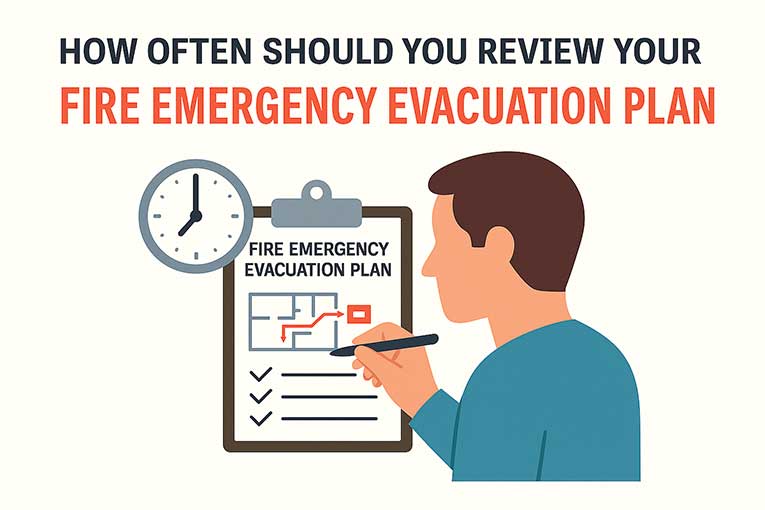
How Often Should You Review Your Fire Emergency Evacuation Plan?

how often review fire emergency evacuation plan

You should review your fire emergency evacuation plan regularly to keep it up to date – at least once a year is a good guideline. 

Over time, things can change that might affect your plan. 

For example, you might renovate or rearrange the space, or new people might join (employees, residents, etc.) who have different needs. 

After any such changes, update the evacuation plan accordingly. 

It’s also wise to review the plan after any fire drill or actual emergency. 

If a drill showed confusion about a particular exit or if an alarm wasn’t heard in some area, you should fix those issues and adjust the plan. 

Regular reviews ensure that escape routes are still clear, contact information is current, and everyone remains familiar with what to do if a fire occurs.

Is a Fire Emergency Evacuation Plan a Legal Requirement?

is fire emergency evacuation plan legal requirement

Yes, in most workplaces and public buildings a fire emergency evacuation plan is a legal requirement. 

Employers and building owners are legally obliged to implement and communicate these plans. 

If you have five or more employees, you are typically expected to have the plan written down as part of your fire risk assessment duties. 

Failing to do so can lead to enforcement actions or fines because it puts people at risk. 

For private homes, a written fire evacuation plan is not required by law, but it’s strongly recommended for your safety.

Fire authorities often encourage families to discuss and practise a home escape plan because it greatly increases the chance of everyone getting out safely. 

So, while you might not be legally required to have a formal fire plan in your house, the law does mandate it for most other settings where people live or work. 

Ultimately, beyond legal compliance, having a fire emergency evacuation plan is a responsible step that protects lives.

Conclusion

You should now have an understanding of how to create a fire emergency evacuation plan

A fire emergency evacuation plan is an essential part of keeping people safe from fire. 

In an emergency, a well-prepared plan can make the difference between a quick, orderly evacuation and dangerous chaos. 

By clearly outlining how to raise the alarm, the nearest exits to use, where to assemble, and who will call for help, it removes uncertainty and panic. 

Remember that for a plan to be effective, everyone needs to know it and it should be kept up to date. 

Whether at your workplace or in your home, taking the time to create and practise a fire evacuation plan can save lives. 

Fires are unpredictable and frightening, but when everyone knows what to do and where to go, the situation becomes much more manageable. 

Being prepared is not only a legal or moral responsibility – it’s also a practical way to protect yourself and others from harm.

10 Most Common Flammable Solids

Flammable solids are materials that ignite easily and burn quickly when they come into contact with heat, sparks, or open flames. 

These materials pose a significant fire hazard because once they catch fire, the flames can spread rapidly and be difficult to control. 

From everyday items like matches and firelighters to more industrial materials like metal powders and phosphorus, these solids are present in many aspects of life. 

That’s why it is essential to understand how they behave, how to store them safely, and what to do in an emergency.

This article explores the definition of a flammable solid, introduces ten of the most common examples, and offers practical safety tips to help reduce fire risks at home and in the workplace.

What is a Flammable Solid?

A flammable solid is a material that can easily catch fire and burn rapidly when exposed to heat, sparks, friction, or an open flame. 

These substances are classified as Class 4 hazardous materials under international transport and safety guidelines because of their high risk of ignition and fire spread.

Flammable solids can be found in many forms, powders, granules, sheets, or even everyday products like matches and firelighters. 

Some are naturally combustible, while others become dangerous when exposed to air, moisture, or certain chemicals. 

They are often used in industrial processes, laboratories, manufacturing, and even in household products, making them more common than many people realise.

The main danger with flammable solids lies in how quickly they can ignite and how fiercely they can burn. 

For example, powdered metals like aluminium or magnesium can burn extremely fast and even explode when airborne. 

Others, like phosphorus or alkali metals, can self-ignite when exposed to air or water.

Flammable solids are grouped into three categories for safety purposes:

  • Division 4.1: Flammable solids (e.g. matches, sulphur)
  • Division 4.2: Substances liable to spontaneous combustion (e.g. phosphorus)
  • Division 4.3: Substances that emit flammable gas when in contact with water (e.g. sodium)

Because of their fire risk, these materials must be stored, handled, and transported with extreme care. 

Understanding what flammable solids are, and how they behave, is key to preventing dangerous fires and accidents.

10 Most Common Flammable Solids

Flammable solids are materials that catch fire easily and burn rapidly. 

They are found in homes, workplaces, and industries, and can become extremely dangerous if handled carelessly. 

Below are ten of the most common flammable solids, including how they behave and why they require careful attention.

Alkali Metals

sodium alkali metal
Source: Wikipedia

Alkali metals include elements such as lithium, sodium, potassium, and rubidium. 

These metals are highly reactive and are known to ignite spontaneously in air or explode on contact with water.

When exposed to moisture, alkali metals produce hydrogen gas and heat, which can cause immediate ignition. 

For example, a small piece of sodium dropped into water will fizz, spark, and potentially explode. 

These reactions are not just spectacular, they are highly dangerous.

Alkali metals are used in batteries, research labs, and chemical manufacturing. 

Because of their reactivity, they are stored under oil or in sealed containers to prevent exposure to air or water.

Celluloid

celluloid film
Source: Wikipedia

Celluloid is one of the earliest types of plastic, made by combining nitrocellulose with camphor. 

It was once used widely in film reels, combs, toys, and even dentures. 

However, celluloid is highly flammable and can ignite from just a small amount of heat or friction.

When it burns, it produces a fast, intense flame that is difficult to control. 

Early cinema fires were often caused by celluloid film catching fire under the heat of a projector bulb.

Today, celluloid has been largely replaced by safer materials, but it still appears in some vintage items. 

It should always be kept away from heat and stored in well-ventilated areas.

Coal

coal

Coal is a black or brownish-black rock made of carbon-rich material. 

It has been used as a fuel source for centuries, particularly in power stations, homes, and industrial processes.

Although solid coal is relatively stable, coal dust is extremely flammable. 

Fine coal particles suspended in air can create explosive mixtures, especially in enclosed spaces like mines or silos.

Fires involving coal are hard to extinguish once started. 

They can smoulder deep within coal piles for days or weeks. 

Good ventilation and dust control are essential in environments where coal is stored or used.

Firelighters

firelighter
Source: Wikipedia

Firelighters are small blocks or cubes made from flammable substances such as paraffin wax, kerosene, or compressed wood and oil. 

They are designed to catch fire easily and help light barbecues, wood burners, or campfires.

While firelighters are very useful, they must be handled with care. 

Storing them near open flames or in high temperatures can lead to accidental fires. 

Some types release flammable vapours that can ignite suddenly.

Always store firelighters in a cool, dry place and use them as instructed. 

Keep them out of reach of children and never use them to revive a dying fire, they can flash back dangerously.

Matches

burning match
Source: Wikipedia

Matches are perhaps the most familiar flammable solid. 

They consist of a small wooden or cardboard stick tipped with chemicals that ignite when struck.

The match head typically contains potassium chlorate, sulphur, and other substances. 

When struck against the matchbox surface, friction produces enough heat to ignite the chemicals and start a flame.

Because they are so easy to light, matches are considered hazardous goods. 

They should be kept in their original packaging, stored away from heat, and handled responsibly. 

Used matches should be fully extinguished and disposed of safely.

Metal Powders

metal powder

Fine metal powders such as aluminium, magnesium, titanium, and zirconium are highly flammable, especially when dispersed in air.

These powders are used in fireworks, pyrotechnics, welding, and metal finishing. 

When airborne, they can form explosive mixtures that ignite with a single spark. 

Magnesium powder, for example, burns at extremely high temperatures and can cause severe burns or fires.

To reduce the risk of explosions, metal powders must be stored in tightly sealed containers in non-sparking environments. 

Dust should be cleaned using specialised vacuum systems, and equipment should be grounded to prevent static electricity.

Phosphorus

black phosphorus
Source: Wikipedia

Phosphorus exists in several forms, but white phosphorus is the most flammable. 

It ignites spontaneously in air and burns with a bright, white flame. 

Because of this, white phosphorus is stored underwater or in sealed containers to prevent exposure to oxygen.

Phosphorus is used in military applications, chemical manufacturing, and fertilisers. 

It’s also found in small amounts in some matches and fireworks.

Even brief contact with white phosphorus can cause serious burns. 

It also releases toxic fumes when it burns, making it dangerous to inhale. 

Red phosphorus is more stable but can still ignite under friction or heat.

Seed Cake

seed cake
Source: Wikipedia

Seed cake is the solid by-product left after oil is extracted from oil-rich seeds, such as linseed, sunflower, or cottonseed. 

Although it may look harmless, seed cake can catch fire spontaneously during storage.

Residual oils within the cake can oxidise over time, generating heat. 

If the heat isn’t allowed to escape, due to poor ventilation or compact storage, it can build up until the seed cake catches fire on its own.

Seed cake is often used as animal feed or fertiliser. 

It must be stored in cool, dry conditions and checked regularly for signs of heating or smoke. 

Fires in seed cake storage can spread quickly once started.

Sodium Batteries

sodium batteries
Source: Wikipedia

Sodium batteries are known for high energy storage but also come with fire risks. 

They contain sodium metal, which reacts violently with water and moisture.

If the battery casing is damaged or the battery overheats, the sodium can ignite, causing intense fires. 

In worst cases, the battery may explode or leak hot, flammable materials.

Sodium batteries are used in large-scale energy storage and some newer electric vehicle concepts. 

Because of their high energy and fire potential, they require robust safety systems, temperature controls, and fire-resistant housing.

Sulphur

sulphur
Source: Wikipedia

Sulphur is a yellow, non-metallic element found in nature and used in many industrial processes, including the production of sulphuric acid, fertilisers, and matches.

When heated, sulphur melts into a reddish liquid and eventually ignites, burning with a blue flame and producing sulphur dioxide gas. 

This gas is toxic and irritating to the eyes, nose, and throat.

Sulphur fires can be difficult to put out and produce large amounts of smoke. 

In powder form, it poses an even greater fire risk, as it can ignite easily and burn rapidly.

To handle sulphur safely, store it in well-ventilated areas away from heat or open flames, and avoid creating dust clouds when moving or processing the material.

How to Protect Yourself from Common Flammable Solids

Flammable solids can pose serious fire hazards if not handled with care. 

Whether you’re working with these materials in an industrial setting or storing them at home, following simple safety steps can reduce the risk of accidents.

Store Properly

Keep flammable solids in cool, dry, and well-ventilated areas. 

Avoid places with direct sunlight, heat sources, or open flames. 

Always store materials in containers specifically designed for hazardous goods, and ensure lids are sealed tightly to prevent spills and contamination.

Use the Right Equipment

When handling flammable solids, wear appropriate personal protective equipment (PPE)

This includes gloves, eye protection, flame-resistant clothing, and sometimes respirators if there is dust or fumes. 

Using the right tools, such as non-sparking scoops or containers, can also help prevent accidental ignition.

Separate Incompatible Materials

Some flammable solids react dangerously with other substances, including water or certain chemicals. 

Keep incompatible materials stored separately and clearly label all containers. 

Consult safety data sheets (SDS) for guidance on proper segregation.

Prevent Dust Buildup

Fine powders like metal dust or coal can ignite easily when dispersed in air. 

Regularly clean work areas to prevent dust accumulation, and avoid sweeping, which can stir up particles – use a vacuum with a HEPA filter instead.

Train and Educate

Make sure everyone handling these materials receives proper training

Staff should know how to store, handle, and dispose of flammable solids safely. 

Emergency procedures should be clearly displayed, and fire extinguishers or other firefighting tools should be easily accessible.

Conclusion

You should now have more of an understanding of common flammable solids. 

Flammable solids present serious fire risks, especially when they are mishandled, stored incorrectly, or exposed to heat, sparks, or open flames. 

Each flammable solid has unique properties, ignition points, and hazards. 

Some, like celluloid or metal powders, can ignite with friction or static discharge. 

Others, such as seed cake or coal, may combust spontaneously under the right conditions. 

Being aware of these differences helps individuals and businesses store and handle these substances more responsibly.

By respecting the dangers and taking the right precautions, we can use these materials safely and avoid potentially life-threatening incidents.

10 Most Common Flammable Materials

Flammable materials are everywhere in our daily lives, both at home and work. 

Understanding what they are and how to handle them safely is essential for preventing accidents. 

They can be found in nearly every environment, from our homes to workplaces, factories, and vehicles. 

Everyday products, such as cleaning agents, fuels, and textiles, can all be flammable.

In this article, we will explore what flammable materials are, why they are dangerous, and how to stay safe around them. 

We will also look at 10 of the most common flammable materials that you might encounter regularly. 

By learning to identify these materials and how to handle them correctly, you can help prevent fires and keep your surroundings secure. 

What Are Flammable Materials?

Flammable materials are substances that can easily ignite and catch fire when exposed to heat, flame, or sparks. 

These materials have a low flashpoint, which is the temperature at which they release enough vapor to catch fire.

Materials with a flashpoint under 100°F (37.8°C) are generally considered flammable.

Flammable materials can be found in solids, liquids, or gases and can be natural or man-made.

It’s important to handle flammable materials with care, store them properly, and use them in safe conditions. 

Recognising and understanding flammable substances in your environment is crucial for preventing fires and ensuring safety in both homes and workplaces. 

Proper knowledge and caution can minimise the risk of accidents.

10 Most Common Flammable Materials

Flammable materials are substances that can catch fire easily when exposed to heat, sparks, or open flames. 

Many of these materials are found in our homes, workplaces, and public areas. 

Being aware of these materials and how to handle them safely is crucial in preventing accidents and ensuring fire safety. 

Here are 10 common flammable materials, explaining their characteristics and risks.

Acetone

flammable materials acetone
Source: Wikipedia

Acetone is a colorless, flammable liquid commonly used as a solvent in nail polish removers, paint thinners, and some cleaning products. 

Acetone is highly volatile and evaporates quickly, forming flammable vapours. 

Its flashpoint – the lowest temperature at which it can vaporize and ignite – is -4°F (-20°C), making it one of the most flammable substances in households.

Store acetone in a cool, dry, and well-ventilated area, away from heat and open flames and always use acetone in well-ventilated spaces, as the vapours can be hazardous to your health.

Alcohol Spirits

flammable materials alcohol spirits

Alcoholic spirits, such as vodka, whiskey, and rum, are commonly found in homes, bars, and restaurants. 

These beverages are made by fermenting and distilling various grains, fruits, and other ingredients. 

Due to their high alcohol content (usually above 20%), they are highly flammable and can ignite easily when exposed to heat, sparks, or open flames.

Make sure to store alcoholic spirits in tightly sealed containers, away from heat sources and open flames.

Deodorant

flammable materials deodorant
Source: Wikipedia

Aerosol deodorants contain flammable propellants such as butane or propane, which are highly volatile gases. 

These gases make deodorants easy to spray but also pose a significant fire hazard. 

If exposed to heat or flames, deodorant cans can explode, leading to serious injuries or property damage.

Store aerosol deodorants in cool, dry places and away from direct sunlight and always follow the manufacturer’s instructions on proper usage and storage.

Flour

flammable materials flour

Flour is a common ingredient in kitchens, but it can pose a significant fire risk. 

While flour itself doesn’t ignite easily, the fine flour particles can create a dust cloud that is highly combustible. 

If this dust comes into contact with a spark or flame, it can ignite and cause a dust explosion. 

This is particularly a concern in industrial environments like flour mills, but it is still important to be cautious in the home.

Clean up flour spills immediately, and avoid sweeping or vacuuming to prevent dust clouds.

Furniture Polish

flammable materials furnture polish

Furniture polish contains flammable chemicals, including solvents and oils that can easily ignite. 

These products are designed to clean and shine surfaces, but they often contain petroleum-based ingredients that make them highly flammable. 

Furniture polish is commonly used in homes and offices, so proper storage and handling are essential to avoid accidents.

Store furniture polish in a cool place, away from direct sunlight and heat sources.

Hair Spray

flammable materials hair spray
Source: Wikipedia

Hair sprays, like deodorants, are often contained in aerosol cans and contain flammable propellants such as butane, propane, or ethanol. 

These chemicals allow the product to spray evenly, but they also make the product highly flammable. 

When applied to the hair, hair spray can ignite if exposed to a flame or excessive heat, especially if used near a stove, cigarette, or open flame.

Always follow the manufacturer’s safety instructions on the label.

Hand Sanitiser

flammable materials hand sanitiser
Source: Wikipedia

Hand sanitisers, which contain high amounts of alcohol, are highly flammable and should be handled with care. 

Most hand sanitisers contain between 60% to 95% ethanol or isopropyl alcohol, both of which have low flashpoints. 

As these alcohol-based products have become increasingly popular, and not just found in the healthcare industry, it’s essential to be aware of the fire risks associated with improper use and storage.

Never use hand sanitiser near open flames or high-temperature surfaces.

Permanent Markers

flammable materials permanent markers
Source: Wikipedia

Permanent markers often contain flammable solvents such as toluene or xylene. 

These chemicals help the ink dry quickly and provide long-lasting marks. 

The solvents are highly volatile and can easily catch fire when exposed to heat or flames. 

Though the risk may seem small, using permanent markers around heat sources can be dangerous.

Avoid using permanent markers near candles, stoves, or any equipment that could generate sparks.

Petrol (Gasoline)

flammable materials petrol gasoline

Petrol, or gasoline, is one of the most well-known flammable substances. 

It is commonly used as fuel for vehicles, lawnmowers, and generators. 

Petrol has a low flashpoint, which means it can ignite easily when exposed to a heat source or spark. 

Petrol vapours are also highly flammable, making it dangerous to handle, especially when fueling up vehicles.

Always store petrol in approved containers and keep it away from living spaces and never refuel a vehicle or machine near an open flame, heat source, or while the engine is running.

Turpentine

flammable materials turpentine
Source: Wikipedia

Turpentine is a solvent derived from pine trees and is commonly used in paint thinners and cleaning products. 

It has a low flashpoint, making it highly flammable, and can ignite easily when exposed to heat, sparks, or open flames. 

Turpentine is used in various artistic and industrial applications but must be handled with care due to its volatile nature.

Make sure to store turpentine in airtight containers and away from heat sources or flames and use turpentine in well-ventilated areas to avoid inhaling harmful fumes.

How Can You Stay Safe Around Flammable Materials?

Ensuring safety around flammable materials is crucial to prevent accidents and ensure both personal and property safety. 

Here are some important steps to take:

Proper Storage

Always store flammable materials in well-ventilated areas away from heat sources, flames, or sparks. 

Use approved containers to hold liquids and keep them tightly sealed. 

Ensure that containers are labeled clearly to identify the material inside.

Keep Away from Flames

Avoid using flammable substances near open flames, heat sources, or electrical equipment. 

In areas where flammable materials are used, make sure there are no exposed wires or sparks that could ignite vapors.

Use Materials Carefully

When using flammable substances such as cleaning agents, paints, or aerosols, follow the manufacturer’s instructions carefully. 

Use them in well-ventilated spaces, and never leave them unattended while in use.

Proper Disposal

Dispose of flammable materials, such as rags soaked with oil or paint, in designated fire-resistant containers. 

Do not throw them in regular trash bins, as they could ignite from friction or heat.

Install Smoke Detectors

Ensure working fire detection, such as smoke detectors, are installed in areas where flammable materials are stored or used, such as kitchens or workshops. 

This can provide an early warning in case of a fire.

Keep Extinguishers Nearby

Keep fire suppression equipment such as fire extinguishers in places where flammable materials are stored or used. 

Be sure to have one suitable for the type of fire that could occur.

How is Flammable Different to Combustible?

Flammable and combustible are both terms used to describe materials that can catch fire, but they are not the same. 

The main difference lies in the temperature at which each type of material ignites.

Flammable materials are substances that ignite easily at relatively low temperatures, usually below 100°F (37.8°C). 

These materials are highly volatile, meaning they can catch fire quickly when exposed to heat, sparks, or flames. 

Flammable substances are particularly dangerous because they can release vapors that catch fire even without direct contact with a flame.

Combustible materials, on the other hand, require higher temperatures to catch fire, typically above 100°F (37.8°C). 

While combustible materials are still capable of burning, they are less likely to ignite quickly compared to flammable materials. 

Although they can burn, they are generally less hazardous than flammable materials in terms of ignition risks.

Conclusion

You should now have an understanding of 10 of the most common flammable materials.

Flammable materials are part of everyday life and require careful handling to ensure safety. 

Understanding their properties, risks, and differences from combustibles can help prevent accidents. 

By staying informed and following safety precautions, you can minimise the risks associated with these common materials. 

Always prioritise safety and treat flammable substances with caution.

11 Most Common Flammable Gasses

Flammable gases are an integral part of our everyday lives. 

From household uses like cooking and heating to industrial applications, these gases are both useful and potentially dangerous. 

If not handled properly, flammable gases can lead to fires, explosions, or health hazards. 

This article will explore what flammable gases are, introduce 11 common examples, and provide essential safety tips for handling them.

What are Flammable Gasses?

Flammable gases are substances that can easily ignite and burn when mixed with air and exposed to an ignition source. 

These gases typically have a low flashpoint, meaning they ignite at relatively low temperatures, making them highly dangerous in certain conditions.

Flammable gases are used in many industries and everyday applications. 

Common examples include cooking fuel, industrial processes, chemical production, and energy generation. 

While they are incredibly useful, improper handling can lead to fires, explosions, or toxic exposure.

A flammable gas becomes hazardous when its concentration in the air reaches its flammability limits, creating an environment ripe for ignition. 

These limits are the lower explosive limit (LEL) and the upper explosive limit (UEL). 

Outside these ranges, the gas may not ignite, but within them, a spark or flame can cause severe damage.

11 Most Common Flammable Gasses

Acetylene

flammable gasses acetylene

Acetylene is a hydrocarbon gas used primarily in the welding and cutting industry. 

Composed of carbon and hydrogen, this gas is known for its ability to produce an extremely high-temperature flame. 

It plays a vital role in the metalworking industry for processes like oxyacetylene welding and cutting. 

Additionally, acetylene is a critical raw material in the production of certain plastics and chemicals. 

However, acetylene is highly unstable and flammable. 

It can ignite at very low temperatures and is prone to explosive reactions when stored or handled improperly, particularly under high pressure.

Ammonia

flammable gasses ammonia

Ammonia is a pungent gas widely used in agriculture and refrigeration. 

It is crucial in the production of fertilisers, helping boost crop yields. 

Ammonia also serves as a refrigerant in industrial cooling systems and is a component in certain cleaning agents. 

Although it is not as flammable as some other gases on this list, it can ignite under specific conditions, particularly in the presence of high heat. 

Ammonia is also highly toxic, and exposure can lead to respiratory distress, skin irritation, and even death at high concentrations.

Butane

flammable gasses butane

Butane is a highly flammable gas that is colorless and odourless in its natural state. 

It is widely used as a fuel in lighters and portable stoves and as a propellant in aerosol sprays. 

Butane is also a common component in liquefied petroleum gas (LPG), used for heating and cooking. 

The dangers of butane lie in its ability to ignite easily, even with minimal exposure to a spark or flame. 

In confined spaces, butane can accumulate and cause explosive reactions. 

Its high flammability requires careful storage and handling to prevent accidents.

Carbon Monoxide

flammable gasses carbon monoxide

Carbon monoxide is a flammable and highly toxic gas that is colorless, odourless, and tasteless. 

It is produced by incomplete combustion of carbon-containing fuels such as wood, coal, and gasoline. 

Carbon monoxide is used in industrial processes, including the production of certain chemicals and fuels. 

Its dangers, however, are immense. 

Inhalation of carbon monoxide can result in poisoning, as it binds to hemoglobin in the blood, reducing oxygen delivery to vital organs. 

Additionally, its flammability makes it a fire and explosion hazard, especially in poorly ventilated spaces.

Ethane

flammable gasses ethane

Ethane is a colorless and odorless hydrocarbon gas that serves as a vital component in the petrochemical industry. 

It is used primarily as a feedstock for ethylene production, which in turn is used to manufacture plastics, antifreeze, and other chemicals. 

Ethane is also found in natural gas and is used as a fuel for heating. 

The primary risk associated with ethane is its high flammability. 

It forms explosive mixtures with air and requires careful storage and monitoring to prevent leaks that could lead to fires or explosions.

Ethylene

flammable gasses ethylene

Ethylene is another hydrocarbon gas that plays a significant role in agriculture and industry. 

It is used as a plant hormone to accelerate the ripening of fruits and as a feedstock for producing polyethylene, the most common plastic. 

Ethylene is also used in the automotive industry for antifreeze production. 

Despite its widespread use, ethylene is highly flammable and can ignite easily. 

In industrial settings, it poses a risk of fire and explosion, particularly in enclosed spaces without adequate ventilation.

Hydrogen

flammable gasses hydrogen

Hydrogen is the lightest and most abundant element in the universe. 

It is a versatile gas used in various industries, including energy production, chemical manufacturing, and aerospace. 

Hydrogen is a key component in fuel cells, which produce clean energy, and is also used in refining petroleum and producing ammonia. 

However, hydrogen’s flammability and small molecular size make it highly dangerous. 

It burns with an invisible flame, making fires difficult to detect, and is prone to leaks, which can lead to explosions in confined areas.

Hydrogen Sulfide

flammable gasses hydrogen sulfide

Hydrogen sulfide is a flammable and highly toxic gas with a distinct smell of rotten eggs. 

It is commonly found in crude oil, natural gas, and sewage systems. 

Hydrogen sulfide is used in the production of sulfuric acid and other chemicals. 

Despite its usefulness, this gas is extremely hazardous. 

It can cause respiratory failure and death at high concentrations and is flammable, forming explosive mixtures with air. 

Proper monitoring and ventilation are essential to ensure safety when working with hydrogen sulfide.

Methane

flammable gasses methane

Methane is the primary component of natural gas and one of the most abundant flammable gases on Earth. 

It is used as a fuel for heating, electricity generation, and as a feedstock for producing hydrogen and other chemicals. 

Methane is also a significant contributor to greenhouse gas emissions when released into the atmosphere. 

The dangers of methane lie in its flammability and potential to cause explosions. 

It is odourless in its natural state, making gas detectors crucial for leak detection.

Propane

flammable gasses propane

Propane is a widely used fuel in residential, commercial, and industrial settings. 

It is a component of LPG and is used for heating, cooking, and powering vehicles. 

Propane is stored as a liquid under pressure and vaporizes when released, making it easy to transport and use. 

However, propane is highly flammable and can cause explosions if leaks occur in confined spaces. 

Its use requires proper storage, regular inspections, and adherence to safety guidelines.

Silane

flammable gasses silane

Silane is a silicon-based gas used primarily in the electronics and renewable energy industries. 

It is essential in the production of semiconductors, solar panels, and silicon-based materials. 

Silane is highly reactive and ignites spontaneously upon contact with air, making it one of the most dangerous gases on this list. 

Its handling requires specialized storage and strict safety protocols to prevent accidental ignition or explosions.

How to Stay Safe Around Flammable Gasses

Flammable gases can pose serious risks if not handled correctly. 

Proper safety measures are crucial to prevent fires, explosions, and exposure-related hazards.

Store Gases Safely

Always store flammable gases in approved, clearly labeled containers. 

Keep them in well-ventilated areas, away from heat sources, sparks, or open flames. 

Ensure storage areas are cool and dry to prevent leaks or pressure buildup.

Leak Detection

Regularly inspect gas containers, pipelines, and connections for leaks. 

Gas detectors are highly recommended in storage or usage areas to identify leaks early.

Fire detection systems should also be used in case due to their flammability. 

Maintain Proper Ventilation

Work with flammable gases in areas with good airflow. 

Ventilation helps disperse gas buildup, reducing the risk of accidental ignition.

Avoid Ignition Sources

Keep flammable gases away from open flames, smoking, electrical equipment, and other potential ignition sources.

Follow Manufacturer Guidelines

Always follow the safety instructions provided for storing and using specific gases.

Wear Protective Gear

Use appropriate personal protective equipment (PPE), such as gloves, goggles, and flame-resistant clothing, when handling flammable gases.

Provide Training

Ensure all workers handling gases are trained in safety protocols and emergency response procedures.

Conclusion

You should now have an understanding of 11 of the most common flammable gasses. 

Flammable gases are essential in various applications but pose significant risks if mishandled. 

Understanding their characteristics and following safety guidelines can reduce the risk of accidents and create a safer environment. 

Stay informed, stay vigilant, and always prioritize safety when working with flammable gases.

10 Most Common Combustible Materials

Combustible materials are an essential part of daily life, present in homes, workplaces, and industrial settings. 

From everyday items like paper and cloth to industrial fuels like diesel and kerosene, combustible materials are both useful and hazardous.

Understanding the nature of these materials is crucial for maintaining safety and preventing accidents. 

Knowing how and why they ignite, the risks they pose, and the precautions needed to handle them can help reduce the chances of dangerous situations. 

In this article, we’ll delve into the most common combustible materials and discuss their characteristics, risks, and practical safety measures. 

By the end, you’ll have a clear understanding of how to use and store these materials responsibly, ensuring a safer environment for everyone.

What are Combustible Materials?

what are combustible materials

Combustible materials are substances that can catch fire and burn when exposed to sufficient heat, oxygen, or an ignition source. 

Combustible materials are often used in everyday life, from cooking and heating to construction and manufacturing. 

However, their potential to burn poses safety risks if not handled correctly. 

Proper storage, ventilation, and adherence to safety guidelines are essential to prevent accidents and ensure that combustible materials are used responsibly in homes and workplaces.

How Dangerous are Combustible Materials?

Combustible materials can pose significant risks if not handled or stored properly. 

These substances can catch fire when exposed to heat, sparks, or open flames, leading to potentially devastating consequences. 

Fires fueled by combustibles can spread rapidly, causing property damage, injuries, or loss of life. 

Additionally, improper storage or disposal of these materials increases the likelihood of accidental ignition. 

Awareness of their dangers, along with proper safety measures is crucial to minimising risks and ensuring safety in homes and workplaces.

10 Most Common Combustible Materials

Here are the most common combustible materials, their uses, and associated risks:

Paper

combustible materials paper

Paper is a highly combustible material, primarily due to its thin structure and cellulose content. 

The cellulose fibers in paper make it easy to ignite, and once set on fire, it burns rapidly. 

Paper is one of the most common fire starters found in homes and offices. 

It’s often accumulated as waste in the form of newspapers, magazines, cardboard, and office documents, making it a significant fire risk when exposed to heat sources. 

Paper can easily catch fire if it comes into contact with flames from candles, faulty wiring, or overheated electronics. 

In offices or homes, paper products are typically stacked or stored in areas that could become fire hazards if not carefully managed. 

Straw

Straw, often used in farming as bedding for animals or as feed, is another highly combustible material. 

This dry, fibrous material ignites quickly when exposed to a heat source, which makes it a significant fire hazard. 

Straw is especially dangerous in barns or storage areas, as the dense bundles can create the perfect environment for rapid fire spread. 

A fire starting in a haystack or straw-filled barn can quickly escalate and spread through entire buildings, leading to catastrophic damage. 

In fact, straw is a common cause of barn fires, and these fires often occur when straw is improperly stored or when there is a buildup of heat within large quantities of straw. 

Wood

Wood is one of the most widely used combustible materials, both for construction and as a source of fuel for heating and cooking. 

It burns at high temperatures, and dry wood is especially prone to ignition. 

Wood is commonly used for furniture, flooring, and building materials, but it is also a major fuel source in fireplaces, wood stoves, and campfires. 

Storing wood in dry, well-ventilated areas is critical to prevent unintentional fires. 

For homes that use wood-burning stoves, it is essential to maintain a safe distance between firewood and any other flammable materials, as well as ensuring that the chimney is regularly cleaned to prevent buildup of highly combustible creosote.

Cloth

Cloth, particularly natural fibers like cotton and wool, is another common combustible material found in homes and businesses. 

While cloth generally burns slower than paper, it still poses a fire hazard once it catches fire. 

Cloth is a key component in items like clothing, curtains, bed linens, and upholstery. 

In a fire, clothing can act as fuel, spreading flames across a room rapidly. 

To mitigate the risks associated with cloth, it is essential to keep fabric items away from open flames such as candles, space heaters, or cooking appliances. 

Coal / Charcoal

Coal and charcoal are fuels commonly used in barbecues, fireplaces, and industrial applications due to their ability to burn steadily and produce significant heat. 

However, both coal and charcoal are highly combustible materials. 

They require proper handling and storage to avoid spontaneous combustion, which can occur when stored improperly. 

When coal or charcoal is exposed to heat, it can begin to smolder and eventually catch fire. 

To prevent this, coal or charcoal should always be stored in cool, dry areas away from flammable liquids or materials.

Cooking Oil

combustible materials cooking oil

Cooking oil is commonly used in cooking and is a combustible liquid. 

While it may not ignite as easily as some flammable liquids like petrol, oil can still catch fire if it reaches its flash point or is exposed to high heat. 

When cooking oil is overheated, it can ignite and burn rapidly, making it difficult to extinguish with water. 

It is important to monitor oil temperatures and avoid overfilling cooking appliances. 

If cooking oil begins to smoke heavily, it should be removed from heat immediately.

Grease

Grease, a byproduct of cooking oil, is another highly combustible material, often found in kitchens and machinery. 

Grease fires are especially hazardous because water can exacerbate the flames and spread the fire. 

In kitchens, grease can accumulate in stove hoods, exhaust fans, and cooking appliances, creating fire risks if not cleaned regularly. 

In industrial settings, grease is often used in machinery and can ignite if exposed to heat or sparks. 

Lubricants

Lubricants like motor oil and industrial greases are essential for reducing friction in machinery, but they are also combustible. 

Improper storage or exposure to heat can cause lubricants to catch fire, particularly in industrial or mechanical environments where sparks or high temperatures are common. 

To safely store lubricants, they should be kept in sealed containers and away from heat or open flames. 

It’s also important to keep storage areas well-ventilated and to follow manufacturer recommendations for handling and disposal to reduce fire risks.

Kerosene

Kerosene, used as a liquid fuel for heating, lighting, and in aviation, is a highly combustible material. 

While it is less volatile than petrol, it can still cause significant fire hazards. 

Kerosene should always be stored in approved containers designed for flammable liquids. 

In homes, kerosene lamps and heaters must be handled with care, and the fuel should never be stored near heat sources. 

Diesel

Diesel is another commonly used combustible liquid, found in transportation and heavy machinery. 

While it is less flammable than petrol, it can still cause significant fires if not handled properly. 

Diesel fires can escalate quickly if fuel spills or leaks occur near heat sources. 

Diesel should always be stored in proper containers and kept away from sparks or open flames. 

How Can Combustible Materials Be Used or Stored Safely?

storing combustible materials safely

Proper handling and storage of combustible materials are essential to prevent fires and ensure safety. 

Here are some practical tips for their safe use and storage:

Use Approved Containers

Store combustible liquids in containers specifically designed for flammable substances. 

These containers should be leak-proof, clearly labeled, and kept sealed when not in use.

Maintain Proper Ventilation

Store materials like coal, charcoal, and lubricants in well-ventilated areas to prevent heat buildup. 

This reduces the risk of spontaneous combustion.

Keep Away from Heat Sources

Ensure combustible items are stored far from open flames, heaters, or electrical appliances. 

Even indirect heat can cause materials like straw or cloth to ignite.

Avoid Overloading Storage Areas

Avoid piling materials too high, as this can trap heat and increase fire risks.

Regular Inspections

Check for leaks, damage, or signs of overheating in storage areas. 

Repair or replace damaged containers promptly.

Have Fire Extinguishers Nearby

Place appropriate fire extinguishers, and other fire suppression equipment near storage areas.

What is the Difference Between Flammable and Combustible Materials?

The primary difference between flammable and combustible materials lies in their ignition temperature. 

This determines how easily they catch fire under certain conditions.

Flammable Materials

Flammable materials ignite easily at lower temperatures, typically below 37.8°C (100°F). 

These materials can catch fire with minimal heat or a small spark, making them more hazardous. 

Due to their high volatility, flammable materials require stringent handling and storage conditions, such as being stored in sealed containers away from heat sources.

Combustible Materials

Combustible materials require higher temperatures, typically above 37.8°C, to ignite. 

Although they are less volatile than flammable materials, they still pose significant fire risks if improperly handled. 

While not as easily ignited, combustible materials can fuel large fires once they start.

Both flammable and combustible materials can be hazardous, but understanding their differences helps ensure proper storage, handling, and fire safety precautions.

What are Non-Combustible Materials?

non combustible materials

Non-combustible materials are substances that do not ignite, burn, or support combustion under normal conditions. 

These materials are often used in construction, manufacturing, and safety applications due to their fire-resistant properties.

Characteristics of Non-Combustible Materials

Non-combustible materials can withstand high temperatures without catching fire or emitting toxic gases. 

They do not contribute to the spread of fire and are considered safe for use in environments where fire risk is a concern.

Examples of Non-Combustible Materials

Metal

Steel and aluminum are widely used in construction due to their durability and fire resistance.

Concrete

A common choice for buildings, it resists heat and provides structural integrity during fires.

Glass

Certain types, like tempered or fire-rated glass, can endure high heat without breaking.

Brick and Stone

These materials are naturally resistant to fire and commonly used in construction.

Conclusion

You should now have more of an understanding of the most common combustible materials.

Understanding combustible materials and their risks is essential for safety. 

By following safety protocols and training, using appropriate fire extinguishers, and ensuring proper storage, the dangers of combustion can be minimised. 

Awareness and preparedness are key to preventing fires and protecting lives and property.