This is a newly developed e-learning platform designed to make it more accessible for construction professionals to access learning resources and monitor personal progression.
Full details of the initiative can be found on ROCKWOOL’s website.
The platform is tailored for autonomous learning.
It enables registered users to access suitable content and undertake self-chosen modules at their preferred speed.
Moreover, ROCKWOOL Learning monitors the learning progress automatically, which provides users with an accurate continuous professional development (CPD) record.
This eliminates the necessity to manually log the completion of qualifying activities.
ROCKWOOL Learning has streamlined the company’s learning and development resources by consolidating them into a single hub. This has made these resources accessible at any given time.
While the platform currently provides instructional and informational content for architects and contractors, ROCKWOOL has expressed plans to widen its offering over the upcoming months.
This will include other construction stakeholders like housebuilders, self-builders, and fire or HVAC specialists.
Paul Barrett, the Head of Product Management at ROCKWOOL, shared his thoughts on the new platform: “Best practices and legislation in the construction industry are always evolving.
“Thus, it’s essential for specifiers and contractors to have access to up-to-date development and training opportunities.
“ROCKWOOL Learning is our latest investment to help enhance the skills and knowledge of those in the industry.”
Empowering industry professionals: additional courses on the horizon for ROCKWOOL Learning
Barrett also hinted at future developments for the platform: “We want to empower industry professionals with the knowledge they need to make informed decisions when it comes to selecting insulation solutions.
“In the coming months, we will develop the platform with additional courses and training to assist with personal development across an even wider variety of building topics.”
For those eager to start their journey with ROCKWOOL Learning, they can visit the website today.
IFSJ Comment
As a journal committed to the continuous development of fire safety and construction professionals, this move by ROCKWOOL provides a valuable resource for industry professionals.
ROCKWOOL Learning represents a significant step in making crucial training materials and courses more accessible and streamlined, fostering growth and knowledge within the industry.
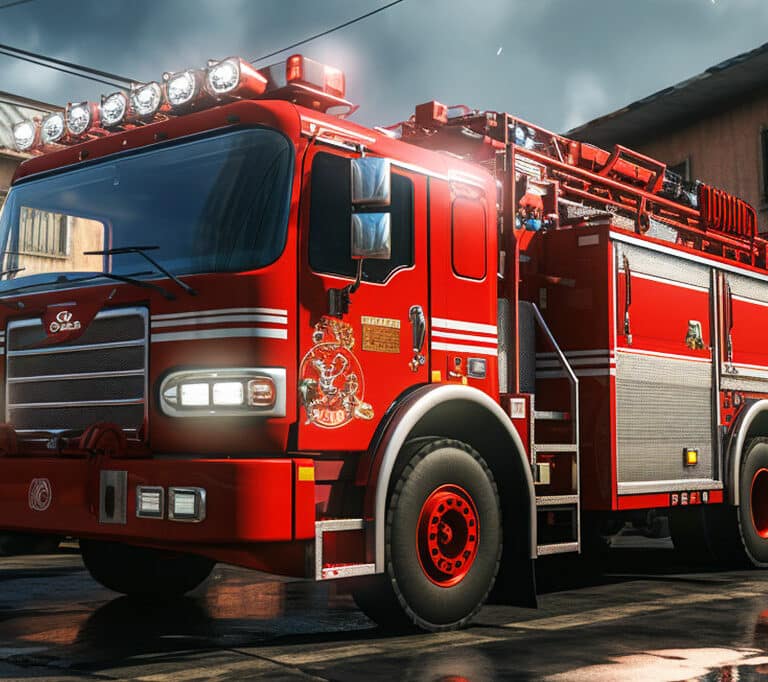
How much does a fire truck weigh is one of the most common questions asked by school kids whenever the fire service comes to visit.
Fire trucks, with their red flashing lights and blaring sirens, are a symbol of emergency response and safety in communities around the world.
These impressive vehicles are equipped with specialised tools and equipment to combat fires and save lives.
But have you ever wondered as an adult, not just how much does a fire truck weigh, but what equipment does it carry or even what types of fire truck are there?
In this article, we will answer these common questions and provide insights into the fascinating world of fire trucks.
How Much Does a Fire Truck Weigh?
The weight of a fire truck is a critical factor in its design and functionality.
The range in weight is primarily due to the size and capacity of the vehicle.
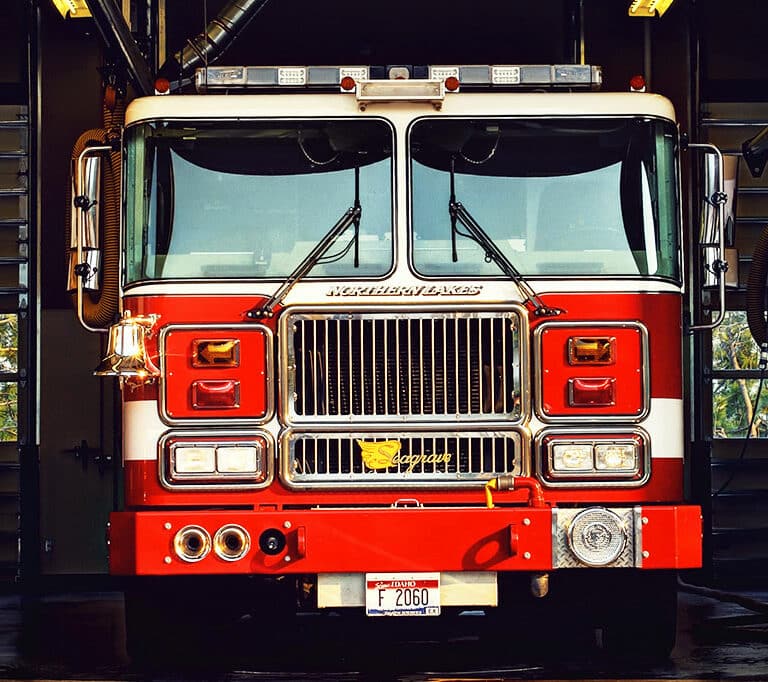
To answer the question of how much does a fire truck weigh, the simplest answer is that a standard fire engine, which is commonly used for responding to fires and emergencies, typically falls within the 20,000 to 40,000-pound range.
These trucks are equipped with essential firefighting equipment which add to their overall weight.
On the other hand, larger aerial ladder trucks, often used for rescuing people from tall buildings and providing elevated water streams, can be significantly heavier.
These trucks feature an extendable ladder, which requires additional structural support and hydraulic systems, contributing to their weight of up to 70,000 pounds.
A fire truck can weigh up to 70,000 pounds
The total weight of a fire truck includes various components.
The chassis, which serves as the foundation of the vehicle, contributes a significant portion to the overall weight.
The body of the fire truck, made of steel or aluminium, houses the equipment and water tanks.
Additionally, the equipment carried on the truck, such as ladders, firefighting tools, and medical supplies, further adds to the weight.
All these factors are carefully considered during the design and construction of fire trucks to ensure they are efficient, durable, and capable of responding effectively to emergencies.
How Much Does a Fire Truck Weigh When Full of Water?
Probably the second most asked question in relation to how much does a fire truck weigh, is how much does it weigh when full of water.
When a fire truck is filled with water, its weight can increase significantly due to the large water tank it carries.
On average, a fire engine can hold between 500 to 1,500 gallons (1,893 to 5,678 litres) of water.
Since each gallon of water weighs around 8.3 pounds (3.8 kilograms), a full tank can add an extra 4,150 to 12,450 pounds (1,882 to 5,647 kilograms) to the vehicle’s weight.
This added weight is a crucial consideration for firefighters and drivers, as it affects the truck’s handling and performance during emergency responses.
Properly managing the water supply is essential to ensure the fire truck can manoeuvre effectively and safely while combating fires and providing vital support to emergency situations.
How Long is a Fire Truck?
The length of a fire truck varies based on its type and model.
Standard fire engines typically measure around 25 to 35 feet (7.6 to 10.7 metres) in length.
However, aerial ladder trucks, equipped with extendable ladders, can reach impressive lengths of 75 to 100 feet (22.9 to 30.5 metres).
These longer fire trucks are often employed in high-rise firefighting and rescue operations, where their extended reach is essential for accessing upper floors and providing a safe evacuation route.
The varying lengths of fire trucks allow firefighting teams to choose the most suitable vehicle for specific emergency scenarios, ensuring an effective response to fires and other critical incidents.
How Wide is a Fire Truck?
The typical width of a fire truck ranges from 8 to 10 feet (2.4 to 3 metres).
This dimension is carefully designed to ensure that the vehicle can manoeuvre through narrow streets and tight spaces in urban areas without encountering difficulties or causing damage to buildings and obstacles.
A fire truck can be up to 3 meters wide
The compact width enables fire crews to quickly reach emergency scenes and provide timely assistance, even in congested environments.
What Types of Fire Trucks Are There?
Fire trucks come in various types, each designed for specific firefighting tasks, depending on the cause and type of fire. The most common ones include:
Fire Engines
Standard fire trucks equipped with water tanks, hoses, and firefighting equipment. They respond to most fire emergencies and carry a crew of firefighters. Recently, electric fire trucks have also been rolled out.
Aerial Ladder Trucks
Also known as ladder trucks or hook-and-ladder trucks, these vehicles feature extendable ladders and platforms for rescue operations in tall buildings.
Rescue Trucks
Rescue trucks are equipped with specialised equipment for rescuing people from hazardous situations, such as vehicle accidents or collapsed buildings.
Wildland Fire Engines
Designed for fighting wildfires in rural and forested areas, these trucks have off-road capabilities and carry water to extinguish smaller fires.
Airport Crash Trucks
Specialised fire trucks used at airports to respond to aircraft emergencies, such as fires or crashes.
Foam Trucks
Equipped with foam-generating systems to fight fires involving flammable liquids.
Each type of fire safety vehicle is carefully designed to address specific fire scenarios, ensuring that firefighters have the right tools and resources to combat various emergencies effectively.
The diversity of fire truck types enables firefighting teams to be prepared for a wide range of incidents, from standard structural fires to specialised hazardous material incidents.
These versatile vehicles play a crucial role in ensuring the safety of communities and protecting lives and property during emergencies.
What Equipment is on a Fire Truck?
Fire trucks are equipped with a wide range of tools and equipment to handle various emergency situations.
Some common equipment found on a fire truck includes hoses, nozzles, axes, saws, ladders, breathing apparatus such as oxygen masks, medical supplies, and thermal imaging cameras.
The exact equipment may vary depending on the specific type and purpose of the fire truck.
For example, ladder trucks will have extendable ladders and platforms for tall building rescues, while hazmat trucks will carry specialised gear for handling hazardous materials incidents.
The availability of this diverse firefighting equipment ensures that firefighters have the necessary tools to effectively and safely respond to different emergencies they may encounter.
How Long is a Fire Truck Hose?
The length of a fire truck hose varies based on the truck’s size and intended use.
Standard fire hoses used for firefighting operations are typically 50 feet (15 metres) long.
Aerial ladder trucks may carry longer hoses, up to 100 feet (30 metres), to reach higher floors in tall buildings.
The length of the hose is crucial in ensuring firefighters can effectively deliver water to the source of the fire, regardless of the building’s height or accessibility.
How Much Water Does a Fire Truck Hose Deliver?
The amount of water a fire truck hose can produce is determined by its diameter and water pressure.
Most fire hoses have a diameter of 1.5 to 2.5 inches (3.8 to 6.4 centimetres) and can deliver water at pressures ranging from 50 to 150 pounds per square inch (psi).
At an average flow rate of 100 psi, a fire hose can deliver around 50 to 125 gallons (189 to 473 litres) of water per minute.
This water flow is critical for effectively extinguishing fires and controlling their spread, especially in larger and more intense fire incidents.
Firefighters must skillfully operate the hoses to direct the water precisely and efficiently, making the most of their water supply to combat the flames and protect lives and property.
Firefighters need a special licence to drive a fire truck
The exact licence requirements vary depending on the fire truck’s weight, size, and type. For instance, a firefighter operating a standard fire engine may need a different endorsement than one operating an aerial ladder truck.
To obtain the necessary CDL and endorsements, firefighters must undergo specialised training to operate these vehicles safely and effectively.
This training includes learning how to handle the larger dimensions of fire trucks, understanding the unique challenges of emergency driving, and practising manoeuvres such as backing up, turning, and navigating tight spaces.
Firefighters also receive instruction on vehicle maintenance and safety protocols to ensure the proper functioning of the fire truck during emergencies.
Conclusion
Hopefully this article provided a clear and concise answer to how much does a fire truck weigh, and some of the most common questions to do with fire trucks.
Fire trucks are essential vehicles in emergency response and play a crucial role in safeguarding communities.
Their size, weight, and equipment are carefully designed to handle various firefighting and rescue tasks effectively.
The training and expertise of firefighters who operate these machines are vital in ensuring their efficient use during emergencies.
From carrying large amounts of water to navigating through tight spaces, fire trucks are equipped to tackle a wide range of challenges.
Understanding the capabilities of these vehicles helps us appreciate the dedication and skill of firefighters who work tirelessly to protect lives and property in times of crisis.
The Association for Specialist Fire Protection (ASFP) has rolled out fresh dates for its foundational course in passive fire protection at both Level 2 and Level 3.
Level 3 and Level 2 courses to commence in different locations
The Level 3 course, spanning 7 days and based in a classroom setting, will commence on 15 August in Manchester; 17 August in Reading; and 7 September in Dublin.
The 4-day Level 2 courses will kick-off in Coventry from 1 September; and Dublin starting 7 September.
Exam preparation and the significance of passive fire protection
Additionally, revision courses aimed at helping learners gear up for the Institution of Fire Engineers (IFE) exams are scheduled for 2 October in Coventry and 5 October in Dublin.
The courses offer a strong foundation in fire safety and fire science, in addition to modules on different types of passive fire protection.
Learners then have the opportunity to work towards obtaining Level 2 and Level 3 qualifications from the IFE, an internationally acclaimed awarding organisation.
It’s worth noting that these are the sole passive fire protection qualifications in the UK and Ireland endorsed by Ofqual, the regulators.
Moreover, learners achieving the IFE Level 3 Certificate can apply to join the IFE at Technician grade, thus gaining global professional recognition in the fire sector and the post nominal TIFireE.
Who is the course suited for?
The training is appropriate for everyone involved in the construction industry, ranging from designers, specifiers, contractors, to specialist installers.
The courses are also relevant for building owner occupiers, fire risk assessors, and enforcement agencies.
Such courses are in high demand, with a majority of students continuing their studies to sit for the IFE examinations, held in March and October each year.
These qualifications allow delegates to formally exhibit their knowledge and experience.
For those who are unable to attend the classroom-based course dates or prefer individual study, the Level 2 and 3 courses are also accessible online through a unique interactive learning platform.
This platform utilises adaptive learning techniques to tailor teaching to each individual’s skills, knowledge, experience, and behaviours, ensuring each learner attains exceptional levels of understanding and proficiency.
IFSJ Comment
The new training dates present a vital opportunity for individuals in the construction and fire protection sectors to augment their understanding and skills. With the significant demand for passive fire protection training, this ASFP initiative plays a key role in preparing professionals for globally recognised qualifications.
Revolutionising fire training: Suffolk Fire and Rescue receives state-of-the-art facility
The fire training landscape is experiencing a significant upgrade as BeaverFit, a renowned entity in the design and manufacturing of tactical training equipment, has recently rolled out an advanced fire training facility for Suffolk Fire and Rescue Service.
BeaverFit was tasked to boost the responsive abilities of the fire officers.
The objective was to ensure their readiness to confront diverse and complex challenges associated with modern firefighting.
Enhancing fire team’s reactive capabilities with cutting-edge facility
The innovative carbonaceous facility aims to foster the fire team’s mental and physical reactive capabilities.
This allows them to train for numerous risks, optimising preparation and reducing uncertainty.
The facility houses several training options, providing the Suffolk Fire and Rescue team with critical, realistic training scenarios that mirror actual emergency situations.
BeaverFit designed, manufactured, and installed the multi-level carbonaceous facility in mere weeks.
The structure includes high-temperature burn chambers, roof and staircase gantries, heat-resistant block flooring and adaptable internal structures.
This facilitates an array of practical training activities such as flash over, backdraught and working at heights.
Tom Beaver, Managing Director of BeaverFit, commented: “We are delighted to have collaborated with Suffolk Fire and Rescue in developing this groundbreaking carbonaceous facility.
“Our goal was to present a lifelike and immersive training environment for firefighters: a platform that would enable them to enhance skills and boost confidence for effective emergency responses.
“We believe that this facility will significantly augment the training capabilities of Suffolk Fire and Rescue, thereby making a positive contribution to their community service.”
Fire training facility: a beacon of professionalism and community safety
Ben Woodfield, Breathing Apparatus (BA) and Tactical Firefighting Lead, Suffolk Fire and Rescue, said: “We take immense pride in the fire training facility at Suffolk Fire and Rescue.
“The creation of this state-of-the-art facility was made possible through an extraordinary partnership with BeaverFit.
“This facility empowers us to excel in various critical areas, including working at height, handling carbonaceous environments, and honing our expertise in breathing apparatus.
“It is a testament to our commitment to professionalism, training, and the safety of our community.”
The facility will be beneficial to Suffolk Fire and Rescue Service in facilitating practical exercises, such as live-action and situational activities.
The carbonaceous facility is designed to empower the department to deliver top-notch training to their recruits, enhancing their fire officers’ skills and responsive capacity.
IFSJ Comment
The implementation of this advanced facility marks a significant evolution in fire training, reflecting the industry’s commitment to enhancing the skills and safety of our firefighting community.
The collaboration between Suffolk Fire and Rescue and BeaverFit underscores the importance of innovation and strategic partnership in driving the future of fire safety and training.
NFCC unveils a member strategy designed for continuous improvement
In a bid to consistently improve and solidify its position among the world’s leading fire and rescue services, the National Fire Chiefs Council (NFCC) has unveiled its new member strategy.
The plan puts the NFCC and the UK Fire and Rescue Service on a trajectory aimed at the future.
The new NFCC strategy: An informed and inclusive approach
The strategy is the result of extensive engagement and consultation with NFCC members.
It outlines the council’s mission to collaborate, partner, represent and support fire and rescue services over the next three years in their mission to foster safer communities.
The plan is shaped by clear change drivers, including the need for a more positive and inclusive culture within fire and rescue services, recommendations from the Grenfell Tower and Manchester Arena inquiries, and findings from various inspection outcomes.
Fire and rescue services gear up for future challenges with NFCC strategy
NFCC’s strategy is designed to bolster fire and rescue services’ ability to meet future challenges effectively.
It dovetails with the shared ambitions detailed in ‘Fit for the Future’ and is founded on the fire and rescue sector’s Core Code of Ethics.
This showcases the collective expectations of UK fire and rescue services to foster a positive working environment, uphold service standards, and sustain public confidence.
Mark Hardingham, NFCC Chair, provided some insights on the strategy’s objective: “The strategy is designed as a tool for fire and rescue services to use when considering their own local strategies and plans, helping to align local priorities and work to the wider national context.”
He further acknowledged the opportunities that lie ahead: “This is a time of great opportunity for fire and rescue services, to improve, diversify, embrace the drivers for change, and fully commit to the challenges we are facing now and in the future.”
Hardingham stressed on the collective goal of the organisation and the sector: “By working together, it is our collective ambition to continuously improve, and to firmly establish NFCC and the UK Fire and Rescue Service as among the best in the world – something that is reflected not only in the member strategy, but in the ongoing work of NFCC and the Fire and Rescue Service as a whole.”
The member strategy has been developed in conjunction with the NFCC Corporate Strategy and a rolling one-year Business Plan.
The strategies highlight key objectives and priorities, providing support to fire and rescue services locally and improving services to communities across the UK.
IFSJ Comment
This outlines a clear path for continuous improvement and progression for the NFCC and the UK Fire and Rescue Service.
It demonstrates a proactive approach to meeting future challenges and capitalising on opportunities, underscoring the need for collaborative effort in enhancing safety across communities.
From VR to digitisation, IFSJ looks at the state of the Training Equipment market
The market for tools and equipment used in fire safety and hazard prevention training is an essential sub-section of the overarching security and protection industry.
With a rising consciousness about safety procedures in various sectors and more stringent government regulations, the demand for these crucial training tools has surged in recent years.
The worldwide market presents abundant growth opportunities, spurred by factors such as technological progress and increasing infrastructure projects globally.
Training Equipment Market overview
Significant growth has been observed in the market for fire safety and hazard prevention training tools in recent years. It has achieved a prominent standing within the larger umbrella of the security and protection industry.
The market expansion has been chiefly steered by several interconnected elements, such as the heightened global focus on occupational safety, evolving industry regulations, and the introduction of technologically advanced equipment.
The emergence of sophisticated training tools that combine physical and digital interfaces, often labelled Cyber-Physical Systems (CPS), has been a primary factor propelling the market.
This integration of hardware and software has facilitated immersive, realistic, and safer training environments, catering to a broad array of industrial sectors.
The demand for such training tools is not confined to any specific sector. It has seen an upsurge from various sectors, including oil and gas, construction, manufacturing, corporate workplaces, and educational institutions.
For example, the construction industry, fraught with inherent fire and safety risks, increasingly leans on advanced safety training tools to ensure worker safety and regulatory compliance.
The product spectrum is diverse, ranging from basic fire extinguishers, safety helmets, and fire safety vests to technologically sophisticated devices like virtual reality simulators, smoke generators, and digital safety monitors.
This array of product offerings has widened the market reach and is critical in catering to the specific needs of different sectors.
Moreover, the embrace of the novel ‘Training as a Service’ business model has added a fresh dimension to the market.
Firms offer not only the tangible equipment but also software platforms, training sessions, and follow-up services, fostering a recurring revenue model and enduring relationships with clients.
The steady market expansion is underpinned by the recognition that fire safety is a continuous process rather than a one-off event.
The perpetual need to update skills, comply with evolving regulations, and tackle new safety challenges maintains the ongoing demand for fire safety and hazard prevention training tools.
Technological developments
Technology is the linchpin of the market for fire safety and hazard prevention training tools.
Technological leaps have introduced a variety of training tools that are both efficacious and convenient.
For instance, the rise of augmented reality (AR) and virtual reality (VR) has revolutionised safety training.
These technologies enable trainees to experience realistic safety training in a controlled and safe setting, thereby enhancing the quality of training while reducing the associated risks.
The emergence of IoT technology has also improved real-time monitoring and emergency responses during training.
IoT-enabled devices can monitor and control variables such as temperature and smoke levels during training simulations, ensuring safety while providing a realistic experience.
Training Equipment Market challenges
Despite the promising growth trajectory, the market for fire safety and hazard prevention training tools faces several hurdles.
The foremost is the high investment cost.
Developing and deploying sophisticated, technologically advanced equipment often necessitates significant capital.
This can deter especially small and medium-sized enterprises from investing in advanced training tools, leading them to choose traditional, less expensive equipment instead.
A second challenge stems from the complexity of advanced equipment. High-tech tools like VR simulators or IoT-enabled devices require technical expertise for their operation and maintenance.
The shortage of skilled personnel capable of managing these advanced systems may hinder their adoption, potentially obstructing market growth.
Another significant challenge is the inconsistency in regulatory frameworks and enforcement across different regions.
In certain developing and underdeveloped countries, regulations concerning fire safety and hazard prevention training are not as stringent or strictly enforced as in developed countries.
This lack of enforcement leads to a lower adoption rate of fire safety and hazard prevention training tools in these regions.
The lack of awareness about the importance of safety training also presents a substantial challenge.
Many organisations, especially in developing regions, still undervalue the pivotal role that effective safety training can play in reducing accidents and enhancing overall operational efficiency.
Persuading these organisations to invest in fire safety and hazard prevention training tools remains a hurdle for market participants.
Future Outlook for the Training Equipment Market
The market for fire safety and hazard prevention training tools is expected to witness considerable growth in the future.
The ongoing digital revolution is predicted to further enhance the market with AI and machine learning-driven safety training solutions.
Additionally, the post-pandemic emphasis on the importance of workplace safety is anticipated to spur market growth.
However, market participants will need to overcome existing challenges, particularly the high cost of advanced training equipment and the lack of awareness in certain regions, to fully tap into the market’s potential.
The market has a promising future, given the rising focus on safety across different sectors, advancements in technology, and stricter safety regulations globally.
While challenges exist, they present opportunities for market participants to innovate and expand.
As the world continues to digitise and prioritise safety, the demand for effective and efficient fire safety and hazard prevention training tools is set to rise, driving market growth.
Association for Specialist Fire Protection achieves globally recognised quality management certification
The Association for Specialist Fire Protection (ASFP) has recently announced that it successfully obtained the ISO 9001 certification.
This achievement took place in June this year, following a two-stage assessment by the UKAS-accredited certification body LRQA.
ASFP’s journey towards ISO 9001 certification
The journey towards ISO 9001 certification for the ASFP began in late 2022 as a part of their continuous improvement initiative.
The Quality Assurance Manager at the ASFP, Tariq Malik, played a pivotal role in this process, developing a Quality Management System (QMS) and a Quality Manual which align with the ISO 9001 requirements.
The stage one assessment of the systems developed took place in February of the same year.
During this initial audit, the ASFP’s systems were thoroughly reviewed against the requirements of ISO 9001.
The process was not without its challenges; a few gaps were found, and the LRQA identified five findings for further attention and improvement.
Subsequent work led to the stage two assessment in May. The results were positive, and in June, the ASFP was officially issued their ISO 9001 certificate.
A testament to commitment and continuous improvement
ASFP’s Managing Director, Mike Ward, expressed his satisfaction over this achievement: “I am delighted we have achieved this certification,” he said.
His statement continues: “I would particularly like to thank Tariq for his hard work in developing our QMS system and for guiding the Association successfully through this process.”
Ward further explains the importance of this milestone: “By achieving ISO 9001 certification, we want to demonstrate our commitment to members and customers that our products and services will always meet regulatory requirements as well as our customers’ needs.
“We are always striving to improve and by becoming ISO 9001 certificated, we have gained another tool that will allow us to do so in a globally-recognised way.”
IFSJ Comment
This certification not only demonstrates the association’s commitment to maintaining high standards, but it also assures customers and members of their dedication to continuous improvement in a globally recognised manner.
It sets a positive example for other organisations in the field and is indeed a milestone worth celebrating.
About the ASFP
Formed in 1975, the ASFP was established to unify passive fire protection manufacturers, contractors, and testing/certification bodies. The aim was to develop, encourage and provide guidance on crucial standards in passive fire protection.
The ASFP seeks to represent the needs of its members and the broader industry, enhancing standards and competence through rigorous training, testing, certification and quality of installation and maintenance.
Complimentary training sessions initiated to enhance understanding and efficient use of firefighting foam
Perimeter Solutions, a globally renowned producer of firefighting products and lubricant additives, has embarked on a mission to train fire departments and various other fire management organisations across the United States on the use of Class A and Class B firefighting foam.
The ‘Know Your Foam’ course, provided free of charge, spans four hours and delivers both theoretical and practical training to firefighters on the correct usage of firefighting foam.
Bridging the foam knowledge gap
According to Norbe Puroll, the ‘Know Your Foam’ program leader at Perimeter Solutions: “Right now, there is a knowledge gap among firefighters about the use of foam and the advantages it introduces to firefighting when compared with exclusively using water to battle a fire.”
During the session, participants are shown how to correctly apply firefighting foam, a resource that enhances the overall efficacy of water in firefighting by hastening heat reduction and minimising the probability of a fire reigniting.
Puroll further elucidated: “Quicker extinguishment time helps lower the chance of a firefighter injury, creates less water damage, and improves the chance of saving any potentially trapped residents.
“This also reduces fuel cost and decreases the wear and tear on trucks that are no longer required to remain onsite as long.”
Highlighting foam’s effectiveness and resource conservation
Perimeter Solutions uses the Los Angeles County Fire Department Palmdale Study to illustrate foam’s superior performance.
The study found that the water needed to extinguish a specific Class A fire fell from 73 gallons to 44 gallons with the addition of foam.
Incorporation of compressed air foam further cut down the requirement to just 16 gallons.
Additionally, using foam reduced the cooling time of a fire from 600° F to 200° F from six minutes to a mere one minute and 45 seconds, significantly increasing survivable space for both firefighters and occupants.
Practical benefits of ‘Know Your Foam’ sessions
Attendees of the ‘Know Your Foam’ session receive instructions on using manual eductors and foam injection systems and gain knowledge on how foam can be employed with their existing equipment.
Furthermore, they receive tips on in-house maintenance for ensuring their equipment is always ready, and insights derived from years of experience using firefighting foam.
The training also covers the proper usage of different suppressant agents including Class A and B, wet water, air/ground applied retardants, and gels.
A special focus is laid on the usage of newer fluorine-free Class B foams, a subject of growing interest among fire management organisations required to use MIL-SPEC products.
“We need to reinforce good foam application tactics as the way you suppress flames with Class B fluorine-free foams when used on flammable liquids. Firefighters who completed foam training even as recently as two years ago will learn something new by attending a ‘Know Your Foam’ session,” Puroll added.
IFSJ Comment
This move by Perimeter Solutions is significant news in the firefighting community. Improving the understanding and application of foam can drastically enhance firefighting efficiency, reduce the resources required, and contribute to the safety of firefighters and the public.
This initiative aligns with our commitment to promote knowledge sharing and the use of advanced technologies for improving firefighting outcomes.
About Perimeter Solutions
Perimeter Solutions is a leading global manufacturer of high-quality firefighting products and lubricant additives. Headquartered in St. Louis, Missouri, the company operates as an industry leader, providing advanced chemical solutions that drive performance and protection capabilities for customers across the globe.
The Fire Protection Association (FPA) has teamed up with the Enhanced Learning Credits Administration Service (ELCAS) to become an authorised learning provider for armed forces personnel, offering specialised fire safety training courses.
This important development is the result of FPA’s continuous pursuit of their vision of fostering resilience and people safety via fit-for-purpose training and development.
Building bridges for military personnel into fire safety
The ELCAS scheme is an initiative of the Ministry of Defence (MOD), established to encourage lifelong learning amongst the armed forces. It does this by offering financial backing for Level 3 and above qualifications from approved learning providers.
The primary aim of the scheme is to provide military personnel with the necessary training they need for successful resettlement into future careers.
This financial support also extends to those currently in post, provided that the course is relevant to their role.
Transferring skills from the armed forces to the fire safety industry
The recent partnership between FPA and ELCAS opens the door for military personnel to gain access to an array of training courses and qualifications. This will ease their transition into a career within the fire safety sector.
Discussing the relevance of FPA’s new status as an Approved Learning Provider, Head of Training Kelly Donoghue stated: “We are pleased to announce our partnership with ELCAS to support our armed service family, service leavers, and veterans in transitioning into a secondary career within fire safety.
“By partnering with the MOD’s Enhanced Learning Credits scheme, we can support lifelong learning for members of the armed forces, ensuring our qualifications – Level 3 and above – are financially accessible.”
Courses available for armed forces personnel
A selection of fire risk assessment qualifications have already been added to the ELC-approved course list. These include the Level 3 Certificate and Level 4 Diploma in Fire Risk Assessment.
Two additional passive fire qualifications, namely the Level 3 Award in Passive Fire Protection – Intermediate and Level 3 Award in Fire Door Inspection, are expected to be included soon.
FPA is also planning to introduce course ‘bundles’ to optimise the use of annual credits. These bundles will enable military personnel to gain qualifications quickly and increase their employment chances in the fire safety industry.
Commenting on these bundles, former member of the armed forces and fire safety consultant Bobbie Buchan said: “This allows forces personnel to leave the military, get qualified and knowledgeable in a short period of time, giving them the best chance of employment within the fire safety industry.”
Scheme members, with a minimum of six years’ eligible service, can claim up to £1,000 per claim. For those with eight years’ eligible service, the claim amount increases to £2,000.
Each military personnel member is entitled to make three ELC claims in total, with a limit of one claim per year.
Further information is available on the ELCAS website or by reaching out to the FPA Training Team.
IFSJ Comment
International Fire & Safety Journal: This partnership between FPA and ELCAS is indeed significant news.
It not only provides a viable career path for our armed forces personnel, but it also boosts the skills base of the fire safety industry.
We look forward to seeing the positive impacts that this initiative will bring in the coming years.
The smoke detector spacing challenge on high ceilings
The National Fire Protection Association (NFPA) is hosting an upcoming webinar addressing an often overlooked issue in fire safety: smoke detector placement on high ceilings. For those keen to join, you can sign up for the webinar here.
While the NFPA 72, a prominent fire alarm and signalling code, does not address smoke detection spacing considerations based on ceiling heights, it does provide a table for the reduction of spacing for heat detection.
This leaves some ambiguity in design and code enforcement when installing smoke detectors on ceilings higher than 10 feet.
The 2017 smoke detector spacing study and its findings
A literature review and gap analysis on smoke detectors in high-ceiling spaces were published by the Fire Protection Research Foundation in 2017.
The study showed that there were limited context and significant knowledge gaps, which precluded the formulation of scientifically justified prescriptive requirements regarding smoke detector spacing relative to ceiling height.
Working towards better understanding smoke detector performance on high ceilings
This study proposed a way forward to improve the characterisation of smoke detector spacing in high ceilings.
For example, it recommended establishing a performance metric for smoke detectors that could be applied to high ceilings.
The fire protection industry is in need of additional information about the impact of ceiling height and detector spacing on smoke detection performance.
Mishuk Datta, Lead Engineer at Jensen Hughes, will discuss these considerations for smoke detection based on ceiling heights and the necessary areas where further knowledge is needed.
Sponsors of the series include AXA XL Risk Consulting, Reliable Automatic Sprinkler Co., Inc., Telgian Engineering and Consulting, The Zurich Services Corporation, and the Worcester Polytechnic Institute Fire Protection Engineering Programme.
IFSJ Comment
As the International Fire & Safety Journal, we find this news to be of significant importance. Clear guidelines for smoke detector placement, especially in structures with high ceilings, is a crucial aspect of fire safety. This webinar is a step in the right direction, addressing the knowledge gaps that currently exist in the industry. We urge our readers to take the opportunity to learn and contribute to this vital discussion.
About NFPA
The National Fire Protection Association (NFPA) is a global self-funded nonprofit organisation, established in 1896, dedicated to eliminating death, injury, property, and economic loss due to fire, electrical and related hazards. The NFPA delivers information and knowledge through more than 300 consensus codes and standards, research, training, education, outreach and advocacy; and by partnering with others who share an interest in furthering their mission.