What Causes Wildfires – 11 Common Reasons

What causes wildfires is a commonly asked question, with wildfires during the summer months being shown almost every day in the news.

Fire only needs three components to thrive: fuel, oxygen, and heat. This is commonly referred to as the fire triangle.

During hot summer days when drought conditions are at their peak, even the tiniest spark can set off a wildfire. 

In certain instances, fires occur naturally, sparked by the intense heat of the sun or from lightning strikes.

Unfortunately, similarly to the main causes of fires in general, the majority of wildfires stem from human negligence. 
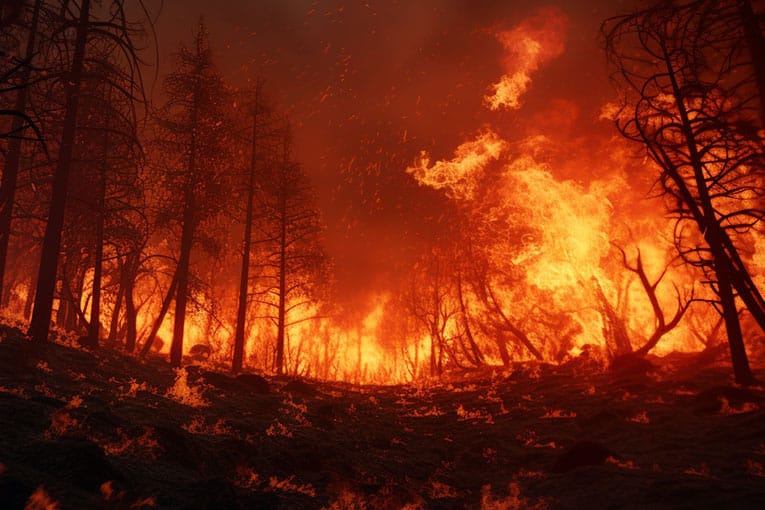
A large wildfire
Wildfires can be incredibly destructive

Events such as arson, poorly managed campfires, careless littering of lit cigarettes, improper burning of debris, and playing with matches or fireworks are often held responsible for igniting these devastating blazes.

This article aims to explore what causes wildfires, ranging from natural occurrences to human activities. 

By delving into these causes, we can enhance our knowledge and promote responsible behaviour to mitigate the future risks of devastating consequences of wildfires.

What is a Wildfire?

Wildfires are powerful and destructive forces of nature that can cause extensive damage to forests, natural habitats, and communities. 

Understanding the common causes of wildfires is crucial for prevention and effective fire management. 

By identifying the main causes of wildland fires, we can take proactive measures to reduce the risk of wildfires and protect our natural environment. 

What Causes Wildfires?

Wildfires start due to a number of reasons, with 11 of the most common causes being:

Lightning

Lightning is a natural cause of wildfires. 

Lightning strikes can ignite dry vegetation, particularly during periods of drought. The heat from a lightning strike can spark flames that spread through the surrounding landscape. 
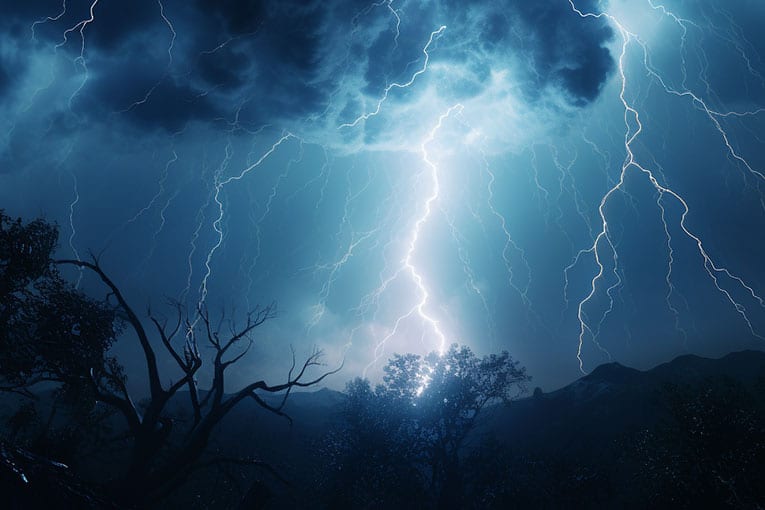
A lightning storm
Lightning is one of the main natural causes of wildfires

This can lead to large-scale wildfires, especially in areas with dry and combustible vegetation. 

Climate conditions and the frequency of thunderstorms can contribute to wildfires.

Campfires

Improperly managed campfires are a significant cause of wildfires. 

Unattended or poorly extinguished campfires can spread to surrounding vegetation and ignite a fire. 

Campers should always follow fire safety guidelines, including keeping fires small, using designated fire rings or pits, and ensuring that the fire is completely extinguished before leaving the site. 

It is crucial to douse the fire with water, stir the ashes, and repeat the process until the fire is cold to the touch.

Burning Vegetation

Whether intentional or not, burning of vegetation like agricultural burning or land clearing, can lead to wildfires. 

When uncontrolled, the spread of fires during vegetation burning can quickly escalate, especially in dry and windy conditions. 

Proper permits, monitoring weather conditions, and employing trained workers are essential for safe and controlled burning practices. 

It is important to follow local regulations and guidelines to prevent wildfires when conducting any form of vegetation burning.

Fallen Power Lines

Fallen power lines can be a significant cause of wildfires, particularly during windy conditions. 

Strong winds can cause power lines to break or come into contact with trees or dry vegetation, resulting in sparks and fires. 

Regular maintenance and inspection of power lines, timely tree trimming around power lines, and prompt repair of damaged infrastructure are essential for reducing the risk of wildfires caused by fallen power lines.

Cigarettes

Carelessly discarded cigarette butts can accidently start wildfires

Smokers should always use designated ashtrays or fire-safe containers to dispose of cigarette butts. 

It is crucial to fully extinguish cigarettes before discarding them and avoid smoking in fire-prone areas, particularly during dry and windy conditions.

Equipment Malfunctions

Equipment malfunctions, such as power tools, chainsaws, or machinery, can lead to wildfires if they generate sparks or excessive heat. 

Proper maintenance, regular inspection, and safe equipment operation are essential to prevent equipment-related wildfires. 

It is crucial to follow manufacturer guidelines, conduct routine maintenance checks, and promptly address any issues with equipment.

Vehicle Crashes

Vehicle crashes can cause wildfires when sparks or friction from the collision ignite. 

The heat generated from the impact, particularly with metal components, can also lead to fire ignition. 

Safe driving practices, proper vehicle maintenance, and avoiding off-road driving in fire-prone areas can help minimise the risk of wildfires caused by vehicle crashes.

Arson

Intentional acts of arson, where fires are intentionally set, are a significant cause of wildfires, and can lead to dangerous scenarios, and even loss of life

Arson can occur due to various motives, including vandalism, revenge, and even pyromania. 

It is a criminal offence and poses a serious threat to lives, property, and natural resources. 

Public awareness, community vigilance, and reporting suspicious activities can aid in preventing arson-related wildfires.

Controlled Burning

Controlled burning, also known as prescribed burning, is a planned fire management technique used to reduce vegetation fuel loads and promote ecosystem health. 

However, if not carefully executed, prescribed burns can escape control and result in wildfires. 

Proper planning, comprehensive risk assessments, and skilled personnel are essential for conducting prescribed burns safely. 

Adhering to specific weather conditions, monitoring fire behaviour, and having appropriate resources in place helps minimise the risk of prescribed burns turning into uncontrolled wildfires.

Fireworks

Improper use of fireworks, especially in areas with dry vegetation, can lead to wildfires. 

Fireworks produce sparks and embers that can ignite nearby combustible materials, including dry grass or trees. 

A fireworks show
Even though fireworks can be pretty to look at, they can be a cause of wildfires

Adhering to local laws and upkeep high fire safety standards regarding fireworks, using fireworks in designated areas, and ensuring proper disposal of fireworks debris is crucial to prevent wildfires.

Volcanoes

Volcanic eruptions can cause wildfires, particularly when hot lava or volcanic ash comes into contact with dry vegetation. 

Active volcano regions should have comprehensive emergency response plans in place to mitigate the impacts of volcanic-induced wildfires.

How does weather affect wildfires?

Increased temperatures alone do not guarantee a rise in wildfires. 

As previously stated, fires need a combination of 3 factors to survive; availability of fuel, fire-friendly conditions (such as dry weather), and the presence of an ignition source, whether human-caused or triggered by lightning strikes. 
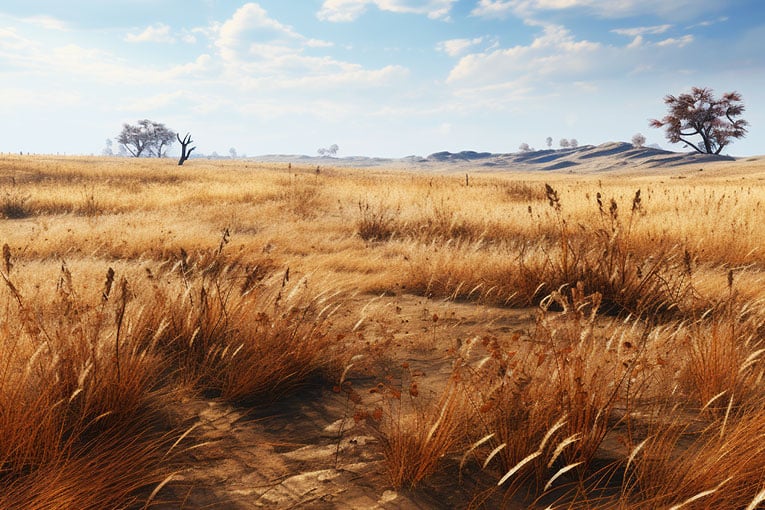
One small spark can cause wildfires when conditions are dry and arid

The amount and dryness of vegetation are crucial factors since live, moist vegetation is less susceptible to burning compared to dry, dead vegetation, which easily catches fire and aids in the fire’s spread. 

This is why areas affected by hot, dry weather and drought are much more likely to have wildfires than areas that are often rainy and cold.

Weather conditions play a critical role in fire behaviour. 

Strong winds, like those experienced in the 2022 Colorado wildfires, can accelerate the spread of fires, resulting in unprecedented devastation for the affected communities.

Wildfires become more severe during prolonged periods of hot and dry weather due to higher temperatures leading to increased evaporation, which dries out the vegetation and provides ample fuel for the fires to thrive.

Where do most wildfires occur?

Wildfires happen all over the world. Places like the United States, Canada, Australia, the Western Cape of South Africa, and Southern Europe, especially forested areas, grasslands, and shrublands, are particularly susceptible to these blazes, particularly during extended periods of drought and high temperatures.

Among the regions in the United States, California and other Western states stand out as being prone to wildfires. 

The vegetation in this area, comprising pine needles, dry shrubs, and grasses, possesses higher flammability compared to moister trees like maple and beech found in other parts of the country.

The Western US’s mild and arid climate further contributes to the fire risk. California, in particular, experiences long, hot, and dry summers, which lead to the dehydration of vegetation, leaving it highly susceptible to wildfires.

Conclusion

Wildfires can have devastating consequences for ecosystems and communities. 

Understanding the common causes of wildfires is necessary to be able to better prevent them. 

Whether ignited by natural occurrences or as a result of human negligence, wildfires can be mitigated through responsible behaviour, adherence to fire safety guidelines, and community awareness. 

Implementing fire prevention strategies, practising safe habits, and promoting fire education can help minimise the occurrence and severity of wildfires. 

By working together, we can reduce the impact of wildfires and protect our environment for future generations.

State of emergency declared over California wildfires

Governor Gavin Newsom declared a state of emergency in Placer and El Dorado counties due to the Mosquito Fire and in Riverside County due to the Fairview Fire on Thursday afternoon.

Both wildfires are threatening multiple communities and have forced the evacuation of tens of thousands of residents. The declaration has frees up state resources to help residents affected by the fire and to help firefighters battle the fires.

The Fairview fire, which over the weekend had grown to 4,500 acres has since spread rapidly with the latest update from Cal Fire on Thursday night stating that the blaze had grown to over 27,000 acres and remained only 5% contained.

Meanwhile, the Mosquito fire has grown according to the latest update also on Thursday night from Cal Fire to 13,705 acres with zero per cent containment.

The statement from Governor Newsom’s office noted that earlier this week, California secured a Fire Management Assistance Grant (FMAG) from the Federal Emergency Management Agency to help ensure the availability of vital resources to suppress the Fairview Fire.

Additionally, last week Governor Newsom proclaimed a state of emergency for Siskiyou County due to the Mill Fire, and announced that the state secured an FMAG to support the response to the fire.

Largest wildfire in California this year remains uncontained

In what has become the largest fire in California this year, the McKinney wildfire has now burned 55,493 acres (22,457 hectares) of drought-stressed timber and remains at 0% containment, the California Department of Forestry and Fire Protection reported.

The fast-moving fire went which began on Friday (29 July) has already become the largest fire in the state in the year to date. The blaze has forced around 2,000 residents to flee as it destroyed homes and critical infrastructure, mostly in Siskiyou County, home to the Klamath National Forest, according to a statement from Governor Gavin Newsom on Sunday, a day after the fire was declared a state of emergency.

Two bodies were found inside a burned-out car near the Oregon border, authorities said on Monday, as crews battled the blaze for a fourth day and took advantage of rainfall in the area.

Authorities have yet to confirm the extent of property losses, but the Cal Fire said in an update posted on Monday that more than 4,900 homes were threatened by flames.

With lightning forecasted over the next few days, extra resources from elsewhere in the state are being brought in to help fight the region’s fires, according to the US Forest Service.

California firefighters defend homes at Mount Wilson Observatory

On Tuesday 22nd September, US fire crews fought to defend homes and the famed Mount Wilson Observatory from California’s biggest and most dangerous wildfire, standing their ground at a major highway between the flames and populated areas.

The Bobcat Fire, which broke out Sept. 6 in the Angeles National Forest north of Los Angeles, has already blackened an area larger than the city of Atlanta and its rapid spread prompted worried law enforcement officials to call for new evacuations on Monday evening.

Once home to the largest operational telescope in the world, the Mount Wilson Observatory, which sits on a peak of the San Gabriel mountains near vital communications towers, said in an update that almost all the forest around it had burned.

Firefighters overnight kept the Bobcat from breaching containment lines near the observatory and were preventively burning vegetation ahead of the fire along state Highway 2, which runs northeast from Los Angeles.

This summer California already has seen more land charred by wildfires than in any previous full year, with some 3.4 million acres burned since mid-August.

The fires, stoked by extreme weather conditions that some scientists call evidence of climate change, have destroyed some 6,100 homes and other structures and killed 26 people, three of them firefighters.

Another 2 million acres have burned in Oregon and Washington during an outbreak of wildfires, destroying more than 4,400 structures and claiming 10 lives. But rain showers across the western Cascade mountain range helped fire crews in the Pacific Northwest gain control of those conflagrations.

Although California has seen little rain in September, bouts of high temperatures and gale-force winds have given way in recent days to cooler weather, enabling firefighters to gain ground.

But forecasters predict rising temperatures, lower humidity and a return of strong, erratic winds around midweek in Southern California and by the weekend across the state’s northern half, lending urgency to the firefight.

The Bobcat Fire has now scorched more than 109,000 acres to become one of the largest wildfires in recorded Los Angeles County history and was only 17% contained on Tuesday afternoon.

The flames came perilously close to the Mount Wilson Observatory last week before they were driven back by crews using air support.

Several more areas, including Pasadena, a city of 140,000 people, remained under evacuation warnings.

California’s fire season historically has run through October. Five of the state’s 20 largest blazes on record have occurred this year.

Fire crews continue to battle California’s Creek Fire

Firefighters in central California are currently searching for people stranded by a fast-moving fire that has already burned an estimated 45,000 acres. The Creek Fire started Friday evening and, fueled by timber and dry vegetation, quickly jumped the San Joaquin River and blocked evacuation routes.

More than 200 people were rescued overnight as military helicopters plucked the stranded from the Mammoth Pool Reservoir in Sierra National Forest, where they were asked to shelter in place after fire blocked the one road leading out of the area. Most of those rescued had minor or no injuries, but several were transported to local hospitals and at least two were “severely injured,” the Fresno Fire Department said early Sunday.

“We do believe that there are still other people out in the wilderness, and when daylight breaks, we will be continuing those rescue operations to go out and try to find them and get them to safety as well,” Madera County Sheriff Tyson Pogue told CNN on Sunday.

Most of those rescued were flown to the Fresno Yosemite International Airport, where emergency responders had set up a triage center to prioritize treatment. At least six burn victims were admitted to Fresno’s Community Regional Medical Centre.

Authorities are still investigating the cause of the fire, which is located near the San Joaquin River and the communities of Big Creek and Huntington Lake. Fire crews face steep, rugged terrain and high temperatures, which make extinguishing the fire difficult, Sierra National Forest authorities said.

As of Sunday, the fire was zero percent contained, according to Cal Fire, as giant plumes of smoke up to 50,000 feet tall were visible from the air. Several areas in Madera County were under mandatory evacuation orders.

Social media showed videos of people escaping the flames. Smoke from the fire spread throughout the region, filling nearby Yosemite National Park and coloring the sky an eerie orange.

The Creek Fire is just the latest blaze faced by California in a devastating fire season. More than 7,000 wildfires, many sparked by lightning strikes, had already burned over 1.4 million acres by the end of August, Gov. Gavin Newsom said last month.

California wildfires: ‘a major disaster’

Over 14,000 firefighters are battling 585 fires that have now burnt nearly one million acres (400,000 hectares) as President Trump has declared that wildfires burning through homes and devastating precious forestry in parts of California are a major disaster and has released federal aid.

Forecast high winds are threatening to drive flames into more populated areas as foul air blankets the state. At least six people have died and thousands have evacuated.

Most of the destruction has been caused by three large fire complexes in mountainous and wooded rural areas.

On Saturday 22nd August, California Governor Gavin Newsom said the SCU Lightning Complex fire south and east of San Francisco was the third-largest in the state’s history.

Video tweeted by the governor showed burnt tree stumps against the reddened fumes-filled sky and plumes of white smoke rising from ash-laden ground.

An evacuation order on Saturday extended to thousands of people in the Bay area near San Jose and warned others to be prepared to abandon their homes at short notice.

Exhausted firefighters continue to battle the flames, with some working 72-hour shifts in the dangerous, hot conditions, reports AP news agency. “They’re scrambling for bodies” to help fight the fires, an official in the city of Fresno told Reuters news agency.

In California’s oldest state park, flames scorched redwood trees that began their lives more than 2,000 years ago. The historic visitor centre of Big Basin State Park was burnt to the ground and officials say some trees, which tower as high as 330ft (100 metres), have fallen as the area was “extensively damaged”.

The state faces a more acute shortage of personnel than usual – the coronavirus pandemic has depleted a fire-fighting corps made up of prisoners, which has helped the state battle blazes since World War Two, due to early releases from jail.

At least 43 people including firefighters have been injured, and hundreds of buildings have burned down and thousands more are threatened.

After doubling in size on Friday, the fires continued to grow moderately on Saturday and firefighters made some progress in containing the flames.

More than 12,000 dry lightning strikes started the blazes last week during a historic heat wave in which thermometers in Death Valley National Park reached what could be the highest ever temperature reliably recorded.

The largest wildfire, called the LNU Lightning complex, is in the prominent wine-growing areas of Napa and Sonoma north of San Francisco and is just 15% contained, CalFire said on Saturday.

Further south in Santa Cruz county, 115 homes have been destroyed and some residents evacuated.

Firefighters dug a fireline around the University of California Santa Cruz campus as flames came within a mile of the buildings and surrounding area.

Gov Newsom has requested help from as far afield as Australia and Canada. Firefighters, engines and surveillance planes raced in from US states including Oregon, New Mexico and Texas.

Although California is used to wildfire, the governor called the fires unlike anything the state had seen before. “If you don’t believe in climate change, come to California,” he tweeted on Saturday.

With more than 650,000 coronavirus cases, California also has the highest number of infections in the US, and some evacuees have said they are afraid to go to emergency shelters.

US agencies have updated disaster preparedness and evacuation guidance in light of Covid-19. People who may be required to flee have been to told to carry at least two face masks per person, as well as hand sanitiser, soap and disinfectant wipes.

Emergency shelters are enforcing social distancing rules and mask wearing, and have even given individual tents to families to self-isolate. Some counties are seeking to set up separate shelters for sick evacuees or anyone who is found to have a high temperature.