Interschutz 2026 will see Magirus exhibit at the civil protection and security trade fair in Hannover from 1 to 6 June 2026, highlighting its evolving role as a system provider for fire and disaster control as well as defence and security.
Under the motto “Built to Protect,” Magirus Interschutz 2026 will be centred at Pavilion 32 at Interschutz 2026, where the company will present SmartControl turntable ladders, new equipment, live demonstrations and interactive formats designed to create a hands-on experience and place for industry exchange.
The company said the trade fair appearance reflects its transformation over more than 160 years, as geopolitical conflicts, emerging threats and rising demands for critical infrastructure protection continue to reshape civil protection requirements.
Magirus said it now operates across fire and disaster control and increasingly into defence and security applications, including tactical vehicle solutions for armed forces and security authorities.
Expanding role in defence and security systems
As part of its presence at Magirus Interschutz 2026, the company will emphasise its expanded Defence & Security business unit, positioning itself across the full spectrum of modern operational scenarios.
“The requirements for emergency services and operators of critical Infrastructure is changing noticeably. For us, Interschutz is therefore above all the place for personal exchange with customers, partners and emergency services,” said Thorsten Marquardt, Head of Global Sales at Magirus. “We want to expand our company and our solutions not only present, but make it tangible. The focus is on for us, the question is always how we can best support the responsibility for safety and security .”
Pavilion 32 as interactive hub for emergency services
The Magirus Pavilion 32 will function as an interactive hub featuring live demonstrations, partner engagement and the “Operation 112” firefighter challenge. The company said the format is intended to bring together emergency services, partners and the wider safety community.
Visitors will also be able to explore new operational ideas and technologies aimed at supporting future civil protection requirements, particularly around critical infrastructure and disaster response.
More information on exhibits, programme details and event updates is available via the company’s trade fair page at https://interschutz.magirusgroup.com/.
The Fire Brigades Union has announced that 20 MPs have signed an open letter calling for Israeli authorities to release a fire engine donated to Palestinian firefighters.
Fire Brigades Union members in Scotland donated a fire engine last year, packed with firefighting kit, equipment and medical supplies and arranged delivery to the port of Ashdod to be transported to Nablus in the West Bank.
It has been impounded by Israeli customs at the port since July 2024 despite having the necessary paperwork.
In November, firefighters and supporters held a demonstration outside the London embassy to demand the release of the fire engine.
The letter, signed by firefighters, trade unionists and MPs, calls for the immediate release of the fire engine so that it can be safely delivered to aid firefighters in Nablus.
The full statement
The full statement from the MPs and trade unionists reads: “As firefighters and fire and rescue service workers, members of the Fire Brigades Union, other trade unionists, Members of Parliament and campaigners for justice and human rights, we are calling for safe release of the fire engine sent by FBU Scotland to aid Palestinian firefighters – but impounded by the Israeli authorities.
“This appliance, packed with firefighting kit, personal protective equipment, breathing apparatus, cutting tools and medical supplies, was sent for use by the Palestinian fire and rescue service in Nablus, in the West Bank. It has been held in the Israeli port of Ashdod since July 2024.
“In November London firefighters and supporters demonstrated outside the Israeli embassy to demand its release. We add our voices to this call, so that the fire engine can be used for its intended purpose, to help firefighters in Palestine save lives.”
Call for Israel to release fire engine donated to Palestine announced by FBU: Summary
20 MPs have signed an open letter calling for Israeli authorities to release a fire engine donated to Palestinian firefighters, announce the FBU.
The statement explains how the fire engine needs to be used for its intended purpose, to help firefighters in Palestine save lives.
Fire engine donation to Palestine held at Israeli customs for six months
A fire engine donated by Scottish firefighters to assist emergency response efforts in the West Bank has been held at Israeli customs for over six months, according to The National.
The vehicle, sourced and stocked by members of the Fire Brigades Union (FBU) in Scotland, was driven from Dundee to Southampton before being shipped to the Israeli port of Ashdod.
Despite arriving with the required paperwork, the engine has remained impounded by Israeli customs, prompting calls for its release.
FBU calls on UK government to intervene
The Fire Brigades Union has urged the UK Foreign Office to take action to secure the release of the fire engine.
FBU Scotland Executive Council member Colin Brown told The Daily Record: “It is unforgivable that this emergency equipment is being withheld by the Netanyahu government.
The Foreign Secretary should be demanding the immediate release of this vital life-saving equipment that has been donated by the FBU.
The Israeli government cannot get away with such vindictive and cruel actions.”
SNP MP Stephen Gethins has reportedly contacted the Israeli ambassador regarding the matter.
Foreign Secretary David Lammy has also been approached about the issue.
Call for urgent action amid humanitarian concerns
FBU official and former firefighter Jim Malone has emphasised the urgency of the situation, highlighting the need for emergency equipment in the West Bank.
Malone said: “It is outrageous that this much-needed emergency equipment is still being held by the Israeli authorities.
With a ceasefire in place the need for this equipment is urgent.
The British Government must insist that the Israeli Government lift the blockade of the FBU’s donation so that it can contribute to relieving the humanitarian crisis on the ground.”
Fire engine donation: Summary
A fire engine donated by Scottish firefighters to the West Bank has been held by Israeli customs for over six months.
The vehicle, stocked with firefighting equipment, breathing apparatus, and medical supplies, was shipped to Israel with the required documentation but has not been released.
The Fire Brigades Union has called on the UK Foreign Office to intervene.
FBU representatives, including Colin Brown and Jim Malone, have condemned the delay, urging the British government to take action.
SNP MP Stephen Gethins and Foreign Secretary David Lammy have also been contacted regarding the issue.
Scottish business, Emergency One is delivering one of Iraq’s biggest-ever investments into its emergency services following a deal brokered by the UK government.
Ayrshire-headquartered Emergency One has been selected to supply 31 of the vehicles, half the order for Iraq’s Civil Defence Directorate, and Yorkshire based Angloco is supplying the other half.
Issued by UK Export Finance (UKEF), the government’s export credit agency, a c. $31 million loan allows Iraq’s Ministry of Interior to purchase 62 British-made fire-fighting vehicles.
The deal will facilitate the biggest overhaul of Iraqi fleet this century with each new vehicle, capable of carrying up to 6,500 litres of water and 500 litres of foam, on standby to help tackle frequent fires that break out in Iraq, especially in the summer, devastating businesses and communities.
Cumnock-based Emergency One, a UK manufacturer of fire and rescue vehicles, supplies over 90% of the UK’s fire and rescue services and continues to grow its international presence.
In 2023-24, UKEF supported businesses in Scotland with £45 million in new government financing support, helping them win new contracts overseas. It has two regional representatives dedicated to supporting Scottish businesses.
Scotland Office Minister Kirsty McNeill said: “This UK Government funding is bringing significant business to Ayrshire-based Emergency One, a leading supplier of fire and rescue vehicles.
“Deals like this, organised through the hard work of UKEF, are vital to boost our home-grown industries, support jobs and encourage growth for the benefit of the whole UK.
“I wish the company every success as they complete this contract that will make very important improvements to Iraq’s emergency services.”
By helping buyers to purchase UK exports more easily, UKEF loans secure large contracts with favourable payment terms for British businesses – including small businesses likely to need payment upfront before they can deliver a contract.
Promoting investment into local businesses and employers, this partnership supports this government’s Plan for Change to boost economic growth across all regions.
Emergency One, Managing Director, Steven Bell’s statement
Steven Bell, Managing Director at Emergency One, said: “We’re incredibly proud to be part of this significant project to modernise Iraq’s fire-fighting capabilities.
“The partnership with Iraq’s Ministry of Interior, supported by UK Export Finance, highlights the strength of British engineering and our commitment to delivering world-class fire and rescue vehicles.
“It’s an honour to contribute to the safety and resilience of communities across Iraq, and we look forward to continuing our support as part of this important collaboration.”
J.P Morgan, Global Head of Export Finance, John Meakin’s statement
J.P. Morgan acted as both Sole Mandated Lead Arranger and agent bank for the loan. Global Head of Export Finance at J.P Morgan, John Meakin said: “J.P. Morgan is delighted to support the finance of firefighting equipment from the UK to the Republic of Iraq.”
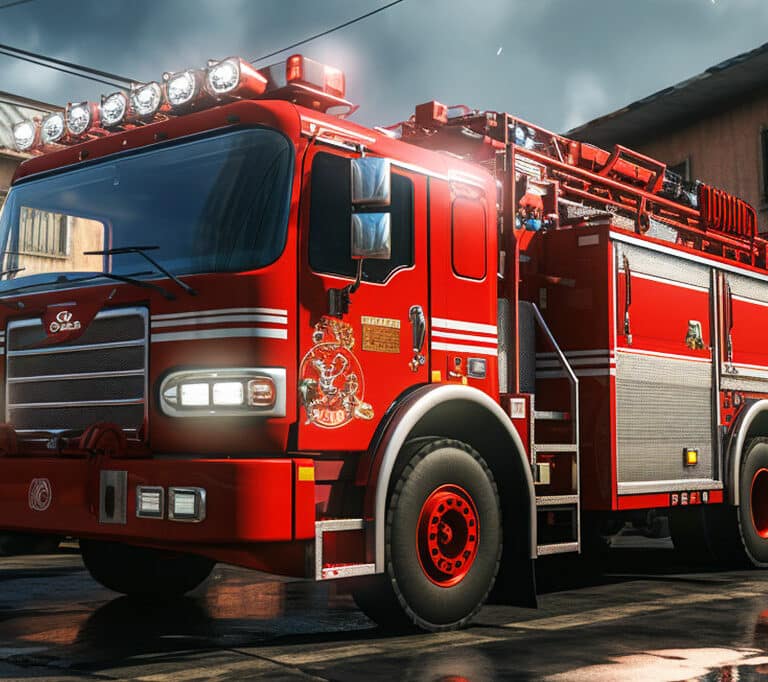
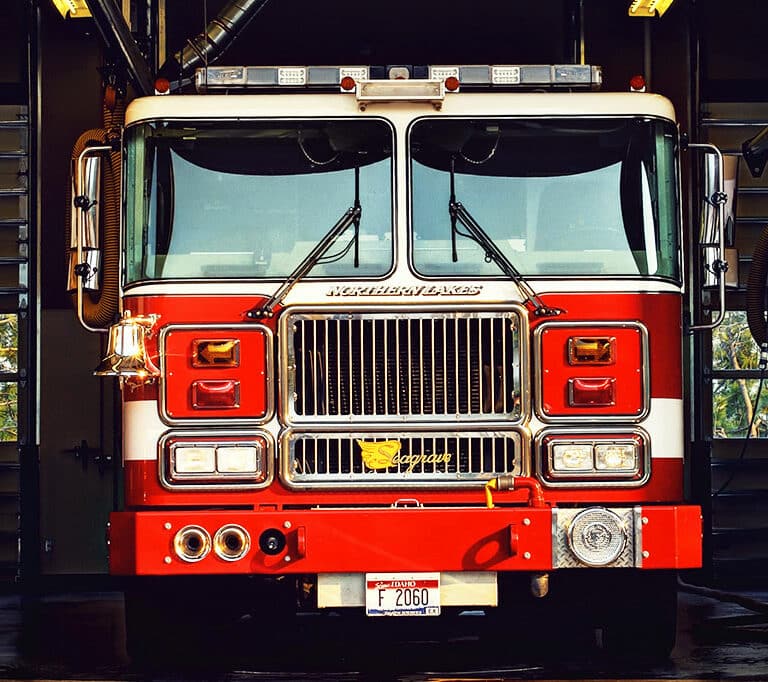
How much does a fire truck weigh is one of the most common questions asked by school kids whenever the fire service comes to visit.
Fire trucks, with their red flashing lights and blaring sirens, are a symbol of emergency response and safety in communities around the world.
These impressive vehicles are equipped with specialised tools and equipment to combat fires and save lives.
But have you ever wondered as an adult, not just how much does a fire truck weigh, but what equipment does it carry or even what types of fire truck are there?
In this article, we will answer these common questions and provide insights into the fascinating world of fire trucks.
How Much Does a Fire Truck Weigh?
The weight of a fire truck is a critical factor in its design and functionality.
The range in weight is primarily due to the size and capacity of the vehicle.
To answer the question of how much does a fire truck weigh, the simplest answer is that a standard fire engine, which is commonly used for responding to fires and emergencies, typically falls within the 20,000 to 40,000-pound range.
These trucks are equipped with essential firefighting equipment which add to their overall weight.
On the other hand, larger aerial ladder trucks, often used for rescuing people from tall buildings and providing elevated water streams, can be significantly heavier.
These trucks feature an extendable ladder, which requires additional structural support and hydraulic systems, contributing to their weight of up to 70,000 pounds.
A fire truck can weigh up to 70,000 pounds
The total weight of a fire truck includes various components.
The chassis, which serves as the foundation of the vehicle, contributes a significant portion to the overall weight.
The body of the fire truck, made of steel or aluminium, houses the equipment and water tanks.
Additionally, the equipment carried on the truck, such as ladders, firefighting tools, and medical supplies, further adds to the weight.
All these factors are carefully considered during the design and construction of fire trucks to ensure they are efficient, durable, and capable of responding effectively to emergencies.
How Much Does a Fire Truck Weigh When Full of Water?
Probably the second most asked question in relation to how much does a fire truck weigh, is how much does it weigh when full of water.
When a fire truck is filled with water, its weight can increase significantly due to the large water tank it carries.
On average, a fire engine can hold between 500 to 1,500 gallons (1,893 to 5,678 litres) of water.
Since each gallon of water weighs around 8.3 pounds (3.8 kilograms), a full tank can add an extra 4,150 to 12,450 pounds (1,882 to 5,647 kilograms) to the vehicle’s weight.
This added weight is a crucial consideration for firefighters and drivers, as it affects the truck’s handling and performance during emergency responses.
Properly managing the water supply is essential to ensure the fire truck can manoeuvre effectively and safely while combating fires and providing vital support to emergency situations.
How Long is a Fire Truck?
The length of a fire truck varies based on its type and model.
Standard fire engines typically measure around 25 to 35 feet (7.6 to 10.7 metres) in length.
However, aerial ladder trucks, equipped with extendable ladders, can reach impressive lengths of 75 to 100 feet (22.9 to 30.5 metres).
These longer fire trucks are often employed in high-rise firefighting and rescue operations, where their extended reach is essential for accessing upper floors and providing a safe evacuation route.
The varying lengths of fire trucks allow firefighting teams to choose the most suitable vehicle for specific emergency scenarios, ensuring an effective response to fires and other critical incidents.
How Wide is a Fire Truck?
The typical width of a fire truck ranges from 8 to 10 feet (2.4 to 3 metres).
This dimension is carefully designed to ensure that the vehicle can manoeuvre through narrow streets and tight spaces in urban areas without encountering difficulties or causing damage to buildings and obstacles.
A fire truck can be up to 3 meters wide
The compact width enables fire crews to quickly reach emergency scenes and provide timely assistance, even in congested environments.
What Types of Fire Trucks Are There?
Fire trucks come in various types, each designed for specific firefighting tasks, depending on the cause and type of fire. The most common ones include:
Fire Engines
Standard fire trucks equipped with water tanks, hoses, and firefighting equipment. They respond to most fire emergencies and carry a crew of firefighters. Recently, electric fire trucks have also been rolled out.
Aerial Ladder Trucks
Also known as ladder trucks or hook-and-ladder trucks, these vehicles feature extendable ladders and platforms for rescue operations in tall buildings.
Rescue Trucks
Rescue trucks are equipped with specialised equipment for rescuing people from hazardous situations, such as vehicle accidents or collapsed buildings.
Wildland Fire Engines
Designed for fighting wildfires in rural and forested areas, these trucks have off-road capabilities and carry water to extinguish smaller fires.
Airport Crash Trucks
Specialised fire trucks used at airports to respond to aircraft emergencies, such as fires or crashes.
Foam Trucks
Equipped with foam-generating systems to fight fires involving flammable liquids.
Each type of fire safety vehicle is carefully designed to address specific fire scenarios, ensuring that firefighters have the right tools and resources to combat various emergencies effectively.
The diversity of fire truck types enables firefighting teams to be prepared for a wide range of incidents, from standard structural fires to specialised hazardous material incidents.
These versatile vehicles play a crucial role in ensuring the safety of communities and protecting lives and property during emergencies.
What Equipment is on a Fire Truck?
Fire trucks are equipped with a wide range of tools and equipment to handle various emergency situations.
Some common equipment found on a fire truck includes hoses, nozzles, axes, saws, ladders, breathing apparatus such as oxygen masks, medical supplies, and thermal imaging cameras.
The exact equipment may vary depending on the specific type and purpose of the fire truck.
For example, ladder trucks will have extendable ladders and platforms for tall building rescues, while hazmat trucks will carry specialised gear for handling hazardous materials incidents.
The availability of this diverse firefighting equipment ensures that firefighters have the necessary tools to effectively and safely respond to different emergencies they may encounter.
How Long is a Fire Truck Hose?
The length of a fire truck hose varies based on the truck’s size and intended use.
Standard fire hoses used for firefighting operations are typically 50 feet (15 metres) long.
Aerial ladder trucks may carry longer hoses, up to 100 feet (30 metres), to reach higher floors in tall buildings.
The length of the hose is crucial in ensuring firefighters can effectively deliver water to the source of the fire, regardless of the building’s height or accessibility.
How Much Water Does a Fire Truck Hose Deliver?
The amount of water a fire truck hose can produce is determined by its diameter and water pressure.
Most fire hoses have a diameter of 1.5 to 2.5 inches (3.8 to 6.4 centimetres) and can deliver water at pressures ranging from 50 to 150 pounds per square inch (psi).
At an average flow rate of 100 psi, a fire hose can deliver around 50 to 125 gallons (189 to 473 litres) of water per minute.
This water flow is critical for effectively extinguishing fires and controlling their spread, especially in larger and more intense fire incidents.
Firefighters must skillfully operate the hoses to direct the water precisely and efficiently, making the most of their water supply to combat the flames and protect lives and property.
Firefighters need a special licence to drive a fire truck
The exact licence requirements vary depending on the fire truck’s weight, size, and type. For instance, a firefighter operating a standard fire engine may need a different endorsement than one operating an aerial ladder truck.
To obtain the necessary CDL and endorsements, firefighters must undergo specialised training to operate these vehicles safely and effectively.
This training includes learning how to handle the larger dimensions of fire trucks, understanding the unique challenges of emergency driving, and practising manoeuvres such as backing up, turning, and navigating tight spaces.
Firefighters also receive instruction on vehicle maintenance and safety protocols to ensure the proper functioning of the fire truck during emergencies.
Conclusion
Hopefully this article provided a clear and concise answer to how much does a fire truck weigh, and some of the most common questions to do with fire trucks.
Fire trucks are essential vehicles in emergency response and play a crucial role in safeguarding communities.
Their size, weight, and equipment are carefully designed to handle various firefighting and rescue tasks effectively.
The training and expertise of firefighters who operate these machines are vital in ensuring their efficient use during emergencies.
From carrying large amounts of water to navigating through tight spaces, fire trucks are equipped to tackle a wide range of challenges.
Understanding the capabilities of these vehicles helps us appreciate the dedication and skill of firefighters who work tirelessly to protect lives and property in times of crisis.
E-ONE, a leading manufacturer of fire apparatus and subsidiary of REV Group, Inc., has announced that the Boston Fire Department has placed an order for six additional E-ONE aerials.
This order is part of a new three-year contract with Greenwood Emergency Vehicles, the exclusive dealer for E-ONE in Massachusetts. The Boston Fire Department has ordered a total of 32 E-ONE aerials since 2016, and this latest order for six E-ONE Metro 100’ aerials will add to that count.
The LTH (low travel height) Metro 100’ ladder truck is designed to maneuver the tight city streets of Boston. Its 10’ 8” low overall height makes it suitable for every firehouse in the city, and it can fit under the low bridges of Storrow Drive, a major crosstown roadway in Boston.
The truck’s features include a short 220” wheelbase and 38’ 7” overall length for excellent maneuverability in the city, narrow 11’ jack spread, electronic stability control, and severe duty interior including severe duty dash, overhead, and door panels.
The truck also has “Inner City” bumpers with angled corners for improved turning radius, zinc flame spray coating on the integral torque box for corrosion protection, and storage for 265’ of ground ladders including a 50’, 40’, (2) 35’, 28, 20’ 16’ 14’ 10’ and a 17’ Little Giant ladder.
Mark MacDonald, President of Greenwood Emergency Vehicles, said: “We remain grateful and continue to be humbled by the faith that the “First In The Nation” Fire Department has placed in Greenwood and Emergency One, and we certainly consider it a privilege and an honor to work with them.”
Larry Daniels, Director of Sales at E-ONE, said: “It is a privilege to help the Boston Fire Department better serve its citizens with fire apparatus designed to meet the city’s specific needs. The Metro 100 – with its low travel height, short wheelbase and narrow 11’ jack spread – is the perfect truck for this big city department and we look forward to working with them for years to come.”
Operation Florian, a UK-based Fire and Rescue Service humanitarian charity, is seeking urgent donations to replace one of their two vans. The van in need of replacement has served the charity for 13 years and has come to the end of its useful life.
The van has travelled tens of thousands of miles across the country to collect equipment and served as a support vehicle for convoys to Bosnia and Herzegovina, Montenegro, Macedonia, and Moldova.
Since its inception in 1995, Operation Florian has donated vehicles, equipment, supplies, and expertise to communities around the world in need. The organisation relies on donations from members and the dedication of volunteers to carry out its work.
To continue their vital work, Operation Florian is appealing to individuals and businesses to donate a van to replace the one that has reached the end of its life and enable volunteers to continue collecting donations from the North of the country for fire and rescue services worldwide in need of fire safety supplies.
Operation Florian said it is ideally looking for a hi-liner long wheel base van or a box van with a tail gate.
Pierce Manufacturing Inc, has announced the Baltimore County Fire Department (BCoFD) in Maryland has placed an order for 23 custom Pierce fire apparatus.
The deal was managed by authorised Pierce dealer Atlantic Emergency Solutions in Virginia and is part of an initiative to improve the department’s strategic emergency response in the communities they serve.
The latest order includes ten Pierce Enforcer 750-gallon pumpers, six Enforcer 1,000-gallon pumpers, two Ascendant 107’ Heavy-Duty Tillers, three Heavy-Duty Rescue engines, one Heavy-Duty Rescue Unit, one Heavy-Duty Rescue Hazmat Unit, and one Freightliner tanker.
Safety for fire and EMS personnel was a top priority for the fire department and so all the new fire trucks are to be equipped with side roll protection and front airbags and some units will contain decontamination showers.
Fire Chief Joanne Rund said: “Our objective in purchasing the new apparatus is enhanced public safety. Baltimore County Executive John Olszeswki Jr. prioritised this goal and secured the necessary funding to upgrade the fleet to keep our communities safe for many years to come.”
BCoFD’s Fire Maintenance Fleet Manager Michael Huber commented: “Crews are happy with the manoeuvrability and ease of use of Pierce fire apparatus. They are eager to put this most recent order into service.”
“We appreciate Pierce and Atlantic Emergency Solutions working with us to meet our unique specifications and build the safest equipment for our crews,” Huber added.
Protecting the population
All new fire apparatus feature a new black-over-red paint color scheme, a visible representation to the community that BCoFD is working to keep them safe.
The Baltimore County Fire Department serves a population of nearly 850,000 people and responds to approximately 150,000 incidents annually. The department has more than 1,000 sworn and civilian personnel based at 25 career and 29 volunteer fire companies.
Bob Rosensteel, regional account manager for Atlantic Emergency Solutions. commented: “Working with the Baltimore County Fire Department to upgrade and improve their fleet has been an honor, and we are proud to have earned their trust by providing quality solutions and dedicated service.
“Now operating a full Pierce fleet, with some in reserve, having a manufacturing partner who listens to their needs with convenient service center access are critical factors for Baltimore County as we work to place 55 new fire apparatus in service within the next few years. We are committed to being a trusted resource every step of the way.”
Renault Trucks and Allison Transmission have announced that the Madrid Fire Department has selected Allison-equipped Renault Trucks vehicles as part of the renewal process set out in its 2019-2029 Firefighting Fleet Operational Plan.
The vehicles supplied include seven light urban fire trucks, two automatic aerial ladder trucks and four heavy-duty wildland fire trucks, all equipped with Allison fully automatic transmissions.
The Madrid Fire Department recently took delivery of 13 Allison-equipped Renault Trucks vehicles at a ceremony held at the Caja Mágica complex and attended by José Luis Martínez-Almeida, Mayor of Madrid; Inmaculada Sanz, Delegate for Security and Emergencies and municipal spokesperson; Loreto Sordo, Councilor for the Usera District; Javier Hernández, General Coordinator for Security and Emergencies; Enrique López, Director General for Emergencies and Civil Protection; and Rafael Ferrándiz, Chief of the Madrid Fire Department.
Ensuring compliance
Juan Antonio Sánchez, Key Account Sales Manager at Renault Trucks España commented: “The most remarkable feature of these vehicles is the spaciousness of the Renault Trucks cab, equipped with individual Bostrom seats and an internal anti-roll cage. This ensures compliance with current legislation and guidelines for vehicles of this type, in addition to providing greater capacities, dimensions and dynamics than those required of category-2 wildland fire trucks.
“An example is the 36º angle of approach. Moreover, Allison’s continuous torque offers greater acceleration and lower power loss when shifting gears.”
Inside the trucks
The seven light urban fire trucks, with Iturri bodywork mounted on the D 2.1 240.12 4×2 FPTL chassis, are fitted with Allison 2000 Series transmissions and feature Renault Trucks double cabs in accordance with the EN 1846 standard. These cabs have a 2-3 seat arrangement with Bostrom co-driver seats and three forward-facing rear seats.
The two automatic aerial ladder trucks, with Flomeyca bodywork mounted on the D 2.1 280.16 4×2 chassis, are equipped with Allison 3000 Series fully automatic transmissions. This model features a 3,500-millimeter wheelbase, special wide wheels on the rear axle and a maximum cab chassis width of 2,395 millimeters.
The four heavy-duty wildland fire trucks, with Iturri bodywork mounted on the D 2.1 280.14 4×4 CCR chassis, are equipped with the Allison 3000R transmission with output retarder for enhanced braking and reduced brake wear. These trucks feature Renault Trucks EN 1846-compliant double cabs with a 2-3 seat arrangement, Bostrom co-driver seats and three forward-facing rear seats, in accordance with the NFX61517 standard.
Sánchez continued: “The Allison 3000 Series with retarder guarantees the performance needed to satisfy the specific requirements of rural firefighting. Above all, I would highlight the contribution of the Allison fully automatic transmission when tackling long descents or steep grades.”
Trond Johansen, Director, European Area Sales at Allison Transmission, said: “It is a pleasure to work with Renault Trucks in fitting out this type of vehicle and bringing automation to the fire department. Obviously, a contract like this with the Madrid City Council reflects the fact that Allison automatic transmissions are highly valued for their great reliability, increased vehicle acceleration capacity of up to 35%, smoothness, uninterrupted power during gear shifts and total vehicle control, all of which are vital in extreme emergency situations.”
Sánchez added: “Renault Trucks and Allison have been working together for decades and are leaders in the industry. With so many drivers assigned to the same truck, Allison fully automatic transmissions ensure maximum vehicle performance in terms of safety, speed and maneuverability.”