Charleston Fire Department orders three new Pierce pumpers

Pierce Manufacturing Inc., an Oshkosh Corporation company, will be supplying the Charleston Fire Department in South Carolina. The order includes two Arrow XT pumpers and one Saber pumper. The department purchased the fire apparatus through Pierce’s dealer Spartan Fire and Emergency Apparatus, and delivery is expected in August 2022.

The Pierce Arrow XT pumpers feature a heavy-duty design with a short overall length of 29 feet and will be stationed in Charleston’s historic downtown district. The Saber pumper will support Charleston Fire Department’s suburban and rural service areas.

Joseph Roberts, assistant chief of technical services, Charleston Fire Department said: “The Charleston Fire Department has several fire stations built in the 1880’s and 1910 with height and length restrictions. Working with Pierce and their dealer, Spartan Fire, we were able to develop specifications for apparatus to fit into these older stations and maneuver through Charleston’s narrow historic streets. We purchased our first Pierce fire engine from Spartan Fire and Emergency Apparatus in 1983 and we’re confident in our continued relationship.”

The Pierce Arrow XT Pumpers will feature Arrow XT chassis, 500-gallon water tank, Hale 1500 gpm pump, Cummins L9 450 hp engine, and Side roll and frontal impact protection. Meanwhile the Pierce Saber Pumper will be built on the Saber chassis, and have a 1000-gallon water tank, Hale 1500 gpm pump, Cummins L9 450 hp engine bolted to the Allison 3000 EVS transmission

Robby Fore, president of Spartan Fire and Emergency Apparatus said: “We appreciate the long-standing relationship we have with the department which has a fleet made up almost entirely of Pierce vehicles. We are familiar with the challenges the department faces, including its historic fire stations and narrow city streets, and are proud to be able to provide the customized solutions and ongoing support they need to best serve the City of Charleston.”

The Charleston Fire Department serves a growing, thriving, and historic port city. The department includes four battalions from 17 fire stations with 401 personnel who responded to 21,165 calls for service in 2021 across a 134 square-mile radius. Charleston is known for its historic architecture, cobblestone streets, and oak tree-lined neighborhoods. The community requires fire apparatus with superior maneuverability for easy navigation on narrow residential and city roadways.

Evolution installs fire system at Edinburgh’s JWPS

Evolution has installed a customised fire and security solution the at Johnnie Walker Princes Street (JWPS) in the heart of Edinburgh, Scotland.

The Princess Street is frequented by several hundred thousand visitors annually on an immersive journey through the 200-year history. The street is known for its food and beverage, pubs, and bars. The JWPS experience is hosted across eight floors of the transformed landmark building in the Scottish capital. It features the 1820 rooftop bar, with views across the city and The Label Studio, which hosts a number of live events and performances throughout the year.

JWPS is owned by Diageo a global firm in beverage alcohol with more than 200 brands. Diageo appointed FES Group to tender for the fire and security system, and FES in turn recommended and appointed Evolution to manage the bespoke system’s design and installation.

Evolution’s solution comprises a complete fire detection and alarm system, including disabled refuge systems for emergency evacuation. The security system includes access control, CCTV, intrusion detection and an intelligent International Communications (InterComms) system which enables live communications with an infinite number of doors/master stations with no distance limitations, and can be fully integrated with other IP-based systems.

The fire and security systems are fully networked and integrated into a front-end graphics system that enables Diageo’s on-site security staff to monitor and manage all system components in a single platform. The platform has been specifically designed to protect against cyber-threats. This solution has archiving and failover technologies that provide business continuity across a variety of outages.

John Baillie, head of UK sales, Evolution, said: “JWPS is one of Edinburgh’s most popular attractions, located in a prestigious location and its status as a listed building meant we had to be mindful of a number of potential risks and structural restrictions. From the initial drawings and design phase, through to the commissioning of the new systems, we are proud to have been involved in this project, delivering a complete fire and security system tailored to meet the specific needs of the client.”

NVFC and Anheuser-Busch to hydrate US fire volunteers

The National Volunteer Fire Council (NVFC) has joined hands with Anheuser-Busch to provide hydration to volunteer fire departments responding to wildfires.

For the fourth year running the initiative, which is held under the name of the Emergency Drinking Water for Wildland Firefighters programme, will help volunteer departments that struggle with limited budget and resources.

The programme is an expansion of Anheuser-Busch’s longstanding tradition of providing emergency drinking water and supplies for disaster relief efforts. Anheuser-Busch is continuing its commitment in 2022 by pledging to donate 1.5 million cans of clean drinking water to help keep wildland firefighters hydrated as they protect and strengthen their communities.

Since the program began in 2019, nearly 4.9 million cans of water have been distributed to more than 960 departments across 49 states.

To apply for the emergency drinking water, departments must be based in the USA, annually respond to wildfires, be over 50% volunteer, and serve a population of 25,000 or less. Departments in declared emergencies due to wildfire will also be able to request water outside of the application period to help with their immediate wildfire response needs. The application period is open through March 15 and can be applied for on www.nvfc.org/water.

Lack of domestic smoke alarms in UK causing fatalities

In research presented by BAFE and NAPIT, data collated over the last decade (2010-11 to 2020-21) in England, Wales, and Scotland record an unsettling 424,464 dwelling fires.

These fires resulted in almost 82,000 non-fatal casualties and close to 3,000 deaths. In more recent statistics made available by Fire and Rescue Services nationwide, there is an ongoing issue with high failure rates or a complete absence of domestic smoke alarms.

In England alone, during 2020 / 2021, there was a 28% failure rate of smoke alarms (i.e. that failed to operate or were not present). This failure rate rises to 39% in Scotland and increasing even further to half of all fires (50%) in Wales.

The ‘Fire Kills’ campaign from the UK government states: “You are around 8 times more likely to die from a fire if you don’t have a working smoke alarm in your home”. Both BAFE and NAPIT have stressed the paramount importance of having suitable life safety systems in place.

Provisional data from the Department for Levelling Up, Housing & Communities reports close to 176,000 new build dwellings were started in England alone during the previous 12 months from year ending 2021 (July-September). It is of key importance that the housing development sector complies with Building Regulations and relevant Approved Documents when providing appropriate domestic fire detection and alarm systems. These must be installed by competent contractors.

In August last year, BAFE launched its latest competency scheme with NAPIT, called DS301. This provides a route for contractors to demonstrate their competence to design, install, commission, and maintain Grade D fire detection and fire alarm systems in domestic premises. This supports appropriate British Standards and working best practice, most notably the latest iteration of BS 5839-6 (Code of practice for the design, installation, commissioning and maintenance of fire detection and fire alarm systems in domestic premises).

Justin Maltby-Smith, managing director BAFE, said: “This information clearly outlines that it is extremely important that any work on Grade D fire detection and fire alarm systems is performed in compliance with the appropriate current regulatory and competency documents available. Having suitable systems in place will aid in alerting residents as quickly as possible, allowing for a safer evacuation and providing emergency services more time to mitigate any damage. The housing sector has a great responsibility to use competent contractors, which is why the BAFE DS301 Scheme was developed, and it will clearly help in evidencing this competency. We must not lose focus that these are people’s homes, and they should feel safe and be confident in the systems installed.”

Frank Bertie, chief technical officer, NAPIT added: “These statistics show the risk to life posed by fire is a real threat. NAPIT are proud to be leading the way with the introduction of the new DS301 Scheme with BAFE to provide homeowners, house builders, management companies and specifiers with confidence that the contractor they use is appropriately qualified, competent, and assessed.  Registered members on the NAPIT DS301 Scheme have demonstrated their competency to deliver design, installation, commissioning and/or maintenance works for Grade D fire detection and fire alarm systems in domestic premises. Correctly installed fire detection systems help save lives and must be considered a priority in all homes.”

Authorities knew dangers of cladding that caused Grenfell tower fire

Long before the Grenfell Tower fire, a senior official has admitted that the government knew the folies of the cladding used in the building.

The official, reported The Guardian, knew that plastic-filled cladding panels burned “fast and fierce”, 15 years before the incident. It was also known that these sort claddings weren’t suited to be used in tall buildings.

Anthony Burd, the principal fire safety professional and later head of technical policy in the government’s building regulations division from 2000 to 2013, denied there was a cover-up.

The tests revealed a “catastrophic” failure in the cladding panels, with flames reaching 20 metres into the air within five minutes.

Similar panels went on to be used on more than 400 high-rise blocks, including Grenfell, where they were the main cause of the spread of the fire on 14 June 2017 that killed 72 people.

Burd said the results should have been published but denied that this did not happen because the government feared it would trigger “an immediate cladding crisis” and was afraid of the response of the companies who made the materials.

The inquiry is focusing on how combustible insulation foams and aluminium composite panels (ACM) filled with a plastic core that burns like petrol came to be allowed on Grenfell and thousands of other homes. It has already heard how Arconic, which made the combustible panels on Grenfell, targeted the UK market for sales of its most combustible polyethylene-filled panels because of less stringent requirements.

Kentec’s K-Mesh wireless system installed on 1,000-year Chester Cathedral

K-Mesh, a wireless fire detection technology from Kentec Electronics, has managed to tackle several challenges enroute its successful installation at the historic Chester Cathedral.

Brad Parker, founder of Charles Thomas Heritage Fire Protection, was tasked with specifying and upgrading the wireless fire detection system previously installed in the Cathedral. The thick walls and lead-lined roofs and the other challenges that come with a building that can trace its roots back to 1093, meant Brad had to think outside the box. 

He opted for Kentec’s K-Mesh system, a technology that uses self-healing and configuring mesh technology. It also makes it easy to use, install and commission – and ultimately provides robust assurance that fire incidents are detected and communicated immediately. It is available as part of a complete fire detection system with Kentec-manufactured panels, such as the Syncro AS panel and in this case the Taktis panel.

A wireless translator module, which sits at the centre of the K-Mesh system, is hard-wired to the fire alarm control panel loop and communicates continuously with the wireless devices. Sensors are supplied in three variants: optical; thermal; and multi-criteria, with the optical and multi-criteria sensors featuring adaptive signal processing and double dust traps to prevent false alarms. Thermal detectors can respond to a fixed temperature threshold or detect a rate of rise in temperature. Wireless sounders, call points and testing kits are also available within the range.   

K-Mesh has a seven-to-ten-year battery life, which is approximately twice that of the industry standard. The technology is also fully expandable, and configurable from anything from two to 2,000 devices. Further capabilities include a communication range of up to 1,200 metres and immunity to hacking.   

Due to the size of Chester Cathedral, many expanders were needed, and with the K-Mesh system, each expander has up to 5 redundancy paths which connects to the strongest expander, creating the mesh. Even the dead spots in the cathedral can communicate with the strongest radio signal expander within its area, so in case of an emergency, every corner of the building is covered. 

“With the latest mesh technology, rather than one expander we can have three, four or even five redundancy paths and the signal connects itself automatically to the strongest expander to create the mesh,” Parker explained. 

Byronn Alty, operations manager, Charles Thomas Heritage Fire Protection said: “We went to what we would believe would be the dead spots within the cathedral and low and behold the device started communicating with the strongest radio signal expander within its area. I would look at the drawings and thought it would communicate with expander one, and yet the device ends up linking to expander two.”

A further benefit to the mesh technology is that it is plug and play: “The cathedral has an outbuilding with an old bell tower so there needed to be a link between the two. This was an initial design challenge for us to think how we were going to get radio over there, but the new wireless mesh is just plug and play and it was just great to see it working,” Alty added.

Kevin Swann, managing director, Kentec Electronics said: “We are pleased and excited about our new K-Mesh system and seeing it installed in such an important landmark is an honour and confirmation of our best practice. It is fast to install and less invasive to a building’s structure and all of us here at Kentec are committed to helping protect our heritage buildings and assets of national importance.”

MAF Associates makes three key appointments

Fire risk assessment and consultancy specialist MAF Associates has unveiled three key appointments, strengthening its office and technical teams. The firm claims its gearing up for demand for its services expected to grow as enforcement of the Fire Safety Act 2021 begins, PAS9980 is unveiled, and the Building Safety Bill passes into law.

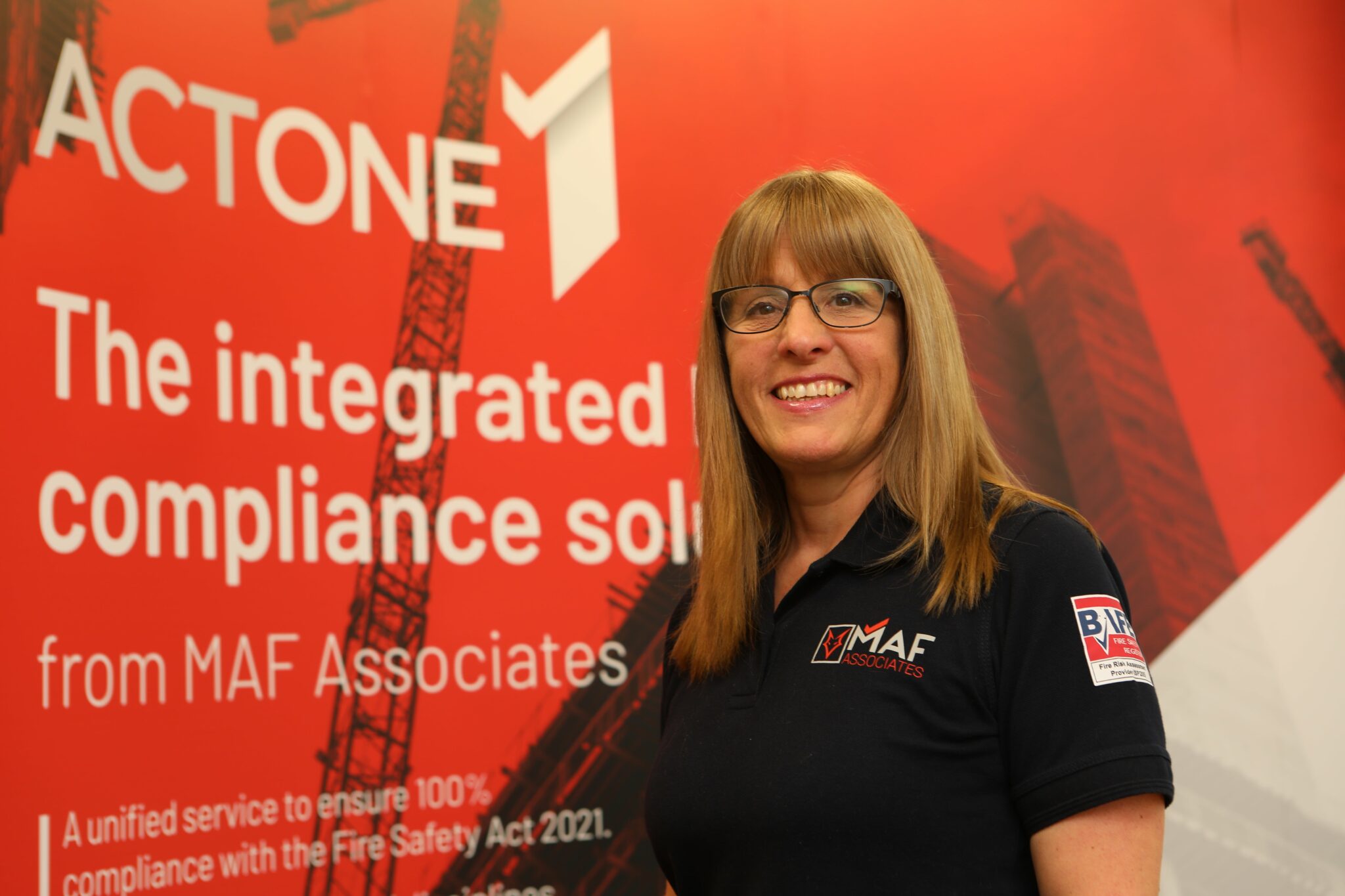
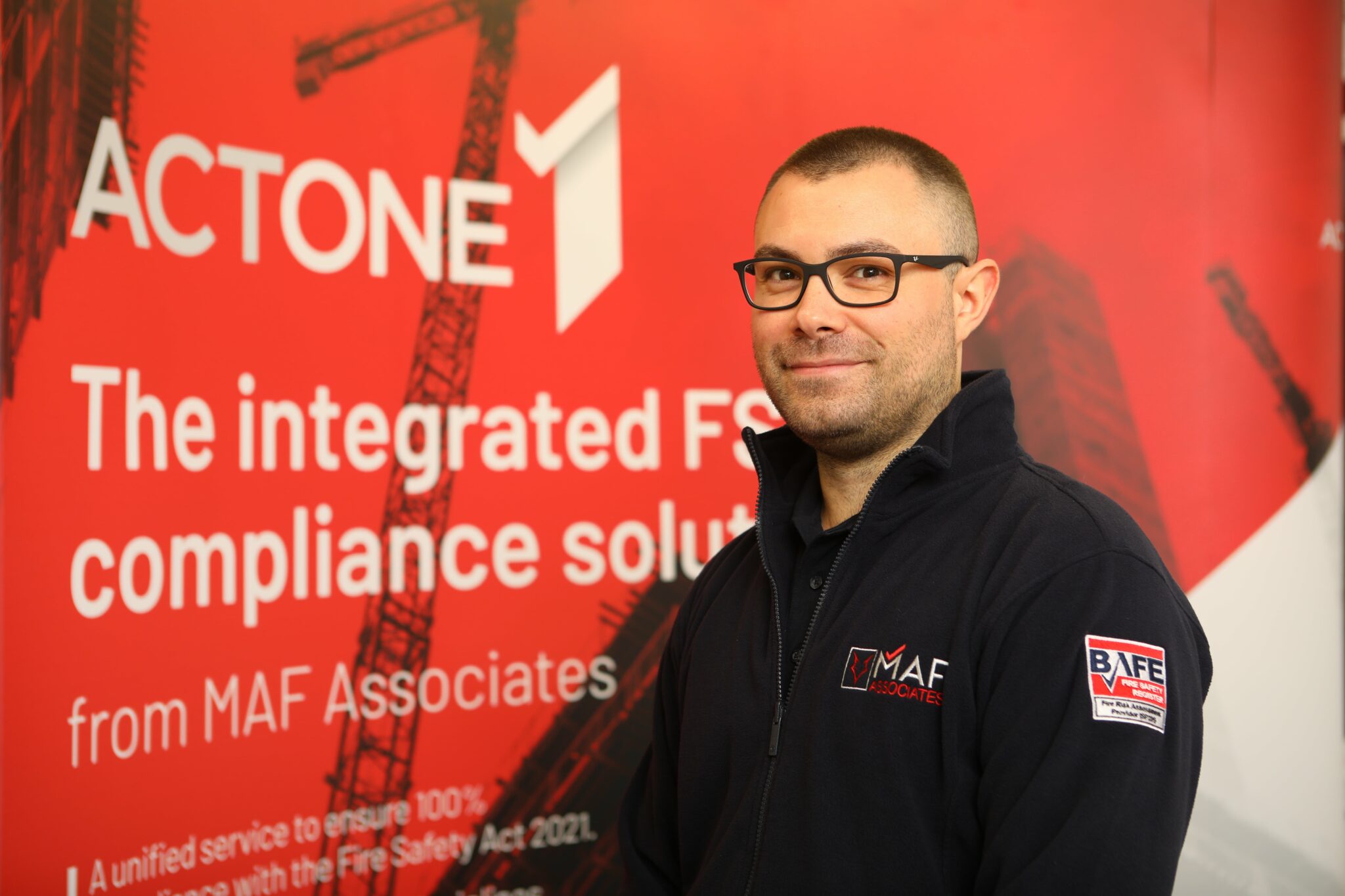
The frontline team has been boosted with the hiring of Mark Wells as facade project manager and Ben Mason as fire risk assessment manager, while Trudy Pickard joins the team at MAF Associates’ Leicestershire head office as client services coordinator.

Mike Fox, founder, and managing director of MAF Associates said: “…2021 was a relatively quiet year as we waited for legislation to be passed and guidance to be published, we can expect 2022 to be a busy one, which is why we wanted to ensure we had the right people in place to meet demand. With new legislation coming into force and rapidly evolving government policy on the issue of defective cladding, our surveying and fire risk assessment teams are going to be very busy, so it was vital to find people with the appropriate skills and experience.

Trudy Pickard.

“One thing that has become clear since Grenfell is that the UK does not have enough professionals to meet demand for all of the inspections and surveys that are required, especially when it comes to external inspections and cladding in particular. We take pride in being one of the few companies that can offer a full range of internal and external fire risk assessments, and the latest additions will further enhance that capability.”

Wells, an industry veteran, has joined the company after spending a decade in the Middle East. He said: “After working in the Middle East for a decade, and subsequently on projects as diverse as the Abu Dhabi F1 Circuit and the Walkie Talkie in the City of London, I have found my skills to be in unprecedented demand over the last five years. I am pleased to be joining the MAF Associates team, where there is a clear mission to support bringing all UK buildings up to the proper fire safety standards, while also offering the training and support to bring more people into the industry.”

Fox launched MAF Associates in 2010, initially focusing on the provision of expert witness services for insurers and construction companies. Before founding MAF Associates, he had worked for three decades in the construction sector, including posts with roofing, cladding and building products companies.

Ben Mason.

London development installs 2,000 Hyfire wireless devices

More than 2,000 Hyfire wireless devices have been installed across four towers in a London development. The project was completed with installers Gemini AMPM and property management firm FirstPort.

With up to 25 floors, the Elektron Tower, Proton Tower, Neutron Tower and Switch Tower are located on the banks of the Thames in Tower Hamlets, comprising 497 apartments in total. With fire system upgrades required outside the normal schedule of improvements to the buildings, wireless was an obvious choice, helping to limit time on site and reducing impact on the fabric of the building.

Jamie Dawson, director, Gemini AMPM, said: “With the requirement to install the upgraded system in an occupied buildings, wireless was the obvious choice, and Hyfire wireless devices are the best in the business. The original schedule to install the 2,000 individual detectors, call points, sounders and other wireless devices was six weeks, but we managed it in four thanks to the ability to pre-programme devices offsite and install them in minutes, with around 90% less cabling required.

“Our installers worked with the Hyfire team, who helped us to pinpoint the exact number of devices required and where they should be located. The onsite property managers from FirstPort helped facilitated us working across the four buildings and liaised with residents, ensuring we could gain access to 99% of apartments within the four-week schedule.”

Taurus is a completely new range of high-performance wireless detection, control and alarm devices, based on a new protocol that offers unprecedented capabilities, quality and reliability. The range is fully certified to EN54 and fully compliant with BS5839 Part 1.

Standard addressable or conventional fire panels are wired via a loop to translators, from which wireless devices can be used on their own to build fully wireless systems of virtually any size or mixed with Hyfire wired products to provide seamless hybrid solutions, offering total flexibility to specifiers and installers.

Ollie Murray, regional sales manager at Hyfire said: “Since the launch of Taurus earlier in 2021, more and more installers have been discovering the benefits that wireless fire devices can offer. This is just one example of a project where fire system installations are made simpler and quicker, which is particularly beneficial in situations where buildings remain occupied. Whereas the upfront cost of the unit may be a little higher, the savings on running wiring loops and making good after are also considerable, so the cost/benefit analysis in favour of using wireless is highly favourable, and that’s before you even consider the other benefits.

The Taurus range includes all devices required to build a fully wireless commercial fire system, including optical, multi-criteria and heat detectors, manual call points, wall sounders, sounder bases, and output/input modules. The Taurus translator can process up to 128 devices, with expanders that can extend the range of the system by up to 1km in open air. This effectively means that the scale of the system is limited only by the number of devices that the fire panel can handle. Tony Ulasi, development manager at FirstPort, said: “Installing a new fire system across these four landmark towers is a huge operation. We needed to work closely with a trusted supplier that could provide a cost-effective solution, whilst going above and beyond to minimise disruption to our tenants during the pandemic. From the beginning of the project Gemini AMPM ticked all the boxes – from product selection, to design, to installation. As a result, we have been able to prioritise safety, whilst achieving considerable cost savings.”

Birmingham university launches UK-first fire apprenticeship programme

A fire engineering degree apprenticeship – the first of its kind in the UK – is growing its student and employer base to meet national demand for fire engineers and in line with new Government legislation.

The part-time Higher-Level Degree Apprenticeship in Fire Engineering, offered by Birmingham City University and developed in partnership between the National Fire Chiefs Council and the UK’s commercial fire engineering industrial sector, is a response to new Government legislation and recommendations and requirements for a workforce to address the shortfall.

The public inquiry and the investigations into the dreadful loss of life at Grenfell in 2017 identified a massive competency gap and an opportunity for people to acquire new skills in fire engineering across the UK, with the Government currently progressing a new Fire Safety Bill and Building Safety Bill through Parliament.

One of the UK’s first fire engineering apprentices received a boost to his studies after being invited to join a recent virtual call with Minister of State for Building Safety and Fire Lord Stephen Greenhalgh.
David Cooper, a firefighter based at West Midlands Fire Service’s Northfield station in South Birmingham discussed his career journey so far. He said: “It has been a brilliant journey for me so far, and to speak with the Minister early in the course was a great experience. We’re grateful that he gave his time to find out more about our work and to share encouragement. As with any challenge, I’d say to anyone considering this apprenticeship to grasp the opportunity with both hands.

The degree course is ideally suited to those currently working in the Fire and Rescue Service and in Fire Engineering consultancies, works to a national standard and employers can use the Apprentice Levy Fund to pay for the course, with students combining full-time employment with four years of part-time study to achieve a formal qualification.

Area Commander Steve Ball, of West Midlands Fire Service, said: “We’re proud to be partnering with Birmingham City University for this apprenticeship degree opportunity. West Midlands Fire Service is committed to reducing risk across our communities, and this includes a focus on the built environment. We wish Firefighter Cooper and his fellow students every success on their fire engineering journeys.”

Mike Leonard, visiting professor of Manufacturing and Construction at Birmingham City University said: “Birmingham City University has recognised the need to close the competence gap by becoming the first UK university to offer the Fire Engineering Degree Apprenticeship, allowing new entrants and experienced professionals to future develop their skills.

The majority of the first intake are mature students, who can often draw on in-depth experience and overlay this with the learning from the course to become more rounded and qualified professionals.