Firefighter and union leader Bob Brooks has officially entered the race for Pennsylvania’s 7th Congressional District.
Firefighter Challenge Coins: Meaning, Symbolism, and Best Gift Ideas
Explore the meaning and tradition of firefighter challenge coins. Discover how they honor bravery and unity — and why they’re the perfect personalized gift for firefighters.
Poland fire district shifts coverage to neighbouring departments
The Poland Joint Fire District in New York has announced it will not renew its contract with the Poland Volunteer Fire Company.
David Bowman wins three firefighter challenge titles in 2025
Triple gold confirmed by The City of Charlotte in Canada
The City of Charlotte has reported that David Bowman won three gold medals at the 2025 World Police and Fire Games in Winnipeg, Canada.
According to the city, Bowman topped the 50–59 male individual, tandem and relay firefighter challenge categories.
The wins continue a long competitive career that runs alongside his service with Charlotte Fire.
Bowman is 56 and first joined Charlotte Fire in 1997.
The 2025 showing adds to his medals at previous editions of the Games.
Charlotte, United States service and competition record
The City of Charlotte stated that Bowman has competed in the firefighter challenge since 1998 and has completed more than 200 individual runs.
He holds 12 world championships, more than seven national championships and over five world records.
Bowman entered the Dr Paul O Davis Firefighter Challenge Hall of Fame in 2024.
His competitive record sits alongside more than two decades of operational work.
The department indicated that the combination of service and sport is central to how Bowman approaches his role.
Firefighter challenge events and format
Bowman describes the firefighter challenge as a timed course that simulates core tasks while wearing full gear and breathing from an SCBA.
Bowman said: “There are six different elements. You’re on air, just like you would be at a house fire.
“First, you carry a high-rise pack up five flights of stairs.
“You drop it, hoist a second hose up the same stairs, come back down, and then hit a Kaiser machine with a sledgehammer to simulate opening a roof.”
Hose advancement and a rescue drag complete the course. The challenge is often referred to by competitors as a demanding two-minute effort.
Event times and performance comparisons
The City of Charlotte stated that Bowman compared recent times from domestic events with his world performance last year.
Bowman said: “At my last event in St. Paul, I ran it in 1:45.
“The second-place guy was at 2:15.
“But at Worlds last year, I hit 1:38.
“That is the level you have to be at to compete with the best.”
The city added that Bowman has described the event as “the toughest two minutes in sports.”
Operational roles and international links
The City of Charlotte reported that Bowman has served in Special Operations for more than 20 years, including roles with North Carolina’s Urban Search and Rescue team and the NC Helicopter Aquatic Rescue Team.
Bowman said: “I think it prepares me better to serve the community.
“If I’m in shape, I can do my job better.
“My goal has always been to be ready when the bell rings, ready to take someone from a bad place to a good place.
“That is what our job is, whether it is a small EMS call or a terrible fire.”
Charlotte Fire Chief Reginald Johnson said: “David Bowman is the embodiment of commitment and excellence.
“He is a world-class athlete, a mentor to his peers, and a firefighter whose heart is as strong as his will.
“His success in the firefighter challenge is remarkable, but what inspires me most is how he channels that strength into serving our community.
“He is, without a doubt, one of Charlotte Fire’s modern-day gladiators.”
The city added that Bowman links competition with professional identity and team representation.
Bowman said: “You can’t do this halfway.
“Every event you step into, you’re wearing the Charlotte Fire name.
“That means something to me.
“I want people to know that we’re not just ready for competition, we’re ready for the call.”
The department reported that Bowman also highlighted the international community around the challenge.
Bowman said: “As firefighters, we already have a bond, no matter where you are in the world.
“The challenge just adds another layer.
“I’ve got friends from all over, Canada, Europe, people I talk to all the time.”
Relevance for fire and safety professionals
The City of Charlotte’s report links physical conditioning and role-specific drills with operational readiness for firefighters.
It shows how competitive simulation can reinforce task proficiency under time pressure and respiratory load.
It indicates that peer networks formed through international events can support knowledge exchange across services and jurisdictions.
David Bowman wins three firefighter challenge titles in 2025: Summary
The City of Charlotte reported that David Bowman won triple gold at the 2025 World Police and Fire Games in Winnipeg.
The medals were in the 50–59 male individual, tandem and relay categories.
The city said Bowman joined Charlotte Fire in 1997.
It reported that he began competing in 1998.
The department stated that he has completed more than 200 individual runs.
It said he holds 12 world championships.
It added that he has more than seven national championships and over five world records.
The city noted that Bowman entered the Dr Paul O Davis Firefighter Challenge Hall of Fame in 2024.
It reported that the challenge simulates firefighting tasks while wearing full gear and using an SCBA.
Charlotte Fire Chief Reginald Johnson praised Bowman’s service and competitive success.
Firefighter Ranks in Order (Low to High)
Firefighting is a noble profession that requires bravery, dedication, and skill.
Firefighters play a crucial role in protecting lives and property from fire hazards.
The firefighting profession in the U.S. is organised with a clear hierarchy of ranks.
But what are the firefighter ranks in the U.S.?
Firefighter ranks indicate a firefighter’s experience, responsibilities, and leadership within the department.
Understanding the different firefighter ranks helps to clarify the structure and functioning of fire departments across the country.
The History of Firefighting in the US
The Beginning of Firefighting the in US
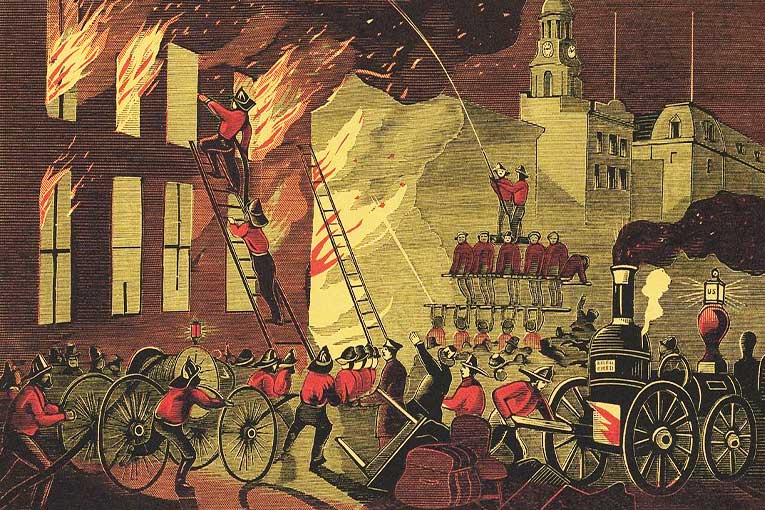
Firefighting in the United States has a rich history that dates back to the colonial era.
The first organised firefighting efforts began in the early 1600s, with bucket brigades made up of volunteers.
These early firefighters would form lines to pass buckets of water from the nearest source to the fire.
In 1736, Benjamin Franklin assisted in the creation of the Union Fire Company in Philadelphia, the first formal firefighting company in the colonies.
This marked the beginning of organised fire departments.
The Evolution of Firefighting
Throughout the 19th century, fire suppression evolved with the introduction of hand-pumped fire engines, steam-powered engines, and, eventually, motorised fire trucks.
The development of better firefighting equipment and techniques significantly improved the effectiveness of fire departments.
The formation of paid, professional fire departments in major cities further enhanced the ability to respond quickly and efficiently to fires.
Modern Firefighting
In the 20th century, advancements in technology and communication, along with improved building codes and fire detection and prevention measures, contributed to a significant reduction in fire-related deaths and property damage.
Today, firefighting is a highly professionalised field, with rigorous firefighter training and a clear rank structure that ensures the efficient operation of fire departments across the country.
Firefighter Ranks in the US
The U.S. fire service is organised into several ranks, each with specific roles and responsibilities.
The firefighter ranks, listed from lowest to highest, reflect a firefighter’s level of experience, training, and leadership within the department.
Probationary Firefighter
The probationary firefighter is the entry-level of firefighter ranks in the fire service.
After completing initial training at a fire academy, probationary firefighters are assigned to a fire station, where they gain practical experience under the supervision of senior firefighters.
During the probationary period, which typically lasts six months to a year, new firefighters must demonstrate their ability to perform the duties required of them.
This includes responding to emergencies, maintaining equipment, and participating in ongoing training.
Successful completion of the probationary period is required to be promoted to the next rank.
Firefighter
Once the probationary period is successfully completed, the firefighter becomes a full-fledged member of the department.
Firefighters are responsible for responding to emergency calls, including fires, medical emergencies, and hazardous material incidents.
They work as part of a team to extinguish fires, rescue victims, and provide emergency medical care.
Firefighters also participate in ongoing training to maintain their skills and stay updated on the latest firefighting techniques.
The role of a firefighter is physically demanding and requires a strong commitment to public service.
Driver Engineer
The driver engineer, also known as a fire apparatus operator, is responsible for driving the fire truck to and from emergency scenes.
In addition to operating the vehicles, driver engineers are responsible for maintaining and operating the pumps, hoses, and other equipment on the fire truck.
This role requires a thorough understanding of the mechanical aspects of fire apparatus and the ability to operate the equipment under high-pressure situations.
Driver engineers also assist with firefighting and rescue operations when not engaged in driving duties.
This rank is typically achieved after several years of experience as a firefighter and requires additional training in vehicle operation and equipment maintenance.
Lieutenant

A lieutenant is the first level of officer in the firefighter ranks.
Lieutenants are responsible for leading a small team of firefighters during emergency operations and daily activities.
They are in charge of directing the team’s efforts at the scene of a fire or other emergency, making critical decisions, and ensuring that all safety protocols are followed.
In addition to their leadership duties, lieutenants are responsible for training and mentoring junior firefighters.
The role of a lieutenant requires strong leadership skills, decision-making ability, and a thorough understanding of firefighting tactics.
Captain

The captain is a higher-ranking officer who oversees a larger team of firefighters and often manages an entire fire station.
Captains are responsible for coordinating emergency response efforts, developing operational plans, and ensuring that all equipment is properly maintained and ready for use.
They also play a key role in the training and development of their team members, ensuring that they are prepared to handle a wide range of emergency situations.
Captains are often involved in administrative tasks, such as scheduling shifts, managing budgets, and conducting performance evaluations.
This rank requires extensive experience, strong leadership skills, and the ability to manage complex operations.
Battalion Chief
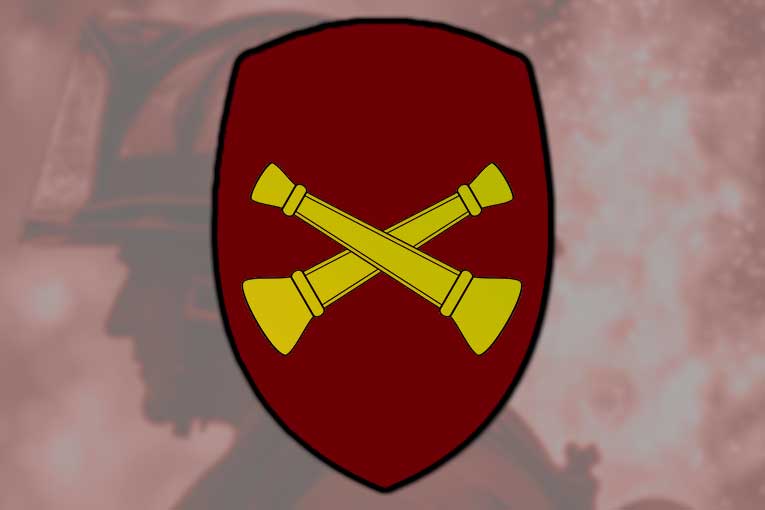
A battalion chief is a senior officer responsible for overseeing multiple fire stations or a specific geographic area within a fire department.
They manage several teams of firefighters, including lieutenants and captains, and coordinate their efforts during large-scale emergencies.
Battalion chiefs are responsible for making high-level strategic decisions, allocating resources, and ensuring that all operations are conducted safely and efficiently.
They also serve as the primary point of contact between the fire department and other emergency services, such as police and medical teams, during major incidents.
The role of a battalion chief requires extensive experience in the fire service, strong leadership abilities, and the capacity to manage complex, high-pressure situations.
Assistant Chief

The assistant chief is a top-level officer who assists the fire chief in managing the entire fire department.
Assistant chiefs oversee major divisions within the department, such as operations, training, or administration.
They are responsible for developing and implementing department-wide policies, managing budgets, and ensuring that all personnel and resources are effectively utilised.
Assistant chiefs also play a key role in strategic planning, working closely with the fire chief to set long-term goals and priorities for the department.
This rank requires extensive experience in leadership and management, as well as a deep understanding of all aspects of fire department operations.
Fire Chief
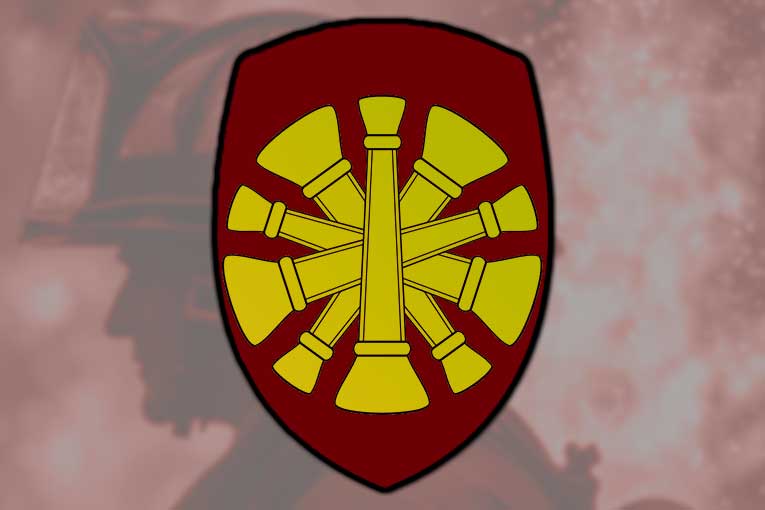
The fire chief is the highest-ranking officer for firefighter ranks.
The chief is responsible for the overall leadership and administration of the department, including setting the vision and direction for the organisation.
Fire chiefs manage all aspects of the department’s operations, from emergency response and training to budgeting and public relations.
They work closely with city or county officials, other emergency services, and the community to ensure that the department meets its public safety objectives.
The fire chief is ultimately responsible for the department’s performance and plays a key role in shaping its future.
This rank requires extensive experience, strong leadership skills, and the ability to manage a large, complex organisation.
How do you get Promoted as a Firefighter?
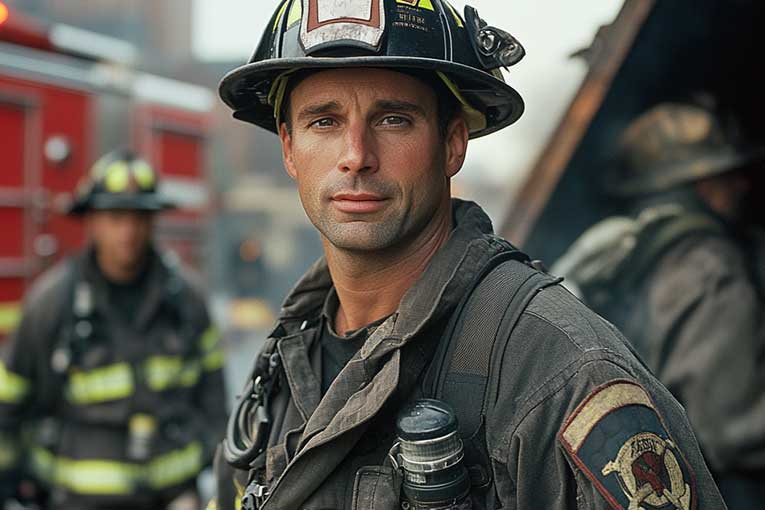
Promotion within the fire service is based on a combination of experience, training, and performance.
To be considered for promotion, firefighters must meet specific criteria set by their department.
This often includes a minimum number of years in service, completion of advanced training courses, and demonstrated leadership ability.
Promotions are typically awarded through a competitive process that may include written exams, practical assessments, and interviews.
The process is designed to ensure that only the most qualified and capable individuals are selected for higher ranks.
In addition to technical skills, leadership and communication skills are crucial for promotion, as higher-ranking officers are responsible for managing teams and making critical decisions during emergencies.
Continuous learning and professional development are also important, as firefighting techniques and technologies are constantly evolving.
How do you Become a Firefighter?

Becoming a firefighter requires a combination of education, training, and physical fitness.
The first step is to obtain a high school diploma or equivalent, followed by completing a firefighter training program at a fire academy.
These programs provide the necessary skills and knowledge to perform the duties of a firefighter, including fire suppression, rescue techniques, and emergency medical care.
In addition to formal training, aspiring firefighters must pass a series of physical fitness tests to demonstrate their ability to perform the physically demanding tasks required in the field.
These tests may include endurance exercises, strength assessments, and obstacle courses.
After completing training and passing the required tests, candidates must apply to a fire department.
The application process may include additional testing, background checks, and interviews.
Once hired, new firefighters typically undergo a probationary period, during which they receive on-the-job training and evaluation before becoming full members of the department
Conclusion
You should now have more of an understanding of firefighter ranks.
Firefighting is a challenging and rewarding profession with a well-defined rank structure.
Each of the firefighter ranks carry specific responsibilities and reflects a firefighter’s experience and leadership within the department.
From the entry-level probationary firefighter to the top-ranking fire chief, each position plays a vital role in ensuring public safety and protecting lives and property.
Becoming a firefighter requires dedication, physical fitness, and a commitment to continuous learning, but it offers the opportunity to serve the community and make a real difference in people’s lives.
Electra fire reaches over 4000 acres in Northern California
The Electra fire in Northern California’s Amador and Calaveras counties reached 4,112 acres on Wednesday as firefighters increased containment to 40%, according to the California Department of Forestry and Fire Protection.
The fire, which has been active for two days, was moderated by cool temperatures and higher humidity, but remained active where wind and slope aligned. Firefighters continue strengthening control lines and mopping-up hot spots.
The Electra fire is one of of the largest wildfires this season. It ignited on Monday afternoon near the North Fork of the Mokelumne River and spread quickly through dry brush and steep terrain, according to Cal Fire officials. The fire was active for the first half of the night, but humidity in the early morning hours helped limit its activity, officials said. The cause of the fire remains under investigation.
More than 1,300 firefighters continue to battle the blaze, as of Wednesday morning. Electra fire spokesperson Chris Dargan said on Wednesday morning that the biggest issue in fighting the fire is the terrain and topography.
Mandatory evacuation orders and warnings combined impacted 700 residents in Amador county and 300 to 400 people in Calaveras county, officials said. Evacuation centres have been set up for people and animals. CalFire said the number of threatened structures remained at 1,217 but there were no reports of structures destroyed or damaged. 8,000 Pacific Gas & Electric customers in Amador and Calaveras counties remained without power Wednesday due to the fire, and many were still under mandatory evacuation orders.
IFSJ Exclusive: E-Mobility for Fire Services
Rosenbauer points the way to the future of firefighting vehicles with the its Revolutionary Technology
After going on display at the Emergency Service Show in September 2021 in Birmingham and being tested on the streets of Berlin, Amsterdam, Dubai, and Los Angeles, firefighting vehicle and equipment manufacturer Rosenbauer’s Revolutionary Technology (RT) is among those setting new standards in the fire service industry.
With the RT, Rosenbauer has taken aim at reinventing and redesigning the entire firefighting vehicle with a design that emphasises safety and ergonomics in all respects, boasts a chassis that gives the RT driving characteristics that are more reminiscent of a car than a truck, and provides fire departments with the necessary everyday connectivity to the digital world for the future.
Stable driving
One of the most striking features of the RT is its driving dynamics. Two electric motors with a total output of 2 x 180 kW (peak) or 2 x 130 kW (continuous) drive all four wheels and generate propulsion is a first for emergency vehicles weighing 16 to 18 tons. Its two-speed gearbox ensures that the full torque is available even when starting off on hills, and that there is enough traction for steep gradients.
Due to its compact dimensions (width: 2.35 m) and unique architecture, the driving behaviour of the RT is designed to be more stable than that of firefighting vehicles with a classic body module. Its low-floor chassis has a core tube frame in which one of the two high-voltage batteries is installed, which results in a much lower centre of gravity compared to firefighting vehicles built on truck chassis.
Independent wheel suspension and switchable rear-axle steering are also in place to ensure agility and manoeuvrability, which Rosenbauer says is particularly noticeable when overtaking flowing traffic, in fast bends with a tight curve radius, and when driving on narrow streets. The vehicle also features an air-sprung chassis to allow the driving level to be adjusted to the terrain and the vehicle to be lowered on scene in order to allow unhindered access to the crew cab.
Wireless control point
As you might expect for an electric vehicle, the RT is extensively digitalised. The cockpit offers a command post where all functions from lighting to extinguishing technology can be controlled via a 17″ display centrally installed in the console. Several functions can be activated simultaneously at the push of a button, and the RT can, for example, be switched to ‘ready to start’ or ‘ready to take off’.
A self-contained secure W-LAN network can, for example, be used for wireless control of robots, drones, and other electrical equipment, ensuring networking at the site of deployment, and thanks to the Rosenbauer Connected Fleet Vehicle Management System, the vehicle position, operation and condition can be checked at any time.
Command centre
The soundproofed and air condition cabin’s layout and seating arrangement are designed so that the RT can act as a localised operations centre. The cockpit and crew compartment form a single unit and are fully accessible from end to end. The driver’s and commander’s seats can be turned inward by 90° and the crew seats are situated against the sides of the vehicle and on the rear wall of the cabin, creating a meeting room layout in the cabin for briefings. All relevant data can be shown on the cockpit display, which is visible from all seats.
Mobile power plant
Ensuring firefighting teams are never left without power, the RT is equipped with one or optionally two high-voltage battery storage units, each with a capacity of 66 kWh which feed the traction drive and provide the energy to operate the pump and other consumers at the drafting point. External devices, such as fans or submersible pumps, with a total power consumption of up to 18 kW can be operated simultaneously via the power outlet.
In addition, the RT is equipped with a range extender in the form of a diesel engine with power generator with an output of 225 kW as standard installed in the body to save space. This essentially turns the vehicle into an integrated power plant that automatically recharges the high-voltage batteries when more energy is consumed than stored in them.
At 132 kWh, the battery storage of the RT is sufficient to be able to carry out over 90% of all standard operations purely electrically without the need to recharge, according to the initial experiences of the fire departments which have been testing the vehicle. Whilst using the range extender, the vehicle can see operating times higher than the specifications of EN 1846 can achieve.
Low emissions
According to the Berlin fire department, each electrically powered vehicle would save about 14 tons of CO2 per year compared to a diesel-powered firefighting and rescue vehicle. In addition, recuperation via the electric motors reduces brake wear and also fine dust particles. Exhaust emissions and noise levels are also reduced to a minimum because the energy for lighting and technical equipment comes from the high-voltage batteries, improving the working conditions around the vehicle and reducing the stress levels of the emergency crews.
The future of firefighting
Will fire departments operate fully electrically in the near future? Rosenbauer believes that the answer is yes. The RT has been touring Europe, the US and Canada, as well as parts of Asia over the past two years and has been met with great interest everywhere. Especially in large cities, fire departments have been seen to express a desire to use e-vehicles to help achieve their cities’ ambitious climate targets.
The RT is designed to present a more economic option for firefighting vehicles, not only because of the lower energy costs, but also because 30% fewer parts than conventional vehicles are installed meaning the maintenance effort is reduced. Rosenbauer estimates that around 3,200 e-vehicles will be in use worldwide by 2030, and 700 to 800 could be on the road in Europe by 2025.
Another important future-relevant aspect: The digital vehicle concept of the RT offers the opportunity to network fire departments with one another and with other emergency response organisations using its direct access to Smart City data from the vehicle, enabling firefighters the ability to better plan and carry out operations.
In the future, fire departments will be able to link into traffic control systems and control traffic lights online in order to ensure the fast arrival of emergency vehicles or to block entire sections of the road and will likely use car-to-car communication to warn vehicles up ahead and send traffic jam reports or alternative route suggestions to the vehicles behind. At the same time they will acquire much of the information and data relevant to the operation during the journey from smart buildings and smart traffic lights to smartphones, cameras, sensors, and measuring stations.
During an operation, fire departments will be able to directly access building control systems, guide emergency crews using indoor navigation and remotely monitor their vital signs. Moreover, they will communicate with each other via their own secure networks and use all available information not only during the current operation but also for preventive fire protection for escape route planning or for simulator use.
Complete e-line-up
At Interschutz, the world’s leading trade fair which will be held from June 20 to 25 in Hannover, Germany, Rosenbauer will be among those opening up the next chapter in electric mobility for fire departments. In addition to the RT, a complete line-up of electric firefighting vehicles will be on display, from logistics vehicles to aerial ladders.
Alongside these, a newly developed extinguishing system will be exhibited, which can be used to quickly and reliably extinguish high-voltage batteries in electric cars. In addition, Rosenbauer will demonstrate its expertise in the areas of alternative fuels, autonomous energy systems and equipping fire stations for e-vehicles (charging infrastructure, photovoltaics, etc.).
Andreas Zeller, CSO of Rosenbauer International, adds: “Already in 2012, we outlined the vision of what the future of fire departments would look like in a digitalised and increasingly networked world, and we defined our investment strategy based on this. The most important conclusion for us from this was that the RT is the firefighting vehicle of the future. After all, vehicles are a part of Rosenbauer’s DNA.”
This article was originally published in the June edition of IFSJ. To read your FREE digital copy, click here.
West Sussex Fire Chief named NFCC international lead
West Sussex Fire and Rescue Service’s (WSFRS) Chief Fire Officer, Sabrina Cohen-Hatton, has been announced as the National Fire Chief’s Council (NFCC) International Lead.
The role with the NFCC will be carried out alongside Sabrina’s position of Chief Fire Officer in West Sussex and will see her work with fire services across the world to share best practice and improve firefighter safety to ensure fire services benefit from shared knowledge and the latest developments within the fire service sector.
Speaking of her recent appointment, Sabrina said: “I am delighted to have been appointed as the NFCC International Lead and I am looking forward to embarking on this new journey and being able to share international best practice with colleagues around the world, as well as here in West Sussex.
“Over the last decade I have been researching decision-making psychology to help keep firefighters, and therefore the public, safer. Through this work I have had the privilege of sharing findings with others around the world and I have seen first-hand just how valuable the exchange of knowledge can be between fire service colleagues, both in terms of what we can share to help keep other firefighters safe, but also what we here in West Sussex can learn from other services.
“We already work very closely with all of our neighbouring services here in the UK to share best practice, but this position allows us to take that learning to a whole other level, and puts our fire and rescue service here in West Sussex in a fantastic position at the forefront of international best practice.
“I feel it’s really important that we learn from other people’s experiences in order to adopt new best practices, and this is something I am incredibly passionate about.”
The role will also support when aid is needed from fire services in other countries, such as the ongoing humanitarian crisis in Ukraine.
In March the NFCC, FIRE AID and Fire Industry Association coordinated a national response to support firefighters, emergency services and volunteers battling together on the frontline following the Russian invasion.
A team of 12 firefighters from WSFRS were among the biggest UK fire service convoy and delivered 22 vehicles, including four fire engines donated by WSFRS, and more than 5,000 items of vitally needed equipment.
Since then, a further two convoys of equipment have departed for Ukraine. Going forward Sabrina’s role as NFCC Lead will be instrumental in driving forward similar projects.
Dräger launches ‘Health for the Firefighter’ campaign in response to firefighters’ health concerns
Dräger is launching its ‘Health for the Firefighter’ campaign to support fire services in driving the cultural changes that are required to protect firefighter health.
The launch follows a survey* of UK firefighters that found considerable concern over the impact of exposure to contaminants on long-term health. Some 84% admitted they were concerned about the risk of cancer – a disease highlighted in some scientific reports to be the leading cause of death within the service.
The International Association of Firefighters (IAFF) reports that nearly two out of three (61%) firefighter line-of-duty deaths between 2002 and 2017 were caused by cancer. Embedded carcinogens in any equipment can easily be absorbed by the men and women using it.
The survey by Dräger also found that more than two thirds (68%) of firefighters fear the impact of Covid-19 on their long-term health, a point picked up by Brian Hesler, Consultant and Specialist Advisor at Draeger Safety UK and former Chief Fire Officer for the Northumberland Fire and Rescue Service:
“The Covid-19 pandemic, and the ongoing fears over cancer, have highlighted the critical importance of hygiene, and a significant cultural change is required. We need to move away from firefighters wearing dirty kit like a badge of honour that proves their hard work and value, to understanding that clean and well-maintained kit supported by detailed and robust hygiene processes that mitigate every contact with contaminants are essential.
“One firefighter surveyed said ‘they had always been a bit blasé about invisible contaminants’. This has got to change.”
The Health for the Firefighter campaign will support the fire services in helping to communicate and provide training on the importance of detailed hygiene processes; from the handling and storage of masks and breathing apparatus (BA) equipment through to the subsequent cleaning of the kit after an incident has occurred.
It will also provide bespoke workshop solutions that guide the potentially contaminated kit from entering the station, to washing and drying processes through to leaving the station to be used again.
In addition to providing detailed advice for manual washing processes including on detergent use and drying techniques, Dräger is the first company in the Emergency Services space to launch specialist BA and mask cleaning equipment and dedicated solutions, including mechanical washing systems that provide complete consistency in washing temperatures, the amount of detergent used, speed and temperature of drying – which can all work together to disinfect contaminants and to protect the longevity of the kit. Support also encompasses logistical support for installation, the ongoing maintenance of equipment and the quantity of stock required.
The survey revealed the most important factors in combating firefighter concerns over contaminants were the cleaning of masks with 97% rating this as very or extremely important, closely followed by the cleaning of BA equipment (95%) and cleaning of PPE (94%).
While manual cleaning of equipment is still generally the norm within UK Fire Services, the survey revealed three quarters (75%) believed that mechanical equipment washing would improve their health, and 80% agreed that as a result of the Covid-19 pandemic more emphasis should be placed on cleaning equipment and hygiene control. However, only 23% said that the pandemic had significantly changed their approach to cleaning equipment.
“There is obvious concern over cleaning of equipment following the pandemic,” adds Brian. “One surveyed firefighter said ‘they clean to the best of their ability’ – the point is that a person’s ability should not be a factor in the cleaning process. Consistency has to be key and manufacturers of medical and safety technology products have a responsibility to innovate solutions that support change. We are not here to tell brigades how to operate, rather to provide a range of solutions that support them and their firefighters’ health.”
*Survey conducted in July 2020, including 122 responses from people working in the UK Fire Services.
Cottenham firefighter rallies community to donate face masks
A Cottenham based firefighter has rallied his local community to donate face masks to a hospice charity. Crew Commander Roger Pake raised more than £2,000 to cover the cost of 700 N95 masks for staff at Arthur Rank Hospice in Cambridge.
Roger said: “I saw the plea from the charity on Facebook and felt I could help. I know people that have family members looked after by the hospice, plus my wife works there so I am fully aware of the great work they do. This is why I was very keen to do something to help.”
Roger divides his time between running his own business as an electrician and being available to respond to emergencies as an on-call firefighter from Cottenham Fire Station.
He added: “I knew I could use contacts from my business to source masks for the staff at the hospice, so decided to see if my Facebook friends wanted to get involved and donate some money to fund them. I have been truly overwhelmed by the response and the generosity of people. I had no idea that I’d receive this much support.”
Hospice Matron Carly Love added: “We are so grateful to Roger and all those who contributed to the collection and the purchase of 700 masks. This is vital equipment that the hospice currently needs to enable the excellent care that they deliver in the community to continue and ensure that the patients that still need the help of the hospice continue to receive this vital service. We were truly touched by this generous donation; it really will make a difference.”