Gregg’s deploys active fire prevention system at new facility

Greggs, a UK-founded fast food service chain, deployed an active fire prevention system at its new deep-freeze high-bay warehouse at its factory near Newcastle Upon Tyne, UK.

The factory occupies 90,530 cubic metre, and the fire fire protection systems were provided by Wagner. Owing to the warehouse running several automated systems, there tends to be a higher risk of fire than traditional warehouses. This is due to the large amount of electrical equipment in the warehouse.

The high bay warehouse was difficult to protect by traditional methods due to the combination of its height, densely packed stored goods and deep-freeze operating temperature, Global Cold Chain News reported.

The automated high-bay warehouse stands at 23 metres tall and has a storage capacity with upwards of 14,000 pallet bays.

The warehouse is operated at -20°, where savoury baked goods will be stored frozen packaged in plastic trays or cardboard boxes, in both cases on wooden pallets. Something else, that had to be kept in mind: the warehouse is directly connected to the factory. If a fire occurs, it must not spread.

Gregg’s fire prevention system uses OxyReduct, that builds a protective atmosphere in the protected area with a permanently reduced oxygen level through the controlled introduction of nitrogen. This reduces the oxygen levels to prevent the spread of fires, taking the individual ignition thresholds of the most critical materials found in the warehouse into consideration. Sensors continuously measure the oxygen concentration in the protected area, working with the OxyControl system to maintain a constant oxygen operation concentration.

As a smouldering fire can still result despite oxygen reduction, the active fire prevention strategy also includes an early smoke detection system with air sampling smoke detectors.

Wireless fire systems are on the rise

The challenges facing the fire industry are global, wireless offers a worldwide solution, Tom Crane, Business Unit Director, Hyfire explains

As we have seen with recent high-rise residential fires in Italy and the USA, the challenge of meeting fire safety requirements in high-rise buildings is by no means unique to the UK. Globally, a renewed focus on fire prevention, limitation and effective evacuation is causing fire systems manufacturers, specifiers and other industry professionals to look for new ways to deliver effective solutions as simply and efficiently as possible.  

The old ways are not always best 

While fire technology is always developing and the capabilities of the modern fire system are far beyond what could be offered even 20 years ago, the basic concept of individual devices connected by wired loops to fire panels has not changed in decades. Projects generally follow the same process of risk assess, design and quote. Then, if won, they move onto installation commissioning and maintenance. Professionals will be competing with largely the same technology, offering systems that are largely identical except for a few differences in cause and effect.  

Even once the tendering process is over, installing a fire system can take months to plan and complete. These might range from changes to the building that weren’t included in the plans, to asbestos and external factors, such as the availability of other contractors and trades. This whole process takes time and does not offer any innovative solutions to the problems of inconvenience and collateral damage caused by any wired system installation. 

With a wired fire system there are many uncertainties that we have learned to live with, which mean the fire installer, project manager, or end user do not have full oversight of the situation. This makes it difficult to allocate staff resources effectively, particularly when you need different skills at different times, and creates a much greater logistical challenge.  All of this generates uncertainty for fire professionals, end users and often the occupants of a building, as well as adding to costs.  

With the onset of Covid installations were affected due to physical distancing. In the past, fire systems were usually empty when new systems were installed, but with new regulations and legislation demanding urgent upgrades and renewals, this is no longer always the case.  

Wireless fire detection and alarm products hold an answer to many of these challenges. The technology is mature and widely accepted with the best commercial systems and devices, such as the Targus range from Hyfire, having the same sensing and performance approvals as the best wired systems, and a specific performance approval (EN54-25) for the wireless infrastructure. 

Wireless Choice is Growing 

Wireless devices have traditionally been used in sites where wires cannot go, such as historic buildings. They are now becoming mainstream, installed in all manner of sites from industrial sites to schools. In fact, over the past decade, rapid advances in technology and manufacturing have made wireless a viable and cost-effective alternative for many fire systems, eliminating the need for cable and all of the problems it can bring. For example, a recent Hyfire project in London saw a high-rise residential install and commissioning take less than four weeks, with minimum inconvenience to residents. Contrast that to a traditional wired system, which would have taken up to three months, plus all of the cost, disturbance and intervention in the fabric of the building it would have entailed.  

Some systems such as Hyfire’s can offer the best of both worlds, functioning either in fully wireless modes, or in hybrid configuration with wireless devices mixed in any combination on wired loops. There are no surprises with a wireless system, the exact devices required are defined in the initial survey, the system can be pre-programmed quickly and easily off site and installed by less skilled workers, in less time. Disturbance to tenant businesses and the need for fire watches are all but eliminated and costs and timescales are guaranteed, plus the time savings mean that many more projects can be completed. The result is that the vast majority of installation firms have at least installed wireless ‘add on’ systems and a significant number are wrapping their businesses around the wireless model. 

The list of suppliers and range of available wireless fire alarm and detection devices is comprehensive, but it is worth working with a leading commercial wireless company. It is also worth choosing a supplier that is a specialist in fire devices that are wireless, not simply wireless devices. The definition is subtle but profound when performance considerations come into play.  

A serious commercial wireless manufacturer will have the best chamber designs with dual angle detection, multiple sensing technologies, all the relevant input and output devices and often, like Hyfire high performance EN54-23 devices, specialist control modules such as wireless door holders, and even very specialist devices such as Intrinsically Safe. 

Advances in battery technology and LED lighting mean wireless systems can run for many years without a battery change, a period that’s likely to extend further in the future. Battery choice, lifetime and the cost of batteries becomes a key differentiator in wireless systems, some manufacturers use ‘off the shelf batteries’ that can be bought in a supermarket, others specialist batteries, and so more expensive, potentially locking in maintenance suppliers and costs.  

Assurance and adaptability 

All wireless fire systems begin with a pre-installation survey, taking a detailed look at the building, identifying any potential issues to be overcome, pinpointing the exact location of each wireless device and working out an exact schedule for installation and testing. It will ensure that the completed system will perform as specified, which is a guarantee that wired systems, with their susceptibility to loop faults, can often struggle to maintain, and will also certify the cost of the project, which means no hidden surprises that can change installation projects and even system design and performance. 

The basic topology of a wireless system remains the same, using standard addressable or conventional panels connected via the fire loop to wireless translators. These build up the wireless communication network, on which the input and output devices sit. Systems can grow from very small to very large, easily and reliably. The extent of these high-performance systems is limited only by installation standards or the number of devices that a fire panel can control. 

Wireless and hybrid systems can be scrutinised and controlled remotely in the same way as any wired installation, offering a round-the-clock view of system status. In terms of monitoring and control, while some wireless systems limit the communication with the panel, the best, such as Hyfire’s, deliver rich data over the loop and are indistinguishable from a wired system in configuration, performance and control terms. This means that all cause and effect, such as false alarm management and monitoring, are readily available. 

Wireless is the Future of Fire Systems 

Industry bodies such as the UK’s FIA (Best Practice Guide to Fire Safety) have acknowledged the value of wireless technology to help meet changing standards in the fire industry and it can also help to address some of the other challenges we are facing. With less time needed to install or update each system, it’s possible to deliver improvements quickly and efficiently, with short lead-in times and less manpower.  

In terms of outlay, because there are no nasty surprises to be found during the installation of wiring loops, installers and specifiers of wireless can guarantee installation costs, and radically reduce commissioning costs, making their businesses stronger, offering certainty to the end client, and allowing jobs to be scheduled more reliably. 
West Yorkshire council homes to get £21million fire safety improvements

Councillors of Kirklees in England’s West Yorkshire district are being asked to approve works that will upgrade fire safety measures across all council-owned low-rise flats.

A £21million investment programme will be proposed at the council’s cabinet meeting, on April 5. This will see all 865 low-rise blocks across Kirklees benefit from improved fire protection measures over the next two years.  

The work will involve six-storey blocks, as well as retirement living schemes and low-rise buildings, and comes as work is already underway upgrading the council’s high-rise blocks including flats at Buxton House, Harold Wilson Court and Berry Brow.

Work will start in May 2022 when approved contractors Fortem Solutions Limited will start the process of independently surveying every low-rise block in Kirklees to identify and carry out the fire safety works needed.

These surveys will inform what works are necessary on a per building basis and are likely to include:

  • Replacing fire doors to homes and communal areas
  • Compartmentation
  • Upgrading smoke and heat alarms
  • Emergency lighting
  • New fire signage. 

Both tenants and leaseholders have been informed of the programme of works planned.

David Shepherd, Strategic Director of Growth and Regeneration, said: “Since transfer from KNH, the council has focused on and prioritised investment to ensure our tenants are safe in their homes. This is part of that on-going commitment to keeping our tenants in low rise buildings as safe as possible.

“The investment will see all 865 low-rise buildings individually surveyed and safety upgrades made to the highest standard to further ensure the safety of all our tenants and leaseholders in the event of a fire.”

These works are part of the £90 million improvements programme currently being rolled out across social housing in Kirklees. The early part of the programme focused on high rise flats and has already seen major fire safety improvements completed at Buxton House in Huddersfield town centre.

How is technology impacting fire risk management? 

Fire safety technology expert, FireAngel, has developed a roundtable with delegates from the National Social Housing Fire Strategy Group, Ealing Council, and Hampshire and Isle of Wight Fire and Rescue Service, to discuss a digitally powered, fire safety evolution for housing associations.
Viewers can gain insights into the current fire safety landscape for housing associations, what’s driving change and innovation in the fire safety world and what the near future will look like.

Following the Grenfell fire tragedy, those responsible for fire safety were struck with a heart-rendering wake-up call; organisations did not have the golden thread of information about their buildings or know enough about their residents.

Today, advancements of the Internet of Things (IoT) and in artificial intelligence (AI) are driving technological innovation in housing associations and strengthening the golden thread of information for buildings. However, there is a general risk-aversion and need for greater understanding and collaboration among stakeholders to accelerate progress.

Fire and rescue services are still heavily reliant on upstream referrals from agencies, such as ambulance services and housing providers, but with more data and better collaboration, more fires can be prevented. To access the potential of innovative technology, key stakeholders need to buy-in to these solutions.

Ealing Council is one of the first social housing providers in the UK to adopt IoT technologies to improve the levels of protection it provides its tenants. Its roll-out of FireAngel devices in around 14,000 homes has enabled the organisation to gather data on trends and high-risk patterns of behaviour to prompt earlier intervention before an actual fire event.

The light of a firefighter

Derek Box, Industrial Division Marketing Manager, Nightstick tells us the importance of new innovations in lighting technology for firefighters to combat smoky situations

What emerging technologies will today’s fire service need to be aware of? 

Multi-function and dual light torches are becoming a must-have feature for firefighters, especially volunteers who often pay for their own equipment. If you can combine a traditional angle light with a floodlight that illuminates trip hazards and then give it a 90° rotating head that becomes a standard torch, you’ve got three lights in one package. Similarly, if you combine a side mount helmet light that has a tight, focused beam and add a soft area floodlight, you give the firefighter more options, and more options give more time. More time can mean the difference between life and death. At the FDIC show in April 2022, Nightstick will be showcasing our extensive lineup of dual-light portable LED lights specifically designed for firefighters. 

What is the best light for a firefighter? 

The short answer is, one you bring with you. When firefighters arrive on scene, the situation is fast-paced and sometimes chaotic. They need their hands free to pull hoses, swing axes, climb ladders, operate extraction equipment, and do many other critical tasks. Often the only lighting they have immediately available is what is strapped to their bunker gear, such as angle lights and helmet lights. These lights must provide excellent visibility and adapt to the situation. A blinding 600-lumen spotlight on their helmet is not helpful if they are examining a trapped motorist. The ability to switch over to a soft area floodlight with the push of a button while wearing gloves is an excellent example of adapting to the situation. Another essential consideration is runtime. Often the initial danger is under control within the first hour, but finishing the job can take several hours. It’s critical to have the runtime necessary to complete the job. 

What is the best way to combat smoke visibility on scene? 

A tight beam pattern is vital to cutting through smoky areas without having the blinding glare of a bright unfocused high-lumen torch bouncing back at you. The design and engineering for a tight smoke cutting beam pattern is much different for portable firefighting equipment than standard torches designed to illuminate a large area. For safety and coordination amongst firefighters, it’s crucial to have “follow me” lights on the back of their lighting equipment. The most visible color to the human eye is in the center of the spectrum at 550 nanometers (green). Many manufacturers use wavelengths on the edge of the visible spectrum, such as 700 nanometers, because they are cheaper to produce. A green light is up to 4 times more visible in low light situations and far superior. 

PFE Limited partners with Flir for fire protection of sites

British inspection specialist PFE Limited has used FLIR Thermal Studio software to accelerate site inspections and reporting, and to deliver consistent reporting quality to its demanding customer base.

Based in Wallasey, North-West England, PFE Limited is a family-owned business, specialising in a wide range of inspection and reliability services for industrial customers. To provide trustworthy and repeatable reporting quality, PFE engineers make use of the latest technology on the market for vibration analysis, dynamic balancing and thermography, among other things.

The company has been using thermal imaging for more than 15 years for mechanical, electrical, and process-related inspections. One of the more specialized types of inspections that PFE Limited offers are furnace inspections, for which the company is using a FLIR Exx-Series pistol-grip camera.

The most tangible output that the company is offering to its customers are reports, so it speaks for itself these need to be of consistently high quality. PFE Limited therefore relies on FLIR Thermal Studio software with routing functionality from the FLIR Route Creator plugin.

Jake Ford, Reliability and Mechanical Engineer at PFE Limited said: “We used to go on site for our inspections, combining the use of a thermal imaging camera with some kind of clipboard or electronic tablet.

“For every asset and every image taken with our thermal camera, we used to jot down numbers and comments on a separate device. This was not only unpractical, but it also took twice the time we spend on inspections today. Thanks to the introduction of the FLIR Thermal Studio software, we were able to cut our inspection time in half.”

What’s the impact of technology on fire pumps?

Chris Ferrara, CEO and President, US Fire Pump talks IoT in the world of fire pumps, with a major rise in uptick of services

In today’s world the increasing of new technologies seems never ending, and quite overwhelming at times. We start the process of adopting new technologies and seemingly it’s out of date before it’s even implemented. 

However, paraphrasing the 36th American President Lyndon B Johnson, ‘you can get crushed if you’re not prepared for the new technologies available or even for the acceptance of adopting new technologies.’ When it comes to technological adoption you must start somewhere, or risk falling behind.   

At US Fire Pump our team was often requested to provide a mobile temporary pump solution with the technology to mimic stationary or fixed firewater pumps. At the time this technology, packaged in a true mobile firewater pump, didn’t exist. Our engineering team didn’t scoff at the idea, even as they found the process of development to be no short order. In fact, hearing the repeated need from customers, only strengthened their resolve to create a solution. 

Professionals that have worked with mobile fire pumps as compared to fixed fire pumps know that their requirements differ greatly. Finding a suitable adaptation to these requirements, in a temporary mobile package, was the first task for our team. Fixed pumps have the luxury of control rooms, fire control panels and many other redundant safety systems in place, and usually all in a controlled environment.  

However, what we were being asked to achieve was a mobile system without the liberty of any of the above controls in place. Our team was able to engineer a smart system for mobile use, thanks to which these smart fire pumps can be used in your next turnaround, unplanned outage, or as a temporary replacement for fixed fire water pumps. 

Our smart systems have since been installed in petrochemical facilities, private health institutions and State facilities throughout the United States.  

To be a market leader and innovator you must have forward thought mindset. To do so, you must find or develop new technologies to make that road easier to navigate.  

US Fire Pump’s in-house engineers and experts can assist with pre planning for outages, or at a moment’s notice for emergency unplanned outages and events. Our rental fleet of fire and ancillary equipment is the largest on the globe and our smart technology is ready for dispatch 24/7. 

Tell us a bit more about smart technologies and how it has made its way into pumps.  
The ability for mobile pumps to mimic fixed pumps in temporary situations has been a big change. In what seems like never-ending supply chain issues and parts shortages, more and more fixed fire pumps are being taken out of service for extended periods of time. How do you replace these and keep facilities on-line? With temporary solutions like our mobile fire pumps. Adding smart pumping technology to these mitigates the need for firewatch personnel and acts in accordance with the fixed firewater pumps, albeit in a temporary solution.   

How does the Submersible Response Truck address market requirements?  
The idea behind Submersible Response Truck was to address areas with water shortage, and for a myriad of reasons there are many use case scenarios. For the industrial sector it can be that your fire water supply has been temporarily, or by accident, nullified. For the municipal sector, particularly rural settings with no hydrant systems but plenty of water in the surrounding area, it allows the SRT to have the submersible pumps deployed to any static water source for water supply. This, depending on the water source, can sustain water supply for much longer than your average tanker. 

Tell us about US Fire Pumps research and development efforts?  
US Fire Pump will always be at the forefront of cutting-edge technology. We welcome ideas from First Responders who work in the field daily. Not to forget our own Emergency Response Team members. In addition, we have a team of dedicated engineers who are tasked with developing innovation and technologies for the fire service sector. I’ve always felt that old problems need new technologies for solutions.  

Tell us why equipment rental is gaining popularity?  
We have seen many our rental customers use this programme to fill ‘stop gap’ methods for repairs and unplanned outages. Quite often there isn’t sufficient capital to support purchase of new equipment, especially during fluctuating economic scenarios. The benefit of renting means unallocated funds can go towards temporary replacement of other critical equipment. We also offer long term lease that gives customers a chance to test new gear on site.  

Do you have market expansion on your mind? 
Absolutely, the company’s pumps and fire equipment have been used by customers all around the world. We have also advised customers on emergency responses across the globe and have a large international presence. As for further expansion geographically, we are assessing different markets. US Fire Pumps is ready to go places. 

EU to ban products made by forced labour

New legislation to ban products made by forced or child labour from entering the European Union (EU) market is “a big step towards promoting safe and secure working environments for all workers”, IOSH says.

The European Commission recently presented its Communication on Decent Work Worldwide, which has the eradication of forced and child labour at its heart. The ban on products made by forced labour is part of its comprehensive approach, with the ‘legislative instrument’ covering goods made inside and outside of the EU.

In announcing this development, the commission said that ‘decent work’ is still not a reality for many people around the world, with 160 million children in child labour and 25 million people facing forced labour.

The development is aligned with the International Labour Organisation’s Global Call to Action for a Human-centred Recovery from the COVID-19 crisis and takes place when the EU is supporting renewed efforts to integrate the right to safe and healthy working conditions into the ILO framework on fundamental principles and rights at work.

Dr Ivan Williams Jimenez, Occupational Safety and Health Policy Specialist for IOSH, said: “This represents an excellent opportunity not only to leverage the UN Sustainable Development Goals–related aim for a world of work where businesses frame their sustainability policies towards decent work principles, but to promote safe and secure working environments for all workers, including migrant workers, in particular women migrants, and those in precarious jobs.

“As forced labour is publicly recognised as the most common form of modern slavery and, in many cases, it affects the most vulnerable and excluded groups in society, IOSH has long demanded that companies tackle and remove forced labour and modern slavery risks from their value chains.”

Jimenez added: “Progress has been slow so far; we know that some countries have passed national and state laws asking the private and public sector to report on modern slavery risks in their supply chains. However, this is a field where there is certainly room for further improvement.”

The European Commission has now invited the European Parliament and the Council to endorse the approach set out in the Communication and to work together on its implementation. More details can be found here.

Plans for Fire Safety Support Hub in Cardiff turned down

Plans for a new fire safety support hub in Cardiff have been turned down. The hub was proposed to help victims of the cladding scandal. Currently, thousands in the city are still living in apartments at serious risk of fire, five years after the Grenfell Tower disaster, with many facing gigantic bills for work to make their homes safe.

A fire safety support hub could help those affected with financial and legal advice, as well as signposting and counselling for those suffering from mental health issues, councillors said. Liberal Democrats in Cardiff put forward a motion on Thursday, March 17 to set up a hub, with backing from other opposition councillors.

But this was voted down by the ruling Labour group. Councillor Rhys Taylor, leader of the Liberal Democrat group, said: “Five years on and people are still trapped in potentially unsafe homes, and are paying the price both financially and mentally for the mistakes of developers.

“Leaseholders in some instances have faced bills of thousands of pounds due to be paid with less than 28 days’ notice. That’s because kettles have more consumer protection than the leaseholders who are trapped in this scandal. People are looking to pay their whole life savings to meet these bills, and war veterans are even considering selling their medals, Wales Online reported.

“In June, management companies will be issuing the second half of annual services charges. For the Celestia buildings in Cardiff Bay, that’s half of the £2.4m needed to repair defects. If leaseholders can’t pay, of which there will be many, they’ll be pursued by debtors. A support hub would provide help and advice for people in these situations.”

Extra costs heaped onto affected residents include skyrocketing insurance premiums, service charges, patrolling fire wardens, and remediation work like replacing cladding. Many of the issues faced by affected residents in Cardiff are complex and technical, including fraudulent fire safety certificates and inadequate wall inspections.

Lots of residents also suffer from poor mental health as a result of the issues, according to recent surveys. Labour said the fire safety issues were difficult to address and had previously explored council tax residents for affected residents, but later ruled this out as too expensive.

Cllr Lynda Thorne, cabinet member for housing, dismissed the motion as a pre-election stunt. She said: “This administration is committed to doing all we can to help and support all those residents affected by the plethora of faults and design failures built into these developments. It’s a whole gambit of failures that makes this issue so difficult to address. These issues aren’t straightforward.

Extensive growth of US Fire Pump

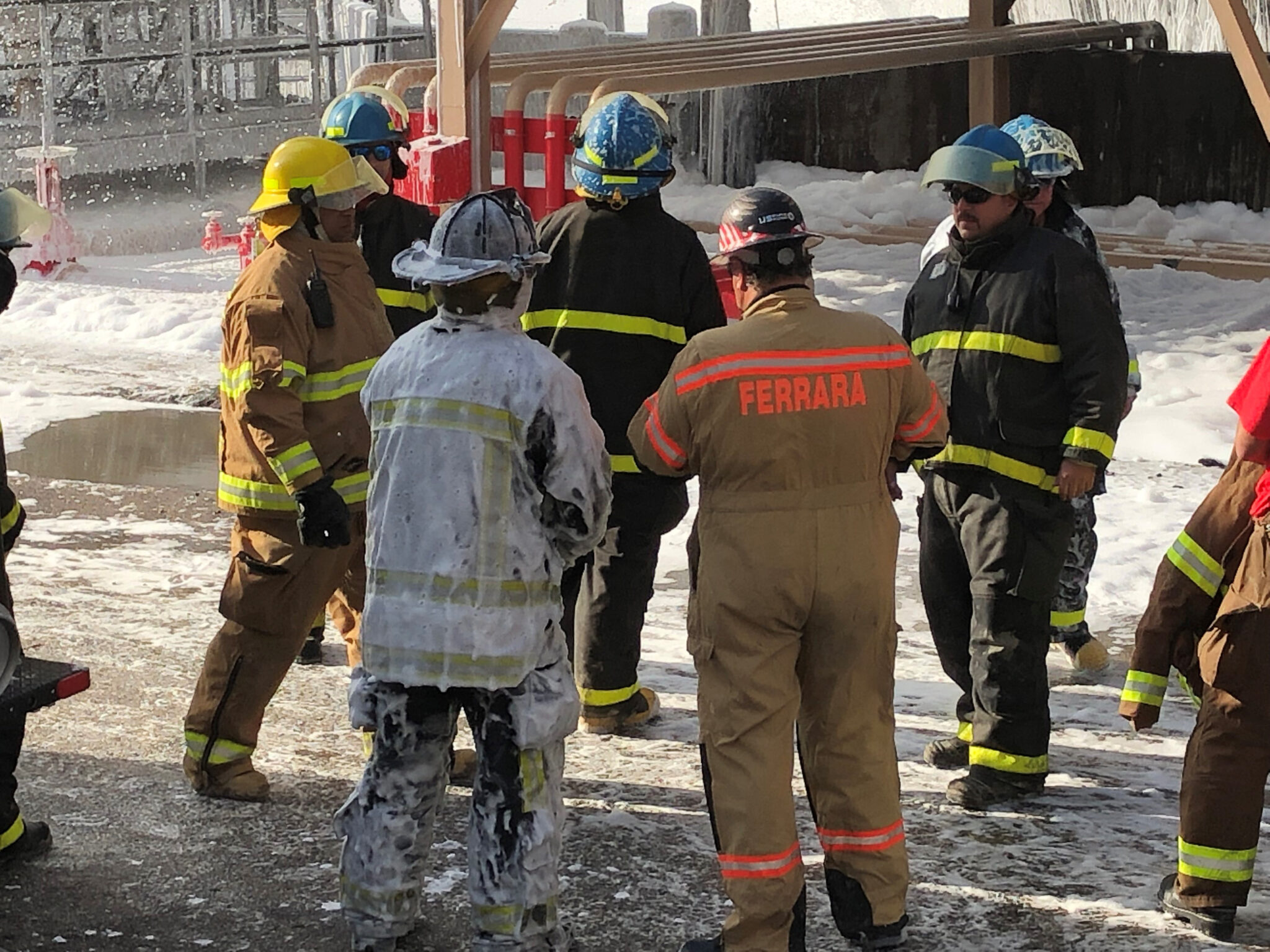
In 2014 Chris Ferrara, president, and CEO of US Fire Pump, saw a glaring need for the petrochemical industry to have high quality equipment adapted specifically for its needs. In addition, Ferrara saw that supplemental emergency response teams to aid in larger than usual fires, something that many customers requested.  

With this in mind, and using his more than four decades of knowledge in manufacturing, Ferrara embarked on a journey eight years ago. He was also backed with the expertise of having been the owner of one of the largest fire apparatus manufactures, and his decades of fire service experience. Marrying these rich experiences he founded US Fire Pump, a manufacturer of fire equipment and the world’s largest Emergency Response Organization. Ferrara’s vision to provide innovative equipment and firefighting methods has taken the world by storm.  

Ferrera quotes one of the USA’s founding fathers Benjamin Franklin. He said: “Without continual growth and progress, such words as improvement, achievement, and success have no meaning.”  

Already having satellite offices in Texas and manufacturing in Louisiana, Ferrara continued his vision for growth via expansion, and progress by constructing a new world class manufacturing facility in Holden, Louisiana in 2020.The facilities are not only home to state-of-the-art manufacturing equipment but large testing and training facilities and the largest fleet of emergency response and fire rental equipment on the globe. Since is construction, many pieces of custom designed and built fire equipment have been delivered from the facility to customers spanning several continents.  

Facilities and expansion  

Being growth minded Ferrara knew that creating a presence strong regional and global presence to better serve the industry would need to be a top priority. Ferrara says: “Our locations in Holden and Baton Rouge, Los Angeles, Vidor, Texas and additional firefighting foam storage in Green Bay, Wisconsin, Rancho Cucamonga, California, and Spain ensure that we are able to serve our customers strategically. As you can see, from locations across the Gulf South, we have a heavy presence in the region due to the sheer amount of the industrial facilities concentrated in the area.  

“To enhance our already robust coverage across the region, I’m excited to announce that we are opening a brand-new facility on I-10 in Mt. Belvieu, TX. The new facility in Texas will be a hub in the region for warranty, repair, service and dispatch of rental and emergency response equipment.”  

On the opening of the new facility Ferrara adds: “These new openings are paramount in achieving the success of US Fire Pump and allows for continued growth and success in the industry.” 

The new Texas facility is located at 11331 I-10 East Mont Belvieu, TX 77523. Of course, having additional space for service is going to ease the demand on each location, but as we opened this location in Texas because of the demand that the “Everything is bigger in Texas created”. Although the rest of the United States and in particular the Gulf South have many petrochemical plants, Texas is an anomaly due to the sheer volume of product required in the Greater Houston Region and the Golden Triangle. Having this facility in Mont Belvieu allows for us to have dedicated resources to this region. From a petrochemical industry standpoint, it’s mindboggling as to how many companies are concentrated in Texas. For us being in the region and providing exclusive dedicated resources to the area makes the most sense for speed of service to the customer. 

Five biggest changes in the industry 

Ferrara says: “From my humble beginnings as a welder / pipefitter, volunteer fireman to building a company that manufactures fire apparatus’, I have seen a massive evolution of the fire services, emergency responders, and safety industry.” 

Technology would be number one; the speed that advancements in technology within the fire service industry has been rapid. “I’ve always prided myself and our company on being innovative and developing new technologies to introduce to the fire service market. It’s what always has set us apart from the competition.  

Secondly, firefighting foam and the regulations with PFAS and PFOA’s have seen several changes. This goes hand-in-hand with technology but the speed of the regulations has caused the technology of using fluorinated foams to the use of non-fluorinated firefighting foam. Third, is the clean cab technology in the fire service. A shift to move firefighters from, for instance wearing bunker gear in the apparatus cab due to the constant exposure to carcinogens is something someone would not have even entertained 30 years ago, for that that even as recent as 10 years ago.  

This goes back to technology but the robust filtrations systems to reduce these exposures to the hazardous substances is something that is one of the biggest changes I have seen to date. Number four: The use of passenger and commercial electric cars on our roads, and the demand on firefighters to extinguish electric car fires. This is all new to the fire servicepeople and it’s here to stay. There is major difference in the way traditional fossil fuel powered cars are extinguished.  

Lastly, it’s not something that has changed but an element that has remained constant. It’s the people. The emergency responders who serve the public everyday are the same today as they were 40 years ago and will continue to be heroes for generations. Their passion and dedication drive people like myself and our company, to continue to innovate products to serve them.  

We have a long list of clients who use our products and services, and I would like to thank them all. From building high velocity pumps for FDNY’s ‘Super Pumper’ to our Emergency Response Teams extinguishing major fires for numerous corporations and government agencies, we have nothing but gratitude for the trust shown in our services, people, and products. 

The pandemic and giving back 

The nature and impact of Covid was devastating. The pandemic, and resulting illness that it cause, affected many companies with employee welfare severely affected in some cases leading to fatalities. However, for US Fire Pump employees saw no major impacts to their health. Such was our strength that we never ceased operating for a single day throughout the last two years. This was down to the high demand of Emergency Response calls during the pandemic and the subsequent waves that hit different states in the US, at different times. During the pandemic, we also witnessed an uptick in request for our rental equipment and other services that we offer different market segments. The one negative implication of the pandemic has been the severely restrained global logistics sector. Components that are typically considered ‘everyday’ items are considerably harder to source. Even when in stock procuring them in a timely manner is still a major issue.  

Speaking about employee welfare, US Fire Pump are major believers in giving back to the community through our various corporate social responsibility efforts. Ferrara says: “I’ve always been a firm believer in giving back to the fire service industry. For many years, even with my previous company that manufactured fire apparatus’ and now through US Fire Pump, giving back to first responders has been a key pillar of our DNA. We give back in many ways, the obvious ones are through donations that support fire and security conferences.  

“But I feel the best way to do give back and leave a lasting impression is through education. Here at US Fire Pump, we hold free training sessions for first responders. These modules would otherwise cost each individual member a few thousand dollars. The reason we have kept our trainings free is because knowledge and expertise are worth their weight in gold, not only in terms of career progress but also to save lives. Afterall, serving the public and protecting lives is our main aim and mission and education is key to its success.