How Many Firefighters Died in 9/11 Attack?

The September 11, 2001 attacks were one of the darkest days in American history.

Among the thousands of lives lost, 343 firefighters from the New York City Fire Department (FDNY) died during the attacks, along with one firefighter from the New York City Fire Patrol, bringing the total number of firefighters who died on that day to 344.

In the years since, many additional firefighters and first responders have died from illnesses directly linked to exposure at the World Trade Center site, highlighting the long-term sacrifices made by these heroes.

What Happened on September 11, 2001?

911 Twin Towers Burning

On the morning of September 11, 2001, a series of coordinated terrorist attacks were carried out in the United States.

Hijackers flew four commercial airplanes, two of which crashed into the Twin Towers of the World Trade Center in New York City.

The South Tower collapsed less than an hour after being hit, followed by the North Tower.

This was followed by the total collapse of World Trade Center Building 7 later that day at 5:20pm, with the building falling onto its own footprint.

A third plane struck the Pentagon, while the fourth, United Flight 93, crashed in Pennsylvania after passengers attempted to retake control of the aircraft.

The attacks resulted in widespread devastation and prompted an immediate, massive emergency response.

How Many People Died on 9/11?

Approximately 2,996 people lost their lives as a result of the 9/11 attacks, not including the 19 terrorists involved.

This total includes civilians, law enforcement officers, and firefighters.

In New York City alone, the World Trade Center attacks caused 2,753 deaths, making it the single deadliest terrorist incident in U.S. history.

What Fire Departments Responded to 9/11?

911 First Responders
Image credit: CNN

The FDNY was the primary responder to the World Trade Center attacks.

Firefighters from all five boroughs of New York City, as well as mutual aid companies from nearby areas, rushed to the scene.

Other notable departments and organizations included the New York City Police Department (NYPD), Port Authority Police, and private firefighting units, all of which played crucial roles in evacuation, rescue, and firefighting efforts.

The response was immediate and heroic, with personnel entering collapsing structures to save civilians and fellow first responders.

How Many Firefighters Died on 9/11?
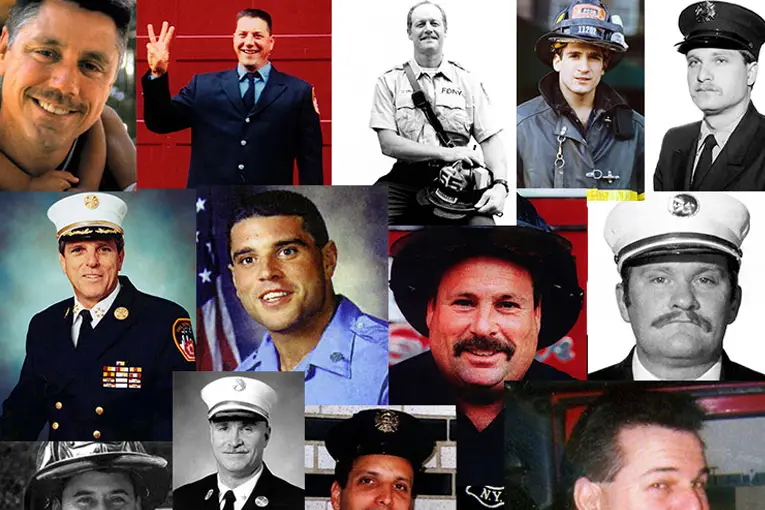
Firefighters Who Died on 911
Image credit: Fire Engineering

During the attacks themselves, 343 FDNY firefighters were killed while performing rescue operations and attempting to evacuate the Twin Towers.

These men and women included firefighters of all ranks, from probationary firefighters to chiefs, reflecting the broad participation of the FDNY workforce that day.

Additionally, Keith Roma, a firefighter with the New York City Fire Patrol, also died responding to the scene, which brings some records to cite 344 total firefighter deaths.

Many of these individuals were trapped in the towers when the structures collapsed, illustrating the extreme danger and heroism of the operation.

How Many First Responders Died on 9/11?

Firefighter at Ground Zero

Beyond firefighters, other first responders also lost their lives, including 23 police officers and 37 Port Authority officers.

Collectively, the number of first responders who perished that day amounted to approximately 403 individuals, highlighting the extreme risk faced by those on the front lines of the attacks.

How Many Firefighters Have Died from 9/11 Related Illnesses Since the Attack?

Tragically, the toll of 9/11 extends far beyond that single day.

Exposure to toxic dust, smoke, and debris at Ground Zero has resulted in chronic illnesses and cancers among first responders.

As of 2024, over 200 additional FDNY firefighters have died from 9/11-related illnesses, including respiratory diseases, gastrointestinal cancers, and other health complications directly linked to their work at the site.

This ongoing loss underscores the long-term dangers faced by first responders and the need for continued healthcare support and monitoring for those who served during the recovery and cleanup efforts.

Why We Should “Never Forget”

911 Memorial
Image credit: Wikipedia

The heroism displayed by firefighters and other first responders on 9/11 serves as a lasting testament to courage and selflessness.

Remembering their sacrifices not only honors the fallen but also emphasizes the importance of preparedness, training, and community support for emergency responders.

Memorials, educational programs, and annual ceremonies ensure that their bravery and the lessons of 9/11 continue to be recognized worldwide.

Key Takeaways

  • 343 FDNY firefighters died on 9/11, with an additional firefighter from the Fire Patrol, totaling 344 firefighter deaths on the day.
  • Thousands more first responders have died in subsequent years due to 9/11-related illnesses.
  • The FDNY, NYPD, Port Authority Police, and other agencies worked heroically to save lives amid unprecedented chaos.
  • Ground Zero exposure has long-term health consequences, emphasizing the sacrifices of first responders.
  • Remembering these heroes helps educate and inspire future generations while highlighting the risks and responsibilities of emergency personnel.

The 9/11 attacks resulted in an immense and lasting loss for firefighters and first responders. 

343 FDNY firefighters perished during the attacks, and hundreds more have died since due to illnesses caused by exposure at the World Trade Center site.

Their bravery, sacrifice, and continued impact are a powerful reminder to honor and support those who serve in the fire and rescue professions.

Rescue, health and evacuation: What rising bariatric rescue incidents mean for planning

Specialist equipment in greater use as bariatric rescue call-outs rise in Avon

Avon Fire and Rescue Service has reported a marked rise in bariatric rescues in Bristol, Bath, North Somerset and South Gloucestershire, moving from an average of six a month in 2022 to about nine a month in 2025, as reported by the BBC.

That pattern sits inside a wider uptick in special service calls, where crews attend non-fire incidents and often support ambulance colleagues with specialist movement and evacuation.

Taken together, the figures point to a practical question for all services and dutyholders: how does the physical health and mobility of the public shape rescue and what needs to be in place so that people can evacuate safely and crews can work efficiently and with dignity for everyone involved.

What do the numbers tell services about workload?

The BBC report sets out three snapshots for Avon: 50 bariatric rescues between August 2022 and April 2023, 72 between April and December 2024 and 73 between January and August 2025.

For managers, a steady month-on-month demand is usually more instructive than a single headline percentage, because it drives decisions on crewing, equipment availability and training schedules.

It also matters that these incidents sit within special service calls, which overtook false alarms for the first time in 2024/25 in Avon.

That shift has operational consequences, from how often specialist vehicles are mobilised to how crews rotate to manage longer, more resource-intensive jobs.

Peaks coinciding with very hot weather were also noted in the report to the fire authority, which is a reminder that seasonal conditions can compound existing health and mobility challenges.

How does physical health shape evacuation and rescue?

Physical health influences speed, stamina, grip strength, balance and the ability to navigate stairs or tight spaces, all of which are central to self-evacuation and assisted rescue.

In real terms, that can mean longer time to move a person to safety, more personnel needed to handle loads safely and increased reliance on powered or mechanical aids.

For incident commanders, it affects sectorisation, the choice of egress route, where to position crews and how to manage manual handling risks alongside fire and smoke hazards.

For the person being assisted, comfort, dignity and communication need to be maintained, including clear explanation of what will happen and how.

What are PEEPs and GEEPs and when are they needed?

Personal Emergency Evacuation Plans (PEEPs) set out how an individual who may not be able to evacuate unaided will leave a building or reach a place of safety.

They are tailored plans, often used for employees, residents or regular building users who have mobility, sensory or cognitive barriers to unaided evacuation.

General Emergency Evacuation Plans (GEEPs) describe the arrangements a building has in place for visitors or members of the public who may need assistance but do not have a personal plan.

Both approaches cover routes, equipment, assistance roles and communication and they should be tested in drills to check feasibility and timing.

Where a building has changing risk profiles across the day, GEEPs should make clear how help is summoned and who is tasked to assist at any given time.

What planning and kit make bariatric rescues safer?

Bariatric rescues involve moving people who are heavier or who cannot be moved with standard equipment, often in confined residential settings or buildings with limited lift access.

Planning starts with early information sharing between fire control and ambulance control so the right assets are mobilised on the first call.

On scene, crews may require wider access routes, removal of fixtures, temporary edge protection and careful floor load assessment, especially when using powered devices.

Equipment typically includes high-capacity evacuation chairs, bariatric stretchers, friction-reducing slides, inflatable lifting cushions, patient positioning devices and, in some cases, specialist vehicles designed to accommodate larger stretchers and lifting systems.

Crew welfare needs are part of the plan, with rotations, hydration and time for safe manual handling.

A debrief that captures timings, bottlenecks and any equipment limitations helps improve the next response.

How should building owners and managers prepare?

Dutyholders should review whether their current evacuation strategy anticipates assisted movement for people who cannot use stairs quickly or at all.

That means confirming refuge points, checking communications from refuges to the control point, validating evacuation chair types and weight ratings and ensuring routes are free of pinch points that would block wider equipment.

Lift policies should be explicit about non-fire lifts, evacuation lifts where present and contingencies if a lift is unavailable.

Cleaning and maintenance teams should be briefed to keep turning circles, lobbies and stairwells clear, because small obstructions can become major delays when using larger equipment.

Training for staff who may assist should include practical handling on the actual kit in the building, not just classroom instruction.

What can individuals with reduced mobility or poorer health do in advance?

If you are a regular user of a building, ask the manager or employer how a PEEP can be set up for you.

Note your usual arrival and departure routes and identify the closest refuges, alarms and call points on each floor you visit.

Check whether an evacuation chair is present on your floor and who is trained to use it.

Carry essential medication or medical information in a pocket or bag that you can keep with you during an evacuation.

If stairs are difficult, try the route with a colleague during a quiet period to estimate how long you need and whether resting points are available.

If hearing or vision is impaired, ask about visual alarms, tactile indicators or buddy arrangements that fit your routine.

How can services keep language respectful while focusing on safety?

Talking about a person’s weight or health in the context of rescue can feel personal, so services should centre conversations on equipment limits, safe systems of work and the person’s preferences.

Use person-first language, avoid assumptions about ability and explain actions step by step.

When plans are written, keep them factual, specify roles and timings and avoid labels that are not necessary for safety.

In debriefs and training, describe tasks in terms of loads, access and method rather than personal attributes.

Bariatric rescues explained: what they are and why they take time

A bariatric rescue is an incident where crews use specialist equipment and techniques to move a person who cannot be moved safely with standard kit or methods.

The trigger can be body weight, body shape, posture, location, medical condition or a combination of these that makes usual handling unsafe.

Common scenarios include movement from a bedroom to an ambulance when stairs are narrow, extraction from a bathroom with limited turning space or transfer from the floor to a stretcher without causing pain or pressure injuries.

Why they take time is simple: more planning, more equipment setup, more personnel and sometimes building alterations such as removing a window or banister.

The BBC report notes that Avon has seen these incidents rise over the past three years and that they can be resource intensive and costly.

That reality argues for realistic attendance times, clear inter-agency tasking and honest communication with family or carers on scene.

Do evacuation chairs and refuges solve everything?

No single measure addresses every situation.

Evacuation chairs vary in capacity, braking performance and suitability for different stair materials and users need practice on the exact model installed.

Refuges are only as effective as their communication link and the plan to reach the refuge promptly.

Buildings with complex layouts may still require additional staff to guide routes, manage doors and keep stairs clear of bystanders.

For some individuals, a horizontal evacuation to a place of relative safety on the same floor may be safer than immediate stair descent, depending on the incident.

What about costs, training time and availability?

The BBC report quotes Avon’s Community Risk Management Planning Manager describing bariatric rescues as protracted and resource intensive, which has budget and rostering implications.

Services will weigh the availability of specialist vehicles against the frequency of need, aiming to position assets so travel time to likely hotspots is reasonable.

Training time can be reduced by integrating manual handling and bariatric modules into existing programmes and by running joint exercises with ambulance crews who bring complementary skills and equipment.

For building operators, the most cost-effective step is often to verify that current equipment is fit for purpose, maintained and accessible, rather than purchasing more devices that staff are not confident to use.

Where does this leave evacuation strategy and community messaging?

For services, the trend data justifies maintaining a cadre of crews trained and equipped for complex movement and extraction, with call-out protocols that bring the right capability first time.

For dutyholders, PEEPs and GEEPs should be treated as living documents, updated when building layouts change or when regular users’ needs change.

For individuals, simple preparation such as sharing information with a manager, identifying routes and keeping essentials to hand can make assisted evacuation faster and safer.

Across all groups, respectful communication and realistic time estimates help keep incidents orderly and reduce stress for the person being assisted.

Practical steps at a glance

Map where specialist equipment is stored on each floor and who can access it at any time of day.

Audit door widths, stair pitches and landing sizes against the equipment you actually have, including evacuation chair dimensions and turning needs.

Run a timed drill for a representative scenario and record set-up time, transfer time and route time to validate your plan.

Confirm how you will communicate with a refuge if the main panel fails and who monitors and records that traffic.

Agree a handover script between fire and ambulance teams so the person being assisted hears consistent, calm instructions.

A considered approach without blame

Rising bariatric rescues do not assign blame to individuals or communities.

They describe a workload pattern that can be planned for with the right kit, training and building arrangements.

The aim is straightforward: preserve dignity, reduce risk to the person and to crews and make evacuation and transfer as smooth as possible when someone cannot move unaided.

Clear PEEPs and GEEPs, competent staff, suitable equipment and joined-up mobilisation are the parts that make that possible.

Zelim partners with US Navy on AI detection research

Agreement enables joint trials with US Navy

Zelim has announced a Cooperative Research and Development Agreement (CRADA) with the US Navy’s Naval Undersea Warfare Center (NUWC) Division Newport to test its AI detection system, ZOE Shield.

According to Zelim, the agreement allows the company to participate in BlueTIDE 2025, a demonstration event organised by 401 Tech Bridge, NavalX and the Northeast Tech Bridge.

The company explained that the event will conclude with a full-scale in-water trial on 28 August in Narragansett Bay, Rhode Island.

Zelim said it is one of a small number of international companies selected for the 2025 BlueTIDE Prize Challenge following a competitive review process.

The company stated that this year’s mission scenario focuses on protecting subsea infrastructure from threats posed by small crewed and uncrewed autonomous systems.

ZOE Shield trial and operational role

Zelim reported that its role in the scenario is to detect small remotely operated surface vessels operating covertly in sensitive areas.

It said these craft may present a potential threat to subsea infrastructure by serving as a precursor to sabotage.

The company explained that its ZOE Shield system is based on the same AI engine used in its ZOE man overboard system, which is deployed in the cruise and offshore sectors.

It added that ZOE Shield extends these functions by providing situational awareness of small surface craft not using AIS.

The developer outlined that the system introduces automated classification and alerting, helping operators with early detection and response measures.

Features of the AI detection system

According to Zelim, ZOE Shield is designed to function in environments where GPS denial or radar jamming could limit conventional surveillance methods.

It stated that this makes the system relevant for security operations requiring layered detection and resilience against interference.

The company noted that the US Navy is evaluating the system as part of its assessment of intelligent surveillance technologies.

Zelim explained that this evaluation will take place in live operational scenarios during BlueTIDE.

It added that the data will be used to support the Navy’s capability review and potential future development.

CEO comments on defence scenario

Sam Mayall, CEO and co-founder of Zelim, said: “This agreement gives us a unique opportunity to trial ZOE Shield in an operational defence scenario at a US Navy facility, where multiple assets, including USVs will be deployed on the mission.

“This is about closing the gap between detection and decision, especially in domains where the threat is small, fast-moving and unpredictable.

“Our mission is to help operators identify anomalous behaviour earlier, whether the goal is rescue or protection.

“This demo is a vital step toward deploying ZOE for real-world defence scenarios.”

Role of CRADAs in research collaboration

Zelim stated that CRADAs enable non-federal organisations to work directly with US Navy personnel and facilities.

It said this framework allows research partners to collaborate outside of federal acquisition rules.

The company explained that the structure also protects intellectual property and proprietary data.

According to Zelim, this mechanism is being used to facilitate the ZOE Shield trial in Rhode Island.

It added that further information will be released in line with CRADA requirements after the demonstration.

Relevance for fire and safety professionals

AI detection technologies such as ZOE Shield have potential applications in safety-critical fields beyond defence.

The system’s ability to function without reliance on radar or GPS may inform the design of fire and rescue monitoring technologies in environments subject to interference.

The early classification and alerting features under test may also have relevance to operators seeking to improve situational awareness in complex emergency scenarios.

Zelim partners with US Navy on AI detection research: Summary

Zelim has signed a CRADA with the US Navy’s NUWC Division Newport to test its AI detection system ZOE Shield.

The agreement enables Zelim’s participation in BlueTIDE 2025, a demonstration event scheduled to conclude on 28 August in Narragansett Bay, Rhode Island.

Zelim is one of a small number of international companies selected for the 2025 BlueTIDE Prize Challenge.

The company will trial ZOE Shield to detect small surface vessels operating covertly near subsea infrastructure.

The AI engine used in ZOE Shield is also employed in Zelim’s ZOE man overboard system, which is already deployed in maritime industries.

ZOE Shield provides automated classification and alerting functions and is resistant to GPS denial and radar jamming.

The system is being evaluated by the US Navy for its role in layered maritime surveillance and response.

Sam Mayall, CEO and co-founder of Zelim, said the demonstration is an opportunity to test ZOE Shield in a live defence scenario.

CRADAs enable collaboration with the US Navy while protecting intellectual property and removing federal acquisition requirements.

Further details will be made available after the demonstration in line with the CRADA framework.

NFCC urges legal reform on inland water rescue responsibilities

NFCC highlights national action needed on water safety

The National Fire Chiefs Council (NFCC) has stated that national-level action is required to reduce accidental drownings across the UK.

According to the NFCC, the absence of a statutory responsibility for inland water rescue in England limits how fire and rescue services can respond to and prevent these incidents.

The NFCC made this call during its Be Water Aware campaign week, which coincides with early May temperatures reaching record highs in parts of the UK.

Be Water Aware campaign urges political commitment

The NFCC said that 1,409 people died in accidental drownings between 2019 and 2023, based on data from the Water Incident Database.

It reported that 57% of those deaths occurred in inland waterways such as rivers, canals and lakes.

Chris Kirby, NFCC Water Safety Lead, said: “Be Water Aware week is aimed at reducing drownings across the UK.

“Along with increasing public awareness around the risk of accidental drowning and spreading the word about how we can all keep ourselves safe, this year we are really seeking political buy in.

“1,400 people have died in accidental drowning incidents across just five years. We need urgent action to prevent anybody else coming to harm and that requires steps being taken at a national level.”

Kirby added: “We are working closely with partners in the National Water Safety Forum to do whatever possible to reduce the risk, but we would like to see an increased political effort to drive down numbers.

“This also means consulting on giving fire and rescue services in England enhanced legal duties to respond to inland water incidents so that we can be better equipped and prepared to deal with those emergencies when they happen.”

Lack of statutory duty and funding in England

The NFCC stated that, unlike in Wales, fire and rescue services in England are not legally required to respond to inland water incidents.

It said this can result in inconsistent resourcing, equipment and training across the UK.

The NFCC noted that Scotland and Northern Ireland have some statutory duties linked to flooding response, while England does not have a comparable legal obligation for water rescue.

It added that there is currently no sustained funding stream for fire and rescue services to support water rescue and prevention work.

The NFCC said that creating a legal basis for these responsibilities would improve the ability of services to plan and fund such activities.

NFCC calls for a lead UK department on water safety

The NFCC and the National Water Safety Forum have both called on the UK Government to appoint a Minister responsible for water safety.

They said that the lack of a clear policy lead at the national level is hampering coordination, accountability and development of water safety strategies.

The NFCC stated that devolved governments in Wales and Scotland already have Ministers with this responsibility, enabling better oversight of drowning prevention.

It also endorsed recommendations made in the Royal Society for the Prevention of Accidents’ Safer Lives, Stronger Nation report for the UK Government to adopt a national accident prevention strategy.

Climate change increasing water safety risks

The NFCC warned that climate change is making water safety risks more severe.

It said that extreme weather events are contributing to both wetter winters and hotter summers, which could result in more people exposed to dangerous water conditions.

The organisation said this makes the case stronger for giving English fire and rescue services a legal role in water safety and response.

It also highlighted that the UK Drowning Prevention Strategy 2016–2026 is nearing its end and said a new strategy will be developed.

It said a designated Minister could play a key role in improving national coordination of that work.

NFCC urges legal reform on inland water rescue responsibilities: Summary

The National Fire Chiefs Council (NFCC) has called for national-level action on water safety in the UK.

It made the call during its Be Water Aware campaign week.

The NFCC wants the UK Government to introduce a statutory duty for fire and rescue services in England to carry out inland water rescue and prevention.

It said that 1,409 people died from accidental drownings between 2019 and 2023.

It stated that 57% of these deaths occurred in inland waterways.

NFCC Water Safety Lead Chris Kirby said legal change is needed to improve emergency response.

The NFCC also wants a UK Minister to take responsibility for water safety prevention.

It said a lack of statutory duty in England leads to inconsistent training, equipment and standards.

It reported that Wales has a statutory duty and Scotland and Northern Ireland have legal duties linked to flooding.

The NFCC noted there is no continuous funding for water safety activities.

It said climate change is increasing the likelihood of dangerous water-related incidents.

The NFCC supports the Royal Society for the Prevention of Accidents’ call for a national accident prevention strategy.

Car-wreck emergency rescue strategy overhaul being considered

A new study by Devon air ambulance led by emergency medical consultant Dr Tim Nutbeam has found growing evidence that current extrication methods used by fire services cutting people free from motor vehicle collisions may be harmful.

“Since at least the 1980s, firefighters have been trained with movement minimisation as the absolute paradigm,” said Dr Tim Nutbeam, “They’ve been told that one millimetre of movement could turn someone into a wheelchair user, so will often disassemble the car around the patient, to avoid movement of the neck.”

Upon discovering, however, that this extrication method took an average of 30 minutes, Nutbeam began researching the issue after noticing a disconnect between concerns about spinal movement, and the injuries he was seeing in his patients who had suffered serious injuries during the collision – including experiencing people die in their vehicles, or shortly after they were removed.

His research found that that trapped patients were almost twice as likely to die as those who were rapidly freed from the wreckage and that the prevalence of spinal injuries among such patients was extremely low at just 0.7% and in around half of these cases, they had other serious injuries needing urgent medical attention.

“Our absolute focus on movement minimisation works for maybe 0.3% of patients, but it extends the entrapment time for 99.7% of them,” Nutbeam said. “Potentially hundreds of people in this country have died as a result of extended entrapment times, and if you multiply that worldwide, it’s many, many people.”

In a consensus paper, UK stakeholders including the National Fire Chiefs Council (NFCC) and the College of Paramedics reviewed the existing evidence, and have agreed a set of principles for future guidance, which will include a recommendation that self or minimally-assisted extrication should be the standard “first line” for trapped patients who are conscious and likely to be able to stand with assistance, and that minimising entrapment time should be the goal for all patients.

The NFCC is also planning further tests, in light of Nutbeam’s research. “The main aim of the UK fire and rescue service is to save lives and prevent injury, therefore we will always look to update and change guidance,” said Chris Lowther, chair of NFCC’s operations committee. “As a result of this research, further work will be undertaken as to how extrication could be [performed]. Once we have this, we will look as to how any changes could be introduced into our national operational guidance.”