Fire doorset testing: Why integrated fire resistance and smoke leakage testing matters

Peter Barker of Element Materials Technology explains how integrated fire doorset testing helps manufacturers demonstrate fire resistance, smoke leakage performance and prepare for future EN classification requirements

Fire-resisting doorsets play an important role in compartmentation, helping to limit the spread of fire and smoke throughout a building. Fire resistance has traditionally been perceived as the primary performance characteristic for fire doors, but smoke control is coming into sharper focus when assessing how a doorset performs as a complete assembly.

The planned withdrawal of BS 476 classifications from Approved Document B in September 2029 and adoption of EN-based classification is prompting manufacturers to review how fire and smoke performance is evidenced and classified.

For many manufacturers, that means taking a more joined-up approach to testing, combining fire resistance and smoke leakage programmes to build a clearer picture of overall doorset performance.

Why fire doorset testing is changing

Smoke leakage testing has traditionally focused on sealing systems fitted to the head and jambs of a doorset.

While that approach remains aligned with the current regulatory guidance for smoke control doors, there is now greater attention on understanding the performance of the complete assembly, including how smoke may pass through gaps at the threshold.

More recent guidance, such as BS 8214:2026 has encouraged wider consideration of threshold sealing and the contribution that the bottom gap can make to smoke leakage.

This reflects a broader move towards assessing the complete doorset rather than individual components and ensuring performance clearly links to realworld applications.

Smoke leakage testing and complete doorset performance

Many organisations still approach smoke leakage testing and fire resistance testing through separate programmes. There can be good reasons for working in this way. Product development rarely follows a straight line and designs can evolve.

However, the risk of working in this way is that important design details may be missed that need to be evaluated for both fire and smoke performance characteristics.

The result is that when smoke leakage testing has been carried out on one design and fire resistance testing on another, additional work may be required to establish how those results apply to the final doorset being offered to the market.

The process can become even more complicated when multiple product variations, sizes or hardware options are involved. Manufacturers may find themselves managing several test reports, assessments and supporting documents to demonstrate that a doorset can deliver both fire resistance and smoke control performance.

Benefits of integrated fire doorset testing

Planning smoke leakage and fire resistance testing together in a coordinated programme reduces duplication, testing schedules and project management activities. It can also help manufacturers build a more coherent technical package while reducing the risk of gaps emerging later in the process.

This becomes particularly valuable when results are intended to support extended field of application reports and classifications using the EN 13501-2 framework for doorsets. Integrated programmes can also provide greater confidence when supporting future product developments, particularly where manufacturers plan to introduce additional sizes, hardware arrangements or design variations.

Integrated testing at Warringtonfire Birchwood

Demand for more joined-up testing programmes is one of the reasons Element has expanded its smoke leakage testing capability at the Warringtonfire Birchwood facility. The facility forms part of Element’s £24 million investment in fire testing infrastructure and was opened in January 2025 to support growing demand for construction product testing.

The site includes an indicative furnace for small-scale rapid testing, as well as two horizontal furnaces, two vertical furnaces and 18 preparation bays including confidentiality shields, providing capacity to support a broad range of testing requirements.

Dedicated witnessing facilities and meeting spaces also allow manufacturers to work closely with technical specialists throughout a programme. It also includes a solution that enables both fire resistance and smoke leakage testing from a single test buildup, providing manufacturers with performance data more efficiently.

The addition of smoke leakage testing allows manufacturers to access both fire and smoke testing for doorsets through a single facility and technical team. Alongside testing, Warringtonfire also provides support with technical assessments, extended field of application reports and classification services, helping manufacturers build a clearer route from testing through to the final evidence package.

Preparing for future fire doorset classification

Establishing the fire resistance performance of doorsets remains fundamental, however organisations are increasingly being asked to demonstrate how complete doorset assemblies perform across a range of characteristics, including smoke control.

Testing is also being considered alongside other conformity assessment activities, including sampling, factory production control and audit testing which are designed to provide added assurance of product performance and form the basis of accredited third-party certification schemes, such as Q-Mark and Certifire.

The Warringtonfire-Birchwood facility provides Fire doorset testing

Manufacturers are being asked not only to demonstrate how products perform, but also how that performance is evidenced and maintained throughout the supply chain. Early engagement with testing specialists is also important.

By discussing intended applications, certification objectives and future product development plans before a programme begins, manufacturers can identify potential limitations and opportunities much earlier in the process.

In many cases, this helps avoid additional cost, project delays and unplanned testing further down the line. By considering fire resistance and smoke leakage together from the outset, organisations can simplify assessment and classification activities while building stronger foundations for future product development.

Supporting manufacturers from fire doorset testing to classification

The Warringtonfire Birchwood facility provides fire resistance testing, smoke leakage testing, technical assessment, extended field of application and classification support from a single location.

Whether the objective is supporting a new product launch, extending an existing product range or preparing for future classification requirements, Warringtonfire’s technical specialists can help develop testing programmes aligned with commercial and compliance objectives.

To find out more about Warringtonfire’s fire resistance and smoke leakage testing services at Birchwood, visit warringtonfire.com to discuss your requirements.

5 of the biggest fire safety news stories of 2026 so far

2026 has already delivered no shortage of headlines in terms of fire safety news. As fire risks continue to evolve, so too does the industry’s response, with innovation, regulation and investment shaping the future of fire protection and life safety.

In this roundup, we look back at five of the biggest fire safety news stories of 2026 so far. These developments have captured the attention of fire safety professionals worldwide, influencing policy, operations and the technologies protecting people, property and critical infrastructure.

KiddeFenwal expands NATURA line with Micro fire protection for small assets

In January, KiddeFenwal launched NATURA Micro, a compact inert gas fire suppression system offered through its Kidde Fire Systems brand.

The system was introduced at Intersec in Dubai, which took place from 12 to 14 January. NATURA Micro forms part of the company’s inert gas systems portfolio and is intended to protect enclosed, small-sized assets.

Swiss ski resort fire at Le Constellation

January also saw a devastating fire break out at Le Constellation, Crans-Montana, Switzerland, during New Year celebrations in the early hours of 01/01/2026.

Police said the fire started at around 1:30am local time, when the basement bar was busy with revellers marking the turn of the year.

Click here for our coverage on timeline, casualties and investigation.

New Class L created specifically for lithium-ion battery fires

February kicked off with the launch of a new classification for lithium-ion (Li-ion) battery fires. BSI confirmed the update reflects the growing use of Li-ion batteries across the built environment, from large energy storage systems to electric vehicles and personal mobility devices.

Fire safety news

The standard classifies fires according to the nature of the material undergoing combustion.

Battery storage standard UL 9540A updated with large-scale fire testing

Standards and regulations were also on the mind in terms of fire safety news in March, with UL Standards & Solutions publishing the sixth edition of UL 9540A, adding large-scale fire testing requirements to the standard for evaluating thermal runaway fire propagation in battery energy storage systems.

The new edition was published on 13 March and is described it as a key standard for battery energy storage systems (BESS), including lithium-ion systems.

Philippines launches Fire Prevention Month

Meanwhile, March saw the Bureau of Fire Protection (BFP) officially launch Fire Prevention Month in the Philippines with an assembly of more than 3,000 people and over 300 vehicles on March 1.

The Manila Bulletin reported that the event was led by BFP chief Director Jesus Fernandez.

The launch brought together BFP personnel, national government agencies, local and barangay Disaster Risk Reduction and Management Offices, fire volunteers, fire brigades, private partners and non-government organisations.

Gateway 2 lessons: Preparing construction projects for Gateway 3 success

Quelfire shares expert insights into the key lessons from Gateway 2, highlighting common compliance challenges and how construction teams can prepare for Gateway 3

In many ways, Gateway 2 has become the new normal. It’s already changing the industry for the better, especially for teams that genuinely want to get things right. That said, the industry isn’t fully there yet.

Some still hold the mindset of “we’ve always done it this way” and approach the Gateway regime as something they have to do, rather than as something that can make a real difference in how we design and construct buildings.

From our perspective at Quelfire, it’s a much-needed change that is pushing the industry toward better decisions and safer buildings – which can only be good things, surely? In early applications, Ishfaq was surprised by the disconnect between the Building Safety Regulator (BSR) teams and the construction industry.

He highlighted that there seemed to be no established process; some BSR teams used staged applications, while others required full submissions.

Some submissions completed in early Stages 3/4 with no contractor details were approved in 12 weeks, whereas other T1 contractors, for instance, provided thorough information on specific parts of the build and waited about 9 months for approval.

Ultimately, this suggests that the BSR was still very much working out its processes during this stage. Because the introduction of the Gateways was such a significant change for the industry, the focus has naturally been on the first stop-and-go gateway, Gateway 2.

However, as the built environment transitions beyond this, the next unknown is Gateway 3, which introduces a new level of uncertainty. Ishfaq raised concerns about potential delays from Gateway 3, especially given the delays experienced with the second Gateway.

He believes it hasn’t been “road tested enough yet” to know what it will entail; the industry is still waiting for feedback.

Where are construction projects still falling short at Gateway 2?

Typically, R5 Consultants will distribute their project schedule to key parties, ready for submission at Gateway 2.

However, upon receiving the completed schedule, the team often finds gaps in expectations and information, with each party often having different ideas about elements of the project.

Ishfaq said, “The challenge with firestopping is that it’s one of the few elements of construction that is genuinely collaborative. The architect will set their position of all these walls, the structural engineer will dictate what size the openings and letterboxes can be and then the M&E engineer needs to tell you what is actually passing through and where and then you can come to a resolution on what the firestopping needs to be.” What Ishfaq and his team are finding is that they’re getting pushback from consultants due to tight deadlines and rising costs, because they haven’t given enough time to Gateway requirements.

Furthermore, Whitty argued that contractors “can’t play the system anymore” and that part of the Gateway regime is about making concrete decisions and following them through on-site.

He said that hidden costs, along with having to redesign a project two or three times, slow development and cost a lot of money to resolve.

What does good Gateway 2 compliance actually look like?

The whole reason for the Building Safety Act 2022 and subsequent Gateways is to improve building safety and protect those in them. Early fire stopping engagement is the only way to ensure this, as it brings all key parties together at the design stage to discuss key deliverables and how they’ll be achieved.

It puts fire safety at the heart of every decision, ensuring the project is designed and then built around available fire stopping tested solutions. Ishfaq said that when looking at the mechanics of what you’re going to submit, it is about design procurement alongside product and system procurement.

If contractors review the information and decide on deliverables, a systematic approach can be taken to articulate it to the regulator.

Further to this, Whitty stated that main contractors need to be clear about and commit to products and systems they want to see in the building. He also raised that you’ve got to make it easy for the regulator to say yes.

You’re taking the BSR on a journey – give examples, show the rationale behind the decisions. This also includes being in dialogue with your regulator spokesperson and finding out what’s required of you: ask the questions.

All panellists agreed that it is better for project teams to take their time at the design stage and focus on getting it right the first time. Multiple redesigns cost time and money, add project pressure and stress and ultimately slow the whole project down.

You might discover that the BSR will ask for additional information after submission. By putting in the effort beforehand, you give yourself an advantage.

Thorough design may take time upfront, but it pays off in the long run for business security and profitability. Not to mention it prioritises building safety!

How can construction teams start preparing for Gateway 3 now?

Both Whitty and Ishfaq agreed that contractors need to improve their QA process. Whitty also went on to say that it’s about the execution of what you set out to do. It’s about evidencing that what you have installed is as per what you submitted at Gateway 2.

You can’t leave it to the last minute to prove how your piling went in, for example, you’ve got to be thinking about all of these things from the get-go.

Ultimately, no one knows what Gateway 3 will fully entail, so if you’re not preparing for it, start now. Willmott Dixon is preparing for Gateway 3 by enhancing its pre-start procedures, working through key deliverables before construction even begins.

The team goes through what they are building, what they will be evidencing and how often and what good looks like. Whitty stated that having these early on-site conversations has been driving value in production and efficiency and that there is generally less conflict on site.

By working closely with supply chain partners, behaviours become apparent. Their willingness to collaborate, but also how they plan, prepare and deliver to make Gateway 3 more achievable.

Are construction projects ready for Gateway 3?

While the built environment’s focus has been on Gateway 2, it highlights one question: Are we ready for what comes next? Gateway 3 is currently the big unknown. The unknown can be scary, but especially for those unprepared.

“We’ll deal with it later” can no longer be an option, as evidence is crucial to demonstrating that what is built is what was designed for Gateway 2. That means thinking ahead now and applying all practices across all projects.

Because, at the end of the day, this is about whole building safety and protecting lives. And sticking to the agreed plan.

This article is based on Quelfire’s London Build 2025 panel discussion, titled Gateway 2: What We Know Now. Craig Wells, Sales Director at Quelfire, was joined by Graeme Whitty, National Product Director at Willmott Dixon and Nasar Ishfaq, Director, Architect and Principal Designer at R5 Consultants, to discuss Gateway 2 and what they have learned since its introduction. However, this article touches on why you should look beyond Gateway 2 to Gateway 3. It also explains how to prepare for it.

Fire safety compliance for housing providers: Beyond waking watch

Hyfire’s Brett Boyd explains how wireless fire detection is helping housing providers achieve fire safety compliance and reduce reliance on waking watch

For housing providers across the UK, fire safety compliance remains one of the most pressing challenges facing the sector.

As organisations continue to address issues including unsafe cladding, compartmentation failures and inadequate fire stopping, there is increasing pressure to find solutions that not only meet regulatory requirements but can be implemented quickly, cost-effectively and with minimal disruption to residents.

The launch of the Interim Measures Alarm Fund (IMAF) by Homes England in April 2026 is designed to help tackle that challenge, providing funding for housing providers to upgrade fire safety systems in buildings where urgent remedial works are required.

According to Brett Boyd, Regional Sales Manager – South East at Hyfire, the fund represents far more than a financial opportunity. “Compliance is at the centre of it all,” he says. “It’s not just about ticking boxes to access the funding. It’s about making sure systems are actually doing what they’re supposed to do, and that’s protecting people.”

The introduction of IMAF comes at a time when many housing providers are seeking alternatives to temporary fire safety measures while remediation projects are undertaken.

In particular, the industry continues to look for ways to reduce reliance on waking watch arrangements, which can be expensive to maintain over extended periods.

“A big driver behind it has been the need to move away from costly measures like waking watch and towards a more cost-effective and more permanent solution,” says Boyd.

For landlords and building managers, compliance is increasingly about demonstrating that buildings are safe while also providing reassurance to residents.

“Being compliant means housing providers can demonstrate that they are meeting their obligations and can safely step away from things like waking watch, which can be both disruptive and expensive over time,” he explains.

“At the end of the day, compliance gives everyone confidence, from the landlords to the residents. It’s the right level of protection that needs to be in place.”

Delivering fire safety compliance without complexity

While funding provides an opportunity for improvement, implementing compliant fire safety systems can still present practical challenges.

This is particularly true in occupied residential buildings, where traditional hardwired installations can create disruption for residents and significantly extend project timescales.

For Boyd, one of the key advantages of Hyfire’s Taurus system is that compliance has been built into the technology from the outset. “Taurus was developed with real-world challenges in mind, so compliance is built into what we do,” he says.

“Our systems are fully certified and designed to align with the standards that sit behind funding schemes like IMAF.”

However, Boyd is quick to point out that technology alone is only part of the solution.  “One of our big advantages is our network of approved installers,” he explains. “It means organisations aren’t just getting the technology, but also the right expertise to deliver a compliant solution from start to finish.”

That installer network plays an important role in ensuring systems are delivered correctly and in accordance with the latest requirements.

“Installers understand both the technical side and the compliance requirements, which makes the whole process much smoother,” he says.

The flexibility of wireless technology also helps simplify projects that might otherwise be difficult to deliver.

“Because it’s wireless, it gives a lot more flexibility when designing and installing, particularly in buildings where running cables would be difficult or disruptive.” In many cases, speed can be just as important as compliance.

“It’s particularly effective in situations where a fast upgrade is needed,” Boyd adds, revealing that ultimately the goal is straightforward.

“It’s about making compliance more achievable, helping organisations meet funding criteria without overcomplicating the projects that they’re working on.”

Why wireless fire detection is changing the conversation

Wireless fire detection systems have evolved significantly over the last two decades and are increasingly becoming a preferred solution rather than a specialist alternative.

According to Boyd, the technology has transformed the way retrofit projects can be delivered. “Wireless has been a game changer, especially for retrofit projects,” he says.

 “The biggest benefit is the lack of disruption. There’s no need to run cabling through walls and ceilings. Residents can stay in their homes while the system is installed.” For housing providers managing occupied residential buildings, that ability to complete works without requiring residents to relocate can deliver major benefits.

Speed is another important factor. “It’s also much quicker to install, which naturally helps keep costs under control when you look at a whole project,” Boyd explains. “Given the ongoing cost of waking watch, that speed can make a real financial difference.”

One misconception that still occasionally exists within the market is that wireless systems may not offer the same level of reliability as traditional wired installations.

Boyd is keen to challenge that perception. “Modern wireless systems are incredibly robust and perform to the same standards as wired systems,” he says. “There’s no compromise there.” He believes the flexibility of wireless technology is another significant advantage.

“Buildings can change over time and wireless systems can make it easy to adapt without needing major works again in the future.”

Overall, he says, the benefits are clear. “It’s about delivering a safer compliance solution in a way that works for both the building and the people that live in that building.”

Adapting to changing fire safety regulations

As regulations continue to evolve, flexibility is becoming an increasingly valuable feature of fire safety systems. One example is BS 8629, the standard covering evacuation alert systems for use by fire and rescue services in blocks of flats.

For many building owners, the prospect of upgrading systems to meet new requirements can raise concerns about cost and disruption. However, Boyd says this is often not necessary with HyFire systems.

“One of the strengths of Hyfire is how adaptable our system is,” he explains. “If a building needs to meet the requirements of BS 8629, it’s often not a case of ripping everything out and starting again. Instead, we can build on what’s already there.”

In many cases, the process is relatively straightforward. “With proper planning from the outset of a project, it can be as simple as changing out the panel, removing the automatic detectors and doing some basic reprogramming of the system.”

The wireless nature of the technology once again provides a major advantage. “Because it’s wireless, those changes can usually be made without major disruption as well,” Boyd says.

“Residents don’t need to leave their homes.” The approach not only helps simplify compliance but also protects previous investment. “Overall, it’s a pretty straightforward upgrade and it helps protect the original investment in the system as well.”

The future of fire safety compliance

Despite the progress that has been made, Boyd believes housing providers still face considerable challenges. “There’s obviously a lot for housing providers to consider and manage at the moment,” he says.

“Things like compartmentation, unsafe cladding on buildings and substandard fire stopping are major contributing factors and they need to be addressed.” While waking watch remains a common response during remediation works, he believes the industry is increasingly recognising the limitations of the approach.

“While they do provide short-term reassurance, they’re not a sustainable solution and can become very costly over time,” he says. “There’s also the human element to waking watch, where it’s not always as reliable as it should be. Having an automatic detection system can sometimes be a more reliable solution.”

Looking ahead, Boyd sees wireless technology becoming even more prominent across the residential sector. “Where wireless was traditionally always used where cabling couldn’t be installed as a must-have solution, it’s now becoming a go-to solution for a lot of people because the technology has improved over the last two decades.”

Future developments are likely to focus on connectivity and visibility, helping housing providers manage fire safety more effectively across their portfolios. “There’s going to be a bigger focus on smarter, more connected systems that can give housing providers better oversight and control.”

At the same time, resident experience will remain central to decision-making. “When it comes to IMAF, it’s important to note that everything will continue to centre around the residents,” Boyd says.

“The improvements don’t come at a cost of comfort or convenience.” For Hyfire, the long-term objective remains simple.

“We believe in providing the right solution,” he says. “It’s not just about putting something in. It’s the right solution for the right application, solutions that meet the highest standards of safety while still being practical and efficient for the environments that they serve.”

Protective coating Interchar 1150 launched by International

International, AkzoNobel’s protective coatings brand, has launched Interchar 1150, for on-site structural steel application.

“Interchar 1150 is the latest waterborne intumescent passive fire protection from International,” said Ian Fletcher, Senior Product Manager at AkzoNobel. “The formulation has been optimised to deliver very low loadings, particularly for 4-sided beams and columns.

“Combined with faster dry times, it means structural steel coatings can be delivered much more quickly and at a lower cost, as well as delivering high standards of fire protection.” 

Interchar 1150 has been tested to EN13381-8:2013, and has a C-s1,d0 rating for fire reaction in accordance with EN13501-1:2018. It also has third-party certification from ITeC in Spain and holds both European Technical Assessment ETA 26/0098 and the CE Mark. 

Interchar 1150 is fully compatible with a range of International primers and topcoats, enabling it to fit into existing specification frameworks without any additional complexity, per the company’s release.

Passive fire protection CPD launched to tackle renovation project challenges

New passive fire protection CPD helps construction professionals navigate fire safety compliance in refurbishment and change of use projects

Passive fire protection specialist Promat has launched a new continuing professional development (CPD) programme designed to address the challenges of specifying and installing passive fire protection systems in refurbishment and change of use projects.

The new CPD has been developed to support architects, fire engineers and project teams working on renovation schemes, where complex existing structures, mixed-material construction methods and compliance requirements can create significant fire safety challenges.

Renovation projects frequently involve older buildings with unknown concrete grades, listed building restrictions, limited space and buildability constraints, all of which can make the application of fire testing standards more complex. Structural integrity is also a key concern where the condition of existing concrete and steel structures is uncertain or where additional protection is required to reduce the impact of potential fire damage.

The launch comes at a time when fire safety compliance is facing increased scrutiny, with stakeholders required to demonstrate a clear understanding of evolving standards and regulatory requirements.

Promat’s CPD explores the importance of structural protection and passive fire protection in achieving fire resistance requirements under Part B of the Building Regulations. It also outlines the compliance considerations associated with changing a building’s use, including the need to ensure appropriate fire protection measures are in place.

The programme covers structural protection strategies for concrete and steel-framed buildings, timber floors and the role of compartmentation in refurbishment projects. It highlights how effective compartmentation can help contain fire for a specified period, supporting safe evacuation and enabling emergency services to respond.

The CPD also explains how exposure to high temperatures can compromise the structural integrity of both steel and concrete, and how passive fire protection systems can provide critical protection for defined periods during a fire event.

In addition, participants will gain insight into solutions for common refurbishment challenges and learn how manufacturers can help demonstrate compliance where there may be gaps between standard fire testing and real-world building conditions.

Industry demand for specialist fire safety knowledge

Commenting on the launch, Joshua Slack, Commercial Director at Promat UK, said: “As a leading manufacturer of passive fire protection systems, Promat works closely with project teams, architects and fire engineers during the design stage of building projects to ensure the correct product is specified accurately to meet Part B of the Building Regulations.

“With space for new buildings often hard to find, especially in cities, and a growing awareness of the role renovation plays in supporting more sustainable building design, there is a clear demand for specialist knowledge in fire safety for property upgrades – and it is vital that this remains a priority in all building projects.

“This CPD addresses the complexities of providing passive fire protection for renovation and change of use projects to ensure fire safety is up to standard. It will equip participants with solutions for renovation-specific scenarios along with valuable insights and knowledge to accurately protect renovation projects.”

The CPD also addresses specialist challenges such as interfacing timber-joisted floors with structural steel beams and columns, as well as methods for preserving existing decorative ceilings in listed buildings while maintaining fire safety performance.

Fire safety behaviour change central to UK built environment reform, says Fire Aware

Fire safety behaviour change is central to efforts to improve standards across the UK built environment supply chain, Fire Aware has said in comments made this week to industry members and stakeholders.

Fire safety behaviour change is being positioned as a key requirement for delivering lasting cultural reform across the UK built environment supply chain, according to membership organisation Fire Aware.

The organisation said this week that its expanding membership base reflects growing recognition across construction, asset management and building operations that responsibility for fire safety extends across all levels of the sector.

The emphasis on behavioural reform comes amid ongoing changes following the Grenfell Inquiry, which has driven sustained scrutiny of safety culture across the industry.

The inquiry, led by Dame Judith Hackitt, has previously called for a shift towards ethical responsibility and cultural change, rather than reliance on regulatory compliance alone.

Regulatory oversight has also been strengthened through the creation of the Building Safety Regulator, which is tasked with improving competence and raising standards across the built environment.

Fire Aware chief executive Gavin Skelly said behavioural change across contractors, subcontractors, asset owners and managers remains essential to achieving consistent safety outcomes.

He said the challenge is not limited to compliance, but extends to attitudes and day-to-day decision-making across different professional disciplines.

“Changing behaviour can be difficult especially across different disciplines whether you are a contractor, sub contractor, asset owner or manager. However, it is the difference between meeting the cultural change that is needed or not,” he said.

Skelly added that exceeding minimum compliance standards is increasingly seen as both a safety expectation and a commercial differentiator in the post-Grenfell environment.

“Actions do speak louder than words. Adopting best practice above the minimum requirements of compliance can feel like an unnecessary step – yet it is a valuable USP for any business with a duty of care in the post Grenfell era,” he said.

Fire Aware said its members are joining to adopt its code of conduct and sector-specific charters designed to standardise expected behaviours across the supply chain.

The organisation said this is intended to create a more unified approach to competence, accountability and professional responsibility across the industry.

It also highlighted that fire risk is particularly acute in hospitality settings such as bars, restaurants and hotels, as well as healthcare environments where vulnerable occupants may require additional support during emergencies.

Fire Aware said its wider aim is to embed behavioural standards across the built environment by linking moral responsibility with professional practice and regulatory expectations.

Quelfire’s technical solutions ensure compliance at Wales’ largest health and research hub

Pentre Awel is the first development of its scope and size in Wales and one of the highest-valued schemes Carmarthenshire County Council has undertaken. This £84 million project covers 83 acres and has created an estimated 1,800 jobs.

The scheme provides medical research and health care, encouraging individuals to lead active lifestyles. Pentre Awel also includes integrated care and physical rehabilitation facilities and hopes to boost the local economy by £467 million over the next 15 years.

As the chosen passive fire protection system manufacturer, Quelfire worked alongside the main contractor, Bouygues Construction Ltd and all the relevant parties to deliver this project.

The main objective was to incorporate an early engagement approach to design and build Pentre Awel around the tested details available, creating safe and compliant buildings.

Challenges of the project

As this was one of Bouygues UK’s first early engagement projects utilising a new approach and systems, the initial cooperation of relevant parties proved to be the main challenge.

This later led to the coordination of service spacings being problematic due to the large number of services used on the project, steel beams and restricted space available.

Solutions to the issue

Bouygues UK’s initiative to implement a new system called Morta ensured Bouygues completed work in line with the Building Safety Act and built the Golden Thread of Information to hand over to the building owner on completion of the project. It also guaranteed they met Building Regulation 38 requirements.

The Morta system ensured that all service penetrations were covered. If critical information was not provided, the schedule would go back to the responsible person to collate and send over.

The idea of a clear ‘Builder’s Work in Connection’ (BWIC) opening schedule is to make sure all parties work together, take responsibility, and understand what is required.

To provide the most relevant firestopping tested solutions from Quelfire’s extensive library, Quelfire required a detailed schedule with specific information about the project’s service penetration applications.

This included information about the wall or floor construction, the required fire rating, and the dimensions of structural openings.

Additionally, they needed to know if the application involved a head-of-wall scenario, whether any movement was required, and details about the services – such as their type, material, size, and any insulation requirements, including thickness.

However, receiving the information and getting everyone on the same page proved to be quite challenging as, for many, this was a brand-new approach to building construction. Luckily, Pentre Awel discussions began in 2022, leading to the first early engagement meeting in January 2023.

After this, Quelfire had regular project meetings and workshops to discuss the firestopping package, BWIC openings and any non-standard details. This ensured all parties were on the same page and could provide the correct information, minimising confusion.

Senior BIM Coordinator, Bouygues, Tom Marsh’s statement

Tom Marsh, Senior BIM Coordinator at Bouygues, stated: “Quelfire have been very proactive in supporting our Golden Thread initiative via our Information Management platforms.

They have also provided a lot of technical insight which we have used to improve on Pentre Awel processes, as well as other projects moving forward.”

Design Manager, Bouygues, Matthew John’s statement

Matthew John, Design Manager at Bouygues, said: “Quelfire’s Technical Manager, Alec, has supported the Pentre Awel design team throughout the detailed design stage, giving pragmatic guidance on tested passive fire stopping solutions.

“This support has been invaluable in assisting Bouygues in delivering our Golden Thread builders work approval process.”

Quelfire provide technical solutions to Wales health and research hub: Summary

Pentre Awel is the first development of its size in Wales and it hopes to boost the local economy by £467 million over the next 15 years. Quelfire worked alongside Bouygues Construction Ltd to complete the project.

Bouygues Design Manager said that the support and advice from Quelfire has been invaluable.

Is Hydrogen Flammable?

Hydrogen is one of the most talked-about elements in modern science and energy discussions. 

It plays a vital role in the universe, in industries on Earth, and increasingly in clean energy solutions. 

From rocket fuel to potential uses in powering vehicles and homes, hydrogen is a substance with enormous potential. 

Yet, with all its advantages, there are also concerns, such as ‘is hydrogen flammable’, and around how it behaves in different conditions. 

Understanding hydrogen’s properties is key to using it safely and effectively. 

What is Hydrogen?

image of hydrogen atom
Source: Wikipedia

Hydrogen is the simplest and lightest chemical element, with each atom containing just one proton. 

It is by far the most abundant element in the universe and is found on Earth mostly in compounds. 

Under normal conditions, pure hydrogen exists as a gas composed of two-atom molecules (H₂). 

It is a colourless, odourless, and non-toxic gas, which means humans cannot detect it by smell or sight. 

In industry, hydrogen has been produced and used safely for decades in large quantities, and it has long been used as a rocket fuel. 

Today, hydrogen is also being explored as a clean energy carrier for vehicles and power generation, since burning hydrogen does not produce carbon emissions.

Is Hydrogen Flammable?

is hydrogen flammable image

Yes. 

Hydrogen is a highly flammable substance. 

Hydrogen will combust if it is mixed with oxygen and exposed to an ignition source. 

Hydrogen ignites more readily and over a wider range of conditions than many other fuels. 

Hydrogen can catch fire when as little as about 4% of the air is hydrogen. 

This flammability range (4–75% in air) is much broader than that of most hydrocarbons. 

Moreover, it takes very little energy to set hydrogen gas on fire. 

Even a tiny spark of static electricity is enough to ignite a hydrogen–air mixture. 

This means hydrogen gas can be ignited very easily by a small spark or hot surface. 

Once ignited, it burns quickly and releases a large amount of heat, which makes it a powerful fuel but also means any ignition must be prevented through careful handling.

Why is Hydrogen so Flammable?

Hydrogen’s high flammability comes from both its chemistry and its ignition properties. 

Chemically, hydrogen fuel reacts very easily with oxygen, releasing a lot of energy in the form of heat when it forms water. 

The combustion of hydrogen is a strongly exothermic reaction

Once a hydrogen fire starts, it can sustain itself and spread rapidly because of this energy release.

Low Ignition Energy and Broad Flammability Range

Physically, hydrogen is easier to ignite than most fuels. 

Only a very small amount of energy is needed to ignite hydrogen gas – on the order of 0.02 millijoules for an optimal hydrogen–air mix. 

Such a low ignition threshold means even a tiny static spark or minor heat source can set off hydrogen. 

Moreover, hydrogen can burn across a very broad range of concentrations. 

Heat Intensity and the Need for Oxygen

Hydrogen flames burn extremely hot (roughly 2,000°C in air), which contributes to the rapid release of energy once ignited. 

All these factors explain why hydrogen ignites so readily and burns so vigorously. 

However, it is important to note that hydrogen on its own will not burn unless an oxidiser (like oxygen in air) is present. 

For example, hydrogen stored in a tank cannot ignite by itself.

It needs to leak out and mix with air before combustion can occur.

Why is Hydrogen Used if it is Flammable

image of rocket taking off with hydrogen fuel

If hydrogen can be risky, why do people still use it? 

The answer is that virtually all fuels are flammable.

We use flammable substances all the time, such as petrol, diesel, or natural gas, because they provide useful energy. 

Hydrogen is no different in that regard. 

It is not inherently more dangerous than other common fuels, and in some respects it behaves more safely in open environments. 

With proper precautions, hydrogen can be handled as safely as petrol or other fuels. 

Industry has, in fact, used hydrogen for many decades in large volumes (for instance, in refining and in rocket propulsion) with a strong safety record.

Advantages of Using Hydrogen as a Fuel

We choose to use hydrogen because it offers significant benefits as a fuel and industrial chemical. 

One major advantage is its energy content: hydrogen contains more energy per unit weight than any other common fuel, about three times the energy of petrol by weight. 

This high energy density (by weight) makes hydrogen very powerful.

It’s one reason hydrogen is used as rocket fuel. 

Another advantage is that burning hydrogen produces no carbon dioxide or soot. 

The only by-product of hydrogen combustion is water, so using hydrogen as a fuel can eliminate tailpipe emissions of greenhouse gases and pollutants. 

This clean aspect of hydrogen is very attractive for fighting air pollution and climate change. 

How to Stay Safe When Using Hydrogen

image of safe hydrogen storage

Working safely with hydrogen requires strict adherence to guidelines. Important safety practices include:

Prevent Leaks

Use proper system design, quality components, and regular maintenance to avoid hydrogen leaks. 

Preventing hydrogen from unintentionally escaping is the first and most important step in hydrogen safety.

Provide Ventilation

Any area where hydrogen is stored or used should be well-ventilated. 

Good ventilation will disperse any leaked hydrogen and dilute it below the flammable concentration.

Eliminate Ignition Sources

Keep open flames, sparks, or hot objects away from hydrogen. 

This includes banning smoking and using only spark-proof tools or electronics in hydrogen areas. 

Even static electricity should be controlled by grounding equipment, since hydrogen can be ignited by a tiny spark.

Use Proper Storage

Store hydrogen in approved containers or cylinders equipped with pressure-relief devices. 

These safety valves will release gas if pressure builds up too high, preventing tank ruptures. 

Cylinders should be kept in cool, well-ventilated places.

Install Leak Detectors

Because hydrogen gas has no smell and burns with an almost invisible flame, electronic hydrogen detectors and alarm systems are essential. 

Sensors can alert users to a leak long before it reaches dangerous levels, and specialised flame detectors can help detect hydrogen fires.

Training and Procedures

Anyone handling hydrogen should have training in its properties and emergency procedures. 

Follow all applicable hydrogen safety standards and codes. 

Have clear protocols for how to respond to a suspected hydrogen leak or fire. 

Proper education and planning can make hydrogen as safe to work with as any other fuel.

Hydrogen Flammability Compared to Other Gases

When comparing hydrogen to other fuels like methane (natural gas), propane, or petrol vapour, we find that hydrogen is easier to ignite and burn over a wider range of conditions. 

Hydrogen can burn in air at concentrations from about 4% up to 75%. 

By contrast, methane ignites only between roughly 5% and 15% in air, and petrol (gasoline) vapour between about 1.4% and 7.6%. 

This means hydrogen can catch fire in mixtures that are too lean or too rich for other fuels to burn. 

Hydrogen also requires a much smaller spark to ignite. 

The minimum ignition energy for a hydrogen–air mixture is around 0.02 mJ, whereas methane or petrol vapour need on the order of 0.2–0.3 mJ to ignite. 

A tiny static spark that would ignite hydrogen might not be enough to ignite the other fuels.

Gas Dispersion and Accumulation Differences

Another key difference is how these gases behave when released. 

Hydrogen is far lighter than air (about 14 times lighter), so it rises and disperses quickly. 

If hydrogen leaks outdoors, it will rapidly float up and dilute, making it less likely to accumulate and cause a fire or explosion. 

Methane is also lighter than air (though not as much as hydrogen).

Propane and petrol fumes are heavier than air, so they tend to sink and collect near the ground, which can create a lingering flammable cloud. 

This means a propane leak in a poorly ventilated area can be more dangerous in terms of explosion risk, since the gas can pool in one place, while a hydrogen leak would probably disperse upward.

Flame Characteristics and Heat Radiation

Hydrogen fires have some different characteristics. 

A hydrogen flame is pale blue and almost invisible in daylight, and it radiates less heat than a hydrocarbon fire. 

This lower radiant heat means a hydrogen flame is less likely to ignite nearby materials from a distance. 

By contrast, burning natural gas or petrol produces more visible, yellow-orange flames and a lot of radiant heat (and smoke in the case of petrol). 

The downside is that a hydrogen flame can be hard to see, so detectors are important, but the upside is it doesn’t throw off as much heat to its surroundings.

Key Takeaways

You should now have an answer to the question of ‘is hydrogen flammable?’

Hydrogen is undeniably flammable.

It ignites easily and burns in a wide range of mixtures. 

This means we must treat hydrogen with respect and care to prevent accidents. 

However, hydrogen’s flammability is a hazard that can be managed with the right precautions, just as we manage other flammable fuels safely every day. 

Decades of industrial experience have demonstrated that hydrogen can be produced, stored, and used without incident when proper safety measures are in place.

Hydrogen’s benefits as a clean, high-energy fuel make it an important part of future energy solutions, so understanding its risks is crucial. 

Fortunately, scientists and engineers have developed detailed codes and standards to handle hydrogen safely, and they continue to improve technologies for leak detection, ventilation, and system design. 

While hydrogen is highly flammable, it is not ‘too dangerous’ to use – it simply requires knowledge and caution. 

By respecting hydrogen’s properties, we can safely harness its power as a valuable fuel for a cleaner energy future.

How Many Firefighters Died in 9/11 Attack?

The September 11, 2001 attacks were one of the darkest days in American history.

Among the thousands of lives lost, 343 firefighters from the New York City Fire Department (FDNY) died during the attacks, along with one firefighter from the New York City Fire Patrol, bringing the total number of firefighters who died on that day to 344.

In the years since, many additional firefighters and first responders have died from illnesses directly linked to exposure at the World Trade Center site, highlighting the long-term sacrifices made by these heroes.

What Happened on September 11, 2001?

911 Twin Towers Burning

On the morning of September 11, 2001, a series of coordinated terrorist attacks were carried out in the United States.

Hijackers flew four commercial airplanes, two of which crashed into the Twin Towers of the World Trade Center in New York City.

The South Tower collapsed less than an hour after being hit, followed by the North Tower.

This was followed by the total collapse of World Trade Center Building 7 later that day at 5:20pm, with the building falling onto its own footprint.

A third plane struck the Pentagon, while the fourth, United Flight 93, crashed in Pennsylvania after passengers attempted to retake control of the aircraft.

The attacks resulted in widespread devastation and prompted an immediate, massive emergency response.

How Many People Died on 9/11?

Approximately 2,996 people lost their lives as a result of the 9/11 attacks, not including the 19 terrorists involved.

This total includes civilians, law enforcement officers, and firefighters.

In New York City alone, the World Trade Center attacks caused 2,753 deaths, making it the single deadliest terrorist incident in U.S. history.

What Fire Departments Responded to 9/11?

911 First Responders
Image credit: CNN

The FDNY was the primary responder to the World Trade Center attacks.

Firefighters from all five boroughs of New York City, as well as mutual aid companies from nearby areas, rushed to the scene.

Other notable departments and organizations included the New York City Police Department (NYPD), Port Authority Police, and private firefighting units, all of which played crucial roles in evacuation, rescue, and firefighting efforts.

The response was immediate and heroic, with personnel entering collapsing structures to save civilians and fellow first responders.

How Many Firefighters Died on 9/11?

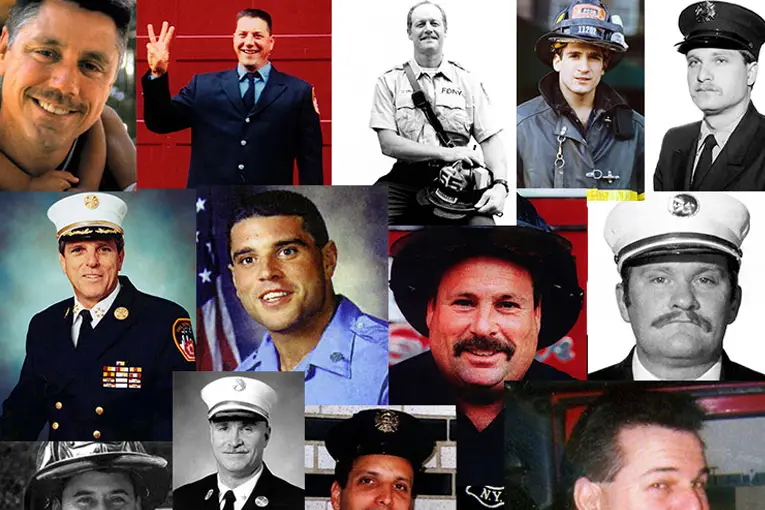
Firefighters Who Died on 911
Image credit: Fire Engineering

During the attacks themselves, 343 FDNY firefighters were killed while performing rescue operations and attempting to evacuate the Twin Towers.

These men and women included firefighters of all ranks, from probationary firefighters to chiefs, reflecting the broad participation of the FDNY workforce that day.

Additionally, Keith Roma, a firefighter with the New York City Fire Patrol, also died responding to the scene, which brings some records to cite 344 total firefighter deaths.

Many of these individuals were trapped in the towers when the structures collapsed, illustrating the extreme danger and heroism of the operation.

How Many First Responders Died on 9/11?

Firefighter at Ground Zero

Beyond firefighters, other first responders also lost their lives, including 23 police officers and 37 Port Authority officers.

Collectively, the number of first responders who perished that day amounted to approximately 403 individuals, highlighting the extreme risk faced by those on the front lines of the attacks.

How Many Firefighters Have Died from 9/11 Related Illnesses Since the Attack?

Tragically, the toll of 9/11 extends far beyond that single day.

Exposure to toxic dust, smoke, and debris at Ground Zero has resulted in chronic illnesses and cancers among first responders.

As of 2024, over 200 additional FDNY firefighters have died from 9/11-related illnesses, including respiratory diseases, gastrointestinal cancers, and other health complications directly linked to their work at the site.

This ongoing loss underscores the long-term dangers faced by first responders and the need for continued healthcare support and monitoring for those who served during the recovery and cleanup efforts.

Why We Should “Never Forget”

911 Memorial
Image credit: Wikipedia

The heroism displayed by firefighters and other first responders on 9/11 serves as a lasting testament to courage and selflessness.

Remembering their sacrifices not only honors the fallen but also emphasizes the importance of preparedness, training, and community support for emergency responders.

Memorials, educational programs, and annual ceremonies ensure that their bravery and the lessons of 9/11 continue to be recognized worldwide.

Key Takeaways

  • 343 FDNY firefighters died on 9/11, with an additional firefighter from the Fire Patrol, totaling 344 firefighter deaths on the day.
  • Thousands more first responders have died in subsequent years due to 9/11-related illnesses.
  • The FDNY, NYPD, Port Authority Police, and other agencies worked heroically to save lives amid unprecedented chaos.
  • Ground Zero exposure has long-term health consequences, emphasizing the sacrifices of first responders.
  • Remembering these heroes helps educate and inspire future generations while highlighting the risks and responsibilities of emergency personnel.

The 9/11 attacks resulted in an immense and lasting loss for firefighters and first responders. 

343 FDNY firefighters perished during the attacks, and hundreds more have died since due to illnesses caused by exposure at the World Trade Center site.

Their bravery, sacrifice, and continued impact are a powerful reminder to honor and support those who serve in the fire and rescue professions.