National Volunteer Fire Council (NVFC) chair Steve Hirsch has called on volunteer and combination fire departments across the country to respond to the National Fire Protection Association’s (NFPA) 2020 Needs Assessment survey.
“The NFPA Needs Assessment Survey is a once-every-five-years survey that looks at what fire departments are being asked to do, and if they have the resources necessary to carry out those tasks,” said Hirsch.
“We know from past needs assessments that smaller fire departments tend to lack adequate resources compared to larger, better-funded agencies. Having an adequate response rate from volunteer and combination fire departments is critical to ensuring that we have accurate, representative data on the needs in smaller communities in particular.”
NFPA survey published next year
The survey includes questions on PPE, apparatus and equipment, training, health and wellness, and cancer prevention to address critical, timely issues facing the fire service.
The NVFC uses the results of the survey, which will be published by the NFPA next year, to educate federal policymakers on the needs of volunteer fire and EMS. The NVFC also helped the NFPA develop the survey questions.
The NFPA survey is open and available to all U.S. fire departments through January 1, 2021. To date, NFPA has received more than 1,000 responses. If you are a member of a fire department that would like to participate in the survey but have not received it, please email nasurvey@nfpa.org with your fire department’s name, state, and zip code. You can also reach NFPA toll-free at 800-343-8890. For more information on the survey, along with reports from previous surveys, visit www.nfpa.org/needsassessment.
GreCon have announced that Richard Brooks has been appointed Service Manager, replacing former Manager Jeremy Eschle.
GreCon makes people and places safer and enables the ‘smart factory’ as the leading provider of innovative industrial fire prevention and process measurement solutions.
Last week the company bid farewell to outgoing Service Manager, Jeremy Eschle, wishing him well for his future and thanking him for his contribution.
This week, Richard Brooks received a warm welcome as he takes up his role as the new Service Manager.
GreCon provide first class support across the UK
With a track record spanning 28 years, the company developed a reputation for providing first-class support to customers across the UK & Ireland.
Jonathan Hamill, Managing Director, said, “I’m delighted to welcome Richard. It is a key appointment which reaffirms our commitment to the UK and Ireland market.
Richard brings considerable systems engineering experience from his service with the Royal Signals and has managed engineering teams in commercial organisations. Our customers rely on us, and we look forward to Richard’s input as we seek opportunities for continuous improvement”.
Richard Brooks can be contacted by email: service@grecon.co.uk or by telephone on 01914147200
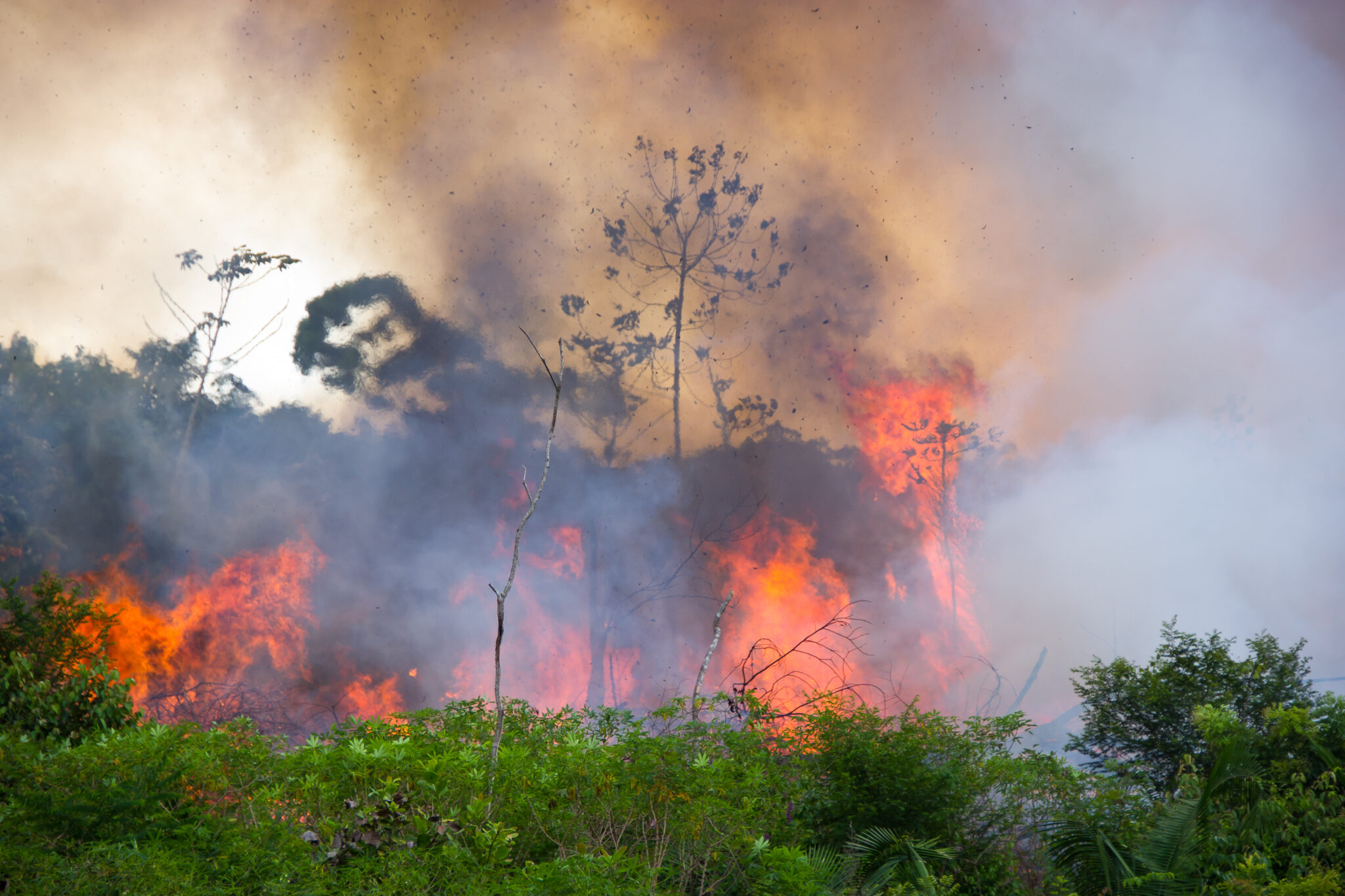
Amazon fires have more than doubled in the last year according to the latest satellite data.
The Institute of Space Research said there were 17,326 fires in the Amazon, compared to 7,855 in October 2019.
Satellite data also suggests that there was a record number of fires in the Pantanal wetlands last month.
Campaigners say the government is failing to stop the rise in fires, but the government denies it is to blame.
In July, the government imposed a 120-day ban on setting fires and deployed the army to badly hit areas, but the latest figures from Brazil’s National Institute of Space Research (Inpe) suggest the measures have not curbed the blazes.
Data released by Inpe on Sunday suggests there were 2,856 fires in the Pantanal region in October, the biggest monthly figure since records began over 30 years ago.
President Jair Bolsonaro has not commented on the latest figures, but has previously dismissed data from Inpe as flawed. He has also said the criticism levelled against his government over the fires was “disproportionate”.
Amazon fire data ‘flawed’
While the figures for October – traditionally a month when rains bring some relief – are particularly alarming, those for the year so far are also worrying environmentalists.
According to Inpe, 93,485 fires have been recorded in the Amazon so far this year – 25% more than in the same period in 2019, when President Bolsonaro’s handling of the forest fires drew international condemnation.
Brazil’s Amazon region has been the hardest hit, with 46% of all blazes occurring there.
But environmentalists are also alarmed by the steep rise in fires in the Pantanal, one of the world’s most biodiverse areas and home to animals such as the jaguar and the capuchin monkey.
Mariana Napolitano, the head of the science programme at World Wildlife Fund (WWF) Brazil, told the AFP news agency that despite the four-month government-imposed ban on lighting fires, some of the blazes appeared to be man-made.
“After deforesting the jungle, the offenders set fires to clean up the accumulated organic material… At the end of the month, with the arrival of the rains, the pace of the fires seems to be slowing down, but we can hardly depend on climate factors,” she warned.
“What happened in the dry season in the Amazon and Pantanal cannot be repeated,” she added.
All attempts to douse a fire in an oil field by Oil India Limited (OIL) in the Tinsukia district of Assam have so far failed, over five months after it started. It is now understood to be the longest oil fire in Indian history.
A criminal investigation is now underway to determine the cause of the blowout. as well as the handling of the incident in the weeks after the explosion.
Protests against OIL are still held in the region but rarely evoke political outrage. Social media, though, has been abuzz with photographs and videos of the raging fire at the Baghjan oil well. The fire has caused massive loss to environment and wildlife besides causing huge losses to property in the nearby habitation, causing many more people to be displaced from their homes.
Oil field was operating illegally
A committee set up by the National Green Tribunal (NGT) has reported that the Baghjan oil well and 26 others were being operated illegally in Assam. The NGT is headed by former Supreme Court judge Justice AK Goel.
The body had set up a committee under former judge BP Katakey to look into Baghjan fire incident. The Katakey committee has found that these oil wells did not have mandatory environmental clearance.
The final report of the NGT committee is likely next month.
Safe Fleet will donate tens of thousands of KN95 masks to fire departments and law enforcement agencies across the US.
“In the early days of the COVID-19 pandemic, we wanted to show our support and care for our extended First Responder family,” explained John Knox, Safe Fleet’s Chairman & CEO.
“Since we are in the business of supplying fleet safety equipment to help protect the lives of firefighters, law enforcement officers, bus drivers, and commercial vehicle operators, we used our strong existing global supply chain to quickly source and secure shipment of the masks.”
The protective masks will be shipped to Safe Fleet’s Long Island and Houston facilities and then distributed to first responders that expressed an urgent need to replenish their mask supplies.
Thousand of KN95 masks to be donated
Safe Fleet previously donated 800 surgical masks they had on hand at their Belton, MO facility to the local Belton fire department, Belton Missouri Police Department, and Belton Regional Medical Center.
“Keeping people safe is in our DNA,” adds Knox. “It’s why we exist as a company. It’s not surprising that our employees would think first of how we could find new ways to help keep people safe on the front lines of this pandemic.
“We will continue to look at additional solutions and capacity to support those facing the pandemic and to help keep fleets transporting essential workers and delivering essential goods on the road safely.”
The Association for Specialist Fire Protection (ASFP) is seeking a new Chief Executive Officer following an announcement by the current CEO Niall Rowan of his intention to step down after the Association’s Annual General Meeting in 2021.
Niall took on the role of Chief Executive Officer at the ASFP at the start of 2017, having been the Association’s Technical Officer since 2010. Having taken over just before the Grenfell tragedy, Niall has led the ASFP through a period of huge change both for the Association and the fire and construction sectors.
During his tenure, Niall has played a hugely influential role, providing input to the full range of Government and industry committees tasked with transforming the building safety landscape and improving competency across the built environment and significantly raising the ASFP’s profile as the go-to authority on passive fire protection.
He has also presided over a period of substantial growth for the Association and overseen the launch of its highly successful Foundation Course in Passive Fire Protection, which enables passive fire protection professionals to demonstrate their competency and study towards Level 2 and 3 qualifications awarded by the Institution of Fire Engineers.
Highlighting his intention to continue to support the Association in other roles, Niall stated:
“It has been a great honour to lead the ASFP through a period of such turbulence and change but I now feel the time is right for a new CEO to build on the achievements to date and complete the ASFP’s transformation into a modern, professional and outward-reaching association that can represent the needs of its members and the industry long into the future.”
ASFP Chair Roger Williams added:
“The Association wishes to thank Niall for his tireless work in promoting the ASFP and representing its views across the wider fire sector and built environment. He leaves the ASFP in a very strong position and ready to embark on an important period of change due to its substantial growth in recent years.
“We are seeking a new Chief Executive to build on this legacy and develop the ASFP’s future strategic direction. The new CEO will need to maximise the Association’s growth and revenue to ensure it continues to be the pre-eminent voice in the industry, improving standards across the passive fire protection industry and wider built environment.
Jensen Hughes, a global leader in safety, security and risk-based engineering and consulting, announced today its acquisition of CFT Engineering, a top fire protection engineering and building code consulting firm in British Columbia, Canada.
CFT Engineering was founded in 1992. Its five principals, Brad Walton, Michael Linton, Robert Heikkila, Emilia Mazzonna and Samir Adnani, will remain with the business. Walton has served as CEO and, with his team, grown CFT to 26 employees and increased revenue year over year. The company is well-known in the Western Canadian architecture, engineering and construction industry, with CFT providing their core services to many of the major construction projects in the province over the last 20 years.
“CFT has long been on our radar, especially since many of our team members share the same fire protection engineering heritage and have known each other for decades. We are thrilled we were able to make this happen, as it accelerates the strategies for both businesses and allows us to provide the market with the strongest team of fire protection engineers,” says Raj Arora, CEO, Jensen Hughes.
This will mark the second acquisition in 2020 for Jensen Hughes, a portfolio company of Gryphon Investors. Over the last several years, the company has made a number of investments in prominent fire protection engineering firms worldwide, in markets such as the UK, Ireland, Finland and Korea.
“We are proud of what we’ve been able to accomplish as CFT Engineering and the reputation we’ve built for the company. This is an exciting new partnership for all of us as our scale and depth of expertise will allow us to bring the best of both companies to clients in British Columbia and beyond, and makes our office a very attractive place to work for top talent,” says Brad Walton, CEO, CFT Engineering.
For more information, visit jensenhughes.com or cftengineering.com.
Regional Practice Leader at Telgian, Troy Wiltbank highlights the benefits of Aqueous Film Forming Foam, while posing the risk of prohibition in the US.
Aqueous Film Forming Foam (AFFF), a firefighting foam agent that has been utilised since the 1960’s, is one of the best products for use on flammable and combustible liquids.
In its Alcohol Resistant (AR-AFFF) version it is just as, if not more, robust and effective in these hazard applications. However, this type of foam has been under some immense pressure regarding environmental and health risks, but before we get into the future of this product, let us talk about what it does so well.
It is truly hard to match the performance and efficiency of AFFF on hydrocarbon hazards and AR-AFFF on polar solvent-based hazards. To truly understand AFFF, you must first understand a couple of terms.
The term “concentrate” refers to the foam product in its unmixed form, as received from the supplier and the term “solution” refers to the foam after it has been mixed with water at its proportioning rate.
With industry standard proportioning rates at 3% through numerous proportioning devices and discharge nozzles or sprinklers, AFFF products are very versatile in providing excellent protection in challenging applications.
These products take efficiency even further with 1% options that perform equally to the 3% versions; the ability to reduce the amount of foam concentrate you need by a third and provide the same performance is truly amazing.
For every 100 gallons of water flow through a proportioning device, the usage of foam concentrate is 1 gallon (1%) and 3 gallons (3%) which equates to large reductions on foam concentrate storage.
AR-AFFF is different in that it contains a special “gum” or membrane additive that allows the foam solution to stay on top of the fuel surface. This is important for several reasons.
It first functions to separate the fuel from oxygen to dilute the vapor phase below what is necessary for combustion. Secondly, it cools the surface and finally, it creates a stable foam blanket that then prohibits fuel vapors from migrating through the blanket for reignition.
The other advantage that these fluorinated surfactants offer with the film forming characteristics is that they do not require a lot of expansion to be effective, as opposed to non-fluorinated products.
This is reflected in the vast number of discharge devices that are listed with the AFFF family. They perform very well out of nozzles and sprinklers that are non-aspirated.
PFOA Stewardship Program
Unfortunately, the presence of PFAS (perfluoroalkyl and polyfluoroalkyl) in the fluorinated chemicals is the target of many states that are, or are soon to be, banning its use.
In 2006 the PFOA product stewardship program was put into motion as a result of findings in a 3M product that resulted in their AFFF being pulled from the market. The EPA worked with eight of the leading producers of per- and polyfluoroalkyl (PFAS) substances in the market.
Another targeted chemical within this program is perfluoro octane sulfonic acid (PFOS). This chemical has not been known to be manufactured in the US since 2002 and this includes importing per Chemical Data Reporting (CDR) efforts in 2006 and 2012. These are bio persistent chemicals in the environment, and in the human body, that do not break down. In fact, they accumulate over time.
The short version of this program was to reduce the carbon chain molecule of all AFFF formulations of 8 or more down to what is known as a short chain of 6 or less.
At the time, this was the solution to eliminate or significantly reduce PFOS/PFOA in the formulations and thus brought forth the latest advancement in AFFF chemistry, the designation of C6 AFFF formulations.
This new short chain formulation requirement was required of all foam manufacturers by January 1st of 2016. The products were released to market with C6 nomenclature by manufacturers.
This was a massive effort to develop and list equipment and devices, in order to meet the needs of the market with equal performance to the longer chain formulations.
The shorter chain chemistry proved challenging in trying to equal the performance of the previous long chain formulations. All in all, this was completed quite successfully and was thought to be a huge step forward in taking AFFF into the future with the environment in mind.
Challenges for manufacturers
The solution to the AFFF fluorine, Fluorine Free Foam (F3) is a huge decision and it will take a massive effort to achieve. Manufacturers of F3 products will be challenged to provide products that can come close to the type of protection AFFF could provide.
Some notable performance requirements of Mil-Spec AFFF were to achieve military extinguishment standards at half the proportioning rate and twice its proportioning rate.
There are some big challenges for foam manufacturers to overcome in developing a solution such as we are seeing with F3 products. The products that are currently available have minimal listings and limitations to applications.
Some of this is due to the fact that the products are very new to the market, as compared to the AFFF family. There have also been challenges in performance and inability to meet similar application rates.
A fundamental solution
PFAS bans are in place and they will continue so, finding a solution is a top priority. There are many options that are close and are achieving success in very minimal applications. In many cases though, as the flammables and combustibles get more exotic and in-depth, the performance of F3’s drops significantly.
These regulations have put many in a very tough situation where the new technology is not equivalent yet to replace the current technology. A proper study must be conducted in order to make the right choice for a new or existing facility or hazard.
There are many fire protection professionals, manufacturers and fire protection engineers who specialise in this type of hazard, and it is important to reach out to them when making critical decisions with fire protection products for a Class B hazard.
The National Fire Chiefs Council have released the following statement in response to recommendations made in the Grenfell inquiry.
NFCC statement in full
The Grenfell Tower fire was an appalling tragedy that has sent shock waves throughout this country and the rest of the world. Nowhere more so than in fire and rescue services across the UK.
The National Fire Chiefs Council (NFCC) is working with every Fire and Rescue Services (FRS) in the UK to drive changes that will stop such an event from ever happening again.
On the first anniversary (October 30th) of the publication of Sir Martin Moore-Bick’s Grenfell Tower Inquiry (GTI) report all FRS continue to react to the 46 recommendations – making changes to the way that firefighters would respond in similar circumstances.
The NFCC Chair, Roy Wilsher said: “It is more than three years since the fire and the thoughts of all in fire and rescue services across the UK remain with families still coming to terms with the appalling and unnecessary loss of their loved ones. Our hearts go out to them.”
The NFCC is dedicated to identifying the root causes of the fire and making sure that the right things are done to address them. Therefore, the overriding priority for NFCC is to make sure there is change in the way that buildings – including high-rise homes – are constructed, refurbished and managed.
Mr Wilsher added: “High-rise residential buildings need to have safety features that protect both the residents and firefighters from a fire. If those features are not present, or fail, the public and the firefighters who serve them will find themselves in a hugely challenging and very dangerous situation. We are seeing clear evidence of a failure in the building system that should make sure that buildings are safe – sadly, the Grenfell Tower fire is not an isolated example.”
In the face of the possibility of the failure of the features designed to protect people all FRS are making changes to the way that they will respond in these circumstances. The NFCC is supporting them to do this.
Mr Wilsher said: ‘Although the Grenfell Tower fire happened in London, its lessons are applicable to every fire and rescue service in the UK. Every one of Sir Martin’s 46 recommendations has been studied to determine what the implications are across the UK’.
NFCC to help FRS respond Grenfell recommendations
NFCC is determined to help all FRS respond to the recommendations. It has grouped them into 11 national themes which are being rigorously pursued, with multiple actions being taken against each theme. Having national themes with supporting work aligned to them helps ensure a consistent adoption in local fire and rescue services.
Key progress to date includes fire services reviewing all high-rise residential buildings with ACM cladding. Further to this, and to ensure other safety features are in place, all high-rise residential buildings will be audited or reviewed by the end of 2021.
The NFCC is working with Government to improve the legal framework that supports safety, including prioritising which buildings should be ‘in scope’ under the New Building Safety Regulator, responsible for ensuring new regulations are followed as outlined in the Building Safety Bill, currently going through parliament.
Evacuation related to nine of the inquiry’s recommendations. As a result, more than half of all fire services are now using smoke hoods; highlighted by the inquiry’s chairman. Used by firefighters when evacuating people from buildings, the air filters remove smoke’s toxic gasses, providing additional protection for up to 15 minutes.
And nearly all fire and rescue services have made changes to their approach to moving from ‘stay put’ to ‘get out’ in high rise residential buildings, when it is safe to do so.
NFCC has updated national guidance on firefighting in tall buildings and has updated control room guidance with a specific priority on the guidance given by fire control to occupants who are trapped or being affected by the fire. New Fire Standards in England will form part of the fire service inspection programme, to ensure the guidance is embedded in fire and rescue services. This is all supported by national training requirements and learning materials.
Mr Wilsher concluded by saying: “Fire services cannot be held responsible for decades of failure caused by buildings that are not built – or maintained – in accordance with building regulations. Significant action is needed by those responsible for buildings; without this, people will continue to be put at risk.
“I would also like to see leaseholders unburdened from the cost of expensive temporary measures that have been put into place, such as fire patrols and waking watches. Building owners need to take responsibility and not pass on crippling costs to leaseholders. These measures were intended to be temporary and certainly not still in place more than three years later.
“Since the night of the fire, NFCC has been involved in a wide-range of work to ensure an incident like this cannot happen again. We have had a major role in areas such as the Hackitt Review, calling on the government to make legislative change and played a key role in influencing the direction of forthcoming government bills, based on the extensive collective knowledge of the entire UK FRS.
“I would like to reiterate how members of the Grenfell community have carried themselves with dignity and compassion in the pursuit of justice. I sincerely hope the second phase of the inquiry gives them the answers they need and deserve.”
Ceramic Glass LTD take a look at how ceramic glazing and sprinklers could offer a genuine, flexible alternative to the traditional methods of fire safety.
Councils are now thinking more seriously of better levels of protection for residents in residential tower blocks. That’s signalled by commitments from some to install sprinklers and to look more closely at fire door performance.
Both point to an increasing consideration of wider holistic fire safety – combining different systems since no single measure on its own can provide the full level of assured protection that is needed, given the risks that can apply in high-rise and multi-occupancy residential buildings that were originally designed and built, perhaps refurbished, at a different time when fire safety was not as prominently on the public agenda as now applies.
Where the main attack/defence strategy against fire is to use water – either as sprinklers or reliance on firefighter action – then equally part of the strategy should be to consider transparent glazing panels that are resilient against cold water thermal shock should events turn out to be more severe and different from those originally anticipated.
Ceramic glass is a distinctive glazing product that characteristically has in-built resilience against water under fire conditions. It is specifically designed to resist thermal stress.
Thermal shock is a major failure risk for glass in fire. But water and ceramic can happily co-exist, without fears that a ceramic glass panel can so easily crack and fall apart under thermal stress and cold-water shock.
Ceramic glass is transparent, 5mm thick, easily glazed, handled and cut (using a basic tile cutter) to suit basic vision panel sizes or larger panes alike. It is readily available and obtained.
The core property of ceramic glass is resilience against thermal stress, ideal for fire conditions. That’s because of its marginally negative and close to zero thermal expansion coefficient, so that significant thermal stresses just cannot be generated in fire.
Compatibility with water. It is even possible to combine glazed screen arrangements with sprinklers to form large area water curtains, which function as normal glazed screens, without the risks of screen failure in fire due to uneven or sporadic water flow over the glazed surface.
The ceramic softening point due to its foundation composition is also high, much higher than standard glass and well above temperatures likely to be experienced in fire.
Ceramic glass as a transparent and robust fire-resistant glazing has significant advantages in fire. Those apply especially where risks and concerns lead to a higher level of assured protection that may have been the case in the past, to remove doubt and uncertainty.
The Hackitt Review concludes that change is needed. It observes that a “race to the bottom” is not the right direction of travel. What is needed instead is a race to the top because of the uncertainties of fire – to drive standards up in the interests of dispelling uncertainties, risks and doubts about protection in fire, in a broader holistic context which combines the best of available technologies.
There should be no room for complacency and uncertainty in fire. Confidence has naturally taken a hitfollowing the Grenfell tragedy, which at the same time also brings to mind the previous disaster at Lakanal House. That should mean thinking more broadly and adopting available technical solutions, such as ceramic glass, that haven’t previously been given as much attention as they deserve.