Fines handed out to landlord for fire safety failings

A landlord has been handed a heavy fine over several fire safety failings, as reported on the Fire Protection Association website.

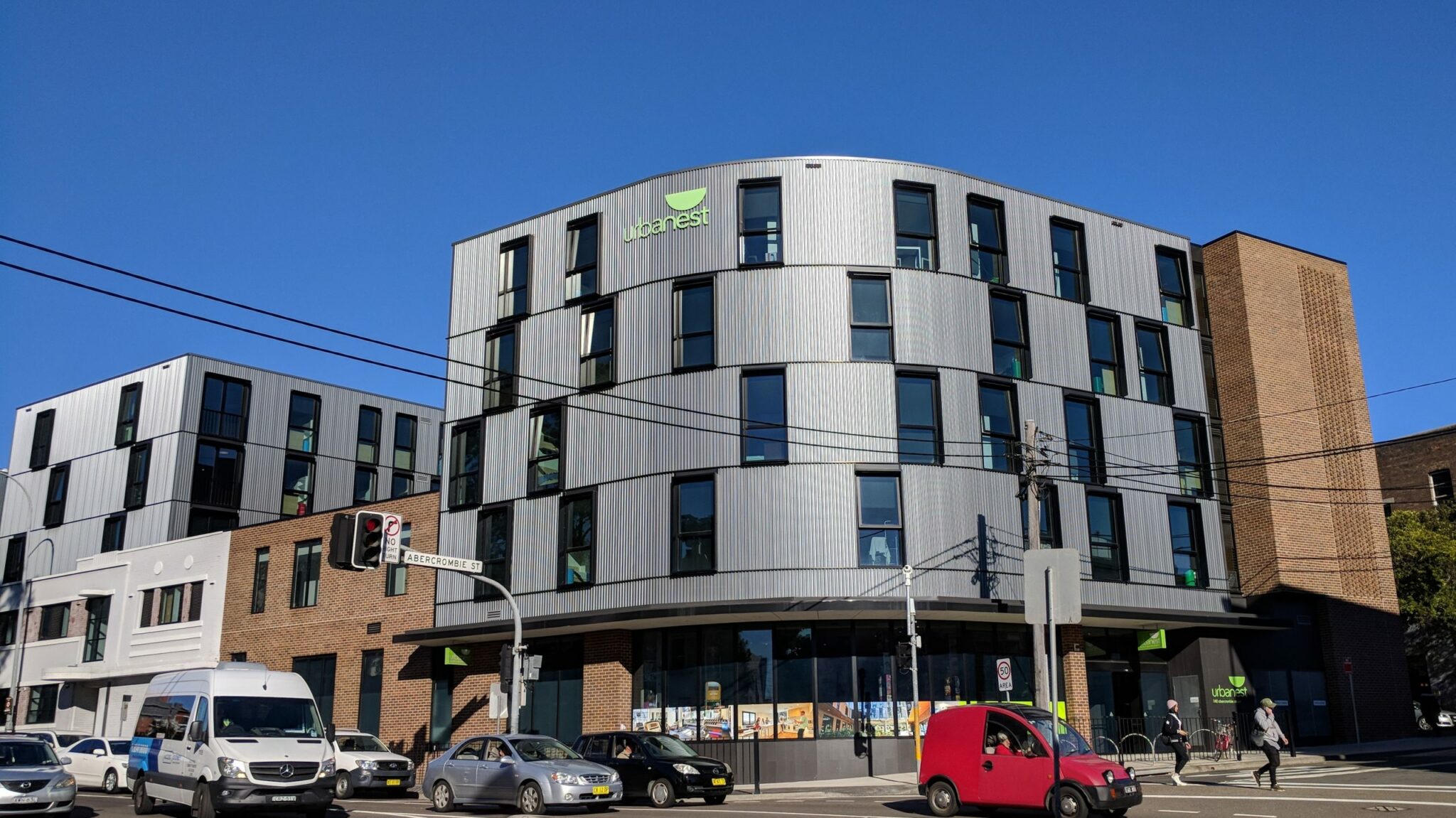
Manjit Dulay was prosecuted alongside former firefighter Martin Ballard over the failings at a development he owned in Leicester, which put ‘dozens of tenants’ lives at risk’.

Leicester Mercury reported on the prosecutions of both Mr Dulay and Mr Ballard over the issues at St Clement’s Court in Leicester, which Mr Dulay owns and which contains over 70 flats.

In 2014, Leicestershire Fire and Rescue Service (LFRS) found – after repeated inspections – a range of ‘urgent improvements’ that he needed to make in order to ‘raise fire safety standards’ across the site.

Issues discovered included a ‘non-functioning’ fire alarm system, ‘useless’ smoke detectors, ‘unsuitable’ fire escape routes and a ‘broken emergency air venting system’.

Mr Dulay failed to ‘do all the work required’, so LFRS issued him with an enforcement notice in April 2016, but a ‘more thorough’ assessment by LFRS in 2017 found both ‘recurring problems and new ones’, including that ‘not a single smoke detector in the corridors was functioning’.

LFRS, ‘not wanting to force people out of their homes’, fitted new detectors themselves at the time, and that year Mr Dulay ‘finally’ hired an online company to undertake a fire risk assessment, paying them £400.

However, he ‘never informed them of the enforcement notice or the scale of problems’, and the company sent Mr Bullard – a retired LFRS firefighter – to undertake the assessment.

Mr Bullard was ‘unqualified for the job’, and as such his work on the assessment was ‘so poor’ that he ended up being prosecuted alongside Mr Dulay, who had spent money on ‘illegally’ building two penthouses on the blocks ‘without planning permission’, and yet ‘failed to do the work required to meet fire safety requirements’.

After growing concerns from residents, Mr Dulay was prosecuted at Leicester Crown Court alongside Mr Bullard, pleading guilty to six counts of ‘risking people’s death or injury’ by breaching fire safety regulations, as well as ‘failing to surrender to bail’ in February this year, having ‘absconded for 130 days’ and then missed a later appointment ‘to sign in at a police station’. He was fined £80,000, given a 12 month prison sentence suspended for 24 months, and ordered to pay £66,418 in costs.

Mr Bullard meanwhile was charged with four counts of breaching regulations, and was fined £1,600 and ordered to pay £7,864 in costs. Prosecutor Bernard Thorogood stated: ‘This was a building on occasion without fire alarm protection, which was a very serious situation.

Fire safety failings “increased risk of death”

Each breach gave rise to the risk of death or serious injury. Fire is an indiscriminate killer. Fire and the products of combustion can spread very rapidly.’

He also noted that the building had a ‘serious lack’ of fire resistant barrier, doors that did not fit frames and other units that ‘should have been self-closing’ in a fire, adding: ‘A corridor can quickly become completely filled [with smoke] so that visibility is removed and a single breath can have terrible consequences.’

With 30 to 40 fires in residential blocks every day in the UK, he added, ‘insecure front doors and anti-social behaviour problems’ in the area around the block ‘made the risk of fire greater’.

Mr Thorogood noted in turn: ‘There were repeated attempts by the fire service to help him raise standards. It was his choice to ignore regulatory requirements in the hope they would go away.’

Defending Mr Dulay, Lawrence Henderson said that ‘he’s no businessman – he’s a builder. He has taken on far more than he could manage. He’s trying to keep up with what he’s created’. In response, Judge Robert Brown said: ‘You’re describing a multi-national being run like a corner shop. He’s completely out of his depth.’

He also told Mr Dulay that ‘you’re a builder, not a businessman’, and that ‘a radical new approach to compliance is now necessary’. Defending Mr Ballard, Olivia Beesley said that ‘he was simply out of his depth’, and that ‘it was beyond the training he had.

He knows he’s let down his profession by these offences’. Mr Thorogood concluded by noting that fire safety at the development was ‘much improved’, but still ‘not quite where it should be’.

NFPA announce newest addition to NFPA LINK

NFPA has announced the 2021 edition of NFPA 70E, Standard for Electrical Safety in the Workplace as the latest addition to NFPA LiNK.

The Association’s new information delivery platform that will include codes and standards, supplementary content, and visual aids for building, electrical, and life safety professionals and practitioners.

Originally developed at OSHA’s request, NFPA 70E helps companies and employees avoid workplace injuries and fatalities due to shock, electrocution, arc flash, and arc blast.

With the addition of NFPA 70E to NFPA LiNK, users have instant access to requirements for safe work practices that reduce a worker’s exposure to major electrical hazards.

In September, NFPA introduced the platform with the four most recent editions of NFPA 70, National Electrical Code (NEC), the most widely used code in the United States and referenced around the globe.

One of the great aspects of NFPA LiNK is that it can be accessed via mobile devices, tablets, laptops, or other preferred device. It will become a “living library” for users that offers:

NFPA Link will be a “living library” for users

  • The ability to work alongside the NEC and NFPA 70E by adding personal notes, assigning colors, and saving to custom collections for quick and easy reference
  • A broader understanding of code requirements through access to expert commentary, visual aids, and helpful resources
  • Collaboration features to share code sections, work across teams, and ensure everyone knows what is required
  • Navigation tools that enable users to quickly locate the information they need based on the situations they encounter

There’s so much more about NFPA LiNK you don’t want to miss! Check out the NFPA LiNK weekly “video blog series” where we break down and discuss some of the key features and functionalities of the platform.

Our first video in the series highlights the Dashboard and publications functions. In the second installation, we discuss Bookmarks and the MyLiNK features. The latest video features situational navigation.

As an NFPA LiNK subscriber, you will get access to continuous updates, features and functions, and new editions of NFPA codes and standards as they are released. 

NFPA will soon expand the collection of codes and standards within the application to include the more than 300 that NFPA offers.

Learn more about how NFPA LiNK can help you in your work. Find more information about the platform, a timeline of additional codes and standards that will be coming to NFPA LiNK, and a product introduction video all at nfpa.org/LiNKPurchase or try NFPA LiNK by visiting the website.

14 UK housing associations expecting to spend £1.2BN on fire safety

THE UK’S largest housing associations are expected to spend around £1.2bn on fire safety works in the next five years, after a survey of 14 associations was undertaken.

Inside Housing reported on its survey of the UK’s largest housing associations, which own a combined 762,000 homes, with the survey finding that the companies are projecting fire safety costs between 2020 and 2025 of around £1.19bn.

The news outlet said that the results of its survey ‘show the massive impact’ that the Grenfell Tower fire, and its subsequent inquiry’s first phase report recommendations, are having on housing association finances.

This impact is also being caused by ‘subsequent guidance and legislation’ arising from Grenfell, which are ‘leading to tough decisions on future investment’ for the housing associations.

The works bracketed under fire safety include cladding remediation, ‘intrusive’ surveys and funding interim measures including waking watches, and London based associations ‘with large proportions of high-rise stock’ are ‘expecting to spend the most in the coming years’.

Of the 30 surveyed, only 17 responded, with 14 of these providing ‘an estimate of future spend’. Eight of these London based associations surveyed said they anticipate spending around £958m by 2025, and own over 456,000 homes between them, though ‘dramatically increased spend’ was also expected by landlords outside the capital, with seven other respondents – owning 306,000 homes between them – predicting a spend of £237.9m.

These expected cost increases have come despite housing associations ‘having already spent’ hundreds of millions of pounds on fire safety since Grenfell, with all 17 respondents calculated to have spent – as a group – £463m. Of those surveyed, the London based companies were ‘the major spenders’ with £385.5m, or £724 ‘for every home they own’; while non London associations spent £77.6m, or ‘the equivalent’ of £285 per home.

In 2019/20, £212.5m or 46% of this spending occurred, and some of the associations who responded said they were ‘unable to provide’ figures due to the ‘shifting landscape’ around building safety legislation, while legislative changes such as the Building Safety Bill ‘could further heap costs’, specifically the proposal of building safety managers and building safety cases for all high rise residential blocks.

Inside Housing added that the increased costs will mean associations ‘will have to make tough decisions about where that spend will come from’, with both housebuilding and ‘the zero-carbon agenda’ the ‘likely casualties’. Campbell Tickell partner Sue Harvey said that the government ‘needs to understand that repairs, fire safety, zero carbon and development come out of one pot of money’, and ‘if one went up the others would go down’.

The association’s executive director of business and performance partnerships, Jamie Ratcliff, said in turn that ‘absorbing these very significant building safety costs means we will build fewer affordable homes without the government’s help’.

NFPA receive grant from FEMA

The National Fire Protection Association (NFPA) has received a $526,000 grant from the Federal Emergency Management Agency’s (FEMA) Fire Prevention & Safety (FP&S) program in support of reducing fires and falls among older adults, a key high-risk population.

The funding will help broaden the reach and scale of Remembering When™: A fire and fall prevention program for older adults through the development of updated digital training and resources, which are used by public health and safety officials for implementation in their communities. 

“Remembering When has been a highly effective tool for helping educate older adults about ways to lower their risk of fires and falls and in connecting them with resources in their community,” said Andrea Vastis, senior director of NFPA’s Public Education Division. “Receiving this funding will help strengthen the program and broaden its reach, ultimately furthering its positive impact on the aging population’s health and safety.” 

Developed in conjunction with the Centers for Disease Control and Prevention (CDC), the Remembering When program is based on 16 core fire and fall prevention messages that support behavior change, with related public education materials for distribution.

Since its launch in 1999, Remembering When has evolved and is currently implemented in the U.S. and Canada by community teams of fire service, elder care, and public health professionals to help reduce the incidence of fire and fall injuries and deaths among residents ages 65 and older.

While this age group comprises 16 percent of the total U.S. population, it experiences a disproportionate percentage of injuries and deaths from fires and falls; nearly one in three seniors (17 million people) suffers a fall each year. 

“Fire and EMS now see more fall victims than fire victims, often being called to the same homes repeatedly for falls. This reliance on the fire service presents a unique opportunity for fire and elder care services to work together to provide needed assistance and services to older adults,” said Vastis.

“But in order to more fully and effectively meet those growing needs, the reach, scope, and scale of the Remembering When program must be broadened and strengthened.”  

According to Vastis, the newly announced grant funding will allow NFPA over a two-year period to create new educational assets and a process to monitor local program activity and collect key data, and to develop online learning modules that deliver training to greater numbers of fire and elder/public health professionals.

The funding will also work to expand Remembering When messaging to include information around proper use of medication. Year one of the project will focus on development of these resources; year two will focus on pilot testing them. 

In order to meet the project’s objectives, NFPA will work with numerous partners for subject matter and technical expertise, as well as program guidance. Partners include the multi-disciplinary Remembering When Advisory Group, the NFPA Educational Messaging Advisory Group, the National Disability Rights Network, the University of Iowa’s School of Public Health, the Fire Protection Research Foundation, and other fire and life safety stakeholders.  

For this release and other announcements about NFPA initiatives, research and resources, please visit the NFPA press room.

How safe are fire doors?

Fire safety at student accommodation has featured a lot in the news recently, and it’s a topic that Work Smart Fire Door Inspection discussed in their latest blog.

How safe are the fire doors at your student accommodation?

There’s been a lot about the safety of students in the news lately. Fresh faces are arriving at their new student accommodation for the new term. One thing people don’t ever seem to mention though, is whether fire doors in student accommodation are fit for purpose?

Much of the news coverage has focused on Covid-19 and the effects of being locked down. However, we would like to open a discussion about the safety of the buildings that students are living in.

Do student accommodation providers take fire safety seriously enough?

According to a recent study by the Higher Education Policy Institute (HEPI), there are some 660,000 students living in PBSA during term time. These are split almost evenly between university residences and private sector purpose built student accommodation (PBSA).

These are great places for students to live, especially in their first year. It’s easy to meet people. They have all the necessary facilities to hand. And most importantly, accommodation managers are visible and easy to contact.

There is always a great deal of responsibility in providing living accommodation to people, no matter who they are or the type of accommodation.

However, in this situation, where there may be hundreds of students living in one building, with dozens of kitchens, hundreds of appliances and people who may not be fire risk aware, fulfilling that responsibility is very complex.

student accommodation

Fire Door Inspections in Student Accommodation

We have inspected fire resistant doors in 3 PBSAs in Scotland over the last couple of months. Thankfully, we have found it really encouraging to be liaising with several of these PBSAs.

However, what we have discovered has been mixed. Most fire doors at student accommodations we have inspected have needed attention of some sort. There have even been one or two that would be described as critically flawed.

The most alarming (but not surprising) thing we found are doors that have been incorrectly installed or modified. This includes FD30 fire doors fitted where an FD60 fire door had been specified.

This means someone has fitted a fire door that can only last for 30 minutes in place of one that can last for 60 minutes.

Misinformation and confusion could cost the lives of students or fire fighters if there was to be a blaze.

student accommodation

Book a Fire Door Inspection at your Student Accommodation

We need to take Fire doors seriously. This is especially true in the world of student accommodation. Students have a right to live in a safe environment. Landlords and accommodation providers have a duty of care to ensure fire doors are up to standard.

We hope others can now start to follow the example of the providers we have been in contact with recently.

These doors are safety critical, life saving devices – essential components of your fire safety strategy. If they fail, then so does the strategy.

Here’s a few basic things you can do to help you decide if your fire doors need attention –

  • NEVER wedge or block a fire door open.
  • Does your door close completely, unaided, even when only opened slightly.
  • Are the gaps around the door the right size? Use a £1 coin – it’s about 3mm thick, the perfect size for the gap.
  • Are the fire & smoke seals (strips around the door or frame) in good condition?

For more information on fire door safety you can visit the Work Smart Fire Door Inspection website here: https://worksmartfiredoorinspection.co.uk/2020/10/02/fire-doors-student-accommodation-fit-for-purpose/

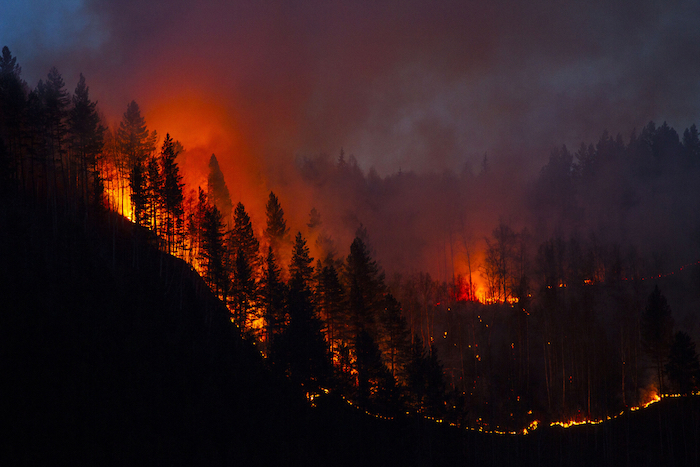
EU Commission publish 20th edition forest fire report

Today, the Joint Research Centre of the Commission presented the 20th edition of its Annual Report on Forest Fires in Europe, the Middle East and North Africa, covering 2019.

In what was the worst-ever year for forest fires around the world in recent history, over 400,000 hectares (ha) of Europe’s natural land was burnt and a record high number of nature protection areas were affected by wildfires.

According to the findings of the report, climate change continued to affect the length and intensity of fire danger in Europe.

By March, before the ‘fire season’ in most countries, the EU’s total burnt area was already above the annual average of the last 12 years.

However, thanks to better preparedness and more efficient response, the 2019 season was one of the best ever in terms of preventing accidents and loss of life.

Key findings of the report

  • National reporting from countries showed that Spain, Portugal and Poland recorded the highest number of fires in EU countries in 2019;
  • Romania (73 444 ha burnt area) was the country with the greatest damage to its protected areas in 2019, according to the European Forest Fires Information System (EFFIS);
  • Wildfires heavily affected Europe’s ‘Natura 2000‘ protected areas: With 159,585 ha burnt in 2019, nearly half of the total burnt area in the EU occurred within these key biodiversity zones;
  • The 2019 season was, however, one of the best in terms of preventing accidents and loss of life: Only three casualties occurred due to wildfires in the countries included in the 2019 report.

The Copernicus Emergency Management Service rapid mapping was activated 35 times to help fight forest fires in 2019, the most activations of any year so far.

The EU Civil Protection Mechanism was activated five times for forest fires and upgraded with rescEU in 2019, establishing a new European reserve which includes firefighting planes and helicopters.

The Biodiversity strategy proposed in May as part of the European Green Deal foresees actions to improve the health of European forests and strengthen our resilience to forest fires, and includes the target of planting at least 3 billion trees by 2030.

forest fire

Commissioner for Innovation, Research, Culture, Education and Youth, responsible for the Joint Research Centre, Mariya Gabriel, said: “For over twenty years the Joint Research Centre has worked with countries across Europe to provide the most up-to-date trends on forest fires, helping prevention efforts and lessening their devastating impacts when fires do occur.

Increasing risk of forest fire

“Changing weather associated with climate change is increasing the risk of forest fires around the world. Knowledge and scientific evidence are central to taking the most effective measures to prevent these fires, safeguard our forests, preserve biodiversity and protect lives.”

Commissioner for the Environment, Oceans and Fisheries, Virginijus Sinkevičius, said: “Europeans have seen horrifying pictures of forest fires on the West coast of the US, Siberia, Australia and the Amazon region.

“But the fires have also hit hard the forests in Europe. Part of the answer to ensure this does not happen at such a harmful scale lies in protecting and managing our forests in a way to reduce their vulnerability to fires, allowing nature to also protect itself.”

Commissioner for Crisis Management, Janez Lenarčič, said: “Data and insights on forest fire risks and outbreaks are essential. They help us in prevention and preparedness, but also in responding more quickly and effectively when disastrous wildfires strike. With rescEU and our reinforced EU Civil Protection Mechanism we stand ready to assist, across Europe and beyond.”

Fore more information on the report and some of its key findings, you can visit the European Commission website here: https://ec.europa.eu/commission/presscorner/detail/en/ip_20_1995

This report was published by the EU susanne.conze@ec.europa.eu. For any enquiries contact susanne.conze@ec.europa.eu.

Survey of organisations finds safety concern among social landlords

A survey of 111 organisations across the UK carried out by Inside Housing has found that fire safety is the biggest concern facing social landlords in the next 12 months.

Since the Fire Safety Bill was revised the sector has undergone several changes, but landlords now fear that more needs to be done, and the cost of that could leave them with a financial burden.

Of the 111 who took part in the survey, 82% said that fire safety remedial work is one of their top three priorities in the coming year, and just over half said it is the biggest issue in the coming year.

Of course, this will have a significant effect financially on social landlords, with 86% expecting it to cause some impact on them in the next 12 months.

“Government needs to support social landlords”

There is also some criticism for the Government, with 63% of those surveyed saying that not enough financial support is being given to them, especially in an economy struggling because of Covid-19.

As part of the survey, Inside Housing also interviewed Tony O’Neill, director of asset management at Sanctuary Group, who said: “Fire safety costs are going to have a significant impact, particularly with the guidance that’s coming out.

“Bearing in mind that we wouldn’t have allowed for this two to three years ago in terms of reinvestment or strategy going forward. In fact, I personally think it’s going to put quite a lot of housing associations under.”

With the ongoing Grenfell inquiry nearing a conclusion, it is expected that even more changes will be brought on to housing landlords, and it could cause further problems for both tenant and landlord.

Breaking News: Four killed in 7.0 magnitude in Turkey and Greece

Four people have been killed and 120 injured after a category 7.0 magnitude earthquake hit Turkey and Greece earlier today.

The Local authorities have also issued a tsunami warning and told residents to stay away from coast lines, although it is unclear the severity of the flooding.

Turkey’s Health Minister Fahrettin Altun released a statement through Twitter and claimed that “President (Erdogan) has given orders for all relevant government agencies to contribute to rescue efforts.”

It is thought the epicenter of the earthquake was Turkey’s Izmir province, in the North of the country, where the rescue mission has already begun amid fears that the death toll could rise.

Both Turkey and Greece sit on fault lines and earthquakes are common within the region.

Sutphen Corporation shatters industry record

Sutphen Corporation, the largest family-owned fire apparatus manufacturer in the the United States, has announced that its new Sutphen Industrial Solutions pumper shattered the industry’s record with a third-party rating of 6,000 gallons per minute from draft.

While officially rated at 6,000 gallons per minute from draft, the industrial pumper is capable of flowing over 6,500 gallons per minute from draft with unmatched abilities to pump from a pressurized source.

“As we continue to innovate and build our industrial portfolio, this record-setting apparatus solidifies Sutphen as a leader in the industrial fire industry,” said Zach Rudy, Sutphen’s director of sales and marketing. “Between our renown pumpers and world-class aerials, we provide our customers with the best options in the industrial fire market.”

Sutphen Corporation ‘a respected leader’

Built on a Sutphen extreme-duty, Monarch chassis, the #304 stainless steel industrial body was manufactured for the extreme conditions found on an industrial fire ground. Complete with a Double Thunder, Hale’s 6,000 gallon per minute mid-ship pump, and a direct-inject foam system, the unit highlights Sutphen’s abilities to integrate innovation into every aspect of its trucks.

“We are proud to have participated in bringing this powerful, high-quality, heavy-duty industrial pumper to the market,” said Jim Kirvida, leader Sutphen Industrial Solutions. “Collaboration between our two like-minded engineering and manufacturing teams resulted in a record-breaking rating of 6000+ GPM, proving Sutphen a respected leader in the industrial fire market.”

Sutphen and its network of dealers are currently demonstrating the unit across the country while it awaits a buyer. The demonstration unit is available for an accelerated delivery.

For additional information regarding the Sutphen Industrial Solution pumper, follow this link: https://www.sutphen.com/in-stock/demo-479-industrial-pumper/

About Sutphen: Sutphen Corporation is an Ohio-based, privately held, family-owned business that has manufactured the highest-quality, heavy-duty, custom-built emergency response vehicles since 1890. The company’s headquarters are located in Dublin, Ohio, a northwest suburb of Columbus.

No excuse for firefighter disorientation

Firefighters dedicate years to better understanding fire behavior. No matter the level of training, experience, or skill, firefighters still face circumstances beyond their control that can dramatically alter a fire’s behavior.

With modern fires progressing faster than ever, unexpected changes on the interior can lead to dangerous moments of disorientation. Equipping each firefighter with a thermal imaging camera (TIC) could be the difference between getting into serious trouble and making it out alive.

Today’s structural fires are changing due to the use of synthetic materials in buildings, furniture, and appliances. Beyond quickly reaching flashover, the UL Firefighter Safety Research Institute confirmed in 2007 that fires involving synthetic materials produce more hazardous smoke than their natural counterparts.

The thick, black smoke from today’s structures not only exposes victims and firefighters to more asphyxiants, irritants, and airborne carcinogens but greatly reduces visibility.

K2_FIRE-in-room.jpg

Synthetic materials and open floor plans cause modern fires to flashover much more quickly.

Visibility is key when evacuation becomes necessary. Captain William R. Mora of the San Antonio Fire Department conducted a firefighter disorientation study, evaluating 17 incidents that led to 23 fatalities of firefighters between 1979 and 2001.

In each reported incident, firefighters conducting an aggressive interior attack experienced zero-visibility smoke conditions for over 15 minutes. As conditions worsened, members of the company got separated from the handline or encountered tangles, becoming disoriented.

If company integrity is compromised, firefighters become open to potentially fatal events that are beyond their control. Depleted air supply, falling debris, and sudden flashover or backdraft are all very real threats to a disoriented firefighter. Having a TIC on hand can make a life-saving difference when getting out becomes the only priority.

Thermal cameras see through smoke to quickly locate victims and other firefighters

The fire service uses thermal imaging for a growing number of applications varying in complexity. From quickly finding a downed victim during search and rescue to making informed tactical decisions, the introduction of TICs helped firefighters become more efficient and save even more lives.

For all the refined uses of thermal, its most simple benefit remains the most important—TICs see through smoke. Powering on a TIC can instantly create a window through heavy smoke conditions, allowing firefighters on the interior to see landmarks, lines, and crew members.

With the press of a button, the handline can be seen running across the floor and a visible SCBA tank restores company integrity. What may have been a perilous situation suddenly becomes manageable.

A TIC for every firefighter is now a reality.

Historically, equipping each firefighter with a TIC would have been unrealistic. The technology was expensive, and departments would have been fortunate to have a single imager, much less a full set.

Beyond cost, early TICs were bulky and impractical to always carry on the interior. Fortunately, innovations in thermal imaging led to the availability of cost-effective TICs. Compact imagers, such as the FLIR K2, are designed to make thermal imaging readily available to anyone in the fire service.

While it’s still important to have high-performance TICs available for tactical decision-making, the K2’s ruggedness and imaging capability make it possible to outfit each member of the crew with reliable thermal.

Fire departments do everything in their power to provide each company with tools and turnout gear that make the job safer and more efficient. For example, the development of modern SCBA and personal protective equipment (PPE) has allowed firefighters to save countless lives on the interior— as has the introduction of thermal imaging.

Firefighters aren’t expected to share their gloves or boots, and they don’t take turns with a single SCBA mask. This gear is necessary and life-saving, but it can’t guarantee protection when evacuation is the only option. Today’s fires cause disorientation, and the ability to see in zero-visibility conditions is no longer a selective option. It’s time to get a TIC in every firefighter’s hands.