IFSJ Exclusive: Is the UAE still suffering from alarm fatigue?

Liam Hunt, Marketing Manager at STI, looks at the response to false fire alarms in UAE

The UAE had set its sights on bringing false fire alarm numbers down to zero by 2021, aiming to pull the country in line with its goal of being one of the safest countries in the world, however, as we head into 2023 is the country still suffering from alarm fatigue?

With one in three GCC (Gulf Cooperation Council) residents who ignore false fire alarms coming from the UAE, experts have warned of a ‘cry wolf’ attitude towards fire alarms in the country.

Alarm fatigue occurs when a person becomes desensitised to an alarm due to repeated false alarms and as a result, fails to react appropriately in an emergency – having potentially fatal effects.

From Dubai to Abu Dhabi, frequent false alarms have unfortunately made residents complacent causing them to delay evacuation and put lives at risk.

A common cause of false fire alarms is the accidental activation of manual call points and pull stations, often placed in high traffic areas it is easy for sensitive units to be knocked or mistaken for other electrical buttons.

After an incident at the Dubai Mall, the Dubai Police reported: “Dubai Police would like to clarify that a person mistakenly set off the fire alarm at the Mall after he had broken the emergency button fixed on a wall inside the Mall.”

It is not uncommon for public buildings across the UAE to be evacuated because of false alarms: affecting routine, costing businesses valuable time and money, and reducing the confidence the general public have in fire alarms.

Frequent false alarms at the Duja Towers in Dubai meant that when an actual fire broke out in the building in February 2020, many tenants ignored the warning bells.

Describing the incident, one tenant said he didn’t immediately evacuate the building upon hearing the fire alarm: “I ignored it as usual. When it kept ringing, I went down the stairs to check with the security who confirmed there is a fire in the building.”

Whilst another tenant added: “I myself have come down the stairs at least twice in the past because of the false fire alarm. So, it is natural that people do not take it seriously.”

Just two months later, as flames ripped through the 190-metre Abbco Tower in Sharjah, residents ignored multiple alarms before finally scrambling for safety.

Suffering from alarm fatigue, one resident said: “We ignored it thinking it was just another false alarm. But when it rang a second time and then a third, we got intrigued and looked out of the window.

“The sight that greeted us looked straight out of a disaster movie. Huge flames licked one side of our building as thick plumes of black smoke billowed the darkening sky.”

And as recently as November 2022, in the shadow of the Burj Khalifa, firefighters tackled a large blaze at 8 Boulevard Walk in Downtown Dubai as residents experienced alarm fatigue.

A housemaid who looks after families in the 35-floor building said: “My madam thought it was a false alarm at first as it goes off quite often.

“There are lots of children in the building but everyone got out.”

Alarm fatigue is addressed in Chapter 18 of the UAE Fire and Life Safety Code of Practice: “It is resident’s responsibility to take every fire alarm and fire sounders seriously. Though there are false alarms sometimes, it is resident’s responsibility to verify the fire alarm without neglecting and communicating with facility management.”

False fire alarms allow for a dangerous relaxed attitude towards evacuations, however, they can be prevented. As recommended in BS 5839-1:2017 manual call points can be fitted with a protective cover to prevent false fire alarms, and halt alarm fatigue.

The British Standard Institute recommends in section 20.2b, that: “All MCPs should be fitted with a protective cover, which is moved to gain access to the frangible element.

“It is now recommended that a protective cover is fitted to a Type A manual call point to help prevent false alarms.”

A British Standard with global reach, BS 5839-1, has been used on high profile construction projects across the Middle East, including Dubai – the Standard recognises that false alarms can seriously prejudice the safety of occupants by contributing to alarm fatigue.

The dangers of false alarms are too highlighted in Chapter 8 of the UAE Fire and Life Safety Code of Practice: “Fire Detection and Alarm Systems are many a times despised and ignored because of frequent experience of false alarms, which can be nuisance and waste of time when unwanted evacuations take place.”

Consequently, in Section 4.10. Manual Fire Alarm Initiating System (Manual Call Points), the Code of Practice advises protective covers: “Listed protective covers shall be permitted to be installed over single or double-action manually actuated alarm initiating devices.”

Safety Technology International manufacture a range of protective covers, from integral covers to outdoor, sounder, and UL listed models; there are variations to suit all applications. These covers are specifically designed to protect manual call points and pull stations from false fire alarms.

Manual Fire Alarm Initiating Systems

The design, installation and spacing of manual fire alarm initiating devices must be securely mounted onto a background of contrasting colour. The alarm-initiating devices can be single action or double action and listed protective covers shall be permitted to be installed over single-or double-action manually actuated alarm initiating devices.

Manual fire alarm boxes are only to be used for fire alarm initiating purposes and be installed so that they are conspicuous, unobstructed, and accessible. Unless installed in an environment that precludes the use of red paint or red plastic, manual fire alarm boxes shall be red in colour and should be located within 1.5 m of each exit doorway on each floor. The maximum travel distance to nearest Fire Alarm box should not exceed 61m, measured horizontally on the same floor and be mounted on both sides of grouped openings over 12.2 m in width, and within 1.5 m of each side of the grouped opening.

This article was originally published in the January edition of IFSJ. To read your FREE digital copy, click here.
IFSJ Exclusive: Advanced Technology Delivered Simply

Ed Chivers, Global Product and Certification Director at Reacton, talks about competency, common component concept and plans for Intersec and beyond

Even though Reacton were incorporated in June of 1996, Reacton has roots going back 50 years and is one of the pioneering companies for the burst tube technology, specialising in the manufacture of automatic fire suppression systems. The organisation has a great foundation and supporting businesses that position it to develop and understand the market in detail, with connections in the waste and recycling sector and its sister company that installs these systems.

These connections have enabled Reacton to quickly understand the demands of the market from both design and durability, to fast response times and a close feedback cycle that allows it to bring brilliant products to the market in exceptionally quick timescales.

Fast forward to today and Reacton is a true leader and global manufacturer of critical asset fire protection through highly innovative suppression systems. At the heart of Reacton is its word class talent that provides its leading service on show today.

Ed Chivers, Global Product and Certification Director, is responsible for implementing and delivering Reacton’s global certification initiative that has his sights on becoming the most approved pre-engineered pneumatic tube-based manufacturer in the world. IFSJ sat down with Ed to find out about his background in the industry, Reacton’s common component concept and its plans for Intersec and beyond.

Can you tell me about yourself, your professional background?

I’ve been in the fire industry for over 20 years and worked with some of the biggest fire suppression OEM’s in the market. I’ve held roles from design engineer and technical manager through to sales manager and general manager which has allowed me to gain invaluable experience in all aspects of fire protection. During my career I’ve contributed to the ongoing development of fire suppression products, industry-related documents and articles, innovative web-based systems and sales tools, whilst having trained many companies worldwide.

Today’s role is extremely varied and demanding but very rewarding, working closely with the leading laboratories from across world, putting products through their paces and seeing them perform. Having great performing and approved products is only one part of the process, I have always had the vison of allowing these products to be understood and supported easily, this is what we see in the technical and supporting documentation from Reacton. Advanced technology delivered simply.

I also sit on certain trade association working groups that assist the industry, I am honoured to work with some of the best minds in the industry who all share the same passion which is to strive for a safer industry. We do this by creating guidance, key stakeholders and assisting on current and future standards/legislation.

Are there any trends in the industry that have been impacting your business and your product development?

Competency: as we introduce more approved products to the markets, ensuring that they’re delivered and installed to our strict requirements becomes essential. We have great innovative online tools to make sure that people can remain compliant, especially when the world has changed through Covid and face-to-face training was not an option. This goes back to our focus of clear and concise supporting information, we need our customers and partners to demonstrate a high level of knowledge and qualification of their expertise is essential, these are life safety products and command the correct approach.

Another important one is supply. As Reacton are a global leader of the manufacturing of automatic fire suppression systems, maintaining uninterrupted supply is vital. We’ve invested a significant amount in becoming self-sufficient through multiple means wherever possible. This includes specialised machines to make our components, state-of-the-art test equipment, larger stocks, and having multiple high-quality suppliers to ensure continuous supply through full redundancy. All of the time ensuring we can meet or exceed Reacton’s exceptionally high standards as this is something we would never compromise on.

Are there any solutions you have created that you think will become more prominent in the years ahead?

My general feeling is that there is a global shift in our market. Our market is the direct and indirect technology utilising pneumatic detection tube. That’s a global shift from only utilising the more traditional total flooding systems. This is mainly due to people becoming much more aware of the risks that are on their premises, education via manufacturers along with more insurance lead requirements. People are moving towards protecting the risk itself, not just configuring a system that protects the entire room which holds the risk. We’re looking at targeting the risk and protecting it at its earlier stages when the fire is as small as possible, extinguishing it before it has an opportunity to spread.

People understand that this delivers protection that is much more cost-effective, as the total cost of ownership of that system is reduced because we’re using a much smaller system which can be put back up and online again much faster. There is still a place for those total flood systems and a lot of the time people actually use them in conjunction, which means if there’s a fire then you’re not having to deliver hundreds of kilos of extinguishing agent which has a cost associated with it, you’re only delivering a few kilos right where the problem exists.

We’re seeing people becoming much more exposed and clearer on that product line whereas before it wasn’t as well adopted. That’s where we see this is going to be increasing as the years go on and Reacton are positioned extremely well for that. We want to set the standard for the industry that approved systems are the way forward, we must all be adopting this stance which provides official, independent scrutiny of the products and systems. Therefore, superior quality, reliability and performance is a natural by-product of this process.

What has Reacton been working on recently?

We’ve been working on our suite of internationally approved products through testing laboratories across the world, such as Underwriters Laboratories (UL), Research Institutes of Sweden (RISE), the Building Research Establishment (BRE) and The Commonwealth Scientific and Industrial Research Organisation (CSIRO) to name a few. Developing our systems to become one of the most approved and versatile, whilst keeping the product range easy and simple to install.

We’ve been working on the approvals for ours clean agent systems, but just as important as all the testing that goes on behind the scenes is the documentation and training that allows people to understand the product. We’ve created a product that we believe is extremely effective but is delivered with simplicity. Our technical manuals, training, any sales collateral will be extremely easy to use.

One of the main concepts of our product is that we use the same valve throughout the product range, but we also have just one nozzle that is used across the range of systems which range from one kilo all the way up to an 18 kilo system when used on our clean agent system. Customers don’t have to worry about whether they are installing the right nozzle or having to stock different types of nozzles, there is only one nozzle that they will use.

Are there any regions you’re currently focused on working in/increasing your presence in?

With our latest suite of approvals coming online we’re going to be opening up the American market in a much bigger way. We have an office there, but we’ve got some key partners who will now have an approved product that’s going to expand with huge traction.

The Middle East is a significant focus for us, our CEO of the business moved out there due to the demand and potential we have with our product, and we won one of the biggest bus tenders ever given to protect buses across the UAE. We’re also expanding in Australia with our latest testing and approvals which open up the large mining sector. We’re focusing on trying to increase our awareness globally.

One thing Reacton is very good at is trying to make sure we’re very transparent with what goes into developing a system. We’re not one of those companies that will sit back and say ‘here’s our certificate, that’s all you need to know’. We’re very open and show people how we arrive at that product, what’s actually involved with the testing – we’ll share videos of the vibration testing, climatic chambers, corrosion testing results, the fire tests we record – we’ll show all the information of what those fires look like, what you’ll have to put out, and the capabilities of the system.

What is your focus for Intersec? Is there anything specific you’re showcasing or hoping to achieve?

 The Middle East is extremely driven by approved systems. We’re going to be launching some clean agent systems at the show. We’ll be showcasing that new product line and also discussing certain parts of our lithium-ion battery suppression technology. We’re showcasing our approved clean agent systems which we’ve developed using 3M™ Novec™ 1230 fire protection fluid and FM-200™ Waterless Fire Suppression from Chemours.

We’re hoping to achieve awareness of the product and the fact that you can have an approved system that can be accessible to all markets. We’ve always prided ourselves on being able to have a product line which has an extremely high level of quality and high precision parts, and we try to deliver that at a price point that’s accessible to everyone. We don’t feel that anyone should be excluded from having fire suppression just because of price.

Looking ahead, what is next for Reacton? What are your aims for the years ahead?

One of the key parts that differentiates Reacton from other companies is that we have a common component concept. Instrumental to the current and ongoing success of the entire Reacton brand is our intentional common component concept. This approach allows us to rapidly upscale our business. We have a product line which covers electrical panels, wind turbines, CNC machines, heavy plant vehicles, bus market, kitchens – the product range is large, but we use common components throughout, which allows us to deliver approvals in a much faster fashion.

The great thing about the years ahead is that we’ve gone through a lot of the tough testing on those components now. We will be rapidly delivering more approvals in a much faster timescale than we have been because the components that are used throughout have already gone through the harsh environmental tests. It allows customers to hold fewer parts, there are fewer parts to control and support and the documentation they need. We can provide literature much faster and it is more economical to create because it’s got the common component. We can bring new approvals online much, much faster.

That’s what the future looks like for us – more approvals, coming much faster than we have done before. We are not stopping – we’re going to be delivering more and more approvals until we are the most approved pre-engineered direct and indirect system manufacturer in the market. We’re looking to forge partnerships with key partners across the world now that we have all the approvals that have come online.

This article was originally published in the January edition of IFSJ. To read your FREE digital copy, click here.
Venari Group and Rotec Engineering launch EV Firefighting Technology

British manufacturers Venari Group and Rotec Engineering have announced their official alliance and are set unveil their new co-branded lithium ion extinguishing technology – the Vanquish – at the Fire Service College, Moreton-in-Marsh, in February 2023.

West Yorkshire-based emergency vehicle manufacturer, Venari, has, in recent years, pivoted to engineer and manufacture countless vehicle solutions in response to increasing challenges on the front lines around the world.

Notably, Venari manufactured armoured battlefield ambulances for Ukraine on a large scale in 2022, engineered and supplied over 200 Covid test centres around the UK throughout the years before and will soon deliver the first operational hybrid air crash truck – the most technologically advanced vehicle of its type – to Cranfield Airport, all amongst hundreds of NHS ambulances and firefighting vehicles.

Evesham-based Rotec Engineering has a history in developing innovative products and processes, manufactured solely from within the UK, including firefighting extinguishing technology for military and aerospace applications. This sits alongside Rotec’s core strength,  its advanced manufacturing centre dedicated to 5-axis CNC , automation and sliding head technology.

With a rapid increase in the use of lithium ion batteries, particularly in electric vehicles (EVs), fire and rescue services, globally, have continued to look for solutions capable of supressing EV fires. Rotec and Venari have subsequently gathered their resource and expertise to create the answer to the global challenge of EV firefighting.

Throughout 2022, Rotec and Venari engineered, manufactured and tested the new technology for fire services. The resulting product – the Vanquish – will be demonstrated to senior firefighters from fire and rescue services (FRS’) throughout the UK, at the fire service college in February 2023.

Capable of being mounted on small, agile pick-up size chassis’, or retrofittable into existing large vehicles in an FRS fleet, the Vanquish is poised to become an essential tool in the ever evolving ‘toolbox’ of a fire and rescue service.

The new system expels a specific media, which will be explained and unveiled at February’s launch, at the perfect droplet size which in-turn seals and supresses the burning lithium ion.

Venari Group CEO, Oliver North, commented: “For years we have searched for an efficient solution to present to our firefighters in lithium ion firefighting. Working with the brilliant Rotec Engineering team alongside our own world-class team at Venari, we have fused together two very capable and passionate manufacturers for the good of innovation – and we can’t wait to demonstrate it to the industry.”

Rotec Engineering MD, Paul Butler, added: “We are very excited to join forces with Venari on this project. The synergy between our two companies is clear , working together we have the answer to growing concern for which we are proud to offer a solution. We are always focused on providing innovative and robust solutions, and the partnership with the Venari team will ensure this is delivered to the highest possible standard.”

FBU calls out high salaries as firefighters use foodbanks

The Fire Brigades Union has released new data showing disparity between fire bosses on six figure sums and firefighters forced to foodbanks.

Chief fire officers are paid an average pay of £148,000, with the highest being £206,000 – over six times more than an ordinary firefighter. A competent wholetime firefighter is paid £32,244.

Meanwhile, firefighters and control staff working under senior management are being forced into a ballot for industrial action. Firefighters and control staff have rejected a 5% offer, with inflation currently at 10.7%. This most recent pay offer, a ‘real terms pay cut’, has led to a ballot for strike action.

After a decade of below or at-inflation pay settlements, the Fire Brigades Union has had reports of firefighters and control staff being forced to foodbanks and struggling to pay their bills.

The news comes against a background of fire bosses undertaking a number of activities on the pay dispute including meetings and written communications to FBU members.

Matt Wrack, Fire Brigades Union general secretary, commenting on the findings, said: “Firefighters and control staff are facing yet another real terms pay cut while fire chiefs rake in huge salaries. FBU members are increasingly facing real ‘In Work’ poverty, with firefighters having to rely on foodbanks and take on additional jobs to afford the basics.

“At the same time, some fire chiefs are also trying to persuade firefighters and control staff to step back from industrial action, to simply shut up about salaries that are several times smaller than their bosses.

“It’s insulting and stinks of hypocrisy of some chief officers who refuse to make the case for better pay for their workers. Chief fire officers are not worth six times more than firefighters, it was the latter who were called key workers during the pandemic delivering vital services including moving the bodies of the deceased. Firefighters and control staff are being left with no other choice but to take action.”

Average fire response times in England rise by 15 seconds

Official Statistics containing detailed analysis of response times to fires attended by fire and rescue services: England, April 2021 to March 2022 have revealed that fire response times have increased by 15 seconds.

According to the statistics, the average response time to primary fires in the year ending March 2022 was 8 minutes and 50 seconds: an increase of 15 seconds compared with the year ending March 2021. The largest component was drive time which increased by 17 seconds to 5 minutes 55 seconds.

All primary fire types showed an increase in average response times – dwellings by 16 seconds, other buildings by 13 seconds, road vehicles by 21 seconds and outdoor primary fires (by far the smallest category of primary fire) by 9 seconds

The average total response time to secondary fires (which can broadly be thought of as smaller outdoor fires, not involving people or property) in England decreased by 10 seconds, compared with the year ending March 2021, to 9 minutes and 13 seconds

Overall, response times to fires increased gradually between the year ending March 1995 and year ending March 2015. There was then a plateau at around 8 minutes and 40 seconds from the year ending March 2015 to the year ending March 2018. Every year since response times have increased except from the year ending March 2021, where drive times decreased probably due to decreased traffic levels due to COVID-19 lockdowns.

The average total response time to primary fires in year ending March 2022 was 8 minutes and 50 seconds, an increase of 47 seconds over the past decade, and an increase of 12 seconds in the past 5 years – the pattern across different types of fire was varied

Fomtec gains GreenScreen certification

Firefighting foam manufacturer Fomtec has received GreenScreen certification for several products.

GreenScreen Certified is an independent, non-profit certification standard that promotes the use of PFAS-free and preferred chemicals in products and manufacturing.

PFAS-free is defined as zero intentionally added PFAS to the product and PFAS contamination in the product must be less than 0.0001 percent by weight of the product (1 part per million) total organic fluorine as measured by combustion ion chromatography.

Fomtec’s Enviro ARK, Enviro USP, Enviro ERS and Enviro Ultra are all not GreenScreen certified.

Global Fire Equipment unveils new manufacturing facility

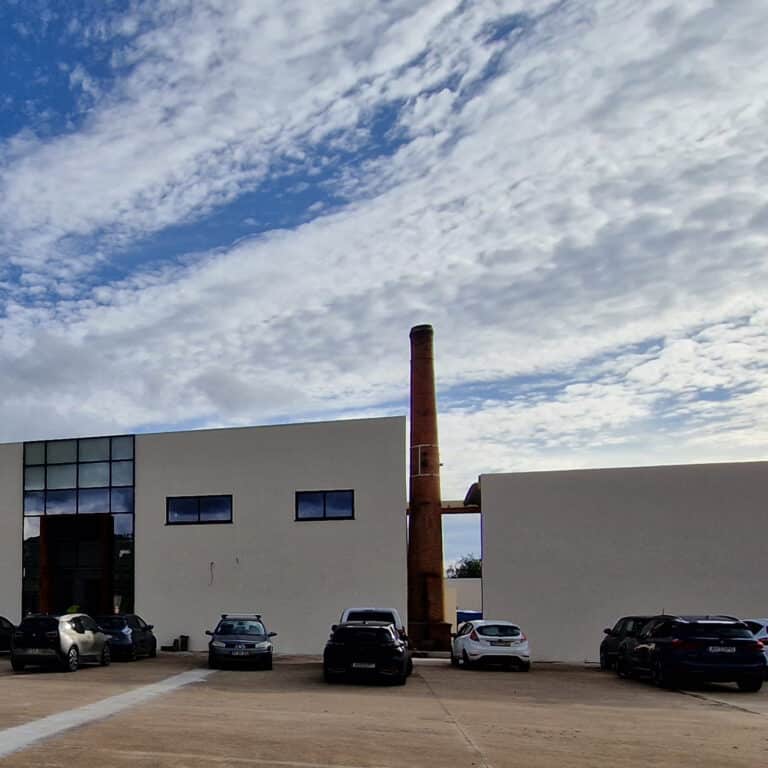
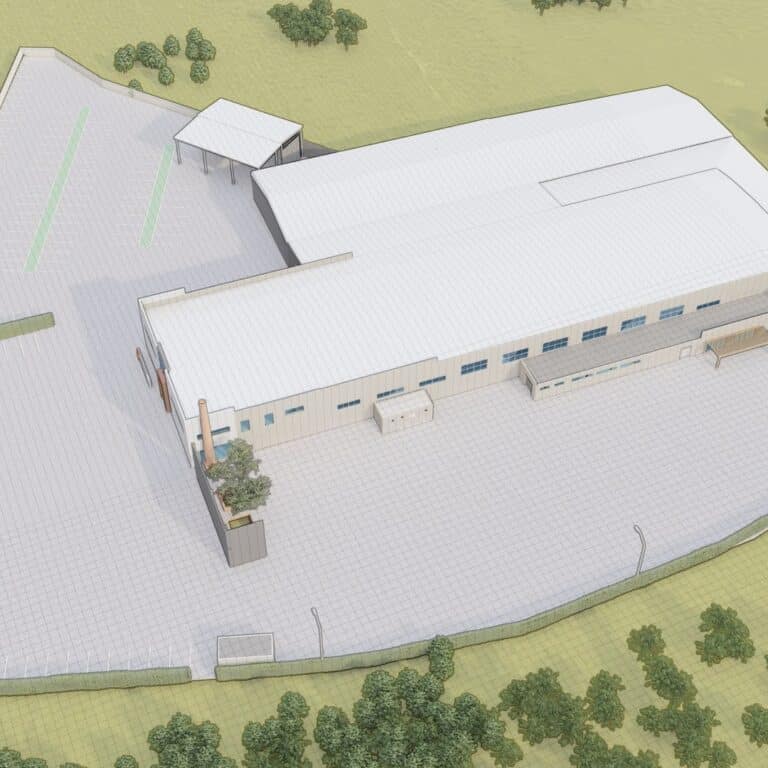
Leading European-based fire safety system manufacturer, Global Fire Equipment (GFE), has announced the opening of its new manufacturing facility in the Algarve region of Portugal, representing an investment of €7.5 million by GSS Group, creating a new home for two of the group’s companies – GFE and CREATECH Emergency Lighting.

The 7,500-sq m facility is more than twice the size of GFE’s previous plant, and the land purchased spans 16,000-sq m meaning there is plenty of scope for further expansion should this be required as the company works towards its future growth targets.

GFE has seen sustained growth over the last 10 years including double digit growth during the COVID-19 pandemic. CREATECH Emergency Lighting has also achieved grown and will need the increased manufacturing capacity to help deliver its international sales ambitions. GSS Group said it sees a significant market advantage of integrating both its fire safety and emergency lighting divisions under one roof, with space to expand in the coming years.

Initially the new facility will operate a single 8-hour shift pattern, but GFE could triple production capacity if it wishes as there is the option to add two further 8-hour shifts thus allowing the facility to operate 24/7.  

A number of dedicated manufacturing zones are incorporated into the new facility, including on-site injection moulding and PCB manufacture. The new assembly lines have been designed to maximise efficiency in the manufacturing process and, with the additional space, GFE has been able to increase stock storage and dispatch areas by 400% compared to its previous plant. Other areas include product testing, general assembly and management, sales and administration.

Building a sustainable and energy-efficient manufacturing facility was one of GFE’s key pre-requisites for the new plant. The Algarve is one of the sunniest places in Europe which allows GFE to maximise on-site solar energy generation. Having installed a large number of solar carports, GFE’s on-site solar energy generation has jumped an impressive 600% compared to the former plant which means that almost 90% of the facility’s energy needs will be supplied by solar power.

All manufacturing and office support are scheduled to be in place by the end of January 2023, with the remaining services moving in by the end of February. The new facility is located within 3km of the former site so all employees will retain their positions and GFE will continue to have good access to the labour market within the Algarve. 

Paul Pope, GFE’s Global Business Development Manager, commented: “Our new manufacturing facility reflects the vast amount of work and investment every member of the GFE team has put into the company over the past few years. Our drive to deliver high quality, affordable fire safety systems is at the forefront of our operations and is clearly evident in the design of this facility. We are also delighted that we have been able to invest in energy efficiencies which will undoubtedly make our business more sustainable.”

Joao Paulo, GFE’s Founder and Managing Director, adds: “Today marks a pivotal moment in our company’s history. Building on our years of manufacturing experience and technical developments, this facility will ensure that we not only continue supporting our existing customers with industry-leading products and technical support, but also that we will be able to expand further into new markets around the world.

“We have always been focused on ways to improve efficiencies in our manufacturing process and have been able to develop sophisticated automated production lines in our new facility to increase our manufacturing capacity. Whilst these productions lines will carry forward GFE’s drive for automation, we will also be looking to expand our team to ensure we continue to meet the high quality and standards our customers know they can rely on.”

Read IFSJ’s exclusive article with GFE in the latest edition.

Five new features added to Intersec schedule

Visitors to the 24th Intersec, the world’s leading trade fair for safety, security, and fire protection which takes place from January 17-19 at Dubai World Trade Centre, will be able to access five new interactive features designed to improve engagement for professional attendees including: the Intersec Fire Fighters Challenge, Attack Zone, Safety Walk, Start Smart Zone, and Tech Stage.

“The features are designed to improve the overall visitor experience and engagement levels as well as heighten awareness and appreciation for all working in the safety, security, and fire protection services,” said Alex Nicholl, show director of Messe Frankfurt, organiser of Intersec.

Fire Fighters Challenge

Introducing friendly competition among the region’s firefighters, the Fire Fighters Challenge is being run in collaboration with the 911 Fighter Challenger and is supported by Dubai Civil Defence. Entrants will include firefighters from governments, civil defence, oil and gas, aviation, marine, and educational institutions across the GCC and Jordan, it will see the competitors showcase their real-life actions through entertaining stages, demonstrate their equipment in action, and draw attention to their extraordinary fitness levels.

Nicholl added: “The aim of the challenge is to create a meeting hub for security, fire service, and safety best practice in the Middle East, as well as creating public awareness of fire safety and protection, provide a platform for these unsung heroes to demonstrate their skills, challenge themselves to be fitter, stronger, and faster, and garner public appreciation for these vital members of society.”

Attack Zone

The Intersec Attack Zone, hosted by the Loss Prevention Certification Board (LPCB), is where exhibitors will put their products to the ultimate test against breaching times and breakthrough limits in live-action demonstrations. The LPCB will assess competitors on its standards, and four British exhibitors – Barkers Fencing, Eagle Automation, Frontier Pitts, and Sunray – have already confirmed they will take up the challenge, among others.

Safety Walk

On day three of Intersec Dubai, DWTC’s Hall 2 will host the Safety Walk – a catwalk show of industrial safety gear where exhibitors will have 15 minutes to describe the features of their kit being modelled to an audience of fire and safety visitors, government officials, as well as construction and oil professionals. Six producers have signed up for the showcase, including Germany’s Draeger, the USA’s MSA Safety, UAE-based Safetix-securite and Raja International, the UK’s Centurion Safety Products, and Kivanc Group of Turkey.

Start Smart Zone

The Start Smart Zone will hand the spotlight over to all start-up exhibitors wanting to connect with key decision-makers, buyers, and investors, as well as garner support to scale-up their businesses.

Tech Stage

The Tech Stage meanwhile will run across all three days and will be where exhibitors will unveil breakthrough innovations, including virtual reality solutions, anti-drone technology, and newly formulated safety materials.

“When combined, these new features heighten the interactive aspect of Intersec, allowing exhibitors greater opportunities to demonstrate the USPs of their products and services, as well as take their business propositions direct to decision-makers,” Nicholl said.

More than 850 exhibitors from over 120 countries are participating at Intersec 2023, which will run more than 47,000 gross square-metres and provide industry professionals with access to 10,000 products across the complete security value chain.

The event takes place against findings of 6W Research, which recently forecasted the Middle East’s commercial security market will grow 16 per cent a year to reach a value of US$8.4 billion in 2025 and the region’s fire and safety sector will climb 7.5 per cent annually to US$16.76bn by 2026.

Advanced technological innovation will dominate the exhibition’s five key segments, namely: homeland security and policing, safety and security, cyber security, fire and rescue, commercial and perimeter security. Upwards of 30,000 security, emergency response, safety, and cybersecurity professionals are expected to attend.

Intersec 2023 will also feature a comprehensive conference stream with four dedicated segments including the Intersec Security Leaders’ Summit, Cybersecurity Conference, Fire & Rescue Conference and Safety & Health Seminars.

Firefighting foam market to reach $889 million in 2028

tratview Research, a market research firm has launched a report on the Firefighting Foam Market which provides an in-depth analysis of the market dynamics, current and emerging trends, industry forecast, and competitive landscape.

The Firefighting Foam Market is expected to reach US$ 889.33 Million in 2028, growing at a CAGR of 3.84% during 2022-2028, according to the report.

Based on the type, the market is segmented as aqueous film forming foam (AFFF), alcohol resistant aqueous film forming foam (AR-AFFF), protein foam, synthetic detergent foam (High & Mid Expansion Foam), and others.

The demand for AFFF was highest in 2021 thanks to extensive usage by the oil and gas industry, which is due to the huge risk of fires from flammable liquids. AFFF is favored as it owns such fires effectively and bears a longer shelf life.

Asia-Pacific is the largest and fastest-growing market for firefighting foam and is estimated to maintain its dominance during the forecast period driven by various countries adopting downstream activities, such as refining and processing because of the increasing demand for oil and gas in the region.

The investments by various national oil companies in the region are boosting the growth of the oil and gas industry and hence, these factors are underpinning the demand for firefighting foam in the Asia-Pacific region. North America and Europe are also expected to offer substantial growth opportunities in the coming five years.

California retains title as state with most Firewise communities

California has set a new record of designated Firewise USA communities with the recognition of Rancho/Middle Canyon in Monterey County as the 600th Firewise Community in the state.

The recognition by the National Fire Protection Association (NFPA) highlights the steps the community has taken to ensure that wildfire risk is reduced in their area.

The Carmel Valley community of Rancho/Middle Canyon in Monterey County gets the distinction of being California’s 600th Firewise USA Community. The community worked closely with the CAL FIRE – Office of the State Fire Marshal’s Firewise Southern California Area Liaison, Battalion Chief Gene Potkey and Monterey County Regional Fire District’s Division Chief Kevin Kamnikar to complete the application.

The Firewise USA recognition program is administered by NFPA. Individuals and communities participate on a voluntary basis and are recognized as a Firewise community upon the completion of certain tasks, including forming a committee of residents and other wildfire stakeholders, obtaining a written risk assessment form, with assistance from Division Chief Kevin Kamnikar, including hosting an outreach event and ultimately completing their application to become a Firewise community.  

Mark Angel, community leader, commented: “Building the connection in the community allows us to check on neighbours and check on our neighbour’s properties when an evacuation occurs. Community building is the greatest benefit as it is the first line of defence, it is your neighbours that need to stick together and work together, it makes all the difference in the world.”

California State Fire Marshal Mike Richwine, said: “While we celebrate the recognition of the Rancho/Middle Canyon community, we are grateful to all 600 communities who have worked hard this year to prepare their neighborhoods for wildfire.”

Chief Daniel Berlant, Deputy Director of CAL FIRE-Office of the State Fire Marshal’s Community Wildfire Preparedness and Mitigation Division., said: “A part of our wildfire preparedness strategy this year has been to work closely with local communities and neighborhoods in earning the Firewise Community recognition. Reaching the 600th community mark is a huge accomplishment, especially since it was just seven months ago that we hit 500.”

“Wildfires can impact dozens or hundreds of homes simultaneously,” said Michele Steinberg, NFPA Wildfire Division director. “The work that people do along with their neighbors through Firewise USA helps the whole community to bend down the risk curve.”

To learn the steps and begin the process of becoming a California Firewise community, visit the Ready for Wildfire website