Exclusive: The Lifecycle of a Fire Door

Mark Alton, Fire Door Product Manager at Winkhaus UK, explains the latest changes to fire doorset legislation

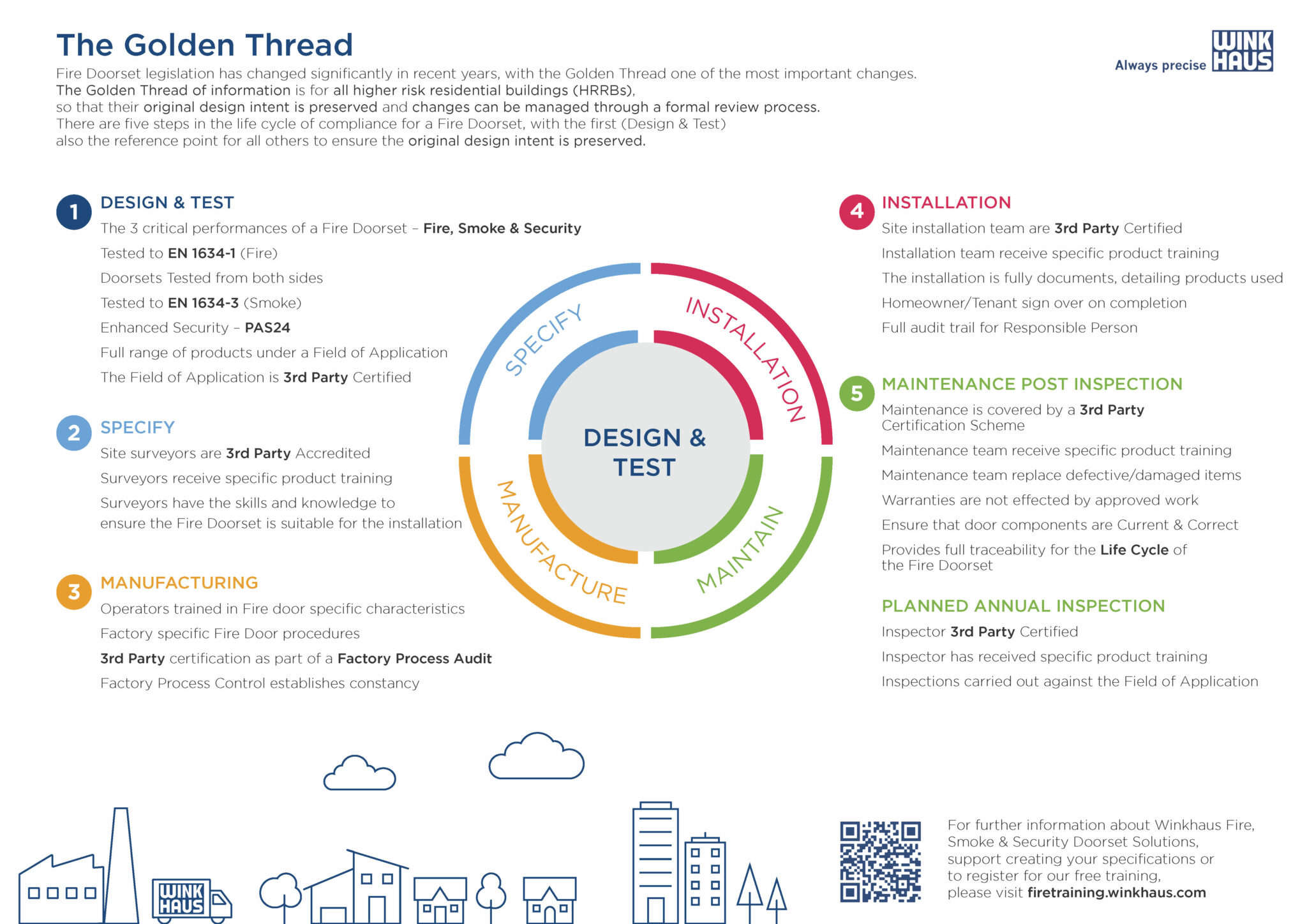
Fire doorset legislation has improved significantly in the recent years, with changes made at every stage in the lifecycle of a fire doorset, from design and testing to inspection and maintenance. For social housing fire doorset specifications, this means that all the stages in the lifecycle of a fire doorset, need to not just be included in the specification, but reviewed to ensure compliance with the new legislation.

One of the most important changes to legislation is The Golden Thread, created to link all stages in the lifecycle of a fire doorset. It is required for all high-risk residential buildings to ensure that the original design intent of the fire doorset is preserved, that any changes must be made through a formal review process and the data for lifecycle is visible to responsible person(s) and tenants.

There are five steps in the lifecycle of compliance for a fire doorset. The first is design and test which is the key reference point for all other steps to ensure the original design intent is preserved. The others are: specifying, manufacturing, installation and maintenance post inspection, with a recommended planned annual inspection.

Certifiably safe

It is of paramount importance that maintenance teams are fully trained and have knowledge of the individual aspects of a fire doorset. This should include tested performance knowledge and product composition to ensure what was tested is the same as what is surveyed, manufactured, installed and maintained.

As an example, if a fire doorset has a damaged or broken piece of glazing, the maintenance team will need to have been trained and have the knowledge of how the doorset was constructed. They must be able to replace components like for like and know what components should be replaced as part of this repair. This will ensure the fire doorset remains compliant and its performance is maintained as per original design intent.

We are seeing an increasing number of report cases where components are being replaced during maintenance with components that are not part of the original test data and even where non-fire rated components have been used.

When specifications are changed and aren’t reviewed to ensure compliance with legislation, this brings significant personal risk to you as the responsible person(s). Under the new legislation the responsible person(s) is both legally and financially at risk if The Golden Thread is not adhered to at every stage of the lifecycle.

Over the past decade the Winkhaus UK technical team has been involved in the creation and implementation of the latest standards and guidance. All its fire doorset solutions are compliant with the latest MHCLG guidance and are triple Q Mark independent 3rd Party audited.

Winkhaus UK Composite Fire Doorset solutions were the first to attain the new Q Mark 3rd Party Audited Certification for Smoke and become the first company to attain Q Mark certification for all three critical performance requirements Fire, Smoke & Security. Winkhaus UK Timber Fire Doorset solutions are also currently completing accreditation.

If you are unsure whether your specification is complaint or unsure about what compliance is, Winkhaus UK can do a specification health check or even write your fire doorset specification. We have also expanded our free training to aid the understanding of the new requirements for a compliant fire doorset specification. We offer three different levels of training which can be tailored to the audience to ensure it meets your requirements.

To further aid in adoption and understanding of the new legislation we have created The Golden Thread for Fire Doors Checklist which provides you with a definitive list of key things that you are required to include in your specification at every stage of The Golden Thread.

To register for Winkaus’ free training, to receive a specification health check or a copy of the specification checklist, visit www.firetraining.winkhaus.com

This article was originally published in the August edition of IFSJ. To read your FREE digital copy, click here.
Insurance firm predicts rise in lithium-ion fires from e-bikes and scooters

Insurance firm AXA UK has issued a warning over the growing fire risks associated with the lithium-ion batteries used in increasingly popular electric bikes and scooters. Lithium-ion batteries pose a significant fire risk when damaged, over-charged or exposed to extreme temperatures.

Over the past two months, AXA has reportedly covered almost half a million pounds of losses on two large claims caused by lithium battery fires.

The firm said that it anticipates the frequency and cost of these fires will grow exponentially as transport via e-bikes and e-scooters becomes more popular. AXA’s claims data show that these fires most frequently occur within residential buildings.

One of the recent large claims was the result of a faulty e-scooter battery which was being charged in the kitchen of a ground floor terrace flat which caused an explosion and fire to spread through the home, reaching two storeys above.

The second occurred in a block of flats where an e-bike battery was being charged. The fire destroyed the flat and caused smoke damage to the flats on either side.

Dougie Barnett, Director of Customer Risk Management at AXA Commercial, commented: “Fire safety should be the top priority when it comes to charging and storing electric bikes and scooters. These forms of transport are becoming increasingly common due to the range of benefits they provide, however, this makes it even more essential that people understand the risks around storing them in the wrong way or using damaged batteries.

“As an insurer, we’re there for people when the worst happens, but we want to make sure these risks are managed and reduced so they can avoid the devastating consequences of a fire in their homes or business.”

A spokesperson from London Fire Brigade commented: “It’s incredibly concerning that we are continuing to see a rise in incidents involving e-bikes and e-scooters. When these batteries and chargers fail, they do so with ferocity and because the fires develop so rapidly the situation can quickly become incredibly serious.

“Our advice is to try and store and charge e-bikes and e-scooters in a safe location if possible, such as in a shed or garage, and if they have to be stored inside, make sure there is smoke detection fitted and your means of escape is not obstructed. However, we know this won’t be possible for everyone, so if you are charging them indoors, please follow our advice on using safe charging and ensure everyone in your home knows what to do in the event of a fire.”

To reduce the risk of lithium battery fires, AXA recommends:

  • Never leave batteries charging in a building that is unattended or overnight when you are sleeping in the property
  • Unplug or disconnect from the battery once charging is complete
  • Do not allow the battery to overheat and ensure it is charged on a hard surface where heat can disperse
  • Monitor and assess for damage to the battery and the charger, following the manufacturer’s guidance for replacement or repairs
  • Ensure smoke alarms – preferably interlinked detectors around the property – are fitted where charging is taking place and, if possible, store and charge away from main living

DuPont discusses the Durability and Longevity of Firefighting Gear

DuPont’s Alfons Held and Jian Xiang explore what firefighters should look for to help ensure they are investing in durable gear that will last

As a developer and manufacturer of fire-retardant fibres and fabrics, DuPont sits at an early stage in the value chain of firefighter gear. It is the manufacturer of two main brands of inherent flame retardant materials used in firefighting garments: fabrics made with Kevlar and Nomex aramid fibres. IFSJ spoke to Alfons Held, Global Marketing Manager for Emergency Response, and Jian Xiang, Global Technology Leader in Emergency Response at DuPont to learn about the latest developments in firefighting fabrics from DuPont.

Whilst not a garment manufacturer itself, DuPont works with weavers and garment manufacturers along the value chain to help ensure that the fabrics are meeting customer specifications. “We have technical development centres in each and every region where we can test features and benefits of the fabrics,” tells Held.

One of DuPont’s key testing protocols involves DuPont Thermo-man: a mannequin which is dressed in whatever gear is to be tested and blasted with fire to determine how much protection it offers, playing out the worst-case scenario to understand how well the firefighter would be protected.

With regards to durability and longevity, firefighters want to make sure that when they are investing and buying gear that will not only perform but last. Typically, turnout gear could face occupational wear and tear which could affect performance, whether its heat and fire exposure or rubbing up against sharp materials.

In recent years there has also been an increasing awareness towards gear contamination. The International Agency for Research on Cancer recently confirmed that occupational exposure to smoke as a firefighter has been classified as carcinogenic.

Driven by the concern about contaminated gear and the toxicity of smoke particles, Held says the rising concern surrounding decontaminating gear is completely new to some fire departments: “Decontamination puts a lot of stress on the garments to the extent that the firefighters are afraid of cleaning their gear. That’s exactly where we can step in and help support these departments by looking at materials and how they behave under frequent cleaning.”

The standards for cleaning gear have changed dramatically in recent times. “The frequency of washing gear has definitely increased dramatically,” says Xiang. “We’ve seen one fire department looking to wash gear 50 times per year. From our perspective, this really elevates the requirement for gear to be durable to wash and wear after every single thermal exposure. That really adds a lot of stress to specific fabrics.”

She says that DuPont is looking into every fibre that goes into a fabric and wants to ensure that it uses excellent fibres that are thermally strong, mechanically durable, UV sustainable and repeated wash resistant.

DuPont Nomex Xtreme Performance

Nomex has been in the market for more than 50 years and was one of the first fibres used in textile firefighter gear. In a bid to innovate, DuPont has recently launched Nomex Xtreme Performance, a new premier protection and performance solutions category for emergency responders. Nomex Xtreme Performance provides thermal protection and moisture management, along with protection from heat and flame, chemicals, cuts, and particulates for a comprehensive and game-changing solution for the next generation of firefighting PPE.

“We have a long-standing commitment to firefighter safety, and we continue to innovate to meet the evolving protection needs of the emergency response community. The Nomex Xtreme Performance category offers a superior choice for firefighter PPE, providing a wide range of benefits from comfort to durability to advanced thermal protection,” says Held.

Products made of Nomex and Kevlar fibre have been the backbone of the emergency response industry for the past 50 years. The Nomex Xtreme Performance category combines the benefits of Nomex, Kevlar and high-performance materials like PBO, Nomex Nano or Nomex Nano Flex. Nomex provides essential heat and flame resistance with the practical benefits of wash durability and abrasion resistance, softness and comfort, as well as aesthetic benefits that include multicolour design options. Along with providing trusted and foundational strength, Kevlar helps to make garments more lightweight and brings new levels of performance with improved heat and flame protection.

PBO offers heat-blocking properties and strength, which are characteristics that are essential in protective gear. After thermal protective performance (TPP) exposure, smart blend fabrics made of Nomex, Kevlar and high-performance materials like PBO show significantly higher strength retention and integrity, with proven performance as a garment component in firefighting applications.

Best performance at every level

Quality control exists at every stage of DuPont’s process. Xiang says: “When we’re looking into the fibre level, we make sure it’s the best of the best. We work to help weavers develop fabrics that meet or exceed their requirements. We test at every single step of the process to ensure we are delivering the thermal and mechanical performance their gear needs.”

Then, she says, they test it in a way that relates to firefighters: “What does the fabric look like and how does it behave before, during and after the fire? When we go through the whole cycle, the data tells us if we have created the best all round performance material. Because of the resilience of our fibres, we can work with fire departments to help reduce the weight of the outer shell and make the whole ensemble lighter and more mobile so firefighters are not restricted in their movement during firefighting.”

Most fire departments use their gear for an average of five to eight years. She adds that there is an increased concern that frequent washings could potentially reduce the lifetime of the garment. These concerns make the durability of the fabric even more important during development.

Contamination awareness

At INTERSCHUTZ, Xiang shares that one thing they learned from speaking to firefighters is that people are not as focused on extra thermal protection anymore. “For the past decade, people focused solely on what the TPP is,” she tells. “They make a big deal if the TPP is a 38 vs a 40. What has been happening recently is that their concerns are shifting towards sustainability and washing durability when cleaning their gear.”

Held adds that they have also notices changes in the procedures at fire departments where they are handling contaminated gear differently than in the past: “Firefighters will not go back in the truck with their contaminated gear. They will now put it in a plastic bag so that if it is heavily contaminated they will not contaminate their trucks. This has created many procedural changes in the fire station and the way they handle their gear.”

On their commitment to delivering the best fabric, Xiang adds: “As science leaders in the industry, we really work to understand the firefighters’ needs. We are intimately engaged with our firefighters on a daily basis, communicating and engaging in conversations not only to understand their unmet needs but also communicating what we know and the information we gather because it is such a complicated industry to know what to look for in terms of personal protective equipment.”

This article was originally published in the August edition of IFSJ. To read your FREE digital copy, click here.
Thinking outside the secure information box

Rupert Parker, Founder and CEO of Building Passport, sheds light on the company’s digitised Secure Information Box solution

Where did the idea for Building Passport come from?

Building Passport is an idea that surfaced when I was a commercial real estate agent – I was advising on the buying, selling, leasing and letting office space in the city. Most of the time it was very difficult to come across the information we needed to lease or sell that space. There was a constant recommissioning of all the things that are needed when you lease or sell a building, for example floorplan surveys.

Sometimes I would have to rummage through archives or ask around different business units to try and find this information. I just thought: ‘Surely there’s somewhere I can go to find that information on a digital, building-by-building basis’. After years of attending industry shows and working at the coalface of proptech innovation I still could not find the appropriate solution.

The penny dropped just after the Grenfell Tower Disaster – I realised that the benefit of the Building Passport concept could extend further than the real estate market. Imagine the power of all the latest building information, from fire door surveys to live data on temperature and air quality, accessible remotely for desktop studies or even en-route to an incident.

What exactly does it offer Fire and Rescue services?

What we would like to help achieve is the possibility of enhanced response to incidents. We have developed an app and are working with Heathrow Airport to test the response to an incident using the status quo response methodology versus using the information contained in a Building Passport and accessing it remotely prior to arrival at the emergency location.

The app we have developed essentially contains the emergency response pack information (as outlined in the FIA’s Code of Practice for the Provision of Premises Information Boxes in Residential Buildings) in a digital format. This can be accessed and updated by anyone who has been granted access to the Building Passport, such as any pre-vetted fire service personnel. We are working with have still got a bit of work to do on the access privileges and ensuring the security of the access to that information because obviously a Building Passport can contain extremely sensitive information on a building. That is why we are working with a company like Heathrow Airport to make sure this is as secure as it possibly can be.

What information will be accessible on the app?

The Fire Safety (England) Regulations 2022 will, from 23 January 2023, make it a legal requirement for existing high-rise residential buildings to have an SIB (Secure Information Box). This is the red box that can be found on some large and multi-let buildings which can contain physical information such as an orientation plan, vertical and horizontal layout plans showing dry risers, fire doors etc, ‘on arrival information’, significant fire safety issues such asbestos, fire risk assessments etc.  At present, the fire and rescue service will search for and identify the box when they arrive at a building. The Incident Commander will ingest whatever information is available to them and use it to inform the response to the incident.  

The Building Passport app enables this information to also be accessed remotely and via mobile devices and is therefore essentially a digital SIB.  What sets this apart from the static physical information is that more eyes can see it and data from sensors can be overlayed to show live conditions in the building.

Because the information is digital and quickly, easily but securely accessible, multiple personnel will be able to view it. Furthermore they will be able to see its contents en-route to a building. It is our hope that, even with a few seconds glancing at a layout plan, this opens up the opportunity for firefighters to become more familiar with a building and the conditions within it before arriving on site and therefore aiding their own safety during the response, as well as potentially aiding the exercise itself.

What stage are you at with Building Passport at the moment?

It is built and ready to go. There are a plethora of additional functions we want to implement, but the crucial aspect at present, due to working with sensitive information, is the security aspect. This is a time consuming and expensive exercise which includes penetration tests and constant improvement of our systems.

We are currently a UK based and UK focussed company but there is literally no limit to the feasibility of this product across the globe. In terms of worldwide fire safety, the UK is among the leaders and, if we can prove that our product is useful in this market, we can cut and paste to other geographies pretty quickly.

What will Building Passport look like in the future?

We understand that there is an effective methodology in place for fire safety information dissemination via an SIB at present, but we think there’s an opportunity to bolster this with digital information. We want to link the SIB to our digital information and be able to provide to the right people at the right time.

We have a lot of ideas for future developments. For example, it would save a lot of admin for the fire and rescue service to be able to carry out a Section 7(2)(d) inspection digitally on the app and the report automatically populate the Building Passport. This would then obviously be available in the event of an incident, but also easily accessible in the event of needing to carry out a desktop study on fire prevention at the building. 

In order to achieve our goal we need as many Building Passports as possible. To remove hurdles to adoption of Building Passport, access is, and will remain, free for emergency services, landlord representatives (agents, fire risk assessors, solicitors, measurement companies, electricians etc) and building occupants. Only the building owner pays, and they are responsible for providing access to other parties.

Our aim is to keep this price as low as possible so that we can support our vision of creating a safer built environment and we will do anything we can do to make that happen.

This article was originally published in the August edition of IFSJ. To read your FREE digital copy, click here.

Forest fire devastates Northern Algeria

At least 26 people have been killed and dozens more injured on Wednesday in forest fires that decimated parts of northern Algeria, the country’s interior minister Kamel Beldjoud said.

In El Tarf, near the border with Tunisia, 24 people were killed as well as a mother and daughter in Setif. Firefighters, supported by helicopters, were still trying to contain several blazes on Wednesday evening and around 350 residents have been evacuated across various provinces.

Wednesday’s toll brings the total number of Algerians killed in wildfires this summer up to 30.

The civil protection agency said that El Tarf was the worst hit area with 16 fires in progress.

Northern Algeria sees forest fire activity every year with 90 people thought to have died as a result last year and more than 100,000 hectares of woodland burnt.

Last August, Beldjoud blamed a spate of fires in Algeria’s Kabyle region on arson. He claimed “only criminal hands” could explain “the simultaneous outbreak of about 50 fires across several localities”.

Safe and secure: ensuring firefighter safety and tool longevity

PAC’S versatile tool mounting solutions are helping departments to ensure firefighter safety and tool longevity

Firefighting rescue tools and hand tools can be large and awkward and if they are unmounted or unrestrained they can fall from a truck. An organised and mounted set of tools can reduce injuries to firefighters. A tool mount can also improve response time by enabling firefighters to find what they need quickly, as well as improving the time it takes to restock the truck and identify what is missing or what has not yet been put back in its spot and reduce the time to do an inventory check.

Properly mounted tools can increase the tool life because an unmounted tool rolling around in a compartment could be subject to extra wear and tear well beyond its normal use. Some of these tools are expensive and critical to have and so improving that tool life and keeping that tool in good working order.

Key considerations for choosing a mount

First and foremost you should know the weight and load rating of what you are trying to secure. A department should always consider the value of the tool they are securing. Performance Advantage Company’s (PAC) brackets are heavy duty and can withstand serious abuse. They are tested with the knowledge that they are going to see heavy use during their lifetime.

Also important is how quickly you can retrieve tools from the mount. You want to look at how well tool mounts can be visible in dark applications, how quickly and easily you can retrieve the product by releasing the straps and whether they are easy to grip in all situations and all weather conditions.

Finally, when you are considering a tool mount system, your department may acquire new tools for different situations and the compartment’s organisation system may need to be reconfigured. The tool mounting system must be able adapt because the tools themselves adapt. Different manufacturers have a different design and so the amount of space tools will take up in the truck will vary.

Unmounted tool problems

Injuries are the most serious issue when it comes to unmounted tools. We have had several customer interactions where there was a tool behind a closed door which fell on an unsuspecting firefighter at the scene of an emergency. These injuries strain the resources of the rescue team at the site.

One of the things tool mounts are designed to do is reduce the time it takes render aid. When a vehicle shows up with the team and with the equipment properly trained, one of the things they should have is their tool mounted because it improves response time as the time it takes to find what you need is reduced drastically. This is critical to get patients the aid that they need quickly and properly. Having unmounted tools can cause increased response time, meaning critical time is lost because firefighting teams cannot find what they are looking for. There could also be damage sustained to the tools from rolling around unfixed whilst in transit.

New to the market

Recent PAC products that have been really well received are our Mini Loks. These are smaller friction locking clamps than have been available before. They accommodate smaller hand tools, such as flashlights and small handle tools, than previously solutions could hold.

We have some new low profile locking brackets called the Super Flex line. They are for extinguishers and struts. We have an extinguisher mount kit that also works with oxygen bottles and two of our newer items are a shallow rectangular pocket kit for non-traditional rescue tools.

PAC has also just introduced a bucket mount. In the US, a 5-gallon bucket is a common item found in all industries from fire to farming. We have found that buckets are a widely used tool used to carry loose equipment such as absorbent material or salt. Buckets are a very useful tool but there were no mounts on the market for them, so we created one for vehicles. This mount can also hold traffic cones.

Regional differences

There are of course different types of vehicles and different types of equipment in different regions, not to mention different budgets. There are a wide variety of factors that go into tool mounting solution that would be selected, but in general PAC’s products are so versatile and adjustable that it really does not matter what industry or area you are in: the tools that you are going to carry are more than likely going to be able to be supported or held and secured by our versatile product line.

We are also mounting tools on a variety of non-traditional fire vehicles including motorcycles and fire boats. We have even worked with some departments in Asian countries that have turned transit vans into rescue vehicles or built their own fire trucks.

Finding solution for every situation

A lot of people think of us as a company that provides products to end users, or to a dealer network, but we actually are becoming more and more a resource to vehicle OEMs (Original Equipment Manufacturers) where they need some type of a mount for the product that they make.

We were also recently approached by a customer who makes unique nozzles who needed to come up with a mount system as his nozzles were all different diameters and had different handles. He used our Jumbo Lock 1070 to hold his tools and developed a platform using our mount.

This article was originally published in the August edition of IFSJ. To read your FREE digital copy, click here.

California receives $21.5 million for forestry and fire-safety jobs training

The Sierra Nevada and Cascade regions have received $21.5 million in funding for a project that is set to strengthen the infrastructure for workforce development by investing in forestry and fire safety jobs.

The project, funded by the federal Good Jobs Challenge, is being rolled out by the Foundation for California Community Colleges, California State University Chico, University of California Agriculture and Natural Resources, and the Sierra Business Council.

The project, which will be carried out over four years, will help train and place qualified workers into high-quality jobs in the forestry sector, responding to urgent needs to build economic and climate resilience in California’s forested, rural communities.

Five community colleges – Butte College, Feather River College, Lake Tahoe Community College, Reedley College and Shasta College – California State University Chico, University of California Agriculture and Natural Resources and the Sierra Business Council are partnering on the project. 

Susie Kocher, UC Cooperative Extension forestry and natural resources advisor for the Central Sierra said: “There is so much work to be done in California to increase the resilience of forests and communities to wildfires and climate change, and there are just not enough trained workers to do all this work.

“A recent assessment estimated upcoming shortages of 6,000 fire managers, 4,000 conservation scientists and foresters, 7,000 loggers and 1,500 utility line clearance technicians. California desperately needs skilled workers to fill those jobs to protect and rebuild communities in rural parts of the state. And these are well-paying jobs with benefits.”

Keetha Mills, president of the Foundation for California Community Colleges, said: “We are honored to be selected as one of the Good Jobs Challenge award recipients alongside a talented group of partners serving rural communities, including several of our California community colleges.

“This work is critical to help Californians access good jobs, especially as we help our state respond to the urgent needs of climate change and support economic growth in regions greatly impacted by the COVID-19 pandemic and natural disasters.”

The fire barrier from Inpro that is slowing the spread of fire

The story behind many of the world’s great innovations can be traced back to tragedy. For Al Shaw, the inventor of the Fireline 520 Series, the tragic events of 11 September 2001 were a life changing point which caused him to ask himself how he could use his position as heading a contracting company in New York state that specialised in installing insulation and fire barriers in high rises to save lives.

The fires at the World Trade Centre struck close to home for Shaw: “I got home to witnessing people jumping out of the buildings, and to see the people trapped in those fires devastated me like everybody else.” The tragedy served as major catalyst that drove him to explore new ways to slow the spread of smoke heat and fire in buildings and provide precious minutes for people to evacuate safely.

“That’s when I really started looking at what I could do as a person, what could I do as an individual in the fire and the construction business to help situations like that,” he tells.  “I started researching high rise fires while I was still a contractor. I found that there were some difficulties in installation and the methods that were being used.”

He realised that the best solution was not only about designing the right product that meets fire-rating specifications, but it was also about designing a product that is easy to install and will maintain its fire-stopping properties during building movement.

After getting to work and researching various fire barrier materials and solutions, some of Shaw’s first ideas started to come together in 2002.  He says it took a few years to validate the product design and test all the raw materials to pass UL and ASTM standards, but finally with the testing complete, patented Fireline Fire Barriers were ready.

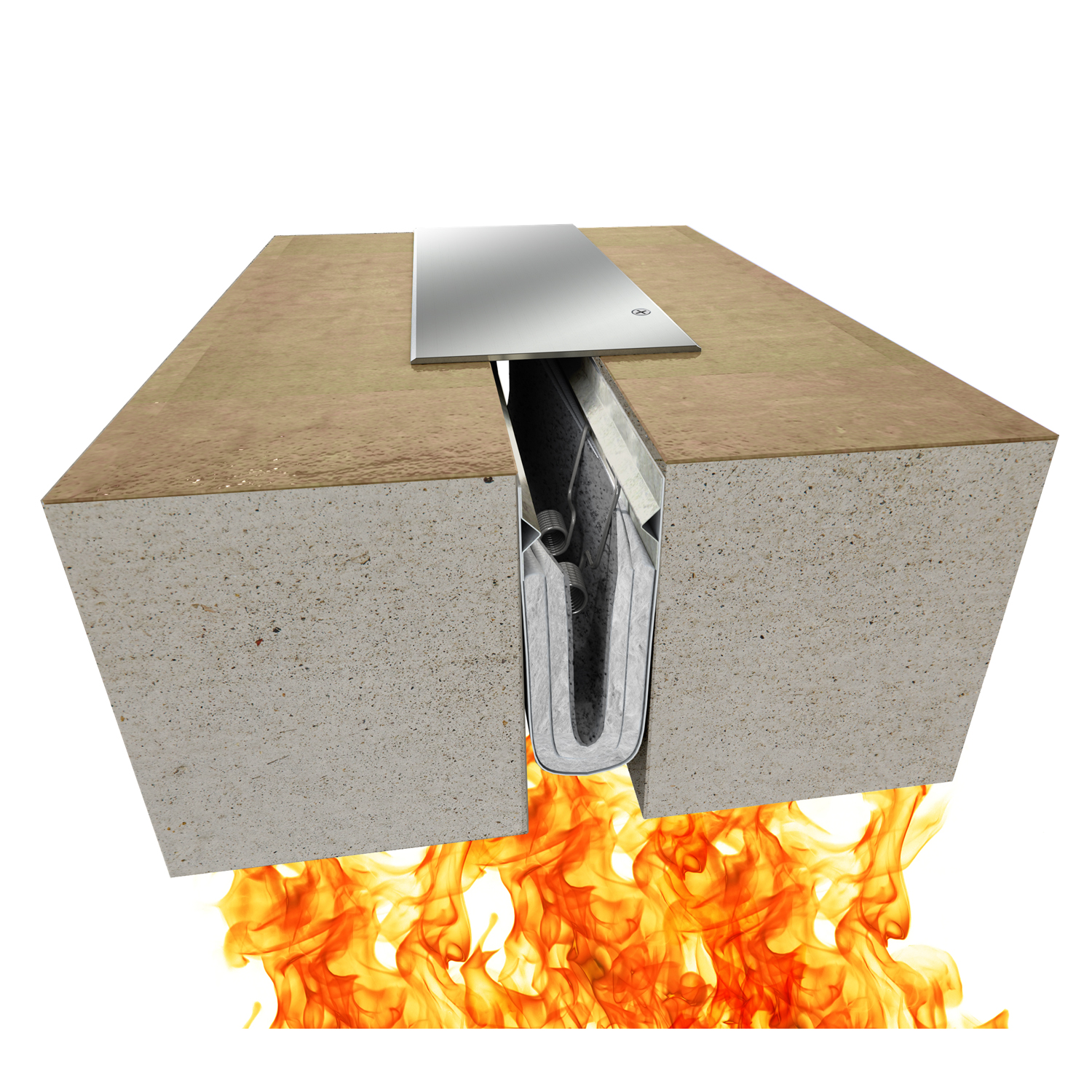
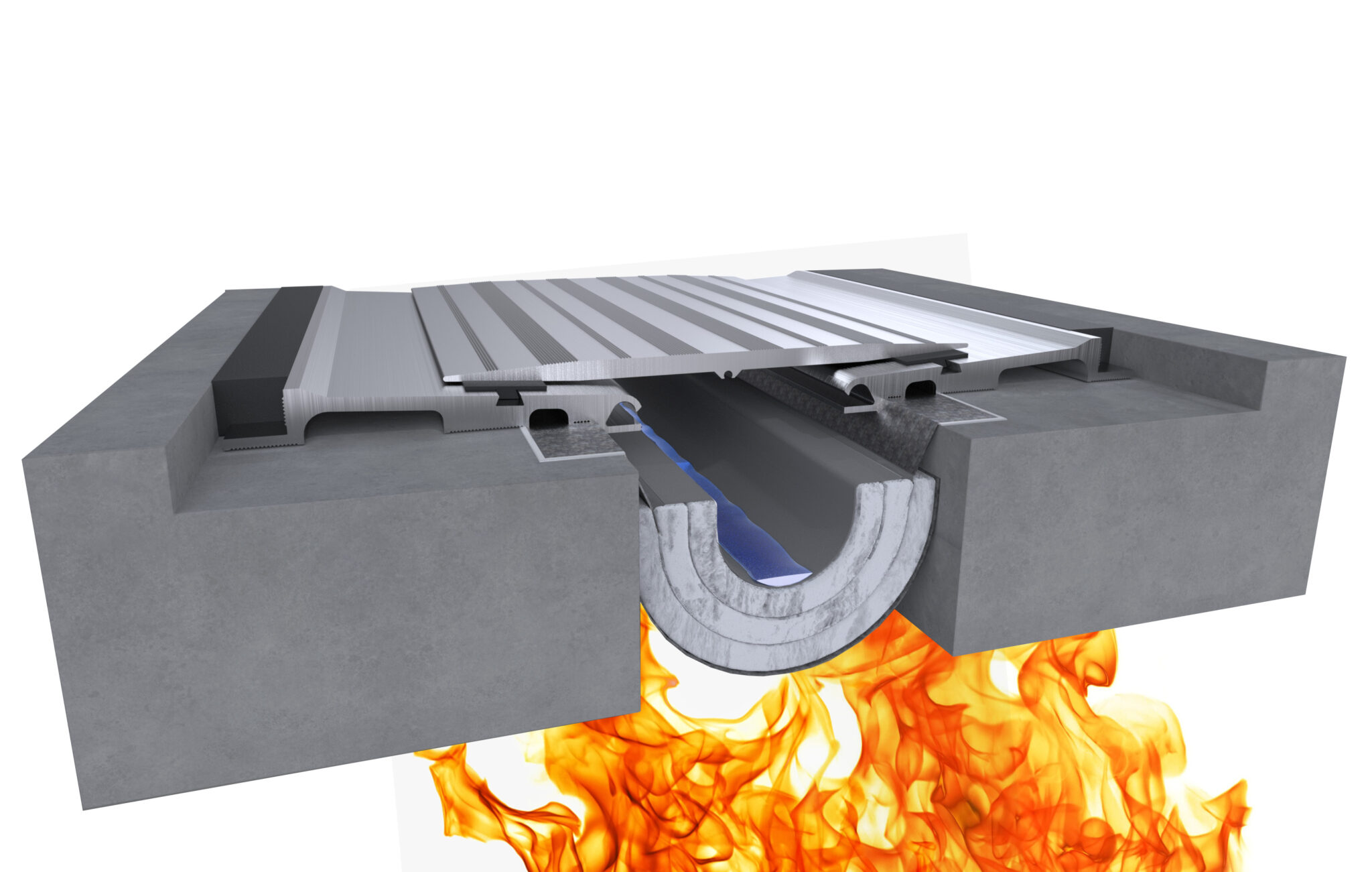
Expansion joint fire barriers are passive fire protection systems. They are designed to keep buildings intact and prevent the further spread of smoke and fire allowing more people to evacuate the building.

Shaw’s first major project came in 2007 with the Citi Field Stadium, home of the New York Mets baseball team.  In early 2008, Al’s Fireline product was also selected for the iconic Yankee Stadium. The genius behind Al’s product design is the ease of install and the ability of the Fireline barriers to directionally change in planes to move and react to meet a buildings’ seismic or thermal movements. 

Fast forward to 2015, and Fireline was acquired by Inpro Corporation, a global leader in interior and exterior architectural products based in Milwaukee. More recently, Inpro added an extra production facility in Italy to service our UK and European customers.  Additionally, the two Fireline products were tested to EN1366-4 standards at Warrington fire.  The first major project in the UK was at the new T2 Manchester airport where the Fireline 520 and a specially designed expansion joint was used from the JointMaster range.

Inpro also engineered the Fireline 140 fire barrier system for a true drop in installation with adjustable compression springs that provide outward pressure within the throat of the joint.

Fireline 140

Intent and function

Fire barriers are classified as passive fire protection and they work hand in hand with active fire protection measures such as sprinklers, fire extinguishers and standpipes.  In common industry terms, fire barriers fall into a broader class of products called fire-stop materials.

The critical aspect of fire barriers, including expansion joint barriers, is to break a building into compartments to contain fire and smoke and slow it from spreading. This gives occupants more time to escape. When specified and installed properly, the barriers perform by meeting the fire-stop requirements for a stated amount of time, called the rating period.

In all cases, the fire barrier is designed to prevent the temperature on the cold side of an expansion joint opening from rising above a predetermined level for the specified rating period. The cold side of an expansion joint opening refers to the area within a structure adjacent to or opposite the surface where a fire or smoke source is located. Much of fire barrier testing is to confirm the ‘hot side/cold side’ performance.

Often fire barriers fail to perform due to improper installation, with a critical failure point being the transitions – corners, shifts from horizontal to vertical, and so on.  Another failure point is dislocation of the fire barriers from thermal and seismic building movements.

Fireline 540

A waterproof solution

One of the biggest obstacles with traditional fire barriers is that they can never get wet. Often, fire blankets will arrive before the job site is ready for installation and it must sit out, exposed to the elements. With that type of exposure the barrier will have to be replaced because once the barrier is wet, it is destroyed.

Fireline Water Guard Series systems feature a US patented, UL 2079 rated waterproof design. The Water Guard protects the integrity and performance of the fire barrier from extended exposure to the elements. While traditional fire barriers would be ruined by exposure to the elements if not immediately covered, Water Guard fire barriers can sit uncovered for weeks at a time.

A poor installation can result in gaps which will cause a chimney effect, allowing smoke and noxious fumes to spread. Fireline is designed to reduce the margin of error with pre-attached metal flanges for drop-in installation and male/female splices.

Inpro has gone to extreme measures to ensure that installation is not only correct, but easy. All Fireline fire barriers are engineered for one-step, drop-in installation saving time and money. Fireline 520 Expansion Joint Fire Barriers not only prevent the spread of smoke, heat and fire, but they are specifically designed for easy installation to maintain effectiveness even when the unthinkable happens. Inpro’s commitment to protecting buildings and the people who use them has been proven time and again in Expansion Joint projects throughout the world.

This article was originally published in the August edition of IFSJ. To read your FREE digital copy, click here.

Building the future: developments in fire safety in the built environment

The construction industry has faced intense scrutiny in the years since the Grenfell disaster. In response to the fire that claimed the lives of 72 building residents, the UK government put into law The Building Safety Act 2022 to make provision about the safety of people in or about buildings and the standard of buildings, to amend the Architects Act 1997, and to amend provision about complaints made to a housing ombudsman.

Reflecting these changes, one of Charted Institute of Building’s (CIOB) most popular guides, the Code of Practice for Project Management for the Built Environment, was recently updated and a 6th edition published.  The guide is designed to reflect how the practice and processes in construction have changed, and the increasing pressures on the industry, with the Code of Practice (CoP) having undergone a significant re-structuring since the 5th edition published in 2014.

Code of practice

In this new edition, CIOB is aiming to equip construction and project managers with insight into a whole life-cycle approach, where assets can be delivered not only to meet the expected quality, cost and time targets, but where other broader, equally important, notions of value can be incorporated.

“It is a Gold guide for project management in the built environment as it delivers an up to date and comprehensive guide to everyone that works in this field,” explains Dr Gina Al-Talal, CIOB Head of Technical Standards and Development. “It was created due to a high demand for a publication on this type to help project managers deliver high quality and successful projects within an agreed timeline and has been endorsed by other institutions like the ICE, RIBA, and APM.”

There are eight key themes addressed in each chapter of the new code so that projects can be managed to deliver: higher quality, sustainability, greater value for suppliers, clients, end-users, increased productivity, strong leadership and collaboration, shared knowledge and reduced risk.

“We set out for the 6th edition to be a bold revision and to be broader in scope i.e. to set the agenda for the ‘Built Environment’ rather than just ‘Construction and Development’,” explains Dr Al-Talal. “It encourages the adoption of an end-to-end life cycle approach.”

On the topic of fire safety, the associated acts and legislations are referenced in this Code and a specific Guidance note on Building Safety Bill (as it was at the time of publication) and the Fire safety act was added. In addition, she says, PAS 9980 was referenced too as an upcoming legislation on Fire risk appraisal and assessment of external wall construction and cladding of existing blocks of flats.

With regards to The Golden Thread, she says: “The guide talks about The Golden Thread as one of the strategic drivers in the industry today through references to the Dame Judith Hackitt enquiry to Grenfell, the Framer review, and linking it to the soft-landing framework. We also added a specific guidance note on ISO 19650 on managing information on the whole life of the building asset.”

She adds: “I am pleased to see this publication undergoing a total revamp at a time when it’s needed more than ever, given the extraordinary pressures on the industry around the world. I have no doubt that this edition will prove an invaluable reference to built environment professionals at all levels.”

Modern Methods of Construction

Modern Methods of Construction (MMC) – off-site construction – is being hailed as a major driver within the construction industry helping to tackle some of the sector’s most pressing issues – such as safety, sustainability and efficiency. With changing legislation around The Building Safety Act coming into force and the recent fifth anniversary of the Grenfell Tower disaster, fire safety has become a particular focus and the MMC is once again under intense scrutiny.

Off-site construction is already playing a vital role in delivering safety improvements across the board. With its ability to increase building accuracy, deliver watertight design specification and lower the sector’s environmental impact, it is no surprise that MMC is now a crucial element in the conversation around building safety. So, what innovations are taking place and how are companies harnessing MMC to increase safety within construction?

Ibrahim Imam, Co-Founder and Co-CEO of PlanRadar, believes that if the industry is tackle the issue of safety then the industry needs to introduce robust inspection regimes that work through a systematic approach. He says: “By combining digital tools, that use defect management and quality assurance software within a controlled environment, manufacturers can be sure that proper processes have been followed before a product leaves the factory floor.

“This allows for an easily traceable audit trail – so when products arrive on-site, contractors can be sure that safety protocols have been followed to the T, with a digital record to prove it.”

Lee Jones, Head of Manufacturing Solutions, NBS, suggests that thesuccess of MMC lies in its efficiency: “By working within a structured framework, standardised components drive up quality, reduce waste and allow the sector to build much more effusively and quickly – up to 50% faster than traditional builds.

“Modular construction also enables phases of work to be undertaken concurrently and factory conditions means that workers aren’t battling with inclement weather – a common issue in the UK and one that can impact quality. A traditionally constructed building made on site is like a prototype each time. What modularisation offers is the chance to improve the data around how building components perform as systems.” 

He adds that there are so many benefits from MMC: “It’s an efficient, innovative and sustainable solution to poor building design. A move to digital data management, driven by legislation and a new focus on safety, is a key priority in a post-pandemic world and a ‘standardised’ approach will reduce mistakes and drive build quality.”

Ben Hancock, Managing Director, Oscar Acoustics, says that acoustic design should be prioritised in the future of construction, as it can be easily overlooked yet is vital for the health and welfare of building occupants. “It’s particularly important in MMC where it isn’t just about visual aesthetics but including sound absorbing products wherever possible to eliminate the risk of stressful noise reverberation in the final build,” he explains.

“It’s also about giving proper consideration to acoustics at the earliest stages of design, during specification, where architects can be sure they are choosing the safest and most effective products available on the market.”

A systematic approach

Ian King, Chief Operating Officer, Zeroignition, believes that MMC allows for buildings to be created and viewed as a system rather than something that has evolved out of individual components. “This helps improve building performance as the components have been devised to work together, offering benefits that are wide-ranging from heating/cooling optimisation through to enhanced building safety,” he explains. “Safety improvements are driven because of the factory environment, where the process has consistency and repeatability built in. It is also by its very nature, an easier environment to monitor quality. This will ensure that building quality improves as MMC becomes more commonplace.”

King says that a system-led, fire protection design method should also be adopted which would involve checking the specified components work both individually and holistically, which he says is much easier in an MMC build as without a joined-up approach, it is difficult to be sure whether individual elements will perform as they should in the event of an emergency.

“The beauty of factory construction or MMC methods is that it allows for faster production,” says King. “Traditional construction is bespoke and there’s less ability to learn, whereas MMC allows for factory techniques which mean that standardisation and repeatability is built in.”

He adds that the construction industry need only to look to other industries to learn valuable lessons in fire safety: “By further embracing the current ‘digital ‘revolution’, the sector can create ‘digital footprints’ that prove the right building criteria and safety checks have been adhered to, much easier in a factory environment.”

This article was originally published in the August edition of IFSJ. To read your FREE digital copy, click here.

London Fire Brigade raise concerns over deliberate grass fires

London Fire Brigade has raised concerns that the number of deliberate fires could rise over the summer holidays amid a sustained dry spell and following a significant grass fire in Feltham last week believed to have been started deliberately.

The Brigade has said it is concerned that the number of deliberate grass fires could spike particularly given the period of hot weather London has seen which has made the ground tinder dry and is expected to continue.

Firefighters have already attended more than 425 deliberate grass and open land fires this year, including on Hatton Road in Feltham last week, which saw around six hectares of land damaged by the blaze.

Firefighters have taken action by sharing fire safety advice with young people and their families at community events over the summer. They are now asking parents and carers to help by speaking to their children about the dangers of setting fires in a bid to protect the capital’s parks and green spaces.

Assistant Commissioner for Fire Safety, Charlie Pugsley, said the Brigade are seeing too many fires being started deliberately: “The last few years has certainly shown us how important our parks and green spaces are, with many of us spending more time than ever outdoors with friends and loved ones, so we need Londoners to help look after them.

“Whilst the dry and sunny spells of weather will be great for families looking to spend time outside over the summer holidays, it also means that the risk of grass fires is going to increase as the ground becomes dryer. Talk to your children about how dangerous it is to play with fire, keep matches and lighters out of sight and if you’re worried about a child or young person who has set fires get in touch with our Firesetters Intervention Scheme (FIS).

Amber alert

The MET office has issued an Amber Alert for extreme heat across southern parts of the UK. The hot spell will develop across parts of England and Wales later this week.

On what to expect the alert said:

  • Adverse health effects are likely to be experienced by those vulnerable to extreme heat
  • The wider population are likely to experience some adverse health effects including sunburn or heat exhaustion (dehydration, nausea, fatigue) and other heat related illnesses
  • Some changes in working practices and daily routines likely to be required
  • An increased chance that some heat-sensitive systems and equipment may fail.
  • More people are likely to visit coastal areas, lakes, rivers and other beauty spots leading to an increased risk of water safety and fire-related incidents.
  • Some delays to road, rail and air travel are possible, with potential for welfare issues for those who experience prolonged delays