Everything you need to know about The Fire Safety Event 2022

Dedicated to supporting industry practitioners, professionals, and organisations in achieving and maintaining the very highest standards of fire safety management, it will the first time this year for a major UK exhibition to gather the whole industry all under one roof. 

UK’s largest showcase of exhibitors and supporters 

With over 100 exhibitors participating at the show, some of the industry’s leading brands including Aico, C-TEC, Apollo, Global Fire Equipment, Safety Technology International, SELO, Siemens, Fire Angel, Checkmate, Rockwool, FSI, EMS Limited, Tyco, Hytera, SimPRO, Firemate, Profab and many more, will be showcasing their latest research and development, product and solution launches and live demonstrations. 

A number of key association and industry bodies will be supporting the Fire Safety Event and will be on hand to offer guidance and expert advice to visitors. These include the Association for Specialist Fire Protection, National Association of Healthcare Fire Officers, Fire Protection Association, Smoke Control Association, Institute of Fire Safety Managers, Institution of Fire Engineers, BAFE, NSI and ECA/FSA and more. 

NEW! Passive Fire Arena 

In partnership with the Association for Specialist Fire Protection (ASFP), this brand-new area will feature a collection of ASFP members and specialist suppliers. In the wake of the Independent Review of Building Regulations and Fire Safety, passive fire protection has never been more prevalent.  

Helping visitors navigate around the show to source passive fire protection products and services, and provide key guidance on current regulatory changes, this arena will be complimented with a Passive Fire Conference. Each day will be themed with day one on the Golden Thread – looking into the essential requirements for the collation of information and management systems so individuals and organisations can access reliable, accurate and up to date information. Joined by Dan Rossiter, Sector Lead (Built Environment Digital Transformation) from BSI, who will talk about supporting the Golden Thread through product traceability and Russ Timpson, Founder and organiser of the Tall Building Fire Safety Network (TBFSN), Tall Building Fire Safety Network on what you need to know to manage Fire Safety in HRB’s. 

Day two will delve into Passive Fire Protection (PFP), how to protect the structure of a building to safeguard peoples’ lives and limit the financial impact of damage to buildings and contents. David Keeble, Head of Sales from Coopers Fire will present on why specialist fire resistant glass is needed and Global HSE Group’s Managing Director, Andrew Cooper will look at the challenges of firestopping when facing new challenges and circumstances,  

Finally, day three will end on competency – identifying the knowledge, skills, abilities, and mindset, evaluated through demonstrated behaviours, which directly and positively contribute to the success of installing, manufacturing, distributing and designing. 

Unmissable content, thought-provoking discussions and live industry debates 

Education is at the heart of The Fire Safety Event. Boasting three industry-led theatres and offering 45+ hours of free-to-attend CPD content this is the perfect opportunity for visitors to gain direct insight into improving, maintaining, and championing fire safety for all businesses. 

The Fire Safety Theatre (Sponsored by Xtralis) will cover the challenging and critical topics surrounding fire safety management. Discussion and debate driven, these insightful sessions include the fire safety bill update and the formation of the National Construction Products Regulator, protecting large premises from large fire, the diversity of ASD functionality and applications and the hugely popular mock trial recreating a real life trial under the Regulatory Reform (Fire Safety) Order 2005, and much more. 

The Fire and Security Installer Theatre sponsored by Resideo and in partnership with NSI, will return with content tailored specifically to fire and security installers and integrators. Covering the standards, regulations and industry best practice, these sessions will provide all the essential advice and guidance to ensure businesses and professionals are fully complaint. Key sessions not to miss are: 

CROSS – Collaborative Reporting for Safer Structures 

Neil Gibbins, CROSS lead for fire safety 

BS 8418:2021 for Detector-Activated Surveillance Systems – The Game Changer For Police Response 

Matthew Holliday, Director of Approval Schemes – National Security Inspectorate (NSI) 

Fire Detection and Alarm Competence 

Mike Smith, Technical Director – Electrical Contractors’ Association 

Fire system installation quality, takeovers, and verification 

Peter Baxter, Technical Advisor – ECA/FSA 

Face to face meetings and networking opportunities  

To meet the business needs of fire safety professionals, The Fire Safety Event will be introducing a new and specialised matchmaking service CONNECT+ Live. CONNECT+ Live is a free-of-charge personalised matchmaking service that match qualified buyers with hand-picked solution providers. Visitors will be able to save time and money, and be able to make new invaluable contacts to benchmark and gain invaluable insight. 

To facilitate more networking and build new contacts, there will also be two networking receptions (sponsored by Firemate) taking place on day one and two from 16:00. Visitors, exhibitor and partners are invited to unwind and recoup from their day in an informal seeting. 

Part of the largest UK tradeshow dedicated to the protection of people, places and assets. 

The Fire Safety Event is uniquely co-located with The Security Event, The Health & Safety Event, and the newly relaunched The Workplace Event which together form The Safety and Security Series. With only one registration delegates have access to all four events spanning over 30,000 square metres – making these events the biggest of their kind in the UK and providing easy access to four major events, over 600 exhibitors, and one unmissable opportunity. 

In another first, the events will now offer free parking on site at the NEC. This will further enforce that the NEC is the most accessible venue for any event in the fire and security sector with a train station and airport on side and the venue adjacent to the M42 motorway.  


For more information or to register for your FREE pass visit www.firesafetyevent.com 
BigChange showcases job management tech at FSE

BigChange will be showcasing the latest version of its field service management software at the Fire Safety Event (Stand 3a/G10). The Leeds-based company has been developing its multiple award-winning job management pla¬tform since 2013 and is now trusted by over 1,700 field-based organisations around the world.

BigChange brings together customer relationship management (CRM), job scheduling, live tracking, field resource management, job finance and business intelligence into one simple to use and easy to integrate platform. Visitors to the show will also see how the cloud-based solution allows fire and security operatives use mobile devices to synchronise in real-time with office operations and managers out and about, providing 24/7 visibility of all jobs.

The latest enhancements on show include features to help boost job profitability and save valuable time managing company finances. BigChange’s Price Profit Calculator helps fire and security firms ensure pricing is profitable on every job. This financial tool uses sophisticated pricing models to show the true cost of jobs based on the required resources, travel time and vehicle costs.

Of particular interest to the fire and security industry will be the safety and compliance on site. The BigChange mobile app, which replaces all paper reports with easy to navigate data entry screens, offers workflows that guide users, step-by-step, through correct procedures on site. This ensures stringent safety and compliance requirements are met and is also an excellent tool for training staff.

Mobile devices, linked to vehicle trackers, meanwhile provide accurate, time-stamped records, backed up with accompanying photographs from site. The BigChange digital job cards are also easily customised to meet specific customer reporting needs as well as allowing additional services to be added so companies can expand their service offerings.

Faelsafe Life Safety has transformed its business using BigChange as Andrew Hutchinson, Director of Faelsafe explains. “Since implementing BigChange we have slashed our administrative resource, we have removed every filing cabinet from the office, eliminated delays in invoicing and query resolutions and improved the efficiency of our engineers.”

“As it is truly cloud based, every member of the team can access and share the information they need, when they need it and from wherever they are, which positively impacts the service we provide every single day.”

Orpington-based Trustee Fire and Security meanwhile has boosted productivity by 25 per cent using BigChange. Director Nick Toomey commented; “We work in an industry bound by a lot of health and safety legislation and it is still an industry burdened with paperwork. We knew that moving to a real-time digital reporting system was the future but finding a suitable system proved difficult. BigChange proved to be by far the best option and offers tremendous potential as the platform to transform this industry.”

Another adopter is Wirral-based AinsCo Fire and Security. Dan Ainscough, Operations and Finance Manager said; “BigChange has allowed us to streamline our business and has been instrumental in allowing us to scale up our operation whilst still maintaining the high levels of customer service we demand and our customers expect.”

Elsewhere, Edward Barnes, CEO of fire-suppression specialist Fireward commented. “We had been through a long and unsuccessful process trying to get three different systems working for our business and all had failed. We then discovered BigChange and due to the ease of set-up, we were able to implement BigChange ourselves in just two weeks.”

For further information, please visit www.bigchange.com

Wireless fire systems are on the rise

The challenges facing the fire industry are global, wireless offers a worldwide solution, Tom Crane, Business Unit Director, Hyfire explains

As we have seen with recent high-rise residential fires in Italy and the USA, the challenge of meeting fire safety requirements in high-rise buildings is by no means unique to the UK. Globally, a renewed focus on fire prevention, limitation and effective evacuation is causing fire systems manufacturers, specifiers and other industry professionals to look for new ways to deliver effective solutions as simply and efficiently as possible.  

The old ways are not always best 

While fire technology is always developing and the capabilities of the modern fire system are far beyond what could be offered even 20 years ago, the basic concept of individual devices connected by wired loops to fire panels has not changed in decades. Projects generally follow the same process of risk assess, design and quote. Then, if won, they move onto installation commissioning and maintenance. Professionals will be competing with largely the same technology, offering systems that are largely identical except for a few differences in cause and effect.  

Even once the tendering process is over, installing a fire system can take months to plan and complete. These might range from changes to the building that weren’t included in the plans, to asbestos and external factors, such as the availability of other contractors and trades. This whole process takes time and does not offer any innovative solutions to the problems of inconvenience and collateral damage caused by any wired system installation. 

With a wired fire system there are many uncertainties that we have learned to live with, which mean the fire installer, project manager, or end user do not have full oversight of the situation. This makes it difficult to allocate staff resources effectively, particularly when you need different skills at different times, and creates a much greater logistical challenge.  All of this generates uncertainty for fire professionals, end users and often the occupants of a building, as well as adding to costs.  

With the onset of Covid installations were affected due to physical distancing. In the past, fire systems were usually empty when new systems were installed, but with new regulations and legislation demanding urgent upgrades and renewals, this is no longer always the case.  

Wireless fire detection and alarm products hold an answer to many of these challenges. The technology is mature and widely accepted with the best commercial systems and devices, such as the Targus range from Hyfire, having the same sensing and performance approvals as the best wired systems, and a specific performance approval (EN54-25) for the wireless infrastructure. 

Wireless Choice is Growing 

Wireless devices have traditionally been used in sites where wires cannot go, such as historic buildings. They are now becoming mainstream, installed in all manner of sites from industrial sites to schools. In fact, over the past decade, rapid advances in technology and manufacturing have made wireless a viable and cost-effective alternative for many fire systems, eliminating the need for cable and all of the problems it can bring. For example, a recent Hyfire project in London saw a high-rise residential install and commissioning take less than four weeks, with minimum inconvenience to residents. Contrast that to a traditional wired system, which would have taken up to three months, plus all of the cost, disturbance and intervention in the fabric of the building it would have entailed.  

Some systems such as Hyfire’s can offer the best of both worlds, functioning either in fully wireless modes, or in hybrid configuration with wireless devices mixed in any combination on wired loops. There are no surprises with a wireless system, the exact devices required are defined in the initial survey, the system can be pre-programmed quickly and easily off site and installed by less skilled workers, in less time. Disturbance to tenant businesses and the need for fire watches are all but eliminated and costs and timescales are guaranteed, plus the time savings mean that many more projects can be completed. The result is that the vast majority of installation firms have at least installed wireless ‘add on’ systems and a significant number are wrapping their businesses around the wireless model. 

The list of suppliers and range of available wireless fire alarm and detection devices is comprehensive, but it is worth working with a leading commercial wireless company. It is also worth choosing a supplier that is a specialist in fire devices that are wireless, not simply wireless devices. The definition is subtle but profound when performance considerations come into play.  

A serious commercial wireless manufacturer will have the best chamber designs with dual angle detection, multiple sensing technologies, all the relevant input and output devices and often, like Hyfire high performance EN54-23 devices, specialist control modules such as wireless door holders, and even very specialist devices such as Intrinsically Safe. 

Advances in battery technology and LED lighting mean wireless systems can run for many years without a battery change, a period that’s likely to extend further in the future. Battery choice, lifetime and the cost of batteries becomes a key differentiator in wireless systems, some manufacturers use ‘off the shelf batteries’ that can be bought in a supermarket, others specialist batteries, and so more expensive, potentially locking in maintenance suppliers and costs.  

Assurance and adaptability 

All wireless fire systems begin with a pre-installation survey, taking a detailed look at the building, identifying any potential issues to be overcome, pinpointing the exact location of each wireless device and working out an exact schedule for installation and testing. It will ensure that the completed system will perform as specified, which is a guarantee that wired systems, with their susceptibility to loop faults, can often struggle to maintain, and will also certify the cost of the project, which means no hidden surprises that can change installation projects and even system design and performance. 

The basic topology of a wireless system remains the same, using standard addressable or conventional panels connected via the fire loop to wireless translators. These build up the wireless communication network, on which the input and output devices sit. Systems can grow from very small to very large, easily and reliably. The extent of these high-performance systems is limited only by installation standards or the number of devices that a fire panel can control. 

Wireless and hybrid systems can be scrutinised and controlled remotely in the same way as any wired installation, offering a round-the-clock view of system status. In terms of monitoring and control, while some wireless systems limit the communication with the panel, the best, such as Hyfire’s, deliver rich data over the loop and are indistinguishable from a wired system in configuration, performance and control terms. This means that all cause and effect, such as false alarm management and monitoring, are readily available. 

Wireless is the Future of Fire Systems 

Industry bodies such as the UK’s FIA (Best Practice Guide to Fire Safety) have acknowledged the value of wireless technology to help meet changing standards in the fire industry and it can also help to address some of the other challenges we are facing. With less time needed to install or update each system, it’s possible to deliver improvements quickly and efficiently, with short lead-in times and less manpower.  

In terms of outlay, because there are no nasty surprises to be found during the installation of wiring loops, installers and specifiers of wireless can guarantee installation costs, and radically reduce commissioning costs, making their businesses stronger, offering certainty to the end client, and allowing jobs to be scheduled more reliably. 

The light of a firefighter

Derek Box, Industrial Division Marketing Manager, Nightstick tells us the importance of new innovations in lighting technology for firefighters to combat smoky situations

What emerging technologies will today’s fire service need to be aware of? 

Multi-function and dual light torches are becoming a must-have feature for firefighters, especially volunteers who often pay for their own equipment. If you can combine a traditional angle light with a floodlight that illuminates trip hazards and then give it a 90° rotating head that becomes a standard torch, you’ve got three lights in one package. Similarly, if you combine a side mount helmet light that has a tight, focused beam and add a soft area floodlight, you give the firefighter more options, and more options give more time. More time can mean the difference between life and death. At the FDIC show in April 2022, Nightstick will be showcasing our extensive lineup of dual-light portable LED lights specifically designed for firefighters. 

What is the best light for a firefighter? 

The short answer is, one you bring with you. When firefighters arrive on scene, the situation is fast-paced and sometimes chaotic. They need their hands free to pull hoses, swing axes, climb ladders, operate extraction equipment, and do many other critical tasks. Often the only lighting they have immediately available is what is strapped to their bunker gear, such as angle lights and helmet lights. These lights must provide excellent visibility and adapt to the situation. A blinding 600-lumen spotlight on their helmet is not helpful if they are examining a trapped motorist. The ability to switch over to a soft area floodlight with the push of a button while wearing gloves is an excellent example of adapting to the situation. Another essential consideration is runtime. Often the initial danger is under control within the first hour, but finishing the job can take several hours. It’s critical to have the runtime necessary to complete the job. 

What is the best way to combat smoke visibility on scene? 

A tight beam pattern is vital to cutting through smoky areas without having the blinding glare of a bright unfocused high-lumen torch bouncing back at you. The design and engineering for a tight smoke cutting beam pattern is much different for portable firefighting equipment than standard torches designed to illuminate a large area. For safety and coordination amongst firefighters, it’s crucial to have “follow me” lights on the back of their lighting equipment. The most visible color to the human eye is in the center of the spectrum at 550 nanometers (green). Many manufacturers use wavelengths on the edge of the visible spectrum, such as 700 nanometers, because they are cheaper to produce. A green light is up to 4 times more visible in low light situations and far superior. 

Extensive growth of US Fire Pump

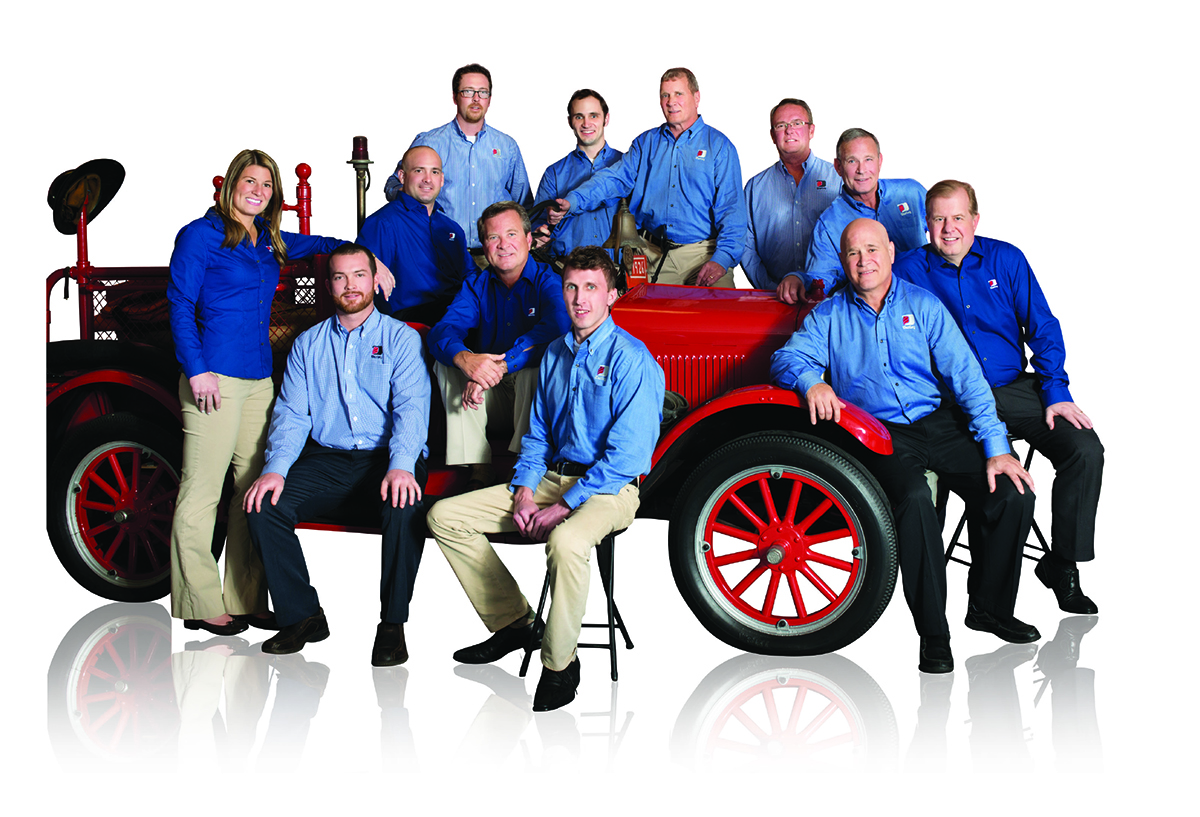
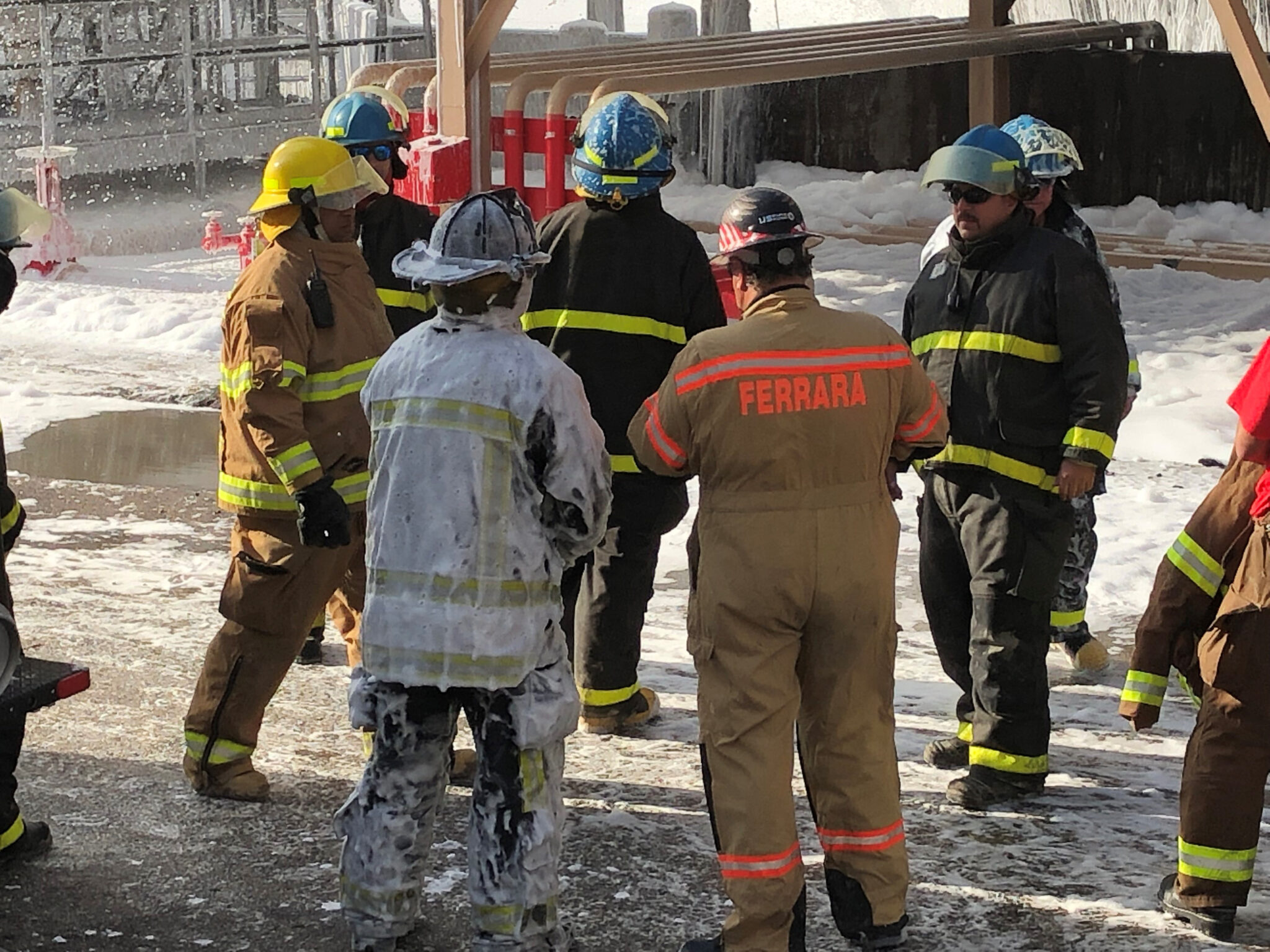
In 2014 Chris Ferrara, president, and CEO of US Fire Pump, saw a glaring need for the petrochemical industry to have high quality equipment adapted specifically for its needs. In addition, Ferrara saw that supplemental emergency response teams to aid in larger than usual fires, something that many customers requested.  

With this in mind, and using his more than four decades of knowledge in manufacturing, Ferrara embarked on a journey eight years ago. He was also backed with the expertise of having been the owner of one of the largest fire apparatus manufactures, and his decades of fire service experience. Marrying these rich experiences he founded US Fire Pump, a manufacturer of fire equipment and the world’s largest Emergency Response Organization. Ferrara’s vision to provide innovative equipment and firefighting methods has taken the world by storm.  

Ferrera quotes one of the USA’s founding fathers Benjamin Franklin. He said: “Without continual growth and progress, such words as improvement, achievement, and success have no meaning.”  

Already having satellite offices in Texas and manufacturing in Louisiana, Ferrara continued his vision for growth via expansion, and progress by constructing a new world class manufacturing facility in Holden, Louisiana in 2020.The facilities are not only home to state-of-the-art manufacturing equipment but large testing and training facilities and the largest fleet of emergency response and fire rental equipment on the globe. Since is construction, many pieces of custom designed and built fire equipment have been delivered from the facility to customers spanning several continents.  

Facilities and expansion  

Being growth minded Ferrara knew that creating a presence strong regional and global presence to better serve the industry would need to be a top priority. Ferrara says: “Our locations in Holden and Baton Rouge, Los Angeles, Vidor, Texas and additional firefighting foam storage in Green Bay, Wisconsin, Rancho Cucamonga, California, and Spain ensure that we are able to serve our customers strategically. As you can see, from locations across the Gulf South, we have a heavy presence in the region due to the sheer amount of the industrial facilities concentrated in the area.  

“To enhance our already robust coverage across the region, I’m excited to announce that we are opening a brand-new facility on I-10 in Mt. Belvieu, TX. The new facility in Texas will be a hub in the region for warranty, repair, service and dispatch of rental and emergency response equipment.”  

On the opening of the new facility Ferrara adds: “These new openings are paramount in achieving the success of US Fire Pump and allows for continued growth and success in the industry.” 

The new Texas facility is located at 11331 I-10 East Mont Belvieu, TX 77523. Of course, having additional space for service is going to ease the demand on each location, but as we opened this location in Texas because of the demand that the “Everything is bigger in Texas created”. Although the rest of the United States and in particular the Gulf South have many petrochemical plants, Texas is an anomaly due to the sheer volume of product required in the Greater Houston Region and the Golden Triangle. Having this facility in Mont Belvieu allows for us to have dedicated resources to this region. From a petrochemical industry standpoint, it’s mindboggling as to how many companies are concentrated in Texas. For us being in the region and providing exclusive dedicated resources to the area makes the most sense for speed of service to the customer. 

Five biggest changes in the industry 

Ferrara says: “From my humble beginnings as a welder / pipefitter, volunteer fireman to building a company that manufactures fire apparatus’, I have seen a massive evolution of the fire services, emergency responders, and safety industry.” 

Technology would be number one; the speed that advancements in technology within the fire service industry has been rapid. “I’ve always prided myself and our company on being innovative and developing new technologies to introduce to the fire service market. It’s what always has set us apart from the competition.  

Secondly, firefighting foam and the regulations with PFAS and PFOA’s have seen several changes. This goes hand-in-hand with technology but the speed of the regulations has caused the technology of using fluorinated foams to the use of non-fluorinated firefighting foam. Third, is the clean cab technology in the fire service. A shift to move firefighters from, for instance wearing bunker gear in the apparatus cab due to the constant exposure to carcinogens is something someone would not have even entertained 30 years ago, for that that even as recent as 10 years ago.  

This goes back to technology but the robust filtrations systems to reduce these exposures to the hazardous substances is something that is one of the biggest changes I have seen to date. Number four: The use of passenger and commercial electric cars on our roads, and the demand on firefighters to extinguish electric car fires. This is all new to the fire servicepeople and it’s here to stay. There is major difference in the way traditional fossil fuel powered cars are extinguished.  

Lastly, it’s not something that has changed but an element that has remained constant. It’s the people. The emergency responders who serve the public everyday are the same today as they were 40 years ago and will continue to be heroes for generations. Their passion and dedication drive people like myself and our company, to continue to innovate products to serve them.  

We have a long list of clients who use our products and services, and I would like to thank them all. From building high velocity pumps for FDNY’s ‘Super Pumper’ to our Emergency Response Teams extinguishing major fires for numerous corporations and government agencies, we have nothing but gratitude for the trust shown in our services, people, and products. 

The pandemic and giving back 

The nature and impact of Covid was devastating. The pandemic, and resulting illness that it cause, affected many companies with employee welfare severely affected in some cases leading to fatalities. However, for US Fire Pump employees saw no major impacts to their health. Such was our strength that we never ceased operating for a single day throughout the last two years. This was down to the high demand of Emergency Response calls during the pandemic and the subsequent waves that hit different states in the US, at different times. During the pandemic, we also witnessed an uptick in request for our rental equipment and other services that we offer different market segments. The one negative implication of the pandemic has been the severely restrained global logistics sector. Components that are typically considered ‘everyday’ items are considerably harder to source. Even when in stock procuring them in a timely manner is still a major issue.  

Speaking about employee welfare, US Fire Pump are major believers in giving back to the community through our various corporate social responsibility efforts. Ferrara says: “I’ve always been a firm believer in giving back to the fire service industry. For many years, even with my previous company that manufactured fire apparatus’ and now through US Fire Pump, giving back to first responders has been a key pillar of our DNA. We give back in many ways, the obvious ones are through donations that support fire and security conferences.  

“But I feel the best way to do give back and leave a lasting impression is through education. Here at US Fire Pump, we hold free training sessions for first responders. These modules would otherwise cost each individual member a few thousand dollars. The reason we have kept our trainings free is because knowledge and expertise are worth their weight in gold, not only in terms of career progress but also to save lives. Afterall, serving the public and protecting lives is our main aim and mission and education is key to its success. 

UK assistance on course to aid Ukranian firefighters

The biggest UK fire service convoy – made up of 22 vehicles and more than 5,000 items of kit and equipment donated by UK fire and rescue services – has been deployed to support firefighters in Ukraine.

The convoy, which left for Poland last weekend, also comprised of more than 60 volunteers from FIRE AID and fire and rescue services. The aid is providing vitally needed equipment to support firefighters, emergency services and volunteers, battling together on the frontline.

Vehicles underwent final checks and the convoy departed Kent on March 19. The estimated journey time to Poland was three days, after which the equipment was transferred to Ukraine. The equipment is expected to support emergency services which are dealing daily with fires and other emergencies to protect lives, people, and property.

Coordinated by UK charity, FIRE AID and International Development (FIRE AID), the National Fire Chiefs Council (NFCC), and the fire industry through the Fire Industry Association, the 22-strong vehicle convoy includes 15 fire engines, an incident response unit, a hydraulic rescue platform, mechanical support for the journey, and two lorries containing equipment such as thermal imaging cameras, generators, lighting, hoses, and thousands of sets of PPE. 

The deployment of these donations is being supported by funding from the UK Home Office, Foreign, Commonwealth & Development Office, and the FIA Foundation, as well as through a public appeal via JustGiving.

The wider fire sector – including the MSA Safety, Fire Sector Federation (FSF), the Fire and Rescue Suppliers [FIRESA] Council and the Fire Industry Association (FIA) – are also key partners in supporting and making the deployment.

Claire Hoyland, Project Manager, FIRE AID said: “We’re calling this a mega convoy as it is not only mega in size, but it has been truly a monumental effort from all involved. Within two weeks we have put together the biggest ever donation of aid from UK Fire and Rescue services. I am so proud of everyone involved and so grateful for the support of our project partners, including EASST, NFCC, and the Home Office, along with many others who have contributed time, money, and assistance.

“FIRE AID members have been working in Ukraine for more than a decade. We have a number of friends and colleagues within the Ukrainian fire service battling fires and responding to emergencies on the front line. We know that this donation is much needed and we are proud to be able to help in whatever way we can.”

Mark Hardingham, Chair of the National Fire Chiefs Council, said: “To see the convoy of fire vehicles – packed with thousands of pieces of firefighting equipment, start its journey was incredibly humbling; every firefighter and volunteer involved should be immensely proud of how their amazing work is making this a reality. This firefighting kit will soon be with Ukrainian emergency services, helping our firefighter colleagues to save lives and protect their local communities – often whilst under devastating attacks.”

Exclusive: Head to Head with Ryan Darley

Entering the Darley stand at Intersec 2022, we are greeted by a wide smile, and a warm handshake. It’s Ryan Darley. It was his great grandfather who founded the company 114 years ago. Darley is there to greet the International Fire and Safety Journal team. We sit at a table, and engage in conversation about the grey Dubai skies, an anomaly for the Gulf state. Just then he is visited by another gentleman. “They are one of our customers from Saudi Arabia,” Ryan says to me after they leave. The Kingdom is one of the 100-odd countries Darley operates in.

Ryan has been heading the international sales unit for more than 11 years. Business is in his blood; Ryan has been connected to Darley since he was a young boy playing baseball in the parks. “My father would pick me up from a ball game and we would drive to the office where he continued work late into the night. I would mow the lawn, sweep the floors, or do other odd jobs around the factory,” he recalls.

Through his college years, Ryan spent his summer breaks assembling pumps and working in different parts of the business. “From assembly to crating, I spent a lot of time in the factory and understood what it took to make fire pumps.”

As a company policy, a Darley family member usually spends some time outside of the company, to gain valuable work experience in different working environments before they begin working at Darley. For Ryan, it was a three-year stint after finishing his education before he returned to the family business.

The roots

“My great grandfather was an inventor. He developed quite a few products which he sold to the fire and the oil and gas industry. He then went on to build fire trucks and fire pumps, 100 years later we are still owned and operated by the Darley family.”

The Darley family is in its fourth generation of business.

Now in its fourth generation, Ryan says the family has done a lot of due diligence and created a company culture that has kept them successful. The company is part of different family business groups, and works closely with a university in Chicago, Illinois that is dedicated to studying family-run businesses.

“We are involved in, and constantly looking into succession planning, equipping the next generation to take the business to the next level. If you are not growing, you are dying. We want to make sure we are ready (for changes in the market). It’s important to gauge whether the next generation can take over the business. It’s a constant process of looking inwards and aligning with best practices, and what can be done to improve.

Corporate governance and IPO

The company has been operating under an outside board of directors for over 25 years. “One member has been on the board for almost 20 years.”

As the company grew, Darley has incorporated different board structures within the company that have helped it scale – fire advisory board, military division board, and the latest is a cyber security unit. “These boards have industry experts from their fields. They advise us on best practices and future trends. The board helps us better serve different industries.”

I naturally had to ask Darley whether an IPO has crossed their minds.

From the outside looking in, it seems like a natural progression. Right? “No,” Darley says, as he smiles and explains the group’s rationale.

“We take pride in being family owned and operated. It (an IPO) doesn’t even come up. We have seen how things can dramatically change when family businesses go public. We like the family ownership model; it’s what we take forward as a philosophy. The Darley family is not just the bloodline; it’s our employees and our customers. We have no plans for an IPO, that’s for sure.” 

Ryan Darley, International Sales Manager, Darley

Investment and market segment diversification

“We invest almost all our profits back into the company. If we have a good year, they have a good year, and so does our research and development division. We need to diversify, change, and be the leader or we will be the dinosaur that goes extinct,” he says.

Over the last 20 years, a major share of Darley’s business came from the fire market. Today fire accounts for 20% or less of its total business. “The military division has taken over as the largest in our company. In addition, we are experimenting with different technologies and trialing them in the market.

“Kyle Darley is currently working on an electrification project where our fire pumps will be driven with electric motors,” Darley notes. “Around 12 years ago, we introduced drones to the fire service industry and showcased it to the industry at our stand in a tradeshow. People laughed at us for having a helicopter in our stand. ‘There is no place for drones in the fire service,’ was the popular myth then. Today, every major fire service has a drone in their armory.”

Darley also introduced a water purification system to the fire service market which has been integrated into fire trucks. “The fire pump enables a fire truck to have an on-board water purification system. If there is a natural disaster, for example, and people are scarce of drinking water these trucks can plug the gap. Alternately, it is also capable of drawing groundwater, purify it, and supply it to the public,” he informs.

The innovations do not end there, Darley says. Ten years ago, the company offered decontamination units using reverse osmosis and ozone technology. “We were way ahead of our time… Today, there are different systems that have come up to clean fire trucks, gear, and cabins. Cancer within the fire industry has also gained widespread attention, everyone is looking at decontamination and proper hygiene methods. It used to be cool to have a dirty helmet and coat, but that’s simply not acceptable today.”

“Software and technology will dictate the future of the fire industry. We are not too far from running a fire truck via our smartphones that will be able to control pumps, aerial devices, and so forth. We are already looking at those technologies to stay ahead of the curve.”

Robotics and future technology

Darley started making its own drones a decade ago before it realized that the task was best left to specialized companies. “We decided to partner with drone specialists while adding fire technologies on its framework, like a thermal imagining camera that could help in search and rescue operations. The goal is to use their expertise, research, and development in drone technology, and kit it out with our products. There isn’t a purpose-built drone for the fire industry just yet,” he notes.

Darley is pioneering new technologies, and pushing boundaries of the norms within the fire and rescue service industry.

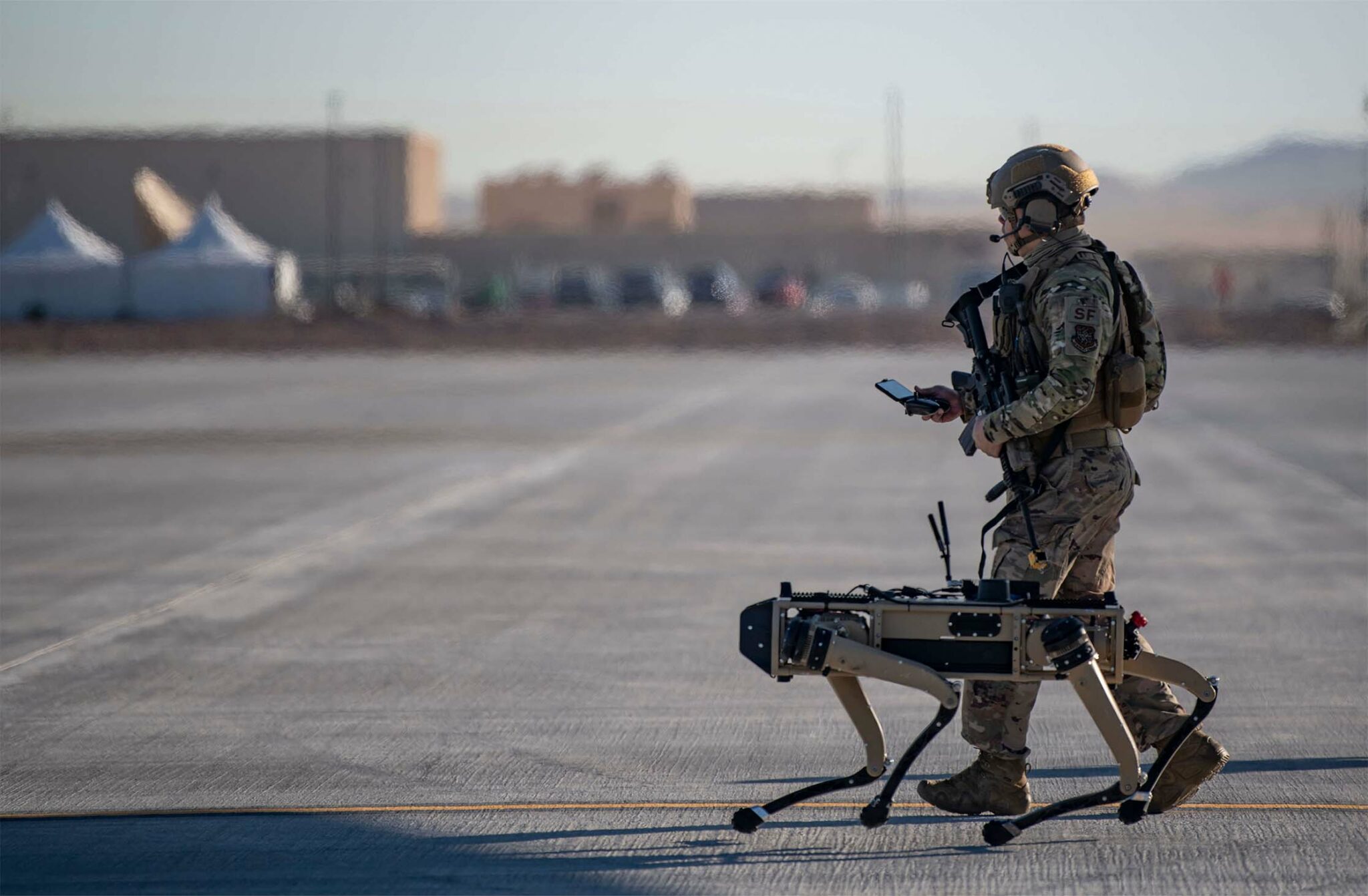
The company is also testing the waters with decontamination robots which will substitute fire fighters to go into hot zones to decontaminate other fire fighters. “It’s better to expose a mechanical robot to the carcinogens.”

All these developments are tied into Darley’s new division that will investigate future technologies. “This division is set to play a crucial role in the future of Darley… drones and UAVs are going to be part of everyday life. 

“We are researching electric car fires as well. A typical gasoline vehicle that catches fire is easy to put out, however, it’s not the same with electric vehicles. We are currently researching whether the addition of a chemical to car battery packs can help put out the fire sooner. Our R&D team is also constantly researching with different materials and components across all our business divisions. We are working on driving efficiencies, increasing safety, and improving the lifecycle of our products. 

Markets

In terms of markets and global presence the company is well stacked. Ryan says the United States accounts for 90% of its business “including the work we do with the US military”. Although it has been difficult to crack into foreign militaries, it remains a key focus for the future.

“40% of our fire business comes from export sales. Following the Second World War a market opportunity developed to service pumps that were left behind by the US military. Back then, we used to get contacted from France or Germany asking for parts and service support. That’s how it started” 

Ryan Darley, International Sales Manager, Darley

Business took a slight dip during the pandemic, sales were down 20%, whereas profits fell below that, Ryan tells IFSJ poignantly. “2021 was a difficult year but we improvised and sold Covid-related equipment such as gloves, face masks, and trailers to the military.  

“We will bounce back but we must remember that budgets were re-allocated to make room to fight the virus. Medical equipment was prioritized over fire, emergency response, military. We are on track to make up for last year’s dip. We had plenty of momentum going into the pandemic, and it seems to be returning. Prior to the pandemic, we kept registering record sales and profits every year. 

Although an IPO is not on the cards Ryan says the company is constantly assessing the possibilities of mergers, acquisitions, and partnerships. The group currently manufactures 10% of its sales volumes, a number it wants to significantly improve.

“We look at four or five different companies every week, but there aren’t any immediate acquisition plans. We bought Fire Boy seven years ago but sold it last year because we weren’t adding as much value as we envisaged. The company grew under our ownership, and we found some suitable partners who we were comfortable selling it to. We knew the buyers, they were going to sustain the staff, which reassured us,” Darley says stating that the welfare and security of all its employees is of paramount importance, all 270 of them.

Looking ahead, the groundwork to keep the business successful for the next 100 years is being put in place today. “If the fire market goes away, we have the military market. Maybe a few decades down the line we will be known as a major player in robotics or drones. We are a forward-thinking family business, and we want to keep pushing the envelope of innovation just as our founder did over 100 years ago,” Ryan concludes.

Grenfell inquiry recommendations not enacted by government

Changes in guidelines and recommendations made by the inquiry committee following the Grenfell disaster are yet to be acted on, London Mayor Sadiq Khan has stated.

The guidelines for large-scale evacuations, published in October 2019, have been “failed to complete a single recommendation” from the first phase of a public inquiry into the devastating Grenfell Tower fire.

The inquiry, which looked at where the June 2017 fire originated and how it spread to kill 72 residents in the north Kensington tower block, published its findings in a report in October 2019, The Guardian reported.

The report recommends vital changes that require the owners of high-rise residential building to carry out regular inspections of lifts, share floorplan details, and cladding materials with their local fire and rescue service. It also urged the development of national guidelines for large-scale evacuations.

To date, none of these recommendations has been implemented, and no deadline has been provided by the government for when they will be, according to the mayor’s office, it was reported.

A spokesperson for the Justice4Grenfell campaign said: “From the day of the fire, there has been no real political will for accountability or action. It is in the gift of the government to grant an inquiry; they agree the terms of reference; they appoint the judge; yet there is no legal requirement for them to take on board recommendations and findings of [the] inquiries.”

Khan said he was “extremely concerned” by the lack of progress made by the government since the first phase of the inquiry was published more than two years ago. On the other hand, Khan said, the London fire brigade had completed 26 out of 29 recommendations directed towards them and other fire and rescue services. Various safety regulations have been introduced by the brigade, such as the use of smoke hoods to aid in the rescue of civilians in smoke-filled environments, and the use of 32-metre and 64-metre ladders to help tackle fires in high-rise buildings. It has also, the mayor said, rolled out an extensive training programme specifically for the brigade’s updated response to high-rise fires.

MSA Bristol inaugurates new Scottish Service Centre

MSA Bristol, a leading supplier of PPE to fire services around the globe, has opened a new Service Centre in Livingston, Scotland. The centre will provide professional cleaning, decontamination, inspection, and repair of kit for fire and rescue services (FRS).

Currently, MSA Bristol is the only firefighting PPE manufacturer offering in-house managed services in the UK, via its two existing service centres in Bristol and London. 

The company has seen demand for its managed services grow, as fire and rescue services across the UK are increasingly prioritising regular professional cleaning to protect firefighters from health risks associated with smoke contamination. The new Scottish Service Centre has been created in response to a major new managed services contract signed with Scottish FRS last year.

Scottish FRS is the UK’s largest fire and rescue service with 6,660 firefighters operating out of 365 stations and is the first to make use of the new Scottish Service Centre.  After being worn at an operational incident, PPE including fire tunics, trousers, hoods, and gloves, are collected by MSA Bristol from key fire service hubs throughout Scotland. These garments are then thoroughly cleaned and de-contaminated, inspected for signs of damage or wear, and repaired if necessary, before being returned to Scottish FRS– all within seven days. 

The Service Centre features top-of-the-range commercial 33kg Electrolux washers and driers, which are digitally controlled and draw from a pre-heated water supply system to reduce cycle times and electricity usage.  This technology gives the centre a capacity to handle up to 900 garments per week, with the service history of every item tracked via a unique bar code.

The Scottish Service Centre is being run by manager, Anton De Klerk and his team of 10 new employees.  He said: “Since opening, we have gradually implemented new systems and are at the point that we’ve really found our rhythm. We now have full responsibility for the Scottish FRS contract and the processes are running smoothly.  We have regular reviews to iron out any issues, and we’re delighted to be hitting our targets and meeting client expectations.”

Roddy Mackinnon, equipment manager at Scottish Fire and Rescue added: “Regular cleaning, decontamination and repair of PPE is essential for providing firefighters with suitable protection. We have been using MSA Bristol’s managed services since March 2021 and are delighted that these services are now being delivered within Scotland.  The team have worked closely with us throughout the transition to ensure that the high levels of service and quick turnaround times are maintained.”

Edward Shepherd, service operations director, MSA Bristol said: “In recent years, MSA Bristol has seen a significant increase in take up of Managed Services packages in the UK, partly due to convenience and competitive pricing, but also partly due to health concerns. Our new service centre in Livingston will enable us to handle more items of PPE to meet this demand, and by providing this service locally and reducing mileage, it is also a more environmentally responsible way to operate.”

FIREX International 2022 agenda announced

Some of the leading personalities in fire safety law and standards, fire risk assessments and building safety will provide a mix of informative individual presentations and expert panel discussions at FIREX International in May.

Gill Kernick has partnered organisations in high hazard industries to develop the leadership and culture needed to prevent major accidents. A former resident of Grenfell Tower herself until 2014, she is author of the book Catastrophe and Systemic Change: Learning from the Grenfell Tower Fire and Other Disasters. She will be kicking off the programme by sharing her thoughts on systemic change and the role of trust and disruption in the fire industry on 17 May.

Discussing more about the wide-ranging implications of the Building Safety Bill, the Deputy Director of the Building Safety Regulator – Tim Galloway – will be on hand on Tuesday 17 May to discuss the HSE’s new role in the building safety regime and its approach to compliance and enforcement.

View the full Expertise & Guidance Theatre agenda here

The golden thread of building safety information has been a feature of much work since Dame Judith Hackitt’s independent review of building regulations and fire safety in 2018. On 17 May, an expert panel on the role of digitised building information will discuss the ways ahead, including the provisions of the standard BS 8644 Digital management of fire safety information.

So much good practice in fire safety is underpinned by independent third-party certification of products and services. Also on Tuesday, a panel of senior representatives from third party certification organisations – such as BRE Global, BAFE and UL – will come together to discuss the steps specifiers should make to ensure they are procuring independently certificated products and services – from passive and active fire safety products and their installation, to service providers such as fire risk assessors.

The headline act for Wednesday 18 May will include a presentation from BSI on the increasingly prominent role IoT is playing in fire safety, followed by a panel discussion with key members of the Fire Industry Association’s IoT Forum debating the challenges and opportunities ahead.

Since the Grenfell Tower tragedy, the spotlight on the role of ‘stay put’ in purpose-built blocks of flats has come under scrutiny. Andy Scott, Chair of BSI’s FSH/12/5 committee on fire alarm devices, voice alarm evacuation sub-systems and emergency voice communications, examines BS 8629, the code of practice for evacuation alert systems to be used by fire and rescue services when ‘stay put’ is no longer tenable.

The specific challenges of improving fire safety in the social housing sector will be examined by Andy Frankum, Chair of the National Social Housing Fire Strategy Group, while a new standard for fire alarms for those with sensory sensitivities will be exclusively launched at FIREX by Sonny White and James Jones.

And, on Thursday 19 May, Erin Shoesmith, the Health and Safety Partner at solicitors Addleshaw Goddard, will be outlining how the legal landscape is changing under the Building Safety Bill – and not just for high-rise residential buildings.