5 of the biggest fire safety news stories of 2026 so far

2026 has already delivered no shortage of headlines in terms of fire safety news. As fire risks continue to evolve, so too does the industry’s response, with innovation, regulation and investment shaping the future of fire protection and life safety.

In this roundup, we look back at five of the biggest fire safety news stories of 2026 so far. These developments have captured the attention of fire safety professionals worldwide, influencing policy, operations and the technologies protecting people, property and critical infrastructure.

KiddeFenwal expands NATURA line with Micro fire protection for small assets

In January, KiddeFenwal launched NATURA Micro, a compact inert gas fire suppression system offered through its Kidde Fire Systems brand.

The system was introduced at Intersec in Dubai, which took place from 12 to 14 January. NATURA Micro forms part of the company’s inert gas systems portfolio and is intended to protect enclosed, small-sized assets.

Swiss ski resort fire at Le Constellation

January also saw a devastating fire break out at Le Constellation, Crans-Montana, Switzerland, during New Year celebrations in the early hours of 01/01/2026.

Police said the fire started at around 1:30am local time, when the basement bar was busy with revellers marking the turn of the year.

Click here for our coverage on timeline, casualties and investigation.

New Class L created specifically for lithium-ion battery fires

February kicked off with the launch of a new classification for lithium-ion (Li-ion) battery fires. BSI confirmed the update reflects the growing use of Li-ion batteries across the built environment, from large energy storage systems to electric vehicles and personal mobility devices.

Fire safety news

The standard classifies fires according to the nature of the material undergoing combustion.

Battery storage standard UL 9540A updated with large-scale fire testing

Standards and regulations were also on the mind in terms of fire safety news in March, with UL Standards & Solutions publishing the sixth edition of UL 9540A, adding large-scale fire testing requirements to the standard for evaluating thermal runaway fire propagation in battery energy storage systems.

The new edition was published on 13 March and is described it as a key standard for battery energy storage systems (BESS), including lithium-ion systems.

Philippines launches Fire Prevention Month

Meanwhile, March saw the Bureau of Fire Protection (BFP) officially launch Fire Prevention Month in the Philippines with an assembly of more than 3,000 people and over 300 vehicles on March 1.

The Manila Bulletin reported that the event was led by BFP chief Director Jesus Fernandez.

The launch brought together BFP personnel, national government agencies, local and barangay Disaster Risk Reduction and Management Offices, fire volunteers, fire brigades, private partners and non-government organisations.

Ramtech deploys wireless fire detection system at 2026 Le Mans race

Ramtech has successfully deployed its wireless fire detection technology at the 2026 24 Hours of Le Mans, providing temporary fire protection across key event infrastructure and demonstrating the increasing adoption of automated fire safety systems at major motorsport events.

Working alongside event infrastructure specialist iEvent and integration partner Prodomo, Ramtech France installed a temporary network of more than 300 wireless devices, including smoke and heat detectors and manual call points. The system protected 14 team paddocks and the Genesis Hospitality Building throughout the event.

Installed on a one-month rental basis, the system delivered continuous 24/7 fire monitoring during both the event build-up and race period, with the core live system operating for one week.

The deployment follows a similar installation at the Formula 1 Hungarian Grand Prix, reflecting a broader trend among major motorsport organisers towards wireless fire protection systems that can be rapidly installed and adapted.

Bruna Esposito, Business Unit Director at Ramtech, said: “The environment at a modern Grand Prix or endurance race closely mirrors the extreme complexities of major commercial construction or industrial sites; massive temporary structures, constantly evolving site layouts, tight installation windows and millions of dollars in critical team assets. Managing these risks via manual human patrols is increasingly seen as an outdated and reactive liability.

“We are seeing a fundamental shift in how the world’s largest public events manage fire safety. Rather than relying on traditional, human-led fire watch personnel to manually patrol grounds, tier-one event organisers are embracing automated wireless safety technology to protect people and temporary infrastructure. This project represents an important milestone for Ramtech, demonstrating the trust that global event organisers place in our technology.”

Because the wireless mesh system requires no cabling or conduit, additional devices could be installed or relocated as site layouts evolved during the build-up to race day, allowing organisers to respond quickly to changing operational requirements.

Wireless system chosen for flexibility

Antoine Galicher, Project Manager at iEvent, said: “Flexibility was one of the key reasons we chose Ramtech’s WES system. For an event of this scale, we needed a solution that could deliver both reliability and ease of deployment, allowing us to adapt quickly as requirements changed. The wireless technology simplified installation while helping us maintain the high safety standards expected at Le Mans.”

Sylvain Castaignau, Business Development Manager for Ramtech France, added: “The customer was initially looking for a solution to improve fire safety but was not aware that an automated system like WES existed. From the first demonstration, it became clear that the flexibility and functionality of the system were perfectly suited to an event environment where requirements change daily. This project proves how temporary fire protection can evolve beyond traditional fire watch approaches.”

Ramtech highlights wider event safety trends

Ramtech believes the Le Mans project reflects a wider shift in temporary fire protection for large-scale events, where organisers are increasingly seeking alternatives to manual fire watch patrols.

Esposito said: “With the additional risk posed by increasing summer temperatures and prolonged heatwaves, relying on manual human labour for continuous fire watch patrols introduces major occupational health risks and soaring overtime costs. In addition, there is a heightened concern around the potential for outbreaks of fire, particularly in conditions of dry outdoor spaces, where events may be held.”

The company says the project demonstrates how wireless fire detection technology can provide flexible protection for temporary venues, particularly where layouts change frequently during construction and event preparation.

Hochiki Europe launches FIREscape Nepto Black Edition emergency lighting

FIREscape Nepto Black Edition emergency lighting has been introduced by Hochiki Europe to provide a discreet emergency lighting solution for theatres, cinemas, nightclubs and other design-conscious venues

Hochiki Europe has expanded its emergency lighting portfolio with the launch of the FIREscape Nepto Black Edition emergency lighting range, offering a discreet solution for entertainment venues where maintaining the visual atmosphere is a priority.

The new FIREscape Nepto Black Edition emergency lighting has been developed for theatres, cinemas, nightclubs and similar venues where traditional white emergency lighting can stand out in darkened spaces. Its black finish is designed to blend into contemporary interiors while delivering the same performance as the standard FIREscape Nepto range.

The addressable system is built around a control panel connected to self-contained LED luminaires and exit signs using screened, extra-low voltage cabling. Each luminaire features an intelligent back-up battery capable of providing the required three hours of emergency operation in the event of a power failure.

According to Hochiki Europe, the low-voltage design and continuous self-testing and monitoring capabilities help simplify installation and maintenance while reducing associated costs compared with central battery or mains-powered emergency lighting systems.

The luminaire batteries have an expected lifespan of 10 years, helping to minimise replacement and maintenance requirements over the lifetime of the installation. The luminaires are certified to BS EN 60598-2-22 and BS EN 62034 Type PERC, while exit signs comply with BS EN ISO 7010. The complete system also meets the requirements of BS 5266.

The FIREscape Nepto range is designed to be scalable, with each control panel supporting up to two lighting lines and 127 devices per line. Up to 12 panels can also be networked together and controlled from a single keypad, making the system suitable for both single-site installations and larger estates.

The system includes adjustable lighting levels, day and night operating modes and the ability to configure luminaires as maintained or non-maintained, allowing users to tailor operation outside emergency situations.

While aimed at entertainment venues, Hochiki Europe said the Black Edition is also suitable for other environments where aesthetics are important, including premium retail spaces, gyms and modern office developments.

The FIREscape Nepto Black Edition is available now from Hochiki Europe.

World Cup fire safety warning issued to licensed premises

West Sussex Fire & Rescue Service is urging licenced premises to review their fire safety arrangements as they prepare to welcome thousands of football supporters during the FIFA World Cup 2026.

Responsibility for fire safety rests with the ‘responsible person’ – usually the employer or licence holder of the premises. West Sussex Fire & Rescue Service is urging all responsible persons to review and update their fire risk assessments before making any changes to their premises for showing World Cup matches.

“Any temporary changes made to a venue must be carefully considered from a fire safety perspective.” said West Sussex Fire & Rescue Service’s Head of Protection Dave Bray: “Whether it is installing large screens, putting up decorations and flags, creating additional viewing areas or increasing customer capacity, businesses have a legal duty to ensure these changes do not compromise the safety of their customers or staff.”

Temporary alterations can affect occupancy levels, escape routes, evacuation procedures and access to firefighting equipment. The responsible person must ensure that fire safety remains a key consideration throughout the planning and delivery of tournament-related events.

West Sussex Fire & Rescue Service is advising businesses to:

  • Review and update fire risk assessments to reflect any temporary changes.
  • Ensure all emergency exits, escape routes and fire doors remain serviceable unobstructed and available for immediate use.
  • Avoid positioning screens, furniture, staging or temporary structures where they could hinder evacuation.
  • Check that temporary electrical installations are safe, suitable and do not overload existing electrical systems.
  • Use appropriate fire-retardant materials for decorations and displays.
  • Review occupancy levels and implement suitable crowd management measures.
  • Ensure staff are fully trained and understand emergency procedures and their roles in the event of an evacuation.
  • Maintain clear access to firefighting equipment and fire alarm call points.

The Service says that fire safety officers and operational crews may conduct inspections before and during the World Cup tournament period to ensure compliance with fire safety legislation and to provide advice where required.

Fire Risk Assessment – A Guide for Workplaces

A Fire risk assessment is crucial in ensuring the safety of a workplace. 

They help identify potential fire hazards and create a plan to reduce risks. 

Having an effective fire risk assessment can prevent serious incidents and save lives.

In this article, we will explore what a fire risk assessment is, why it’s necessary, who needs it, how to conduct one, and how often it should be done.

What is a Fire Risk Assessment?

what is fire risk assessment

A fire risk assessment is a process that identifies potential fire hazards in a workplace and evaluates the risk they pose. 

The goal is to prevent fires from starting and to ensure that people can safely evacuate if one occurs. 

The assessment involves looking for sources of ignition, flammable materials, and any risks that could make a fire worse.

It also includes checking if there are enough fire safety measures in place, such as fire alarms, extinguishers, and emergency exits. 

The findings help create an action plan to reduce risks, ensuring the workplace complies with fire safety regulations.

A fire risk assessment isn’t just a one-time task. 

It needs to be reviewed regularly, especially if there are changes in the workplace, like new equipment or staff. 

By conducting regular fire risk assessments, workplaces can minimise the chance of fires, protect lives, and avoid costly damages. 

They’re a legal requirement for most businesses, but more importantly, they ensure a safe environment for everyone in the building.

Why is a Fire Risk Assessment Needed?

why fire risk assessment needed

A fire risk assessment is essential for several reasons. 

Legal Requirements

It ensures that workplaces comply with legal requirements. 

Many countries have laws that mandate regular fire risk assessments for businesses.

Accident Prevention

Fire risk assessments help prevent accidents and injuries. 

Fires can spread quickly, and without proper precautions, they can cause serious damage or even fatalities. 

Identifying fire hazards early allows businesses to put in place measures to prevent fires.

Property Protection

A fire risk assessment helps protect property. 

Fires can cause significant financial losses by damaging buildings, equipment, and inventory. 

By reducing fire risks, businesses can protect their investments and ensure continuity.

Safe Working Environment

Finally, fire risk assessments promote a safe working environment. 

Employees will feel safer knowing that their workplace has taken steps to protect them from potential fire risks. 

This can boost morale and increase productivity.

Who Needs a Fire Risk Assessment?

who needs fire risk assessment

A fire risk assessment is essential for almost all businesses and organisations. 

It is a legal requirement in most countries for any workplace that has more than five employees. 

Whether it’s a small office, a large factory, or a retail store, fire risks exist, and conducting regular fire risk assessments helps minimise them.

Businesses and Offices

Any business, regardless of size or industry, needs a fire risk assessment. 

This includes offices, retail stores, restaurants, and warehouses. 

Even low-risk environments, like small offices, should assess potential fire hazards, such as electrical equipment or paper storage.

Industrial Facilities

Factories and warehouses deal with larger risks, especially when handling hazardous materials, machinery, or chemicals. 

Regular assessments help manage these risks and ensure that proper safety measures, like fire suppression systems and clear evacuation routes, are in place.

Public Buildings

Public spaces, such as schools, healthcare buildings such as hospitals, and care homes, need fire risk assessments to protect large groups of people. 

These places often have vulnerable individuals, such as children, the elderly, or people with disabilities, who require extra safety considerations during evacuation.

Landlords and Property Owners

Landlords and property managers are responsible for ensuring that their properties, particularly multi-occupancy buildings like apartment complexes, are fire-safe. 

Regular fire risk assessments ensure that residents have adequate fire alarms, clear escape routes, and functioning fire doors.

What to do For a Fire Risk Assessment

fire risk assessment what to do

Conducting a fire risk assessment is essential for maintaining workplace safety. 

It involves identifying potential fire hazards, assessing risks, and implementing measures to reduce those risks. 

Below is a step-by-step guide on what to do for a fire risk assessment.

Identify Fire Hazards

The first step in a fire risk assessment is identifying potential fire hazards in the workplace. 

Hazards can include sources of ignition, such as electrical equipment, heaters, or machinery, and combustible materials like paper, fabric, or chemicals. 

Look for areas where heat or sparks could come into contact with flammable items. 

This can be anything from overloaded power outlets to improper chemical storage.

Identify People at Risk

Next, identify who might be at risk in the event of a fire. 

This includes not only employees but also visitors, contractors, or members of the public. 

Consider specific groups that may be more vulnerable, such as the elderly, disabled, or those with mobility issues. 

Make sure that emergency exits and lighting, and evacuation procedures are suitable for everyone, including those who may need assistance during an evacuation.

Evaluate the Risks and Take Action

Once you’ve identified hazards and people at risk, evaluate the level of risk associated with each hazard. 

Ask yourself: How likely is it that a fire could start, and how severe would the consequences be? 

After evaluating the risks, take appropriate actions to eliminate or reduce them. 

This could involve:

  • Removing or reducing fire hazards (e.g., properly storing flammable materials).
  • Installing or improving fire detection systems, such as smoke alarms.
  • Ensuring that fire extinguishers are accessible and maintained.
  • Implementing clear fire safety protocols and ensuring exits are unobstructed.

Record Your Findings and Implement Changes

In businesses with more than five employees, it is a legal requirement to document your findings. 

This documentation should include the hazards identified, the people at risk, and the actions taken to reduce or eliminate risks. 

Keep a detailed log of all fire safety measures in place, such as fire extinguishers, fire exits, and alarms.

Once you have recorded the findings, make sure the necessary changes are implemented. 

Assign responsibilities to individuals, such as fire wardens or fire marshals, who can oversee the implementation of safety measures.

Review and Update Regularly

Fire risk assessments are not a one-time task and should be reviewed regularly.

By keeping your assessment up to date, you ensure that new risks are addressed, and fire safety measures remain effective.

Who Can Do a Fire Risk Assessment?

who can do fire risk assessment

A fire risk assessment can be conducted by a competent person within the workplace. 

This person must have adequate knowledge of fire safety regulations and an understanding of fire hazards. 

Often, businesses will appoint a fire warden or safety officer to conduct these assessments.

For complex buildings or high-risk environments, it may be necessary to hire a professional fire risk assessor. 

A professional will have the expertise and experience to identify risks that might be overlooked by someone with less training.

Some businesses choose to outsource their fire risk assessment entirely to certified professionals. 

This ensures that the assessment is thorough and compliant with legal standards. 

However, even if you hire a professional, the employer is still responsible for ensuring the assessment is carried out properly.

How Often Should a Fire Risk Assessment be Done?

how often fire risk assessment

A fire risk assessment should be conducted regularly to ensure the safety of a workplace and its occupants. 

The frequency of these assessments depends on various factors, such as the type of business, the size of the premises, and the level of fire risk involved.

Annual Reviews

As a general rule, businesses should review their fire risk assessments at least once a year. 

This ensures that any changes in the workplace, such as new equipment or changes in staff, are considered and any new risks are identified and addressed.

After Significant Changes

If there are significant changes in the workplace, such as renovations, new machinery, or changes in the number of employees, a new fire risk assessment should be done immediately. 

These changes can introduce new fire hazards or affect existing safety measures, such as fire exits or alarm systems.

High-Risk Environments

Workplaces with higher fire risks, such as factories, chemical plants, or places that handle flammable materials, may need more frequent fire risk assessments. 

Depending on the level of risk, reviews might be necessary every six months or even quarterly.

After a Fire Incident

If a fire has occurred, an immediate review and reassessment should be conducted. 

This helps identify what went wrong and ensures that additional safety measures are put in place to prevent future incidents.

Conclusion

You should now have the knowledge on exactly what a fire risk assessment is. 

A Fire risk assessment is vital for ensuring workplace safety and preventing devastating incidents. 

They help identify potential hazards, protect employees, and ensure compliance with fire safety regulations. 

Conducting regular fire risk assessments, documenting findings, and acting on identified risks will create a safer environment for everyone. 

Remember, whether your workplace is an office, a factory, or a care home, fire safety is a responsibility that should never be overlooked. 

By following the steps outlined in this guide, you can ensure that your fire risk assessment is thorough, effective, and up to date.

How Long Do Fire Extinguishers Last?

Fire extinguishers are crucial tools for swiftly combating small fires, but do they last forever? 

Understanding their lifespan and exactly how long do fire extinguishers last is vital for ensuring their effectiveness in emergencies. 

In this article, we’ll explore how long different types of fire extinguishers last, when to replace them, and the importance of regular servicing.

How Long Do Fire Extinguishers Last?

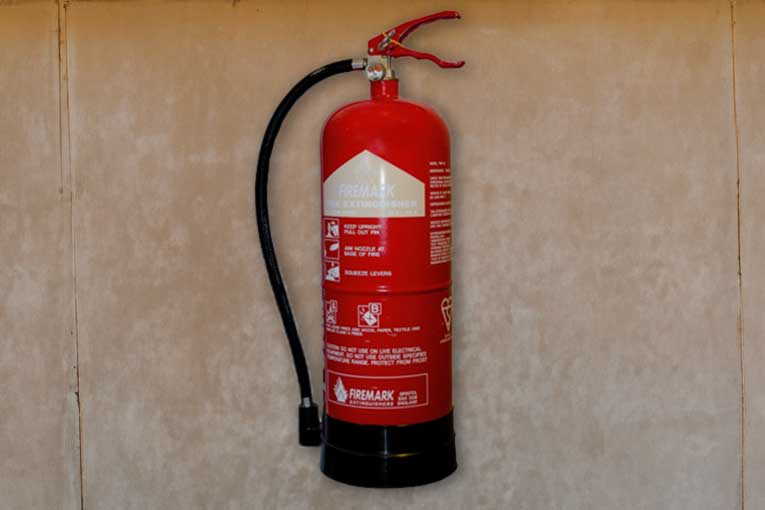
how long do fire extinguishers last image

Fire extinguishers are crucial for rapid response in emergencies, but their effectiveness diminishes over time. 

Understanding how long fire extinguishers last is essential for maintaining a safe environment.

Disposable

Disposable fire extinguishers typically have a lifespan of around 10 to 12 years. 

Once they reach this limit or display signs of wear, they should be replaced to ensure optimal performance. 

These extinguishers are designed for single use, emphasising the importance of timely replacements.

Rechargeable

Rechargeable fire extinguishers, designed for multiple uses, have a service life of approximately 6 years. 

After this period, a thorough professional inspection and maintenance are necessary to ensure their continued reliability. 

If any issues are identified during servicing or if the extinguisher reaches the end of its recommended life, it should be replaced promptly.

How Often Should Fire Extinguishers be Serviced?

how often fire extinguishers serviced

Routine maintenance is key to ensuring the reliability of fire extinguishers. 

Different types require distinct servicing intervals to guarantee optimal functionality when facing a fire emergency.

Water, Powder, or Foam

Fire extinguishers containing water, powder, or foam should undergo professional servicing every 5 years. 

This process involves a thorough inspection, testing, and refilling, if necessary. 

Regular servicing helps identify any issues and ensures the extinguisher is fully operational.

CO2

CO2 fire extinguishers, commonly used for electrical fires, have a longer service interval of 10 years. 

These extinguishers should undergo a comprehensive professional service to inspect and maintain their components. 

This ensures that the extinguisher remains effective in suppressing electrical fires.

Where to Find the Fire Extinguisher Manufacture Date?

fire extinguishers manufacture date

Knowing the manufacture date of a fire extinguisher is crucial for determining its lifespan and understanding how long your fire extinguisher will last. 

The location of this information varies based on the type of extinguisher.

Steel Fire Extinguishers

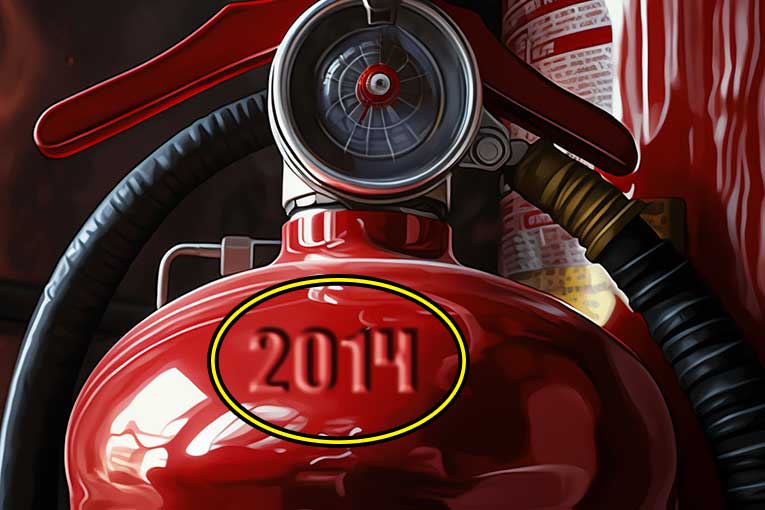
Stamped into the Cylinder

The manufacture date may be physically stamped onto the cylinder of the steel fire extinguisher. 

This stamp provides a clear and permanent indication of when the extinguisher was produced.

On the Label

Alternatively, the manufacture date might be included on the label affixed to the extinguisher. 

This label provides essential information about the extinguisher’s specifications and usage guidelines.

P50 Service-Free Extinguishers

Older Models 

For older P50 fire extinguisher models, the manufacture date is typically printed on the base of the unit.

Newer Models 

Newer P50 models use a coloured pin that correlates to a table printed on the label. 

The pin colour corresponds to the month and year of manufacture, providing a quick reference.

When Should you Replace a Fire Extinguisher Early?

replace fire extinguishers early

While fire extinguishers have defined lifespans, certain circumstances may warrant early replacement to ensure optimal performance in emergencies. 

Here are key indicators that suggest an extinguisher should be replaced ahead of schedule:

Cracked Nozzle or Hose

Issue

Physical damage like cracks compromises the structural integrity of the nozzle or hose.

Effect

The crack can lead to leaks or difficulties in delivering the extinguishing agent during a fire, rendering the extinguisher less effective.

Blocked Nozzle or Hose

Issue

Obstructions in the nozzle or hose can hinder the discharge of the extinguishing agent.

Effect

A blocked nozzle or hose reduces the extinguisher’s ability to control a fire, diminishing its overall performance.

Broken Handle

Issue

A broken handle makes it challenging to operate the extinguisher efficiently.

Effect

In an emergency, a broken handle may impede the user from effectively using the extinguisher, delaying response time.

Missing Locking Pin

Issue

The locking pin is crucial for preventing accidental discharges and maintaining the extinguisher’s readiness.

Effect

Without the locking pin, there’s a risk of unintentional discharges, and the extinguisher may not be securely stored or easily accessible.

Missing Inspection Sticker

Issue

An extinguisher without an updated inspection sticker may not have undergone required maintenance.

Effect

Missing inspection documentation indicates a lack of regular checks, raising concerns about the extinguisher’s reliability and adherence to safety standards.

Corrosion

Issue

Corrosion on the cylinder or other parts compromises the structural integrity of the extinguisher.

Effect

Corrosion weakens the extinguisher, making it more susceptible to damage and reducing its ability to withstand the pressure needed for proper discharge.

Suspected of Leaking

Issue 

Evidence of leaking substances suggests a loss of pressure and potential malfunction.

Effect

A leaking extinguisher may fail to discharge its contents effectively during a fire, necessitating immediate replacement to ensure reliability in an emergency.

How Often Should Fire Extinguishers be Inspected?

how often fire extinguishers inspected

Routine inspections are crucial to maintaining the reliability of fire extinguishers, ensuring they function correctly when needed. 

The inspection frequency can be categorised into two intervals:

Monthly Checks

Regular, brief checks by designated personnel.

This is to verify that the extinguisher is in its designated place, the pressure gauge shows adequate pressure, and there is no visible damage or tampering.

Monthly checks help identify immediate issues and ensure that the extinguisher is accessible and operational.

Yearly Inspections by a Fire Extinguisher Engineer

In-depth inspections conducted by a certified fire extinguisher engineer, for example those found in the Institution of Fire Engineers.

This will be a comprehensive examination of the extinguisher’s internal and external components, including pressure tests, to ensure it meets safety standards.

Yearly inspections are critical for identifying potential internal issues, such as corrosion or leaks, which might not be evident during routine checks.

What are the Risks of Using an Older Fire Extinguisher?

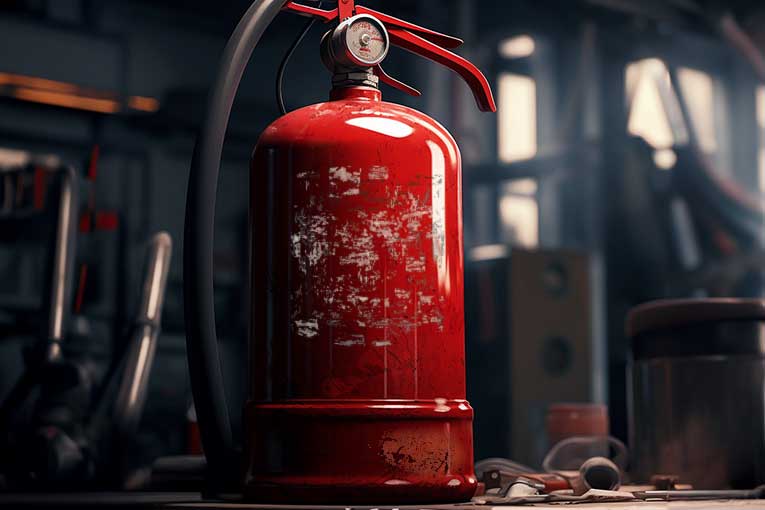
older fire extinguishers risks

Using an older fire extinguisher poses various risks, potentially compromising its effectiveness when faced with a fire emergency. 

Here are the key risks associated with relying on an aged fire extinguisher:

Decreased Pressure

Over time, fire extinguishers may experience a gradual loss of pressure, reducing their ability to discharge the extinguishing agent effectively. 

This decline can result from factors like gas leakage or gradual deterioration of internal components.

Corrosion

The internal components of a fire extinguisher, especially the cylinder, are susceptible to corrosion over an extended period. 

Corrosion weakens the structural integrity, making the extinguisher more prone to failure or rupture during use.

Deterioration of Seals and Valves

Seals and valves play a crucial role in maintaining the pressure and integrity of the extinguishing agent. 

As a fire extinguisher ages, these seals and valves can deteriorate, leading to potential leaks and a loss of pressure.

Reduced Extinguishing Agent Efficiency

The extinguishing agent within the fire extinguisher can degrade over time, diminishing its effectiveness. 

This reduction in efficiency may result from factors like exposure to temperature variations or chemical changes within the agent.

Outdated Technology

Older fire extinguishers may use outdated technology compared to more modern counterparts. 

Advances in fire safety technology have led to the development of extinguishers with enhanced features and improved extinguishing agents, providing better protection against various fire types.

Non-compliance with Standards

Fire safety standards and regulations evolve over time, introducing new requirements for equipment.

Older fire extinguishers may not comply with the latest standards, potentially leading to regulatory non-compliance and inadequate fire protection.

How to Dispose of a Fire Extinguisher?

dispose of fire extinguishers

Disposing of a fire extinguisher requires careful consideration to ensure the safe handling of potentially hazardous materials. 

Here’s a guide on how to appropriately dispose of a fire extinguisher:

Check the Extinguisher Type

Identify the type of fire extinguisher, as different extinguishing agents have specific disposal methods. 

Common types include water, powder, foam and CO2.

Contact Local Authorities

Check with your local fire department or waste disposal facility regarding their specific regulations for fire extinguisher disposal. 

Some municipalities organise special collection events or have designated drop-off locations.

Recycling Centres

Certain recycling centres may accept fire extinguishers, as many of the components are fully recyclable. 

Remember to follow local guidelines.

Professional Disposal Services

In some cases, professional hazardous waste disposal services may be necessary for extinguishers containing certain chemicals, such as older foam fire extinguishers. 

Contact local environmental agencies for advice on proper disposal methods.

Conclusion

Knowing how long fire extinguishers last and understanding when to replace them is vital for maintaining a safe environment. 

Regular inspections, proper servicing, and early replacement when necessary ensure that these essential firefighting tools remain effective when needed most. 

Prioritising the longevity and functionality of fire extinguishers is a proactive step towards enhancing overall safety and preparedness in various settings.

NFPA annual Conference & Expo to return to live event in Boston

In a slightly delayed celebration of its 125thanniversary, the National Fire Protection Association (NFPA) will return to an in-person event for its annual Conference & Expo (C&E) at the Boston Convention Center in Boston, Mass., June 6-9, 2022. While the event has been held online the past two years due to the pandemic, this year will once again bring together thousands of the industry’s leading professionals who will attend more than 110 educational sessions and special events. It will be kicked off with a keynote on leadership by Admiral William H. McRaven.

Jim Pauley, CEO and President, NFPA said: “We are excited to welcome the huge community of fire, electrical and life safety professionals back to a live C&E. Not only are the programmatic line-up and exhibits more valuable in person, but attendees learn so much from each other being in the same place.”

Educational sessions will address the latest issues, challenges, and opportunities for today’s fire and life safety practitioners, including the NFPA Fire & Life Safety Ecosystem; code compliance; emergency preparedness and response; emerging technologies; global issues; public education; building and life safety and construction; fire protection systems; industrial hazards; electrical safety; and much more.

In addition, the NFPA Spotlight on Public Education (SOPE) will be held on June 6-7, covering a wide range of public education issues, such as fire and fall prevention among older adults; youth fire-setting education and intervention; and community risk reduction (CRR), to name a few. SOPE attendees are also invited to participate in a CRR workshop on June 8, which will support and assist CRR professionals in developing a community risk assessment (CRA).

This year’s expo will feature more than 300 exhibitors showcasing the latest products and services needed to comply with prevailing codes and standards for design, construction, and operation of the built environment. The NFPA booth will showcase its latest initiatives, programs, and resources, including a dedicated area for live NFPA LiNK demonstrations, highlighting the full capabilities of dynamic, digital access to NFPA codes and standards and related material. The expo floor will also feature specialty NFPA booths showcasing electric vehicles, wildfire virtual reality, and CRAIG 1300™, the digital tool that collects and analyzes community data in support of CRR.

The 2022 NFPA Technical Meeting, which will begin on June 8 at 1:00 pm EST, will consist of two days this year in anticipation of increased participation and interest in the continuation of cycling NFPA standards. More details about which certified amending motions will be debated and acted upon will be available online as soon as the agenda is finalized.

General session will be held on Monday, June 7 and will include presentations by NFPA President Jim Pauley, Board of Directors Chair Amy Acton, and Keynote Speaker Admiral William H. McRaven, USN (Ret.).

FireAngel to showcase IoT solution at The Fire Safety Event 2022

FireAngel will be exhibiting on Stand 3A/E50 at this year’s Fire & Safety Event, showcasing its social housing IoT solution, FireAngel Connected, to a network of fire safety managers, health and safety officers, risk assessors and consultants. 

Continuing to fulfil its mission to protect and save lives with innovative, cutting-edge home safety technology, FireAngel Connected is the most technologically advanced fire safety solution for social housing in the fire safety market. 

FireAngel Connected offers a cloud and IoT-based solution to help social housing landlords monitor fire risk, gas safety, water leaks and electrical appliances throughout their properties from a single remote platform.  

Data monitored in real-time can alert social landlords to the status of heat, smoke and carbon monoxide alarms in a property if triggered or in need of maintenance, in turn, eliminating wasteful visits, staff time and administration fees. 

With the unique automated AI capabilities of FireAngel Predict built in – the only solution of its kind in the market – an instant, real-time fire risk level unique to each property is provided, enabling active intervention before a fire starts.  

As housing associations navigate the Fire Safety Act 2021, rising maintenance costs and the government’s White Paper on social housing, there has never been a greater need for solutions that can unlock cost savings, accelerate operational efficiencies and, ultimately, protect tenant safety. 

Nick Rutter, Co-Founder and Chief Product Officer, FireAngel said: “IoT and AI advancements are driving technological innovation in housing associations and strengthening the golden thread of information for buildings.” FireAngel will be located at stand 3A/E50. 

TBA Firefly set to show expanded range to FIREX

TBA Firefly is set to display a wide array of products at the 2022 FIREX show in London’s Excel Centre. The company is looking to building on its success of 2021 in terms of winning new business and the scale of the contracts the company was involved in delivering.

Among its products the company will display its recent launches such as Penowrap and the FR120 Access Panel, as well as its versatile Athena fire barrier, suited for timber lofts.

The new 600 x 600mm, IFC certified panel has been developed to facilitate regular maintenance access to roof spaces and other fire compartments, created using the Firefly barriers and offers two hours fire resistance.  

Penowrap, meanwhile, is a lightweight and flexible wrap which complements other TBA Firefly flexible fire barrier systems: intended to protect steel or timber structural members up to 300mm beyond the main barrier, giving additional protection.

Simon James, marketing manager, Firefly’s said: “Firex gives us an ideal opportunity to showcase our product range to key players in the industry, including existing clients and those companies not yet familiar with the products we offer. We serve a specialist part of the passive fire protection market, offering some unique solutions, all supported by the relevant accreditations and full technical back-up.”  

IFSEC and FIREX to conduct live installer training courses

IFSEC and FIREX International are set to host, for the first time, in-person training sessions for installers, integrators, and engineers.

These focused training sessions will ensure professionals remain on top of the latest best practices in security and fire, and secure CPD points to keep up with the growing push for competency requirements.

The ‘skills gap’ is one of the most pressing challenges in the UK’s fire and security technical installation sector at present. While not a new issue, it is one that has continued over the course of the Covid-19 pandemic – in a survey undertaken by IFSEC in 2021, 93% of installers answered CPD or professional qualifications would aid them in their work.    

Furthermore, following Dame Judith Hackitt’s report into the failings at Grenfell Tower in 2017, installer competency in fire, emergency and security systems has been put under the spotlight, with a renewed push from government and the wider industry to ensure appropriate standards of quality are met. The ECS (Electrotechnical Certification Scheme) requirements for cards in the fire and security sector in England are changing as a result, with updated requirements to achieve both the Systems Technician (also known as the Gold Card) Level 3 cards and the Level 2 Operative Card, where work can be carried out and signed off unsupervised.

In line with the push for improved competency standards and updated CPD requirements that come with the ECS changes, and to support those looking to develop their expertise, IFSEC and FIREX International will be hosting a programme of CPD-accredited in-person training sessions dedicated to the installer and integrator fire and security community.

Book your place on the available courses here

Gerry Dunphy, event director of IFSEC and FIREX International, said: “Skills and competency are now at the forefront of the security and fire safety professions, so we’re delighted to be able to introduce focused and relevant training sessions into the shows. IFSEC & FIREX Training is an important addition as visiting customers can not only view and experience the latest technology and speak to market leading vendors, they can now partake in high calibre CPD training sessions to ensure they’re keeping up with current trends, standards and innovations. It means the shows truly become fully rounded experiences for installers and engineers”.

Trevor Jenks, training manager at the SSAIB, is working with IFSEC and FIREX to ensure the training sessions are relevant and provide genuine value to attendees. Trevor adds: “I’m thrilled to be working with the IFSEC and FIREX team on this initiative. The skillset required in the industry is constantly evolving, and attending high quality training from knowledgeable trainers is more important than ever.”

What will IFSEC & FIREX Training offer?

The prospectus of available courses on offer at the event will cover a variety of key topics that were selected by installers as areas of interest in a survey undertaken by IFSEC & FIREX in 2021.

Courses will be delivered in two distinct manners, both of which were highlighted as important methods of training for fire and security installers in the same survey:

  1. Courses delivered by independent security and fire training organisations
  2. Courses delivered by manufacturers – these will be vetted by an independent consultant to ensure the quality of training is of a high standard and isn’t a ‘sales pitch’. The sessions will also look at technological innovations which meet new industry codes and standards that installers should be aware of.

Topics being covered include:

  • ECS Systems Operative – Fire, Emergency and Security Systems (FESS) by Skills for Security
  • Introduction to Fire Detection & Alarms by Fire Industry Association (FIA)
  • Cyber Security by Hikvision
  • Digital Service Masterclass by Texecom
  • Optical Fibre Overview and Fusion Splicing Workshop by Tavcom Training
  • Introduction to fire doors and fire protection in buildings by Warringtonfire


View the full agenda with further details on each session, here.

A small fee will be charged per session to encourage attendance, though heavily subsidised from the original costs as part of IFSEC and FIREX’s ongoing support in helping to address the skills gap. To ensure sessions remain focused, there are a limited number of spaces available on each. Welcome refreshments, as well as lunch vouchers for all delegates will also be included in the price.

Each course will start in the morning or around midday and last anywhere between 4-6 hours, to ensure delegates receive an appropriate level of training, while also allowing for plenty of time to speak to suppliers and catch up with likeminded professionals on the show floor. Courses will be hosted away from the show floor in the gallery suites at London’s ExCeL on the same days as IFSEC and FIREX, taking place between 17-19 May.

Crucially, all delegates will receive proof of attendance for CPD (Continuing Professional Development) records – a key requirement of the updated ECS cards renewal scheme.  

The initiative has received wide-ranging backing from across the sector, with support coming from the British Security Industry Association (BSIA), Fire Industry Association (FIA), Security Systems Alarms Inspection Board (SSAIB), National Security Inspectorate (NSI), Skills for Security and the Association for Specialist Fire Protection (ASFP).