Philly fire highlights the dangers of fire and importance of working smoke alarms

“Hello, we have had a tragic day in Philadelphia. Thirteen people, including seven children, died in a row home fire. Twenty-one people were living in two apartments in the building and the fire department says there were smoke alarms, but they were not working. Is anyone from NFPA interested/available to speak with us about this type of situation?”

And yet on so many days, year after year, this is common correspondence between NFPA and the media.

While we don’t know all the details of today’s devastating incident yet or the circumstances that may have impacted this morning’s harrowing outcome, our hearts go out to the people of Philadelphia and particularly to the eight reported survivors, the victims’ loved ones, and the first responders who undoubtedly have been affected by this tragic incident.

What we do know is that WPVI-TV in Philadelphia reports that fire broke out after 6:00 a.m. in a three story rowhouse in the Fairmount section of the city where 18 people lived in a second floor apartment and eight more resided on the first floor. Despite quick response from the fire department and suppression of the fire within 50 minutes of arriving, news reports indicate that there was a lack of working smoke alarms in the crowded units, despite the city testing and replenishing the units in the spring of 2021.

The heartbreaking incident is tied for the fifth most deadly home fire in the United States since 1980.

The tragedy underscores the importance of working smoke alarms in homes – whether they are in one and two-family residences, rowhouses, or any other occupancy setting.

From years of conducting research on the effectiveness of smoke alarms, we know the following:

  • Smoke alarms were present in three-quarters (74 percent) of reported home fires in 2014–2018.
  • Almost three out of five home fire deaths were caused by fires in properties with no smoke alarms (41 percent) or smoke alarms that failed to operate (16 percent).
  • The risk of dying in reported home structure fires is 55 percent lower in homes with working smoke alarms than in homes with no alarms or none that worked.
  • When present, hardwired smoke alarms operated in 94 percent of the fires considered large enough to trigger a smoke alarm. Battery-powered alarms operated 82 percent of the time. Power source issues were the most common factors when smoke alarms failed to operate.

Additional insights gleaned from the landmark NFPA Fire Safety in the US report that was released last year shows that the biggest single factor contributing to fire safety progress in recent decades has been the use of smoke alarms, as mandated by fire and building codes, as well as continued public education about their significance. That same report shows that the largest share of reported structure fires and most of the civilian fire deaths and injuries today consistently occur in homes, where people tend to feel safest.

In fact, if a home fire is reported these days, occupants are more likely to die than they were 40 years ago due to flammable contents and more open design plans, which have greatly increased the speed at which fire grows. And yet, sadly, with all the research and statistics that exist and that have been shared extensively to further public education and despite ongoing research to learn more about changing fire dynamics due to modern day building materials and contents, there are still nearly 3,000 home fire deaths annually in the U.S. – far too many.

We must vigilantly remind the public about the importance of installing, testing, and replacing smoke alarms – and emphasize that tampering with these life-saving units presents grave risks to safety.

Furthermore, we will reduce home fire death and destruction by increasing the numbers of new one- and two-family homes built with fire sprinklers. Fire sprinklers control 97 percent of the fires in which they operate, and more specifically, the risk of dying in a reported home fire is 85 percent lower if sprinklers are present. This blog posted in 2018 by the City of Philadelphia shows that officials there recognised the value of home fire sprinklers. At that time, nearly 5,000 one- and two-family dwellings in Philadelphia were outfitted with home fire sprinklers – a number that the Philadelphia Fire Department and Licenses & Inspections Department hoped would grow as the public learned more about the lifesaving benefits of these critical fire suppression systems.

As we mourn this horrific loss, today we have to use this tragedy to continue efforts to ensure the public and communities prioritise fire safety – in particular the use of smoke alarms, escape planning, and building with home fire sprinklers.

This article originally appeared on the NFPA website.
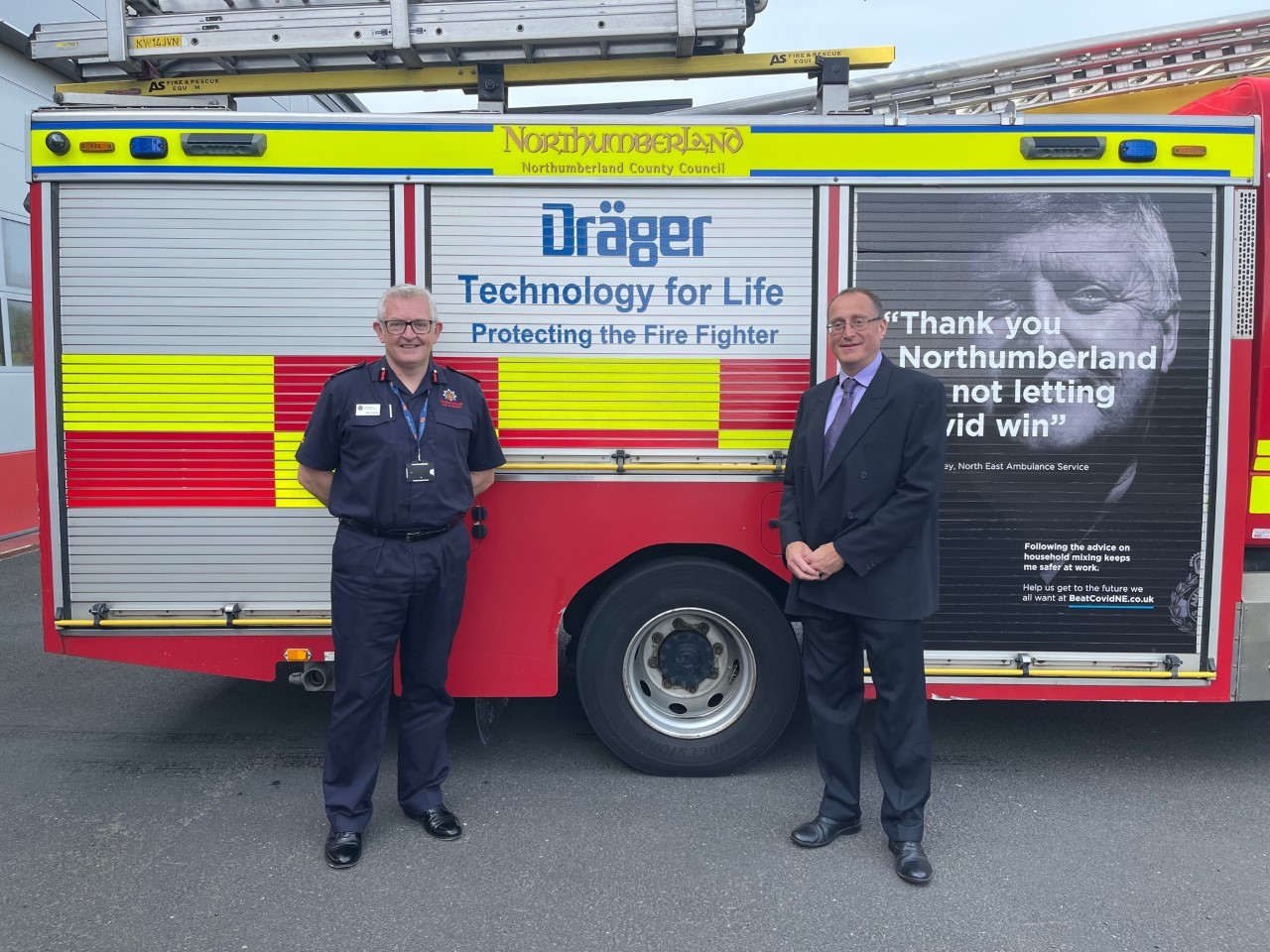
Northumberland Fire and Rescue invests in Dräger’s new PSS AirBoss SCBA

Northumberland Fire and Rescue Service (NRFS) has become the first UK Fire Service to invest in Dräger’s new AirBoss Self Contained Breathing Apparatus (SCBA) with Telemetry, as it looks to provide its firefighters with the most advanced fire safety equipment on the market today.

Northumberland Fire and Rescue Service is one of the most diverse fire services in the UK, responding to risks from the urban South East corner of Northumberland to the remote rural areas in the North and West of the county. The Service operates 16 fire stations which are responsible for the safety of 316,028 people within an area of 5,026 square kilometres.

The Northumberland team has chosen the PSS AirBoss Connect, providing maximum situational awareness for the firefighter. Dräger provides the only operationally-proven telemetry solution in the UK which is compliant with relevant British Standards for telemetry, delivering vital information which is automatically communicated between the wearer of the BA set and the Entry Control Point.

NRFS has also invested in Dräger’s SCBA cleaning system for cleaning breathing apparatus facemasks, that protects emergency responders from the effects of contaminants. All equipment is supported by a full service and maintenance provision.

scba

The specified compact Wash 9DR stainless steel cleaning machine is an automatic solution for cleaning breathing masks that has low water and energy consumption and the Wash 6DR is a solution for cleaning higher volumes of complete breathing apparatus, including full face masks, compressed air BA, helmets, and back plates (without the cylinder). In-built dosing pumps ensure consistency of cleaning, and the high-pressure 4-sided bayonet nozzles maintain water pressure during the cleaning process, preventing moisture from getting into equipment.

Northumberland’s SCBA and telemetry equipment investment benefits from being able to utilise an upgrade path of existing equipment, which takes advantage of the already-embedded telemetry. The contract will therefore deliver real savings of over 25% when compared to a complete system replacement. These savings have been realised in a time when efficiencies and value for money are paramount for our public services while also delivering the most advanced BA safety technology for firefighters.

Paul Hedley, Chief Fire Officer at Northumberland Fire and Rescue Service, says the investment has been driven by safety, scalability, reliability and value for money: “We do everything we can to provide our employees the highest levels of protection, and this investment will also further enhance our ability to make the communities of Northumberland safer. This means better protecting firefighters from the contaminants their SCBA are exposed to, and it therefore was logical to invest in Dräger-approved systems which will ensure effective and deep cleaning of equipment.

“Moreover, this kit is both backwards and future compatible, meaning it can be integrated with our existing equipment that is still operational, giving us the option to upgrade more advanced elements of the technology over time as they develop.”

Dräger will continue to work as a strong partner of Northumberland Fire and Rescue Service to develop joint community initiatives across the County and will provide beneficiary and financial support where possible, supporting Northumberland in their delivery of the Prince’s Trust Programme, Young Firefighters Association, youth engagement initiatives as well as providing support for under-represented and disadvantaged groups.

Dräger equipment is also British built, which Paul Hedley says provides a high level of assurance in the face of global supply chain issues: “With Dräger’s Global Centre of Excellence in our neighbouring Blyth, our supply of equipment is both local and secure, providing assurances to us as a service, as well as boosting the local and national economy.”

Matthew Bedford, Managing Director of Dräger Safety UK, says Dräger works in genuine partnership with Northumberland Fire and Rescue: “Our relationship with the Service goes back more than 30 years, and we are proud to meet its desire to provide the latest, most innovative technologies that promote the health and wellbeing of its firefighters.”

Liz Millward, Marketing Manager at Dräger Safety UK, says the new AirBoss provides the utmost in usability, safety+, serviceability, and connectivity:

“The kit includes the new and innovative core AirBoss features such as a carrying system with pneumatics, monitoring systems, masks and communication technologies and numerous accessories including a Quick Connect system for rapid connection and disconnection of cylinders,” she says. “The important high levels of usability and state-of-the-art ergonomics provide improved wearer comfort and mobility, complemented by a pivoting waist belt and three-step height adjustments which address the now more diverse workforce across our fire services.”   

Fire industry professionals’ reflections on 2021 and predictions for 2022

With 2022 now fast approaching, we’ve spoken to several fire industry experts to hear their views on what the progress of the past year will mean for fire safety in construction. They’ve also shared their predictions for the year ahead.

There’s no denying, 2021 has been a challenging year in the construction industry. The pandemic continued to disrupt normal business activities, and combined with the effects of Brexit, the outcome was supply chains pushed to breaking point. In particular, material supplies became scarce and build timeframes and budgets went out the window for countless projects.

But it wasn’t all doom and gloom. Despite these challenges, COP26 finally brought sustainability to the forefront, globally, in every industry, and investment in R&D remained a high priority for many manufacturers looking to bring better quality and safer products to market.

Moreover, 2021 finally saw developments in The Building Safety Bill and Fire Safety Act. It is hoped the addition of these meaningful sanctions will prove to be a powerful deterrent to those few companies who haven’t yet prioritised safety.

On what the industry can expect to see in 2022, Ian King, COO, Zeroignition comments: “Looking forward, innovation and sustainability are recurring themes we are hearing loud and clear industry-wide. I think 2022 will bring greater focus on building with wood, not only to allow faster and lower-carbon builds, but also to increase the amount of off-site construction. One of the greatest benefits of modular construction is the enforced quality control.

Looking forward, innovation and sustainability are recurring themes we are hearing loud and clear industry-wide.

Ian King, COO, Zeroignition

“Within an off-site ‘factory’ type environment, greater safety checks can be made and monitored. This will help ensure each component meets the acceptable levels of industry standards and performance, including fire. In turn, this can help improve the integrity of the build quality in the finished product.

“There is no doubting, materials and labour shortages are likely to continue well into 2022, and this has the very real potential to negatively affect product specification especially in relation to fire. The risk is that specifiers scramble to get their hands on products to move builds along, without meticulously confirming they really are fit for purpose.

“As the Grenfell Inquiry continues, it will remain front and centre in the news, as it should. Progress will only be guaranteed when the industry and its regulators finally stand up, pay attention and commit to change.

“Let’s hope that the Government allocates a proportion of the intended investment to support third party product testing facilities. Right now the existing labs are facing significant backlogs and this is seriously hampering change and slowing down entry to market for new, safer products.”

Ben Hancock, Managing Director, Oscar Acoustics adds: “Fire safety should always be a top priority when considering the right acoustic solution and we’ve seen more interest around this topic than ever before from customers. With the new changes due to come into force around the Building Safety Bill, we anticipate this will continue as building owners look to prove the safety of structures.

“As well as presenting significant risks to staff, a fire breakout can also be devastating in other ways, such as destroying commercial goods if they are left in a single location. However, it is possible to combine acoustic comfort with fire safety. We expect to see more specification of acoustic sprays that go above and beyond Approved Document B fire requirement (Class 0 to BS476 & B-s1,d0 fire rating). As they provide little to no smoke and absolutely no droplets in the event of a fire, building owners are given peace of mind that it will help assist in the safe escape of occupants, should an event occur.”

Smart workplace

Erik Boyter, CEO, WindowMaster believes that a shift towards smart technology could offer flexible solutions this year. He comments: “The world of work is undergoing a seismic shift towards being more flexible and accommodating, while UK government marches on towards Net Zero 2050. Smart buildings are one design approach which can support both these efforts.

“A crucial element of the future smart workplace will be high-quality, low-carbon natural ventilation, optimised through good control strategies, such as night cooling. Using cooler night time air to ventilate a building at night helps reduce peak temperatures during the day. However, keeping windows open out-of-hours can be a security, and insurance, risk when not done properly.

“Automating windows with intelligent controls can help overcome these concerns by offering accurate positioning to the millimetre. To further minimise risk, windows used for night cooling should be located at a higher level. Intelligent automation can be combined with internal courtyards, CCTV and PIR detectors for a robust and secure night cooling strategy.”

Matt Ryan, UK Country Manager for PlanRadar: “With the impending Fire Safety Act due to come into effect in 2022 or 2023, we foresee that more building owners and portfolio managers will contractually require the use of digital tools to log the execution of fire safety measures. One concern is that fire safety professionals will struggle if they don’t adopt digital platforms and solutions to help them meet new, more stringent reporting standards.

“There’s no doubt building owners and asset managers will already be increasing their fire safety protocols in advance of the new legislation, and digital platforms and apps that allow site staff to easily record and log that work was carried out to the proper standards will be a crucial part of improving overall fire safety and compliance.”

The MetCam optical gas detection camera by Draeger: Visualising invisible gas hazards

The MetCam optical gas detection camera, now offered by Drӓger, automatically identifies and quantifies methane leaks even under challenging conditions. Potential hazards from escaping gases can thus be assessed more quickly and more precisely. Methane gas leaks are invisible, but even the smallest leaks can endanger the safety of an industrial plant and damage the environment.

In the oil and gas industry, there are often dense plant areas that are difficult to access with many potential leak sources. For such areas MetCam complements conventional point gas detection systems with area monitoring. “The MetCam automatically monitors the plant around the clock and detects gas leaks at an early stage,” explains John Wilson, Senior Vice President of Sales and Marketing, Safety Solutions, Dräger.

Colored visualisation of the gas cloud

In contrast to point detectors, the gas source does not have to be in the immediate vicinity of the gas camera. Its field of view is already sufficient to detect the escaping gas. This means that detection is independent of wind or other influences. The gas cloud is visualised as a colored overlay on a black and white video image. In addition, the MetCam automatically quantifies the concentration of the escaping gas.

It can also be used to measure emissions, or as a surveillance camera with a color image. Self-calibration and automatic storage of measurement data The MetCam automatically detects when the optics are dirty or obscured and sends an appropriate warning to avoid false alarms. In addition, the MetCam carries out self-calibration at regular intervals in order to adapt to changing weather conditions. All events and measurement data are saved automatically.

NFPA to host Leadership for Emergency Responders online conference

The National Fire Protection Association (NFPA) announced today that it will present a FREE Leadership for Emergency Responders conference on Tuesday, January 25, 2022 as the organisation’s year-long 125th Anniversary Conference Series continues into the first quarter of the year.

The complimentary online transformational leadership program will feature a total of nine educational sessions for emergency response officers, aspiring leaders, and those on the frontline intent on being the best teammate and community partner. The day’s educational content will center around personal, technical, and community leadership and cover critical topics including diversity, equity, and inclusion; mental health and resilience; data-driven accountability; fire prevention; community risk reduction; and codes and standards emerging issues. 

“The role that our first responders play in our communities is constantly evolving. Today, fire, police, and EMS provide all-hazards response which requires them to skill up on new tactics and technology and develop the leadership acumen that will allow them to meet the changing needs of their community – both in their stations and in the neighborhoods that they serve,” NFPA President and CEO Jim Pauley said. “We are offering this NFPA Emergency Responders Leadership program for FREE because NFPA believes it is essential for emergency response leaders and future officers to further their personal, professional, and performance capabilities in order to meet contemporary challenges.”

The strength of the program is largely due to the forward-thinking subject matter experts who will conduct the following sessions and offer both practical and academic experience during the learning event:

  • Everyone’s a Leader: Driving Change Every Day — Reginald Freeman, MS, CFO, FIFireE, Fire Chief, City of Oakland, California
  • Diversity, Equity, and Inclusion— Jennifer A. Taylor, PhD, MPH, CPPS Director, Center for Firefighter Injury Research and Safety Trends (FIRST), Arthur L. and Joanne B. Frank Professor of Environmental & Occupational Health Dornsife School of Public Health at Drexel University
  • Emergency Responders and Suicide: Helping the People Who Help the People— Dr. Sally Spencer-Thomas, Professional Speaker, Podcaster & Impact Entrepreneur
  • Data-Driven Decision Making— John Oates, BS, MS, EFO, Fire Chief, Town of East Hartford, Connecticut 
  • Fires and the Fire Service: What’s Changed?  Marty Ahrens, NFPA Fire Analysis Research Manager (retired effective 12/31/21) and Ben Evarts, NFPA Data Collection and Research Manager
  • NFPA 1700: Fire Research with The Fire Service — Curt Floyd, Deputy Chief ret., EFO, CFPS, NFPA Technical Lead-First Responders and Steve Kerber, UL Vice President and Executive Director of UL’s Fire Safety Research Institute (FSRI)
  • NFPA 1585: Combining Research and Experience for Common Sense Contamination Control Best Practices — Bob Fash, CFPS, NFPA Specialist and Frank Leeb, Deputy Assistant Chief, FDNY 
  • Demonstrating Leadership in Fire & Life Safety Education: Skills Needed for Today’s (and Tomorrow’s) Issues— Andrea G. Vastis, MPH, CHES, Sr. Director, NFPA Public Education
  • Community Risk Reduction (CRR): A Leadership Win — Karen Berard-Reed, NFPA Senior Strategist & CRR Lead, Meredith Hawes, NFPA Regional Director (North Central Region), Chelsea Rubadou, Engineer, NFPA 1300, Standard on Community Risk Assessment and Community Risk Reduction Plan Development Staff Liaison

This FREE virtual conference will offer tools and tips needed to lead the way and strengthen the emergency response sector. Registrants for The Leadership for Emergency Responders program can access the nine educational sessions on the scheduled date or via on-demand anytime for up to a year and can earn up to 10 credit hours upon completion of all content offerings.

HSE calls on designers to prepare now for upcoming regulatory changes to building safety

As part of work underway to establish a new Building Safety Regulator and reform the building safety system, HSE is urging those who design high-rise buildings to act now to prepare for the changes coming when the Building Safety Bill becomes law.

The Building Safety Bill, currently making its way through Parliament, aims to implement all of the recommendations set out in Dame Judith Hackitt’s “Building a Safer Future” report, and in places goes further. The reforms include a more stringent approach to the design and construction of high-rise buildings, clearer responsibilities on designers to ensure these buildings are safe, and new measures so that everyone doing design or building work is competent to carry out that work in line with building regulations.

People working on the design of a high-rise building, from the development of a planning application through to building regulations approval will need to understand the building’s intended use, correctly identify the risks, and own and manage those risks to determine the safety of a building.

There will be a requirement to record and provide evidence of decision-making during the design process, and a need to be engaged throughout a building project to handover to the end client. Prepare now for these changes.

Peter Baker, Chief Inspector of Buildings at the Health and Safety Executive, said: “Designers have a strong influence on safety and standards, particularly during the very early planning and design stages of a building project. Their decisions not only affect the safety of those carrying out the building work, but also those maintaining, using, or living in a building after it is built.

“I encourage designers to act now and prepare for the more stringent regulatory regime. HSE will continue to work with the building design industry and related businesses to support them to deliver safe and high-performing buildings and ensure that residents of high-rise buildings are safe, and feel safe, in their homes now and in the future.”

Colin Blatchford, Operational Policy Lead for Gateways and Building Control at HSE, said: “Everyone involved in the design of high-rise buildings must take a proactive approach to managing building safety from the earliest stages of the design process. These changes are coming. Those involved need to plan ahead through correctly identifying, taking ownership and managing the risks – ensuring key decisions are recorded throughout the process.

“Once the Building Safety Bill becomes law, there will be a requirement for a safety case report when a building is completed and occupied. It is important to consider this at the early design stage for your clients and future residents’ safety.

“Building safety changes are coming and will affect everyone involved in a high-rise building project beyond its design. We urge that you act now.”

Why Dubai is the focus for emergency responders at Intersec 2022

Thousands of fire professionals will be in Dubai next month for one of the world’s biggest safety events, Intersec 2022. Visitors will be able to meet with manufacturers, view the latest equipment and attend an industry leading conference programme which will focus on some of the disasters that have made headlines around the globe

Intersec 2022 from 16-18 January in Dubai is the region’s biggest exhibition for fire and safety showing the latest equipment, technology and protective clothing.

New to the event this year is the Agile First Responders Conference featuring first-hand insights from leading figures involved in major incidents that have made world headlines, including the Lebanese warehouse explosion in 2020 and fire at high-rise developments.

Head of Intersec Alex Nicholl said: “Given the ever-changing nature of threats – whether natural through climate change, man-made through terrorism activities or human error, either physical or virtual – ensuring safety remains the number one priority and the FIRST line of defense are the nation’s first responders.”

Speakers at the conference include Richard Reed, Head of Corporate Emergency Management and Continuity, Saudi Aramco; Sinclair Duffie, Chief Fire Officer, Nawah Energy Company; Deputy Chief Jeff Dulin Strategic, Advisor for National and International Programs, International Association of Fire Chiefs (IAFC); Anas Alzaid Middle East and North Africa, National Fire Protection Association; Alexander Castellanos Head of Fire & Safety, WSP; Kate Field Global Head, Health, Safety and Well-being, British Standards Institute (BSI); Ayssar Hanza Risk Engineering Director, Ace Energy Group (Ex BP).

A first day session of the conference examines the Beirut Port blast – the world’s largest peacetime explosion – where a presentation will look at the actions of first responders, the performance of equipment and recommendations for future incidents.

Day 2 includes a session titled ‘The Future of First Response: A vision for firefighting’, looking at enhancing resource allocation and advance panning.

Dubai is recognised for its soaring buildings and the second day also examines the response of its emergency teams to fires in the city’s high-rises, including the New Year’s Eve fire at The Address Hotel, in the heart of the city and the blaze at The Torch, one of the world’s tallest residential buildings.

But it is the London Grenfell Tower tragedy that offers a key focus for the day and the lessons for firefighters around the world from these tall tower blazes. Communication strategies are as important as the management and extinguishing methods and the conference will examine those.

The day includes a session with testimony from a first responder titled ‘Lessons Learned from the Boston Marathon bombing’.

Day 3, takes a more selective view including sessions titled ‘Healing a First Responder’ – what are the physical needs of emergency response individuals and how can that care be implemented?

Also reflecting on the previous two days’ examination of major incidents, a session titled ‘Resilient Cities’ asks how leaders can move forward after incidents and what is the involvement of the first responders in the healing process.

So a key theme of this year’s conference and event is about learning, examining past incidents to decide how our industry manages and prepares for the future.

Alongside the show and multiple conferences is a series of daily workshops on Before the incident – Emergency Planning for Disasters lead by experts from the International Association of Fire Chiefs (IAFC), Incident Management – The importance of assembling the right team; lead by Tim Briggs, Past president of IOSH, UK, and Post incident – The layers of incident investigation and reporting; lead by Assar Hanza, Risk Engineering Director, ACE Energy Group. These CPD accredited courses will provide training and practical tactics for emergency responders from multiple disciplines.

One of a number of international pavilions is from France. “Business France will once again foster business growth for French exhibitors by featuring two pavilions at Intersec 2022, bringing together innovative French exhibitors specialising in Commercial Security and Fire & Rescue securing coveted space at the event. Supported by La French Fab, French expertise will be represented across a variety of innovative solutions for the industry from perimeter and physical security to fire prevention and firefighting.”

Thousands of fire and safety brands and products from over 50 countries will be on show within the halls at intersec.  The theme for the event this year is Uniting the World’s leading industry specialists for the safety & security of future generations and is supported by government partners Dubai Police, Dubai Civil Defence, SIRA and Dubai Municipality with founding partner NAFFCO.

 “Intersec has been integral in the Dubai Civil Defense’s mission to adopt innovative solutions that are smarter, more sustainable, and that better serve our communities while preserving the natural environment. Intersec’s 23rd edition in January 2022 will be the first major gathering of its kind for the world’s security, safety, and fire protection industries, and the Dubai Civil Defence looks forward to reuniting safely with our international partners and colleagues once again “.

His Excellency Lt. Gen. Rashid Thani Al Matrooshi, Director – General of the DCD

For full details of Intersec 2022 in Dubai and registration, visit the website HERE www.intersecexpo.com

View the conference programme HERE www.intersecexpo.com/conference

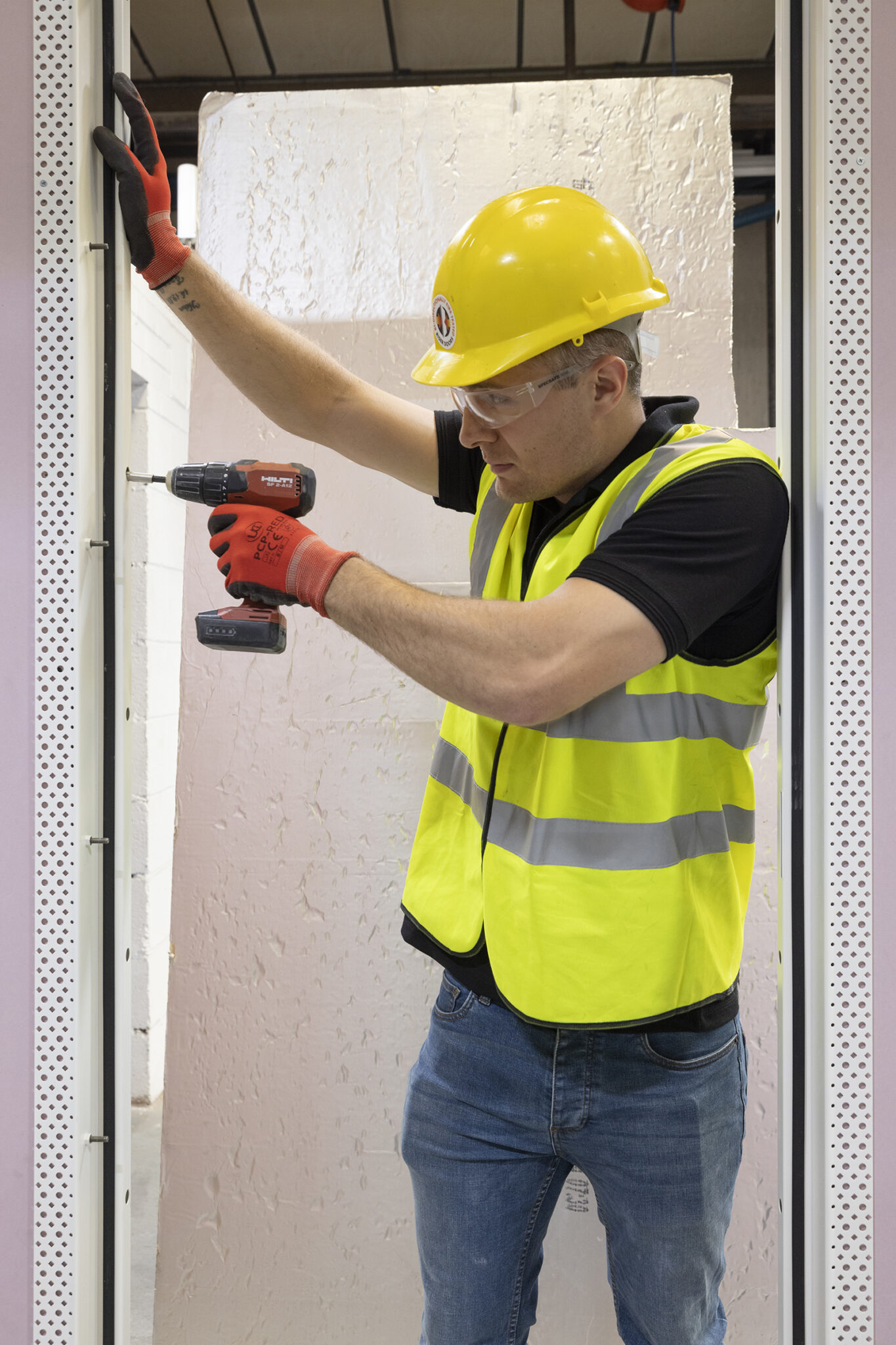
Profab Access introduces industry first for fire integrity and installation

Profab Access has launched a revolutionary certified frame system that sets a new standard for innovation, fire performance and functionality, making installation on site safer, faster and simpler.

The only product of its kind currently available, the expertly engineered PRECISION adjustable frame completely transforms the installation process for construction professionals and  streamlines the specification process for architects and specifiers.

This is achieved through the product’s unique construction, which enables the frame to be fully adjusted to meet the specific dimensions of each structural opening, not only ensuring the installation is fit for purpose by providing the highest standards in accuracy, but subsequently removing the requirement for plastic packers for a safer, faster and simpler installation process.

The patent pending PRECISION adjustable frame is now supplied as standard with Profab Access’ high quality steel INTEGRA 4000 Series Fire Rated Riser Door.

The PRECISION frame dramatically reduces fitting times and eliminates the risk of using non-compliant components throughout installation, which may not have been tested in conjunction with the riser door itself.

Factory applied intumescent strips to the outer frame also eliminate the need for additional intumescent mastic when installing the frame into a flexible or solid wall construction.

Profab Access is the UK’s first manufacturer to have its concealed Riser Doors bi-directionally fire tested and certified by an accredited third party. The PRECISION adjustable frame has also been bi-directionally fire tested as an entire doorset with the INTEGRA 4000 Series Riser Door for up to 120 minutes, receiving the CERTIFIRE accreditation for installation in unlined shaft walls and solid wall construction.

This provides architects, specifiers and contractors with a completely certified solution, as both the frame and the riser door have been bi-directionally tested as a single doorset and are supplied with comprehensive documentation to evidence their performance credentials and adherence to all relevant regulations, including BS EN 1634-1:2014 +A1:2018.

Marcus Parnham, Commercial Director at Profab Access, said: “As one of the industry’s leading manufacturers, we have a responsibility to push the boundaries of this product category and ensure every access solution we supply delivers the highest standards in performance and compliance.

“Our new  patent pending PRECISION adjustable frame represents a real step change for the industry, supporting professionals in fulfilling their duty of care by going above and beyond current legislation in delivering the highest standards of due diligence and achieving constant compliance for the entire doorset, including the materials used throughout the installation process. The frame is the result of our unwavering commitment to innovation and providing the built environment with the very highest standards in access solutions.”

The PRECISION adjustable frame is constructed with an all-in-one smoke, intumescent and acoustic FS1000 seal, eliminating the need for additional intumescent mastic when installing the frame into a flexible or solid wall construction. This cost efficient and sustainable material contains no halogen compounds and will not emit toxic gas when heated, ensuring the safety of building occupants in the event of a fire.

As an official Made in Britain member, Profab Access’ comprehensive portfolio of Riser Doors and Access Solutions are manufactured at its headquarters in Atherstone by its experienced team of design and engineering experts.

For further information on Profab Access and its range of riser doors, access panels, and steel doors, call +44(0)1827 718222 or visit www.profabaccess.com.

At least 65 killed in Algeria wildfires

At least 65 people, including 25 soldiers have been killed as the Algeria wildfires continue to cause widespread devastation. Over 1000 workers are now tackling the blaze in the forests and mountains outside of the capital of Algiers.

The wildfires is believed to have been brought on by excessive heatwaves of up to 48 degrees Celsius, however, Interior Minister Kamel Beldjoud has speculated that the blaze may have been intentionally started and that “Only criminal hands can be behind the simultaneous outbreak of about 50 fires.”

Prime Minister Ayman Benabderrahmane has also claimed that the fires could be a result of a criminal act, but there is so far no evidence of the claims made.

The fires, which have been raging since the 9th of August, are some of the worst the country has seen in recent memory. Several separate fires have also raged through forest areas across northern Algeria this week.

Wildfires across Europe have been raging in the last few weeks, with Turkey and Greece also experiencing unprecedented heatwaves that have resulted in wildfires.

Firefighters tackle residential London fire

Firefighters are warning smokers to discard cigarettes carefully after eight fire engines and around 60 firefighters tackled a flat fire on Otto Street in Kennington.

Half of a flat on the first floor of the building was damaged by fire and the remaining part of the property suffered severe smoke and heat damage. Thirteen adults and five children were treated on scene by London Ambulance Service crews.

The Brigade’s Fire Investigators believe the fire was caused by a cigarette being discarded from an upper floor and coming into contact with combustible materials stored on a first floor balcony.

Station Commander Ned Alexander who was at the scene said: “Firefighters have worked exceptionally hard to get this flat fire under control. The first floor flat was damaged by the blaze but crews prevented it from spreading further.

“Around 100 people self evacuated from the building and a number of other residents stayed within their flats.

“Fires caused by smoking materials including cigarettes, roll-ups, cigars and pipes, result in more deaths than any other type of fire. Stub cigarettes out properly and always dispose of them carefully.

“Make sure smoking materials are cold before emptying ashtrays. Preferably wet stubs before throwing them into a bin.”

“The Brigade’s 999 Control Officers took sixty 999 calls in the early stages.”

Firefighters’ smoking safety tips

  1. It’s safer to smoke outside, but make sure cigarettes are put right out and disposed of properly.
  2. Use proper ashtrays, which can’t tip over and stub cigarettes out properly.
  3. Never smoke in bed, and avoid smoking on arm chairs and sofas – especially if you think you might fall asleep.
  4. Take extra care when you’re tired, taking prescription drugs or if you’ve been drinking alcohol.
  5. Don’t balance cigars or cigarettes on the edge of an ashtray, or anything else – they can tip and fall as they burn away and cause a fire.
  6. Don’t leave lit pipes or cigarettes unattended.
  7. Always empty ashtrays carefully. Make sure smoking materials are out, cold and preferably wet them before throwing into a bin – never use a wastepaper basket.
  8. Keep matches and lighters out of children’s reach, and buy child resistant lighters.
  9. Never smoke if you use healthcare equipment like medical oxygen or an air flow pressure relief mattress. If you use paraffin-based emollient creams, ask for non-flammable alternatives instead.
  10. Consider additional safety measures such as fire retardant bedding or nightwear.