SkyBound Rescuer trials automated drone service for improved transport experience in the West Midlands

SkyBound Rescuer introduces automated drone service with Transport for West Midlands

Public safety drone company, SkyBound Rescuer, is testing a new fully automated drone service in partnership with Transport for West Midlands (TfWM).

The aim of the test is to identify and resolve transport issues more quickly across bus, train, road, and tram networks in the West Midlands.

SkyBound Rescuer has installed an automated drone station in Walsall to enhance the local public’s transport experience.

Why the collaboration between SkyBound Rescuer and TfWM matters

Currently, TfWM utilises over 2,500 fixed CCTV cameras across the West Midlands region to monitor the bus, train, road, and tram networks.

This extensive surveillance network operates in conjunction with the Regional Transport Coordination Centre to manage transport disruptions in the area.

TfWM also monitors town centre CCTV cameras on behalf of Walsall Borough Council, making them the perfect partner for SkyBound Rescuer to trial their automated drone service.

The addition of SkyBound’s drone technology will bolster TfWM’s existing estate of CCTV cameras.

It will not only enhance oversight but also improve response to live incidents, such as road traffic collisions, and mitigate issues like public transport delays.

The drone technology behind SkyBound Rescuer’s new service

SkyBound Rescuer has developed software called the SkyBound Coordinator that automatically creates data-driven drone mission plans.

This software has been integrated with automated drone station (ADS) technology, making the drone fully self-sufficient.

This combination allows for fully automated end-to-end flights, with humans monitoring the flight and imagery, resulting in a more cost-effective and responsive drone service.

During the trial, the drone flights are overseen by a qualified remote pilot and an onsite remote safety pilot.

SkyBound also created a 3D model of Walsall town centre and a database of transport points of interest (POIs) to ensure safe transit routes for the drones.

A promising start for the automated drone service in the West Midlands

The first week of the trial was successful. SkyBound’s automated drones responded almost three times faster to transport emergencies than the National Police Air Service.

In one incident, an altercation in the town centre was observed by TfWM’s CCTV operators.

SkyBound Rescuer was instructed to use the drone to monitor the situation, demonstrating the technology’s real-world applicability.

Gemma Alcock, Founder & CEO of SkyBound Rescuer, said: “We’ve conducted hundreds of test flights in preparation for this trial service to optimise performance and safety.

“We at SkyBound Rescuer focus solely on drone use cases that can improve society, so we’re excited to be using our technology to benefit the Walsall community.”

Kerry Blakeman, Head of Security and Policing of TfWM, said: “We’re delighted to be partnering with SkyBound Rescuer to explore the potential of automated drone technology which will revolutionise the CCTV industry.

“The team at SkyBound Rescuer have been meticulous in their planning of this trial to deliver a safe and effective trial to allow us to evaluate the benefits of the ADS.”

SkyBound Rescuer and TfWM are evaluating the outcome of the trial and looking forward to potential expansion across the West Midlands region.

The aspiration is also to create a national network of automated drones for rapid response to high-risk areas.

IFSJ Comment

The introduction of SkyBound Rescuer’s automated drone service with TfWM is a notable advancement in public safety and transport management.

By integrating drone technology with existing surveillance systems, there is significant potential to enhance response times, efficiency, and cost-effectiveness.

This trial exemplifies how innovation in drone technology can serve the greater public interest, making it a significant development to follow closely.

About SkyBound Rescuer and Transport for West Midlands

SkyBound Rescuer is a team of experienced emergency managers, aviators, and technologists that specialise in automating drones for public safety.

SkyBound aims to optimise drone performance through their data-driven approach to problem solving.

The company is led by female founder, Gemma Alcock, an award-winning innovator and thought-leader in the use of drones for public safety.

Transport for West Midlands currently have a dedicated CCTV control room with more than 2500 cameras covering the bus, train, road, and tram network.

The control room is independently assessed annually to ensure it is compliant with the Surveillance Commissioners Code of Practice to British Standard 7958. The control room’s annual renewal was granted in April 2023.

What Causes Wildfires – 11 Common Reasons

What causes wildfires is a commonly asked question, with wildfires during the summer months being shown almost every day in the news.

Fire only needs three components to thrive: fuel, oxygen, and heat. This is commonly referred to as the fire triangle.

During hot summer days when drought conditions are at their peak, even the tiniest spark can set off a wildfire. 

In certain instances, fires occur naturally, sparked by the intense heat of the sun or from lightning strikes.

Unfortunately, similarly to the main causes of fires in general, the majority of wildfires stem from human negligence. 

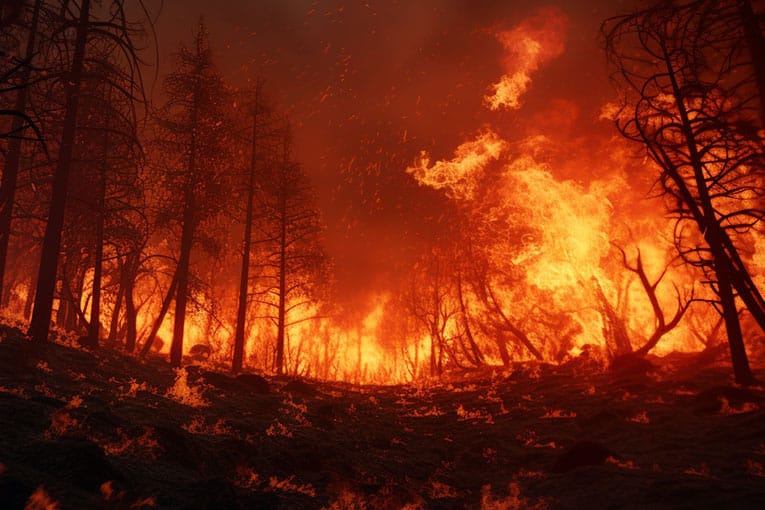
A large wildfire
Wildfires can be incredibly destructive

Events such as arson, poorly managed campfires, careless littering of lit cigarettes, improper burning of debris, and playing with matches or fireworks are often held responsible for igniting these devastating blazes.

This article aims to explore what causes wildfires, ranging from natural occurrences to human activities. 

By delving into these causes, we can enhance our knowledge and promote responsible behaviour to mitigate the future risks of devastating consequences of wildfires.

What is a Wildfire?

Wildfires are powerful and destructive forces of nature that can cause extensive damage to forests, natural habitats, and communities. 

Understanding the common causes of wildfires is crucial for prevention and effective fire management. 

By identifying the main causes of wildland fires, we can take proactive measures to reduce the risk of wildfires and protect our natural environment. 

What Causes Wildfires?

Wildfires start due to a number of reasons, with 11 of the most common causes being:

Lightning

Lightning is a natural cause of wildfires. 

Lightning strikes can ignite dry vegetation, particularly during periods of drought. The heat from a lightning strike can spark flames that spread through the surrounding landscape. 

A lightning storm
Lightning is one of the main natural causes of wildfires

This can lead to large-scale wildfires, especially in areas with dry and combustible vegetation. 

Climate conditions and the frequency of thunderstorms can contribute to wildfires.

Campfires

Improperly managed campfires are a significant cause of wildfires. 

Unattended or poorly extinguished campfires can spread to surrounding vegetation and ignite a fire. 

Campers should always follow fire safety guidelines, including keeping fires small, using designated fire rings or pits, and ensuring that the fire is completely extinguished before leaving the site. 

It is crucial to douse the fire with water, stir the ashes, and repeat the process until the fire is cold to the touch.

Burning Vegetation

Whether intentional or not, burning of vegetation like agricultural burning or land clearing, can lead to wildfires. 

When uncontrolled, the spread of fires during vegetation burning can quickly escalate, especially in dry and windy conditions. 

Proper permits, monitoring weather conditions, and employing trained workers are essential for safe and controlled burning practices. 

It is important to follow local regulations and guidelines to prevent wildfires when conducting any form of vegetation burning.

Fallen Power Lines

Fallen power lines can be a significant cause of wildfires, particularly during windy conditions. 

Strong winds can cause power lines to break or come into contact with trees or dry vegetation, resulting in sparks and fires. 

Regular maintenance and inspection of power lines, timely tree trimming around power lines, and prompt repair of damaged infrastructure are essential for reducing the risk of wildfires caused by fallen power lines.

Cigarettes

Carelessly discarded cigarette butts can accidently start wildfires

Smokers should always use designated ashtrays or fire-safe containers to dispose of cigarette butts. 

It is crucial to fully extinguish cigarettes before discarding them and avoid smoking in fire-prone areas, particularly during dry and windy conditions.

Equipment Malfunctions

Equipment malfunctions, such as power tools, chainsaws, or machinery, can lead to wildfires if they generate sparks or excessive heat. 

Proper maintenance, regular inspection, and safe equipment operation are essential to prevent equipment-related wildfires. 

It is crucial to follow manufacturer guidelines, conduct routine maintenance checks, and promptly address any issues with equipment.

Vehicle Crashes

Vehicle crashes can cause wildfires when sparks or friction from the collision ignite. 

The heat generated from the impact, particularly with metal components, can also lead to fire ignition. 

Safe driving practices, proper vehicle maintenance, and avoiding off-road driving in fire-prone areas can help minimise the risk of wildfires caused by vehicle crashes.

Arson

Intentional acts of arson, where fires are intentionally set, are a significant cause of wildfires, and can lead to dangerous scenarios, and even loss of life

Arson can occur due to various motives, including vandalism, revenge, and even pyromania. 

It is a criminal offence and poses a serious threat to lives, property, and natural resources. 

Public awareness, community vigilance, and reporting suspicious activities can aid in preventing arson-related wildfires.

Controlled Burning

Controlled burning, also known as prescribed burning, is a planned fire management technique used to reduce vegetation fuel loads and promote ecosystem health. 

However, if not carefully executed, prescribed burns can escape control and result in wildfires. 

Proper planning, comprehensive risk assessments, and skilled personnel are essential for conducting prescribed burns safely. 

Adhering to specific weather conditions, monitoring fire behaviour, and having appropriate resources in place helps minimise the risk of prescribed burns turning into uncontrolled wildfires.

Fireworks

Improper use of fireworks, especially in areas with dry vegetation, can lead to wildfires. 

Fireworks produce sparks and embers that can ignite nearby combustible materials, including dry grass or trees. 

A fireworks show
Even though fireworks can be pretty to look at, they can be a cause of wildfires

Adhering to local laws and upkeep high fire safety standards regarding fireworks, using fireworks in designated areas, and ensuring proper disposal of fireworks debris is crucial to prevent wildfires.

Volcanoes

Volcanic eruptions can cause wildfires, particularly when hot lava or volcanic ash comes into contact with dry vegetation. 

Active volcano regions should have comprehensive emergency response plans in place to mitigate the impacts of volcanic-induced wildfires.

How does weather affect wildfires?

Increased temperatures alone do not guarantee a rise in wildfires. 

As previously stated, fires need a combination of 3 factors to survive; availability of fuel, fire-friendly conditions (such as dry weather), and the presence of an ignition source, whether human-caused or triggered by lightning strikes. 

One small spark can cause wildfires when conditions are dry and arid

The amount and dryness of vegetation are crucial factors since live, moist vegetation is less susceptible to burning compared to dry, dead vegetation, which easily catches fire and aids in the fire’s spread. 

This is why areas affected by hot, dry weather and drought are much more likely to have wildfires than areas that are often rainy and cold.

Weather conditions play a critical role in fire behaviour. 

Strong winds, like those experienced in the 2022 Colorado wildfires, can accelerate the spread of fires, resulting in unprecedented devastation for the affected communities.

Wildfires become more severe during prolonged periods of hot and dry weather due to higher temperatures leading to increased evaporation, which dries out the vegetation and provides ample fuel for the fires to thrive.

Where do most wildfires occur?

Wildfires happen all over the world. Places like the United States, Canada, Australia, the Western Cape of South Africa, and Southern Europe, especially forested areas, grasslands, and shrublands, are particularly susceptible to these blazes, particularly during extended periods of drought and high temperatures.

Among the regions in the United States, California and other Western states stand out as being prone to wildfires. 

The vegetation in this area, comprising pine needles, dry shrubs, and grasses, possesses higher flammability compared to moister trees like maple and beech found in other parts of the country.

The Western US’s mild and arid climate further contributes to the fire risk. California, in particular, experiences long, hot, and dry summers, which lead to the dehydration of vegetation, leaving it highly susceptible to wildfires.

Conclusion

Wildfires can have devastating consequences for ecosystems and communities. 

Understanding the common causes of wildfires is necessary to be able to better prevent them. 

Whether ignited by natural occurrences or as a result of human negligence, wildfires can be mitigated through responsible behaviour, adherence to fire safety guidelines, and community awareness. 

Implementing fire prevention strategies, practising safe habits, and promoting fire education can help minimise the occurrence and severity of wildfires. 

By working together, we can reduce the impact of wildfires and protect our environment for future generations.

Nimbus Digital Solutions evolves to enhance remote fire alarm management

Nimbus, previously known as FireMate Ltd, is reinventing itself as a standalone brand.

The company will now be known as Nimbus Digital Solutions Ltd, or simply ‘Nimbus’, in a strategic move that promises to boost the company’s evolution as a world leader in the remote management of fire alarm systems.

This transformation aims to enable Nimbus to leverage its leading-edge technology while enhancing collaboration within the fire industry.

Nimbus: pioneering fire alarm management

Nimbus’s product portfolio is centred around innovative fire protection maintenance solutions.

These solutions are geared towards system integrators, fire engineers, and building managers, aiming to streamline their operations.

A focus on simplifying fire safety compliance, enhancing productivity, and controlling costs underpins these solutions.

The increasing emphasis on efficient monitoring, testing, and maintenance of commercial fire systems, along with the necessity of digital logs and a virtual paper trail, highlights the growing importance of remote fire alarm management technology.

Meeting the challenges of fire safety compliance

UK Business Manager, Peter Martin, shared his views: “Nimbus is excited to sail on an independent course.

!In the changing regulatory landscape, fire safety compliance is no longer about merely ticking boxes.

“It’s about proactive risk management, constant real-time monitoring, and swift response.

“We have developed our solutions with this understanding, bringing a more intelligent and integrated approach to fire safety.”

Martin continued: “This rebranding will enable us to better align our products with the requirements of our customers and the marketplace.

“We are dedicated to providing solutions that truly address the contemporary fire safety scenario.

“It’s our mission to make every building – be it in education, hospitality, housing, or any other sector – not only safer but smarter, surpassing regulatory standards.”

Reinforcing commitment to revolutionise remote fire alarm management

As Nimbus initiates its journey as a standalone entity, it retains its focus on transforming remote fire protection management.

The company plans to leverage its comprehensive solutions and unique Nimbus solution to meet head-on the challenges posed by the modern regulatory environment.

Nimbus will maintain its presence in the UK, Australia, and key international markets, ready to drive advancements in global fire safety.

This strategic shift underscores Nimbus’ dedication to providing innovative, robust, and cost-effective solutions, helping shape the future of fire safety across a variety of industries and business sectors.

To find out more about Nimbus, visit Nimbus Digital Solutions.

IFSJ Comment

This news signifies a dynamic shift in fire safety management. It reflects the growing importance of technological innovation in maintaining and enhancing fire safety measures.

In a world that is becoming increasingly digital, such advancements in remote fire alarm management are vital for efficient fire safety compliance and real-time monitoring.

A fire safety overhaul at Elmwood Primary School

Cygnus collaborates with Blake Fire & Security Systems to upgrade fire safety at Elmwood Primary School

Cygnus, a leading manufacturer of wireless fire detection and alarm systems, recently partnered with Southend-on-Sea-based Blake Fire & Security Systems to revamp the fire safety protocol at Elmwood Primary School in South Woodham Ferrers.

The two companies supplied the school with 130 of Cygnus’ SmartNet wireless alarm systems, bolstering safety measures for the school’s staff and students.

Elmwood Primary School reached out to Blake Fire & Security Systems for a comprehensive review and quotation of their existing, outdated fire alarm systems.

Rory Foster, Fire Safety Systems Manager at Blake Fire & Security Systems noted: “After discussing the options, it was obvious to see the benefits of using a wireless system for this project.”

Unveiling the benefits of wireless fire safety systems

Wireless systems came with a host of benefits.

Notably, their cost was lower than their wired counterparts, mainly due to the lack of required containment, cabling, and a streamlined installation process needing only a single engineer.

On the ease of installation, Foster said: “The speed and ease of installation meant that we were able to install SmartNet in just four days during the May half term.”

This meant that installation could be done outside of the lengthy summer holiday period.

The wireless system provided a solution that avoided penetration through walls or ceilings, a necessary step in the installation of wired alternatives.

Foster added: “Running cables through walls and ceilings with a wired system also requires extra fire proofing to maintain the fire compartments of the building.”

Cygnus’ SmartNet: The wireless solution for reliable fire safety

Post installation, the school’s fire safety system underwent a quick transformation with the help of Blake Fire & Security’s NSI Gold FD&A Designer.

They used a BS5839 Classification L2 System approved design, while Cygnus delivered the necessary products within two days, ensuring an efficient workflow.

The SmartNet wireless network, a product of patented Cygnus technology, is a self-forming and self-healing mesh network powered by battery-operated radio devices.

It guarantees a minimum of two communication paths to each wireless device, ensuring maximum reliability.

Foster concluded: “Following the installation of the SmartNet wireless fire alarm, the school was very impressed.

“We would highly recommend the Cygnus system due to its reliability, ease and speed of installation, lack of mess, and user-friendly functionality.”

IFSJ Comment

The collaboration between Cygnus and Blake Fire & Security Systems showcases how wireless technology can revolutionise fire safety, particularly in educational settings.

It highlights the efficiency, cost-effectiveness, and enhanced safety such a system brings, offering our readers valuable insight into the latest trends in fire safety solutions.

About Cygnus

Cygnus is a leading manufacturer of wireless fire detection and alarm systems, recognised for their cutting-edge technology and reliable solutions.

They are committed to enhancing fire safety across various sectors, with their patented technology serving as a testament to their innovative approach.

For more information, visit Cygnus.

Further details on Blake Fire & Security Systems are available at Blake Fire & Security Systems.

Chain Bridge Honey Farm fortifies its fire safety with LogiFire solution

Upgrade in fire safety system at a prominent honey farm

Chain Bridge Honey Farm, recognised for its honey production and visitor experience, has enhanced its fire safety systems with the installation of Comelit-PACs LogiFire solution.

Nestled in the scenic countryside of Horncliffe, the farm has been a thriving family enterprise since William Selby Robson, a beekeeping advisor, established it in 1948.

Today, the farm comprises three honey houses, over 2,000 hives, and a visitor centre.

LogiFire system fortifies fire safety

Aiming to bolster fire safety measures primarily in the Farm’s Visitor Centre, the farm’s team collaborated with local experts, SPARC Fire and Security.

The latter was brought onboard to design and install a compliant fire safety system.

Relying on previous experiences, SPARC Fire and Security recommended the LogiFire system, renowned for its self-addressing solution and ability to integrate cloud-based monitoring and management.

Frances Robson of Chain Bridge Honey Farm said: “Our farm draws thousands of visitors annually. We needed to ensure the safety and security of our visitor centre and our observation hive, a key attraction.”

She added : “SPARC Fire and Security worked closely with us to upgrade our existing fire safety system. They suggested LogiFire for its customised capabilities and cutting-edge features, ensuring we are compliant with the latest regulations.”

LogiFire system assures safety at Chain Bridge Honey Farm

The LogiFire system, compliant with EN Approvals, is paired with a series of detectors, blending effortlessly with the surroundings.

Andrew Harris, Director at Sparc Fire and Security, commented: “Chain Bridge Honey Farm needed to modernise their existing fire safety infrastructure to meet evolving safety regulations. They required a system that would provide early detection and reliable fire alarms.”

He also mentioned that LogiFire checked all the boxes, being a self-addressing, cloud-based system offering remote monitoring capabilities.

Mandy Bowden, Fire Manager at Comelit-PAC, said: “Chain Bridge Honey Farm illustrates the true potential of LogiFire. The system can accommodate any site without compromising on compliance, style, or capabilities.

“It allows the farm to concentrate on its core operations of producing high-quality honey products, safe in the knowledge that its premises and visitors are protected by a state-of-the-art fire safety system.”

IFSJ Comment

The upgrade of Chain Bridge Honey Farm’s fire safety systems underscores the importance of incorporating advanced technologies such as cloud-based systems like LogiFire, that enable remote monitoring and management, in mitigating fire risks and ensuring compliance.

Hyfire Italy settles into new high-tech headquarters in Milan

A new era for Hyfire Italy with relocation to Milan

Hyfire Italy, renowned for its expertise in wireless fire systems, has confirmed its shift to a state-of-the-art headquarters located in Milan.

This move solidifies the company’s dedication to pushing the boundaries of technology in the industry.

Formerly known as Argus Italy, Hyfire Italy has made the strategic move to a contemporary facility situated at via Achille Grandi 8, in Cernusco sul Naviglio, Milan.

The new offices, both spacious and technologically advanced, come equipped with specially designed training rooms to cater to partners, installers, consultants, and fire professionals.

This location in Milan enhances the company’s global reach within the fire sector.

Continuous growth and innovation motivates Hyfire Italy’s move

Explaining the reason for the move, Giorgio Koursaris, Managing Director, said: “The relocation was necessitated by our continuous growth and innovation.

“The expanded offices enable Hyfire Italy to better reflect its digital and adaptable ethos, a trait embodied by Hyfire’s comprehensive range of wireless products.”

He commented on the advantage of the new training rooms, saying: “They offer a streamlined learning environment where installers can learn about the latest technologies, ensuring they provide the absolute best service to customers.”

Emphasis on digital orientation and staff wellbeing

Hyfire’s International Director, Tom Crane, stressed the company’s digital orientation and commitment to the wellbeing of the team.

Crane said: “Our strong digital orientation propels us to continually innovate in fire protection, steadily transitioning away from traditional cabled systems.”

This new headquarters, with its advanced technology and strategic location, is set to enhance Hyfire Italy’s international market presence, reinforcing the brand’s commitment to quality, expertise, and innovation.

IFSJ Comment

This development underscores Hyfire Italy’s robust growth and its unwavering commitment to innovation.

The strategic relocation to a state-of-the-art facility in Milan will undoubtedly offer the brand an excellent platform to enhance its global relationships within the fire sector.

The establishment of purpose-built training rooms and the company’s continued dedication to creating a digitally-oriented and adaptive workspace mark this as a significant milestone in the evolution of fire safety solutions.

The wireless fire protection systems industry will certainly be watching Hyfire Italy’s progress closely.

About Hyfire Italy

Hyfire Italy is a leader in the field of wireless fire systems. The company, previously known as Argus Italy, is renowned for its quality, expertise, and innovative approach to fire protection.

Its wide range of certified wireless products positions it as a pioneer in the industry, and its commitment to education and training ensures its partners are always at the forefront of the latest technologies.

The recent move to a state-of-the-art headquarters in Milan underlines the company’s ongoing growth and commitment to innovation.

The Evolution of Fire Safety

Mandy Bowden, Fire Manager at Comelit-PAC shares her views on the fire safety landscape with IFSJ Editor Iain Hoey

2023 started with new legislation, and with more guidance expected in quarter three, the year is becoming one of real significance in the way we approach fire safety. 

But what does this mean in our day-to-day activities?

Iain Hoey, Editor of International Fire Safety Journal, speaks exclusively to Mandy Bowden, Fire Manager at Comelit-PAC. 

The interview highlights new expectations placed on the sector as a whole to maintain standards and awareness, in line with evolving technology and specification demands.

What do the new standards mean for the fire industry?

The Fire Safety (England) Regulations came into force on 23 January 2023. The purpose of these regulations was to implement the recommendations made during Phase 1 of the Grenfell Tower Inquiry. 

They impose specific and ongoing obligations on the “responsible person” regarding fire safety, in line with the duties outlined in the Building Safety Act, which itself only recently launched.

What is required of the reasonable person varies, according to the height of the building. 

There are some baseline obligations and then enhanced for residential buildings over 11 metres and further for 18 metres high.  They also extend to higher-risk buildings including care homes, hospitals and student accommodation.

These will be complemented by new regulations for fire safety legal provisions within section 156 of the Building Safety Act 2022

Expected for 1st October 2023, they make several amendments to the Regulatory Reform (Fire Safety) Order 2005 (FSO) to improve fire safety in all buildings regulated by the FSO.

The fire sector has a duty of care to stay one step ahead and support the new ‘responsible persons’ to ensure together, we can navigate these new expectations with confidence and resilience.

Speaking of Grenfell, it is the sixth anniversary of the tragedy in 2023.  What significance does this still hold?

The sixth anniversary of the Grenfell Tower tragedy still holds immense significance and serves as a solemn reminder of one of the most devastating incidents in recent memory.

This anniversary remains an opportunity for reflection and remembrance.

Alongside the legislative changes that have been introduced, and the continued inquiries and investigations, there is the constant questioning of what more can we do.

The need to raise public awareness about the importance of fire safety and emphasis the need for every building to have adequate measures in place to prevent such tragedies from happening again.

Ultimately, every anniversary will honour the memory of those who lost their lives, and stand in solidarity with the survivors. 

It will also renew the commitment to effect meaningful change to prevent similar tragedies from ever happening in the future.

Can you share your perspective on the importance of fire safety education and public awareness campaigns?

It’s vital to continue to educate everyone on the essential significance of fire safety. 

Not just having the right systems in place, or the most up-to-date legislation, but also fully understanding hazards, risks and potential for fire. 

Education must encompass a wide range of topics, including an understanding of the role of the Responsible Person, fire prevention strategies, proper use of fire extinguishers, evacuation procedures, and the importance of early detection through smoke alarms.

By disseminating this knowledge, individuals can take proactive measures to protect themselves, their families, and their communities.

With increased awareness, we are looking for positive behavioural change.

When individuals understand the potential consequences of fire incidents and have the necessary knowledge to prevent and respond to them, they are more likely to adopt safe practices.

It’s a combined effort, but one that the fire safety sector can play a significant role.

We have the support capability to educate our customers and their end users. 

By promoting preparedness and providing accurate information, these initiatives contribute to a safer environment and reduce the potential for loss and trauma associated with fire incidents.

How do you see the relationship between building design and fire safety evolving in the future?

From the sector’s perspective, we understand the relationship between building design and fire safety and see how it must evolve to enable a fast response. 

We work closely with Comelit-PAC’s specification team to introduce fire safety as early as possible into a specification process, whether a new build or refurbishment programme, enabling works to incorporate routes to escape and building management. 

From here we can support a dedicated risk assessment and work findings into the initial design phase.

We can incorporate fire safety to utilise modern technology routes to allow for optimal time and coordinate with Responsible Persons to have the remote capability to evaluate risk and enable a fast response.

Overall, the evolving relationship will be marked by a stronger integration of technology, a focus on passive fire protection, enhanced evacuation strategies, sustainable solutions, stricter compliance with building codes, and increased collaboration among professionals.

These advancements aim to create buildings that prioritise occupant safety and minimise the risks associated with fire incidents.

What’s next for the fire safety industry?

The landscape of fire safety is undergoing a remarkable transformation.  Not only in the need for compliance but also as technology advances. 

Organisations are embracing innovative solutions to safeguard their assets, people and premises.

The integration of smart technologies, such as the Internet of Things (IoT), artificial intelligence (AI), and cloud capability, is revolutionising fire safety systems.  

We are particularly proud that our LogiFire is already cloud-enabled to allow real-time monitoring from anywhere, early fire detection, and efficient emergency response.  

Smart fire alarms, connected sensors, and intelligent evacuation systems are also examples of how technology is continuing to enhance fire safety.

Advances in fire detection and suppression technologies are improving the effectiveness and speed of response.

New detection systems use innovative methods, including advanced sensors and machine learning algorithms to provide early warning and accurate identification of fire incidents.

The use of data analytics and predictive modelling is becoming increasingly important in fire risk assessment.

By analysing historical data, building characteristics, and fire incident patterns, fire safety professionals can identify high-risk areas and prioritise preventive measures.

All of this needs to adapt to the evolving needs and lifestyles of the 21st century and be app monitored. 

For Comelit-PAC users, it means systems can be status checked across a fire safety network on a remote basis, making sure they are always connected and fully operational.

Event notifications can be sent via email and/or SMS messaging.

What advice do you have for time, resource and budget-restricted installers looking to stay ahead of the game?

The main advice we would give is to commit to ongoing improvement.  We know it’s always an objective in theory, but in practice, set against work programmes and customer demands, it doesn’t always achieve its priority status.

By regularly evaluating processing, installation and customer feedback, strengths and areas for improvement can consistently be identified.

We see this willingness to adapt as setting installers apart from their competitors.

There are plenty of ways to stay updated on industry trends including industry publications in our industry, conferences and professional associations. 

We’ve seen already the impressive attendance of The Fire Safety Event and FIREX as a willingness to explore new opportunities.

There are also free hands-on training programmes to help installers to enhance their skills and knowledge. 

Comelit-PAC offers this with our dedicated training schedule associated with our LogiFire addressable fire safety system. 

The aim of the training is for our dedicated sales and technical fire team to work with the skillset of the installers, from an introduction through to an advanced level. 

They will be able to see from a hands-on approach the ease of installing LogiFire offers.

There is also a networking course and most recently, due to installer demand, we introduced an installation and fault-finding session.

From our perspective, staying ahead of the game in the fire safety industry requires a combination of technical expertise, industry knowledge, and a customer-centric approach.

By embracing new technologies, staying updated on regulations, fostering collaboration, and prioritising customer service, you can position yourself as a trusted and innovative fire safety installer. 

It sounds like a lot, but with the support and regular communications with sector specialists, installers can benefit from a strong partnership and access to the expertise, advice and resources needed to tackle any fire safety programme of works.

Finally, could you discuss any upcoming projects or initiatives that Comelit-PAC is excited about?

What most excites me is the flexibility of the LogiFire system. 

We are currently working on projects as varied as a renowned football club to a famous honey farm.

This year LogiFire has been installed – amongst many other projects – at an office development at an iconic Manchester city skyline development, a leisure centre and a hotel in Brighton.

Each time we are specified, we need to understand the bespoke requirements of the site and see how LogiFire can be best utilised. 

We aim to ensure the system can be installed to seamlessly blend with its surroundings, without affecting the experience of visitors, staff, residents and guests.

Like the fire safety sector as a whole, we are also continuously working on our portfolio to ensure we are offering the very latest solution.

Our latest FIRE2VIP interface enables a complete building management system to coordinate fire safety and video door entry. 

The addition of FIRE2VIP highlights LogiFire’s innovative capability to enhance the convenience and accessibility of fire safety maintenance programmes and ensure the safety of a building can always be kept under control. 

Not only does this coordinate the activity and any given alarm indications, but also means the Responsible Person has the option of receiving notifications from anywhere, at any time, via the full-responsive MyComelit app.

Overall, Comelit-PAC sees the future of fire safety in the seamless integration of advanced technologies, innovative designs (with no compromise to style,) and robust regulatory measures. 

By working together, raising awareness, training and embracing this capability, we can pave the way for safer, more intelligent built environments and enhanced protection for lives and property.

Teledyne FLIR unveils enhanced technology for swift detection of gas emissions

Newly enhanced OGI cameras ensure swift and reliable detection of invisible gas emissions

In an effort to streamline the inspection process of numerous fittings and connections in oil and gas facilities, an increasing number of these facilities are now turning towards Optical Gas Imaging (OGI) cameras from Teledyne FLIR, according to the company.

The ground-breaking G-series OGI cameras grant operatives the ability to quickly locate and reliably detect invisible gas emissions.

A notable feature of these latest models is their ability to provide enhanced and rapid documentation of gas leaks. This helps in averting the loss of product and revenue, potential fines and safety hazards.

Spectral response technology makes invisible gases visible, aids precise quantification

The G-series OGI cameras by Teledyne FLIR use an advanced technology which utilises an infrared camera matching spectral responses to specific gases.

This technology is ideal for offshore platforms, LNG shipping terminals, oil refineries, natural gas wellheads and processing plants.

The FLIR G-series cooled-core OGI cameras render invisible gases visible, while also allowing precise quantification.

The Gx320, G620 and Gx620 cameras are particularly efficient in detecting methane and hydrocarbon emissions from oil and gas production, transportation and processing facilities.

In total, the technology allows operatives to detect nearly 400 different gases.

This can result in surveying large areas up to nine times faster than traditional methods, thereby enabling early leak detection and emissions reduction.

New touchscreen features and connectivity options revolutionise gas emission detection and reporting

In line with their commitment to continuous improvement, Teledyne FLIR has recently enhanced the G-series range with several new features.

The addition of an LCD touchscreen allows users to make annotations directly on the camera, like drawing arrows or circles, or leaving comments. Additionally, the company has integrated Wi-Fi and Bluetooth capabilities into the cameras.

Operatives can now automatically upload and store saved images and videos to the FLIR Ignite cloud software directly from the field. This technology can also connect to a third-party app, enabling operatives to share captured content with colleagues around the world.

This significant advancement in the oil and gas industry not only improves efficiency in locating and mitigating fugitive emissions but also aids in their documentation and reporting.

By empowering everyday users in the oil and gas industry to focus more on prioritising leak repairs, the G-series OGI cameras from Teledyne FLIR also provide a clearer understanding of the emission severity, making the value of this technology clearly evident.

For more detailed information, watch the below video:

IFSJ Comment

This advancement in fugitive gas emission detection represents a major step forward in terms of safety and efficiency in the oil and gas sector.

It signals a technological shift that can potentially revolutionise gas leak detection, minimising hazards and paving the way for a safer future in the industry.

Chubb adopts iotcomms.io’s Alarmbridge to enhance telecare alarm communications

Chubb, a prominent fire safety and security solution provider in the UK, has adopted the cloud-native communications platform of iotcomms.io to manage vital alarm communication for its telecare services.

This news has emerged as a significant development in the field of telecare alarm communication.

Embracing digital transformation with iotcomms.io

The digital switch from analogue is currently in progress and set to conclude by 2025. However, Chubb recognises that not all housing providers will be equipped to meet this timeline.

Therefore, in preparation for extending the lifespan of analogue systems in the telecare sector, Chubb has partnered with iotcomms.io.

This partnership is expected to boost Chubb’s capability to meet future telecare alarm communication requirements, while catering to existing needs.

Simultaneous support for new and legacy communications

The collaboration will entail new digital-based alarm communication functions co-existing with conventional analogue-based systems.

Thanks to the flexibility of the iotcomms.io platform, Chubb can offer an alternative transition route and migrate customers in a phased manner.

Shaun Moscrop, General Manager at Chubb, stated: “We desired a communications platform provider that grasped the challenges of this transition and, by doing so, could help us better serve our customers during the digital shift.

“This new collaboration enhances our existing infrastructure and abilities, while rapidly introducing modern, reliable alarm communication offerings to the market.”

iotcomms.io’s commitment to mission-critical real-time alarm services

Gunnar Reinholdsen, co-founder at iotcomms.io, declared: “We are incredibly proud to collaborate with Chubb, a leading provider of telecare and telehealth products in the UK with a long history in the UK telecare space.

“Our cloud-native platform has been designed to specifically address the requirements associated with mission-critical real-time alarm services.

“Therefore, we are confident that the platform and its Alarmbridge offering is the perfect fit for Chubb and its solutions for dispersed housing and group living.”

To learn more about Chubb’s telecare solutions, you can click here.

IFSJ Comment

Chubb’s move to incorporate the iotcomms.io platform demonstrates the company’s forward-thinking approach, recognising the digital transition’s challenges and providing an alternative path for its customers. This news highlights the ongoing digital transformation in the safety and security solutions sector, demonstrating the necessity for companies to adapt and evolve with changing technological trends.

Rising fire alarm market set to reach USD 50.8 billion by 2030

Expected growth at a 7.5% CAGR underscores the burgeoning fire alarm market

A new report by Zion Market Research has projected that the global fire alarm market will attain a size of USD 50.8 billion by the year 2030.

According to the findings of the research, this indicates a compound annual growth rate (CAGR) of around 7.5% between 2023 and 2030. The report’s key details can be viewed here.

Fire alarm market to expand with rising incidents of fire-related fatalities

The increasing occurrence of fire-related fatalities is a key factor poised to drive the growth of the fire alarm market during the forecast period.

The market size, which was valued at around USD 28.5 billion in 2022, is estimated to more than double over the next eight years.

Manual initiating devices predicted to dominate the fire alarm market

The report divides the fire alarm market into segments based on product type, connectivity, end user, detectors, and region. In terms of product type, the manual initiating devices segment is anticipated to capture the most significant revenue share over the forecast period.

Addressable system to continue leading the fire alarm market

Concerning connectivity, the addressable system, which held the largest revenue share in 2021, is anticipated to maintain its dominance throughout the forecast period.

Geographically, North America is predicted to remain the market leader during the same period.

Fire alarm systems play an integral role in safeguarding individuals and property, primarily by providing early warning signals in case of fire or smoke.

This alerts occupants to evacuate the premises promptly, while enabling emergency services to initiate appropriate actions.

The technological advancements in recent years have resulted in the development of more sophisticated fire alarm systems, such as addressable systems and intelligent systems, offering enhanced features like accurate location identification and advanced detection algorithms.

The fire alarm market continues to be fuelled by factors such as these technological advancements, strict regulations imposed by government bodies, and growing safety awareness.

This news is of crucial importance as it highlights the escalating need for fire alarm systems due to stringent fire safety regulations and increasing incidents of fire-related casualties and property damage.

The data outlined in the report will offer significant insight to manufacturers, stakeholders, and decision-makers within the fire and safety industry.

IFSJ Comment

This news is crucial for the fire and safety industry as it provides valuable insights into the projected market growth, indicating potential business opportunities and higher revenues.

It underscores the impact of technological advancements, which drive product innovation and competitiveness.

The report also highlights the significant influence of government regulations, emphasising the need for businesses to stay informed and adapt accordingly.

Furthermore, it provides details about regional trends and potential market challenges, guiding companies in strategic planning and problem-solving to ensure sustainable growth.