The former home of British Pathé, a landmark location, has newly implemented protection measures from Advanced.
Located at 142 Wardour Street, Soho, this prestigious building, once central to London’s ‘film row’, has undergone a comprehensive restoration and refurbishment project to develop multiple workspaces and retail areas.
360Fire was entrusted with the design and commissioning of this new Advanced fire alarm system, marking a significant step in ensuring the safety of its occupants.
360Fire and Advanced collaboration: an intricate project
For this intricate project, 360Fire collaborated with Mechanical Services Ltd, who fitted the building with four-loop Advanced MxPro 5 panels, a repeater panel, and Hochiki detectors.
These panels, chosen for their open-protocol nature, are seamlessly integrated with a voice alarm system.
This allows for a phased evacuation system, with specific procedures in place depending on the location of a potential fire.
Advanced’s innovative fire system features
Furthermore, the newly installed system boasts MxPro 5’s unique false alarm management capabilities.
Utilising the AlarmCalm feature on the MxPro 5 panels, the building’s safety measures can efficiently handle and manage potential false alarms.
Dividing the building into virtual areas independent of fire zones enables precise control of false alarm strategies, meeting the unique needs of each part of the building.
Chris Peart, Service & Commissioning Manager at 360Fire, stated: “The MxPro 5 panels were specifically selected due to their open protocol nature and flexibility.
“Advanced consistently represents the best solution for both the installer and the end user.”
In response, Advanced Sales Manager Ken Bullock commented: “I’m delighted Advanced has played a role in revitalising this iconic structure. This project aptly showcases the adaptability and features of the MxPro 5.”
The legacy and future of Advanced
The MxPro 5 is celebrated in the fire industry for being a leading multiprotocol fire system solution.
Globally renowned for developing intelligent fire systems, Advanced products are installed worldwide, catering to varying requirements, from single-panel setups to extensive multi-site networks.
IFSJ Comment
The former home of British Pathé holds significant historical value.
Its adaptation into a mixed-use space, while maintaining its historical essence, warrants state-of-the-art safety measures.
The chosen Advanced system, with its open-protocol nature and integration capabilities, underpins the importance of combining heritage with modern safety innovations.
Fire, in all its elemental splendour, has long been a double-edged sword in human history.
It’s been the beacon that guided our ancestors through dark nights and the hearth around which stories were spun.
Yet, it’s also been the beast that consumed entire cities and forests, leaving destruction in its fiery wake.
In recognising the duality of fire’s nature, we find ourselves face to face with the elemental truth: fire is a force to be reckoned with.
It’s this very duality that underscores the importance of understanding the role of fire safety in our lives.
While fire has been instrumental in shaping our progress and culture, it has equally posed threats to our safety, often when we least expect it.
In this delicate balance between harnessing fire’s potential and protecting ourselves from its destructive tendencies, we find the essence of Fire Prevention Week.
Fire Prevention Week stands as an annual reminder, a beacon of awareness that illuminates the path to safeguarding our homes, families, and communities from the perils of fire.
In the following pages, we’ll delve into the heart of this vital event, exploring its significance, tracing its historical roots, and uncovering why it’s a pivotal moment on the calendar for everyone.
So, let’s embark on this journey to unravel the essence of Fire Prevention Week and discover how it shapes our understanding of fire in the modern world.
What is Fire Prevention Week?
Fire Prevention Week is an annual event that brings together communities and organisations throughout the United States, rallying under the common banner of fire safety.
This crucial week serves as a powerful reminder of the paramount importance of fire prevention and preparedness in our lives.
Promoting fire safety helps the fire service
It’s a time when our collective focus sharpens, and we turn our attention towards understanding the hazards posed by fire and some of the most common causes of fire, and learning how to mitigate them.
Throughout the duration of Fire Prevention Week, an array of activities and educational programs are thoughtfully organised to enlighten people about the ever-present risks of fires and, most importantly, how to actively mitigate these risks.
It’s a concerted effort to ensure that individuals, families, and communities are equipped with the knowledge and tools necessary to protect themselves and their surroundings.
These activities and programs span a wide spectrum, catering to diverse audiences.
For instance, schools often incorporate fire safety lessons into their curricula, ensuring that young minds grasp the fundamentals of fire prevention early on.
Fire departments and local organisations host open houses, where the public is invited to explore fire stations, interact with firefighters, and witness live demonstrations that highlight fire safety techniques.
Furthermore, many local communities conduct fire drills and evacuation exercises, enabling residents to practice their response to potential fire emergencies.
These drills instil a sense of readiness and ensure that everyone knows how to react swiftly and effectively in the event of a fire.
Additionally, fire safety workshops and seminars are commonly held, where experts share invaluable insights on fire prevention strategies, home fire safety, and the proper use of fire extinguishers.
The collective aim during Fire Prevention Week is to foster a culture of fire safety that transcends this specific week and becomes an integral part of our daily lives.
It’s about ingraining the knowledge of fire risks and safety measures into our consciousness, ensuring that fire safety is not just an annual event but a lifelong commitment.
By actively participating in the activities and programs offered during this week, individuals and communities stand better prepared to protect themselves against the devastating impact of fires.
When is Fire Prevention Week?
Fire Prevention Week is observed in the United States and Canada during the week in which October 9th falls.
October 9th holds historical significance as it commemorates the Great Chicago Fire of 1871, one of the most devastating fires in American history.
This tragic event serves as a stark reminder of the destructive power of fires and the need for fire prevention measures.
When is Fire Prevention Week 2023?
Fire Prevention Week is between October 8-14 in 2023.
Promoting fire prevention is in everyone’s best interest
What is the History of Fire Prevention Week?
The origins of Fire Prevention Week are deeply rooted in one of the most tragic and defining events in American history – The Great Chicago Fire of 1871.
This devastating fire, which ignited on the fateful night of October 8 and continued to rage into October 9, marked a turning point in the nation’s understanding of fire safety.
It consumed over 2,000 acres of land, leaving behind a trail of destruction that stretched as far as the eye could see.
The flames roared through the city, devouring everything in their path.
The devastation was not limited to property; it also claimed the lives of hundreds of people and displaced thousands more, rendering them homeless in its wake.
The aftermath of this catastrophic event left a profound impact on the collective consciousness of the nation.
It served as a stark reminder of the destructive force of fire and the imperative need for comprehensive fire prevention measures.
In the wake of this tragedy, the Fire Marshals Association of North America, an organisation that later evolved into the International Fire Marshals Association, took a decisive step to honour the memory of the Great Chicago Fire.
In 1920, they designated October 9 as National Fire Prevention Day, a solemn day to remember the fire’s victims and to reflect on the importance of fire safety.
However, recognizing that a single day of reflection and awareness was insufficient to address the magnitude of the fire safety challenge, the event was expanded.
In 1922, it was transformed into a week-long initiative, evolving into the enduring institution we now know as Fire Prevention Week.
This extension allowed for a more comprehensive approach to fire safety education and outreach, enabling communities to delve deeper into the complexities of fire prevention.
Fire Prevention Week, with its roots firmly embedded in the lessons of the Great Chicago Fire, has since become a poignant annual tribute to the resilience of communities in the face of disaster and a platform for educating generations on the vital importance of fire safety.
It stands as a testament to the enduring commitment to the evolution of fire safety that arose from the ashes of one of the nation’s most devastating fires.
What is the Theme of Fire Prevention Week 2023?
Each year, Fire Prevention Week has a specific theme that guides its educational efforts.
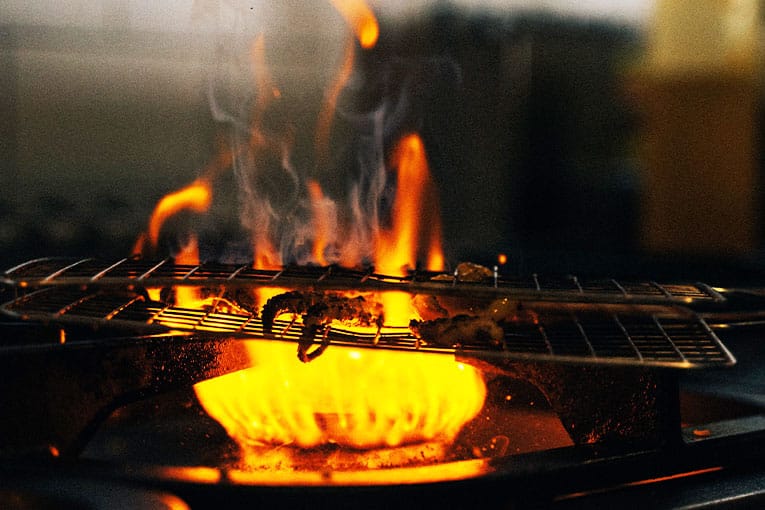
Fire Prevention week for 2023 promotes fire safety in the kitchen
This theme emphasises the importance of fire safety in the kitchen, one of the most common types of fire, where a significant number of fires originate.
It aims to educate people on how to prevent kitchen fires, what to do if one occurs, and how to keep their families safe.
What Were the Themes of Previous Fire Prevention Weeks?
Since its inception, Fire Prevention Week has tackled various fire safety topics, evolving to address contemporary concerns.
Here are some recent themes and their associated messages:
2022: “Fire Won’t Wait, Plan Your Escape”
Theme: Focused on the importance of having an escape plan and practicing it regularly.
Message: Encouraged people to be proactive in fire safety by planning and rehearsing escape routes from their homes. Fire doesn’t wait, and being prepared saves lives.
2021: “Learn the Sounds of Fire Safety”
Theme: Emphasised understanding the different sounds of smoke and carbon monoxide alarms.
Message: Educated people about the significance of smoke alarms and carbon monoxide detectors in early fire detection and prevention.
2020: “Serve Up Fire Safety in the Kitchen”
Theme: Centred on kitchen fire safety and the prevention of cooking-related fires.
Message: Highlighted the importance of safe cooking practices, including attention to stovetop and oven cooking to prevent kitchen fires.
2019: “Not Every Hero Wears a Cape. Plan and Practice Your Escape!”
Theme: Highlighted the importance of fire escape planning.
Message: Encouraged families and individuals to create and practice fire escape plans for their homes. Being prepared can make a life-saving difference in emergencies.
2018: “Look. Listen. Learn. Fire Can Happen Anywhere”
Theme: Focused on the importance of learning fire safety in various settings.
Message: Urged people to understand the basics of fire safety, whether at home, work, or in public spaces.
2017: “Every Second Counts. Plan Two Ways Out”
Theme: Emphasised the need for multiple escape routes in case of fire.
Message: Encouraged households to plan not just one but two ways to exit their homes during a fire. Seconds matter in emergencies.
2016: “Don’t Wait. Check the Date. Replace Smoke Alarms Every 10 Years”
Theme: Highlighted the importance of regularly maintaining and replacing smoke alarms.
Message: Informed people about the necessity of checking the age and condition of smoke alarms and replacing them every decade for reliable fire detection.
2015: “Hear the Beep Where You Sleep. Every Bedroom Needs a Working Smoke Alarm”
Theme: Advocated for smoke alarms in every bedroom.
Message: Promoted installing smoke alarms in all sleeping areas to ensure early warning and escape in case of fire.
2014: “Working Smoke Alarms Save Lives. Test Yours Every Month”
Theme: Focused on the life-saving role of smoke alarms.
Message: Encouraged monthly testing of smoke alarms to ensure they are functioning correctly.
2013: “Prevent Kitchen Fires”
Theme: Centred on kitchen fire prevention.
Message: Raised awareness about the common causes of kitchen fires and promoted safe cooking practices.
2012: “Have 2 Ways Out”
Theme: Stressed the importance of having multiple exit routes.
Message: Reminded people that having two ways out of every room is vital for swift evacuation during a fire.
2011: “Protect Your Family From Fire”
Theme: Focused on overall family fire safety.
Message: Encouraged households to take comprehensive measures to safeguard their loved ones from fire hazards.
2010: “Smoke Alarms: A Sound You Can Live With”
Theme: Emphasised the importance of smoke alarms.
Message: Highlighted the life-saving role of smoke alarms in providing early warning of fires.
These themes illustrate the evolving focus of Fire Prevention Week, aiming to address current fire safety challenges and educate the public on ways to prevent fires and protect lives.
Conclusion
Fire Prevention Week is important. It reminds us that fires are dangerous, both in the past and today.
It started because of the Great Chicago Fire, but it’s not just about that. Fires can hurt anyone, anywhere.
During this week, we learn about fire safety. We should use this knowledge to protect our homes.
This week’s actions should last all year. We need to stay safe from fires, always.
So, during Fire Prevention Week and always, remember to be safe from fires. Teach your family and community about fire safety.
Let’s keep our homes and loved ones safe from fires. Fire Prevention Week is more than just a week; it’s a promise to stay safe.
The Horizontal Compliance Committee of Euralarm has embarked on a fresh initiative centred on environmental and sustainability concerns.
The inaugural meeting for this group was held on August 23rd.
Euralarm’s proactive approach to sustainability
Earlier in the year, the Horizontal Compliance Committee recognised the growing number of European legislative initiatives concerning the environment and sustainability under the European Green Deal.
The experts on such topics from Euralarm members are typically distinct from those who handle electrotechnical subjects.
Consequently, the Committee saw the need to begin a Task Group specifically for these subjects, contingent on adequate expert interest.
The response was positive, with the August 23rd meeting seeing participation from 17 experts spanning 14 organisations, representing all Euralarm sections.
Christian Schmitz of Honeywell chaired the meeting as the Horizontal Compliance Committee head.
Addressing pivotal environmental legislations
The core aim of this new Task Group is to tackle the legislations related to environmental sustainability where Euralarm can either make a difference or where substantial impact on its members is expected.
The Task Group is set to delve into topics as per the Horizontal Compliance Committee’s suggestions.
Among them are the Ecodesign for Sustainable Products Regulation, sustainability prerequisites for revising the CPR, and others like the Digital Product Passport, Green Claims Directive, and Right to Repair Directive.
The Task Group also plans to collaborate with the Orgalim Green Transition Working Group to avoid overlaps and optimise outcomes.
The outcomes from the Task Group may range from informative memos encapsulating legislations to Euralarm’s feedbacks, position papers, guidance resources, and webinars.
IFSJ Comment
Euralarm’s establishment of a Task Group dedicated to environmental sustainability mirrors the growing global emphasis on the environment and responsible industry practices.
With a focus on legislative initiatives under the European Green Deal, this move is timely and could potentially shape policies and directives that have a far-reaching impact on the fire safety and security industry.
The collaboration with other organisations further showcases Euralarm’s commitment to a holistic and inclusive approach to sustainability.
To understand more about the initiatives and directives, visit www.euralarm.org.
For years, Global Fire Equipment (GFE) has been a familiar name across the Indian Ocean region.
Now, the company is poised to make its first appearance at Fire India.
The event is scheduled at the Bombay Exhibition Centre in Mumbai from 5th to 7th October 2023, with GFE setting up at Stand D39.
Unveiling OWL: GFE’s advanced fire alarm management software
GFE is set to introduce the audience to OWL: their new advanced fire alarm management and remote monitoring software.
This state-of-the-art system makes it easier than ever to manage the CHAMELEON protocol supported range of intelligent fire alarm control panels.
What OWL does is give remote users the ability to monitor their fire alarm panels’ status and gain comprehensive insights into their fire detection alarm system (FDAS).
GFE emphasises on EN 54 certification
The European manufacturer will not only showcase OWL but also display its latest product suite.
This includes cutting-edge addressable fire alarm control panels, detectors, sounders, VADs, and MCPs.
Furthermore, Global Fire Equipment will underline the significance of EN 54 certification for fire detection and alarm products.
Attendees at the GFE stand can seek guidance from GFE’s experts about the relevance of accreditation and the right pathway to achieving EN 54 certification.
Additionally, they can discover the advantages of partnering with a complete systems provider that boasts the EN 54-13:2017+A1:2019 approval, a credential GFE proudly holds.
GFE’s longstanding association with India
Having had a substantial presence in India for an extended period, GFE is a respected member of the Fire Industry Association (FIA) and the Fire & Security Association of India (FSAI).
On GFE’s participation in Fire India, Paul Pope, Group Business Development Director at GFE, said: “India is a strategically important market for GFE, and our commitment to expanding our operations here is unwavering.
“Fire India is a crucial event for the industry, so it’s an honour to be a part of it this year.
“We are eager to engage with both existing and potential clients and inform them about our latest products, our ongoing projects in India, and our forward-looking strategies.”
IFSJ Comment
For the fire safety industry, this move by Global Fire Equipment is a notable one.
As a distinguished brand, GFE’s decision to participate in Fire India not only showcases their commitment to the Indian market but also gives industry professionals and customers an opportunity to directly interact with the company and understand their latest offerings.
With GFE being a significant player in fire safety across the Indian Ocean region, their presence at such a key industry event will certainly be of interest to many.
Following a productive collaboration with Norway’s fire systems frontrunner Holta & Håland Safety, Hyfire recently declared the wrap-up of a novel project using its top-tier Taurus wireless fire devices at Randabergporten, an iconic office edifice located in Randabergveien, Stavanger.
Hyfire’s technology at work
In total, 35 Hyfire wireless devices were linked to an Advanced MxPro fire panel in this commercial and industrial building built of concrete in 2010.
These devices are now employed not just for fire detection but also for the release of INERGEN gas when required.
If a pair of wireless detectors sound the alarm, the Hyfire wireless modules engage the solenoids attached to the gas cylinders, releasing INERGEN gas into the area.
“We’re excited to demonstrate the potential of the Hyfire name through this distinct setup, which is conveniently in our premises,” shared Torger Nordbø, Project Engineer at Holta & Håland Safety.
“A comprehensive site assessment was conducted using Hyfire’s TauREX software to pinpoint optimal spots for detectors and other equipment, ensuring a dependable network.
“The simplicity of the setup and its reporting functionalities present immense value for us and the final user.”
Furthermore, the wireless framework underwent rigorous testing and display protocols in the building, acting as a comprehensive demonstration and test hub, whilst maintaining its primary role as a vital fire safety system.
Despite daily usage and various alterations, the system has exhibited outstanding resilience and flawless performance.
Karleif Holta, General Manager of Randabergporten, commented: “The Hyfire solution surpassed our anticipated outcomes in every domain.
“Its wireless setup convenience, compatibility with our edifice, and the security it guarantees for our occupants is unparalleled.
“We are proud to be a beacon for this innovation and are eager to observe the ongoing influence of Hyfire gadgets in Norway’s market.”
Technological advancements in Hyfire devices
The Taurus, crafted in Trieste, Italy – a pivotal hub for wireless fire design, employs the Pathfinder Technology.
This permits the devices to relay signals over distances spanning 1km in open terrains, and even further when using expansion mechanisms.
Optimised antenna tech enables communication across varying frequencies, allowing Taurus to function efficiently with fewer resources, thus being cost-effective.
Tom Crane, Hyfire’s International Director, expressed: “The positive feedback from our second venture with Holta & Håland Safety has been heartening.
“As the Norwegian market starts to appreciate the operational and economic advantages of wireless fire tech, we’re optimistic about seeing more Hyfire units being assimilated into regional fire safety systems.”
IFSJ Comment
Hyfire’s latest project in Stavanger stands as a testament to the advancements in wireless fire technology.
Collaborating with Holta & Håland Safety, they’ve showcased how modern devices, integrated seamlessly with existing structures, can enhance safety without compromising on aesthetics or structural integrity.
The endorsement of their technology by industry leaders and its successful deployment in such a landmark building signals a positive shift in fire safety approaches.
As wireless technology becomes the norm, it’s clear that companies like Hyfire are leading the charge, setting benchmarks for others to follow.
Fire, as a natural phenomenon, has been intertwined with human history for millennia.
It has served as a steadfast companion, offering warmth on cold nights, providing protection from predators, and allowing us to cook our food for sustenance.
The mastery of fire was one of the defining moments of human evolution, enabling our ancestors to forge tools, tame the wilderness, and build thriving civilizations.
However, fire’s dual nature must not be overlooked.
As much as it has been our friend, it can also be a formidable foe.
When fire becomes unbridled and uncontrollable, it can wreak havoc, causing devastating consequences to lives, homes, and natural landscapes.
The destructive power of wildfires, building fires, and industrial accidents reminds us of the need for vigilance and preparedness in the face of this primal force.
To navigate the complexities of fire and its potential dangers, understanding how many types of fire there are, as well the differences between them is of paramount importance.
Knowing the right fire extinguisher for the right fire type is vital
Different types of fires arise from a diverse range of materials, each requiring an evolution of fire safety and a tailored approach for effective extinguishing.
From the common Class A fires involving ordinary combustible materials to the specialised challenges of Class D fires involving combustible metals, a comprehensive knowledge of fire classifications empowers us to respond confidently and responsibly to fire emergencies.
How Many Types of Fire Are There?
There are six main classes of fires, each involving different materials and posing unique challenges for firefighting:
1. Class A – Solids
2. Class B – Liquids
3. Class C – Gasses
4. Class D – Metals
5. Class F – Oils and Fats
6. Electrical Fires – These are not given their own class, as they can fall into any of the above categories, however due to the different requirements of electrical fires we will be covering them here.
What are Class A Fires?
Class A fires are the most common type of fire encountered in various settings, ranging from residential homes to commercial offices and public spaces.
These fires are characterised by their ignition of ordinary combustible materials, which are readily available in our everyday surroundings.
Understanding the nature of Class A fires and how to handle them is crucial for effective fire safety and prevention.
The fuel sources that feed Class A fires include materials such as wood, paper, cloth, cardboard, and common plastics.
These materials are typically found in abundance in residential and commercial spaces, making Class A fires a significant concern for fire safety.
How Do You Extinguish a Class A Fire?
The primary method for extinguishing Class A fires is to use water or water-based extinguishers.
Water is a versatile and readily available firefighting agent that cools down the burning material, reducing the heat and ultimately smothering the flames.
By removing the heat element of the fire triangle (heat, fuel, and oxygen), water effectively puts out the fire and prevents re-ignition.
When using water to extinguish Class A fires, it is essential to apply the water directly to the base of the flames.
This ensures that the water reaches the burning material and cools it down, preventing the fire from spreading further.
Class A fires are one of the most common types of fire
If possible, avoid spraying water directly onto electrical equipment or live electrical wires to prevent electric shock and potential electrocution hazards.
Another effective method to combat small Class A fires is by using fire blankets.
Fire blankets are made of fire-resistant materials and can be quickly deployed to smother flames.
They work by cutting off the oxygen supply to the fire, suffocating it and extinguishing the flames.
Fire blankets are particularly useful for smothering fires on clothing, curtains, or small household items.
What are Class B Fires?
Class B fires pose a unique set of challenges due to the involvement of flammable liquids such as gasoline, oil, grease, and alcohol.
These fires can occur in various settings, including kitchens, garages, workshops, industrial facilities, and places where flammable liquids are stored or used.
Understanding how to handle Class B fires is crucial for effective fire safety and prevention.
Flammable liquids are highly volatile and can ignite easily, making Class B fires more intense and difficult to control compared to Class A fires.
When a flammable liquid catches fire, it can quickly spread and produce intense flames, creating a dangerous and rapidly evolving situation.
Additionally, flammable liquid fires can re-ignite if not fully extinguished, making them particularly challenging to manage.
How Do You Extinguish a Class B Fire?
To effectively control and extinguish Class B fires, it is crucial to use the appropriate firefighting agent.
Water is generally not recommended for Class B fires as it can cause the flammable liquid to spread, potentially making the fire more dangerous.
Instead, foam-based extinguishers or dry chemical extinguishers are the preferred choices for combating Class B fires.
Foam-based extinguishers work by covering the flammable liquid with a layer of foam, creating a barrier that prevents the release of flammable vapours and cutting off the oxygen supply to the fire.
This smothers the flames and cools down the burning liquid, eventually extinguishing the fire.
Dry chemical extinguishers, on the other hand, are effective for Class B fires because they disrupt the chemical reaction of the fire.
These extinguishers release a fine powder that separates the fuel from the oxygen, extinguishing the flames.
They also work well on Class A fires, making them versatile and useful in various fire situations.
It is important to remember that when dealing with Class B fires, safety is paramount.
Before attempting to extinguish a fire, assess the situation and ensure you have an escape route in case the fire becomes uncontrollable.
If the fire continues to spread or becomes too intense, evacuate the area immediately and call the emergency services for professional assistance.
What are Class C Fires?
Class C fires involve flammable gases, which can create a hazardous and potentially explosive atmosphere.
These fires present unique challenges and require specific precautions to ensure safety and prevent accidents.
Class C fires pose a significant threat to locations like manufacturing and industrial warehouses, chemical plants, and facilities storing substantial quantities of flammable gases. These settings are particularly vulnerable to these types of fires.
Understanding the risks associated with flammable gases and implementing proper safety measures is crucial in managing Class C fires.
How Do You Extinguish a Class C Fire?
Extinguishing a Class C fire requires a methodical and cautious approach due to the volatile nature of flammable gases involved.
When facing such a fire, two crucial steps come into play: shutting off the gas supply and utilising a dry powder extinguisher.
The first and most crucial step is to quickly shut off the gas supply at its source.
This action prevents the continuous flow of fuel to the fire, thereby hindering its ability to grow and spread.
Cutting off the gas supply is paramount to prevent the fire from intensifying and posing a greater threat to individuals attempting to extinguish it and those nearby.
After successfully shutting off the gas supply, the use of a dry powder extinguisher is recommended for extinguishing the Class C fire.
Dry powder extinguishers are specifically designed to combat fires involving flammable gases effectively.
The dry powder agent works by smothering the flames, cutting off their oxygen supply, and interrupting the fire’s chemical chain reaction, which leads to its rapid extinguishment.
It is important to note that while dry powder extinguishers are effective for Class C fires, water-based extinguishers should never be used in this scenario.
Water-based extinguishers may cause the fire to spread or result in an explosion due to the reactive nature of certain flammable gases.
Additionally, individuals attempting to extinguish a Class C fire should prioritise their safety at all times.
If the fire is beyond their control or if they are unsure about the gas source, it is best to evacuate the area immediately and call for professional help.
The handling of Class C fires requires a level of expertise and knowledge to ensure the safety of both individuals and property
What are Class D Fires?
Class D fires present a unique and highly hazardous situation, involving combustible metals such as magnesium, titanium, potassium, sodium, and lithium.
These fires can be particularly dangerous due to the reactive properties of these metals, which make them prone to violent and rapid combustion when exposed to air or water.
The presence of combustible metals in specific industrial settings or laboratories increases the risk of Class D fires, and proper precautions must be taken to handle and store these materials safely.
One of the critical challenges in dealing with Class D fires is the limited effectiveness of conventional firefighting methods.
Water, commonly used to extinguish other types of fires, can exacerbate Class D fires.
When water comes into contact with burning combustible metals, it reacts vigorously, releasing hydrogen gas, intensifying the fire, and causing potential explosions.
How Do You Extinguish a Class D Fire?
To extinguish Class D fires safely and effectively, specialised dry powder extinguishing agents must be used.
These agents, typically made of sodium chloride or graphite-based compounds, form a smothering layer over the burning metal, cutting off the supply of oxygen and heat.
This action disrupts the combustion process and gradually cools the metal, leading to the fire’s suppression.
Due to the specialised nature of Class D fires and the need for specific extinguishing agents, it is essential to have personnel trained in handling such emergencies.
Firefighters and other responders must be equipped with the appropriate dry powder extinguishers and knowledgeable about the risks and characteristics of combustible metal fires.
These fires can be unpredictable and require careful planning and coordinated efforts to control and eliminate them safely.
What are Class F Fires?
Class F fires, also known as cooking oil fires or fat fires, are a specific type of fire that commonly occurs in commercial kitchens, restaurants, and other food preparation areas.
These fires involve cooking oils and fats and can quickly escalate into intense and challenging situations to control.
The high temperatures used in cooking, especially deep frying, can cause cooking oils and fats to reach their autoignition point, leading to spontaneous combustion.
Once ignited, the flames can rapidly spread and generate intense heat, posing a severe threat to kitchen staff, customers, and the entire building.
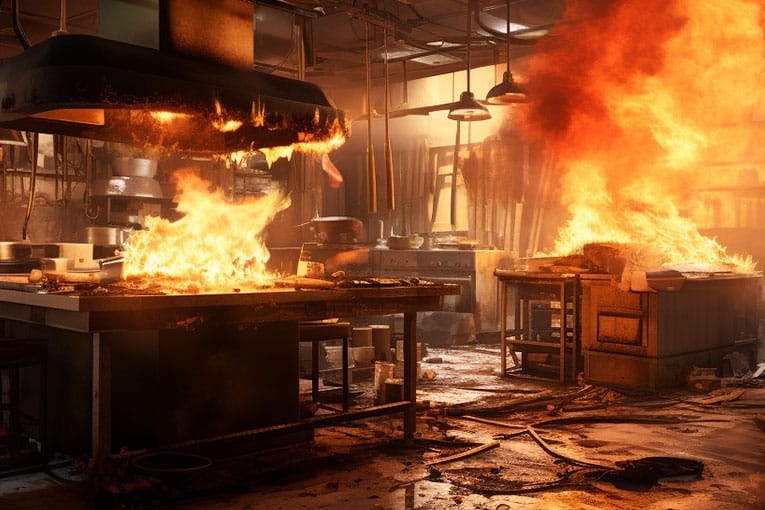
Class F fires can be incredibly dangerous due to the oil involved
One of the primary reasons Class F fires are so dangerous is that water, a common extinguishing agent used for other types of fires, is ineffective and dangerous when applied to cooking oil fires.
When water comes into contact with hot oil, it instantly vaporises and expands, splattering the burning oil and spreading the fire further.
This reaction can cause severe burns and injuries to anyone nearby.
The most effective method to extinguish Class F fires is to smother the flames with a fire blanket or use a wet chemical extinguisher specifically designed for cooking oil fires.
Wet chemical extinguishers contain a special solution that creates a thick, soapy foam, which cools the burning oil, forms a barrier, and prevents the release of flammable vapours.
This action starves the fire of oxygen, extinguishing it safely and effectively.
Preventing Class F fires involves implementing several safety measures in commercial kitchens and food preparation areas.
Regular cleaning and maintenance of cooking equipment, ventilation systems, and hoods help reduce the buildup of grease and oil residues that could fuel a fire.
Additionally, kitchen staff should be properly trained in fire safety, including the proper use of fire extinguishers and the importance of using fire blankets when dealing with cooking oil fires.
Commercial kitchens should have well-maintained fire suppression systems, such as automatic fire suppression systems installed in hoods above cooking areas.
These systems can quickly detect and suppress cooking oil fires, minimising the risk of fire spreading to other parts of the kitchen.
What are Electrical Fires?
Electrical fires are a prevalent and concerning type of fire that poses a significant risk in modern life.
Unlike other classes of fire (Class A, B, C, etc.), electrical fires are not categorised under a specific class.
Instead, they are a distinct category of fires caused by electrical faults and malfunctions.
These fires can result from various factors, such as faulty wiring, overloaded circuits, damaged appliances, or improper use of electrical equipment.
Over time, electrical wires can deteriorate, become frayed, or develop loose connections. These issues create resistance and generate heat, which can ignite nearby combustible materials.
Similarly, overloaded circuits, often caused by plugging too many electrical devices into a single outlet or circuit, can lead to overheating and ultimately trigger an electrical fire.
Another common cause of electrical fires is damaged appliances and electrical equipment.
Ageing or poorly maintained appliances can develop electrical faults, leading to short circuits and fires.
Electrical fires can also be triggered by the misuse of electrical equipment, such as using extension cords or power strips inappropriately or using appliances with damaged cords or plugs.
How Do You Extinguish an Electrical Fire?
In the event of an electrical fire, using water to extinguish the flames is extremely dangerous due to the risk of electrical shock.
Instead, it is best to de-energize the electrical source by shutting off power at the circuit breaker or main electrical panel, if safe to do so.
For smaller electrical fires, a Class C fire extinguisher or a dry powder extinguisher can be used.
However, it is essential to prioritise personal safety and evacuate the area if the fire becomes uncontrollable.
To prevent electrical fires, regular electrical inspections and maintenance are essential.
Homeowners and businesses should have their electrical systems inspected by qualified electricians to identify and address any potential issues.
It is crucial to avoid overloading circuits, use proper wattage bulbs in light fixtures, and refrain from using damaged electrical equipment.
Conclusion
Understanding how many types of fire there are, and the appropriate methods to extinguish them is vital for everyone’s safety.
In case of an emergency, knowing how to act quickly and effectively can make a significant difference in protecting lives and property.
Fire safety training, having the right fire extinguishers, and staying informed about potential hazards are all crucial steps towards ensuring a safer environment for ourselves and those around us.
With the current shift to electric cars, and the rise in the usage of lithium-ion batteries, it is now more important than ever to understand the difference in fire types and how to safely deal with them, with lithium-ion battery fires costing the UK £158 million a year alone.
Let us all be proactive in fire prevention and response to mitigate the risks of fire-related incidents and create a safer world for everyone.
Advanced’s Digital Product Manager, Michael Dunbar, unveils the evolution of remote fire panel monitoring
Smart buildings are on the rise and with them comes increasingly sophisticated remote monitoring technology – with the fire safety industry being the latest to see new developments.
According to Jupiter Research, the number of smart buildings globally is expected to rise from 45 million in 2022 to 115 million in 2026.
This is welcome news for facilities managers (FMs) and fire alarm engineers who recognise the benefits and efficiencies remote monitoring can bring, including improved safety and time savings.
Efficiency
In recent years the IoT (Internet of Things) has enabled the collection of digital data from physical assets and processes, resulting in greater efficiency.
Remote monitoring has significantly advanced the capabilities and efficiencies of FMs with the expansion of internet-connected devices making it possible to remotely communicate, collect and analyse data without being on site.
Following extensive customer research, remote fire panel monitoring platforms such as AdvancedLive have been designed specifically to meet the needs of FMs by combining fire system monitoring, instant notifications, and remote fire system control in one software.
These subscription-based platforms allow users to both view and control elements of their fire system from any internet-enabled device, at any location.
They also provide users with day-to-day reassurance that their fire system is working as intended, with instant notifications to alert them of critical incidents and status changes, and secure access methods to keep their data safe.
Information from their fire system is stored in the Cloud and presented in software accessed via any internet-enabled device.
The software is simply connected to the fire panel using an internet connection and a BMS interface.
Accessibility
Critical to the design of these platforms was ensuring that FMs could use the software easily.
Although modern fire panels are often simple to install and configure, research uncovered that FMs, other Responsible Persons and first responders do not find fire panels as easy to use as engineers, especially when a stressful incident is under way.
As a result, AdvancedLive was designed to be intuitive and simple to use.
A huge benefit is the option to access the fire panel via the software by using familiar tools, such as a mobile phone, PC or tablet, removing the need to use the panel to control the system.
Fire system monitoring
The role of the FM has increased exponentially as buildings have become more sophisticated.
Remote monitoring is therefore vital to provide the efficiencies required to monitor fire safety systems quickly and easily whenever a user needs to – even when they are off-site.
Designed with users in mind, AdvancedLive’s intuitive dashboard offers a host of features, showing device status and duration of isolations and enablements with clear colour coding for easy identification of Fire, Fault, Isolation and Ok.
Monitoring can be viewed either by a map or list to suit a company’s needs and budget and ensures accessibility for all users regardless of the device they are using.
Larger sites may benefit from a floor plan option, with a full-screen, colour-coded map for easy identification of zones, panels, device location and status.
It is easy to navigate the floor plans with pinch-to-zoom and to plot new and unmapped devices by simply dragging them to the required positions.
A clear view of first and second-stage investigation countdown maximises available response time, where set up on a fire system.
It is also easy navigate different floors for quick identification of the areas needing attention.
Instant notifications
During fire incidents, information is vital.
Instant notifications mean that the FM or other Responsible Person are the first to know of an incident.
Users miss nothing with status-change alerts sent during incidents to quickly show first and subsequent detections, investigation delay start and end points as well as reset actions.
Remote monitoring platforms can be accessed from any internet-enabled device, anywhere in the world, giving users reassurance that they will be the first to know about any problems, no matter where they are.
Remote control
Remote fire system control offers significant time savings, allowing users to make changes on the software without needing to be at the panel.
It is possible to remotely acknowledge and extend the fire alarm investigation period (where set up on your fire system), and users can avoid unwanted alarms by remotely isolating devices before resetting the system at the panel.
Crucially, users can only control a fire panel if they have permission to do so.
With data security more important than ever, the latest software gives admins complete control over who can access their system.
Flexible login methods to offer fast, secure access without the need to remember yet another password but also an automatic link timeout for added security.
Actions taken by individuals are stored in a comprehensive log, allowing traceability and compliance.
Fire alarm engineer
Remote monitoring platforms also benefit engineers.
Traditionally, if an engineer wanted to gain knowledge of how a fire system has been operating, they could only access the limited information stored in the event log.
With the latest remote monitoring technology, all the data is hosted in the Cloud.
This gives engineers the benefit of a real-time view of a fire system, as well as access to historical views of data.
This insight can then be used to predict potential issues, improving both fire safety and system efficiency.
It is possible to view a panel’s complete device history, including when the device was last activated, isolated, tested and enabled, allowing engineers to troubleshoot the problem remotely or diagnose issues in advance to save time if a site visit is required.
It is also possible to identify trends and potential issues, enabling better service and maintenance planning, and allowing preventive action before issues escalate.
Future
As remote fire system monitoring develops, there is huge scope for both FMs and engineers to benefit.
Not only will data be increasingly used in reports for compliance but also for intelligence and predictions.
Although the initial market for these platforms has been large complex sites, smaller businesses will also benefit in the long-term.
This will be useful where a business owner is also in charge of the facilities management and is not able to always be on site.
Time, efficiency, reduced false alarms and improved safety are just some of the benefits remote fire panel monitoring offers.
As we move towards a rise in smart technology this is only the start of the digital transformation of fire safety systems in our buildings.
IFSJ delves into the inner workings of Jeron’s Pro-Alert 480 system
Emergencies present complex scenarios that demand swift and precise action.
It’s paramount for the safety of those involved that they are equipped with the most efficient and reliable systems to ensure clear communication and rapid response.
Stepping up to address these needs, Jeron Electronic Systems, Inc. introduces the Pro-Alert 480, a game-changing solution that revolutionises emergency alerting and two-way communication.
As a leading entity in the communications systems realm, specifically in healthcare and life safety industries, Jeron has ingeniously engineered the Pro-Alert 480 to meet the Area of Rescue Assistance communication requirements as stipulated in the Americans with Disabilities Act.
This robust system is making significant inroads in high-rise buildings, parking garages, and commercial facilities, forming a critical link between occupants and first responders during emergencies.
Who is Jeron and what is your experience in communications systems for healthcare and life safety industries?
From the company’s inception, 58 years ago, Jeron focused on alerting and communications products starting with their first apartment intercom and security system.
Following apartment intercom, Jeron applied their design and manufacturing expertise to become a leader in life safety platforms in multiple markets including healthcare, parking garages, correctional facilities, and high-rise buildings.
Ever changing landscapes in all markets has led us to adapt our solutions based on the best of user feedback, meeting interesting and out-of-the box challenges, and discovering new ways to streamline the all-important lifesaving communications.
The manufacturing team uses cutting-edge surface mount technologies to bring the best system solutions to your facility.
Our product testing is unparalleled because all manufacturing, assembly, and quality assurance occurs in the USA, which speeds up reaction time to issues and minimises errors.
Our process methodology is thorough, and quality testing is completed at every step.
Can you tell us about the inception of the Pro-Alert 480 system, what inspired its creation, and what problems it was designed to address?
In 2003, there was a horrible fire in Chicago and 6 people lost their lives when they found themselves trapped in a smoky stairwell when the doors locked behind them.
There were no sprinklers, no two-way communications, and no safe way to communicate their location to emergency personnel.
The ordinance gave high-rises a choice of retrofitting for sprinklers or installing alternative safety features, such as fire-resistant stairwell doors and frames, and one- and two-way voice communication systems.
As of 2013, virtually none of the building owners had opted for sprinklers.
This highlighted the need for Area of Rescue systems.
Jeron was already leading the way in designing and manufacturing communications platforms that could had clear, non-blocking audio for many stations across a wide variety of big and small environments.
How does the Pro-Alert 480 system operate during an emergency and what sets it apart from other similar systems?
During an emergency, when a building occupant can’t evacuate on their own, they will go to an area of refuge location and utilise the Pro-Alert 480 system to alert first responders of their location with direct communication.
With a push of button on a remote station, a call is placed.
If the Area of Rescue system is not monitored on-site, the Pro-Alert 480 system automatically routes the emergency call to an off-site, security monitoring location through an automated phone call using a standard telephone line, Voice over IP, or a cell network.
Emergency personnel are made aware of the location(s) of the person(s) in need.
Differentiators of the Pro-Alert 480 system include: First AOR system listed under the new UL2525 standard; listed by Underwriters Laboratories; Standardised CAT cabling throughout; Daisey-chain head-end to remote station wiring – no costly home-run wiring; Fully supervised to ensure always available and proper operation- all remote stations, consoles, and remote alerting phone output; Embedded firmware architecture designed for 24/7/365 operation – no PC or servers are required to run the system; Designed and manufactured in the USA – ready to ship complete systems, no delays.
Why is the Pro-Alert 480 system important for the occupants in a high-rise building or a commercial facility during emergencies like a fire?
During a fire emergency, a high-rise building’s elevator shaft acts like a chimney and fills with smoke, subsequently they are turned off by emergency personnel.
Therefore, remote AOR stations should be placed in every stairwell above the ground floor.
Occupants in distress, who can’t evacuate the building on their own, must be able to contact first responders in an emergency.
This system can be used in virtually any commercial, industrial, or institutional setting where instant, high-speed, clear communication is needed.
Occupants must have a way to evacuate the building safely in an emergency.
Occupants who cannot traverse the stairs need assistance during emergencies when the elevators are shut down.
Could you explain how Pro-Alert 480 facilitates clear communication between occupants and first responders?
A press of a button starts the clear, two-way, audio-visual communications.
A person places the call from a remote station and the non-blocking two-way communications begin.
When a call for assistance is placed from a remote call station, a solid green “call placed” LED illuminates and an alert tone pulses once to verify the call placed.
At the console, the LCD display shows the location of the calling station by programmed area, and the alert tone sounds.
The console displays multiple calls simultaneously.
Through programming, the remote level threshold can be lowered or increased to allow clear communication with the console.
The console also has three internal potentiometers that allow the adjustment over various volume levels.
How does the system ensure the safety of those who are unable to evacuate the building during an emergency?
The system ensures safety by Pro-Alert adhering to the requirements of the local and international codes in force.
The experts set the standards by years and years of life safety experiences of what to do and what not to do – an everchanging system all designed to create a secure environment.
Jeron’s alerting and communications systems are specifically designed to meet the Area of Rescue Assistance communication requirements as defined in the American Disabilities Act.
During an emergency in commercial and multi-story residential buildings, residents can use Pro-Alert to call for assistance and communicate with first responders from a designated Area of Refuge.
In addition, Pro-Alert 480 has continuous diagnostic testing to ensure reliability.
Could you tell us more about the Pro-Alert 480s advanced features?
At the Console, the LCD display shows the location of the calling station by number and location.
The Console displays multiple calls simultaneously and Jeron Consoles provide the ability to see 4 calls, 8 calls and with our touchscreen console…up to 128 simultaneously.
Calls displayed on the Jeron Console and if not answered in a predetermined time, the calls are transfer off site using a land line, Voice over IP, or a cell phone network, to a Remote Monitoring Station or 911 Operator.
The operator will hear the Global address and remote station location including the building name and address.
This message is repeated until the operator presses any DTMF (dual tone multi-frequency) number to establish two-way communication with the caller at the remote station in the Area of Rescue location.
Is the Pro-Alert 480 compliant with various regulations and codes?
Pro-Alert 480 fulfills all necessary requirements set by IBC, ADA, NFPA72, UL2525, NFPA101, and local building codes.
It provides a reliable two-way communication system, adhering to specific design and operation parameters outlined in these codes, and ensuring safety during emergencies, especially for those unable to use stairs.
How do you ensure the quality and reliability of the Pro-Alert 480? How do FDA registration and UL listing contribute to this assurance?
Jeron maintains strict documentation of manufacturing processes as required by FDA. The system is fully tested and certified by UL, as per the UL2525 standard, which is a third-party validation of its quality and reliability.
The company upholds rigorous standards throughout research, development, production, and distribution to meet customer and regulatory demands.
Adjustments in light of evolving fire detection competency measures
Key revisions have been made to factor in recent shifts in competency regulations, including documents like the BSI Flex 8670, which establishes core criteria for building safety within competence frameworks.
This update ensures that the relevant skills, knowledge, experience, and behaviours are incorporated into the BAFE SP203-1 Scheme Document.
In light of the newly introduced standards, BAFE has also emphasised the competence requirements for individuals.
Moreover, new additions, such as nominating a Lead Individual for each of the modules – design, installation, commissioning, and maintenance – have been implemented.
These individuals are equipped with advanced competency criteria, essential for overseeing and bolstering the organisation’s management systems concerning fire detection.
Feedback and insights from BAFE leadership
Matt Darville, who chairs the BAFE SP203-1 Monitoring Committee, said: “The review of the document was comprehensive, taking into account both our goals to clarify standards and the insights provided by various members of the Monitoring Committee.
“These revisions to the BAFE SP203-1 Scheme Document are logical, but they heighten the proficiency expectations for everyone in an organisation involved in fire detection and alarm work.
“We believe these standards are attainable and serve as a testament to the optimal demonstration of competency in this field.”
Additionally, Lewis Ramsay, a BAFE Board Director, commented: “BAFE and the SP203-1 Monitoring Committee’s efforts have resulted in a much-improved document.
“Given the fast-evolving nature of the fire industry, staying updated is challenging.
“It’s crucial for those in charge, be it the Responsible Person, Duty Holder, or premises manager, to validate their measures in adhering to fire safety norms.
“BAFE Schemes offer a platform for the industry to showcase their proficiency, with third-party certifications serving as a distinctive marker for those seeking services from organisations committed to life safety.”
The complete BAFE SP203-1 Scheme Document Version 8.0 can be accessed on the BAFE website.
IFSJ Comment
The recent updates by BAFE highlight an evolving landscape in fire safety.
It’s evident that, as the industry grows and changes, there’s a pressing need for stringent competency measures.
This new document, Version 8.0 of the BAFE SP203-1 Competency Scheme, serves as a beacon for those in the field.
By raising standards and ensuring that individuals and organisations adhere to them, BAFE is setting the tone for a safer future.
We commend these advancements and see them as a pivotal step towards an industry where fire detection and safety are paramount.
Advanced, a global leader in fire protection solutions, has appointed Antonio Telesca as its new Managing Director.
Telesca’s impressive career spans various industries including aerospace, lighting, and fire safety.
Originally from Italy, he has worked in several countries such as Holland, France, Finland, and Indonesia.
Such international experience provides him with the necessary cross-cultural insights vital for Advanced’s global expansion.
He is now based near Advanced’s main office in Newcastle upon Tyne, UK, having moved there with his family.
Starting in aeronautical engineering, Telesca sharpened his technical abilities and gained comprehensive knowledge of intricate systems.
His career trajectory later shifted to the lighting and fire detection sectors.
Here, he took on senior roles, contributing notably to the growth of renowned brands like Philips and Schneider Electric.
Telesca has consistently demonstrated an adept understanding of product value, supply chains, and the overall market.
One notable accomplishment was leading a major manufacturing unit in Indonesia.
As Advanced’s new leader, Telesca aims to motivate teams, boost innovation, and improve customer interactions.
His vast experience combined with his knack for merging technical expertise with business strategies promises to be invaluable for Advanced’s ongoing growth.
Telesca shared his thoughts on the appointment: “I am excited to join the exceptional team at Advanced and lead this dynamic organisation into the future.
“With a passion for innovation, a commitment to learning, and a collaborative spirit, I am confident that we will build upon the company’s legacy of excellence and drive new achievements.”
Advanced’s global impact
Advanced systems safeguard numerous esteemed buildings and their residents globally.
They protect landmarks such as The Shard and 22 Bishopsgate in London and significant sites like the Hagia Sophia in Istanbul and the London Underground.
About Advanced
Dedicated to developing intelligent life safety solutions, Advanced is firmly set on paving the way for a safer tomorrow.
Their commendable performance, top-tier quality, and user-friendly products are favoured worldwide, ranging from single-panel installations to expansive, multi-site networks.
Advanced’s comprehensive product line encompasses complete fire detection systems, multiprotocol fire panels, extinguishing control, false alarm management, and even emergency lighting and evacuation alert systems.
Ownership of Advanced resides with the FTSE 100 company, Halma PLC – a conglomerate of life-saving tech enterprises aiming for a safer, cleaner, and healthier future for all.
IFSJ Comment
The appointment of Antonio Telesca to the role of Managing Director at Advanced signals a strategic move for the company.
With his diverse background, ranging from aeronautical engineering to the lighting and fire detection industries, Telesca brings a multi-faceted approach to leadership.
Coupled with his extensive international experience, Advanced is set to bolster its global presence and continue its tradition of excellence.
It’s an exciting time for the fire protection solutions sector, with innovations and collaborations becoming ever more crucial.
Telesca’s commitment to fostering these attributes provides optimism for Advanced’s future trajectory.