ECOPOL F: New eco-friendly class A foam to fight wildland fire

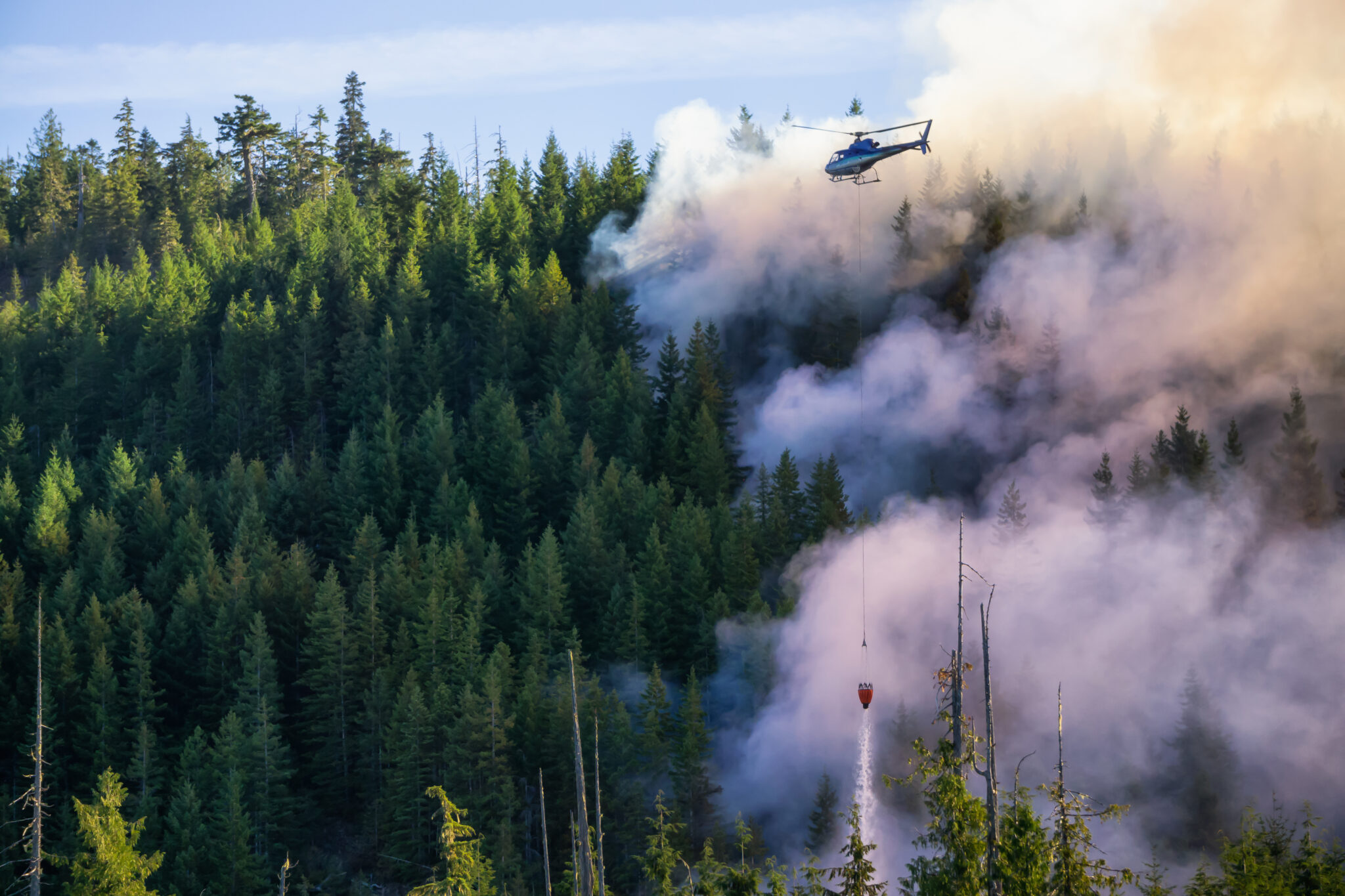
Managing wildland fire is more important than ever. Over the last few decades, the wildland fire management environment has profoundly changed: longer fire seasons, bigger fires and more acres burned on average each year, more extreme fire behavior. The combination of heat and drought caused critical low solid moisture content and led to high fire danger.

Fight forest fires with ECOPOL F class A foam concentrate

Thanks to its long experience in efficient and fluorine free foam development, BIOEX launch ECOPOL F: a new firefighting foam dedicated for class A wildland fires(forest, cereal fields, grass, brush, bush…) in order to increase firefighter effectiveness and reduce firefighting costs. ECOPOL F is an ecological solution to suppress in depth wildland fires thanks to its high wetting property.

Wetting property: ECOPOL F wetting properties are among the best ones on the market. The use of ECOPOL F surfactants reduces water’s surface tension and allows to penetrate and extinguish embers at depth and therefore be more effective and quicker than water alone. Thus, it reduces efficiently the amount of water needed.
WILDLAND FIRE

Expansion property: When mixed with air, ECOPOL F solution creates a high-quality foam blanket which insulates fuel from air and cools the fuel. Its drain time provides longer surface wetting and prevents the fire from re-igniting. The adhesive nature of the foam makes it possible to adhere to vertical surfaces for an extended period. Exposure protection and mop-up/overhaul can be completed with ECOPOL F for additional and faster fire control and extinguishment.

Use of ECOPOL F firefighting foam  

ECOPOL F provides optimum effectiveness for wildland fire suppression with salt water, fresh water, and brackish water at all levels of hardness. The foam concentrate is usable from 0.1% to 1%. ECOPOL F is USDA Forest Service QPL listed qualified for all application methods: ground engines, water- scoopers, airtankers (SEATS), fixed-tank helicopters and helicopter buckets. The foam concentrate is also compatible with long-term fire retardant Fire departments and civil defence are confident using it against wildland fires.

An environmentally friendly solution

ECOPOL F is an ecological solution for forest fires (Class A) which does not contain fluorinated derivatives (PFAS chemicals including PFOS or PFOA) or PBTs (Persistent, Bioaccumulative and Toxic substances). The foam concentrate is 100% biodegradable. ECOPOL F achieves GreenScreen certification: the first eco-label for firefighting foams conducted by a third-party.

It evaluates safer PFAS-alternatives and assesses the chemical safety of the product. GreenScreen certified products, including ECOPOL F, are PFAS-free and without other environmental and human health pollutants. This foam concentrate does not have impact on animals and vegetation. The use of ECOPOL F helps to avoid environmental and aquatic toxicity. ECOPOL F is also non-corrosive.

Explosion erupts on container ship vessel at Jebel Ali Port in Dubai

An explosion and resulting fire has ripped through a container ship at Jebel Ali Port in Dubai, the busiest port within the Middle East. The combustion unleashed a shock wave through the city of Dubai, causing walls and windows to shake in neighborhoods, some as far as 12km away from the scene of the explosion.

The Civil Defense team attended the fire shortly after arriving and managed to control the blaze within 40 minutes of arrival. Sources close to the incident are reporting that an oil tanker was behind the explosion.

Shortly after the incident, Dubai Media Office released a statement through Twitter that read: “”A fire has been reported to have broken out in a container within a ship anchored in Jebel Ali Port. A Dubai Civil Defense team is working to put out the blaze.”

A later Tweet stated: “A fire caused by an explosion within a container on board a ship at Jebel Ali Port has been brought under control; no casualties have been reported.”

The Jebel Ali Port is responsible for much of the regions import and export, and there were initially concerns that the incident could effect movement from within the port. However, the Jebel Ali Port authorities have said they are acting quickly to ensure the normal movement of ships in the port continues without any disruption.

Although little details are known about the ship or the cause of the explosion, the office have confirmed that the ship was preparing to dock when the explosion happened.

Teledyne Technologies complete FLIR Systems acquisition

Teledyne Technologies Incorporated announced today the successful completion of the acquisition of FLIR Systems​. At each of the respective company’s special meeting of stockholders held on May 13, 2021, the stockholders approved and adopted merger proposals related to the Agreement and Plan of Merger dated January 4, 2021. FLIR will now be included in Teledyne’s Digital Imaging segment and operate under the name Teledyne FLIR.​

Under the terms of the agreement, FLIR stockholders received $28.00 per share in cash and 0.0718 shares of Teledyne common stock for each FLIR share, which implies a total purchase price of approximately $57.40 per FLIR share based on Teledyne’s closing price on May 13, 2021. The aggregate consideration for the transaction was approximately $8.2 billion, including net debt. Previously, Teledyne secured all permanent cash financing for the transaction with a weighted average borrowing cost of less than two percent.​

Teledyne expects the acquisition to be immediately accretive to earnings, excluding transaction costs and purchase price accounting, and accretive to GAAP earnings in the first full calendar year following the acquisition.​

Simultaneously, Teledyne announced the following executive promotions, effective today. Edwin Roks, current Vice President of Teledyne and President of Teledyne’s Digital Imaging Segment, is now Executive Vice President of Teledyne. Edwin will continue to serve as President of Teledyne’s Digital Imaging Segment, which now includes Teledyne FLIR. In addition, Todd Booth is promoted to Senior Vice President and Chief Financial Officer for the acquired Teledyne FLIR group of businesses.​

“We appreciate the support from our stockholders, and I am delighted to welcome FLIR to the Teledyne family,” said Robert Mehrabian, Executive Chairman of Teledyne. “As a combined company, Teledyne FLIR will uniquely provide a full spectrum of imaging technologies and products spanning X-ray through infrared and from components to complete imaging systems. Teledyne FLIR will also provide a complete range of unmanned systems and imaging payload across all domains ranging from deep sea to deep space. Finally, I want to congratulate Edwin and Todd, whose promotions are very well deserved.”​

Teledyne and FLIR filed the vote results for their respective special meetings of stockholders on a Form 8-K with the U.S. Securities and Exchange Commission on May 13, 2021.

How Dahua Technology helps prevent forest fires

It takes decades for trees to grow, yet only minutes for fires to destroy them. Forest fires are the type of natural disaster that strike with sudden destructiveness and are often difficult to control. That’s why working to prevent forest fires and the damage they cause to natural resources — as well as people’s property and sometimes human life — is a priority for Dahua Technology.

Over the years, Dahua Technology has developed and deployed capabilities for comprehensive technical support in forest and grassland fire monitoring as well as early warning, forecasting, rescue and post-disaster assessment with digital intelligence technology. Dahua’s technology fully integrates video perception systems with integrated sky and ground monitoring methods to form a strong “fire net” aimed at prevention and early, decisive intervention when needed.

The Yarlung Zangbo Grand Canyon is the largest and deepest canyon on earth. The terrain of the canyon forest area is complex, steep and deep, with precious and diverse vegetation ecological resources, and is very difficult to protect. Dahua Technology helped build a smart forest fire prevention monitoring system, safeguarding forests through digital technology. Based on thermal imaging technology, the system provides 360° long-distance monitoring and uninterrupted 7/24 protection, guarding the vast forests and lush mountains.

In Chibi City, Hubei, Dahua Technology built an integrated forest fire prevention system for Guantangyi Forest Farm. The system uses dual-spectral thermal imaging to detect fires in real time, links video feeds to command centers, and connects alarms on fire ranger’s handheld devices, through to a six-rotor UAV that monitors the situation from above. The seamless flow of information through this system enables forest rangers to rush to a target area with a patrol terminal in hand to conduct on-site command, fire search and rescue, and other first responder functions.

It takes integrated capabilities working together to save forests, and Dahua solutions make it possible. Dahua employees take special pride in being able to contribute to this mission; for example, “When I walked through many forested areas in the country, every time I was not only emotional, but also felt responsible. Dahua Technology has always been involved in forest fire prevention. In the future, the company will continue to use technology to protect the ecology and intelligence to guard a green future.”

Armstrong Unveils outdoor pumps with permanent magnet motors up to 10hp

Armstrong Fluid Technology has announced that Design Envelope pumps with Permanent Magnet motors are now available NEMA 4X/IP66 rated, for outdoor installation.

Featuring advanced performance mapping technology and load-limiting logic, the new pumps reduce energy consumption by as much as 30% compared to pumps supplied with a loose variable speed drive. Together with new more efficient pump hydraulics, the new 1 to 10hp pumps can save an additional 20% compared to competing integrated products with induction motors.

Other features of the new Design Envelope outdoor pumps include:

• Cover to protect touchscreen user interface from dirt & sunlight

• Overhead weather shield protects motor fan from ice seizures

• Factory-tested NEMA 4X rated controls are TL approved

• Available Parallel Sensorless control provides additional energy savings through best-efficiency staging

• Available Pump Manager service provides pump performance tracking along with alerts, alarms and data storage

“The conventional approach to rooftop and outdoor pumps is to install VFDs in a central, outdoor-rated control panel, separate from the pumps. This adds unnecessary costs and requires a larger footprint” said Zeljko Terzic, Global Offering Manager, Pumps. “Our new Design Envelope pumps feature integrated controls for a reduced footprint and substantially reduced installation costs.” 

For more information visit www.armstrongfluidtechnology.com

Exclusive: Early fire detection for rapid heat generation

Peter Dekkers, Global Business Development Director, Solutions Business, FLIR Systems explores the benefits of early fire detection systems 

Fires that are not caught early or extinguished can quickly cause serious financial, environmental, and commercial distress for a company, as well as distress to the community. Structural fires are burning faster than ever. A shift to synthetic materials and open floor plans in residential construction has dramatically increased the rate at which fires progress. 

Modern rooms can flashover in under four minutes, an alarming contrast from the previous 30-minute mark experienced in older construction. Occupants used to have an average of 17 minutes to evacuate; now they only have a four-minute window to get out.  The potential cost of structural fires results in a heavy burden, which means many companies prioritise preventing or mitigating potential fires at all costs. As such, having the right equipment is imperative.  

Most current fire systems are designed to contain a fire once it starts, such as sprinklers, extinguishers or ventilation. However, these aren’t always the most effective solutions for each company, and a fire that has already started can often be avoided by putting the appropriate plan in place. Early fire detection is key to give a company the time to react appropriately.

By employing a system that allows companies to avoid fires or stop them before they spark can save lives, save money and prevent downtime for a business. For this reason, many organisations are now looking for an alternative solution that can alleviate any potential danger of fire, rather than wait for the fire to start before acting. So, what equipment can help prevent the breakout of a fire? 

The Solution 

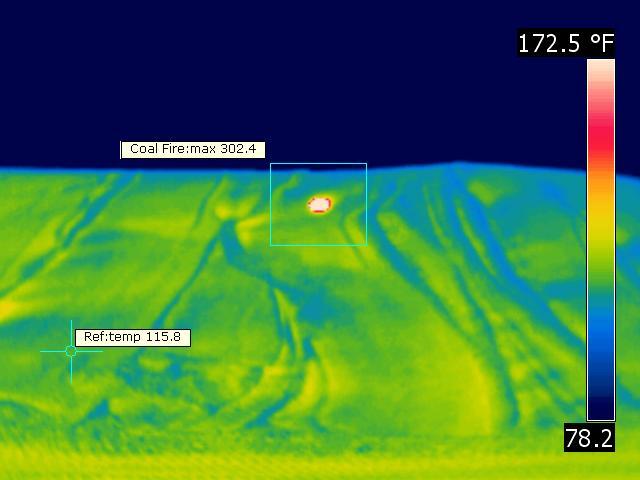
Fire is caused by rapidly increasing and excessive heat. As the heat on an object continues to rise, it eventually bursts into flames, combusts and has the potential to spread quickly to other areas. However, if a fixed-mount thermal imaging camera is trained on the target area, temperatures can be constantly monitored to catch the rising heat before the target combusts and the fire can then either be avoided or can be attacked at its source before it gets out of control. FLIR fixed-mount thermal cameras provide live temperature data updates up to 60 times per second to find rapidly heating areas before they catch fire.  

These thermal smart cameras use built-in software to isolate regions of interest (ROIs) and report minimum, average, and maximum temperatures from the regions the user creates. Live data can be analysed internally by the camera to report unfavourable conditions or be connected to other devices such as PLCs and computers to implement additional fire prevention action. Some companies choose to create more advanced solutions by assembling custom early fire detection solutions with FLIR automation cameras.

These systems can send out alarms at early signs of rising temperatures, allowing companies to save stockpiles of assets or turn off equipment that is following a trend of catastrophic failure.  In the event a fire does happen, thermal imaging cameras (TICs) see through smoke, offering invaluable situational awareness while evacuating or searching for victims. 

The Technology 

Choosing the right thermal camera model is often a complex exercise of spec comparisons, such as image resolution, camera sensitivity, and temperature range. FLIR offers a range of fixed-mount thermal smart cameras with built-in software for analysis and alarming. Monitor assets by configuring up to 10 ROIs using measurement shapes such as spots, boxes, or custom drawn areas in the frame using an easy-to-use web-based configuration window.

Set conditions for alarming parameters and the response, such as data acquisition output type. Integrate FLIR smart cameras into a wide range of control processes using standard communication protocols, including RTSP, ONVIF, MQTT, RESTful API, MODBUS TCP & Client/Server, Ethernet IP, and FTP.  

In addition to the smart cameras, FLIR offers a range of automation cameras that can stream temperature linear data and radiometric data through communication protocols like GigE Vision and RTSP. These infrared cameras interpret images using software such as Cognex Designer Pro, NI Software, Pleora Ebus, Teledyne, Spinaker SDK, and FLIR Atlas SDK. 

Uncompromised data is repeatably and reliably generated from thermal detector arrays in either 320 × 240, 464 x 348, or 640 × 480 options offering up to ±2°C (±3.6°F) accuracy within temperature ranges of -40°C to 2000°C (-40°F to 3632°F). FLIR thermal cameras can be tailored to your application: select manual or automatic focus or change the lens when the field of view needs to be modified. Thanks to its unique lossless compressed radiometric output, these cameras avoid overburdening processors. They also add value to your system by pairing a built-in visual camera and LEDs in partnership with the infrared camera.  

By using thermal imaging cameras to detect rapid heat generation, the safety of workers and visitors within the building is maintained. This gives everyone the confidence that avoiding a fire is a priority and assures them that plans have been set in place to maximise fire safety. Monitoring valuable assets temperature over a long period of time could also provide valuable data to the asset owners.

For example, if the temperature of a woodchip pile is known 24/7, spontaneous combustion could be avoided long before the temperature even starts to rise due to the temperature data of the pile being closely monitored. Knowing the assets temperature is also valuable data when deciding on when to send it for incineration. The earlier you detect a fire, the risk of business downtime, structural damage to the premises and threat to human life is reduced.  

Omnilert and Axis Communications announces partnership

Omnilert, the innovation leader and most trusted partner in emergency communications, and Axis Communications, the market leader in network video, today announced a partnership leveraging their combined security technologies to provide a proactive response to gun violence in campus communities. 

Omnilert Gun Detect, the industry’s first AI-powered visual gun detection solution, integrates with Axis video surveillance systems to reliably and rapidly recognise firearms and immediately trigger multi-channel alerts and automated pre-defined safety protocols. The integration of these rich capabilities provides campus safety teams with the broadest array of solutions, spanning prevention, notification, engagement and management.

“The partnership between Omnilert and Axis will enhance our ability to prevent loss of life in the event of an active shooter situation,” said Ara Bagdasarian, Co-Founder of Omnilert. “Our advanced technologies provide a more robust product offering, greatly increasing campus safety and security.”

In November 2020, Omnilert launched Gun Detect to provide safety teams with advance warning before shots are fired. Designed for privacy and performance, Gun Detect is a software solution typically deployed on-premise and integrated with IP-based video surveillance and camera systems to detect and prevent critical events before they occur.

“A holistic approach to school security is proving to be best,” stated Bruce Canal, Segment Development Manager for Education at Axis Communications. “There is not a single solution that can totally protect our kids; however, bringing professionals together in this type of forum works toward that end. Together, we weave a formidable solution.”

Fire at migrant detention centre in Yemen kills 8

Eight people have died, and 170 have been injured following a fire at a migrant detention centre in Yemen.

According to the BBC, the camp, in the capital, Saana holds hundreds of migrants, mostly Ethiopian. Although the initial death toll has been confirmed as 8, officials fear that the number could rise in the coming days.

A statement by the International Organization for Migration (IOM) read: “The total number of migrants who died in the fire at the Immigration, Passports and Naturalization Authority (IPNA) Immigration Holding Facility remains unconfirmed, as official records have yet to be released. Over 170 people have been treated for injuries, with many remaining in critical condition. 

“IOM personnel were present at the site when the fire broke out in a hangar next to the main building. Nearly 900 migrants, predominantly Ethiopian, were in the overcrowded holding facility at the time of the fire. More than 350 were in the hangar area. 

“Teams of IOM health workers and ambulances, and over 23,000 medical items including intravenous fluid, trauma kits and other essentials, were immediately dispatched to the facility and to major hospitals to provide urgent life-saving assistance alongside the Ministry of Public Health and Population.”

Bosch Building Technologies appoints VP of Fire business unit

Bosch have appointed Michael Hirsch as Vice President of the Fire business unit in the division.

Most recently, as Vice President he was responsible for key account management for major customers in the European system integrator business at Bosch Building Technologies.

In his new role in the Fire Business unit, the business economist will be responsible for strategy, research & development, product management, marketing and sales for Bosch’s comprehensive portfolio of fire alarm systems, which includes fire panels, detectors, manual call points, video-based fire detection and other accessories and services.

“Bosch fire alarm systems stand for reliability, innovation, flexibility and the pioneering use of artificial intelligence worldwide. I am very pleased to help shape this path in the future and to further expand these first-class solutions for our customers,” Hirsch explains.  

Michael Hirsch brings extensive experience in strategy, sales and key account management into his new role, as well as expertise in building and managing innovative IoT services.

After working for many years as a strategy and transformation expert at an international management consultancy, which also took him to China, he joined Bosch Building Technologies in 2012.

There, he was initially responsible for strategy development. Subsequently, Hirsch held several management positions at Bosch. These included building up key account teams and product management at Bosch Service Solutions – a leading provider of business process outsourcing and innovative IoT services – and in the European system integrator business at Bosch Building Technologies.  

“Together with my great colleagues in the Fire business unit, I now want to add more chapters to the success story of the Bosch Fire business, especially with regard to international growth and the increasing use of artificial intelligence in our products,” Hirsch continued.  

The Bosch division Building Technologies is a leading global supplier of products, solutions and services for security, safety and communications. Its product portfolio includes video security, intrusion detection, fire detection and voice evacuation systems, as well as access control and management systems.

Professional audio and conference systems for communication of voice, sound and music complete the range. In fiscal 2020, the division’s approximately 8,800 associates generated sales of 1.9 billion EUR.

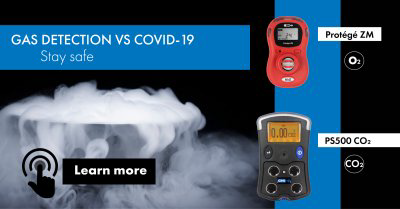
Portable Gas Detection and staff protection during COVID-19

Q. What are the links between COVID-19 and portable gas detection?
The packaging, transportation and storage of COVID-19 vaccines at low temperatures necessitates the use of dry ice, which is a form of carbon dioxide (CO2). If CO2 escapes in its gaseous form, there is a danger to factory, logistics and healthcare workers, most of whom will be unfamiliar with dry ice and its potentially harmful effects.

Although there is a clear global need for vaccine urgency, employers also have a responsibility to avoid compromising worker health and safety.
Another application concerns the storage and use of oxygen at temporary hospitals, a number of which are now in operation across Europe to provide COVID-19 patients with emergency ventilation.

These facilities do not have permanently engineered solutions to monitor for oxygen leaks, which presents the need for additional safety precautions.
In both applications, portable gas detection equipment worn by personnel can monitor for gas leaks and alarm against dangerous exposure.

Q. What are risks of exposure to excessive levels of CO2 and oxygen?
Dry ice is solid-state CO2. However, sublimation of CO2 occurs at temperatures above -78°C, when it becomes gaseous. CO2 in this form is heavier than air and tends to take the place of oxygen, presenting a risk of anoxia.

As little as 3% CO2 by volume can lead to an increase in heart rate and blood pressure, while 5% will likely prompt dizziness, confusion, headaches and shortness of breath. All of these conditions can prove dangerous in a workplace situation. Moreover, staff absenteeism due to feeling poorly is a major risk to the effectiveness of vaccine supply chains. As for oxygen, excessive amounts of this gas in the atmosphere due to leakage from tanks or equipment presents a higher flammability risk.


Q. What are the exposure level guidelines for workplaces?
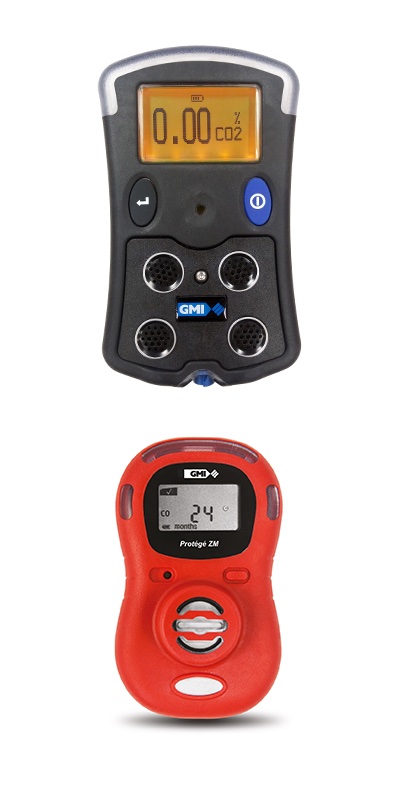
Alarm levels for CO2 in the PS500 personal gas monitor from Teledyne Gas and Flame Detection, for example, are set well below 3-5%. In fact, 0.5% CO2 by volume is the EH40 prescribed time-weighted average safe exposure limit for workplaces across an 8-hour working day. There is also a guideline for STEL (short-term exposure limit), which is 1.5% CO2 by volume over a 15-minute period.

With oxygen, leaks into the workplace atmosphere above 25% by volume change the flammability of the environment. Again, a personal gas monitor, in this case the high-performance yet cost-effective Protégé ZM from Teledyne Gas and Flame Detection, features appropriately set levels of 23% Vol to warn against any impending danger.

portable gas detectors

Q. How are personal gas monitors used?
The device simply clips to a lapel or belt loop, for example, from where it can sense danger from every direction and make that vital connection between excessive gas exposure and personal safety. A detector such as the Protégé ZM measures just 94 x 56mm and weighs only 76g. Personal gas monitors are extremely easy to use and typically feature a single button switch-on.

If an alarm triggers, the monitor will beep, shake and flash [audible, tactile and visual] to ensure the user acknowledges the warning in all kinds of environments, including noisy ones.

Q. Is there access to recorded data?
Data-logging capability sees a memory store taken every minute. Users can upload the data to a PC, where they will see a time and date stamp against exposure events. This evidence is useful if there is a requirement for an investigation or report.

Q. What is the best way to clean/sanitise portable gas detection equipment during COVID-19?
With frequent shift changes at factories, logistics hubs, vaccination centres and temporary hospitals, there is a likelihood that staff will share personal gas detectors. To avoid any potential for virus transmission, it is good practice to clean the monitors between shifts. The best way to ensure surface cleanliness is to use mild soap and water applied to a damp cloth.

Do not use alcohol wipes or other alcohol-based cleaning products, as the sensor will detect the alcohol and provide a false reading. Users should also avoid silicone, chlorine or bleach-based cleaning products.

Q. What about service and calibration?
A. It is highly advisable that users follow service and calibration guidance for their monitors to ensure quality and reliability. Working with a gas detector that is out of calibration or needs a sensor replacement, for
example, defeats the objective and places staff at risk. Optimum intervals are dependent upon the working environment, but annual service and calibration is typical. A two-year warranty is applicable assuming
adherence to the service schedule.

Q. Why is Teledyne Gas and Flame Detection qualified to help in the COVID-19 emergency?
Due to the knowledge, expertise and experience of Teledyne Gas and Flame Detection across many sectors that deal with potentially dangerous gases in confined spaces, the company has proven, high integrity solutions that can help keep workers safe during the pandemic. Safety is at the heart of all Teledyne gas monitoring and detection solutions.

For more information on portable gas detection contact Teledyne Gas and Flame Detection: gasandflamedetection@teledyne.com