Rosenbauer unveils most powerful portable fire pump, FOX, at FLORIAN

Rosenbauer introduces the latest FOX model at FLORIAN 2024

Rosenbauer has introduced the newest version of its FOX portable fire pump at the FLORIAN firefighting trade show in Dresden.

As reported by Rosenbauer, the new FOX model boasts a flow rate of 2,050 litres per minute at 10 bar, making it the most powerful pump in its class.

It also meets the standard PFPN 10-2000 of EN 14466 for the first time, providing increased performance while maintaining lightweight and user-friendly operation.

Enhanced engine output and pump efficiency

The latest FOX model builds on the previous fourth-generation design, featuring a BRP-Rotax 3-cylinder motor.

Improvements to the cooling system, including a larger fan and optimised airflow, result in increased engine output.

Further efficiency gains have been made with the use of an impeller from Rosenbauer’s N20 in-built pump, allowing the FOX to maintain high performance while weighing just 172 kg, as reported by Rosenbauer.

Operation improvements with updated control display

The new FOX is equipped with a 3.5-inch RBC LCS colour display, offering user-friendly control of the pump, including a fully automated priming process.

This feature provides operators with key information on the system’s status and troubleshooting assistance if required.

Rosenbauer has also introduced new lighting options with the FOX model.

The pump can be fitted with an integrated LED lighting system for better visibility during manual transport.

Orders open from October 13, 2024

The new FOX fire pump model is available for order from October 13, 2024.

According to Rosenbauer, deliveries are expected by the end of the year, subject to order volume.

New FOX portable fire pump offers unmatched performance and efficiency: Summary

Rosenbauer has presented the latest iteration of its FOX portable fire pump at the FLORIAN trade show in Dresden.

With an output of 2,050 litres per minute at 10 bar, the new FOX is now the most powerful pump in its class.

Enhanced cooling and pump efficiency have been incorporated, while the unit remains lightweight at 172 kg.

Additional updates include an improved 3.5-inch display for easy operation and optional integrated LED lighting.

Orders for the new FOX model are open from October 13, with delivery scheduled by the end of 2024.

Why are Firetrucks Red?

Firetrucks, with their distinctive red hue, stand out as symbols of rapid response to emergencies, commanding attention on roads and streets worldwide. 

But why are firetrucks red?

The vibrant red colour has become synonymous with the urgency and gravity of firefighting efforts. 

While the sight of red firetrucks is deeply ingrained in our collective consciousness, the origins of this colour choice remain shrouded in curiosity and speculation.

In this article, we will delve into the mystery behind the enduring tradition of painting firetrucks red.

Why are Firetrucks Red?

why are firetrucks red image

Firetrucks, with their bold and unmistakable red hue, have become iconic symbols of emergency response. 

The choice of this vibrant colour is deeply rooted in tradition. 

As to why firetrucks are red, the short answer is nobody knows for sure.

However there are numerous theories as to why, with some of the most common being:

Cheapest Colour of Paint

firetrucks red cheapest paint

One widely circulated theory suggests that red became the colour of choice for firetrucks due to its historical status as the least expensive colour of paint. 

In the early days of fire departments, when budgets were tight and they were mostly volunteers, the cost-effectiveness of red paint made it an economical choice. 

This theory reflects a pragmatic approach, where fire departments aimed for a uniform and easily recognizable colour without straining their limited resources.

Most Expensive Colour of Paint

firetrucks red most expensive paint

Contrary to the cost-effectiveness theory, another perspective argues that red was intentionally chosen as the most expensive colour of paint. 

In this view, fire departments sought high-quality, durable paint to protect their vehicles from the elements and enhance their visibility. 

While this theory challenges the notion of frugality, it underscores the importance of investing in materials that ensure the longevity and effectiveness of firefighting equipment.

Farmers

firetrucks red farmers carts

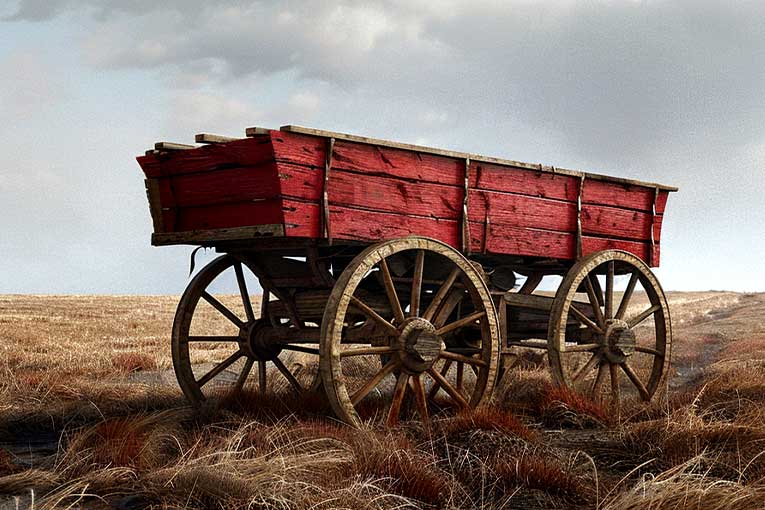
An interesting historical twist connects the colour choice of firetrucks to the practices of farmers. 

During the early days of fire departments, when acquiring vehicles for their fleets, departments often obtained used trucks from farmers. 

Farmers, who commonly painted their carts red to hide dirt and grime, unintentionally contributed to a surplus of red-painted carts that fire departments adopted. 

This theory highlights the influence of practicality and resourcefulness in shaping the colour palette of firefighting fleets.

Displaying Urgency

firetrucks red urgency

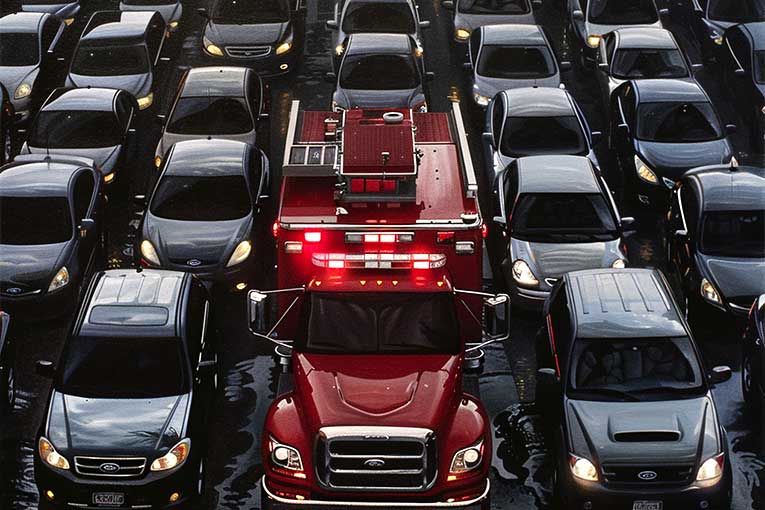
The early 20th century, marked by the dominance of black-coloured Ford cars, introduced another theory regarding the choice of red for firetrucks. 

In an era where many vehicles were black, fire departments opted for red to stand out and convey a sense of urgency. 

The stark contrast between the red firetrucks and the sea of black vehicles on the road facilitated quick identification and emphasised the critical nature of their mission.

An Old Joke

firetrucks red old joke

“Because they have 8 wheels and 4 people on them, and 4 plus 8 makes 12, and there are 12 inches in a foot, and 1 foot is a ruler, and Queen Elizabeth was a ruler, and Queen Elizabeth was also a ship, and the ship sailed the seas, and there were fish in the seas, and fish have fins, and the Finns fought the Russians, and the Russians are red, and fire trucks are always ‘Russian’ around, so that’s why fire trucks are red!”

Adding a humorous twist to the discussion is a centuries-old joke that offers a playful explanation for why firetrucks are red. 

According to this whimsical theory, the colour choice is a result of a convoluted chain of associations involving wheels, rulers, ships, fish, and even geopolitical references. 

While clearly a jest, this theory highlights the lighthearted and imaginative interpretations that have woven their way into the lore surrounding firetruck colours.

Can Firetrucks be Other Colours?

While red remains the traditional and widely recognized colour for firetrucks, fire departments around the world have occasionally deviated from this norm, experimenting with different colours for various practical and strategic reasons. 

These alternative colour choices not only break with tradition but also serve specific purposes in enhancing safety, visibility, and aesthetic appeal during emergency responses.

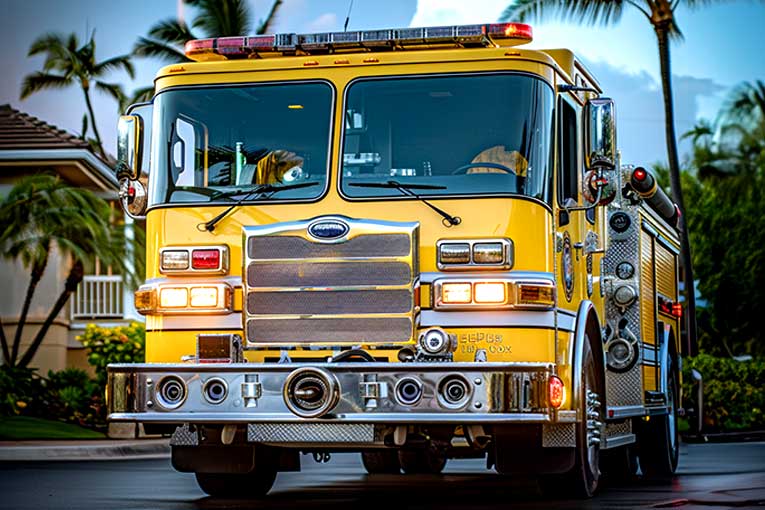
Yellow

yellow firetruck

Yellow firetrucks are occasionally employed to address specific challenges posed by rural environments. 

The vibrant and contrasting colour of yellow enhances visibility, making the trucks more noticeable, especially in expansive rural landscapes. 

This increased visibility is crucial for navigating challenging terrains and locating emergency sites efficiently. 

A notable example is the use of yellow firetrucks in Australia, in regions where the topography and vegetation necessitate heightened visibility for effective emergency response.

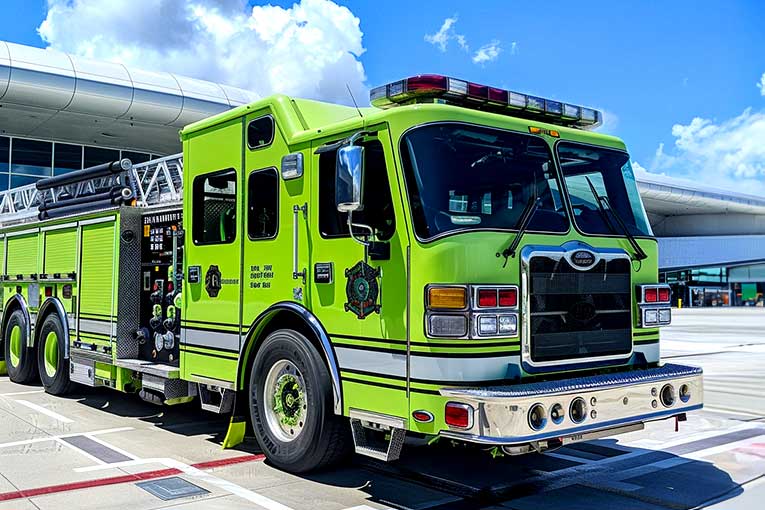
Lime Green

lime green firetruck

Lime green has emerged as a colour choice motivated by a desire to maximise visibility both during the day and at night. 

This highly visible hue stands out in various lighting conditions, ensuring that firetrucks are easily spotted by motorists and pedestrians alike. 

Fire departments adopting lime green firetrucks prioritise safety and awareness during emergency responses. 

This choice is particularly evident in urban areas where diverse lighting scenarios demand enhanced visibility. 

Several examples showcase fire departments incorporating lime green firetrucks into their fleets to bolster their visibility during critical operations.

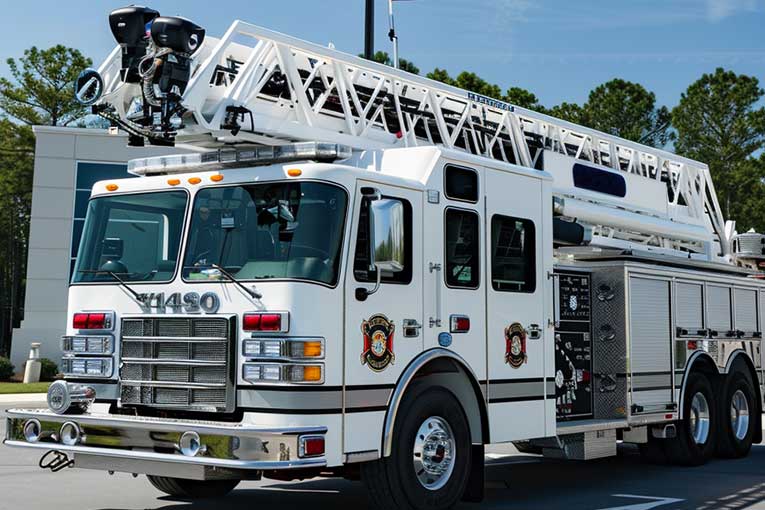
White

white firetruck

White firetrucks represent a departure from the traditional red, chosen by certain fire departments for their clean and modern aesthetic. 

The use of white not only imparts a contemporary look but also serves practical purposes. 

White is a reflective colour, aiding visibility, especially in low-light conditions. 

This choice aligns with the evolving design preferences of fire departments seeking a fresh and modern image while maintaining functionality. 

Examples of fire departments incorporating white firetrucks into their fleets can be found in urban settings where aesthetics and visibility converge as crucial considerations.

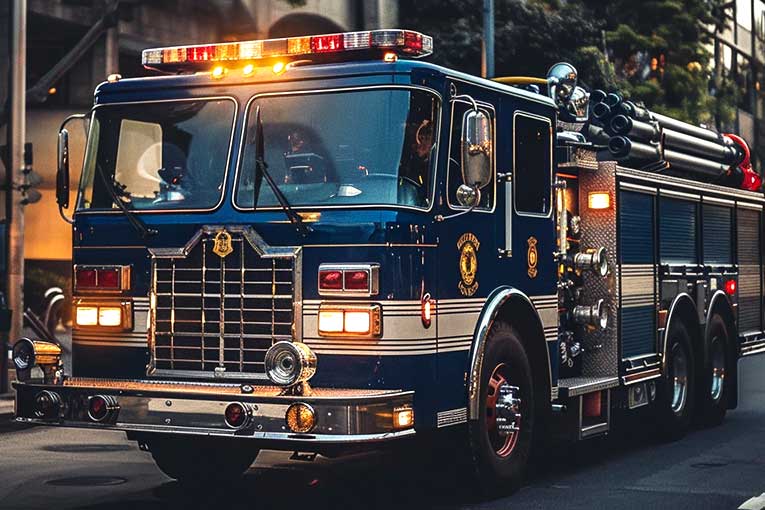
Blue

blue firetruck

While less common, blue firetrucks are occasionally employed for special purposes or to distinguish specific types of emergency vehicles. 

Blue may be reserved for specialised units within a fire department, signifying distinct functions or equipment. 

This colour choice can aid in rapidly identifying the purpose of a particular vehicle during multi-agency responses. 

Real-world instances include fire departments utilising blue firetrucks for hazardous materials response teams or specialised rescue units, where differentiation in colour supports quick and efficient coordination during emergencies.

Orange

orange firetruck

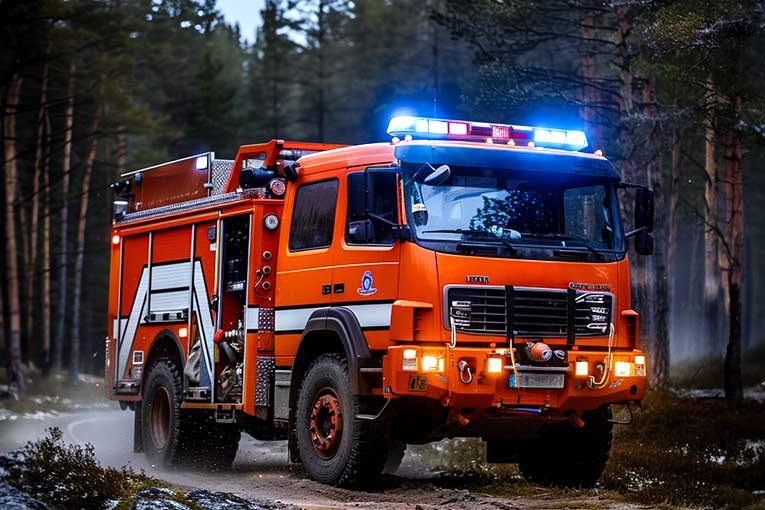
In Finland, the use of orange firetrucks adds a distinctive touch to the country’s emergency response vehicles. 

The choice of orange as a colour for firetrucks is not only a departure from the traditional red but also serves specific purposes tailored to the unique challenges of Finland’s environment.

The vibrant orange hue enhances visibility, especially in the country’s varied landscapes, including forests and lakes. 

Finland’s terrain, characterised by vast expanses of nature, demands vehicles that can stand out against diverse backgrounds. 

Orange firetrucks address this need by providing increased visibility during emergency responses, ensuring that they can be easily spotted in both urban and rural setting

Conclusion

Hopefully this should answer your question of why are firetrucks red?

While red remains the predominant colour for firetrucks, the choice is not solely based on tradition or aesthetics. 

Practical considerations, historical influences, and attempts to increase visibility and safety have all played a role in shaping the colour choices for these vital emergency response vehicles. 

As fire departments continue to evolve and adapt to new technologies and safety standards, we may see further experimentation with colours in the future. 

Regardless of the colour, the primary goal remains the same – to ensure that firetrucks are easily recognizable and effective in responding to emergencies.

Armstrong Fluid Technology launches cloud-based Fire Manager for advanced fire pump management

Toronto-based Armstrong Fluid Technology introduces innovative cloud service for fire safety systems

On 22 January 2024, Armstrong Fluid Technology announced the launch of its new cloud-based service, Fire Manager, aimed at enhancing the performance of its Design Envelope Fire Pumps through Active Performance Management.

This service stands out for its ability to proactively monitor pump performance, offering early diagnostic warnings and timely automated reports.

These features are designed to empower customers with the information necessary to make prompt decisions that ensure the optimal and safest operation of fire safety systems.

Key features and benefits

Fire Manager is equipped with several functionalities, including the recording of municipal supply pressure, digital documentation of pump operations, pump analytics, and condition-based maintenance support.

It alerts users to potential issues in pump performance, thereby enhancing both reliability and safety with real-time and historical test and performance data.

Mike DeMille, Global Offering Manager – Fire Products at Armstrong, stated: “When combined with Armstrong’s self-regulating, variable speed fire pumps, Fire Manager helps deliver several unique points of value to fire-safety professionals.”

He highlighted the benefits such as cost savings from reduced need for PRVs, space savings, simpler installation processes, and improved safety through the prediction of equipment failures.

Innovations in fire safety and compliance

Furthermore, Armstrong’s Design Envelope Fire Pumps are the first self-regulating variable-speed fire pump units that comply with NFPA-20 (2019 Edition), Section 4.8 standards.

This not only marks a significant innovation in fire safety technology but also ensures that Armstrong’s customers receive unparalleled performance and value from their fire safety systems at every building lifecycle phase.

DeMille concluded, “Through Active Performance Management and Armstrong 360 Service and Support solutions, customers will get the best possible performance and value from fire safety systems.”

List of Firefighting Equipment

Firefighting equipment is what helps firefighters to extinguish flames, ensuring the safety of lives and property, and the varied list of firefighting equipment shows how diverse firefighting really is. 

From traditional tools like fire extinguishers to cutting-edge technology such as thermal imaging cameras, each item plays a crucial role in a firefighter’s arsenal. 

In this article, we’ll explore the diverse list of firefighting equipment, shedding light on their functions and importance in the face of fire emergencies.

What is Firefighting Equipment?

Firefighting equipment encompasses a diverse range of tools, devices, and protective gear specifically designed to combat and manage fires effectively. 

These crucial elements are essential for firefighters in their mission to extinguish flames, rescue individuals, and mitigate the impact of fire emergencies. 

Each piece of equipment serves a unique purpose in the complex and challenging task of firefighting.

Firefighting equipment is not only about extinguishing flames but also about ensuring the safety of those on the front lines. 

Protective gear, such as fire suits and gloves, shields firefighters from extreme heat, allowing them to navigate hazardous environments. 

The continuous advancements in firefighting equipment underscore a commitment to improving the efficiency, safety, and overall effectiveness of firefighting operations.

Firefighting equipment is the lifeline for those who risk their lives to protect communities and properties from the devastating impact of fires.

List of Firefighting Equipment

Firefighting equipment constitutes a comprehensive arsenal designed to combat fires of varying intensities and types. 

Each tool plays a crucial role in ensuring the safety of firefighters and the effectiveness of fire suppression efforts.

Fire Extinguishers

fire extinguisher firefighting equipment

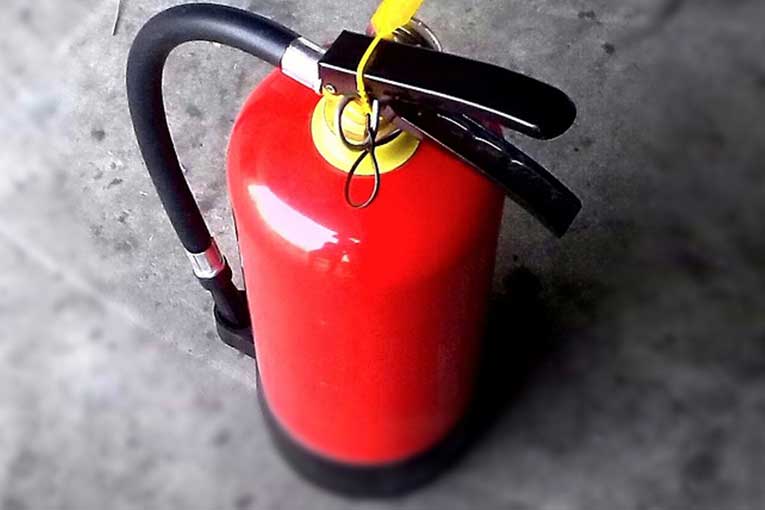
Portable and versatile, fire extinguishers are essential for promptly suppressing and extinguishing small fires. 

There are many different types of fire extinguisher, each containing specific firefighting agents such as water, foam, dry powder, or CO2. 

The diversity in extinguisher types ensures flexibility in addressing different classes of fires—whether involving ordinary combustibles, flammable liquids, electrical equipment, or gases. 

This adaptability allows firefighters and individuals to employ the most suitable extinguishing agent, enhancing the effectiveness of fire suppression efforts across a wide range of fire scenarios.

Fire Extinguisher Ball

fire extinguisher ball firefighting equipment
Source: Amazon

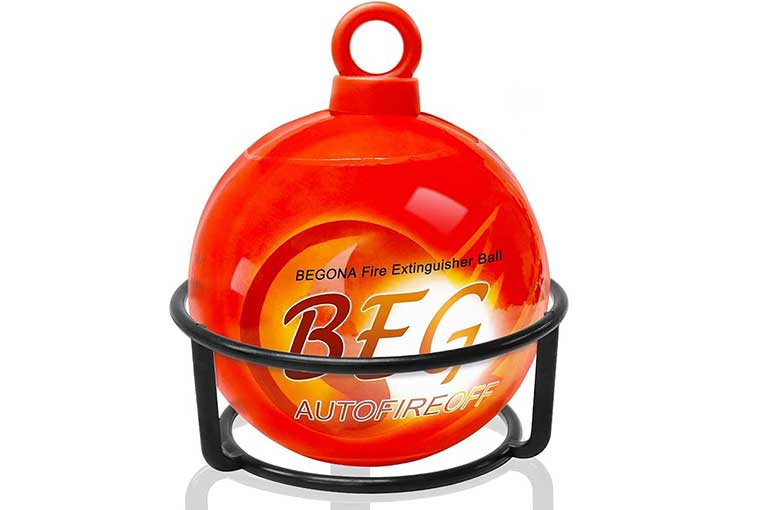
An innovative self-activating fire suppression system, the Fire Extinguisher Ball offers a unique approach to firefighting. 

When exposed to flames, the ball bursts autonomously, releasing a fine powder that swiftly and effectively extinguishes the fire. 

This ingenious device is particularly advantageous in confined spaces or areas with limited accessibility, where traditional firefighting methods might face challenges. 

The Fire Extinguisher Ball’s ability to initiate fire suppression independently makes it a valuable addition to fire safety measures, ensuring a rapid response even in scenarios where immediate human intervention may be difficult.

Fire Hoses

fire hose firefighting equipment

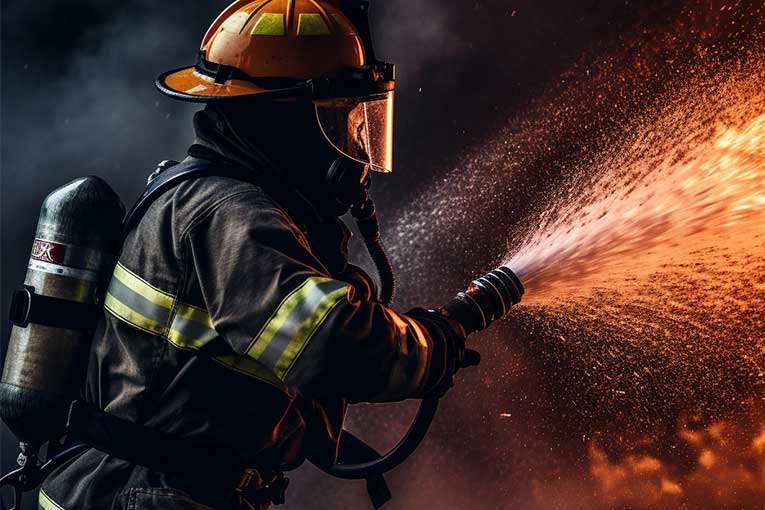
As one of the most prevalent tools in large-scale firefighting, fire hoses are indispensable for firefighters combating significant flames. 

These flexible and robust hoses serve as critical conduits, allowing the directed flow of water onto the fire. 

Their length and adaptability empower firefighters to reach remote or challenging locations, providing a versatile means of effectively delivering water to suppress fires. 

The strategic use of fire hoses enhances the agility and reach of firefighting efforts, enabling responders to address fires in diverse environments and mitigate potential challenges posed by the fire’s scale and intensity.

Hose Jets

fire hose firefighting equipment

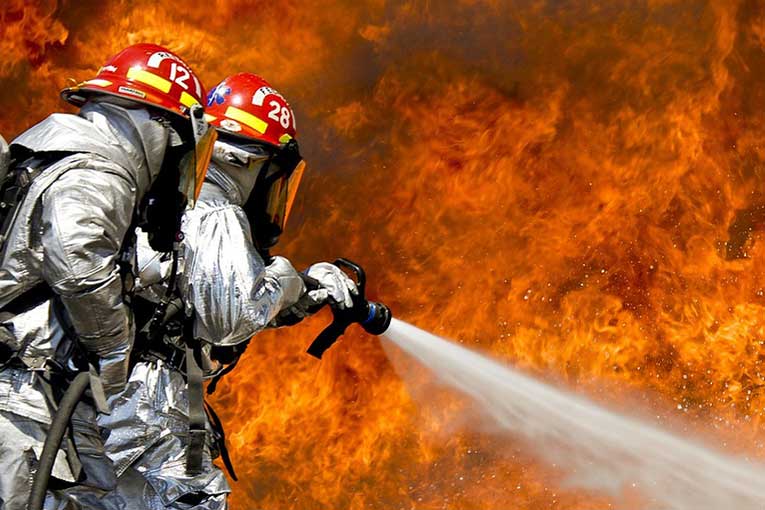
Hose Jets represent heightened firefighting capabilities, requiring the collaboration of two firefighters to handle their extra power. 

These specialised tools offer an elevated force and flow, allowing firefighters to exert increased control over the extinguishing process. 

With the ability to adjust the jet stream, firefighters enhance precision in directing water onto the flames, addressing specific firefighting requirements. 

The collaborative use of Hose Jets reflects a strategic approach, amplifying the effectiveness of firefighting efforts in scenarios where a more robust and targeted water delivery is essential to combat fires of greater scale or intensity.

Fire Buckets

fire buckets firefighting equipment

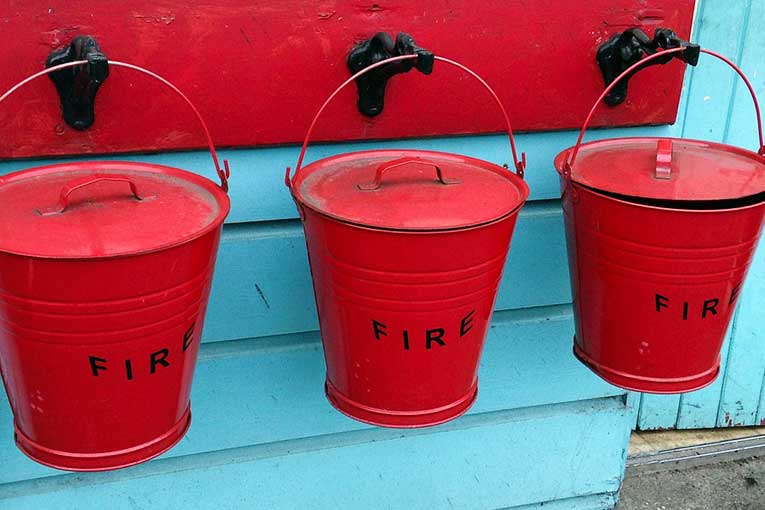
Simple in design yet highly effective, fire buckets are containers filled with either water or sand. 

Positioned strategically, these buckets serve as immediate response tools, offering a swift and accessible means to douse small fires or control sparks. 

Their simplicity makes them an essential first line of defence, providing an uncomplicated yet crucial tool in the initial stages of firefighting. 

Whether used by trained personnel or as part of fire safety measures in public spaces, fire buckets play a fundamental role in empowering individuals to take immediate action and contribute to fire containment efforts.

Flamezorb

flamezorb firefighting equipment
Source: Amazon

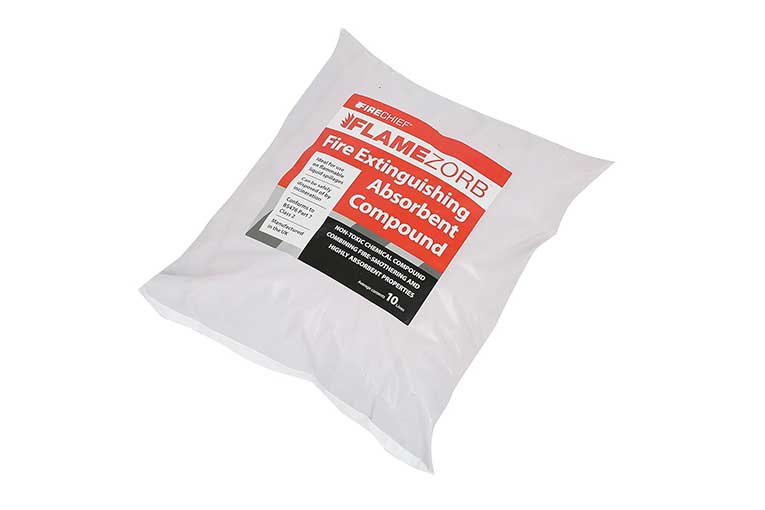
Flamezorb, a granular substance, serves as a rapid-response tool in firefighting by efficiently absorbing flammable liquids. 

When applied to spills, it swiftly neutralises and absorbs the substances, preventing the spread of fire. 

This versatile and effective tool finds particular utility in scenarios involving hazardous materials or potential chemical fires, where the quick containment of flammable liquids is essential to mitigate the risk of fire escalation. 

Flamezorb’s ability to address such specific challenges makes it a valuable asset in the firefighting arsenal, contributing to the overall effectiveness of fire suppression efforts in diverse and complex situations.

Fire Blankets

fire blanket firefighting equipment
Source: Amazon

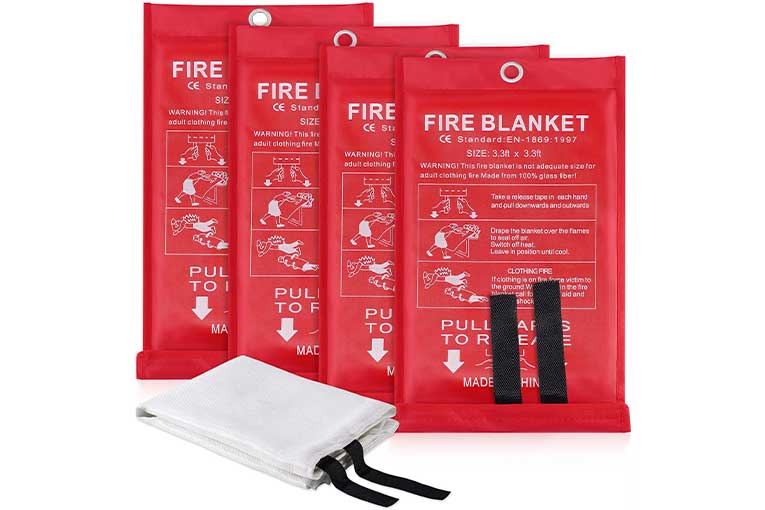
Constructed from fire-resistant materials, fire blankets emerge as versatile tools in firefighting and emergency response. 

Beyond their primary function of smothering small fires, these blankets provide a multifaceted solution. 

In emergency situations, they offer protection by wrapping around individuals, creating a temporary shield against flames and heat. 

The adaptability of fire blankets extends their utility beyond traditional firefighting scenarios, making them valuable assets in various emergency situations where rapid response and versatile tools are paramount to ensuring the safety of individuals and effectively addressing evolving challenges.

Fire Suit

fire suit firefighting equipment

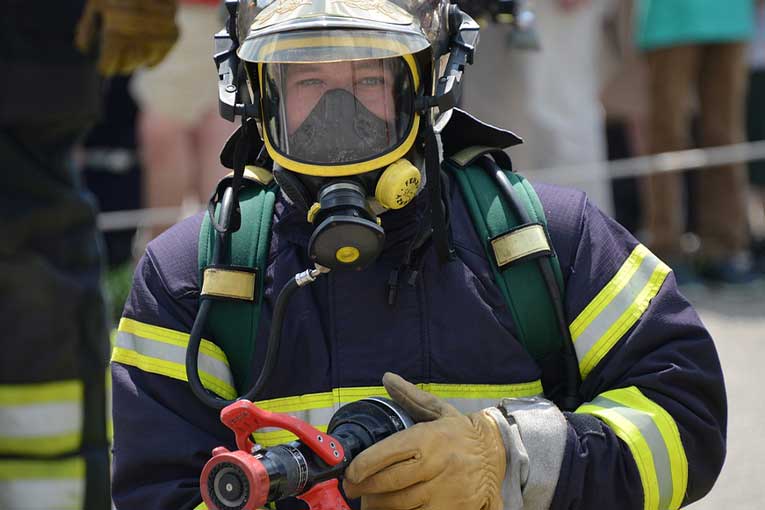
Specially designed for the demanding challenges of firefighting, a fire suit is more than  a mere uniform – it’s a shield against extreme heat and flames. 

Crafted from fire-resistant materials, these suits envelop firefighters in a protective barrier during the most intense operations. 

With layers designed to withstand the harsh conditions of a fire, these suits are crucial in ensuring the safety and well-being of firefighters. 

The specialised construction of fire suits exemplifies the commitment to providing a robust defence against the hazards encountered in the line of duty, reinforcing the resilience of those who bravely confront the flames.

Firefighter Gloves

firefighting gloves firefighting equipment
Source: Amazon

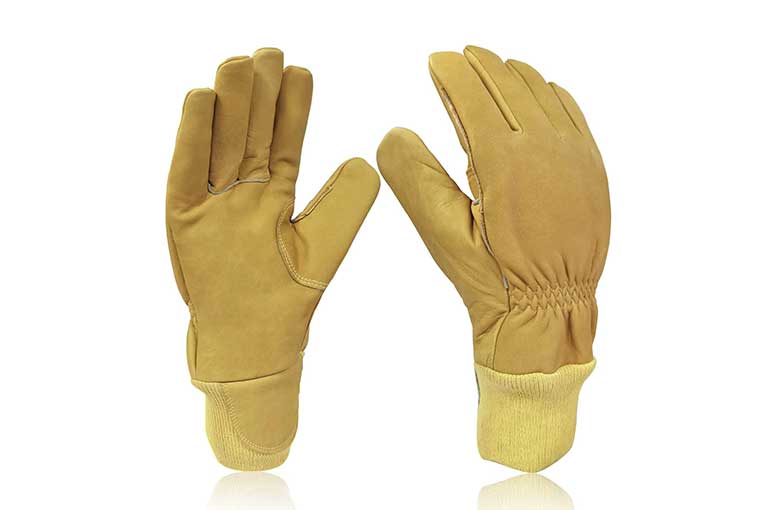
These gloves are essential for firefighters, offering crucial hand protection in the dynamic and intense environments encountered during firefighting operations. 

Crafted from materials resistant to high temperatures, they enable firefighters to handle hot surfaces and materials with confidence. 

The specialised design of firefighter gloves prioritises both dexterity and protection, allowing firefighters to navigate challenging situations while safeguarding their hands from the formidable heat generated in the course of combating fires. 

Gas Tight Suit

gas tight suit firefighting equipment
Source: Wikipedia

Comprising a multi-layered construction, these suits act as an impermeable barrier, creating a formidable shield between the firefighter and potentially harmful substances. 

Their purpose extends beyond conventional firefighting gear, addressing the specific challenges posed by chemical fires and the release of dangerous gases. 

By providing an encapsulating defence, gas-tight suits empower firefighters to navigate complex and perilous environments, ensuring their safety while enabling effective response and mitigation in the face of chemical hazards.

Drones

drones firefighting equipment

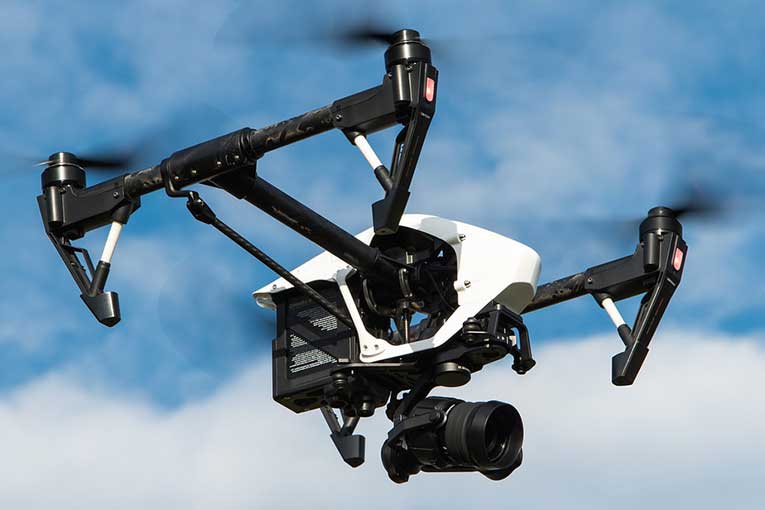
These unmanned aerial vehicles, equipped with advanced cameras, offer invaluable aerial views that significantly enhance fire assessment capabilities. 

Providing real-time situational awareness, drones become the eyes in the sky for firefighting teams. 

Their ability to swiftly survey large areas and capture critical information aids in strategizing and responding effectively to incidents. 

Drones not only contribute to the safety and efficiency of firefighting operations but also offer a technological edge, elevating the precision and speed with which responders can assess, plan, and execute strategies in the dynamic context of firefighting scenarios.

Thermal Imaging Camera

thermal camera firefighting equipment

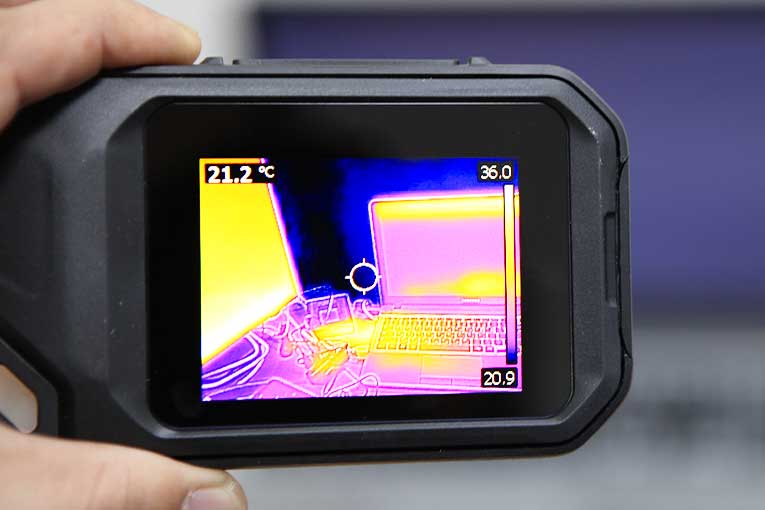
Thermal imaging cameras aid in locating individuals trapped in smoke-filled environments and identifying hotspots that may not be visible to the naked eye. 

The invaluable data provided by thermal imaging cameras enhances the efficiency and safety of firefighting operations. 

By offering real-time insights into the intensity and distribution of heat, these devices empower firefighters with the ability to make informed decisions, optimise resource allocation, and execute targeted strategies for suppressing fires and conducting search and rescue operations.

Breathing Apparatus

breathing apparatus firefighting equipment

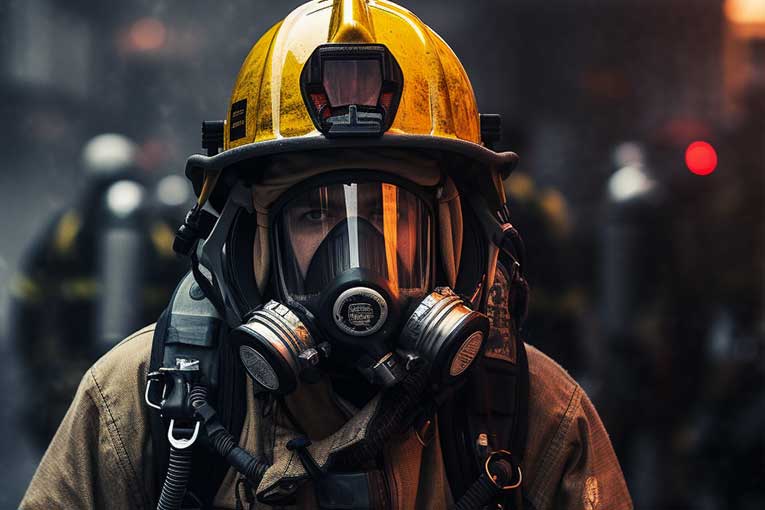
In smoke filled environments, these devices play a crucial role in ensuring the safety of firefighters by providing a continuous supply of clean air. 

The reliability and functionality of these apparatuses exemplify their vital role in preserving the well-being of firefighters and ensuring their ability to execute effective firefighting and rescue operations in environments where clean air is a precious commodity.

Positive Pressure Ventilation Fan

positive pressure ventilation fans firefighting equipment
Source: Wikipedia

Positive pressure ventilation fans are devices designed to create airflow that effectively removes smoke and toxins from enclosed spaces. 

By generating a controlled and directed flow of air, these fans contribute significantly to improving visibility for firefighters within confined areas. 

Beyond enhancing visibility, the removal of smoke and toxins creates a safer working environment, allowing firefighters to operate more efficiently and with reduced exposure to hazardous substances. 

Ladders

ladders firefighting equipment

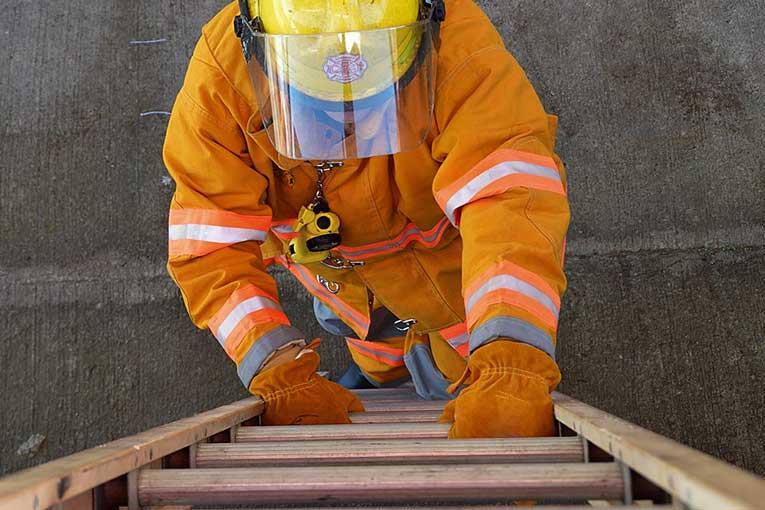
These versatile devices play a pivotal role in firefighting operations by enabling firefighters to access elevated areas, conduct rescues, and navigate challenging environments. 

Whether extending to reach upper floors of buildings or providing a stable platform for rescue operations, ladders enhance the agility and effectiveness of firefighting teams. 

Their portability and adaptability make them fundamental in addressing the diverse challenges posed by fires in varying structures and scenarios, contributing to the overall success and safety of firefighting operations.

Fire Fighting Vehicle

vehicles firefighting equipment

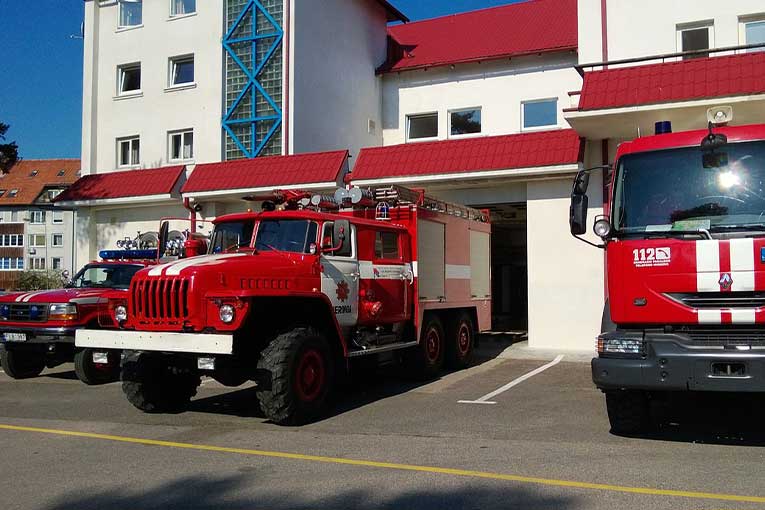
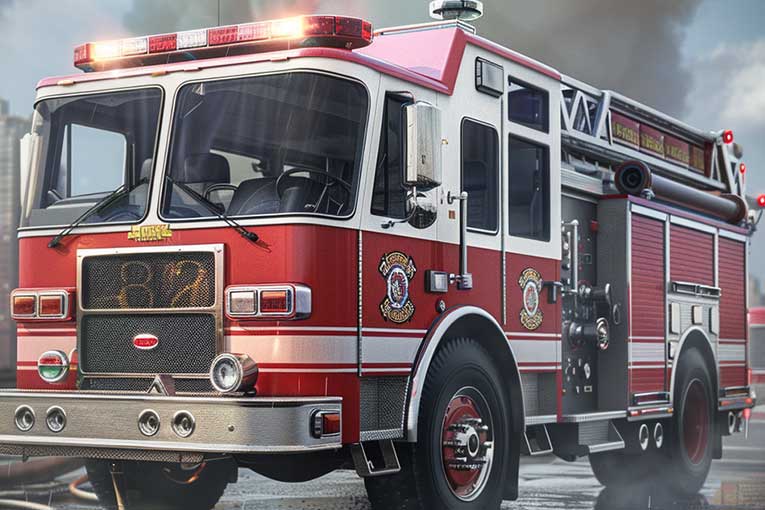
These vehicles carry essential firefighting tools, water tanks, and hoses, ensuring a swift and effective response to fire emergencies. 

Beyond their mobility, the specialised equipment on these vehicles equips firefighters with the resources needed to combat fires of varying scales. 

Whether navigating through urban environments or remote locations, these vehicles enhance the reach and capabilities of firefighting teams, playing a vital role in the timely containment and suppression of fires to protect lives and property.

How is Firefighting Equipment Used?

The strategic use of equipment is paramount, requiring a careful assessment of each fire’s unique characteristics. 

Firefighters, equipped with a diverse array of tools, employ a systematic approach to address different scales and types of fires.

Fire extinguishers, compact and versatile, find their application in swiftly suppressing small fires. 

Firefighters select the appropriate extinguisher based on the fire’s nature and discharge the firefighting agent with precision, aiming at the fire’s base. 

For larger incidents, fire hoses connected to water sources become instrumental. 

The hoses allow firefighters to direct water effectively, reaching inaccessible areas, while sprinklers automatically release water upon detecting excessive heat, contributing to fire containment.

Protective gear, including fire suits and gloves, plays a pivotal role in ensuring firefighters’ safety as they confront flames. 

These specialised garments shield against extreme heat, providing a critical barrier between the firefighter and the hazardous environment.

Cutting-edge technology, such as drones equipped with cameras and thermal imaging devices, offers invaluable insights. 

Drones provide aerial views, enhancing situational awareness for better decision-making, while thermal imaging cameras aid in locating individuals and identifying hotspots within a fire.

The use of firefighting equipment is not only reliant on the tools themselves but also on the skill, training, and coordination of firefighting teams. 

Firefighters undergo rigorous training to understand the capabilities and limitations of each tool, ensuring a synchronised and effective response to diverse fire scenarios. 

The strategic and well-coordinated utilisation of firefighting equipment remains a cornerstone in the battle against the unpredictable and destructive force of fires.

What Other Equipment Helps with Firefighting?

Some firefighting equipment is not directly used to directly put out fires, but it used to improve the safety and efficiency of firefighters.

Fire Sprinklers

fire sprinklers firefighting equipment
Source: Wikipedia

Installed in buildings, fire sprinklers are automatic devices that release water when detecting excessive heat. 

They play a crucial role in suppressing fire outbreaks and limiting damage in enclosed spaces. 

Strategically positioned, their rapid response significantly contributes to controlling fires, preventing their escalation, and protecting lives and property within structures.

Fire Doors

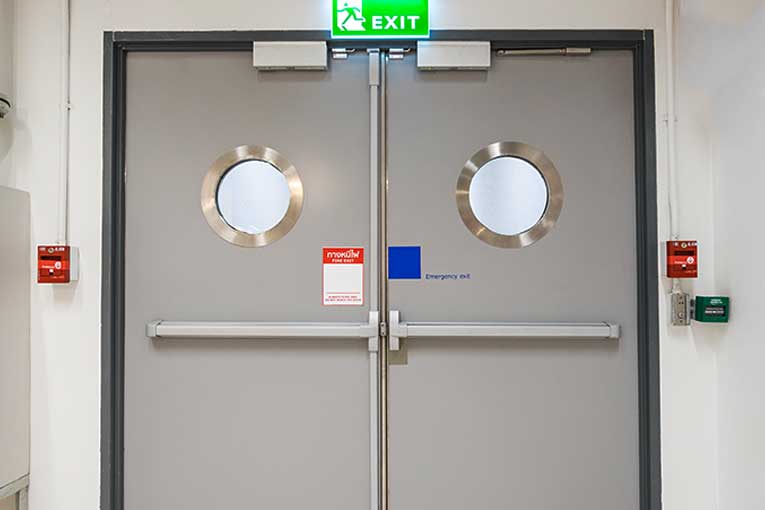
Specialised fire doors are meticulously designed to resist fire and smoke, acting as effective barriers to limit their spread within a building. 

These doors are critical components of passive fire protection systems, providing crucial time for evacuation and minimising the potential for fire extension.

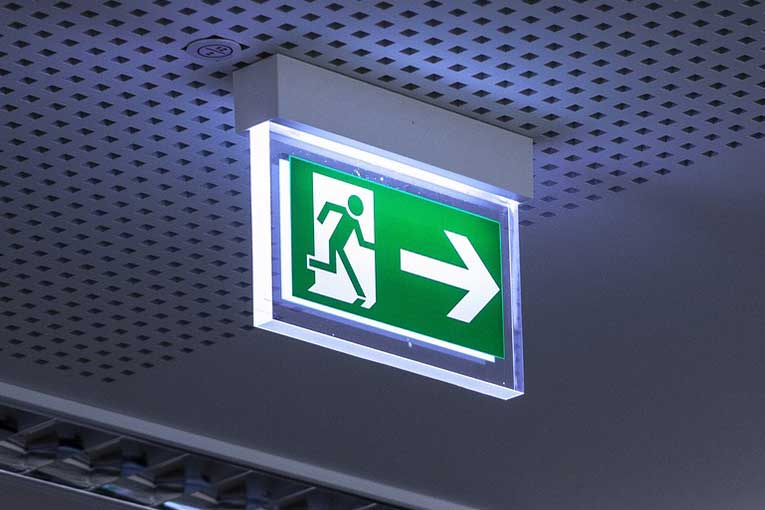
Emergency Signs

emergency signs firefighting supporting equipment

Clearly marked emergency lighting and signs are indispensable in ensuring swift and safe evacuation. 

These signs delineate evacuation routes and indicate the locations of firefighting equipment, guiding occupants to safety during fire emergencies.

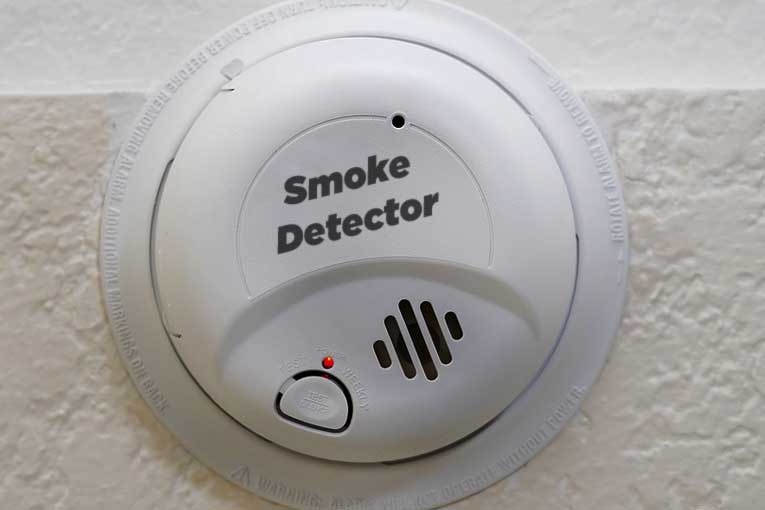
Smoke Alarms

There is 4 different smoke detector types

Essential components of early warning systems, smoke detectors are devices that promptly detect smoke, alerting occupants to potential fire hazards. 

Their rapid detection capability is pivotal in providing early warnings, allowing for timely response and evacuation.

The different types of smoke alarms ensure people can react quickly  to different types of fires.

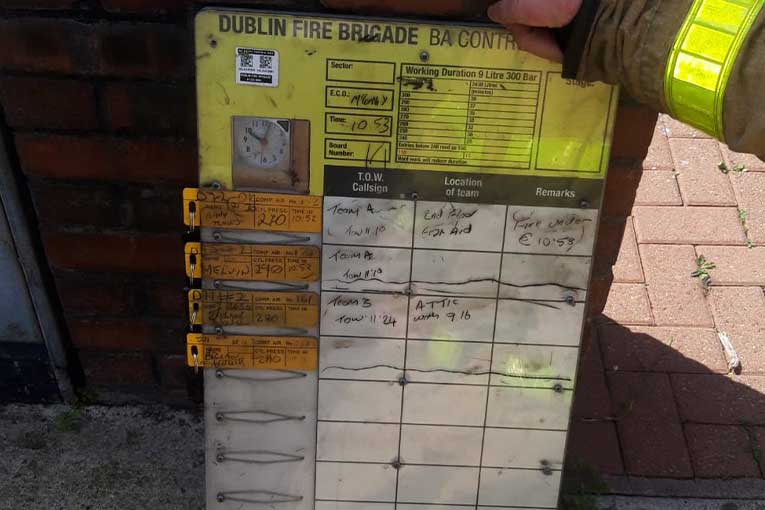
BA Entry Board

The Breathing Apparatus (BA) Entry Board serves as a control hub during breathing apparatus operations. 

It manages the entry and exit procedures of firefighters equipped with breathing apparatus, ensuring systematic and safe operations in environments with compromised air quality.

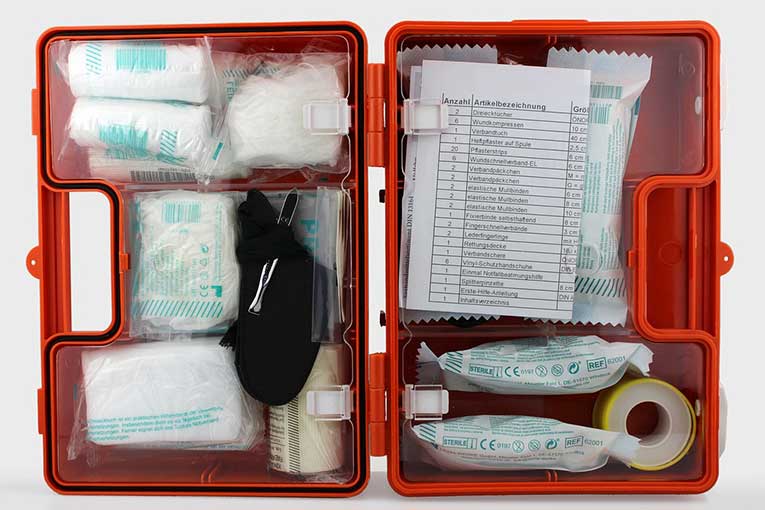
First Aid Kit

first aid kit firefighting supporting equipment

Containing medical supplies, first aid kits address injuries sustained during firefighting or rescue operations. 

They provide essential support until more extensive medical assistance is available.

Light Portable Pump

light portable pump firefighting equipment
Source: Amazon

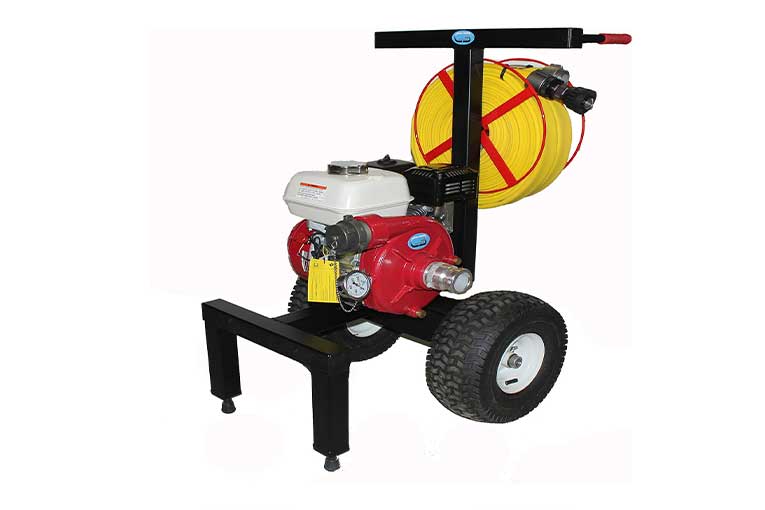
Compact and portable, light pumps are indispensable for transporting water to areas inaccessible to larger firefighting vehicles. 

These pumps enhance operational flexibility, providing firefighting teams with the ability to establish water supply points in diverse environments.

Cutters

cutters firefighting equipment
Source: Wikipedia

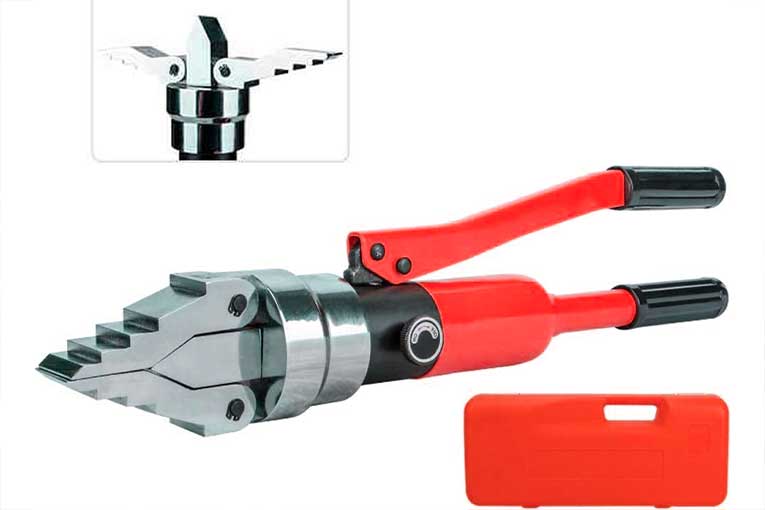
Cutting through materials obstructing access or rescuing individuals, cutters are versatile tools used by firefighters. 

They play a crucial role in extrication operations, enabling swift and precise interventions in situations where immediate access is essential.

Spreaders

spreaders firefighting equipment
Source: Amazon

Hydraulic spreaders are powerful devices used to pry open objects or create openings in rescue situations. 

These tools are instrumental in providing access to trapped individuals, facilitating efficient rescue operations.

Rams

rams firefighting equipment
Source: Wikipedia

Hydraulic rams are tools designed to force open doors or create pathways during rescue operations. 

Their robust construction and power make them essential for situations where conventional access methods are insufficient.

Do Not Cross Tape

do not cross tape firefighting equipment
Source: Amazon

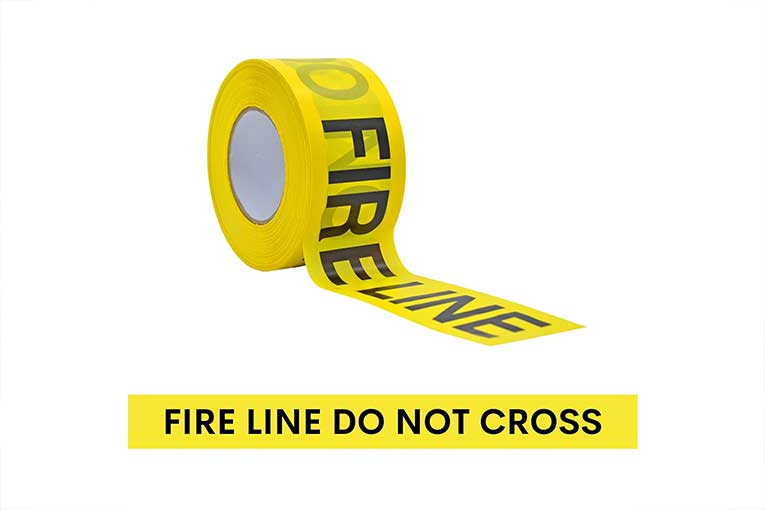
Visible tape with the clear directive “Do Not Cross” is utilised to cordon off unsafe areas and control access to the fire scene. 

This tape ensures the safety of both emergency responders and the public by preventing unauthorised entry into potentially hazardous zones.

Traffic Cones

traffic cones firefighting equipment
Source: Amazon

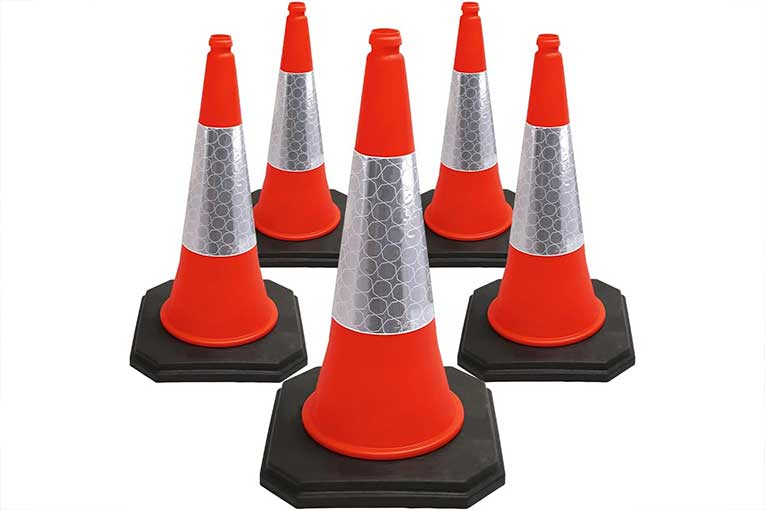
Deployed to manage traffic and create clear pathways for emergency vehicles, traffic cones are essential in ensuring unimpeded access for firefighting teams. 

These cones play a crucial role in maintaining order and facilitating the rapid movement of emergency vehicles to and from the incident scene.

What Does the Future Hold for Firefighting Equipment?

The future of firefighting equipment holds exciting possibilities, driven by advancements in technology, materials, and design. 

One prominent trend is the integration of smart technologies, such as artificial intelligence and the Internet of Things, into firefighting gear. 

This includes wearable sensors and augmented reality visors that provide real-time data to firefighters, enhancing situational awareness and decision-making. 

Innovations in materials science are shaping the development of more lightweight yet durable protective gear, addressing comfort and mobility concerns for firefighters. 

Nanotechnology may lead to advanced flame-resistant fabrics, ensuring greater protection against extreme temperatures. 

Additionally, the use of robotics in firefighting, ranging from autonomous vehicles to robotic firefighting assistants, is on the horizon.

As climate change intensifies, firefighting equipment is likely to evolve to cope with more frequent and severe wildfires. 

This may involve the development of specialised tools for wildfires and improved strategies for early detection and prevention. 

The collaborative efforts of researchers, engineers, and firefighters promise a future where technology plays a pivotal role in enhancing the safety, efficiency, and effectiveness of firefighting operations, ultimately better equipping first responders to address evolving challenges.

Conclusion

The array of equipment at a firefighter’s disposal is vast and diverse. 

From traditional tools that have stood the test of time to cutting-edge technology ensuring efficiency and safety, each item plays a crucial role in combating fires and protecting lives. 

The continuous evolution of firefighting equipment reflects a commitment to enhancing the capabilities of those who bravely confront the unpredictable nature of fires. 

As technology advances, so does our ability to respond effectively to fire emergencies, ensuring a safer and more resilient future for communities worldwide.

Exclusive Interview: Chris Ferrara, President and CEO of US Fire Pump

Chris Ferrara, President and CEO of US Fire Pump, speaks exclusively with IFSJ about his long career in the industry, his achievements to date and what he plans to do next

In the fire industry, Chris Ferrara is a name that many will be familiar with. With a career spanning over 40 years dating back to his days as a volunteer firefighter in Baton Rouge, Louisiana, Ferrara made a name for himself in the industry as a fire truck manufacturer and is responsible for building over 6,000 fire trucks that have been deployed at major locations across the globe.
Five years ago, after finding himself in the position to sell his fire truck manufacturing business, Ferrara Fire Apparatus, to REV Group in 2017, Ferrara decided to turn his focus to US Fire Pump, a business he started in 2014. IFSJ had the immense pleasure of sitting down with Chris to hear more about his impressive career in the industry, learn about some of the lesser known aspects of US Fire Pump’s offering, and his plans to re-enter the fire truck game.
Chris – you’re career in the fire industry is very impressive, where did it all start?

I started my career straight out of high school when I joined the local union apprenticeship programme to learn how to weld and pipe fit, following my dad’s footsteps. My wife and I got married and moved out to a small community north of Baton Rouge where I joined the local volunteer fire department.

Back then the volunteer fire department was strictly donation funded. At that time, we needed a new fire truck but we didn’t have the funds. With my background of fabrication and welding, me and a couple of guys got together and started building a fire truck in a barn.

Since there, my career leapt after working at different industrial facilities around Louisiana as a pipe fitter and welder, but I always wanted to go into business for myself. I started selling miscellaneous fire equipment – hoses and nozzles and rescue tools – in the early days around 1981. During this time, I had the opportunity to tour fire truck manufacturing facilities across the country and said to myself ‘I can do anything those guys are doing’ so I and hired some personnel and we began building first class fire trucks.

We started that on a full-scale basis in 1985 and that business substantially took off. As the story goes on, that business substantially grew with customers all around the world. I had customers in Dubai, China, Turkey, Mexico, Canada – all around the world, and in just about every major city domestically in the US.

What made you decide to leave the fire truck market?

I had an opportunity to exit that business around five years ago. A publicly traded company wanted to expand their business and so I decided to sell up and focus on US Fire Pump. But I couldn’t stay home and do nothing. I consider myself to be one of the biggest innovators in the fire industry and hopefully that’s what people will remember me for.

My main goal with US Fire Pump was to manufacture the largest fire pump ever produced on a fire truck. We accomplished that in around 2014 when we won the Guinness Book of World Record for the highest capacity fire pump ever installed on a fire truck anywhere in the world. This pump produces more than 6,000 gallons per minute from draft, and from a pressurised source it could get in excess of 10,000 gallons.

US Fire Pump is more than just a pump manufacturer – what else is the company involved in?

As the evolution went on, we also started a firefighting team that are now considered the largest industrial firefighting team in the world. We have, in the last six years, put out every major industrial fire domestically in the United States from an aircraft carrier for the Navy to one of the largest fires in Texas history at a terminal in Deer Park.

Not only are we building great pumps and rental pumps, we also have really brought a lot of new technology in the firefighting effort in industrial firefighting, developing new foam products, new foam supply equipment products.

We’re constantly looking for new ways and new ideas to stretch the boundaries of technology of how to attack fire. We always say in large scale fires that distance is always your friend. If we can throw a water foam solution in from 600 feet away from a fire that puts a firefighter in a safer position and still accomplishes the goal.

One of the biggest changes in firefighting in recent times has been the move towards fluorine free foam – how have you worked to incorporate this?

Fluorine free one of our biggest focus areas. It is a worldwide issue. We’re having to find ways to attack fires with a completely different tactic that no one else has seen before. Not only do you need to have more foam solution when using fluorine free, it’s a tactic that a lot of people are not used to. It has been about retraining the industrial firefighting groups over what action to take when using fluorine free products.

To my knowledge, there hasn’t been a major tank extinguishment with flouring free products so we’re always going to be challenged when that day comes in making sure that this product works, which is why we’re constantly running tests and research. In addition to that, we’ve had to develop other appliances and equipment that coincide with the new fluorine free products.

What else is US Fire Pump working on at the moment?

Our other focus has been what we call ‘big water flow’. Extinguishing fires takes a tremendous amount of water and foam solution to put out. People commonly think ‘I’ll hook up to a fire hydrant’ or something that’s close to where the fire is. With all the fires we attend we are always looking for alternative water sources. We have designed big submersible hydraulic pumps to get water from alternative water sources such as rivers, ponds and lakes.

We also use our hydraulic submersible pumps to de-water facilities. Following a hurricane last year, a large industrial facility was completely flooded – 20 acres of facility that was completely underwater. We were pumping over 10 million gallons of water a day and by the time the job was through we had pumped almost a billion gallons of water out of this facility.

I know that you’re now making a move back into the fire truck industry – what spurned that? And what are your thoughts on the move towards electric fire trucks?

It wasn’t something that we were necessarily looking for in the business – we were very focused on US Fire Pump and the emergency response team – but the customer drove us back into the business because of the reputation I built over the last 40 years.

We’ve had customers coming to us saying ‘we want you to build a great product like you’ve done before that we know is reliable and know that you can build’. We’re into that hot and heavy now. We’ve got quite a few trucks sold already and we’re going to go after business with customers that want a reliable, heavy-duty built product.

The technology has surely changed with electronic controls and different features – but I’m old school. I like to be a failsafe person. When I pull up on the scene people’s lives are at stake. When you engage the pump and the foam system, we want to make sure that system is going to work every time.

Finally, supply chain issues have been impacting industry across the world – has this had an impact on US Fire Pump?

With our fire truck division, we see that with the reputation and the relationships that I have with a lot of different manufacturers we can get geared up quite fast. Going forward, there may be some issues with some supply chains, but we’ve overcome that by having the inventory and manufacturing the products ourselves to overcome a lot of those issues.

I understood what was going on globally with the supply chain. It goes against the manufacturing principal of ‘just in time’, but we instead invested in over 15-20$ million of inventory of items built and ready to be built immediately so that we could have items for our customers. The industry standards for today in fire trucks and pumps may be two years for delivery of these critical items that these municipalities and industrial facilities need.

This article was originally published in the October edition of IFSJ. To read your FREE digital copy, click here.

Rebel with a cause: Angus Fire talks attack hoses

Angus Fire discusses how the role of attack fire hoses in enhancing firefighter safety

Firefighter’s personal protective equipment comes in various forms: turnout gear including flash hood, helmet, gloves, boots – and yet we all know that should be the very last line of defence. For firefighters in front-line rescue scenarios, scene size-up and risk assessment is vital but so is a battle-ready attack hose.

According to the National Institute for Occupational Safety and Health, fires involving modern materials burn much faster than those of several decades ago, and while thermal protection for firefighter turnout gear and breathing apparatus have improved, thermal protection for fire hoses has remained largely unchanged.

The current performance standards are NFPA (National Fire Protection Association) 1961 for US markets, EN14540 for Europe and BS 6391 for the UK. NFPA is currently reviewing and will consolidate NFPA 1961 along with 1931, 1936, 1961, 1963 and 1964 into a combined hose and fittings standard NFPA 1960.

In May 2016, the US Bureau of Alcohol, Tobacco and Explosives presented its findings to the NFPA Technical Committee on Fire Hoses and proposed new standards for thermal performance.

The NFA Technical Committee has been working to help ensure that firefighters are using attack fire hoses that are compliant with NFPA standards to enhance their safety and effectiveness. In doing so, the Committee has been looking to deliver on firefighter expectations for attack fire hose capabilities and characteristics, to understand any research gaps and priorities, and to provide recommendations for the future, including advising on advanced materials for attack fire hose construction.

Crucially, current and future standard reviews will differentiate between ‘attack’ hose and ‘distribution’ hose. Angus Fire has now produced its new Angus Rebel hose which looks to address the ‘attack’ phase with renewed levels of fire resistance.

High performance hose

In recent years, there have been several notable incidents where firefighters have entered high rise buildings, buildings incorporating new materials and buildings where internal firefighting is demanded by circumstance and driven by the need to rescue those trapped and to tackle fires at source. The problem here is that the risk of hose lines being damaged by fire itself increases exponentially as modern construction materials present ever increasing fire challenges.

Open pathways for fire spread are inherent dangers. For example, a fire lieutenant and a firefighter sadly died in one recorded incident in 2014 at a Massachusetts brownstone. The lieutenant and firefighter who attended the fire entered the building through the front door with a hose without water and moved downstairs to the basement, searching for the source of the fire and a potential victim.

High winds acted as a catalyst for the intensity of the fire, allowing it to spread quickly. The lieutenant had given the order to charge the hose line with water, but the extreme heat had burned it through preventing water flow and the back-up hose line was also burned through. The lieutenant and fire fighter became trapped.

Despite step-change improvements in firefighting techniques such as forced ventilation, CAFS and Coolfire through-the-wall extinguishing techniques, the fire hose has enjoyed only marginal gains on the last 20 years and it is not difficult to see why. It has to combine challenging and conflicting features: to be heat resistant yet flexible; lightweight yet be robust against cuts and abrasion; and to withstand high pressure yet be flexible enough to be coiled. Not forgetting it provides assistance in line-marking for retreat.

The Angus Rebel has therefore been designed to overcome these challenges. It is capable of withstanding flames and heat in excess of 850°C for hours. It is available in high visibility yellow and red as standard. The Rebel’s flame-resistant qualities and high visibility help provide a clear route out of a building with the potential to save lives

It has been designed for firefighter safety and is compatible for use with all major international coupling systems including Storz, British Instantaneous, Symetrique and US Expansion Ring NH, as well as being manufactured to perform generally in accordance with NFPA 1961, BS6391 (Type 2) and DIN EN 1947 standards.

Firefighters know that any loss of water supply on the fire-ground is life threatening but mobilityis also key. An attack hose is designed to combine appropriate water flow levels with a hose that is a flexible, kink resistant and as light as possible.

New hose technology

Angus Rebel is constructed from a mix of high performing natural and synthetic fibres, with a synthetic rubber lining and coated in protective acrylic. The team at Angus research and development have drawn on those attributes and combined them with rubber and textile to produce an innovative solution to solve a known operational concern. The result – Angus Rebel attack hose.

Whereas the conventional covered hose is designed to ensure reliability and long life, Angus Rebel attack hose has been designed to offer a different suite of benefits. Used in non-threatening combat it performs as a regular hose, but any firefighter will understand that maintaining integrity at over 850°C is no mean feat.

With the Angus Rebel model, the hose becomes part of an expendable defence whilst simultaneously enhancing firefighter safety. Think of a helmet or bunker jacket: it is designed to be used repeatedly, but only if the integrity is guaranteed. If a helmet suffers a heavy blow or bunker gear is contaminated, both will protect you but at the cost of replacements.

This is the crux of the Angus Rebel concept. It is a tool in the fire armoury, to be used selectively in high challenge, personnel rescue situations. The hose is designed to survive temperatures that destroy conventional hose in seconds. In that situation it becomes an expendable ally, but not before it ensures continuity of water supply and your safety.

Wildfires and aviation

The recent spate of massive wildfires in the United States and Australia exposed firefighters to heat stress, fatigue, smoke and dust. As if that was not enough, the loss of vital hose lines from fire was very real. Ignition typically starts from low vegetation such as underbrush and leaf litter, from there to higher vegetation such as tree branches.

As the fire increases in intensity and size, fuel is involved at all levels. A complex mix of terrain, vegetation and wind changes can expose firefighters to a rear-guard action; this is when you want continuity of water supply. A hose as durable as the Angus Rebel is ideal for such front-line attacks on fire spread.

Similar to wildfires, aviation spill fires can lead to hoses being trailed through fuel that carries a risk of ignition in vapour suppression procedures and significant temperatures in fire. Angus Rebel is designed to allow airport crash tenders to be equipped with a first line attack hose that can withstand burning hydrocarbon in personnel rescue scenarios.

The development of the original Angus Duraline covered fire hose provides firefighters with a jacketed hose that continues to provide the benefits of minimal maintenance, low pressure loss, high abrasion resistance, high chemical resistance, low kinking and easy drying lay flat hose. The introduction of the Rebel fire hose sets a new standard in structural firefighting safety, achieved with the highest known resistance to heat and flame of any fire hose available today.

This article was originally published in the June edition of IFSJ. To read your FREE digital copy, click here.

Bigger, Better, Faster, Lighter: Hydraulically-driven submersible pumps

With 34 years of experience in mobile water transport, Hytrans explains the benefits of hydraulically driven submersible pumps.

Since 1988, Hytrans has developed, manufactured, and supplied mobile water transport systems with hydraulically driven submersible pumps. Overt the last 34 years, Hytrans has supplied more than 1200 of its HydroSub systems across the globe, establishing itself with a reputation of good quality, proven performance, and innovation.

The biggest advantages of using hydraulically driven submersible pumps versus conventional suction pumps are, according to Hytrans, the vertical pump lift without draft loss and the deployment time. With a conventional system, the required priming consumes valuable time, especially in situations where time is of the essence.

In addition, when drafting from seven meters down the capacity of a pump reduces by approximately 70%. By using a submersible pump, such as Hytrans’ hydraulically driven offer, this is no longer a problem as the hydraulically driven pump is floating, an as a result priming is not needed and there is no draft loss. This means pumping water from 60 meters vertically down from any open water source can be achieved easily without capacity loss.

In its efforts to develop mobile and easy-to-handle water transport systems, Hytrans has built its systems as containerized modules. With this, each container can be handled using a truck with a hook arm lift-off system. In case of a large-scale incident, systems can be combined as complementary modules to increase capacity and pumping distance with a minimum time and manpower. When all this is combined, it is a perfect tool for situations where water is a key necessity.

INTERSCHUTZ 2022

As INTERSCHUTZ returns to Hannover from the 20-25 of June, Hytrans will be in attendance to display its latest developments, including its the new HydroSub 1200F. The new unit features two hydraulically-driven submersible pumps in combination with a built-in booster pump with a total capacity of 30.000 lpm @ 12 bar. The system is driven by two diesel engines with a total power of 1200 KW (over 1600 HP). One engine drives the hydraulic system for the submersible pumps and the booster pump is driven by a second engine assisted by the other.

The HydroSub device can be controlled using a Human Machine Interface alongside an advanced monitoring system called CANbus. The operator can choose the setup, such as water intake from open water or a hydrant, and the unit will automatically select the right program to start. Depending on the program one or both engines start automatically.

The operator can concentrate on the flow and pressure and the control system takes care of controlling the engines automatically. Depending on the deployment country the unit will be equipped with diesel engines following the latest emissions rules applicable.

Another patented system on this unit is the satellite PowerFoam. This system consists of a hydraulically driven foam gear pump driven by two hydraulic lines – pressure and return – of 30 metres. The foam pump is built in a small, stainless steel frame on wheels which can be brought to the foam supply and can be a set of combined IBCs or a foam tank. Having the foam pump as close as possible to the supply, the supply line is very short and allows high viscous foam to be used.

From the satellite foam pump, a flexible pressure hose is connected to the booster pump, inside the container frame of HydroSub where the foam is injected into the water. By knowing the water flow and measuring the foam flow the exact percentage of foam – as set by the operator – is injected. The whole system is automatically controlled and completely independent of flow and pressure.

All PowerFoam solutions from Hytrans use hydraulics to drive the foam gear pump, and in combination with accurate water flow measuring/calculation the exact amount of foam concentrate is added to the water flow. Foam settings can be input from 0-6% with increments of 0.1%. The system works in such a way that it is fully independent of pressure and water flow and adapts automatically if there is fluctuation, ensuring accurate foam mixing.

It also features a return line which allows users to return the foam concentrate to the container during training sessions. This has the advantage that both the foam settings on the pump unit as well as the foam logistics can be trained without wasting precious foam.

FloodModule

Because of climate change, flooding is becoming more prevalent all over the world. In anticipation of this, Hytrans developed an add-on system for flood fighting for the HydroSub 150 unit, called the FloodModule. This module is equipped with specially designed flood pumps that can replace the standard submersible pump.

With the add-on system, the capacity of the HydroSub unit is multiplied by six to achieve a capacity of 50.000 lpm (13.200 GPM). New developments have also made the pumps lighter and as a result even easier to deploy. The FloodModule with all its features will also be shown at Hytrans stand at INTERSCHUTZ.

Hytrans StrateLine Large diameter hose

To transport large volumes of water over long distances it is necessary to use a large diameter hose to reduce the friction loss. Depending on the distance, elevation and required end-pressure, Hytrans can make the calculations and determine the most suitable diameter and the number of parallel lines needed. Large diameter hoses, which range from 6” up to 12”, behave differently than smaller diameters and therefore have specific requirements to guarantee a safe and quick deployment.

With this in mind, Hytrans has developed the StrateLine hose which will be on show at INTERSCHUTZ. This through-the-weave extruded rubber hose is characterized by a low elongation (<1.5%), low weight, and high flexibility.

Working in emergency situations a fast deployment of the system is key. For the fast deployment of the large diameter hoses, it is important that couplings can withstand the ground impact at speed. Hytrans’ couplings are designed to be low weight to reduce the force of the impact, which has the added benefit of increases the total length of hoses that can be stored inside the Hose Layer Container as a result of the volume decrease of the coupling. Hytrans can supply Multi Lug couplings as a standard for the StrateLine hoses – high-grade aluminum couplings which need only a 5-degree twist to lock and are low weight and have a high impact resistance. Due to the patented chamfered lugs, the couplings open easily, once uncoupled, and allow quick relief of the water.

The mobile systems made by Hytrans Systems are a complete solution and designed to be used in extreme circumstances. In these circumstances, the system must be deployed in minutes using minimum manpower which is why the engineers at Hytrans are constantly working on making things easier and lighter without affecting performance, strength, reliability, and mobility.

Mobile high-volume pumping was, is, and will be a constant development to get bigger, better, faster, and lighter equipment to help firefighters to assist them to fulfil their tough job. Hytrans is using its 34-years of experience to make the best system worldwide available.

This article was originally published in the June edition of IFSJ. To read your FREE digital copy, click here.

Exclusive: Flourine Free Foam Solutions from Fomtec

John Olav Ottesen, CEO and founder of firefighting foam developer and manufacturer Fomtec, talks foam, fluorine and INTERSCHUTZ 2022

In 2001 I founded Dafo Fomtec AB with the goal of producing and supplying high quality firefighting foam agents and associated foam hardware. 21 years on our main manufacturing location remains in Helsingborg, Sweden. I have a small dedicated team of industry professionals as we maintain our strong customer focus and I am proud to say that we supply our products to over 65 countries around the world. Fomtec will again be exhibiting at Interschutz 2022 and we are looking forward to welcoming our existing customers and potential new clients to Stand C17, in Hall 13.

Why use foam?

Since humans started to use liquid hydrocarbons as an energy source we have strived to find a more effective extinguishing agent than water. Whilst other agents such as water, dry chemical powder and gaseous agents are also effective with liquid hydrocarbon fuel fires, foam adds the additional life safety factor of providing a foam ‘blanket’ that prevents vapour escaping thereby preventing re-ignition post extinguishment. The water draining from the foam also has a cooling effect on the fuel and surrounding structure, aiding the extinguishment process.  Compared to DCP and gaseous, agents foam is also relatively inexpensive.

Offering high performance foam concentrates and tested systems of hardware with foam are critical for our clients to be truly protected. Performance extends to Fomtec manufacturing and delivering our products when we promise we will and in our current fiscal year we have achieved a better than 95% on-time delivery.

Trust is closely linked to performance and Fomtec invests heavily in fire performance testing and then having our products approved through independent third parties to the appropriate international standards. We also make our approval data readily available to all who visit our website, and Fomtec remains one of the few foam manufacturers who do this.

With the transition away from PFAS based foams based on the environmental impact of the PFAS chemicals, it is vital that sustainability is part of our business. Starting with the selection of raw materials and the evaluation of all our suppliers, through to the treatment of water used in our facility, through to the evaluation of travel needs for supporting the business.

Fomtec at INTERSCHUTZ

At the last Interschutz in 2015 all the talk in the firefighting foam world was about the transition to shorter chain C6 PFAS containing foam, and now 7 short years later those discussions will now be about the transition away from these foams to fluorine free foams. This transition is not being driven by the foam manufacturers and it is certainly not because the new fluorine free foams outperform the fluorinated foams. Nor is it because the fluorine free foams are lower cost that their fluorinated alternatives. The transition away from fluorinated foams is entirely due to environmental restrictions and legislation in relation to a family of chemicals know as PFAS.

In the last 20 years we have seen the PFAS chemicals PFOS and PFOA, which were used in fluorinated foams, declared Persistent Organic Pollutants and use of foams containing these chemicals are banned or are restricted with defined periods to stop using the foams. As stated above in 2015 all foam manufacturers were talking about their new C6 foams at Interschutz, but the PFAS chemicals in these foams are now scheduled for restriction and eventually will no longer allowed to be used.

The Enviro Programme

There is no doubt that the addition of the fluorine-based chemicals in firefighting foams played an important part in their performance. As we always like to point out fluorine free foam agents have been around for many years including protein foams, as well as many Class A and synthetic detergent foams. Developing high performance Class B fluorine free foams is a challenge and since 2014 nearly all of Fomtec’s research and development money has been invested in the Enviro Programme.

This is the name that Fomtec gave to the project to develop high performance Class B fluorine free foams. Fomtec quickly realized that expansion ratio, drain time and bubble structure are even more important with fluorine free foam agents, and achieving positive results against fires means that the foam agents need to the tested and approved with the associated foam hardware to ensure that the finished foam has foam qualities that match those that were used to successfully meet the requirements of UL 162 and FM 5130.

At Interschutz 2022 we will be promoting our range of Synthetic Fluorine Free Foams (SFFF), which are marketed under the Enviro (by Fomtec) brand name. The Enviro by Fomtec range is a range of foam concentrates which are a direct result of Fomtec determining that foams needed to be designed and formulated for the different firefighting missions. Extensive research and development, including more than 1500 fire performance tests, has led to Fomtec offering a range of Enviro branded products. These products are supported by international approvals within relevant sectors: industrial (UL/FM), marine (IMO), aviation (ICAO), military (US Mil Spec), emergency response (EN/UL) and wildland (US Forest service).

In May 2021 Enviro USP and Enviro ARK achieved FM approval for use with non-aspirated sprinklers, with Enviro ARK being the first SFFF to achieve this approval for use on polar solvent fuels. Enviro USP and Enviro ARK have class leading FM approvals with non-aspirated sprinklers from 6’ (1.8m) up to 45’ (14m).

Fomtec has always held the belief that decisions should be based on information. These independent approvals mean that the information Fomtec supplies can be considered as solid data and not just an opinion. For many end-users making the transition from PFAS containing foams this data provides peace of mind that they can make this transition without compromising the safety of their personnel or increasing the risk to their facility or business.

Fomtec will also exhibit and have information available on our foam solutions for multiple applications based on our C6 PFAS containing foams and foam hardware. After the extended period between the shows the Fomtec team look forward to welcoming our existing customers and all who want more information on the Enviro range, or other Fomtec solutions.

This article was originally published in the June edition of IFSJ. To read your FREE digital copy, click here.

Hytrans Systems acquires technology and products of Foru Solution BV

Hytrans Systems BV in the Netherlands, a leader in high-volume mobile water transport systems, has announced that it recently acquired the technology and products of Foru Solution BV.

With the acquisition, Hytrans expands its product range and makes it more versatile for its customers in the port and petrochemical markets.

Hytran CEO, Frank Bosveld, said the acquisition of the FORU products as a great expansion of the Hytrans product range: “The addition of the FORU oil skimmers allows us to better serve our customers in the port and petrochemical industries as a single mobile Hytrans System can now be used as fire-fighting solution as well as to clean-up oil spills”.

Foru Solution is known for its oil spill response solutions. The FORU oil skimmers are effective when it comes to cleaning up oil spills, also in rough weather. They are also robust, easy to deploy and provide a high recovery capacity and efficiency. The FORU skimmers are self-adjust, hydraulically driven, have no external moving parts, and are easy to operate. Through its high capacity, FORU skimmers can clean up small to the biggest and worst oil spills.

The acquisition also allows serving the oil spill market with FORU products in a better way thanks to the extensive distribution and service network of Hytrans Systems.

The driver behind FORU products, Mr. Koos Tamminga, commented on the acquisition: “Joining forces with Hytrans Systems allows for much stronger business development of the FORU solutions into the oil spill market given the strong capabilities and over 30 years of experience of Hytrans”.

EPA Issues first test order for Commercial Fire Fighting Foam

As a part of the US Environmental Protection Agency (EPA)’s PFAS Strategic Roadmap, the agency has issued the first in a series of Toxic Substances Control Act (TSCA) test orders to require companies to conduct and submit testing on per- and polyfluoroalkyl substances (PFAS). 

EPA selected 6:2 fluorotelomer sulfonamide betaine (CASRN 34455-29-3) as the first order issued under the National PFAS Testing Strategy. The foam has been manufactured (defined to include importing) in significant quantities (more than 25,000 pounds in a given year) according to TSCA Chemical Data Reporting (CDR) rule reports.

This chemical substance is a surface-active agent used to make commercial fire-fighting foams and may be found in certain floor finishes. CDR data also indicate that at least 500 workers in a given year could be potentially exposed to this chemical. Although there is some hazard and exposure information about this PFAS, EPA said it found insufficient data to determine the effects on human health associated with the inhalation route of exposure. This test order will address this data need.

The Chemours Company, DuPont De Nemours Inc., National Foam Inc., and Johnson Controls Inc. are the recipients of this first test order. The companies subject to the test order have been instructed to conduct the tests as described in the order, including testing of physical-chemical properties and health effects following inhalation, or provide EPA with existing information that they believe EPA did not identify in its search for existing information. EPA said it encourages companies to jointly conduct testing to avoid unnecessary duplication of tests. 

Based on available information and predictive models, testing on 6:2 fluorotelomer sulfonamide betaine will also inform the agency’s understanding of the human health effects of 503 additional PFAS with similar structures as detailed in the Testing Strategy.

“For far too long, families across America, especially those in underserved communities, have suffered from PFAS. High-quality, robust data on PFAS helps EPA to better understand and ultimately reduce the potential risks caused by these chemicals,” said EPA Administrator Michael S. Regan. 

“Our communities deserve transparency from the companies that use or produce these substances about their potential environmental and human health impacts.”