Maxlogic fire detection integrated with Wisenet WAVE VMS

Mavili Elektronik Ticaret A.S. has developed a plug-in which enables its Maxlogic intelligent addressable fire detection system to interact with Hanwha Techwin’s Wisenet WAVE video management software (VMS).

The integration of Maxlogic with Wisenet WAVE via the Mavili SPRVSR+ plug-in, ensures control room operators can rapidly visually verify a fire alarm event and take appropriate action. Detailed maps, together with information on the Maxlogic devices installed at each site, can be displayed alongside images captured by Wisenet cameras.

When an alarm event occurs, a pop-up message instantly appears on the screen, with operators able to view live images from cameras installed at the event’s location. PTZ cameras are automatically moved to point to where there might be a fire.

After viewing the video of an event, operators can use Wisenet WAVE’s graphical user interface to silence the alarm and reset the system, whilst an event log provides access to the recorded video for forensic post-event investigations.

“Adding video verification to our Maxlogic fire detection system with the help of Wisenet high resolution cameras, means we can offer end-users even greater peace of mind in knowing they are benefiting from an integrated solution that offers them a very high level of protection from a potential fire”, said Mr Gurkan Erdem, Sales & Marketing Director of Istanbul based Mavili Elektronik Ticaret A.S.

“In addition to capturing superb quality images, Wisenet cameras have an excellent reputation for being robust and ultra-reliable. Hanwha Techwin is therefore an ideal technology partner for us to work with to ensure our customers gain maximum advantage from their Maxlogic intelligent addressable fire detection systems”.

Wisenet WAVE

Wisenet WAVE is designed to make it almost effortless to monitor high-definition video streams. An auto-discover feature ensures connected cameras and a wide range of third-party IP network devices can be addressed and set up in just minutes. An intuitive ‘drag & drop’ tool makes it easy to set up a display of live and recorded images on a single screen or video wall, with customisable layouts and sizes.

Other key features include a virtual PTZ which, with just a simple click of the mouse, enables operators to zoom in to see close-up detail of any suspicious activity, whilst motion detection and video analytics support can be configured to generate alerts when user-defined incidents occur, with push notifications sent to mobile devices.

“We are delighted that an independent manufacturer such as Mavili Elektronik Ticaret A.S. has entrusted Hanwha Techwin to be its preferred technology partner and has invested its time in developing the SPRVSR+ plug-in”, said Uri Guterman, Head of Product & Marketing for Hanwha Techwin Europe. “The Maxlogic fire detection brand is highly respected and has achieved success in over 70 countries. Mavili Elektronik Ticaret A.S. shares our passion for providing the highest possible levels of pre and post-sales support and we are therefore
Euralarm Annual Report reflects on a year of change

Euralarm has released its Annual Report 2020-2021. Traditionally, the annual report covers the period running between the General Assemblies of the association. This year however, due to the COVID-19 crisis, the General Assembly will take place end of November. Nevertheless, it was decided to release the Annual Report, as always, in May.

The Annual Report follows the structure, every section and committee of the association summarising their activities over the previous year and, where appropriate, providing forecasts and plans for the future.

For Euralarm 2020 was also an important year. The professional team was extended, enabling the association to be more present and proactively participate in projects and meetings from the Commission, CEN, CCMC and Orgalim. This positive step forward has also been noticed by key stakeholders from the different organisations. Euralarm plans to continue to expand its presence in those areas which are important for the members and ensure their voice is heard.

Last year has also been a year of many changes. ‘Online’ has become increasingly important and nowadays is the standard for the working life of many of us. The trend towards online itself underlines how fast digitalisation and digital technologies can be converted into opportunities and challenges.

Since its foundation 50 years ago, Euralarm has been proactively contributing to standardisation processes, providing guidance in the digitalisation of our industry, raising the standards for training and qualifications to address society’s needs for safety and security and partnering with research institutes to turn emerging technologies into sustainable solutions based on knowledge and innovation.

Over the 2020-2021 period Euralarm testified of an ongoing growth in membership with Vanderbilt, Verisure, Kiwa and the Open Security & Safety Alliance (OSSA) as new members. This continuous growth, in line with the trend of the previous years, is as a sign of trust in Euralarm, its organisation, vision and strategy, which are all detailed in the report. The new report can be downloaded from the Euralarm website. Apart from the downloadable version the Annual Report can also be read as an E-book on the Euralarm website

Exclusive: The hidden danger of light weight joists

Passive fire protection experts Tenmat outline the best practices to alleviate the danger of light weight joists in floor and ceiling constructions  

Over the past 20 years the use of light weight joists has grown dramatically in the construction industry, they are now used in many timber supported floor ceiling constructions. Whilst the use of light weight joists can offer huge advantages over solid timber joists; low weight, longer spans and access for services, they can have a major problem when exposed to a fire situation. The most serious is the premature collapse of any ceiling in a fire situation, which can injure occupants, as well as the fire fighters who are working to control and extinguish the fire.  

The Difference 

By the very nature of the design, a light-weight joist has much smaller dimensions when compared to traditional solid joists. The most popular design of light weight joist is the I-joist which uses a thin composite timber flange supported top and bottom by timber rails. The second most popular type is the metal web joist which is an open lattice of timber and metal components. 

The only structure which then stands between a fire and the supporting joists is the fire-resistant membrane (gypsum and plasterboard), which should create a barrier to allow the support within the ceiling for the required duration, in the event of a fire. Fortunately, there are a number of fire rated products available which can help to lengthen this period of time to give occupants more time to get away from danger and contain the fire long enough for fire fighters to conceal the danger.  

Service Penetrations 

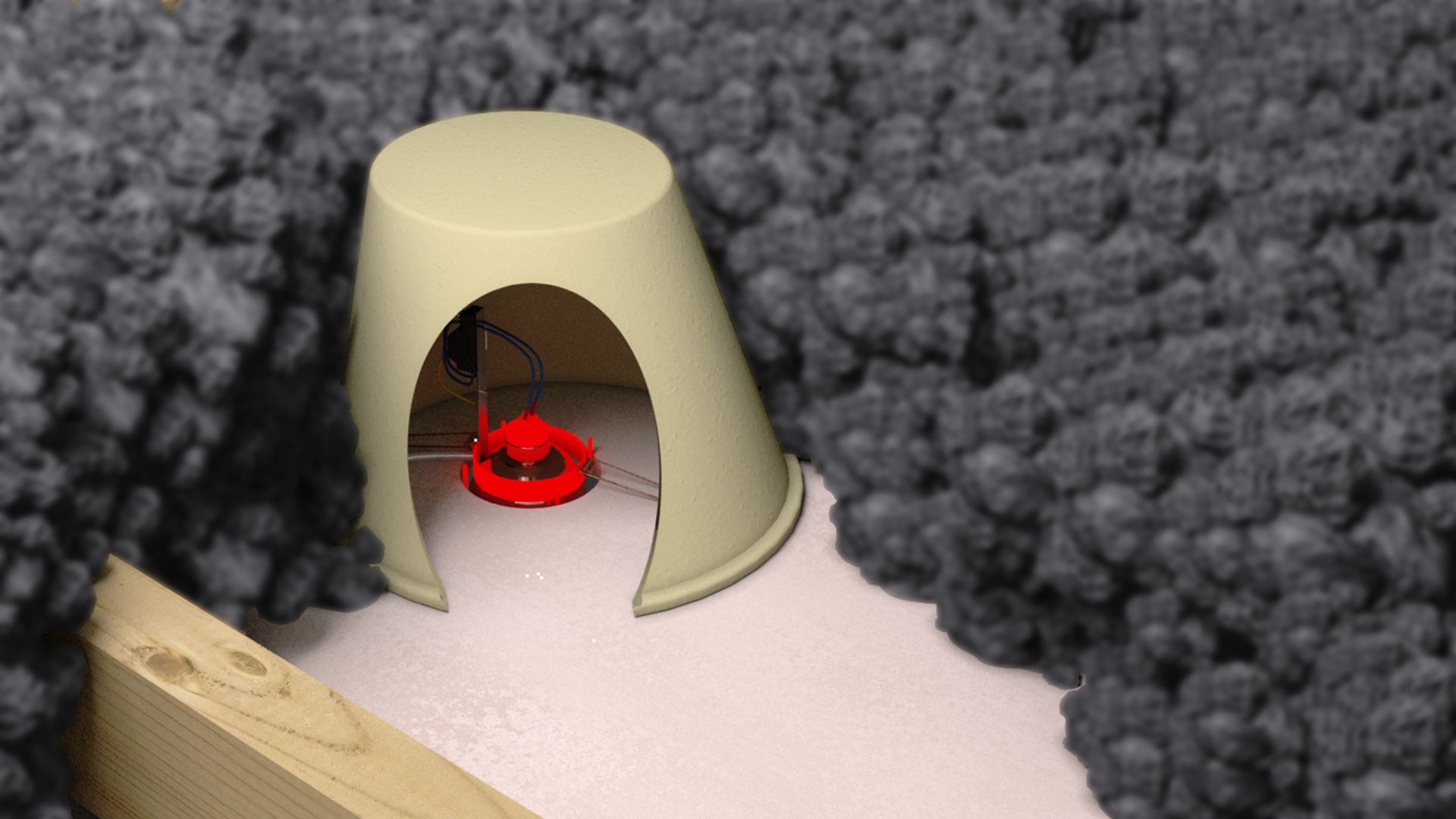
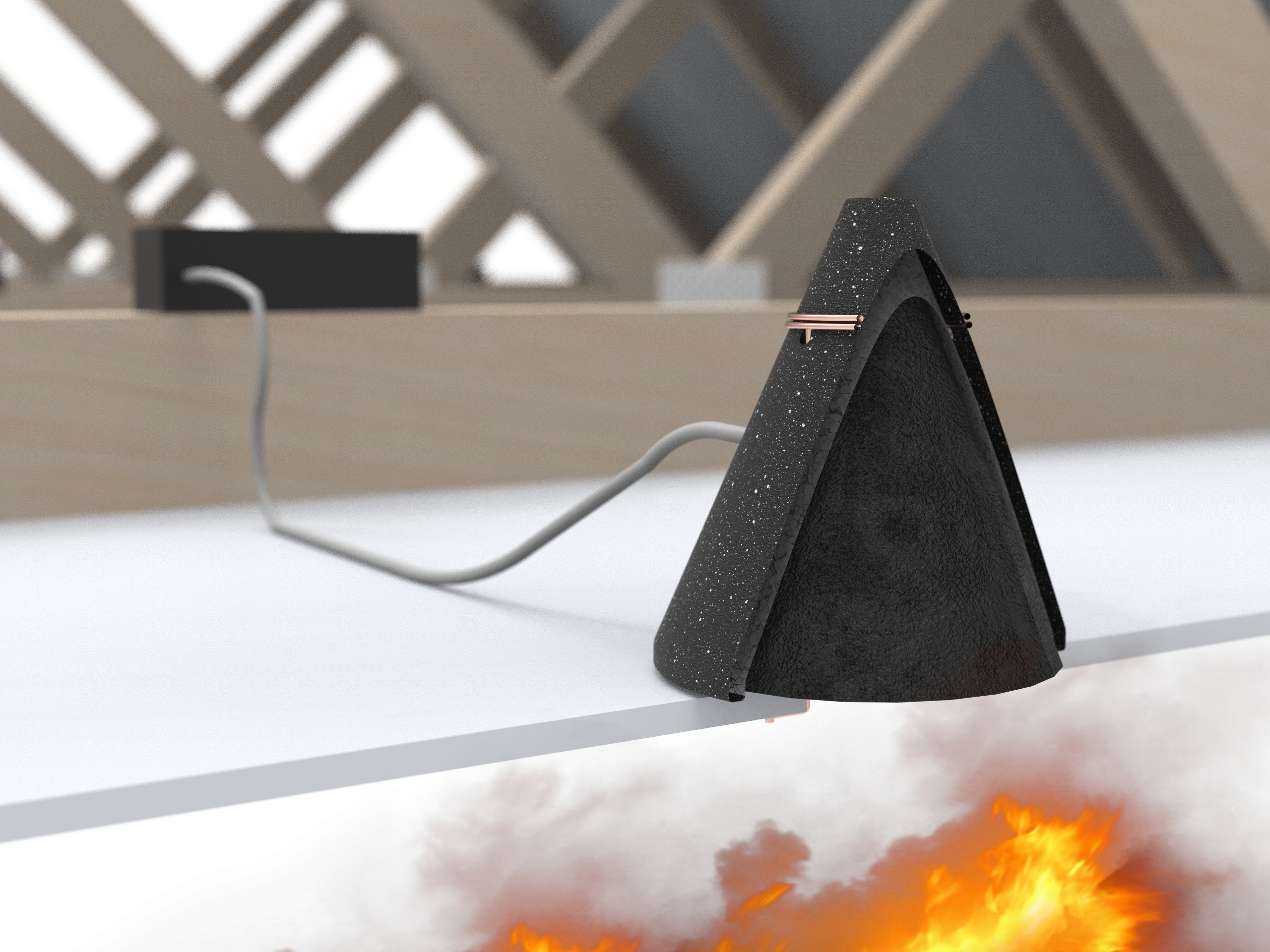
Many ceilings have multiple penetrations for products such as recessed lights, or ceiling mounted ventilation. These penetrations can potentially compromise the fire integrity of the ceiling membrane and allow the fire to pass and attack the joists. Tenmat has developed a range of fire rated products which can contain these dangers during a fire situation. The products focus on the areas which can cause the most damage such as downlights/spotlights, ceiling fans and air valves by containing the fire for longer. This range of intumescent materials has been developed to perform to a much higher standard than traditional products and have comprehensive test data to ensure that the ceiling is not compromised during the full fire duration.  

Testing 

There have been extensive tests carried out comparing the load supporting capability of light weight joists compared to solid timber joists when directly exposed to fire. In a loaded situation a typical solid timber joist can maintain loadbearing capacity for 15-20 minutes when exposed to a standard fire test situation, whereas a light-weight joist has been seen to collapse after only 3-6 minutes! 

The use of small dimension timber is a real problem if the joists are directly exposed to fire, because the surface area of the timber is very high compared to the volume of timber. The combination of increased fire propagation rates and reduced sacrificial material can lead to a dramatic reduction in the ability to support the ceiling load when directly exposed to fire. 

Extensive fire testing of fully loaded ceilings has shown that for the maintenance of full load bearing support using light weight joists for the full test duration, then the protection of the service penetrations needs to be of a significantly higher performance standard than for solid joists to prevent premature ceiling collapse. The irony being; the benefit of light weight joists is the ease of use because of the greater number of service penetrations. 

The Solution 

The use of indoor ventilation has increased significantly in recent years and it has also been shown that ensuring good ventilation can significantly reduce the spread of viruses, therefore it can only be expected that the amount of ceiling penetrations for increased ventilation will grow, making improved fire protection ever more important. 

To ensure the best protection, use fire rated products from reputable sellers, who can provide test data to prove that the products can meet your requirements. Also, be aware that any ceiling penetration throughout a building can provide a route for fire to spread and cause damage, so protect anywhere that enters the ceiling with the appropriate product.   

Danger to Fire fighters as well as occupants

Commenting on the danger to firefighters, fire expert and consultant to Tenmat Rupert Coggan states: “Every fire fighter who enters a burning building accepts that he / she is taking a great risk and they rely upon their training and equipment to keep them as safe as possible. What makes all of this training and equipment irrelevant is if either a floor collapses below them or a ceiling collapses on top of them, either scenario is likely to result in tragedy. Light weight joist constructions have two major potential problems for fire fighters, firstly is the premature collapse once a fire has penetrated the plasterboard membrane which can happen within just a few short minutes, the second being the lack of indication of a potential collapse.  

“Unlike solid timber joists, light weight joists do not deflect in a progressive manner prior to collapse, therefore the fire fighter does not have the same indication of a sagging floor or ceiling, it just collapses with minimal deflection. Whilst light weight joists are a great advance in so many ways over solid timber joists, they must be protected from a fire with the highest performance products which have been fully tested in this type of construction.”  

This article originally featured in the printed edition of International Fire and Safety Journal. To read the online version click here

Euralarm welcomes new member Innohome

Following a decision of its Board, Euralarm has welcomed its new member Innohome. The company will join the Fire Section of Euralarm

Innohome will now benefit from Euralarm’s services in terms of representation towards European institutions and standardisation organisations. This includes the monitoring of legislative and standardisation issues relevant to the industry. Innohome will have access to the extended network of national associations and major companies in the electronic fire safety and security sectors, which form Euralarm’s members. The new membership will create opportunities for both sides, as it also strengthens the association.


Innohome

Innohome is a Finnish company making smart, preventive fire safety products such as Stove Guards and Smart Smoke Alarms. Unattended cooking/stove fires are in many countries the biggest single reason for home fires. In Norway, which is Innohome’s main market, the stove guards are already a commonplace and mandatory to all new and renovated homes. In 2015, the Innohome Stove Guard was the first one to fulfil the requirements of the newly published European standard for stove guards (EN 50615). The simple idea behind the two products is to detect a fire hazard, alarm about it and to cut the electricity supply to the stove or other electrical device before a fire can start. Innohome’s latest products, the electric vehicle charging stations for homes, are also tackling a fire safety issue since too many people charge their vehicle directly from a standard electrical outlet, causing a risk of fire.


Insight into European markets

Companies joining Euralarm get a unique insight into what is happening on other European markets and the opportunities that they might offer. They not only tap into the political expertise and understanding of the EU policy but can also make personal connections with technical and political experts and potential business partners.

Being a member of Euralarm enables companies and associations to gain expertise on standardisation. Members have their voice heard in Brussels and can support and direct standardisation and legislative processes.

IOSH urges employers to prioritise safety as lockdown eases

The Institution of Occupational Safety and Health (IOSH), the global Chartered body for health and safety professionals, has urged caution as this week sees the re-opening of pub beer gardens, hairdressers, nail salons, non-essential retail outlets, outdoor attractions, some tourist accommodation and gyms.

Yet with these sectors likely to bring a return to the workplace much greater than the numbers they directly employ, a leading voice for safety and health at work has called for these workers and their customers to be kept safe from Covid.

“Of course, it won’t just be those working in these settings who’ll be returning to their workplaces from 12 April,” said IOSH Head of Advice and Practice Duncan Spencer.

“Many office workers, for example, will be encouraged by the return of services and activities that make going to work in a city enjoyable, whether it be meeting friends and colleagues for a meal or a drink outside work, fitting in a gym session, popping into shops or getting a haircut, for example.

“This is bound to pull more commuters back into our cities, especially if workers miss being with their colleagues and want a break from working from home, even if the government is still advising people to work from home where they can,” he added.

“I also know that some employers still wish for their staff to be working together in the same physical space, at least for a significant part, if not all, of the time so that they can benefit from a more spontaneous awareness of what’s going on around them in a business, learn from their colleagues and generate greater creativity.”

“But without wanting in any way to put a dampener on people’s enthusiasm to get back working face to face with colleagues and clients, it really is important to stress that workplaces have to be made safe and kept Covid-secure.

“Business leaders and managers may be scrutinised closely for their return to work processes. What they say and do will be viewed critically, not only by their competitors, suppliers and customers but also by their staff and their families. It is a sensitive time, one in which very important decisions need to be made,” he added.

IOSH believes employers must implement a range of control measures to prevent Covid-19 transmission in workplaces – and not rely solely on workers being vaccinated. The Institution encourages all organisations to operate a “prevention-first approach”, starting with risk assessments to determine how likely it is that workers could be infected with Covid-19 at work and what factors are behind that.

“From there, they can introduce measures to ensure workplaces and work activities are safe and do not risk the transmission of Covid-19,” said Ruth Wilkinson, Head of Health and Safety at IOSH.

“One of the measures could be employees being vaccinated. But this should not be the only measure in place as vaccines are not 100 per cent effective; they are the last line of defence in the hierarchy of control when considering workplace hazards,” she added.

“Other measures can include physical barriers, staggered shift patterns to limit the number of people in the building at one time, one-way systems and physical distancing measures, as well as more stringent hygiene, for example.”

IOSH has previously urged businesses preparing to reopen workplaces to ensure they thoroughly plan and organise the process, using good risk intelligence from health and safety professionals. Likewise, for those businesses that have remained open, it is important to review risk assessments and controls to ensure they are suitable and fit for purpose, and that they respond to any changes in guidance and research.

The Institution has also provided timely, relevant guidance for its members and businesses throughout the pandemic. As well as information on preventing the spread of the virus, it has also provided resources around mental health and wellbeing and risks relating to remote working.

With its vast experience and network of 48,000 OSH professionals worldwide, IOSH offers business the support it needs to put in place the right systems and processes to ensure a safe and healthy return to work.

ASFP launches passive fire protection e-learning platform

The Association for Specialist Fire Protection (ASFP) has launched an innovative new e-learning platform in support of its acclaimed Foundation in Passive Fire Protection. Featuring high quality adaptive learning techniques, supported by ASFP technical expertise and training capability, the new platform provides the ideal online solution for learners wishing to study towards Level 2 and Level 3 qualifications in Passive Fire Protection, administered by the Institution of Fire Engineers (IFE).

The revolutionary e-learning system uses adaptive learning techniques to tailor teaching to each individual’s skills, knowledge, experience and behaviours (SKEBs), ensuring every learner receives precisely the right level of instruction and support to achieve exceptional levels of understanding and proficiency.

The unique interactive learning experience will provide the perfect learning pathway for each individual, allowing them to develop the necessary competencies in the most efficient and effective way, often reducing learning time, while increasing understanding. ASFP expert trainers are able to monitor each learner’s progress and offer personalised feedback, support and coaching as needed.

The content is based on original, tried and tested material from the ASFP’s highly successful classroom courses. These have a proven record of preparing learners for the IFE exam, leading to a high pass rate. With the use of an independent and proven learning platform, ASFP is confident the platform provides the best passive fire protection e-learning available.

The platform offers units covering all passive fire protection disciplines, as well as providing underpinning knowledge on fire science. This innovative and affordable e-learning course is now available.

For further information visit: http://asfp.org.uk/asfp-e-learning-platform/

Euralarm supports call for higher construction product standards

Euralarm has announced its support for a resolution of the European Parliament asking quick solutions from the European Commission to improve the standardisation of construction products while pushing for a transition to a sustainable and more circular economy.

MEPs have recently called in the resolution, adopted with 686 votes in favour (4 against, 5 abstentions), on the European Commission to find a quick and viable way to improve and speed up the standardisation process for construction products. Of the 444 existing harmonised standards for construction products, only 12 new ones have been issued since the Construction Products Regulation was adopted in 2011, hindering the free movement of products in the EU.

With 686 votes in favour of the resolution the Parliament has taken a clear position on the upcoming revision of the regulation by the Commission. “The Construction Products Regulation must be made fit for the future with view to digitalisation and sustainability,” said rapporteur Christian Doleschal.

Prior to the decision-making process for the European Parliament, the chair of the Euralarm Fire Section presented a paper on the Impact of the Construction Products Regulation on Standardisation in the active Fire Safety industry. The presentation was held during an Informal meeting of the Working Party Technical Harmonisation (Construction Products) of the German EU Council Presidency – Construction Products Regulation. The paper can be downloaded here.

Government confirms unlimited fines for fire safety breaches

The UK Government has confirmed that unlimited fines will be handed out to those who breach fire safety regulations.

The new measures, announced as part of the government’s response to the Fire Safety Consultation, will come into force as part of the legislation in the Building Safety Bill.

The Home Office have also announced a further cash boost of £10 million for Fire and Rescue Authorities across England, on top of the £6 million already announced in the Fire Covid-19 Contingency Fund. This will help with additional tasks related to managing the pandemic – such as driving ambulances and assisting at testing and vaccination centres.

Fire Minister Lord Greenhalgh said: “Everyone should be safe in the buildings where they live, stay or work. Our new measures will improve fire safety and help save lives, but will also take firm action against those who fail in their duty to keep people safe.

“Our incredible Fire and Rescue Services have played a crucial role in our response to the pandemic, from assisting at vaccination centres to driving ambulances. That is why we are giving them this cash boost, so they can continue their life-saving efforts.”

Roy Wilsher, National Fire Chiefs Council Chair, added: “The NFCC welcomes the extra funding to support Covid activities carried out by fire and rescue services across England. Firefighters are responsible for administering around 1 in 240 vaccinations to the public.

“We also welcome the government’s response to its own fire safety consultation and the continued investment in fire and rescue services protection work.

“Ultimately, we want to see safer buildings for residents and are committed to working constructively with the Home Office and other partners on the Grenfell Tower Inquiry recommendations and other key fire safety policy areas.”

The new measures announced today will:

  • improve the quality of fire risk assessments and competence of those who complete them
  • ensure vital fire safety information is preserved over the lifespan of all regulated buildings
  • improve cooperation and coordination amongst people responsible for fire safety and making it easier to identify who they are
  • strengthen enforcement action, with anyone impersonating or obstructing a fire inspector facing unlimited fines
  • strengthen guidance issued under the Fire Safety Order so that failure to follow it may be considered in court proceedings as evidence of a breach or of compliance
  • improve the engagement between Building Control Bodies and Fire Authorities in reviewing plans for building work
  • require all new flats above 11 metres tall to install premises information boxes

Second edition of Code of Practice for Fire Investigation released

The Institution of Fire Engineers is has published the Second Edition of the Code of Practice for Investigators of Fires and Explosions for the Justice Systems in the UK.

The Second Edition, prepared by the IFE, National Fire Chiefs Council and UK Association of Fire Investigators, represents the current knowledge and understanding of fire investigation practice and members are encouraged to use it. It will come into effect in April 2021.

The Code of Practice is published free of copyright; users are free to use anything contained within it. However, they are reminded of the need for any excerpted materials not to be presented or used out of context.

Compliance with this Code of Practice does not of itself confer immunity from legal obligations.

The Code of Practice has been developed to support and provide guidance to organisations and individuals engaged in the examination of fire and explosion scenes within the framework of the criminal justice systems of the UK (England, Wales, Scotland and Northern Ireland).

The Code of Practice for Fire Investigation is available here.

NFCC welcomes the return of the Fire Safety Bill

The National Fire Chiefs Council (NFCC) has welcomed the return of the Fire Safety Bill to the House of Lords.

NFCC Chair Roy Wilsher said: “The Fire Safety Bill is a short bill, but an important one that we welcome. The Bill itself provides an important clarification that the structure and external walls of the building, including cladding, balconies and windows; and entrance doors to individual flats that open into common parts are parts of the premises to which the Fire Safety Order applies.

“We have been clear that remediation of historic defects is important, although we don’t believe the costs of these building defects should end with leaseholders.

“Whilst it is absolutely right that discussions over costs continue, we do want to see the Fire Safety Bill complete its passage through Parliament as quickly as possible as this will pave the way for the introduction of the Building Safety Bill, which implements key Grenfell Tower recommendations.”