Nullifire to showcase passive fire protection at FIREX International 2022

Nullifire, will be demonstrating how its intumescent and firestopping solutions offers assurance in passive fire protection at FIREX International 2022.

The Nullifire team will be operating two product demonstration areas and explaining more about the traceability technologies Optifire and Optifire+. Some of the brand’s bestsellers will also be promoted, and visitors to the stand will be able to find out more about Nullifire’s new ‘It’s All About’ campaign.

Nullifire’s products are manufactured in the UK and have a trusted track record of performance and compliance, with the range tested extensively by third body associations and fully certified for a range of fire protection needs, IFSEC Global reported.

Nullifire’s Sales Director, Gary Pullinger,said: “We are really looking forward to FIREX International. It is going to be a great opportunity to see existing and potentially new clients face to face.

“Visitors to our stand will be assured of a warm welcome and the chance to catch-up. During COVID we’ve made a significant multimillion pound investment in our company, in areas including new technologies and innovations, staff, facilities and our service too. As a result, we’ll have lots to talk about at the event.

“One of the areas we’ve focused investment on is innovation. We’ll be showing that in action with two product demonstrations areas, one for our intumescent coatings and the other for our fire stopping range.

“We’ll also be talking about our pioneering traceability technologies Optifire and Optifire+ which offer guaranteed traceability of the applied Nullifire product installed on-site.

“Optifire is a unique UV technology, which is activated by exposing the product’s surface to a UV light source, to offer easy and instant product identification, while Optifire+ offers pigment technology, which is impossible to manipulate.

Arizona Forestry launches wildfire prevention week

Several public bodies have increased focus and focused on wildfires as Arizona beckons warmer months. Many public agencies, led by the Arizona Department of Forestry and Fire Management, are stressing fire prevention in the wildlands with the launch of Southwest Wildfire Awareness Week.

The campaign, which began earlier this week, will witness the forestry department oversees fire management of 22 million acres of state trust land and private property in unincorporated areas. Last year, 71% of the fires in the state were caused by people. More than 1,700 wildfires seared 524,428 acres.

Before wildfire season begins in earnest, wildfire managers recommend residents in wilderness areas clear their property of debris and keep rooftops free of anything that could act as fuel to flames.

“We’re already seeing activity in southern Arizona,” agency spokeswoman Tiffany Davila told KTAR News 92.3 FM, referring to the 4,000-acre Presumido Peak Fire near the border with Mexico.

“We don’t want people to think we’re out of the woods after last years monsoon. Don’t wait to create defensible space now.”

The department also advises signing up for emergency alerts at the Arizona Emergency Information Network and having a go bag stocked with essentials, including prescription medications, snacks, water, money and credit cards.

The forestry agency will meet with Gov. Doug Ducey at the state Capitol on Thursday to present a wildland fire outlook.

The Bureau of Land management, the U.S. Forest Service, Arizona State Parks and Trails and the Arizona Department of Transportation are also part of the team effort.

Tried, tested, trusted fire door equipment

Sue Corrick, product marketing manager of Allegion UK explains the essential role third-party product testing plays in the integrity of fire door hardware.

When entering, exiting or passing through a building, door hardware is always the first point of contact. Whether users are met with a mechanical system such as a lever handle, an exit device or an access control solution, all architectural hardware must be fit for its role – operating as intended the first time, every time.

Aside from being an integral piece of a building’s navigational network, door hardware inherently plays a vital role in critical safety scenarios too. Fire doors and their hardware, when called upon (a total of 151,096 times in the UK in the year ending March 2021, according to national statistics) must demonstrate their reliability through quality, performance and durability. And in order to certify this, testing is paramount.

Impartial product testing

Third-party certification, widely viewed as the safest and fairest testing practice, is the process of testing and verifying a fire door’s design, performance and manufacturing process under British Standards – authenticating the quality of products and providing a guarantee for decision makers and occupants alike. Carried out by independent bodies, third-party certification comprises of meeting specific criteria:

• The Fire Test
• Auditing the Manufacturing Process
• The Audit Test
• Traceability

Today, traceability is as vital as ever. Door hardware must always be synonymous with quality, but over the past few years, critical questions have been raised towards the fire safety of buildings and the integrity of the products used within. Dame Judith Hackitt’s Independent Review has been a catalyst for change, accelerating legislative updates while lifting any remaining ambiguity surrounding fire and building safety.

Addressing the criticisms, the Building Safety Bill was introduced in 2021 and within it, the Golden Thread of Information introduced. The ‘Golden Thread’ policy, initially recommended by Dame Judith, has been designed to increase the transparency of building construction and maintenance, through routinely updated documentation of a building’s life cycle.

More recently, the newly published Code for Construction Product Information (CCPI) seeks to promote a change in approach to the management of construction product information, ensuring manufacturers provide clear, accurate, up-to-date, accessible and unambiguous product information. These legislative changes are driving higher standards and put a greater emphasis on product integrity and further stress the importance of transparency through third-party product testing. There’s simply no room for disingenuous product information when it comes to safety.

Speaking on the process of fire door hardware testing, Sue Corrick of Allegion UK comments: “In fire incidents, for a certified fire door to be effective and compliant, it must be able to fully close and remain closed by itself. Door hardware is designed to work in tandem with fire doors, assisting in the compartmentalisation of the building and facilitating the escape of occupants. And so, when it comes to production, all door closing devices must conform to Standards, EN 1154 and EN 1155 – and for exit devices, the mandatory EN 1125 and EN 179.

From July 2013, it became a legal requirement for all products that are covered by a harmonized EN standard to be CE marked, of which, validation for the CE mark requires the production of a Declaration of Performance (DoP) by a manufacturer. This is now also the case for UKCA marking too.

“It’s widely understood that fire doors themselves must be rigorously tested to British Standards BS 476: Part 22 or BS EN 1634-1, to guarantee they remain fire resistant for a minimum of 30 minutes (FD30) or 60 minutes (FD60). With that in mind, decision makers have a clear responsibility to ensure only certified and compliant hardware is fitted to their fire doors – otherwise they risk the reliability of the door itself. All elements of a fire door, from exit hardware to handles, hinges and locks and latches must be fire-rated and thus, tested to verify their performance.

“Outside of third-party testing, it’s also imperative for fire door hardware to be routinely tested internally. Over time, fire doors and their fitted hardware can be subject to wear and tear and so, all elements of the set must be checked to ensure performance remains optimal. To make sure fire doors are functioning in accordance with regulations, responsible parties must often check the functionality and effectiveness of key elements of the door set: including opening and closing devices, the intumescent seals and door strips for example.

“Furthermore, when retro fitting a product, there should always be evidence that the retro fit has been installed in the existing manufacture footprint. To safeguard the integrity of the fire door, it’s crucial that hardware isn’t replaced with an inferior product. Decision makers often find themselves under pressure to keep costs minimal, yet will find the cost for tested, verified products is higher than the cheaper, untested alternatives. But as is always the case with fire safety, cost saving should never detriment the safety of the building and the lives of those within. There’s always value in choosing the tried, tested and trusted methods.”

Exclusive: Reasons to jump on the battery bandwagon

As the movement towards battery powered equipment continues, there are a number of benefits to switching to battery technology 

Battery-powered. Aside from the word carcinogen, this phrase has become the hottest buzzword in the fire industry. With so many manufacturers racing to introduce battery-powered innovations to the market, everyone might as well be running around the fireground in pink bunny suits beating their drums to the tune of long-lasting battery power. And rightfully so. The industry has made great strides in evolving and leveraging battery technology. 

Only a few years ago, departments shied away from batteries. Not only were these proprietary behemoth batteries hard to source, but their power density and raw power made crews less than eager to trade in their gas- and hydraulic-powered tools. But with the advancements of lithium-ion batteries and the revolutionary products that manufacturers have brought to market in that timeframe, it’s now time to jump on the battery bandwagon. Here are five reasons to consider the battery swap. 

Lithium-ion advancements

In the last few years, lithium-ion (Li-ion) batteries have advanced drastically. Not only do these batteries tout one of the highest energy densities (compared to other rechargeable battery technologies), but the Li-ion landscape keeps changing.  

The foundational building block of these batteries is the lithium-ion cell that makes up the battery pack. Packs are made up of series and parallel connections to reach optimal voltages and amp-hour ratings. The common cell used to be an 18650 (18 mm in diameter x 65 mm tall) cylindrical cell, but now 21700 (21 x 70 mm) and 26650 (26 x 65 mm) cells are making headway.  

These numbers simply refer to the physical size of the cell, and while the explanation is simple, the difference is profound. An extra 5 mm of length and 3 mm of diameter gives the battery cell 47% more volume, and with more capacity comes more runtime. Today’s 21700 power tools deliver 50-100% longer runtimes than the 18650 tools, and all the while, battery manufacturers have found better ways to improve their packs’ cooling capabilities. 

In short, these batteries are simply much more reliable, giving departments more confidence in relying on this power source across rescue tools, PPV fans and even fire trucks. 

Built-in redundancy

To help in the adoption of battery technology, manufacturers also realised departments would be more confident in their products if they ran off back-up power sources, like built-in shorepower. Take for instance today’s battery powered PPVs. Some of the industry’s leading fan manufacturers have equipped their battery-powered fans with a standard shorepower feature — not because the runtimes of these PPVs can’t get the job done but because redundancy has a place on the fireground, especially when lives are at state. Fortunately, manufacturers have recognised this.  

Universal battery platforms

And then of course, there’s always the backup to the backup — universal battery systems that provide an arsenal of firefighter tools that run off the same battery platform. Take for instance the evolution of the Super Vac Valor, one of the most popular battery fans to hit the market. In 2018, the ventilation leader introduced a new battery PPV that was powered by DeWalt FLEXVOLT batteries. Not only could departments utilise the batteries from their other DeWalt and AMKUS rescue tools, but Super Vac made this introduction with the goal that these batteries could be more easily sourced than proprietary batteries. Talk about convenience when you can pick up spare, affordable batteries at the local hardware store. Since that well-received introduction, Super Vac has added models that are compatible with other popular batteries, like Milwaukee’s M18 and M28 battery platforms. In fact, this trend has begun to reshape the way departments spec their trucks. It’s not uncommon to see whole apparatus compartments devoted to the storage of battery tools, along with built-in charging stations. 

Rapid-deployment tools

As we list the reasons that battery technology has gained in popularity, we would be remiss not to mention the ease that comes with deploying battery tools. Gone are the days of power cords and hydraulic hoses and flood engines. And let’s not forget expensive generators that take up valuable room in already-compact vehicles. But battery naysayers might be quick to point out that battery tools deliver less power, force, airflow and (again) runtimes. But as they hang onto these big numbers, lithium lovers are benefitting from lighter, more compact, push-of-a-button tools that are beginning to tout numbers comparable to their counterparts.  

Let’s go back to that Super Vac battery PPV. At 580 mm x 595 mm x 305 mm, Super Vac’s smallest battery fan — a 16” variable-speed model — weighs 20 kgs, making it light enough for one person to carry. Meanwhile, the 18” and 20” variations (also lightweight) feature built-in wheels and handle for added maneuverability. It’s features like these that are making battery tools even easier to deploy. 

Goodbye bad carcinogens

Remember how we mentioned carcinogens at the beginning of this article? It’s important to look at the impact firefighters tools have on their environment and the crews using them. Take for instance a petrol-powered fan. While these fans can offer high airflows, they produce products of combustion that can adversely affect air quality even when catalytic converters are used. Even after the fact, storing these fans can contaminate apparatus compartments with their fumes. And with the industry’s shift toward protecting firefighters, eliminating bad carcinogens has become a priority. By using emission-free ventilation, the worry of CO contamination is eliminated for residents returning to a structure following smoke removal. 

So, in short, we’ve come full circle to the phrase battery-powered and the warm, fuzzy feelings departments now have for the technology. It’s time to break out the pink bunny suit and beat that battery drum.  

Update and webinar on Euralarm False Alarm study

In 2013, the Technical Group False Alarms (TG FAS) of the Fire Section began its work to better understand the causes and the data behind false alarms in fire detection and fire alarm systems. Since then, the Technical Group published reports and in 2018 published Euralarm’s first book; a study on the data analysis and collection methodology in selected European countries. The TG FAS is in its final stages to publish an update of the study. On December 16th, the Technical Group will conduct a Webinar.

False alarms from fire detection and fire alarm systems is a topic that Euralarm’s Technical Group False Alarm is working on since 2013 and that resulted in publishing a book covering a 3-year study of the risk-based understanding of the topic in various European countries.

Based on the carefully examined facts and statistics the study also contains recommendations and strategies for false alarm reduction. One of the recommendations was to integrate the topic of false alarms into fire protection and fire alarm strategies as well as how to handle false alarms as an active part of the management of a site. However, the false alarm topic continues to accompany the fire safety industry. Although much has been achieved the statistics show that there is a sizable potential for continuing improvement. Therefore, the Fire Section of Euralarm agreed to continue its study.

The TG FAS is in its final stages to publish an update of the study. Prior to the update of the book, the TG FAS also released the Fact Sheet ‘Increase fire safety by understanding false alarms’ with practical measures to avoid false alarms.

On December 16th the TG FAS will conduct a free webinar on the topic of False Alarms. Both the study and the Fact sheet will be on the webinar program. The preliminary program is as follows:

15.00Opening and welcome
15.05Introduction on the topic of false alarms and the relevance of false alarms Martin Harvey, President Euralarm
15.10Fire safety related activities in DG GROW Heikki Väänänen, Policy Officer DG GROW, EC
15.20Impact of false alarms on the alarm responders Michaël Bertels, Ph.D., European Fire Safety Alliance
15.30Overview of the activities and the study Dr Sebastian Festag, Euralarm, chair TG FAS
16.00Strategies to reduce false alarms and lessons learned, Fact Sheet Lance Rütimann, Chair Euralarm Section Fire
16.20Discussion and conclusion Paul van der Zanden, General Director Euralarm
16.45Closing of webinar

You can register for the webinar on the False Alarm Study via the Euralarm website
Webinar False Alarm study (euralarm.org).

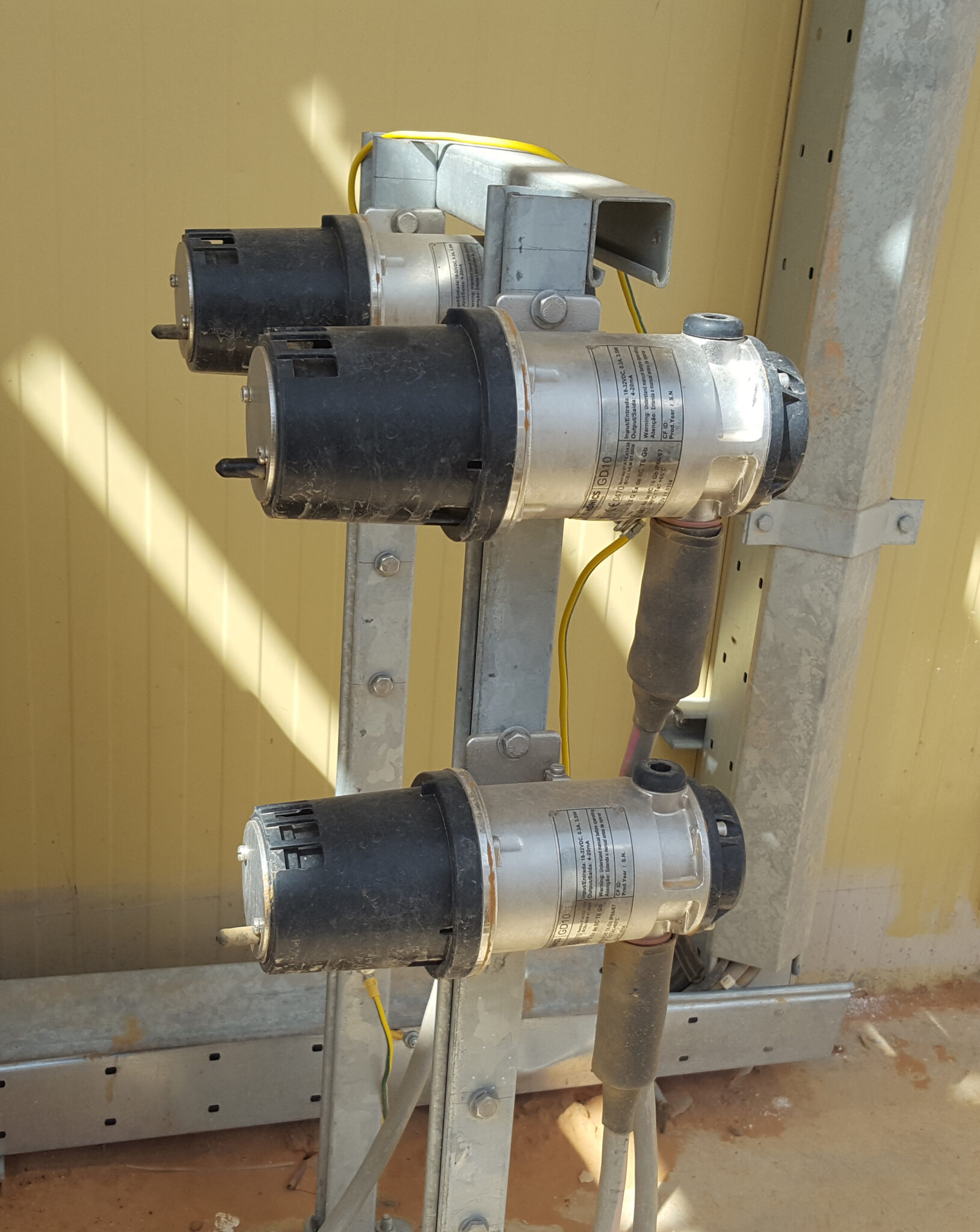
New Firmware further differentiates Teledyne GD10P IR gas detector

Teledyne Gas & Flame Detection has provided its GD10P infrared gas detector with a full firmware revision and upgrade, enhancing the product’s performance in high demand mode SIL2 approved applications. This milestone, as part of the product’s continuous improvement lifecycle, builds on circa 30 years of proven field experience for GD10P in the harshest industry environments and further supports the provision of a far longer warranty than conventional infrared gas detection systems.

Functional safety

New firmware within GD10P complies with the highest functional safety standards. The safety function has been assessed in conformity with the IEC 61508 ed. 2 standard according to Route 1S: Requirements for the avoidance (prevention) and requirements for the control of systematic faults, as well as Route 1H, which is based on hardware fault tolerance and safe failure fraction concepts.

High demand mode is where the frequency of demands for operation made on a safety-related system is greater than one per year.

While most safety-based applications in the process sector require only ‘low demand mode’ solutions, ‘high demand mode’ safety-critical applications are becoming increasingly common. As a result, gas detectors such as the GD10P must demonstrate their suitability and competence in line with the latest SIL2 third-party certification

Solid-state infrared source

In comparison with other infrared (IR) gas detectors, the new firmware adds further to GD10P’s differentiating factors, which include a solid-state infrared source. Here, the optical chamber, featuring two independent IR silicone (semiconductor) sources, is sufficiently robust and stable to merit a 15-year warranty. This compares favourably with the standard 2-3-year warranty commonly available with conventional IR detectors. The GD10P also features heated optics to prevent condensation, a HART interface, fail-safe operation, extended diagnostics and low maintenance requirements thanks to features such as a scratch-proof sapphire lens/mirror (instead of traditional glass).

Whereas 2-3 measurements per second is the norm with many IR gas detectors, the GD10P can perform 50 measurements per second. More sampling means less false alarms, higher accuracy, faster response time and, in turn, lower operational costs. Further cost reductions arrive as the fit-and-forget GD10P requires no calibration. In contrast, conventional IR gas detectors require calibration twice a year.

Thanks to its solid-state dual sources, the GD10P, which has origins in the oil and gas industry, is ideal for use in extremely hot, cold or wet environments. Conversely, traditional alternatives suffer negative effects from factors such as vibration, flow rate and environmental influences like heat and dust, which means their plastic filter/sinter can melt or clog. Other noteworthy advantages of the GD10P in comparison with conventional gas detectors include a calculated life of 60 years (versus five years) and a T90 response = 1 second for methane (versus <8 or 9 seconds).

Proven in the field

Among countless real-life applications, one worth calling out is the detection of ethylene in recirculating air on board large industrial machines. Most applications of this type now require SIL2 level gas detection in high demand mode, and GD10P offers this feature without hardware redundancies. This particular application requires high accuracy that would otherwise necessitate specific process monitoring measures beyond safety devices alone. However, the GD10P matches the requested accuracy, allowing the customer to make savings in equipment investment costs as each machine required multiple detection points.

Another common example of the GD10P’s aptitude is evident in the detection of propane at industrial welding stations. After a previously unsatisfactory experience using catalytic detectors, the GD10P is proving ideal in these dusty conditions thanks to ‘auto-zero’ self-adjustment of the detector. Furthermore, the large optical chamber provides the opportunity to send two different warning levels that indicate the requirement for cleaning and avoid the need for ‘real time’ servicing.

Further exemplifying the benefits of GD10P is its application involving the detection of ethanol when monitoring the storage of perfume essence. The aim was to avoid the loss of expensive perfume essence diluted in ethanol, perhaps due to a tank leak, and avoid the increase of ethanol concentration in a confined area. The GD10P, due to its target gas selectivity (narrow band optical filter) and very low response time, was the optimum solution. The detectors have been in service for four years.

Low cost of ownership

These and many other case examples build upon a large global installed base of more than 100,000 GD10P IR gas detectors, many of which are operating in harsh conditions. Lower cost of ownership is a further advantage as only one detector is required per system, instead of several with low demand mode SIL2 approval.

Notably, the firmware upgrade aligns Teledyne’s GD10P with the requirements of the latest third-party certification advancements, increasing confidence in the platform’s traditional feature sets. When coupled with a depth of innovation based on real world data from in-field proven use over several decades, the GD10P knows few limitations, irrespective of the application’s size, environment or location.

For more information, visit www.TeledyneGFD.com or contact gasandflamedetection@teledyne.com

New fire safety system from Hochiki installed at Corte Regia Relais and Spa

Located in the picturesque village of Borghetto di Valeggio sul Mincio, Italy, the Corte Regia Relais and Spa overlooks the river Mincio, with views across to the imposing Scaliger Castle and the Visconteo Bridge and a short journey to Lake Garda. For its guests this hotel is an escape from the outside world and is famed for providing a relaxing experience.

In 2020 the hotel underwent a massive transformation with the renovation of historical barns originally built in circa 800.  The aim of the renovation project was to conserve the building and to improve the functional use of the building while maintaining the original integrity and structure. As part of the renovation project a fully compliant fire detection and life safety system was to be designed and installed throughout the hotel’s luxury rooms and spa.  The installer, Cressoni Impianti Tecnolgici, chose Hochiki Italia as the manufacturer who designed the successful solution for the hotel.

The biggest challenge with the project was the fact that the hotel was a listed historical building. The original stone walls date from the 800s and the ceilings with wooden beams had to be kept. This made the wiring for the project quite complex, hence the need for a wireless solution. To keep with the aesthetics of the building and to minimise additional building changes the Hochiki Italia team worked closely to collaborate with the installer and the architect to satisfy the client’s request to be sympathetic and respect the historical building.

The ideal solution was to install both Hochiki’s ESP range and Ekho wireless systems. Products from the ESP range included multi-heat sensors, intelligent photoelectric smoke sensors with short circuit isolators and high performing chamber technology. This allowed for sensor threshold levels to be increased, thereby improving the signal to noise ratio which reduced the susceptibility to costly false alarms happening within the hotel.

Hochiki’s Ekho system raises wireless fire detection and alarm system gave the hotel new levels of reliability and flexibility. The hybrid system utilises the latest MESH net technology to provide the client with absolute and an economic wireless fire system installation with the minimum of disturbance to the surroundings – particularly important in keeping to the aesthetics of the Corte Regia Relais and Spa where installation of fire cabling would have been difficult, overly expensive or even prohibited in some parts. The wireless solution installed could be easily expanded around the entire site and worked particularly well with the original solid walls of the building.

Ezio Danese, Project manager at Hochiki Italia, commented: “The project had to comply with both architectural and standards requirements. The standards state that inside each room, in addition to a smoke detector, an alarm must be installed with a sound level of 75dB (A) in addition to an optical system capable of reaching even hearing-impaired people. For this reason, the EKWL8-OV detectors were chosen as they are equipped with an EN54-23 certified VAD and an EN54-3 certified voice sounder. The translators, connected to Hochiki’s ESP loop, were installed in the false ceilings in the corridors; their considerable range (1,200m in free area) made it possible to reach all the different wireless devices installed in the rooms. The Ekho system proved to be a perfect solution for the Corte Regia Relais and Spa project.”

The Corte Regia Hotel said: “We are really happy to have found such a technologically advanced solution which is able to guarantee the best fire protection for our guests and hotel staff whilst also fully respecting the particular architectural and aesthetic requirements of our hotel.”

Nittan detection system utilised by shopping centre

A Nittan Evolution fire detection system has been installed into the Bloomfield Shopping Centre in Bangor by Nittan Elite Partner Solutions for Systems, based in Northern Ireland.

Built in 1992, the Bloomfield Shopping Centre has for many years been North Down’s premier shopping destination, featuring a covered mall with 45 retailers, eight retail park units and three stand-alone restaurants. 

A new fire detection system was required at the site and, following detailed proposals by Solutions for Systems, a Nittan Evolution system was installed.  William McBride of Solutions for Systems stated “Nittan were specified because the client required that the system selected be compliant, cost effective, user friendly and have functionality to permit integration with existing or future building management systems”.

The new fire detection systems feature eight Nittan Evolution 1 fire alarm control panels installed in a network at strategic locations throughout the site, enabling site personnel to quickly and effectively access and assess any alerts on the fire alarm system without needing to return to the control room or to have dedicated staff located at a single panel in a control room. 

Evolution 1 are user-friendly touch screen panels that are both reliable and cost effective.  Fully compliant with BS EN54 part 2 and 4, the Evolution 1 panels have been designed with separate dedicated menus for the user and installer. They have the capability of running up to 254 devices on the loop, while the flexible architecture means everything from a single standalone panel, to a 16 panel network can be achieved without any additional hardware.

Evolution 1 panels are compatible with Nittan’s award winning Evolution range, which uses microprocessor technology in the sensors and sophisticated detection algorithms, combining extremely reliable fire detection together with a very high degree of protection against unwanted false alarms. Its advanced, highly flexible protocol is not only uniquely resistant to external interference, but also allows for substantial amounts of information to be transmitted at high speeds. 

At the shopping centre, Evolution EV-DPH-A2R Dual Optical Heat Detectors were selected, which feature Nittan’s award winning Dual Optical Technology to reduce false alarms, which retail environments are often prone to.  Furthermore, the detectors also incorporate an A2R class heat detector.  As such, the units are capable of monitoring two very different by-products of a fire –smoke and heat – so response to all fire types is significantly improved when compared with single sensor type units. 

The Evolution EV-DPH-A2R Detectors sit on Nittan EV-AV2-Sounder Beacon Bases which provide both sound and visual indication of alarm.

The new BS5839 Part 1 compliant Nittan Evolution system installed at Bloomfield Shopping Centre is now in operation and meeting the needs of its customer.  It provides the level of protection required at a competitive price, from the cost of the equipment through to the installation and ongoing maintenance.  Whilst the cause-and-effect requirements of the centre and retail park are relatively complex and detailed, it was easy to configure with the Nittan system and a substantial part of the work to do so was performed off site which reduced on site disruption and installation costs.

In addition, the system is open protocol and comes with an extended warranty which means the client has reassurance from an ongoing maintenance perspective that there should be minimal future costs after installation.  The open protocol also ensures the Nittan system can readily interface with the existing centre BMS and also the systems in individual shop/retail units.

Exclusive: All IP explained

John Coleman, Head of Sales UK & Ireland at CSL, discusses the impact that the Nationwide Telephone Network upgrade to an enhanced IP service will have on the UK’s Fire sector

All IP: What is it?

The UK’s Communications Providers are in the process of upgrading their customers from the existing analogue phone service to an enhanced IP service, with the plan to migrate to a fully digital phone service (All IP) by the end of 2025. The change will affect anything that currently plugs into the existing analogue telephone wall sockets, including Fire signalling systems. End-users will receive a new Smart Router from their telephone service provider as part of the All IP project. They will be asked to plug this Router into the main wall socket, disconnecting anything currently connected, including the telephone and any alarm systems.

With 2025 being over 3 years away, why is All IP critical now?

Many installers will see the 2025 date and think they have plenty of time to upgrade their systems. The reality is, trials have been taking place since December 2020 and by September 2023, products reliant on PSTN will no longer be sold anywhere. That’s only 2 years away! Over the coming months, exchanges across the country will be upgraded to fibre, and analogue services will gradually become unavailable.

Approximately 3.4 million premises will be impacted by these upgrades. In June alone, 13 exchanges entered the ‘stop-sell’ phase, affecting 170,000 premises. The upgrades are taking place in ‘tranches’ with 379 exchanges now listed by Openreach – the UK’s digital network business – as being part of this process.

What has been the impact so far of the exchanges going into ‘stop-sell’?

The most common issue reported by Installers is that if an end-user coincidentally looks for a better deal on their phone or broadband with a different provider, they often don’t realise they are changing to an All IP service. As they are switched over, the fire alarm stops working as this now uses IP rather than PSTN, and they call their Installer.

When an area goes into the ‘stop-sell’ phase, broadband and telephone service providers will only offer IP services and products. So, if end-users purchase new phone/broadband services or switch providers for a better deal, they will be given a Smart Router which is not compatible with their fire alarm, if they have one.

Older signalling technologies such as Digital Communicators use DTMF tones across the PSTN infrastructure to send fire alarms, while the Smart Router uses data via IP. DTMF tones technology will not work over IP.  

Additionally, all residents in a planned upgrade area will receive a letter from their telephone line provider, informing them that the local exchange is being upgraded to All IP and that a Smart Router is on the way.

Installers must also consider that many Fire alarm systems are connected to, or signal via, the Intruder system. If this is upgraded, then the Fire alarm must be as well.

Are all Fire Alarms and signalling affected by the Smart Routers?

Any device that currently relies on a telephone line to send a signal to the Alarm Receiving Centre will be affected, whether they are single or dual-path. In some cases, there may be an option to rewire the signalling system to the new Smart Router, however, it’s disruptive and has an unreliable power source if the Router was switched off or rebooted. A big area of concern for Installers should be their Digital Communicators.

These are the oldest of the fire alarm equipment out there and with just a single PSTN path, the premises would be completely unprotected once the Smart Router is plugged in. Digital Communicators often make up a large proportion of the systems that installers have in their signalling bases. There are approximately 700,000 in the UK today, so upgrading them to a compatible alternative will take time. We would urge Installers to start planning their upgrade schedules now.

What can Installers do to prepare and keep their Fire Alarms working?

The only sensible option for preparing now is to plan an upgrade programme. If they take this proactive approach rather than waiting for a system to fail and swapping it out, it becomes a much more manageable and cost-effective process. Not to mention that their customers will stay much happier this way!

Installers will be carrying out planned maintenance visits either once or twice a year depending on the grade of the system. We would advise Installers to tie upgrades into these visits. As an industry, we have the option to complete these upgrades in the calm of 2021 and 2022 – or the chaos of 2023 and 2024! There is no doubt that the more systems we leave until 2023 onwards, the more issues we will face when trying to get them all upgraded in time. Additionally, we are likely to see systems fail with increased regularity over the next few years as the migration is ramped up.

We can help Installers plan these according to the scheduled exchange upgrades, we’ve created an ‘All IP Hub’ which includes a map of exchanges and the dates of these upgrades.

What are the options of products they can upgrade to?

At CSL we have a range of products suitable to upgrade any system out there that is affected by All IP. At the single-path end of the market, our DigiAir Pro Fire product is an SP3 graded, single-path signalling solution that utilises a 4G Radio path to signal a fire alarm. It comes with a standby SIM as a backup to safeguard your system. Both SIMs operate on an independent network from the other for total resilience.

For the dual-path end of the market, GradeShift Pro Fire is perfect for replacing dual-path systems that rely on a phone line for one path. GradeShift Pro Fire Radio/Radio is a DP2 graded solution that uses two active 4G WorldSIMs and each SIM operates on an independent network.

Both products are independently tested and certified to the prestigious EN54 standard for Fire Systems. More information can be found at our website: www.csl-group.com

Could I upgrade my Digital Communicator to a new IP or Wi-Fi system?

Yes, you could. However, this would have to be done simultaneously with the installation of the Smart Router. This will be very difficult for Installers to coordinate. Additionally, the panel will need to be hardwired into the new Smart Router – which could be in a different location at the property – for example, the Router in the living room and panel under the stairs. This adds another logistical challenge.

If the system is upgraded before the Smart Router, this may mean a system has to be reconfigured on-site, after this installation, as a new Wi-Fi password may be required. An IP or Wi-Fi system could be installed after the Smart Router is installed, but the system is likely to already have gone into fail.

The best suggestion is to use a Radio only system, which works on an independent network that is not impacted by any changes to the Smart Router. It also avoids any issues during a power cut, which IP and Wi-Fi systems will be impacted by.

How can I add more value to the end-user as part of my upgrade?

Digital Communicators are cost-effective, having been installed a long time ago! Newer systems offer end-user apps, transforming the legacy system into a smart system – without having to change the panel. As part of our upgrade programme, we are showing Installers how they can market these additional benefits to their customers, to encourage them to opt-in for an upgrade.

Training to improve passive fire protection

Claire Turner, Operations and Business Development Manager at Independent Fire Training Ltd reveals how the company helps support learning in passive fire protection 

For fire safety in buildings, there has never been more focus for the construction and ongoing building maintenance industries than there is currently. With the industries having seen various negative press coverage in recent years following catastrophic and tragic occurrences, there is now more emphasis being placed on the importance of fire safety systems. 

This has put a huge focus on individuals and companies within the industry being trained to a relevant level for the services they are providing and being able to demonstrate their levels of competency. Independent Fire Training are passionate about fire stopping and developing knowledge and competency to ensure that the future of the fire industry is safer than the past.  

Successful training, reliable service

Independent Fire Training Ltd was formed in 2020, following the success of the training courses developed and delivered previously by Independent Fire Inspections Ltd. The aim when we were formed was to provide a tailored relevant service to delegates looking to expand their knowledge within the industry, and that aim is still relevant for us today. 

We were also created to allow for a specific, streamlined focus on increasing the level of awareness and competency of those working within the passive fire protection industry. The courses and content that we provide have all been developed by industry experts and have gained accreditation from the Institute of Fire Safety Managers (IFSM) and have been recognised by the Institution of Fire Engineers (IFE). 

Our course portfolio ranges from fire stopping to fire doorsets, with some of our most popular courses being made available in both a classroom and e-Learning format to suit the needs of any learner, this is especially relevant given the fact that so many people are still working from home due to COVID-19.  

We pride ourselves on offering training that is unique in the industry, and this is shown in the form of our Fire Stopping Inspection Course which provides competency in the inspection of Cavity Barriers, Linear Gap Seals and Penetration sealing systems. The Certificated Inspector Assessment is also the only formal qualification to certificate those as Passive Fire Inspectors and we are proud that we are currently the only business to offer such a qualification within the industry. 

Commitment to develop with the industry 

As a company, we are committed to maintaining the integrity of the industry and the high standards outlined through the ever-changing legislation, which brings added challenges to companies. Part of what we do at Independent Fire Training Ltd is to make a promise to stay current within this developing industry so that everyone taking part in our training receives top quality learning and excellent service throughout. 

Ben Freeman, Managing Director of IFI Group Ltd and Founder of Independent Fire Training Ltd comments: “As a leading training provider, our focus is on increasing the knowledge and competency of all those who attend our courses with current information on inspection specification, along with the ever-changing regulations and legislation. By doing this we can ensure that our training is fit for purpose regardless of what level of experience the training is aimed at. We have training that covers all levels of experience from novice to expert.  

He concludes: “We work in an industry where you can certainly be under qualified, but never overqualified. Our courses can be delivered in both an e-Learning and Classroom-based format as we understand that people have different ways of learning.” 

The online courses currently available include the Fire Stopping Course, The Fire Stopping Inspection Course and the Preparing for IFE Level 3 Passive Fire Exam Course, with further courses in development to be launched in Spring ’22. These courses tailor for all levels of knowledge and experience.  

The Fire Stopping Course 

Starting with The Fire Stopping Course, an online course providing a comprehensive level of knowledge in fire stopping specification, installation with an overview of the regulations, inspection and maintenance. This course is considered an introductory course and can also be delivered in a classroom format for those customers that wish for the training to be delivered face to face.  

The Fire Stopping Inspection Course 

An example of the versatility of Independent Fire Training Ltd.’s training delivery is the popular Fire Stopping Inspection Course, which is available in both an e-Learning and Classroom-based format. The Fire Stopping Inspection Course provides comprehensive competency in the specification, installation, inspection, maintenance, and repair of passive fire protection systems, including penetration sealing systems, linear gap seals and cavity barriers.

Once delegates have passed the final examination, they will have an understanding of how penetration sealing systems, linear gap seals and cavity barriers should be installed onsite and methods of inspection to prove this. This will include the issues around them, as well as the standards and regulations that must be adhered to when undertaking repairs, maintenance, and installation works. The Fire Stopping Inspection Course will give delegates the competence to be able to understand the theory of inspection and understand the standards and regulations surrounding them.  

Once the Fire Stopping Inspection Course assessments have been passed, delegates can apply to become a Certificated Fire Stopping Inspector. This advancement can be done through Independent Fire Training’s Certificated Inspector Assessment scheme. 

Preparing for IFE Level 3 Exam in Passive Fire Protection 

The online Preparing for IFE Level 3 Exam in Passive Fire Protection was launched in Spring ’21 to aid and support industry professionals looking to further their advancement, and who are working towards the industry recognised Level 2 and Level 3 exams in Passive Fire Protection with the Institution of Fire Engineers (IFE). This is a popular course having gained excellent feedback from customers working through the content as a revision tool for the exams, sat twice yearly with the IFE, which is convenient and can be accessed for up to 12 months from purchasing the course.  

The importance of fire door safety 

The recent Fire Door Safety Week saw the importance of fire doors brought to the forefront of social media pages. Various webinars hosted throughout the week and campaigns from industry suppliers and experts detailed the horrors that have occurred as a result of fire doors being overlooked as a key component of a buildings compartmentation.

This focus really highlighted the importance of correct installation and regular inspection to ensure that the door will perform as specified in the event of a fire. Too often non-compliant fire doors in buildings with a high number of occupants and/or footfall is seen, where it is clear that in certain instances there is a lack of basic knowledge of fire doors and their purpose. Independent Fire Training Ltd made a decision to be a part of the solution and offer a formal Fire Door Qualification to the industry.  

Independent Fire Training Ltd is an approved training centre and actively delivering the Level 3 Award in the Inspection and Testing of Fire Resisting Door Installations, an Ofqual regulated qualification. This course provides a formal qualification in the inspection of fire doorsets both practically and theoretically. The qualification is broken down into two parts; the first consists of a 3-day fire door inspection course with a theory assessment.

This course provides learners with all of the necessary practical and theory knowledge needed to complete the qualification. The second part of the qualification consists of the practical assessment, whereby a qualified assessor will observe the learner carrying out a full inspection with a report on a number of fire doorsets. Providing the learner has successfully completed both parts of the assessment, they will be issued with a formal certificate detailing their comprehensive competency in the inspection of fire doorsets.  

Engaging the industry to encourage competency  

Independent Fire Training Ltd recently attended the NEC Fire Safety Event, as one entity of IFI Group Ltd. This was a great opportunity to meet likeminded companies within the industry and talk about the services being offered and overall aim towards improving the competency of those who work within the fire industry. Training and competency were big topics of conversation throughout the exhibition, with the question arising of what constitutes somebody as competent within the industry? 

Independent Fire Training Ltd offer a range of options to promote and expand the level of competency within the industry and are always developing further courses to meet the ever-changing needs of the industry. 

For further information about the courses, dates and packages available, you can contact Independent Fire Training Ltd.’s team of experts on 01522 904189 or info@ifigroup.co.uk

www.thefiretraining.co.uk