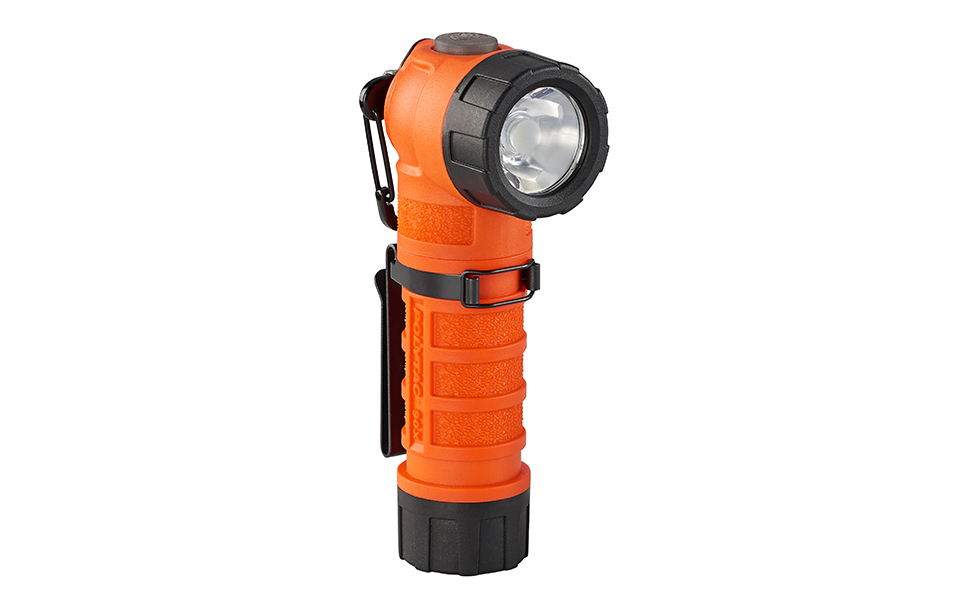
The PolyTac® family of lights is among the most popular choices of the Streamlight® Inc product line, with fire and rescue personnel choosing the flashlights because of their extreme brightness, compact size and exceptional durability. The newest addition to the line is the PolyTac® 90X USB which features a 90° head, multiple attachment methods and multi-fuel battery technology.
The PolyTac® 90X USB also features the latest in power LED technology for extreme brightness. When using the SL-B26™ USB Li-Ion battery pack with integrated micro-USB port, it delivers 500 lumens and runs for 3 hours and 45 minutes on high, and the light also features a battery life indicator that is built into the on/off button which flashes red when the battery needs recharging.
Versatile, durable and super bright, the multi-fuel PolyTac® 90 X is built with the rigors of the job in mind. The light includes an integrated carabiner-style D-ring clip for a variety of attachment methods and a multi-position, reversible pocket clip that attaches to MOLLE, turnout gear, harnesses and a variety of mounting positions. It is also available with a Gear Keeper® retractor for attachment to gear, clothing or equipment.
The PolyTac® 90X USB comes with a wide range of benefits for the user such as:
3M Scott Fire & Safety, a global leader in respiratory protection and thermal imaging solutions, proudly announces its latest facepiece solution to help firefighters communicate clearly and hear what matters, the 3M Scott Vision C5 Facepiece with Radio Direct Interface.
Designed using a platform approach, the Vision C5 facepiece with radio direct interface incorporates the latest technology to enhance situational intelligence in a customizable solution. Expanding on the 3M Scott Vision C5 Facepiece with E-Z Flo C5 Regulator, the facepiece now includes Bluetooth communications to help address critical communication challenges on the fireground.
“Two of the biggest challenges in fireground operations are communications and accountability,” said Gary Silsby, application engineer and firefighter. “Firefighters’ ability to communicate clearly over the radio and hear incoming communications is paramount to successful fireground operations.”
Utilizing proprietary noise suppression algorithms, in combination with a facepiece-integrated microphone, Bluetooth enabled in-mask communications provide enhanced voice intelligibility during two-way radio communications. An integrated bone conduction headphone assists firefighters with hearing and understanding of incoming radio communications.
“As an industry leader, our role at 3M Scott Fire & Safety is to provide innovative solutions to help improve the safety and accountability of first responders,” said John Graves, global product marketer. “Providing a modular facepiece with in-mask communications allows fire departments the flexibility to configure the best solution to meet their needs.”
The Vision C5 facepiece with radio direct interface operates with compatible 3M Scott Air-Pak SCBA, as well as compatible two-way radios. A perfect companion to the 3M Scott Air-Pak X3 Pro SCBA, the Vision C5 facepiece was designed to provide enhancements to five key areas – cleanability, comfort, connectivity, communications, and configurability – helping firefighters to see more, hear what matters, and breathe easier.
In 2019, De-Wipe announced the positive results of a scientific study conducted by leading professors at Manchester Metropolitan University (MMU) which indicates them as the only eco-friendly after fire wipe proven to remove from skin the most harmful cancer-causing dioxins and polycyclic aromatic hydrocarbons produced by fire.
Just last year, an independent report conducted by scientists at the University of Central Lancashire (UCLan) highlighted the urgent need for action to be taken in order to protect the long-term health of firefighters. A sobering conclusion from UCLan’s report: “firefighters are still being exposed to the high levels of toxic contaminants during and after a fire, as cancer-causing chemicals remain on PPE clothing, equipment, and elsewhere at the fire ground.”
The report continues by suggesting it appears firefighters are inadvertently transferring contaminants from the scene of a fire back to the fire station; a finding that echoes research published by the UK Government in its ‘Toxic Chemicals in Everyday Life’ publication. Furthermore, the ‘Toxic Chemicals…’ publication suggests long-term exposure to toxin contaminated environments is the primary driver behind UK firefighters’ developing more than one type of cancer and that these cancers are being diagnosed at an increasingly younger age.
Scientists at MMU Prove De-Wipe Removes Harmful Toxins
As chlorinated dioxins are some of the most toxic, cancer-inducing compounds produced during a fire, Associate Director of the Ecology & Environment Research Centre at Manchester Metropolitan University Dr David Megson was especially keen to examine De-Wipe’s capability at removing 17 of the most dangerous chlorinated dioxins from skin during controlled laboratory tests. The test results are encouraging and indicate that De-Wipe is able to remove chlorinated dioxins.
The ground-breaking study also focused on the 16 most hazardous polycyclic aromatic hydrocarbons (PAHs) – including the highly carcinogenic Benzo(a)pyrene. Results indicate De-Wipe was able to remove these toxic PAHs including an amount greater than 91% of Benzo(a)pyrene after exposure to skin in the controlled laboratory tests.
“The one thing we can say positively now is De-Wipe are effectively removing pollutants from a variety of different surfaces and were able to remove polycyclic aromatic hydrocarbons and were able to remove dioxins,” Dr Megson confirms.
Since 2019’s publication, Dr Megson and his team have gone on prove greater than 99% removal of harmful germs and bacteria when testing the efficacy of De-Wipe’s Alcohol-Free Sanitiser Wipes. Plus, preliminary feedback from an upcoming report into the effectiveness of De-Wipe’s After Fire Hair & Body Wash is extremely positive; a complete report from MMU is expected in Springtime.
De-Wipe is committed to a further 2 and half years of crucial study with the scientists at Manchester Metropolitan University with a view to developing more products proven to protect the long-term health of firefighters worldwide.
MechSlip, the innovative brick slip cladding system developed by Ibstock Kevington and Ash & Lacy, has been awarded BBA certification, incorporating a third-party assured A1 Fire Rating.
The certification is an important step forward for the MechSlip solution, as it means it can be specified and installed with confidence on high-rise residential buildings above 18 metres. The accreditation affords MechSlip compliance with Approved Document B of the Building Regulations, which addresses fire safety matters within and around buildings.
Born out of a partnership between the UK’s largest brickwork special shape and masonry fabrication company, Ibstock Kevington, and Ash & Lacy, specialists in engineered building envelope systems, MechSlip is totally unique to the UK market.
Extremely lightweight, the mechanically fixed brick slip system delivers all the benefits of a natural clay brick but is more than 50% lighter than traditional masonry, reducing structural loads. What’s more, it is the first brick system to use ibstock Brick and contain no combustible parts – a key safety consideration.
What’s more, the system is adaptable to being assembled off-site and delivered to developments ready to install – an innovation that is both labour saving and cost effective.
Iain Durrant, Managing Director at Ibstock Kevington, said: “The MechSlip system is the result of prolonged investment and collaboration between Ibstock Kevington and Ash & Lacy, and represents a game changing solution for architects and specifiers. Achieving BBA certification is a vital step forward for the product. Stringently tested in a real world testing environment, achieving one of the highest fire safety ratings available means MechSlip can be specified and installed with utmost confidence.”
Adam Taylor, Commercial Director at Ash & Lacy added: “Lightweight, easy-to-install, aesthetically pleasing and rigorously tested, MechSlip represents a total package solution for architects and specifiers. The collaboration between Ibstock Kevington and Ash & Lacy has enabled us to combine our individual expertise, to create a cladding system that meets the exacting needs of the architect and specifier of today.”
Leading fire detection equipment manufacturer, Global Fire Equipment (GFE), has been awarded EN 54-13:2017+A1:2019 system compatibility approval, demonstrating the company’s ongoing commitment to offering its customers best-in-class fire detection and alarm solutions.
An international third-party accredited laboratory awarded GFE the EN 54-13:2017+A1:2019 approval for its entry level and high-end addressable fire detection and alarm systems.
EN 54-13:2017+A1:2019 is one of 23 standards for fire detection and alarm (product) systems (FDASs) in the EN54 series of standards. The European standards define the requirements, test methods and performance criteria required by various individual components making up FDAS.
EN 54-13 differs from the other standards because it is a system performance standard rather than a product standard. It is a particularly important standard as it confirms the compatibility and connectivity of all the individual components of a FDAS to work together. EN54-13 was first published in 2005 and has since been adapted with a number of technical revisions. As such, the 2005 edition is recognised as being outdated and will soon become obsolete.
João Paulo Ajami, Managing Director of GFE, comments: “We are delighted to have been awarded the latest EN 54-13 approval. When specifying fire detection and alarm solutions it is always advisable to specify that the system approval should be the latest version and, as such, this announcement brings GFE right up to date.
This is a significant achievement and further demonstrates our commitment to compliance and innovation. Our customers now have the added reassurance that each individual component of our fire systems will work in conjunction with the other components which, in turn, conform to the relevant standard for that particular component.
“We have witnessed a marked increase in the number of authorities, specifiers, installers and end users requesting EN 54-13 compliance, and we’re also seeing EN 54-13 compliance being stated in the approval requirements for commercial installations in several European countries. Now, with the full EN 54-13:2017+A1:2019 approval in place, we can guarantee that our entire systems and fire control panel networks offer compatibility and connectivity.”
In Kazakhstan, in the city of Shymkent, the municipal authorities launched a pilot project to install carbon monoxide detectors in private houses. The goal of the project is to help the socially disadvantaged as they are the ones most often affected by CO incidents.
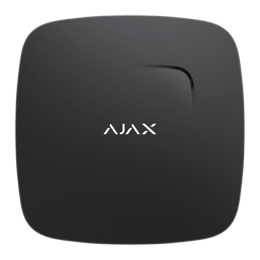
Ajax wireless fire detectors were chosen for the project. This month they saved the lives of three people, and, as a result, Ajax security system is planned to be mass-installed in thousands of homes.
Project delivery
In the beginning of the year, the city digitalization department of Shymkent in a pilot project, together with the Ministry of Emergency Situations and the company “ProLife”, installed Ajax security systems in ten private houses for free. Each kit included an intelligent Hub central unit and a FireProtect Plus fire detector.
The alarm system worked as follows: as soon as a dangerous concentration of CO accumulated in the air, the Ajax system immediately alerted the residents and sent an alarm to the security company.
In the course of the project, several lives have already been saved. In early March, late in the evening, the “ProLife” security company received an alarm from a FireProtect Plus detector installed in one of the homes. As a result they found that the carbon monoxide content in the house was 0.3% higher than normal; the cause was a gas leak in the tap of a stone oven. There were a mother and two children in the house, and this concentration of gas could have been fatal for them.
FireProtect Plus
Wireless smoke, heat, and carbon monoxide detector with sounderLearn more
Why Ajax
Carbon monoxide is deadly for humans. At the same time, it is completely invisible; carbon monoxide has no color or smell, so it can’t be sensed. Only specialized detectors can detect dangerous concentrations of CO in the air and they would cost a fortune to install. First of all, the cable laying costs are prohibitive.
The Ajax security system is just as reliable as wired solutions, but its installation requires much fewer resources. Considering that not all residents of the houses could agree to the installation of cables, installing Ajax was the ideal solution for the municipality.
What’s next
At this point, the project involves installation of another 1,000 hubs and 1,000 detectors that register smoke, temperature spikes, and dangerous CO levels. First, the detectors will be installed in low-income households. In the future, according to the Department of Emergency Situations, a similar alert system is planned to be installed in 30,000 residential buildings in Shymkent.
Hikvision, an IoT solution provider with video as its core competency, has announced the launch of HeatPro, a new thermal series of cameras designed to provide affordable all-weather deterrent and alerts. It is especially useful in perimeter protection and fire prevention applications.
The HeatPro Series Cameras feature deep-learning thermal video analytics for perimeter protection, and object temperature measurement and fire detection with real-time alarms. Features like accurate human/vehicle classification, visual and auditory alarms for perimeter protection, and speedy temperature exception alarms for fire prevention make them ideal for SMB (small and midsize business) applications.
Perimeter defense with AI
When securing a perimeter, higher accuracy and a low false alarm rate can help reduce operation costs. The HeatPro Series achieves this by developing powerful video analytics based on Deep Learning algorithms, radically reducing false alarms.
The cameras focus on short-range perimeter protection (0-50meters), where they deliver target detection and classification. The use of AI means that the cameras can distinguish between a person and a vehicle. This comes in especially useful when the two targets are close together. Traditionally, they can only be recognised as one ‘target’, but intelligent algorithms mean that they can be detected separately, increasing accuracy.
Thermal cameras are also able to easily locate potential threats in zero visibility conditions, where a conventional camera could not. They do this by detecting the latent radiation emissivity of an object, so not relying on visible light. This means they can operate in all-weather conditions and the darkest night. They also don’t emit light, which means their presence is not obvious, making them useful in scenarios where they need to be hidden.
The HeatPro Series is also designed to be efficiently and quickly installed, with a simple, three-step deployment, bringing setup time down to 30 seconds. Traditionally thermal cameras require specialist engineers to configure and double check, takes both extra time and energy. HeatPro cameras have been designed with installation time and effort in mind – they are simpler to install and so installers can spend more time correctly configuring for optimum operations, and the lowest false alarm rate possible.
Temperature measurement for fire prevention
The HeatPro Series is also equipped with the ability to measure temperature. This process is very useful in a scenario where overheating could lead to fires. The camera can provide non-contact temperature measurement for fast and visible detection. This means that action can be taken earlier, potentially preventing a fire from the very beginning. The camera can trigger a fire alarm faster than a smoke sensor.
The temperature measurement function can also be used to help check any potential overheating issue and troubleshoot problems.
The series contains a number of different models and options, with bullet and turret forms, and Bi-spectrum or single lenses. The cameras can be built into a number of solutions, for instance seamlessly working with NVRs, AX PRO alarm systems, and even Hik-Connect for real-time mobile alerts by phone. They can be used in various scenarios – not least: residential buildings, offices, construction sites, car parks, retail outlets and warehouses.
“Dedicated to bringing professional protection solutions to the mass market, these cameras provide perimeter protection with unparalleled accuracy, and fire detection with superlative sensitivity”, says Stefan Li, Director of Thermal Products at Hikvision. “Hikvision HeatPro Series provides professional protection made simple.”
Kentec Electronics has launched the Ekho wireless fire detection range exclusively to its Kentec Installation Partners (KIP), providing a highly-sophisticated, reliable, convenient and aesthetically pleasing alternative to wired systems.
The launch comes as installers are looking to provide their customers with solutions to prevent the need for costly Waking Watch services, which are being used to mitigate fire safety dangers within buildings with unsafe cladding or fire safety issues.
A wireless translator module, which sits at the centre of the system, is hard-wired to the fire alarm control panel loop and communicates continuously with the wireless devices.
Ekho sensors are supplied in three variants: optical; thermal; and multi-criteria, with the optical and multi-criteria sensors featuring adaptive signal processing and double dust traps to prevent false alarms. Thermal detectors can respond to a fixed temperature threshold or detect a rate of rise in temperature. Wireless sounders, call points and testing kits are also available within the range.
Ekho’s wireless expander modules are used to extend the radio mesh network, increasing the reach and capacity of the overall system. It works by creating a self-healing mesh network, which constantly relays field device signals back to the translator module. Each wireless device determines which expander has the strongest signal path and automatically connects to it. The expander mesh network, therefore, guarantees an ‘always on’ connection between the wireless devices and the translator/fire control panel.
Fast and simple to install, and not damaging to the fabric of a building, Kevin Swann, Managing Director of Kentec, says Ekho addresses an immediate and urgent need for the market:
“It provides robust assurance that fire incidents are detected and communicated immediately. Its simple design and fast commissioning process means systems can be installed in a matter of days – and because the Ekho system can be designed, programmed and commissioned from the complementary ‘Ekho Configurator’ software prior to installation, there is less time required on site – also important for Covid-safety measures,” he says.
“We are delighted to offer this important solution through our ever-expanding network of KIP installers, who are benefitting from Kentec’s training and product support, and helping us to remain focused on customer requirements.”
Patrick Carnell, Managing Director of PJC Electrical, an installer on the KIP scheme that has already installed an EKho system, says the range’s ‘self-healing’ mesh technology significantly increases its reliability and system performance:
“It means the system utilises additional transmission routes if one signal is broken and adapts automatically to changing operating conditions.”
Commenting on its ease of use, he says: “We were able to programme the devices at our offices, so when we got on site it was just a matter of fixing and turning them on. Spending less time on site benefits us, and also provides peace of mind to the occupiers. I will definitely be using and recommending Ekho for future projects.”
Ehko’s advanced, next-generation capabilities include: a communication range of 1200 metres, approximately eight times further than typical wireless devices; the use of unlimited devices per expander; and detection device battery life of 10 years, approximately twice that of typical systems.
The Ekho system is fully-expandable and configurable to any size and complexity of building. In addition to LPCB approval, it is also the only wireless full-range fire detection system to have the radio equipment directive (RED) approval, which sets essential requirements for safety and health, electromagnetic compatibility, and the efficient use of the radio spectrum.
The FLIR Vue TZ20, the first high resolution, dual thermal sensor gimbal purpose-built for the DJI®Matrice 200 Series and Matrice 300 airframes is now available in United Kingdom.
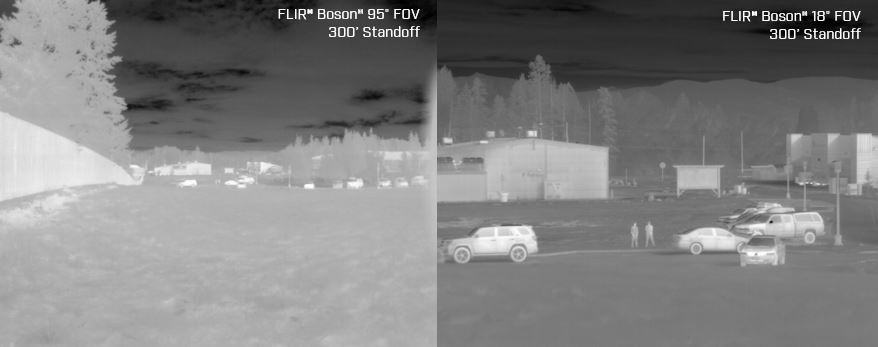
Featuring both a narrow-field-ofview and a wide-field-of-view 640×512 resolution FLIR Boson®thermal camera module, the Vue TZ20 offers greater situational awareness with a 20-times digital thermal zoom capability to complete public safety and industrial inspection missions both near and far.
“With the FLIR Vue TZ20, customers now have a FLIR dual thermal gimbaled payload option for the DJI Matrice 200 Series and Matrice 300 airframes,” said Paul Clayton, General Manager, Components Business at FLIR Systems. “Now public safety drone pilots from police, fire, and search and rescue teams, to industrial and critical infrastructure inspectors, will have greater awareness to complete their missions.”
IP44 rated to provide operability in poor weather conditions and weighing just 640 grams (1.4 lbs.) in total, the Vue TZ20includes a wide-angle Boson with a 95-degree field of view and a narrow-angle Boson with a 19-degree field of view, enabling pilots to put more pixels on target with ease.
FLIR developed the Vue TZ20 with the DJI Payload Software Development Kit (PSDK) and DJI Skyport 2.0 platform, offering simplified, plug-and-play operation through the DJI Pilot Software. Payload functions include thermal video streaming, video recording, and still-image capture with 20-times zoom, enabling operators to conduct missions at safe distances while capturing the thermal data and detail required.
The FLIR Vue TZ20 is available for purchase and delivery today through FLIR and authorized FLIR distributors. Learn more at: www.flir.com/vue-tz20
The quality and consistency of building information is directly linked to building morbidity and mortality, writes Katie Cornhill, Tactical Fire Officer and Silver Commander in the UK Fire and Rescue Service
On the 01st February 2021 Members of Parliament from all parties expressed that “it is fundamental that leaseholders should not have to pay a penny piece towards the cost of remediating the unsafe cladding that is there.” As the days and weeks go by the breadth of systemic failures that Dame Judith Hackitt’s review of building and fire safety that their ‘Building a Safer Future’ report found relating to preventive, protective and managerial building and fire safety measures becomes more and more visible in the media and in Parliamentary debates.
The issue of landlords passing the costs of remedial, repair or improvement works for passive and active measures onto residents through additional service charges when landlords commission building, and fire safety related works has become of national interest. Some lessees and local Members of Parliament have suggested that what is happening is scandalous with housing providers and landlords reacting in an unmeasured, bias, and often knee-jerk manner commissioning works and setting in place arrangements such as:
Additional fire risk assessments to confirm the adequacy of existing building and fire safety measures,
Destructive fire safety surveys to assess fire resistance, compartmentation, and barriers,
The provision of a fire detection and alarm system covering the common areas (corridors, stairs),
External wall system (known as cladding) surveys, and now
‘waking watch’ contracts.
The safety of all residents of any low, medium, or high-rise residential premises is important.
The safety of all residents of any low, medium, or high-rise residential premises is important. It always has been. The additional service charges that are being levied at lessees due to some landlords interpretation of sections 19 and 20 of the Landlord and Tenant Act 1985 as amended by Section 151 of the Commonhold and Leasehold Reform Act 2002, and under the terms of Schedule 2 of The Service Charges (Consultation Requirements) (England) Regulations 2003, are by those feeling the brunt of this national dilemma, not ‘reasonably incurred’.
Passive fire-resistant construction and compartmentation has been required for decades when building purpose-built general needs residential blocks of flats. Such protective measures should be assured as in place along with comprehensive information detailing such compartmentation as part of the duty holder’s responsibilities prior to the occupation of any premises.
That is a clear legal duty under the Construction, Design and Management Regulations (CDM Regs) that is bestowed upon the owner/client, principal designer, and principal contractor. In particular the owner/client (usually the landlord) as a duty holder must ensure that that they appoint competent duty holders and that they comply with the duties of the CDM Regs.
Collectively, during the pre-construction phase and the subsequent construction phase the duty holders must ensure that a comprehensive health and safety file is produced for the project. The health and safety file must contain relevant information about the project which should be taken into account when any construction work (including maintenance) is carried out on the building after the current project has finished.
Information such as the fire-resistant construction, standards of compartmentation and barrier protection (including at the edges of cavities, around openings (such as windows, doors, and exit/entry points for services) should be included clearly and concisely.
Fire Safety information is an important element of the contents that must be included in the health and safety file and it should be comprehensible in nature. The provision of fire safety information for a relevant building that must be passed between an applicant and the responsible person (often the same person/organisation) is also a requirement of the Building Regulations 2010, Part 8 – Regulation 38, and has been for many years (regulation 16B previously). It requires that ‘as built’ information which records the fire safety design of the building is provided.
On occupation, The Regulatory Reform (Fire Safety) Order 2005 (the FSO) applies and requires that the responsible person must ensure that duties imposed by articles 8 to 22 (Fire Safety Duties), or by regulations made under article 24 (and Article 38) of the FSO is complied with in respect of those premises so far as the requirements relate to matters within their control.
The importance of The Fire Safety (Employees’ Capabilities) (England) Regulations 2010, which provide that employees’ capabilities must be taken into account as regards fire safety in entrusting tasks to them, and that were made by the secretary of state in exercise of the powers conferred by article 24 of the FSO, should not be forgotten.
One of the most important and underpinning articles of the FSO, Article 11, prescribes that the responsible person must make and give effect to such arrangements as are appropriate, having regard to the size of his undertaking and the nature of its activities, for the effective planning, organisation, control, monitoring and review of the preventive and protective measures.
The systematic managerial arrangements (Article 11 of the FSO) to assure that effective preventive and protective measures are in place on occupation (including provision of ‘as built’ information) in hundreds of premises up and down the country, are not new outputs.
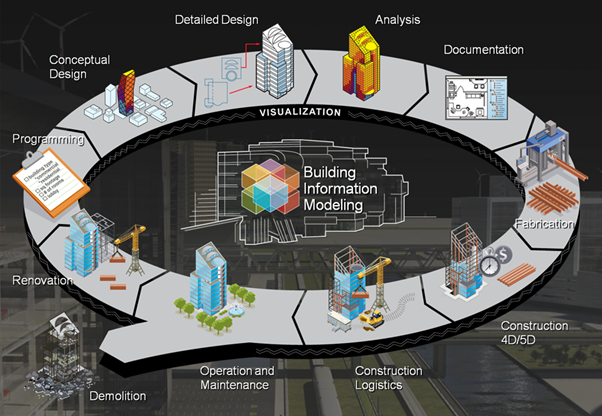
They are systematic requirements that underpin the provision of passive and active protection that should be in place throughout the conception to cradle to grave lifecycle of a building. The lifecycle approach for any given premises is illustrated by the Building Information Modelling (BIM) image below.
Image: Buildapedia.com
BIM methodology if applied correctly, enables a digital based comprehensive understanding by duty holders and responsible person(s) and secures a common operating picture (particularly during occupation) resulting from key inputs about the passive, active and managerial (including systematic) preventive and protective measures in relation to the full lifecycle of the built environment. This includes:
Construction
Materials
Devices
Equipment
Facilities
Fixtures
Fittings
Tasks
Processes
Training
Required competence & capabilities
Strategy and procedures for serious and imminent danger (evacuation)
Comprehensible information sharing
Contact necessary with emergency services, and
Cooperation between occupiers.
There appears to be a lot of consideration currently being given to the provision of fire detection and alarm systems where the passive building and fire safety measures are identified as inadequate. It might seem that this active measure is the best solution to implement, but it can bring with it numerous hazards, risks, and costs including ongoing maintenance and the employment of competent and capable persons to undertake associated testing and maintenance tasks.
If the correct and required methodical approach is taken by duty holders so that requirements, responsibilities, and accountabilities of the CDM Regs, Building Regs, FSO and Employees Capabilities Regs are met and effective passive measures secured, then this is still the best approach. Subject to future legislative reforms, there should be no need for extra building and fire safety provisions and work to be undertaken at the end of a building project so that it meets its original intended purpose (including the occupant profile) safely.
Further to this, full and comprehensive information about the ‘as built’ fire safety design of the building should be recorded, stored and therefore readily available to any person that may need to see and use it for a given purpose, such as to develop procedures for serious and imminent danger (includes evacuation strategies).
As a fire safety and response professional I have long been a positive advocate for the need and introduction of greater transparency
As a fire safety and response professional I have long been a positive advocate for the need and introduction of greater transparency, scrutiny and understanding of fire safety duties and the benefits that a cultural and behavioural based legislative framework can provide for the consistent provision of effective safety in the built environment across the country.
The significance of full and comprehensive information being available to inform the design and implementation of an evacuation strategy for higher-risk residential buildings (HRRBs), balanced against the occupancy centred profile, cannot be underestimated.
Two of the most important stakeholders and recipients of such information are the tenants, and firefighters. As a serving advanced fire incident commander, I can say with some experience that important and life critical decisions are made by both when a fire occurs and often from the basis of a ‘stay put’ evacuation policy.
The use of ‘stay put’ evacuation strategy has been associated with general needs residential premises for many years and is under close scrutiny as part of the Grenfell enquiry. Perhaps a less hazardous approach would be to replace stay put with ‘delayed evacuation’ strategies in general needs premises, which is a term widely used in relation to residential care and hospital type premises and is understood by many fire safety professional stakeholders.
Delayed evacuation strategies in general needs premises implemented as part of the operational tactics during a fire incident, would provide benefit v risk focused decision making relating directly to the signs being witnessed and how a building on fire is behaving. After all, a tactic of delaying an evacuation can apply for one minute, 100 minutes, or even indefinitely depending on what an incident commander subsequently expects to happen and the benefit v risk at the time of their decision making.
Following the Grenfell Tower tragedy, Dame Judith Hackitt led the Independent Review of Building Regulations and Fire Safety. That review has led to two legislative Bills (the Fire Safety Bill and the Building Safety Bill) being introduced by government that proposes reforms to existing legislation.
Those reforms will enable delivery of recommendations made from the independent review
Those reforms will enable delivery of recommendations made from the independent review and will take account of the context and history of the Fire Safety Programme. The Fire Safety Bill will place beyond doubt that passive fire protection and building components including fire resistant barriers, external wall systems (including cladding) and the fire doors to individual flats in multi-occupied residential blocks, fall within the scope of the FSO.
The Building Safety Bill will introduce legislation to deliver a new Building Safety Regulator. The new regulator will be responsible for implementing and enforcing a more stringent regulatory regime for HRRBs. The new regulator will also provide wider and stronger oversight of safety and performance across all buildings.
It is important to recognise that the outcome of the Fire Safety Bill and the new Building Safety Regulator is not to achieve new building and fire safety passive and active fire safety measures per say. Rather the intention is to strengthen and place beyond doubt ownership, responsibility, and accountability for fire and building safety components that have been required for years.
The new regime will set in place regulators who will be closer and more operationally and tactically in touch with the safety standards for all buildings. It is likely to remove so called grey areas and loopholes that have caused concern since greater self-regulation became part of the fire safety regulatory framework whilst affirming the ability for existing regulators to better enforce locally.
Dame Judith Hackitt’s report shows that the knowledge and understanding of the legislative framework and the responsibilities, accountabilities, and legislated duties of those that are duty holders/responsible persons relating to the historical and ongoing matter of building and fire safety measures (passive/active/managerial) for residential premises, is “patchy” at best. The need to secure appropriate levels of competence and capabilities to ensure ongoing compliance with the duties that duty holders/responsible persons are required to meet should not be underestimated.
Those reforms will enable delivery of recommendations made from the independent review
For a service charge to be made to lessees, it must be for the costs of repairs or improvements that are reasonably incurred. Currently, there is no legal guidance or definition of what is reasonably incurred as each case is judged on its own circumstances, but there have been cases where landlords have been found not to be able to justify the costs of awfully expensive works just because there is a term in a lease agreement permitting them to recover such costs relating to repairs and improvements.
Resident support groups have identified lessees in default of their service charges and leaving residents distressed and out of pocket due to being charged for work that is seen as not ‘reasonably incurred’. In some cases, groups are reporting households now in a position of poverty, and in some cases have raised concerns about extreme poverty. Arguably, due to the lack of legal guidance or definition, the missing fire-resistant construction, barriers and compartmentation that should have already been in place is not a repair or an improvement. Such in-built passive protection and the duty holder/responsible person knowledge of its existence (or plans to provide it) should have always been there.
As highlighted by cross party Members of Parliament during the parliamentary debate on the 01st February 2021, any person who is a lessee of a premises for which there is a landlord, should not be paying for passive or active fire safety works (this may include hazardous external wall system replacement, waking watches, invasive surveys, and works undertaken as a result of such surveys to provide fire resistance compartmentation and barriers) as this should have already been provided, and assured as in place upon completion of the building works and prior to occupation. The questions of; do the service charges reasonably qualify and are they reasonably incurred service charges? continues.
It would seem that lessees may be being wrongly, and perhaps illegally pressured and forced to pay for works through unreasonably incurred service charges to provide standards of building and fire safety measures that should have always been a cradle given, and which housing providers/landlords were always (and remain) legally obliged to ensure.
I referred earlier on to the importance of stakeholder access to comprehensive and detailed information. If that has not been viewed as a critical benefit focused outcome integral to a business case to enhance an investor’s return on investment during the conception phase of a building project, then it should be from here on in.
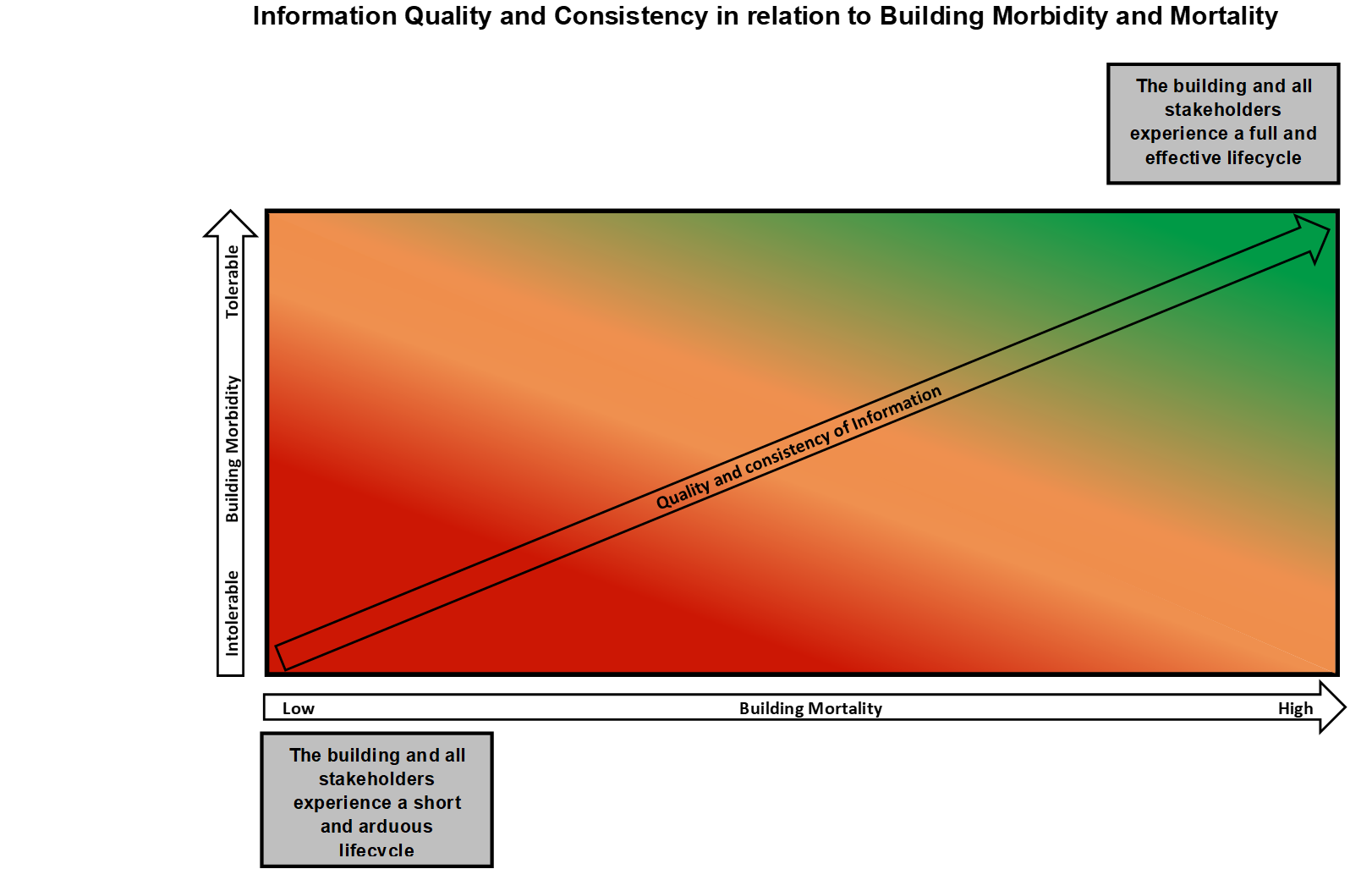
The comprehensive and comprehensible quality and consistency of building information is directly linked to building morbidity and mortality.
Greater stakeholder knowledge of any given premises is key to ensuring the safe use of a building for as long a term as possible. The comprehensive and comprehensible quality and consistency of building information is directly linked to building morbidity and mortality.