How Smarter safety footwear Supports Wearer Health and Safety

Simon Ash, UK Sales Manager at HAIX, shares how the right safety footwear can support wearer health and safety and reduce the risks of musculoskeletal disorders

Imagine a pain that worsens with every step – an unforgiving aching or stiffness and the feeling that your muscles are always overworked. Musculoskeletal conditions are the leading contributor to disability worldwide. In the UK, the disorder affects one in four of the adult population. If your workforce lifts, carries, bends, crouches or sits for long periods in one position, they too may be at risk.

The burden musculoskeletal conditions put on worker health, organisational finances and the UK’s economy is devastating, yet it is preventable in many instances. Employers can take a proactive approach to prevent this kind of injury by ensuring their workforce wear supportive, high quality, comfortable safety footwear.

If your safety footwear does not do the above, give it the boot

Having access to the right safety footwear for the job is the most critical factor in foot protection. Research has shown that at least 50% of workers are exposed to the risk of musculoskeletal disorders due to spending prolonged hours standing at work. The correct safety footwear supports the entire body and reduces the risk of injury.

Safety footwear should support the foot, ankle and lower limbs. This is achievable by choosing footwear designed with superior cushioning technology and constructed from smarter materials. Modern materials used in the interior lining of boots can help prevent blisters and soft-tissue injury by reducing friction and pressure. Discomfort, whether from ill-fitting footwear or from friction injuries such as blisters, can lead to changes in natural body posture while standing or walking.

When suffering such injuries, we may tend to ‘favour’ weight bearing on a non-injured foot (limping, for example), or standing in an unnatural position to avoid pain or discomfort. This can lead to strain or injury in turn, or if left uncorrected longer term can potentially lead to more serious musculoskeletal disorders. It is important to invest in boots with a climatic control system that regulates temperatures within the boot because damp feet are more likely to experience friction injuries. If your footwear does not do the above, give it the boot.

You can also check to see if your boots meet international safety standards. The EN ISO 20345 standard, for example, includes features to protect against thermal and mechanical hazards. As well as meeting all the required product standards, key boot features should always include: slip resistance, a lightweight toecap, heel grips and shock absorption. Another benefit is adjustable, easy to use lacing because it makes putting boots on and taking them off faster and easier, so wearers aren’t at risk of potential injury or wasted time struggling to get boots on or off.

A key feature to look for when buying work boots is that they actively work to correct foot posture, which can help reduce lower body and back pain by aligning the spine properly. Doing so will reduce musculoskeletal disorders and provide superior long term comfort.

We think about what time of the day we should eat, sleep and wake, but have you ever thought about the best time to try on footwear? It matters.

The shape of the foot fluctuates throughout the day. Ideally, boots should be tried on in the afternoon to get an accurate size, ensuring comfort throughout the working day. You may also see the most significant changes to your foot’s shape when sitting versus standing[5], so when trying on your boots it is best to emulate your movements at work; whether that means sitting, bending, standing or crouching.

Over your lifetime, try to ensure that your feet are measured when buying new shoes. As we age, our feet naturally change shape and even size. You will also need to have both feet measured, and if one foot is bigger, choose the larger size.

Why it is time to say goodbye to the ‘one size fits all’ approach to footwear.

The concept of ‘one size fits all’ does not strictly apply to work boots, which are manufactured in standardised sizes. The impact safety features have on overall comfort and fit mean that, for safety footwear especially, sizing is less than an exact science. Not every work boot will fit you properly, even if the ‘off the shelf’ sizing is your usual size because your anatomy is unique. Choosing the wrong boot can lead to long-term health effects and the potential for injury.

Adaptability to suit individual foot shape is an important step in safety footwear design. One method for introducing this is to include a variety of easily-changeable insole options to better fit different foot shapes, from wide to narrow. The HAIX Vario fit system is an excellent example of how to improve wearer comfort and boot fit using this approach.

Ultimately, musculoskeletal injuries are a major problem in the workplace. When selecting safety footwear take it seriously, and consider both the long term benefits and potential impacts incorrect choices can have. 

Draeger Safety UK opens manufacturing facility in Gateshead

Draeger Safety UK Ltd, part of The Dräger Group, an international leader in the fields of medical and safety technology, has today officially opened a new manufacturing facility in Gateshead, expanding its ongoing commitment to the North East of England.

The new manufacturing facility, which will produce FFP3 face masks to fulfil a Government contract to supply UK manufactured PPE for frontline workers, is Dräger’s second site in the region. The company’s other site, located at Blyth in Northumberland, manufacturers a wide range of safety equipment.

Malcolm Irving, Head of Global Supply Chain Safety Division at Dräger, commented on the new site, “We’re very proud to officially open this new manufacturing facility in Gateshead. The production lines are now operational and the first orders have been delivered to NHS hospitals.

“The new site has established a sustainable UK-production base to manufacture high volumes and to provide a long-term solution for the supply of high protection FFP masks for our NHS workforce and other front-line workers.”

Complying with lockdown regulations, the site was opened virtually by Councillor Michael Hood, the Mayor of Gateshead and attended online by
Rainer Klug, Dräger Executive Board member for safety division and other
members of the Dräger Safety UK team.

Dräger worked closely with local representatives, including, the Academic
Health Science Network for the North East and North Cumbria (AHSN NENC), to secure the order and with Gateshead Council to acquire the new site.

Health Minister Jo Churchill said, “I am delighted that Dräger’s new PPE facility is opening in Gateshead. The factory will create new jobs in the area, making and delivering millions of FFP3 facemasks to our frontline health and social care
workers.

“We have been working tirelessly to deliver PPE throughout the pandemic, with around 32 billion items ordered and over 7.3 billion items delivered to the frontline.

“This represents another significant milestone in establishing a UK PPE
manufacturing industry to help us continue this vital work and build a more resilient supply chain in the future.”

Dräger’s reputation has been built on 131 years of protecting lives. In addition to FFP masks, the company has a wide range of medical and safety equipment to protect, support and help save lives whilst securing the welfare of professionals on a daily basis. Dräger’s products ranges from hospital ventilators and breathing apparatus to monitors, right through to gas detectors.

Bosch introduces Avenar all-in-one 4000 range

Bosch has introduced a new range of signaling devices, the Avenar all-in-one 4000, that combines visual and audible alarms in a single unit. Optionally, any fire detectors from the Avenar family can also be combined with the signaling device in one unit, creating a cost- and space-saving complete solution that significantly reduces installation and maintenance effort. The signaling devices are certified to EN54-3 and EN54-23 category C, for ceiling mounting, and W, for wall mounting. Due to IP 42 protection they are suitable for almost all indoor applications.

Up to 125 devices on one ring bus

Avenar all-in-one 4000 features a low power consumption of 865 µA, allowing up to 125 devices to be installed on just one ring bus. The devices do not require complex and expensive E-30 cabling to ensure functional integrity and uninterrupted alarming in the event of a bus failure. This is possible thanks to the integrated battery with a service life of up to 10 years.

“With up to 125 devices on one ring, we are defining a new category in fire protection,” comments Sebastian Wehr, product manager at Bosch Building Technologies. “For planners, installers and operators, this opens up completely new possibilities and significant savings potential.”

Focus on usability

While developing Avenar all-in-one 4000, Bosch placed particular emphasis on ease of installation and handling as well as flexible deployment options. For example, the signaling devices can be pre-assembled and are equipped with plug-in terminals, which significantly simplifies and speeds up installation compared to screw terminals. For different areas of application, users can choose between three intensities for both visual and audible alarms. Optionally, any fire detector of the Avenar family can be combined with the signal transmitter. This allows fire detectors to be replaced separately as part of maintenance if required, even without replacing the signaling device, saving operating and maintenance costs.

Wide range of applications

The combination of visual and audible alarms makes Avenar all-in-one 4000 particularly suitable for use in office buildings as well as in buildings with a lot of public traffic. It is in such environments that the new alarm devices really come into their own, as the dual alarm with visual and audible signal enables all persons to be warned – including the elderly or persons with disabilities. Due to the high protection class IP 42, even demanding production environments can be secured.

Avenar all-in-one 4000 is available in four versions – in combinations of red or white housing with red or white LED flashing light for visual alarm. The service life of the battery and detectors are matched to each other, so that no additional maintenance is usually required when the detector is replaced at regular intervals in accordance with the applicable standards. The new devices are integrated into Bosch’s “Safety Systems Designer”, a tool for easy planning of fire alarm systems.

CertAlarm partners accredited for EN 54-5 and EN 54-7

With the EU changing its standards for point heat detectors and point smoke detectors, CertAlarm have updated its standards to offer its partners the EN 54-5 and EN 54-7 certfications.

Whilst many manufacturers are currently working on understanding the requirements of UKCA, the new marking for placing relevant regulated products on the market in England, Scotland and Wales, it should not be forgotten that there is another deadline coming up for the certification of point type heat and smoke detectors.

The Technical Committee CEN/TC 72 released in 2018 the two common standards EN 54-5: 2017 + A1:2018, “Heat detectors – Point heat detectors”, and 54-7: 2018, “Smoke detectors – Point smoke detectors that operate using scattered light, transmitted light or ionization” and the European Commission cited them in the OJEU in 2019. The updated provisions include, above all, increased requirements for the EMC-resilience of the products.

Signing_certificate

Both updated norms are mandatory for products sold throughout the EU from the end of the transition period on August 31, 2022. That means that all manufacturers can start with the update of their corresponding external certificates and internal declarations by applying the latest version of EN 54-5 and EN 54-7 to their products. 

In due course, all manufacturers of heat and smoke detectors will be required to apply to authorised Notified Bodies for a Certificate of Constancy of Performance to the new revisions enabling them to update their DoPs (Declaration of Performance).

The majority of CertAlarm partners have been accredited by their national Accreditation Bodies and notified by the EU for the testing and certification based on the two harmonised norms and can now fully support manufacturers in obtaining the respective certificates.

“We want to provide a comprehensive, competitive and time-saving support to manufacturers by offering all relevant testing and certification services as a one-stop solution which is valid throughout Europe. We’re therefore pleased to announce that we also cover these new certification requirements”, says Anja Kinsky, General Manager of CertAlarm

Apollo Fire Detectors launches Soteria Dimension range

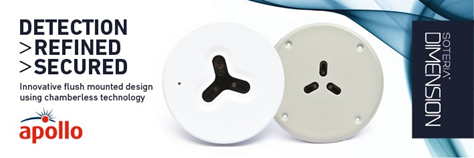
Apollo Fire Detectors, the UK manufacturer of fire detection and alarm devices, have launched their range of flush mounted, EN54-7 approved fire detectors to the international market.

With a global reputation for innovation, quality and reliability, Apollo products keep people safe from fire in over 100 countries around the world. Their latest range Soteria Dimension consists of two optical fire detectors which use chamberless technology to protect challenging applications.

The Soteria Dimension Optical Detector blends seamlessly into its environment, making it ideal for interiors requiring a premium aesthetic. Available in white with a hygienic wipe-clean finish, the product was designed to protect high-end interiors, from private homes, luxury hotels and designer shops to restaurants, galleries and bars.

image-2

The Soteria Dimension Specialist Optical Detector is designed with an anti-vandal and anti-ligature metal faceplate to protect the most vulnerable from self-harm in care and custody. The shock-resistant faceplate is fitted with anti-tamper screws to ensure that it’s completely secure. This minimises safety hazards in healthcare and custodial environments, such as hospitals, contingency wards, quiet rooms, mental health wards and prisons. This variant has been tested to meet the requirements of Ministry of Justice specification STD/E/SPEC/038 and has also independently certified to DHF TS0001 for anti-ligature use is specialist areas.

Liam Arstall, Head of Product Management says “We strive to meet the needs of our customers, even in niche applications. Engaging with our partners made it clear that a creative solution was needed to protect these 2 key areas. After a tremendous amount of research and development, we’re incredibly proud to now be launching the product to the international market.”

German state orders 109 Magirus LF20-KatS vehicles

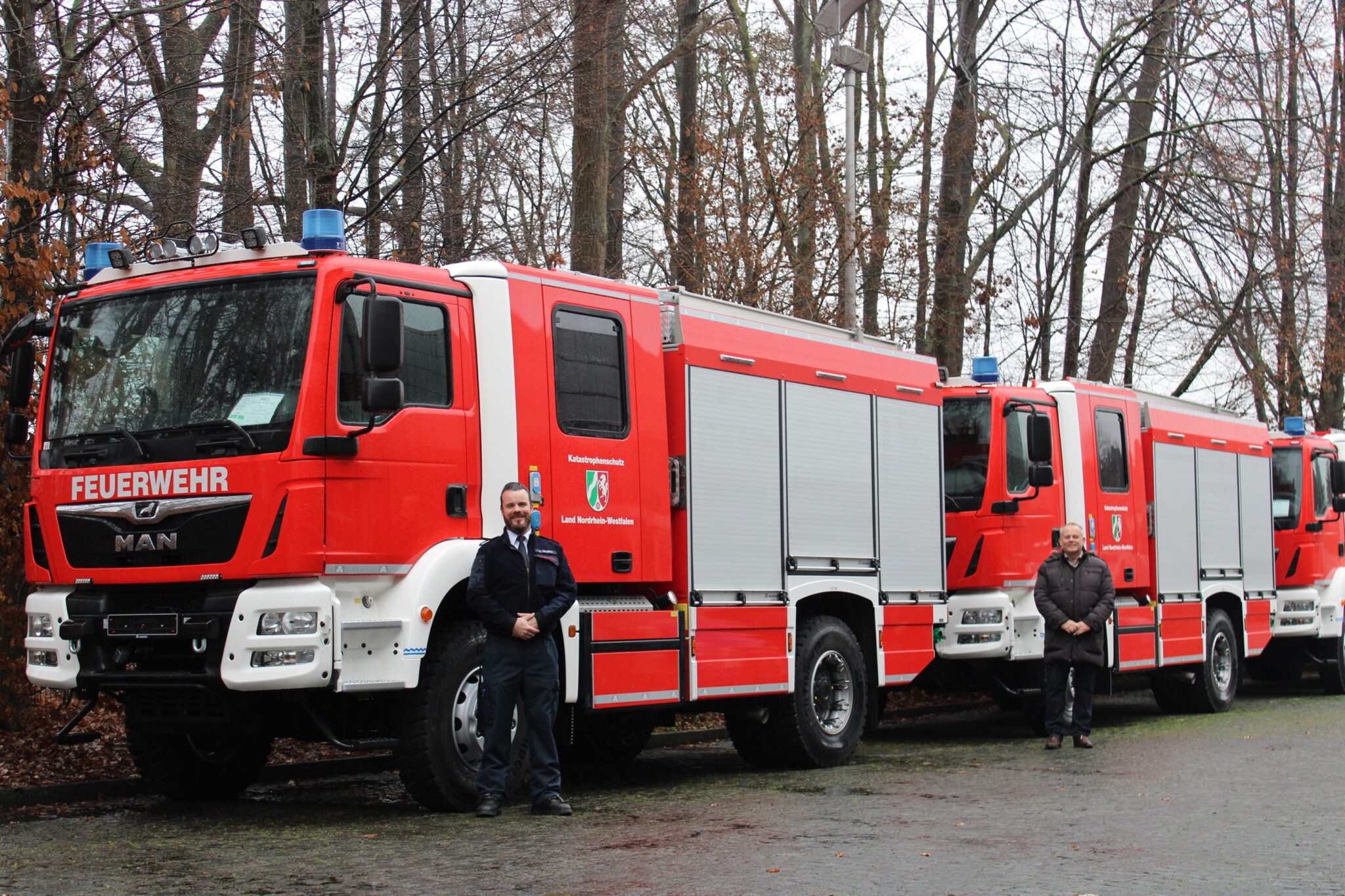
Germany’s largest fire department training facility, The Institut der Feuerwehr NRW (IdF NRW), has ordered 109 Magirus LF20-KatS vehicles on behalf of the North Rhine-Westphalian Ministry of the Interior. The Euro 6 emission standard vehicles, on MAN TGM 18.340 BB 4×4 chassis with Allison 3000 Series™ fully automatic transmissions, form the largest ever order for firefighting vehicles in the state.

A total of 38 vehicles have been delivered to local fire departments, with another 30 scheduled for delivery by September 2021 and the rest to follow by the end of 2022, reflecting a delay due to the COVID-19 pandemic.

The IdF NRW opted for this vehicle configuration to maximise driver control, comfort and economy. Rather than an automated manual transmission (AMT), the institute selected fully automatic transmissions with a torque converter, allowing the continuous supply of power to the wheels. The key factors behind the decision were the transmissions’ ability to provide improved acceleration, excellent off-road capability, reduced wear and, above all, an increase in driver control and comfort for the vehicle’s nine-member crew.

“It is important to us that the overall configuration of this vehicle offers maximum safety for the crew. The smoother and safer the ride, the more confidence the crew has in the vehicle,” said Chief Fire Officer Sebastian Datema, Deputy Head of the Department of Technology and Technical Service at the Institut der Feuerwehr NRW. “We get very positive feedback from the local fire departments about the Allison fully automatic transmission. The intelligent transmission logic thinks for itself and supports the driver both on- and off-road.”

The MAN TGM 18.340 BB 4×4 with Magirus body is driven by an Allison 3000 Series™ fully automatic transmission and a Euro 6 6-cylinder diesel engine with an output of 251 kW (340 PS) and can achieve a maximum speed of 100 km/h. The all-wheel drive provides off-road capability at any time. The LF 20 KatS is able to drive through water up to 90 cm and can manoeuvre at a tilt angle of up to 32 degrees, which has a very positive effect on cornering. The water tank has a capacity of 1,000 litres. The complete package of vehicle and equipment has been adapted to the rescue scenarios encountered in North Rhine-Westphalia and far exceeds standard specifications.

The LF20-KatS disaster control and civil protection vehicles must be ready for operation in the event of major infrastructure failure such as those caused by nuclear, biological and chemical (NBC) threats, and floods. They provide emergency medical services and assistance to citizens. In addition, the vehicles are used for local fire protection in the communities.

“In recent years we have had an increase in incidents for which these powerful vehicles are needed,” said Matthias Kalthöner, Government Fire Director and Head of the Technology and Technical Service Department at IdF NRW. “These are, for example, supralocal assistance in so called large-scale operations and disasters such as floods, forest fires, severe weather conditions or NBC defence. The vehicles are currently enjoying a high level of acceptance among local fire departments.”

The Allison 3000 Series™ transmission has been specifically designed for the requirements of emergency vehicles. “We recommend fully automatic transmissions for these vehicles, especially since the fire services are largely run by volunteer firefighters,” said Stephan Marker, Germany Market Development Manager at Allison Transmission. “The easy manoeuvrability of the vehicles simplifies the work of the drivers. They don’t have to change gears and can focus fully on the job and the road, moving at speed. Allison’s patented torque converter multiplies engine torque during start-up and acceleration. There is no interruption in traction during gear shifts but a seamless transfer of power to the wheels.”

“With the series release of Allison transmissions, MAN has responded to the request of numerous fire departments for a drive configuration that offers outstanding performance, reliability and ease of operation in extremely challenging conditions,” said Harald Rosenauer, Account Manager for MAN at Allison Transmission. “Allison’s torque converter transmission enables MAN engines to deliver full power shifts. This enables the MAN TGM chassis to provide exceptional traction and acceleration for emergency vehicles.”

Allison fully automatic transmissions have demonstrated exceptional reliability and robustness in the most demanding conditions and as a result are used by numerous firefighting fleets worldwide.

Overview MAN TGM 18.340 4×4 BB, LF20-KatS with Allison 3000 Series™ transmission and Magirus body

CustomerThe state of North Rhine-Westphalia
Chassis (manufacturer)MAN
Chassis (model)TGM 18.340 4×4 BB Euro 6 (all-wheel drive)
Body (manufacturer)Magirus
Body (model)LF20-KatS
Engine, emission standard, cubic capacity6-cylinder diesel engine, Euro 6, 6871 ccm
Engine output, torque251 kW (340 PS) @ 2200 rpm 1250 Nm @ 1200 – 1800 rpm
TransmissionAllison 3000 Series™ transmission with shift logic controller for fire fighting vehicles and retarder
Extinguishing agent1000 Litres of water
Overview equipment of LF20-KatSAccording to DIN 14530 Part 8, additionally among others: Boosterline bag, D hose (forest-fire set 2 x D, distributor, 2 hollow stream nozzle) Additional power chain saw Additional wastewater pump Reciprocating saw Generating foam through incline inductor  Rear warning system Light mast Boosterline distributor (2 x) Quick water dispensing system Air conditioning and auxiliary heating for the crew cab

OSSA joins Euralarm to integrate IoT Across Security & Safety

The Open Security & Safety Alliance (OSSA®), an industry body comprised of stakeholders from all facets of the security, safety and building automation space, today announced it has joined Euralarm, the association of European manufacturers, installers and service providers from the electronic fire safety and security industry.

By joining the Security Section within Euralarm, OSSA will contribute valuable expertise in the domain of Internet of Things (IoT), while leveraging on Euralarm’s profound relationships in the European security and safety markets.

Founded in 1970, Euralarm represents the fire and security categories by providing leadership, advocacy and expertise for industry, market, policy makers and standards bodies.

The European association aims to achieve fast and efficient standardisation processes for the region and engages with European institutions on legislative and regulatory issues. Its Security Section represents the intrusion, access and video sector with a focus on surveillance.

“Digital technology is transforming how we all connect with people, places and things – and this evolution offers big – literally life-saving – benefits and possibilities to the fire, security and safety space,” said Paul van der Zanden, General Director, Euralarm. “The member companies that make up OSSA are some of today’s strongest innovators and leaders within the video security and building technology categories. Sharing their collective expertise into programs we have in the works makes good sense as we together can lift up the same industries to benefit those we work hard to serve, save and protect.”

Through OSSA, Alliance members work together to drive an open platform principle and philosophy to harmonise the security and safety marketplace and fuel innovation beyond the limits of a single organisation. Founded in late 2018, members to date have made great strides in laying the foundation for IoT openness within the security and safety markets, starting with video security cameras. Significant markers include the introduction of the OSSA common Technology Stack and two resulting specifications, the introduction of the first OSSA-inspired digital marketplace, and the newly unveiled “Driven by OSSA” designation for the first commercially available video security devices based on the Alliance philosophy and purpose.

“Our Alliance was founded to enhance trust and enable innovation and value for security industry stakeholders and customers, and along this journey toward an open ecosystem platform we’re always interested in combining efforts with fellow associations where there’s shared vision and synergy,” said Johan Jubbega, President, Open Security & Safety Alliance. “In cooperation with Euralarm, we can bring OSSA’s platform and IoT experience to other areas in the security and safety market and speed up innovation in the industry together.”

Organisations interested in the Euralarm membership or seeking more information about Euralarm and the important work their members have underway, visit here. Organisations interested in learning more about OSSA, its membership benefits and the Alliance’s activities can stay informed here.

About the Open Security & Safety Alliance

The Open Security & Safety Alliance is a collaboration initiative that brings together like-minded organisations in order to create a framework providing standards and specifications for common components including an operating system, IoT infrastructure, collective approach for data security and privacy, and a drive for improved levels of performance for security and safety solutions. This will help the market and parties involved to focus on the aspects that really add value for their customers and open up new application possibilities, even beyond security and safety. For more information, visit www.opensecurityandsafetyalliance.org.

About Euralarm

Euralarm represents the electronic fire and security industry, providing leadership and expertise for industry, market, policy makers and standards bodies. The Euralarm members make society safer and secure through systems and services for fire detection and extinguishing, intrusion detection, access control, video monitoring, alarm transmission and alarm receiving centres. Founded in 1970, Euralarm represents over 5000 companies within the fire safety and security industry valued at 67 billion Euros. Euralarm members are national associations and individual companies from across Europe.

Ferrara Fire Apparatus introduces Invader pumpers

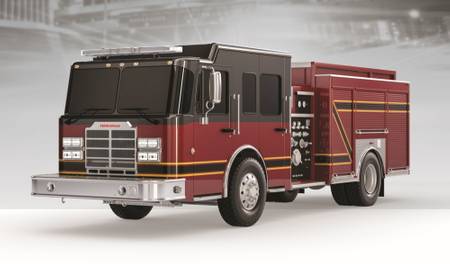
With an industry best lead time of six months, Ferrara Fire Apparatus have launched the new Invader, a complete line of ready-to-build custom pumpers that provides the mission critical performance fire departments expect.

The Invader provides customers the flexibility to choose from multiple configurations with a range of options to meet their unique operational needs.  


Primary features offered include:

  • 94” wide, extended medium aluminum cab with a 10” raised roof  
  • Cummins 380-500 hp engine
  • Allison 3000 EVS™ transmission
  • Meritor® axles
  • 3/16” extruded aluminum body
  • Roller shutter compartment doors 
  • 500 to 1,000 gallon polypropylene water tank
  • Available in top and side-mount pump control configurations
  • Hale, Waterous, or Darley 1,500 – 2,000 gpm pumps
  • Optional FoamPro® 1600 or FoamPro® 2001 foam system
  • Optional 10, 20 or 30 gallon foam cell

“We are excited to introduce the Invader which offers accessibility and convenience for customers in need of a custom pumper,” said Jason Louque, Director of Sales for Ferrara Fire Apparatus. “With the uncertain nature of budgets as well as the challenges presented because of the COVID-19 pandemic, the Invader is a vital addition to our product lineup.”

For more information on the Invader, please visit https://www.ferrarafire.com/category/invader/

Flow Battery Project helps clean energy microgrids

Two years after becoming the first battery of its kind to be connected to the California grid to help support reliability and maximise the use of clean energy, the vanadium redox flow (VRF) battery based at a San Diego Gas & Electric substation is again breaking new ground.

The emerging battery technology is being tested as a means to help achieve zero-emission microgrids – a tool to keep communities and critical facilities powered with clean energy during adverse weather conditions and Public Safety Power Shutoffs. 

With the support of Japan’s New Energy and Industrial Technology Development Organisation (NEDO) and the California Governor’s Office of Business and Economic Development (GO-Biz), SDG&E and Sumitomo Electric (SEI) launched the demonstration project in 2017.  The collaboration was recently extended for another year through the end of 2021, to further test the battery’s microgrid capabilities and maximise its ability to support the grid with ancillary services such as voltage and frequency regulation. Unlike the most prevalent energy storage technology (stacked cells of lithium-ion batteries), the flow battery being tested consists of tanks of liquid electrolytes and pumps. It began participating in the California Independent System Operator’s (CAISO) wholesale electricity markets in December 2018 and was used last summer to help minimise the impact of rotating outages during a record heatwave.

“Long-duration energy storage and microgrids are both key to helping California meet its clean energy, reliability and resiliency goals. We need breakthrough technologies to achieve 100% renewable energy on our grid and to power microgrids during emergencies,” said SDG&E CEO Caroline Winn. “SDG&E is proud to play a role in developing innovative solutions, like the flow battery technology, to help solve California’s climate-related challenges.”

Flow battery systems have an expected lifespan of more than 20 years and could have less degradation over time from repeated charging cycles than other chemical battery technologies.

“This project is cutting-edge and serves as the proving ground for integrating flow batteries into microgrids,” NEDO Executive Director Sato Yoshiteru said. “We are determined to contribute towards developing innovative solutions to environmental and energy challenges, such as improving grid reliability, which are among the most important issues for the State of California.”

“I’d like to express my deepest gratitude to GO-Biz, San Diego Gas & Electric and NEDO for implementation of the Sumitomo flow battery in California. This is a reliable, long-duration technology that offers a high degree of operational freedom and fire safety, using non-flammable and re-usable electrolyte. Based upon these advantages, I’m confident the flow battery contributes to grid reliability in California. I am determined to help California reach its clean energy goals. I look forward to continuing our partnership with San Diego Gas & Electric,” said Hideo Hato, Senior Managing Director of Sumitomo Electric.

In 2015, NEDO signed an agreement with GO-Biz to test flow battery performance in a demonstration setting. NEDO then contracted with Sumitomo to implement the project.  The flow battery provides 2 MW/8 MWh of energy, enough to power the equivalent of about 1,000 homes for up to four hours.

“California has proven time and again that addressing climate change is good for our environment, it’s good for future generations, and it’s good for our economy – spurring new technologies and creating new markets on a regular basis,” said Tyson Eckerle, GO-Biz’s Deputy Director of Zero Emission Vehicle Market Development. “We continue to be proud international partners with NEDO as this game-changing technology brings new opportunities and renewed economic growth through renewable energy.”

Since unveiling the project in 2017, SDG&E has been researching if flow battery technology can economically enhance the delivery of reliable energy to customers, integrate growing amounts of renewable energy and increase the flexibility of grid operations. Like other energy storage systems, the flow battery absorbs or releases electrons as needed to help maintain grid stability. For example, soaking up surplus solar energy generated in the middle of the day and discharging it to the grid during peak evening hours.

SDG&E has been a leader in integrating energy storage, as well as developing microgrids. In 2013, SDG&E began operating the first utility-scale microgrid in America – the Borrego Springs Microgrid. Last year, it received a federal grant to upgrade the Borrego system to run on 100% renewable energy.  In 2017, SDG&E unveiled what was then the world’s largest lithium-ion battery storage facility. To date, SDG&E has about 100 MW of energy storage projects completed or contracted and is working to add more.

DITEK launches the DTK-120X12

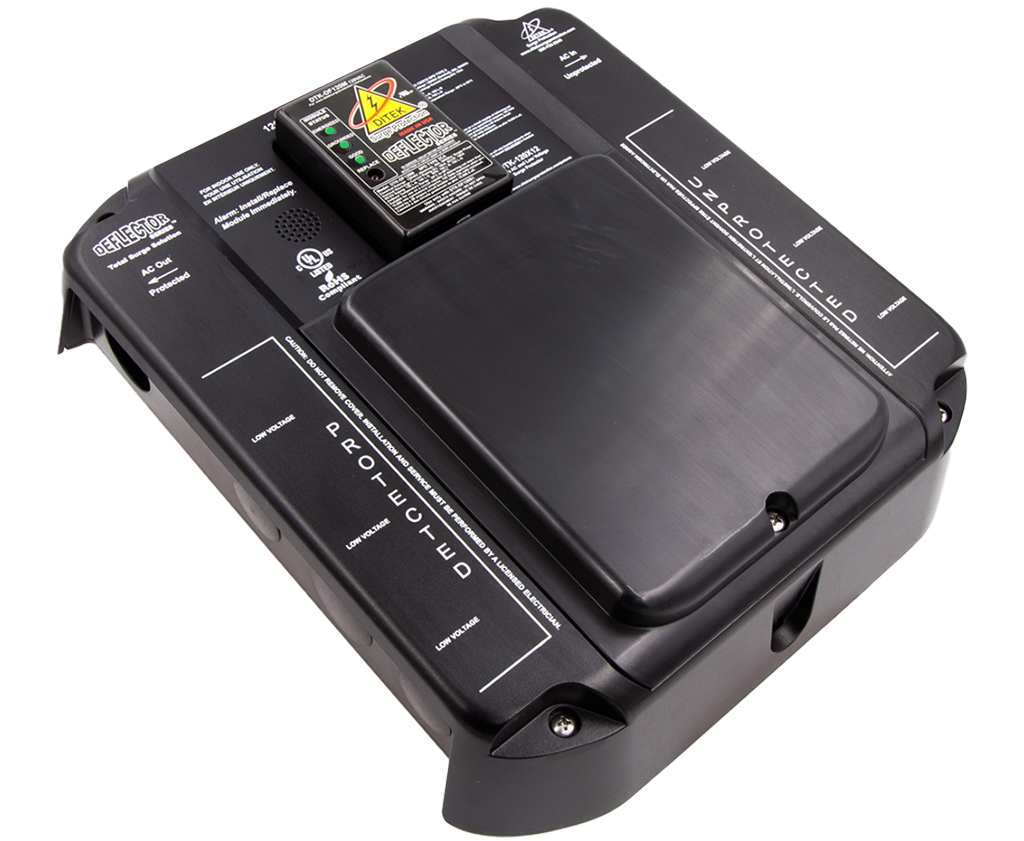
DITEK, the provider of surge protection solutions, announces the launch of a new complete electrical surge protection solution for fire alarm systems. The DTK-120X12 combines protection for 120V system power with protection for up to 12 low voltage circuits to eliminate unnecessary damage caused by electrical surge events.

This unique and compact new combination simplifies implementation of comprehensive surge protection for critically important fire alarm systems while providing for remote monitoring of surge protection status using dry contacts.

The convenient, modular plug-in design simplifies installation of surge protection modules and allows for easy replacement when needed. The combination of complete system protection along with high quality construction and field-replaceable modules makes this new offering a perfect fit for protecting alarm systems and control panels.

“The new DTK-120X12 brings together a simple and complete solution for fire alarm systems,” said Michael Molinari, Director of Marketing, DITEK. “By expanding protection beyond the primary power supply to the low voltage signaling and control circuits, this new protection solution drastically reduces the chances that these wires can carry destructive surges back into the Fire Control Panel. There is no better way to quickly protect a fire alarm system.”

DTK-120X12

The DTK-120X12 base is designed to be wall mounted and hardwired, and includes the 120VAC power surge protection unit with dry contacts for remote monitoring of surge protection status. The 120VAC module also has LEDs for visual confirmation of status, as well as a loud audible alarm that sounds if protection has been compromised.

This three-way notification is designed to ensure that the system will not remain unprotected. The base also has space for mounting up to 6 compatible low voltage protection modules (DTK-2MHLP and/or DTK-2MHTP) that can be used to protect up to 12 SLC, NAC, IDC, PIV, and dialer circuit pairs (these modules must be ordered separately to match the needs of the installation).

All the protection modules are field-replaceable, allowing for quick restoration of protection when needed. A sliding cover is provided to prevent accidental contact. The DTK-120X12 is UL1449 listed as a Type 2 SPD and UL497B for surge protection, UL1283 listed for EMI/RFI noise filtering, and complies with applicable IEEE standards. The DTK-120X12 is made in the USA, with a 10-year limited warranty.