Hyfire wireless fire devices selected to protect leading online fashion retailer

One of the UK’s fastest growing and most quirky fashion retailers, Sock Snob, has selected cutting edge Taurus wireless fire devices from Hyfire to protect its flagship warehouse in Leicestershire. 

Launched in 2011 by founder Lindsay Doughty, specialist sock store Sock Snob has grown rapidly to become the UK’s leading specialist sock retailer, selling from its own website, Amazon, eBay and other locations. The company moved to its new warehouse in Meridian, Leicester in 2021 and, when insurers specified an urgent upgrade of the fire system, Hyfire wireless devices were the obvious choice, linked to an Advanced MxPro5 fire panel.  

Tom Warrilow, Sales Consultant at Nottingham-based APS Security & Fire, which installed the new system, commented: “Not only were we required to install this system as rapidly as possible in order to fulfil the conditions of Sock Snob’s new insurance policy, it also had to be done while the busy warehouse continued to operate at full capacity. We also wanted to minimise time on site due to the pandemic, so the latest wireless Taurus range from Hyfire was the obvious choice. 

“It’s not just that the wireless devices are simpler to install in a large industrial or logistics unit, such as this one, they can also be pre-programmed offsite, and wiring is reduced by up to 90%, so less need for scaffolding and internal disruption. We have worked with Hyfire for many years, but I have to say that Taurus has really taken wireless to the next level, and there are no compromises involved in going for the wireless option.” 

Hyfire offers the widest range of commercial standard wireless fire devices on the market, ranging from optical, multi-criteria and heat detectors to notification, alarm, interface and control units, all fully certified to EN54. All products offer the highest performance and quality in the industry, and are also fully compliant with BS5839 Part 1. Fire panels are wired via a loop to translators, from which wireless devices can be used on their own to build fully wireless systems of virtually any size, or mixed with Hyfire wired products to provide seamless hybrid solutions, offering total flexibility to specifiers and installers.  

Chris McGregor, Hyfire Regional Sales Manager, said: “Although this was a relatively simple wireless fire system covering the warehouse, mezzanine floor and office areas, the client needed everything to be installed and commissioned as rapidly and efficiently as possible. Working closely with the APS team, we were able to make it happen in super-quick time. 

“Thanks to our management team anticipating high demand for the new Taurus range, mainly due to its industry-leading capabilities and the global rise in demand for wireless devices due to the pandemic, we were able to provide all devices from our UK warehouse stock. In fact, Hyfire is currently guaranteeing a two-day turnaround on all items in the Taurus range.” 

Developed in Trieste, Italy, the global centre for wireless fire design, Taurus features Pathfinder Technology, which allows the devices to communicate over 1km, point to point in open air, and further where expansion hops are used. Antenna technology has been optimised to allow communication across different frequencies and environments, which means that Taurus can do the job with less equipment and less batteries, thus saving on costs.  

Hyfire was launched as Sterling Safety Systems in 2007, bringing to market some of the first commercial wireless detection and alarm devices fully certified to EN54. Since then, the Hyfire brand has become synonymous with quality, reliability and innovation in the commercial fire sector. Hyfire devices come with a five-year warranty, backed up by a dedicated partner programme to ensure the best survey, installation, commissioning, after sales service and exceptional technical support.  
KME welcomes dependable Emergency Vehicles as new dealer in Ontario

KME, a subsidiary of REV Group® and a leading manufacturer of fire apparatus, is pleased to welcome Dependable Emergency Vehicles as the dealer covering parts of the Ontario province in Canada.

Founded in 1975, Dependable is a family operated business with a dedicated team of more than 60 employees. With three locations in Ontario, its main facility in Brampton is 40,000 square feet and features 40 full-service bays for bodywork, painting, refurbishing and truck repairs by fully licensed and EVT certified technicians.

“We are thrilled and honored to be selected by the REV Group to represent KME Fire Apparatus. We are ready to serve KME customers in Ontario with a dedicated sales and service team with over 100 years of combined knowledge,” said Pino Natale, Director of Dependable Emergency Vehicles.

KME Director of Sales Chris McClung said “We are excited to welcome Dependable Emergency Vehicles as a KME sales and service organisation. We are confident that Pino and his team will help grow the KME presence throughout Ontario.”

Dependable Emergency Vehicles will cover all areas in Ontario except for the Haldimand, Halton, Hamilton, Sudbury, Waterloo and Wellington regions, which will continue to be serviced by longtime KME dealer Metz Fire & Rescue.

Exclusive: Walk-in and non-walk-in rescue fire trucks explained

Each rescue fire truck comes with different specifications, and knowing them is vital when deciding which to use 

There are a number of significant differences between a walk-in and a non-walk-in rescue fire truck. The differences often dictate the functionality of the apparatus, the tools that can be carried on board, and ultimately, the fire truck configuration. 
 

To compare and contrast rescue types, lets evaluate some of the common facts and information to aid firefighters in the search for the right rescue truck type. 

Rescue fire truck explained 

Technically speaking, a rescue fire truck is a specialised vehicle designed to provide support in rescue operations. However, if you were to ask firefighters the definition of a rescue fire truck, the chances are that each one would give a different response to the last, and that is mainly due to the fact that each rescue fire truck being is as unique as the fire department and community that it serves.  

At Pierce Manufacturing, we often consider a rescue fire truck as a toolbox for the following reasons. Firstly, the rescue fire truck is uniquely sized, shaped and constructed for the tasks that are required. Secondly, they hold the required tools for the types of rescue missions in the community. Finally, the tools that are used are organised so that they meet the needs of the end users, the firefighters.  

Now that we’ve established what a rescue truck is, it is also important to emphasise that a fire truck should be designed based on the specific needs of a fire department and community. Before fire departments do anything else, they must first understand the truck’s mission and then determine the type of rescue that matches the mission. 

Now, let’s look at the comparison between two of the most common types of rescue apparatus. 

Walk-in rescue 

A walk-in rescue fire truck features walk-in open space in the body that is used by personnel. In its simplest form, a walk-in rescue truck features an aisle down the centre of the body, providing ample space for firefighters and personnel to sit and rest at the scene of an emergency. However, modern walk-in rescues come in various shapes and sizes, with compartments, laboratories, command centres, and many more features onboard the vehicle. 

There are many scenarios in which a walk-in vehicle is the ideal solution for fire departments. For example, a walk-in apparatus is ideal for extreme weather conditions and allows firefighters to get out of the elements on-scene. In addition, a walk-in fire truck may be required if the tools your department carries on board are sensitive to temperature or other environmental elements. Lastly, these trucks can be set up for command operations during lengthy emergency calls, allowing firefighters to work at stations and with specialised tools and equipment on board. 

Based on the needs of a fire department, the ‘walk-in’ portion of a fire truck can be executed in several different variations. Access points can include the rear of the vehicle, either or both sides, the cab of the vehicle or any combination of those points. 

A hazmat rescue vehicle, for example, could include a walk-in portion at the front of the vehicle featuring a laboratory designed with an interior fume hood to test chemicals, and chairs and monitors to manage operations. 

A rehabilitation rescue unit could offer maximised interior space that includes very little exterior storage but provides full front-to-back and side-to-side interior working space for seating and many types of features such as restrooms, refrigerators, coffee makers and microwave ovens. A command rescue fire truck could include a conference area with a table, chairs and workstations equipped with telecommunication equipment and monitors. 

Non-walk-in rescue 

Now let’s take a look at the non-walk-in rescue fire truck. A non-walk-in rescue fire truck is the most common type of rescue fire truck, mainly because it offers the most storage, a vital feature for fire departments around the world. When a fire department is faced with many rescue scenarios, it may require a rig featuring several types of equipment to match those needs. In the past, walk-in rescues were often used because they could transport more firefighters to the scene of an emergency. Now that fire truck cabs are designed to maximise every square inch of space, firefighters can sit comfortably in the cab of a non-walk-in rescue, often eliminating the need to ride in the body compartment altogether. As a result, a non-walk-in rescue body can be used exclusively for tool and equipment storage. 

Evaluating the difference 

The difference between walk-in and non-walk-in rescue fire trucks is important for fire departments to understand because it dictates the tools on board, the organization of the tools and the overall function of the fire truck. It’s important to outline the mission of the truck and be very thoughtful when it comes to these questions: 

Key questions to consider 

When deciding which type of rescue you need, it is essential to consider all aspects and ask the following questions. Firstly, how many firefighters will need to travel to the scene?  How many firefighters will be on board the truck? Secondly, what are the firefighters doing at the scene? Understanding the common tasks firefighters complete at the scene of an emergency will dictate if an interior space may be required on the truck. Thirdly, which tools do they need to have onboard the truck? Establishing the tools that need to be on board to successfully manage calls will determine how much storage is required. Keep in mind that just because your old rescue had certain tools doesn’t mean you need to allot space on a new apparatus for the same tools. Determine which tools are required for the types of calls you manage most frequently. The final question to consider is what tools do they use most often? Understanding the tools that are used on-scene will help determine the ideal storage and configuration of a new rescue fire truck. The most important tools should be stored in easily and immediately accessible compartments. Tools that are seldom used can be stored in roof or interior compartments. 

What is the optimal way to access the tools onboard?

As you consider the ideal type or rescue, fire departments must also consider the optimal way to access tools. Part of the planning process should include a discussion of what tools can be safely carried down a ladder, for example, or safely stored and pulled down from a high compartment area. 

Having these conversations with your local dealer can help your fire department narrow down the goals and objectives of a new rescue. These conversations often help support the selection of either a walk-in or non-walk-in rescue apparatus. 

What factors in rescue apparatus purchasing need to be considered? 

Ultimately, a fire department’s goal is to find the right type of truck that meets the service needs of their community, and we are proud to support that mission. 
 
At Pierce Manufacturing, we often advise firefighters to connect with neighbouring fire stations and learn as much as they can about both walk-in and non-walk-in rescue fire trucks. 

Consider additional elements, like: 

  • The length of your station bay 
  • The role of the fire truck in the existing fleet 
  • Strategic compartment storage 
  • The height of the apparatus and how that influences tool access 
  • Roll-up or hinge compartment doors 
  • Ergonomics and tool placement 
  • Equipment layout options 
  • Advancements in rescue storage 

There are infinitely more options to consider with a new rescue apparatus and there is no wrong or right way to configure a fire truck—walk-in or non-walk-in! 

Firefighters & EMS Fund releases 2020 Fire Referendum Report

In 2018, the Firefighters & EMS Fund produced their first ever “Fire Referendum Report.” It was a first of its kind look at the success of ballot measures related to Fire & EMS services around the country in the 2018 mid-term elections. Now, the grassroots political organisation has just released the updated 2020 edition to the public.

The report was created to better understand and support measures in the United States which affected the operations of emergency services. This national report focuses on local and state referendum and ballot measures so that citizens and Fire/EMS leadership alike may be better prepared to assist the political efforts of firefighters in America. 

In total, Firefighters & EMS Fund analysed over 80 referendums and ballot measures across 18 states to create this comprehensive report, which means that the 2nd Edition in the Referendum Report series was created covering more ground and analysing even more data than first presented back in 2018.

“The 2020 election season was unlike any other in modern history. Beyond the typical politics of the day, the nation was gripped by a once in a lifetime pandemic which turned every aspect of American society on its head,” said Executive Director Nile Porter. “Within the context of Covid-19, the importance of the referendums and ballot measures which affected the Fire & EMS communities around the country took on a new light.”

The mission of grassroots political organisation Firefighters & EMS Fund is to provide a grassroots voice for firefighters across the country in the state and local political process. According to their website, the organisation supports local ballot initiatives and works to elect political leaders at the state and local level that understand firefighters’ and public safety officers’ interests. The organisation is comprised of concerned citizens, first responders, Firefighter and EMS leaders, and more. 

The 2020 Fire Referendum Report provides interesting analysis that fire jurisdictions will need to know in order to successfully request funding from voters, now and into the future, as the need for funding inevitably grows more urgent.

To download the free report, visit https://www.fireandemsfund.com/2020-fire-referendum-report/ 

NVFC launches new course for families of firefighters

The National Volunteer Fire Council (NVFC) has launched a new course for fire service families, just in time for the holidays. Families can be the greatest source of support for firefighters, EMS providers, and rescue workers, so it is important they understand what their loved one is experiencing and how they can help. The new course, For Those Who Love a First Responder, is designed to educate spouses, friends, and family of first responders on the impacts of the job on mental health and what they can do to support their loved one.

This course is instructed by Ali Rothrock, a speaker, author, educator, and advocate who has delivered over 500 presentations nationwide. She has been in the volunteer fire service since 2005, enjoying more than a decade as a firefighter and emergency medical technician. She is the CEO and lead instructor for On the Job and Off, an online platform dedicated to building more resilient first responders.

This course was made possible thanks to support from the Anheuser-Busch Foundation and is currently available for free to all in the NVFC Virtual Classroom.

Learn more and take the course here.

New to the NVFC Virtual Classroom? Learn more about accessing it here.

Ferrara accepts order for 7,000th fire apparatus

Ferrara Fire Apparatus, Inc., a subsidiary of REV Group® and a leading manufacturer of custom built, heavy-duty fire apparatus, announces it has received an order for its 7,000th fire apparatus. The order was placed by the City of Salem, Massachusetts for the Salem Fire Department.

“For the last 30 years, we have dedicated ourselves to utilizing the latest technological methods and heavy-duty materials to construct the strongest custom-engineered fire apparatus in the industry,” shared Bert McCutcheon, vice president and general manager, Ferrara. “I congratulate our experienced team on reaching this important milestone and look forward to many more in the years to come. Together, we’ll continue to build the strongest fire trucks in the industry that help our customers and the communities they serve.” 

This order is the third Ferrara pumper purchased by the City of Salem, Massachusetts in the last seven years. As one of the oldest cities in New England, the department needed a short, narrow city pumper to navigate streets that were historically used as cart paths.

“The combined experience of Ferrara and its dealer, Bulldog Fire Apparatus, have played an instrumental role in helping us design a custom pumper that meets the needs of our infrastructure,” said Alan Dionne, Chief of Department, Salem Fire Department. “We are thrilled to put this truck into service and look forward to the expanded capabilities it will add to our fleet.”

The order is for a Ferrara Igniter® XD XMFD cab with an 8″ raised roof, and will feature:

  • 450-hp Cummins® L9 engine
  • 1500 gallon per minute Hale® QMAX pumper
  • Short 29′ overall length
  • Recessed handrails on cab
  • Ladders on right side
  • Aluminum hose bed cover
  • 175″ wheelbase
  • 500-gallon water tank
  • F-Shield coated frame rails
  • Frame rail style front bumper
  • Ferrara heavy-duty cab construction
  • Ferrara extruded aluminum heavy-duty body
  • Ferrara point-to-point 12V DC electrical system
  • Whelen® warning lights

The Ferrara Igniter XD will be ideally suited for navigating the congested streets of Salem and serve the city’s continuing needs.

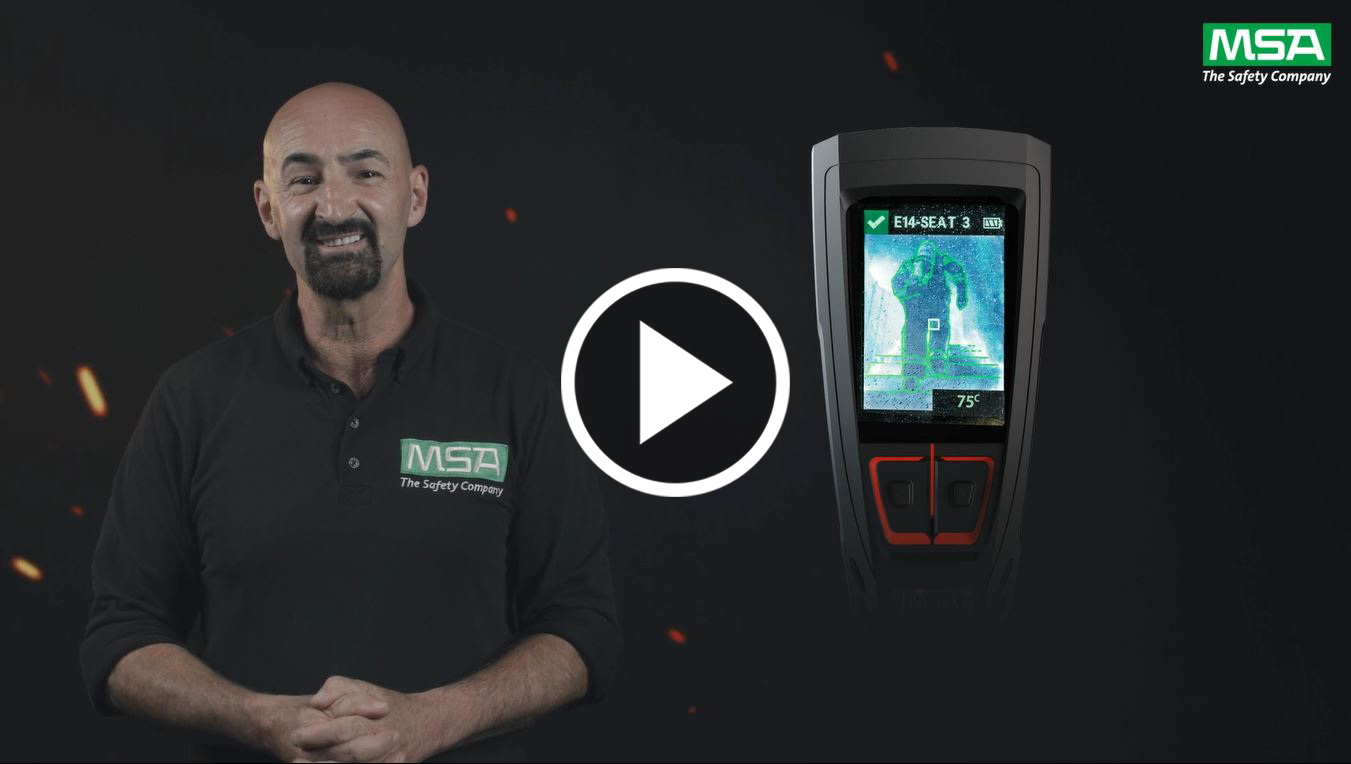
Experience a virtual demo of LUNAR from MSA

Firefighting is an inherently dangerous environment and firefighters are exposed to risk while performing their duties. The workload of a fire and rescue services has also changed throughout the years. In addition to fighting fires, they are at the forefront of many other rescue operations. Therefore, advanced tools that can help to keep firefighters connected who are on- and off-scene, maintain situational awareness and provide actionable data is a key element in firefighter safety.

MSA’s Connected Firefighter Platform, driven by LUNAR, provides that solution.

The Connected Firefighter Platform

MSA´s Connected Firefighter platform is a suite of products designed for every firefighter on-scene, both those on air and off. Linked together they create visibility, increase efficiency, situational awareness, and enable accountability for everyone on the scene. This set of products connects the fireground to the cloud. comprised by the M1 SCBA Telemetry solutions, the FireGrid Software suite, and the latest breakthrough technology LUNAR.

Key Components of Connected Firefighter Platform

The Connected Firefighter ecosystem is comprised of:

LUNAR – a cloud-connected, comfortable to carry in hand and wireless device to provide enhanced thermal imaging, what’s beneficial for firefighters’ situational awareness. With LUNAR firefighters know who’s in distress and needs help with direction and distance information to help find separated teammates and decrease response time. This technology alerts incident commanders to who’s down and who’s searching for them – all while still having a remote monitoring piece.

FireGrid – a web-based cloud platform composed of FireGrid Monitor tablet application and FireGrid Configure mobile application. It’s easily accessible from anywhere which provides an additional layer of firefighter safety by collecting smart data to increase a department’s capability for managing products, people, and processes. On-scene information is aggregated from products and is available for immediate usage or stored for post-scene data reporting. So, it could be used by a department’s incident commander, someone monitoring off-scene remotely, a fleet maintenance manager, or even a training officer.

MSA HUB – the wireless gateway to the cloud for telemetry-enabled MSA SCBA. It enables active monitoring of air management information both on-scene for local monitoring and remotely from anywhere in the world. MSA HUB can be used as a local system by using its own hotspot for connectivity or by connecting to an existing internet connection. The wireless capability enhances mobility and introduces the use of FireGrid Monitor to allow Local Incident Command the option to not be tethered to their command vehicle and to be closer to the action.

Other Products Considered as a Part of Connected Firefighter Platform

M1 SCBA –  For those wearing MSA M1 SCBA, embedded Bluetooth technology connects to LUNAR, providing estimated air pressure, time remaining, and battery life all on-screen for a complete safety point-of-view.

ALTAIR® 4XR and ALTAIR® 5X – these portable multigas detectors have embedded Bluetooth technology to connect to LUNAR and the MSA M1.

A Virtual Demo of LUNAR

Watch a virtual demo of LUNAR where MSA’s experts explain in-depth how LUNAR works and the advantages of the product network. The videos are available in English, German and French language.

Pierce receives order for Tiller and Pumpers with PACCAR MX-13 Big Block Engine

Pierce Manufacturing Inc., an Oshkosh Corporation (NYSE:OSK) company, announced today the City of San Jose Fire Department in California has placed an order for one Pierce Ascendant® 107’ Heavy-Duty Tiller Aerial Ladder on an Arrow XT™ chassis and three Enforcer™ Pumpers. Sold through Pierce dealer, Golden State Fire Apparatus, the San Jose Fire Department’s new fire apparatus will include PACCAR MX-13 big block engines.

PACCAR MX-13 engines are built in Mississippi exclusively for PACCAR-owned Kenworth Truck Company and Peterbilt Motors Company. With the 2021 PACCAR MX Engine model year, PACCAR and Pierce began an exclusive venture to offer the MX-13 engine to the fire industry. The MX-13 engine is known for its innovation and reliability in heavy-duty applications throughout the country and it undergoes one-million-mile endurance testing to validate high mileage durability.

“The Golden State Fire Apparatus team shared a lot of helpful information about how the PACCAR engine is well used in the commercial industry and we had the opportunity to operate a Pierce engine equipped with the PACCAR motor,” said Joseph Crivello, Battalion Chief for the San Jose Fire Department. “We had experienced fire engineers operate the vehicle, and they were impressed with the performance in all areas of our coverage from downtown urban areas to the East Foothills. The lighter weight motor is a big factor, and its size integrates well with the chassis, allowing for a more spacious and maneuverable captain’s space in the cab.”

San Jose Fire Department’s new fire apparatus will feature:

Ascendant 107’ Heavy-Duty Tiller Aerial Ladder

  • Arrow XT chassis
  • PACCAR MX-13 big block engine
  • Allison transmission
  • 6 KW Harrison generator
  • TAK-4® Independent Suspension
  • Hendrickson Air Ride suspension on the drive axles
  • Side roll and frontal impact protection

Pierce Enforcer Pumpers

  • Enforcer chassis
  • PACCAR MX-13 big block engine
  • 500-gallon water tank
  • Waterous 1500 gpm two-stage pump
  • TAK-4 Independent Suspension
  • Covered hose bed and 68-inch high crosslay
  • Hose reel
  • Carcinogen Awareness and Reduction to Exposure (CARE™) cab customisation, including vinyl seats and metal floor

Chief Crivello added, “The maneuverability and capabilities of the Pierce Ascendant 107’ Tiller are amazing, and we look forward to replacing an older 100’ tiller with this essential upgrade as there are numerous high rises under construction in our downtown areas. Additionally, one new engine is a fleet add which will go to a new fire station, station 37, opening in early 2022 to support population increases and system coverage improvements.”

The San Jose Fire Department serves 1.2 million residents, and responds to over 91,000 service calls per year out of 33 fire stations. San Jose is the third most populous city in California (after Los Angeles and San Diego) and the tenth most populous in the United States. The department is the emergency service provider for an international airport, seven major hospitals, a professional sports arena, 108 high-rise structures, and more.

“We were given unique challenges to address, including the San Jose Fire Department’s need for fire apparatus which has a high angle of approach and departure,” said David Klockzien, Sales Manager for Golden State Fire Apparatus. “I’m confident the department’s new Pierce fire apparatus will exceed performance expectations, and our Golden State team appreciates the department’s continued trust and confidence in our expertise and the quality of our products.”

Exclusive: Anti-fog protection for eyewear

To ensure the best visibility and to reduce the probability of accidents, eyewear that doesn’t fog is essential 

Your unique set of skills, knowledge and precision is what makes you great at your job. Choosing the right personal protective equipment for the task at hand enables you to give your full potential regardless of the situation that you are tasked with.  

Indeed, your environment may impact your abilities to see clearly, hence impacting precision and increasing the risk of accidents in the workplace, at both your workstation and on your way to work. It is therefore important for you to be confident in your eyewear to protect you from fog-obscured vision. 

Temperature variation and humidity may indeed create fog on your safety eyewear, which ultimately blurs your vision. Fogging is indeed the first challenge met by eyewear users which can ultimately lead to a decrease in your productivity as well as increase the chances of being involved in an accident. 

The effect is increased as you give your best to your job and your body temperature and perspiration increases, naturally impacting the temperature variation between your body heat and the cooler environment surrounding you. 

Whether you need prescription or plano safety eyewear, the probability is high that you already experienced the fogging up of your lenses while being focused on your duty, resulting in a slower pace, more approximative movements and overall discomfort. 

Finding the right solution 

While wearing other PPE such as helmets, face masks or respirators, this phenomenon is even more common, increasing the need for an efficient, simple, and durable solution so that you always stay at your best and ensure visual clarity. 

PPE eyewear manufacturers have been working intensively over the last few years to engineer more effective anti-fog solutions, whether as coatings or sprays to ensure both protection and comfort to users are maintained in all occupations. 

After optimising every aspect of their coating’s technical performance and analysing all of the solutions available on the market, Bollé Safety launched PLATINUM: an exclusive anti-fog and anti-scratch coating applied on both sides of the lens through a dipping process to provide the highest durability and effectiveness. Engineered with hydrophilic properties, PLATINUM uses the natural humidity to create a homogeneous, colourless film of water on the surface of the lens which acts like a water repellent to ensure optimal clarity.

This innovative coating goes beyond all international standards (K & N rated under EN166 standard) to ensure you get the best visibility so that you are in the optimal position to give your best and maintain performance. Four times more resistant to fogging and twice more resistant to abrasion than EN166 requirements, PLATINUM provides exceptional performance, encompassing resistance to both autoclave cycles and to the most extreme temperature to protect you regardless of your work environment. 

Because you don’t always require the most advanced anti-fog solution to have a clear vision and be in full capacity of your movements, Bollé Safety developed PLATINUM LITE a simpler version of the coating that provides effective anti-scratch & anti-fog properties for you to always stay alert and maintain visual comfort. 

Whichever coating you would use, PLATINUM & PLATINUM LITE coatings are both durable and washable to reduce their carbon footprint while enabling you to use the product all day long and every day with peace of mind. 

Available on safety glasses, prescription eyewear, goggles, OTG and face shields, the PLATINUM range of coatings are a must have for every worker. No matter your work environment, it is recommended to use optimal anti-fog coatings such as PLATINUM with sealed/positive safety glasses or with poor ventilated eyewear that reduces air circulation as they increase fogging risks. Indeed, your body heat is often enough to create fog in these circumstances. 

As you may be using safety eyewear without a fog-resistant coating, manufacturers have developed anti-fog sprays that create a fog protective layer onto the lens. Bollé Safety’s latest product, the B300, is one of the most effective products on the market and was specifically designed to provide the best protection on all lens materials without damaging other coatings such as anti-reflective. The B300 optimal performances make it an asset to your team’s results and can be used in all situations, on both your professional equipment and your personal reading glasses. 

As visual comfort and performance go hand in hand, you deserve your safety eyewear to show you what they are truly made of. See for yourself and unleash your full potential. 

130 years of innovation

Today, Bollé Safety is distributed in over 90 countries and over 15 million workers wear protective spectacles bearing the Bollé Safety signature. Founded in 1888 in Oyonnax, France, the Bollé family originally designed and manufactured combs and hair accessories from horn. In 1936 the company launched the production of sunglasses and optical frames in Celluloid and then Rhodoid. After the Second World War, Bollé became the pioneer of molded nylon, with products that met the highest standards of that time.

The first pair of goggles and masks were added to the Bollé range of products in 1950. The Bollé brands have grown from their small workshop beginnings to become a leading global manufacturer of quality eyewear. Today, more than 100 years later, Bollé products are distributed and worn in all parts of the worldAfter more than a century, our vision remains the same, to protect workers’ vision in the various harshest environments and improve their performance. Every day we go further to satisfy the needs of our clients. 

Zico improves ladder access on narrow streets

Ziamatic Corp. (Zico), an international leader in ladder storage solutions, is making it safer and easier to deploy ladders in space-restricted areas with their new Slide-Out Ladder Gantry System, Model SLG-M.

Traditional side-mounted ladder storage can be difficult to safely access when operating in a confined environment like a narrow, car-lined street. So the Ladder Gantry System stores ladders horizontally over the roof of the apparatus and when needed, smoothly lowers them from the rear of the truck for quick, easy, and comfortable retrieval.

“Two-section and roof, three-section and roof, we can accommodate most common ladder configurations,” said Keith Creely, Ziamatic Vice President. “And by storing these ladders on top of the truck you’ll find you’ve suddenly freed up all this extra square footage in your apparatus design. You no longer need that midsize compartment to hang your ladders over—you can go full size. You don’t have to slide ladders in the back and sacrifice compartment depth. All of that space can go toward storing more gear, because everybody always needs more room for equipment.”

The lightweight aluminum tray slides smoothly under load and a powerful spring lock secures the tray safely in both the stored and fully-deployed positions. A built-in dampener minimizes bounce and allows for easier operation on hills and other inclines.

Available now. For more information please call 1-800-711-FIRE or visit www.ziamatic.com