ESPRIT helps Holmatro answer the call for lifesaving equipment

Emergency responders require the very best tools available to get their challenging jobs done. In critical life-and-death situations, every second matters. Countless fire, police, and other first response organisations around the world count on Holmatro to equip them with the most reliable and efficient tools available.

To satisfy these demands, Holmatro has relied on the ESPRIT computer-aided manufacturing (CAM) system for more than two decades. From the products that Holmatro makes to the manufacturing processes required to complete them, efficiency is key—and ESPRIT fits the bill by allowing them to machine more features in a single operation.

Since 1999, the Maryland, US-based company has been using the CAM system to manufacture hydraulic rescue equipment (like cutters and spreaders), as well as cylinders, plungers, check valves, and more from aluminum, steel, and exotic alloys. Although the Holmatro name is most often associated with hydraulic rescue equipment, the brand makes complex parts for many demanding industries, including railways and energy.

Although the Holmatro team have been long-time ESPRIT users, they’re far from complacent. “We periodically check in with our team to ensure our CAM system is evolving with our needs,” says Chuck Cain, Manufacturing Engineer at Holmatro. “ESPRIT was very good at multi-function machining when we bought it in 1999. A few years ago, we reviewed many other CAM packages to evaluate if we were keeping up with the times. After many demos, we concluded that ESPRIT was still the best choice for us. We ended up adding multiple seats of ESPRIT to our facility in the Netherlands,” says Chuck.

Holmatro’s sprawling US headquarters is home to more than 30 CNC machines, ranging from 9-axis mill-turn to 5-axis simultaneous equipment, mostly made by Mori Seiki and Okuma. This highly specialised company uses incredibly demanding processes to get the job done. “The parts that we manufacture are complex due to the nature of manufacturing parts to such close tolerances. A typical product will have tolerances not to exceed 30 microns. We also have many products with 20-micron [.0007 inches] tolerances,” says Chuck. And because many of their products save lives, there’s no room for error.

Chuck and his team regularly use their CAM system to manufacture new fixtures and program parts on their 5-axis milling machines in record time. “We were able to save approximately 30 minutes per part by utilising a 3+2 machining mentality. ProfitMilling also helped with cycle time reduction,” he says.

In recent years, the team at Holmatro has also been interested in exploring how automation could improve their efficiency and, ultimately, their bottom line. “Right now, our main focus is on enhancing production with unattended machining. We always look for ways to avoid handling parts more than once or twice. We also strive to manufacture complete parts in one sequence of events,” says Chuck. “With ESPRIT, we are able to manufacture the fixture components in a short time.” The software’s  diverse cycle selection and ability to handle any machine is what makes “done-in-one” manufacturing possible.

The team at Holmatro shares a singular vision of improving their product offerings delivering them to the public faster and at a reasonable price point thanks to improved efficiency. “The future of our company is about manufacturing new products and providing our customers with the quality they expect in as few operations as possible,” says Chuck. And “efficiency” isn’t a concept limited to their manufacturing processes. “This philosophy is especially true for our first responders. We strive to provide solutions that allow the rescue team to use the least amount of equipment as possible while still being effective.”

One of the most interesting innovations on the horizon? “Cordless equipment,” says Chuck. “This means no hydraulic lines that connect a hydraulic pump and rescue tool.” Cordless equipment enhances the efficiency and mobility of first responders, helping them more effectively save lives.

“ESPRIT has not only grown since we started using it in 1999, but it’s also helped us grow as a company. With its new cycles, techniques, and software enhancements, we were always generating cost savings. This also increases capacity and throughput,” says Chuck. “We look forward to the end of each calendar year because we know that ESPRIT CAM will be releasing some new or improved version of the software.”

For more information about ESPRIT, contact: Esprit CAM UK Ltd, Floor 2, No 1 Waterside Drive Arlington Business Park, Reading, RG7 4SA, United Kingdom. Tel: +44 118 9756084, Email: esprit@hexagon.com, Website: https://www.espritcam.com/en-emea
Isle of Man Government receives three Oshkosh Striker 6×6 ARFF vehicles

Oshkosh Airport Products, LLC have announced that the Isle of Man Government has received three Oshkosh Striker 6×6 ARFF vehicles. The Isle of Man is a British Crown Dependency in the Irish Sea between Great Britain and Northern Ireland. The new Oshkosh Strikers were delivered in early December 2021, and support operations at the Isle of Man Airport (IOM). Extensive training has commenced in preparation for the vehicles to enter front line service in the first quarter of 2022.

“This delivery represents the first Oshkosh Strikers for the Isle of Man Government and the vehicles will provide essential advancements in acceleration, maneuverability, firefighting capabilities, and safety technology for the fleet,” said Jack Bermingham, business unit director for Oshkosh Airport Products. “Supported by Terberg DTS UK, IOM will have convenient access to critical service support for the aftermarket care of their Striker ARFF vehicles.”

Features of Isle of Man Airport’s Striker 6×6 ARFF vehicles:

  • Scania DC16 V8 700 HP Engines
  • 50-foot (15 meters) Snozzle® High Reach Extendable Turret (HRET)
  • Water capacity: 3,170 gallons (12,000 liters)
  • Foam capacity: 444 gallons (1,680 liters)
  • Dry chemical capacity: 550 Ibs (250 kg)
  • Eco-EFP™ Foam Measurement System 

Isle of Man Airport’s new Striker 6×6 ARFF vehicles are also equipped with a Snozzle HRET strobe light, dual LED tip spotlights, mounted thermal camera, piercing tip color camera, and an air aspirated bumper turret with a discharge rate of 1,585 gpm (6,000 L/m).

Also known as Ronaldsway Airport, IOM Airport is located in the island’s southern region and southwest of Douglas, the island’s capital. Along with the Isle of Man Sea Terminal, it is one of two main gateways to the island and services over 800,000 passengers yearly.

OFR Consultants completes work on international fire engineering projects

OFR Consultants – an independent consultancy dedicated to addressing fire safety challenges – has completed work on a host of projects both here in the UK and internationally. The company, which is the largest consultancy dedicated to fire engineering in the UK, offers pre-eminent fire engineering expertise that protects people, property and the environment. Projects benefitting from the 100-strong team’s advice this month include providing fire safety guidance to the European Organisation for Astronomical Research in the Southern Hemisphere (ESO) for its new European Extremely Large Telescope, which is currently under construction in the Atacama Desert, Chile.

Working as part of an international team, the OFR experts are peer reviewing the contractor’s design proposals for the client and ensuring that proposals meet relevant design guidance recommendations and appropriate regulations. OFR is working on behalf of Ramboll, a global engineering, architecture and consultancy company

In London, the team has been advising on the detailed planning submission for a sustainable office-led redevelopment of the Printworks building. Located within Zone H of the Canada Water masterplan, which is a partnership between British Land, Southwark Council and the local community, the Printworks building will include ground floor retail, improved landscaping and the creation of accessible routes throughout the site.

In the North, OFR has also helped on the creation of two schemes in Leeds. Working on behalf of client Wilmott Dixon, OFR has advised on the creation of a new block at Outwood Academy in Hemsworth as well as Leeds Bus Station where OFR guided the client on the safe creation of new entryways for passengers.

While in Scotland, a team of fire engineering specialists from OFR Consultants have helped to deliver a fairy tale ending at the Category B listed 5-star Glenapp Castle Hotel following an extensive £2m refurbishment. Here, the OFR team worked alongside client Truestone Glenapp Ltd to advise on the complex project that had faced building control challenges over the 3-year duration. The team also worked in Glasgow on the recent completion of the Allander Leisure and Adult Resource Centre – a new build facility comprising a 25m 6 lane swimming pool, teaching pool, 8 court games hall, and other amenities. 

OFR was founded in 2016 in Manchester and has since become the UK’s leading fire risk consultancy, employing more than 100 colleagues from over 20 countries. The brightest and best professionals in their field, these colleagues help deliver on global projects across the UK and the whole world – from Antarctica, to Cuba, to Sri Lanka. 

Concluded founding director Sam Liptrott: “We have been fortunate enough this year to work on some really fascinating projects, taking our team across the world, ensuring that they share the best fire engineering advice to clients delivering ambitious new developments. Our colleagues have excelled in delivering some great work at each of these sites and we now look forward to working with more great global clients as we use our expertise to protect people, property and the environment.”

FirstNet provides $900,000 worth of pandemic related supplies to fire departments

COVID-19 has had a significant impact on frontline first responders, including the volunteer fire and EMS community. To assist in the safety of these workers, FirstNet, Built with AT&T has teamed up with the National Volunteer Fire Council (NVFC) to donate pandemic-related supplies to volunteer fire and EMS departments in need.

Nearly $900,000 worth of vinyl gloves, hand sanitizer, sanitising wipes, and reusable face coverings went to 107 fire departments in the continental U.S. To be eligible to apply for these supplies, departments had to be over 50 percent volunteer, serve a population of 25,000 or less, have an annual revenue less than $250,000, and demonstrate a need for the supplies.

“We thank the FirstNet Program at AT&T for their support of our nation’s volunteer firefighters and EMS providers through this donation,” said NVFC chair Steve Hirsch. “Many volunteer fire and EMS departments have limited budgets that they must stretch to cover their expenses. This donation will help resource-constrained departments get supplies they need to enhance the safety of their first responders while being able to allocate the money they would have spent on these to secure other necessary resources.”

FirstNet is the only nationwide, high-speed broadband communications platform dedicated to and purpose-built for America’s first responders and the extended public safety community. It is built with AT&T in public-private partnership with the First Responder Network Authority (FirstNet Authority) – an independent agency within the federal government.

FirstNet and the FirstNet logo are registered trademarks and service marks of the First Responder Network Authority. All other marks are the property of their respective owners.

Cat Phones and Teledyne FLIR release thermal imaging SDK for Cat S62 Pro

Bullitt Group, the global licensee for Cat phones, today announces the availability of a software development kit (SDK) for its flagship Cat S62 Pro rugged smartphone. This enables third-party app developers to make use of the professional-grade thermal imaging camera within their own Android applications.

The Cat S62 Pro is the most advanced thermal imaging smartphone available, powered by the highest resolution FLIR Lepton® sensor1 and the MyFLIR™ Pro app from Teledyne FLIR. Its feature-rich toolset enables developers to bring unrivalled thermal imaging functionality to their own mobile apps. Thermal imaging gives anyone the power to visualize heat energy, which provides the ability to see through obscurants and even in total darkness and measure surface temperature.   

“Our thermal imaging phones are used in thousands of scenarios, from checking for machinery faults, overheating components, leaking pipework, poorly-fitted insulation, and overloaded circuitry, to monitoring equipment, identifying heat sources, and spotting animals or people in the dark,” said Tim Shepherd, Senior Director – Applications at Bullitt Group. “We have received many requests from customers to allow them to bring thermal imaging to their own line-of-business apps, and so we are excited to be making this SDK available and to see what new and innovative use cases our customers and third-party developers come up with.”

FLIR Mobile SDK allows developers to invoke many of the market-leading features that the make the device such a powerful and versatile tool. There are tools to bring clarity and context to thermal images, using MSX® technology from Teledyne FLIR, that overlays outline detail from the visual camera over the thermal image, as well as alpha-blending that makes it possible to overlay thermal detail as a translucent layer over a visual image.

Measurement tools such as movable spot meters and scalable regions of interest can be added to the live thermal feed or on captured images to extract temperature data. And a range of colour palettes allow developers to offer users a choice of settings to visualise different temperatures with various colour schemes.

ILUS launches Maxi A-1 firefighting nozzle

ILUS International (Ilustrato Pictures International Inc) have launched the world’s first all-in-one handheld firefighting nozzle with integrated low-pressure water misting capability for electric vehicle fires, flammable gas fires and more

The company has already completed 3 acquisitions in 2021 and is in the process of completing a further 4 which it has agreed and signed terms with. Whilst the company is also conducting due diligence on several additional acquisition targets, it is simultaneously focused on the development and improvement of further disruptive technology within the stable of its existing acquisitions.

To this end, FireBug, which was acquired by ILUS in January 2021, which already sells its own patented water mist technology, has now announced its launch of its Maxi A-1, the world’s first and only all-in-one handheld firefighting nozzle with integrated water misting capability. This nozzle can operate on most standard firefighting vehicles globally and even from fire hydrants. It is the only nozzle of its type globally which can provide several selectable flow water jet streams of up to 160 GPM as well as a “single click” 13 GPM water mist mode which can extinguish most fire types including electric fires and fuel fires, and a fog pattern mode.

Following months of testing by FireBug engineers, the Maxi A-1 has proved successful in the consistent extinguishing of multiple classes of fires including flammable gas fires, electric fires, and cooking oil/animal fat fires which standard firefighting nozzles are not capable of efficiently extinguishing without the use of added chemicals. The Maxi A-1 will be going into full scale production at a UK manufacturing facility which ILUS is in the process of acquiring and will announce soon.

For the North and South American markets, nozzle components for all FireBug nozzles, once manufactured in the UK, will be assembled by Precision Powered Products in Houston, Texas, which ILUS is in the process of completing the agreed acquisition of. FireBug plans for the full-scale UK production of the Maxi A-1 to commence from the beginning of February 2022 and in the meantime, the company is already producing some units for further testing, demonstrations, and special orders at its Dubai, UAE facility.

Not only can the water mist technology offered by the Maxi A-1 nozzle extinguish electric vehicle (EV) fires and many other fire types which firefighters struggle to extinguish without the use of added chemicals, but it also uses 60-80% less water in doing so. The availability of water mist in a nozzle that can be used on every fire truck, on the most widely used firefighting pumps and even from fire hydrants, means that firefighters can save up to 80% of water when fighting conventional fires and not just some of the less prevalent fire types.

Consequently, fewer fire trucks are required at a scene and smaller firefighting vehicles with smaller water tanks can be used to achieve the same firefighting capability as larger, more expensive, and less efficient fire trucks. As an example, FireBug’s water mist nozzles have extinguished standard car fires with as little as 1.5 gallons of water in less than 30 seconds and in most tests, its water mist is capable of extinguishing car fires with less than 5 gallons of water in less than 90 seconds.

One significant challenge faced by the first responders is the increased prevalence of EV fires and related battery fires. Although electric vehicles currently only make up 1% of vehicles on the road, by 2035, this number is expected to increase to over 30% of vehicles in the US and over 50% of vehicles in Europe.

The use of lithium-ion battery technology and solutions is rapidly increasing, with firefighters being required to battle thousands of lithium-ion battery related fires daily. These types of fires are a major risk to life, assets and premises and present a major challenge to first responders given that they are incredibly difficult to extinguish with conventional technology. For example, the First Responder’s Guide from Tesla states that in the event of a Tesla battery fire, 3,000 to 8,000 gallons of water need to go directly onto the batteryto extinguish the fire.

The average fire truck has a water tank size of 500-1500 gallons, meaning that unless a fire hydrant is available, several fire trucks are required to extinguish a Tesla fire. ILUS’ water mist technology such as that delivered by the Maxi A-1 nozzle can extinguish such fires with less than 220 gallons of water.

While it may seem counter intuitive to use water against electrical fires, water mist systems remain highly recommended and an effective method of suppressing such fires from thermal runaway. Although some other water mist systems do exist for firefighting, these are only high-pressure systems which are less effective at fire extinguishing, thus often requiring foam or added chemicals to extinguish fires.

FireBug’s water mist is uniquely delivered at low pressure through the specialized atomization of water droplets. In addition to being considerably less effective than FireBug’s low-pressure water mist technology, high-pressure water mist systems cannot deliver a higher volume jet stream of water, or a fog pattern to provide the complete solution as delivered by the Maxi A-1 nozzle. As a result, there is currently no competitor nozzle on the market which can deliver the all-round performance of the Maxi A-1 nozzle.

The FireBug Maxi A-1 Nozzle is National Fire Protection Association (NFPA) compliant, and FireBug is in the process of applying for a patent for the new technology, which will add to the existing patents it already has for its Mongoose external firefighting lance and its water mist rotor/spinning regulator.

Managing Director for ILUS International, John-Paul Backwell, commented: “In short, I believe this nozzle will save more lives and within a couple of years every fire brigade will have it on hand to fight a wider range of fires more efficiently and safely. No longer are separate pumps and vehicles or added chemicals required to extinguish a flammable gas fire or electric vehicle fire efficiently. No longer are six fire trucks required to turn up at the scene of a Tesla fire.

Why should the fire services spend an entire week and divert all their resources to extinguish an Energy Storage System fire? This nozzle changes the game – period! Our strategy of acquiring multiple distributors is increasingly important; these distributors will already have the key decision-making relationships with fire brigades in place. We developed this “all-in-one” nozzle in response to requests by large potential customers, and we are excited to now go back to these well-known companies with the precise solution that they requested.

The Maxi A-1 nozzle will shift our disruptive water mist technology for firefighting from being niche to mainstream. As a result, we are confident that we will be able to exponentially increase our nozzle sales without sacrificing the high margins we already make on the products. The ILUS team remains hard at work on the technology front and whilst acquisitions and deals are often what gets talked about, there are many more amazing technology developments going on under the hood of the company which we look forward to announcing soon.”

Hot new fire protective safe from Burg-Wächter

Burg-Wächter, Germany’s security specialist, has launched the latest addition to its extensive safe range – the brand-new FP 44 E Fire Protective Safe – offering superior protection against burglary and fire.

Durable design

Featuring a double-walled body and door that protects against break in attempts, Burg-Wächter’s new FP 44 E Fire Protective Safe has been designed to protect its valuable contents, including documents up to size A4, in the event of a fire, having been tested to Class NT FIRE017-60P, which certifies 60 minutes of fire protection for paper at temperatures of up to 1000°C.

Flexibility, privacy and ease of use

For added security, users are able to create up to two individual PIN codes (which can be changed at any time) for the electronic combination lock, whilst the new angled LCD display, which is ideal for operating from above, ensures that PIN codes are discretely displayed to the user only, giving peace of mind where privacy is concerned. In addition, a high quality and substantial rotary knob makes opening and closing the safe quick and easy.

Fabulous aesthetics

Aesthetics have not been forgotten either. With its stylish anthracite body, the FP 44 E Fire Protective Safe is further enhanced by its sleek minimal design control panel.

Weighing in at 25kg, the FP 44 E has a capacity of 14.3 litres and includes not only a convenient internal drawer but also fastening materials allowing the safe to be securely fixed to the floor. For more information on the FP 44 E Fire Protective Safe or any other Burg-Wächter home security products, visit www.burg.biz/uk or call 01274 395 333

Bullard introduces TXS Thermal Imager

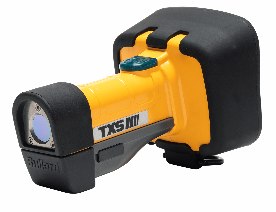
Bullard, the 123-year-old company known for its invention of the hard hat, introduced today its new TXSTM Thermal Imager. The most affordable thermal imager in its class, Bullard’s TXS Thermal Imager makes it possible for fire departments to have life-saving, decision making imagers in the hands of more of their firefighters.

The TXS Thermal Imager is lightweight and palm-sized, weighing just 1.6 pounds. The device has been designed for ease of use, with simple one-button operation, and features a 3.5-inch display with 320×240 resolution to provide firefighters with a superior optimised, clear and sharp thermal image. Intended for multi-use operations including fire attack and detail, the TXS Thermal Imager is powered by a long run-time Li-ion Battery.

“Each day that they go to work, firefighters risk their lives to help others. Tools like the TXS Thermal Imager play a critical role in improving on-the-job safety for these brave men and women, by equipping them with the information they need to make what could truly be life-or-death decisions,” said Wells Bullard, President and CEO of Bullard. “At Bullard, we’ve worked hard to create a decision-making thermal imager that can provide the high-quality thermal imaging necessary for keeping firefighters safe, while remaining budget friendly. Our hope is that, by making the TXS Thermal Imager available at an affordable price, more firehouses will be able to equip more firefighters with the life-saving power of thermal imaging.”

The superior value and ease-of-use of the TXS make it a perfect tool to incorporate into a broader thermal imaging strategy. By equipping more firefighters with access to thermal imaging technology through the TXS, and simultaneously continuing to use Bullard’s XT-series thermal imagers for more demanding situations and roles, firehouses can dramatically increase the on-the-job safety of their firefighters.

“We designed TXS to be a thermal imager that is used on every call, getting more eyes on the fire, and more imagers in the hands of firefighters,” says Martijn Bosch, Bullard Thermal Imaging Product Manager. “By offering a clear and detailed image even in the toughest conditions, firefighters can make decisions based on the details and easy-to-understand temperature colorisation TXS provides. It’s an indispensable tool for firefighters.”

As with all Bullard Thermal Imagers, the TXS Thermal Imager has been designed for durability and reliability no matter the environment.

Additional information about Bullard’s TXS Thermal Imager is available here.

Rosenbauer builds Custom Cobra Aerial Fire Truck for NASA’s Langley Research Center

Rosenbauer, the world’s leading manufacturer of firefighting vehicles and equipment, announced the delivery of a custom Rosenbauer 101’ Cobra Aerial to NASA’s Langley Research Center.

“The Langley Center was in need of an apparatus that could reach multiple locations on the grounds quickly, while also covering for aeronautical tests, trainings and simulations,” said George Bergamini, Rosenbauer Government Sales Manager. “NASA was seeking a custom apparatus that would be used to keep employees and contractors safe, while also ensuring the Center’s investments and research could quickly be saved if a fire occurred.”

“We knew NASA’s Langley Research Center needed a very specific, custom fire apparatus that could be active at any of their facilities on campus,” continued Bergamini.

By working directly with the team at NASA, Rosenbauer was able to create a custom apparatus that was tailored with the most cutting-edge technology available.

The Langley Research Center’s Rosenbauer 101’ Cobra Aerial fire truck features:

  •       Custom Commander chassis
  •       101’ RM Cobra Platform
  •       IDEX SAM Pump Control System
  •       Hot-dipped galvanized steel
  •       500-gallon water tank
  •       Hale 8FG 200 GPM pump

While this is Rosenbauer’s first apparatus delivery for NASA, the two entities have very similar missions of protecting people, property and the planet. This made Rosenbauer a natural partner in building a custom apparatus for the Langley Research Center.

NASA’s Langley Research Center was the training site for the first crews of astronauts, and was also home of the Lunar Landing Facility, which provided the simulation of lunar gravity, and the home of the Viking program for Mars exploration.

Rosenbauer has more than 150 years in the fire equipment industry, and is a global provider in firefighting technology and resources. Rosenbauer is the world’s largest firetruck manufacturer, with 11 manufacturing plants worldwide, three of which are in North America.

Rosenbauer delivered the custom apparatus to NASA’s Langley Center in mid-July. This ladder will also serve the City of Hampton as a first due ALS Ladder.

To learn more about Rosenbauer America, visit https://www.rosenbaueramerica.com/

Tried, tested, trusted fire door equipment

Sue Corrick, product marketing manager of Allegion UK explains the essential role third-party product testing plays in the integrity of fire door hardware.

When entering, exiting or passing through a building, door hardware is always the first point of contact. Whether users are met with a mechanical system such as a lever handle, an exit device or an access control solution, all architectural hardware must be fit for its role – operating as intended the first time, every time.

Aside from being an integral piece of a building’s navigational network, door hardware inherently plays a vital role in critical safety scenarios too. Fire doors and their hardware, when called upon (a total of 151,096 times in the UK in the year ending March 2021, according to national statistics) must demonstrate their reliability through quality, performance and durability. And in order to certify this, testing is paramount.

Impartial product testing

Third-party certification, widely viewed as the safest and fairest testing practice, is the process of testing and verifying a fire door’s design, performance and manufacturing process under British Standards – authenticating the quality of products and providing a guarantee for decision makers and occupants alike. Carried out by independent bodies, third-party certification comprises of meeting specific criteria:

• The Fire Test
• Auditing the Manufacturing Process
• The Audit Test
• Traceability

Today, traceability is as vital as ever. Door hardware must always be synonymous with quality, but over the past few years, critical questions have been raised towards the fire safety of buildings and the integrity of the products used within. Dame Judith Hackitt’s Independent Review has been a catalyst for change, accelerating legislative updates while lifting any remaining ambiguity surrounding fire and building safety.

Addressing the criticisms, the Building Safety Bill was introduced in 2021 and within it, the Golden Thread of Information introduced. The ‘Golden Thread’ policy, initially recommended by Dame Judith, has been designed to increase the transparency of building construction and maintenance, through routinely updated documentation of a building’s life cycle.

More recently, the newly published Code for Construction Product Information (CCPI) seeks to promote a change in approach to the management of construction product information, ensuring manufacturers provide clear, accurate, up-to-date, accessible and unambiguous product information. These legislative changes are driving higher standards and put a greater emphasis on product integrity and further stress the importance of transparency through third-party product testing. There’s simply no room for disingenuous product information when it comes to safety.

Speaking on the process of fire door hardware testing, Sue Corrick of Allegion UK comments: “In fire incidents, for a certified fire door to be effective and compliant, it must be able to fully close and remain closed by itself. Door hardware is designed to work in tandem with fire doors, assisting in the compartmentalisation of the building and facilitating the escape of occupants. And so, when it comes to production, all door closing devices must conform to Standards, EN 1154 and EN 1155 – and for exit devices, the mandatory EN 1125 and EN 179.

From July 2013, it became a legal requirement for all products that are covered by a harmonized EN standard to be CE marked, of which, validation for the CE mark requires the production of a Declaration of Performance (DoP) by a manufacturer. This is now also the case for UKCA marking too.

“It’s widely understood that fire doors themselves must be rigorously tested to British Standards BS 476: Part 22 or BS EN 1634-1, to guarantee they remain fire resistant for a minimum of 30 minutes (FD30) or 60 minutes (FD60). With that in mind, decision makers have a clear responsibility to ensure only certified and compliant hardware is fitted to their fire doors – otherwise they risk the reliability of the door itself. All elements of a fire door, from exit hardware to handles, hinges and locks and latches must be fire-rated and thus, tested to verify their performance.

“Outside of third-party testing, it’s also imperative for fire door hardware to be routinely tested internally. Over time, fire doors and their fitted hardware can be subject to wear and tear and so, all elements of the set must be checked to ensure performance remains optimal. To make sure fire doors are functioning in accordance with regulations, responsible parties must often check the functionality and effectiveness of key elements of the door set: including opening and closing devices, the intumescent seals and door strips for example.

“Furthermore, when retro fitting a product, there should always be evidence that the retro fit has been installed in the existing manufacture footprint. To safeguard the integrity of the fire door, it’s crucial that hardware isn’t replaced with an inferior product. Decision makers often find themselves under pressure to keep costs minimal, yet will find the cost for tested, verified products is higher than the cheaper, untested alternatives. But as is always the case with fire safety, cost saving should never detriment the safety of the building and the lives of those within. There’s always value in choosing the tried, tested and trusted methods.”