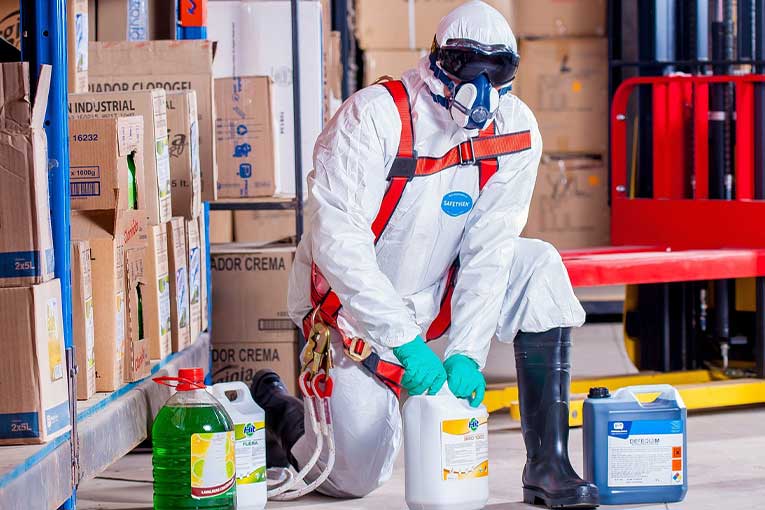
Keeping your business safe for everyone in your workplace is vitally important.
This is where COSHH comes in, but exactly what is COSHH?
COSHH is a crucial regulation for workplace safety.
This article explains what COSHH is, what it covers, how to comply with it, and everyone’s responsibilities.
What is COSHH?

COSHH stands for Control of Substances Hazardous to Health.
It is a set of regulations in the United Kingdom designed to protect workers from health risks associated with hazardous substances.
COSHH requires employers to manage and control risks associated with these substances to ensure the safety and health of their employees.
This involves several key activities, including identifying hazardous substances, assessing their potential risks, and implementing control measures to minimise exposure.
The regulations mandate that employers must conduct a thorough risk assessment to evaluate how these substances might affect employees.
Based on this assessment, they must implement control measures, which may include ventilation systems, protective equipment, and safe handling procedures.
Employers are also required to provide adequate training for employees on the safe use of hazardous substances and ensure that safety data sheets are available for all chemicals used.
Additionally, COSHH requires regular monitoring and review of the control measures to ensure they are effective and up-to-date.
Employers must also keep records of risk assessments and any incidents related to hazardous substances.
What Does COSHH Cover?

COSHH is a regulation that addresses a wide range of hazardous substances found in various workplaces.
Understanding what COSHH covers is crucial for managing health risks effectively.
Chemicals
COSHH covers chemicals used in industrial processes, laboratories, and cleaning.
These include solvents, acids, and detergents.
Chemicals can pose risks such as toxicity, flammability, or corrosivity.
COSHH requires employers to identify these risks and implement control measures.
Fumes and Vapours
Workplaces that involve high-temperature processes, such as welding or metalworking, often produce fumes and vapours.
These can be harmful if inhaled over time. COSHH regulations require proper ventilation and air filtration systems to control exposure.
Dusts
Dusts from materials like wood, flour, or minerals can cause respiratory issues and other health problems.
COSHH requires measures such as dust extraction systems and regular cleaning to minimise dust levels and protect workers.
Biological Agents
Biological agents include bacteria, viruses, and fungi that can pose health risks.
For instance, healthcare settings or laboratories may deal with potentially infectious materials.
COSHH covers the handling, storage, and disposal of these agents, requiring proper hygiene and protective equipment.
Nanomaterials
Nanomaterials are substances with particles smaller than 100 nanometers.
They can have unique and potentially hazardous properties.
COSHH regulations apply to the handling and safety of these materials, including risk assessments and protective measures.
Carcinogens
Substances that can cause cancer are covered by COSHH.
Employers must implement stringent controls to limit exposure, such as using less hazardous alternatives or providing personal protective equipment.
Explosives
COSHH also applies to substances that are explosive or flammable.
Proper storage, handling, and emergency procedures are required to prevent accidents.
Who Must Comply with COSHH?

COSHH applies to all employers and self-employed individuals who handle hazardous substances in the workplace.
This includes a wide range of industries and sectors where hazardous materials are used, stored, or produced.
Employers
Employers are responsible for ensuring compliance with COSHH regulations.
This means they must:
- Identify and assess risks associated with hazardous substances.
- Implement control measures to minimise exposure.
- Provide training and information to employees about handling these substances.
- Ensure that safety data sheets are available for all hazardous chemicals.
- Regularly review and update safety procedures and risk assessments.
Self-Employed Individuals
Self-employed individuals who work with hazardous substances are also required to comply with COSHH.
They must:
- Conduct their own risk assessments.
- Implement appropriate control measures.
- Use personal protective equipment (PPE) as needed.
- Keep records of safety procedures and risk assessments.
Contractors and Visitors
Contractors and visitors may need to comply with COSHH if they work with hazardous substances while on site.
Employers must ensure that they are informed of the risks and safety procedures.
What do the COSHH Symbols Mean?
COSHH symbols are essential for understanding the hazards associated with various substances.
Each symbol indicates a specific type of risk and helps in handling materials safely.
Here’s a guide to what each COSHH symbol means:
Compressed Gas

The compressed gas symbol looks like a cylinder and indicates that the substance is stored under pressure.
This can be dangerous if the gas is released suddenly.
Compressed gases can cause explosions or injuries if not handled correctly.
Safety measures include proper storage and handling procedures.
Corrosive

The corrosive symbol, represented by a container pouring liquid onto a hand and a metal surface, signifies that the substance can cause severe damage to skin, eyes, or materials.
Corrosive substances can cause burns or corrosion, so proper protective equipment and careful handling are required.
Environmentally Hazardous

An environmentally hazardous symbol features a dead tree and fish.
This indicates that the substance can cause significant harm to the environment.
It may be toxic to aquatic life or contribute to long-term ecological damage.
Safe disposal and spill containment are essential.
Explosive

The explosive symbol shows an exploding bomb and warns that the substance can explode under certain conditions.
Explosive materials can pose a severe risk of blast and fire.
Proper storage, handling, and safety precautions are necessary to prevent accidents.
Flammable

The flammable symbol, a flame, indicates that the substance can easily catch fire.
Flammable materials pose risks of fire and explosion.
Avoid exposure to sources of ignition and store them away from heat sources.
Health Hazard

The health hazard symbol features a human silhouette with a star.
It denotes substances that may cause serious health effects such as cancer, respiratory issues, or reproductive harm.
Using personal protective equipment and proper handling procedures is crucial.
Irritant

The irritant symbol, showing an exclamation mark, represents substances that can cause irritation to skin, eyes, or respiratory tract.
While not as severe as corrosive substances, irritants can cause discomfort and long-term health effects if not handled properly.
Oxidiser

An oxidiser symbol looks like a flame over a circle and indicates that the substance can cause or enhance a fire.
Oxidisers can make other materials burn more intensely.
Store them carefully and away from flammable substances.
Toxic

The toxic symbol, with a skull and crossbones, signifies that the substance can cause severe health effects or death if ingested, inhaled, or absorbed.
Extreme caution is needed when handling toxic substances, including using appropriate protective gear and ensuring proper storage.
What are COSHH Employer Responsibilities?

Under COSHH regulations, employers have several key responsibilities to ensure the safety and health of their employees when dealing with hazardous substances:
Risk Assessment
Employers must conduct thorough risk assessments to identify hazardous substances and evaluate the risks they pose.
This includes assessing how substances are used, handled, and stored, and determining the potential impact on employees’ health.
Control Measures
Based on the risk assessment, employers must implement control measures to minimise exposure.
This can include engineering controls like ventilation systems, administrative controls such as safe working procedures, and personal protective equipment (PPE) like gloves and masks.
Training and Information
Employers are required to provide training for employees on how to handle hazardous substances safely.
This includes understanding COSHH symbols, following safety procedures, and using PPE correctly.
Employers must also ensure that employees have access to Safety Data Sheets (SDS) for all hazardous substances used.
Health Surveillance
Employers must monitor employees’ health if they are exposed to hazardous substances.
This may involve regular health checks to detect any adverse effects early and take corrective actions.
Record Keeping
Employers must keep records of risk assessments, safety procedures, and any incidents involving hazardous substances.
These records help ensure compliance and provide documentation for regulatory purposes.
What are COSHH Employee Responsibilities?

Under COSHH regulations, employees also have important responsibilities to ensure their own safety and the safety of others when working with hazardous substances.
These responsibilities include:
Following Procedures
Employees must adhere to all safety procedures and instructions provided by their employer.
This includes using hazardous substances according to the guidelines and following established protocols for handling and storage.
Using Personal Protective Equipment (PPE)
Employees are required to wear and use PPE as specified by their employer.
This includes items like gloves, masks, and goggles designed to protect against exposure to hazardous substances.
Reporting Hazards and Incidents
Employees must report any unsafe conditions, spills, or incidents involving hazardous substances to their employer immediately.
Prompt reporting helps to address and mitigate potential risks and prevents accidents.
Attending Training
Employees should attend all training sessions provided by their employer.
This training covers safe handling practices, understanding COSHH symbols, and emergency procedures related to hazardous substances.
Using Equipment Properly
Employees must use all equipment and tools as instructed and ensure they are in good working condition.
Proper use of equipment helps to prevent accidents and reduce exposure to hazards.
Conclusion
You should now have more of an understanding of exactly what is COSHH.
COSHH is essential for protecting workers from health risks related to hazardous substances.
By understanding COSHH regulations, symbols, and responsibilities, employers and employees can work together to create a safer workplace.
Proper risk assessment, control measures, and training are key to managing hazardous substances effectively.