An investigative news channel unit has found that half of Cleveland’s commercial buildings are not up to the fire code when it comes to maintaining critical fire protection. 19 Investigates says ‘Fire alarms, sprinklers and fire doors can save lives, But they’re no good if they are not maintained. They need to be inspected routinely to make sure they’re working properly.’
The Cleveland Fire Department officials told the news outlet the problem stems from business owners who aren’t getting these systems checked often enough. And fire inspectors are having a hard time keeping track of thousands of commercial properties across the city.
At a public safety meeting last week, officials estimated about half of commercial buildings in Cleveland do not properly maintain their fire protection systems as required by law. “We project we’re at about 50% compliance,” said Battalion Chief Gregory Lightcap.
Lightcap said the fire department does not have a database to track this. They want to hire an outside company to build one and notify businesses when maintenance is due. Lightcap said many cities using services like this have gone to more than 90% compliance in a couple of years.
“So we would have a dashboard where we see these issues in red are where we need to direct our energy at in doing code enforcement, because the non-official stuff has not worked up until that point,” Lightcap told city council members at the safety committee meeting.
Alarmed by what we uncovered, we went to Mike Polensek, chair of the Public Safety Committee, for his take on this. “There’s a reason why we have a code, a basic fire, and protection code. It’s for protection,” Polsensek said.
“As a citizen walking into any building, is that a concern knowing they may not be up to date?” Investigator Sara Goldenberg asked.
“Of course it is, because there’s a code, a city code. And that’s been the problem, is it has not been enforced over the years. And now they’re telling us at the table that they don’t have the manpower, the sheer manpower to inspect all of these buildings,” Polensek said.
Polensek said unfortunately he is not surprised by these numbers. He wants to see the city and building owners step up to address the problem—quickly. “Why hasn’t there been enforcement, why hasn’t anyone been prosecuted?” he said. “And cited, and put in housing court if they refuse to make the repairs? None of us can understand why this has broken down as bad as it has.”
Fire officials said these changes would better educate business owners on fire code safety, instead of inspectors just issuing violation notices. City council is waiting to see the proposed legislation from the fire department.
Nullifire, will be demonstrating how its intumescent and firestopping solutions offers assurance in passive fire protection at FIREX International 2022.
The Nullifire team will be operating two product demonstration areas and explaining more about the traceability technologies Optifire and Optifire+. Some of the brand’s bestsellers will also be promoted, and visitors to the stand will be able to find out more about Nullifire’s new ‘It’s All About’ campaign.
Nullifire’s products are manufactured in the UK and have a trusted track record of performance and compliance, with the range tested extensively by third body associations and fully certified for a range of fire protection needs, IFSEC Global reported.
Nullifire’s Sales Director, Gary Pullinger,said: “We are really looking forward to FIREX International. It is going to be a great opportunity to see existing and potentially new clients face to face.
“Visitors to our stand will be assured of a warm welcome and the chance to catch-up. During COVID we’ve made a significant multimillion pound investment in our company, in areas including new technologies and innovations, staff, facilities and our service too. As a result, we’ll have lots to talk about at the event.
“One of the areas we’ve focused investment on is innovation. We’ll be showing that in action with two product demonstrations areas, one for our intumescent coatings and the other for our fire stopping range.
“We’ll also be talking about our pioneering traceability technologies Optifire and Optifire+ which offer guaranteed traceability of the applied Nullifire product installed on-site.
“Optifire is a unique UV technology, which is activated by exposing the product’s surface to a UV light source, to offer easy and instant product identification, while Optifire+ offers pigment technology, which is impossible to manipulate.
The National Fire Chiefs Council (NFCC) has launched a Hub that features all current information on the NFCC National Fire Commercial Transformation Programme [NFCTP] as well as a host of resources for Fire Procurement and Commercial staff within the Fire and Rescue Services as well as being invaluable to those supplying to the sector.
The Team that forms the NFCTP was originally established in 2016 in response to the Fire Minister’s reform agenda. Chaired by Chief Sponsor Ann Millington [CEO of Kent FRS], it comprises six CFO/CEO category sponsors and six category leads from across the sector, the FIA reported.
Early views indicate that this is a vital resource that our Fire and Rescue and indeed other suppliers should explore and it may be found here.
Marcus Parnham, commercial director at Profab Access, discusses how professionals can successfully futureproof a building
The construction sector is currently facing one of its biggest transitions to date, with legal requirements regarding the testing and certification of building products, including fire critical solutions, under much needed scrutiny and reform.
The recent introduction of the Building Safety Bill is the latest stage in the government’s strategy to creating a new era of accountability throughout the construction industry. The draft regulation outlined within the Construction Products Regulations 2022 summaries the general safety requirements that all construction products being placed on the UK market must meet.
With regard to safety-critical products, Part 3 outlines the obligations that manufacturers must fulfil, with tougher penalties applying to those who do not meet their obligations. Special focus has also been placed on the communication of false or misleading claims regarding the performance of a product.
The revised regulations have been drafted following the learning of Phase 1 of the Grenfell Inquiry, which highlighted the inefficacy of the government’s current testing regime and its enforcement. This included associated complications regarding how key building information is obtained or interpreted by relevant individuals throughout the construction and maintenance stages of a development.
The inquiry also exposed concerning ambiguities regarding current guidelines and regulations, not only in relation to the testing of building materials that are specified, installed and maintained, but also the roles and responsibilities of each individual involved throughout these pivotal points to ensure continued compliance.
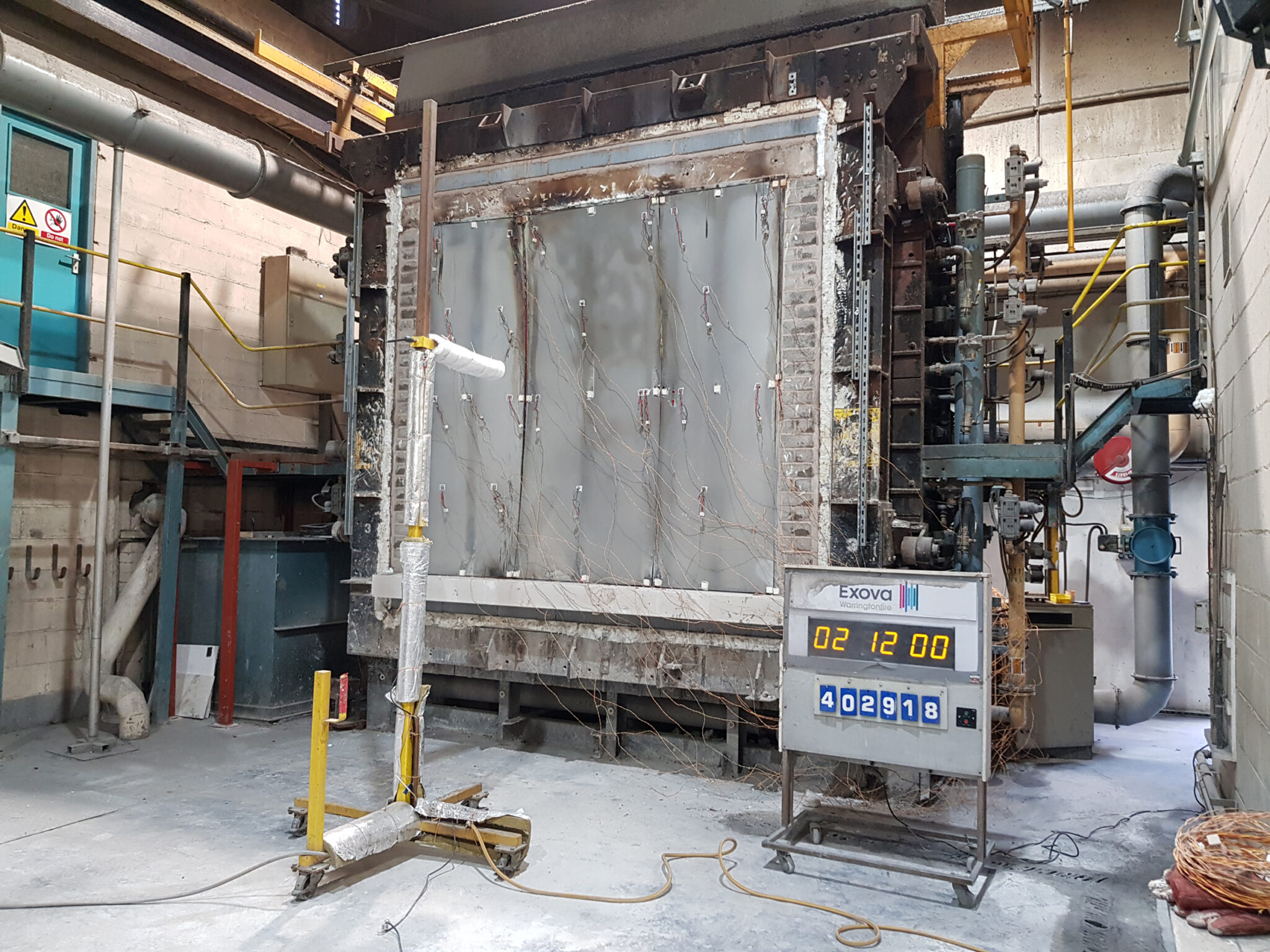
For example, in relation to fire integrity riser doors in particular, there are current disparities between the guidelines outlined in BS EN 1634 Standard and Annex B of Approved Document B2. As a result, some manufacturers may only conduct product assessments via a third party, whilst others may undertake continuous rigorous independent product testing and certification to evidence their products are consistently suitable for installation.
For those manufacturers who may submit evidence in the form of assessment reports, it is often based on primary testing that may have been conducted many years ago. Providing that a manufacturer states nothing has changed in terms of product materials, specifications and manufacturing techniques, assessments will often be renewed for a further five-year period, without any substantial fire performance tests being completed.
This is a prime example of the substantial dissimilarities and associated misperceptions that the industry currently faces.
In response to this, Phase 2 of the Grenfell Inquiry is addressing whether existing guidance on how to comply with Building Regulations is sufficiently clear and reliable. In addition to the Building Safety Bill, the National Construction Products Regulator will also be responsible for identifying the corresponding weaknesses of the current product testing regime in relation to legal requirements.
Whilst the regulator will have the ability to conduct its own tests of building materials specified in fire critical environments, it is also the responsibility of the manufacturer to ensure the products they supply are not only compliant, but suitable for the proposed application.
This responsibility is also shared by the customer, who has a legal obligation to undertake and evidence comprehensive due diligence by ensuring they request demonstration of compliance and subsequent testing reports, not just product assessments, for each building component specified on their project. This will ensure no assumptions are made regarding the suitability and performance of the materials installed to ensure the long term suitability and safety of the building for its entire lifecycle.
First raised in Dame Hackitt’s Independent Review of Building Regulations and Fire Safety, the fire-resistance of a building product should also be tested in ‘real-world conditions’, to ensure that all performance figures stated by the manufacturer are factual and represent the final installation.
In this new era of accountability, simply meeting current standards and regulations will no longer be acceptable – it is imperative that the industry sets the standard for achieving a proactive and comprehensive approach to building safety.
By undertaking product testing and certification by an accredited third party, manufacturers can prove they have fulfilled their duty of care in terms of best practice. This can be done by providing evidence that the solution is not only fit for purpose, but goes above and beyond current requirements to offer the highest possible standards in quality, performance and safety.
The certification of a product by an accredited third party via a dedicated testing programme, rather than through product assessments, also reassures each party involved throughout the construction and maintenance stages that it will not fail in the event of a fire. This is because testing provides continued assurance with regard to the product being supplied, whereas product assessments alone do not provide continuous surveillance and assurance of consistency and quality.
This is further reflected throughout third party testers’ involvement throughout the entire construction process, as they ensure manufacturers implement appropriate measures that maintain manufacturing consistency and that the product tested is a true representative of production.
With regard to riser doors in particular, this extensive testing process will guarantee a manufacturer goes above the guidance outlined in BS EN 1634 to ensure complete compliance with the legislation defined in Annex B of Approved Document B2, to consistently provide construction professionals and their clients with the highest levels of protection, certification and compliance.
However, for manufacturers to completely fulfil their duty of care and for customers to also ensure they are taking all reasonable measures to ensure the building is complaint, safe and suitable, third party testing should be undertaken for the complete doorset, including each individual component, to successfully futureproof the project.
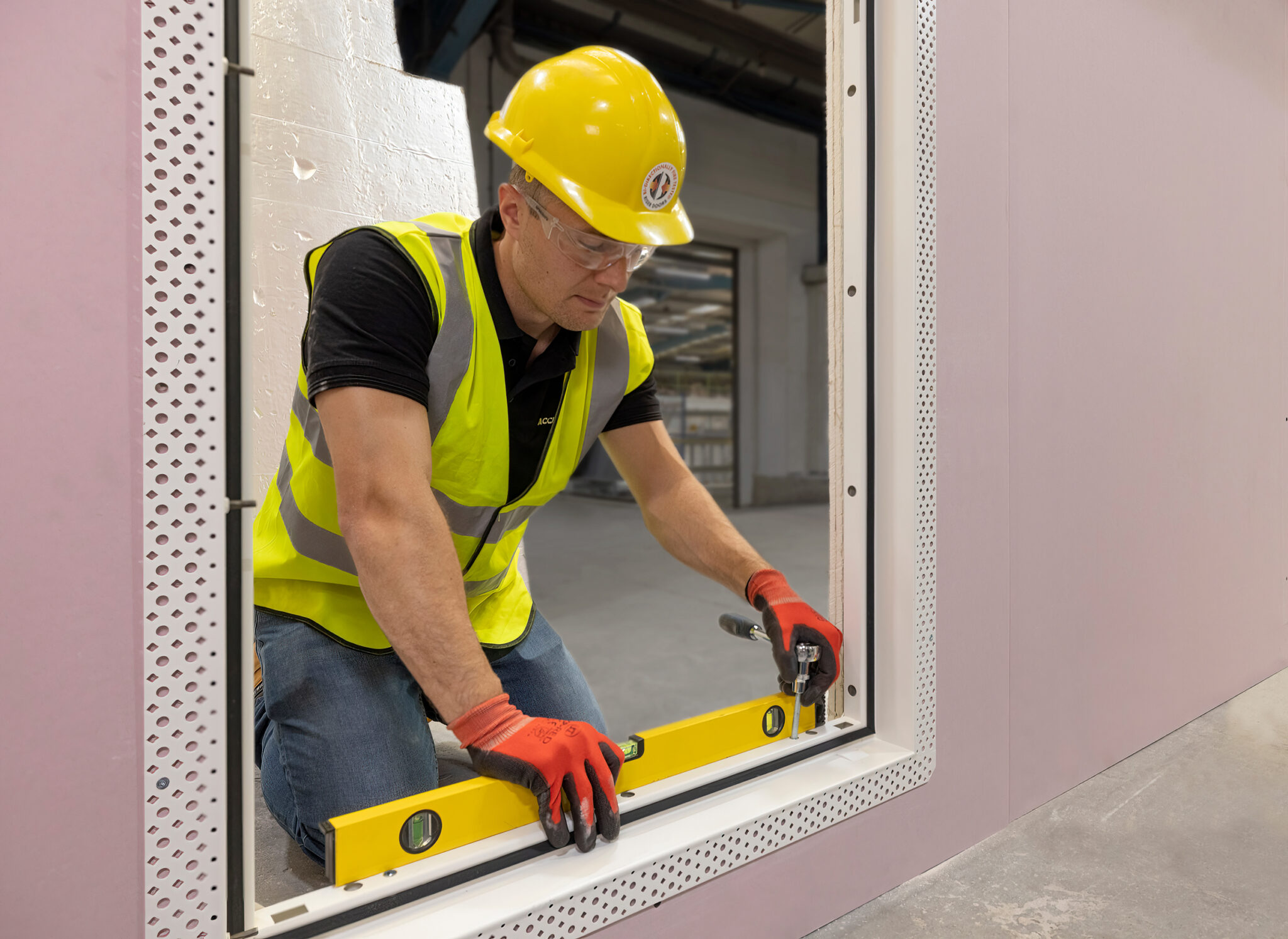
Beyond the testing of the doorset, it is also critical that it is installed into an approved wall construction in a method consistent with the sample originally tested. In practice, the installation process poses a number of risks to the overall fire integrity of a construction through variables such as the packer type and intumescent mastic bead application.
To overcome this potential gap in compliance, professionals should look to work with manufacturers that are taking this commitment to third party testing and certification even further through latest advancements in technology and product design, which are providing a revolutionary approach to the installation and maintenance processes.
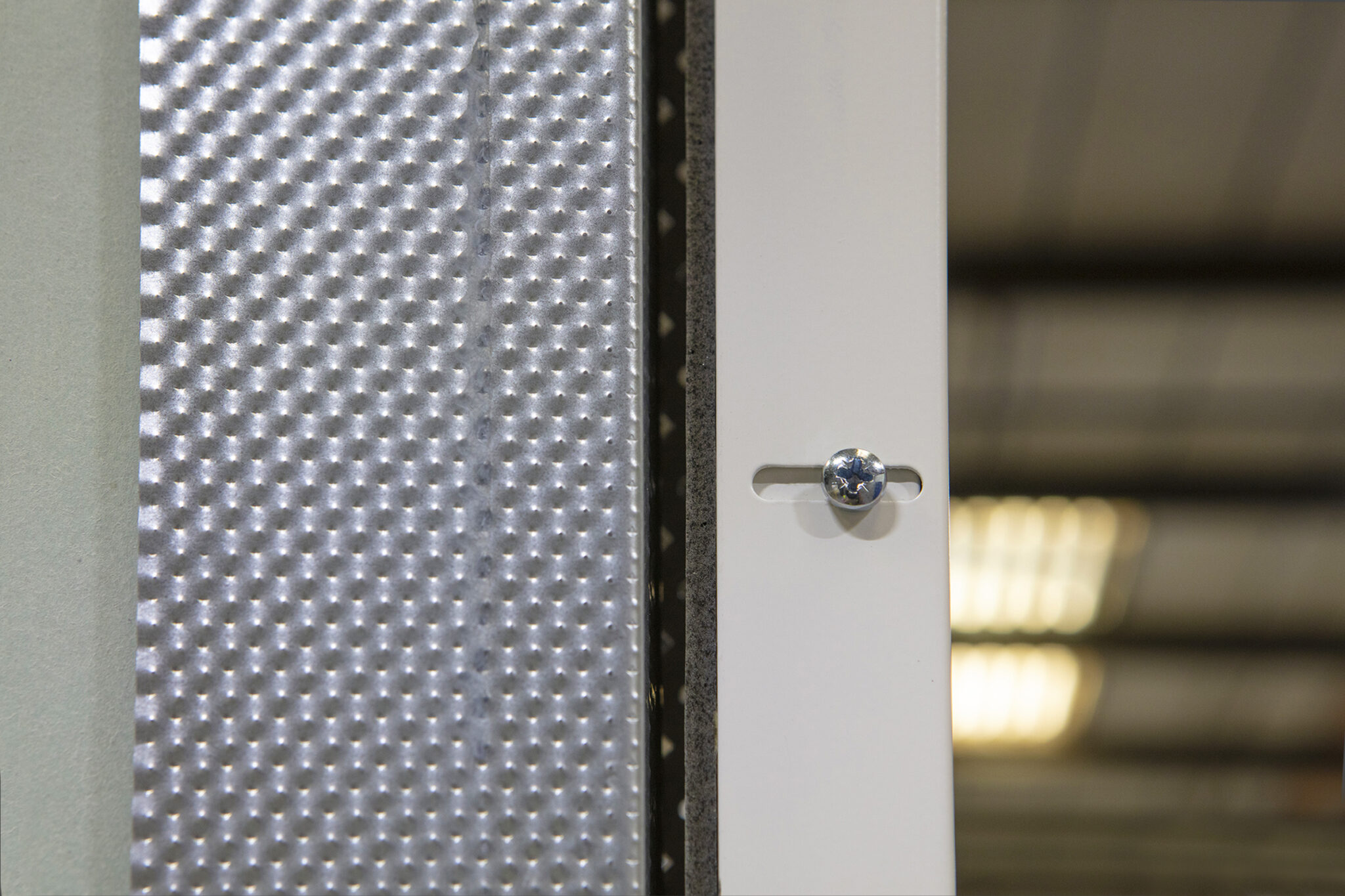
This includes the design and manufacture of high-quality steel riser doors that are supplied with adjustable frames that include an integral intumescent strip to provide fire stopping between the wall and frame. This not only eliminates the requirement of packers and the reliance of the correct thickness of intumescent mastic bead, but most importantly ensures the compliance and adequacy of the entire installation, as its fire integrity performance has been sufficiently documented by an independent assessor. As a result, this also subsequently increases the efficiencies of installation and removes any potential margins for error.
By considering each individual element that forms part of the entire installation and ensuring that the relevant components have undergone the necessary testing and certification processes, professionals can not only streamline the initial design and specification stages but produce an extensive digital audit trail that documents compliance and product suitability at every stage of the construction process.
As the construction sector continues to unearth deep rooted issues regarding the development, testing and certification of products, we are starting to see proficient changes in action, as manufacturers, architects, specifiers and contractors work together to create and communicate an uninterrupted set of information and certification that goes above and beyond adhering to regulations.
For further information on Profab Access and its range of riser doors, access panels, and steel doors, call +44(0)1827 719051 or visit www.profabaccess.com.
Solar energy specialist Solarsense and Avon Fire & Rescue Service have won clean energy scheme of the year at the Regen Green Energy Awards. The partnership was recognised for its “extraordinary” contribution to the energy transition.
The national Green Energy Awards aim to celebrate the best projects, leading organisations and inspiring people in the renewable energy sector. Solarsense and Avon Fire & Rescue were up against strong competition in the ‘clean energy scheme’ category, which recognises pioneering schemes which have delivered significant carbon savings.
The winning entry saw Solarsense work together with Avon Fire & Rescue to combine a range of integrated renewable energy technologies across five stations in the South West. Through a combination of solar panels, battery storage, solar thermal and heat pumps, the project will generate carbon savings of more than 127,117kg per year – providing a benchmark for the role of the blue light sector in the UK’s net zero journey.
Stephen Barrett, Managing Director of Solarsense, said: “It was fantastic working with Avon Fire & Rescue Service on this project, which shows how a range of different clean technologies can be combined for maximum impact on carbon emissions – as well as long term cost savings. We were absolutely delighted to receive this award and hope that the scheme will inspire other Fire & Rescue services to make similar improvements.”
Annabel Harford, Environmental Manager at Avon Fire & Rescue Service, said: “As a Fire & Rescue Service we are on the frontline in responding to the increasing impacts of climate change and so we feel we have a responsibility to reduce our own carbon emissions. We have publicly committed to achieving Net Zero by 2030 and this project was an important step on the road to achieving that ambition. It was great to work with a local company who really shared our passion for sustainability.”
Based in North Somerset, Solarsense are located within approximately 25 miles of all the fire stations involved in the project, meaning they could minimise travel and reduce the overall carbon impact of the scheme. Both Solarsense and Avon Fire & Rescue Service operate with a sustainable procurement practice, ensuring that the products installed are as environmentally friendly as possible.
Avon Fire & Rescue Service will now look at the potential for these renewable energy technologies to be replicated across their other sixteen stations. In the longer term they will also consider the possibility of additional innovations such as electric vehicle charge points and the trialling of electric fire engines.
As well as reducing the Service’s carbon footprint, the ability to generate renewable power and heat on site will allow the organisation to make financial savings which can be reinvested in both core business activities and further sustainability efforts.
Merlin Hyman, chief executive, Regen, said: “The 2022 Green Energy Awards showcased the extraordinary range of innovative zero carbon solutions available and the pioneering individuals committed to bringing them forward. The inspiring award winners and nominees demonstrate we have the ability to end our addiction to fossil fuels and will, I hope, galvanise us all to take even bolder action towards net zero.”
Evac+Chair is the original manufacturer and global leader in emergency evacuation chairs for the mobility impaired. With 40 years’ experience in the design, Evac+Chair is trusted and relied upon in emergency situations to assist in saving people’s lives.
There are 14.1 million disabled people living in the UK, and it is imperative that all commercial buildings provide a safe means of evacuation for everyone. In addition, temporary mobility impairments, such as a sporting injury, pregnancy or even a panic attack brought about by an emergency evacuation, will impede an individual’s ability to self-evacuate. Having an evacuation chair in a commercial building is vital to ensure everyone can be safely evacuated in the event of a fire, or other emergency.
An Evac+Chair will provide a safe means of escape for the mobility impaired individual and protect everyone. In the event of an emergency, should a mobility impaired person attempt to evacuate without assistance, they could impede the entire evacuation, putting their lives and the lives of others at risk.
Independent research carried out by the University of Greenwich concluded that we provide the safest, quickest means of escape for the mobility impaired, compared with other types of evacuation products. Whilst the design of the Evac+Chair has been unaltered over the last 40 years, it has been enhanced, in terms of passenger safety and comfort. In addition, the range has expanded to provide products that suit different types of staircases and accommodate heavier payload passengers.
Evac+Chair recently introduced its new range – the 900H Power – a 24V, Lithium-Ion battery operated, motorised evacuation chair. Designed for one-person operation its powered belt track system reduces manual handling and facilitates a smooth, safe and quick method of upward or downward evacuation.
One full battery charge provides enough power to last for 150 flights of stairs, giving complete peace of mind that the mobility impaired can be evacuated upwards or downwards in an emergency. The easy-to-use control pad enables the user to control the speed and direction (upward or downward) of the evacuation chair and the head support, arm and foot rests provide assistance and comfort to the passenger. With a payload capacity of 160kg, the 900H Power can evacuate bariatric passengers with ease and the ascending control handles, enable a second person to assist.
Evac+Chair manufactures a wide range of evacuation chairs that are suitable for all commercial environments including offices, hotels, schools, sports stadia, retail outlets, healthcare and factories, each chair has a unique set of features that make it more suitable for certain environments.
Evac+Chair offer complimentary, no obligation evacuation assessments to ensure the correct evacuation chair is selected. Consultants assess the staircase/s that will be used in an emergency evacuation – taking into account the direction of the evacuation (upward/downward), width and angle of the staircase. They will gain an understanding of any personnel requirements that either the passenger or operator may have, enabling the consultant to recommend the most suitable Evac+Chair for the premises.
Evac+Chair firmly believe that it is vital that all operators undertake training. Offering an ‘Operator Training Course’ and ‘Key Training Masterclass’, Evac+Chair training courses are designed to ensure delegates have the knowledge, practical experience and confidence to competently deploy and operate the evacuation chair. The ‘Key Trainer Masterclass’ is suitable for larger organisations/premises who require multiple persons to be trained and certifies the delegate to train others. Evac+Chair courses certify a delegate for three years, after which it is recommended that all delegates refresh their knowledge and practical experience.
As a Class 1 Medical Device, an Evac+Chair should be regularly serviced and maintained to ensure its safe operation. This requirement is included within the PUWER Regulation (Provision and Use of Works Equipment Regulations 1988 – UK only). To help their customers meet this legal requirement Evac+Chair offer a 1, 3 and 5-year maintenance contracts. This includes full call out cover, genuine replacement parts that no other third party can supply and labour. Giving complete peace of mind that in the event of an emergency everyone can be evacuated.
IOSH has ‘voluntarily’ published its gender pay gap to demonstrate its commitment to driving positive change. Companies in the UK with more than 250 employees are legally required to release their data, and IOSH has chosen to do so as part of its dedication to equality, diversity and inclusion (EDI).
Figures for 2021-22 show the institution’s mean gender pay gap – the difference in average hourly earnings of men and women – is 16.6 per cent, which is slightly lower than the UK average of 18.0 per cent. This means that women earn 83p for every £1 earnt by men.
Although there is work to do, this sets a baseline from which to measure progress.
Vanessa Harwood-Whitcher, Chief Executive, IOSH said: “Putting people first is one of the key messages of our Catch the Wave social sustainability campaign. And prioritising people means holding ourselves accountable and recognising that we have more work to do.
“IOSH is committed to inclusion as an employer, membership organisation and professional body. We know we’re not perfect, but we are prepared to take bold steps to make everyday inclusion a reality, as demonstrated by our increased investment in EDI.”
A programme of work, which started with the appointment of EDI Lead Fayola Francis, is already under way. Fayola has already conducted in-depth research into IOSH’s current policies, processes, workforce profile and more. The result is a series of evidence-based recommendations and an action plan, in line with the Global Diversity and Inclusion Benchmarks.
IOSH will also look to publish its ethnicity pay gap – the percentage difference between the average pay of staff from different minority ethnic groups – as part of this work.
James Tomes, President and CEO of Telgian Holdings, Inc., has been appointed to the Board of Directors of The Fireboat Fire Fighter Museum. The Fire Fighter Museum has protected the US for over seven decades during some of the most harrowing incidents in American history including 9/11 and the ‘Miracle Landing on the Hudson.’
Known as ‘America’s Fireboat’, the Fire Fighter Museum provided courageous service during World War II and is a national historic landmark listed on the National Register of Historic Places.
“It is an honor and a privilege to serve on the Fire Fighter Board of Directors,” says Tomes. “The Fire Fighter is the most award-decorated fireboat in the world and a true embodiment of the commitment and sacrifice of firefighters and fire protection professionals across the nation.”
Designed by renowned naval architect William Francis Gibbs in 1938, the floating museum was considered a modern engineering marvel, capable of pumping 20,000 gallons of water per minute to nine topside fire monitors and powered by one of the first diesel-electric powerplants ever fitted to a vessel of her size. The design advanced and with impressive performance, throughout its entire 72-year active career, The Fire Fighter remained in an essentially unchanged operational condition, outlasting all of contemporaries and even the majority of the FDNY fireboats half its age.
Decommissioned in 2010, today The Fireboat Fire Fighter Museum is a 501c3 non-profit organisation dedicated to preserving the fireboat as a fully operational vessel, memorial, and teaching museum. As a longtime leader in the fire and life safety industry, Tomes is committed to the preservation of this heroic vessel which is a maritime icon within the fire service industry.
“I look forward to the opportunity to offer my experience and insight to contribute to the Fire Fighter by growing visibility for the historic ship and raising awareness of the need for the preservation of this truly unique piece of American maritime history,” says Tomes.
Tomes’s fire protection roots run deep. As President and CEO of Telgian Holdings, Inc., he has been responsible for the fire protection industry-leading company’s success since 1999. Tomes has also served on multiple National Fire Protection Association global code development committees. In addition to the Fire Fighter Board of Directors, Tomes is active in an advisory capacity for numerous organizations including the Arizona Sustainability Alliance Board of Directors, Greater Phoenix Chamber Board of Directors, Arizona Bank & Trust Advisory Board, the San Diego Military Advisory Council, the San Diego Naval Medical Center Surf Clinic, and the U.S. Chamber of Commerce Advisory Board, among others.
“We are pleased to offer a warm welcome to James Tomes, as the newest member of the Board of Directors,” says Charles Ritchie, President and Founder of the Fireboat Fire Fighter Museum. “Our Board consists of an incredible group of talented individuals who are truly dedicated to the Fire Fighter mission. Jim’s enthusiasm and energy, coupled with considerable knowledge and expertise in the field of fire protection, will be instrumental as we continue our work together to preserve the Fire Fighter as a memorial and teaching museum.”
The National Fire Chiefs Council supports the campaign calling for emergency service workers to be recognised posthumously.
The campaign has been launched by the Police Federation of England and Wales (PFEW), the Police Superintendents’ Association and the Prison Officers’ Association.
NFCC Chair Mark Hardingham spoke to BBC Breakfast about the campaign: ““Any emergency services worker who loses their life in the line of duty is a stark reminder of how they put their lives at risk each and every day.
“The National Fire Chiefs Council is fully supportive of emergency services staff being formally recognised for their ultimate sacrifice. To have such devastating losses commemorated might offer some comfort to their family and friends.
“The reality is every day when an emergency service worker leaves for a shift, they do so knowing they may well have to put themselves in significant danger to protect the lives of others.
The campaign is calling for unique recognition for emergency service workers who make the ultimate sacrifice and is asking the government to create a new posthumously awarded ‘medal’.
This would mean people would be awarded a medal similar in status to the Elizabeth Cross. This is awarded to the bereaved relatives of members of the British Armed Forces, who were killed in military action.
The National Firefighter Memorial in London recognises the thousand firefighters who died in the second world war (1,000 names), while there is a lasting memorial at the National Arboretum to the contribution made by all these firefighters.
Where a member of the fire and rescue service is killed or seriously injured then every fire service has a wide range of support in place for their families and fire service colleagues. This is vital to provide support and help people come to terms with such tragedies. This is also provided by the Fire Fighters Charity along with unions and the wider fire sector.
The Firefighters Memorial Trust awards their Firefighters Memorial Medal to the next of kin of members of the fire and rescue service who died as a result of their duties. The engraved medal is mounted within a framed certificate and presented on a suitable occasion, agreed by the family.
Eight Magirus urban fire-fighting vehicles were officially handed over to local fire brigades in Omegna on a special day full of institutional appointments.
The handover, which took place on April 2, 2022 in Omegna in the Italian Province Verbano-Cusio-Ossala (VCO), was in the presence of local authorities, the President of the Italian Firefighter Association, the Provincial Commander of the volunteer fire brigades VCO, the Presidents of the Cariplo Foundation and the VCO Community Foundation as well as representatives of local volunteer fire departments.
The eight Magirus CITY 2020 tank pumpers were handed over to the fire brigades of Verbano-Cusio-Ossola. Magirus won the tender from the Italian Ministry of the Interior by offering its CITY 2020, a very compact urban fire-fighting vehicle. Andrea Mantoan, President of the local firefighter association “Vigili del Fuoco Volontari Sezione del VCO” said: “We chose the CITY 2020 for its versatility and compactness. Thanks to its short wheelbase, this fire engine can be manoeuvred with great ease. Magirus offered us the ideal combination of state-of-the-art technology and cutting-edge performance”.
The CITY 2020 features the ‘Made in Brescia‘ double cab, the Iveco Eurocargo chassis, the high-performance fire pump (2,000 l/min at 10 bar and 350 l/min at 40 bar), a water tank with 2,200 litres and a foam tank with 120 litres.
Its compact measurements, large loading capacities, the short wheelbase of only 3,105 mm and the vehicle height of 3,100 mm improve its turning radius and lower its centre of gravity. These technical features make the vehicle complete, easy to manoeuvre and usable on a variety of operations.
The goal of the volunteer fire brigades to buy eight fire-fighting vehicles was ambitious, but thanks to the help of many it was achieved: the association of local volunteer fire brigades managed to raise the money needed to renew the vehicle fleet that was more than thirty years old. This success, made up of team spirit, a strong sense of belonging and love for the territory, has its roots in 2017.
In that year, the VCO association set up the foundation
“FONDO SOCCORSO SICURO” at the Community Foundation of the VCO to support volunteer fire brigades, with the main aim of replacing the outdated vehicle fleet.
The following year the project was put forward in the Cariplo Foundation’s call for proposals and the municipalities of the VCO were asked to cooperate. In 2019, the Cariplo Foundation and 74 municipalities raised the necessary funds. The contract for the purchase of the eight CITY 2020 Magirus fire-fighting vehicles was then signed.