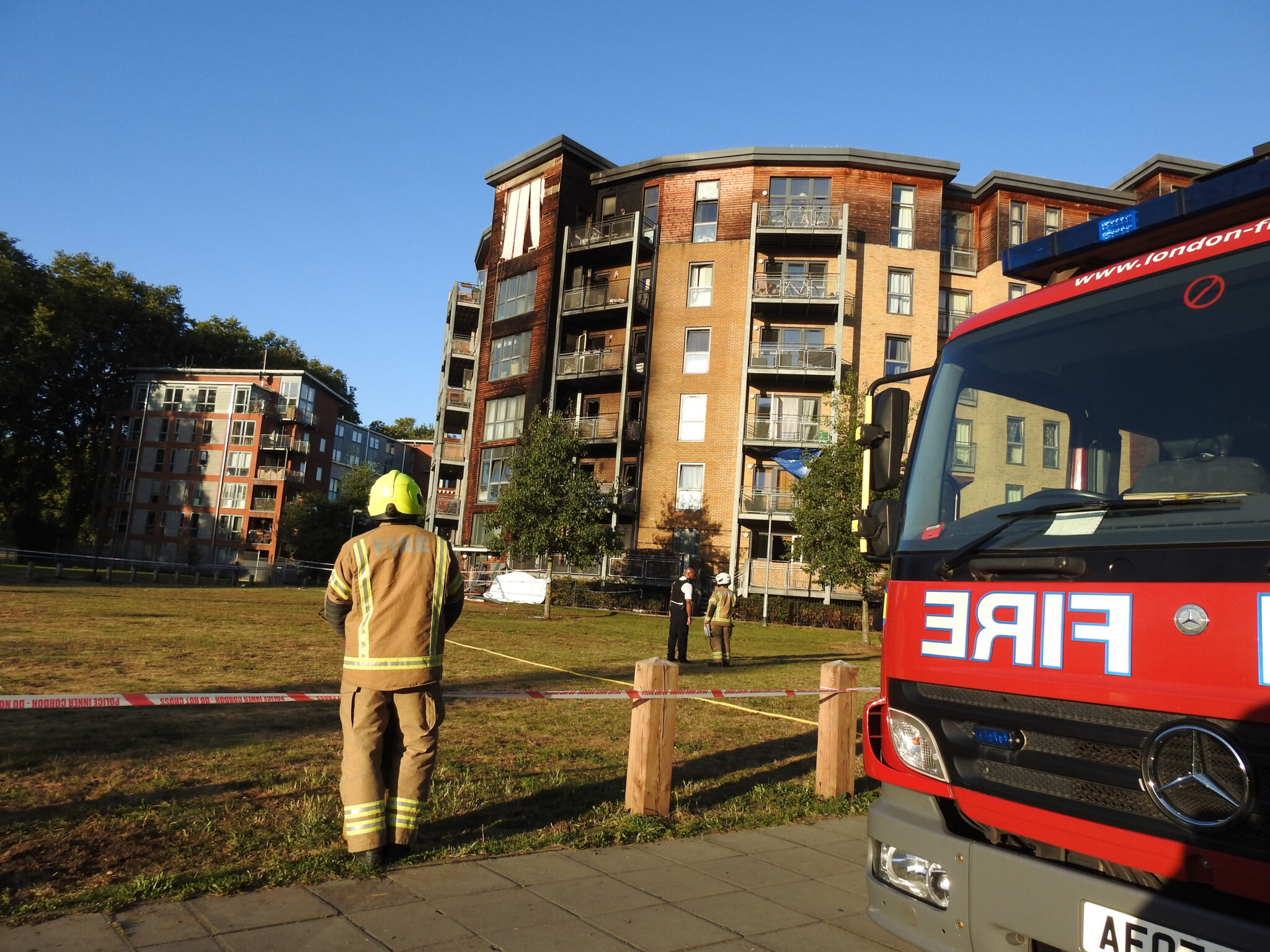
EarthSafe launches cleanup solution for first responders

EarthSafe Chemical Alternatives, known for developing the EvaClean Infection Prevention Solution which firefighters use to mitigate pathogens in their fire stations and emergency vehicles, has launched a safer, more sustainable line of industrial-strength products to address hazardous spills and inhibit harmful moulds. 

FlashDry is EarthSafe’s new absorbent solution for hazardous and non-hazardous leaks and spills made from 100% organic coir, a coconut fiber that is non-carcinogenic and safe to handle.

It contains clay absorbents with granular crystalline Silica generate highly carcinogenic Silica dust and create excessive amounts of toxic waste and is not only lighter, with seven times the absorbency, but it also costs less.

FlashDry is designed to be a more sustainable way to clean up oil and chemical spills without putting first responders at risk.

EarthSafe’s line of industrial-strength cleaning solutions includes a more effective way to mitigate water damage and sick building syndrome at a lower cost per square foot. Its XMold Pro is designed to inhibit the growth of harmful moulds and protects indoor and outdoor surfaces whilst remaining harmless to personnel and the environment.

Joe Finn, former Boston Fire Commissioner, Chief of the Department, and current First Responder Safety Advisor for EvaClean said of chemical cleaning products: “Firefighters and EMS personnel handle all kinds of emergencies, including hazardous spill clean-ups and mould remediation.

“To ensure the health and welfare of our first responders, the chemicals they use to mitigate these issues in the field must be as safe and effective as the disinfectants they use in the firehouse.”

Steve Wilson, EarthSafe CEO added: “With Joe’s guidance, our team is developing safer cleaning technologies to better protect first responders both in the firehouse and on the job.” 

Report highlights failings of fire prevention mechanism in Greece

A new report by WWF Greece points to a series of failings in the management of wildfire prevention funds and the need for better oversight. Last year’s devastating fire season in the Mediterranean country has concluded.

According to the study by the wildlife conservation group covering the five-year period from 2016 to 2020, Greek authorities spent 778 million euros putting out wildfires as opposed to just 189 million euros on forest management and fire prevention measures. In terms of percentages, this means that authorities used more than 80% of their resources fighting fires and less than 20% preventing them.

It also found that just under 50% of funding available for fire prevention at the local level via the EU’s National Strategic Reference Framework (ESPA in Greek) was absorbed during that period, as well as evidence of poor reporting on how funding was used. 

WWF also noted the absence of a centralized mechanism that is responsible for overseeing firefighting funds and tracking how they are spent, as an annual assessment of how each fire season was managed.

“We do not have an exact estimate at the national level of the resources poured into prevention and fire-fighting and this obviously creates problems in planning and in evaluating the system,” said Elias Tziritis, from WWF’s Nature Policy Department.

The report also noted that in the past 20 years, the number of staff employed in the Forestry Service has dropped by 53%, while funding to the agency has plummeted by 80%.

“The fires of the past few years showed us the limitations and failures of the fire-fighting mechanism and also demonstrated the importance of prevention,” said Panayiota Marangou, who is responsible for WWF’s environmental protection programs.

Regional focus: Watershed moment in the UK fire market

In the past month major new changes and fire protection laws have come into effect across Great Britain, IFSJ shines the light on the UK in our market focus for May 2022

The UK has one of the most advanced fire protection markets in the world, despite legislation only catching up now in critical areas. According to FPA managing director Jonathan O’Neill the ingenuity and innovation of various stakeholders, manufacturers, fire training professionals, consultants, and the fire services themselves has contributed to a thriving fire protection and detection market across the UK.  

The United Kingdom government spent approximately 3.13 billion British pounds on fire-protection services in 2020-2021, the highest amount spent since 2010/11 when the government spent 3.02 billion pounds. 

More statistics 

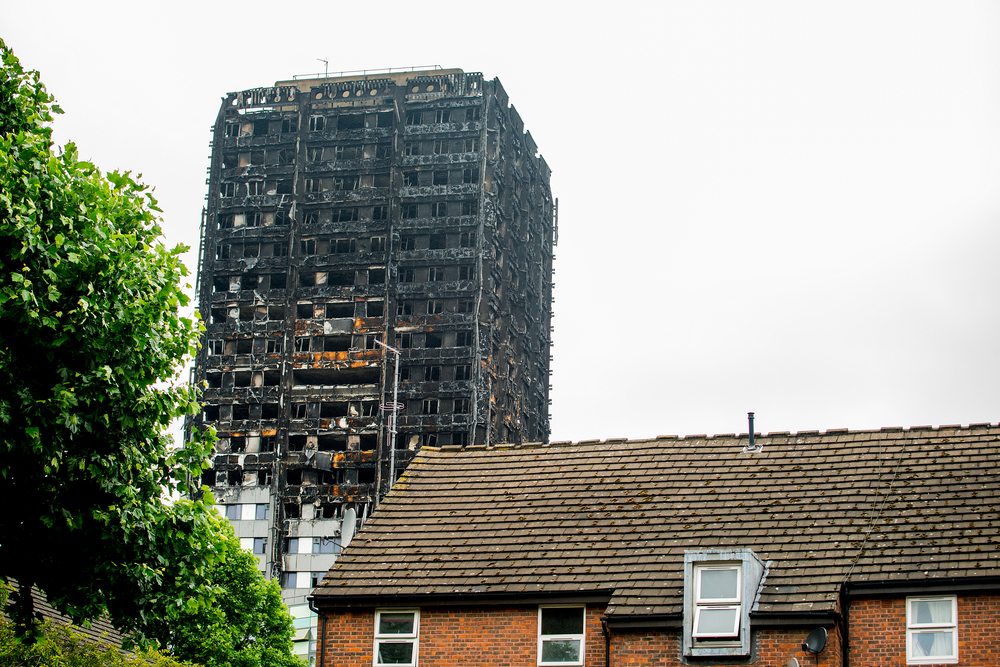
Since the late 90s various government efforts, resulting in orders, bills, and acts have come into effect to protect assets. But more importantly, painstaking efforts have been taken to minimise fatalities. Plenty of movement has taken place in the last five years, in the aftermath of the horrific Grenfell Tower disaster. The incident is considered as one of the UK’s worst modern disasters. As many as 72 people died in the disaster that took plan on June 14, 2017, which made up a staggering 18% of all deaths caused by fires in the UK that year. In 2019-2020 fatalities caused by fire accidents dipped below the 300 figures for the first time in several decades.  

There were 311 fire-related fatalities in Great Britain during 20120/21, 22 more than occurred in the previous reporting year when there were 289. In the early 2000s, the annual number of fire fatalities was consistently over 500, with numbers gradually falling throughout that decade. In 2011/12 the number of fatalities related to fire fell below 400 for the first time, and has remained below 400 since that point. 

Although there has been a net decrease in the number of incidents attended by fire and rescue services in the United Kingdom since 2010/11 the current trend from 2014/15 onwards has been one of increase. In 2018/19 there were over half a million incidents attended in England, over 92,000 in Scotland and almost 37,000 in Wales. Northern Ireland had the least number of incidents attended at around 24,600. 

Since peaking at over 55,600 workers in 2010 there has been a marked decline in the number of fire and rescue workers in England, with the service losing more than 10,000 workers by 2019. In a similar time period, the expenditure on fire-protection services in the United Kingdom fell from 3.1 billion in 2009/10, to around 3 billion in 2019/20. 

Building Safety Bill 

At the end of April 2022, the UK Government’s Building Safety Bill completed all the parliamentary stages in both houses, ready to receive Royal Assent. The 252-page bill, which began the process of going through the houses of parliament in July 2021, is aimed at improving building standards, ensuring the safety of residents, and protecting leaseholders from the costs of fixing their blocks.   

The Building Safety Bill’s main aims is to reform the safety system for properties higher than 11 metres by appointing a Building Safety Regulator, giving a greater voice to residents, driving industry change, and creating a national framework for increased oversight.  

London,,Uk.,28th,June,2017.,Editorial,-,The,Grenfell,Tower

UK Minister for Building Safety Stephen Greenhalgh has branded the Building Safety Bill as the “biggest changes in building safety legislation in our history”. The act will now also include measures to ensure leaseholders avoid footing the bill for remediation costs, known as ‘waterfall’ protections. 

Ministers have faced growing pressure over the building safety crisis. Thousands of leaseholders have been hit with crippling costs for fixing their buildings and have been unable to sell their flats. 

The Royal Institute of Chartered Surveyors (RICS) welcomed the passing of the bill as a ‘positive step’ and acknowledged that it “may not have been what everyone hoped for”. The bill will at the least provide greater protections for leaseholders and delivering a new building safety regime. 

“It is critical for RICS and other organisations representing the professions impacted by the Act, to have the opportunity to offer their continued support in finding and shaping the solutions alongside government,” it explained. 

According to law firm Clyde and Co, major changes to the Bill include scrapping building safety managers or the need to appoint one. There is now an “accountable person” who takes over day-to-day responsibility for higher risk buildings over 18 metres. 

Another amendment that has been enshrined into law is extending the limitation period to 15 years for defective premises claims and 30 years for retrospective claims. The law firm said that this could come into force two months after royal assent. 

Sadly, new builds or restored properties opting to use environmentally sustainable materials remain at greater fire risk. Expressing his concern on the matter O’Neill says: “there’s no way to escape the influx of sustainable, albeit combustible, building materials making a mark in our cities and towns. We need a unified code on buildings in the UK that incorporates evolving building techniques and materials.” 

The ripples of the Grenfell disaster, and the impact of its subsequent inquiry, have left its mark across Britain’s devolved governments. Since October 2006 the fire safety law in Scotland has differed from that of England and Wales and Northern Ireland. Last month, a legislation by ministers in Scotland proposed ban on use of combustible materials on high-rise buildings. 

Since 2005, cladding used on high-rise blocks in Scotland had to feature non-combustible materials or pass a large-scale fire test. The new building standards legislation removes the option of a fire test, completely prohibiting such materials in buildings with floors above 11 metres. 

The law on fire alarms has changed in Scotland, requiring all homes to have interlinked alarms. Interlinked means if one goes off, they all go off, so you will always hear an alarm wherever you are in your home. The new law has come about because of the Grenfell fire in London in 2017, and it applies to all Scottish homes. It is the property owner’s responsibility for meeting the new standard. Could we see a similar move coming into effect across the rest of the UK? Watch this space.  

Accountability in the amendment 

But the amendment to the Building Safety Bill, which removes the requirement for landlords to appoint Building Safety Managers in leasehold buildings seven storeys and over, is being challenged by a leading tall buildings fire safety expert. 

Russ Timpson – a former firefighter and Managing Director of the Tall Buildings Fire Safety Network -is urging the government to reconsider its decision to scrap the recommendation first proposed by Dame Judith Hackitt in the wake of the Grenfell Tower fire. 

“This latest iteration of the all-important Building Safety Bill states that responsibility for fire safety will now fall squarely on the squarely on the shoulders of an ‘Accountable Person’, such as the freeholder or head lessee or a management company. It is fundamentally important that anyone who is put in charge of tall building fire safety has undergone specialist training, which is backed up by a recognised qualification.” 

A similar concern has been raised by several experts and veterans of UK fire safety protection. A logical solution to this conundrum, according to the FPA, is the appointment of independent assessors. It’s a case of assessing the assessor, where there is a constant loop of checks and balances put in place to ensure there are strong grounds of accountability at all times from all parties. 

The 5-billion-pound change 

In a significant intervention in January 2022, UK housing secretary Michael Gove announced plans to get developers and construction product manufacturers to pay for defective buildings through a multi billion-pound billion levy. In April 2022, following months of negotiations, 35 builders pledged to fix all buildings they had built in the past 30 years that have “life-critical fire safety defects”.  

The agreement includes buildings they have developed on behalf of social landlords as part of Section 106 agreements. Leaseholders will also be able to launch retrospective legal action going back 30 years against developers or contractors that have built unsafe properties. 

The 35 developers collectively agreed to contribute £2bn towards fixing buildings they had a role in constructing. Under the Gove plan, in addition to the £2bn from developers to fix their own buildings, the industry will commit a further £3bn for the removal of unsafe cladding through an expansion of the building safety levy, a charge on new residential buildings. Firms refusing to contribute to the fund set up to fix dangerous cladding will be warned they could be blocked from selling new homes. 

GFCI wins NFPA’s Philip J. DiNenno Prize for 2022

The National Fire Protection Association (NFPA) has announced Electrical Shock Hazard Protection by Ground Fault Circuit Interrupter (GFCI) Protection as the winner of the 2022 Phillip J. DiNenno Prize, which recognizes pioneering innovations that have significantly impacted building, fire, and electrical safety. The prestigious award is named for the late Philip J. DiNenno, the greatly respected former CEO of Hughes Associates, in recognition of his extraordinary contributions to fire safety.

The 2022 DiNenno Prize selection reflects a departure from the traditional recognition of one or more individuals who have played a pivotal role in the creation of a fire and life safety technology. Instead, it honors the ground-breaking technology itself, as its innovators are no longer living.

The (GFCI) concept has evolved since its inception in the 1940s into a series of sophisticated protection devices that have increased protection of people from electric shock. It has also allowed for greater degrees of safe electrical power usage among numerous applications in all types of environments. In addition, widespread installation of GFCI protection throughout the built environment has directly led to significant, quantifiable increases in society’s current levels of electrical safety. Furthermore, GFCI technologies will continue to prevent tragedies attributable to electrocutions even more so in the future.

“GFCI technology in itself is very important in electrical safety, saving hundreds of lives per year,” said Craig Beyler, DiNenno Selection and Prize Committee Chair. “This year’s recommendation remains true to the core tenets of the DiNenno Prize and continues to honor live and deceased innovators equally.”

The DiNenno Prize typically features a $50,000 award to its recipients. In absence of living recipients, the Phoenix Burn Society for Burn Survivors and the Electrical Fire Safety International (ESFI) have been selected as the beneficiaries of the prize and will each receive a cash donation to support their work in reducing loss from electrical hazards.

The award will be officially presented at the NFPA “Stars at Night” award ceremony in coordination with the NFPA Conference & Expo (C&E) in Boston this June. Jack Wells and Henry Zylstra, who each played a critical role in the advancement of GFCI technology, will serve as legacy presenters of the DiNenno Prize.

In addition, there will be a special panel presentation on Ground Fault Circuit (GFCI) Protection at C&E on Monday morning at 8:00 am. Wells, Zylstra, Alan Manche and Steve Rood will serve as presenters, reviewing the role GFCI has played in electrical safety; Wells and Zylstra will share stories about their involvement in the development and commercialization of GFCI technology.

Fire headlines upcoming changes to Welsh FFHH act

The Fitness for Human Habitation (Wales) Act comes into effect on 15 July this year (effective to all landlords, social and private).

The act identifies 29 hazards within the property where landlords need to meet minimum requirements.
The FFHH act requires a smoke alarm, in proper working order, to be present on every storey of a dwelling.

Landlords must ensure that each of these alarms are in proper working order and interlinked with all other smoke alarms connected to the electricity supply.

Landlords may consider it appropriate to install more that one smoke alarm on each store along with a heat alarm in the Kitchen, these additional alarms could be mains or battery powered. Any additional battery-powered alarms do not need to be interconnected (Although, BS 5839-6 recommends interconnecting all alarms within the dwelling).

The act signposts landlords to BS 5839-6 for recommended guidance on the installation of alarms
A Carbon Monoxide alarm should be installed in all rooms containing a fuel-burning appliance (including cookers).

CO alarm can be mains or battery-powered and must comply with BS EN 50291. Siting should be carefully considered noting the expiry date of the alarm.

Experts talk fire protection DNA of a building

Erik Boyter, CEO, WindowMaster and Ian King COO Zeroignition explore importance of a robust fire protection built into the DNA of every building

Smoke control systems should be built, certified and delivered in a way that building owners and occupiers can depend on. 

It’s vitally important to recognise that only certified components of the system should be used. For example, smoke panels proven, factory built and certified to the relevant parts of EN12101 and other relevant standards like ISO21927-9. 

A factory-based quality system or factory production control, audited by a notified body, should be used to certify components of factory-built products.  

Consistency is key. Systematic checks of components, arrangement, fabrication and build in a controlled environment is the only appropriate route to prevent any variations in build from what has been tested and allowed to be certified. This helps ensure dependability as designed, and will enable the supplier to produce a product specific declaration of performance at point of manufacture. 

System install and commissioning should be conducted and completed by an appropriate party qualified and competent to do so. This might be demonstrated through voluntary certification such as the SDI 19 scheme. 

Finally, the building owner or manager is responsible for ensuring that the system remains compliant through a systematic approach to testing and maintenance. 

It cannot be emphasised enough for life safety systems: compliant systems must exist and be documented throughout the design, manufacture and delivery process, as well as through the life of the building. 

We’ve looked at smoke control systems, but of course fire safety also encompasses general building materials. While it is important to understand and use FR products in all building specification, it is also crucial we consider the wider system. Ian King, COO, Zeroignition, takes us through the importance of a systematic approach to fire safety. 

The Grenfell tragedy was a catalyst for change in the construction industry. It marked the realisation that much more needs to be done to ensure the buildings we live in are properly equipped to protect occupants from the risk of fire and that safety must be put first, above all else. 

As the Building Safety Bill continues to make its way through Parliament, albeit slowly, discussions around cladding continue to dominate headlines pushing fire safety even higher on the priorities list. Yet as we’ve seen, the pace of the bill has re-affirmed how notoriously complex fire safety compliance is in the UK. 

In reality, we must remember the Bill will be unlikely to eradicate some of the wider issues that the industry struggles with, namely, cost and more recently the availability of materials. Add to this the lack of construction product testing facilities, which are key to the ‘levelling up’ of standards and quality. The Local Government Association (LGA) is one example, encouraging more reliable testing systems that are also more user friendly. It also wants to see businesses caught selling products that aren’t fit for market, held accountable. “The new regulator must have real powers and sanctions and the regulatory system must be properly funded,” says the organisation. “Trading Standards authorities have found themselves caught between costly and complex arguments between test labs about the correct approach to testing, with no way to resolve them.” 

At Zeroignition, we agree with this sentiment. Since our founding, Zeroignition has been keen to see a vast improvement in accurate labelling by product manufacturers, ensuring that any information provided is easy to understand and identify, so that materials specified to construct buildings are what they say they are. Without this clear guidance, change will never materialise and people and properties will remain inadequately protected from fire. 

Disrupting traditions  

There’s no denying, construction projects are incredibly complex and involve a myriad of decisions. Every specification choice has a knock-on effect to the wider build, and unforeseen results can easily arise when a systematic approach to fire protection isn’t maintained.  

Although it’s widely agreed by industry professionals that a methodical approach is the key to quality, there’s clearly some scepticism as to how to achieve this. Manufacturers, specifiers and architectural bodies must do more to ensure best practice is fully established and abided by, on every single project, without fail. 

Beyond this, the construction industry should look to other industries for guidance, such as automotive and aviation, where a checklist approach reduces the risk of harm to passengers. It’s no longer good enough to work from memory or from a notepad and pen. Digital record keeping is now necessary to ensure certain fire planning elements aren’t being missed. 

Beyond this, we need to look to the latest in communications theory and decision making to ensure that fire communications are presented in a way that sticks, and use ‘nudge theory’ to ensure that it’s easier to do the right thing.  

Investing in robust knowledge  

We know that in-depth knowledge surrounding product safety standards is essential for architecture, specification and construction professionals. Those working in the industry must be sure they have the knowledge and understanding of fire safety when specifying building projects.  

It’s an area we investigated for ourselves, post-Grenfell, and the results reveal just how serious knowledge gaps around fire safety remain in the industry. The survey was conducted across the UK, Germany and France and of those questioned, just 3% of architects were able to correctly define the four basic fire protection terms: active fire protection, passive fire protection, fire resistance and reaction to fire.  

A mere 2% of the architects interviewed said they’d received comprehensive fire protection training. While most agreed they had had some sort of training, less than one in ten (8%) said they’ve never had fire protection training. These findings reveal an urgent need for serious upskilling to ensure those building liveable structures are well informed and up to speed on the essential fire safety requirements and protocols.  

A third of architects who participated in the study also revealed that their current employer doesn’t spend enough on fire protection training, and it seems since the outbreak of COVID-19 particularly, many have taken matters into their own hands. NBS (formerly National Building Specification) says it saw a marked increase in webinar attendance, as more people were working remotely and had the time to attend digital webinars and seminars without having to build time into their day to travel to and from the training venue. Online webinars covered a variety of different topics including fire safety, and were attended by product manufacturers, as well as architects and specifiers. 

Positive change  

The digital ‘revolution’ of the construction industry is also enforcing positive change. ‘Digital footprints’ which explicitly show that work has been carried out to the appropriate standard are now essential. A further take up of this approach will no doubt help to implement watertight fire safety checks before a building is handed over to the occupant or end user. 

Discussions had with manufacturers we work with, have also shown first-hand how an increased focus on R&D projects is now taking place. Advancements in innovative materials that help boost fire safety are now coming to market for added protection on new and existing building projects.  

Given what we’ve seen, fire protection now needs to be given the attention it deserves and a uniformed, robust framework needs to be set in place to make sure consistency is achieved across the sector. Increased levels of third-party testing is another area that needs to improve and a greater understand of how components work in tandem will be a key element in improving fire safety within construction. 

Manufacturers also have a role to play. Specifiers need to have complete confidence in the products they are recommending which means product information must be up to date and accurate. Until we address the focus on quality vs cost, we’ll never achieve construction’s primary role: ensuring its occupants remain safe.   

Global fire suppression systems Market to reach $26.6 Billion by 2027

The global market for Fire Suppression Systems is estimated at US$19 Billion in the year 2020, is projected to reach a revised size of US$26.6 Billion by 2027, growing at a CAGR of 4.9% over the analysis period 2020-2027.

Dry Chemical-Based, one of the segments analyzed in the report, is projected to grow at a 5.6% CAGR to reach US$10.8 Billion by the end of the analysis period.

After an early analysis of the business implications of the pandemic and its induced economic crisis, growth in the Water-Based segment is readjusted to a revised 4.6% CAGR for the next 7-year period. This segment currently accounts for a 28.7% share of the global Fire Suppression Systems market.

The U.S. Accounts for Over 29.7% of Global Market Size in 2020, While China is Forecast to Grow at a 6.7% CAGR for the Period of 2020-2027

The Fire Suppression Systems market in the U.S. is estimated at US$5.6 Billion in the year 2020. The country currently accounts for a 29.69% share in the global market. China, the world second largest economy, is forecast to reach an estimated market size of US$3.8 Billion in the year 2027 trailing a CAGR of 6.7% through 2027.

Among the other noteworthy geographic markets are Japan and Canada, each forecast to grow at 3.5% and 4.2% respectively over the 2020-2027 period. Within Europe, Germany is forecast to grow at approximately 4.1% CAGR while Rest of European market (as defined in the study) will reach US$3.8 Billion by the year 2027.

Other Product Types Segment Corners a 32.6% Share in 2020

In the global Other Product Types segment, USA, Canada, Japan, China and Europe will drive the 4.1% CAGR estimated for this segment. These regional markets accounting for a combined market size of US$4.9 Billion in the year 2020 will reach a projected size of US$6.5 Billion by the close of the analysis period.

China will remain among the fastest growing in this cluster of regional markets. Led by countries such as Australia, India, and South Korea, the market in Asia-Pacific is forecast to reach US$3 Billion by the year 2027, while Latin America will expand at a 4.9% CAGR through the analysis period.

Exclusive: Jonathan O’Neill, managing director, Fire Protection Association

Jonathan O’Neill OBE, managing director, FPA is a key figure in the UK’s efforts to keep its residents and buildings safe. In an exclusive chat with IFSJ, O’Neill speaks about the building safety bill, and what more needs to be done

The Fire Protection Association has existed in the UK for several decades, and has strived to identify the dangers of fire and help companies and developers reduce fire-related risks. At the heart of the organization is the FPA’s managing director Jonathan O’Neill OBE who completes three decades within the organization this year.  

“I joined the Loss Prevention Council (LPC) after working in insurance for eight years before that with Lloyd’s,” O’Neill tells International Fire and Safety Journal.  

Prior to it being an independent body, the FPA was a department in the LPC. “I took over the department, which was called the Fire Protection Association, a name which had disappeared over the years but still held a lot of gravitas in the sector. In 1997, the insurers decided to dispose of the LPC but they retained the FPA.” 

O’Neill’s mission was to give the FPA a new persona, away from the LPC as it moved forward with maintaining its aim of safety and fire protection in the country. “It wasn’t a commercial organisation and the early days were quite tough as we relied on levies from the insurers for the first 18 months. Thereafter we took a slight commercial direction. We are a not-for-profit organization and invest everything back into our activities.” 

O’Neill says the firm initially had a turnover of GBP1million in the early days. Last year, the FPA’s turnover was GBP12 million. “There was a surge and uptick of our services in the immediate aftermath of Grenfell.” For the immediate future, O’Neill forecasts a steady growth in revenue as its services continue to be in demand.  

Fire assessments and the Fire Safety Bill 

The Fire Safety Act 2021 was an act of the Parliament of the United Kingdom which arose out of the 2017 Grenfell Tower fire and relates to fire safety in buildings in England and Wales with two or more domestic residences, making changes to the Regulatory Reform Order (Fire Safety Order) 2005. 

“The Fire Safety Order was piecemeal, and it was rightly accused of being retrospective i.e. after every tragedy we would start to see a change in fire and safety law.”  

O’Neill is satisfied that the act incorporated two major changes. These are: “We have now got a situation where the fire risk assessment can look at the entire building, which is good. Secondly, we will start to see external assessment being part of that. Through the horrors of Grenfell, we have seen if a risk assessment doesn’t look at the entire building structure it can lead to serious problems.” 

 However, the act doesn’t consider third party accreditation of fire assessments. Expressing his concern on the matter, O’Neill says: “There a reluctance to accept that a fire risk assessor needs to have proper accreditation and a third-party accreditation. As it stands, anyone in the industry can set themselves up as a fire risk assessor and get work.  

Based on the barrister’s opinion the FPA suggestion to the government was: “Rather than making it a statutory duty to add third party assessments. What if we made it a statutory defense in law? This means that if you use a third-party assessment, all parties are protected by the full extent of the law, should something go wrong,” O’Neill tells IFSJ. It’s a practice where the assessors are being assessed in a constant loop of following the best practice through legislation.  

 “It boils down to a fundamental issue in safety. The gas industry managed to sort this issue out a few years ago. For instance, you cannot touch a gas appliance in a commercial or residential premise unless you are Gas Safe, which is a third-party accredited scheme.” 

A change in regulation 

Five years on from the Grenfell disaster O’Neill wants a fundamental root and branch review of building regulations in the UK as it’s well over a decade since the last review. “Building methods have evolved dramatically over the last decade, we are using different materials which are combustible. This will not change over the next 20 years because some of it ties into the sustainability agenda. In the years to come, we will continue to build with even more combustible products because they have less impact on the environment. We accept that. At the same time, we need to re-write some of the building rules, which were done keeping old fashioned building materials and techniques.” 

O’Neill recounts a fire that tore through a Cheshire care home a few years back. The largely timber frame of the building decimated the care home as it spread rapidly. Luckily there were no fatalities since the residents were mostly outside on a warm sunny day. “A massive disaster was averted, thanks to vigilant staff and fire rescue personnel, although the residents lost their belongings. 30 years ago, these fires would be inspected by the Inspectorate of Fire with a recommendation to investigate the building regulations.” 

O’Neill points out that the government and various bodies have done a great job in bringing down the number of fatalities caused by fires. “Over three decades ago, when I started in this industry there were approximately 800 fatalities due to fires in the UK every year. The government and the fire and rescue services have done a tremendous job in bringing those numbers down by about 75%.” 

At no point, O’Neill says, can the issue be taken for granted. The Grenfell disaster highlighted several flaws in building regulations and a lack of competent fire assessments.  

“We cannot assume that fire is no longer a problem,” he reiterates.  

Then there’s the Building Safety Bill which aims to reform the safety system for residential properties by appointing a Building Safety Regulator, giving a greater voice to residents, driving industry change, and creating a national framework for increased oversight. 

The Building Safety Bill is a step in the right direction and O’Neill feels despite its limitations it’s a welcome move. “The Building Safety Bill is limited in what it can do, since it looks at high rise buildings. It is at least bringing in a different regime for looking at building regulation. The Building Safety Bill was the absolute need of the hour. But we need a different building regulation that is reviewed on a regular basis because we are changing the way we build.” 

Building safety scandal 

O’Neill has also welcomed the government’s move to address the building safety scandal. In April 2022, Westminster, revealed a wide-ranging agreement that will see industry contribute £5 billion to address and fix various issues in buildings.  

Under the new agreement, which will become legally enforceable, over 35 of the UK’s biggest homebuilders have pledged to fix all buildings 11 metres+ that they have played a role in developing in the last 30 years. 

In what is considered a victory for leaseholders, Levelling Up Secretary Michael Gove has agreed a solution with the housing industry that will see developers commit a minimum of £2 billion to fix their own buildings. Industry will also pay up to a further £3 billion through an expansion to the Building Safety Levy. 

“This is a great move because leaseholders shouldn’t pay for these repairs. Those responsible for putting sub-standard fire protection should be held accountable. My concern is the route to getting the payment organized. It is up to the government to ensure that all of this is properly enforced, and the monies are properly paid.” 

O’Neill believes that leaseholders should not be held at ransom and the government can do more to help them. He suggests that the government can fund the repairs immediately, while the authorities chase payments from responsible parties. 

“Looking back at the evidence we have seen from the Grenfell Tower Inquiry, the building regulation system was the responsibility of the government, and they took their eye off the ball. This means leaseholders, through no fault of their own, bought properties that were unsafe, and did not comply with regulation.” 

A unified building code 

O’Neill has long advocated a unified set of building codes that can cover the devolved governments as well. “We can learn a lot from the efforts of the devolved governments (in the UK), and how they move on certain matters pertaining to fire prevention. For instance, mandatory suppression and detection enforced from a legislation standpoint can make a huge difference. When I first started in fire, Scotland had a requirement to put sprinklers in single-storey retail spaces. England followed only two to three years later. 

“Britain has one of the most innovative fire protection systems’ industry in the world. And manufacturers are always pushing the evolution in creating new products and systems. But the industry needs support from the government. It’s not enough to only have the highest manufacturing, testing, and certification standards. We need regulatory backing. We can learn from the devolved governments who are leading the way ever so often.” 

The future 

The future is bright for those working towards fire protection in the UK. “We are going to see a different level of scrutiny on building safety after the Building Safety Bill and the Fire Safety Act (come into full effect). There’s going to be a greater emphasis on compartmentation which is welcome. We are launching a fire compartmentation and door survey tool at FIREX in May 2022.  

“We also have some great developments in our laboratory, we are installing some equipment that allows us to improve fire door penetration tests. It gives some much-needed capacity to the market which now is quite busy.” The FPA plans on continuing its growth efforts over 2022 and into the future with surplus funds invested into ensuring that “we have a safer and more resilient built environment going forward.” 

In conclusion O’Neill feels fire is a great career option and must do everything to attract new talent. “There is a lack of awareness of fire as a lucrative career option. The industry has been slow in terms of adopting professional standards, adopting the right university courses, and national occupational standards to support the industry. For long we have been training people on the job without necessary accreditation. For many years now the new generation has not come through and we have a gap which needs to be filled by competent people. 

Today, the demand is high for passionate and qualified people who can work in the laboratory, or as assessors, trainer, and consultants.  
CertAlarm completes fourth cycle of round-robin tests

CertAlarm, an organization offering a pan-European quality mark in the fire protection and security systems industry, today confirmed the completion of its 4th cycle of round-robin test series.

Round-robin tests are comparative tests performed by the participating laboratories at regular intervals and using the same test sample. As such they are an important monitoring tool for CertAlarm’s partners and recognized test laboratories. They enable quality supervisors and management to place the results obtained by the laboratory performing the tests in a wider framework and to identify problems and initiate actions for improvement.

In particular, round-robin tests help to bring to light inconsistencies in the testing systems or methods and can give rise to necessary corrective action, e.g.:

  • interpretation of standards,
  • calibration/maintenance of the testing equipment,
  • training of the laboratory personnel,
  • adjustment of influencing factors relevant to testing (e.g. climate).

“In order to improve our program we specifically select tests which have proven to be difficult to perform or have shown in the market place that inconsistencies exist in approved products. One of the tests selected for this cycle’s series was therefore the measurement of the make and break distances of opening contacts according to EN 50131-2-6 (clause 6.4.2). The criticality of this test lays in the interpretation of the PASS/FAIL criteria in coherence with the manufacturer declaration and the requirements in clause 4.3.1.2 and 4.3.1.3.”, says Benoît Stockbroeckx, Technical Manager of Euralarm and Chair of CertAlarm’s Technical Advisory Group (TAG).

“As a matter of fact, diverging interpretations highlighted unclarity in the wording of the standard. This issue has been brought to the relevant standardisation working group (CLC/TC 79/WG 2) and the discussions paved the way for an improvement of the standard in view of a future revision. Thanks to this exercise we can now be sure that all of CertAlarm’s labs will test and conclude according to this understanding in the future. Moreover, CertAlarm so contributed to the improvement of the standard for the benefit of all European laboratories, certification bodies and manufacturers dealing with opening contacts”, he adds.

“The round-robin procedure helps us understand if we are doing things right and providing our customers the same level of results”, confirms Anja Kinsky, General Manager of CertAlarm.

Sustainable building materials could lead to more fires

The increase of sustainable building materials during construction has been welcomed by many environmentally concious. However, the use of certain products, while good for the environment, pose a higher risk of catching fire.

Jonathan O’Neill, Managing Director, Fire Protection Association told IFSJ in an exclusive interview: “Building methods have evolved dramatically over the last decade, we are using different materials which are combustible.

“This will not change over the next 20 years because some of it ties into the sustainability agenda. In the years to come, we will continue to build with even more combustible products because they have less impact on the environment. We accept that. At the same time, we need to re-write some of the building rules, which were done keeping old fashioned building materials and techniques.”

In Britain, a newly ratified law, the Building Safety Act, came into effect towards the end of April. The new law has been a work in progress fueled by modern fire disasters in the UK.

O’Neill welcomed the new bill but told IFSJ that we now need a fundamental root and branch review of building regulations in the UK. “It’s been well over a decade since the last review,” he said.