BAUER’s RFIDPro puts control in the hands of fire departments
At BAUER, every innovation is built around safety, efficiency, and ease of use. Its internet-based solutions are designed to keep users in control of their systems.
No exception to this is BAUER RFIDPro, a subscription-based service that helps fire departments save time and stay safe while remaining in compliance with NFPA 1989 and OSHA regulations.
A user-friendly handheld device puts intuitive control of the user’s system at their fingertips.
The device is compatible with any SCBA manufacturer’s RFID tags, or it can scan cylinder bar codes.
RFIDPro generates records to track fill data, including date, operator, and fill pressure, replacing the need for time-consuming, hand-written logs.
The RFIDPro notifies the operator and department personnel when a cylinder has reached its end-of-life expiration date, is past due on hydro testing, or is inactive due to failed inspection.
The device guides the operator through the entire cylinder fill process, ensuring that each step is completed safely and sequentially.
All SCBA history and information is stored in the cloud and accessible at any time through the user interface portal on the BAUER RFIDPro secure website, where it can be downloaded.
The reader can be operated offline when a Wi-Fi connection is not available, and it is also available with LTE cellular option. Important documentation, such as cylinder repair and hydrotest certificates, can be uploaded into the cloud to keep all records in one place.
The BAUER CONNECT
IoT Solution is an app and internet-based service that allows BAUER customers to remotely monitor and control their entire BAUER system through any wireless mobile device or computer.
Factory-trained personnel who are authorised by administrators may control the system with the same functionality as if they were physically standing in front of the unit.
The Mobile Dashboard feature provides a graphical SCADA display of the entire system, including compressor system status, error log, critical pressures and temperatures, the volume of gas dispensed in storage information, and more.
The BAUER Reports feature generates standard or customised reports tailored to the specific needs of the customer, and the service can provide historical data for all reports.
BAUER Predictive Analytics provides a new proactive dimension to perpetually maintaining customers’ compressor systems at peak conditions with minimum downtime.
Its algorithm uses artificial intelligence to analyse collected system information on the BAUER Cloud to predict upcoming maintenance requirements and preventative actions to avoid unplanned shutdowns.
The BAUER CONNECT mobile app will send push notifications if certain parameters of the system fall outside of the normal operating range or if triggered by a system alert, ensuring essential personnel are notified immediately to allow for proactive intervention in a situation that could potentially be detrimental to the BAUER system as well as the customer’s operation.
This article was originally published in the October 2023 issue of International Fire & Safety Journal. To read your FREE digital copy, click here.
In every workplace, safety should be the top priority for both employers and employees.
Ensuring a safe and secure working environment not only protects the well-being of workers but also helps to increase productivity and overall organisational success.
One crucial aspect of achieving workplace safety is the use of Personal Protective Equipment, commonly known as PPE.
PPE refers to a diverse range of specialised gear designed to shield workers from various workplace hazards, such as chemical exposure, physical impacts, electrical shocks, and more.
PPE equipment includes respiratory protection
Throughout this article, we will delve into the different types of PPE available, explore why is PPE important and understand the benefits they offer, all while emphasising the significance of compliance in fostering a culture of safety.
Different Types of PPE
There are countless potential workplace hazards which create the need for several categories of PPE options that are tailored to provide specific protection.
There are 5 main categories:
Protective Clothing
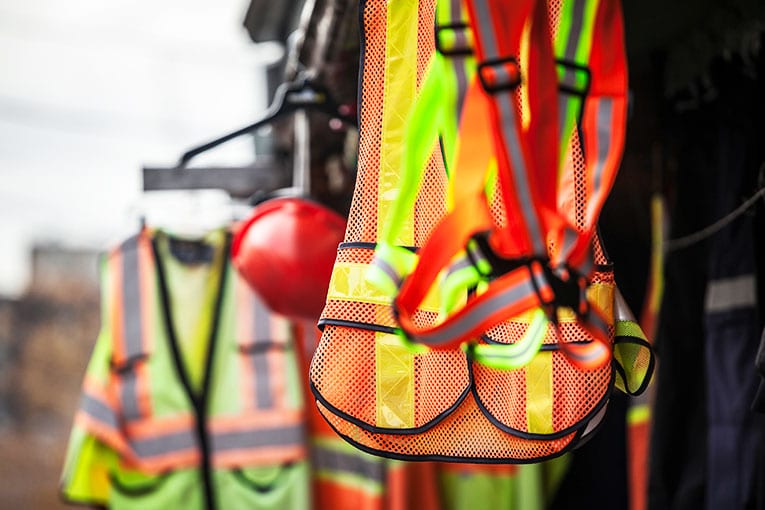
From standard coveralls, gloves and aprons, to specialised fire-resistant or high-visibility clothing, PPE workwear and clothing items are an essential part of everyday life for many organisations.
These garments act as a robust barrier against harmful chemicals, biohazards, and other potentially hazardous substances.
Eye Protection
Safety goggles, face shields, and safety glasses are important PPE items that shield the eyes from dust, debris, chemicals, and intense light.
The right PPE has to fit for purpose for the right job
These protective gear options are especially important in the construction, manufacturing, and healthcare industries.
Respiratory Protection
Respiratory protection is essential for workers who could be exposed to airborne contaminants like dust, fumes, or gases.
Respirators, masks, and filters ensure that the air the wearer breathes in is free from harmful particles, safeguarding their respiratory health.
Hearing Protection
Hearing protection, such as earplugs and earmuffs, is vital for employees working in noisy environments, as prolonged exposure to high levels of noise can lead to hearing damage or loss.
Head Protection
Head protection, most often hard hats, serves as a primary defence against head injuries resulting from falling objects or accidental collisions on construction sites or other hazardous workplaces.
Why is PPE Important in the Workplace?
PPE is an individual’s first line of defence against a wide range of workplace accidents, injuries and illnesses.
Wearing and utilising the correct PPE significantly reduces the risk of severe injuries and long-term health issues caused by exposure to various hazards.
PPE provides an additional layer of safety, offering protection even in circumstances where other safety measures might fall short.
The proper use of PPE can give workers confidence, empowering them to carry out their duties effectively, knowing they have reliable protection against potential harm.
This sense of security fosters a safer work culture, and can even boost employee morale and motivation.
As well as this, strict adherence to PPE guidelines showcases an employer’s commitment to their employees’ well-being and safety.
PPE is vital for safety in the workplace
As such, a proactive approach to safety can enhance the company’s reputation and contribute to improved employee loyalty and retention.
PPE is especially important in high-risk industries such as construction, manufacturing, healthcare, and laboratories, where exposure to hazardous substances and potential accidents is much more prevalent.
The use of PPE ensures the continuity of business operations by minimising work disruptions due to accidents or illnesses.
When workers remain safe and healthy, absenteeism decreases, leading to enhanced productivity and reduced downtime.
What are the Benefits of Wearing PPE?
Using PPE offers a multitude of benefits for both employers and employees alike.
Reduces Risk of Injury or Illness
Using the correct PPE significantly lowers the risk of injury or illness, and prevents a wide range of accidents, from minor incidents to life-altering mishaps.
For instance, using appropriate gloves when handling hazardous chemicals can prevent skin irritation or burns.
Enhances Overall Workplace Safety
PPE can enhance overall workplace safety, and lead to fewer accidents and injuries.
A safe work environment instils a sense of confidence and well-being in employees, leading to improved job satisfaction and reduced stress.
Reduces Medical Expenses & Insurance Costs
By preventing accidents and illnesses, PPE can lead to reduced medical expenses and insurance costs for businesses.
Fewer accidents result in fewer worker compensation claims, saving both time and financial resources.
Fosters Positive Work Environment
Prioritising creating a safe workplace fosters a positive work environment, promoting teamwork and trust among employees.
As a result, workers are more likely to feel valued and loyal to their employer, contributing to higher employee retention rates and increased productivity.
Enhances Compliance
In addition to the immediate benefits of PPE, employers also benefit from enhanced compliance with safety regulations and standards when they supply their workers with the correct PPE.
Adherence to safety guidelines helps businesses avoid penalties and fines from regulatory bodies and creates a more positive image for the company.
Attracts Potential Clients & Investors
A good safety record can also attract potential clients and investors, who recognise the company’s commitment to responsible business practices.
A positive reputation for safety can give a competitive edge to the business, making it an attractive choice for clients and investors.
Longer Term Financial Savings
By investing in PPE and prioritising safety, companies can reduce the costs associated with accidents and injuries, leading to long-term financial savings and increased profitability.
Ensuring the proper use of PPE requires a comprehensive approach that involves employees, employers, and the organisational culture.
Training and education are the cornerstones of proper PPE implementation.
All employees must be trained on the potential hazards in their workplace, the appropriate PPE for each task, as well as the correct way to wear and maintain their equipment.
Here are some ways you can ensure that PPE is used correctly within your organisation:
Provide Easy Access to the Correct PPE
Ensure that it fits well and is comfortable for the workers.
One-size-fits-all approaches may not be suitable for all employees, so it is vital to offer a range of sizes and styles to accommodate individual needs.
Regularly Inspect PPE
Identify any defects or signs of wear and tear, so that damaged or outdated equipment can be replaced.
Get Supervisors to Enforce PPE Usage
Management should lead by example, consistently wearing PPE, and address any non-compliance promptly.
Recognising and rewarding employees who consistently use PPE can also boost compliance.
Create an Open Communication Culture
Encourage open dialogue to foster compliance with PPE guidelines.
Employees should feel comfortable expressing their safety concerns and providing feedback on PPE usage and any challenges they may face.
Host Regular Safety Meetings
Organise regular huddles and staff meetings where PPE usage is discussed.
This provides an opportunity to address any issues and find practical solutions collaboratively.
Promote the Importance of PPE
Create and display safety campaigns and posters as reminders in prominent areas of the workplace.
Periodic PPE Policy & Practice Evaluation
This ensures they remain up-to-date and effective.
As workplaces evolve, so do the potential hazards, and adjustments to PPE guidelines may be necessary to keep workers protected.
Conclusion
Personal Protective Equipment (PPE) plays a pivotal role in safeguarding employee from workplace hazards.
Hopefully from this article you have gained an answer to the question of why is PPE important.
The diverse range of PPE options, from protective clothing to eye, respiratory, hearing, and head protection, ensures a comprehensive defence against potential accidents and illnesses when implemented and used correctly.
Using PPE is not only vital for protecting individual workers but it can also contribute to a safer work environment overall.
The benefits of proper PPE implementation are manifold, ranging from reduced injury rates and medical expenses to improved employee morale and enhanced productivity.
The key to effective PPE usage lies in comprehensive training, easy access to equipment, regular inspections, and a culture that prioritises safety.
Employers, employees, and organisational leaders must work together to foster a safety-first mindset.
MSA’s ground breaking modular system is tailored to unique fire brigade needs
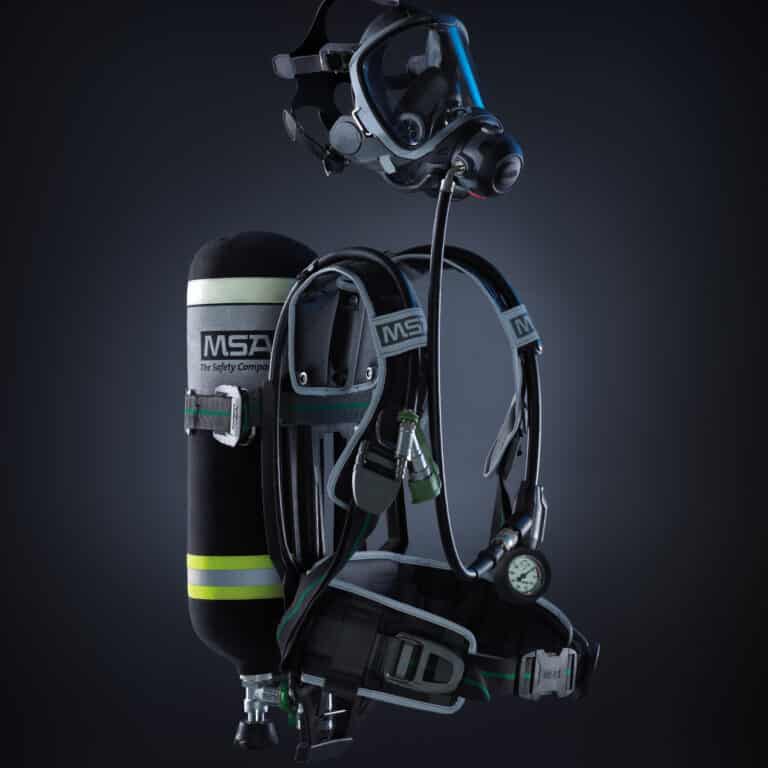
Specifically designed for the European and International fire services, The MSA M1 Self-Contained Breathing Apparatus (SCBA) represents the most advanced, ergonomic and modular breathing apparatus the company has ever developed for those markets.
With the M1 as a breathing apparatus, the M stands for modularity. That modularity allows individual customers with unique needs to build or configure their product in the way that best suits them.
Knowing that there are regional differences when it comes to selecting an SCBA, the M1 is designed to allow for flexibility with product design to allow the end-user to more efficiently and effectively design a product that is going to fulfil their needs.
Designed to meet the European Norm 137 (EN137) safety, health and environmental protection standards, as well as ATEX intrinsic safety standards for usage in hazardous or explosive atmospheres, the M1 SCBA is fully customisable and can be configured to meet a broad range of firefighter needs and brigade budgets.
Its groundbreaking design and several other patented and customisable features that enhance ergonomics, hygiene and firefighter comfort have been noted by European fire brigades as key factors in their decisions to purchase the platform.
Its unique features allow for a deeper, more efficient clean and easy service and maintenance without compromising safety.
Featuring the industry’s lightest-weight backplate with a unique one-handed height adjustment; an advanced hip belt that evenly distributes the weight of the SCBA; and a padded harness that is fully water-repellent, it makes the entire SCBA system machine washable without disassembly.
The M1 SCBA also includes a high-pressure cylinder connection for fast cylinder exchanges and is compatible with MSA’s industry-leading G1 facepiece.
Beyond the breathing apparatus, the M1 SCBA is the centrepiece of MSA Safety’s Connected Firefighter Platform in the International market.
A key feature of this enhanced technology is the MSA Entry Control Board (ECB), which is designed to meet the unique needs of the UK fire service.
Serving as a cloud-connected fire-ground management tool, it provides incident commanders with air and alarm status of all telemetry-enabled breathing apparatus on scene.
It also features the fully integrated voice communication C1 headset, offering exceptional voice transmission and reception of incoming messages.
These are all essential features to enable firefighters to communicate effectively and reliably with each other, and to enable close monitoring of each team member.
MSA’s ECB is capable of providing post-incident reporting and automated documentation and integrates seamlessly with FireGrid, a cloud-based MSA software platform that gives incident commanders the ability to evaluate and manage multiple situations in real time on scene, and from any location in the world.
The data available from post-incident reporting and automated documentation can help in the long-term monitoring of firefighters.
With graphic displays of on-air consumption rates, the data can show where and when a firefighter is breathing more heavily during an incident and make it possible to help identify any trends, patterns or possible areas of concern when it comes to individual firefighter health and wellness.
The M1 has been tried and tested alongside MSA Bristol’s fire protective clothing lines and together they provide a particularly ergonomic PPE combination, with the seams and shape of the jacket positioned to comfortably accommodate the SCBA harness.
The Fire Brigades Union expresses concerns about the new guidelines that could compromise firefighters’ safety.
Fire Brigades Union voices concerns about new guidelines for firefighters
The Fire Brigades Union has expressed relief following the Health and Safety Executive’s decision to look into the latest breathing apparatus policy adopted by the Fire and Rescue Service.
Introduced by the National Fire Chiefs Council, this policy would direct firefighters to approach fires without immediately activating their breathing apparatus.
During high-rise fire interventions, it’s a standard procedure for the Fire Brigade to establish a ‘bridgehead’ at a secure location within the building.
Traditionally, firefighters would run a series of checks and enable their breathing apparatus before moving closer to the flames.
However, the newly suggested guidelines would instruct them to proceed without this essential step.
Several cities decline to implement the new breathing apparatus procedure
The proposed change might endanger firefighters, exposing them to threats like smoke before they can equip their breathing apparatus.
This could also mean greater contact with toxic fire pollutants.
Notably, fire authorities from cities like London, Birmingham, and Manchester have already chosen not to adopt this new policy, but other locations seem poised to embrace it.
The Fire Brigades Union, after raising concerns in May 2022, waited over a year for a response from the Health and Safety Executive.
Initially, the HSE claimed that the issue was not their responsibility. However, recent developments show the HSE revising their initial stance.
They are now set to scrutinise the breathing apparatus policy closely.
In a subsequent correspondence with the FBU, the HSE admitted their previous approach had been insufficient and offered an apology to the union.
Throughout this phase, the Fire Brigades Union has consistently advised its members to ensure their safety. They recommend not venturing beyond the bridgehead without an activated breathing apparatus.
Statements from the Fire Brigades Union leaders
Ben Selby, Assistant General Secretary of the Fire Brigades Union, remarked: “We welcome the fact that the Health and Safety Executive has seen sense and decided to investigate this issue properly.
“The delays we encountered in addressing this critical safety concern were frankly unacceptable. It’s reassuring to see them now taking the necessary action. We urge all Fire and Rescue Services to reconsider this policy.”
Adding his thoughts, Riccardo la Torre, National Officer of the Fire Brigades Union, stated: “Changing the breathing apparatus safety procedures presents a significant risk to our firefighters.
“We remain committed to holding the Health and Safety Executive accountable and will challenge any service that looks to adopt this procedure.
“Our guidance to our members remains firm. As dedicated firefighters and BA wearers, they should avoid risking their safety without an activated breathing apparatus.”
IFSJ Comment
The evolving breathing apparatus guidelines and their potential impact on firefighter safety demonstrate the vital role of both regulation and advocacy.
The Fire Brigades Union’s persistent efforts underline the necessity of continuous dialogue and review in shaping policies that directly impact frontline workers.
Major contract: MSA Safety secures $7 million deal
MSA Safety Incorporated has announced winning a $7 million contract to provide M1 Self-Contained Breathing Apparatus (SCBA) and related firefighter technology to five UK Fire Authorities.
The authorities include West Midlands Fire and Rescue Authority, Cleveland Fire Brigade, Hereford and Worcester Fire Service, Staffordshire Fire and Rescue Service, and Warwickshire Fire Service.
Embracing advanced technology: The M1 SCBA
This decision was made following a comprehensive evaluation process. The focus of this process was the enhancement of firefighter safety through upgraded technology.
Nish Vartanian, MSA Safety Chairman and CEO, stated: “The M1 SCBA was designed specifically for the European and International fire services. It represents the most advanced, ergonomic and modular breathing apparatus our company has ever developed for those markets.”
New partnership: MSA Safety and UK Fire Authorities
According to Vartanian: “We are incredibly proud to establish this new partnership. We’re honoured that West Midlands and the consortium have entrusted MSA with the responsibility of protecting the men and women who keep the residents of one of the largest regions of the United Kingdom safe each day.”
Connected Firefighter technology: A crucial factor
The decision to select MSA Safety was influenced greatly by their Connected Firefighter technology.
This technology forms part of the M1 SCBA platform, which includes the MSA Entry Control Board.
This is a cloud-connected fire-ground management tool that provides Incident Commanders with the air and alarm status of all telemetry-enabled breathing apparatus on the scene.
Ensuring comfort and safety with MSA’s M1 SCBA
The M1 SCBA features the industry’s lightest-weight backplate, an advanced hip belt, and a padded harness that is fully water-repellent. These features aim to enhance ergonomics, hygiene, and firefighter comfort.
MSA Safety’s growing influence in the UK
Following this contract, four of the five fire authorities will be outfitted “head-to-toe” in MSA equipment. This comes after MSA Safety’s acquisition of UK-based Bristol Uniforms in 2021.
IFSJ Comment
This contract reflects the growing investment in firefighter safety by UK Fire Authorities. The innovative equipment from MSA Safety is set to revolutionise the way our brave firefighters operate, enhancing their protection and comfort in the line of duty.
Global safety equipment manufacturer MSA Safety, Inc. has won a $15 million contract award to provide respiratory protective equipment to the Los Angeles City Fire Department.
This is the first phase of what is expected to be a two-phase order, with a second contract expected to total approximately $9 million. MSA Safety expects to receive the second contract from LA City in the third quarter.
Last year, MSA Safety announced a similar-size breathing apparatus contact with the Los Angeles County Fire Department, and with this contract, MSA continues to strengthen its breathing apparatus market presence in the Southern California region. The decision to upgrade Los Angeles City’s self-contained breathing apparatus (SCBA) technology was made after a comprehensive evaluation process.
Factors that influenced the department’s selection of the G1 SCBA were its advanced technology and connectivity features, as well as the ability to upgrade the SCBA with new technologies as they become available.
Each new SCBA will feature an integrated thermal imaging camera (iTIC), which places thermal imaging capabilities into the hands of individual firefighters. The iTIC is part of the SCBA control module that houses other various electronics, and is one of many advanced features associated with the G1 breathing apparatus.
Nish Vartanian, MSA Safety Chairman, President and Chief Executive Officer, said: “We are incredibly proud to establish this new partnership with the Los Angeles City Fire Department. Most importantly, we’re honoured that the department has entrusted MSA with the responsibility of protecting the men and women who keep the residents of LA safe each day.”
G1 SCBA
With more than 15 patents, the G1 SCBA is the centerpiece of the MSA Connected Firefighter platform – a suite of advanced safety technologies that work in concert to significantly improve firefighter monitoring, accountability and communication. The SCBA utilizes embedded Bluetooth technology to transmit important data, including cylinder air pressure, battery status and various alarm indicators, to incident commanders via MSA’s FireGrid System.
Delivery of the new SCBA units is expected to begin immediately and be completed by the end of the fourth quarter. The SCBA conversion process will be led by representatives from MSA and Bauer Compressors, MSA’s distribution partner responsible for the sale and service of the contract. The Los Angeles City Fire Department helps to protect more than 4 million residents in the second largest city in the United States. The department has approximately 3,400 uniformed members, 114 fire stations, and handles more than 1,300 emergency calls each day.
MSA’s vision for the G1 breathing apparatus is to create the most advanced and versatile firefighting platform available, continuously raising the bar when it comes to deploying new technologies that improve firefighter health and safety. The G1’s unique ergonomic design, combined with an adjustable waist belt and wide shoulder straps, allows SCBA weight to be distributed more evenly on a firefighter’s hips. Collectively, these features make the SCBA more comfortable when worn for longer periods of time. Additionally, the G1 includes a “Central Power” feature that powers the entire unit from a single, rechargeable battery compartment, eliminating the need for additional batteries.
Dräger, an international leader in the fields of medical and safety technology, is calling for fire escape hoods to become part of any fire safety plan where evacuation takes more than a couple of minutes – including educational facilities, hospitals, hotels and high-rise buildings.
Fire escape hoods are designed to provide wearers with crucial minutes of protection from fire-related vapours, particles and gases, including carbon-monoxide. Dräger’s PARAT smoke hood range provide wearers with up to 15 minutes of protection. According to the UK Government, nearly one in three (30%) of fire-related fatalities are the result of being ‘overcome by gas or smoke’[1], which makes fumes a fire’s most deadly killer.
Dräger therefore believes it is essential that fire escape hoods are used as a supplementary support to other fire safety evacuation measures, e.g., fire doors and disabled refuge areas.
Indeed, the Fire Door Inspection Scheme (FDIS) recently found in a study of more than 100,000 fire door inspections that three in four, or 75% of all fire doors failed to meet required standards[2]. Buildings that had the highest number of fire door inspection failures included healthcare buildings, local authorities and housing associations, and private housing, but across the board the research supports the need for supplementary fire safety measures.
Ian Gil-Rodriguez of Dräger Safety UK says the Industry has a responsibility to promote the increased use of fire escape hoods “The fact that Fire and Rescue Services globally and in the UK are now using fire escape hoods is evidence of their critical importance,” he says. “Our Industry needs to come together and join forces to push this change, for the good of public safety. Fire Escape Hoods should be a standard component of evacuation plans, a complementary part of the complicated puzzle, as opposed to a standalone solution.”
For more information on Dräger or its product offering, please visit www.draeger.com
London Fire Brigade recently selected MSA Safety to supply its firefighters with new M1 self-contained breathing apparatus (SCBA) and telemetry technology. IFSJ sat down with Patrick Tawney, Group Commander at London Fire Brigade and Project Manager for the replacement of respiratory protective equipment (RPE), to discuss the procurement process and the benefits the new equipment will bring.
How often do you procure new SCBA?
In line with most fire services in the UK, we refresh and upgrade our SCBA every ten years. It’s important for us to have up-to-date equipment that takes advantage of new technologies to maximise safety for our firefighters. In the years since our existing SCBA was purchased, there have been significant innovations and developments in the industry which have improved and enhanced not only SCBA itself but also associated communication and monitoring capabilities.
What in particular were you looking for in the new equipment?
We had lots of specific requirements, but most importantly, the SCBA had to be comfortable to wear, straightforward to operate, easy to clean, and it had to fit well with our other existing PPE. We were also looking for equipment that would enhance safety monitoring and improve communication between firefighters and incident commanders during operations.
Tell us about the procurement process, what did it involve?
We began the procurement process in March 2022. This involved outlining our requirements and undertaking an exhaustive evaluation process to explore the options on the market. Once a shortlist of suppliers was established, we organised practical trials at the Fire Services College in Moreton-in Marsh, where a diverse volunteer group of our firefighters were tasked with putting the equipment through its paces. We devised a number of complex and challenging operational scenarios at the College incident training ground, and our firefighters provided feedback on their experiences wearing and operating the various SCBA equipment.
The MSA M1 SCBA emerged as the clear frontrunner, performing extremely well without a single failure, and consistently scoring highly across the board. The firefighters’ positive experiences with the M1 SCBA during the training for these trials and at the trials themselves led directly to the decision to select it. The true test of a product is in the experience of the end-users, and our firefighters were almost unanimous in their preference.
What are the advantages of the M1 SCBA? Why did it perform so well in the trials?
Most notably, we found the M1 SCBA intuitive and easy to use, facilitating the job in hand rather than proving a distraction or hindrance. It is also light in weight and particularly comfortable to wear, with an advanced hip belt that evenly distributes the weight of the BA set, and a padded harness. The ergonomic backplate has a one-handed adjustment which means it is easily customised to ensure a good fit for any size and frame. In an industry where we are actively working to attract and retain a diverse workforce to reflect and engage the communities that we serve, this is particularly important.
We also trialled and subsequently ordered the MSA C1 headset which attaches easily to the outside of the SCBA facepiece and provides enhanced voice communications. There was a notable improvement in clarity – essential for relaying and receiving instructions under pressure during emergency situations.
Another element which particularly impressed us, was the telemetry provided alongside the M1 SCBA system and its modernised Entry Control Board (ECB), which has been developed specifically for UK fire services. Essentially, an ECB is a means of keeping a tally of each firefighter wearing SCBA, noting details such as cylinder pressure and time spent fighting a fire. Working with an ECB has long been embedded in the operations of the London Fire Brigade, as it provides a safe system of working where everyone is accounted for.
The new MSA ECB enhances this traditional system by using integrated cloud-based technology to provide instant live monitoring and the capture of reliable data. Incident commanders can now connect remotely from wherever they are and download information quickly and easily either in real time, or retrospectively. This will significantly improve firefighter safety at incidents, as the air and alarm status of every firefighter can be closely monitored automatically and in real time, freeing up radio contact for other essential communications. Additionally, the post-incident reporting and automated documentation it provides will be invaluable in assisting with accident investigation, operational debriefs and for monitoring the long-term health of our firefighters. For example, a graphic display of data on air consumption rates can show exactly where and when a firefighter is breathing more heavily during an incident, which could be due to physical exertion or extreme heat. This will enable us to identify not only possible areas of health concern for individuals, but also trends and patterns which could be useful for general research into firefighters’ physical response to certain scenarios.
Does the M1 SCBA work well with your existing equipment?
Yes, during the procurement process we undertook a series of tests to ensure the new SCBA would be compatible with all our existing kit and equipment. Our firefighters wear protective clothing supplied by MSA Bristol via the Collaborative Framework, so it was unsurprising to find that the M1 SCBA fits perfectly with our fire tunics.
How easy is the M1 SCBA to clean, and why is this important?
The efficient decontamination of PPE following a fire-related incident is absolutely essential, since toxic smoke particles can be particularly harmful to health, whether inhaled or absorbed through the skin. The M1 SCBA has been specifically designed to minimise trapping of particles and is easy to clean without disassembling: the padded harness is fully water repellent, making the entire BA system machine-washable. As such, it complies with our strict policies on how to manage and minimise contamination. Currently, we clean our own SCBA by hand but are looking to introduce cleaning machines in the near future.
How would you rate MSA’s customer service?
It must be noted that over and above the superiority of their product, MSA have demonstrated an outstanding level of customer care throughout the procurement process. Everything we’ve asked of them as a manufacturer, they have carefully considered and provided solutions. As an example, we highlighted a precarious situation whereby a firefighter running low on air may need a teammate to top up their air supply. Previously, the firefighter would be required to hold their breath while the old supply was disconnected and the new supply reconnected. This can be a tricky and stressful procedure, particularly under challenging conditions. MSA considered this and devised an innovative system whereby the new supply can be plugged straight in without airlines being broken, allowing continuous breathing.
We’re looking forward to this relationship and collaboration continuing well into the future so that MSA’s technical and design expertise can continue to feed directly into solutions for firefighters on the ground. The fact that the M1 SCBA is a modular system, means that we should be able to easily supplement and upgrade the equipment in the years to come.
When will you receive the new kit?
Our crews across the city are very much looking forward to receiving their new SCBA. Roll out of deliveries is now underway, with a thorough multi-phased training programme for our 4,500 firefighters to follow, and an anticipated ‘go live’ date of January 2024. Training will be supplemented by MSA’s online support programmes, whereby firefighters can access online demonstration videos whenever they need a refresher or reminder.
I’m satisfied we’ve made an excellent selection with the M1 SCBA, in both quality and value for money. When purchasing protective equipment for our firefighters, safety is absolutely the primary focus, but thankfully the M1 SCBA provides a very high standard of safety and quality at a competitive price. Replacing our current provision now will enable us to benefit from technological developments, which will in turn enhance firefighter safety and increase our capacity for rescue. We’re certain that this investment and our new partnership with MSA will continue to serve us well into the future.
The M1 SCBA
The M1 Self contained breathing apparatus (SCBA) is an advanced, ergonomic, and modular system that meets a broad range of needs and budgets. It includes several innovative and customisable features to help enhance hygiene, improve comfort and provide capability for future upgrades.
Modularity
The M1 SCBA is a modular design to suit different needs, preferences, budgets and expectations. Benefits include:
Easily customised and adapted to suit specific requirements and applications.
Easily upgraded when budgets allow.
Easily enhanced so no need for full, costly upgrades.
Ergonomics
The M1 SCBA has been designed to be comfortable and lightweight in all scenarios:
Integrated height adjustment on the backplate ensures the apparatus fits the natural shape of the back.
The swivel hip belt follows body movement and ensures even weight distribution.
The M1 is the lightest SCBA with height adjustment on the market (less than 4kg/9lbs).
Integration of components
The M1 SCBA platform can be also configured with:
M1 Control Module – a personal alert safety system (PASS) with motion sensor. Its full-color, integrated digital display also helps firefighters better understand their situation by providing clear pressure and alarm indications. It comes with optional telemetry, which allows the transmission of firefighter information directly to Incident Command, or to those monitoring the incident remotely, helping them to better manage incidents and keep firefighters safe.
G1 Face Mask – produced in three sizes, also offers three further sizes of nose cup to give the perfect fit and help prevent infiltration of smoke particles. The G1 Mask is comfortable and adapts to all face shapes. The visor allows for a wide, distortion-free field of vision.
C1 Communication Module – for clear voice projection. The C1 headset easily attaches to the G1 mask and is integrated seamlessly to provide clear voice transmission and reception of incoming messages, whilst eliminating background noise.
Cleanability and enhanced hygiene
MSA’s M1 SCBA has innovative features to ensure the system is easy to clean to prevent exposure to harmful substances.
Future-ready
By offering an excellent foundation system with optional “add-ons”, the M1 SCBA equips firefighters with all the revolutionary capabilities of safety technology. Easy access to the cloud, effortless monitoring and reliable data ultimately make it an integrated platform for firefighter safety now and in the future.
This article was originally published in the January edition of IFSJ. To read your FREE digital copy, click here.
IFSJ takes a look at the solutions from BAUER COMPRESSORS that keep firefighters’ air supply fresh
Necessity is the mother of invention, but sometimes invention can outgrow necessity. With the international outbreak of the COVID-19 virus, many companies rushed to create virtual solutions to overcome transportation restrictions, limitations on in-person contact, and supply chain issues.
Soon, fire chiefs were besieged with virtual reality (VR) options for training new recruits, sometimes confusing new technology for public safety, and more. For some in the industry, these new technologies could be overwhelming and rather than taking their inspiration from a preexisting demand, could be considered to fill a need where it did not exist.
With over 75 years of experience in manufacturing breathing air compressor systems, BAUER COMPRESSORS is not an amateur in the world of innovation. In fact, they were the force behind numerous technological introductions. “I’ve been in the breathing air industry for over 40 years, so I’m used to lots of old technology,” says Bill Dickson, the Vice President of Breathing Air Sales for BAUER COMPRESSORS.
“Well, times have changed, methods have changed, and at the end of the day what we’re trying to do is create solutions for the person at the end of the nozzle…to minimise their exposure to risk, if you will.”
One thing that sets BAUER apart is not only their leadership in producing new technology, but also their historic knowledge and investment in creating only what is necessary, with a reputation for responding and adapting to, the desires and feedback of firefighters.
BAUER is a company that is a leader in the industry after so many decades, which Dickson says is because it works consistently to regularly transform the industry for the better. BAUER continues to evolve by responding to new challenges, fueled by a desire to create the most dependable products in the industry.
BAUER B-VIRUS FREE
The pandemic brought a new awareness of the hazards of potential viruses, even in breathing air. Although breathing air goes through a rigorous purification process, this practice merely strips away the various unwanted gases and particulate matter and is not designed to target and inactivate viruses.
BAUER COMPRESSORS responded to this need with the first COVID-19 filtration system for breathing air compressors during the pandemic. The BAUER B-VIRUS FREE filtration system deactivates up to 99.9% of the SARS-CoV-2 virus in the air intake section of the breathing air compressor using a specially designed UVC light source to destroy pathogens before the intake air section of the compressor, free of chemicals and ozone.
The UVC wavelength is absorbed into the pathogens’ DNA, where the photons destroy the bonds between the DNA strands of the virus, effectively preventing the virus from reproducing.
BAUER CONNECT 2.0
“When the firefighter is getting ready to fill the SCBA, they just scan it. And when they are finished at the end of the day, they use their Wi-Fi enabled handheld device to upload it to the BAUER cloud, giving them complete access to everything,” Dickson explains.
BAUER CONNECT is one remote option: an app and internet[1]based IoT solution that allows the user to remotely manage their entire breathing air compressor, purification, and SCBA filling system. The network can be accessed through any wireless mobile device or computer.
The BAUER CONNECT 2.0 update includes a new mobile “SCADA View” dashboard with a real-time display of the compressor system, improved historical reports functionality, a customer administrator function to manage users and access, and more. BAUER CONNECT 2.0 includes push notifications for instant alerts, as well as a remote HMI function for factory-trained personnel to control the system remotely for servicing upon request.
RFIDPro
BAUER’s RFIDPro data logging system gives a similar control. SCBA cylinders are scanned through the wireless handheld BAUER RFIDPro reader, which guides the user through the proper fill process. This allows fire departments to manage every aspect of their SCBA cylinders in real-time, including cylinder expirations, hydrotesting, and repairs, while eliminating the workload associated with manually logging SCBA fills and inspections.
Dickson says: “We have products that will enable the end user to electronically monitor and/or control the compressor system remotely. So if we have an unmanned volunteer fire department station, the fire chief can manage their compressor without being in front of the unit.”
BAUER ensures that each and every fire department’s data is completely secure, with cloud storage which is unique to each user, for total data integrity and compliance with data retention requirements. SSL data communication encryption between the RFIDPro server and user, along with SHA-256 password encryption with optional two-factor password authentication, provides the latest in state-of-the art network security.
The BAUER RFIDPro system keeps track of when the SCBA was put into service; when and where it was last filled; what pressure it was filled to; and more. The system also ensures that customers won’t be caught off guard, since RFIDPro alerts the user when the SCBA cylinder needs to be hydrotested, as well as when it has reached its expiration date. This allows the fire department to seamlessly log every SCBA fill event for convenience and accuracy, while maintaining compliance with NFPA 1989 regulations.
UNICUS 4i updates
The UNICUS 4i is one of the central solutions that BAUER has created for the fire service: an all-in-one compressor and filling station, controlled by a centrally located touchpad. The password-protected 15-inch HMI is around the same size as a laptop or computer screen, and can control the entire filling process – including the on-board air storage system, SCBA filling rate, and pressure.
“The compressors’ [HMI] control system is connected to the internet, when so equipped. So [the individual] can physically log into the compressor remotely to see what’s going on with [it]…maintenance, troubleshooting, diagnosing, things such as that nature,” Dickson tells.
In response to firefighters’ safety concerns with the compressor systems of the past, Dickson notes that the BAUER containment SCBA fill station is designed, proof[1]tested, and built in accordance with the latest edition of NFPA 1901, maximising firefighter safety and security during the SCBA fill process.
“We designed the SCBA containment fill stations to totally contain the fragments of a ruptured 5500 PSIG SCBA,” says Dickson. The fill station, when ordered with SCBA RFID data logging, has antennas integrated into the SCBA holders, such that during the fill process, data on the pressure and other metrics are uploaded automatically to the HMI and then to a cloud-based database specifically for the fire department.
The system also comes standard with BAUER’s unique auto-cascade function capable of handling up to 7000 PSIG (482 bar) service, precisely controllable by firefighters on the HMI touchscreen. The system will automatically direct air to-and-from the storage system, and compressor, without having to manually manipulate and monitor panel-mounted valves and pressure gauges. HMI keypad actuation will automatically send air from the onboard storage system down to the SCBA cylinders being filled by the UNICUS 4i.
In the event of a total power failure, the systems all come with a manual bypass system, ensuring that the fire department is still in service and able to utilise the stored air during electric outages.
75 years of support
Fire departments across Europe have their own specific regulations and codes. BAUER has responded to this diversity with a series of solutions adapted to meet a variety of needs, utilising the latest technological advancements. “We build to the customer’s requirements…because everybody’s requirements are different,” says Dickson.
BAUER’s vertically integrated approach to manufacturing allows for independence and control, while strengthening the support they can offer each and every fire department. With a 24/7 customer service line, ISO 9001 certified facilities, and a distribution network spread internationally, BAUER is a company that works to ensure that invention will not outpace support.