Where are Fire Doors Required & Why Are They Needed?

One of the most common questions with regards to fire safety is where are fire doors required?

Fire safety is of paramount importance in any building or structure, and fire doors are an integral part of ensuring the safety and protection of occupants and property during a fire emergency. 

These specialised doors are meticulously engineered to serve as barriers against the rapid spread of fire, smoke, and toxic gases, effectively compartmentalising the building and providing valuable time for evacuation and firefighting efforts. 

In this article we will answer questions such as where are fire doors required, why fire doors are needed, what materials are used in their construction, what regulations that govern their installation, what safety checks are needed to maintain their functionality and what their cost implications are.

Where are Fire Doors Required?

Where fire doors are required is one of the most common questions raised by new business owners.

They are required by law in all properties that are for business or non-domestic usage.
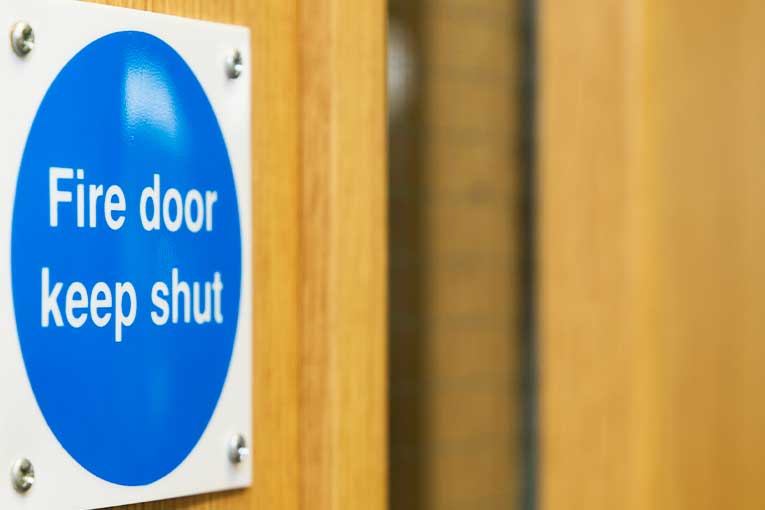
Close up of a fire door
Fire doors are vital for fire safety

Fire doors play an essential role in various settings to enhance fire safety and protect occupants from the dangers of fire incidents. 

They are strategically installed in a wide range of locations, including commercial buildings, residential buildings, industrial facilities, educational institutions, and healthcare facilities.

Commercial Buildings

Fire doors serve a critical role in securing escape routes during a fire emergency, providing occupants with a clear and safe path to evacuate the building. 

In various commercial settings, such as offices, hotels, restaurants, and shops, fire doors are essential for ensuring the safety of employees, customers, and visitors. 

These doors compartmentalise the building, containing the fire and allowing occupants to safely exit.

Similarly, in multi-occupancy residential buildings like apartments and care homes, fire doors play a crucial role in safeguarding residents. 

By preventing the rapid spread of fire between units, fire doors provide precious time for evacuation and help minimise the impact of the fire on the entire building.

Industrial Facilities

Industrial facilities, including manufacturing plants, warehouses, and storage areas, require fire doors to protect both employees and valuable assets. 

In these settings, the risk of fire can be significant due to the presence of flammable materials and machinery.

Fire doors play a crucial role in such environments by sectioning the building. 

In the event of a fire, the fire doors act as barriers, containing the fire to a specific area and preventing its rapid spread. 

This containment allows employees to safely evacuate the affected area and seek refuge in other fire-resistant compartments until help arrives.

By containing the fire, fire doors help to minimise damage to the facility, its contents, and the surrounding areas. 

They also provide additional time for emergency responders to arrive and mitigate the situation. 

This is vital in industrial settings where a rapid and uncontrolled fire could have catastrophic consequences for both human lives and business operations.

Educational Institutions

Fire safety is a top priority in educational institutions like schools, colleges, and universities, where the safety and well-being of students, staff, and visitors are of utmost importance. 

To achieve this, fire doors are strategically installed throughout the buildings.

In educational settings, fire doors are commonly found in corridors, classrooms, and assembly areas.

Healthcare Facilities

Healthcare facilities, including hospitals and clinics, must maintain a safe environment to protect patients and staff. 

Fire doors are a critical component of fire safety in healthcare settings, ensuring that patients can be evacuated safely and that critical areas, such as operating rooms and patient wards, remain protected.

Where are Fire Doors Required in a House?

In most residential properties, fire doors are not required by law, however there are exceptions to this rule. 

If the property is 3 stories or more, for example a block of flats, then a fire door is needed on every floor where a room connects onto the stairwell.

Also, if a garage connects directly to a property with access via a door, then the door must comply with fire safety regulations.

Some property owners install fire doors where not required by law, just to increase fire safety in the property. 

If fire doors are installed in a house, then they are strategically placed in key areas to prevent fire spread:

  • Kitchen: Fire doors in the kitchen separate it from living spaces, containing potential fires.
  • Garage: Fire doors are crucial if the garage has direct access to living areas.
  • Basement: Fire doors may be necessary in the basement to protect escape routes and contain fires.

What Do Fire Doors Do?

Fire doors serve as essential components of passive fire protection measures, providing critical barriers to contain flames, smoke, and toxic gases in the event of a fire. 

When a fire occurs, the proper functioning of fire doors can significantly impact the safety of building occupants and the overall integrity of the structure.
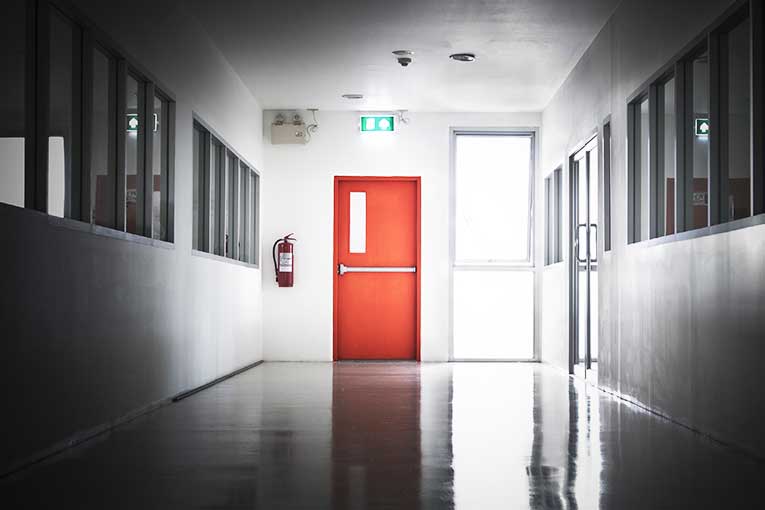
Fire doors can help stop fire spreading to other parts of buildings

One of the primary functions of fire doors is their ability to compartmentalise a building.

When closed, fire doors form a seal between different areas of the building, preventing the rapid spread of fire and smoke to other parts of the structure. 

By containing the fire to its point of origin, fire doors effectively limit the extent of damage and provide occupants with valuable time to evacuate the building safely.

What are Fire Doors Made From?

Fire doors are made from various materials with excellent fire-resistant properties, ensuring that they can withstand high temperatures and intense heat.

Timber

Timber is a commonly used material for fire doors, valued for its aesthetic appeal and reliable fire protection. 

Solid timber fire doors offer a classic and natural look, making them a popular choice for residential and commercial buildings alike. 

Timber fire doors are available in various finishes and can be customised to complement the overall interior design of a space. 

The thickness and quality of the timber used in the door’s construction determine its fire-resistant capabilities.

Steel

Steel fire doors are another widely used type of fire door, particularly in commercial and industrial settings. 

Steel doors offer exceptional strength and durability, making them suitable for high-traffic areas and locations with more stringent security requirements. 
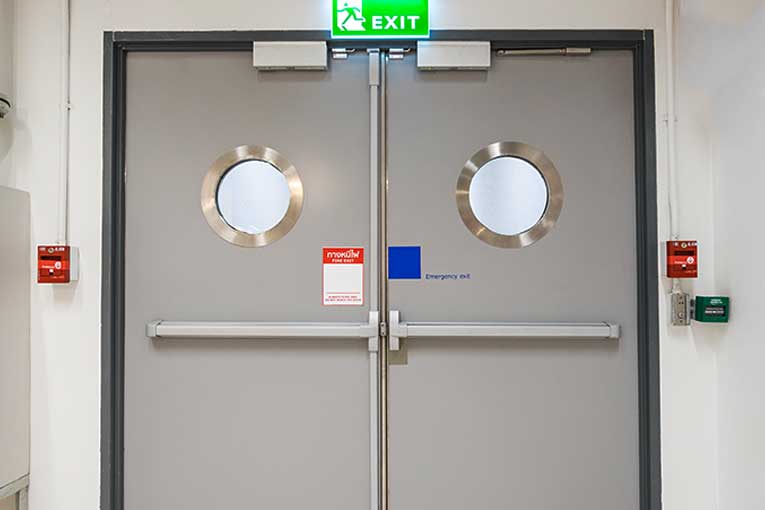
Steel fire doors are commonly found in industrial and commercial properties

Steel fire doors can be coated with fire-resistant materials to enhance their fire resistance, and they are often used in facilities where protection against fire and potential break-ins is paramount.

Composite

Composite fire doors are a versatile option that combines various materials to provide enhanced fire resistance and durability. 

These doors typically feature a core made from fire-resistant materials, such as mineral wool or vermiculite boards, sandwiched between layers of other materials like timber, steel, or laminate. 

The combination of different materials in composite fire doors creates a door that is both robust and capable of withstanding the effects of fire for an extended period.

What are the Regulations of Fire Doors?

Fire doors play a crucial role in fire safety, and to ensure their effectiveness, they must adhere to specific regulations and standards. 

These standards are designed to test and assess the fire resistance and integrity of fire doors, ensuring that they can withstand the impact of a fire and provide adequate protection to occupants and property.

Fire Rating

One of the essential aspects of fire door regulations is the fire rating. 

Fire doors are rated based on their ability to withstand fire for a specific duration, usually indicated as 30, 60, or 90 minutes. 

This fire rating determines how long the door can effectively contain the spread of fire, smoke, and heat, providing occupants with valuable time to evacuate safely and emergency responders to take action.

Integrity

In addition to fire resistance, fire doors must also maintain their structural integrity during a fire. 

This means that they should prevent the passage of flames and smoke, forming a barrier that can effectively contain the fire to a specific area of the building. 

The ability of fire doors to maintain their integrity is critical in preventing the rapid spread of fire, protecting other parts of the building and allowing a more controlled response to the emergency.

Self-Closing Mechanism

Another essential feature of fire doors is the self-closing mechanism. 

Fire doors should automatically close and latch when not in use, ensuring that they are ready to act as a barrier in case of a fire. 

This self-closing mechanism helps prevent the accidental propping open of fire doors, which could compromise their effectiveness during an emergency.

Labelling

To provide clear and easily accessible information, fire doors should have appropriate labelling. 

The label on a fire door typically indicates its fire rating and compliance with safety standards. 

This labelling helps building occupants and emergency responders quickly identify fire doors and understand their fire resistance capabilities.

How are Safety Checks on Fire Doors Carried Out?

A proper safety check on fire doors is essential to ensure their functionality during an emergency, and has to be done by someone trained in fire door inspections.

Here are some key steps to include in a fire door safety inspection:

Check Closers

Verify that the door closes smoothly and latches securely without any obstructions.

Proper functioning closers are crucial to ensure that the door can effectively close and seal off the area in case of a fire.

Inspect Seals

Ensure that intumescent seals around the door frame and perimeter are intact.

These seals expand when exposed to heat, creating a barrier against the spread of flames and smoke.

Examine Hinges

Check for loose or damaged hinges that could affect the door’s performance.

Hinges should be in good condition and securely attached to the door and frame.

Look for Damage

Check for any cracks, holes, or damage that may compromise the door’s integrity.

Any damage to the door can weaken its ability to withstand fire and limit its effectiveness in containing flames and smoke.

Test Latching

Confirm that the latch engages correctly with the strike plate when the door is closed.

A properly functioning latch ensures that the door remains closed and prevents the passage of smoke and flames.

Evaluate Gap Sizes

Ensure that the gaps around the door are within the specified limits.

Properly sized gaps are essential for the door’s fire resistance, as excessive gaps can allow the passage of smoke and flames.

Regular fire door inspections are critical to maintaining their effectiveness in fire safety. 

If any issues are identified during the safety check, prompt repairs or replacements should be made to ensure that the fire doors are ready to perform their vital role in protecting lives and property during a fire emergency.

Changes in Regulations

As of January 2023, there have been significant changes to the fire door inspection regulations, due to the majority of fire doors in the UK failing inspections

Previously, inspections were conducted every six months to ensure compliance with fire door rules and regulations. 

However, with the new regulations in place, there are updated inspection frequencies for different types of fire doors:

Communal Fire Doors

These will now be expected to undergo inspection every 3 months.

This increased frequency aims to enhance safety and ensure that communal areas are adequately protected.

Fire & Escape Doors (FEDs)

FEDs will be subject to inspection at least once a year.

This measure aims to maintain the integrity of escape routes and vital access points in buildings.
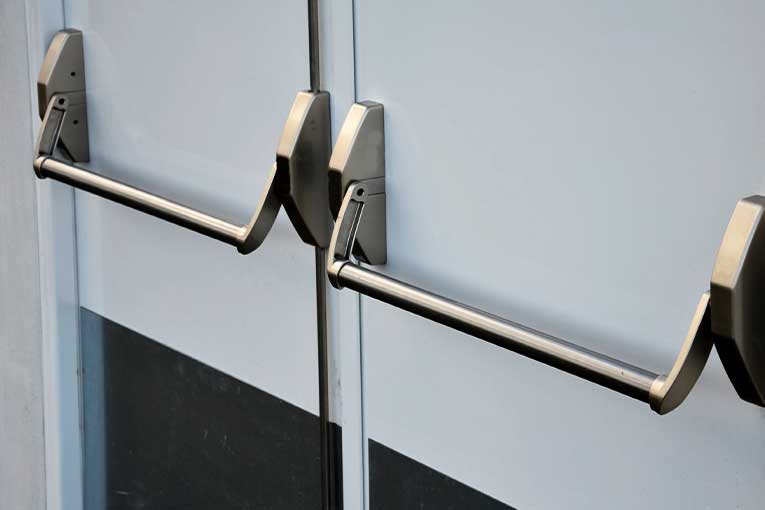
Fire and Escape doors need regular inspections to ensure maximum protection against fire

These changes reflect a more proactive approach to fire safety, ensuring that fire doors are regularly checked and maintained to meet the highest safety standards.

Can Fire Doors Have Windows?

Fire doors are designed with the option of including vision panels that are equipped with fire-resistant glazing. 

These vision panels offer the advantage of visibility between different areas, allowing natural light to pass through while maintaining fire safety regulations. 

High-quality fire-rated glass can withstand temperatures of up to 900 degrees Celsius, over seven times that of normal glass. 

Moreover, it can maintain its integrity for over 60 minutes, effectively preventing the fire from spreading and providing ample time for evacuation and fire personnel to respond.

By following these regulations, property owners can strike a balance between safety and functionality, providing occupants with both fire protection and the convenience of visual communication within the building.

How Much Do Fire Doors Cost?

The cost of fire doors can vary significantly depending on several factors. 

The primary determinants of the price include the material used, the fire rating of the door, its size, and any additional features it may have. 

Here are some key factors that influence the cost of fire doors:

Material

Fire doors can be made from various materials, including timber, steel, and composite materials.

Each material has different characteristics and price points, with steel doors generally being more expensive than timber doors.

Fire Rating

Fire doors are assigned specific fire ratings, indicating the duration they can withstand exposure to fire.

Doors with higher fire ratings tend to be more expensive due to their increased fire resistance capabilities.

Size

The size of the fire door is another important factor in determining its cost.

Larger doors may require more materials and hardware, resulting in a higher price.

Additional Features

Some fire doors come with additional features, such as vision panels, glazing, or special hardware.

These features can add to the overall cost of the door.

The cost of a standard fire door can vary because of these factors, with a low-end fire door being rather low cost, to the upper end coming in with a price tag in the thousands. 

However, it is essential to consider that investing in high-quality fire doors is a crucial aspect of ensuring fire safety in any building. 

Fire doors play a critical role in preventing the spread of fire and protecting lives and property. 

Therefore, it is recommended to prioritise the quality and compliance of fire doors over cost considerations to ensure the utmost safety and security in the event of a fire emergency.

Conclusion

Fire doors are indispensable components of fire safety measures, protecting lives and properties during emergencies. 

Having an answer to the question of where are fire doors required, as well as their functions, materials, regulations, and safety checks is essential for creating a secure environment. 

Whether in commercial buildings, residential properties, or industrial facilities, the proper installation and maintenance of fire doors contribute significantly to fire prevention and enhanced safety for occupants.

Fire Door Safety Week: Recognise, Report, Protect

Lives at Risk due to Lack of Knowledge on Faulty Fire Doors

Lack of Reporting

New research has alarmingly shown that over half (57%) of the UK public are unable to identify a faulty fire door, leading to serious under-reporting of issues.

Despite a broad awareness of potential malfunctions that might impede a fire door’s function during a blaze, the vast majority of the populace is in the dark when it comes to discerning problematic doors.

‘Recognise it, Report it’ Campaign

The 2023 Fire Door Safety Week, taking place between 25 and 29 September, has rolled out its theme, ‘Recognise it, Report it’.

The campaign aims to educate the public on recognising faulty doors to ensure their timely repair or replacement.

An unsettling 29% of those surveyed admitted they would abstain from reporting a faulty fire door due to unawareness. This knowledge gap is risking lives.

Public Hesitation

Concerns mount as 21% express reluctance towards future reporting, believing their concerns might go unaddressed.

A considerable portion, nearly half (49%), feel that reporting isn’t their responsibility.

Misconceptions on Fire Doors

The research further indicates prevalent misconceptions about the functionality of fire doors.

A significant number of respondents (46%) believe fire doors primarily halt the spread of fire rather than smoke (32%).

The reality stands that only a fully functional fire door can prevent both fire and smoke – the latter being a primary cause for fire-related fatalities.

A Glimmer of Hope?

On a brighter note, the majority do exhibit concern. 60% would report any irregularities with a fire door out of fear of potential repercussions.

Encouragingly, 86% express intentions to report any faulty or irresponsibly propped open doors in the future.

Insight from BWF

Helen Hewitt, CEO of the British Woodworking Federation (BWF), which oversees Fire Door Safety Week, expressed her concerns, highlighting the two-fold problem: the inability to spot issues and the lack of confidence that flagged concerns would receive due attention. She emphasised the vital role of fire doors as barriers against the spread of fire and smoke, advocating for collective responsibility.

Guidance Discrepancy

The study also unearthed that workplace guidance on identifying faulty fire doors surpasses that in residential areas.

A concerning 38% received directions from employers, while only 26% from landlords.

While it’s promising to witness employers prioritising fire safety, there’s an urgent call for awareness in residential zones.

Within residential settings, immediate hazards like dampness or mould often overshadow fire safety concerns.

Expert Comments

Gavin Tomlinson, Chair of the National Fire Chiefs Council (NFCC), reiterates the study’s unsettling revelations, emphasising the need to empower individuals for a holistic fire safety approach in both homes and workplaces.

Fire Door Safety Week

As we mark the 10th anniversary of the Fire Door Safety Week, initiated by the British Woodworking Federation, it is paramount for fire and safety professionals – including building managers, fire door installers, firefighters, and the general public – to reflect on the vital role fire doors play in safeguarding lives and property.

This year’s campaign, aptly themed ‘Recognise it, Report it,’ strives to underscore the significance of not just installing fire doors but also ensuring their impeccable functionality.

Official Fire Door Safety Week Website

The Core Function of Fire Doors

Fire doors are not merely a structural component of a building; they are a critical lifeline in the event of a fire.

Designed meticulously with specific materials and standards, these doors significantly slow down the spread of flames and smoke, allowing occupants additional time for safe evacuation.

Given that smoke is a major culprit in fire-related casualties, the significance of fire doors in safeguarding lives cannot be understated.

Their role in the safety infrastructure of a building is paramount, bridging the gap between a minor incident and a major disaster.

Misconceptions: Open vs. Closed

Research startlingly indicates that 30% of respondents believed a propped open fire door was safe.

It’s a concerning misconception that an open fire door is harmless.

The entire purpose of these specially designed doors is compromised when they are propped open.

The science behind their design involves ensuring that, when closed, they create a seal which prevents fire and smoke from spreading to other parts of the building.

When left open, this seal is ineffective, rendering the door useless in its primary function.

Therefore, education around the importance of keeping fire doors closed, especially in public buildings and residential complexes, is imperative.

A propped-open door is an invitation to danger.

Smoke: The Silent Killer

In the realm of fire safety, the threat of smoke is often overshadowed by the immediate and apparent danger of flames.

However, statistics underscore that smoke inhalation is frequently more deadly than the fire itself.

As fires burn, they produce toxic gases and thick smoke that can quickly disorient and incapacitate individuals, cutting off escape routes and leading to tragic outcomes.

Fire doors, when functioning correctly, not only slow down the advance of flames but also play a pivotal role in containing this toxic smoke.

This containment can make the difference between a successful evacuation and a tragic loss of life.

Recognising Faulty Fire Doors

The findings that over half the UK population cannot discern a faulty fire door are alarming.

The effectiveness of a fire door hinges on its condition and functionality. A door with even minor defects or damage can compromise its performance, leading to devastating consequences during a fire.

It’s essential to promote education around recognising signs of wear and tear, incorrect installations, or other issues that render a fire door ineffective.

Awareness campaigns and training can go a long way in equipping the public with the knowledge to identify and report these faults, thereby safeguarding communities.

The Need to Report

The adage ‘Recognise it, Report it’ isn’t merely a catchy phrase; it’s a call to action that has far-reaching consequences for public safety.

Every fire door in a building forms part of a comprehensive fire safety strategy.

When one is compromised, it jeopardises the integrity of the entire system, potentially putting numerous lives at risk.

The finding that almost half of the surveyed individuals don’t see it as their duty to flag a faulty door is concerning.

This reveals a gap in public understanding and underscores the necessity for campaigns to shift this mindset.

Reporting isn’t just an act of community responsibility; it’s an act of safeguarding oneself and others from potential harm.

Hesitations in Reporting

Trust in institutional and community processes is a pillar of effective public safety.

When individuals voice concerns, especially about something as critical as fire safety, they expect – and deserve – to be heard.

The fact that a significant 21% believe their concerns might fall on deaf ears is problematic.

It not only discourages proactive safety measures but also fosters a sense of disillusionment.

Addressing this requires transparent processes and clear communication channels.

Authorities and building management need to actively showcase that every report is taken seriously, investigated thoroughly, and rectified promptly.

Building this trust is essential to ensuring everyone plays an active role in communal safety.

Positive Indicators

In every challenge, there’s a silver lining, and in this context, it’s the 86% of respondents who pledge their commitment to reporting a faulty or improperly managed fire door in the future.

This not only indicates an inherent public sense of duty but also shows that awareness campaigns, like the Fire Door Safety Week, are making an impact.

Such positive shifts in attitude need to be acknowledged, nurtured, and further encouraged.

By focusing on these positive indicators and building upon them, a culture of collective responsibility and proactive safety can be fostered, ultimately working towards a safer environment for all.

Guidance Disparity: Work vs. Home

The study’s findings bring to light a significant discrepancy in the distribution of fire safety information.

While it’s commendable that 38% of workplaces provide guidance on identifying faulty fire doors, the stark difference in awareness when it comes to residential areas is a glaring concern.

Our homes, much like our workplaces, are spaces where we spend significant portions of our lives.

Therefore, it’s essential that the emphasis on safety remains consistent across both spheres.

This disparity underscores a broader issue: the prioritisation of workplace safety potentially at the expense of residential safety.

Given that fire risks are omnipresent, it is imperative to ensure that individuals are equipped with knowledge and tools to ensure fire safety, irrespective of the setting.

Addressing this gap involves collaborative efforts from housing associations, landlords, and safety campaigns to make residential areas just as informed as commercial ones.

Residential Buildings: A Growing Concern

The safety of one’s home extends beyond just its structural integrity; it encompasses all potential threats, both seen and unseen.

While concerns like damp and mould are tangible and often immediately noticeable, the potential risks associated with fire safety tend to lurk in the background, especially if there’s no direct, visible sign of danger.

This underscores the need to educate homeowners and renters alike that fire safety is as immediate and pressing a concern as any other household issue.

Augmenting awareness involves not just pointing out the risks, but also providing actionable guidance on how to identify and rectify them.

As residential areas densify and become more complex, ensuring that each household understands and prioritises fire safety is paramount.

The Evolution of Fire Door Safety Week

When Fire Door Safety Week was first launched, its mission was straightforward: to spread the word about the critical role of fire doors in safeguarding lives.

However, over the years, its reach and impact have grown exponentially.

The campaign’s evolution from a singular message to a collaborative network of organisations and individuals is a testament to its success and resonance.

Today, it isn’t just about understanding the importance of fire doors but also about creating a collective consciousness towards fire safety.

By forging partnerships with various stakeholders and reaching out to the public with impactful messages, Fire Door Safety Week has become more than just an annual event—it’s a movement.

The challenge and opportunity now lie in harnessing this momentum, ensuring that the next decade sees even greater advancements in public awareness and safety.

IFSJ Comment

In an age where the complexities of modern architecture and dense urban habitats have raised the stakes for safety standards, understanding and addressing the intricacies of fire safety become paramount.

As elucidated by the recent study and the dedicated efforts of Fire Door Safety Week, the responsibility for fire safety is not just an institutional one but rests on the shoulders of each individual.

The stark findings presented in the survey underscore a pressing need to bridge knowledge gaps, correct misconceptions, and foster a proactive community ethos towards fire safety.

Moreover, the disparity in fire safety awareness between workplaces and residential areas is a clarion call for stakeholders – from housing authorities to landlords and safety advocates – to ensure that the importance of fire safety transcends all boundaries.

Though workplaces are significant, it is in our homes that we seek refuge and solace, and the safety of these sanctuaries cannot be compromised.

The evolution of Fire Door Safety Week from a simple awareness drive to a potent force for change, backed by an expanding network of organisations and individuals, is a testament to the impact collective efforts can achieve.

However, the journey is far from over – fire safety is a continuous commitment that requires consistent effort, adaptation, and education.

The shared goal must be a society where every individual is not just aware but also empowered — empowered to recognise issues, report them, and ensure action.

The ethos of ‘Recognise it, Report it’ should resonate beyond a campaign week and become an ingrained principle in our collective consciousness.

Fire doors, after all, are not merely architectural components but vital guardians of life and property.

Let us ensure they serve their purpose, and in turn, let us serve ours.

Fire doors: Spare a minute for maintenance

With new fire safety regulations around the corner and a renewed focus on responsible persons and coordination, Karen Trigg of Allegion UK discusses the significance of fire door hardware and why regular inspections and maintenance periods must remain high on the agenda.

Fire doors and their hardware are often the first line of defence in the event of a fire.

Working in tandem, they coexist as a core element of a building’s passive fire protection system, providing valuable protection and time for occupants to escape by compartmentalising the spread of smoke and fire in an emergency.

In the UK alone, approximately 3 million fire doors are purchased and installed each year.

Such is their significance to fire safety, each component requires detailed engineering, third-party testing and critically, periods of ongoing inspection and maintenance.

While each stage of a fire door’s lifecycle is strictly regulated, fire door checks and maintenance falls under the remit of a building’s designated responsible person and is widely understood to be an area that has fallen under neglect.

As such, in January 2023, The Fire Safety (England) Regulations 2022, under Regulation 10, made it a legal requirement for all responsible persons of multi-occupied residential buildings to conduct regular fire door checks within their premises.

And while it’s said that overall inspection levels are rising, with 68% of responsible persons now conducting fire door checks (or having them inspected by professionals) every month or every quarter, there’s still work to be done says Karen Trigg of Allegion UK: “In the 12-month period ending March 2023, fire and rescue services attended 178,737 fire incidents in England, a 17% increase compared with the previous 12 months.

“And when you consider the portion of fire door sets that remain overlooked, the numbers don’t make for good reading.

“Fire doors and their hardware play an invaluable role in the safety of our built environment, but there are considerable differences between a fire door that’s operating as intended and one that hasn’t been correctly specified, installed and maintained.

“When it comes to maintenance specifically, Article 17 of the Regulatory Reform (Fire Safety) Order 2005, states that responsible persons must ensure fire doors and their hardware are ‘subject to a suitable system of maintenance and are maintained in an efficient state, in efficient working order and in good repair’.

“Even durable fire door hardware can become worn and tired in a high-footfall environment and may need repairing or replacing over time.

“A damaged or ineffective self-closing device for example, can limit the closing action of a fire door and prevent it from fully closing into the frame – rendering it useless in the event of a fire.

“Although we’ve seen real development towards fire safety education in recent years, we must continue to drive forward the number of responsible persons conducting organised fire door checks and maintenance periods as part of their risk assessment duties.

“The introduction of updated guidance on 1st October 2023 aims to do this further, by improving the cooperation and coordination between responsible persons and rising the requirements associated with recording and sharing fire safety information during fire risk assessments.

“The update will also make it easier for enforcement authorities to act against non-compliance.”

A stitch in time saves lives

As fire safety processes tighten, building owners and facility managers shouldn’t feel discouraged in their actions.

In fact, responsible persons are reminded that there’s no need to overcomplicate fire door inspections.

A simple visual assessment, conducted and recorded by a competent individual, could make the difference between compliance and a fire safety disaster.

Karen Trigg continues: “For responsible persons conducting checks, the first step of fire door safety is recognising each component of a fire door and the potential faults to look for when evaluating its condition.

“The British Woodworking Federation Group – in support of Fire Door Safety Week – shares regular and reliable advice on fire door safety; including a practical five step checklist that has been designed to support responsible persons during fire door assessments.

“The checklist works as a visual guide and covers the five key areas of a fire door – informing users on what to look out for, including:

Certification

“A label or similar marking can often be found towards the top or side of the door and will confirm the fire door is genuine and certified.

“All ironmongery components, including locks, latches, closers and hinges must also be UKCA/CE marked and compatible with the door leaf’s certification.”

Apertures

“More often than not, fire doors are tested as solid doors and without any glazing panels or air transfer grilles.

“It’s important to ensure there are no apertures, holes or breaks in the surface of the door or frame.

“Decision makers are also reminded that altering the door will make certification void.”

Gaps and seals

“Gaps around the fire door should be no greater than 3mm, and this must remain consistent around the whole frame.

“Intumescent strips must also be fitted at the top and sides of the door and show no signs of wear as this may negate the door’s ability to compartmentalise smoke and fire.

“Additionally, check for CE or BS EN 1935 marked hinges, which must be firmly fixed and without missing screws.”

Door closers

“When it comes to door closers, it’s vital to check that your door hardware is fully functioning and will close the door onto the latch from any standing position.

“The door must fully engage with the frame from any opening angle, and it’s recommended that users check this by letting go of the door from 75mm through to the closed position.

“It’s also important to review any hold-open devices to ensure they aren’t working against the door’s self-closing devices, as fire doors must not be wedged open in any scenario.”

Operation

“Testing the operation of the full door assembly is essential – from handles and closers to hinges and seals.

“If the door is not operating effectively, is closing incorrectly on any of its sides, or there is any doubt towards hardware certification and reliability, responsible persons must identify the problem before  arranging and managing professional maintenance as soon as possible.

“Because when it comes to fire safety, there’s simply no time to stand still.”

Rhino Engineering announces team changes

In a recent update from Rhino Engineering Group Limited, Dr Chris Norris, a stalwart in the high-performance doors and blast walls sector, will be transitioning into a part-time role within the company.

Dr Norris transitions after a notable tenure

After over 25 years of working in the high-performance doors and blast walls sector, Dr Norris joined Rhino in 2017.

Since then, he has been pivotal in the successful completion of numerous intricate and high-value projects for the Group.

Notably, his methods for the structural dynamic design of both blast-resistant walling systems and blast-resistant doors are now recognised as standard practices within the offshore oil and gas industry.

These methodologies have also gained significance in various other crucial industries.

On his journey with Rhino Engineering, Dr Norris stated: “Since joining Rhino I’ve had the chance to explore more advanced blast protection ideas and will continue to support the team in developing and implementing relevant ideas that will positively impact our customers and a range of critical industries.”

Significant contributions to Rhino Engineering’s evolution

Dr Norris has played a significant role in Rhino’s transformation from a manufacturer and installer of pre-engineered doors to a holistic partner catering to every stage, from planning to after-sales support.

He has also been instrumental in broadening the company’s geographical reach and establishing partnership agreements.

Stuart Lawrence, Group Managing Director of Rhino Engineering Group, expressed his sentiments, stating: “While Chris’s role may be changing, his top-level expertise and ideas will still be helping to shape the future for us and our partners.”

The Board of Rhino Engineering Group Limited expressed their gratitude towards Chris for his unwavering commitment and service as a director and anticipate his continued support in his new role as part-time Group Chief Engineer.

The company said that the technical prowess of Norris will continue to influence its work, and many are optimistic about the promising advancements on the horizon.

IFSJ Comment

For the fire and safety sector, personnel changes at major industry players like Rhino Engineering can impact innovation and best practices.

Dr Norris’s expertise has shaped standards, especially in areas such as blast-resistant systems crucial for the offshore oil and gas industry.

His new role suggests a continuation of his influential work but in a different capacity.

Industry watchers and professionals alike will be keen to observe how this change affects the broader safety landscape and Rhino Engineering’s future innovations.

ASSA Abloy Door Group underscores its strong Irish connection

ASSA Abloy’s dedicated support in Ireland

Door Group, a division of ASSA Abloy Opening Solutions UK & Ireland, is shining a light on its commitment to serve both existing and potential customers in Ireland.

Find out more about ASSA Abloy here.

With specialists Randen Lannas and Stephen Wilkinson, the company ensures guidance is available at every stage: from product specification and installation to the maintenance of doorsets.

Offering comprehensive doorset solutions in Ireland

Operating out of its main factory and headquarters in Ireland, the firm boasts a wide array of doorset solutions catering to diverse applications.

Customers can choose from high-performance steel and timber doorsets, further enhanced with a range of features such as mechanical or electro-mechanical locks, master-key systems, architectural hardware, and access control solutions, among others.

Brian Sofley, Managing Director at Door Group, stated: “We’ve maintained our presence in Ireland for over three decades and take immense pride in our dedicated team here.

“Their primary focus remains addressing client requirements, be it through standard or customised door solutions.”

He continued: “Our unique advantage lies in our ‘all under one roof’ approach at our Co Antrim facility.

“This streamlines our process, enabling us to efficiently tackle projects of any size and meet stringent deadlines.”

Adding to the sentiment, he mentioned, “The dedication, proficiency, and enthusiasm of our team stand unparalleled.

“In this, Randen and Stephen play a pivotal role, especially in liaising with our Irish clientele.”

Randen Lannas, an Architectural Project Consultant for Northern UK & Ireland, brings a wealth of knowledge to the table.

His qualifications and expertise lie in door and ironmongery solutions, along with deep insights into security, compliance, and critical safety products like fire and emergency escape systems.

On the synergy of the firm’s various capabilities, he commented: “While mechanical products remain a popular choice for daily door systems, there’s a noticeable shift towards electronic systems, particularly in public and multi-occupancy buildings.”

Stephen Wilkinson, overseeing sales for Ireland and Scotland, has been a part of the ASSA Abloy family for over two decades.

His deep understanding of doorsets and their applications is a testament to his experience.

Speaking of his approach, Stephen highlighted: “Our primary goal remains forging strong relationships with clients – old and new.

“This enables us to better educate and guide our Irish customers towards optimal door solutions.”

For further details on ASSA Abloy Opening Solutions, follow this link.

IFSJ Comment

ASSA Abloy’s reinforced commitment to its Irish division is a reflection of the brand’s dedication to quality and customer-centricity.

With the Irish market witnessing dynamic changes in safety and security needs, such investments and tailored solutions offer an assurance of high standards and localised expertise.

It is noteworthy how the brand seamlessly marries global capabilities with local knowledge, ensuring the delivery of products that resonate with the evolving demands of the market.

ASSA ABLOY expands presence with acquisition of Sunray Engineering in the UK

A significant move in the security doors and fire doors sector as Sunray Engineering joins ASSA ABLOY

ASSA ABLOY, a global leader in door opening solutions, has confirmed its acquisition of Sunray Engineering Group Ltd.

Based in the UK, Sunray Engineering is a renowned designer and manufacturer of high specification steel and timber security doors, fire doors, and louvre systems.

The full details of the acquisition can be found here.

The acquisition sees the merging of two major players in the door security and safety sector.

ASSA ABLOY’s CEO, Nico Delvaux, expressed his thoughts on the acquisition: “I am very pleased to welcome Sunray Engineering into the ASSA ABLOY Group.”

Sunray Engineering’s strong UK presence boosts ASSA ABLOY’s growth strategy

Delvaux continued: “This acquisition delivers on our strategy to strengthen our position in the mature markets, adding to our comprehensive offering in the UK and EMEIA division as a whole.”

Noting the benefits brought by the new addition to the group, Neil Vann, Executive Vice President of ASSA ABLOY and Head of EMEIA Division, commented: “With Sunray Engineering and its great team, we want to develop our presence within the high specification doors and louvre systems markets.”

He continued: “Sunray Engineering has a long and successful history in the UK, making it a fantastic opportunity to help us realise our growth ambitions and expand our full door specification offering.”

Sunray Engineering, founded in 1980, employs around 70 staff members and has its main office in Kent, South East England.

In terms of financial impact, the firm reported sales for 2022 amounting to roughly MGBP 12 (approximately MSEK 150) with a strong EBIT margin.

It has been stated that the acquisition will have a positive effect on earnings per share from the outset.

IFSJ Comment

This acquisition signifies a strategic consolidation in the field of door safety.

By integrating Sunray Engineering’s expertise and strong UK presence, ASSA ABLOY is set to enhance its offerings, particularly in the high-specification doors and louvre systems markets.

This is an intriguing development to follow as it unfolds and the potential impacts on the sector become clearer.

FPA introduces ABBE-accredited fire door inspection and passive fire protection qualifications

The Fire Protection Association (FPA), an established name in fire safety, has announced the launch of three new qualifications in fire safety. These include two levels of passive fire protection as well as fire door inspection training, adding to their wide range of training services.

FPA unveils ABBE-accredited fire safety qualifications

These qualifications, now accredited by the Awarding Body for Building Education (ABBE), are regulated by the Office of Qualifications and Examinations Regulation (Ofqual). They are the result of increasing demands in the fire safety sector for higher competency standards and better regulation.

FPA’s initiative in improving fire safety competency

In line with the growing emphasis on competence in fire safety, the FPA’s new qualifications cater to different roles and responsibilities within the industry. This offers professionals a chance to enhance their knowledge and gain vital skills for their career progression.

Industry tailored fire door inspection and fire protection courses

The FPA’s Fire Safety Trainer and Coordinator, Richard Nicholson commented on the introduction of these independently accredited qualifications: “The FPA is pleased to launch FPA-designed Passive Fire Qualifications registered with Ofqual through ABBE, the awarding body. Based on industry and employers’ needs, our qualifications support the competency agenda and focus on providing industry professionals with key knowledge and understanding through the robustness of qualification standards.”

Detailing the new fire safety qualifications

The FPA has introduced the following new courses:

  • Level 2 Award in Passive Fire Protection – Foundation: This qualification is suitable for anyone involved in property maintenance or refurbishment, offering entry-level understanding of fire safety protection within building structures.
  • Level 3 Award in Passive Fire Protection – Intermediate: Designed for individuals with basic passive fire protection knowledge and responsibility for overseeing its correct application, this qualification is aimed at those managing contractors and upskilling fire risk assessors.
  • Level 3 Award in Fire Door Inspection: This course provides necessary knowledge to ascertain whether a fire door set meets the required standard and advise a client or employer if a door fails to meet this standard.

For more information, including upcoming dates, locations, and booking and availability, visit the source.

About the FPA

The FPA is a renowned body in fire safety, offering an extensive range of training services to fire safety professionals. The introduction of these ABBE-accredited qualifications aims to enhance the competence of professionals in the fire safety industry, addressing industry and employers’ needs.

IFSJ Comment

This announcement from the FPA is important news in the fire safety sector. Offering these recognised and accredited qualifications not only raises the standard of competence within the industry but also supports the overarching competency agenda. This is a progressive step towards safer practices within the fire safety industry.

Halspan launches fire door inspection service

Fire door safety systems leader Halspan has introduced the Halspan Inspection Services to expand its existing range of products and services, helping facility managers and building owners meet today’s building safety standards.

The Scottish business launched the inspection services at a critical time for the sector: in 2021, 147,295 fire-related emergencies and 280 resulting fatalities were recorded by Gov.uk. Faulty or outdated fire door systems are a known risk factor for fire-related deaths, providing little to no protection against the spread of hot gases and smoke.

Halspan’s new service seeks to minimise this risk. Established in response to the Fire Safety Act 2021 and mounting pressure on building owners to ensure compliance, Halspan Inspection Services enable organisations and individuals to meet their legal obligation and satisfy the requirements of the so-called ‘Golden Thread’.

Delivered by Halspan accredited inspectors, the process assesses whether a building’s fire safety assets are correctly installed and maintained using the Halspan Tracker, providing corrective measures for any component that does not meet the necessary standard.

Launched in 2022, the Halspan Tracker uses a smart tag fitted on a fire door to act as a record of its history and quality assurance for inspectors. Halspan-accredited inspectors can review this record instantly before completing a comprehensive step-by-step inspection and delivering their assessment.

Simon Kelly, Operations Manager – Inspection Services, said: “Halspan Inspection Services will help ensure continued compliance and peace of mind for any responsible person tasked with building fire safety.  

“For building owners and facility managers, this innovative new service gives access to a fire door safety system’s complete installation and maintenance record to help keep it safe and minimise risk.”  

“Over the last 25 years, Halspan has consistently innovated to maximise fire safety compliance and ensure the highest standards throughout the supply chain. Halspan Inspection Services raises the bar for our industry.  

“Our inspection services are carried out in accordance with the Halspan Inspection Charter and following the Halspan Inspection Protocol, ensuring consistency and accuracy every time.”  

About Halspan

Halspan is a world leading supplier of quality door components, from fully-certified fire door blanks and cores, seals and hardware, to steel door frames.  

Headquartered in Linlithgow, Scotland, with offices in Dubai and India, Halspan has an international presence. Today, their products are used in 65 countries around the world.  

IFSJ Exclusive: The essential role of fire doors

Richard Bingley, Manager, Yeoman Shield Fire Door Services talks Responsible Persons and fire door inspection and maintenance

Fire doors save lives, so it is vital that they are correctly installed and maintained. They have the important job of providing resistance against the spread of smoke and flame in a building in the event of a fire, protecting all-important escape routes allowing more time for occupants to safely evacuate a building.  

Even the best quality, manufactured doorsets can be affected and lose fire integrity because of poor installation, or due to wear and tear overtime. The slightest defect can cause issues which is why legislation has been put in place stating that fire protection systems, including fire doors, undergo a regular maintenance and inspection regime.    

Taking responsible note of legislation

If you are the Responsible Person for a building (this can be a building owner, manager, leaseholder, or employer) it’s imperative you make yourself aware of the legislation that applies to fire door maintenance and inspection.

Article 17 of the Regulatory Reform (Fire Safety) Order 2005 (RRO) makes it a legal requirement to adequately maintain fire-resisting doors, so they are fit for purpose.

The importance of inspection and maintenance is highlighted in BS8214:2016 which states that inspection, maintenance and repair of any damage is to be undertaken on a regular basis if the required fire resistance is to be maintained. The onus is also on the Responsible Person to have a documented fire door maintenance regime.

Article 18 of the RRO comments that it is also required that the Responsible Person seeks a Competent Person to undertake the necessary inspection, repair, and maintenance. A Competent Person is someone who has sufficient training, experience and knowledge to assist the Responsible Person in undertaking the preventive and protective measures.

How to source accredited third-party assistance

When looking for a Competent Person to undertake fire door inspections and maintenance, it is recommended that a person or company with relevant accreditation received from a third-party certification scheme be appointed.

The FDIS, FIRAS and BM TRADA are well-known examples of schemes which hold databases of accredited companies or individuals to make it easier to search for suppliers in the required locality. Other schemes are also available.

How often should inspections be done?

The frequency of a fire door inspection is dependent on the situation of the door and the type of building they are installed in.

From 23 January 2023 the Fire Safety (England) Regulations 2022 made it a legal requirement for the Responsible Person for all multi-residential buildings in England over 11 metres high to carry out quarterly checks of doors in communal areas and annual checks – on a best endeavour basis – of all flat entrance doors leading onto communal areas.

The BWF Fire Door Alliance recommends that in other buildings fire doors are inspected at least every six months although newly occupied building may need more frequent checks in the first year. Also, doors in high-traffic areas that may be susceptible to more wear and tear and damage may be required to be checked more frequently than the recommended 6 months.

Identify problem areas

Though it is paramount to use a Competent Person to inspect, maintain and install fire doors it is good practice for the Responsible Person to be versed in identifying problems that could affect the door’s integrity and function. This enables the instruction of remedial works to be carried out before the damage becomes beyond repair, becoming a more economical way of fire door maintenance.

A simple checklist of items that can easily be seen would include checking for any damage to door leaves and door frames. If the core of the door is damaged, then the fire integrity is lost. Also check if the door frames securely fixed to the partition.

Checking the gaps between the door and frame, and meeting stiles of double doors for excessive gaps ensures that the intumescent seals used to seal a door in the event of a fire will work correctly. The industry standard for these gaps is 3mm +/- 1mm. Using a fire door gap checker wedge can assist with this simple test.

Look out for defective or missing seals around door edges and frames. Check vision panels for damaged or missing glazing seals or glazing beads. Locks, latches and closers must be working properly to ensure correct closing and latching into the door frame.

To emphasise, if any faults are identified, steps should be taken to remediate these as soon as possible by a Competent Person. Using a third-party qualified company or individual will ensure the work is to compliant fire door standards.

Where issues are identified early and dealt with in a timely manner this will not only safeguard property and life but also save on additional expense later.

Not all damaged fire doors need replacing 

Depending on the extent of damage to a fire door and where appropriate, acceptable repair techniques can be utilised to bring it back to conformity, negating the need and the expense of replacing fire rated doorsets. These acceptable repair techniques should be carried out by a Competent Person suitably qualified to carry out the work.

Protect for the future

A fire door is made up of many components that all need to be working to their optimum to preserve the integrity of a fire door.

Adding reputable fire-rated door protection products can protect some of these essential elements of the door, helping to maintain the condition whilst also reducing the time and money required to repair and replace.

For example, a fire-rated door edge protector can be installed to either or both the leading and hinged edges to shield these vulnerable parts from impact damage detrimental to the performance of the door.

Door edge protectors can also be used to bring excessive gaps at long edges back to conformity.

A damaged glazing bead unit can be replaced with a fire rated PVCu clad hardwood unit. The plastic covering will preserve both the timber and will not affect the integrity of the fire door.

The main body of the door – or leaf – is subjected to continual wear and tear simply by people using it. If a door leaf is continually hit at the same point, it will in time present with damage which, if not dealt with, will render a fire door non-compliant to fire regulations. A simple solution would be the installation of a 2mm thick PVCu fire-rated door protection panel.

Door frames and architraves can also receive protection from a frame, architrave and stop lath protection system.

Documentation

On completion of the work documents such as fire door inspection reports, fire certificates, fire assessment reports, manufacturers fixing instructions, product data sheets and maintenance instructions should be provided to the Responsible Person to be stored in the Operating & Maintenance manuals for easy access and future reference.

Where work is carried out under a third-party certification scheme such as FIRAS or BM TRADA then certification for this will be provided.

The financial sense of fire door inspections and maintenance

Fire door inspections and any subsequent remedial work does have a cost implication. However, a proactive inspection and maintenance regime can be cost-effective in the long-term by minimising fire door repairs and fire door replacement.

This exclusive article was originally published in the May 2023 issue of International Fire & Safety Journal. To read your FREE digital copy, click here.

Allegion UK to raise awareness on fire door safety at FIREX

Allegion UK, a leading manufacturer of fire safety hardware, is set to raise awareness about the importance of fire door safety at the upcoming FIREX International 2023.

The event is scheduled to take place from May 16th to May 18th at the ExCeL in London, and Allegion’s door hardware experts are preparing to connect with visitors on stand F1.1217 over the course of the three-day event.

During the exhibition, Allegion will provide comprehensive on-site guidance on the selection, installation, and maintenance of fire door hardware. The team will also offer live demonstrations of the Briton 376 Series Panic Exit Device and Briton Cam-action Door Closers, which are among the company’s most popular products. Additionally, Allegion will showcase its latest set of Briton best practice guides, which were designed to provide a broader understanding of fire door safety in commercial, education, and healthcare building environments.

The three “Fire Door Safety in Review” guides were compiled using expert insight and original research from relevant sectors and emphasize the fundamental misunderstanding of fire safety responsibility and fire door hardware across all three fields.

Kirk Smith, business development manager at Allegion UK, expressed his enthusiasm about the event, stating, “The significance of architectural ironmongery to a building’s passive fire safety system can’t be understated, and FIREX 2023 provides us with the perfect platform to connect with professionals as we prepare to raise awareness and improve knowledge on a number of pressing fire door safety themes.”

Smith continued, “Our new Briton ‘Fire Door Safety in Review’ guides will help deliver valuable expertise and appropriate specification guidance across a range of fire door hardware products that meet the highest standards of performance, and by aligning with FIREX, we’re able to share this information with a wide-reaching audience. We welcome visitors to join us on stand F1.1217, where they can take away copies of our professional support guides and meet with our team of experts as they share trusted advice on fire door safety.”

About FIREX

FIREX International is an annual fire safety exhibition that aims to connect fire safety professionals across the entire supply chain. The event provides visitors with a unique opportunity to experience tens of thousands of fire products and receive key insight from industry leaders. For more information on FIREX, or to register for the event, visit www.firex.co.uk.