Johannesburg public library repairs delayed until 2025 due to fire safety issues

Johannesburg library safety concerns lead to delayed reopening

The City of Johannesburg closed the public library in the central business district in 2021 due to safety concerns, primarily about fire suppression.

According to Engineering News Online, A report on the building’s condition raised issues regarding civil, structural, electrical, and mechanical services.

Initially, the city planned to reopen the library in February 2024, but it has now stated that repairs will only be completed in 2025.

This follows an incident in February when the Khayelitsha Library in Cape Town was temporarily closed after a fire to assess the extent of the damage.

Fire suppression system details

The Johannesburg Heritage Foundation revealed that independent engineers and architects concluded that a gas-driven fire suppression system must be commissioned for the library’s stacks.

ASP Fire CEO Michael van Niekerk explained the system: “The gas-driven fire suppression system, also known as a clean agent fire suppression system, is designed to extinguish fires without causing damage to valuable materials or equipment.”

The system uses smoke or heat detectors to sense abnormal conditions and activates, releasing a clean agent gas like FM-200, Novec 1230, or Inergen, which displaces oxygen and extinguishes the fire.

Challenges of installing the system in a heritage building

Installing an appropriate fire detection and suppression system in the Johannesburg Library is complicated by its status as a heritage building.

Van Niekerk stated: “The best option is to use a gas fire suppression system designed specifically for archives and libraries, which have the benefit of not leaving behind any damaging residue.”

However, the challenge is the large quantity of gas required to protect the heritage building’s contents.

Heritage buildings often have timber internal structures, which are not aligned with modern regulations, making retrofitting difficult.

Modern buildings use drencher systems to protect exteriors and advanced systems like recessed sprinklers and hypoxic systems to reduce fire risk.

The importance of a holistic fire-risk assessment

A comprehensive fire-risk assessment is crucial for effectively managing fire risks in heritage buildings.

This includes considering internal ignition sources and managing them appropriately, as well as modernising electrical systems without affecting the building’s heritage appearance.

Modern electrical management systems can automatically shut down if risks are detected, significantly reducing the fire risk.

Van Niekerk concluded: “Managing the internal environment of a building adequately allows for the fire risk to be minimised.

“Obviously, risk can never be eliminated by 100%, but it can definitely be reduced to an acceptable level.”

Delta Fire opens £5.5m facility in Norwich

Delta Fire unveils new facility in Norwich

Delta Fire, a provider of bespoke firefighting nozzles, has opened a £5.5m design and manufacturing facility in Norwich.

The company, rooted in Norfolk for nearly 35 years, aims to achieve net zero by 2030 with this eco-friendly building.

The facility, located at Broadland Business Park, was inaugurated on July 9 by Lady Dannatt, Lord-Lieutenant of Norfolk, and General the Lord Dannatt.

As reported by Delta Fire, over 100 guests attended the opening, where the Norfolk Fire and Rescue Service showcased a new appliance and a 1930s fire engine from the Norfolk Fire Museum.

Delta Fire supplies nozzles to about 75% of the UK’s fire and rescue services and other sectors, exporting to over 70 countries worldwide.

Sustainable initiatives and product launch

Delta Fire’s new facility is designed to be sustainable, powered by solar energy all year round and using no external energy for 70% of the year.

Lady Dannatt praised the achievement, saying: “This building is solar powered all year round and for 70% of the year uses no external energy, which is such an achievement considering it is a factory.”

The event also featured a demonstration by Norfolk Fire and Rescue, simulating a car fire with Delta Fire’s new product, the Hydro Wall Hose, designed to combat wildfires.

Chief Fire Officer Ceri Sumner expressed support for Delta Fire, stating: “We were pleased to be able to support Delta Fire in the opening of their new building and showcase some of the ways we use their products when dealing with emergencies.

“It is always great to see Norfolk businesses going from strength to strength.”

Delta Fire’s future plans

Delta Fire continues to innovate with plans to invest an additional £350,000 into sustainable initiatives and extend the facility further.

The company is also set to introduce vertical helical aerofoil wind turbines on site, enhancing its commitment to sustainability.

CEO Ian Gardner remarked: “We have moved several times, but we now find ourselves privileged to be in this wonderful building, which is state of the art in terms of sustainability, with plans to expand it even further.”

Delta Fire’s wide-ranging impact

Delta Fire’s products are utilised at major UK airports like Luton, Heathrow, and Manchester for runway de-icing.

Their nozzles are also used by the London Fire Service for high-rise building fires and at the world’s largest oil refinery in Jamnagar, India.

The company has £2m worth of products in operation globally.

The business, celebrating its 35th anniversary next year, is family-run by Ian Gardner, his wife Carol, their daughters Lisa and Joanne, and Joanne’s sons Jordon King and Kai Sweeney.

Ian Gardner reflected on the company’s journey: “In this building we manufacture firefighting nozzles that extinguish the majority of fires in the UK every single day and we export them around the world too.

“It’s a tremendous achievement of our team, many of whom have been with us for nearly 30 years.”

Photo credit: Keiron Tovell Photography

Why do we test? Fomtec CEO John Ottesen explains

John Ottesen, Founder and CEO of Fomtec, explains why advising on real world design and applications means gathering data from testing beyond the “standards”

I have memories of sitting through many presentations and training programmes when the Senior R & D Chemist would pronounce to the audience that “the role of the R & D Chemist is to develop foam concentrates to pass a test”.

Perhaps this seems like a strange thing because surely the foam concentrate is being developed to be an effective firefighting agent? Of course, the two are not mutually exclusive because the role of the test is to determine if a particular foam concentrate is an effective firefighting agent, or perhaps more correctly how effective.

Bottom line the function of any test is to provide a measure of the performance of the foam concentrate.

As fire performance testing needs to be repeatable, cost-effective and controllable the biggest question with any test protocol is the scalability from the test protocol to the real world e.g. does a 4.5 m2 test pan accurately reflect a full surface fire on a 120 m storage tank.

In an ideal world, we would test each mission or application under real-world conditions but this is just not realistic so in setting up a test procedure we need to take into account scalability and the ability to make any test repeatable, cost effective and representative of the mission or application.

Test procedures are usually devised by standards committees or stakeholders in a particular industry and (perhaps) correctly due to the difference in missions or applications a number of different test procedure exist.

Common test procedures relating to Class B foams include UL 162, FM 5130, EN 1568, which are geographic in nature, and ICAO, IMO 1312, LASTFIRE and US MIL SPEC which are more application specific.

For the end user the difference in the procedures between these test standards may leave them wondering why the folks writing these test standards don’t appear to talk to each other and agree on some of the variables.

Safety margins

The test fires are relatively small and are typically performed with application densities that are set at a level above the critical application density, but below what design standards define as design densities.

The difference between test density and design density is our safety margin.

The question is what variables are these safety margins supposed to cover?

Variables that we need to consider include: different fuels; ambient conditions; water quality; aging of the foam concentrate; type of discharge device; physical differences between the test pan and the real-world fire; difference between foam qualities achieved in test and those in real world; compatibility with dry chemicals and other agents; and operator technique.

Safety Margins for PFAS-containing foam concentrates are backed by 50+ years of experience and data and design standards such as NFPA 11 or EN 13565-2 incorporate these safety margins within their application design.

As we transition to SFFF’s we are seeing different approaches to performance testing from the various testing authorities such as UL, FM, ICAO, EN as well as a completely new US Mil Spec for fluorine free foam.

As stated the test standards must have repeatability as well as relevance to the mission that the foam will be used in and it is this mission specific element that requires that we move outside the standard testing to find the limits of performance, and have data to support recommendations.

The first variable – the fuel(s)

From when we first started using foam, we had to address the issue of water miscible and water immiscible fuels which lead to foams suitable for hydrocarbon fuels and what became known as “alcohol resistant” foams which could be used on both water immiscible and water miscible fuels.

This remains the case with SFFF’s although typical formulations from most manufacturers are alcohol resistant type.

Beyond the type of foam, we have used reference fuels to represent groups of chemicals i.e.

Heptane for “hydrocarbons”, Acetone for “ketones” and IPA for “alcohols”.

In the latest version of FM 5130 for SFFF, FM has introduced approvals for hydrocarbons based on the flash point and vapour pressure relative to heptane, and also for fuel blends – such as gasoline.

Fomtec totally supports this approach and to date has tested with Jet A-1, Hexane, Hexane blends, Plant based hydrocarbons, and different gasoline blends.

With the water miscible fuels the situation is even more complicated because of the sheer number of different chemicals.

Again it is totally impractical to test every chemical because of the numbers but also because of life safety issues with some chemicals.

Fomtec experienced difficulties early on when we looked at performance with MEK and Ethyl Acetate as both these chemicals are what we at Fomtec describe as “foam destroyers”.

Fomtec approach to water miscible fuels

MEK was the catalyst for Fomtec to initiate another data driven project.

Over a two-year period Fomtec tested more than 200 chemicals in a laboratory environment where the comparison data relative to physiochemical characteristics has allowed Fomtec to develop an analytical modelling tool that looks at gel creation and foam destruction.

This data was then compared to the data available for fire test results to verify the correlation to fire performance.

The tool now allows Fomtec to review a client’s fuels and predict the performance of the Enviro foams without having to fire test.

We have proven a high reliability with the tool but still some fuels fall outside the prediction range and we then still need to resort to the lab scale testing that was used to develop the tool.

The Holistic Approach – How it applies in testing?

Foam Qualities (FQ) of Expansion Ratio and 25% drain time have always had an impact on the fire performance of a firefighting foam, and now that with an SFFF we are totally reliant on the foam blanket to suppress and extinguish knowledge of the range of foam qualities that will achieve the mission is critical data.

The issue with single point data as achieved with the EN 1568-3 and -4 testing is that we have fire performance data for one test nozzle, at a set pressure and flow rate generating one expansion ratio and 25% drain time point.

Even with the proposed update of this test standard the current draft/discussion documents only address Expansion Ratio variation which we feel is a missed opportunity.

Fomtec believes that the approach from UL and FM for topside type II and type III testing is more appropriate as the foam qualities used for testing are required to match those achieved with real world discharge devices.

Many have observed and commented on the different test densities applied with SFFF’s compared to AFFF’s, but it should be noted that application density and application duration with SFFF’s is the same as non film forming fluorinated foams such as FP.

UL has also made a further change with SFFF’s and that now listing with type II devices such as foam chambers and foam makers MUST be carried out as a separate test to the type III direct application test used for hose and monitor nozzles.

Foam that is fire tested with various foam qualities captured from real world discharge devices during testing at minimum and maximum flows and inlet pressures, take this critical variable out of the equation and turn it in to a KNOWN VARIABLE that the safety margin does not need to account for.

Similarly, the safety margins applied by some design standards cannot compensate for a complete lack of data related to foam qualities and non aspirating discharge devices.

Beyond “Standard” testing

Whilst many of the variables that impact the performance and safety margins can be tested within the standard fire performance tests by using different fuels, water, foam qualities, discharge devices (foam-water sprinklers) correlation to mission specific requirements and always evaluating the correlation between the standard tests to much larger real world are important data necessary for the transition away from PFAS containing foams.

Fomtec believes as an industry we all have a responsibility to test to obtain the data and at Fomtec we are increasing the resource of time and money that we allocate to such testing.

Over the last 12 months this testing has included:

  • Testing our Enviro USP with standard sprinklers at approximately 14m height on Jet Fuels to verify application density as ALL hangers are higher than the approximate 4.5m test height under UL.
  • Setting up a 12 head test grid and pan in association with GESIP and LASTFIRE to test aspirated heads in a loading rack fire with 3,000 litres of gasoline and application density of 0.16 gpm/ft2 (6.5 lpm/m2).
  • Participation with LASTFIRE to test Enviro USP for large fires with handlines and a simulated full surface tank fire with an over-the-top type III application method on gasoline.
  • Testing Enviro foams on the 13m diameter test pan at IRIS in Beaumont, Texas at both 0.08 gpm/ft2 and then at NFPA 11 minimum recommended application rate of 0.16 gpm/ft2

Data not opinions

It’s a mantra for us at Fomtec but we have a continuing responsibility to the industry to provide accurate information and this requires data from meaningful test programmes.

The Enviro Programme hit 3,000 fire tests a few weeks ago and we will continue to commit the resources to add data going forward so that we verify that the Safety Margins remain valid and achievable in the real world.

This article was originally published in the July 2024 issue of International Fire & Safety Journal. To read your FREE digital copy, click here.

Battling lithium-ion battery fires with CheckFire

Daniel Robins, Projects Director at CheckFire, discusses managing the growing risk of lithium-ion battery fires in the fire trade industry

In 2023, UK fire services saw a 46% increase in fires linked to lithium-ion batteries compared to the previous year, and it’s now recognised in the Regulatory Reform (Fire Safety) Order 2005 that lithium-ion batteries need to be considered in all fire risk assessments in the UK.

This alarming rise highlights the urgent need for enhanced safety measures throughout the industry and the fire trade to stock effective lithium-ion battery fire safety equipment.

Understanding thermal runaway

But first, it’s important to understand the causes of these unique fires to ensure the utmost safety.

Lithium-ion battery fires are the result of thermal runaway.

This is an uncontrollable, self-heating state that can only be stopped by removing heat or interrupting the chemical reactions within the battery.

This dangerous condition occurs when a battery’s temperature reaches around 60°C, releasing large amounts of toxic and flammable gases, resulting in a sharp rise in temperature.

Shortly thereafter, these gases can cause the battery to burst and ignite, rapidly spreading the fire to adjacent cells and can lead to widespread fires in surrounding areas.

Several factors can trigger thermal runaway in lithium-ion batteries.

Overcharging is a common cause, as continuously charging a battery beyond its capacity can lead to overheating and failure.

Exposure to extreme temperatures, whether high or low, can also adversely affect lithium-ion batteries, increasing risk of thermal runaway.

Physical damage, such as crushing or puncturing, compromises the battery’s integrity and can lead to catastrophic failure.

Additionally, manufacturing defects or low-quality components are more likely to fail and cause fires.

Incorrect storage, especially in hot or humid conditions, and improper disposal, such as throwing batteries in regular waste bins or incinerating them, further elevate the risk of thermal runaway.

To mitigate these risks, it’s essential to implement robust fire safety measures and best practices for handling lithium-ion batteries, such as opting for high-quality products from reputable brands to ensure that batteries meet safety standards and have undergone rigorous testing.

Avoiding overcharging by following manufacturer’s recommendations and unplugging devices once fully charged is crucial.

Monitoring temperature and keeping devices (and spare batteries) out of direct sunlight and hot environments, as well as refraining from using them in extremely cold conditions, helps prevent overheating.

Protecting devices from physical damage with protective cases or covers, and handling all lithium-ion batteries with care, is vital.

Regularly inspecting devices for signs of wear and tear, such as swollen batteries or cracks, and consulting manufacturers or professional technicians for repair or replacement when needed, ensures safety.

Responsibly disposing of old or damaged batteries at designated recycling centres can also prevent thermal runaway and the associated fire risks.

By understanding the causes of thermal runaway and implementing these preventive measures, the fire trade industry can better protect against the dangers of lithium-ion battery fires.

However, despite the utmost caution, incidents can still occur, making the availability of appropriate fire safety equipment to tackle these fires essential.

While standard water fire extinguishers can cool lithium-ion battery packs and halt the thermal runaway process, they require high volumes of water to be effective.

The challenge lies in delivering sufficient cooling power through a portable fire extinguisher with a limited supply.

Introducing CommanderEDGE LFX

To address this growing risk, CheckFire has launched its new CommanderEDGE LFX lithium-ion battery fire extinguisher range.

To design and manufacture the LFX fire extinguisher, extensive research was conducted to understand how lithium-ion battery fires start and how to extinguish them thoroughly.

The LFX fire extinguisher is designed specifically for lithium-ion battery fires.

LFX is endothermic; its water[1]based extinguishing agent has a foam-like texture that sticks to the surface of a battery for a lot longer than a regular liquid would.

This hugely increases its ability to draw heat out of the cells of the battery, reducing the temperature and halting thermal runaway in its early stages.

Features and benefits

As an effective water-based fire extinguishing agent, LFX excels in putting out flames.

LFX is endothermic and has exceptional heat-absorbing properties that break down the chain reaction in thermal runaway and prevent other cells from heating.

It cools the cells that have already ignited, and those that have not yet exploded.

The LFX fire extinguisher range is 100% fluorine-free and non[1]corrosive.

It is the latest addition to The Green Range which offers the fire trade the option of more sustainable fire safety solutions.

NTA 8133 is the first viable and standardised publication of testing for portable fire extinguishers on lithium-ion battery fires with medium capacities up to 600 Wh.

The LFX 6ltr and 9ltr fire extinguishers are NTA 8133 approved.

The LFX range also boasts high-performance A-class ratings to tackle peripheral fires, with the 3ltr achieving 13A, the 6ltr attaining 27A and 34A on the 9ltr.

By leveraging these advanced features, the LFX fire extinguisher effectively stops thermal runaway, extinguishes the fire, and prevents other cells from igniting.

Incorporating the CommanderEDGE LFX lithium-ion battery fire extinguisher into your fire safety plan is a proactive step towards enhancing safety measures.

With the increasing prevalence of lithium[1]ion batteries, having the right fire extinguisher on hand is essential for protecting people and property, ensuring full compliance with safety standards.

This article was originally published in the July 2024 issue of International Fire & Safety Journal. To read your FREE digital copy, click here.

Fike Corporation partners with Heriot-Watt University to enhance battery safety education

Partnership to introduce battery energy storage system safety program

Fike Corporation, a global manufacturer and supplier of industrial hazard protection, has partnered with Heriot-Watt University to integrate a new program focusing on battery energy storage system (BESS) safety and protection from cascading thermal runaway in lithium-ion batteries.

As reported by Fike, Heriot-Watt University, the largest international university in Dubai, has established a Solar Innovation Lab powered by rooftop solar panels and a BESS.

Zafar Siddiqui, MEIA Technology & Solutions Consultant at Fike, recently collaborated with university leaders to make Heriot-Watt’s BESS the first in the Middle East and North Africa to be protected by Fike BlueTM.

Fike Blue is a third-party tested and patented solution designed to suppress cascading thermal runaway events.

This liquid, with a high boiling point, is injected directly into the battery module, managing thermal events by absorbing heat until the situation is under control.

Educational opportunities and technological advancements

The installation of Fike Blue at Heriot-Watt University offers a unique educational opportunity.

Students will be the first in the region to observe protected BESS and EV charging stations, learning industry-best practices in hazard management.

The facility will benefit undergraduate and postgraduate students studying energy and renewable energy engineering.

In the Fall Semester of 2024, Heriot-Watt University will announce a special opportunity for doctoral or master’s students to participate in testing, produce a test report, and write a thesis on thermal runaway management.

The research will be published in a future journal, contributing to academic and industry knowledge.

Industry collaboration and future student engagement

Zafar Siddiqui highlighted the significance of this initiative: “Engineering students at Heriot-Watt University will soon have the chance to explore a unique subject not offered elsewhere.

“We are excited to introduce a curriculum that focuses on thermal runaway in BESS’s and incorporates the groundbreaking Fike Blue technology to mitigate fire hazards.

“This initiative underscores our commitment to showcasing cutting-edge technologies, providing hands-on experience crucial for students engaged in renewable energy and integrated systems.

“It equips them to tackle modern challenges and prepares them to become future industry leaders.”

Enhancing the fire and rescue response

IFSJ Managing Editor Duncan J. White presents the case for fire blankets to be carried by fire departments

In the realm of firefighting, rapid and effective response is paramount. As fire departments continually strive to optimise their equipment and techniques, the inclusion of fire blankets, particularly for car fires, is a compelling consideration. Fire blankets, though often overlooked, offer unique advantages that can significantly enhance fire safety and response efficacy.

The Unique Nature of Car Fires

Car fires present distinct challenges compared to structural fires. Vehicles contain a mix of flammable materials, complex electrical systems, and, increasingly, high-energy battery packs in electric and hybrid cars. Traditional methods, primarily using water or foam, can be effective but come with limitations, such as potential electrical hazards and the difficulty in suppressing fires involving modern vehicle components. Fire blankets provide a straightforward, versatile solution to these challenges.

Advantages of Fire Blankets

1. Immediate Containment: Fire blankets can quickly smother flames, depriving the fire of oxygen and stopping its spread. This immediate containment is crucial in car fires, where rapid escalation can lead to explosions or the involvement of nearby vehicles and structures.

2. Safety: Using water or foam on electrical components or fuel systems can pose risks. Fire blankets mitigate these hazards by providing a non-conductive barrier, reducing the chance of electrical shocks or chemical reactions.

3. Environmental Impact: Fire blankets reduce the need for chemical extinguishing agents, which can have adverse environmental effects. This aligns with growing environmental stewardship in fire departments and communities.

4. Reusability and Cost-Effectiveness: High-quality fire blankets are durable and can be reused after proper decontamination, offering a cost-effective solution over time. This contrasts with the recurrent costs associated with foam and chemical extinguishing agents.

Practical Implementation

For fire departments, integrating fire blankets into standard equipment involves training personnel in their effective deployment. Firefighters should be proficient in using blankets to cover burning vehicles swiftly, ensuring complete coverage to maximise oxygen deprivation. Additionally, fire departments can develop protocols for the coordinated use of fire blankets with other firefighting methods, creating a multi-layered approach to vehicle fire suppression.

Conclusion

As fire departments evolve to meet modern challenges, embracing fire blankets for car fires represents a strategic enhancement of firefighting capabilities. The immediate containment, safety benefits, environmental considerations, and cost-effectiveness of fire blankets make them an invaluable addition to fire response tools. By equipping firefighters with fire blankets, departments can ensure a more effective, safer, and environmentally friendly approach to combating car fires, ultimately safeguarding lives and property with greater efficacy.

This article was originally published in the July 2024 issue of International Fire & Safety Journal. To read your FREE digital copy, click here.

Angus Fire’s fluorine-free foam guide now available for download

New fluorine-free foam guide released for professional firefighters

Angus Fire Limited has released a new comprehensive fluorine-free foam guide, now available for free download.

As reported by Angus Fire Limited, the guide is tailored for professional firefighters and outlines various types of firefighting foams, application hardware, and techniques.

It aims to enhance understanding of the advantages and limitations of the diverse range of firefighting foam concentrates and hardware available, aiding informed decision-making during emergency responses.

Transitioning to fluorine-free foams: A three-step process

Angus Fire has introduced a three-step process to assist businesses in transitioning to fluorine-free foam concentrates.

This initiative aligns with new legislation and regulations concerning the use of fluorinated chemicals.

The first step, ‘Discover’, involves a pre-planning phase where Angus Fire collaborates with clients to understand their goals, budgets, and key considerations.

This includes evaluating site-specific needs such as fuel types, foam choice, equipment considerations, and Environmental, Social, or Governance policies.

Assessing current systems for compliance

The second step, ‘Assess’, entails a comprehensive review of firefighting systems.

This can be done remotely or on-site and involves auditing existing systems to ensure compliance with new environmental and regulatory standards.

Angus Fire will present a detailed report of their findings, including recommendations on supporting the transition to fluorine-free foams.

The assessment process includes evaluating hardware, operating parameters, and stored fuels to determine necessary measures for compliance when changing foam concentrates.

Implementation and support for the transition

The final step, ‘Deliver’, focuses on the implementation of the transition plan based on the assessment findings.

Angus Fire will work with clients to prioritize action points, modify existing equipment, and provide full support throughout the transition process.

Additionally, all relevant documentation will be provided to obtain approval from the Authority Having Jurisdiction (AHJ).

Global firefighting foam market projected to reach USD 1.2 billion by 2034

Firefighting foam market overview

The global firefighting foam market, valued at USD 815.4 million in 2023, is expected to grow to USD 1.2 billion by 2034, according to a report by Transparency Market Research, Inc.

This represents a compound annual growth rate (CAGR) of 3.8% over the forecast period.

Fire incidents are rising worldwide due to various materials and their properties.

These incidents can cause significant loss of wealth and livestock.

To prevent such hazards, new techniques and tools have been introduced in the market to enhance fire extinguishing processes.

Firefighting foams, which extinguish fires by cutting off the oxygen supply, are becoming more popular due to their efficiency.

Types and uses of firefighting foams

Synthetic foams are widely used to combat fires caused by flammable liquids.

These foams are gaining traction in various end-user industries due to their risk mitigation capabilities.

The expansion ratio of foams varies based on the proportioning and discharge devices, allowing them to cater to different fire severities.

The demand for commercial uses of firefighting foams is expected to increase, driven by regulatory norms and policies aimed at preventing fire-related mishaps.

As technological infrastructure grows, key industry players are innovating to enhance the efficiency of firefighting foams, contributing to their rising popularity.

Market segmentation and key players

The competitive landscape of the firefighting foam market is segmented by foam type, material type, and application.

Aqueous film-forming foam is expected to gain traction in shipboard and shore applications.

Class C foams are becoming more popular due to increasing fire cases caused by electrical short-circuiting, while Class K foams are in demand for kitchen fires.

The oil and gas industry is expected to be the largest consumer of these foams.

Prominent companies in the market include Johnson Controls, Solvay, Chemguard, National Foam, Angus Fire, Buckeye Fire Equipment Company, Dafo Fomtec AB, Sthamer, and Kerr Fire.

Recent developments include Solvay’s new production unit in Italy and Johnson Controls’ sale of Air Distribution Technologies Business to Truelink Capital.

Regional insights

The demand for firefighting foams is expected to rise in the Middle East and Asia-Pacific regions due to the developing oil and gas industries.

Europe is likely to create more prospects for leading market organizations with its growing infrastructure for firefighting equipment.

North America’s technological advancements will drive innovation in the industry, further enhancing the competitive landscape.

Saudi Arabia data centre fire detection market projected for significant growth

Data centre fire detection market overview and growth drivers

The “Saudi Arabia Data Center Fire Detection and Suppression Market, By Region, Competition, Forecast and Opportunities, 2019-2029F” report, published by ResearchAndMarkets.com, indicates that the market was valued at USD 56 million in 2023 and is expected to grow at a CAGR of 11.4% through 2029.

Key factors driving this growth include rapid digitisation across industries, making data centres crucial for storing and processing large volumes of sensitive information.

The need for continuous operations and protection against fire hazards has led to increased demand for advanced fire detection and suppression systems.

Additionally, stringent regulatory standards and the introduction of innovative technologies tailored for data centres are further propelling market expansion.

Integration of AI and machine learning for enhanced detection

A notable trend in the Saudi Arabian market is the incorporation of Artificial Intelligence (AI) and machine learning in fire safety systems.

These technologies enable predictive analysis by identifying patterns and anomalies that indicate potential fire incidents.

AI-driven algorithms improve detection accuracy and minimise false alarms by continuously learning from data patterns.

These intelligent systems leverage real-time monitoring and analysis to ensure prompt responses to fire hazards, enhancing the reliability of fire detection.

Moreover, AI integration facilitates more efficient resource allocation for fire suppression, optimising overall fire safety preparedness in data centres.

Shift towards eco-friendly suppression agents

There is a growing preference for eco-friendly and sustainable fire suppression agents in the Saudi Arabian market.

Traditional suppression systems often used agents that posed environmental risks or damaged sensitive data centre equipment.

To address these concerns, the market is shifting towards agents that are environmentally friendly, non-toxic, and leave no residue upon activation.

Innovations include clean agents like inert gases and chemical compounds that provide effective fire suppression without harming the environment or critical infrastructure.

This trend aligns with global sustainability initiatives and reflects a commitment to minimising environmental impact while ensuring robust fire safety measures in data centres.

Adoption of multi-sensor detection systems

Data centre operators in Saudi Arabia are increasingly adopting multi-sensor detection systems to enhance fire detection capabilities.

These systems combine various sensor technologies, such as smoke, heat, and air sampling sensors, to provide comprehensive and early detection of fire incidents.

Utilising multiple sensors increases detection accuracy, reduces false alarms, and improves overall reliability in diverse data centre environments.

The adaptability of multi-sensor systems caters to the complexities of modern data centres, offering a holistic approach to fire detection that addresses various potential fire sources and scenarios.

Types of Firefighting Foam Classes & Applications

When it comes to battling fires, especially those fueled by flammable liquids, firefighting foam emerges as a crucial tool. 

Understanding the nuances of different foam classes and their specific applications is essential for effective fire suppression.

Firefighting foam is not a one-size-fits-all solution. Different types of foam are designed to combat different types of fires. 

In this article, we’ll explore the various classes of firefighting foam, how they work, their advantages, disadvantages, and alternative options. 

Understanding these aspects will equip you with the knowledge necessary to choose the right firefighting foam for any given situation, ensuring efficient and effective fire suppression.

What is Firefighting Foam?

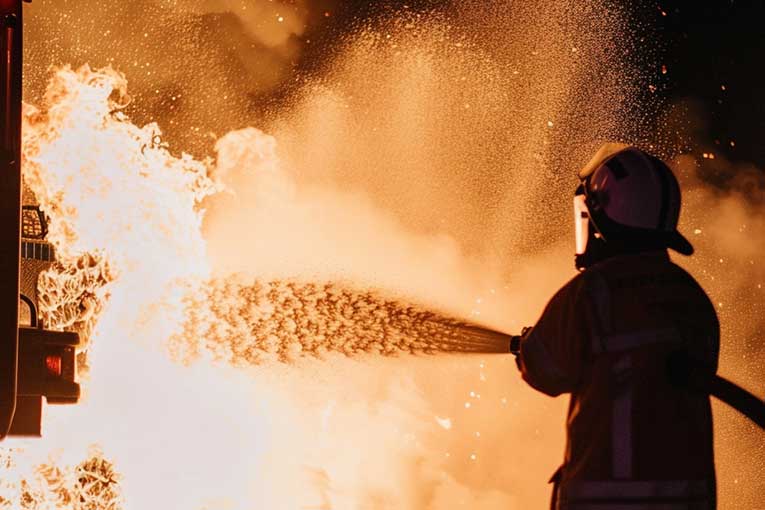
what is firefighting foam

Firefighting foam is a specialised firefighting agent used for fire suppression, particularly those involving flammable liquids. 

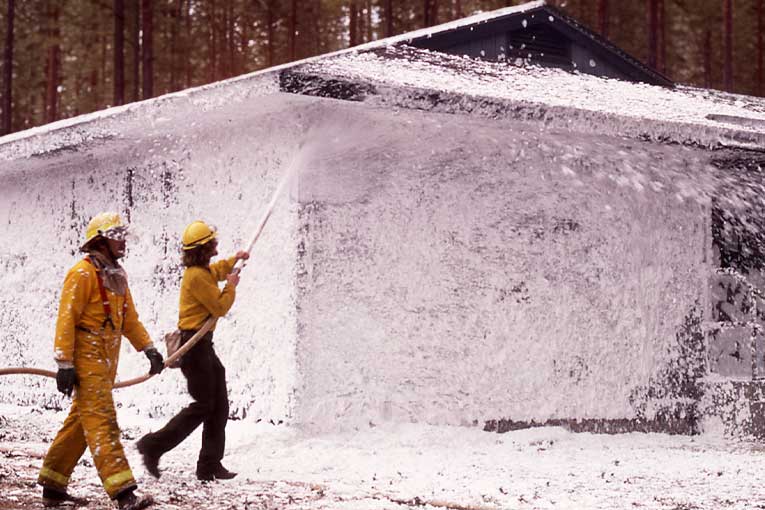
It is a stable mass of small bubbles with a lower density than oil, gasoline, or water.

The foam is designed to cool the flames and prevent oxygen from reaching the fuel, thus extinguishing the fire. 

Firefighting foam is effective because it not only smothers the fire but also seals the fuel vapours, preventing re-ignition.

Firefighting foam comes in different classes, each formulated for specific types of fires. 

Firefighting foam is typically applied using specialised equipment such as foam generators, foam cannons, and foam nozzles. 

It is an essential tool for firefighters and is widely used in industrial, commercial, and military firefighting operations.

Classes of Firefighting Foam

firefighting foam classes

Class A

What is Class A Firefighting Foam Used For?

Class A firefighting foam is specifically formulated to combat Class A fires, which involve solid materials such as wood, paper, and textiles.

It is commonly used in structural firefighting, wildland firefighting, and in situations where water alone may not be effective in extinguishing the fire.

What is Class A Firefighting Foam Made of?

Class A firefighting foam is typically made from a mixture of surfactants, wetting agents, and stabilisers, which reduce the surface tension of water and allow it to penetrate deep into porous materials.

The foam is mixed with water to create a solution that can be applied using firefighting equipment such as foam nozzles and foam cannons.

Examples of Class A Firefighting Foam

Protein-based Foam 

Made from natural proteins such as animal or vegetable proteins. 

Protein-based foams are highly effective for penetrating deep-seated fires and are commonly used in structural firefighting.

Synthetic-based Foam

Made from synthetic materials such as synthetic surfactants and stabilisers. 

Synthetic-based foams are designed to produce a thick, stable foam blanket that can quickly extinguish fires and prevent re-ignition.

Film-forming foam (FFFP)

A combination of Class A and Class B foam, FFFP foam forms a thin film on the surface of the fuel, preventing oxygen from reaching the fire and extinguishing it more quickly.

Class B

What is Class B Firefighting Foam Used For?

Class B firefighting foam is specifically formulated to combat Class B fires, which involve flammable liquids such as gasoline, oil, and alcohol.

It is commonly used in industrial, commercial, and military firefighting operations, as well as in situations where water alone may not be effective in extinguishing the fire.

What is Class B Firefighting Foam Made of?

Like Class A firefighting foam, Class B firefighting foam is typically made from a mixture of surfactants, wetting agents, and stabilisers and allows it to form a blanket over the fuel, preventing oxygen from reaching the fire.

The foam is mixed with water to create a solution that can be applied using firefighting equipment such as foam nozzles and foam cannons.

Examples of Class B Firefighting Foam

Aqueous film-forming foam (AFFF) 

AFFF foam forms a thin film on the surface of the fuel, preventing oxygen from reaching the fire and extinguishing it more quickly. 

It is one of the most common types of Class B firefighting foam and is widely used in industrial and commercial firefighting operations.

Alcohol-resistant aqueous film-forming foam (AR-AFFF)

AR-AFFF foam is specifically designed to combat fires involving alcohol-based fuels such as ethanol and methanol. 

It forms a thick, stable foam blanket that can quickly extinguish the fire and prevent re-ignition.

Fluoroprotein foam

Fluoroprotein foam is a protein-based foam that contains fluorinated surfactants, which make it more effective for extinguishing fires involving hydrocarbon fuels. 

It is commonly used in aviation firefighting and in situations where Class B fires are likely to occur.

What is Firefighting Foam Expansion?

firefighting foam expansion
Source: Wikpedia

Firefighting foam expansion refers to the increase in volume of foam solution when it is discharged from a nozzle.

How Does Foam Expansion Work?

When foam is discharged from a nozzle, it expands to create a foam blanket that covers the surface of the fuel.

The expansion process is caused by the introduction of air into the foam solution as it is discharged from the nozzle.

Why is Foam Expansion Important?

Foam expansion is an important factor in firefighting because it determines the amount of foam solution required to effectively suppress the fire.

Proper expansion ensures that the foam blanket is thick enough to smother the fire and prevent re-ignition, while minimising the amount of water and foam concentrate used.

Factors Affecting Foam Expansion

Expansion ratios vary depending on factors such as the type of foam, the equipment used, and the application method.

Expansion ratios can range from 2:1 to 20:1 or higher.

Firefighters must be trained to calculate expansion ratios and adjust foam application rates accordingly to ensure effective fire suppression.

What are the Advantages to Using Firefighting Foam?

firefighting foam advantages

Firefighting foam is a highly effective tool for suppressing fires, especially those involving flammable liquids. 

Here are some key advantages of using firefighting foam:

Rapid Fire Suppression

Firefighting foam can quickly extinguish fires by forming a thick blanket over the fuel, smothering the flames and preventing re-ignition. 

This rapid suppression helps to minimise damage and reduce the risk of injury or loss of life.

Versatility

Firefighting foam can be used to combat a wide range of fires. 

This versatility makes it a valuable tool for firefighters in various situations, from structural fires to industrial incidents.

Reduced Water Usage

Foam has a lower density than water, which means that less water is required to create an effective firefighting solution. 

This reduced water usage helps to minimise water damage and runoff, making foam a more environmentally friendly option compared to water alone.

Increased Visibility

Foam has a higher visibility than water, which allows firefighters to see where the foam has been applied and ensure that the fire is completely extinguished. 

This increased visibility makes foam a more effective firefighting agent, especially in low-light conditions.

Long Lasting

Firefighting foam can create a long-lasting barrier over the fuel, preventing re-ignition and reducing the need for continuous application. 

This long-lasting effectiveness helps to ensure that the fire remains extinguished and does not reignite.

Cooling Effect

Foam has a cooling effect on the fire, reducing the temperature of the fuel and helping to prevent re-ignition. 

This cooling effect helps to minimise damage to surrounding structures and equipment, making foam an effective tool for protecting property and assets.

What are the Disadvantages to Using Firefighting Foam?

firefighting foam disadvantages

While firefighting foam is an effective tool for suppressing fires, it also has some disadvantages that need to be considered:

Environmental Impact

Some types of firefighting foam contain chemicals that can be harmful to the environment and aquatic life. 

When foam is discharged into waterways, it can contaminate the water and harm marine ecosystems.

However, there has been a large shift in recent years into the use of fluorine free foam, minimising the risk to the environment.

Health Concerns

Firefighting foam can contain toxic chemicals that can pose health risks to firefighters and other individuals exposed to the foam. 

Prolonged exposure to foam can lead to respiratory problems, skin irritation, and other health issues.

Cleanup and Disposal

Firefighting foam can be difficult and expensive to clean up and dispose of properly. 

Foam residue left behind after a fire can contaminate soil and water sources, requiring extensive cleanup efforts.

Cost

Firefighting foam can be more expensive than other firefighting agents such as water or dry chemical agents. 

The cost of purchasing and maintaining foam equipment, as well as the cost of foam concentrate, can add up over time.

Training and Equipment

Using firefighting foam requires specialised training and equipment. 

Firefighters must be trained in the proper use of foam equipment and techniques to ensure effective fire suppression. 

Additionally, foam equipment such as foam generators and foam nozzles can be expensive to purchase and maintain.

What are the Alternatives to Using Firefighting Foam?

firefighting foam alternatives

While firefighting foam is a highly effective tool for suppressing fires, there are some alternatives that may be more suitable in certain situations:

Water

Water is the most common and widely used firefighting agent. 

It is effective for extinguishing Class A fires involving solid materials such as wood, paper, and textiles. 

Water can also be used in combination with foam for Class B fires involving flammable liquids.

Dry Chemical Agents

Dry chemical agents such as ABC powder and Purple-K powder are effective for extinguishing Class A, B, and C fires. 

They work by interrupting the chemical reaction that sustains the fire, smothering the flames, and preventing re-ignition.

Carbon Dioxide (CO2)

Carbon dioxide is a clean agent that is effective for extinguishing Class B and C fires. 

It works by displacing oxygen, smothering the flames, and preventing re-ignition. 

Carbon dioxide is non-conductive and leaves no residue, making it suitable for use in areas with electrical equipment.

Foam-Water Sprinkler Systems 

Foam-water sprinkler systems combine water with foam concentrate to create a foam blanket that covers the fuel, preventing oxygen from reaching the fire. 

These systems are effective for extinguishing Class A and B fires and are commonly used in industrial and commercial settings.

Fire Blankets

Fire blankets are made of fire-resistant materials and are used to smother small fires or wrap around a person whose clothing is on fire. 

They are effective for extinguishing Class A and B fires and are commonly used in kitchens, laboratories, and welding areas.

Conclusion

Firefighting foam is a versatile tool that plays a crucial role in fire suppression. 

Understanding the different classes of foam and their applications is essential for effective firefighting.

While foam offers numerous advantages, it’s important to weigh these benefits against potential concerns. 

Choosing the right firefighting agent depends on various factors such as the type of fire, the environment, and the availability of resources.

Ultimately, whether firefighting foam is the best choice will depend on the specific circumstances of each fire incident. 

By carefully considering the advantages and disadvantages of foam, firefighters can make informed decisions that prioritise both effective fire suppression and environmental safety.