IWMA releases programme for 23rd International Water Mist Conference in Antwerp

Conference details announced by IWMA

The International Water Mist Association (IWMA) has released the programme for the 23rd International Water Mist Conference, to be held in Antwerp, Belgium, on 18th and 19th September 2024.

The conference will take place at the Radisson Blu Astrid Hotel.

The event will start with the IWMA annual Member Meeting on 17th September.

Registration for the conference begins at 8:15 AM on the 18th, followed by an opening address by Are Brandt, IWMA President, and a welcome note from Prof. Bart Merci of Ghent University, Belgium.

Sessions and presentations

The conference will feature multiple sessions focusing on various aspects of water mist fire suppression systems.

Key presentations include the “IWMA Position Paper on CFD and Water Mist Firefighting” by Max Lakkonen from IFAB, Germany, and “The Impact of Water Mist on Combustion Products” by Kemal Sarp Arsava from RISE, Norway.

The first day will also include discussions on tunnel safety, car park fire safety, and a panel discussion on the EN 14972 standard.

Day two highlights

On the second day, the conference will continue with sessions covering topics such as numerical modelling of water spray impingement cooling and the effectiveness of water mist systems in fire protection.

A significant part of the day will be dedicated to discussing lithium-ion battery fires and their management.

The day will end with a closing speech and a light lunch, followed by a social visit to the Rubens House and a self-payer dinner at the Bourla Restaurant.

Registration and additional information

Attendees can register for the conference online through the IWMA website.

The conference fees vary for members and non-members, with discounts available for early payments before 15th August.

Special rates are available for students, with five free tickets offered on a first-come, first-served basis.

Participants are responsible for their own accommodation, but IWMA has arranged special rates at the Radisson Blu Astrid Hotel.

For more details, including the full programme and registration information, visit the IWMA conference webpage.

IWMA releases programme for 23rd International Water Mist Conference in Antwerp: Summary

The International Water Mist Association (IWMA) has announced the programme for the 23rd International Water Mist Conference, scheduled for 18th and 19th September 2024 in Antwerp, Belgium.

The event will include various sessions on water mist fire suppression systems, featuring experts from around the world.

Key topics include the effectiveness of water mist in tunnel and car park safety, numerical modelling, and lithium-ion battery fires.

Registration is open on the IWMA website, with early bird discounts available until 15th August.

The conference will also offer social activities, including a visit to the Rubens House.

What Extinguisher Should Be Used for Electrical Fires?

Fires can start unexpectedly and spread quickly. 

Knowing how to respond is essential. 

One common type of fire is an electrical fire. 

These fires involve electrical equipment and wiring. 

Knowing what extinguisher should be used for an electrical fire can prevent injuries and save property. 

This article will guide you on which extinguisher to use for electrical fires, how to use it, and how to handle electrical fire emergencies.

What Types of Fire Extinguishers are There?

fire extinguisher types

There are 5 main types of fire extinguishers, each used for different classes of fire

Water

Water fire extinguishers are designed for Class A fires, which involve ordinary combustibles like wood, paper, and textiles. 

They work by cooling the burning material, which helps to extinguish the fire. 

Some water extinguishers are not suitable for electrical fires or fires involving flammable liquids and gases, as water can spread the fire or cause electric shock.

Foam

Foam fire extinguishers are suitable for Class A and Class B fires. 

They work by forming a blanket over the burning material, cutting off the fire’s oxygen supply and cooling the material. 

Foam extinguishers are effective on flammable liquids like petrol and oil, but they should not be used on electrical fires, as foam can conduct electricity and cause hazards.

Dry Powder

Dry powder fire extinguishers are versatile and can be used on Class A, B, and C fires. 

They contain a powder that smothers the fire, cutting off its oxygen supply. 

These extinguishers are suitable for flammable liquids, gases, and electrical fires. 

However, they leave a residue that can damage sensitive equipment and create a mess.

CO2

Carbon dioxide (CO2) fire extinguishers are primarily used for Class B and electrical fires. 

They work by displacing the oxygen around the fire and cooling it. CO2 extinguishers are ideal for electrical fires because they leave no residue and do not damage electrical equipment. 

However, they are not effective on Class A fires and should not be used in confined spaces due to the risk of asphyxiation.

Wet Chemical

Wet chemical fire extinguishers are specifically designed for Class F fires, which involve cooking oils and fats. 

They contain a solution that reacts with the burning oil to form a thick, soapy layer on the surface, cutting off the oxygen supply and cooling the oil. 

Wet chemical extinguishers are highly effective in commercial kitchens but are not suitable for other types of fires.

What Extinguisher Should Be Used for Electrical Fires?

what extinguisher used for electrical fire image
Source: Amazon

For electrical fires, which are one of the most dangerous types of fire, the safest and most effective fire extinguishers are Dry Powder and CO2 (carbon dioxide) extinguishers.

Dry Powder Extinguishers

Dry Powder extinguishers are specifically designed for electrical fires. 

They contain non-conductive agents like dry chemicals, such as monoammonium phosphate or sodium bicarbonate

These agents interrupt the chemical reaction of the fire and do not conduct electricity, making them safe for use on electrical equipment.

CO2 Extinguishers

CO2 extinguishers are also suitable for electrical fires. 

Carbon dioxide is a non-conductive gas that displaces oxygen around the fire, suffocating it. 

Additionally, CO2 extinguishers cool the equipment, helping to prevent re-ignition. 

Since CO2 leaves no residue, it is ideal for use on sensitive electronic devices and machinery.

Certain Water-Based Fire Extinguishers

An approved water-based extinguisher or one that has passed a di-electrical test is safe to use on live electrical equipment up to 1000V, provided you maintain a distance of at least 1 meter.

This safety standard is recognized internationally and is outlined in the BS EN 3-7 product standard, ensuring its reliability and effectiveness.

What are the Dangers of Using the Wrong Fire Extinguisher Type on an Electrical Fire?

electrical fire wrong extinguisher dangers

Using the wrong type of fire extinguisher on an electrical fire can pose several serious dangers.

Electric Shock

Water-based and foam extinguishers can conduct electricity. 

Using these on an electrical fire can result in electric shock to the person operating the extinguisher. 

This can lead to severe injury or even death.

Fire Spread

Some water and foam extinguishers are ineffective on electrical fires and can cause the fire to spread. 

Non-dielectric tested water extinguishers can cause the fire to spread to other areas by dripping into electrical systems and creating short circuits. 

Foam can have a similar effect by spreading conductive materials.

Equipment Damage

Using incorrect extinguishing agents can damage electrical equipment irreparably. 

For instance, dry powder extinguishers leave a residue that can harm sensitive electronics. 

This residue is difficult to clean and can cause long-term damage.

Ineffective Fire Suppression

Using an inappropriate extinguisher may provide ineffective fire suppression, leaving it to grow and become more dangerous. 

This inefficacy wastes critical time during an emergency, allowing the fire to spread and cause more damage.

Toxic Fumes

Using the wrong extinguisher can produce toxic fumes, especially if the extinguishing agent reacts with the burning materials. 

These fumes can be harmful if inhaled and pose additional health risks.

How to Use a Fire Extinguisher 

how to use a fire extinguisher

Knowing how to use a fire extinguisher properly is crucial for effectively combating small fires. 

The PASS technique is a simple method to remember:

Pull the Pin

Pull the pin at the top of the extinguisher. 

This action breaks the tamper seal and allows you to discharge the extinguisher.

Aim at the Base

Aim the nozzle or hose at the base of the fire. 

Focusing on the base, where the fuel source is, helps to extinguish the flames more effectively.

Squeeze the Handle

Squeeze the handle or lever slowly and evenly. 

This releases the extinguishing agent. 

Make sure to control the discharge by applying steady pressure.

Sweep Side to Side

Sweep the nozzle or hose from side to side at the base of the fire. 

Continue this motion until the fire is completely out. 

Be thorough and ensure the fire doesn’t reignite.

Safety Precautions

  • Stay Alert: Always keep an eye on the fire, even after it seems to be extinguished.
  • Maintain Distance: Stand at a safe distance from the fire, typically about 8-10 feet, and move closer as the fire diminishes.
  • Know When to Evacuate: If the fire becomes uncontrollable or spreads rapidly, evacuate immediately and call emergency services.

What are the Main Causes of Electrical Fires?

electrical fire causes

Electrical fires are a common and dangerous type of household fire. 

Understanding their causes can help in preventing them.

Faulty Wiring

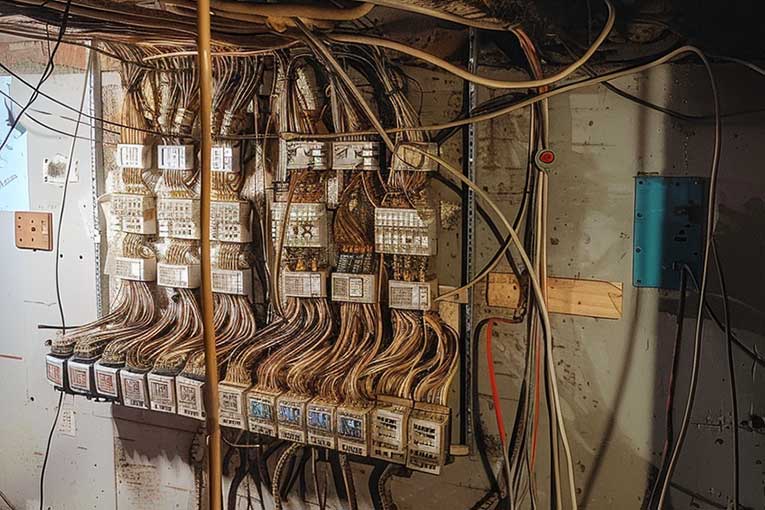
Old, damaged, or improperly installed wiring is a leading cause of electrical fires. 

Over time, wires can degrade, leading to exposed or frayed wires that can spark and ignite surrounding materials. 

Additionally, amateur electrical work can create unsafe conditions that may result in fires.

Overloaded Circuits

Plugging too many devices into a single outlet or power strip can overload circuits. 

This overload causes excessive heat, which can melt the wiring and start a fire. 

Using high-wattage appliances on circuits not designed to handle them is particularly risky.

Faulty Appliances

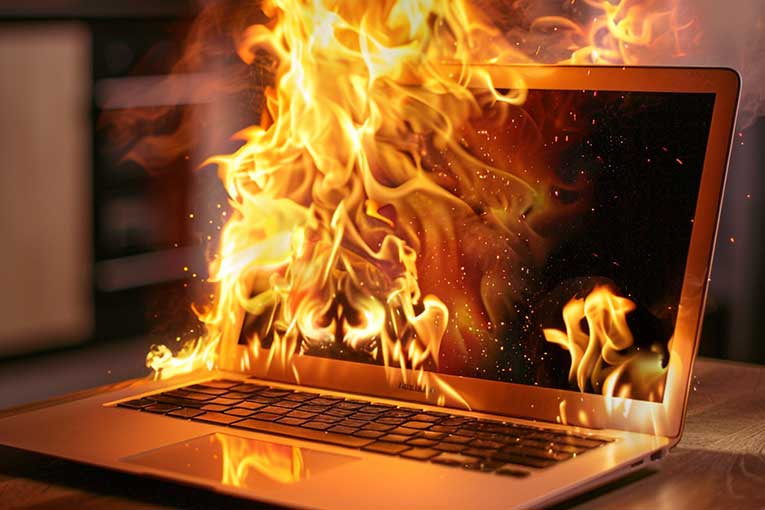
Defective or poorly maintained appliances can also spark electrical fires. 

Appliances with damaged cords or internal electrical faults can overheat and ignite. 

Regular maintenance and prompt repairs are essential to keep appliances safe.

Extension Cords

Improper use of extension cords is another common cause. 

Extension cords can overheat if used to power high-wattage appliances or if they are used for long periods. 

Running extension cords under carpets or through doorways can damage them, increasing the fire risk.

Space Heaters

Space heaters are often used to provide additional warmth but can be dangerous if not used correctly. 

Placing them too close to flammable materials or leaving them unattended can cause fires. 

Heaters with faulty thermostats or those left on for too long are particularly hazardous.

Light Fixtures

Using incorrect bulb wattage in light fixtures can lead to overheating. 

Exceeding the recommended wattage can cause the light fixture to overheat, melt, and potentially ignite surrounding materials. 

Ensure all bulbs match the recommended wattage for your fixtures.

Electrical Outlets

Loose or worn-out electrical outlets can cause arcing, where electricity jumps from one connection to another. 

This arcing can generate heat and ignite nearby materials. 

Ensuring outlets are securely fitted and in good condition helps prevent this risk.

What to do if There is an Electrical Fire?

electrical fire what to do

If there is an electrical fire, use these steps to stay as safe as possible: 

Stay Calm and Assess the Situation

If an electrical fire starts, staying calm is crucial. 

Panicking can lead to mistakes and make the situation worse. 

Quickly assess the severity of the fire. If it is small and manageable, you might be able to extinguish it safely.

Disconnect Power

If it is safe to do so, disconnect the power source to the electrical device causing the fire. 

This can often be done by unplugging the device or turning off the power at the circuit breaker. 

Cutting off the power source can help stop the fire from spreading.

Use the Right Extinguisher

Use a Dry Powder or CO2 fire extinguisher, which is designed for electrical fires. 

Remember to use the PASS technique: Pull the pin, Aim at the base of the fire, Squeeze the handle, and Sweep from side to side.

Evacuate if Necessary

If the fire is too large or out of control, evacuate immediately. 

Do not try to extinguish a fire that is spreading rapidly or producing a lot of smoke. 

Make sure everyone in the building is aware of the fire and evacuates safely. 

Close doors behind you as you leave to help contain the fire.

Call Emergency Services

Once you are safely outside, call the emergency services number. 

Provide the dispatcher with your location and details about the fire. 

Do not assume someone else has already called. 

Emergency responders have the equipment and expertise to handle electrical fires safely.

Do Not Use Water

Never use water to extinguish an electrical fire. 

Water conducts electricity, which can cause electric shock and make the fire worse. 

It is essential to use only the appropriate fire extinguishers.

Wait for Professionals

Wait for the fire department to handle the situation. 

They have the necessary training and equipment to extinguish electrical fires safely and prevent them from reigniting.

Conclusion

Electrical fires can be dangerous, but knowing how to prevent and respond to them can save lives and property. 

Use CO2 extinguishers for electrical fires and follow the PASS technique for effective use. 

Regularly inspect your home for potential fire hazards, maintain electrical equipment, and never use water on an electrical fire. 

By staying informed and prepared, you can protect your home and loved ones from the dangers of electrical fires.

Once is enough for a foam transition

David Pronk and Kees Kappetijn of Kappetijn Safety Specialists discuss the critical steps and guidelines in transitioning to fluorine-free firefighting foams

For decades, fluorinated extinguishing foam has been used in firefighting.

At high hazard industry, large logistics buildings and operators of special infrastructure, large quantities of extinguishing foam are stored in stationary extinguishing systems and fifi-vehicles.

In government and private fire brigades, the foam is mainly contained in foam fire-fighting vehicles and fire engines.

For several years, it has been clear that the poly- and perfluoroalkyl substances (PFAS) in this extinguishing foam have harmful long-term effects on humans and the environment.

Its use is now finite.

It is therefore right that industrial companies, infra-authorities and firefighting organisations are carrying out a foam transition: replacing the current, fluorine-containing firefighting foams with new, fluorine-free variants.

Contamination of new fluorine -free foam with old residues must be prevented. Transition therefore also requires high-quality cleaning.

The quality of this can now be guaranteed through certification, based on an Assessment Guideline.

Problem statement

For several reasons, it is important that a foam transition is carried out carefully. First, because PFAS must be prevented from entering the environment and humans.

PFAS biodegrade little or not at all and are therefore difficult to remove. The substances spread quickly and easily and accumulate in plants, animals and humans.

PFAS are toxic, so accumulation can be harmful.

Second, a careful foam transition is important because there will be a European total ban on the sale and use of fluorinated fire-fighting foams.

The European Chemicals Agency (ECHA) sets a limit of 1,000 ppb1 of PFAS in fire-fighting foams (and for some specific PFAS the limit is stricter).

Thus, the use of fluorinated fire-fighting foams will soon be prohibited. Suppliers already communicated that they will stop providing old foams. The competent authority will oversee a careful foam transition

A careful foam transition has a number of challenges.

Fluorinated fire-fighting foam cannot be replaced by fluorine-free fire-fighting foam on any given day.

In many cases, the fluorinated fire-fighting foam has been stored in a foam tank for many years.

As a result, the foam tank, and perhaps other parts of the extinguishing system, is contaminated with PFAS.

And PFAS accumulate not only in plants, animals and humans, but also in extinguishing systems. And are difficult to remove.

When fluorine-free extinguishing foam is stored in the extinguishing system, “old” PFAS are released from the extinguishing system over time.

The PFAS mix with the new extinguishing foam.

The result is that the fluorine-free firefighting foam is no longer fluorine-free and should no longer be used. The foam transition would then have to be carried out again.

Proper cleaning by a professional service provider limits the chances of such re-contamination.

Cleaning

You only want to do the foam transition once. Besides selecting and buying a new foam concentrate, appropriate to the scenarios and substances, parts of the extinguishing system may need to be modified or replaced.

The old foam must be disposed of and changes must be incorporated into documentation such as company fire reports, operational plans and fire analyses.

And all this in coordination with the competent authority, the insurance company and the companies fire chief.

Therefore, the foam transition must be carried out carefully and prevent residual PFAS from contaminating new, fluorine-free extinguishing foam.

This is possible, by cleaning the extinguishing system. With an adequate cleaning process, residual PFAS can be removed.

The market has developed several cleaning processes, offered by different companies.

Some rinse with (heated) water, others with water and a cleaning agent.

As a customer, you want to know which cleaning process works. And whether the process is safe, and clean.

You don’t want to use a process that leads to PFAS lying around, resulting in environmental damage or health complaints.

That is why you need a guarantee of quality. In a quality system, quality is demonstrated with a certificate. So there is a need for a certificate that works in a free market.

Assessment guideline

A certificate for cleaning processes of PFAS-containing extinguishing systems did not yet exist. But this has been changed.

A project group consisting of cleaning organisations, the chemical industry, fire brigade, environmental department, laboratory and waste processor sat down together to develop a quality framework for cleaning processes.

In this quality framework, careful cleaning is completed with a certificate.

The quality framework is also known as an Assessment Guideline or Branche Guideline (In Dutch: BRL).

A BRL is developed by the market, accepted by the competent authority and assessed by an independent certification organisation.

For the present BRL, KIWA is the organisation that supervises the organisations that perform their work according to the BRL.

The BRL sets frameworks, but does not fill in the cleaning process itself.

The market itself can determine how rinsing and cleaning is done, how often rinsing takes place and what agents are used. So the cleaner determines the cleaning process.

The BRL provides frameworks for the cleaning process so that the objective can be achieved: a safe, risk-resistant, cost-effective and high-quality cleaning process.

Kappetijn Safety Specialists started this process, together with Kenbri Fire Fighting and Arcadis when they repeatedly were asked by stakeholders in the market how to guarantee the quality of a cleaning project.

Authorities were looking for an independent tool to trust, Kenbri and Arcadis were looking for an institute that could judge the quality standards they provide.

KSS brought them to the table, with other stakeholders and coordinated the process towards an independent Assessment Guideline.

High-quality cleaning

A solid cleaning process does not just include guidelines for cleaning.

The entire cleaning process as worked out in the BRL consists of four parts. Frameworks are imposed on each of the parts.

They are:

1. Scope and starting details (what must be cleaned);

2. Cleaning and execution (how is a cleaning-process professionally executed);

3. Sampling, monitoring and analysis (how can we monitor the cleaning to the required level);

4. Waste materials and disposal (how do we professionally dispose of the waste and residue).

First, frameworks are set for scope and start data. It is important to determine which parts of an extinguishing system will be cleaned.

This can be the whole extinguishing system, but it can also be chosen to clean only the tank, for example when the extinguishing system has (almost) never been used and the foam has not left the tank.

The objective must also be determined: what concentration values are used and which laws and regulations must be complied with?

Secondly, frameworks are set for the cleaning process.

This mainly concerns the quality systems of the cleaner and environmental and health regulations, such as the use of personal protective equipment.

The design of the cleaning process itself is not standardised; different processes are possible.

Provider must work with a quality management system, but which one is mandatory.

Customers can decide for themselves whether to use a high-quality, lengthy cleaning process, or a faster and perhaps more efficient process.

But in all cases, it must be safe and effective. Thirdly, frameworks are set for sampling and analysis.

To determine whether, and demonstrate that, the limit or concentration values of PFAS have been reached, samples must be taken.

Environmental and health regulations have also been drawn up for sampling, knowledge requirements for the operating operator and guidance for packaging, shipping and analysis of the samples.

Finally, frameworks are set for the storage, disposal, treatment and registration of waste.

The aim of this issue is for the cleaner to be able to demonstrate that waste materials do not re-enter the environment, but are stored, transported and processed by authorised companies.

To demonstrate this, records of waste should be kept. This is important because waste-processing capacity is very limited.

There are only a few processors, not one in the Netherlands. Waste materials, such as rinse water, will always need to be stored for some time before it can be transported and processed.

Cleaning companies should handle this carefully and ensure that these activities are covered in the company’s license.

Safety, quality and cost efficiency

If a cleaning company works within the set frameworks, the company can be certified by an independent certification organisation after an inspection. This is followed by a new inspection every year.

In this way, cleaners can demonstrate that they have set up a safe and effective cleaning process.

The competent authorities, such as the Environment & Transport Inspectorate and the regional Environmental authorities, can refer to certified cleaners when cleaning is included in permits or decisions.

The result is that companies have certainty that PFAS from extinguishing systems has been removed, disposed of and processed responsibly.

And that the new fluorine-free extinguishing foam is not contaminated with PFAS, and thus remains fluorine-free.

As a result, the foam transition is only needed once and the transition is carried out as (cost-)efficiently as possible.

Finally, the BRL guarantees that PFAS is removed from the environment in a clean way, protecting people and the environment.

About the authors

David Pronk and Kees Kappetijn are consultants at Kappetijn Safety Specialists.

The firm consults public and industrial fire organisations, Seveso companies, governments and authorities on business continuity, industrial safety, incident response and crisis management.

This article was originally published in the August 2024 issue of International Fire & Safety Journal. To read your FREE digital copy, click here.

New technology to tackle wildfires introduced by Bath-based company

New technology for wildfire detection and suppression

Bath-based fire detection company Optect has partnered with Sonic Fire Tech to develop a new wildfire detection and suppression technology, as reported by SETsquared.

This collaboration has led them to the final 30 in the Autonomous Wildfire Response category of the $11m XPRIZE WILDFIRE competition.

The competition challenges teams to autonomously detect and suppress high-risk fires in a 1,000km² area within 10 minutes.

Optect’s solution employs drones for spotting fires and flying robot taxis that deploy fire-extinguishing robo-dogs.

Sonic Fire Tech’s infrasound wildfire suppression technology, demonstrated to extinguish high-temperature wood fires within seconds, is central to this approach.

Geoff Bruder, an ex-NASA engineer and developer of the method, highlighted the technology’s potential: “Our technology can continuously suppress fires for as long as battery power is available without any refuelling or resupply.”

Advancements in flame detection technology

Optect has also recently launched a new flame detection product with a range 5-10 times greater than existing devices.

This product aims to significantly reduce fire risks in both wildfire and industrial settings.

Matthias Jaeger, Chief Technical Officer of Optect, commented on their progress: “The challenge, as with many XPRIZE competitions, is set close to the limit of possible, and in response, we’re pushing technology to the limits too.”

Optect’s advancements have been supported by SETsquared, enabling the company to grow its customer base.

The team is preparing for a live demonstration of their technology in a real-world environment in 2025.

Deploying advanced detection and suppression systems

The Optect XPRIZE Wildfire team is developing comprehensive detection and suppression systems.

Their approach includes airborne loitering detection UAVs equipped with ultra-long-range IR3 sensors, visual, and thermal cameras.

These UAVs will enhance detection speed during critical wildfire conditions.

Ground-based sensors, including long-range IR3 flame sensors and visual cameras, will complement the airborne system, ensuring rapid and reliable detection.

Upon detecting a wildfire, autonomous VTOL UAVs will transport ground robots to the fire site.

These robots, equipped with Sonic Fire Tech’s suppression technology, will navigate complex terrains to target and extinguish fires with precision.

Challenges and future prospects

The combination of advanced detection and suppression technologies aims to address the increasing severity of wildfires, which contribute to up to 20% of global carbon emissions.

Optect’s collaboration with external companies under the team name Optect – Optical Detection is crucial for tackling this issue.

As the severity of wildfires increases, deploying innovative technology becomes essential.

Optect and Sonic Fire Tech’s partnership represents a significant step towards improving wildfire response.

The team remains optimistic about their progress and looks forward to the final round of the XPRIZE competition.

Wildfire detection tech competes in global challenge: Summary

Optect, a Bath-based fire detection company, has partnered with Sonic Fire Tech to develop an advanced wildfire detection and suppression solution.

This technology has advanced to the final 30 in the $11m XPRIZE WILDFIRE competition.

The system includes drones for fire detection and flying robot taxis deploying fire-extinguishing robo-dogs.

Sonic Fire Tech’s infrasound suppression method, developed by ex-NASA engineer Geoff Bruder, can extinguish fires without the need for resupply.

Optect has also introduced a new flame detection product with a significantly increased range.

The team, supported by SETsquared, is preparing for a live demonstration in 2025, aiming to address the growing severity of wildfires globally.

Saudi Arabia stationary firefighting pumps market set for robust expansion

Stationary firefighting pumps market growth in Saudi Arabia

The Saudi Arabia Stationary Fire Fighting Pumps Market is valued at US$ 0.22 billion in 2023 and is projected to grow at a compound annual growth rate (CAGR) of 7.76% from 2023 to 2032, as reported by Research and Markets.

Stationary fire fighting pumps are essential for building safety systems, ensuring a reliable water supply for fire suppression.

These pumps are permanently installed in various properties to provide immediate response during a fire, operating as part of an integrated fire protection system.

Their effectiveness relies on delivering adequate water flow and pressure to meet fire suppression demands.

Manufacturers offer different models to suit various building sizes and compliance standards.

Selecting the right pump is crucial, considering factors such as flow rate, pump head, power source, and compatibility with existing infrastructure.

With increasingly stringent safety regulations, the importance and sophistication of these pumps continue to grow, making them indispensable in modern fire safety management.

Urbanization and infrastructure development

Riyadh, Saudi Arabia’s capital, is undergoing rapid urbanization, with extensive construction projects for residential, commercial, and government infrastructure.

This development requires strict adherence to fire safety regulations, including the installation of fire fighting pumps.

The swift urbanization and construction in Riyadh have significantly increased the demand for modern fire safety systems.

Saudi Arabia’s Vision 2030, focusing on economic diversification and modernization, prioritizes infrastructure development and fire safety measures.

This initiative is expected to boost the demand for fire pumps in Riyadh.

Although cities like Jeddah, Dammam, and Makkah are also developing, their growth is slower, impacting their demand for fire fighting pumps.

Advanced technologies like IoT, cloud computing, and AI have enhanced fire detection and firefighting systems, positively influencing the market for stationary fire fighting pumps across these regions.

Increasing wildfire incidents and industrial growth

Saudi Arabia has seen a notable rise in wildfire incidents, highlighting the need for improved fire suppression measures.

The World Health Organization reported 825 fire-related deaths in 2020, about 0.62% of total deaths.

The extended fire season, spanning nearly the entire year, exacerbates the situation, with 820 high-confidence VIIRS fire alerts reported between May 2023 and April 2024.

These incidents, driven by extreme climate conditions, underscore the urgency for enhanced firefighting infrastructure.

Fire-fighting pumps are vital for quick response and containment efforts, helping to mitigate damage and minimize losses.

The growing severity and frequency of wildfires have led Saudi authorities to invest heavily in modern firefighting equipment and technologies, fostering innovation within the market.

Saudi Arabia’s rapid industrialization has also increased the demand for fire-fighting pumps.

These systems are crucial for safeguarding industrial infrastructure, ensuring worker safety, and reducing fire-related losses, particularly in the high-risk oil and gas sector.

Effective fire suppression systems, including fire-fighting pumps, are essential for maintaining operational continuity by reducing fire emergencies’ frequency and impact.

Regulatory landscape and competitive market

Stringent fire safety regulations mandated by the Saudi Arabian government require reliable fire fighting systems in various facilities to enhance safety standards.

Partnerships, such as UL Solutions with GCC Labs, aim to elevate fire safety standards across the Middle East, reinforcing the commitment to international safety standards.

Companies are motivated to invest in high-quality fire-fighting pumps to meet safety requirements and avoid penalties and legal liabilities.

Safety regulations in Saudi Arabian oil refineries align with international standards, ensuring a high level of protection.

The competitive landscape of the stationary fire fighting pumps market includes prominent entities like The Rosenbauer Group, Sulzer Ltd, KSB SE & Co.

KGaA, Xylem Inc., and Kirloskar Group, collectively accounting for approximately 30.15% of the market share.

The primary competitive factors include pricing, product quality, and technological innovation.

Kitchen fire in high-rise flat in Stockton contained by sprinkler system

High-rise fire incident in Stockton

Two residents of Hume House, a high-rise building in Stockton, escaped a kitchen fire over the weekend, as reported by Cleveland Fire Brigade.

The fire, which started at 2:54am on Saturday, July 27, 2024, was caused by an unattended chip pan.

Seven fire engines from Hartlepool, Middlesbrough, Saltburn, Stockton, and Thornaby were dispatched to the scene.

The occupants were evacuated and assessed by the ambulance service.

The building’s sprinkler system activated, extinguishing the fire and isolating the flat’s electrics, thereby preventing further risk and damage.

Although there was water damage to the flat, the sprinkler system effectively minimised smoke damage and the potential spread of fire.

Cleveland Fire Brigade’s swift response ensured the safety of other residents in the building.

Cleveland Fire Brigade’s advice on fire safety

Joe Flounders, Head of Protection at Cleveland Fire Brigade, emphasised the importance of using safer alternatives to chip pans.

He said: “This incident serves as a stark reminder for residents to chuck out their chip pans, which are major fire hazards, and switch to safer alternatives like air fryers.

“We are incredibly thankful to Thirteen Group for having the foresight in installing the sprinkler system which activated, extinguishing the fire and preventing it from spreading within the flat, which could have been catastrophic.”

Flounders also highlighted the benefits of sprinkler systems: “We believe that sprinklers are a highly effective, reliable and a cost-effective fire safety measure that can save lives, reduce injuries, protect our firefighters who attend incidents, provide peace of mind for our residents and reduce property damage.

“Cleveland Fire Brigade is committed to reducing risk to its communities and the installation of sprinklers by residential properties, businesses, schools and care homes will help achieve this.”

Thirteen Group’s commitment to safety

Thirteen Group, responsible for Hume House, has invested significantly in fire safety measures.

Peter Taylor, Thirteen’s head of health and safety, reiterated their commitment to resident safety: “The safety and wellbeing of our customers is our number one priority.

“Thankfully no one was injured during the incident and we’ll continue to support our customers affected.”

Taylor detailed their investment in safety: “We’ve made significant investment over recent years to ensure the highest possible safety standards are in place, with more than £2million being spent on installing extra safety measures like the sprinkler systems at Hume House, which work automatically in the event of a fire, helping to ensure that our residents feel safe and have peace of mind at all times.”

How to Prevent Fires in the Home

Preventing fires in the home is crucial for safety. 

Fires can cause injury, property damage, and even death. 

Understanding fire causes and how to prevent fires in the home can significantly reduce the risk. 

This article explains the main causes of home fires and provides practical prevention tips, as well as what to do in the event of a fire in the home. 

The Main Causes of Fires in the Home

causes of fires home

Fires in the home can have several causes, these are the 6 most common:

Electrical Equipment

Electrical equipment is a common cause of home fires. 

Faulty wiring, damaged cords, and overloaded circuits can ignite flames. 

Older homes may have outdated wiring that isn’t up to current safety standards, increasing the risk. 

Misusing electrical appliances, such as running them for too long or using them with improper outlets, can also lead to fires. 

Power strips and extension cords should be used cautiously, avoiding overloads. 

Cooking

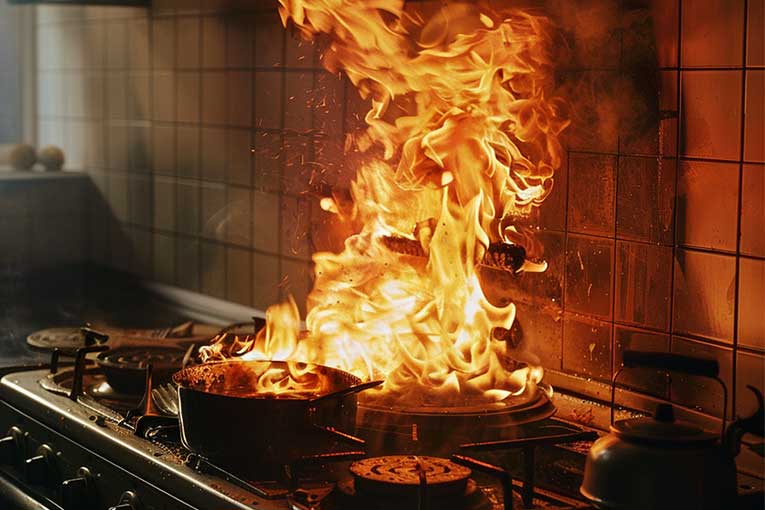
Cooking is a leading cause of home fires, often due to unattended cooking. 

Grease fires are particularly dangerous because they can spread quickly and are difficult to extinguish with water. 

Other common cooking-related fire causes include leaving flammable items near the stove, overheating cooking oil, and using faulty cooking appliances. 

Distractions in the kitchen, such as leaving the stove unattended to answer a phone call or watching TV, significantly increase the risk of a cooking fire. 

Appliances

Household appliances like dryers, washers, and refrigerators can also be fire hazards. 

Dryers, for example, can catch fire if lint builds up and obstructs airflow, causing overheating. 

Washers and refrigerators may have electrical malfunctions that can spark a fire. 

Over time, the wear and tear on appliances can lead to electrical shorts or overheating. 

Heating Equipment

Heating equipment, including space heaters, furnaces, and fireplaces, is another major cause of home fires. 

Space heaters can ignite nearby flammable materials if placed too close. 

Faulty or poorly maintained furnaces can develop issues that lead to fires. 

Fireplaces can cause fires if they are not properly cleaned or if embers escape. 

Smoking

Smoking indoors poses a significant fire risk. 

Cigarettes, cigars, and pipes can easily ignite flammable materials such as furniture, bedding, and carpets. 

Falling asleep while smoking is particularly dangerous, as the burning embers can ignite bedding or upholstery.

Candles

Candles add ambiance but also present a fire hazard. 

Unattended candles, candles placed near flammable objects, or those knocked over by pets or children can start fires. 

Even a small flame can quickly ignite nearby materials like curtains, papers, or decorations. 

How to Prevent Fires in the Home

how to prevent fires home

There are many ways to help reduce the risks of fire in the home: 

Install Smoke Alarms

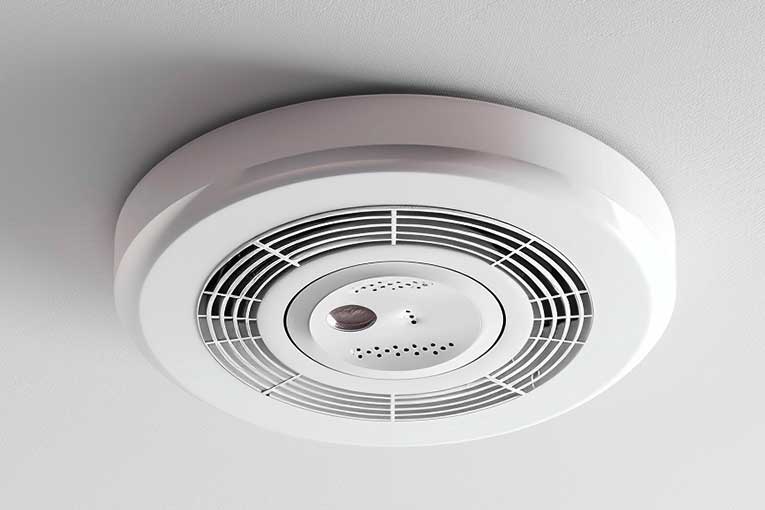
Fire detection is a necessity to staying safe in the home, so install smoke alarms on every level of your home, inside bedrooms, and outside sleeping areas. 

Smoke alarms provide early warning in case of a fire, giving you and your family more time to escape. 

Test smoke detectors monthly and replace batteries at least once a year. 

Replace the entire smoke alarm unit every ten years to ensure it functions correctly.

Maintain Electrical Equipment

To protect yourself from electrical fires, you should regularly inspect electrical cords for damage, such as fraying or exposed wires. 

Avoid overloading outlets and use surge protectors to prevent electrical fires. 

Unplug appliances when not in use and ensure that all electrical work in your home is done by a licensed electrician. 

If your home is older, consider having the wiring inspected and updated to meet current safety standards.

Practice Safe Cooking

Never leave cooking food unattended. Stay in the kitchen, especially when using high heat or cooking with oil. 

Keep flammable items like dish towels, paper towels, and pot holders away from the stove. 

Have a fire extinguisher in the kitchen and know how to use it. 

Avoid wearing loose clothing while cooking, as it can catch fire easily. 

Maintain Appliances

Clean the lint filter in your dryer after every use, and ensure the vent is clear and unobstructed. 

Keep the area around appliances free of clutter. 

Follow the manufacturer’s instructions for maintenance and repairs to prevent electrical malfunctions. 

Unplug small appliances like toasters and coffee makers when not in use.

Use Heating Equipment Safely

Keep space heaters at least three feet away from anything flammable, such as curtains, furniture, or bedding. 

Never leave space heaters unattended or use them while sleeping. 

Ensure your furnace is inspected and maintained annually by a professional. 

Use a fireplace screen to prevent embers from escaping, and only burn seasoned wood

Have your chimney cleaned regularly to prevent creosote buildup, which can cause chimney fires.

Smoke Outside

If you smoke, do so outside. 

Use deep, sturdy ashtrays and ensure cigarettes are fully extinguished before disposing of them. 

Never smoke in bed or when you are drowsy, as falling asleep with a lit cigarette is a major fire risk.

Use Candles Responsibly

Place candles in sturdy holders and keep them away from flammable items like curtains or paper. 

Never leave candles unattended, and extinguish them before leaving the room or going to sleep. 

Consider using battery-operated, flameless candles as a safer alternative.

Plan Fire Drills

Create a fire escape plan for your home and practise it with your family. 

Know two ways out of every room and establish a meeting place outside the home. 

Practise your escape plan regularly to ensure everyone knows what to do in case of a fire.

Keep Flammable Materials Away

Store flammable materials such as gasoline, paint, and solvents in proper containers and away from heat sources. 

Keep matches and lighters out of reach of children.

What to do if There is a Fire in the Home

what to do if fire

If there is a fire in the home, these are the steps you should take to stay safe: 

Stay Calm and Act Quickly

If a fire breaks out in your home, it’s essential to stay calm and act quickly. 

Panic can hinder your ability to make sound decisions and escape safely. 

Alert Everyone

Shout “Fire!” to alert everyone in the home. 

Make sure everyone knows to evacuate immediately. 

Ensure that children, the elderly, and anyone with mobility issues get help to evacuate.

Evacuate Immediately

Leave the house immediately. 

Do not stop to gather valuables or pets. 

Every second counts, and delaying your exit can be deadly. 

Follow your predetermined escape routes and avoid using elevators if you live in an apartment building.

Check Doors for Heat

Before opening any door, check it for heat by using the back of your hand. 

If the door is hot, do not open it; there may be fire on the other side. 

If it is cool, open it slowly and proceed with caution.

Crawl Low Under Smoke

Smoke and toxic gases rise during a fire. 

If you encounter smoke, get low to the ground and crawl under it to avoid inhaling dangerous fumes. 

Keep your nose and mouth covered with a cloth if possible.

Use an Alternative Exit

If your primary escape route is blocked by fire or smoke, use your alternative route. 

This might involve exiting through a window or using a fire escape ladder. 

Ensure you have a safe way to reach the ground from upper floors.

Close Doors Behind You

Close doors as you leave to help contain the fire and slow its spread. 

This can buy you more time to escape and reduce damage to your home.

Call the Emergency Services

Once you are safely outside, call the emergency services. 

Provide the dispatcher with your location and details about the fire. 

Do not assume someone else has already called. 

Wait for emergency responders at a safe distance from the fire.

Do Not Re-enter the Home

Never go back inside a burning building for any reason. 

Wait for firefighters to handle the situation. Your safety and the safety of your family come first.

Conclusion

You should now have a better understanding of how to prevent fires in the home. 

Preventing home fires requires awareness and proactive measures. 

By understanding the main causes of fires and following safety tips, you can protect your home and loved ones. 

Install smoke alarms, maintain electrical equipment, and practise safe habits in the kitchen and with heating devices. 

Create a fire escape plan and practise it regularly. 

Stay vigilant and prepared to reduce the risk of fires and keep your home safe.

Government statistics indicate “mixed but hopeful” picture of fire safety in England, says Checkfire

Checkfire comments on reduction in fire incidents

The latest government fire and rescue incident statistics for the year ending March 2024 show improvements in fire safety across England.

The data reveals a 3.6% reduction in total incidents attended by fire and rescue services (FRSs) compared to the previous year.

This decrease is largely attributed to a substantial reduction in fire incidents.

Effective fire prevention campaigns, increased community awareness, and favourable weather conditions have contributed to this improvement.

Notably, the decrease in secondary fires and outdoor primary fires marks the smallest number of fires attended since records began.

Decrease in primary fires and fatalities

Primary fires, which pose the most threats to life and property, saw a 7.2% reduction from the previous year.

This highlights the importance of fire safety education, stringent building regulations, and advanced early detection systems.

Toria Jones, head of marketing at CheckFire, commented on the statistics: “Although the slight decrease in fire-related fatalities, from 265 to 251, is a step in the right direction, each loss reminds us of the critical need for ongoing innovation in fire detection, suppression technologies, and rapid response mechanisms.”

Jones emphasized the importance of continued efforts to improve fire safety and the need for adaptive fire risk management strategies in response to changing weather patterns.

Increase in false alarms

While the statistics show positive trends in the reduction of fire incidents, they also highlight an increase in fire false alarms, particularly those caused by apparatus.

This signals an area that requires attention.

Jones noted: “By implementing enhanced maintenance protocols, improving system designs, and educating the public, we can help reduce these disruptions and ensure FRSs’ resources are used efficiently.”

Overall, the latest statistics present a mixed but hopeful picture of fire safety in England.

The decrease in fire incidents and fatalities reflects the impact of dedicated fire safety efforts and technological advancements, but challenges remain in managing false alarms and adapting to weather-related risks.

Danfoss system enhances fire safety in Samruddhi Expressway Tunnel

Deployment of SEM-SAFE® system in Samruddhi Expressway Tunnel

Danfoss Fire Safety has deployed its SEM-SAFE® high pressure water mist fire protection system in the Samruddhi Expressway Tunnel, Maharashtra, India.

The Samruddhi Expressway Tunnel, an 8-kilometer, three-lane structure connecting Mumbai and Nagpur, is an essential link across the Western Ghats.

Ensuring fire safety in such infrastructure is critical.

Danfoss’s SEM-SAFE® system was selected for its efficiency in fire suppression.

System capabilities and benefits

The SEM-SAFE® system is designed to cool and control smoke, improving evacuation conditions and aiding firefighting operations.

It uses minimal water and integrates stainless-steel components for reliability and sustainability.

Poul Harder, CEO of Danfoss Fire Safety, said: “Our SEM-SAFE® system sets new benchmarks in fire protection for tunnels worldwide.

“Designed to meet stringent safety standards and tested rigorously, it enhances evacuation conditions and safeguards tunnel infrastructure effectively.”

Project implementation and support

Danfoss Fire Safety provided technical design, engineering support, and site supervision for the project.

The contractor, Afcons Infrastructure Limited, facilitated the system’s integration into the tunnel’s infrastructure.

Qusai Alasad, Global Manager-Transportation Infrastructures at Danfoss Fire Safety, stated: “Implementing our SEM-SAFE® high pressure water mist system in the Samruddhi Expressway Tunnel underscores Danfoss’s commitment to innovation and safety.

“This project not only supports Maharashtra’s development goals but also ensures travelers can journey with confidence while preserving the environment for future generations.”

Derbyshire Fire & Rescue Service goes live with new hydrant management platform

Derbyshire adopts new hydrant management system

Derbyshire Fire & Rescue Service (DFRS) has implemented the Prevent + Protect (P+P) platform from Infographics for hydrant planning and management.

The new system focuses on the Hydrant Management module, a part of the P+P solution covering prevention, protection, and operational risk activities.

Kevin Page, Fleet and Equipment Group Manager at DFRS, stated: “With our existing hydrant management system nearing ‘end of life,’ we needed to procure a new system to help us manage our hydrants and support in the planning and tracking of jobs, defects, orders, inspections, and repairs.”

Benefits of the new system

The P+P platform is provided as a Configurable Off The Shelf (COTS) solution, delivered via a Software as a Service (SaaS) model and hosted on the Microsoft Azure Cloud.

This ensures DFRS can efficiently manage hydrants, including jobs, defects, orders, inspections, repairs, and schemes.

Russell Wood, Commercial Manager at Infographics, said: “The Derbyshire FRS hydrants management deal cements our Prevent + Protect software suite’s position as a leading solution in the UK fire and rescue sector across prevention, protection, and hydrant management.”

Integration and technology

The new solution integrates with Microsoft Azure services and Microsoft 365, providing a seamless experience for users.

Secure single sign-on using Microsoft Entra ID ensures that users can log in with their standard corporate Microsoft credentials and multi-factor authentication (MFA) policies.

P+P is designed to complement the FireWatch solution suite, also developed by Infographics UK Ltd, which specialises in software for fire and rescue service management.

Future prospects

DFRS’s adoption of the P+P platform represents a step forward in digital transformation within the fire and rescue sector.

The integration of cloud-based services and modern technology supports the efficient and effective provision of emergency services to the communities of Derbyshire.