EmiControls announces new management with Martin Eppacher as new head

Martin Eppacher takes over EmiControls management

As reported by EmiControls, Martin Eppacher has taken over the management of the company as of 1 June 2024.

He succeeds Patrick Danielsson, who is leaving the company to pursue new professional challenges.

Erich Gummerer, Chairman of the Board of Directors of EmiControls and Managing Director of the parent company TechnoAlpin, commented on the transition: “With Martin Eppacher, we are gaining an experienced manager who will drive and further accelerate EmiControls’ growth path through his technical know-how and strong leadership qualities.

“We would like to thank Patrick Danielsson for his outstanding contribution to building the company over the past few years.

“We regret his decision and wish him all the best for his professional and private future.”

Eppacher’s background and experience

Martin Eppacher brings over 20 years of experience within the TechnoAlpin Group to his new role.

He has held various management positions, including Managing Director of TechnoAlpin Austria GmbH.

Prior to joining EmiControls, he was responsible for global sales and project management at TechnoAlpin as Executive Sales Manager.

Eppacher holds a degree in electrical engineering from the Technical University of Bologna.

His career began in engineering offices before he joined the TechnoAlpin Group, where he worked in several management roles, demonstrating his expertise and leadership skills.

Vision for EmiControls’ future

Eppacher expressed his enthusiasm for his new role at EmiControls: “I am very much looking forward to the new challenges at EmiControls and the opportunity to actively shape the future direction and development of the company.”

He acknowledged the innovative developments EmiControls has introduced in recent years, noting their significance in the context of the energy transition and changes in fire protection, recycling, and dust control.

Transition period and future plans

The transition from Danielsson to Eppacher is seen as a strategic move to continue the company’s growth and innovation.

EmiControls aims to maintain its trajectory of bringing new solutions to the market, especially as global demands evolve in the areas of fire protection and environmental management.

Gummerer emphasized the company’s gratitude towards Danielsson’s contributions and expressed confidence in Eppacher’s ability to lead EmiControls into its next phase of growth and development.

Read IFSJ’s exclusive article looking at EmiControls’ EV suppression solution, the Q-Container.

BAFSA releases Spring 2024 edition of BAFSA Focus in the UK

Highlights from the Spring 2024 edition

The British Automatic Fire Sprinkler Association (BAFSA) has released the Spring 2024 edition of its publication, BAFSA Focus.

Chief Executive Ali Perry introduced the new edition.

Perry noted the publication includes insights from recent industry events, including the Building Safety Regulator’s second building safety conference.

In his introduction, Perry highlighted the critical role of competence as outlined in The Building Safety Act 2022.

He said: “Duty holders and organisations must demonstrate their competence and that of their supply chain.

“Competence is now a part of compliance and required by law.”

Insights from industry leaders

The latest edition of BAFSA Focus features contributions from key industry figures.

Jon Vanstone, Chair of the Industry Competence Committee, discussed the importance of proving and evidencing competence.

Vanstone emphasized the role of awarding bodies in this process.

Philip White, the Health and Safety Executive’s Director of Building Safety, contributed an article on the centrality of competence to the work of the Building Safety Regulator.

He stressed the importance of behaviours and ongoing competence in maintaining building safety standards.

BAFSA’s commitment to industry standards

Ali Perry outlined BAFSA’s ongoing efforts to engage with stakeholders and regulators to design sprinkler training courses that meet industry needs.

He stated: “We are working to ensure our courses receive the appropriate accreditation through ABBE and are recognised by third-party certification bodies.”

The publication reflects BAFSA’s commitment to maintaining standards in the sprinkler industry, a core principle since the association was founded 50 years ago.

Perry expressed confidence that this commitment would continue into the future.

Continuing the legacy

In the Spring 2024 edition of BAFSA Focus, Perry discusses BAFSA’s legacy of maintaining high standards and its future direction.

He stated: “We are continually working to understand how we can support our members and help the industry address competence challenges.

“In many ways, we are leading the way in this respect.”

Perry concluded by reaffirming BAFSA’s dedication to upholding industry standards and addressing the evolving challenges of the sprinkler industry.

Protecting high bay and canopy structures from fires

By Ryan Fogelman, J.D., MBA, vice president of strategic partnerships for Fire Rover and James “Andy” Lynch, MSc, CEO of Fire Solutions Group

High bay and canopy structures pose unique challenges when it comes to fire protection.

These expansive spaces, often found in industrial settings, warehouses and outdoor canopies, require specialised fire suppression systems that can quickly and effectively detect and combat fires.

Traditional methods, such as sprinklers and beam detectors, face limitations in these environments, making it crucial to explore alternative solutions to properly protect these spaces.

Recognising this, we developed the patented Fire Rover Automatic Water Cannon (AWC), a fire protection technology designed to provide rapid detection, visual verification and targeted suppression, thereby reducing nuisance alarms and ensuring enhanced safety measures.

Challenges of fire protection in high bay and canopy structures

High bay and canopy structures are characterised by their towering ceilings, which can significantly delay the activation of conventional fire detection and suppression systems.

Sprinklers, for instance, rely on heat detection to trigger water release.

Still, the height of these ceilings often means the fire has significantly progressed by the time the sprinklers activate.

This delay can result in extensive damage and increased risk to personnel safety.

The activation time for a fire sprinkler in a high bay is significantly longer compared to the activation time for an optical flame detector (OFD).

OFDs use line-of-site detection methods and are tested to FM standards, typically at 100 feet with a small pan fire.

The fire size at detection for the OFDs is between 100 and 250 kilowatts (kW), while the fire size at detection for the overhead sprinkler in a high bay require the fire to grow to be over 40 times larger.

Picture a small campfire compared to a very large bonfire.

Moreover, in open-air environments like tall canopies, weather conditions such as wind pose additional complications.

The buoyant plume generated by a fire can be easily dispersed by wind, rendering traditional sprinkler systems ineffective.

Even moderate wind speeds can push the plume entirely out of the structure, activating the wrong sprinkler heads or failing to suppress the fire altogether.

Modelling sprinkler activation in windy conditions

For a recent project, modelling of the sprinkler activation of a high bay open structure was conducted using the National Institute of Standards and Technology’s Fire Dynamics Simulator (FDS), an open-source computational fluid dynamics package.

FDS utilises Large Eddy Simulation (LES) numerical solution approaches to model the dispersion of gases, specifically low-speed, thermally driven flows like those typically found in fire scenarios.

A Cartesian grid system is applied over which the solutions for thermal plume concentration with time can be solved.

Eight scenarios were modelled with varying fire sizes and structure openings.

A simple building mock-up was simulated to evaluate wind effects on a smoke plume in an open-walled building.

Four scenarios used two heat release rates (1 MW and 5 MW) and two rollup door configurations (one door and four doors).

The fire source was in the centre of the processing pit.

Wind was set at 14.5 mph entering the building’s open side and exiting through the rollup door(s), representing the average wind speed and prevailing direction in the area, per the National Oceanic and Atmospheric Administration.

The simulations used a coarse grid with a cell size of approximately 1.6 feet for a computational domain of 1,416,960 total grid cells and ran for at least 20 minutes.

The domain included an array of sprinklers above the fire with 10-foot spacing, an activation temperature of 135 degrees Fahrenheit, and a relative thermal index of 130.

The simulations varied fire size, door configuration, and wind speed.

Sprinkler activation occurred in all simulations without wind (0 mph), but only in one of the four simulations with wind.

The modelling was limited to steady-state fires and one wind speed and direction.

Despite these limitations, the modelling shows sprinkler activation can be compromised under average wind conditions.

This results in extremely fast sprinkler activation times.

In a similar scenario with the same door and fire scenario but incorporating an average wind condition, despite the extreme thermal condition, the wind can deflect the plume.

This effect would be even greater if a fire growth rate was incorporated into the model rather than the large steady state fire.

Images taken of scenario S2W-5MW, demonstrating the wind flow and smoke condition, respectively.

In this scenario, four doors are open, a 5 MW fire is present and a 14 mph wind condition is imposed on the structure.

It was seen that the wind is directed though the building, deflecting the plume and carrying the heat out of the structure.

Advantages of the Automatic Water Cannon

The Automatic Water Cannon (AWC) is ideal for addressing the challenges posed by high bay and canopy structures.

This state-of-the-art system integrates advanced technology to address the limitations of traditional fire protection methods, providing efficiency and effectiveness.

The AWC utilises thermal detection and flame detection to swiftly identify fire incidents within high bay and canopy environments.

This rapid detection ensures firefighting measures are initiated at the earliest possible stage, minimising the spread of flames and reducing the potential for extensive damage.

Once a fire is detected, the AWC deploys targeted suppression via a remotely controlled monitor, delivering water, foam or listed water additive agents directly to the source of the fire.

This targeted approach ensures maximum effectiveness in extinguishing flames while minimising water usage and collateral damage.

An FM Global report from April 2020 entitled “Reducing Water Demands with Innovative Fire Protection Solutions” showed that AWCs like Fire Rover reduced the water demand by up to 92% when compared to traditional sprinkler systems.

By integrating visual verification capabilities, the AWC distinguishes between actual fire events and false alarms, allowing for prompt and accurate response by firefighting personnel.

This not only enhances overall safety but also reduces operational disruptions and maintenance costs associated with false-alarm incidents.

This is done utilising certified UL Central Stations for monitoring, alarm verification, targeting and suppression activation.

High bay and canopy structures present unique challenges for fire protection, necessitating specialised solutions that can overcome the limitations of traditional methods.

The AWC represents the latest innovation in this regard, offering rapid detection, targeted suppression and visual verification capabilities specifically tailored for these environments.

With its ability to overcome the delays inherent in traditional fire protection systems and mitigate the impact of external factors such as wind, the AWC ensures enhanced safety and peace of mind for personnel operating within high bay and canopy structures.

By investing in advanced technologies like the AWC, organisations can effectively safeguard their assets, personnel and operations against the threat of fire, ensuring uninterrupted productivity and business continuity.

This article was originally published in the June 2024 issue of International Fire & Safety Journal. To read your FREE digital copy, click here.

Aqueous Film Forming Foam – The Complete Facts

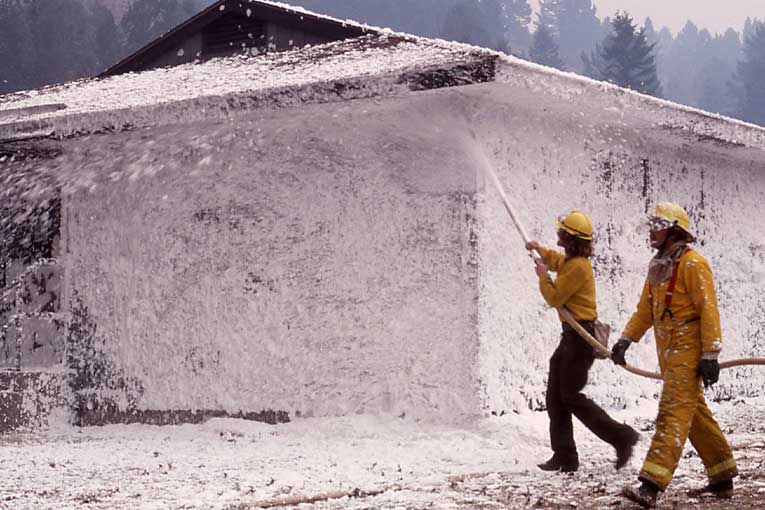
Aqueous Film Forming Foam (AFFF) stands as a frontline defence against flammable liquid fires, renowned for its rapid extinguishing capabilities. 

In this article, we explore the complete facts surrounding AFFF, shedding light on its composition, applications, benefits, and drawbacks. 

Understanding the nuances of AFFF is essential for firefighters, industrial facilities, and anyone concerned with fire safety. 

Join us as we delve into the world of Aqueous Film Forming Foam to uncover its role in modern fire suppression and the alternatives available in the firefighting arsenal.

What is Aqueous Film Forming Foam?

what is aqueous film forming foam

Aqueous Film Forming Foam is a firefighting agent utilised to extinguish fires involving flammable liquids. 

It comprises a mixture of water, fluorosurfactants, and hydrocarbon surfactants. 

The key component of AFFF is its ability to form a thin, heat-resistant film on the surface of flammable liquids, effectively smothering the fire and preventing re-ignition. 

This foam blanket cools the fire, suppressing vapour release and preventing oxygen from reaching the fuel source. 

Aqueous Film Forming Foam is typically stored as a concentrate and mixed with water before use, either through a fixed foam system or portable fire fighting equipment such as fire hoses or foam sprayers.

What is Aqueous Film Forming Foam Used for?

aqueous film forming foam used for

Aqueous Film Forming Foam finds extensive use in fire suppression scenarios involving flammable liquid fires. 

Its effectiveness lies in its ability to rapidly extinguish fires fueled by substances such as oil, gasoline, diesel, and solvents. 

AFFF is commonly deployed in various industries, including petrochemical plants, refineries, chemical manufacturing facilities, airports, military installations, and firefighting operations.

Industrial Use

In industrial settings, such as warehouses, Aqueous Film Forming Foam is often integrated into fixed foam systems, providing continuous fire protection for high-risk areas such as storage tanks, loading racks, and process areas. 

These systems can automatically release AFFF when a fire is detected, quickly smothering the flames and preventing escalation.

Aviation Use

In aviation, Aqueous Film Forming Foam is utilised as a firefighting agent for extinguishing fuel fires that may occur during aircraft accidents or emergencies. 

Aircraft rescue and firefighting (ARFF) vehicles are equipped with AFFF-based foam systems capable of delivering large volumes of foam to suppress fires on runways and aircraft surfaces.

Military Use

Similarly, Aqueous Film Forming Foam plays a crucial role in military firefighting operations, where it is used to combat fires on military vehicles, aircraft, and naval vessels. 

Military-grade AFFF formulations are designed to meet stringent performance standards and withstand harsh operational environments.

Emergency Responder Use

In addition to industrial and military applications, AFFF is also employed by municipal fire departments and emergency responders as a portable fire fighting agent. 

Firefighters use AFFF-based foam solutions to extinguish flammable liquid fires, supplementing water-based firefighting efforts with foam blankets that provide enhanced fire suppression and post-fire security.

What Types of Aqueous Film Forming Foam are There?

aqueous film forming foam types

There are several types of Aqueous Film Forming Foam in use, with the most common two being synthetic-based and protein-based.

Synthetic-based Aqueous Film Forming Foam

Synthetic-based AFFF is the most commonly used type of AFFF and is formulated using synthetic fluorosurfactants and hydrocarbon surfactants. 

This type of AFFF offers excellent fire suppression performance and is compatible with a wide range of flammable liquids.

Protein-based Aqueous Film Forming Foam

Protein-based AFFF is less commonly used than synthetic-based AFFF and is formulated using natural protein-based surfactants derived from animal by-products. 

This type of AFFF has good burn-back resistance and is effective against certain types of flammable liquid fires. 

However, it may be less stable and more prone to degradation over time compared to synthetic-based AFFF.

Which to Choose?

Both types of AFFF are available in various concentrations, typically ranging from 1% to 6%, with higher concentrations providing increased firefighting effectiveness. 

The choice between synthetic-based and protein-based AFFF depends on factors such as firefighting requirements, environmental considerations, and regulatory compliance. 

While synthetic-based AFFF is more commonly used due to its superior performance and stability, protein-based AFFF may be preferred in certain applications or environments where synthetic-based AFFF is not suitable.

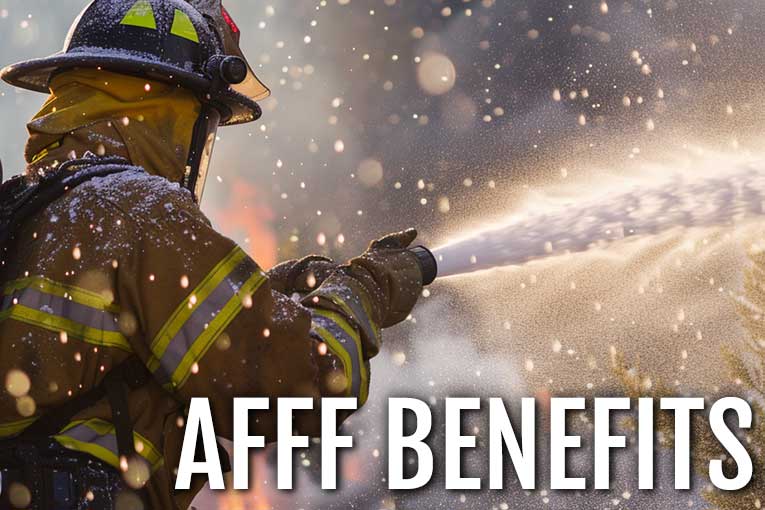
What are the Benefits of Aqueous Film Forming Foam?

aqueous film forming foam benefits

Aqueous Film Forming Foam has a wide range of benefits. 

Some of the main ones are:

Rapid Fire Suppression

Aqueous Film Forming Foam offers rapid fire suppression capabilities, quickly smothering flames and preventing the spread of fire. 

The foam blanket formed by AFFF effectively seals off the fuel source, cutting off the oxygen supply and extinguishing the fire.

Burn-back Resistance

AFFF provides excellent burn-back resistance, meaning that once the fire is extinguished, the foam blanket remains in place to prevent re-ignition. 

This helps to ensure that the fire does not reignite after suppression efforts have ceased, providing enhanced post-fire security.

Versatility

Aqueous Film Forming Foam is versatile and adaptable, capable of extinguishing fires involving a wide range of flammable liquids, including oil, gasoline, diesel, and solvents. 

Its effectiveness across different types of fuel fires makes it a valuable tool in various industries and firefighting scenarios.

Stability

AFFF foam blankets are stable and long-lasting, maintaining their integrity even under adverse conditions such as high temperatures or turbulent environments. 

This stability ensures consistent firefighting performance and minimises the risk of foam degradation during storage or deployment.

Environmental Compatibility

Some formulations of Aqueous Film Forming Foam are designed to be environmentally friendly, with reduced toxicity and minimal impact on the environment. 

These eco-friendly AFFF formulations meet stringent environmental regulations and are suitable for use in environmentally sensitive areas.

Cost-effectiveness

AFFF is cost-effective compared to other firefighting agents, offering efficient fire suppression capabilities at a relatively low cost. 

Its affordability makes it accessible to a wide range of industries and organisations, from large-scale industrial facilities to small businesses and municipal fire departments.

What are the Downsides of Aqueous Film Forming Foam?

aqueous film forming foam downsides

White Aqueous Film Forming Foam has numerous advantages to its use, it does come with various negatives that must be addressed. 

Some of the most common downsides are:

Environmental Impact

One of the main downsides of Aqueous Film Forming Foam is its environmental impact. AFFF contains fluorosurfactants, which can persist in the environment and pose potential risks to ecosystems and human health. 

These fluorosurfactants can bioaccumulate in aquatic organisms and have been linked to adverse effects on wildlife and aquatic habitats.

Health Concerns

In addition to environmental concerns, AFFF may also pose health risks to firefighters and other individuals exposed to the foam. 

Some formulations of AFFF contain per- and polyfluoroalkyl substances (PFAS), which have been associated with various health issues, including cancer, reproductive problems, and immune system disorders. 

Prolonged or repeated exposure to AFFF foam may increase the risk of adverse health effects.

Cleanup and Disposal Challenges

Aqueous Film Forming Foam can be challenging to clean up and dispose of properly after firefighting operations. 

The foam can accumulate in waterways, soil, and groundwater, leading to contamination and environmental damage. 

Proper cleanup and disposal procedures are necessary to minimise the environmental impact of AFFF and prevent long-term contamination of soil and water resources.

Regulatory Restrictions

Due to concerns about the environmental and health impacts of AFFF, regulatory agencies have implemented restrictions on its use and disposal. 

Some jurisdictions have banned or restricted the use of AFFF containing certain fluorosurfactants or PFAS compounds. 

These regulations may limit the availability and use of AFFF in certain regions or industries, requiring alternative firefighting agents to be used instead.

What are the Alternatives of Aqueous Film Forming Foam?

aqueous film forming foam alternatives

Due to some of the disadvantages of using Aqueous Film Forming Foam, alternatives can be used:

Dry Chemical Agents

Dry chemical agents, such as monoammonium phosphate (MAP) and sodium bicarbonate, are commonly used alternatives to Aqueous Film Forming Foam for extinguishing flammable liquid fires. 

These agents work by interrupting the chemical reaction of the fire and are particularly effective against Class B fires involving flammable liquids and gases. 

Dry chemical agents are available in portable extinguishers and fixed fire suppression systems, offering rapid and efficient fire suppression capabilities.

Carbon Dioxide (CO2)

Carbon dioxide (CO2) is another alternative firefighting agent used for extinguishing flammable liquid fires. 

CO2 works by displacing oxygen from the fire area, effectively smothering the flames and preventing combustion. 

CO2 is non-conductive and leaves no residue, making it suitable for use in electrical and sensitive equipment environments. 

However, CO2 can be dangerous in confined spaces due to the risk of oxygen depletion, and proper ventilation is necessary when using CO2 for fire suppression.

Environmentally Friendly Foam Formulations

In response to environmental concerns associated with traditional AFFF formulations, manufacturers have developed foam concentrates with environmentally friendly formulations. 

These foam concentrates are free from fluorosurfactants and per- and polyfluoroalkyl substances (PFAS), reducing their environmental impact and potential health risks. 

While these environmentally friendly foam concentrates may have slightly different firefighting properties compared to traditional AFFF, they offer effective fire suppression capabilities while minimising environmental harm.

Water-Based Firefighting Systems

Water-based firefighting systems, such as sprinkler systems and water mist systems, provide an alternative approach to fire suppression without the use of foam agents. 

These systems use water as the primary extinguishing agent, either through sprinkler heads or high-pressure water mist nozzles. 

Water-based firefighting systems are effective at suppressing fires involving flammable liquids and are often used in industrial and commercial settings for fire protection. 

Additionally, water-based systems are environmentally friendly and pose minimal health risks compared to foam agents.

Conclusion

Aqueous Film Forming Foam stands as a powerful tool in firefighting, offering rapid fire suppression capabilities for flammable liquid fires. 

While AFFF provides numerous benefits, including quick extinguishment and excellent burn-back resistance, it also presents downsides such as environmental impact and health concerns. 

Exploring alternatives like dry chemical agents, carbon dioxide, environmentally friendly foam concentrates, and water-based firefighting systems can mitigate these drawbacks. 

As the firefighting industry evolves, balancing the effectiveness of AFFF with environmental and health considerations remains crucial in ensuring comprehensive fire protection strategies for both present and future needs.
Fike introduces SF 1230 fire protection fluid as Novec 1230 replacement

Partnership brings new fire protection solution

Fike Corporation, a global manufacturer of fire protection systems, has partnered with The Standard Fluids Corporation to introduce Fike SF 1230 Fire Protection Fluid.

This new product aims to replace the soon-to-be-discontinued 3M Novec 1230 (FK-5-1-12) fluid, offering the same chemical compound and quality standards.

As reported by Fike, the new fluid will be available to meet the demand for a suitable replacement.

The partnership highlights Fike’s commitment to providing high-quality fire suppression solutions.

Fike SF 1230 shares the same chemical properties as Novec 1230, ensuring users have a reliable alternative.

Amos Leap, Fike Fire Suppression Product Manager, said: “Fike SF 1230 fills the void left by Novec 1230 by offering the same chemical with the same level of quality and purity standards set and accepted for over 20 years.”

Ensuring quality and transparency

One of the main advantages of Fike SF 1230 is the transparency in its contents and validation process.

Luis Gonzalez, President of Standard Fluids, emphasized the rigorous testing and quality assurance processes: “Standard Fluids maintains a thorough record and archive of products starting from production and testing and verifying in our US-based ISO 9001 laboratory.”

This approach ensures that the quality of the product meets or exceeds industry standards.

The testing methods used for Fike SF 1230 were developed by the engineers who created Novec 1230.

This continuity in expertise provides customers with confidence in the product’s reliability.

Gonzalez added: “The credibility and experience of the team at Standard Fluids give our customers confidence that the quality of the product is maintained to meet or exceed industry quality requirements.”

Innovative technology integration

Fike SF 1230 integrates seamlessly with Fike’s existing system, utilizing the Fike Impulse Valve and the Axius rupture disc technology.

This integration supports longer pipe runs, small pipe diameters, and greater design flexibility.

Gonzalez stated: “The SF 1230 fluid seamlessly complements the Fike system’s serviceability as a direct drop-in replacement.”

Fike’s innovative approach in developing SF 1230 demonstrates its focus on providing advanced and environmentally friendly fire suppression solutions.

The company continues to offer a variety of products to meet the unique demands of different industries, ensuring that customers have access to reliable and effective fire protection.

Commitment to sustainability

Fike Corporation’s introduction of SF 1230 reflects its ongoing efforts to deliver sustainable fire suppression solutions.

The company’s collaboration with Standard Fluids Corporation aims to set a high standard in performance and reliability.

This partnership ensures that the new fire protection fluid adheres to the quality expectations established by its predecessor.

With the upcoming discontinuation of Novec 1230, Fike SF 1230 provides an essential alternative for industries relying on clean agent fire suppression systems.

The continued development and innovation in this field underscore Fike’s dedication to environmental responsibility and safety.

Darley pumps and CAFS enhance South African firefighting vehicle

Industrial Fire & Hazard Control develops new firefighting vehicle

Industrial Fire & Hazard Control, a South African company, has introduced a new wildland firefighting vehicle called the SENTRY Wildland Interface Pumper.

As reported by Darley, this vehicle is built on a MAN TGM18.240 commercial 4×4 chassis and equipped with a Darley Hornet CAFS and Darley HM500 PTO driven pump, along with a Trident FOAMATE ATP system.

The SENTRY vehicle features an Elkhart Sidewinder deck monitor and an Elkhart BrushHawk bumper turret, both operable from inside the cab.

Additionally, it includes a HyperSight thermal imaging camera fitted to the BrushHawk, enhancing its firefighting capabilities.

Features and capabilities of the SENTRY vehicle

The SENTRY Wildland Interface Pumper is specifically designed for tackling wildland urban and mining interface fires in South Africa.

The vehicle has been built to deliver maximum impact at fire incidents, offering a “go anywhere” capability due to its robust design and advanced equipment.

For a mining company in South Africa, the SENTRY is expected to address the unique challenges posed by wildland and urban interface fires.

The inclusion of the Darley Hornet CAFS, Darley HM500 PTO driven pump, and Trident FOAMATE ATP system provides comprehensive firefighting support.

Advanced firefighting tools in the SENTRY

The Elkhart Sidewinder deck monitor and Elkhart BrushHawk bumper turret enhance the SENTRY’s operational efficiency, allowing for precise control over firefighting operations from within the vehicle’s cab.

The integration of the HyperSight thermal imaging camera further supports firefighters by providing clear visuals in challenging conditions.

These tools, combined with the vehicle’s “go anywhere” capability, ensure that the SENTRY Wildland Interface Pumper is well-equipped to manage diverse firefighting scenarios, making it a valuable asset for the mining industry in South Africa.

Ghent University graduate wins Ragnar Wighus Award for 2024

Graduate to present thesis at international Water Mist Conference

A Ghent University graduate has won the Ragnar Wighus Award for the second consecutive year.

Cédric van de Vondel was announced as the winner for his master thesis on numerical modelling of water mist.

As reported by the International Water Mist Association (IWMA), van de Vondel will present his thesis at the annual international Water Mist Conference (#IWMC2024) in Antwerp, Belgium, on 18th and 19th September.

Van de Vondel expressed his gratitude: “Winning this award for my thesis on numerical modelling of water mist is a tremendous honour.

“I’m grateful to my supervisor, Prof. Dr. Tarek Beji, and the IMFSE institute for their invaluable knowledge and support.

“I am excited to share my research and its potential impact on the water mist field.”

Ragnar Wighus Award history and significance

The Ragnar Wighus Award, sponsored by the IWMA, recognises outstanding research in the field of water mist technology.

Previously known as the IWMA Young Talent Award, it was renamed in 2023 in memory of the former and late president, Ragnar Wighus.

The award has been given annually since 2016 to promising young researchers.

The IWMA Scientific Council, chaired by Max Lakkonen from IFAB, evaluates the submissions.

The award aims to promote innovative research and development in water mist technology, fostering advancements that could benefit the industry.

Future of the Ragnar Wighus Award

In 2025, the Ragnar Wighus Award will transition to recognising the best Ph.D. thesis in water mist research.

This change aims to encourage and reward higher levels of academic research within the field, furthering the impact and understanding of water mist technology.

The IWMA continues to support young researchers by providing platforms for them to present their work and gain recognition within the industry.

The annual conference in Antwerp will serve as a significant opportunity for networking and knowledge sharing among professionals and researchers.

FPA releases updated guidelines for LPC sprinkler rules

Updated technical bulletin for LPC sprinkler rules focuses on idle pallet storage

The Fire Protection Association (FPA) has released a revised Technical Bulletin (TB) as part of its LPC Rules for Automatic Sprinkler Installations 2015, providing updated guidance on the proper storage of idle pallets within the industry.

As reported by the FPA, the LPC Rules for Automatic Sprinkler Installations 2015 is the UK’s primary sprinkler installation standard, incorporating the full BS EN 12845:2015+A1:2019 standard and related Technical Bulletins.

The TB215: Sprinkler Protection of Idle Pallet Storage update addresses the increasing number of timber and plastic pallets found both internally and externally in various storage configurations.

Fire risks and solutions for idle pallets

The updated TB outlines the significant challenge idle pallet storage poses to sprinklers in controlling or extinguishing fires.

Wooden pallets, in particular, can dry out and ignite easily when stacked in piles inside warehouses.

TB215: 2024: 1 addresses these risks by providing enhanced solutions for contractors and clients.

The bulletin offers detailed guidance on pallet material classification, storage arrangements, and storage options concerning height and design density.

It also includes a cross-reference to TB234: Protection to High Hazard Storage (HHS) Configurations and information about sprinkler head requirements, Early Suppression Fast Response (ESFR) options, and confirmed water supply options.

Comprehensive research and updates for subscribers

The revised TB incorporates recent research reviewing fire test information and international standards to offer a more robust sprinkler protection option for idle pallet storage.

For digital subscribers, the TB has been automatically updated on both web and app platforms, while print subscribers will receive the update by post along with the necessary filing instructions.

This update follows the FPA’s launch of a subscription service for the LPC Sprinkler Rules in January 2024.

The subscription model ensures that subscribers automatically receive the latest updates, including new and revised TBs, throughout the year for an annual fee.

This service aims to keep subscribers informed of the latest changes in life safety and property protection.

BAFSA advocates for mandatory fire sprinklers in schools during Sprinkler Week

Increased risk of school fires during summer term

The British Automatic Fire Sprinkler Association (BAFSA) is urging the Government and education authorities to address the increased risk of fires in schools during the summer term.

This appeal is part of this year’s Sprinkler Week campaign, running from 20-25 May.

According to Government data, only 8.5% of new schools built since 2015 have automatic fire sprinklers installed, despite approximately 300 school fires occurring in 2023.

BAFSA highlights that schools equipped with sprinklers can often resume operations the same day after a fire, compared to the two-year rebuilding period typically required for major fires.

Sprinklers can limit fire damage to a single room, preserving valuable student coursework and preventing significant disruptions to education.

Fire sprinklers in schools: Call for legislative action

BAFSA, alongside the NFSN and NFCC, has written an open letter to the Secretary of State for Education, the Rt Hon Gillian Keegan MP.

The letter urges the Government to revise Building Bulletin 100 to mandate automatic fire suppression systems in all new schools.

The letter states: “It is deeply concerning that BB100 – which was necessary to provide fire safety measures specifically for schools, that were beyond Approved Document B and BS9999, to protect the continuity of education has become outdated and disregarded.”

Ali Perry, chief executive of BAFSA, emphasized the economic and emotional benefits of installing sprinklers in schools: “The impact of school fires is much greater than the financial cost of any rebuild. But there is the emotional cost too.

“Schools work hard to establish a positive culture and build relationships which are shattered when pupils and staff are displaced due to fire.”

Support from Zurich Municipal

Zurich Municipal supports BAFSA’s Sprinkler Week campaign, noting the persistent issue of fires in educational facilities.

Governments in Scotland and Wales have already mandated sprinklers in all new and significantly refurbished schools to prevent such blazes.

Paul Redington, Regional Major Loss Manager for Zurich, stated: “For several years, Zurich has called on the Government to bring English schools into line with the rest of Britain, but so far, we have yet to see any movement.”

Redington also pointed out additional fire risks: “The traditional fire risks of arson and ‘hot works’ are supplemented by the increase in complex electronic equipment in schools, and the growing trend among young people to use disposable vapes which contain lithium-ion batteries that can ignite if damaged or disposed of incorrectly.”

Impact on communities

Terry McDermott, secretary of the National Fire Sprinkler Network (NFSN), stressed the importance of maintaining sprinkler requirements in new schools: “Any decision to remove the requirement for sprinklers in new schools would be a retrograde step. Schools are critical buildings in local communities.

“Whilst it is accepted that there has not been a loss of life in a school fire, the impact of the loss of a school is devastating for the children, parents, and the community.”

Pioneering progress in wildfire control with Hydro Firebreak

Oswaldo Acosta, Project Manager and creator of Hydro Firebreak talks about the company’s plans to tackle the wildfire crisis

Can you tell us about your role at Hydro Firebreak and your involvement in developing this fire containment solution?

As the Project Manager and creator of the fire containment system at Hydro Firebreak, my primary focus has been on developing a solution that significantly impacts the way we approach wildfire protection.

Recognising the acute need for an effective fire defence mechanism globally, we were driven by the mission to save lives and safeguard properties against the devastating effects of forest fires.

My involvement has spanned from the initial concept design to overseeing the project’s execution, ensuring that our innovative system meets the high standards required for combating wildfires.

Our patented modular network of high-capacity nebulisers and sensors is a proof of our commitment to innovation and environmental preservation.

It’s designed to create a mist barrier that lowers the ambient temperature and halts the advance of fires, making it adaptable to various terrains and automatically activated in areas most vulnerable to wildfires.

As the designer, I’ve had the privilege of steering this project towards reality, working closely with a dedicated team to bring about a change in how we protect our forests and communities.

The system’s originality lies in its ability to offer extensive protection with minimal environmental impact, a feature that sets us apart in the market today.

Holding the patent for this utility model in Spain was a milestone in our journey, strengthening our position as pioneers in fire protection technology.

As we continue to refine and expand our system, my role encompasses strategic planning and coordination, ensuring we remain at the forefront of innovation and efficacy in forest fire prevention and control.

What stage are you at with the project?

At the current stage of the project, we’re focusing on the feasibility studies and calculations necessary for development.

We haven’t progressed to a physical prototype yet; instead, we’re utilising two pieces of software to aid our design process.

The first software, named Water Cat, and the second, Sap2000, are instrumental for our work.

They allow us to perform the hydraulic and structural calculations needed to ensure the viability and integrity of our system.

This approach is crucial for us to refine our designs and prepare for the next stages of creating a tangible prototype.

How does the modular design of the system enhance its effectiveness in different types of terrain?

The modular design of our system is crucial for its adaptability and effectiveness across various terrains.

At the outset of any project, we conduct thorough soil or area studies to tailor our design precisely to the specific needs of the terrain.

This adaptability is a cornerstone of our approach, ensuring that the system can be customised for each unique environment.

Moreover, our system is geometrically uniform, allowing us to create diverse shapes and configurations.

This flexibility means we can install the system in a way that best protects the area in question, regardless of its geographical challenges.

Through this design philosophy, we ensure that our system can offer optimal protection across a wide range of terrains, making it a versatile solution in the fight against forest fires.

Can you explain how the Automated Activation works and its importance in wildfire management?

The Automated Activation feature is a pivotal aspect of our system, operating on temperature sensors that detect heat levels indicative of a fire.

Upon detection, these sensors send a signal to the control centre, triggering the system to activate automatically.

This automation makes our system entirely self-sufficient and autonomous, designed to operate independently of the areas it’s protecting.

The system’s modularity enhances its adaptability.

Modules can be interconnected to extend coverage across larger areas as needed.

Naturally, expanding the system to cover more ground will require more water and a larger tank, but these adjustments are scalable based on the size and requirements of the protected area.

This malleability and automatic activation are crucial for immediate response in wildfire management, ensuring rapid deployment without human intervention, which is essential for the welfare and protection of both natural and residential areas prone to wildfires.

What are the key technological innovations in your system that set it apart from traditional fire containment methods?

The innovations at the heart of our system revolve around our unique approach to water distribution and monitoring.

I’ve designed specific couplings or key pieces that enable us to construct a hydraulic network using firefighting hose lines.

This innovation allows us to significantly reduce the costs associated with system implementation.

Our temperature sensors, which can operate via Wi-Fi or wired connections, are fundamental to our system’s operation.

These sensors transmit signals that initiate the system’s response to fire.

Additionally, we’ve integrated the capability to install thermal cameras.

These cameras play a crucial role in identifying the type and location of a fire, ensuring that the system can activate at a safe distance to effectively prevent and combat wildfires before they can spread.

The essence of our system is its preventative nature, aiming not just to fight fires, but to stop them before they can cause significant damage.

How does Hydro Firebreak ensure environmental sustainability while controlling wildfires?

In designing our system, environmental sustainability has been a key consideration.

Our system operates primarily with water, which inherently aligns with eco-friendly practices.

However, it also has the capability to work with foam or a dual application of both, depending on the specific requirements of the fire it’s combating.

For installation, we ensure that the area is completely clear to minimise environmental disruption.

Since water is the main element used to extinguish fires, our system is naturally compatible with ecosystem conservation efforts.

Any foam used is designed to be biodegradable, ensuring it doesn’t leave harmful residues or impact the environment negatively.

We’re committed to avoiding any substances that could be detrimental to the environment.

This approach underscores our commitment to fighting wildfires effectively but also to preserving the integrity of the ecosystems we operate within.

Our system is a testament to the possibility of combining effective wildfire management with stringent environmental sustainability standards.

What developments can we expect to see in wildfire containment technology from Hydro Firebreak?

As we look to the future of wildfire containment, it’s clear that the advancement of technology plays a critical role in the evolution of our system.

With each passing day, new technologies emerge, and at Hydro Firebreak, we feel a strong sense of duty and responsibility to incorporate these advancements to enhance our system’s capabilities.

Our main goal is to achieve even earlier detection of wildfires, which would be a significant leap forward in preventing ecological damage.

Incorporating cutting-edge technologies such as artificial intelligence (AI) and machine learning will be key to this endeavour.

By improving our system’s ability to detect fires at the earliest possible stage, we aim to offer a more rapid and effective response.

This early detection capability is crucial for minimising the impact of wildfires on the ecosystem and for providing a more sustainable and resilient approach to wildfire management.

We believe that our system will revolutionise the approach to combating wildfires by enabling early detection and intervention, which is at the core of our mission.

The versatility of our system allows it to protect a wide range of environments – from residential areas and airports to crops and other agricultural lands.

This adaptability is crucial for effectively safeguarding against the threat of wildfires.

Our system stands out for its environmental friendliness as well, and with a lifespan of 20 years upon installation, it represents a long-term investment in safety and environmental protection.

Though it requires maintenance, the benefits far outweigh the costs, particularly as the system becomes increasingly automated over time.

This ongoing automation ensures that our wildfire containment technology remains at the cutting edge, providing unmatched protection and peace of mind for various sectors affected by the threat of wildfires.

This article was originally published in the May 2024 issue of International Fire & Safety Journal. To read your FREE digital copy, click here.