The federal court overseeing litigation against manufacturers of per- and polyfluoroalkyl substances (PFAS) has approved a settlement requiring DuPont to pay £1.185 billion to public water systems across the United States.
This decision addresses the contamination of drinking water supplies with PFAS chemicals, used in aqueous film-forming foam (AFFF) for extinguishing Class B fuel fires.
Baron & Budd, representing numerous public water systems in this consolidated litigation, announced the court’s approval, marking a significant move towards resolving the issues surrounding PFAS contamination.
Overwhelming support for the settlement
Following the court’s preliminary approval in August 2023, approximately 14,000 public water systems were notified about the settlement, with an option to participate or object to its terms.
The court’s order highlighted the overwhelming support, with around 94% of these systems choosing to participate.
Scott Summy, Baron & Budd shareholder and class counsel, expressed his gratitude towards the court and DuPont for their proactive approach, stating: “Today marks an important step towards protecting the health and safety of all Americans.
“The Court’s approval of our agreement with DuPont will provide immediate relief to water systems rather than going through years of trial and dragging out the much-needed payments.”
Comprehensive relief for affected water systems by forever chemicals
The settlement funds are designated for public water systems that have detected PFAS in their water, covering the costs of testing for those yet to be tested, and providing funds for systems that discover PFAS as a result of future testing.
Since the multidistrict litigation (MDL) was established in 2018, thousands of cases have been filed or transferred to the MDL, alleging that DuPont and other manufacturers sold PFAS-containing products with knowledge of their potential to contaminate the environment and cause health issues.
Claims have also been filed by states, airports, fire-training facilities, and private well owners.
IFSJ Comment
The approval of the £1.1 billion settlement with DuPont by the federal court represents a critical milestone in addressing the widespread issue of PFAS contamination in the United States.
The collaborative efforts of legal teams, public water systems, and the court system exemplify a commitment to safeguarding public health and the environment.
As litigation continues against other manufacturers, this case underscores the importance of corporate accountability in environmental protection efforts.
British Automatic Fire Sprinkler Association commemorates half a century of dedication to fire safety
On 5th February 1974, the British Automatic Fire Sprinkler Association (BAFSA) held its very first meeting, marking the beginning of a 50-year journey dedicated to enhancing fire safety.
This significant milestone is celebrated by the association, which has been at the forefront of advocating for the widespread adoption of fire sprinklers in buildings across the UK.
Founding members and the journey
The association was founded by seven pioneering companies: AFA Minerva, (EMI) Ellis Fire Protection, Fire Snow, Haden Young, Mather & Platt, Matthew Hall Mechanical Services, and Merrol Fire Protection.
Mr Leslie Heaviside of Mather & Platt was appointed as the first chairman of BAFSA, laying the foundation for the association’s long-term mission to improve fire safety standards.
Celebrations at the House of Lords and throughout the year
To commemorate its 50th anniversary, BAFSA has planned a celebration of its achievements in fire safety on 8th February at the House of Lords.
The event will honour the contributions of individuals and organisations that have supported BAFSA’s goals.
Additionally, several key events are scheduled throughout the year to highlight this landmark anniversary.
Looking forward to the future for BAFSA
BAFSA has expressed its aspirations for the next 50 years, aiming to make fire sprinklers a mandatory requirement in all buildings.
The association extends its gratitude to its members for their continuous support and dedication to achieving this goal.
In a statement, BAFSA said: “Here’s to the next 50 years where we hope to see fire sprinklers a mandatory requirement in all buildings.
Thank you to all of our members who continue to help us to achieve that aim.”
IFSJ comment
The British Automatic Fire Sprinkler Association’s 50th anniversary is a testament to the enduring importance of fire safety in our communities.
Through advocacy, education, and collaboration, BAFSA has played a crucial role in promoting the adoption of fire sprinkler systems, contributing to safer living and working environments.
As we look to the future, the continued efforts of organisations like BAFSA are essential in driving forward innovations in fire safety and ensuring that the lessons learned over the past half-century are applied to protect lives and properties for generations to come.
Electrical fires are not only frightening but also pose a severe threat to life and property.
Understanding the dynamics of these fires and, more importantly, knowing how to respond is paramount for personal safety.
This article delves into the origins of electrical fires, provides practical insights into how to put out an electrical fire, and imparts crucial preventive measures.
Hopefully you’ll gain the knowledge needed to protect yourself, your loved ones, and your surroundings from the potentially devastating consequences of electrical hazards.
What Causes Electrical Fires?
Overloading circuits will cause electrical fires
Electrical fires can ignite from various sources, often stemming from issues within the electrical systems themselves.
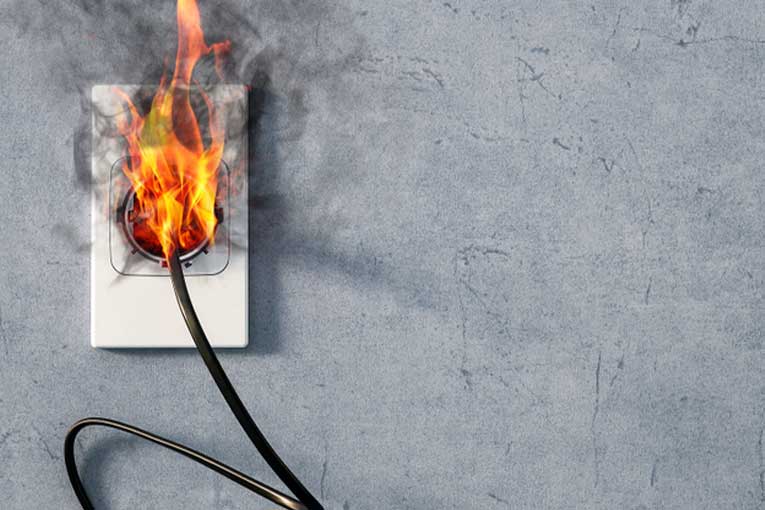
Frayed wires, loose connections, or overloaded outlets can create a spark, initiating a fire hazard.
Appliance Malfunctions
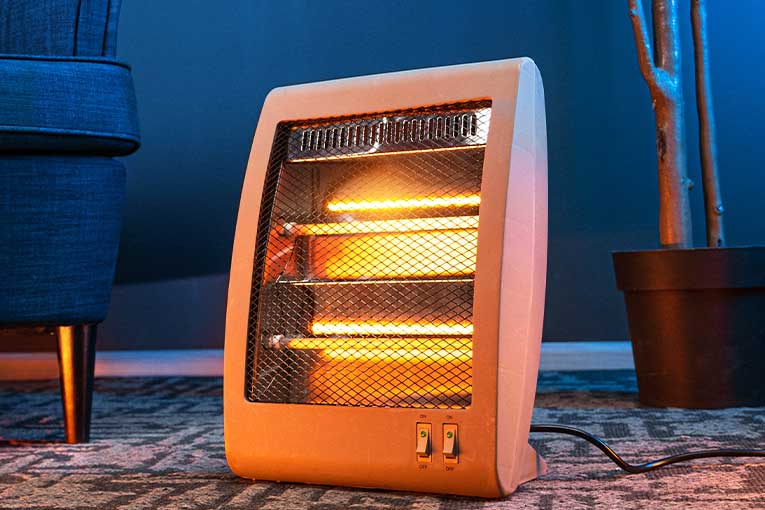
Defective appliances, especially those with damaged cords or internal faults, can be catalysts for electrical fires.
Overheating due to prolonged use or manufacturing defects can escalate the risk.
Outdated Electrical Systems
Ageing electrical systems, unable to meet the demands of modern appliances, are susceptible to overheating.
This can result in sparks, leading to potential fire outbreaks.
Overloaded Circuits
Plugging too many devices into a single circuit can overload it, causing overheating and sparks.
This is particularly prevalent in older homes with limited electrical capacity.
Power Strips and Extension Cords
Improper use of power strips and extension cords, such as daisy-chaining them or using them for high-wattage appliances, can lead to overheating and electrical fires.
Light Fixtures
Faulty light fixtures or incorrect wattage bulbs can generate excess heat, posing a risk of fire. Ensuring proper installation and using appropriate bulbs is essential.
Electrical Appliances Left On
Leaving electrical appliances on for extended periods, even when not in use, can result in overheating and potential fire hazards.
Infestations
Rodents chewing on electrical wiring can expose the conductors, leading to short circuits and the possibility of electrical fires.
Natural Disasters
Extreme weather events, such as lightning strikes or power surges during storms, can cause electrical fires by overwhelming the system.
Poor Electrical Maintenance
Neglecting regular electrical maintenance, including checking for wear and tear, loose connections, and outdated components, increases the likelihood of electrical fires.
Thermal Runaway
Thermal runaway is a phenomenon where a device’s temperature escalates uncontrollably, often leading to catastrophic consequences.
In electrical systems, it’s a potential precursor to fires.
If a component experiences thermal runaway, it can trigger a chain reaction, causing neighbouring components to heat up rapidly.
How to Put Out an Electrical Fire
Electrical fires demand swift action.
If you encounter an electrical fire, follow these steps:
Cut the Power
Cutting the power will help to put out an electrical fire
The initial and most critical action when dealing with an electrical fire is to sever its power source.
Find the fuse box and promptly turn off the electricity.
This action eliminates the fuel that sustains the fire.
Use a Fire Extinguisher
In the case of a small electrical fire, a Class C fire extinguisher is the appropriate tool.
Aim the extinguisher directly at the base of the flames and sweep from side to side.
This targeted application helps smother the fire without posing additional risks.
Never Use Water
Water and electricity don’t mix well.
Never attempt to use water to extinguish an electrical fire, as it can lead to electrocution and worsen the situation.
Instead, opt for a fire extinguisher designed specifically for electrical fires.
Smother the Flames
Employ a fire blanket or a heavy, non-flammable material to smother the flames.
Place the blanket over the fire to cut off its oxygen supply, a crucial element for combustion.
This method is effective for smaller fires on electrical equipment.
Evacuate and Call for Help
If the electrical fire persists or escalates beyond your control, prioritise your safety.
Await professional assistance to handle the situation effectively.
Why Electrical Fires are so Dangerous
Electrical fires pose a significant threat due to their unique characteristics.
Here’s a closer look at why these fires are particularly hazardous:
Rapid Escalation
Electrical fires have a notorious reputation for escalating swiftly.
The high temperatures generated can cause surrounding materials to catch fire, leading to a rapid spread.
What begins as a small electrical malfunction can transform into a full-blown inferno within moments.
Toxic Fumes
The materials involved in electrical fires, such as wiring and appliances, release toxic fumes when ignited.
These fumes can include carbon monoxide and other harmful substances, posing severe health risks to occupants.
Inhaling these toxic gases can lead to respiratory issues, unconsciousness, and, in extreme cases, fatalities.
Structural Damage
Beyond the immediate flames, electrical fires can cause extensive structural damage.
The intense heat can compromise the integrity of wiring systems, insulation, and surrounding materials.
This damage not only causes costly repairs but also increases the risk of subsequent fires.
Risk of Electrocution
Attempting to extinguish an electrical fire with water can lead to a grave risk of electrocution.
Water conducts electricity, and using it on electrical fires can result in severe injuries or fatalities.
This unique hazard makes responding to electrical fires more complex and necessitates specialised firefighting measures.
Challenges for Firefighters
Firefighters face distinct challenges when tackling electrical fires.
The conductivity of electricity can interfere with standard firefighting methods, requiring specialised equipment.
Moreover, the potential for hidden pockets of fire within walls or electrical systems makes complete extinguishment more challenging.
Reignition Potential
Even after seemingly successful extinguishment, electrical fires can reignite.
This is often due to hidden smouldering embers or damaged wiring reigniting when power is restored.
Addressing this reignition potential requires thorough assessment and preventative measures.
What Type of Fire is an Electrical Fire?
Electrical fires fall under Class C fires.
Unlike other types of fire, they involve energised electrical equipment, making water a dangerous choice for extinguishing.
How to Prevent Electrical Fires
Electrical fires, with their potential for devastating consequences, underscore the importance of proactive preventive measures.
Here’s a detailed look at how you can significantly reduce the risk of electrical fires:
Regular Inspections and Maintenance
Regular maintenance is needed to prevent electrical fires
Regular inspections of your electrical systems are vital.
Ensure that wiring, outlets, and appliances are in good condition.
Any signs of wear, damage, or overheating should be promptly addressed.
Consider hiring a professional electrician for thorough inspections, especially in older properties.
Avoid Overloading Outlets
Overloading outlets is a common cause of electrical fires.
Distribute electrical loads evenly and avoid daisy-chaining multiple devices to a single outlet.
Invest in surge protectors to safeguard against power surges, which can also contribute to overheating.
Use Correct Wattage Bulbs
Incorrectly matched light bulb wattages can generate excessive heat, posing a fire risk.
Always use bulbs that match the recommended wattage for fixtures.
Check labels and replace bulbs promptly if they blow or flicker.
Replace Damaged Cords
Frayed or damaged electrical cords are hazardous.
Replace them immediately to avoid short circuits and potential fires.
When using extension cords, opt for high-quality ones designed for your specific needs and replace them if they show signs of wear.
Install Arc Fault Circuit Interrupters (AFCIs)
AFCIs detect dangerous electrical arcs, which can cause fires, and automatically shut off the circuit.
Consider installing AFCIs in your home, especially in bedrooms and living spaces.
They provide an additional layer of protection against electrical fires.
Keep Combustibles Away
Avoid placing flammable materials near electrical appliances and outlets.
Curtains, papers, and other combustibles should be kept away from heaters, appliances, and other devices that generate heat.
Professional Wiring for Appliances
Ensure that major appliances like stoves, refrigerators, and washing machines are installed by professionals.
Improper wiring or installation can lead to electrical faults and fires.
Upgrade Older Wiring
In older homes, outdated wiring systems may not meet current safety standards.
Consider upgrading to modern wiring, especially if you experience frequent electrical issues or if your home is more than a few decades old.
Educate Household Members
Educate all household members about electrical safety.
Teach them about the dangers of overloading circuits, the importance of reporting electrical issues promptly, and the proper use of appliances and electronic devices.
Emergency Planning
Include electrical fire safety in your overall emergency planning.
Ensure that all family members know how to respond to electrical fires, including the location of fire extinguishers and emergency exits.
Conclusion
This article should now give you the information on how to put out an electrical fire.
Knowing how to put out an electrical fire is essential, but prevention is key.
Prioritise electrical safety through regular maintenance, professional installations, and a quick response to warning signs.
Your proactive efforts can make a significant difference in keeping your home or workplace safe from electrical fire hazards.
Triangle Fire reports successful extinguishing of Essex hall of residence fire
Triangle Fire has recently brought to attention a significant example of fire safety efficacy in a communal kitchen of a hall of residence in Essex.
The incident involved a hot oil spillage from a chip pan in a six-storey building.
Remarkably, the fire was extinguished by the actuation of one concealed sprinkler head, with the fire contained to the room of origin and no injuries reported.
The onsite security staff promptly executed the premises’ emergency plan in line with the fire strategy.
Sprinkler systems prove effective against chip pan fires
This incident marks the seventh of its kind reported to www.sprinklersaves.co.uk, challenging the misconception that residential sprinklers are ineffective against fires involving chip pans.
In each instance, the fires were successfully extinguished or controlled.
The British Automatic Fire Sprinkler Association (BAFSA) has released an informative video showcasing the evident benefits of sprinklers in such scenarios.
Viewers can access the video through a provided link.
Statistical data and recent incidents underscore the importance of fire safety
Fire statistics from the financial year 2019/20, collated from incidents attended by Fire & Rescue Services, show that 1494 instances involved chip pan fires in dwellings.
The danger posed by fires in student accommodations was starkly highlighted by the 2019 fire at the ‘Cube’ in Bolton.
The rapid spread and severe impact of the fire were alarming.
According to a press release by the Greater Manchester Fire Rescue Service (GMFRS), the immediate and complete evacuation of the premises was crucial in saving many lives.
It is noted that the ‘Cube’ did not have sprinkler systems installed, as detailed in the GMFRS Cube Incident Report.
IFSJ Comment
The recent report from Triangle Fire on the successful use of sprinklers in an Essex hall of residence adds to the growing evidence supporting the effectiveness of residential sprinkler systems.
The incident, along with similar cases reported to www.sprinklersaves.co.uk, provides practical examples that dispel myths about the limitations of sprinklers, especially in scenarios involving chip pan fires.
The comprehensive video released by BAFSA further illustrates this point, offering clear visual evidence of the benefits of such systems.
This incident, alongside the broader context of fire safety data and the tragic fire at the ‘Cube’ in Bolton, underlines the critical need for appropriate fire safety measures in residential buildings, particularly in student accommodations.
The absence of sprinklers in the ‘Cube’ incident serves as a sombre reminder of the potential consequences of inadequate fire safety provisions.
As the industry moves forward, it is imperative to consider these learnings and implement effective fire safety strategies, including the adoption of sprinkler systems, to safeguard lives and properties.
The market’s growth is attributed to various factors, including the increasing focus on industrial safety and stringent fire safety regulations in various industries.
Factors driving fire fighting foam market growth
The growth of the fire fighting foam market is influenced by several key factors.
One significant driver is the heightened emphasis on industrial safety across various sectors.
Additionally, the stringent legislation governing fire safety standards in many businesses has led to a greater demand for effective fire suppression technologies, including advanced foams.
The expansion of industries such as petrochemicals, oil and gas, and manufacturing also plays a pivotal role in propelling the market forward.
These industries often deal with combustible materials, making them ideal candidates for comprehensive fire prevention measures.
Moreover, ongoing technological advancements and innovations in the composition of fire fighting foams are contributing to market expansion.
Manufacturers are continually working towards developing new and improved foams with enhanced firefighting capabilities, environmental sustainability, and reduced environmental impact.
Value chain analysis
The fire fighting foam market operates within a comprehensive value chain that begins with the acquisition of raw materials necessary for foam production.
Water, foam concentrate, and chemical additives are typically the primary ingredients used in foam manufacturing.
Producers of foam concentrate play a crucial role at this stage.
The manufacturing process involves combining water, foam concentrate, and other ingredients to create the foam concentrate, which is then packaged and distributed to various end users.
These end users include fire departments, industrial facilities, and airports, with distribution channels ranging from wholesalers and distributors to direct sales to end customers.
End users, such as fire departments and industrial plants, utilise fire fighting foam to suppress fires, often employing foam application equipment such as foam generators and foam proportioning devices.
Adequate training is essential to use fire fighting foam effectively, and companies and educational organisations offer training programs to educate end-users on its proper application in various fire scenarios.
Lastly, proper disposal of old foam and debris generated during manufacturing is essential to minimise environmental impact and comply with environmental regulations.
IFSJ Comment
The growing need for effective fire suppression technologies in various industries and the continuous development of advanced fire fighting foams are driving the expansion of the Global Fire Fighting Foam Market.
With a projected CAGR of 2.40%, the market is expected to reach USD 7.10 Billion by 2032, offering promising opportunities for businesses and organisations involved in the fire safety sector.
Lifesafe, a prominent fire safety technology business, has provided a trading update for the year ended 31 December 2023 (FY23).
The report aligns with the company’s updated guidance.
Revenue for FY23 is projected to be around £5.9 million, aligning with the Board’s optimistic expectations, especially following robust trading over the Christmas period.
The anticipated underlying LBITDA1 stands at approximately £1.4 million, fitting within the Board’s expected range.
However, Lifesafe continues to await an update from HMRC regarding the delayed VAT refund of £350,000.
The Preliminary Results are scheduled for publication in April 2024.
Industrial sales channel developments
The company has reported receiving its first purchase orders for industrial fluids since the year’s end.
These orders are for Lifesafe’s Pre-Trauma Fluid (PTF) and Thermal Runaway Fluid (TRF), marking a significant milestone.
These orders have emerged from recent partnerships with Reacton and Lingjack, intended for use in testing Reacton’s electric vehicle suppression system and in Lingjack’s range of fire extinguishers and fixed suppression systems.
Comments from the chairman
Dominic Berger, Chairman of Lifesafe, expressed his views on the company’s progress: “This progress is significantly ahead of the Board’s timing expectations for its first material industrial orders through this new, higher-margin channel for 2024 and beyond.
“2023 saw us successfully launch a number of innovative and non-toxic life-saving products, including the StaySafe All-in-1 fire extinguisher through to the Pre-Trauma Fluid, a preventative supercoolant designed to prevent lithium battery fires.
“Moreover, the Group’s strategy to grow its presence in industrial markets is progressing very well, and we look forward to building on our industrial partnerships in the year ahead.”
IFSJ Comment
Lifesafe’s announcement of its FY23 trading performance and the success of its industrial sales channel represents a positive step in the company’s growth trajectory.
The revenue figures and the receipt of initial industrial orders showcase the company’s ability to adapt and expand in a dynamic market.
The development of innovative and non-toxic fire safety products, such as the StaySafe All-in-1 fire extinguisher and Pre-Trauma Fluid, highlights Lifesafe’s commitment to advancing fire safety technology.
The progress in industrial markets, as noted by the Chairman, Dominic Berger, indicates a strategic move towards diversifying the company’s portfolio and enhancing its market presence.
The International Organisation for Industrial Emergency Services Management (JOIFF) recently unveiled the Q4 2023 edition of The Catalyst, their magazine aimed at advancing knowledge and expertise in industrial emergency management.
The latest issue features an array of articles that underscore JOIFF’s commitment to enhancing safety within the industrial landscape.
Key highlights
Transition to Fluorine-Free Foam: The magazine provides updates on the transition towards fluorine-free foam for fire suppression, a significant development in industrial safety.
Challenges of Liquid Hydrogen: An in-depth exploration of the safety challenges posed by liquid hydrogen offers critical insights for professionals.
Preventing Industrial Disasters: An analytical perspective on the prevention of industrial disasters highlights strategies for disaster mitigation.
Emphasising continuous learning
Additionally, The Catalyst sheds light on recent changes within the JOIFF Board of Directors and extends a welcome to new members joining the organisation.
This underscores the significance of ongoing learning and development within the field.
The magazine highlights advancements in training and accreditation, emphasising the importance of competence and expertise in emergency response for high-hazard industries.
A platform for collaboration
This issue of The Catalyst serves as an invitation to its readership to actively engage and contribute, reaffirming its role as a collaborative platform for professionals in the industry.
The Catalyst remains an indispensable resource for those dedicated to improving safety and emergency response strategies in industrial settings.
For more information or to access the latest issue, please visit JOIFF’s website or the specific magazine link.
IFSJ Comment
JOIFF’s release of The Catalyst Magazine’s October 2023 issue highlights the organisation’s dedication to advancing safety in industrial emergency management.
The magazine provides valuable insights into crucial topics, including the adoption of fluorine-free foam for fire suppression and the challenges associated with liquid hydrogen.
It also underscores the importance of ongoing learning and competence in emergency response, making it an essential resource for professionals in the field.
About JOIFF
The International Organisation for Industrial Emergency Services Management, JOIFF, is a global network committed to developing best practices and promoting safety standards in industrial emergency services.
Through publications, training, and collaborative efforts, JOIFF plays a pivotal role in shaping the future of emergency management in high-hazard industries.
For more information about JOIFF and their contributions to industrial safety, visit their website.
The Fire Protection Association (FPA) has introduced a new subscription model for the LPC Rules for Automatic Sprinkler Installations 2015.
This move aims to streamline the distribution of updates and new Technical Bulletins to customers, ensuring they stay informed about the latest changes in fire safety and property protection.
Updated technical bulletins released
As part of this launch, the FPA has also announced the release of several new and updated Technical Bulletins.
These updates, available via the subscription service, reflect the latest research, testing, product innovation, and changes to international standards.
This move by the FPA is set to support customers in staying abreast of the evolving requirements and guidelines in the industry.
Sprinkler installation: subscription details and pricing
To access the latest LPC Sprinkler Rules and related Technical Bulletins, customers will need to pay an initial fee, which includes the first year’s subscription.
The subscription fee will then be due annually, allowing subscribers to receive updates as they are released.
The subscription is available in both print and digital formats, with the digital version accessible through the FPA website and a dedicated app.
James Stone, FPA Digital Marketing Manager, explained the rationale behind this new approach: “We have created the new subscription model to support our customers with accessing all new and revised Technical Bulletins as they are produced, for an annual cost-effective fee, rather than paying for individual batches of updates each time they are required.”
Dale Kinnersley, FPA Principal Consultant and Convenor of the RISCAuthority Sprinkler Rules Working Group, also commented on the significance of these updates: “The new and updated LPC Technical Bulletins have been written by the FPA with input from UK experts, insurer members of RISCAuthority, and other likeminded stakeholders such as the LPCB and BAFSA.
“The latest updates are based on research, testing, product innovation, and changes to recognised international standards that help underpin the requirements from insurers and provide more comprehensive fire protection system options in relation to current UK construction and industry practices.”
IFSJ Comment
The Fire Protection Association’s launch of a subscription model for the LPC Rules for Automatic Sprinkler Installations 2015 represents a significant step in providing up-to-date fire protection information to its customers.
This initiative is particularly relevant in an industry where standards and practices are continually evolving due to advancements in technology, research findings, and changes in regulations.
By offering a subscription model, the FPA ensures that those involved in the design, installation, and maintenance of sprinkler systems have ongoing access to the latest information, which is crucial for effective fire prevention and safety.
This approach also demonstrates the FPA’s commitment to adapting to the needs of its customers, offering them a more flexible and cost-effective way to stay informed.
As the industry moves forward, such initiatives are likely to become more commonplace, reflecting the dynamic nature of fire safety and the necessity for continuous education and adaptation.
Correction: the image on this post has been updated, replacing an image from Fomtec used in error.
The International Water Mist Association (IWMA) has announced its call for papers for the 23rd International Water Mist Conference (IWMC), scheduled for 18th and 19th September 2024 in Antwerp, Belgium.
The conference will take place at the Radisson Blu Astrid Hotel, offering a platform for professionals in the field to discuss the latest developments and applications of water mist technology.
International Water Mist Conference: Details and submission deadlines
The IWMC is an annual event that brings together experts, researchers, and practitioners from around the world to exchange knowledge on water mist technology.
For the 2024 conference, the call for papers has been officially published, with a submission deadline set for 15th May.
The conference will feature a diverse range of topics, with a special interest in presentations dealing with timber buildings.
However, all related subjects are welcome.
Bettina McDowell’s statement on the conference focus
Bettina McDowell, General Manager of IWMA, highlighted the structure and focus of the conference: “Day one will mainly deal with systems in practice, while day two will be dedicated to the scientific side of water mist.
“We are particularly looking forward to abstracts dealing with timber buildings, though all other topics are also welcome.”
Additional opportunities and awards
In addition to the call for papers, the conference presents an opportunity for sponsors to book tabletops for the accompanying exhibition.
Ticket sales for the conference will commence on 15th May, with early bird discounts available until 14th August.
The IWMC will also feature the prestigious Ragnar Wighus Award, recognizing the best master thesis related to water mist.
The submission deadline for this award is 28th March, and the winner will be invited to present their thesis at the conference.
The submissions will be evaluated by the IWMA scientific council, chaired by Max Lakkonen from IFAB.
IFSJ Comment
The 23rd International Water Mist Conference represents a significant gathering for professionals and researchers in the fire protection and safety industry.
By focusing on both practical applications and scientific research, the conference facilitates a comprehensive understanding of water mist technology and its advancements.
The emphasis on timber buildings reflects the evolving challenges in fire safety, underscoring the need for innovative and effective solutions.
The inclusion of the Ragnar Wighus Award further encourages academic excellence and research, contributing to the development of more effective fire suppression technologies.
Bernie Higgins, consultant to Mosmart UK, considers what more can be done in wildfire response and prevention, whilst protecting firefighters and the environment
As global temperatures rise and heatwaves and drought become more common, wildfires are set to become more frequent and severe.
The UN Environment Program is predicting that wildfires will increase by 14% globally by 2030, 30% by the end of 2050 and 50% by 2100.
We only have to look at the last few years to see that there is an upward trend, with many European countries being severely affected, including Italy, Spain, France, Portugal, and Greece.
The rising threat
Europe saw one of the worst heatwaves on record in 2022, with wildfires burning out of control.
One such fire occurred in the Gironde region in south-west France.
Amid a fierce drought and high temperatures, a fire broke out in the Landiras area destroying 15,000 hectares of pine forest.
It was brought under control but then reignited again a month later, progressing quickly and burning through another 7,600 hectares of land.
It forced the evacuation of around 10,000 people and the closure of a major stretch of motorway between Bordeaux and Bayonne.
Meanwhile in the UK, a devastating grassland fire swept through the village of Wennington in the east of London during 40-degree temperatures, on the hottest day since UK records began.
A garden compost heap combusted and fire ravaged 40 hectares of dry vegetation, destroying around 20 houses and buildings in its wake.
15 fire engines and 100 firefighters from surrounding fire stations were deployed to tackle the fire which took more than eight hours to extinguish.
This was the first time that London had experienced a wildfire with a rural/urban interface.
A similar pattern was also seen in 2023, with a heatwave over much of Europe sparking widespread wildfires.
According to data from the European Forest Fire Information System (EFFIS), 463,018 hectares of land burned across the continent between January and mid-November 2023.
Greece was one of the worst countries hit last summer.
Several weeks of sweltering heat and strong winds turned the country into a tinderbox, causing fires to spread easily.
In July, a fire broke out on the island of Rhodes, sparking the country’s largest ever evacuation of residents and tourists.
On the mainland, in the north-east of the country, the largest single wildfire recorded in the EU since EFFIS started keeping records in 2000 began and raged uncontrollably for 16 days, scorching more than 80,000 hectares of land.
It destroyed homes on the outskirts of Alexandroupolis city and vast areas of Dadia National Park and surrounding pine forests, which were home to an array of birds and wildlife.
Hundreds of firefighters were deployed to the region, backed up by planes and helicopters, from nine European countries.
Now that our summers and fire seasons are hotter, drier, and longer, wildfires are wreaking havoc on the environment, wildlife, human health, and our villages, towns and cities.
They also have a significant economic impact as the cost of planning, prevention, response and recovery is huge.
The World Health Organization has reported that wildfire smoke contains a mixture of harmful pollutants that are hazardous when inhaled.
Wildfire smoke is associated with premature deaths and can cause and exacerbate diseases of the lungs and heart, brain and nervous system, skin, gut, kidneys, eyes, nose, and liver.
In addition to contaminating the air with toxic pollutants, wildfires also simultaneously impact the climate by releasing large quantities of carbon dioxide and other greenhouse gases into the atmosphere, which further fuels climate change.
The wildfire challenge
With wildfires increasing in number and intensity across the globe, Fire departments are facing huge challenges.
Wildfires often occur in remote locations with limited access to water and can spread and change direction with frightening speed making them very difficult to control.
They also take up a huge amount of time and resources at a time when departments’ budgets are being squeezed, which leads to stretched services, and the potential halt of valuable community and fire prevention/risk management work.
There are a number of strategies and tactics deployed by fire departments to tackle wildfires.
Proactive wildfire mitigation and management is crucial, for example creating firebreaks, where land is stripped of any possible fuel for the fire, helping to prevent fire spread.
Firefighters typically use water to fight wildfires, although in some countries chemical fire retardants are also used, dropped from planes and helicopters in a red powder form.
Backfires can also be used, where fires are deliberately started on the ground to advance towards the burning wildfire, with the aim of burning up any potential fuel in the path of the progressing wildfire.
Suppression solutions
New firefighting techniques and practices are now emerging and the fire industry is investing in new products and technology to help contain wildfires and prevent them from spreading.
Marine3 Fire, for example, is a new wetting agent, just introduced to the UK and Europe.
It is specifically designed to fight Class A fires and has the potential to revolutionise wildland firefighting.
Marine3 Fire is a mineral-based solution, completely free of harmful chemicals, which contains a unique blend of biodegradable surfactants.
This means when added to water, it reduces the water’s surface tension, allowing much greater penetration and saturation of combustible materials, and significantly cooling the temperature.
As a result, fires are extinguished much faster than using water alone, and less water is needed.
This is ideal, as most wildfires are in remote areas and water is often in scarce supply.
The harmful effects of toxic smoke particles on firefighter health is clearly a big concern, and Marine3 Fire can also help to reduce this, alongside other contamination mitigation measures.
Less toxic smoke is produced when using the solution as it helps to capture and contain CO2 gases and reduces the amount of smoke being released into the atmosphere.
In controlled conditions, we undertook testing on a range of Class A fires to see how Marine3 Fire compared to using water alone.
The results were very impressive, with Marine3 Fire extinguishing the fires up to 80% faster.
Notably, in every scenario, reignition was also prevented and considerably less smoke was emitted.
For obvious reasons, when tackling widespread fires of this scale, any product that can reduce the time taken to extinguish the fire and prevent reignition is a valuable asset.
A wildfire can last for days, putting a huge strain on personnel and resources.
We believe that Marine3 Fire could also prove particularly advantageous in the creation and maintenance of firebreaks and essential escape routes.
Saturating these barriers and the surrounding areas with Marine3 Fire could help to strengthen firebreaks and protect against ‘flying brands’ breaching defences.
Marine3 Fire is a cost-effective solution that is very easy to use.
For Class A fires, a 1% dilution is most effective and can be added directly to the main fire engine water tank or portable pump system and delivered through the hose in the same way as water.
It is compatible with standard equipment, including in-line inductors, round the pump proportioners and pick up tubes, so no additional equipment is required.
Currently, Mosmart is offering a free trial of Marine3 Fire and any interested fire departments should get in touch.
For further information, and to view official test videos from the Fire Service College in the UK, visit: www.mosmart.uk/fire.
The introduction of this product is just one example of how scientific developments can make an impact and help the fire industry respond to new and emerging challenges.
What is clear is that wildfires are here to stay, and they will become more frequent and aggressive.
The key to tackling wildfires will be investment in planning, prevention, response and recovery and experiences and learnings must be shared across international boundaries.
The introduction of products like Marine3 Fire, can only help towards the end goal, helping to reduce the human and environmental impact of wildfires, improving incident times, and reducing the risk of reignition.
About the author
Bernie Higgins M.I.Fire.E and DipNEBOSH, is a consultant to Mosmart UK, Director at the Fire Industry Association and Chair of Fire and Rescue Equipment and Services Council.
This article was originally published in the January 2024 issue of International Fire & Safety Journal. To read your FREE digital copy, click here.