NEBOSH leadership update includes new trustee appointment
NEBOSH has announced that Martin Hottass has been appointed to its Board of Trustees and named Chair of its Quality Committee.
According to NEBOSH, Hottass will be responsible for overseeing the quality of qualification content, assessment and delivery, supporting the organisation’s 2024–2027 strategic framework.
The charity explained that assessment standards are a core element of its current strategy, with Hottass expected to contribute to the development of NEBOSH’s qualifications and services globally.
The appointment brings an experienced figure into the organisation at a time when it is reviewing its long-term quality systems and governance.
NEBOSH added that Hottass will support the evolution of its training and assessment approaches over the next three years.
New chair brings experience from UK and international roles
NEBOSH stated that Martin Hottass has a background in workforce development and policy, with experience in both public and private sector organisations.
He is the founder and Chief Executive of Learning & Skills for Business, a consultancy focused on workforce and skills strategy.
NEBOSH said his previous roles include Corporate Development Director at 3T Global, where he led growth into the utilities training market.
He was also formerly Managing Director for Technical Training at City & Guilds Group and Head of Siemens Professional Education EMEA.
The organisation highlighted his work managing apprenticeship delivery across Europe and supporting national skills policy in partnership with governments.
Strategic role focuses on qualification quality
NEBOSH stated that Hottass’s remit as Chair of the Quality Committee includes responsibility for qualification development, assessment models and delivery consistency.
It said this aligns with one of the organisation’s strategic aims, which is to ensure qualifications meet changing sector needs.
Hottass is expected to contribute to internal quality assurance systems and assist in responding to external regulatory requirements.
According to NEBOSH, his leadership will help guide the review and enhancement of the organisation’s existing qualification structures.
The charity added that the position will also involve input into the future design of new qualifications and learning programmes.
NEBOSH chair welcomes appointment
Rob Hull, Chair of NEBOSH, said: “Martin will be a valuable addition to our board of trustees with his wide-ranging experience of leading work in the UK and abroad. His arrival is timely as we begin to consider the next stage of our strategic development.”
NEBOSH said the new appointment supports the charity’s aim to strengthen its governance and improve its global delivery framework.
Hull’s statement reflects the organisation’s focus on recruiting leadership with operational and policy experience across the training sector.
The board of trustees is responsible for the oversight of NEBOSH’s charitable objectives, educational outputs and regulatory compliance.
NEBOSH explained that its strategic development priorities include maintaining assessment quality and improving accessibility of its qualifications.
Hottass comments on joining NEBOSH
Martin Hottass said: “I am delighted to have been appointed to serve as a trustee on NEBOSH’s board and to contribute to the organisation’s evolution over the coming years.”
He stated that the role aligns with his interests in education quality, international skills development and future-focused learning models.
Hottass added that he looks forward to working with the board and executive team as NEBOSH progresses its 2024–2027 strategy.
The organisation said the appointment reflects a wider effort to bring in board members with backgrounds in technical training and qualification delivery.
NEBOSH explained that Hottass’s involvement will contribute to governance, strategic planning and the organisation’s charitable mission.
NEBOSH appoints Martin Hottass to quality leadership role: Summary
NEBOSH has appointed Martin Hottass to its Board of Trustees.
Hottass has also been named Chair of the NEBOSH Quality Committee.
The announcement was made by NEBOSH on 3 July 2025.
Hottass will oversee qualification quality, assessment and delivery standards.
The appointment supports NEBOSH’s 2024–2027 strategic plan.
NEBOSH stated that assessment and quality are a core strategic priority.
Hottass is CEO of Learning & Skills for Business.
His previous roles include leadership positions at 3T Global, City & Guilds Group and Siemens.
He has worked in apprenticeship delivery and national policy development.
NEBOSH Chair Rob Hull welcomed the appointment.
Hull said Hottass brings international leadership experience.
Hottass said he is pleased to support NEBOSH’s future development.
NEBOSH said the appointment strengthens its governance capacity.
Prince Edward Island expands firefighter cancer coverage
The Government of Prince Edward Island has announced that five additional cancer types have been included in the province’s presumptive cancer coverage for firefighters.
According to the Government of Prince Edward Island, the updated coverage applies to paid and volunteer firefighters, as well as fire inspectors.
The Workers Compensation Board (WCB) will administer the coverage, which now includes cervical, ovarian, penile, pancreatic and thyroid cancers.
The government stated that these additions bring the total number of recognised cancer types under the programme to 19.
Presumptive coverage means that when a firefighter or inspector is diagnosed with a listed primary cancer, it is assumed to be work-related unless evidence is presented to the contrary.
Minister says changes support inclusivity and equity
The announcement was made by Jenn Redmond, Minister of Workforce, Advanced Learning and Population and the Minister responsible for the Status of Women.
Minister Redmond said: “Firefighters put their lives on the line every day to keep our communities safe and they deserve not only our thanks but our full support.
“Expanding presumptive cancer coverage to include cervical and ovarian cancers is a necessary step toward inclusive, comprehensive care for all who serve.”
The statement follows broader calls for expanded coverage that reflects the evolving demographic of the fire service.
WCB to administer expanded compensation
Dan Campbell, Chief Executive Officer of the Workers Compensation Board, welcomed the move.
Campbell said: “We commend the Government of PEI for expanding presumptive cancer coverage for firefighters.
“These additions to the coverage recognize the serious risks these workers face in the line of duty.
“It also recognizes the growing diversity in the firefighting workforce.
“At the WCB, we are proud to administer this coverage, which strengthens protections for those who so bravely protect us.”
The WCB stated that its role will involve assessing claims under the new eligibility terms and ensuring consistency with the Workers Compensation Act.
Local association supports expanded firefighter benefits
The PEI Firefighters Association also expressed support for the new coverage.
Association President Gerard McMahon said: “The PEI Firefighters Association appreciates these efforts made to increase health coverage for volunteer and career firefighters on Prince Edward Island.
“This will give piece of mind to our firefighters and their families.”
The Association noted that the inclusion of additional cancer types reflects the occupational health realities of modern firefighting.
McMahon added that clear eligibility under the presumptive framework helps reduce delays and uncertainty for affected members.
Coverage applies across multiple firefighter roles
According to the provincial government, the changes apply to all eligible fire inspectors, full-time firefighters, and volunteers who are active members of a fire department or brigade.
The eligibility criteria remain governed by the Workers Compensation Act and the associated administrative procedures outlined by the WCB.
The government confirmed that firefighters diagnosed with one of the newly listed cancer types may now qualify for compensation if other criteria are met.
Further details, including specific eligibility timelines and submission procedures, are available through the provincial WCB’s online guidance.
Prince Edward Island expands firefighter cancer coverage: Summary
The Government of Prince Edward Island has expanded its presumptive cancer coverage for firefighters.
The additions include cervical, ovarian, penile, pancreatic and thyroid cancers.
Coverage is administered by the Workers Compensation Board.
Presumptive coverage assumes listed cancers are work-related unless proven otherwise.
This change brings the total covered cancer types to 19.
Eligible personnel include full-time, volunteer and inspector roles.
Minister Jenn Redmond announced the expansion.
Dan Campbell of the WCB supported the change.
The PEI Firefighters Association also welcomed the update.
Coverage applies to qualifying roles across the fire service.
Details are provided by the WCB of Prince Edward Island.
Burn injuries are among the most painful and complex wounds a person can experience.
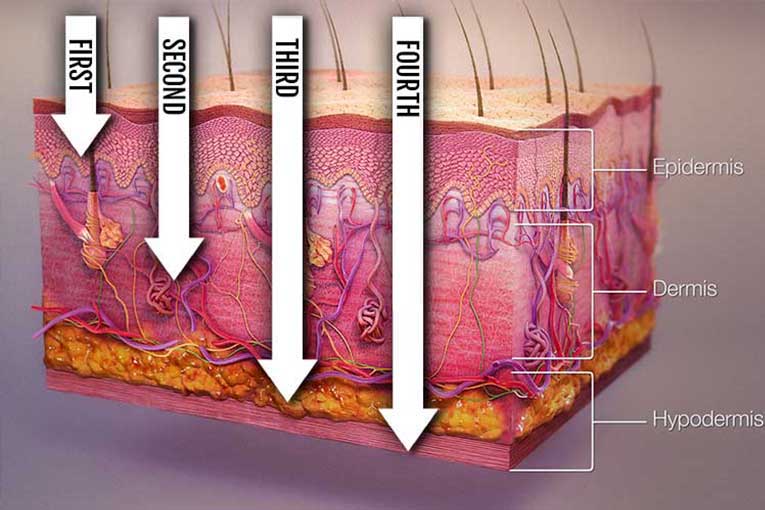
They are classified by degrees of severity, from minor first degree burns that affect only the outer layer of the skin, to life-threatening fourth degree burns that damage deeper tissues beneath the skin.
While most people are familiar with first, second, and third degree burns, fourth degree burns are far less common and far more serious.
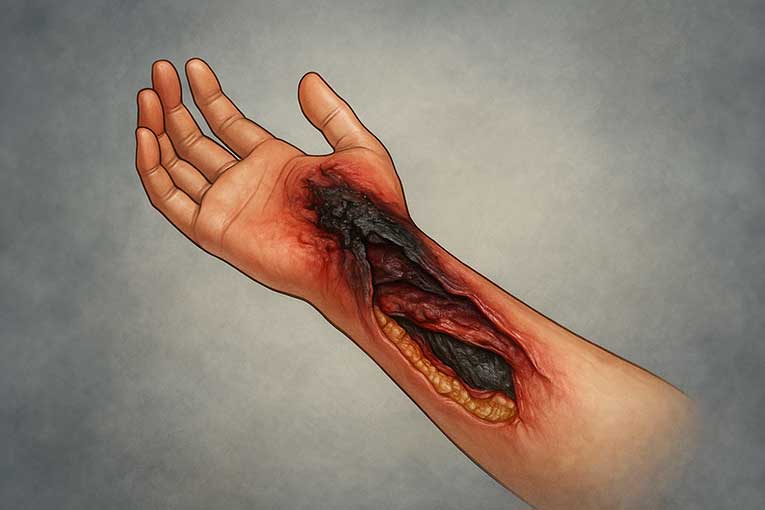
A fourth degree burn goes beyond the skin’s surface, destroying the underlying fat, muscle, and even bone.
Understanding the nature of a fourth degree burn is vital, not just for medical professionals, but for the general public as well.
Quick action can be the difference between life and death.
In this article, we will explore what exactly a fourth degree burn is, how it differs from other types of burns, what causes it, how it’s treated, and what recovery looks like.
What is a Fourth Degree Burn?
A fourth degree burn is the most severe type of burn injury.
It goes beyond damaging just the skin and affects deeper layers of tissue, including fat, muscles, tendons, and even bone.
At this level, the burn completely destroys both the outer (epidermis) and inner (dermis) layers of skin, leaving the affected area blackened, charred, or dry and white in appearance.
Because fourth degree burns damage nerves, the injured area may not be painful at first. This absence of pain does not mean the injury is minor, it is often a sign that the nerve endings have been destroyed.
These burns are usually caused by prolonged exposure to intense heat, open flames, electricity, or strong chemicals.
Due to the depth of tissue damage, fourth degree burns can lead to serious complications, such as infection, fluid loss, shock, and organ failure.
Immediate medical treatment is essential.
These burns often require surgery, including skin grafts or even amputation in severe cases.
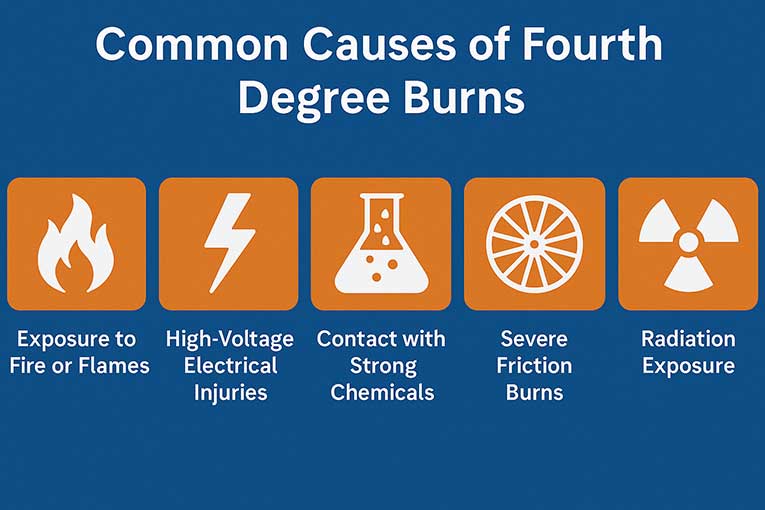
What Are The Most Common Causes of a Fourth Degree Burn?
Fourth degree burns are serious injuries that occur when the body is exposed to extreme heat or harmful substances for a prolonged period.
These burns go beyond the skin and affect deeper tissues, such as fat, muscle, and bone. Below are the most common causes.
Prolonged Exposure to Fire or Flames
One of the leading causes of fourth degree burns is prolonged contact with open flames.
This often occurs in house fires, vehicle accidents, or industrial incidents where escape is delayed.
Clothing can catch fire, holding heat against the skin and allowing the burn to penetrate deep into the body.
High-Voltage Electrical Injuries
Electrical burns, especially from high-voltage sources, can cause fourth degree burns.
Electricity generates intense heat as it travels through the body, burning internal tissues even if the skin appears only mildly affected.
This type of injury is common in construction sites, industrial settings, and electrical accidents.
Contact with Strong Chemicals
Exposure to strong acids or alkalis, such as industrial cleaning agents or corrosive substances, can lead to deep tissue burns.
Chemical burns can continue to damage the skin and tissue long after the initial contact if not washed off quickly and thoroughly.
Severe Friction Burns
Friction burns occur when the skin rubs against a rough surface at high speed, such as in motorcycle accidents or being dragged across a hard surface.
If the contact is strong and long enough, it can lead to fourth degree burns that extend into muscle and bone.
Radiation Exposure
Though less common, extremely high doses of radiation, such as in industrial accidents or overexposure during radiation therapy, can damage tissue layers beyond the skin, resulting in deep burns.
How Is a Fourth Degree Burn Different to Other Types of Burns?
The skin may appear white, blackened, or leathery.
Because nerve endings are damaged, the area may feel numb.
These burns often require skin grafts and leave permanent scars.
Fourth Degree Burns
Fourth degree burns extend through all layers of skin and into the underlying fat, muscle, and bone.
These burns are usually painless at the site due to complete nerve destruction.
The affected area may look charred, blackened, or dry and white.
They require immediate emergency treatment, often involve surgery or amputation, and result in long-term disability, permanent scarring, and significant functional loss.
How is a Fourth Degree Burn Treated?
Treating a fourth degree burn is a complex and urgent medical task.
Because these burns affect all layers of skin and deeper tissues such as fat, muscle, and even bone, they require immediate and specialist care.
Treatment usually begins in an emergency department or burn unit.
The first step is to stabilise the patient.
Doctors will assess the extent of the burn, manage pain, and prevent or treat shock.
Intravenous fluids are given to prevent dehydration and maintain blood pressure.
Antibiotics may also be used to prevent infection, which is a major risk with deep burns.
Next, dead or damaged tissue must be removed through a process called debridement.
This helps the wound heal and reduces the chance of infection.
Skin grafts are often needed to replace damaged tissue.
In very severe cases, amputation of affected limbs may be necessary.
Ongoing treatment may include reconstructive surgery, physical therapy, and occupational therapy to restore movement and strength.
Due to the trauma of the injury, psychological support is also a vital part of recovery.
Patients with fourth degree burns typically require long-term hospital care, including time in an intensive care or specialist burn unit.
Early and aggressive treatment at a healthcare facility is essential for improving survival and long-term outcomes.
Without it, fourth degree burns can lead to life-threatening complications and permanent disability.
How Long Does a Fourth Degree Burn Take to Heal?
Healing from a fourth degree burn is a long and complex process.
These burns destroy all layers of the skin and reach into deeper tissues such as fat, muscle, and even bone.
Because of this severe damage, the body cannot heal on its own without major medical intervention.
The initial hospital stay can last several weeks to months, depending on the size and location of the burn and whether complications arise.
During this time, the patient may undergo multiple surgeries, such as debridement (removal of dead tissue) and skin grafts.
In some cases, amputations or reconstructive surgery may also be required.
Even after leaving the hospital, long-term recovery continues.
Physical therapy is often needed to regain movement, particularly if joints or muscles are affected.
Patients may also need occupational therapy, psychological support, and regular check-ups to monitor healing.
Full recovery can take many months or even years.
The exact timeline varies depending on the person’s age, overall health, and how quickly they respond to treatment.
Some people may face lifelong challenges, including scarring, reduced mobility, or chronic pain.
Does a Fourth Degree Burn Scar?
Yes, a fourth degree burn almost always leaves significant scarring.
Because this type of burn destroys all layers of the skin and extends into underlying tissues such as fat, muscle, and bone, the damage is permanent and severe.
As the skin cannot heal naturally in these cases, scarring is an unavoidable part of the recovery process.
The scars from fourth degree burns are often deep, large, and discoloured.
They may appear raised, tight, or shiny, and can be either lighter or darker than the surrounding skin.
Common types of scarring include hypertrophic scars, which are thick and red but remain within the wound area, and keloid scars, which grow beyond the boundaries of the original injury.
In addition to scarring, many patients develop contractures, where the skin and underlying tissues tighten and restrict movement, especially when burns are near joints.
This can affect mobility and lead to long-term physical difficulties.
To manage scarring, patients may undergo treatments such as pressure garments, silicone gel sheets, steroid injections, and in some cases, reconstructive surgery.
While these methods can reduce the appearance and discomfort of scars, they cannot remove them entirely.
Emotional and psychological support is also important, as scarring can impact confidence and mental wellbeing.
Conclusion
You should now have an understanding of what a fourth degree burn is.
Fourth degree burns are among the most devastating and life-threatening injuries a person can suffer.
This level of damage can result in permanent disability, disfigurement, and, in the most severe cases, death.
Recovery is rarely straightforward and often requires months or even years of intensive medical care, surgeries, and physical rehabilitation.
Immediate medical intervention is essential.
The faster a patient receives professional care, the better the chances of stabilising their condition, preventing infections, and beginning the long road to recovery.
Fire safety education, use of protective gear, and better awareness of hazards can all play a role in prevention.
More than 50 firefighters, family members, and advocates travelled to Washington, D.C. to press lawmakers to back new legislation recognising occupational cancer as a line-of-duty illness.
According to the International Association of Fire Fighters (IAFF), the bipartisan ‘Honoring Our Fallen Heroes Act’ aims to amend the Public Safety Officers’ Benefits programme to cover work-related cancers, which it says are the leading cause of death among firefighters.
IAFF stated that the act, filed as S. 237 in the Senate and H.R. 1269 in the House, would ensure financial and death benefits for firefighters’ families are available in cases where cancer is linked to their occupational exposure.
General President of the IAFF, Edward Kelly, said: “These families have seen firsthand the devastating impacts occupational cancer has on the fire service. Fire fighters are losing their lives to occupational cancer at alarming rates, and it’s time for the federal government to finally recognize these sacrifices as occurring in the line of duty.”
The IAFF confirmed that over 150 members of Congress have already signed on to support the bill.
Bipartisan support building in House and Senate
The IAFF reported that, since its reintroduction earlier this year, 116 members of the U.S. House of Representatives have agreed to co-sponsor the legislation, including 83 Democrats and 33 Republicans.
In the Senate, 42 members are currently supporting the measure, consisting of 26 Democrats and 16 Republicans.
Key sponsors include Senator Amy Klobuchar (D-MN), Senator Kevin Cramer (R-ND), Representative Mary Gay Scanlon (D-PA), and Representative Carlos Gimenez (R-FL).
IAFF said these lawmakers have worked closely with its staff and affected families to raise awareness and secure bipartisan support.
During the lobbying day, the group held meetings with Senator Chuck Grassley (R-IA), Senator Adam Schiff (D-CA), Representative Jim Baird (R-IN), and Representative Betty McCollum (D-MN).
Personal stories shape the legislative campaign
Among the advocates was firefighter Josh Southerland of Hamilton County, Indiana Local 4416, who lost his father to kidney cancer in 2020.
Southerland said: “These are not isolated tragedies. We’re hoping to get this passed through so we can get it done for the families.”
He added: “So far, the legislators have been very receptive. They’ve been engaged, and asked plenty of questions, so I’m hoping for a positive outcome and a quick vote passing through this year.”
Senator Klobuchar addressed participants during the visit. According to the IAFF, she thanked firefighters and urged them “to not give up”, adding: “We have worked really hard on this legislation because we know what the facts are.”
Family of fallen firefighter joins Capitol Hill outreach
Cylina Cervantes travelled from California with her three children to speak in memory of her late husband, Miguel Cervantes, a firefighter with Rancho Cucamonga Local 2274.
Miguel Cervantes died in 2023 at the age of 45, after being diagnosed with Follicular Lymphoma in 2022, which later progressed to Diffuse Large B-Cell Lymphoma.
Cervantes said: “This isn’t supposed to be my story. It still doesn’t feel real. My husband was a fire fighter for over 22 years. He worked for his dream department, got promoted to engineer medic, and even served as union vice president. We thought we had a lifetime ahead of us.”
She added: “Passing this would help support people like my hero who lost his life to cancer. We don’t want other families to go through what we did, without the support they need and deserve.”
The IAFF reported that Cervantes and her children visited congressional offices throughout the day to discuss the occupational cancer risks firefighters face.
IAFF campaigns for formal federal recognition
The IAFF said that the current Public Safety Officers’ Benefits programme does not recognise occupational cancer as a qualifying line-of-duty illness, creating a gap in federal protections for firefighters and their families.
The union said this lobbying initiative was part of a broader campaign to ensure federal law reflects the risks firefighters face from carcinogenic exposure on the job.
It added that the IAFF has been gathering personal accounts and data to support the legislation, which it says is necessary to match state-level recognition in many jurisdictions.
As more families share their experiences, the IAFF stated that it hopes growing public and political awareness will result in formal passage of the Honour Act during the current session of Congress.
Josh Southerland said: “It’s about honoring their sacrifice. And making sure the system honors it too.”
Firefighters and families lobby Congress to recognise cancer as line-of-duty illness: Summary
More than 50 firefighters, family members, and advocates visited Capitol Hill in Washington, D.C.
The International Association of Fire Fighters reported that the visit was to support the Honoring Our Fallen Heroes Act.
The Act proposes expanding the Public Safety Officers’ Benefits programme to include occupational cancer.
Firefighters’ cancer deaths are not currently recognised as line-of-duty under federal law.
IAFF General President Edward Kelly said federal recognition is long overdue.
The legislation is filed as S. 237 and H.R. 1269 in the Senate and House respectively.
Over 150 lawmakers have co-sponsored the bill, including Republicans and Democrats.
Senator Amy Klobuchar, Senator Kevin Cramer, Representative Mary Gay Scanlon, and Representative Carlos Gimenez are leading sponsors.
Josh Southerland and Cylina Cervantes were among those who shared personal stories with legislators.
Miguel Cervantes, a California firefighter, died in 2023 from a cancer linked to work exposure.
His family met lawmakers to highlight the need for federal recognition and support.
The IAFF said this is part of a broader campaign to close the gap in federal benefits.
Senator Klobuchar told attendees to “not give up” on the legislative effort.
The IAFF continues to gather support and testimony in favour of the bill.
It hopes for a formal vote on the legislation within the current congressional session.
Financial strain and outdated equipment prompt safety concerns
New research published on 27 June 2025 has reported a decline in confidence in workplace health and safety across UK organisations.
The findings suggest that inadequate equipment, limited training and shifting employer priorities are contributing to growing employee scepticism.
The data comes from the fifth annual Safety and Health at Work Report 2025, commissioned by Drager, based on a survey of 1000 employees and managers in companies with over 50 staff.
According to the report, financial pressures are contributing to outdated or poorly maintained safety infrastructure.
The study found that 77% of respondents believe recent changes to National Insurance will negatively impact health and safety budgets, while 66% say equipment in their workplace is inadequate, outdated or in disrepair.
Workers question role of employers in mental health and safety
The report found that 63% of workers believe too much responsibility for workplace safety and wellbeing now lies with employees rather than employers.
Researchers reported a shift in how mental wellbeing is prioritised in the workplace.
In 2024, 82% of participants ranked mental health as the top safety issue.
In 2025, it had dropped to third place, behind fire safety and respiratory hazards.
The report found that 73% of respondents consider safety training to be a tick box exercise.
9% said they had received no safety training in the last five years.
Artificial intelligence seen as both solution and risk
The research highlighted growing use of AI in workplace safety systems.
44% of those surveyed said AI could help reduce human error by automating repetitive checks.
Respondents also pointed to its potential to improve safety training and identify hazards through simulation.
However, 92% said they anticipate risks from AI implementation in the next five years.
The most common concern, identified by 47% of participants, was that increased use of AI could lead to complacency.
Organisations may assume safety systems are automated enough to reduce the need for human oversight.
Economic pressure linked to downgraded safety standards
The study found that budget cuts are influencing employer decisions around safety provision.
Many participants expressed concern that essential health and safety requirements are being deprioritised.
A total of 77% said National Insurance changes would limit funding for workplace safety.
66% of workers said that the safety equipment provided by their employer was no longer fit for purpose.
The report authors stated that the financial context must be acknowledged in order to maintain effective protection measures.
Cynicism builds across safety culture
The findings suggest the emergence of a wider cultural shift in how workers view employer commitment to safety.
The report described this trend as ‘Gen C’ – a generation marked by cynicism around safety policies and investment.
This shift is linked to low confidence in training systems, outdated equipment, falling mental health prioritisation and unclear approaches to new technology.
It stated that business leaders should use the results as a reason to review how they address health and safety concerns.
Matthew Bedford, Managing Director at Dräger Safety UK Ltd, said: “The outlook for businesses continues to be extremely challenging, not least financially. However, it is vital that organisations also remain focused on fundamental issues such as the safety and wellbeing of their employees.”
Bedford added: “My hope is that some of the issues highlighted in this year’s research will serve as a wake-up call to UK businesses.
“Despite the vast majority of people reporting that they do feel safe in their workplace, there are clear areas of dissatisfaction and cynicism across key areas which need addressing to prevent negative sentiment developing further.
“It is vital that we do not allow complacency to develop in relation to workplace health and safety, and that instead, innovation and new approaches being seen in the fields of safety training and safety technology are leveraged fully to keep workplaces safe despite the challenges faced.”
Health and safety confidence drops among UK workers, new report shows: Summary
The fifth annual Safety and Health at Work Report 2025 was published on 27 June 2025.
The study was conducted by Insight Avenue UK and commissioned by Dräger Safety UK Ltd.
It surveyed 1000 employees and managers across UK organisations with more than 50 staff.
63% of workers believe safety responsibility has shifted too much onto employees.
Mental health dropped from first to third in workplace safety priorities over the past year.
73% of respondents said safety training is a tick box exercise.
9% had not received safety training in five years.
77% said National Insurance changes would reduce health and safety funding.
66% said their company’s safety equipment is outdated or damaged.
44% believe AI can improve safety by reducing human error.
92% said AI introduces new risks to safety management.
47% cited over-reliance on automation as the top AI-related concern.
New programme offers tailored cancer support to firefighters
The International Association of Fire Fighters (IAFF) has reported that Dana-Farber Cancer Institute has launched a national cancer care programme tailored to firefighters in the United States.
The initiative, called Direct Connect for Firefighters, was piloted last year in Massachusetts in partnership with Boston Local 718 and the Professional Fire Fighters of Massachusetts (PFFM).
The expanded programme provides support in three key areas: educational materials for training, clinical guidance for early detection, and research collaboration to inform cancer screening recommendations.
According to IAFF, the pilot involved collaboration with the Boston Fire Cancer Foundation, which helps connect firefighters with cancer treatment and support services.
PFFM President Rich MacKinnon said: “The PFFM is incredibly grateful to have the opportunity to work with Dana-Farber Cancer Institute toward a future where fire fighters can do their jobs without sacrificing their long-term health.”
Pilot programme builds on Boston Fire Cancer Foundation
IAFF reported that the initial phase of the Direct Connect programme was closely tied to the work of the Boston Fire Cancer Foundation.
The foundation, managed by Boston fire fighter Dan Ranahan, helps firefighters access care and navigate cancer treatment services.
Sam Dillon, President of Boston Local 718, said: “The partnership and efforts of Dana-Farber and the Boston Fire Cancer Foundation — led by Boston fire fighter Dan Ranahan — are resulting in enhanced access to specialized care, vital education to our fire fighters, and collaboration on research that could lead to a deeper understanding of the cancer risks inherent in our profession.”
He added: “Fire fighter lives will no doubt be saved by the utilization of this program.”
According to the IAFF, this collaboration model will inform future national rollouts of the programme to other firefighting bodies.
Cancer remains leading cause of firefighter deaths
According to IAFF, cancer is now the leading cause of death among US firefighters, primarily due to regular exposure to toxic substances during incident response.
Dana-Farber Cancer Institute said the Direct Connect programme aims to address these risks through more accessible, tailored cancer screening options.
Heather Cloran Di Lorenzo, Senior Director of Commercial and Market Strategy at Dana-Farber Cancer Institute, said: “Our goal is to provide fire fighters with personalized support and access to cutting-edge cancer screening and prevention strategies.”
IAFF 3rd District Vice President Jay Colbert also commented on the importance of early intervention efforts for firefighters.
Colbert said: “We know now that cancer is the number one killer of fire fighters due to the toxins we are exposed to every day on the job.”
He added: “Any weapon we can add to our arsenal to fight against this horrible disease helps save lives.”
Research collaboration aims to improve early detection
According to Dana-Farber Cancer Institute, a key part of the programme involves working with firefighter organisations to develop evidence-based screening recommendations.
This collaboration includes efforts to gather data and generate insight into the specific risks firefighters face.
Dana-Farber explained that findings from the research could help refine clinical guidance and improve training on early symptoms and intervention strategies.
As part of the programme, Dana-Farber will work with firefighter groups across the US to assess outcomes and identify ways to improve service provision over time.
IAFF confirmed that research outputs from this initiative will be made available to support wider awareness efforts within the fire service community.
Educational support included in training resources
IAFF stated that the Direct Connect programme also includes the development of oncology-related educational content for firefighter training.
This material will be made available to training centres and departments as part of an effort to raise awareness of occupational cancer risks and screening processes.
According to Dana-Farber, this content aims to support a more preventative approach and equip fire service personnel with knowledge relevant to their occupational exposure profile.
The institute confirmed that firefighters will be able to access the resources through affiliated local organisations.
IAFF reported that future phases of the programme may include additional components based on feedback from participating fire departments.
Firefighters across US gain access to Dana-Farber cancer support programme: Summary
Dana-Farber Cancer Institute has launched a national cancer care programme for firefighters.
The initiative is named Direct Connect for Firefighters.
It was piloted with Boston Local 718 and the Professional Fire Fighters of Massachusetts.
The programme includes clinical guidance, research collaboration and education.
Dana-Farber worked with the Boston Fire Cancer Foundation on the pilot.
The initiative supports early detection and cancer screening.
Heather Cloran Di Lorenzo said the programme offers personalised support.
IAFF stated that cancer is the leading cause of firefighter deaths.
Jay Colbert said toxic exposure contributes to this trend.
The programme also includes training resources on cancer awareness.
Zelim recognised for AI system in British Safety Council awards
Zelim has been named the winner of the British Safety Council’s 2025 Health and Safety Transformation Award for its automatic man overboard detection system.
According to Zelim, its system ZOE was selected from a shortlist of ten international organisations, including Saudi Aramco, Pertamina, and the Universities Safety and Health Association.
The company stated that ZOE is designed for use in maritime, offshore and defence sectors and has been developed using over 7 million maritime images.
ZOE was created with support from the United States Coast Guard and uses machine learning to detect and track people in the water.
The company added that the system can function in poor visibility and high-motion conditions, removing the need for wearables or human confirmation.
Man overboard system designed with US Coast Guard
Zelim stated that the ZOE system integrates with existing vessel camera and sensor setups.
Once a person is detected, the system activates a series of automated safety responses.
These include location tagging, alert notifications, video logging, and a recovery checklist that supports emergency crews.
The company reported a 96.8 percent probability of detection at a distance of 300 metres.
It also stated that ZOE can differentiate between people, small craft, and marine animals such as seabirds.
ZOE is designed to maintain day and night functionality without manual oversight.
Deployment on vessels across maritime and defence sectors
Zelim reported that the ZOE system has already been deployed on a North Sea jack-up rig and a UK-flagged cruise ship.
It is also scheduled to be installed on a naval frigate.
According to the company, ZOE is being trialled with asset operators, ports, and defence agencies worldwide.
It explained that the technology aims to improve survivability in man overboard events.
The company also noted its additional potential for use in preventing collisions and unauthorised water entries.
British Safety Council outlines purpose of award
The British Safety Council explained that its Health and Safety Transformation Award is given to organisations that have used information in new ways to reduce harm.
It added that the award was sponsored by Croner-i and was part of its wider programme of recognising safety performance across sectors.
The Council stated that ZOE was chosen for the award due to its contribution to operational safety in high-risk environments.
It also noted that the shortlisted entries represented a range of industries and international submissions.
The award has been running annually and recognises changes made in health, safety or wellbeing.
Certification process and Lloyd’s Register approval
Zelim stated that ZOE currently holds Approval in Principle from Lloyd’s Register under ISO 21195.
This standard relates to the performance of man overboard detection systems.
The company added that it expects to complete full type approval in the near future.
It reported that ZOE would become the first system of its kind to hold complete certification under the standard.
The system’s approval process has included trials and third-party assessments to confirm detection capability and operational integration.
Zelim wins British Safety Council award for AI health and safety system: Summary
Zelim has won the British Safety Council’s 2025 Health and Safety Transformation Award.
The award was presented for its automatic man overboard detection system ZOE.
ZOE uses AI and a dataset of over 7 million images.
The system was developed with the US Coast Guard.
ZOE can detect people in the water with 96.8 percent accuracy from 300 metres.
It removes the need for wearables or manual confirmation.
ZOE integrates with vessel systems and automates emergency responses.
It is currently in use on offshore rigs and a cruise ship.
It is scheduled for deployment on a naval frigate.
Trials are ongoing with global maritime and defence organisations.
The award was sponsored by Croner-i.
The British Safety Council stated that ZOE was recognised for operational impact.
ZOE has received Approval in Principle under ISO 21195.
The system is expected to become the first fully type-approved MOB system.
Leicestershire sees most fire safety notices outside London
CE Safety has reported that buildings in Leicestershire received the highest number of statutory fire safety notices outside London over the past two years.
The findings are based on CE Safety’s analysis of the National Fire Chiefs Council (NFCC) public enforcement register, examining 4,108 notices issued by Fire and Rescue Services (FRSs) between 1 May 2023 and 30 April 2025.
Leicestershire Fire and Rescue Service issued 338 notices during this period, averaging 14 notices per month.
West Yorkshire followed with 317 notices, and Hampshire and Isle of Wight issued 294.
The figures exclude London and provide a regional breakdown of fire risk enforcement activity across England and Wales.
CE Safety publishes full regional breakdown of notice levels
According to CE Safety’s report, the top five regions by total enforcement notices were Leicestershire (338), West Yorkshire (317), Hampshire and Isle of Wight (294), Lancashire (282), and East Sussex (229).
South Yorkshire, Kent, Derbyshire, Merseyside, and Cheshire completed the top 10.
Each region recorded more than 5 notices per month on average.
In contrast, CE Safety found that Hertfordshire recorded just 6 fire safety notices during the same two-year period.
Cambridgeshire issued 12, and Northumberland issued 14.
The data reveals variations in both the volume of inspections and levels of non-compliance identified by local authorities.
CE Safety outlines practical advice for improving safety
As part of its report, CE Safety issued a five-point checklist to support better fire safety in residential and commercial buildings.
The guidance includes ensuring escape routes are clear, checking that fire doors close properly, and testing fire alarm systems weekly.
CE Safety stated that alarm systems should be tested in line with British Standard BS 5839-1, with six-month inspections and written records kept on-site.
Flammable materials should be stored away from heat sources, and occupants should know the location and condition of fire safety equipment.
It added that building managers, landlords, and tenants all have roles in maintaining safety and reporting damaged or missing equipment.
Director says enforcement reflects ongoing risk management challenges
Gary Ellis, Director at CE Safety, commented on the importance of the findings.
Ellis said: “Fire safety remains a critical issue for both property owners and renters alike.
“Our analysis highlights the areas where Fire and Rescue Services are most actively enforcing regulations, which reflects the ongoing challenges in ensuring buildings meet essential safety standards.
“Whether you own or rent a building, it’s important to be aware of potential fire risks and take simple steps to protect yourself and those around you.
“It’s important that everyone regularly checks smoke alarms, understands the importance of fire doors, and keeps escape routes clear.
“Staying informed and proactive is key to preventing fire incidents and keeping communities safe.”
Enforcement activity aligns with building condition, not just population
CE Safety’s analysis shows that enforcement levels do not always correspond with regional population size.
For example, Greater Manchester was not among the 10 highest regions for notices, despite having a larger population than some listed.
The data does not account for proactive inspections versus reactive responses, nor does it specify property types.
However, CE Safety stated that the findings provide a useful indication of local regulatory activity and areas where fire safety risks are more frequently identified.
The NFCC’s public enforcement register remains an open data source available for public review.
Fire risk enforcement highest in Leicestershire and West Yorkshire: Summary
CE Safety analysed 4,108 fire safety notices issued between May 2023 and April 2025.
The data comes from the National Fire Chiefs Council’s public enforcement register.
The analysis excludes London.
Leicestershire issued the highest number of notices with 338.
West Yorkshire followed with 317 notices.
Hampshire and Isle of Wight issued 294.
The regions with the fewest notices were Hertfordshire, Cambridgeshire, and Northumberland.
The report includes practical fire safety advice.
Recommendations include testing alarms, checking fire doors, and storing flammable items safely.
Gary Ellis, Director at CE Safety, highlighted the need for ongoing awareness and compliance.
Enforcement levels do not strictly follow regional population figures.
The data is publicly available through the NFCC’s register.
Royal recognition for warewashing supplier in the UK
Meiko UK has been awarded a Royal Warrant of Appointment for the supply and maintenance of warewashing equipment to His Majesty King Charles III.
According to Meiko UK, the appointment acknowledges companies that have supplied goods or services to the Royal Household regularly over a minimum period of five years.
Eligibility criteria also include an evaluated commitment to environmental responsibility, which the company said includes having a formal sustainability policy and action plan.
The Royal Warrant is issued as a formal recognition of service and quality, specifically tied to the Royal Household’s operational requirements and values.
Meiko UK confirmed that the Warrant applies specifically to warewashing equipment and related maintenance services.
Criteria for Royal Warrant include sustainability commitment
Meiko UK stated that successful Royal Warrant applicants must demonstrate ongoing environmental and sustainability performance.
The company noted that this includes proof of actionable steps to reduce environmental impact, verified through documentation and corporate behaviour.
Paul Anderson, Managing Director of Meiko UK and Royal Warrant Grantee, said: “It is a very proud moment to be recognised by His Majesty with a Royal Warrant of Appointment.
“This reflects not only the craftsmanship of our products but also the quality of service from Meiko engineers, designers and project managers, marketing staff, Sales Management, warehouse and logistics and all those involved in customer service at head office.
“It is also exciting that Meiko’s extraordinary commitment to sustainability has also been recognised.
“We are committed to conserving our natural resources by designing environmentally friendly products and by encouraging sustainable behaviours.”
Anderson added: “Meiko has publicly committed to making our Offenburg production facility carbon-neutral by 2025 to demonstrate our commitment to protecting the environment.
“Meiko UK was also the first in UK foodservice to commit to the provision of customer training support for the lifetime of our equipment.
“The enthusiasm to preserve and protect the environment runs throughout Meiko, and we are particularly keen to use environmental education to engage the energy and emotion of our customers and users of Meiko equipment.
“We look forward to upholding the values that the Royal Warrant represents and to continuing our relationship with the Royal Household.”
UK site links service quality with engineering and training
Meiko UK highlighted that the warrant reflects the quality and reliability of its warewashing systems and maintenance services.
The company stated that its UK operations involve multiple departments contributing to equipment support, including engineering, design, logistics and customer service.
It reported that customer support continues across the product lifecycle, with a focus on sustained training and operational guidance.
The UK team said its approach is based on long-term service delivery aligned with both customer and environmental needs.
Meiko UK also noted that this ongoing service model was a distinguishing factor in their Royal Warrant eligibility.
Royal Warrant builds on international environmental targets
The company said that its environmental targets are managed both in the UK and at its international facilities.
Meiko UK reiterated its public commitment to carbon neutrality at its production facility in Offenburg, Germany by the end of 2025.
It also stated that environmental education is a key part of its service philosophy, especially in relation to equipment use in foodservice environments.
The organisation said that this focus is designed to engage clients and users on sustainable behaviour change.
Environmental aims have been formally integrated into the company’s internal processes and customer engagement activities, it added.
Royal Household relationship to continue following award
Meiko UK said the Royal Warrant confirms its continuing relationship with the Royal Household.
It explained that the Warrant represents a mutual understanding between supplier and household built on service consistency and shared values.
The company added that it sees the Warrant as a formal framework for maintaining its current performance levels and sustainability targets.
Meiko UK stated that it would continue operating within the standards required by the Royal Household while also extending customer service innovations in the wider UK market.
It confirmed that this recognition will not alter its commercial activities but instead reflect existing service commitments.
Meiko UK receives Royal Warrant for warewashing equipment supply: Summary
Meiko UK has received a Royal Warrant of Appointment for warewashing equipment.
The Royal Warrant was issued by His Majesty King Charles III.
Meiko UK confirmed the award applies to the supply and maintenance of warewashing systems.
The company said eligibility required at least five years of service to the Royal Household.
Applicants must also demonstrate a formal sustainability policy and action plan.
Managing Director Paul Anderson is named as the Royal Warrant Grantee.
The company has committed to making its Offenburg facility carbon-neutral by 2025.
Meiko UK said it was the first in UK foodservice to offer lifetime equipment training.
It said the award recognises engineering, customer service and logistics support teams.
Meiko UK confirmed it will continue service delivery under the terms of the Royal Warrant.
Shift change proposal prompts protest in Gloucestershire
Firefighters held a rally outside Gloucestershire county council on 18 June to oppose proposed changes to their working hours.
According to the Fire Brigades Union (FBU), the demonstration was in response to plans to extend wholetime day shifts from 9am–6pm to 8am–7pm.
The FBU said the changes would have a damaging impact on firefighters’ wellbeing, family life, and ability to remain in the profession.
The Gloucestershire fire and rescue scrutiny committee has recommended that the proposals be dropped.
The committee cited concerns including childcare access, morale, gender equity, and physical and mental health implications.
Union outlines impact of shift changes on staff
The Fire Brigades Union has raised specific objections to the proposed changes, stating they could push some firefighters to leave the service entirely.
The union has described the plans as “unworkable” and has highlighted the effect on family responsibilities and quality of life.
FBU representatives also said the plans could have a disproportionate effect on women in the service, particularly around caring roles.
The committee report echoed these concerns, suggesting the shift patterns could negatively affect health and morale across the workforce.
The FBU said the union has consistently offered alternative measures to improve service delivery that do not involve shift changes.
Union criticises chief fire officer’s leadership
The Fire Brigades Union criticised the role of Gloucestershire’s chief fire officer, Mark Preece, in continuing with the proposal.
Kate Yhnell, FBU brigade chair for Gloucestershire, said: “Chief fire officer Mark Preece is taking a wrecking ball approach to leading Gloucestershire’s fire and rescue service. Firefighters and the county council have made it clear that his plan to change shift patterns are unworkable and damaging.
“It is deeply worrying that he is able to ignore all the evidence and continue to threaten to force through these attacks on firefighters’ working conditions.
“Forcing firefighters to work exhausting shifts will only damage the service they can provide. The Fire Brigades Union has repeatedly offered to work in collaboration to increase fire safety visits instead, but senior management has refused.
“Gloucestershire’s firefighters are committed to a high standard of service. We will not allow the chief to risk firefighter’s wellbeing and public safety with this vanity project.”
Committee recommends withdrawal of proposals
The fire and rescue scrutiny committee has advised that the shift change proposal be formally withdrawn.
According to the committee, the proposed shift extension would lead to logistical difficulties and reduce retention.
The committee also noted that there had been no substantial engagement with affected personnel prior to the proposal being tabled.
It said the plans could ultimately impact service delivery and operational capacity.
The committee encouraged further dialogue with the workforce to develop mutually acceptable alternatives.
Calls for improved collaboration and alternative solutions
The Fire Brigades Union has stated it remains open to constructive dialogue with senior management.
The union has proposed increasing the number of fire safety visits as a way to support service improvements without altering shifts.
It said these proposals had not been taken forward by management, despite repeated offers.
The union called on the council to uphold the committee’s recommendation and reject the current plan.
It also said a new approach was needed to ensure both workforce wellbeing and public protection were maintained.
Firefighters in Gloucestershire protest shift pattern changes: Summary
Firefighters protested outside Gloucestershire county council on 18 June 2025.
The protest was in opposition to proposed changes to wholetime shift patterns.
The Fire Brigades Union (FBU) said the changes would extend day shifts by two hours.
The FBU warned this could impact family life, health, and retention.
Gloucestershire’s fire and rescue scrutiny committee recommended that the plans be abandoned.
The committee cited concerns including morale, gender equality, and childcare access.
FBU brigade chair Kate Yhnell said the proposals were unworkable.
Yhnell said the chief fire officer had ignored the evidence.
She said the changes would damage the service firefighters provide.
The FBU offered alternatives such as increasing fire safety visits.
The committee report supported further engagement with staff.
The union has called for the proposals to be dropped.