How Many Types of Fire Are There?

Fire, as a natural phenomenon, has been intertwined with human history for millennia. 

It has served as a steadfast companion, offering warmth on cold nights, providing protection from predators, and allowing us to cook our food for sustenance. 

The mastery of fire was one of the defining moments of human evolution, enabling our ancestors to forge tools, tame the wilderness, and build thriving civilizations.

However, fire’s dual nature must not be overlooked. 

As much as it has been our friend, it can also be a formidable foe. 

When fire becomes unbridled and uncontrollable, it can wreak havoc, causing devastating consequences to lives, homes, and natural landscapes. 

The destructive power of wildfires, building fires, and industrial accidents reminds us of the need for vigilance and preparedness in the face of this primal force.

To navigate the complexities of fire and its potential dangers, understanding how many types of fire there are, as well the differences between them is of paramount importance. 
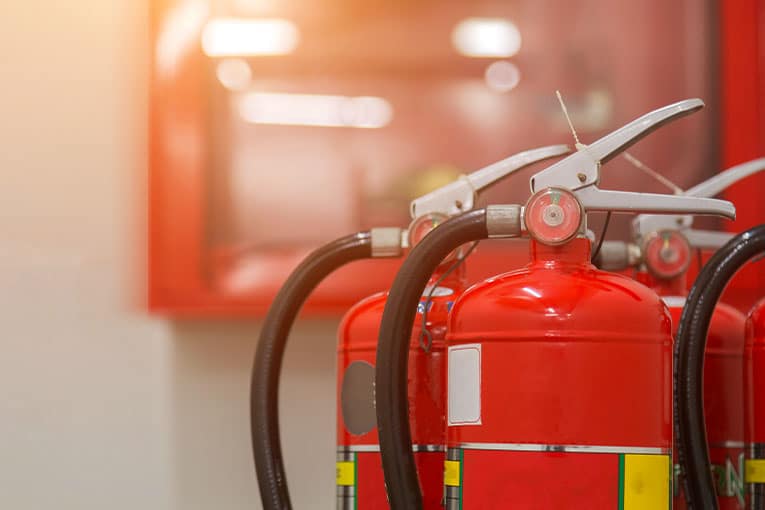
Different types of fire extinguishers
Knowing the right fire extinguisher for the right fire type is vital

Different types of fires arise from a diverse range of materials, each requiring an evolution of fire safety and a tailored approach for effective extinguishing. 

From the common Class A fires involving ordinary combustible materials to the specialised challenges of Class D fires involving combustible metals, a comprehensive knowledge of fire classifications empowers us to respond confidently and responsibly to fire emergencies.

How Many Types of Fire Are There?

There are six main classes of fires, each involving different materials and posing unique challenges for firefighting:

1. Class A – Solids

2. Class B – Liquids 

3. Class C – Gasses

4. Class D – Metals

5. Class F – Oils and Fats

6. Electrical Fires – These are not given their own class, as they can fall into any of the above categories, however due to the different requirements of electrical fires we will be covering them here. 

What are Class A Fires?

Class A fires are the most common type of fire encountered in various settings, ranging from residential homes to commercial offices and public spaces. 

These fires are characterised by their ignition of ordinary combustible materials, which are readily available in our everyday surroundings. 

Understanding the nature of Class A fires and how to handle them is crucial for effective fire safety and prevention.

The fuel sources that feed Class A fires include materials such as wood, paper, cloth, cardboard, and common plastics. 

These materials are typically found in abundance in residential and commercial spaces, making Class A fires a significant concern for fire safety.

How Do You Extinguish a Class A Fire?

The primary method for extinguishing Class A fires is to use water or water-based extinguishers. 

Water is a versatile and readily available firefighting agent that cools down the burning material, reducing the heat and ultimately smothering the flames. 

By removing the heat element of the fire triangle (heat, fuel, and oxygen), water effectively puts out the fire and prevents re-ignition.

When using water to extinguish Class A fires, it is essential to apply the water directly to the base of the flames. 

This ensures that the water reaches the burning material and cools it down, preventing the fire from spreading further. 

A class A fire
Class A fires are one of the most common types of fire

If possible, avoid spraying water directly onto electrical equipment or live electrical wires to prevent electric shock and potential electrocution hazards.

Another effective method to combat small Class A fires is by using fire blankets. 

Fire blankets are made of fire-resistant materials and can be quickly deployed to smother flames. 

They work by cutting off the oxygen supply to the fire, suffocating it and extinguishing the flames. 

Fire blankets are particularly useful for smothering fires on clothing, curtains, or small household items.

What are Class B Fires?

Class B fires pose a unique set of challenges due to the involvement of flammable liquids such as gasoline, oil, grease, and alcohol. 

These fires can occur in various settings, including kitchens, garages, workshops, industrial facilities, and places where flammable liquids are stored or used. 

Understanding how to handle Class B fires is crucial for effective fire safety and prevention.

Flammable liquids are highly volatile and can ignite easily, making Class B fires more intense and difficult to control compared to Class A fires. 

When a flammable liquid catches fire, it can quickly spread and produce intense flames, creating a dangerous and rapidly evolving situation. 

Additionally, flammable liquid fires can re-ignite if not fully extinguished, making them particularly challenging to manage.

How Do You Extinguish a Class B Fire?

To effectively control and extinguish Class B fires, it is crucial to use the appropriate firefighting agent. 

Water is generally not recommended for Class B fires as it can cause the flammable liquid to spread, potentially making the fire more dangerous. 

This class of fire also includes Lithium-ion battery fires, which is currently one of the causes of fire that is drastically on the rise. 

Instead, foam-based extinguishers or dry chemical extinguishers are the preferred choices for combating Class B fires.

Foam-based extinguishers work by covering the flammable liquid with a layer of foam, creating a barrier that prevents the release of flammable vapours and cutting off the oxygen supply to the fire. 

This smothers the flames and cools down the burning liquid, eventually extinguishing the fire.

Dry chemical extinguishers, on the other hand, are effective for Class B fires because they disrupt the chemical reaction of the fire. 

These extinguishers release a fine powder that separates the fuel from the oxygen, extinguishing the flames. 

They also work well on Class A fires, making them versatile and useful in various fire situations.

It is important to remember that when dealing with Class B fires, safety is paramount. 

Before attempting to extinguish a fire, assess the situation and ensure you have an escape route in case the fire becomes uncontrollable. 

If the fire continues to spread or becomes too intense, evacuate the area immediately and call the emergency services for professional assistance.

What are Class C Fires?

Class C fires involve flammable gases, which can create a hazardous and potentially explosive atmosphere. 

These fires present unique challenges and require specific precautions to ensure safety and prevent accidents. 

Class C fires pose a significant threat to locations like manufacturing and industrial warehouses, chemical plants, and facilities storing substantial quantities of flammable gases. These settings are particularly vulnerable to these types of fires.

Understanding the risks associated with flammable gases and implementing proper safety measures is crucial in managing Class C fires.

How Do You Extinguish a Class C Fire?

Extinguishing a Class C fire requires a methodical and cautious approach due to the volatile nature of flammable gases involved. 

When facing such a fire, two crucial steps come into play: shutting off the gas supply and utilising a dry powder extinguisher.

The first and most crucial step is to quickly shut off the gas supply at its source. 

This action prevents the continuous flow of fuel to the fire, thereby hindering its ability to grow and spread. 

Cutting off the gas supply is paramount to prevent the fire from intensifying and posing a greater threat to individuals attempting to extinguish it and those nearby.

After successfully shutting off the gas supply, the use of a dry powder extinguisher is recommended for extinguishing the Class C fire. 

Dry powder extinguishers are specifically designed to combat fires involving flammable gases effectively. 

The dry powder agent works by smothering the flames, cutting off their oxygen supply, and interrupting the fire’s chemical chain reaction, which leads to its rapid extinguishment.

It is important to note that while dry powder extinguishers are effective for Class C fires, water-based extinguishers should never be used in this scenario. 

Water-based extinguishers may cause the fire to spread or result in an explosion due to the reactive nature of certain flammable gases.

Additionally, individuals attempting to extinguish a Class C fire should prioritise their safety at all times. 

If the fire is beyond their control or if they are unsure about the gas source, it is best to evacuate the area immediately and call for professional help. 

The handling of Class C fires requires a level of expertise and knowledge to ensure the safety of both individuals and property

What are Class D Fires?

Class D fires present a unique and highly hazardous situation, involving combustible metals such as magnesium, titanium, potassium, sodium, and lithium. 

These fires can be particularly dangerous due to the reactive properties of these metals, which make them prone to violent and rapid combustion when exposed to air or water. 

The presence of combustible metals in specific industrial settings or laboratories increases the risk of Class D fires, and proper precautions must be taken to handle and store these materials safely.

One of the critical challenges in dealing with Class D fires is the limited effectiveness of conventional firefighting methods. 

Water, commonly used to extinguish other types of fires, can exacerbate Class D fires. 

When water comes into contact with burning combustible metals, it reacts vigorously, releasing hydrogen gas, intensifying the fire, and causing potential explosions.

How Do You Extinguish a Class D Fire?

To extinguish Class D fires safely and effectively, specialised dry powder extinguishing agents must be used. 

These agents, typically made of sodium chloride or graphite-based compounds, form a smothering layer over the burning metal, cutting off the supply of oxygen and heat. 

This action disrupts the combustion process and gradually cools the metal, leading to the fire’s suppression.

Due to the specialised nature of Class D fires and the need for specific extinguishing agents, it is essential to have personnel trained in handling such emergencies. 

Firefighters and other responders must be equipped with the appropriate dry powder extinguishers and knowledgeable about the risks and characteristics of combustible metal fires. 

These fires can be unpredictable and require careful planning and coordinated efforts to control and eliminate them safely.

What are Class F Fires?

Class F fires, also known as cooking oil fires or fat fires, are a specific type of fire that commonly occurs in commercial kitchens, restaurants, and other food preparation areas. 

These fires involve cooking oils and fats and can quickly escalate into intense and challenging situations to control.

The high temperatures used in cooking, especially deep frying, can cause cooking oils and fats to reach their autoignition point, leading to spontaneous combustion. 

Once ignited, the flames can rapidly spread and generate intense heat, posing a severe threat to kitchen staff, customers, and the entire building.
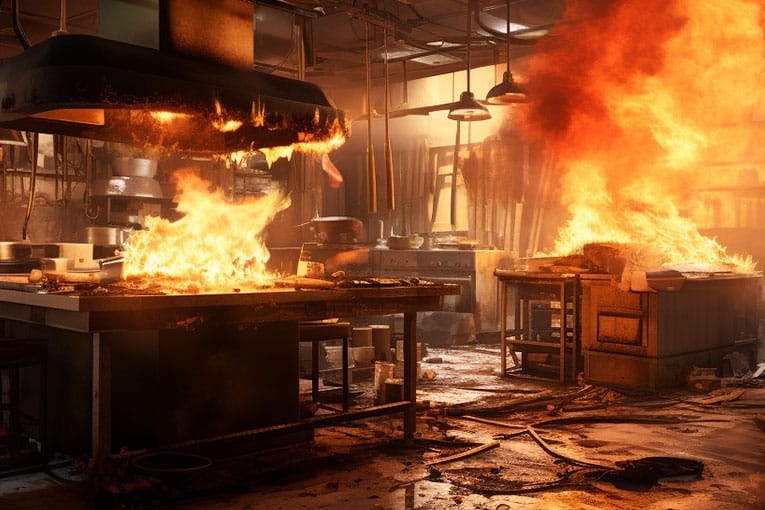
A Class F kitchen fire
Class F fires can be incredibly dangerous due to the oil involved

One of the primary reasons Class F fires are so dangerous is that water, a common extinguishing agent used for other types of fires, is ineffective and dangerous when applied to cooking oil fires. 

When water comes into contact with hot oil, it instantly vaporises and expands, splattering the burning oil and spreading the fire further. 

This reaction can cause severe burns and injuries to anyone nearby.

Knowing how to protect from kitchen fires is of vital importance to anyone working in the restaurant industry. 

How Do You Extinguish a Class F Fire?

The most effective method to extinguish Class F fires is to smother the flames with a fire blanket or use a wet chemical extinguisher specifically designed for cooking oil fires. 

Wet chemical extinguishers contain a special solution that creates a thick, soapy foam, which cools the burning oil, forms a barrier, and prevents the release of flammable vapours. 

This action starves the fire of oxygen, extinguishing it safely and effectively.

Preventing Class F fires involves implementing several safety measures in commercial kitchens and food preparation areas. 

Regular cleaning and maintenance of cooking equipment, ventilation systems, and hoods help reduce the buildup of grease and oil residues that could fuel a fire. 

Additionally, kitchen staff should be properly trained in fire safety, including the proper use of fire extinguishers and the importance of using fire blankets when dealing with cooking oil fires.

Commercial kitchens should have well-maintained fire suppression systems, such as automatic fire suppression systems installed in hoods above cooking areas. 

These systems can quickly detect and suppress cooking oil fires, minimising the risk of fire spreading to other parts of the kitchen.

What are Electrical Fires?

Electrical fires are a prevalent and concerning type of fire that poses a significant risk in modern life. 

Unlike other classes of fire (Class A, B, C, etc.), electrical fires are not categorised under a specific class. 

Instead, they are a distinct category of fires caused by electrical faults and malfunctions. 

These fires can result from various factors, such as faulty wiring, overloaded circuits, damaged appliances, or improper use of electrical equipment.

Damaged electrical equipment is one of the main causes of fires

Over time, electrical wires can deteriorate, become frayed, or develop loose connections. These issues create resistance and generate heat, which can ignite nearby combustible materials. 

Similarly, overloaded circuits, often caused by plugging too many electrical devices into a single outlet or circuit, can lead to overheating and ultimately trigger an electrical fire.

Another common cause of electrical fires is damaged appliances and electrical equipment. 

Ageing or poorly maintained appliances can develop electrical faults, leading to short circuits and fires. 

Electrical fires can also be triggered by the misuse of electrical equipment, such as using extension cords or power strips inappropriately or using appliances with damaged cords or plugs.

How Do You Extinguish an Electrical Fire?

In the event of an electrical fire, using water to extinguish the flames is extremely dangerous due to the risk of electrical shock. 

Instead, it is best to de-energize the electrical source by shutting off power at the circuit breaker or main electrical panel, if safe to do so. 

For smaller electrical fires, a Class C fire extinguisher or a dry powder extinguisher can be used. 

However, it is essential to prioritise personal safety and evacuate the area if the fire becomes uncontrollable.

To prevent electrical fires, regular electrical inspections and maintenance are essential. 

Homeowners and businesses should have their electrical systems inspected by qualified electricians to identify and address any potential issues. 

It is crucial to avoid overloading circuits, use proper wattage bulbs in light fixtures, and refrain from using damaged electrical equipment.

Conclusion

Understanding how many types of fire there are, and the appropriate methods to extinguish them is vital for everyone’s safety. 

In case of an emergency, knowing how to act quickly and effectively can make a significant difference in protecting lives and property. 

Fire safety training, having the right fire extinguishers, and staying informed about potential hazards are all crucial steps towards ensuring a safer environment for ourselves and those around us. 

With the current shift to electric cars, and the rise in the usage of lithium-ion batteries, it is now more important than ever to understand the difference in fire types and how to safely deal with them, with lithium-ion battery fires costing the UK £158 million a year alone

Let us all be proactive in fire prevention and response to mitigate the risks of fire-related incidents and create a safer world for everyone.

Research into sustainable and fire-resistant buildings assessment gains funding

The SFPE Foundation, a charitable organisation focused on enhancing the scientific understanding of fire and its interaction with the natural and built environment, has announced the funding of a research award to prepare for future development of risk-informed performance-based tools for the assessment of sustainable and fire-resilient buildings.

The research will be led by Brian J. Meacham, PhD, PE, CEng, FIFireE, FSFPE, Managing Principal at Meacham Associates, with support from Håkan Frantzich, PhD, FSFPE, Associate Professor, and Margaret McNamee, PhD, Professor, both with the Division of Fire Safety Engineering at Lund University.

It will look at characterising the problem, researching and identifying appropriate assessment methods, identifying necessary attributes and requirements for input data, and developing a framework to underpin a risk-informed performance-based assessment methodology.

Additional review will focus on consideration of how green attributes and risk factors impact risk assessment, uncertainty treatment, and decision-support methodologies in sustainable and fire resilient buildings.

The findings of the study are expected to be published and presented through SFPE and the SFPE Foundation in 2023.

Leslie Marshall, Ph.D., Director, SFPE Foundation, commented: “To aid in the assessment of sustainable and fire-resilient buildings, the SFPE Foundation’s Board of Governors is pleased to provide funding for another major new research investment in 2022.

“This project aligns with SFPE Research Roadmap priorities and is a foundational step to ultimately provide designers and practitioners with performance-based tools to identify and mitigate fire risk in green buildings.”

Evac+Chair gives the Last Word on the Fire Safety Act

Gerard Wallace, Managing Director at Evac+Chair International tells us why the Fire Safety Act was a missed opportunity

What is your response to the Fire Safety Act, FSA?

We are hopeful that the FSA is just the start of creating legislation and laws pertaining to fire safety, but we do see it as an opportunity missed for the disabled, due to the lack of commitment to PEEPS (Personal Emergency Escape Plan) in high-rise residential blocks.

We have copious amounts of rules, legislation, approvals and controls around Fire Safety, but very little concerning safe evacuation particularly for the disabled. Many lives have been lost due to lack of thought, legislation and planning around safe evacuation. Every building is different, specifically in reference to the means of escape.

There are a wide range of products available to ensure everyone, including the mobility impaired can be evacuated in an emergency but the lack of legislation means they are rarely implemented. Equipment should be mandatorily available to ensure that everyone can escape in an emergency, including the mobility impaired.

The “Stay Put Policy” has been hugely controversial for many years amongst fire safety professionals. My thoughts on this are, who makes the call on “Stay Put” or “Evacuate Now”, what sort of skills and experience must you have to make this judgement? There is a little more clarity around the legal responsibility of “The Responsible Person” but the revised legislation falls far short of considering the needs of the mobility impaired. At the very least, a PEEP should be mandatory for every building as it provides reassurance to those with mobility impairments that there is a plan in place for their safe evacuation.

Why do you feel evacuation chairs should be legislated?

They have been proven to save lives and there are many examples of this, everyone should have the right and means to evacuate in an emergency, if it is appropriate to do so. Whether the plan is to evacuate or stay put, without the proper equipment in place, evacuating the mobility impaired will be at the very least challenging but could lead to life threatening consequences. In the case of Grenfell, deaths of disabled residents was far greater than any other group. 41% of disabled residents lost their life as they were not able to evacuate themselves and equipment that could have helped them was not available.

What options can Evac+Chair offer building owners looking to improve their evacuation equipment?

We manufacture a wide range of evacuation chairs, specifically designed for stairway evacuation, to suit any type of personnel requirement and staircase; providing everyone with the means to escape, whether disabled, injured or mobility impaired. We offer free on-site evacuation assessments, carried out by our team of specialist nationwide consultants, which we recommend prior to purchase, this ensures the most suitable Evac+Chair is selected. We also offer training courses to ensure that our equipment is deployed and operated in the correct and safe manner, in the event of an emergency. Every building should be equipped with the means to evacuate anyone who cannot quickly and safely evacuate themselves.

This article was originally published in the August edition of IFSJ. To read your FREE digital copy, click here.

Fourth edition of the Simultaneous Evacuation Guidance published

A new edition of the industry guide The Simultaneous Evacuation Guidance (SEG) has been published. The fourth of edition of the guide was coordinated by NFCC in partnership with a range of stakeholders and replaces the third edition published in October 2020.

The latest edition, which has been put together by fire safety professionals, seeks to actively discourage the ongoing and prolonged use of a waking watch, makes a number of updates and improvements to discourage building owners from having onsite staffing where this may not be needed.

Key aims of the guide are to Ensure that those with responsibility for buildings fully understand the decision-making process before deciding that a change in evacuation strategy is required, to put a clearer emphasis on resident engagement. and to put an end to risk averse ‘one size fits all’ application of on-site staffing (waking watches or evacuation management) when this is disproportionate to the risk.

Mark Hardingham, Chair of the National Fire Chiefs Council (NFCC) noted commented: “After consulting on the draft with a range of stakeholders and leaseholder groups, over 500 comments were received. The new edition is much clearer about evacuation management, and the difference between general fire safety actions, compared to full-time jobs or continuous activities like patrolling.

“Data collected from English Fire and Rescue Services shows that buildings known to have a waking watch (of all heights) fell by nearly 63% between June 2021 and March 2022, from 773, to 288. I’m really pleased to see this tracking down, and hope this trend will continue.”

After consulting on the draft with a range of stakeholders and leaseholder groups, over 500 comments were received.

Dennis Davis, Executive Officer of the Fire Sector Federation added: “The decision-making process to be followed before any change is made to a building’s evacuation strategy, should be proportionate, reflecting the risk presented based upon a holistic consideration, inclusive of the Fire Risk Assessment.

“We hope this new guidance will help Responsible Persons (RPs) and Fire Risk Assessors to act proportionately, by ensuring they are following the most up to date guidance, and in so doing take the right steps before they change their evacuation strategy.”

Gavin Tomlinson, Chair of the NFCC’s Protection Scrutiny Committee added, “We have repeatedly called on building owners to consider a wide range of risk mitigations including the installation of common fire alarms to reduce or remove the dependence on waking watches and onsite staffing, and this is the clear expectation for buildings where remediation cannot be undertaken in the short term.”

“I’m pleased that edition four reinforces the need to support the safety of all residents where the competent risk assessor’s advice confirms a change in the evacuation strategy is required; whilst ensuring the measures in place are proportionate, and backed up by plan for remediation as quickly as possible.”

What does the Building Safety Act mean for you?

Phil Bryant, Amthal Head of Strategic Accounts, explores the changes in fire safety, and new requirements for positive compliance across the supply chain and the sector as a whole.

The Building Safety Act was touted as “one of the most anticipated pieces of legislation in recent years” and with good reason following the tragic Grenfell Tower fire that kick started this legislation.

On resigning from Government, Lord Greenhalgh expressed pride at his work towards ensuring Grenfell “never happens again” and for the passing of the Building Safety Act 2022 into legislation.

Greenhalgh said: “[The Building Safety Act] has brought about the biggest changes to building safety legislation in our history.”

Setting the Scene

There is no doubt that the Building Safety Act will have a substantial impact on everyone from developers, building owners, architects and product manufacturers, through to landlords and tenants in respect of developments at least five storeys or 11 metres in height. 

It is also likely to impact on the whole supply chain as we come to terms with the new requirements for compliance, right from initial design and specification through the whole life cycle of a building, especially when it comes to fire safety. Also worth noting that the Act applies to all buildings, not just residential, although, it does contain more stringent measures that focus on “higher-risk buildings”.

This applies to those at least seven storeys or 18 metres in height, which have minimum two residential units (or bedrooms for student accommodation). It also includes care homes or hospitals.

However, the Act is not all it appears. To be effective, much of it requires secondary legislation which the government says will be put in place over the next six to 18 months.

An example of this is the Fire Safety Act 2022, which came into force on 16 May and demonstrates that there is a focus and drive in parliament to ‘get the job done’.

The Fire Safety (England) Regulations 2022 also now makes it a requirement in law for responsible persons of high-rise blocks of flats to provide information to Fire and Rescue Services to assist them to plan and, if needed, provide an effective operational response. This is in the form of up to date electronic building floor plans.

The regulations sit alongside the Building Safety Act amendments to the Fire Safety Order. They aim together to improve fire safety outcomes designed to protect the public from the risk of fire. And this is by better supporting compliance and effective enforcement in all regulated premises.

The Golden Thread

The aim of the Building Safety Act is to create “lasting generational change,” and this is especially when it comes to fire safety. It is designed to change behaviours, improve competencies and enhance communication at every stage of a works programme, whether new build or refurbishment.

At the core of this objective is the desire for the ‘golden thread’ of information, which disrupts the current norms of silo working and demands a more, structured and formalised collaborative approach to the delivery and maintenance of in-scope buildings. After construction and during the lifecycle of each building, this new regime will also require the maintenance of all information necessary for identifying, managing and mitigating building safety risks associated with fire and structural collapse.  

By working together in partnership from the beginning of the project, compliance with the required golden thread of information can be achieved. This is to store, manage, maintain and retain information. 

Documentation can be created that is “understandable,” “accountable,” “relevant” and “consistent,” as outlined in the conditions of the act, when it comes to building and fire safety. It can all work together to reduce risk and improve value and should be especially accessible if required by emergency services.

Here, fire safety should be considered in the broadest perspective. Whilst much of Grenfell has considered the façade cladding and insulation materials, many more technical aspects include the application of fire compartments within the building, fire-resistant materials and an escape and emergency plan, including review of all fire doors.

Next Steps

Building a safer future necessitates driving a right culture right from the outset, disrupting the current norms of silo working. It demands the creation of a structured and formalised working environment that encourages collaborative interfaces and relationships between team members. 

And yet, it is clear that there is still some work to be done in disseminating the detail and building an understanding of how compliance with the law can be met. A recent survey found that nearly a third of those responsible for fire door safety say they do not fully understand their responsibilities under the Building Safety Act.

The research, carried out by the British Woodworking Federation (BWF) Fire Door Alliance, identified a lack of understanding of fire safety-related responsibilities under the new legislation. Almost one in ten (8%) were unaware of how new laws will affect how fire doors are specified. In line with Lord Greenhalgh’s suggestion that the industry “act quickly to update their practices in line with these new rules,” this must be an urgent priority for those responsible for fire safety.”

Amthal is aware of the extra pressures placed on Responsible Persons, who are already stretched when it comes to budget, resources and time constraints. Given that building owners have already got to comply with the Fire Safety Act requirements including PAS9980 appraisals, it may seem difficult to understand how all of these can be promptly achieved.

This is where working with dedicated partners can help, with the use of accredited engineers that can review a property and conduct a full risk assessment, ensuring every aspect of a fire safety plan is considered. 

This includes the fire doors and emergency escape routes, which all now must be tested regularly alongside weekly regimes.

In summary, there is no doubt the Building Safety Act 2022, coming so soon after the Fire Safety Act, introduces epic pieces of legislation in both scale and effect. Together with a raft of new measures, they really do represent a sea change for the construction sector and those involved with high rise and high risk buildings. 

What the Building Safety Act does is bring to the forefront all the elements that must be considered in building safety, including those to prevent fire and save lives. It also highlights the key importance of accountability during the life cycle of a building and the essential need for clear communication and the ‘golden thread’ of information being easily accessible by all parties.

This is still an evolving issue, and the Building Safety Act is only the beginning of an enormous challenge, where transformation is no longer an aspiration, but a requirement if we are to avoid at all costs a repeat of the Grenfell tragedy. There is much for the industry to understand and do with regard to new and emerging legislation, but the wave of requirements is getting bigger and it will only continue to grow over the next 12 to 18 months.

If we are to successfully ride this wave, then we must all continue to pay attention to the emerging legislation announcements and begin to prepare as soon as possible to meet the many requirements that are coming for new and existing buildings.

Independently owned, Amthal Fire & Security is dedicated to satisfying end user needs for security safety and convenience offering design, installation, service and remote monitoring of advanced electronic fire & security solutions, including intruder, Fire, Access and CCTV systems. 

Amthal Fire & Security is accredited by the Security Systems and Alarm Inspection Board (SSAIB) United Kingdom Accreditation Services (UKAS) and British Approvals for Fire Equipment (BAFE.) For more information, please visit www.amthal.co.uk.

Considerations for creating aesthetic fire-safe office spaces

Peter Long, Fire and Certification Director at Optima Products, discusses considerations for creating aesthetic, fire-safe office spaces

I frequently hear concerns about specifiers in the world of office development and fit-out doing the bare minimum when it comes to safety standards due to increased competition in this sector. This will undoubtedly cause issues later down the line when product fire ratings and safety records will be needed by architects, building inspectors, owners and building safety managers. We will inevitably see new requirements around competency, collaboration and digitally presenting joined-up information as the strict new ‘golden thread’ digital documentation is expected to become mandatory in the near future.

In the meantime, it is certain that office interiors specification coupled with ongoing checks and a robust understanding of fire safety ratings for things like interior doors, panels and partitions are likely to become increasingly scrutinised in the coming years and cutting corners could be a costly mistake.

Grenfell’s legacy

Grenfell was a wake-up call for the construction industry, especially those whose product could be influenced by fire or has involvement in protecting people and property from the effects of fire. Before this tragic event, everyone was confident that their products were safe and that their practices were faultless. This tragic event forced the industry to look inwardly at our methods of production, the effectiveness and relevance of testing and certification, and the marketing of the product performance characteristics, resulting in a complete cultural overhaul. Before Grenfell, there was not enough questioning. Post-Grenfell we are questioning everything – Are we doing it right? What is the risk? How do we mitigate that risk?

Grenfell may have been a turning point for all of us in the industry, but the Building Safety Bill still mainly focuses on the residential built environment. In spite of everything, commercial buildings are not receiving the same level of scrutiny, and there is ambiguity around what good fire safety systems management should look like, and indeed how to be prepared for incoming building and fire safety regulations. I strongly recommend, going beyond current standard building regulations when selecting materials for office spaces, to future proof and keep occupants safe.

Keeping up with higher standards

Five years on from the Grenfell fire, the interpretation of evidence, be it direct fire test evidence or third-party assessment, has sharpened up considerably – and rightly so. Designers and contractors are paying closer attention to the evidence being used in support of proposed products and applications and product manufacturers are reappraising their use of evidence in line with post-Grenfell thinking.

The suitability of test evidence for a particular application is now scrutinised to a far greater extent and the methods of testing are also being questioned – does this test adequately demonstrate the effect in a real-world scenario? The increased need to have test evidence of fire resistance rather than simply accepting an assessment has been exponential to the extent that testing facilities have become overloaded, leading to greatly increased waiting times. Assessments are now heavily aligned to appropriate fire test evidence, meaning evidence needs to be gathered and a greater degree of analysis is required to get an assessment. The whole process has become necessarily more complex.

Innovative office solutions

We have seen great improvements across the industry regarding the development of fire safety rated products and materials. With suppliers working alongside designers and fire regulatory bodies there has been an increase in the number of project-specific developments. As a result, projects are now being offered bespoke fire solutions as opposed to simply installing the best fit.

Continued R&D has led us at Optima to look ahead and anticipate the changing needs and trends for built environments. The outcome is more testing and more product development for applications not already covered by existing systems. This commitment to providing projects with the best performing fire solutions generates a constant drive for new, improved products.

Expertise and CPD are essential

Another big challenge that we have to manage is to integrate fire safety compliance into a space without compromising its visual feel. Designers are increasingly looking to open up the space to bring in natural light and foster a sense of well-being for the occupants, meaning walls that would previously have been solid are being specified as glazed. This often means expanses of glazing that are outside of the capacity of fire test facilities need to be managed sensitively with bespoke approaches taken far more frequently. This requires close liaison with certifying authorities to determine what can be assessed from the available test evidence.

I am often reminding office designers that specifying fire-rated products does not inherently make the space fire-safe. A systematic approach must also be put in place so that the installation and risk assessment of fire-rated products are regularly overseen once the building is in use. Fire-rated products can be compromised with even the slightest alteration, such as changing an interior door’s access control system or switching stainless-steel handles. So detailed training and CPD for specifiers, and the accountable person managing office buildings, must be factored in.

The sheer complexity of the day-to-day office functionality is a difficult issue that confronts us. Aesthetics are often a requirement that is added to the fire resistance of fire doors, but often the suitably certified hardware simply does not exist. I am a firm believer that fire safety and design can harmoniously co-exist in an office space, but it comes down to managing expectations.

This article was originally published in the June edition of IFSJ. To read your FREE digital copy, click here.

C-TEC sheds light on the new evacuation systems in high rise buildings

In June 2017, a fire broke out in a fourth floor flat in the 24 storey Grenfell Tower block of flats that spread quickly and claimed the lives of 72 people, injuring 70 others. Following this, the Scottish government formed an expert review panel to consider whether the Scottish Building Regulations or the Technical Handbooks supporting the building regulations required change.

The expert review panel recommended that for all new blocks of flats of more than 18 metres above ground, facilities should be provided for the use of the fire and rescue service to initiate an evacuate alert signal within flats. It was considered necessary that a standard be produced to allow the technical handbooks to refer to a specific document and this led to the publication of BS 8629 in 2019.

Andy Scott, Projects Director at C-TEC, a leading UK manufacturer of life-safety systems, discusses the recent changes to legislation and what it means for fire safety professionals.

In November 2019, BS 8629, a new British Standard, was published for evacuation alert systems in the UK. Can you explain how it came about?

After the Grenfell Tower fire, the Scottish government quickly brought in a law requiring manual evacuation systems to be installed in new residential buildings taller than 18 metres. This meant a standard was needed to ensure these systems would be effective, so BS 8629 was written quickly so it would be available when the law came into effect.

Following this, the Grenfell Tower Inquiry phase 1 report was published, and it recommended that evacuation systems should be installed in all new and existing high-rise residential buildings, which has led to much more interest than was originally expected.

What is an evacuation alert system?

An evacuation alert system is a manually controlled alarm that allows the fire service to set off evacuation alert sounders in groups of flats, usually a floor at a time.

Currently, the only way the fire service can evacuate a building that does not have a communal fire alarm is to knock on the door of each flat, which puts firefighters at risk and, in a serious fire, may not even be possible, leaving residents unsure of whether it is safer to stay put or leave.

The fire and rescue service will only use the evacuation alert system if they do not have enough resources to fight a fire effectively or if a fire is getting out of control, so it is a last resort that may be used hours after a fire first starts. This is in contrast to a normal fire alarm system, which incorporates automatic fire detectors and operates shortly after a fire starts.

Are fire alarms currently installed in purpose-built blocks of flats?

Many people think that fire alarms are installed because they can see smoke detectors in corridors. However, these are not normally linked to a fire alarm; rather they control ventilation systems that are used to clear smoke from corridors.

When modern high-rise blocks were first built, the BSI’s CP3 guidance said that, provided fire-resistant construction was used, people would be safe in their flats, but they should be able to leave safely if they wished. Later, automatic fire detection and fire alarms were installed in common areas of some blocks of flats, but problems occurred such as false alarms and vandalism.

After this, domestic smoke alarms were introduced, which warn occupants and give them the opportunity to leave their flat and call the fire service, which will normally extinguish the fire before it breaches compartmentation, although these alarms do not help people who are unable to call for help or self-evacuate.

Domestic fire alarms definitely save lives, but they do not warn anyone outside a flat that is on fire, or which flat it is, which they could if they were connected to a communal fire alarm. However, there are still concerns that false alarms from automatic fire alarms will cause unnecessary evacuations, which may be more dangerous than staying put, hence the introduction of the evacuation alert system.

What are the main benefits of having an evacuation alert system installed for landlords and their tenants?

It gives peace of mind that there is a Plan B if everything else goes wrong, not just for occupants, but also for the fire service. We have all heard about the problems with cladding, but other problems are being identified, mainly to do with poor fire compartmentation, and it may not be possible to fix all of them so there will be a continuing risk, which an evacuation alert system can help mitigate.

How will this system tie in with other active fire precautions? For example, can it be integrated with domestic fire alarms or with communal fire alarms?

The fire service is concerned that the fire alarm industry will not understand how an evacuation alert system differs from a normal fire alarm and may install systems that don’t work properly when needed, so BS 8629 says the evacuation alert system should be standalone.

From C-TEC’s perspective, the type of integration that would improve safety is important. For instance, certain types of domestic fire alarms could be connected to the evacuation alert system and their status could be monitored offsite and analysed, so that any potential risks can be identified.

Also, heat detectors in flats, which only trigger in a real fire, could be connected to the system, which could then signal to an alarm receiving centre, resulting in the fire service being called out sooner.

Andy Scott is Projects Director at C-TEC and sits on several BSI, CEN and ETSI committees and is currently working on projects to improve safety in high-rise residential buildings.

This article was originally published in the June edition of IFSJ. To read your FREE digital copy, click here

UK homebuilder swings to loss following Fire Safety Pledge

UK homebuilder Crest Nicholson Plc has reported being pushed into a loss in the first half of the year after pledging to fix safety issues on apartments buildings.

The company reported a loss before tax of £52.5 million ($64 million) for the six months through April after recording an charge of £105 million in the half year, according to a statement Tuesday.

The charged wiped out growth in sales and prices as the UK’s new build housing market continued showing no signs of slowing down as rising rates and a cost of living squeeze threaten to damp demand. 

The pledge is a result of the UK’s debate over how to address widespread fire safety failures that were exposed in 2017 by Grenfell Tower fire in London. Uncertainty over who should fund repairs left thousands of homeowners unable to sell their homes and trapped in tower blocks that may be unsafe. 

This in turn prompted the government to seek commitments from homebuilders to help fund repairs, with large publicly traded firms expected to make contributions that will help cover the cost of repairs on buildings whose developers no longer exist or are overseas and unwilling to pay. 

“We are pleased to have reached a resolution with the government by signing the Building Safety Pledge,” Chief Executive Officer Peter Truscott said. “We hope this now provides comfort and assurance to affected residents and stakeholders. It also allows the group to move forward in remediating the affected buildings directly or through another party as soon as possible.”

Crest’s revenue climbed 12.3% in the half year period while home completions rose 7.8%.

Grenfell Tower fire: The importance of cultural change within the industry

Quelfire marks the fifth anniversary of the Grenfell Tower fire

On 14 June 2017, a fire started in the kitchen of a fourth floor flat in West London. Within minutes, the fire spread via the exterior of the building reaching all four sides of the 24-storey tower block and in two hours, most of the upper floors had been engulfed in fire. The fire which destroyed Grenfell Tower saw the loss of 72 lives and has been named as “one of the UK’s worst modern disasters.”

Factors that played part in the disaster

Grenfell Tower had a ‘stay put’ fire policy which assumes that fire compartmentation works in the event of a fire. Being an important element of passive fire protection, its purpose is to contain the fire to its area of origin for as long as possible meaning that effectively, the fire and rescue services can bring the fire under control, and residents can evacuate safely. Many of Grenfell’s residents followed this policy and stayed put only to become trapped by the fire that gained momentum around them; others ignored this policy and managed to escape to safety.

It is quite incomprehensible just how many things went wrong during the early hours of that Wednesday morning. Fire safety engineer Dr Barbara Lane, in a report to the Grenfell Tower Inquiry, discovered that the fire started spreading vertically up the tower block, and “laterally along the cladding above and below the window lines (and) the panels between windows.” The fire reached the top floor of the east side at approximately 01:26, evidenced by mobile footage, and had spread to the north side by 01:42.

There were many factors that played a part in the fast spread of fire, but in his report to the Inquiry, Professor Luke Bisby said that evidence “strongly supports” that the external cladding was the main cause.

He said: “The ACM (aluminium composite material) product on Grenfell Tower incorporates a highly combustible polyethylene polymer filler which melts, drips, and flows at elevated temperature. The polyethylene filler material is expected to release large amounts of energy during combustion”.

However, Bisby found that other factors may have contributed to this such as other flammable materials for example, a polyurethane polymer foam insulation board, whilst Lane identified combustible materials in the windows, exposed gas pipes and flat doors not meeting current fire resistance standards.

An important factor: current practices in the industry

In light of the fifth anniversary of Grenfell Tower, a day to remember the people who lost their lives and hold in thought all of the family members and survivors, it is important to reflect on the years that have passed and why a cultural change is needed. Dame Judith Hackitt has been the driving force behind the construction industry’s next steps in building a safer future.

Current practices show that the industry, often, focusses on sales and profit; cheaper products and money saved; quantity of content rather than the quality of content, over the safety of a building and its residents. Until the industry wholeheartedly embraces change and separates itself from old practices, the risk of destructive fire is inevitable.

The industry’s culture has been resisting change for decades, suggesting that most parties are reluctant to take the lead and admit that it needs to improve with immediate effect. It has taken the tragedy of Grenfell for the culture of the industry to come under hard scrutiny in what Hackitt explains as “lack of ownership and responsibility, the system is gamed, and corners are cut wherever possible.”

The Building Safety Bill received royal assent on 28 April 2022, meaning that it is now an act of parliament (BSA). Although many of the requirements will not come into force for another 12-18 months, Hackitt senses the mood may have shifted.

She said: “The construction industry is waking up to the reality that this is really going to happen.

I am delighted to hear […] that more than 300 organisations have now signed up to the Building a Safer Future charter and a similar number to the Code for Construction Product Information (CCPI).”

Why is cultural change important?

Although five years on, there is still a long way to go in terms of embracing innovation and rebuilding the trust and confidence lost in the construction industry. Legislation will help to change behaviours and force people into doing the right thing, but it cannot create a cultural change alone. It needs leaders and professionals within the industry to stand up and be counted but ultimately, encourage other individuals to do the same. If the practices displayed in the Grenfell Tower Inquiry have shown anything, it is that there is no better time than now for all parties to start utilizing guidance provided from relevant sectors and begin changing the way they work.

With the ongoing push for reform, it has never been more vital for individuals to have the correct training, experience, and knowledge in their sectors. One main problem highlighted was the lack of well-trained workers. Sir Martin Moore-Bick, chair of the Grenfell Inquiry, stated: “Four members of the first [firefighter] crews to have fought the blaze had 52 years of combined experience. However, they had not received any training on the risks posed by exterior cladding or the techniques to be deployed in fighting fires involving cladding, the report found.”

This suggests that when it comes to fire safety, every party needs to be involved from architects, who design a building, to fire and rescue services who are the first point of call in the event of a fire. By employers becoming influencers in the development of their organisation, alongside workers wanting to do the right thing for a safer future, this will ensure competency and ultimately, help create safer living spaces for residents in high-rise buildings.

For any cultural change, there must be someone willing to take the lead. The construction industry is guilty of waiting for regulations to come into force before taking any action, but it is not enough to wait for government changes anymore: all sectors must get ahead of legislation now. This can be through guidance from manufacturers for example, firestopping manufacturers on their tested details, or through cross-party communication where all sectors communicate with each other throughout the entirety of a project. By the construction industry working together as a unit, rather than individual sectors, lives will be saved, and buildings protected.

In addition, organisations can get ahead of legislation by complying with schemes such as the CCPI, which “will help organisations drive higher standards in the presentation of construction product information, prioritising building safety.” The objective of the code is to make sure that any given product is supported by clear, accurate and up-to-date information. While the Building Safety Regulator and National Regulator for construction products are being established, the CCPI is an efficient way for an organisation to show that it is responding to the issues raised since Grenfell.

In the Inquiry of Grenfell Tower, one devastating discovery was that there was a lack of accountability from both the government and the construction industry. Getting ahead of legislation also means taking responsibility for the work that is done. With the act placing more responsibility on individuals, it is time for the industry to take ownership rather than just accepting today’s commonly used excuses. This means to take a more proactive approach to fire safety by focussing on what products, materials, and manufacturers are used: everyone has a choice. Also, by making sure the people with the correct skill set, knowledge and experience are appointed for the job. If an organisation is accountable for their decisions and actions, the project is more likely to be delivered in line with expectations and safety regulations.

A cultural change is needed in both attitudes and practices of the built-environment industry. As industry practices have come under hard scrutiny, many organisations may feel apprehensive about new practices and how they may expose work on previous projects. Although, in some cases, many organisations were working to the best of their knowledge at the time, the focus should be on what actions can be taken now to create a safer future. By working towards competency and being prepared to ask for help from relevant experts, fire safety can become the main priority from the earliest stages of a project.

The act pays respect to the 72 victims and brings an air of hope to their family members and survivors that ultimately, change will prevail. By prioritising the safety of residents occupying high-rise buildings over the costs in the construction industry, risks of fire can be managed effectively, preventing a disaster like Grenfell ever happening again.

UK Fire industry marks 5-year anniversary of Grenfell Tower fire

Today (14 June 2022) marks five years since the Grenfell Tower fire of 2017. The five year anniversary is being acknowledged by organisations from across the fire industry.

Grenfell United – a group made up of survivors and bereaved from the 72 people who died in the fire – are holding a Silent Walk which will begin at Notting Hill Methodist Church at 18:30, and participants are being asked to wear something green to show support. The group is inviting members of the community and anyone who would like to join to take part in Silent Walk, as “the community continues to heal and fight for justice”.

In a joint statement, the British Approvals For Fire Equipment (BAFE) and FireQual paid its respects to all those affected by the fire. Justin Maltby-Smith, Managing Director at BAFE also commented on the Building Safety Act: “Whilst many requirements of the new legislation will not come into effect until April 2023, it is important to begin working as if this is in effect now. This is due to the length of projects that will crossover this date, so it is in your best interest to, if not already, introduce a new regime regarding safe working and competency expectations behind this.”

Pete Wolfenden, a firefighter who responded to the Grenfell Tower fire, said: “It’s been five years since the Grenfell Tower fire and the thoughts and wishes go out from all London firefighters and fire control staff personnel to the survivors and friends and family of those who lost their lives in this appalling incident, the worst domestic blaze in living memory.

“We also remember the brave and courageous members of all the emergency services who attended on the night and subsequent days, some of who still suffer Ill health and bear the mental scars of attending that traumatic incident.”

Matt Wrack, Fire Brigades Union general secretary, said: “Firefighters and the Grenfell community have a bond that was forged in tragedy, and the Fire Brigades Union stands in solidarity with all bereaved, survivors and residents. Today on the fifth anniversary of the fire, it is a time for reflection, and to remember all those who lost their lives, and the loved ones they left behind.

“Their legacy lives on in the fight for justice. The community have faced constant denials from those responsible for Grenfell being covered in cladding as flammable as petrol. They have faced a wait for criminal charges that continues to this day. They inspire us all with their relentless fight for justice and we continue to stand in solidarity with them every step of the way.”

London Fire Commissioner Andy Roe said: “Today as we mark the fifth anniversary of the Grenfell Tower fire, we remember the 72 people who lost their lives that night and our thoughts are with their family and friends, the survivors and the Grenfell community.

 “I have found the strength and dignity that the Grenfell community has shown in the face of such terrible loss humbling and inspiring.

 “I give my commitment that we will continue to listen and make changes to our service and work to drive improvements in the built environment to ensure such a tragedy can never happen again.” 

Mark Hardingham, NFCC Chair, commented: “It is hard to believe five years have passed since the devastating fire at Grenfell Tower.

“Today I will be taking time to reflect on the tragedy and remember the 72 people who lost their lives, those who were injured, along with the community who continue to be impacted by the terrible events that evening. The inquiry is ongoing and we continue to hear evidence which has been distressing for everyone involved. I hope that the findings will bring much-needed answers for families and friends.”

“We continue to work with government and fire and rescue services to improve how they respond to fires and the building safety regime, and ensure people feel safe in their homes.

And Dave Badillo, a firefighter who was one of the first on scene at the tragedy five years ago told the Guardian: “I truly believed Grenfell would be a turning point in the future of fire safety and building regulations in this country.

“But five years on, every time the bells go down I pray it’s not a high-rise fire. Because there’s a real chance it’s wrapped in flammable materials, and its fire doors and door closures aren’t compliant, a list of vulnerable residents is absent and there’s just one smoke-filled escape route. This leaves me helpless to rescue all the desperate families screaming for help.”